But why:
https://en.wikipedia.org/wiki/Native_American_use_of_fire_in_ecosystems
https://en.wikipedia.org/wiki/Pyrophyte
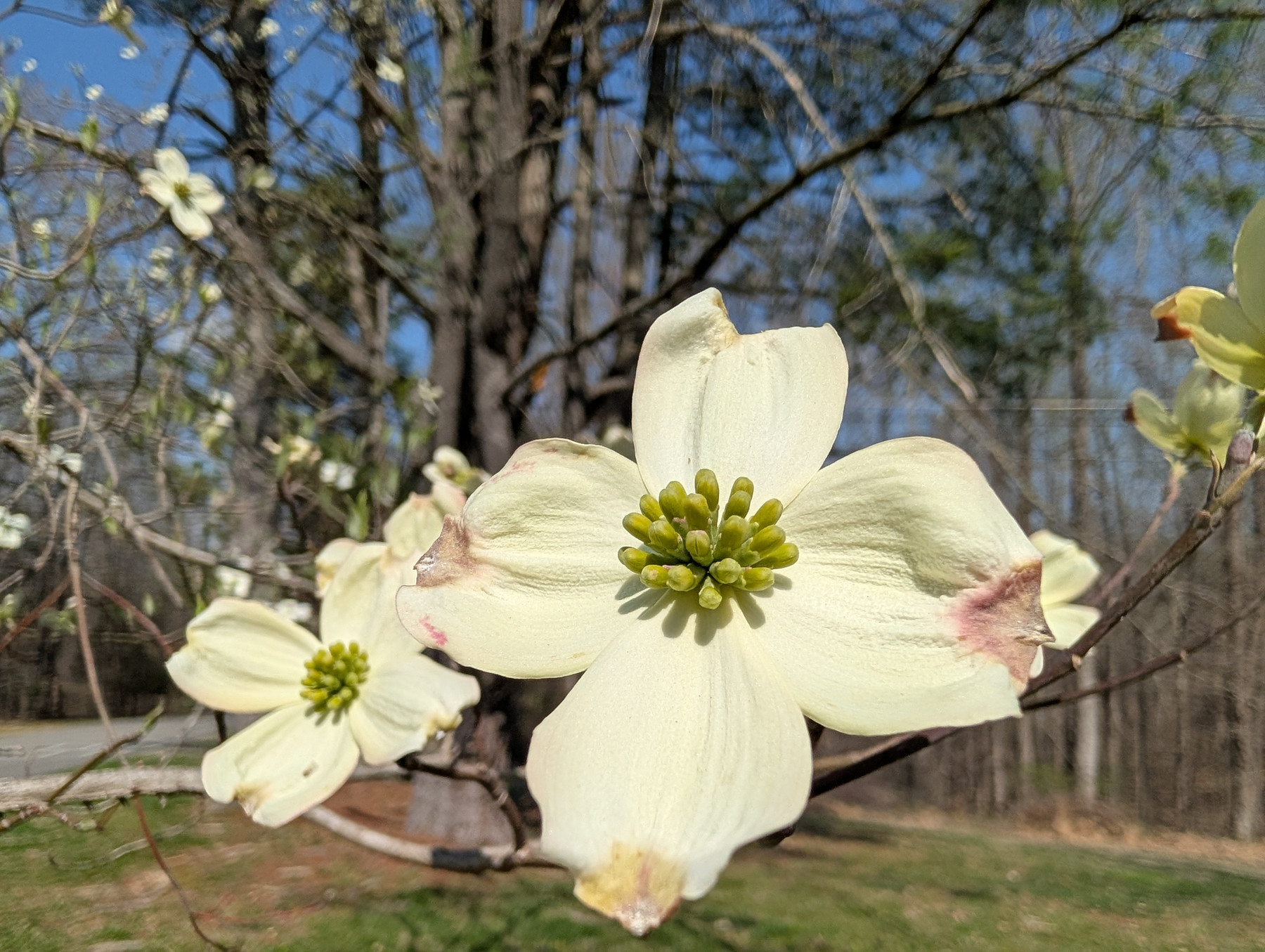
TLDR:Many native plants love fire.
Wait, when did Ubuntu get so solid. I tend to use more fringe distros, mostly because I hate myself. Snagged a new laptop and threw on Ubuntu and everything just works. Even the Asus power profile lighting!
Wait, when did Ubuntu get so solid. I tend to use more fringe distros, mostly because I hate myself. Snagged a new laptop and threw on Ubuntu and everything just works. Even the Asus power profile lighting!
Automation
I’ve become quite fond of Consul, a relatively new file conversion utility that’s both simple to use and easy to automate. The concept is almost absurdly straightforward: change the file extension to the format you want and the conversion just happens.
You might think you’ll never really need to convert files from one format to another. In practice, that assumption tends to collapse sooner or later. A few situations I’ve run int
I’ve become quite fond of Consul, a relatively new file conversion utility that’s both simple to use and easy to automate. The concept is almost absurdly straightforward: change the file extension to the format you want and the conversion just happens.
You might think you’ll never really need to convert files from one format to another. In practice, that assumption tends to collapse sooner or later. A few situations I’ve run into over the years:
Switching from one e-reader (for example, Sony) to another (Kindle) and suddenly needing to convert an entire library of books.
My photography workflow revolves around Canon’s RAW format (CR2). When a relative passed away and I inherited his photo archive, the files were a mix of several other RAW formats.
After living through the minor apocalypse when Microsoft killed Works, you’d think I would have learned something about proprietary formats. Instead, I spent another twenty years writing in Word before finally switching to Markdown.
Occasionally grabbing an iPhone photo and realizing it exported as HEIC, which remains incompatible with far more things than it should be.
Optimizing photos and video for my blog or social media.
There are plenty of ways to convert files. Most of them involve some level of friction:
Opening an app (Word, for example) and using File → Save As to create another copy in a different format.
Uploading files to random conversion websites with unclear privacy policies.
Using powerful utilities like Permute, which are excellent but come with a bit of a learning curve.
Building your own workflow with Apple Shortcuts if you enjoy assembling that kind of plumbing.
What makes Consul such a pleasure is the complete absence of friction. It runs quietly in the background, and when you need to convert something, it just happens the moment you rename the file. For most conversions, the default settings are fine, but in the settings, you can control exactly how each conversion is handled including the output quality and codec, or whether to strip metadata.
For Mac automation nerds, Consul can be set to watch folders and perform conversions when a certain file type lands there. You can use Consul with Hazel or another automation tool like Crank to route the converted file elsewhere, import it into Photos or upload it to an FTP server.
Consul currently supports 1,391 conversions across 76 file formats, covering images, audio, video, documents, e-books, email, configuration files, spreadsheets, and archives.
The developer’s site suggests more formats are planned. I’d particularly like to see support for Apple iWork files and OpenOffice spreadsheets and presentations. My pie-in-the-sky request would be a PDF → EPUB conversion that performs better than what Calibre currently produces.
Pricing is refreshingly simple. A single license is $14, and a three-seat license is $19, both including a year of updates.
The privacy policy is exactly what you want to see: no data collection. Email support is available, and the developer is active on Reddit and notably friendly when people have questions.
😡 Getting photos out of “Proton Photos” on Proton Drive is a huge pain in the ass. The lack of proper export functionality is infuriating and feels very much intentional.
😡 Getting photos out of “Proton Photos” on Proton Drive is a huge pain in the ass. The lack of proper export functionality is infuriating and feels very much intentional.
Power User Apps
I spend a lot of time trying to remove small bits of friction from my Mac workflow. macOS is a great system, but out of the box it still leaves a lot of obvious automation opportunities on the table.
I spend a lot of time trying to remove small bits of friction from my Mac workflow. macOS is a great system, but out of the box it still leaves a lot of obvious automation opportunities on the table.
Most of the improvements I rely on come from stitching
I spend a lot of time trying to remove small bits of friction from my Mac workflow. macOS is a great system, but out of the box it still leaves a lot of obvious automation opportunities on the table.
I spend a lot of time trying to remove small bits of friction from my Mac workflow. macOS is a great system, but out of the box it still leaves a lot of obvious automation opportunities on the table.
Most of the improvements I rely on come from stitching together tools like AppleScript, Keyboard Maestro, Shortcuts, and a few power-user utilities I discovered at r/MacApps.
None of this is complicated once it’s set up. The goal is just to eliminate little interruptions that happen dozens of times a day.
Here are a few small automations and workflow tweaks that currently make my Mac feel a lot more like my machine.
I like Safari, but I don’t like how easily it spawns extra windows. I now use an AppleScript tied to Keyboard Maestro. With a mouse click or hotkey, it closes every Safari window except the frontmost one.
Safari has good AppleScript and Shortcuts support, but it still doesn’t provide a keyboard-friendly way to jump directly to a specific Tab Group. My workaround is an Apple Shortcut that batch-opens groups of URLs that mirror my tab groups: Server, Social, Blogging, Software, etc.
I set up BetterTouchTool so that fn + Button 3 on my Logitech mouse triggers the New command across roughly two dozen apps. Depending on the app, that can mean a new tab, new note, new document, new Shortcut, new Keyboard Maestro macro, new email, or new message.
I’m currently using SideNotes as my scratchpad. It stays hidden on the right edge of my primary display until I toggle it with a hotkey or an ExtraBar menu item.
Most of these are tiny things, but they add up surprisingly fast
I use Rectangle Pro’s layout manager to launch and arrange 10 apps across two displays and eight virtual desktops. Each desktop has a keyboard shortcut, and I tie them together with a single Keyboard Maestro macro. (download link)
I wrote a small shell script (download link) that reconnects me to Tailscale if the connection drops or fails to start. It runs via launchd, configured through Lingon Pro.
I use macOS 26’s automation features in Apple Shortcuts to create my daily Obsidian note from a template. The automation also inserts a weather report and the day’s calendar events, so the note is ready when I sit down at my desk each morning. (Requires Actions for Obsidian.)
When I need a dual-pane file manager instead of Finder, a Keyboard Maestro trigger runs an AppleScript that closes all Finder windows and replaces them with a ForkLift window. (download macro)
If a developer doesn’t expose a URL scheme, you can’t deep-link into specific menu items. Finder is a good example; there’s no direct link for Go to Folder. ExtraBar can run scripts, though, so a small AppleScript can send keystrokes to trigger the command. If the feature exists in a menu but has no keyboard shortcut, you can also create your own under System Settings → Keyboard → Keyboard Shortcuts.
Sample Script
tell application "Finder" activate end tell tell application "System Events" keystroke "g" using {command down, shift down} end tell
None of these are huge changes individually, but together they remove a lot of small interruptions during the day.
Curious what small automations or workflow tricks other people here are using.
Huge shout out to @phanpy@hachyderm.io for the best way to use the Fediverse imo. Being able to self host it, for my self hosted Gotosocial instance, is just perfect.
Huge shout out to @phanpy@hachyderm.io for the best way to use the Fediverse imo. Being able to self host it, for my self hosted Gotosocial instance, is just perfect.
PicMal
Every Mac user eventually ends up with a pile of files that need converting. Screenshots that are too large for the web. HEIC photos from iPhones that need to become JPEGs. Audio recordings saved at ridiculous bitrates. Video files that need to be optimized for sharing.
You can solve all of that with command-line tools like ffmpeg or with a handful of separate utilities.
Or you can just use Picmal.
Picmal is a single macOS utility that handles
Every Mac user eventually ends up with a pile of files that need converting. Screenshots that are too large for the web. HEIC photos from iPhones that need to become JPEGs. Audio recordings saved at ridiculous bitrates. Video files that need to be optimized for sharing.
You can solve all of that with command-line tools like ffmpeg or with a handful of separate utilities.
Picmal is a single macOS utility that handles image, audio, and video conversion and compression. Once installed, it integrates directly into the Dock, Finder, menu bar, Services, and Shortcuts, so it behaves more like a built-in system tool than a typical standalone app.
It works immediately with sensible defaults, but if you want to tweak codecs, formats, or compression levels, the controls are there.
Images
I’ve set up one of my screenshot apps specifically for images I plan to post on the web. It saves those screenshots into a folder that Picmal watches.
When a file lands there, Picmal automatically:
converts it to my preferred format
applies a compression level that keeps good clarity while shrinking the file size
renames the file so I know it’s already been processed
That automation alone has been useful for blogging and documentation.
If you regularly deal with HEIC photos from iPhones or iPads, Picmal can also watch a folder and convert them automatically.
Picmal also handles image resizing and color space conversion (sRGB, ProPhoto RGB, Display P3, and others). If you’re preparing files for printing, you can adjust DPI as well.
Audio
Batch processing works well. I had a collection of spoken-word recordings from events I’d attended, and many of them had been saved at extremely high bitrates that made sense for music but not for speech.
Picmal converted and compressed the entire batch without complaint. The resulting files sounded the same for spoken content while taking up far less disk space.
Video
Video conversion uses simple presets:
Maximum Quality
Balanced (Size & Quality)
Web Optimized
Social Media
Maximum Compression
Custom
Pick the preset that matches the destination and you’re done. If you need more control, the Custom option exposes additional settings.
Clipboard Optimization
Clipboard optimization lets Picmal compress images you copy to the clipboard. Copy a screenshot, a web image, or a file in Finder and Picmal quietly optimizes it in the background.
A small overlay appears so you can immediately replace the original clipboard contents with the compressed version.
If you enable the option, Picmal can automatically copy the optimized image back to your clipboard. One practical advantage: images processed this way can be pasted into Finder as files, which isn’t something macOS normally allows with clipboard images.
A nice touch: if the image is already efficiently compressed, Picmal detects that and skips the process instead of recompressing it.
How It Fits Into a Typical Mac Workflow
If you already use media tools on macOS, you might be wondering where Picmal fits.
ImageOptim Great for compressing images, especially for web publishing. Picmal overlaps here but adds format conversion, automation via watched folders, and clipboard workflows.
Permute Permute focuses mostly on media conversion with a clean UI. Picmal covers similar ground but adds automation features and deeper Finder integration.
ffmpeg / command-line tools Still the most flexible option for scripting and complex workflows. Picmal obviously can’t match that level of control, but for everyday tasks it removes a lot of friction.
In practice, Picmal feels less like a replacement for those tools and more like a convenient layer on top of common conversion tasks.
Final Thoughts
At $15.99 per seat with lifetime updates, Picmal is reasonably priced for what it does. There’s also a 15-day no-questions-asked refund.
All processing happens locally on your Mac (macOS 14 or newer), and the developer states that no data is collected. If you want to dig deeper, the developer provides comprehensive documentation on the website.
Number 500!!!
I posted my 500th app review this week. If you keep typing long enough, this is what happens. It makes me super happy and I hope I have helped some of you find apps that you've grown to use and love. If I have, please leave a comment, it will be motivating and appreciated. I want to give a shout out to r/MacApps for all the support and feedback I've gotten there. I also want to thank Scribbles, the blogging platform I've used the entire time.
I recently
I posted my 500th app review this week. If you keep typing long enough, this is what happens. It makes me super happy and I hope I have helped some of you find apps that you've grown to use and love. If I have, please leave a comment, it will be motivating and appreciated. I want to give a shout out to r/MacApps for all the support and feedback I've gotten there. I also want to thank Scribbles, the blogging platform I've used the entire time.
I recently added a way for developers to alert me to their apps. If you know anyone who has an app that could use some exposure, please let them know they can request a review here.
AppAddict is just me, one old guy with a laptop and a decades old predilection for clicking the download button on just about every app I see. This is my hobby, not a side job. I do it because I enjoy it. I can't tell you how thrilling it's been to interact with developers of some of my favorite apps. I still have a big streak of fanboy.
DoubleMemory
I’m always impressed when an out-of-the-box thinker builds an app unlike anything I’ve seen before. Iterating on proven concepts is fine, but after testing enough clipboard managers and voice-to-text apps, they all start to blur together. Give me something new, clever, and useful, and I’ll happily change my workflow to make room for it. a year ago, DoubleMemory caught my attention with its interesting feature set and it's done nothing b
I’m always impressed when an out-of-the-box thinker builds an app unlike anything I’ve seen before. Iterating on proven concepts is fine, but after testing enough clipboard managers and voice-to-text apps, they all start to blur together. Give me something new, clever, and useful, and I’ll happily change my workflow to make room for it. a year ago, DoubleMemory caught my attention with its interesting feature set and it's done nothing but improve since then.
I sometimes worry that one day my brain will run out of capacity for new hotkey combinations. When that happens, any app that relies on them will be off the table. DoubleMemory neatly sidesteps that problem by baking the instruction directly into its name.
Press ⌘C twice quickly, and the app captures either the webpage you’re on or the text you’ve highlighted. It then drops that content into an aesthetically well-designed, searchable, Pinterest-like interface with some surprisingly useful capabilities.
There’s a setting that allows DoubleMemory to save everything you copy, but I’d advise against leaving that on all the time. It’s not a clipboard manager in the sense that Raycast or PastePal are. For example, it doesn’t capture images.
Where it shines is with URLs. Highlight the URL of any webpage you’re on and press ⌘C twice. DoubleMemory downloads the page content and stores it locally, making it as much a read-it-later tool as a bookmark manager. In practice, it works well as either.
Saved content can sync via iCloud, which means your collection is accessible on your iPhone, iPad, and other Macs.
DoubleMemory also doubles as a lightweight notes tool. Highlight a passage of text anywhere, press ⌘C twice, and it’s saved to your board. From there you can add your own commentary and organize the entry with tags. There’s even optional AI-powered auto-tagging if you want help categorizing things.
One detail I appreciate: DoubleMemory doesn’t require an account, and you don’t need to install a browser extension. If you routinely save URLs from different sources on a specific topic, you quickly end up with a clean, searchable database that works offline.
It’s also refreshingly lightweight. The app uses roughly 10 MB of RAM during normal use. For automation fans, it supports Apple Shortcuts, the macOS share sheet, and drag-and-drop to the Dock (if you enable the Dock icon).
Interesting Features
Bookmark Imports If you want to migrate an existing read-it-later list or bookmarks from another service (for example Raindrop), DoubleMemory includes solid import tools.
Active Roadmap I’ve been following the project for about a year, and development has been steady. Planned features include image and screenshot support and automated imports of saved searches. Personally, I’d love to see it pull in my saved Reddit posts.
Approachable Developer The developer is easy to reach and actively engages with users. There’s a Discord, a Substack newsletter, an active Reddit presence, and a well-maintained website with an up-to-date changelog.
Freemium Model The free tier already allows unlimited saves, notes, bookmarks, and tags. The Pro plan mainly adds more than three saved searches and supports the developer. Future premium features are expected to focus on advanced retrieval, AI-powered organization, and richer content consumption tools. I have some 50% off subscription codes. Use the comment tool below if you want one.
DoubleMemory has a lot going for it. It’s easy to understand, genuinely useful in daily workflows, and feature-rich without feeling bloated.
[Sold out!] A limited number of lifetime memberships are now available
April 4, 2026 Update: We sold the last open lifetime slot! Thanks so much to everyone who participated. Your generous support means a ton, and will help make omg.lol even more awesome for many years to come!
To celebrate omg.lol’s 7th birthday, we’re offering a handful of slots for lifetime memberships. This is your chance to pay once and enjoy omg.lol forever—plus some additional bonuses! Head over to our
[Sold out!] A limited number of lifetime memberships are now available
April 4, 2026 Update: We sold the last open lifetime slot! Thanks so much to everyone who participated. Your generous support means a ton, and will help make omg.lol even more awesome for many years to come!
To celebrate omg.lol’s 7th birthday, we’re offering a handful of slots for lifetime memberships. This is your chance to pay once and enjoy omg.lol forever—plus some additional bonuses! Head over to our birthday page to learn more.
😬 I’ve spent six of the last seven weeks in Arizona. There were a couple of tense weeks because there’s only so much togetherness with one’s mother one can take. But she returned home at the end of February and the sailing has been much smoother since then.
✍️ It’s interesting that a change of location can so profoundly change my routine. I haven’t been reading or posting to my Mastodon account as much. I haven’t been keeping my daily jou
😬 I’ve spent six of the last seven weeks in Arizona. There were a couple of tense weeks because there’s only so much togetherness with one’s mother one can take. But she returned home at the end of February and the sailing has been much smoother since then.
✍️ It’s interesting that a change of location can so profoundly change my routine. I haven’t been reading or posting to my Mastodon account as much. I haven’t been keeping my daily journal regularly. I haven’t been watching as much television. On the other hand, I’ve spent more time outdoors and have been more physically active these weeks. So I guess that’s good?
💻 Part of the “problem” is that I’m still working every day—on Eastern time no less! My work day starts at 5:00 AM and ends at 2:00 PM. I’m an early bird anyway so I mostly don’t mind.
🥵 If you’ve been following the news you’ll know that we’re experiencing unseasonably high temperatures. In the last few days we’ve topped 100ºF two or three days in a row. Believe it or not, It’s not uncomfortable to be outside—as long as you’re in the shade. You don’t want to be in the sun for very long at the hottest part of the day, and with my work schedule that makes getting out on the bike a little harder.
🚲 Speaking of biking, I did get out early on Saturday for a nice long ride. It’s so lovely to see the mountains in almost every direction. We saw a lot of the usual wildlife—prairie dogs, roadrunners, and even a bobcat—along the trail.
🐍 Oh and on the topic of wildlife... My eldest daughter came to visit and we went for several really nice hikes. On one of them I had my first snake encounter. It scared the bejeezus out of me, but it was just a harmless little gopher snake.
🍹 Our new neighbors get together every day for “circle time” (happy hour) at 3:30 PM—one of the perks of living in a 55+ community. I’m really grateful because it’s given us a chance to meet a lot of people very quickly and we already feel quite at home.
📮 I sent a post card to some friends on the other side of the country today. I hope they enjoy reading it as much as I enjoyed writing it. Would you like to get a post card from me? I’d be happy to send one if you share your address with me.
That’s probably enough rambling for now. Talk to you soon.
BackiGo
If you rely on iCloud but don’t have a true backup of that data, BackiGo is one of the simplest ways to create one.
BackiGo is an iCloud backup app I can recommend for anyone looking for an alternative to Parachute. Parachute is a well-known iCloud backup utility that was recently acquired by a company with a solid reputation, but also a history of price increases and subscription transitions.
Who This Is For
BackiGo is particularly useful if you:
If you rely on iCloud but don’t have a true backup of that data, BackiGo is one of the simplest ways to create one.
BackiGo is an iCloud backup app I can recommend for anyone looking for an alternative to Parachute. Parachute is a well-known iCloud backup utility that was recently acquired by a company with a solid reputation, but also a history of price increases and subscription transitions.
Who This Is For
BackiGo is particularly useful if you:
Store large amounts of data in iCloud Drive or iCloud Photos
Use Optimize Mac Storage, meaning your Mac does not hold full local copies
Want an off-Apple backup copy of your iCloud data
Need to back up iCloud data to a NAS, external drive, or another cloud provider
Why You Need an iCloud Backup
Sometimes Apple’s logic escapes me. Nowhere is that more obvious than in the opaque world of iCloud.
If you don’t have a method for keeping a versioned backup of your iCloud documents and photos, you should set one up sooner rather than later.
The simplest approach looks like this:
Use a Mac signed into iCloud.
Turn off “Optimize Mac Storage” for both iCloud Drive and Photos.
Allow all files to download locally.
Let Time Machine back up that Mac.
This works because Time Machine will keep historical versions of those files.
Unfortunately, that approach isn’t practical for everyone. If, like me, you pay for 2TB of iCloud storage but your Mac has a much smaller internal drive that can’t be upgraded, downloading everything locally simply isn’t feasible.
Experienced Mac users already understand the core issue: iCloud is a syncing service, not a backup.
If you overwrite a file, the new version replaces the old one everywhere. If you delete a file, it disappears everywhere. If a file becomes corrupted, that corruption syncs too.
Even with Time Machine running, you still won’t have copies of many files if Optimize Mac Storage is enabled, because those files never existed locally on your Mac.
The core idea is simple: get a second copy of your iCloud data somewhere Apple’s sync engine can’t touch it.
One more thing - you can find multiple stories of people permanently losing access to their iCloud accounts through ID theft, malware and Apple’s own policies.
BackiGo Features
This is where BackiGo comes in. The app lets you create a copy of your iCloud data and store it in a variety of locations:
External drives (USB or Thunderbolt)
Other cloud providers with versioned storage, such as Dropbox or Google Drive
A NAS on your home network
A shared folder on another computer (including Windows machines)
An FTP server
WebDAV support is planned
Some of the features I’ve found useful:
Universal app that runs on Mac, iPhone, and iPad
Flexible photo organization; mirror your Apple Photos structure or export into folders by device/year/month (for example AmerpieMBA/2026/04)
Selective backups; back up documents but skip photos, or back up only specific albums
Multiple cloud destinations, including Dropbox, Google Drive, OneDrive, pCloud, and Backblaze
Incremental and full backups
Scheduled backups based on time, frequency, and backup type
Local Photos library support for people who use Photos without iCloud
Live Photo and shared album support
Built-in photo viewer to visually confirm what’s included in a backup
Detailed reports of backup and restore history, exportable as HTML or CSV
Recent Updates
Added backup encryption(optional). While iCloud’s Advanced Data Protection (ADP) already encrypts data on Apple’s side, the app now adds client-side encryption, meaning your data is encrypted before it’s written to the backup destination. This helps protect your data even if the storage drive is lost, a cloud service is compromised, or an account gets leaked.
Also added iCloud archive restore support: Restore iCloud Contacts and iCloud Drive documents Search your iCloud documents and restore specific files
Radial
I spent the afternoon experimenting with Radial 4, a rapidly evolving pie-menu app from independent developer Gustav Lubker of AppVerge. If you’re not familiar with pie menu apps, they present a circular menu divided into sections (or slices), each representing an action or command. When configured well, they map naturally to muscle memory and can be extremely fast to use.
Other pie-menu apps I've used include:
Pieoneer (good)
CirMenu (good)
Pie
I spent the afternoon experimenting with Radial 4, a rapidly evolving pie-menu app from independent developer Gustav Lubker of AppVerge. If you’re not familiar with pie menu apps, they present a circular menu divided into sections (or slices), each representing an action or command. When configured well, they map naturally to muscle memory and can be extremely fast to use.
In Radial, pie menus can include the following types of actions:
Input
Keyboard Shortcut
Text
Clipboard
Open
Open App
Open File
Open URL
Scripting
Apple Shortcut
AppleScript
Shell Script
Keyboard Maestro
System
Window Management
System Control
The only obvious thing missing right now is deep-link support for tools like Raycast and similar command launchers.
Some Use Case Ideas
Categorized Launchers
Radial is much more than an app launcher, but it works well for that role. You can create multiple menus and switch between them once a Radial menu is invoked with a keyboard shortcut or mouse gesture. One practical approach is to build menus around categories of apps you use regularly.
This kind of grouping works well because the direction of the slice becomes the memory trigger rather than the app name.
Consistent Application Menus
Radial calls menus that are available everywhere global menus. It also supports context-aware menus that appear only in specific apps or groups of apps.
Because Radial includes a template feature, you can create menus that behave consistently across your main working apps. Anything that can be triggered with a keyboard shortcut can live in the menu.
If you place common commands in the same slice position across multiple apps, muscle memory kicks in quickly.
Examples of commands that translate well across apps:
New – note, document, macro, shortcut, etc. (⌘N)
Settings – quick access to preferences (⌘,)
Search / Search and Replace (⌘F and ⌥⌘F)
You can still add app-specific commands; just keep their placement consistent so your muscle memory stays intact. I created Radial menus for Safari, Things, Obsidian, and Drafts using this approach.
Automation Hub
Where Radial really shines is as an automation hub.
Instead of launching apps individually, you can trigger an Apple Shortcut or a Keyboard Maestro macro that launches an entire workspace with a single click. A second action can close the same apps when you’re done.
If you combine this with a window manager like Rectangle or Snaps of Apps, you can go even further and launch apps on specific displays and in specific Spaces with windows already arranged.
Another useful trick is reducing menu-bar clutter. Many utilities can have their core actions exposed through a Radial menu instead of living permanently in the menu bar.
Radial includes a built-in AI assistant using Meta's llama-3.1-8b-instant hosted on Groq (with a Q, not K). Ideally, future versions will support additional providers.
Radial is developed in Denmark, which means it falls under EU privacy regulations.
Price
Radial offers a seven-day free trial. The full license costs €14.99 and covers five seats, which is fairly generous for a utility in this category.
Website
Radial’s website includes solid documentation and clear explanations of how the system works.
There are a lot of songs by a lot of artists that I enjoy, but there aren’t that many complete albums that I could listen to again and again from beginning to end. But drop the needle on any one of these and I’ll listen straight through.
1977 / Rumours / Fleetwood Mac
1986 / Boomtown / David & David
1987 / Brasil / The Manhattan Transfer
1987 / It’s Better to Travel / Swing Out Sister
1988 / Union / Toni Childs
1989 / Dancing With The Lion / Andreas V
There are a lot of songs by a lot of artists that I enjoy, but there aren’t that many complete albums that I could listen to again and again from beginning to end. But drop the needle on any one of these and I’ll listen straight through.
This seems like a short list, so I’ll likely come back and add to it at some point. I don’t do metal, but apart from that what did I miss? Drop me a line and let me know.

 Login
Login