 Login
Login
The Science Of Oh Hello There
Click above to listen to this audio essay, read by the author.
TRANSCRIPT:
Oh hello.
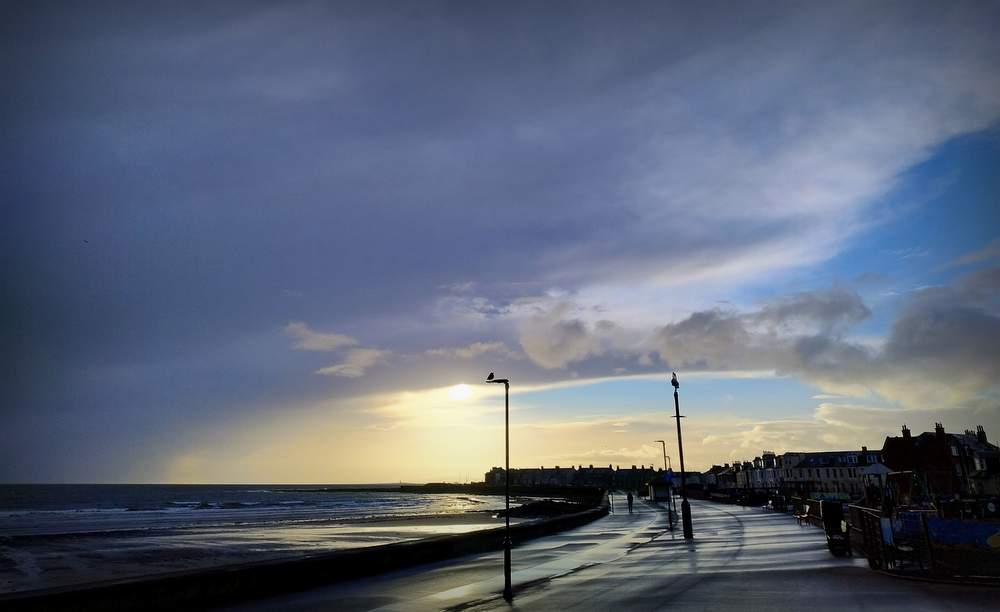
You’ve caught me at the beach - this is my local beach here in Scotland - and as you can maybe hear, the wind’s a bit fierce and the sea’s a bit rough and it was hailing half an hour ago, and only an idiot would be outdoors right now, which is maybe why - I’m at the beach. Hello.
But look, to be fair to Scotland, I was at the beach the other day, and it was much nicer - the first scorcher of the year, where the temperature soared to the dizzying heights of…11 or 12 degrees Celsius? Proper tropical.
And this beach, which is currently being lashed with rain and spray and windblown sand, was packed with people.
You know, the kind of people determined to have a good time, in that way I’ve experienced in northern England - like when your parents get this mad glitter in their eyes and suddenly say “Oooh, it’s a lovely day, let’s spend it at the beach!” and you pile into the car and drive for 3 hours, with the rain pulsing up the windscreen and your dad yelling “It’s fine, it’ll pass, it’s just a squall,” and then at some point someone unveils some unpleasantly clammy sandwiches and because you’re so determined to survive all this you eat them, then try to blot the taste out with a single stick of KitKat…
And then after hours of this misery, you get there, and the wind is absolutely baltic and so fierce you can barely get the car door open, and feeling exactly, exactly like Ernest Shackleton (because you’ve read those sorts of books because those are the sorts of parents you have) you fight your way to the cliff edge to peer down at a quagmire of a beach half-obscured by curtains of rain, and then you fight your way back to the car because it seems the wind is now going in the other direction, and you clamber back in, and the windows instantly fog up - and your dad says, “Aren’t we glad we did this?” in a tone where it’s obviously not a question, and if you dare to treat it like a question you’ll be in real trouble.
But look. There’s no need to go over all that again. Leave it, Mike.
My point is: at any sign of sunshine, the Scots go to the beach. I’ve been here for 5 years, I’ve seen it happen every time, and it’s magnificent.
Good on them. Fine attitude. If I had kids I’d drive for hours just to get them to enjoy the same experience.
But look, this is a science newsletter, not a therapy session. And what fascinates me on days like the sunny day earlier this week is the people saying hello to each other.
You know - that thing that went away for about a year, starting in 2020, where you’re in close proximity to another human being and you’re feeling comfortable and curious enough to break the ice with them. That thing that’s somehow a little harder to do, in the wake of a global pandemic or seemingly endless cycles of intensely polarising politics. All that stuff.
I used to be a travel writer, so here’s a great trick you can use when you’re travelling.
What you do is: you carry a paper map.
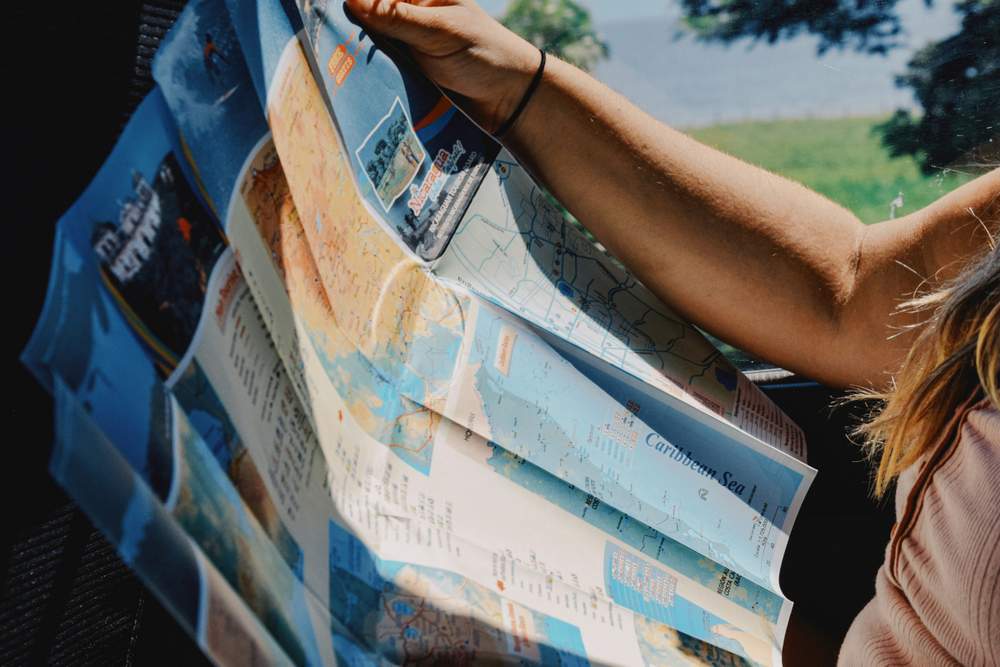
If you’re under the age of 30: yes, maps used to exist on paper too, and you can still buy them, and no, the following trick is much harder to do on your phone and probably won’t work and also, paper maps are beautiful things, and they will do wonderful things to your brain if you use them - it’s something about the lack of the kind of border your screens have, something about filling your peripheral vision and really being able to feel the relationship between all the landmarks you’re looking at. Seriously. Paper maps, try it.
So - if you want to meet a few strangers, you pick a place with a lot of foot traffic, and you stand there with your map out and the most confused and ideally gormless expression on your face that you can muster, turning this way and map, obviously trying to fit what’s on the map with what you’re seeing…and failing completely.
It doesn’t matter where you are in the world. Honestly. It works everywhere. A universal cry for help. And it won’t be long before someone will stop and offer to show you where you are.
You can even accelerate this process by visibly holding your map upside-down.
If all this doesn’t lead to you becoming a magnet for every pickpocket in a 5-mile radius, you’ll have the chance to meet some new people, and maybe to strike up a conversation with them.
You may be feeling intensely awkward at this point. If you’re English, you may be bordering on mania. Talking to strangers can be an intensely vulnerable-feeling thing. Oh god, these people don’t know what an idiot I am, how do I break it to them? And so on.
But here’s some science to help you with that. It’s courtesy of behavioural scientist Nicholas Epley, who is a professor at the University of Chicago Booth School of Business. He’s spent a lot of time looking into this and picking through countless studies, and via his article in Scientific American, I learned that all the studies he looked at point towards one game-changing revelation:
You have to overcome your natural tendency to underestimate how positively strangers will respond to your attempts to spark up a conversation with them.
Obviously this isn’t always true - sometimes people just want to be left alone. You can look for Nature’s warning signs: their headphones, or an avoidance of eye contact, or a blood-spattered broadsword, that sort of thing. But generally, they’ll be more willing to say hello than you expect. That’s the trend, it seems. It’s a misplaced psychological barrier that afflicts us all.
One study was of people commuting on public transport. They were randomly assigned either solitude or a conversation. But here’s the weird thing: the commuters who were randomly assigned conversations all reported a more positive-feeling commute than the ones left to themselves. This included the grumpier ones, who would much prefer to be left alone in peace because chatty randos on your daily commute are just the worst. Those people also recorded feeling better about their journey.
They thought what they needed was a quiet moment to catch up on their doomscrolling and make a list of all the things they’re feeling behind with, but what they actually needed was to collide with the endlessly fascinating, endlessly challenging universe of another person’s mind.
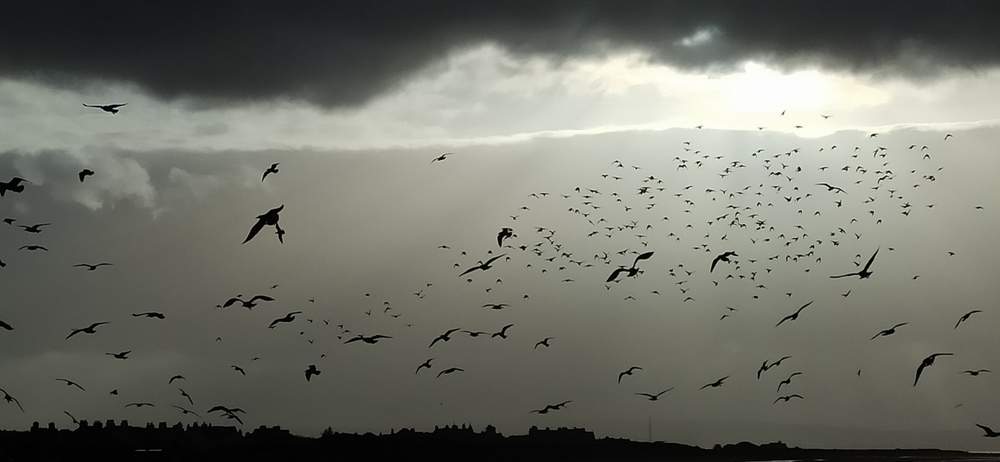
I see the wisdom in this, and I’m an introvert. I’m who is talking about when she says some people’s social battery is running down when they’re in a crowd, and when it runs out, so do they, as fast as possible. I am that person. But I was also a travel writer, and that’s all about learning how other people live and think. It was quite the learning curve. I’m still fighting my way up it.
But talking to strangers is nowhere near as dreadful as we think - partly because we’re nowhere near as dreadful to them as we think we are.
One final thing that Professor Epley noted. In a study where participants were asked to reconnect with an old friend, either by voice-calling them, or by sending them an email. Which is easier? The email, obviously - far less awkward, they don’t get to answer right away so you can just say your piece and feel good about yourself and deal with the fallout later when they reply in a way that suggests they don’t feel quite as approving of your heroic efforts as you do, and so on. Manageable, that’s what email is. And the study reflected that. A majority of people initially preferred to use email for the same reason.
But those participants in the study who were actually told to get over their feelings of awkwardness and use a voice-call (god, I hope they were paid to do this study, it sounds horrible), they reported that they enjoyed the experience much more than the aloof e-mailers did AND they didn’t feel any more awkward afterwards. They expected they would, but they actually didn’t.
There is just so much that happens to us, and that happens between us, when we actually talk to each other, using our cake-eating equipment. What we say matters a great deal, of course - and I’m not ever going to claim we should or even can do away with things like email, because - well, I’d be out of a job.
But in so many ways, we are all here to make odd noises at each other and to benefit from the broad emotional bandwidth advantages of doing so, especially with the tricky stuff, including those critical first few words we’ll ever exchange with them.
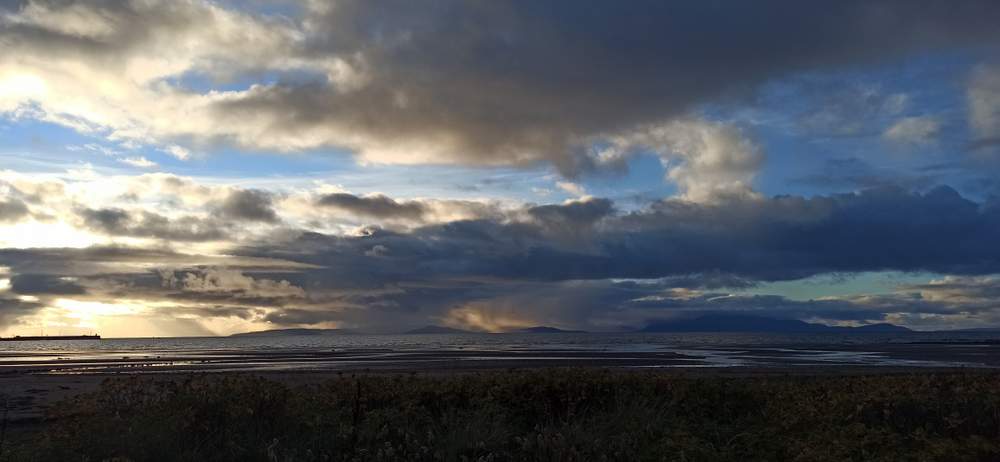
Okay, that clearly isn’t happening here today. There’s a bloke with his dog, and the dog…looks furious with him. Good god. I mean, dogs always want to go for a walk, right? Well, not this one, and that should tell you something about the weather. So I’m going to wrap this up and go home.
I hope you’re doing well - and please, never be afraid of saying hi. You’d be amazed at how many people want you to do that.
Cheers!
Mike.
Images: Mike Sowden; Frames For Your Heart.