❌

Normal view

Received β€” 13 March 2026 ⏭ Everything Is Amazing
  • βœ‡Everything Is Amazing
  • The Science Of Oh Hello There
    Click above to listen to this audio essay, read by the author.Subscribe nowTRANSCRIPT:Oh hello. You’ve caught me at the beach - this is my local beach here in Scotland - and as you can maybe hear, the wind’s a bit fierce and the sea’s a bit rough and it was hailing half an hour ago, and only an idiot would be outdoors right now, which is maybe why - I’m at the beach. Hello.But look, to be fair to Scotland, I was at the beach the other day, and it was much nicer - the fir
     

The Science Of Oh Hello There

13 March 2026 at 19:11

Click above to listen to this audio essay, read by the author.
Subscribe now

TRANSCRIPT:

Oh hello.

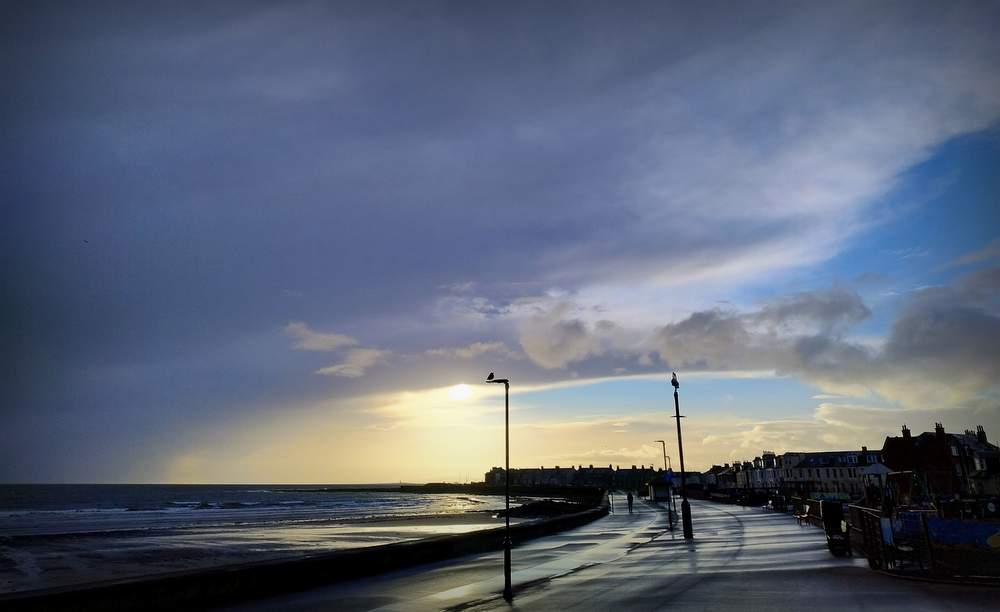
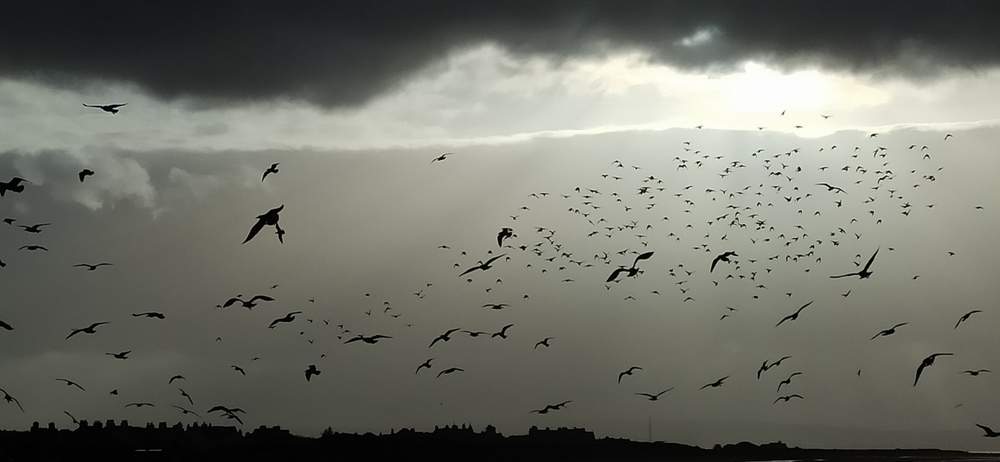
You’ve caught me at the beach - this is my local beach here in Scotland - and as you can maybe hear, the wind’s a bit fierce and the sea’s a bit rough and it was hailing half an hour ago, and only an idiot would be outdoors right now, which is maybe why - I’m at the beach. Hello.

But look, to be fair to Scotland, I was at the beach the other day, and it was much nicer - the first scorcher of the year, where the temperature soared to the dizzying heights of…11 or 12 degrees Celsius? Proper tropical.

And this beach, which is currently being lashed with rain and spray and windblown sand, was packed with people.

You know, the kind of people determined to have a good time, in that way I’ve experienced in northern England - like when your parents get this mad glitter in their eyes and suddenly say “Oooh, it’s a lovely day, let’s spend it at the beach!” and you pile into the car and drive for 3 hours, with the rain pulsing up the windscreen and your dad yelling “It’s fine, it’ll pass, it’s just a squall,” and then at some point someone unveils some unpleasantly clammy sandwiches and because you’re so determined to survive all this you eat them, then try to blot the taste out with a single stick of KitKat…

And then after hours of this misery, you get there, and the wind is absolutely baltic and so fierce you can barely get the car door open, and feeling exactly, exactly like Ernest Shackleton (because you’ve read those sorts of books because those are the sorts of parents you have) you fight your way to the cliff edge to peer down at a quagmire of a beach half-obscured by curtains of rain, and then you fight your way back to the car because it seems the wind is now going in the other direction, and you clamber back in, and the windows instantly fog up - and your dad says, “Aren’t we glad we did this?” in a tone where it’s obviously not a question, and if you dare to treat it like a question you’ll be in real trouble.

But look. There’s no need to go over all that again. Leave it, Mike.

My point is: at any sign of sunshine, the Scots go to the beach. I’ve been here for 5 years, I’ve seen it happen every time, and it’s magnificent.

Good on them. Fine attitude. If I had kids I’d drive for hours just to get them to enjoy the same experience.

But look, this is a science newsletter, not a therapy session. And what fascinates me on days like the sunny day earlier this week is the people saying hello to each other.

You know - that thing that went away for about a year, starting in 2020, where you’re in close proximity to another human being and you’re feeling comfortable and curious enough to break the ice with them. That thing that’s somehow a little harder to do, in the wake of a global pandemic or seemingly endless cycles of intensely polarising politics. All that stuff.

I used to be a travel writer, so here’s a great trick you can use when you’re travelling.

What you do is: you carry a paper map.
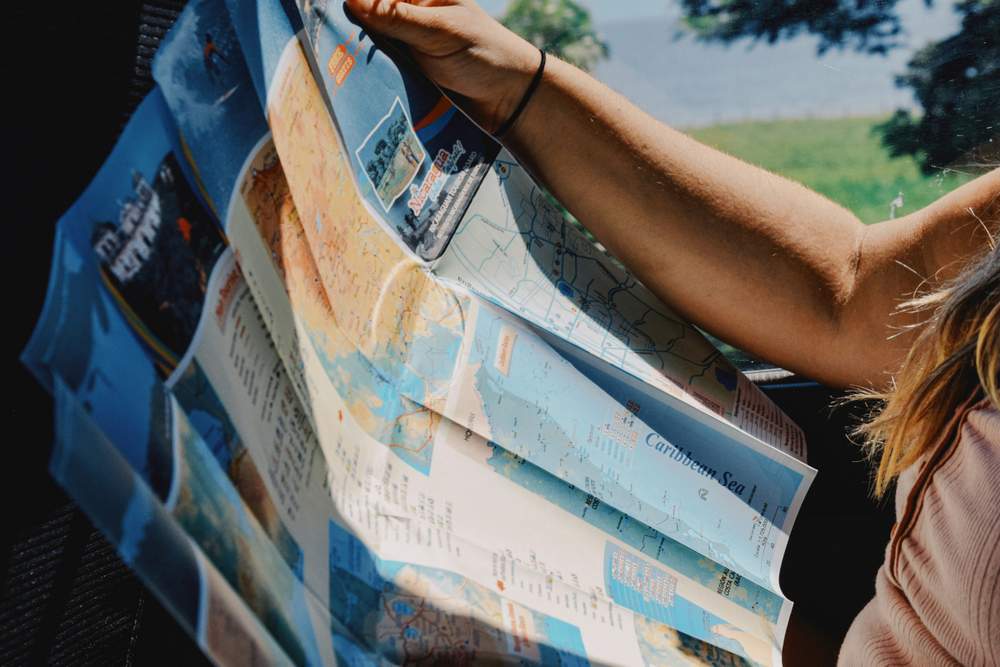
If you’re under the age of 30: yes, maps used to exist on paper too, and you can still buy them, and no, the following trick is much harder to do on your phone and probably won’t work and also, paper maps are beautiful things, and they will do wonderful things to your brain if you use them - it’s something about the lack of the kind of border your screens have, something about filling your peripheral vision and really being able to feel the relationship between all the landmarks you’re looking at. Seriously. Paper maps, try it.

So - if you want to meet a few strangers, you pick a place with a lot of foot traffic, and you stand there with your map out and the most confused and ideally gormless expression on your face that you can muster, turning this way and map, obviously trying to fit what’s on the map with what you’re seeing…and failing completely.

It doesn’t matter where you are in the world. Honestly. It works everywhere. A universal cry for help. And it won’t be long before someone will stop and offer to show you where you are.

You can even accelerate this process by visibly holding your map upside-down.

If all this doesn’t lead to you becoming a magnet for every pickpocket in a 5-mile radius, you’ll have the chance to meet some new people, and maybe to strike up a conversation with them.

You may be feeling intensely awkward at this point. If you’re English, you may be bordering on mania. Talking to strangers can be an intensely vulnerable-feeling thing. Oh god, these people don’t know what an idiot I am, how do I break it to them? And so on.

But here’s some science to help you with that. It’s courtesy of behavioural scientist Nicholas Epley, who is a professor at the University of Chicago Booth School of Business. He’s spent a lot of time looking into this and picking through countless studies, and via his article in Scientific American, I learned that all the studies he looked at point towards one game-changing revelation:

You have to overcome your natural tendency to underestimate how positively strangers will respond to your attempts to spark up a conversation with them.

Obviously this isn’t always true - sometimes people just want to be left alone. You can look for Nature’s warning signs: their headphones, or an avoidance of eye contact, or a blood-spattered broadsword, that sort of thing. But generally, they’ll be more willing to say hello than you expect. That’s the trend, it seems. It’s a misplaced psychological barrier that afflicts us all.

One study was of people commuting on public transport. They were randomly assigned either solitude or a conversation. But here’s the weird thing: the commuters who were randomly assigned conversations all reported a more positive-feeling commute than the ones left to themselves. This included the grumpier ones, who would much prefer to be left alone in peace because chatty randos on your daily commute are just the worst. Those people also recorded feeling better about their journey.

They thought what they needed was a quiet moment to catch up on their doomscrolling and make a list of all the things they’re feeling behind with, but what they actually needed was to collide with the endlessly fascinating, endlessly challenging universe of another person’s mind.
I see the wisdom in this, and I’m an introvert. I’m who is talking about when she says some people’s social battery is running down when they’re in a crowd, and when it runs out, so do they, as fast as possible. I am that person. But I was also a travel writer, and that’s all about learning how other people live and think. It was quite the learning curve. I’m still fighting my way up it.

But talking to strangers is nowhere near as dreadful as we think - partly because we’re nowhere near as dreadful to them as we think we are.

One final thing that Professor Epley noted. In a study where participants were asked to reconnect with an old friend, either by voice-calling them, or by sending them an email. Which is easier? The email, obviously - far less awkward, they don’t get to answer right away so you can just say your piece and feel good about yourself and deal with the fallout later when they reply in a way that suggests they don’t feel quite as approving of your heroic efforts as you do, and so on. Manageable, that’s what email is. And the study reflected that. A majority of people initially preferred to use email for the same reason.

But those participants in the study who were actually told to get over their feelings of awkwardness and use a voice-call (god, I hope they were paid to do this study, it sounds horrible), they reported that they enjoyed the experience much more than the aloof e-mailers did AND they didn’t feel any more awkward afterwards. They expected they would, but they actually didn’t.

There is just so much that happens to us, and that happens between us, when we actually talk to each other, using our cake-eating equipment. What we say matters a great deal, of course - and I’m not ever going to claim we should or even can do away with things like email, because - well, I’d be out of a job.

But in so many ways, we are all here to make odd noises at each other and to benefit from the broad emotional bandwidth advantages of doing so, especially with the tricky stuff, including those critical first few words we’ll ever exchange with them.
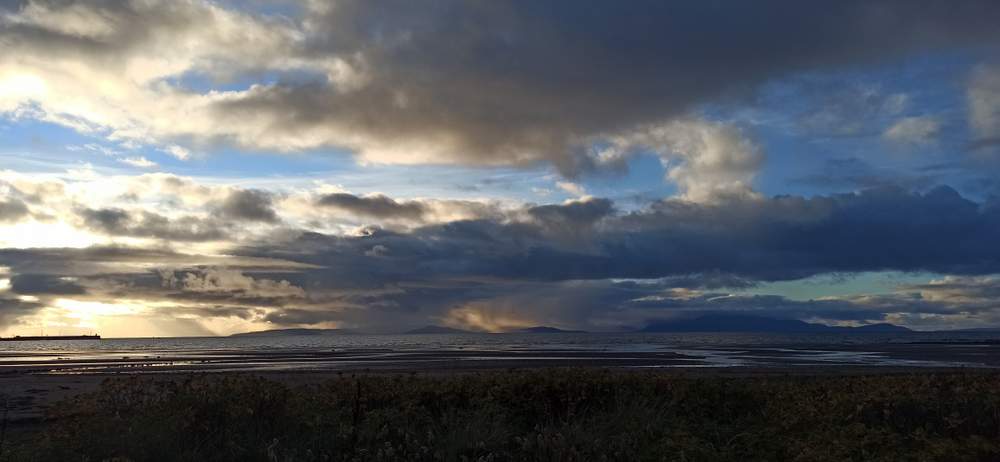
Okay, that clearly isn’t happening here today. There’s a bloke with his dog, and the dog…looks furious with him. Good god. I mean, dogs always want to go for a walk, right? Well, not this one, and that should tell you something about the weather. So I’m going to wrap this up and go home.

I hope you’re doing well - and please, never be afraid of saying hi. You’d be amazed at how many people want you to do that.

Cheers!

Mike.


Images: Mike Sowden; Frames For Your Heart.

Received β€” 22 March 2026 ⏭ Everything Is Amazing
  • βœ‡Everything Is Amazing
  • All Hail The Consumers of Time and Occupiers of Space
    (Hi! This is a bigger-than-usual edition of Everything Is Amazing, and it probably won’t fit in your Inbox, so you’ll have to click through to see the whole thing. Just click on the title and it’ll open the Web version for you.)Well, it’s official - the Ig Nobels are leaving the United States, at least for now.I’ve written before about my love of these satirical science awards - particularly how they invite winners in to share the joke, like lab colleagues good-nat
     

All Hail The Consumers of Time and Occupiers of Space

22 March 2026 at 18:03

(Hi! This is a bigger-than-usual edition of Everything Is Amazing, and it probably won’t fit in your Inbox, so you’ll have to click through to see the whole thing. Just click on the title and it’ll open the Web version for you.)

Ig Nobels Face-to-face | Royal Institution

Well, it’s official - the Ig Nobels are leaving the United States, at least for now.

I’ve written before about my love of these satirical science awards - particularly how they invite winners in to share the joke, like lab colleagues good-naturedly ribbing each other while respecting the important work they’re doing:

In 2000, Sir Andrew Geim was joint-awarded the Ig Nobel for Physics, along with Michael Berry, for their work in levitating a frog using diamagnetism. Ten years later, Geim would joint-win the actual Nobel Prize for Physics for his work with the carbon allotrope Graphene, a material that’s currently making headlines for how it’s unlocking all sorts of new scientific breakthrough.

But the Ig Nobels are also intentionally daft. They make a priority of aiming for a LOL - like how, in the very first ceremony in 1991, then-US-Vice-President Dan Quayle won in the Education category “for demonstrating, better than anyone else, the need for science education.

(I also love their description of him: “consumer of time and occupier of space.”)

That’s the other side of the awards, the utterly merciless roasting - and it’s just as fun.

  • The 1991 Ig Nobel Prize for PEACE: awarded to Edward Teller, father of the hydrogen bomb and first champion of the Star Wars weapons system, for his lifelong efforts to change the meaning of peace as we know it.

  • The 1996 Ig Nobel Prize for MEDICINE: awarded to James Johnston of R.J. Reynolds, Joseph Taddeo of U.S. Tobacco, Andrew Tisch of Lorillard, William Campbell of Philip Morris, Edward A. Horrigan of Liggett Group, Donald S. Johnston of American Tobacco Company, and the late Thomas E. Sandefur, Jr., chairman of Brown and Williamson Tobacco Co. for their unshakable discovery, as testified to the U.S. Congress, that nicotine is not addictive.

  • The 2009 Ig Nobel Prize for MATHEMATICS: awarded to Gideon Gono, governor of Zimbabwe’s Reserve Bank, for giving people a simple, everyday way to cope with a wide range of numbers — from very small to very big — by having his bank print bank notes with denominations ranging from one cent ($.01) to one hundred trillion dollars ($100,000,000,000,000).

  • The 2020 Ig Nobel Prize for MEDICAL EDUCATION: awarded to [BRAZIL, UK, INDIA, MEXICO, BELARUS, USA, TURKEY, RUSSIA, TURKMENISTAN] Jair Bolsonaro of Brazil, Boris Johnson of the United Kingdom, Narendra Modi of India, Andrés Manuel López Obrador of Mexico, Alexander Lukashenko of Belarus, Donald Trump of the USA, Recep Tayyip Erdogan of Turkey, Vladimir Putin of Russia, and Gurbanguly Berdimuhamedow of Turkmenistan, for using the Covid-19 viral pandemic to teach the world that politicians can have a more immediate effect on life and death than scientists and doctors can.

(Wince.)

Now the Ig Nobels will be held in Zurich, beginning with this year’s ceremony on the 3rd September - and although the official (and perfectly believable) reason for this is the increasing difficulty in getting nominees to attend, I wonder if this isn’t going to feature in the awards? If so, I can understand the organisers not wanting to be in the U.S. when that’s announced….

So - for whatever reason, it’s all change after 35 years. And as a fan of the Ig Nobels and of utterly shameless listicles, I can’t resist the call here.

Here’s the first part of a roundup of thirty-five Ig Nobel Awards that tickle me no end.


Picture of a cup of coffee next to an open laptop showing a multi-participant Zoom call on its screen

1. THE 2012 IG NOBEL PRIZE FOR ACOUSTICS

You know when you’re on a Zoom call and the other person isn’t using headphones and hasn’t muted their audio, so you’re met with a slightly delayed version of your own voice every time you speak?

More than a decade ago, Kazutaka Kurihara and Koji Tsukada first discovered what we’ve all now learned from bitter experience - that it’s incredibly annoying when this happens, and can instantly derail your train of thought.

The device they used to demonstrate this is called the SpeechJammer, and it was built with a noble purpose in mind:

“This technology ... could also be useful to ensure speakers in a meeting take turns appropriately, when a particular participant continues to speak, depriving others of the opportunity to make their fair contribution.”

- Kazutaka Kurihara.

This also made me realise we can do this manually!

Is someone in your already tedious work Zoom meeting just droning on and on, and you’re ready to ask them to finish their contribution before somebody dies? Simple! Just slyly unplug your headphones, nudge your speakers up to full volume and SpeechJammer the wretch until they splutter to a halt.

Oh dear, sorry about the technical difficulties, you say with hand-wringing contrition. But I think it’s fixed now. So, where were we?

(NOTE: you probably only get to try this once, or twice if your acting skills are up to the challenge. Choose your moment wisely!)


Alarm clock with large wheels on its side.

2. THE 2005 IG NOBEL PRIZE FOR ECONOMICS

How much do you rely on the snooze button on your alarm clock or phone to get you up in the morning?

I’m not here to judge you either way - although it seems that repeat snoozers suffer no ill effects and may even have slightly sharper minds than instant-arisers.

However, if you’re in the latter category as I am, and you want your alarm clock to absolutely, unambiguously get you out of damn bed the very first time it goes off, maybe you need the clock invented by Gauri Nanda of the Massachusetts Institute of Technology two decades ago.

It’s called Clocky, and it has one job - to infuriate you awake in the shortest time possible. Yes, it has a snooze button, but it also has wheels, and when that alarm rings, off it scarpers across your room in as fast and as random a path as possible…

Alas, there’s only one way to shut it up.

Thus its mission is accomplished, maybe adding hours of productivity to your workday - or even helping you meet the love of your life!


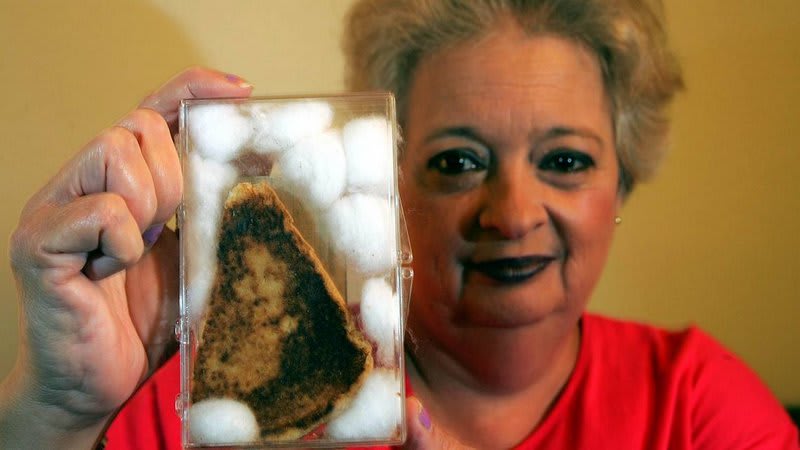
Lady with grey hair holding up a grilled cheese sandwich encased in glass with what seems to be a woman's face burnt into it - the "Holy Toast"

3. THE 2014 IG NOBEL PRIZE FOR NEUROSCIENCE

If you’ve been reading me for a while, you’ll know my soft spot for the human visual bias called pareidolia - which is how you can see Marlene Dietrich, Gillian Anderson or the Virgin Mary in the grilled cheese sandwich that Diana Duyser sold to GoldenPalace.com for $28,000 in 2004.

It’s also how you can see this aggressively drunk octopus:

But in 2014, the international team of Jiangang Liu, Jun Li, Lu Feng, Ling Li, Jie Tian, and Kang Lee, went deeper - asking what is actually happening in the brains of people who can see the face of Jesus in a piece of toast.

As I said in my original write-up:

“There’s a region of your brain called the right fusiform face area that’s strongly associated with processing the patterns of human facial features, letting us spot the faces of our loved ones in a sea of strangers. And when it gets activated, it so easily drowns out other conflicting messages. It’s like a megaphone at a town hall meeting.

Only problem is: like every other process, it’s working with the same “corner-cutting” visual guesswork inputs. And it’s easily tricked into making mistakes, as with Upside-Down Adele.”

More recently, researchers from the University of Queensland in Australia found that pregnant women and new mothers seem to have hightened sensitivity to face pareidolia - perhaps to help with social bonding between mothers and infants, perhaps facilitated by increased levels of the hormone & neurotransmitter oxytocin.

There’s clearly much more work to be done here. But any mechanism in the brain for heightening emotional connections to parts of the world around us - for making us care about it, in a way that motivates us into acquiring a sense of stewardship around it - is well worth learning more about.


Coming up after the paywall:

  • Dodgy car manufacturing…

  • madly excessive co-authorship…

  • an inventive (if highly inadvisible) way of tackling a snakebite…

  • the remarkable minds of taxis drivers…

  • the best way to beat procrastination…

…and other lovable madness.

Read more

  • βœ‡Everything Is Amazing
  • Why Don't You Go Make Like A Tree
    Subscribe nowTRANSCRIPTOh, hello.The other day I went to the woods at the edge of town here in western Scotland, around an hour away from home. It had been absolutely belting down with rain, but when I arrived the sky cleared a bit. Hooray, I thought, I’ve got lucky, and started recording the piece I’m going to read for you today. But - I hadn’t got lucky. For some reason, maybe the nearby communication tower at the top of a hill, there was an awful ticking noise across the th
     

Why Don't You Go Make Like A Tree

5 April 2026 at 17:07

Subscribe now


TRANSCRIPT

Oh, hello.

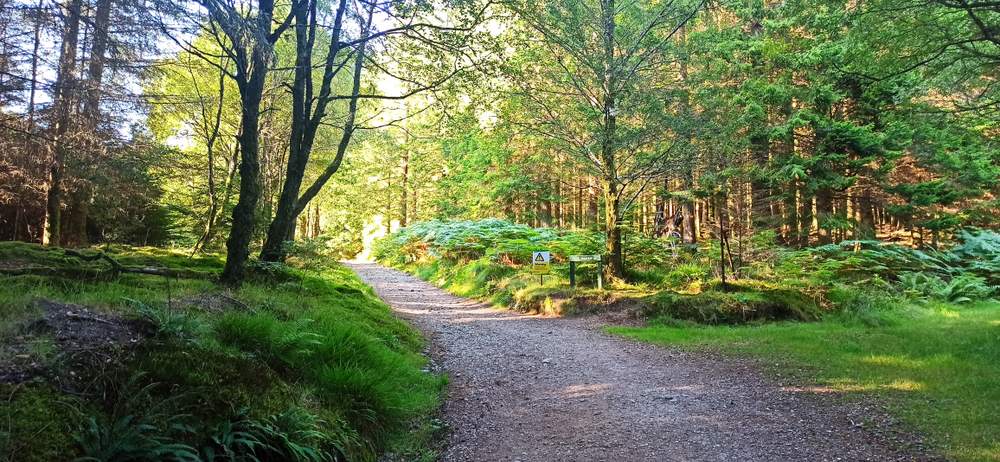
The other day I went to the woods at the edge of town here in western Scotland, around an hour away from home. It had been absolutely belting down with rain, but when I arrived the sky cleared a bit. Hooray, I thought, I’ve got lucky, and started recording the piece I’m going to read for you today.

But - I hadn’t got lucky. For some reason, maybe the nearby communication tower at the top of a hill, there was an awful ticking noise across the three recordings I made - you know, one recording, and then a couple of backup recordings in case there was any weird noise. I listened back to all of them today, and the ticking was on all of them.

So instead, I’m recording just outside the entrance to my apartment, as outside the remnants of Storm Dave rage outside as it finishes tearing through Scotland with a chaotic fury that I wouldn’t normally associate with the name “Dave”.

(No offence to any Daves out there.)

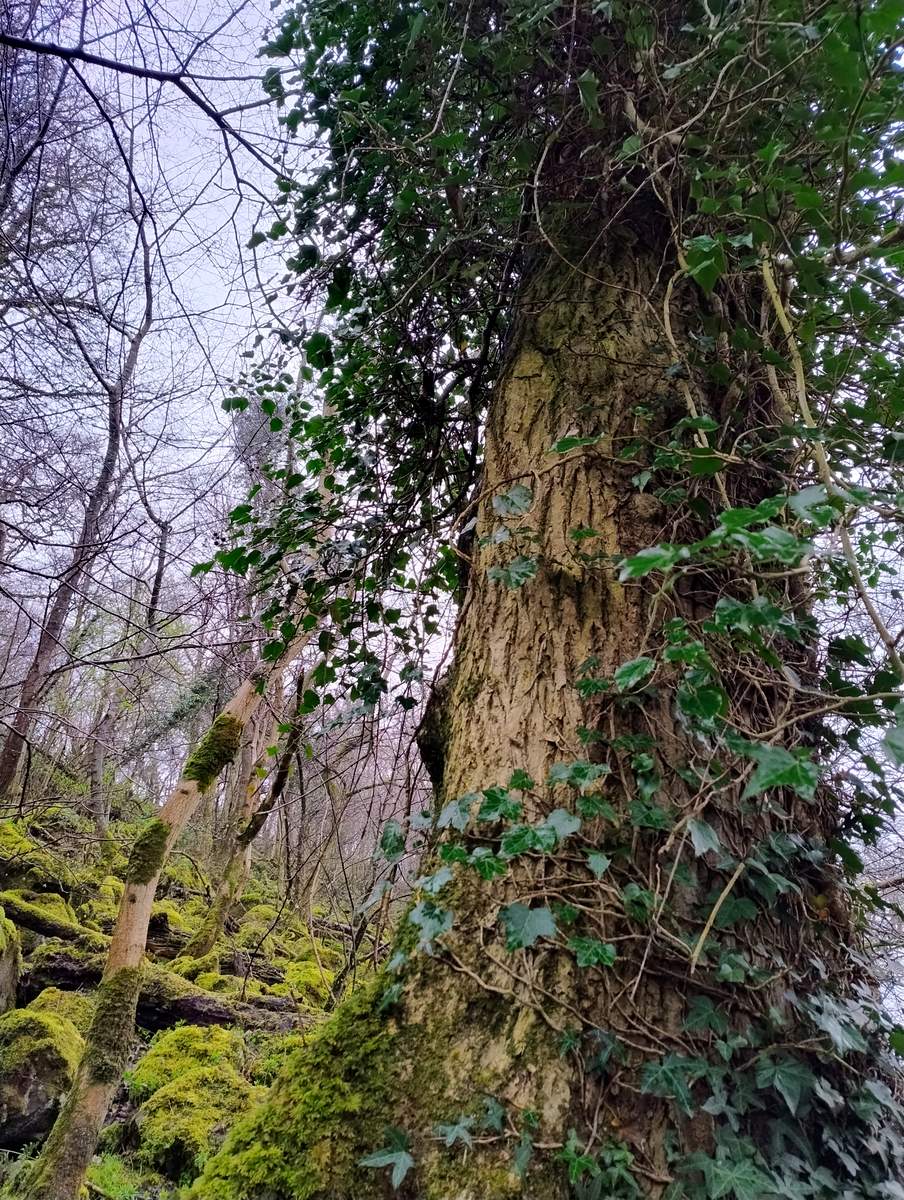
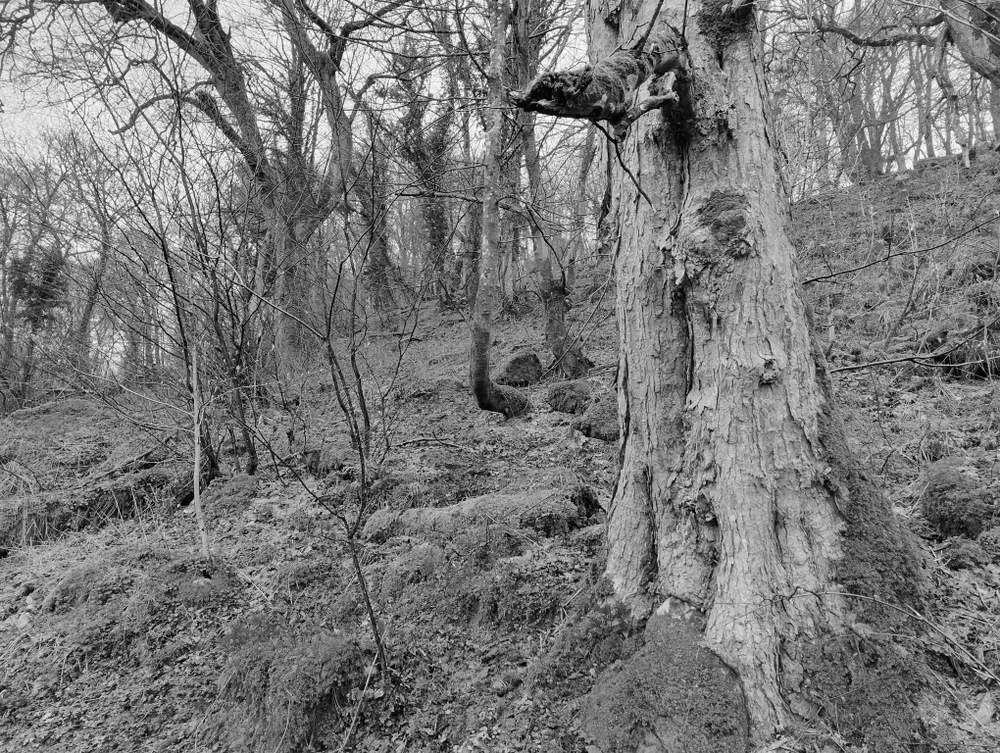
The woods I visited the other day were ancient - that term in Britain that designates woods that are at least multiple centuries old. In this case, there are archaeological sites going back to both the British Iron Age and Bronze Age, which means at least 3,000 years, and at another site a few dozen miles away there are flint artefacts dated to over 14,000 years old.

That’s a lot of archaeology in a small area, and the locations of sites usually have something to say about access to raw materials, so I bet these woods have been useful for a long time - and also the coast, which is only a few miles away.

From what I can gather, almost all the trees are three varieties: Elm, which is Ulmus minor; Ash is Fraxinus excelsior (what a great name that’d make for a spell), and Larch, which is Laris decidua.

Most of those trees are older than me, and some of them even look it - Ash and Elm can grow for 300 years, Larch for 600, so maybe a few of these trees could have been alive at the time of the Aztecs, or before Johannes Gutenberg invented the printing press.

This is one of the great gifts to us humans from trees - their incredible age. Not to get all spiritual about this, but I bet you’ve experienced something like this around trees - that weird relief creeping into your bones, making you feel that yes, some of all this confusing, infuriating awfulness in the news will pass at some point to be replaced with hopefully something a bit better, and in the meantime, like trees, we can just look for a way to sink our roots a bit deeper so we can stand our ground to get through it. Trees can be very reassuring metaphors of that process.

But there’s also what trees become, if they’re given enough time.

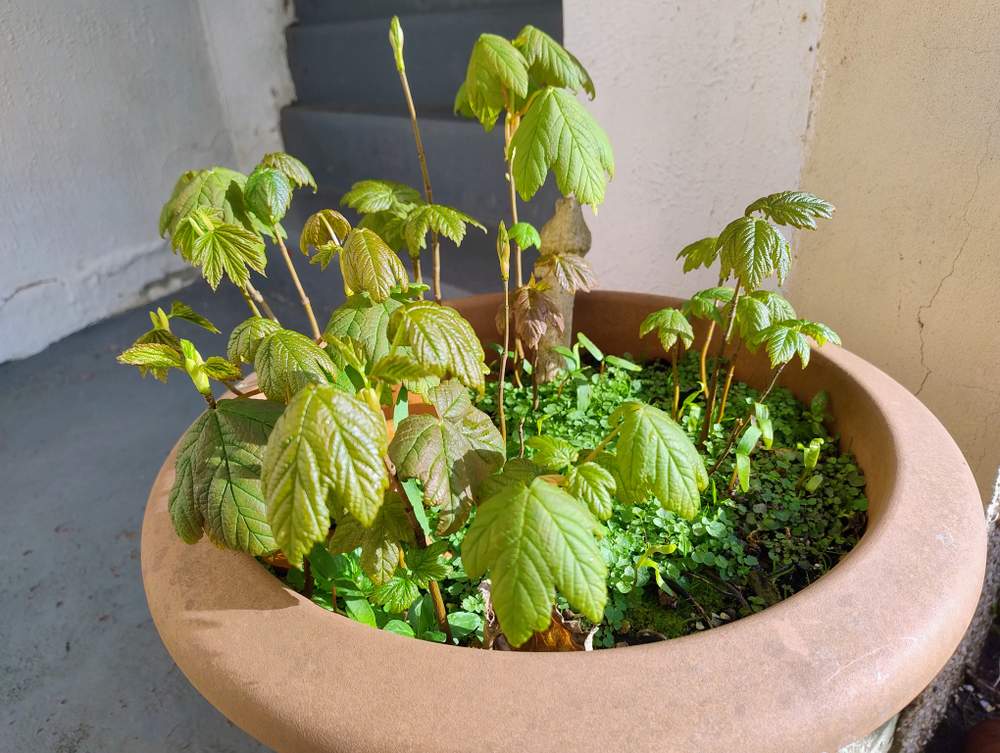
The other day, I was leaving my apartment and I noticed some new shoots coming up in a couple of big plant-pots I’d left empty over the winter. I took a photo with my PictureThis app, and it told me they’re sycamores (acer pseudoplatanus).

It seems that late last year, a few of the helicopter-blade-like seeds from the big old sycamore tree in my garden whirled down here and then got to work, and now I’m growing 6 or 7 baby trees.

If I took them somewhere and planted them properly, they’ll get busy doing what they’re best at doing: becoming the tallest plants on the block. That’s partly what a tree is: it’s a perennial plant with one really neat trick - to be able to grow higher than all the other plants and hog the most sunshine so it can put all that energy to work in becoming the biggest plant it can be.

Well, actually - that’s what I used to think, but then I learned about Professor of Geography Donald Rusk Currey.

In 1964 he was a graduate student in Nevada, and he was taking core samples from trees in order to date them with dendrochronology, which most people know as “counting the rings”, although it’s a bit more complicated than that. One day, he took his expensive drill and began screwing it deep into one particular tree, a bristlecone pine growing in what is now Great Basin National Park. But for some reason, he was finding this really hard going - and then, according to one version of this story, *ting* - the drill bit broke off.

This was a disaster for Currey, this was a specialised bit of equipment called an increment borer, it cost him quite a bit of money and he only had one of them, so if possible he wanted to get it back. He asked the Forest Service for permission to cut the tree down, and they gave it, so Currey to work with a chain saw.

Now, there are conflicting reports about the facts of this story - we can’t ask Currey himself because he passed away in 2004, but he later said he already suspected the tree could be old - some of the other cores he’d taken from trees in the area, over a hundred of them, showed bristlecone pines could be well over a thousand years old. That was the purpose of his research.

When the tree came down, Currey chopped the trunk into thin slices to take home and study, and a week later, he had his answer. This tree, which is now nicknamed Prometheus, was over 4,900 years old when it was cut down, meaning it started growing before the stones went up at Stonehenge.

This is still the oldest single tree known to have existed on this planet - and you can imagine the uproar when this story broke. (Thank god social media didn’t exist back then, or, you know, the Daily Mail.)

But despite that, Currey was still hounded by reporters and people wanting to hear his story, and he was having none of it - he kept his head down, he published his findings, he went on to have a well-respected career as a researcher and professor, but he generally refused to talk about the whole thing publicly.

In the mid 1980s the area gained National Park status and bristlecone pines became a protected species, and it’s telling that Currey himself went to Congress to speak in support of the park’s creation.

As I’ve written about before, Prometheus certainly isn’t the oldest organism on Earth, and it’s not even the oldest tree - that honour seems to belong to a clonal forest of quaking aspens in Utah nicknamed Pando with a single massive root system that has created over 47,000 genetically identical trees, which is regarded by scientists as one organism covering 42 hectares. Absolutely wild.

But Prometheus was incredibly old - even though it wasn’t incredibly big. It wasn’t the size of a redwood - it was only about 5 metres high, what any of us would call a moderately-sized tree. Before I learned this, I figured there was a fairly straightforward relationship at work here: the bigger the tree has gotten, the older it is. I was mostly wrong - it turns out the species has a lot more to do with it, and possibly other facts, instead of just its age.

I hope there will be a lot of that in this new season of Everything Is Amazing - a lot of moments where I thought I knew a thing, and I absolutely didn’t. This time round, we’re looking at what now gets called ‘The Great Outdoors’…

…or perhaps we can call it Nature, you know, that term we’ve come up with to draw an entirely arbitrary and you might say foolish line between ourselves and the world we live in. And it’s about looking at the cutting-edge science about what being quote unquote outside, in places like the woods I visited yesterday, is doing to our mental and physical health.

But what I don’t want to do is assume there are easy answers. Answers like: “oh, it’s a small tree, so that automatically means it’s young.” That was wrong, and now I’m wondering what else I can be wrong about.

For example, here’s something I’ve seen in a lot of online conversations in recent years. Climate change is very worrying - especially to young people, who I couldn’t blame for being increasingly furious about it. The main driver of climate change right now is carbon dioxide. But wait - don’t we already have a great way to get CO2 out of the air? If we cut back on deforestation and plant a hell of a lot more trees, can’t we drag a lot of that carbon out of the air where it’s creating this greenhouse effect that’s heating the world to dangerous levels? Can’t we fix global warming by just going absolutely nuts with tree-planting?

The answer is - yes, but only sort of. It’s true, there seem to be very few downsides to planting vast numbers of trees and leaving a greater number of existing trees in the ground so they can hoard their carbon and help keep it out of the atmosphere.

But this is also the kind of easy answer that dodges the cause of the problem it’s there to fix, so tree planting could easily be turned into a very attractive PR campaign by, say, fossil fuel providers who want to maintain the profits they make from putting carbon dioxide into the air in the first place. Keep the oil flowing, just plant loads more trees to offset everything, and everyone is happy!

Unless, say, someone blockades the Strait of Hormuz for some reason, but that would never happen, would it?

Even this apparent solution of turning the world into a megaforest has a few drawbacks. A surprising one to me is that trees are often relatively darker against the landscape they grow upon, and dark surfaces have a different albedo - the amount of sunlight they reflect - so they absorb more heat. This means that towards the poles, trees could have more of a warming effect than they do in equatorial regions, so it’ll matter where you decide to plant these forests.

Or there’s the question of how the aerosols generated by forests affect incoming sunlight, you know, all those delicious earthy piney smells that make you feel so alive, they’re due to tree-emitted chemicals suspended in the air - and recent research suggests that the volatile gases above forests block direct sunlight but enhance diffused light, which can help the trees grow better - in other words, the trees are altering the atmosphere for their own benefit. How about that for a bit of sly geoengineering?

So there question is - how much could these affect things at a global scale? There’s currently work being done to model this - and, it seems, a lot of fruitful arguing.

All this is fiendishly complicated. Yet the signs so far are that reforestation is still an excellent strategy to lean into - as long as it’s not treated like the environmental processes of our planet are only here to clean up the messes we’ve made for our own ridiculously short-sighted reasons - for example, making even more money, which, let’s not forget, is a human invention, and one that probably deserves a rethink at some point soon.

What planting lots of trees could give us is time. Time to tackle the root cause (look, another tree metaphor, thank you, trees), and time to understand how these extremely complicated systems actually work by properly supporting and funding the sciences investigating them.

In the October edition of Scientific American last year, there was a profile of the work of forest ecologist Mark Harmon, who is working in Oregon’s western Cascade mountains. His work is studying what happens to trees after they die. For the last 40 years, he and his colleagues have been monitoring more than 500 rotting logs, looking at the plants and animals that make their homes there. This has become a model for other studies worldwide, and it’s important because it’s another piece of the puzzle of understanding the atmosphere - how quickly do trees decay and release their carbon?

What’s already clear is that different species of trees decay at wildly different rates - some in a few years, others in centuries. Because of that, this is a colossally long-term study. Two hundred years. Harmon won’t live to see the end of it and neither will anyone else alive today. Of course, that’s if its funding continues - it’s supported by the National Science Foundation, and right now, Donald Trump’s administration is proposing even more cuts to NSF funding in general. But as the article notes about the study:

“Its timescale might save it. The project requires little maintenance, and the logs will rot whether anyone is watching them or not. For now, someone is.”

Once again, trees teach us the value of patience, and of considering our frequent inability to look beyond the anxious hastiness of our own timescales, to see all the other ways of living and cooperating that exist on this planet. There is also something about the very deliberate way that trees grow, taking centuries to fulful their potential, that I find inspiring.

One of the things you hear about a lot of technology these days is that it’ll save you so much time. Particularly with all these large language model tools we call “AI”. You want to do a thing? Great! Just hop on ChatGPT or Claude or whatever, and you can do it in seconds.

But - firstly, you didn’t “do it”, the machine did it for you, based on the parameters you fed into it. You got to use the result, but you didn’t learn the skill - or rather, you learned the skill of using an LLM (which is a service that costs you money at some point), but without access to that tool in the future, you’d be rendered completely useless. This is what I wonder about all the students using AI tools in Universities who at some point will find themselves in an exam with nothing except a pen and paper and what’s actually in their heads at the time.

And secondly, you didn’t learn anything because you can’t do that in a few seconds. Learning takes time. Learning is immensely frustrating in this manner, filled with all sorts of false starts, and forgetting of the basics again and again until it’s properly drummed into you. To learn something, to fully internalise it and especially to turn it from knowledge into what we call instinct and also the kind of muscle-memory where it feels like you hardly have to think at all - that takes a lot of time.

I’m well aware that folk half my age are doing things with technology that I’m incapable of learning because of the generation of computer-users that I grew up in. Fine! Call me as outdated as a larch, and go do your thing with my blessing.

But please don’t fall into the trap of equating speed of production, aka, efficiency, with depth of understanding.

The writer was being interviewed recently, and he said this:

“AI is super helpful for transcription. I understand there must be other harmless things that writers use it for. But I am very hesitant to become reliant on it for anything. I don’t mind missing the boat. It’s okay. I am not good at what I do because I am very efficient or optimized. Inefficiency and friction is a big part of thinking, in my opinion.

So maybe all that ‘time wasted’, in doing things the long, messy, hard way that seemingly takes forever, is also time well spent, because it burns into you the skill you will eventually need to not be replaced by a robot.

Maybe that’s something we all need to relearn, yet again, over and over, for as long as it takes to actually remember it.

And what I’m relearning right now…is that when bad weather is blowing through, the entrance to my flat acts like a cross between a wind-tunnel and a carwash, and I’m getting soaked - so it’s time to go in.

Thanks for listening, and go hug some trees with my blessing. I reckon they deserve it.


Photos: Mike Sowden


Everything Is Amazing is a reader-supported publication. To receive new posts and support my work, consider becoming a free or paid subscriber.

❌