❌

Normal view

  • βœ‡The Statesider
  • Rest Stops, Red States & Restaurants
    In this Issue of the Statesider A national pie emergency, a peek inside American restaurants, L.A. pigeon fanciers, a reconciliation road trip, the town that shouldn’t (and possibly doesn’t) exist, Zoom migration, Appalachian change, and bottomless waffles. Plus an opportunity to join us for a live Statesider Brunch. Red State Road Trip J.R. Jamison’s memoir, Hillbilly Queer, tells the story of how a kid who grew up gay in Indiana navigates his relationship with h
     

Rest Stops, Red States & Restaurants

11 July 2021 at 12:01

⛽ In this Issue of the Statesider ⛽
A national pie emergency, a peek inside American restaurants, L.A. pigeon fanciers, a reconciliation road trip, the town that shouldn’t (and possibly doesn’t) exist, Zoom migration, Appalachian change, and bottomless waffles. Plus an opportunity to join us for a live Statesider Brunch.

Red State Road Trip

J.R. Jamison’s memoir, Hillbilly Queer, tells the story of how a kid who grew up gay in Indiana navigates his relationship with his Trump-loving dad. The Statesider’s Pam Mandel talked with J.R. about his book, visiting red states when you’re a blue state liberal snowflake, and why it’s worth staying put in a place where you’re an outsider. 🏳️‍🌈 Read the Statesider interview with J.R. Jamison 🏳️‍🌈

Indiana is home; I was born and raised here. I always thought I would leave. I had the opportunity to leave. I’ve traveled, spent time living in China in the early 2000s, but Indiana has always brought me back.

Stories Across the USA

Pull Over, Pa! A photographer goes on a mission to capture the USA’s greatest rest stops before they fade away. Ryann Ford, Outside

The Way Pigeons Roll: The fascinating and surprising story of men from South Central L.A. and their multigenerational fascination with Birmingham Roller Pigeons. Shanna B. Tiayon, Pipe Wrench

Imaginary Destinations: Welcome to Agloe, the little town in New York State that never existed…until it did. Mike Sowden, Everything is Amazing

Native Routes: Minnesota’s first people primarily used waterways to get around, but sometimes, land was the only way. Did some of those portage routes lay the foundation for today’s well-traveled roads? Tim Harlow, Curious Minnesota

PIE EMERGENCY: Why have so many Americans forgotten how to make pie? You call that crust? BAKE UP, SHEEPLE. Megan McArdle, Washington Post

I want to convince you that American pie is special, because it is. American pie is great, in part, because of its rich, unlikely history. But American pie is also in dire straits, because American cooks have mostly forgotten how to make the most important part.

Duck Season: Last year, artists in the annual duck stamp competition were required to include duck hunting imagery. What better way to celebrate the majestic duck than with images of impending duck murder? A rule change is in the works. Andy McGlashen, Audubon
➡ While we’re at it, you should totally revisit this story about the duck stamp competition.

Hardware store, department store…weed shop?

Legal Weed Gets Fancy: Mom-and-pop weed shops (that’s a thing?) are finding Maine’s policies for cannabis retailers put them at a disadvantage. Mona Zhang, Politico

They Said No: Artist Bernice Akamine made kalo leaves out of paper bearing the signatures of the thousands of native Hawaiians who objected to the annexation. It’s quite a thing. Karen Valentine, Ke Ola

Shut Up and Give Us the Money: Hold on a sec. The US Government funded a series of US travel guides? They weren’t all fine works of travel literature, but count us on board for a full revival of this program. We have thoughts. Scott Borchert, The Atlantic
➡ This article is an excerpt from Borchert’s new book, Republic of Detours, a history or the Federal Writers’ Project, a division of the Works Progress Administration founded in 1935 to employ jobless writers and encourage Americans to rediscover their country.

The Mountain Traditions Project: What is changing? What remains the same? How are you adapting to the times? Photographer and journalist Michael O. Snyder returned to the mountains of his Appalachian childhood to track how the region is changing and evolving — and *man* these photos are something. Michael O. Snyder, Bitter Southerner

Zoomtown Blues: If you no longer have to live where you work, why not move to where you play? For some remote workers, the pandemic was a chance to try on a new place. In Northern California, everyone seemed to settle on the same place: Lake Tahoe. Rachel Levin, Outside

Are We Allowed to Talk About Mexico? Just south of the border, one Mexican town that helped enslaved Americans escape has been celebrating Juneteenth for 150 years. Taryn White, National Geographic


Restaurant Rebound

Not Hopper’s Nighthawks. via Mbrickn/Wikimedia

15 Hours at Waffle House: The guy who had to hang out in a Waffle House for 15 hours lives to tell the tale. We think we’d have had a better time. Lee Sanderlin, Mississippi Clarion Ledger

I’m going to do my fair share of moaning here. Mainly about how cold it was in the Waffle House, how cold waffles feel like you’re chewing on wet cement, how badly my gastrointestinal tract was screaming to me for help.

➡ Meanwhile, everyone’s favorite Brat Pack actor turned travel writer Andrew McCarthy can’t stop eating at Waffle House.
➡ Also, this Waffle House needlepoint canvas on Etsy has 5 stars and over 450 reviews, so maybe get one?

A Life in Dishes: Life lessons from a dishwasher who worked in the kitchen of a James Beard Award-winning restaurant for nearly 40 years. Javier Cabral, Pop-Up Magazine

North Carolina Drag Brunch: It’s drag! It’s brunch! It’s somewhat controversial if you’re in rural Kinston, N.C.! Photographer Madeline Gray captured the monthly event, and the performers trying to make the town more inclusive. Madeline Gray, WUNC

PNW Potatoes: “You get them from a supermarket or mini-mart, ideally one inside a gas station, out of a foggy cellophane bag. Or in truck stops and roadhouses, maybe a shack on a rural highway with a sign that has the word “broasted” on it. That’s where your jojos are.” It’s where we wish we were, too. Meg van Huygen, The Stranger


Have Brunch With Us

We have fun editorial meetings at The Statesider. Someone will mention tumbleweeds or famous canned cheese and an hour later we wonder if we should start the meeting. Turns out that the space between tumbleweeds and famous canned cheese is where the magic happens. We’re going to bring our Americana-tinged nerdy-tangent-chasing ramblings to a live brunch on Twitter Spaces, hosted by our friend and travel photographer Kirsten Alana. All you need is a Twitter account, a cup of your favorite whatever, and an hour to waste on Sunday, August 1st at 9:30 am Pacific. Watch this space — we’ll have a link soon!


We have some great original stories lined up for future issues. In the meantime, you can find us on Twitter or waiting in line at Turkey Leg Hut.

The post Rest Stops, Red States & Restaurants appeared first on The Statesider.

  • βœ‡The Statesider
  • Paradise Lost & Found
    In this Issue of the Statesider Arts and crafts utopia, roadside attractions, in praise of lesser-known parks, seeking California BBQ, hard history we need to remember, weird history that’s totally optional, Scooby-Doo and acid-shooting monsters. Plus, join us for a live Statesider Brunch! Life Lessons from a Lost Utopia Utopian communities generally fail, often quite spectacularly. As Melanie Haiken found when she visited, Roycroft, near Buffalo, New York, was abandoned, but
     

Paradise Lost & Found

27 July 2021 at 12:01

🏕 In this Issue of the Statesider 🏕
Arts and crafts utopia, roadside attractions, in praise of lesser-known parks, seeking California BBQ, hard history we need to remember, weird history that’s totally optional, Scooby-Doo and acid-shooting monsters.
Plus, join us for a live Statesider Brunch!

Life Lessons from a Lost Utopia

Utopian communities generally fail, often quite spectacularly. As Melanie Haiken found when she visited, Roycroft, near Buffalo, New York, was abandoned, but it didn’t exactly fail — in fact its effects on design have lasted to this day. Oh, and it just might have inspired Scientology. 🎨 Read this Statesider Original Story 🎨

Stories Across the USA

The Haines Shoe House is just off the 30 on the way to … uh … whatever.

Golden State BBQ: California BBQ, like most everything in the state, is many things all at once: spiced by influxes of immigrants, experimental and with a history all its own. Tejal Rao, New York Times

Editor’s note: I haven’t lived in California for twenty years, but I still have fond memories of making the drive to Gilroy to a tiny BBQ shack surrounded by garlic fields. The aroma there was a mix of wood fire, spices, and the ever-present scent of green garlic. –PM

Other editor’s note: I have lived in California for nearly all of my life, and just recently realized that tri-tip bbq isn’t something that exists most other places. Also, you should serve it with pinquitos and pico de gallo, because why would you not? –AM

Big Bend Monsters: Rains bring wildflowers to the prairie, but they also bring — and we need you to read this carefully — acid-shooting land lobsters. Nope. Hard pass. Abigail Rosenthal, MRT

Another Roadside Attraction: We think it’s always worth taking the detour; this roundup of roadside wonders shows you why. I mean … the world’s largest collection of the world’s largest objects? We’ll drive. Jennifer Nalewicki, Smithsonian

Another Another Roadside Attraction: We’re suckers for this kind of thing, obviously. Here’s more, this time in Wisconsin, including rhinestone cottages and rusty spaceships. Kristine Hansen, National Geographic

Cultural Burn: A fascinating story on the “cultural burns” of planned fires led by Indigenous communities. “This spiritual practice of ‘low and slow’ burning is done to tend the land, such as in other planned burns, but is also intended for cultural purposes—for instance, to encourage the growth of basketry materials, or to move elk and other animals integral to some Native traditions.” Michelle Bigley, Hidden Compass

A Magical Realm of Crabs and Chickens: A lovely ode to the wonders of the Delmarva Peninsula, the big dangly bit of the mid-Atlantic coast that includes Delaware. Tim Neville, Outside

North Carolina Mithai: Every city in America has Indian food these days, but what about desserts? The Gravy podcast from the Southern Foodways Alliance goes in search of the sweeter side of Indian cuisine. Kayla Stewart, Gravy

Statesider Hero of the Month: This Portland Maine bartender and every word that comes out of his mouth. Chris Busby, Mainer


The Untold History Department

Dog is My Copilot: “The auto brand Jeep is named after a teleporting, interdimensional dog.” Steve Bryant, Why is This Interesting?

Misremember the Alamo: What’s included when we learn Texas History? What’s left out? Sarah Enelow-Snyder, Bitter Southerner

A Place of Terror: A present-day exploration of the place where a group of men lynched Emmett Till, and the local legacy of that horrific act. “Our eyes adjusted to the darkness of the barn where Emmett Till was tortured … Christmas decorations leaned against one wall.” Wright Thompson, The Atlantic

Iowa Airwaves and the Original Social Media: “There were so many lonely women on the farms in Iowa. Every day the men would leave and the wives would be left in their homes with their cooking and cleaning and gardening and children, and nothing but the radio for company.” Lyz Lenz, Men Yell at Me

Ruh-Roh, It’s the American Uncanny: Unpacking Scooby-Doo’s cultural legacy of … documenting vernacular architecture around the USA in the 1970s?? Feargus O’Sullivan, Bloomberg


Statesider Brunch: Join Us!

Sunday, August 1 at 12:30 Eastern, 9:30 Pacific. If you’re in Australian Central Standard Time, we’ll let you figure that one out yourself. All you need is a Twitter account to join. Click here to add a reminder and meet us for brunch.


Go Small or Go Home

Your Seattle editor is just back from a few days with family in Washington’s Clallam County on the Olympic Peninsula. We stayed in a spare but spectacularly located cottage on Sequim Bay. We listened to seals converse, crunched on empty oyster shells at low tide, and met the gumboot chiton. Best part of the trip? The county parks. We went beach combing on an empty stretch of shore, and the next day, tide-pooling on the rocky cliffs at Salt Creek Recreation Area. Sure, sure, the National Parks are America’s best idea and all that. You know what’s also amazing? State parks. County parks. They are cheaper, often less crowded than the big guys, and just as compelling. Go visit yours. Right now. Go on, git. Send us a postcard, why doncha? –PM


We’ll see you at the virtual Statesider Brunch, right? Don’t make us eat all the scones.

The post Paradise Lost & Found appeared first on The Statesider.

  • βœ‡The Statesider
  • Wild Wild Life
    In this Issue of the Statesider We got some news to tell you, oh-oh, about some wild, wild life. Running from 20-40 (okay, maybe it was three, but still) feral hogs in NOLA, botany at 60 mph, popular trash pandas, living inside a photorealist painting, everybody loves garlic noodles, and a message from your wild neighbors. Zoo Orleans A cryogenic zoo for endangered species. Bunkers full of poisonous snakes. Feral pigs that want your granola. Pterodactyls (unconfirmed). Just across
     

Wild Wild Life

17 August 2021 at 12:00

🐿 In this Issue of the Statesider 🐿
We got some news to tell you, oh-oh, about some wild, wild life. Running from 20-40 (okay, maybe it was three, but still) feral hogs in NOLA, botany at 60 mph, popular trash pandas, living inside a photorealist painting, everybody loves garlic noodles, and a message from your wild neighbors.

Zoo Orleans

A cryogenic zoo for endangered species. Bunkers full of poisonous snakes. Feral pigs that want your granola. Pterodactyls (unconfirmed). Just across the river from the French Quarter in New Orleans is a place that is much, much wilder. April Blevins Pejic went to explore this unusual experiment in wild animal conservation and found herself reflecting on her own New Orleans neighborhood, and what changes when boundaries break down. 🐗 Read this Statesider Original Story 🐗

Stories Across the USA

Shrimp, Grits & Language Lessons: After nearly 40 years, Crook’s Corner restaurant in Chapel Hill, North Carolina, closed for good. But it wasn’t just a place for mind-bending shrimp and grits for Michael Venutolo-Mantovani, it was where he learned to live — and talk — like a Southerner. Michael Venutolo-Mantovani, Bitter Southerner

“Mike,” she whispered through a chuckle. “You can’t talk like that down here. This isn’t New York. People actually listen to what they hear.”

Swim Fan: An ode to the public pool: America’s wettest melting pot. Gregg Segal, National Geographic

Take me out to the small game.

A Minor Miracle: Minor League Baseball in the US is having a moment, and we have… clever branding to thank? I guess we’ll see you at the next Rocket City Trash Pandas game — maybe they’ll be playing the Jacksonville Jumbo Shrimp. Marcus Gilmer, New York Times

United by Noodles: The unlikely story of garlic noodles and how they became a cross-cultural staple in the San Francisco Bay Area. Luke Tsai, KQED

“For us, Black people in California, we get asked, ‘Why are you not making soul food?’ This is soul food for us. It’s different from our grandparents’ generation. You’re going to find garlic noodles; you’re going to find Mexican food.”

Trail Travails: How a rail-to-trail project in rural Oregon became an unlikely symbol — and a target of far-right extremism. Leah Sottile, High Country News

Magically Empty Kingdom: Joy, small crowds, and making corn dog reservations at the newly reopened Disneyland. Barbara Neal Varma, Orange Coast Magazine

What is “Ethnic Food” Anyway? Why do “Ethnic Food” aisles still exist in American grocery stores? Shouldn’t a Mexican cookie sit with all of its cookie friends? Priya Krishna, New York Times

Extreme Botany: Taking a road trip? Interested in wildflowers? Have a budding naturalist in the back seat? Don’t hit the road without this FREE essential tool: “A Field Guide to Roadside Wildflowers At Full Speed.“ Chris Helzer, The Prairie Ecologist

You Say Yokwe, I Say Hello: A scientist travels to the Marshall Islands for a language lesson in what’s changed at the center of the earth’s climate engine. Emma Reed, Terrain


Into the Wild

How to Be a Lightweight: On a trip through Utah’s Buckskin Gulch, Ali Selim learns the secrets of ultralight backpackers and how to know what you don’t need to carry. Ali Selim, Outside

Tip #1: Skip anything named the “HUSKY”

Texas Volcanoes: What do you mean Texas doesn’t have volcanoes? Tell that to these 10 sleeping beauties. Amy Weaver Dorning, Texas Monthly

Freedom in the Outdoors: Tope Folarin spent a lifetime building his vision of a perfect indoor life, but a childhood memory of the Wasacth Mountains in Utah — and a pandemic year — made him rethink his relationship to the great outdoors. Tope Folarin, High Country News

A Mountain Range By Any Other Name: Wait, is it “the Sierras” or “the Sierra”? As Freda Moon found out, the difference isn’t trivial to some folks, and they were happy to tell her just how wrong she was when she added an “s.” What’s the big deal? She decided to ask. Freda Moon, SF Gate

“Do tourists expect to be ‘liked’ or even welcomed when they behave like slovenly spoiled brats and self entitled sociopaths? We laugh at you. We make fun of you.”

So, This is the Outdoors: The pandemic spurred many people to rediscover the outdoors. And now that indoor attractions are starting to come back, many are sticking with their new outdoor hobbies. Nick Hyrtek, Sioux City Journal

…and the Wild into Cities

Hello, My Deer: A letter from your friendly neighborhood deer. John Yunker, High Country News

What is an Urban Pigeon? Checking in on Bert’s favorite bird. Rosemary Mosco, Pipe Wrench


Distance, Schmistance

We’re always saying that distance is overrated in travel, and that amazing experiences can be found just as easily close to home as anywhere around the world. The Statesider’s Andy Murdock took this to the extreme, and — much to his surprise — stumbled upon an unusual travel experience on the same block he lives on. How Andy found himself inside a photorealistic painting — and you can too. 👉 Read this story on SF Gate

One of these is a famous painting, the other is a Ford parked in a driveway.

Thanks to everyone who joined us for Twitter brunch recently — we had a blast! We’ve been planning an *actual* live reading event, but until that becomes possible/a good idea catch up on Statesider original stories here.

The post Wild Wild Life appeared first on The Statesider.

  • βœ‡The Statesider
  • Up In Smoke
    In this Issue of the Statesider The West’s new season: wildfire season. How it’s changing travel, upending family traditions, and making us rethink our relationship with the outdoors. What to do when you want to go to Hawai‘i, but Hawai‘i says no. Plus say hi to tie-dye, a healthier guy, the folks who make festivals fly, and making lobsters cry. Burning Memories, Scattering Ashes Wildfires in the West have gone from an occasional worry to an annual certaint
     

Up In Smoke

7 September 2021 at 12:00

🔥 In this Issue of the Statesider 🔥
The West’s new season: wildfire season. How it’s changing travel, upending family traditions, and making us rethink our relationship with the outdoors. What to do when you want to go to Hawai‘i, but Hawai‘i says no. Plus say hi to tie-dye, a healthier guy, the folks who make festivals fly, and making lobsters cry.

Burning Memories, Scattering Ashes

Wildfire in car mirror

Wildfires in the West have gone from an occasional worry to an annual certainty — and it’s changing how we live and travel in some of the US’s most treasured landscapes. Nick Hilden set out to tell this story and how the specter of fire looms over his family’s annual traditions, but the specter quickly became all too real. 🚒 Read this Statesider Original Story 🚒

Stories Across the USA

Feeling the Mississippi: “It’s a park and it has a theme, but it’s not a theme park.” Revisiting the model Mississippi in Memphis — a graphic essay. Martha Park, Oxford American

Preserving the Beat: Bill Summers is a living museum of percussion. He founded Klub K.I.D. where students learn what it takes to be a working musician. No, that’s not right. They don’t learn, they live it. Tami Fairweather, Preservation Hall’s Salon 726

Muir Woods, Corrected: Rangers in this popular California park are revising the interpretive exhibits to present a more accurate and inclusive history. Ashley Harell, SFGATE

Bantu, Maine: How Maine’s population of Somali Bantu are creating a new model for American farming. Katy Kelleher, Down East Magazine

Dead Parking Lots Resurrected: The parking lot at a Grateful Dead concert used to be at least as much of a scene as the concert itself. The tradition is back outside Dead & Company shows. Mordechai Rubinstein & OK McCausland, New York Times

Fans may be wearing their favorite shirts, but they don’t appear dressed up in costume. They are in uniform. A group of people who wear the clothes rather than the other way around.

Rise of the Guardians: The story behind the Cleveland baseball team’s new name, and the history of the 43-foot-tall Guardians of Traffic. Vince Guerrieri, Belt Magazine

The Great (White) Outdoors: There’s a long history to the hesitancy of Black Americans to explore the great outdoors — and it didn’t happen by chance. Joe Kanzangu, Undark

Me, Myself & Sandwich: How Fat Joe became an obscenely large sandwich at the Stage Deli, but the sandwich never materialized. Now Fat Joe is Upset Joe even though Fat Joe is trying to be Healthier Joe. Peter Fearson, New York Post

“Anyone can win a Grammy, but not anyone can take a seat at the Stage Deli, point to the menu and say, ‘I’m a sandwich.'”

Someone’s gotta drive the bumper cars to the next state fair site

Don’t Call Them Carnies: Inside the world of the traveling carnival workers who make state fairs happen. Ian Power-Luetscher, Racket

Dumpster Delights: An Emmy Award-winning television host and a food and travel writer looks back on the childhood delights of the Entenmann’s Outlet — and its dumpster bounty. Kae Lani Palmisano, Food & Wine

Dumpster diving shouldn’t be illegal. Not paying people enough money to survive so they resort to Dumpster diving should be illegal.

I Saw Miles and Miles of Kreplach: Why is cowboy culture seen as synonymous with Christianity? The long history of Texas Jewish cowboys tells a different story. Dina Gachman, Texas Monthly

Statesider Hero of the Month: We’re crazy for Virginia Oliver, the 101 year old Maine lobsterwoman. Imagine being the lobster she rejects. Ouch. Brian MacQuarrie/Jessica Rinaldi, Boston Globe


The Wildfire Desk

Smokey Bear the bear

Fire Anxiety: A change in the wind can mean everything changes. How do you plan for that? Jane Hu, Last Word on Nothing

Rethinking Outdoor Travel: That summer vacation in the West looks very different now that fires regularly affect some of the most popular destinations. Concepción de León, New York Times

Land of Smoke and Fire: These beautiful and terrifying photos capture the staggering loss of a hard season in Califorina. Jeff Frost and Lauren Markham, Lit Hub

Incarcerated Women Firefighters: Thousands of prison inmates fight fires every year. Since the 80s, women have participated in the program, too. But don’t call them “volunteers.” A new book by Jaime Lowe tells their stories. Erin Berger, Outside


To Hawai‘i or Not to Hawai‘i?

Hawai‘i: The place that seemingly every mainlander — err, statesider? — wants to be right now. And yet, COVID cases are surging, the governor wants tourists to stay away, there’s a shortage of rental cars, businesses are understaffed, and locals are getting increasingly fed up with over-tourism. Meanwhile, the popularity of The White Lotus brought attention to Maui, but not without some controversy. When it comes to Hawai‘i, it’s always more complex than you think — if you’re paying attention.

With apologies to “then”

Hawai‘i Is Not Our Playground: Centuries of colonialism. Constant thoughtless over-tourism. These locals are trying to get visitors to think about Hawai‘i differently. Chris Colin, AFAR

“Even people who are otherwise politically conscious—they’d get to Hawai‘i and their brains just slip into vacation mode.”

➡ Don’t miss the rest of AFAR’s package, A Better Way to Visit Hawai‘i, with articles on the Hawai‘i Sovereignty Movement, learning about aloha ‘āina, bringing back traditional voyaging, and how to connect with and support the islands’ culture and natural spaces.

Social Cures for Over-Tourism: Hawai‘i residents are using social media as a tool to try to divert tourists away from sensitive areas and to educate, one tweet at a time. Cassie Ordonio, Civil Beat

Vaccine Island: Hawai‘i: “Please don’t come.” Guam: “Come — and get your vaccine of choice.” Lyric Li, Washington Post

Ask The Statesider: Should I Go to Hawaii? Right now? Nope. At some point in your life? Yes, if you can. And read Volcanoes, Palm Trees, and Privilege: Essays on Hawaii by Liz Prato before you go.


We’ve seen fire and we’ve seen rain, but we always know we’ll see you again. Meanwhile, catch up on Statesider original stories here.

The post Up In Smoke appeared first on The Statesider.

  • βœ‡The Statesider
  • Into the Great Wide Open
    In this Issue of the Statesider Why the perfect destination is where nobody else is thinking of going, an interview with the guy who “borrowed” a Citi Bike from Manhattan and rode it across the country, what to do with all those statues, professional boat jumpers, Native murals, Presidential pyramids, vanishing utopias, and Mick Jagger’s quietest pint. Citi Bike: Far From Home Closest docking station: Calculating… Jeffrey Tanenhaus enjoyed getting around New
     

Into the Great Wide Open

10 October 2021 at 12:59

💡 In this Issue of the Statesider 💡
Why the perfect destination is where nobody else is thinking of going, an interview with the guy who “borrowed” a Citi Bike from Manhattan and rode it across the country, what to do with all those statues, professional boat jumpers, Native murals, Presidential pyramids, vanishing utopias, and Mick Jagger’s quietest pint.

Citi Bike: Far From Home

Citi Bike at the Grand Canyon
Closest docking station: Calculating…

Jeffrey Tanenhaus enjoyed getting around New York City using the local bike-share program, so much so that when he found himself between jobs and facing a “pre-midlife crisis,” he hatched an unlikely plan: Step 1: Rent a Citi Bike. Step 2: Ride it across the country. How one crazy idea turned into a scouting trip for a new home and a new way of life. 🚴‍♂️ Read this Statesider Interview 🚴‍♂️

Stories Across the USA

The Perfect US Destination: Writer Jon Mooallem gets offered the chance to travel anywhere he wants for the NY Times Magazine. His answer: “What if I drove to Spokane?” He did. And he went to a Minor League baseball game. More of this, please. Jon Mooallem, NY Times Magazine

The mascots kept coming, too: the blue dinosaur, the other dinosaur and, most beloved of all, making his traditional appearance in the middle of the sixth, Ribby the Redband Trout.

The blue cars are gone, but Spokane’s SkyRide is still wonderful

Maisel’s Murals: Since 1939, an Albuquerque storefront has hosted murals by a who’s who of Native American artists. Now efforts are underway to document and preserve the paintings. Gwyneth Doland, New Mexico Magazine

What happened when Mick Jagger walked into the Thirsty Beaver? No, this isn’t a dirty joke. Or maybe it is. Anyway, Mick went for a beer at a low-key Charlotte saloon and not a single person recognized him. One intrepid journalist dug deep into the story of what happened that night. Jeremy Markovich, North Carolina Rabbit Hole

Always Ask a Local: There was big news in archaeology this past month: a series of footprints at White Sands, New Mexico provided strong evidence that people lived in the area before the last Ice Age, some 23,000 years ago — long before the scientific consensus. This wasn’t news to Native people. Nick Martin, High Country News

Yankee Pyramids: A look at the history and design of a peculiar American tradition: Presidential libraries. Delaney Hall, 99 Percent Invisible

Letters from Wisconsin: In Lake Geneva, Wisconsin, mail is delivered by boat. More precisely, it’s delivered by an elite group of “mail-jumpers” who leap from a moving (and tourist-filled) boat to the docks around the lake. Sometimes they miss and fall into the water. Rebecca Deurlein, Atlas Obscura

Save the Gumbo: Gumbo isn’t gumbo without filé, the powdered leaves from the sassafras plant. But sassafras is struggling, and only a few people are trying to keep the tradition — and the flavor — alive. Jonathan Olivier, Bitter Southerner

Streams of New York: One underground explorer goes deep under New York City to discover its hidden waterways. Steve Duncan, Narratively

Wrestling, Redefined: Devon Monroe doesn’t look like a wrestler. But maybe wrestling is ready for a refresh. Jerard Fagerberg, Racket

The 22-year-old performer comes to the ring draped in a gay pride flag, his cheekbones polished into gems. At 5’11” and 155 lbs, he’s bird-chested and sharp around the shoulders. He gambols to the ring like a Drag Race contestant, flaunting his ass to the crowd. When the bell finally rings, he flitters from turnbuckle to turnbuckle, a smirk drawn across his face.

California’s Vanishing Utopias: In the hippie generation, some idealists dropped out of society and went back to the land. Those days are drawing to end. David Jacob Kramer, GQ Style, of all places

Statesider Hero of the Month: “Armed with only a solar charger, a vibrator and some marijuana gummy bears, I rode out the pandemic – and my fear of spiders – in a California commune.” What else is there to say? Stephanie Theobald, The Guardian

How to Love Our National Parks: National Parks are crowded like never before. The answer isn’t more National Parks, it’s actually funding the ones we have. Jonathan Thompson, High Country News

Tax Backpackers? Should backpackers pay a tax to conserve the land they use for recreation? [Editor: No. Land conservation helps everyone, and taxing backpacking makes the outdoors only accessible to the wealthy.] Christine Peterson, Outside

Bigfoot, Vermont: You’re heading to Vermont to see the foliage change color, but something else catches your eye. Was that…Bigfoot? Meet Jake Swanson, professional Bigfoot sculptor. Aaron Calvin, Stowe Today


A Moment on Monuments

An Audit of America’s Monuments: More mermaids than congresswomen, more people fighting to preserve slavery than to end it. The story we tell of our country through the monuments we’ve chosen to erect. Gillian Brockell, Washington Post

Statues in the Balance: How Franklin, Tennessee found an alternative to tearing down Confederate statues by telling the full story. Jill Robinson, Saturday Evening Post

“There wasn’t a single piece of this project that’s been easy, but history has always been messy. If we didn’t choose to look at the truth, we’d continue down this path of intentionally not knowing as a culture.”

What Would We Do Without Statues? How can we possibly learn our history without statues? If only we had other ways. Alexandra Petri, Washington Post

What little we know of the past of this country has been supplied to us exclusively by statues. As far as we can tell from the statue record, America was founded by Washington-Jefferson-Lincoln-Roosevelt, an enormous four-headed rock monster dozens of feet high with every possible permutation of facial hair.


Order Your Copy Now

Best American Travel Writing 2021 cover

The Best American Travel Writing 2021. Edited by Padma Lakshmi (Series Editor, Jason Wilson). In stores everywhere October 12, 2021. We’re a big fan of this series every year, for obvious reasons, but we’re especially eager this year. Why? Because, for the very time, an original story by Elizabeth Miller from The Statesider was selected for this year’s volume! We’ve got good company, too, with stories from Kiese Laymon, Leslie Jamison, Bill Buford, and more. Pre-Order Now

Spend an hour in Chicago with Statesider editor Pam Mandel: Pam’s a virtual guest at 5959, an arts and culture series based in Chicago and hosted by Statesider friend Amy Guth. She’ll be taking about travel writing, her book, The Same River Twice, and probably the Statesider, if there’s time. Tickets and information here


If you ask us, all our stories are among the best American travel stories. If you can’t wait for the book, get your fill of Statesider original stories here.

The post Into the Great Wide Open appeared first on The Statesider.

  • βœ‡The Statesider
  • Irregular Haunts
    In this Issue of the Statesider The real inspiration for Dune, carnivorous plants, dead moose, haunted cemeteries and goat men, Bavarian kitsch towns, the deeper meaning of Chinese chicken fingers, San Jose grub, things we can all agree on about candy corn, and America’s greatest Kevins. Strange Creatures in the Woods A full campground that should have been empty. A liar. Unidentifiable screams emerging from the woods at night. The Statesider’s Andy Murdock just wanted a
     

Irregular Haunts

31 October 2021 at 12:00

💀 In this Issue of the Statesider 💀
The real inspiration for Dune, carnivorous plants, dead moose, haunted cemeteries and goat men, Bavarian kitsch towns, the deeper meaning of Chinese chicken fingers, San Jose grub, things we can all agree on about candy corn, and America’s greatest Kevins.

Strange Creatures in the Woods

Darlingtonia californica, the cobra lily at Gumboot Lake

A full campground that should have been empty. A liar. Unidentifiable screams emerging from the woods at night. The Statesider’s Andy Murdock just wanted a quiet camping trip and a chance to check out an unusual carnivorous plant, but instead he found himself camping in the middle of a mystery. 🔦 Read this Statesider Original Story 🔦

Stories Across the USA

Prototype: Ornithopter on Arrakis

Dune, Oregon: In the 1950s in Florence, Oregon, roads and buildings were being swallowed up by blowing sand from nearby dunes, and locals were fighting a war to take back their town. A young journalist came to town to tell the story — his name was Frank Herbert. John Notarianni, Oregon Public Broadcasting

Moose Tracks: Ted Genoways was lucky that he survived a collision with a moose on an Alaska road trip — but his adventure was just getting started. When you kill a moose, the moose is your responsibility, whether you want it or not. Ted Genoways, Outside

It’s often said that the dirty secret of adventure writing is that something has to go wrong, that it’s not really travel until your plans go out the window.

The Day the Great Lakes Burned: 150 years ago, the deadliest fire in American history swept through northeast Wisconsin and the Upper Peninsula of Michigan. If you’ve heard of it at all, the story you’ve heard is likely wrong. Susan Lampert Smith, Belt Magazine

Bizarro Bavaria: The US is dotted with kitschy pseudo-German tourist towns. Anjali Enjeti, author of Southbound, became intrigued by Helen, Georgia when a friend described it as “the armpit of Georgia.” She’s been going ever since. Anjali Enjeti, Bitter Southerner

Haunted Hawai’i: The Hawaiian Islands are home to many cultures…and all of their ghosts, too. Catherine Toth Fox, Honolulu Magazine

Friday Night Frights: The Tall Tale of the Sabine River Goat Man and the Haunted Cemetery. Joe R. Lansdale, Texas Monthly

At night, the river and the woods were a crawling black velvet of sound. Things unseen moved along the river bank, slithered or crawled or pranced between the thick growths of trees that ran for miles.

Chicken Fancy: How an evil sea captain and a beloved queen made the world crave KFC. Ben Marks, Collectors Weekly

Chicken Fingers: The Chinese chicken fingers of the Boston area may not be “real” Chinese food, but to Ranjan Roy, they tell the story of what immigrants will do to adapt and survive. Ranjan Roy, Margins

Pawpaw Party: Andy has a quibble with calling pawpaw’s “the largest fruit native to North America” because we’re clearly forgetting pumpkins. The pawpaw may not be the largest, but it’s possibly the most delicious — and it isn’t easy to find. Dan Pashman, The Sporkful

The Way to Eat San Jose: San Francisco is the gravitational black hole of all things food-related in the Bay Area, but don’t sleep on San Jose. This great package of stories shows why San Jose is one of the US’s great immigrant food scenes. Luke Tsai (and a team of others), KQED

Sprinklegate: Here’s a story that will fill your heart with patriotic pride (and FD&C Red No. 3). A U.K. bakery was forced to stop selling its popular cake, known as “Bruce,” because it used illegal American sprinkles. Bill Chappell, NPR

“It is HIGHLY unlikely that we will find any legal sprinkles that we will use as a replacement. British sprinkles just aren’t the same, they’re totally shit and I hate them.”


Children of the Candy Corn

Bipartisanship: Candy corn. Love it or hate it, there’s one thing we can all agree on: watching it get made is really cool. It uses cornstarch as a mold? And you can reuse the cornstarch over and over? McKenna Ewen, Washington Post (You can go visit the Jelly Belly factory in person in Fairfield, California if you’re keen to see the process in person.)

Beetlejuice, Beetlejuice, Beetlejuice: The “confectioner’s glaze” used on candy corn? Yeah, that’s made of the resinous secretions of the female lac insect. Delish! Brendan Borrell, Scientific American

We’ll Pass: The best thing we’ve read on candy corn this month came in the form of a Twitter thread reviewing Brach’s new Turkey Dinner + Apple Pie and Coffee Candy Corn, which is apparently a real thing that somebody thought was a good idea. Skip the candy maybe, but don’t miss this hilarious thread from Heather Martin.

The Other Candy Corn: A brief history of corn candy — candy that tastes like corn, not candy that looks like someone’s idea of a corn kernel. Doug Mack, Snack Stack


The Kevin Department

Report: U.S. Still Leads World With Highest Density Of Kevins” declared a classic headline from The Onion. This issue, we bring you two strangely connected stories of American Kevins.

Kevin the Bigfoot: New Jersey man claims to have befriended a Bigfoot named Kevin. Joe Kelly, Cat Country

Kevin vs. Bigfoot: Washington’s new hybrid electric ferry needs a name. Among the contenders: Kevin and Bigfoot. Alec Regimbal, Seattlepi [We are sad to report that neither made the cut]


What We’re Reading

Miracle Country by Kendra Atleework

Miracle Country, by Kendra Atleework. One of my favorite books of California writing, a book that brims with the essence of place, is Mary Hunter Austin’s The Land of Little Rain, a decidedly odd collection of vignettes from the Owens Valley in the Eastern Sierra published in 1903. Austin was writing just as William Mulholland was working to rob the Owens Valley of all of its water to make Los Angeles thrive. Atleework takes on the same rugged country, 100 years later and still struggling with the loss of its water. Hers is a story about family, tragedy, childhood, and returning as an adult to the place that shaped her. It’s a glorious piece of writing that defies easy categorization — it’s a memoir but it’s packed with history, science, legend, childhood memory that merges into fantasy — and, as with Austin’s writing, the Eastern Sierra is more than a setting, it’s the main character. Buy now and support independent bookshops

By the way, The Land of Little Rain is available free online — the Project Gutenberg version has nicely preserved the original illustrations from the 1903 edition, which really add to the experience.


We’re more about treats than tricks around here, so come on by and fill up your bag with sweet Statesider original stories.

The post Irregular Haunts appeared first on The Statesider.

  • βœ‡The Statesider
  • It’s High Time for Pie Time
    In this Issue of the Statesider Running the river, Thanksgiving beyond the mythology, root beer in the wilderness, strip malls in the valley, dysentery on a 1980s Macintosh, singing walruses, long bike rides, Thanksgiving pie, and an investigation into the unlikely roots of pecan tassies. Paddling for Glory From a trickling stream leading out of Lake Itasca in northern Minnesota, the Mississippi River runs more than 2,500 miles along its path to the Gulf of Mexico. Last summer, two
     

It’s High Time for Pie Time

24 November 2021 at 21:34

🥧 In this Issue of the Statesider 🥧
Running the river, Thanksgiving beyond the mythology, root beer in the wilderness, strip malls in the valley, dysentery on a 1980s Macintosh, singing walruses, long bike rides, Thanksgiving pie, and an investigation into the unlikely roots of pecan tassies.

Paddling for Glory

Image 1 - VINTAGE POSTCARD SOURCE OF THE MISSISSIPPI RIVER ITASCA STATE PARK MINNESOTA

From a trickling stream leading out of Lake Itasca in northern Minnesota, the Mississippi River runs more than 2,500 miles along its path to the Gulf of Mexico. Last summer, two teams set out to break the record for canoeing the entire length — which stood at just over 18 days — battling storms, cargo ships, frayed nerves, and the fatigue of paddling all day and all night. 🛶 For Outside, Frank Bures tells the gripping tale of how it all went down. 🛶

The stern naturally followed Johnson down into the vortex, then up the other side. When the canoe exited, it spun. Casey screamed as it tipped, then she stood up and — mimicking a sailing move called hiking — leaned out over the water to keep the boat afloat. It worked. The two sleeping team members woke up in half a foot of freezing water, shivering and disoriented. But the vessel righted itself.

Stories Across the USA

Let Us Now Praise Strip Malls: Strip malls were designed for transitory car culture but for one writer in the San Fernando Valley, the local strip mall acted as a community center. An Uong, Catapult

At a Teletype Terminal Near You: Don Rawitch created “The Oregon Trail,” a game that defined a generation. (No, really. Looking at you, Xennials.) And in an act that seems absolutely insane in today’s wired world, he … gave the code away. The rest is a not entirely accurate version of history. Robert Whitaker, Slate

East L.A.: They’re here, they’re queer, and they’re representing the LGBTQ+ community at this monthly market. Interesting side note from the rule book? No reselling stuff off Amazon. If you’re in LA and entering this season of shopping, this would be a great field trip. Frank Rojas, LAist

Secret Tacos: San Antonio is known for its puffy tacos and its breakfast tacos, but it has a third signature taco — one that may be hard to eat, but it’s worth the effort. José R. Ralat, Texas Monthly

The Root Beer Lady of the North Woods: Meet Dorothy Molter, a legend of Northern Minnesota. For decades, she served sweet soda to thousands of parched canoers who paddled past her island home deep in the Boundary Waters Canoe Area Wilderness, with no electricity or running water. Terri Peterson Smith, Atlas Obscura

Mendocino and Trinity, California: A ginormous private ranch in Northern California has been purchased by the Wildlands Conservancy and will soon be a ginormous — and free — park. Kurtis Alexander, MSN

Friends Without Borders: “I was trying to remember which album it was that we listened to first as we drove north toward the border — was it Harvest Moon, or was it Graceland?” Letters between a border patrol agent and an immigrant. Javier Zamora & Francisco Cantú, Granta

Riding High: During the pandemic, a group of students from Saint Augustine’s University with very little cycling experience became the first competitive cycling team at a historically Black college or university. Joshua Steadman, Bitter Southerner

Going the Distance: The new 750–mile long Empire Trail across New York lets you pedal all the way from Manhattan to Canada. And that’s exactly what the New York Times did. Jane Margolies and Wm. Ferguson, New York Times

And a one, and a two, 🎵 Hello my baby, hello my honey… 🎵

Singing Walruses: It’s Alaska, it’s an island, there are singing walruses. When do we leave? Acacia Johnson, National Geographic

Resources, Natural and Otherwise: In the northeast corner of Alaska, the Gwich’in people have been reliant on the migratory caribou population for thousands of years. Oil and gas companies say they can develop the land without disrupting the herd; the Gwich’in aren’t so sure. Eva Holland, Smithsonian

The Somewhat Magic Kingdom: Disneyland is way too crowded, plus, it’s magically expensive. Rod Benson, SF Gate

Statesider Hero of the Month: Meet the Mullet Queen of Lansing, Michigan, where business (in the front) is booming. Michelle Jokish Polo, NPR


Thanksgiving in Perspective

Good Riddance to “Squaw”: The word “Squaw” is all over place names around the USA, most famously a certain valley. It’s also incredibly racist and sexist. Now Interior Secretary Deb Haaland is working to ban its use on all federal lands. Bill Chappell, NPR.

Everything About This is Horrible and Wrong: We were wondering what stories might lurk in the newspaper archives about Thanksgiving in Puerto Rico and the other colonies that the USA took over in 1898. We found this full-page spread from The San Francisco Call, with a graphic of “The New England Pie Belt Reaching Around the World” and text that puts racism and colonialism on full display.

Thanksgiving Perspectives from Native Americans: Seven Indigenous people from around the USA share their thoughts on the meaning of the holidayand what’s missing from the usual narrative. Project 562 (originally published in 2018).

To celebrate and re-tell the imagined story of Thanksgiving feels more than ironic, it feels wrong. It feels like I’m condoning the ongoing injustice in our communities, abandoning the fight to protect the sacred, encouraging indigenous erasure.

But Wait, There’s Pie

Sup-pie Chain? Is that anything? Supply chain issues, climate change, and the labor shortage are putting a crimp in the pie business. Laura Reiley, Washington Post

Beans, Beans, the Magical Pie Filling: How the navy bean pie became a symbol of revolutionary Black power. Rossi Anastopoulo, Taste

Sweet Freedom: For decades, pumpkin pie and Thanksgiving itself were seen as just another way that Northerners were telling Southerners how to live. How the pumpkin pie became an unlikely (and delicious) anti-slavery symbol. Matthew Korfhage, USA Today

Now THAT’S Fun-Sized: For a very limited time, you can get a Reese’s Peanut Butter Cup that’s the size of an entire pie. Kelly Hayes, KTVU

Invasion of the Tassies: This Washington Post article on Thanksgiving tassies makes a huge assumption: that you have any idea what a tassie is. Apparently we all missed that scene in Steel Magnolias, but they look like delicious mini-pies, so we’re in. G. Daniela Galarza, Washington Post

Okay, but what is a tassie? Where did tassies come from?
🥧🚨 A Statesider Exclusive Investigation🚨🥧

Tassies are essentially cookie-sized pecan pies with a cream cheese crust that have become a tradition in the South around the holidays. Because pecan pies likely originated in New Orleans, some have assumed that “tassie” comes from the French “tasse” for cup. Makes sense — but it’s wrong.

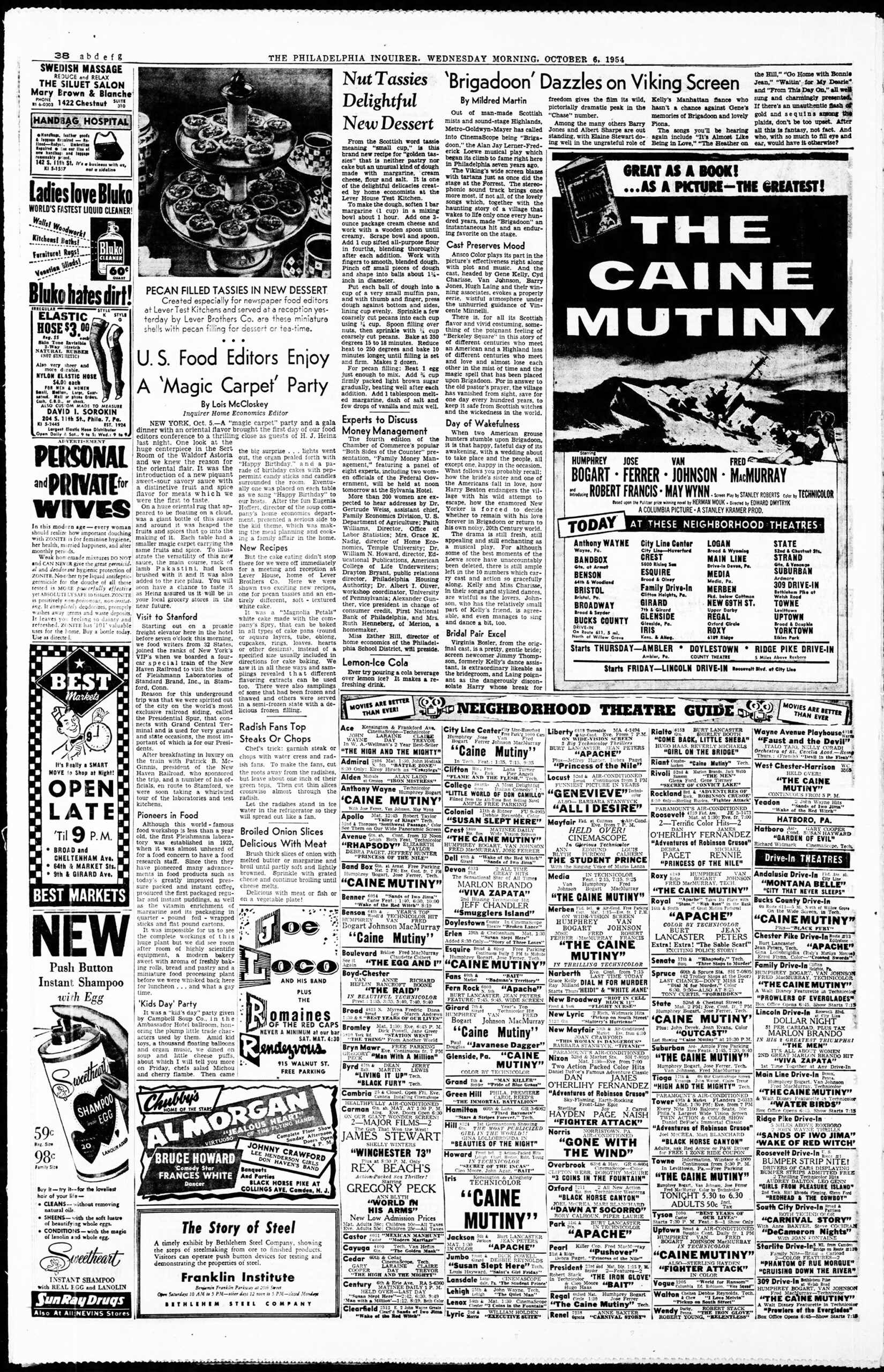
A little digging through the newspaper archives uncovered this surprising history: tassies aren’t from the South at all. They were developed by Lever Brothers — aka Unilever — in a test kitchen in New York City. The recipe was sampled by food editors at a conference in Manhattan on October 5, 1954, and then republished across the country. The name was attributed to the Scottish word “tassie,” which means small cup (borrowed from French). That’s a tassie: A beloved Southern tradition with a Scottish name, a dough recipe borrowed from Jewish rugelach, an indigenous American nut for the filling, all developed in New York City by a British multinational corporation trying to sell more margarine by giving freebies to the press. Ain’t that America?

If you’d like to try your hand at the original recipe, here is the full article from the Philadelphia Inquirer, from October 6, 1954 (on the same page with a review of Brigadoon and an ad for Sweetheart Shampoo, a “Push Button Instant Shampoo with Egg“).


Sunk into the couch in a pie-induced coma? Perfect time to read through our growing collection of Statesider original stories.

The post It’s High Time for Pie Time appeared first on The Statesider.

  • βœ‡The Statesider
  • Let it Snow
    In this Issue of the Statesider What to do when you’re snowed in (1970s edition), plus the stories that brought us joy in 2021, including Rolling Stones, lake-jumpers, possible pterodactyls, vintage roadside photos and much more. Snowed in With a B-List Musician Outside Las Vegas, New Mexico Sepp Friedhuber, Getty Images On Twitter the other day, we saw a guy named Tim Oliver mention his experience getting snowed in at a remote hut in New Mexico in 1970, with a hit-making songw
     

Let it Snow

22 December 2021 at 21:11

❄ In this Issue of the Statesider ❄
What to do when you’re snowed in (1970s edition), plus the stories that brought us joy in 2021, including Rolling Stones, lake-jumpers, possible pterodactyls, vintage roadside photos and much more.

Snowed in With a B-List Musician Outside Las Vegas, New Mexico

Sepp Friedhuber, Getty Images

On Twitter the other day, we saw a guy named Tim Oliver mention his experience getting snowed in at a remote hut in New Mexico in 1970, with a hit-making songwriter, some dogs, several cases of booze, and a whole lot of weed. We needed to know more, so we called him. Read the full story here.

We would make up a bunch of food and you’d get your bacon and eggs and pancakes, drink a bunch of beer, and everybody would get kind of woozy about the same time and just kind of fall asleep. 

And then pretty soon one of these Louisiana people would wake up, roll a joint, start strumming his guitar. We’d rub our eyes and go into the other room and have a beer, you know, maybe a glass of wine or even orange juice a little morning pick-me-up, although this might be in the middle of the afternoon. We did that for two and a half days. Just go to sleep for a while, wake up, party, go to sleep all the while, singing and laughing and telling stories. 

The Stories We Loved

There’s enough difficult news in the world right now, so we thought we’d add a little joy to world in this issue. Here are the US travel and culture stories that made us smile over the past year:

Pam’s picks

Department of Shut Up and Take Our Money: “He wants to build Jackalope Junction, a 20-acre theme park with Western and steampunk themes based on characters he created — notably Jackalope Jim, a sheriff in the turn-of-the-century town who wields his Jules Verne-style blaster with a cybernetic arm.” Susan Gill Vardon, San Diego Union Tribune

🐰   I’m theme park avoidant, but something about how weird this whole mash-up is made me giggle with delight. Yes, I want to go, and yes, I want the souvenir t-shirt.

Treading Water in the Dark: For some people, a free canoe on the side of the road wouldn’t warrant a second glance. Vashon Island resident Jesse Gardner hit the brakes. She needed that canoe, even if she couldn’t understand why at the time — or how on earth she was going to get it home. Jesse Gardner, The Statesider

🛶   It’s not just that this story put us in partnership with There She Goes, a podcast of stories by women travelers. It’s that Vashon is right over there from where I live and Jesse’s descriptions of island life made it possible for you to experience what it’s like to live here.

Iowa Airwaves and the Original Social Media: “There were so many lonely women on the farms in Iowa. Every day the men would leave and the wives would be left in their homes with their cooking and cleaning and gardening and children, and nothing but the radio for company.” Lyz Lenz, Men Yell at Me

📻   Radio has been so important to me during this era and reading Lyz’s piece about the role of radio for women in Iowa resonated. Also, Lyz’s newsletter is great. So great, you should subscribe.

Better than Rugelach? Them’s fightin’ words. We’re baking these Russian tea biscuits and finding out. Guess what: they’re spectacular — and they’re from Cleveland. Rachel Myserson, The Nosher

🥐   I cleaned out my fridge and found a lot of jam. Then I found this recipe for tea biscuits. Huge win.

Andy’s picks

Sub-Par Sandwiches: This story has everything we want from a golf story: a mystery, a weird obsession, lots of sandwiches, and — most importantly — absolutely no golf talk. Luke Fater, Atlas Obscura

⛳   In a normal year, I think about golf roughly zero times unless I’m thinking about the ways we waste massive amounts of water and fertilizer. Did I mention I’m fun at parties? But this is just the golf story for me. Also, I solved the mystery: the secret missing ingredient is pimento brine. You’re welcome.

Zoo Orleans: A cryogenic zoo for endangered species. Bunkers full of poisonous snakes. Feral pigs that want your granola. Pterodactyls (unconfirmed). Just across the river from the French Quarter in New Orleans is a place that is much, much wilder. April Blevins Pejic, The Statesider 

🐗   We ran many wonderful stories this year, but Zoo Orleans was such a joy to edit. This is one of those stories where you think you know what’s happening, and then you’re suddenly very wrong. This happens multiple times in the course of the story. I hope you enjoy it as much as I do!

The Perfect US Destination: Writer Jon Mooallem gets offered the chance to travel anywhere he wants for the NY Times Magazine. His answer: “What if I drove to Spokane?” He did. And he went to a Minor League baseball game. More of this, please. Jon Mooallem, NY Times Magazine

⚾   What if more people thought like this? What if instead of following the crowds to the same beaches, the same mountain lakes, you thought, “Hey, let’s drive to Spokane and watch minor league baseball?” Do it, America. Find your own Spokane baseball getaway.

New Jersey is Perfect: Obviously. But why? How? Here’s the whole story. Sara Benincasa

🍕   I probably know less about New Jersey than I do about golf, but I adore an impassioned “my place is better than yours” essay — and, really, I just love Sara Benincasa writing about anything, but especially when she turns her unique voice to US travel.

What I’m saying is the people of New Jersey are made of Boardwalk zeppoli and asphalt, and New York only exists because we say it does.

We also loved this postcard. Bring back postcards like this, please.

Doug’s picks

What happened when Mick Jagger walked into the Thirsty Beaver? No, this isn’t a dirty joke. Or maybe it is. Anyway, Mick went for a beer at a low-key Charlotte saloon and not a single person recognized him. One intrepid journalist dug deep into the story of what happened that night. Jeremy Markovich, North Carolina Rabbit Hole.

🍺   I’m a sucker for “famous people go to a regular-ass bar/restaurant and enjoy themselves” stories (Adele once went to my local diner, true fact!) and I especially love the way the reporter approached this one as a deep-dive investigation with just the right amount of dry humor.

Ruh-Roh, It’s the American Uncanny: Unpacking Scooby-Doo’s cultural legacy of … documenting vernacular architecture around the USA in the 1970s?? Feargus O’Sullivan, Bloomberg.

🏚   Old-school cartoons and historic buildings are both fascinating subjects, so it follows that the intersection of the two subjects would be a true delight. I wish this story had been 10,000 words.

Letters from Wisconsin: In Lake Geneva, Wisconsin, mail is delivered by boat. More precisely, it’s delivered by an elite group of “mail-jumpers” who leap from a moving (and tourist-filled) boat to the docks around the lake. Sometimes they miss and fall into the water. Rebecca Deurlein, Atlas Obscura

🛥   I’ve been looking at the map of Lake Geneva, and it sure seems like there are roads that access all of the giant houses along the waterfront, which means there’s no real practical reason to continue delivering the mail using agile young “mail-jumpers.” But it’s tradition and it’s ridiculous and, honestly, that’s enough (in this case) to make me smile.

Pudding Heaven: Persian rice pudding meets Mexican rice pudding at this Texas taqueria. It’s “warm and smoky with spices, slightly sour with strawberry powder and suffused with grains of rice that reveal the slightest chew” and we could go for a bowl right now. Meet us there? Priya Krishna, New York Times

🍚   We feature a lot of “X meets Y” food stories in the newsletter, because, well, they all sound so damn good. But this is the one that has stuck in my brain for months and made me want to book a plane ticket to Texas.


See You on the Roadside

One of the most-clicked stories in our newsletter over the past year was “A Photographer’s Mission to Capture America’s Last, Great Rest Stops” by Ryan Ford in Outside. There’s just no getting around it: people love roadside Americana. We’ll end the year with a little detour through some of our favorite photos in the John Margolies Roadside America Photograph Archive at the Library of Congress:

Mystery Spot entrance, Saint Ignace, Michigan (Library of Congress, John Margolies Roadside America Photograph Archive)
Club Cafe sign near Santa Rosa, Santa Rosa, New Mexico (Library of Congress, John Margolies Roadside America Photograph Archive)
Five Star Snack Bar, Route 11, Mount Crawford, Virginia (Library of Congress, John Margolies Roadside America Photograph Archive)
Brontosaurus with steps view 1, Dinosaur Park, Route 23, Ossineke, Michigan (Library of Congress, John Margolies Roadside America Photograph Archive)
Thunderbeast Park, Route 97, Chiloquin, Oregon (Library of Congress, John Margolies Roadside America Photograph Archive)
“Open Soon.” Old gas station — Taco Loco, Harlingen, Texas (Library of Congress, John Margolies Roadside America Photograph Archive)

Putting off holiday prep or year-end planning or anything else on your mind? Our archive of Statesider original stories is here for your enjoyment and procrastination assistance.

The post Let it Snow appeared first on The Statesider.

  • βœ‡The Statesider
  • January Travel Jones
    In this Issue of the Statesider 2022 travel: still complicated. Trees from outer space, bad architecture, cinnamon rolls, weird Disney, more fun with fonts, tunnels that united a nation, and piñatas you won’t want to break, no matter what’s inside. How to Think About Travel in 2022 The annual “where to go in 2022” lists are out. Yeah, we want to go to the Cook Islands as much as the next cabin-fevered traveler, but “where” is the wrong q
     

January Travel Jones

23 January 2022 at 13:00

🌲 In this Issue of the Statesider🌲
2022 travel: still complicated. Trees from outer space, bad architecture, cinnamon rolls, weird Disney, more fun with fonts, tunnels that united a nation, and piñatas you won’t want to break, no matter what’s inside.

How to Think About Travel in 2022

The annual “where to go in 2022” lists are out. Yeah, we want to go to the Cook Islands as much as the next cabin-fevered traveler, but “where” is the wrong question if you can’t (or shouldn’t) get there. We’re much more interested in “how” to travel — or even “if.” 🤔 Read our take in this Statesider editorial 🤔

Stories Across the US

The Lost National Park: Years of drought in the West are revealing the glory of Glen Canyon, America’s “lost national park.” Don’t miss the visuals on this one. Nathan Rott, NPR

Where to Find a Moon Tree: In 1971, the Apollo 14 mission brought a variety of tree seeds into space to see if they would germinate when they returned to Earth. They did, and there are still “Moon Trees” growing all across the US, some probably not far from where you are right now. Twitter thread, Kat Long. Google Map by Heather Archuletta.

Goodbye, Mansplaining: Six days exploring the Alaskan wilderness. What adventure travel could look like with no men involved. Maggie Shipstead, Outside

Sure, lots of women are terrible, and men contain multitudes, but I don’t think it’s out of line to say that women, left to their own devices, tend to be more cooperative and supportive than all-male or mixed groups.

How Kansas City Rolls: So you like cinnamon rolls. Do you like them the way Kansas City likes them? Baked, fried, round, square, iced, plain, even served with chili? Gina Kaufmann, KCUR

Not like this. No.

Lemon Pepper City: The story of Atlanta’s love of lemon pepper chicken wings, and how some of the city’s best-known versions come from an unlikely culinary destination: strip clubs. Eric Kim, New York Times

The peach is famously the state’s fruit, but lemon pepper is the city’s soul.

A Time for Change: Poet Maya Angelou will become the first Black woman to appear on a US quarter, one of five new designs coming out this year. The coins will be in circulation early this year. Nora McGreevy, Smithsonian Magazine

Can’t Improve This Headline: “Lee surrenders again as New Orleans renames boulevard for Allen Toussaint.” Sarah Ravits, Gambit

Cat Island: The reintroduction of wolves to Yellowstone has received a lot of attention, and stirred up a lot of passions, in recent years. Cumberland Island, a barrier isle off the Georgia coast, is home to a different and reintroduction experiment: bobcats. Ben Goldfarb, National Parks Conservation Association

Tunnels to the Past: The tunnels cut through Donner Summit built by Chinese immigrants in the 1860s helped unite our country. Today, with no active protection, the tunnels are a magnet for adventure seekers and graffiti artists. Shoshi Parks, Smithsonian

Donner Summit Tunnel, man with warm hat for scale (Photo: ChiefRanger, CC-BY)

Atchafalaya Mud: One thing is clear: the Atchafalaya Basin, the largest river swamp in the United States, needs help. But in a place where change is constant, no one can agree on what it is supposed to look like. Boyce Upholt with photos by Rory Doyle, Bitter Southerner

Early European settlers saw the Atchafalaya Basin as a nearly impossible landscape, a place where “the inexperienced traveler would require the thread of Ariadne in order not to wander forever,” as one 1803 visitor suggested.

Outdoor Access: Blair Braverman developed multiple tick-borne illnesses and her body has not been the same since. “Disabled” can mean many different things to different people, but if the goal is to enjoy the outdoors, these tips can improve your experience. Blair Braverman, Outside

Tasty Tucson: The headline “Is Tucson the best city for Mexican food in the US?” is designed to provoke a strong reaction. Here’s ours: We need to eat our way through Tucson to test the hypothesis. It’s the least we can do. Abbie Kozolchyk, National Geographic

Dallas Arts: Meet the piñata master whose creations are so beautiful that you won’t want to smash them open with a stick. José R. Ralat, Texas Monthly


Build Back Weirder

Have Fun Buying the Castle! This castle in Connecticut that looks straight out of a Disney movie is hunting for a buyer with $35,000,000 and very specific tastes. This might take a while. Rebecca Makkai has the backstory in this remarkable Twitter thread. Here’s the Zillow listing.

New Deal Disney: The Haunted Mansion at Disneyland was supposed to capture a New Orleans aesthetic, but was instead modeled after a real house in Baltimore — all thanks to the Index of American Design, a New Deal effort to catalog the art and design of America. Jason Schultz, Disneyland Nomenclature


Fun With American Fonts

The Statesider’s own Doug Mack accidentally blew up on Twitter after buying a font based on National Forest and National Park signs and then creating his own versions (there are many more, touching on everything from bears to Pop-Tarts to anxiety, if you click through to the thread):

bought some park service fonts and pic.twitter.com/h2jsuZCSWq

— Doug Mack (@douglasmack) January 20, 2022

What We’re Listening To

Way Too Interested, by Gavin Purcell. Are you weirdly interested in a specific topic? Maybe even a little too interested? Yeah, us too. Gavin Purcell’s recently started podcast pairs a person with specific passion with an expert in that field, and it makes for some fascinating listening. The most recent episode is tailor-made for Statesider readers: it’s all about the interstate highways of America. Anil Dash, CEO of Glitch and highway superfan, talks with Dan McNichol, former White House appointee and author of The Roads That Built America: The Incredible Story of the U.S. Interstate System about the past and future of America’s road system and bold infrastructure projects. (Also, don’t miss food writer Helen Rosner talking about her obsession with moss.)

🎧 Listen wherever you get your podcasts, or learn more here.🎧


If you enjoy The Statesider newsletter, please forward to a friend or two. Word of mouth is our favorite way to grow, which means we depend on your mouth and the words emerging from it. There was probably a better way to say that.

The post January Travel Jones appeared first on The Statesider.

  • βœ‡The Statesider
  • How To Think About Travel in 2022
    The annual barrage of destination lists filled with tips on where to go in 2022 is here. We’re travelers, so we love those things. When we’re not inspired by them, we love to argue with their picks and ogle the pretty pictures.  But we are where we are: in a pandemic in the midst of a wave of infections from a dangerously transmissible variant. We’re all tired of Covid’s looming presence and effect on every aspect of life, but it’s no good pretending things
     

How To Think About Travel in 2022

23 January 2022 at 13:01

The annual barrage of destination lists filled with tips on where to go in 2022 is here. We’re travelers, so we love those things. When we’re not inspired by them, we love to argue with their picks and ogle the pretty pictures. 

But we are where we are: in a pandemic in the midst of a wave of infections from a dangerously transmissible variant. We’re all tired of Covid’s looming presence and effect on every aspect of life, but it’s no good pretending things are back to normal. A destination list is of no use if you can’t get there — or if you’re being irresponsible in doing so.

Instead of creating our own list, or giving advice on what to do to get past the various and shifting COVID requirements of different destinations, we offer our thoughts on how to approach travel in a year of deep uncertainty.

Obviously, we’re going to tell you to take a domestic trip, so yeah, do that.

Try somewhere within a day’s drive, somewhere self-contained and self-catered. There will be moments for long-distance flights to other parts of the world, but today is not that day. Plus, it’s our raison d’être to remind people how fascinating the US is for travelers. Whether you’re looking for food, history, nature, adventure, sports, or the International Banana Museum, we’ve got it all. Don’t think of this travel as a substitute for the trip you actually want to take — one place can never be a perfect stand-in for another — but as a chance to see something genuinely cool and journey-worthy that you might not have seen otherwise. 

Put a trip on the calendar, but not the big dream trip. 

Maybe things will look great for travel in the Summer! Or maybe they won’t! It’s probably not the year to put all of your hopes and dreams into one big trip. Getting a trip on the calendar is still a good plan. Having something to look forward to is a great way to lift your pandemic-sagged spirits. And short trips — in distance or duration — can be as satisfying as the biggies. Research backs us up on this: the main effects of a vacation on your health and wellness come from experiences, not from the length of your trip.

Finally take the time to explore that town you always drive through on the way to somewhere else.

A lot of those towns you blow by on the freeway today were more bustling back when transportation was different, in the days when cars got fewer miles per gallon and more people traveled by train. Those little one-time hotspots continue to be interesting in their own right if you give them a chance. The lodging is cheaper, the demand is lower, and if you’re trying to minimize your exposure to crowds, well, why go where the crowds are? Plus, you get to learn about a new place.

Risk tolerances will vary. Take other people into consideration.

As the LA Times’ Matt Pearce recently tweeted: “Everyone taking masking less serious than me is a maniac putting us all at risk and everyone taking masking more serious than me is a threat to our proud social fabric.” Point being, your risk tolerance is just that: yours. Keep in mind that some people are very concerned for their own safety and the safety of their kids and loved ones, while others are ready to jump aboard a maskless Bikram yoga cruise. Wherever you are on that spectrum, don’t forget that others around you might see things differently.

Check before you book and before you travel to see if locals really want you to come. 

In 2021, Hawai‘i experienced a spike in infections, an overwhelming crush of mainland tourists, and a labor shortage all at once. The Governor asked people to stay home. Travelers, by and large, did not. If you’re still thinking, “But I really want to go there!!” we’d suggest getting a bit more context by reading this Afar story on Hawaii by Chris Colin. Headline: “Hawai‘i Is Not Our Playground.” This isn’t just a Hawaii issue. Wherever you’re wanting to go, if the locals say no, make new plans.

Expect labor shortages, and understand that might affect you. Tip service workers generously. 

It might take longer for your food to arrive or for your vacation rental to be ready. Everyone is doing the best they can under less-than-ideal circumstances. 

Speaking of service workers, order takeout.

New Yorkers had this dialed in well before the pandemic, with that pile of menus on top of the microwave. That new place you’ve been wanting to try will pack your food to go, and some places have the reheating instructions right there in the bag. Tip delivery folks well, too, if you go that route.

Step away from the savior complex. It’s just a trip.

If your goal is to help the local people of a destination thrive, find an organization that supports those in need — including when you’re not there in person. Yes, travel is a huge industry and it supports a lot of people, but don’t fool yourself that you’re saving a place by visiting, or that tourism is necessarily a net good even in non-Covid times. Travel economies are complex, and your presence as a traveler can both benefit and endanger the people and the place. You already know this. 

Staying home is always an option.

Look, we’re a travel-focused site, but we’re not travel promoters. Exploring America is a wonderful thing to do, but not at the expense of your safety or the safety of others. If travel is going to ratchet up your anxiety, or if it just doesn’t seem advisable to do, that’s okay! Now’s a great time to catch up on your movie-watching, your book-reading, or, if you really need to see the world, your Google Street View explorations (if you need inspiration, try finding a random city using Earth Roulette). And if you’re struggling to find an excuse to say no to travel, The Onion has you covered: What To Say If You’re Not Comfortable Traveling During Covid-19.

This too shall pass. We’ll meet you for breakfast tacos when it does.

Andy, Pam & Doug

The post How To Think About Travel in 2022 appeared first on The Statesider.

  • βœ‡The Statesider
  • Going for Gold
    In this Issue of the Statesider America’s best food city (maybe), Olympic history, disrupted travel plans, clammers gone wild, visiting JFK’s secret island bomb shelter, America’s Switzerland, North Carolina’s disappearing coast, breakfast pizza and Chinatown gowns. Statesider Takes We have a Statesider editor double-header for this issue. First up: Pam Mandel, who, like most of us, had travel plans that got disrupted by a highly inconvenient global pandemic.
     

Going for Gold

22 February 2022 at 13:00

🐚 In this Issue of the Statesider🐚
America’s best food city (maybe), Olympic history, disrupted travel plans, clammers gone wild, visiting JFK’s secret island bomb shelter, America’s Switzerland, North Carolina’s disappearing coast, breakfast pizza and Chinatown gowns.

Statesider Takes

We have a Statesider editor double-header for this issue. First up: Pam Mandel, who, like most of us, had travel plans that got disrupted by a highly inconvenient global pandemic. Plans are good! But plans are also hard when they keep changing and getting canceled. Travel plans today are an exercise in learning to accept that some things in our lives are not in our control.
🎟 Read “I Had Plans” on Nerd’s Eye View 🎟

I’m supposed to fly out in just over a week. I’ll believe it when the wheels touch the tarmac at my destination.


Doug Mack, on a very different topic, got some foodies riled up in advance of the Super Bowl by claiming that Cincinnati is America’s best food city. He was mostly joking, but people took this claim seriously. What are we doing when we try to compare one city’s food scene with another? And why is the Midwest is so often misunderstood?
🍝 Read “Cincinnati is the best food city in the USA. Maybe.” on Snack Stack 🍝

Too often, the same people who rightly celebrate large cities’ culinary diversity and complexity forget that diversity and complexity exist in other places, too.

Stories Across the US

Vaccination Destination: Thinking of heading back out there? Here are the most vaccinated places in the United States. Nathan Diller, Washington Post

Vanishing North Carolina: North Carolina’s coastal Highway 12 is disappearing. Megan Mayhew Bergman went on a road trip to see what has changed from her childhood — and what may never be there again. Megan Mayhew Bergman, The Guardian

Dressed to Thrill: For 40 years, the Tams have sold traditional attire to San Francisco residents, visitors, and beauty pageant royalty at their Chinatown custom dress shop. A beautiful photo essay. Carolyn Fong, SF Chronicle

Gas Station Nation: The 2,000 word explainer on Midwestern culture, gas stations, and breakfast pizza we’ve all been waiting for. Lyz Lenz, Men Yell at Me

Bomb Shelter: A bunker built for JFK on Peanut Island will offer public tours once the restoration is complete. We hope there’s a bar. Danielle Seat, WPTV

Bivalve Bonanza: A productive clam flat in Maine is at risk from overharvesting because of (checks notes) poor meeting attendance? Turns out if the flat isn’t managed locally, its administration will go back to the state and the state is a lot more generous with its licensing requirements. Ethan Genter, Bangor Daily News

“The only good meeting is a canceled meeting.” — These guys

Don’t Turn Your Back on the Ocean: Living in Miami is a constant reminder that sea-level rise is changing everything — and that “resilience” may be the wrong word. Mario Alejandro Arizo, Believer (and a reading on This American Life)

You might not think, at first, that my constantly getting the crap kicked out of me has anything to do with climate change or sea-level rise or the death of my city at the hands of an angry, swollen ocean. Yet when state and federal governments ignore the greater structural issues at play, the prevailing doctrine of adaptation starts to closely resemble the national discourse of “toughen up” and “pull yourself up by your bootstraps,” and it’s worth taking a moment to check in with the folks who don’t have any boots.

Hard Pass: A 600+ acre plot of undeveloped land is earmarked to become a Disney-themed residential community. There will be cast members, a 20-acre lagoon for swimming, and supposedly, a plan to mitigate the substantial impact the community will have on the groundwater supply. Our take? Themed living or not, stop building projects with huge water features in drought-impacted regions. Sherry Barkas, Desert Sun

Gary, Indiana, Gary Indiana. If you’d like to have a logical explanation how we happened on this elegant syncopation, we will say without a moment of hesitation: Here’s a locals’ guide to Gary, Indiana. Belt Magazine

Tuning Bork: On a PNW road trip? A subset of Seattle area drivers complain that their car radios are completely stuck on the local NPR affiliate. [Seattle editor’s note: F*x N*ws did call us a Socialist Hellhole some time back so this seems…on brand.] Casey Martin, KUOW


The History Department

Olympic History: Nearly all of the historic landmarks are gone, upgraded or demolished, but Pallisades Tahoe (the name was finally changed in 2021 from Squaw Valley) played an essential role in turning this California mountain town into a winter sports destination. Chloe Veltman, KQED

But what tends to get lost in accounts of the 1960 Olympic Games is the fact that they took place on unceded Indigenous lands — stolen land that had belonged to Native people for thousands of years.

Almost Heaven: But not quite Switzerland. A historic marketing campaign claimed West Virginia to be “the Switzerland of America.” Um, no. John W. Miller, Moundsville

Earthbound Issues: Not everyone in America backed the space race. “Black publications like the New York Amsterdam News and civil rights activists like Ralph Abernathy argued that such funds—$25.4 billion, in 1973 dollars— would be better spent alleviating the poverty facing millions of African Americans.” Bryan Greene, Smithsonian

Band on the Run: A group of seven outlaw Koreans found refuge — and an audience for their singing — at Howard University. In 1896. What? Karis Lee, Boundary Stones

Family Photos: A collection of old pictures ties a Texas immigrant mercantile owner to a Mexican revolutionary. Maybe. Stacey Ravel Abarbanel, Zocalo Public Square

Who was Sam? And how did this Jewish immigrant from Lithuania land in a dusty border town and get tangled up with Villa, one of Mexico’s most notorious figures?


What We’re Reading

South to America: A Journey Below the Mason-Dixon to Understand the Soul of a Nation, by Imani Perry. Perry’s book is a classic American road trip memoir in many familiar ways: the oddball characters, the road food, the feeling of displacement. But Perry never skims over our history, she does not let us forget who built this country and who profited from that work. It’s from South to America that I learned of the protests against American spending in the space race (link above). I am continually surprised in how much we Americans are denied in the retelling of our history; Perry’s book fills in some of those stories. Buy Now from The Statesider Bookshop


Looking for more great armchair travel reading? Browse The Statesider book selections on Bookshop.org. Looking to create your own development inspired by an entertainment company? Can’t help you there.

The post Going for Gold appeared first on The Statesider.

  • βœ‡The Statesider
  • Pizza & Presidents
    In this Issue of the Statesider In the footsteps of TJ, American pizza tales, Atlanta biscuits, Moe’s Tavern goes global, how to identify a Texas taqueria, the North Carolina sound, the immigrant experience in National Parks, whole-hog traditions, and the deeper meaning of cheap cake. On the Road with Thomas Jefferson The new history-rich travelogue In Pursuit of Jefferson follows in Thomas Jefferson’s footsteps around Europe (as well as Monticello and other areas of the
     

Pizza & Presidents

27 March 2022 at 12:00

🍕 In this Issue of the Statesider 🍕
In the footsteps of TJ, American pizza tales, Atlanta biscuits, Moe’s Tavern goes global, how to identify a Texas taqueria, the North Carolina sound, the immigrant experience in National Parks, whole-hog traditions, and the deeper meaning of cheap cake.

On the Road with Thomas Jefferson

The new history-rich travelogue In Pursuit of Jefferson follows in Thomas Jefferson’s footsteps around Europe (as well as Monticello and other areas of the USA), learning how the founding father’s journeys abroad connected to his life and leadership back home. We talked to author Derek Baxter about his book and his journeys, which were at times quite humorous and at other times decidedly somber. (Also we learn if Thomas Jefferson was a cake guy or a pie guy. Place your bets now.) 📗 Read The Statesider interview with Derek Baxter 📗

I really did come to understand that slavery was intertwined with everything he did. I mean, it’s how he’s paying for his travels and for just about everything — it came mostly came from his tobacco, which was grown and picked and packed by enslaved workers on his plantations.

Stories Across the US

The Midwest, but Realistic: Why do TV and film struggle to accurately depict the Midwest? HBO’s new show, Somebody Somewhere somehow gets Kansas right. Sara Smarsh, The Guardian

Taco Spotting: News you can use — The 12 types of Texas taquerias and how to spot them. José R. Ralat, Texas Monthly

Follow Your Moe’s: Bootleg Moe’s Taverns from The Simpsons have popped up all over Latin America. Tamlin Magee, Eater

Multinational Parks: A group of first-generation Indian migrant workers visit Yosemite, and it’s not quite a rapturous John Muir experience. Who is really welcome in America’s parks? Torsa Ghosal, Catapult

When I visit the outdoors with other migrants, I feel connected. It takes only an encounter with white aggression to overturn that feeling.

Bonnie and Clyde…and Grandpa Chuck? Lauren Hough travels to the old family hometown in the Texas Panhandle to investigate a family legend. Did Grandpa Chuck really help Bonnie and Clyde evade the law? Lauren Hough, Texas Highways

American Tune: North Carolina’s experimental folk scene is creating a new American sound. Harris Wheless, NPR Music

Vegan Trigger Warning: The South Carolina farm that is maintaining the ritual of hog slaughters, a disappearing tradition of Black agrarian life. Kayla Stewart, New York Times

Yeah, we’ll be right there. (Photo from Erika Council’s @bombbiscuitatl on Instagram)

Biscuit Jedi: Atlanta’s biscuit master Erika Council is on a mission to spotlight the contributions of the Black women bakers who came before her. And also to make anyone who reads this want to book the next flight to Atlanta. Jasmin Pittman Morrell, Bitter Southerner

Bukharian Queens: Meet the Bukharian women of Rego Park. “In addition to speaking Russian, they have their own language, Bukhari, a Judeo-Tajik dialect of Tajik and Persian with some Hebrew.” Liana Satenstein, Vogue – no really, Vogue

Butter Emails: After 50 years of carving butter sculptures at the Minnesota State Fair, you’d probably have a lot of stories to tell. Enough to fill a whole book. That’s precisely what butter-carving legend Linda Christensen did: filled a book with butter carving stories. Richard Chin, Star Tribune

A Slice of Long Island: On the passing of Charles E. Entenmann, the patron saint of American supermarket pastries, and what his products meant to so many. Dan Barry, New York Times

Long Island working-class families like mine believed that a box of Entenmann’s conveyed class. It would be on proud display in the kitchen, prominent on the refrigerator or displacing plastic flowers as the table centerpiece.

Following the Water Masters: Since the 1800s, zanjeros have been responsible for managing the flow of irrigation water to where it’s needed. Times and technology have changed, but zanjeros still ply their trade along the canals and borderlands of southern California. Marcela Davison Avilés, Alta California

That’s So Arvin: Arvin Temkar had never been a fan of his first name, Arvin, but a trip to the most Arvin place of all, Arvin, California, gave him a new perspective on Arvin-hood. Arvin Temkar, Zócalo Public Square

It was like seeing your name on Broadway, if Broadway was in the middle of nowhere and you’d never heard of it.

March Murkiness: Where did the tradition of betting on the NCAA basketball tournament bracket come from? This unassuming Staten Island bar. Maybe. Not sure we’d bet on it. Sara Kugel, CBS Sunday Morning

These Are Not the Hotel Rooms You’re Looking For: For some unknown reason, Disney World is having trouble booking $5000 hotel rooms at the new Star Wars hotel. Katie Dowd, SFGATE

La Grange Legacy: Rumors spreadin’ ’round, in that Texas town, about that bakery in La Grange. (And you know what I’m talkin’ about.) Just let them know, if you wanna go, to bake kolaches at 2 am. They got a lot of nice rolls. Have mercy, did we stretch this joke out too long. La Grange bakery seeks an apprentice to continue its 75-year legacy. Lisa Bubert, Texas Monthly


Tales from the Pizza Parlor

Leaning Tower of Pizza
The Leaning Tower of Pizza, Green Brook, New Jersey

It’s Hip to Be Square-Cut: The Statesider’s own Doug Mack traces the roots of square-cut pizza in America. It somehow ends up involving pipe organs. Doug Mack, Snack Stack

Pulling Out All the Stops: No, really, pipe organs and pizza were once a joint attraction. Here’s the history of the “pizza and pipes” craze that gripped America. Heather Arndt Anderson, Taste

Maine’s Maineiest Pizza: Brian Kevin drove 450 miles to eat a pizza you will only find in Maine. Yes, this is click bait. No, we won’t judge you if you’d actually eat one. Brian Kevin, Down East Magazine

Never-Ending Story: Peter Reinhart is one of the world’s leading authorities on bread baking, but he’s also totally obsessed with pizza. Since 2010, he’s been exploring the US in search of the best pizzerias — you can follow his explorations on his Pizza Quest website, or grab his new book “Pizza Quest: My Never-Ending Search for the Perfect Pizza.”


Call for Pitches

We know a lot of you out there aren’t just readers — you’re writers, artists, photographers and creators of all stripes. Perhaps you would like to apply those talents to The Statesider?

Spring 2022 Call for Pitches: We’re looking for new creative pitches on US travel and culture for The Statesider, and while we still want written stories, we’re also interested in maps, infographics, graphic stories/comics/illustrations, and photo essays. If you read us regularly, you’ll have a sense already about what we like, but we spelled out the full details here.

We’ll be collecting pitches until April 30, 2022 (or until our inbox explodes).


Looking for more great armchair travel reading? Browse The Statesider book selections on Bookshop.org. Looking for the perfect biscuit? Join the club.

The post Pizza & Presidents appeared first on The Statesider.

  • βœ‡The Statesider
  • Orange You Glad It’s Spring?
    In this Issue of the Statesider Corned beef and sauerkraut in the Delta, tanking in Nebraska, Moses in Missouri, and pancakes at midnight for Ramadan. Also, the history of sushi in America, Orange County’s buried secrets, and MMMBop badu ba bop oh great, now that’s stuck in our heads. Midnight Pancakes We always say that there’s no sweeter phrase than “all-day breakfast” — even better when it’s all night as well. Who’s at the IHOP
     

Orange You Glad It’s Spring?

30 April 2022 at 12:00

🍊 In this Issue of the Statesider 🍊
Corned beef and sauerkraut in the Delta, tanking in Nebraska, Moses in Missouri, and pancakes at midnight for Ramadan. Also, the history of sushi in America, Orange County’s buried secrets, and MMMBop badu ba bop oh great, now that’s stuck in our heads.

Midnight Pancakes

We always say that there’s no sweeter phrase than “all-day breakfast” — even better when it’s all night as well. Who’s at the IHOP, Waffle House or any 24-hour restaurant in the middle of the night during Ramadan? Muslim Americans chowing down on an all-American breakfast. 🥞 Hira Qureshi, Courier Post 🥞

Stories Across the US

It’s Dolly’s World: What Dolly Parton wants us to know about the Smoky Mountains. Amy Alipio, National Geographic

We should pay more attention. We’re just mistreating Mother Nature — that’s like being ugly to your mama.

We’ll Take Them All: A mouth-watering look inside Lady Wong, the East Village dessert shop specializing in the colorful world of Southeast Asian kuih. John Tsung, Eater

Peeling Orange County: A new atlas reveals the history of California’s Orange County buried beneath the amusement parks and citrus groves. Laura Bliss, Bloomberg CityLab

Tanks for the Memories: At the annual Polar Bear Tank Race in Mullen, Nebraska, contestants hit the river in an unusual boat: a metal cattle tank. Carson Vaughan decides it’s time to give “tanking” a try. Carson Vaughan, Outside

I’ve spent most of my career in journalism trying to complicate the popular perception of the Great Plains, especially my home state of Nebraska, and tanking seemed to reinforce just about every hayseed stereotype we’re associated with.

Jewish Temple in Mississippi, antique postcard
Courtesy of the Mississippi Department of Archives and History

Corned Beef in the Delta: In the Mississippi Delta town of Greenville, a community meal that brings together Jews and gentiles from all over the Delta has been serving up to corned beef on rye for the past 130 years. Southern Foodways Alliance

A nearby bakery makes the rye bread, and Leanne Silverblatt, whose family has lived four generations in the Delta, makes the sauerkraut using Betty Goldstein’s recipe. Some say, though, it’s not as good as Betty’s because it’s missing the ash that would accidentally fall in the pot from her cigarette.

Native Photography: Images of Oklahoma from Jennie Ross Cobb, the first-known Native American female photographer. Will Chavez, High Country News

Sushi History: Sushi is a relatively recent phenomenon in the US, right? Wrong. Learn about the first sushi restaurant in America (it lasted one day) and the Great Sushi Craze of 1905. H.D. Miller, An Eccentric Culinary History

New Orleans, Old Myths: How a racist old textbook lodged itself in the heart of New Orleans’ self-mythology. Jordan Hirsch, Slate

Making Room on the Slopes: A Latina writer finds her identity in snowboarding, even though winter sports have long disregarded marginalized peoples. Stephanie Jimenez, Sierra Magazine

Travel by Tiny Library: The Little Free Libraries are all across the US now, and nobody ever said they just had to be for books. Creative variations feature puzzles, yarn, and even a Little Free Peep Show? Austin Graff, Washington Post

Or, Let the Library Come to You: The Brooklyn Public Library is giving any teenager (ages 13-21) in America a free Brooklyn Public Library card to combat rising attempts to ban books around the country. Brooklyn Public Library

Remember the Dismal: The push to bring the historical significance of the Great Dismal Swamp to light — including the parts of the history that some would rather avoid telling. Lex Pryor, The Ringer

Vulture Culture: Kimberly Coburn visits the raptor rehabilitation center at Callaway Gardens in Pine Mountain, Georgia. Can these unappreciated feasters on the dead teach us something about mortality? Kimberly Coburn, and *stunning* photos by Fernando Decillis, Bitter Southerner

In the slantwise, sackcloth logic of grieving, I decided to learn all I could about the turkey vulture, the disparaged buzzard. Maybe these bald-faced undertakers knew something I didn’t.


Is This Americana?

Ear Worms of America: 25 years ago, a band of brothers from Oklahoma released a single that took the planet by storm. The oral history of Hanson’s MMMBop. Kevin E. G. Perry, Independent

Not the Wreck Bar.

Mermaid Trouble: A mermaid at a bar famous for “America’s only underwater burlesque show” finds herself being stalked by a witch with a grudge and an aggressive County Sheriff’s lieutenant, and we don’t even have to tell you what state this is in. Bob Norman, New Times


Podcasts We’re Listening To

Exodus in the Ozarks: It’s a travel story, it’s a Passover story, it features Pam Mandel in Branson, Missouri, eating massive pancakes? Sign us up. Pam Mandel, There She Goes

Trapped in the Ethnic Aisle: There’s nothing we like more than exploring the world through supermarkets, but it’s not without controversies and complications. The history of the “Ethnic Aisle” at US grocery stores — and the bizarro world of American aisles around the world. Shirley Wang, 99% Invisible

4/20 with Willie: In which Kacey Musgraves tells the story of the lucky joint given to her by Willie Nelson (and much more). One By Willie

America’s Greatest Idea: A conversation with the Ojibwe writer David Treuer, who asked in an Atlantic article last year: Should we return the parks to Native Americans? The Experiment


We will be serving up a fresh hot stack of new Statesider original stories starting next month. Looking for more great travel reading? Browse The Statesider book selections on Bookshop.org.

The post Orange You Glad It’s Spring? appeared first on The Statesider.

  • βœ‡The Statesider
  • Not Fade Away
    In this Issue of the Statesider Sounds of Chinatown, 683 bike share stations, revisiting the Oregon Trail, UAPs not UFOs, documenting today’s Native Americans, fading barn signs. Giant hibiscus and giant sea snails. Plus, a borrowed motorcycle and the healing power of pie. Taking the Pie Road Even caregivers need to be taken care of sometimes. For John McMahon, care came in the form of a surprising offer from a neighbor. A gorgeous motorcycle, a winding road, and a slice
     

Not Fade Away

30 May 2022 at 13:44

🏍 In this Issue of the Statesider 🏍
Sounds of Chinatown, 683 bike share stations, revisiting the Oregon Trail, UAPs not UFOs, documenting today’s Native Americans, fading barn signs. Giant hibiscus and giant sea snails. Plus, a borrowed motorcycle and the healing power of pie.

Taking the Pie Road

Even caregivers need to be taken care of sometimes. For John McMahon, care came in the form of a surprising offer from a neighbor. A gorgeous motorcycle, a winding road, and a slice of legendary pie were just what the doctor ordered. 🥧 Read this Statesider Original Story 🥧

Stories Across the US

400 Nations and Counting: Matika Wilbur has spent 10 years documenting Native American life. Read this interview with her, then go spend some time with the work. Edward Curtis can take a seat. Shane Mitchell, New York Times

“Our Indigenous TikTok stars will often put on regalia and dance, and it gathers a lot of likes,” she said. “But what about a Native doctor in a suit? Because seeing is believing, and our young children deserve to see themselves as they are.”

The Science is Out There: They’re called Unidentified Aerial Phenomenon now, not UFOs. And there are a handful of places you can visit to get closer to the truth about them. Jill Robinson, National Geographic

D.C. By Bike: Sure, going to every country is a feather in your travel cap, but have you been to all 683 Capital Bikeshare stations? Luz Lazo, Washington Post

Runaway Brides: They wanted out and they had few options. So they hightailed it to North Dakota, where divorce, while still complicated, was at least possible. April White, Smithsonian

Friday Kneads: Challah means something different — or maybe more — in Ames, Iowa. Benjamin DuBow, Longreads

Special Projects: Someone in Tokyo, try this Iowa-themed BBQ place and get back to us. We’ll hold.

What’s the Deal with Mudflap Girl? We wondered this question aloud, and, lo and behold, this article answers it quite bluntly: “Mudflap Girl Was This Guy’s Mom.” Keith Barry, WIRED

“Why do so many people feel the need to display it? What does it say about us?”

Queen Conch: A hatchery in Naguabo, Puerto Rico, hopes to hold back the impact of overfishing. But overfishing isn’t the only thing depleting giant edible sea snail populations. Cynthia Barnett, Hakai

Tsunami Zone: You have 15 minutes to run for high ground when the sirens sound. A visit to Washington’s Long Beach peninsula. Aube Ray Lescure, Dispatches

Whatever, Google. It must be true because it’s on an arch.

Trans American: This Alabama dad is leaving the place he loves for something he loves more: his trans kid. Will anti-trans laws mean a new kind of refugee and the stifling of dissent? Maybe that’s the point. John Archibald, AL.com

We’ll Pass: Local police say it’s not enforced but we’re going to give a wide margin to this town. It has a law on the books requiring every head of household have a firearm. Omar Jimenez, CNN

Statesiders of the Month: The horrific murders in Uvalde and Buffalo (and and and) are a uniquely shameful American phenomenon. We salute the protesters at the NRA convention in Houston, we salute their righteous anger and their strength. We don’t move forward by being silent. Reuters


Department of Disappearing Destinations

Trial by Fire: “Is this it? I wondered. Is this dull, lifeless pallor the future of summer in the West? Should I just cut my losses, turn around, and head home to the Bay Area? But the smoke was in the Bay Area too. Its drifting ash reached all the way to Minnesota, Toronto, Philadelphia. There was literally nowhere to go.” Shoshi Parks, Hidden Compass

It’s the Bonneville Dam now. The Falls don’t fall here anymore.

Underwater History: Climate change means Jamestown, the earliest known English settlement in the US, is at risk of being destroyed by rain and rising water — and quickly. Jane Recker, Smithsonian

Follow the Barns: Bleached by sun and battered by the weather, the barn billboards are disappearing. You can use GPS to get to Rock City, but barn directions are way more fun. Caroline Eubanks, Atlas Obscura

It wasn’t easy: there was the risk of falling from the roof, and over the course of his career, he was chased by dogs and even a longhorn steer.

Hibiscus Tea: “Hibiscus grandiflorus … is rarely seen by humans because it grows only in a particularly secluded habitat and its blossoms open only at dawn and dusk, closing against the stifling heat of the summer sun for all but a few hours each day.” Jim Barger Jr. | Philip Juras | Ben Galland, Bitter Southerner


What We’re Listening To

Listen Here: Composer George Tsz-Kwan Lam is gathering stories about New York’s Chinatown immigrants and setting the stories to music. He hopes the new layer of sound will help people find deeper ways to connect to these locations. Jennifer Vanasco, NPR


Have you read a great US travel-themed book recently? Let us know! We’re always adding titles to the The Statesider shop on Bookshop.org and looking for new titles to review and authors to interview.

The post Not Fade Away appeared first on The Statesider.

  • βœ‡The Statesider
  • Down to the Crossroads
    In this Issue of the Statesider Roadside crosses, crossing America, and what to do when America makes you cross. Plus: noodling with King Catfish, Filipino Virginia, Black rodeo in photos, an ode to Costco, a chewy story from the Jersey Shore, Juneteenth in context, and the people who are rethinking Native art and cuisine. Cross-eyed in Appalachia The Nelsonville Cross, Ohio There are thousands of roadside crosses across America, but for Robin Caldwell, one looms large: the 65-fo
     

Down to the Crossroads

3 July 2022 at 15:07

🛣 In this Issue of the Statesider 🛣
Roadside crosses, crossing America, and what to do when America makes you cross. Plus: noodling with King Catfish, Filipino Virginia, Black rodeo in photos, an ode to Costco, a chewy story from the Jersey Shore, Juneteenth in context, and the people who are rethinking Native art and cuisine.

Cross-eyed in Appalachia

The Nelsonville Cross, Ohio

There are thousands of roadside crosses across America, but for Robin Caldwell, one looms large: the 65-foot tall Nelsonville Cross she regularly passed on her way in and out of Athens, Ohio. For some, the cross gave comfort, but for a young Black woman in a county with a visible KKK presence, it did quite the opposite — until she learned the real story. 🚘 Read this Statesider Original Story 🚘

Mapping American Crossings

How have people crossed America in the past? A recent exhibit, Crossings: Mapping American Journeys, at Chicago’s Newberry Library, told the story of various crossings, from the underground railroad to early road tripper in a series of historical maps. Ryan Ver Berkmoes spoke with the curator, Jim Akerman, about how the maps were selected and what we can learn about the future of American travel. 🗺 Read this Statesider Interview 🗺

Stories Across the US

Topless in Nantucket: There once was a man from Nantucket, who said prudish laws should go suck it. “Just take off your shirt, no one will get hurt. Tradition? I say…” Zac Thompson, Frommer’s

Puerto Rico’s Complicated Rebound: A nuanced look at Puerto Rico’s tourism recovery, what it means for locals, and the lessons for other destinations. Dennis Schaal, Skift

Gone Noodlin’: Stick your hand in a catfish’s mouth with Oklahoma’s Catfish King. You go first. Matt Carney, Outside

All You Can Eat: The decline of one of the US’s great culinary innovations: the all-you-can-eat buffet. Addison Del Mastro, The Bulwark

Black Fishing: A Puget Sound fishing trip inspires a look back at the connection of Black Americans to fishing and boating. Nneke M. Okona, Charlotte Observer

For us, when we take to the water, it is not only to delve into leisure and slow the pace of our lives and center it in gratefulness; it is also active reclamation.

Black Rodeo Rides Again: A new photographic book follows America’s only touring Black rodeo. Lauren Moya Ford, Hyperallergic

Native Foods: The renaissance — and reimagining — of New Mexico’s Pueblo cuisine. Tag Christof, Fifty Grande Magazine

Laffy Taffy: How salt water taffy became a Jersey Shore staple. Warning: includes hypnotic taffy pulling video. Kae Lani Palmisano, Philadelphia Inquirer

Jersey Gulls: Ocean City, New Jersey cleared the gulls from its boardwalk by looking to an ancient art: falconry. Andrew S. Lewis, New York Times

Tasty Juneteenth Reads: The Oxford American pulled together an impressive collection of 10 original stories for Juneteenth this past month, with a strong lean into the culinary traditions of Black America. Take your time with this one. On Jubilee: A Juneteenth Series, Oxford American

Costco Love Song: The power and the glory of Costco, and its lasting influence on immigrant families in the US. Yuxi Lin, Longreads

More than anything, I lust after the microwavable cheese-filled pierogies. “Trash food,” my mother calls them. I tell her that I aspire to be a trash can. 

Caribbean Soul Food Queen: The story of “Queen Trini’s” ascension to the throne of New Orleans’ Caribbean soul food kingdom. Tami Fairweather, Very Local

A Sea By Any Other Name: Are the Great Lakes really “inland seas”? Do you love a delightfully pointless nomenclature argument? Us too! Gemma Tarlach, Atlas Obscura

Hummingbird Detectives: Meet the elite group of licensed hummingbird banders who are trying to figure out why certain species are declining across the US. Jessica Bradley Wells, Bitter Southerner

What is Native Art? Cannupa Hanska Luger is making the art world rethink what Native American art can be — and why there has been pressure for it to look a certain way. Joshua Hunt, New York Times

Filipino Virginia: Exploring the history and the current food scene in Norfolk and Virginia Beach, which has one of the largest populations of Filipino Americans on the East Coast. Norie Quintos, National Geographic


The Tough Love Department

Where Do We Go From Here? It’s been a tough month in America for women’s rights, gun safety, climate change, and faith in the grand American experiment. What is an America lover to do when it’s behaving so unlovably? The Statesider’s Pam Mandel finds herself thinking back on Palestinian dessert in the middle of Nevada, cowboy poets, and one of our most divisive landmarks: Mt. Rushmore. 🇺🇸 Read Pam’s Essay 🇺🇸


What We’re Listening To

Strong Sense of Place: The folks from the travel podcast Strong Sense of Place are always worth listening to, but we love when they bring their world-roaming ways back to American destinations. In their recent episode, “Appalachia: Buttermilk Biscuits, Bluegrass, and a Big Blue Moon,” they celebrate Dolly Parton, dive into regional folklore, and daydream about banana pudding — which is exactly what we’re doing now, too.

Happy Family: A fictional (but very recognizable) story of lost childhood, a struggling restaurant, and a bygone era of Chinatown. This story can be enjoyed in multiple ways — as an audio reading with original music, or as a beautifully illustrated story. William Pei Shih, Ursa


Have you read a great American travel book recently? Let us know! We’re always adding titles to the The Statesider shop on Bookshop.org.

The post Down to the Crossroads appeared first on The Statesider.

  • βœ‡The Statesider
  • A Walk in the Woods
    In this Issue of the Statesider An ER doctor learns to hunt, tourists clamor for swimming horses, really big trees you can see (and ones you can’t), solo trips into the wilderness, and other stories of camping and the great outdoors. Plus: Weird Al fans marvel at a ball of yarn, accurate New Jersey, glowing Florida, and everyone fries chicken in their own way. Also: we love delis. So much. Life in the Crosshairs What happens when an ER doctor who spends his days saving liv
     

A Walk in the Woods

7 August 2022 at 12:00

⛺ In this Issue of the Statesider ⛺
An ER doctor learns to hunt, tourists clamor for swimming horses, really big trees you can see (and ones you can’t), solo trips into the wilderness, and other stories of camping and the great outdoors. Plus: Weird Al fans marvel at a ball of yarn, accurate New Jersey, glowing Florida, and everyone fries chicken in their own way. Also: we love delis. So much.

Life in the Crosshairs

Life in the Crosshairs, by Peter Striffolino

What happens when an ER doctor who spends his days saving lives goes to hunting school in eastern Washington and learns how to kill? Ramesh Reddy goes all in to learn the art of the hunt — and what it means to be a meat eater in the modern world. 🦌 Read this Statesider Original Story 🦌

Stories Across the US

Weird Al Wanderlust: Darwin, Minnesota is home to a very large ball of twine. It also attracts visitors with a deep love of the music of Weird Al Yankovic. Charlie Gillmer, Medium

Follow Your Dreams, People: Colorado Springs man becomes the fourth person to push a peanut up Pikes Peak with his nose. That’s right: fourth. Abigail Beckman, Colorado Public Radio

What You’re Missing When You’re Not Watching Stickball: Did you miss the World Series Stickball Championships, the pinnacle of the centuries-old, full-contact Native American sport? Or the crowning of the new Choctaw Princess? Here’s your update. Lukas Flippo, Mississippi Free Press

Superheroes, Seedy Cities: Hollywood rarely captures things in a perfectly realistic way. One writer from Jersey City wishes the latest big-screen depiction of his hometown was, well, a bit less nice. Aymann Ismail, Slate

Global Gentrification: The pandemic created a whole new generation of American digital nomads: tech and knowledge workers cut free from the office. But what are all those Americans abroad doing to the local economy in places like Mexico City? Yeah, it’s… not great. Mary Steffenhagen and Alana Casanova-Burgess, The Takeaway


The Great Outdoors

The Not-So Lone Rangers: The six rangers of the Maryland Assateague Island state park have a lot on their hands: 85 wild horses…plus 2 million tourists. The magic of the island from the perspective of those who know it best. Mickie Meinhardt, Bitter Southerner

Good to Glow: We’re suckers for the eerie glow of bioluminescent waters, but there can be too much of a good thing. At Florida’s Indian River Lagoon, the colorful nighttime show is a warning sign. Terry Ward, National Geographic

Among Giants: The location of the Grove of Titans was secret. Until it wasn’t. Now Jedediah Smith State Park in Northern California has opened a new elevated walkway to the grove of ancient redwoods to let visitors enjoy the massive trees without tearing up the forest floor. Christopher Reynolds, LA Times

Just Not This Giant: Hyperion, the tallest of the redwoods — in fact the tallest living thing on the planet — has also been suffering thanks to an internet doxxing, but instead of a new elevated walkway, there’s a new $5000 fine plus the possibility of 6 months in jail if you try to go see it. We’ll pass. Juliana Kim, NPR

Messy Conversations: Mountain towns of the West may profess a “Good Vibes Only” attitude, but they still struggle to deal with racism. It’s easy to pretend it’s a non-issue unless you’re affected. Emilé Zynobia Newman, Outside

I’ve lived in the Mountain West for close to 20 years now, and I’m telling you I’ve never felt more unsafe in my lifetime than I do now. It’s all around our liberal mountain bastions.

After the Floods: The recent flooding of Yellowstone ruined some vacation plans, but it also breathed new life into Yellowstone’s natural ecosystem. Nick Mott, High Country News

Solo, So Good: What is it about solitude in the wilderness that leads to moments of self-discovery? A personal tale and a look at the science. Wudan Yan, Sierra Magazine


Are You Gonna Eat That?

We Were Born Ready: Get ready for Indian fried chicken. Jaya Saxena, Eater — part of the larger package of drool-inducing stories, The United States of Fried Chicken

The Great Iowa-Japan Bacon Connection: The American embassy in Tokyo has a whole section on its website dedicated to connecting Japanese and American cultures, including plenty of food stories. Our favorite: the tale of how an Iowa pork-booster organization helped establish the Japan Bacon Festival. American View (published by the American Embassy)

In a Pickle: “I would get so hungry at this exhibit, I wouldn’t be able to take it.” Statesider editor Andy Murdock on a traveling (should we say wandering?) exhibit about Jewish delis. Adam Nagourney, New York Times

Mac Salad, Protein, and Two Scoops of Rice: A whole lot of Hawaiian-style plate lunches come out of the L&L plus, 20,000 Spam musubis a day. But the L&L started as a tiny family-run place in Honolulu. Christine Hitt, SF Gate


What We’re Reading

The High Sierra: A Love Story, by Kim Stanley Robinson. If you know Robinson from his long science fiction (and climate fiction) career, including Ministry for the Future, New York 2140, and the Mars trilogy, this one will come as a surprise. Since a life-changing trip in 1973, Robinson has returned to California’s Sierra Nevada over 100 times, and he’s still backpacking at 70. This book is unlike others you’ll see on hiking the Sierra: it weaves personal stories with philosophical essays on the value of wild spaces and their effect on the human psyche, and even includes practical tips on hiking the Sierra gleaned over a lifetime of exploration. If you’re feeling burned out by city life or too much time in front of a flickering screen, this book is a reminder that there are still places that can wash that all away. Buy a copy today through the Statesider shop


Have you read a great American travel book recently? Let us know! We’re always adding titles to the The Statesider shop on Bookshop.org.

The post A Walk in the Woods appeared first on The Statesider.

  • βœ‡The Statesider
  • Nothing but Flowers
    In this Issue of the Statesider Releasing the river, saying no to cruise ships and yes to canoes, replanting cacti, heading to the diner, and letting dead whales lie. Plus, a Colorado wildflower field that’s going to stay a secret. The Road to Columbine Heaven Who can you trust with your travel secrets? Should writers stay quiet about some places in order to save them? If you stumble into an unmapped wildflower Shangri-La in the Rocky Mountains of Colorado, like Shara Johnso
     

Nothing but Flowers

4 September 2022 at 12:00

🌺 In this Issue of the Statesider 🌺
Releasing the river, saying no to cruise ships and yes to canoes, replanting cacti, heading to the diner, and letting dead whales lie. Plus, a Colorado wildflower field that’s going to stay a secret.

The Road to Columbine Heaven

Who can you trust with your travel secrets? Should writers stay quiet about some places in order to save them? If you stumble into an unmapped wildflower Shangri-La in the Rocky Mountains of Colorado, like Shara Johnson did, what should you do? 🌼 Read this Statesider Original Story 🌼

Stories Across the US

A Cruise Story Worth Reading: It’s rare that we come across a story set on a cruise that really catches our attention, but this Letter to a Stranger is such a gorgeous coming-of-age story. It just happens to be set on a cruise ship. Erika Veurink, Off Assignment

Key West Says No: Cruises? No thanks. Key West is done. The cruise industry thinks otherwise. Ryan Krogh, Outside Online

Or maybe *don’t* come again.

Can We Save the Saguaro? The Forest Service is replanting an ecosystem populated by cactus never meant to withstand fire. Elizabeth Miller, bioGraphic

Black History Train: Black Pullman porters paved the way for the Civil Rights movement — while logging thousands of hours and miles on the rails. Sojourner White, Travel + Leisure

Changing Park Culture: A tweet and a photo help this Chicano writer find a deeper connection to Texas nature. Bobby Alemán, Texas Highways

Marble Madness: The world’s biggest marble treasure hunt, and event that gives new meaning to the phrase “taking home all the marbles.” (Also perhaps “losing your marbles.”) Stephanie McGeary, Lost Coast Outpost

Grab a Seat at the Counter: It’s Diner Week. “12 essays by the Autostraddle team all about memories and meanings of diners.” Silence our phones, set us to away on Slack. We’re reading — and ordering the biscuits, of course. Autostraddle

Where is “The South”? A definitive map that everyone will agree with. No arguments will erupt from this. Not a one. Andrew Van Dam, Washington Post

Wheelchair Air: What it’s like to travel by plane in the US for people in wheelchairs. Spoiler: It’s not easy. And it’s worse than that. Amanda Morris, New York Times

Wish you were here?

Dead Whale Etiquette: Hey you over there with the dead whale — you want to dispose of the body? You’re probably doing it wrong. Ben Goldfarb, Nautilus

Too Dangerous for Dangerville: We’re suckers for an Action Park story; now there’s a book. In this excerpt, Frank gets in the ball, the ball rolls down the track and…  Andy Mulvihill with Jake Rossen, Slate

Frank was apparently an employee of the resort’s wintertime operations. I had never seen him before. Depending on what my father had planned, I might never see him again.

Okay, Fine: A Listicle. The only good news about flying right now is that you can eat really well during that 37 hour unanticipated delay. Gabe Hiatt, Natalie B. Compton, Hannah Sampson, Amanda Finnegan and Katty Huertas, Washington Post

Unleashing the Mississippi: “…we’ve often failed to imagine the delta of the present. Despite all the focus on land loss and land building, we rarely pause to discuss what we mean by land. And here in Louisiana, landand who should control itis a sometimes squishy idea.” Boyce Upholt, Hakai

Absolutely wish we were here!

Hawaii’s Legendary Third-Gender Nightclub: In the 60s and 70s, The Glade was a refuge for Hawaii’s third-gender performers, the mahu. They defied over a century of missionary oppression — and apparently put on a helluva show. Christine Hitt, SF Gate

Bubbie, this is an Arby’s: “With their military experience and ivy league educations, the brothers were primed for professional success and immediately set their sights on becoming big names in food service.” Wait, what? Joanna O’Leary, My Jewish Learning

New Hood Just Dropped: It seems impossible that this Anaheim, California neighborhood is the first officially Arab American cultural district. Meet us there for all the pastry. Hossam Alattar, Voice of OC


With a Paddle

Brave Canoe World: A woman must have a canoe of her own if she is to complete the Seven Carries. Megan Mayhew Bergman, The Guardian

Rio Not-Quite-So Grande: Stretches of the Rio Grande are so dry that they’re now “more of a hike than a boat trip.” David Courtney Texas Monthly

Having a Gourd Old Time: This guy is floating down the Missouri River in (checks notes) a pumpkin.

there is currently a man floating down the Missouri River in a pumpkin attempting a 38 mile journey to break the world record pic.twitter.com/8pkX70zF8G

— dave (dave) (@rhinotary) August 27, 2022

What We’re Reading

KosherSoul: Michael Twitty’s newest book about food, being Black and Jewish, about history and racism, and oh so many things has me experiencing all kinds of Big Jewish Feelings about identity, chosen family, and what’s for dinner. It is a Passover Haggadah of a book, a story of oppression and joy and lovingly prepared meals; it makes me want to cook at cry at the same time. Life goal: Seder at the Twitty table. Buy a copy today through the Statesider shop

ICYMI: Revisit Jill Robinson’s conversation with Michael Twitty about his previous book, The Cooking Gene. 


Keep up with the latest from The Statesider on Twitter and Instagram. Or LinkedIn. Why not? Go wild and network with us.

The post Nothing but Flowers appeared first on The Statesider.

  • βœ‡The Statesider
  • History & Mystery
    In this Issue of the Statesider Diving into the foggy history of Black American ancestry, the problem with the best place on Earth, sketching in Alaska, recreating Ferris Bueller’s day off, trains with teens, grass court obsessions, a dubious deli fad, so many jackalopes, and different sides of Martha’s Vineyard. Tracing a Trail of Black Rebellion How do Black Americans discover their family history when there are no records, no monuments, no answers? Writer Jalen Coat
     

History & Mystery

9 October 2022 at 12:00

☁ In this Issue of the Statesider ☁
Diving into the foggy history of Black American ancestry, the problem with the best place on Earth, sketching in Alaska, recreating Ferris Bueller’s day off, trains with teens, grass court obsessions, a dubious deli fad, so many jackalopes, and different sides of Martha’s Vineyard.

Tracing a Trail of Black Rebellion

How do Black Americans discover their family history when there are no records, no monuments, no answers? Writer Jalen Coats visits the site of the Stono Rebellion in South Carolina, near where her ancestors may have first set foot on US soil, and finds how challenging ancestry travel can be for Black Americans. 🔎 Read this Statesider Original Story 🔍

Stories Across the US

Statesider of the Month: Celebrating the life of Gwendolyn Midlo Hall, the Louisiana historian who helped recover the identities of more than 100,000 enslaved people. John Pope, NOLA.com

Bueller? Bueller? Could ‘Ferris Bueller’s Day Off’ really be done? This Washington Post team recreated the full day, complete with costumes (but without destroying a classic car). Leigh Giangreco, Washington Post

The Best Place on Earth: “This is the place. Why would I want to live anywhere else?” says a man in a remote corner of northeastern California. That’s his own best place on Earth; you probably have your own. Jon Carroll, SFGATE

Learning to See Alaska: You have to go 60 miles down a gravel road in Alaska’s Wrangell-St. Elias National Park & Preserve to join the field-sketching workshop at the Wrangell Mountains Center. There’s a bigger problem for writer Jenna Schnuer: she can’t draw. Jenna Schnuer, New York Times

Field sketching pairs illustrations with notes about weather, location, animal behavior and even the journal keeper’s mood that day, offering more context than a stand-alone photo. It’s also a powerful tool for travel, one that forces you to slow down, to take things in, to simply look.

Fill ‘Er Up: How much gas money do you need to drive cross-country in 2022? A travel journal that might make you want to go electric. Rachel Lerman, Washington Post

Entranced by Trains: Writer Chris Colin and his teenage daughter take a trip on Amtrak’s Coast Starlight, where they encounter a Mike Tyson impersonator and embrace the trance-like nature of a train journey. Chris Colin, Afar’s Travel Tales (Podcast | Transcript)

The Last Frontier of State Fairs: Hot seal meat. A topiary named “Hershell P. Monster.” Photo-ops with mini pigs. A democratic socialist named Santa Claus running for office. The Alaska State Fair is a scene that could only make sense exactly where it is — and we want to go. Christina Cauterucci, Slate

There are just so many unwanted mini pigs out there.

Let’s Do This: “Foreign candy puts American candy to shame,” says Amanda Mull. We say, “Send us a whole bunch of it so we can test this scientifically.” Amanda Mull, The Atlantic

Jackalopes Before Jack-O’-Lanterns: One of our favorite podcasts dives deep into one The Statesider’s favorite pieces of Americana kitsch. Tune in for the story of the jackalope and how Wall Drug brought it to fame. Fil Corbitt, 99% Invisible

If You Manicure It, They Will Come: A beautiful story of a grass tennis court in Charles City, Iowa — that you tennis buffs out there can reserve — and the dedication to a green dream. Rachael Wright, New York Times

Mark pointed out a dandelion they had all missed. He had managed to out-perfect the perfectionists, and the evidence was flown across the Atlantic to live in the Kuhn family freezer. He gazes at it with reverence: his little green miracle in a Ziploc bag.

After the Burn: An artist takes a summer hike through the burn zone of the central Sierra Nevada, in a place he hikes every summer. Depictions of the scenes used burned willow as charcoal. Tucker Nichols, The New Yorker

Alleged River: The Flint River is Georgia’s second-longest river, but it’s nearly invisible underneath the development of Atlanta. How do you define the headwaters of a river that can’t be seen? Hannah Palmer with photos by Virginie Kippelen, Bitter Southerner

When I take people out to visit the headwaters, we start at the source, on a street formerly known as New Spring Street in East Point. I stop passersby and security guards, people walking their dogs or exiting the MARTA bus. Did you know this is the Flint River?

Delicore? Look, we’re excited when anyone discovers that old-school delis are amazing, but what is happening here? Katz’s is the new “hot girl hangout”? The “Delicore style trend”? Maggie Hennessy, Bon Appétit


Welcome to Martha’s Vineyard

Sanctuary Island: The history of how Martha’s Vineyard became a Black summertime getaway. Lavanya Ramanathan, VOX

Oak Bluffs: The Martha’s Vineyard neighborhood that has been welcoming Black travelers for over 125 years. Nicole Taylor, New York Times

Signs of the Times: The effort to revive a 200-year-old sign language developed on Martha’s Vineyard. Brittany Bowker, MV Times

Déjà Vu All Over Again: In 1962, in retaliation for the Freedom Rides of the previous summer, White segregationists bussed Black families to Cape Cod with promises of work and housing. Sound familiar? Gillian Brockell and Jodie Tillman, Washington Post


What We’re Reading

New Jersey Fan Club: Artists and Writers Celebrate the Garden State. Depending on who you ask, New Jersey is either a punchline or a paradise. This new anthology featuring essays, interviews and comics from an array of writers and artists — including writers we have featured before right here in The Statesider — presents a solid argument that New Jersey is lots of things to lots of different types of people, and maybe we should go experience them all. Buy a copy today through the Statesider shop


If you’re enjoying The Statesider, please share it with friends! Every time you do, a baby jackalope gets its antlers.

The post History & Mystery appeared first on The Statesider.

  • βœ‡The Statesider
  • Twistin’ the Night Away
    In this Issue of the Statesider American elections as tourist experience, tornado tourism (but safe), tortilla masters, not flying (and not caring), Chicago time travel, mushrooms take over Puerto Rico, why we love big red barns, Fire Island memories, the whitewashing of American music, and a visit with our oldest living things. The Tornado Map You Never Knew You Needed A close call left Rachel Heston Davis with an obsession for tornados. She’d prefer to be nowhere near t
     

Twistin’ the Night Away

13 November 2022 at 13:00

🌪 In this Issue of the Statesider 🌪
American elections as tourist experience, tornado tourism (but safe), tortilla masters, not flying (and not caring), Chicago time travel, mushrooms take over Puerto Rico, why we love big red barns, Fire Island memories, the whitewashing of American music, and a visit with our oldest living things.

The Tornado Map You Never Knew You Needed

A close call left Rachel Heston Davis with an obsession for tornados. She’d prefer to be nowhere near the megastorms, but she can’t quite look away. Her compromise? Find the monuments built after the storm.

“If you, like me, are transfixed by these beautiful cones but also sort of want to kill them with fire, I have found a way to satisfy my curiosity without risking my life in a tornado chase: tornado memorials. Our great nation is freckled with tornado memorials — monuments, plaques, even statues — commemorating tornadic events throughout history.” 🌪 Read this Statesider Original Story — And, Of Course, Check Out the Delightful Map 🌪


Vote Early, Vote Often (For Us)

Did you read a Statesider Original this year that just stuck with you? Please submit it for the Reader Favorites of 2022 on Longreads! Here’s the form, and yes, you can submit more than one story.

Need a refresher? We’ve featured stories on searching for a monument to Black history, stumbling into a wildflower paradise, an ER doctor going to hunting school, living in the shadow of roadside crosses, dealing with grief through pie and motorcycles, and more. We’ve had some goodies.


Stories Across the US

Staying Grounded: Meet some of the hundreds of Americans who quit flying for the sake planet. Spoiler: they’re still traveling and doing just fine. Jen Rose Smith, Sierra Magazine

Democracy Inaction: We are all aware that American elections are a bit of a spectacle, but elections as a tourist attraction? One company offers a 6-day tour of the American political landscape to travelers from abroad. Gwen Snyder, Jezebel

Bringing Masa to the Masses: Meet the chefs bringing heirloom corn tortillas to the people of Texas. Who’s up for a research trip? José R. Ralat, Texas Monthly

Under the Branson Sun: The Washington Post sends their theater critic on safari the entertainment hub of the Ozarks. Peter Marks, Washington Post

“Sir, are you carrying a concealed weapon?” asks the front-door attendant at “Dolly Parton’s Stampede,” a show complete with a gut-busting chicken dinner, during which 1,000 guests sit around a rodeo-style ring for a pageant of horsemanship, real live buffalo roaming and agility dog contests.

Statesider Throwback: Here’s Pam’s dispatch from a Branson theatrical performance. It was a thing.

Time Travel to the White City: Chicago’s famed 1893 World’s Fair is being brought back to life with augmented reality. Andy Koval, WGN Chicago

Cruising with Ancestors: Crossing the Atlantic on a luxury cruise may be relaxing for some, but for Nylah Burton, it was a reminder of what her ancestors endured on these same waters. Nylah Burton, Sweet July

What Could Go Wrong? A new entry into the Darwin Awards travel category could be coming to a city (and emergency room) near you. Who’s ready for personal helicopters for sightseers? Ben Brachfeld, AMNY

The Patience of Pines: Two visits to California’s trees — not the big ones, but the old, gnarly, twisty ones. One bristlecone pine, the oldest tree on Earth, has survived for 4800 years. Naturally, we’re mucking things up.
In California, Where Trees Are King, One Hardy Pine Has Survived for 4,800 Years — Soumya Karlamangla, photos by Adam Perez, New York Times
Why Mystery Surrounds What May be Earth’s Oldest TreeErik Ofgang, Washington Post

Fire Island Fantasies: The history and significance of New York’s Fire Island to the queer community. Jack Parlett, GRANTA

Betting on Mushrooms: Why Puerto Rico is having a mushroom boom, and what it means for the future of Puerto Rican cuisine. Alicia Kennedy, Foreign Policy

Doggy Diner: This is the way the world ends. Not with a bang, but a whimper. And a $75 tasting menu for dogs. Soleil Ho, San Francisco Chronicle

American Barns: The history and symbolism of the big red barn in America, where big red barns are becoming a thing of the past. Joshua Mabie, Places Journal

What’s the Buzz? A visit to Beaufort, South Carolina, the kazoo capital of America. Stephanie Burt, Thrillist

The Oregon of Our Minds: A typical Friday in Oregon, as imagined by my East Coast friends. Gracie Beaver-Kairis, McSweeney’s


What We’re Listening To

Black Roots. In this limited series for BBC Radio 4, musician and historian Rhiannon Giddens explores the history Black roots music and how it was whitewashed from the story of American folk and country music. A mix of music and interviews, Giddens pays homage to the forgotten pioneers we have to thank for influencing generations of later musicians across America. Listen now


The post Twistin’ the Night Away appeared first on The Statesider.

  • βœ‡The Statesider
  • Watching the Whales Go Round
    In this Issue of the Statesider Big whales, small harbor, Native control of national parks, hot potatoes, wayfinding, surfing for everyone, Black Wall Street reborn (twice), and a major find in the world of pants archaeology. Also: give us a piece of your mind in our reader survey! The Gray Whale Capital of the West Depoe Bay, Oregon, is known for two things: the smallest navigable harbor on the West Coast and whales. Lots of whales. Once a productive fishing port, now the town
     

Watching the Whales Go Round

22 December 2022 at 13:01

🐋 In this Issue of the Statesider 🐋
Big whales, small harbor, Native control of national parks, hot potatoes, wayfinding, surfing for everyone, Black Wall Street reborn (twice), and a major find in the world of pants archaeology. Also: give us a piece of your mind in our reader survey!

The Gray Whale Capital of the West

Depoe Bay, Oregon, is known for two things: the smallest navigable harbor on the West Coast and whales. Lots of whales. Once a productive fishing port, now the town is navigating the sometimes choppy waters of transitioning from a working fishing town to a tourism-focused economy. Earlier this year, photographer Sarah Arnoff Yeoman paid a visit to the Gray Whale Capital for the Statesider. 🐳 Take a photographic visit to Depoe Bay 🐳


Tell us what you really think

We’re wrapping our fourth year here at the Statesider, and we want to hear from you. Is once a month enough Statesider? Do the Statesider Originals stick with you? Do they stick with you enough that you’d be willing to help pay for them? (We remain completely reader- and self-funded and all donations go to pay our contributors.) Are there too many stories in each issue, or not enough? Got any ideas about what we should or should not do going forward? We’d love to know what’s missing, what’s what’s working, and hey, we just like hearing from you. Really. 👉 Take our short survey 👈

🦣 Oh, yeah, we ARE on Mastodon, since you asked. Here. 🦣


Stories Across the US

This is Our Love Language: Trips don’t have to be long to be meaningful. The unsung joy of short trips. Sara Benincasa, Pipe Wrench

Finding Your Way: Essays don’t have to be long to be meaningful, either. The art of wayfinding in the mountains of Colorado — and in middle age. Claire Boyles, Sierra Magazine

Rosin Potatoes: The elusive roots of rosin potatoes. What are rosin potatoes, you ask? Imagine that you have a boiling pot of pine rosin and you drop a potato into it. Ta-da: rosin potato. It’s a thing in parts of the Southeast — but where did it come from? Caroline Hatchett, Bitter Southerner

Iowa Hummus: Growing up Palestinian in Iowa — and finding community through food. Khalid El Khatib, Food52

Strangers in a Van: After their flight got canceled, 13 strangers rented a van and drove 652 miles together. Cathy Free, Washington Post

I Just Wanna Surf: A new book of photography focuses on surfers who are regularly left out of the surfer culture and narrative: Black women and nonbinary surfers. Photographs by Gabriella Angotti-Jones, Story by Leah Asmelash, CNN

Native Management: The US Government has a long history of stealing land from Native tribes. Is co-management of land the way forward? Len Necefer, Outside

With, Not Without You: Joshua Tree National Park will be co-managed by California’s Twenty Nine Palms Band of Mission Indians. Mary Beth “Mouse” Skylis, Backpacker

The Next National Monument: Spirit Mountain, Nevada, May Be the Next National Monument. “Avi Kwa Ame (pronounced Ah-VEE kwa-meh) is the place of origin for ten Yuman-speaking tribes of the Mojave, as well as a sacred site for the Hopi and Chemehuevi Paiute people.” Emily Pennington, Outside

Black Wall Street(s): Two new efforts to create Black Wall Streets pop up in Hattiesburg, Mississippi (Stacy Jackson, Black Enterprise) and Baltimore, Maryland (Niko Mann, Black Enterprise).

Via LeviStrauss.com where there’s a cool collection of ghost signs.

Pants in the News: An anonymous pants collector bought a pair of pants recovered from a shipwreck for $114,000 at auction. They *might* have been made by Levi Strauss. Amanda Holpuch, Seattle Times

Hey Siri, Show Me the Most Statesider Headline Possible: “Gay Montana Moose Comes Out in Bozeman, Celebrated on Holiday Pie Crust” Moose Radio

This year’s pie commemorates a very special occasion that took place about a week ago. I’m honored that Bullwinkle chose to come out right here in my yard. Thanks, Mother Nature, for the reminder about all that’s good in the natural world.


What We’re Reading

The Cassandra by Sharma Shields. A young woman who has disturbing visions of the future goes to work on a secret research project at the Hanford Research Facility in Eastern Washington. It’s the 1940s and, as readers, we know what she’s working on. Ultimately she does too — because her visions show her the results. A disturbing and compelling read not just about the nuclear arms race, but about how little society listens to women sounding the alarm. While the main character is fictional, the setting and the Hanford project are very, very real. The long-term results from Hanford dumping on the surrounding area are still a threat to wildlife, the water supply, and the community. Buy a copy today from the Statesider bookshop

The post Watching the Whales Go Round appeared first on The Statesider.

❌