❌

Normal view

  • βœ‡The Statesider
  • Cross-eyed in Appalachia
    If you’ve taken road trips around the US, chances are good that you’ve seen a cross on a hill. A single man from West Virginia erected nearly 2000 of them around the country. For a time in her life, Robin Caldwell had to drive past the 65 ft.-tall Nelsonville Cross near Athens, Ohio, but what was a symbol of love and peace to some was a source of fear and menace to her, until she came to see it — and the people of southeastern Ohio — in a new light. The Nelso
     

Cross-eyed in Appalachia

3 July 2022 at 15:07

If you’ve taken road trips around the US, chances are good that you’ve seen a cross on a hill. A single man from West Virginia erected nearly 2000 of them around the country. For a time in her life, Robin Caldwell had to drive past the 65 ft.-tall Nelsonville Cross near Athens, Ohio, but what was a symbol of love and peace to some was a source of fear and menace to her, until she came to see it — and the people of southeastern Ohio — in a new light.


The Nelsonville Cross in Nelsonville, Ohio, sits on top of a hill. A very high hill. Daytime or night, it was the scariest thing to witness, especially if you were a heathenish Black teenager from Cleveland, Ohio. A real city girl who rarely attended church and didn’t want to be reminded of Jesus or lynchings. I was enjoying the freedom of freshman year at neighboring Ohio University, and that cross only served to kill my vibe. If it didn’t involve shaking my behind at Black frat and sorority dances, eating pizza every other day, and hanging out at “Boy Central” or the College Green, I wanted nothing to do with it.

But I had received “The Talk” at home, and Black upperclassmen shared enough lore about that cross, the Klan, and how to move about in the county. I understood the parameters of my freedom.

According to my granddad, there was one road I needed to know: the road that would lead me home alive. That would be US-33 West. He believed that was the safest way, with a multitude of places to stop before taking a northern route to Cleveland. The only problem with his plan was that I had to go through Nelsonville and see that cross. 

On the way home to Cleveland for a weekend visit, you would have thought we were being hit by a hailstorm of bullets, when a car backfired. I yelled “Shit!” and thought “sniper” as I hightailed it out of a gas station in Nelsonville with my boyfriend and his cousin, the driver. From my crouched position in the backseat, I looked up at the hill bearing that cross, wondering how something so precious to my religious great-grandma could also symbolize harm and hatred.  


That was at 17. Fast forward to several years later, when I was a graduate student, driving that same road in and out of that same town. More mature and armed with a few “big girl” experiences in the city, such as suffering through the telling of cringey jokes in the workplace, training supervisors with less education, and overhearing a waitress whisper “n—r” under her breath after I politely asked her to service my table. Little did I know there would be more of that later in life, but at the time of my return, these interactions led me to pursue better. 

Some of that better was found in the quiet hills off of SR 32. I lived in a four-unit apartment building, an anomaly surrounded by farmland, a few houses and the woods. It was part sanctuary and part remedy for any distracting temptation I had in town. The peace and quiet were welcome. I’d only drive out of those hills to go to class, to work, to hang out, to shop and to leave town. 

Regularly, I’d drive from Athens through Nelsonville to study in Columbus on The Ohio State University campus. I also taught at a prison near the state capitol, which made driving past the cross unavoidable. 

The Nelsonville Cross (Photo: Hoosier Boo)

Though I was no longer a heathen by my best estimation (Jesus was now my friend), that cross continued to make me feel a bit uneasy. The people, though, did not, because by that time I had pretty much figured out that humans were complicated. Some could be kind just because and a few were just outright insufferable. Plus, there was the issue of my own issues, which enabled me to extend a grace that could be both dismissive of the ignorance and somewhat tolerant, knowing I would some day leave.

From my undergraduate days, I remembered a rumor that the Grand Dragon of the KKK lived in Nelsonville. I knew they had a branch office or rally bureau — whatever they call it — nearby, because I’d seen them passing out propaganda to the students. 

One spring quarter, I attended a Klan rally in Parkersburg, West Virginia, just over the state border, under the ruse of getting video footage for class. My friend D, a classmate and an experienced videographer who shot footage in Gaza with bullets flying over her head, and I romanticized what it would be like to be on the frontlines of a hot racist mess. In truth, there was no class assignment; we were both simply curious and decided to go as a team.

We were nervous on the way to Parkersburg. We discussed everything from protecting our eyes in the event we were bombed by teargas, to finding each other if pandemonium broke out, to “tell my family I love them” instructions should one of us perish. We also knew that I would be the first one to freeze up when it was time to run, so I had to promise to let her lead. 

We pulled up at the site of the rally, parked, looked around and quickly realized all of our jitters, planning and dreams of a Pulitizer were for naught. It was one of the most uneventful rallies ever.

I expected — and wanted — drama like Oprah found in Forsyth County, Georgia, replete with confederate flags waving and “Go back to Africa” signs and lots of venomous yelling. There wasn’t one thing that looked like we’d ever seen on television, not even a Bull Connor. If the rumored Grand Dragon was there, he was unrecognizable. The only other Black person at the rally, who appeared to be leaving, told us that Parkersburg law forbade the Klan from wearing hoods and regalia during rallies. They had to show their faces. The only person I recognized was a white anti-Klan protester suspected of being a Vietnam draft dodger hiding in Athens County. He called me and my friend “ignorant,” because we dared to engage a Klansman in conversation. He smelled like onions. I had to politely tell the “ally” that he was out of line and insulting. Hell, I’m being nice. I told him to step off.

The Klansman was young and relatively easygoing. He answered our questions like a champ. I asked him everything but “Who’s your mama?” Curiously, he volunteered that he joined the Klan because he didn’t like that all the jobs were being taken by immigrants and “the coloreds.” I asked him what he did for a living and he said he was a farmer.

“Is an immigrant or a ‘colored’ trying to take your farm?” He said no. Did any immigrants or coloreds actually own farms in the area? Most of the immigrants and “coloreds” I knew in the region worked at the university or were students and professors. There were a few others working at hotels and stores in low-paying jobs. A handful owned little restaurants, and I knew he wasn’t trying to cook Mexican, Thai or Greek food. That child made me tired.

Map of southeastern Ohio (1827)

I stood there, feeling a bit childish for wanting that rally to be a spectacle, while pondering something one of the Black elders at my church in Athens shared about the region. Parkersburg along with Marietta and Belpre, Ohio were stops on the Underground Railroad. Adam Clayton Powell, Sr. and Booker T. Washington spent time in the region. Powell preached at my church as a young man while Washington married a woman from Athens County. This was not the Appalachia of Lil’ Abner and every conceivable stereotype. 

My thoughts were interrupted by the young Klansman saying something about “Americans,” and that’s when it hit me. I am an American. Born and raised in the United States. A voter. A taxpayer. Most of the men in my family served in the military.

“Do you know the words to the Star-Spangled Banner?” I asked.

He chuckled and said no. Mind you, I didn’t know all of the words to the Star-Spangled Banner, but I’d mouth it as needed.

“Look, you seem like a decent man,” I said. “I bet if you saw me lying on the side of the road, you’d check on me and help. Am I right?”

He said yes.

I thought, young and dumb, which is what that protester thought of me. The Klansman knew his own mind like I knew my own, so I stopped selling him short. His decision to belong was as willful as my decision to be all peace, love, and Soul Train. After I sighed and surveyed the scene, I noticed that the oniony draft dodger was staring in our direction, as were the Klanspeople. It was our cue to leave.

D and I thanked him for his time and honesty, wrapping up my first and last Klan rally experience. We didn’t have much in the way of video footage but we had a story to tell. We also had a lot to process during our drive back to Ohio and Athens County. Thankfully, this experience was between the two of us, more about our own ambitions, so we owed no explanations. 

But we certainly had a lot of questions. How could someone promote something that warred against his own goodness? What made the Klan equate American nationalism with white skin? And, why didn’t we just leave when the other Black person left? 


A few weeks later, my grandmother died. It was sudden. It was heartbreaking and after the funeral I sojourned back to Athens not the same. 

Life was a series of blurry vignettes. I recall smiling and laughing. Falling into a crying, heaving heap in the grocery store, staring at a shelf of canned soups. Sleeping in the middle of a day only to wake up in the middle of the night, gasping for air. Breathing, not breathing. Living but dying on the inside.

That’s grief.

Have you ever been lost, but know exactly where you are?

That’s grief in Southeast Ohio. Appalachian grief. My grief in a place that had become home, albeit a temporary home.

I would be in the middle of a crying fit, when I’d have to stop my car on a back road to pick up a turtle and move it out of my way, or painfully wait at a crossroad to let two dogs finish having “relations” from one side to the other. One time I was coasting down a hill and my car rolled right over a water moccasin. (It was fine. I was not.) Coming home to find a raccoon resting in front of my door answered a lifelong question: yes, I can scream like they do in the movies. Grief keeps going, even through animal encounters, because God knows my human encounters were limited due to self-isolation. 

But not forever. One pitch-black evening, I was bending over to gather groceries off of my backseat, and was nose-goosed by the dog who lived down the lane. He was saying hi. I could hear toads and crickets but I hadn’t heard my neighbor’s black lab-St. Bernard mix, Claymore, walking across my driveway’s gravel. After he goosed me, I jumped into the car and saw nothing but yellow eyes until mine focused. Bless him, that sweet boy resuscitated my broken heart, a heart that had leaped into my throat, still pumping.

As the days and weeks passed, I started socializing with humans more. I needed them too, right? The problem was I was stuck way past the 21 days to make or break a habit phase and Elisabeth Kübler-Ross’s Five Stages of Grief. Grief was my new normal and hanging around people who were happy made me uncomfortable…for them. 

There were four women — two Black and two white — who showed me the generosity often expressed in the region though not often received by outsiders. In a way I can’t describe, it was easier to be around them and not feel like a burden or energy zapper. 

Three were Appalachian born and bred, and one was a transplant who was more town than gown yet affiliated with the university. The four friendships — unlikely relationships — left me with more than I could ever return.

My Appalachian pals taught me about the culture and how to appreciate everything from its endogamy (everyone seemed related) to its foodways to hidden histories to how to empathize with the people. It was almost like my grandmother willed them to me. Some years later, I would learn that my grandparents had kin in Athens County, and that I was a cousin to some of the white and Black residents. It all made sense. The hospitality shown to me was what I’d grown up witnessing and living. We didn’t identify as Appalachian, never said it out loud, but those roots showed up in earthiness, warmth and comfort. It was simpler to say we were Northerners with Southern history, but my DNA and family tree said “Appalachia” from the hills of Virginia to Ohio to Tennessee, Kentucky and West Virginia.

Lori, a white woman of Scottish descent, often had me ride with her to the small towns enveloping Nelsonville, and we had to pass that cross. I told her how I felt about it and how it scared me, and she laughed. 

“The Klan didn’t have anything to do with it. A man built that for his late wife,” she said. 

She took the time to drive me up there. The grounds were idyllic and lovely. Relief washed over me when I figured out it would be next to impossible to go all sniper from the foot of that cross. It would take a couple of hours for it to register, but it was the first time I enjoyed a good belly laugh at myself without stifling the joy.

Plaque at the Nelsonville Cross, dedicated to Betty Schwartz by her husband Bud Schwartz. The Nelsonville Cross is thought to be the only large cross dedicated to a woman. (Photo: Hoosier Boo)

Suzanne, a woman who lived on a small farm down the lane, also showed me great affection and care. Besides handing me a business card for grief counseling services, she gave me other gifts like long morning walks throughout the countryside and experiences like riding a horse and driving her tractor. Thanks to this lady, I learned how to crawl underneath barbed wire to avoid cow chips in a pasture. I also learned how Quakers worship and would attend meetings with her. The physical activity became enough for me to sleep better at night.

Violet and Irene were my Black elder friends. One look at Violet and I would remember all that I’d lost. She looked like my grandmother, my great-grandma and aunts — the women who formed me and taught me that it’s okay to be me. One conversation with Irene, reminded me of the simplicity of smelling rain in the air, listening to birds chirp and sitting still to catch a breeze. Violet grew up in Athens and attended the university. Irene lived up in Kilvert, a community of WINs (white, Indian, Negro) people or what we now call tri-racial isolates. Both taught me what it was like to be Black in rural Appalachia. The two were even related by marriage. Irene was old enough to be my mother and Violet was like a surrogate grandmother to me. Between them I learned local Black history, about family connections, and how they as Black women negotiated racism in the region. 

Lori, Suzanne, Violet and Irene were my safe spaces as I started to manage my grief better with counseling. 

And just when I was depending on my four friends the most, my time was up. I had to leave Athens to pursue work and become my grandfather’s caregiver in Cleveland.

Just before leaving town, I drove up to that cross, all by myself. I walked around, examined the enormity of the structure, and sat a spell to meditate. The man who built it had no idea that it would be the focus of conjecture and defamation. That a Black girl — now a woman — would ever be afraid of it, thinking she could potentially swing from it. That people could look at the same thing, in the same place, and see it in such different ways. That I would ever question if I’d stop for that Klansman to help him on the side of the road. His decency was no longer a concern, but my own decency needed examination. Yet, he would be comforted knowing that the thing he endeavored, the giving of hope and peace, I would receive one day.

At the cross, at the cross where
I first saw the light,
And the burden of my heart rolled away
It was there by faith I received my sight,
And now I am happy all the day!

Happy-ish. Most days.


Top image: Vintage postcard from Nelsonville, Ohio, with a double rainbow over the train depot (c. 1910). See the full image.

The post Cross-eyed in Appalachia appeared first on The Statesider.

  • βœ‡The Statesider
  • Down to the Crossroads
    In this Issue of the Statesider Roadside crosses, crossing America, and what to do when America makes you cross. Plus: noodling with King Catfish, Filipino Virginia, Black rodeo in photos, an ode to Costco, a chewy story from the Jersey Shore, Juneteenth in context, and the people who are rethinking Native art and cuisine. Cross-eyed in Appalachia The Nelsonville Cross, Ohio There are thousands of roadside crosses across America, but for Robin Caldwell, one looms large: the 65-fo
     

Down to the Crossroads

3 July 2022 at 15:07

🛣 In this Issue of the Statesider 🛣
Roadside crosses, crossing America, and what to do when America makes you cross. Plus: noodling with King Catfish, Filipino Virginia, Black rodeo in photos, an ode to Costco, a chewy story from the Jersey Shore, Juneteenth in context, and the people who are rethinking Native art and cuisine.

Cross-eyed in Appalachia

The Nelsonville Cross, Ohio

There are thousands of roadside crosses across America, but for Robin Caldwell, one looms large: the 65-foot tall Nelsonville Cross she regularly passed on her way in and out of Athens, Ohio. For some, the cross gave comfort, but for a young Black woman in a county with a visible KKK presence, it did quite the opposite — until she learned the real story. 🚘 Read this Statesider Original Story 🚘

Mapping American Crossings

How have people crossed America in the past? A recent exhibit, Crossings: Mapping American Journeys, at Chicago’s Newberry Library, told the story of various crossings, from the underground railroad to early road tripper in a series of historical maps. Ryan Ver Berkmoes spoke with the curator, Jim Akerman, about how the maps were selected and what we can learn about the future of American travel. 🗺 Read this Statesider Interview 🗺

Stories Across the US

Topless in Nantucket: There once was a man from Nantucket, who said prudish laws should go suck it. “Just take off your shirt, no one will get hurt. Tradition? I say…” Zac Thompson, Frommer’s

Puerto Rico’s Complicated Rebound: A nuanced look at Puerto Rico’s tourism recovery, what it means for locals, and the lessons for other destinations. Dennis Schaal, Skift

Gone Noodlin’: Stick your hand in a catfish’s mouth with Oklahoma’s Catfish King. You go first. Matt Carney, Outside

All You Can Eat: The decline of one of the US’s great culinary innovations: the all-you-can-eat buffet. Addison Del Mastro, The Bulwark

Black Fishing: A Puget Sound fishing trip inspires a look back at the connection of Black Americans to fishing and boating. Nneke M. Okona, Charlotte Observer

For us, when we take to the water, it is not only to delve into leisure and slow the pace of our lives and center it in gratefulness; it is also active reclamation.

Black Rodeo Rides Again: A new photographic book follows America’s only touring Black rodeo. Lauren Moya Ford, Hyperallergic

Native Foods: The renaissance — and reimagining — of New Mexico’s Pueblo cuisine. Tag Christof, Fifty Grande Magazine

Laffy Taffy: How salt water taffy became a Jersey Shore staple. Warning: includes hypnotic taffy pulling video. Kae Lani Palmisano, Philadelphia Inquirer

Jersey Gulls: Ocean City, New Jersey cleared the gulls from its boardwalk by looking to an ancient art: falconry. Andrew S. Lewis, New York Times

Tasty Juneteenth Reads: The Oxford American pulled together an impressive collection of 10 original stories for Juneteenth this past month, with a strong lean into the culinary traditions of Black America. Take your time with this one. On Jubilee: A Juneteenth Series, Oxford American

Costco Love Song: The power and the glory of Costco, and its lasting influence on immigrant families in the US. Yuxi Lin, Longreads

More than anything, I lust after the microwavable cheese-filled pierogies. “Trash food,” my mother calls them. I tell her that I aspire to be a trash can. 

Caribbean Soul Food Queen: The story of “Queen Trini’s” ascension to the throne of New Orleans’ Caribbean soul food kingdom. Tami Fairweather, Very Local

A Sea By Any Other Name: Are the Great Lakes really “inland seas”? Do you love a delightfully pointless nomenclature argument? Us too! Gemma Tarlach, Atlas Obscura

Hummingbird Detectives: Meet the elite group of licensed hummingbird banders who are trying to figure out why certain species are declining across the US. Jessica Bradley Wells, Bitter Southerner

What is Native Art? Cannupa Hanska Luger is making the art world rethink what Native American art can be — and why there has been pressure for it to look a certain way. Joshua Hunt, New York Times

Filipino Virginia: Exploring the history and the current food scene in Norfolk and Virginia Beach, which has one of the largest populations of Filipino Americans on the East Coast. Norie Quintos, National Geographic


The Tough Love Department

Where Do We Go From Here? It’s been a tough month in America for women’s rights, gun safety, climate change, and faith in the grand American experiment. What is an America lover to do when it’s behaving so unlovably? The Statesider’s Pam Mandel finds herself thinking back on Palestinian dessert in the middle of Nevada, cowboy poets, and one of our most divisive landmarks: Mt. Rushmore. 🇺🇸 Read Pam’s Essay 🇺🇸


What We’re Listening To

Strong Sense of Place: The folks from the travel podcast Strong Sense of Place are always worth listening to, but we love when they bring their world-roaming ways back to American destinations. In their recent episode, “Appalachia: Buttermilk Biscuits, Bluegrass, and a Big Blue Moon,” they celebrate Dolly Parton, dive into regional folklore, and daydream about banana pudding — which is exactly what we’re doing now, too.

Happy Family: A fictional (but very recognizable) story of lost childhood, a struggling restaurant, and a bygone era of Chinatown. This story can be enjoyed in multiple ways — as an audio reading with original music, or as a beautifully illustrated story. William Pei Shih, Ursa


Have you read a great American travel book recently? Let us know! We’re always adding titles to the The Statesider shop on Bookshop.org.

The post Down to the Crossroads appeared first on The Statesider.
  • βœ‡The Statesider
  • A Walk in the Woods
    In this Issue of the Statesider An ER doctor learns to hunt, tourists clamor for swimming horses, really big trees you can see (and ones you can’t), solo trips into the wilderness, and other stories of camping and the great outdoors. Plus: Weird Al fans marvel at a ball of yarn, accurate New Jersey, glowing Florida, and everyone fries chicken in their own way. Also: we love delis. So much. Life in the Crosshairs What happens when an ER doctor who spends his days saving liv
     

A Walk in the Woods

7 August 2022 at 12:00

⛺ In this Issue of the Statesider ⛺
An ER doctor learns to hunt, tourists clamor for swimming horses, really big trees you can see (and ones you can’t), solo trips into the wilderness, and other stories of camping and the great outdoors. Plus: Weird Al fans marvel at a ball of yarn, accurate New Jersey, glowing Florida, and everyone fries chicken in their own way. Also: we love delis. So much.

Life in the Crosshairs

Life in the Crosshairs, by Peter Striffolino

What happens when an ER doctor who spends his days saving lives goes to hunting school in eastern Washington and learns how to kill? Ramesh Reddy goes all in to learn the art of the hunt — and what it means to be a meat eater in the modern world. 🦌 Read this Statesider Original Story 🦌

Stories Across the US

Weird Al Wanderlust: Darwin, Minnesota is home to a very large ball of twine. It also attracts visitors with a deep love of the music of Weird Al Yankovic. Charlie Gillmer, Medium

Follow Your Dreams, People: Colorado Springs man becomes the fourth person to push a peanut up Pikes Peak with his nose. That’s right: fourth. Abigail Beckman, Colorado Public Radio

What You’re Missing When You’re Not Watching Stickball: Did you miss the World Series Stickball Championships, the pinnacle of the centuries-old, full-contact Native American sport? Or the crowning of the new Choctaw Princess? Here’s your update. Lukas Flippo, Mississippi Free Press

Superheroes, Seedy Cities: Hollywood rarely captures things in a perfectly realistic way. One writer from Jersey City wishes the latest big-screen depiction of his hometown was, well, a bit less nice. Aymann Ismail, Slate

Global Gentrification: The pandemic created a whole new generation of American digital nomads: tech and knowledge workers cut free from the office. But what are all those Americans abroad doing to the local economy in places like Mexico City? Yeah, it’s… not great. Mary Steffenhagen and Alana Casanova-Burgess, The Takeaway


The Great Outdoors

The Not-So Lone Rangers: The six rangers of the Maryland Assateague Island state park have a lot on their hands: 85 wild horses…plus 2 million tourists. The magic of the island from the perspective of those who know it best. Mickie Meinhardt, Bitter Southerner

Good to Glow: We’re suckers for the eerie glow of bioluminescent waters, but there can be too much of a good thing. At Florida’s Indian River Lagoon, the colorful nighttime show is a warning sign. Terry Ward, National Geographic

Among Giants: The location of the Grove of Titans was secret. Until it wasn’t. Now Jedediah Smith State Park in Northern California has opened a new elevated walkway to the grove of ancient redwoods to let visitors enjoy the massive trees without tearing up the forest floor. Christopher Reynolds, LA Times

Just Not This Giant: Hyperion, the tallest of the redwoods — in fact the tallest living thing on the planet — has also been suffering thanks to an internet doxxing, but instead of a new elevated walkway, there’s a new $5000 fine plus the possibility of 6 months in jail if you try to go see it. We’ll pass. Juliana Kim, NPR

Messy Conversations: Mountain towns of the West may profess a “Good Vibes Only” attitude, but they still struggle to deal with racism. It’s easy to pretend it’s a non-issue unless you’re affected. Emilé Zynobia Newman, Outside

I’ve lived in the Mountain West for close to 20 years now, and I’m telling you I’ve never felt more unsafe in my lifetime than I do now. It’s all around our liberal mountain bastions.

After the Floods: The recent flooding of Yellowstone ruined some vacation plans, but it also breathed new life into Yellowstone’s natural ecosystem. Nick Mott, High Country News

Solo, So Good: What is it about solitude in the wilderness that leads to moments of self-discovery? A personal tale and a look at the science. Wudan Yan, Sierra Magazine


Are You Gonna Eat That?

We Were Born Ready: Get ready for Indian fried chicken. Jaya Saxena, Eater — part of the larger package of drool-inducing stories, The United States of Fried Chicken

The Great Iowa-Japan Bacon Connection: The American embassy in Tokyo has a whole section on its website dedicated to connecting Japanese and American cultures, including plenty of food stories. Our favorite: the tale of how an Iowa pork-booster organization helped establish the Japan Bacon Festival. American View (published by the American Embassy)

In a Pickle: “I would get so hungry at this exhibit, I wouldn’t be able to take it.” Statesider editor Andy Murdock on a traveling (should we say wandering?) exhibit about Jewish delis. Adam Nagourney, New York Times

Mac Salad, Protein, and Two Scoops of Rice: A whole lot of Hawaiian-style plate lunches come out of the L&L plus, 20,000 Spam musubis a day. But the L&L started as a tiny family-run place in Honolulu. Christine Hitt, SF Gate


What We’re Reading

The High Sierra: A Love Story, by Kim Stanley Robinson. If you know Robinson from his long science fiction (and climate fiction) career, including Ministry for the Future, New York 2140, and the Mars trilogy, this one will come as a surprise. Since a life-changing trip in 1973, Robinson has returned to California’s Sierra Nevada over 100 times, and he’s still backpacking at 70. This book is unlike others you’ll see on hiking the Sierra: it weaves personal stories with philosophical essays on the value of wild spaces and their effect on the human psyche, and even includes practical tips on hiking the Sierra gleaned over a lifetime of exploration. If you’re feeling burned out by city life or too much time in front of a flickering screen, this book is a reminder that there are still places that can wash that all away. Buy a copy today through the Statesider shop


Have you read a great American travel book recently? Let us know! We’re always adding titles to the The Statesider shop on Bookshop.org.

The post A Walk in the Woods appeared first on The Statesider.
  • βœ‡The Statesider
  • Life in the Crosshairs
    Hunting school in eastern Washington isn’t the first place you’d think to find an ER doctor. But Ramesh Reddy, who usually spends his days trying to save lives, was driven to learn what it feels like to take one — and to truly understand what it means to be a meat eater in the modern world. (Illustrations by Peter Striffolino) My ears popped as we descended into the twinkling lights of Spokane.  I felt both a sense of unease and excitement. Traipsing into the wi
     

Life in the Crosshairs

7 August 2022 at 12:01

Hunting school in eastern Washington isn’t the first place you’d think to find an ER doctor. But Ramesh Reddy, who usually spends his days trying to save lives, was driven to learn what it feels like to take one — and to truly understand what it means to be a meat eater in the modern world. (Illustrations by Peter Striffolino)


My ears popped as we descended into the twinkling lights of Spokane. 

I felt both a sense of unease and excitement. Traipsing into the wilderness to camp, let alone hunt, was something so foreign and unknown to me that it might have been an expedition to another planet. Brown people like me didn’t camp or cavort in the wild. 

My colleague and friend Kyle and I set out by car for our destination, the Human Nature Hunting School. A three-hour trip on long winding roads led us from civilization to increasingly remote and mountainous terrain. To the north of us was the Canadian border, to the east was Idaho. 

As I drove this endless two-lane highway, my mind drifted to the events leading up to this moment. Twelve months earlier, I had discovered Steven Rinella, the celebrated American hunter and author. I devoured his book, Meat Eater, and became obsessed with the idea of learning to hunt.

Speaking to a vegan at a book signing, Rinella once mused, “I admire the idea of deer more than the individual deer, and I can assure you that I know more about deer than you ever will, and I’ve learned that through hunting for them, and I probably care for them in a way that is deeper than anything you will experience from having a more removed perspective on it.” 

This philosophy encapsulated everything I wanted out of hunting. I didn’t want to be distanced from my food, sheltered from the reality of what it means to eat meat. I longed to pay the karmic price for a meal.

I’m an emergency physician, and against all logic, I was about to wade knee-deep into a pursuit where success is measured by an outcome that I try to prevent on a daily basis: death.

I had recently started to wonder about the ethics of food — not only the environmental impact but the moral one. Should something die so I could slather it in ketchup and wedge it between two buns? Particularly when I had options that didn’t require something to meet an untimely demise?  

Vegetarianism was starting to creep into the outer perimeter of my brain, but I quickly banished the idea. “For god’s sake man. Don’t you enjoy feeling full!?” I scolded myself. Somewhere deep down, I felt, teleologically and anatomically, humans were meat-eating creatures. Humans have been hunting for hundreds of thousands of years.

Eating meat had always been something reflexive, necessary almost. A meal divorced from meat felt naked and hollow. For some, simply giving it up is a straightforward answer to this dilemma, but the truth is, I didn’t want to give it up. Hell, I wasn’t going to give it up. So, how could I bridge this cognitive dissonance? In my mind, there was one answer. Hunting. I would kill my own meat, and in doing so earn the right to eat it.

For a while, I dismissed this bizarre pre-occupation as some fleeting mid-life crisis, but the urge to learn this ancient skill only became stronger.  

The irony of this pursuit did not escape me. I had spent the majority of the last 15 years trying to save people’s lives. I’m an Emergency Physician, and against all logic, I was about to wade knee-deep into a pursuit where success is measured by an outcome that I try to prevent on a daily basis: death.  

I approached hunting like I did everything else in my life — full-on. I read everything I could get my hands on and was fortunate to have some guidance from a local hunter, Nick, who took me under his wing when he could. Nick and I had many conversations about killing and its meaning. Nick explained that it was nothing he looked forward to; it was just a necessary part of the harvest. Unlike most of us, Nick looked his meat in the eye and took ownership of its death. For the average meat-eater, there is no consideration that the Saran-wrapped, red slab sitting on white styrofoam was once a living, breathing animal. 

It took a few months, and a few uncomfortable stares as the lone brown guy at the range, but I got my gun license and learned enough archery to hit a target reliably from inside 20 yards. I decided my intense self-study would culminate at the “Awaken the Hunter” program offered at the Human Nature Hunting School, one of the few hunting schools in the world.


I redirected the drifting car back off the rumble strips as I snapped out of my daydreaming. Kyle gave me a look of fleeting consternation as I straightened the car out. Kyle, an emergency physician like myself, had also recently become curious about hunting and decided to join me on the journey. 

Mountain ranges jutted out all around as we turned into a winding unmarked dirt road that carved its way into a clearing, a timber-frame cabin at the base of the valley. We parked our car next to a sizable fenced-off vegetable garden. We unbuckled ourselves, exited the vehicle, and stretched like cats. 

We were surrounded by an expanse of pine, fir, and larch. It rose from the clearing in all directions. A tapestry of green, capped by the blue sky. The air felt cool, and it had a sharp bite. It was noticeably less dense, unencumbered by human pollution. I felt my palate reset. 

We were met by Bruce, the bearded and languid camp leader in his mid-forties who strolled out with his hand extended. 

“You made it, guys! And earlier than we thought,” Bruce said, welcoming us to the camp.

He looked like a cross between John Wayne, Hemingway, and a yogi. I’d heard him on the phone previously. Still, it didn’t register until I met him in person that his slow, deliberate cadence meant I was never sure when he was finished speaking. Bruce was a structural engineer, but his real passion was hunting, so he set up a parallel career helping people reconnect with nature through hunting for food. This was the mission of his school. He’d built a cabin with his bare hands on 330 secluded acres of family-owned property. He was joined by an assistant and our camp cook, Mr. T, a giant Danish Viking who trained as a classical chef and worked in Seattle. 

Our classmates arrived one by one, a motley crew of middle-aged professionals brought together in the middle of nowhere from different corners of North America. We engaged in small talk and exchanged introductions. 

The Engineer was funny and eccentric. He was dressed in hardcore camo. A jiu-jitsu black belt and an amateur comedian, he was an avatar of Joe Rogan, only smaller. The Financier was an aspiring survivalist who wanted to add hunting to his repertoire of skills. He was a single dad living in Atlanta, who I suspected had some money to burn and adventure in his soul. He had his blood type displayed on his backpack. 

The Architect was the most perplexing. Pleasant enough, but distant. He had a hipster vibe and had done a lot of interesting things, including studying Chinese holistic medicine. He had moved from Brooklyn to the West Coast for a high-profile design job with a major corporation. He mentioned that he was a new father, and he was looking to connect with nature. Maybe he would show his son this type of lifestyle someday. We were all there to learn the ancient art of the hunt, but part of me wondered whether we were all just working out our demons in the woods. 

Since the weather was agreeable and there was plenty of daylight, we decided to camp outside. I was embarrassed to admit that I had never camped before, but Kyle gave me some tips. Some were immediately useful — avoiding condensation in the tent, sleeping in dry clothes, going to the outhouse twice before bed to avoid midnight trips, keeping your light and water bottle right by your head — for others, it was too late. “You should have brought a warmer sleeping bag,” he said, showing me the temperature ranges on it, and I had no pad to protect me from the bumps and chill of the ground.  Nevertheless, I managed to set up a tent in a valley of birch trees below the cabin. It was amazing to me that an entire human shelter could fit in a backpack. Once assembled, I wondered what it would be like to sleep with just a thin, water-resistant polymer sheet between me and the elements. 

We reconvened at the cabin, and Bruce began the first meeting. We had a packed schedule over the next few days.  It wasn’t hunting season yet in Washington, and none of us had Washington state hunting licenses except him. The goal was for the group to learn enough skills to head back home and hunt in our local areas. 

Bruce began with an exercise. “I want you to close your eyes and imagine a bubble around you, just around your body. Now expand and push it in all directions 10 yards.” 

For a second, I thought “Is this guy fucking serious? A bubble?” But that feeling evaporated quickly. Nobody laughed or rolled their eyes. When you are out there away from civilization you start to feel it in your soul. I decided to go with it, bubble and all.

“Now expand it another 50 yards,” he continued, our invisible bubbles growing with his words. “Picture your bubble stretching deep into the ground, integrating with the land. Now imagine your forcefield extending hundreds of yards into the forest. Feel the connection with the trees, the birds, the animals. Now open your eyes and get ready to go.” 

Later, Bruce led us on a hike into the mountains, showing us how to use binoculars to “look through the forest,” how to estimate your yardage — your distance from a target — and read deer signs, the tracks, the scat, the scrapes against trees and bushes. Finally, after about 45 minutes, he took us to a location in the forest and left us there. We weren’t sure how long we would be there, but we would sit quietly and write down everything we heard, saw, or smelled. 

I’d been practicing this even before the bubble exercise, and I found my senses were heightened for this moment. I recorded the patterns of the wind, the shadows created by the sun, the scamper of squirrels, different tracks in the mud, even the types of birds.

“Everyone, set your hands on the animal and take a moment.”

Bruce eventually returned and took us further into the forest where he had strategically placed replica deer and conducted an exercise to see if we could identify where they were. This took surprisingly long and emphasized how difficult it is to make out a deer or elk in the woods. We humans may have our own camo, but theirs is better. We also conducted our own exercises to identify each other moving in the wood. This was extraordinarily easy. I realized how obvious and clumsy we must appear to the animals. 

We swung back and hiked to camp. Bruce disappeared while we sat on the deck of the cabin. The sun was descending. One of the things I had never considered in my modern daily life was daylight. How precious it is. Out in the woods, you race against the sunset. After the sun went down, I became keenly aware of how much I could not see in the forest at night. Humans are not creatures of the night, but others are. I gripped my headlamp tightly.


“Gentleman, there is an animal down, and you need to follow a blood trail,” Bruce said. 

An animal that has been shot often bolts away, leaving a blood trail, only to lay and rest in its final spot as it succumbs to the bleeding. The skill of following a blood trail is one of the essential components of a hunt. 

We followed a blood trail created by Bruce to a clearing deep in the forest. He showed us how the blood trail disappeared, then reappeared—forcing you to explore and connect the dots. We tracked the trail into the forest, and then there it was, not a deer or another wild animal, but a freshly killed hundred-pound sheep on the ground.

“Everyone set your hands on the animal and take a moment,” Bruce solemnly said. 

In the frigid cold at twilight, all of us placed our hands on this literal sacrificial lamb. Bruce procured this animal for the course, and it was dispatched just shortly before we were to find it. He set the whole thing up. Fresh death feels eerily close to life. The heartbeat and respirations cease, but the heat is still trapped. It was a sadly familiar feeling. As an Emergency Physician, I’ve had patients suffer cardiac arrest right in front of me. I’ve felt the lifelike warmth of their skin even after the heart has stopped.

“Let’s go over how to process the animal,” Bruce said. 

We proceeded to gut the sheep. Neither Kyle nor I had ever butchered an animal. We had both dissected cadavers in medical school and done surgical rotations, not to mention the invasive procedures we do for work. It felt familiar enough that Kyle and I went to work automatically, with Bruce kneeling beside us. We started by removing the intestines as a whole. It has to be done carefully. If you puncture the bowels, you will contaminate the meat. Then we started to remove the solid organs, heart, lungs, liver, kidneys, and spleen. 

I cut the heart out and handed it to the Architect. Wide-eyed and pale, he stood there partially repulsed. “What do we do with this?” he said. “I’m pretty sure we are going to eat it,” I said with a hint of uncertainty. But, as we would find out later, the heart is surprisingly tasty once you cut out the valves. All students took turns taking out the internal organs, then we dragged the sheep to the cabin and raised it on a large hook — horror movie stuff to the unsuspecting onlooker. 

We skinned the animal before darkness completely engulfed us and left the remainder of the carcass hanging outside high in the air where other animals couldn’t get to it. It was cold enough that the meat wouldn’t spoil. Finally, we took in some lamb organs, which Mr. T prepared for dinner. 

I noticed Kyle was not himself after supper. 

“What’s wrong?” I asked. 

“It felt like I was mutilating something, man. It made me feel like a serial killer,”

I thought of the sheep. That sheep had died for us — for me. But for what? I wasn’t so sure anymore.

That night was freezing. I put on every layer I had and was still shivering in the tent. With no floor pad, I felt every bump and rock in the ground beneath me, but it was oddly spiritual being so connected to the environment and surrounded by the sounds of the night. I drifted off into a broken sleep.


The next day, a light snow began to fall. The weather could change at the drop of a hat at this altitude. Snow or no snow, we had work to do. We practiced firing rifles at long-range targets. We worked on archery skills. Then we got to work on the sheep hanging on the hook. We took it down and butchered every part of the animal. This took us hours. Bruce showed us where each cut of meat came from. We even saved the hide to tan. No part of the animal was wasted. It was snowing more heavily, and our hands started to freeze and become clumsy. We had to light a fire to keep warm. We thawed our hands as the smoke blew in our faces. From that point on, everything smelled of an intense combination of smoke, lamb, and death. 

The third day was spent going over gear and hiking in the mountains, spotting herds of elk and deer. Bruce also placed targets at various spots on our hike, and we practiced shooting at them from different locations. During four hours of climbing steep terrain, as snow changed to rain, we took in the beauty of this special place, pausing to discuss hunting and some of the skills we had learned. We were exhausted and freezing by the time we returned to camp. 

That night, as the darkness approached, the temperature plummeted. Everything started to freeze. Throughout the forest, branches buckled and broke under the weight of snow and ice. Kyle and I decided to move to the small shack built in the woods, which Bruce provided. It had a solid roof and offered some protection from falling branches and debris. The others moved into Bruce’s cabin as it was unsafe to camp in a tent. 

We both lay in the pitch dark as freezing rain and snow belted our structure. Branches cracked throughout the forest like small explosions, some hitting our roof. The forest canopy sounded to be collapsing all around us. Perhaps it was the combination of sleep deprivation, cold, and the complete darkness, but that night felt psychedelic. 

“Where are you at with all this? I’m not sure, man. I have a lot to think about when I get back,” I said.

“I don’t know. A lot is going on in my head. It feels like a lot of death,” he responded.

Life in the Crosshairs, by Peter Striffolino
“Put the crosshairs on it and see how it feels.”

We awoke in the morning to snow and ice covering everything. Trees had collapsed all around us. Coming out of the shack to the scene of destruction felt like emerging from a bomb shelter, grateful for the silence and the blue of the sky. Perhaps what we all needed was more exposure to austere conditions to appreciate our lives. 

We gathered by Bruce’s cabin to survey the scene and the damage. A large tree had fallen right by the house. The road from the camp was littered with trees and snow. I was ready to head home, but I wasn’t sure how we would get out. 

Suddenly, I spotted a white-tail doe a mere seventy yards away trotting through the snow in plain sight. I signaled the others.

“A natural hunter,” Mr. T whispered with pride.  

“Put the crosshairs on it and see how it feels,” Bruce urged. He handed an unloaded rifle to me. 

This was a test in my mind. I stood with the rifle butt buried in my shoulder and my hand on the trigger guard. I centered the deer between the crosshairs. I could feel my adrenals squeeze — sweaty brow and heart racing. The doe turned to look in my direction. 

When two eyes look back at you, you see life behind them, no matter how basic the organism is. I briefly locked eyes with this creature through the scope of the rifle. I saw its soul and, with it, my humanity. 

I saw the countless patients that died a violent death, almost like a montage in my mind. The wife stabbed 20 times by her husband in a fit of rage. The young boy shot on his way to school. A litany of tragedies all came back to me in that instant. 

I had always wondered who was on the other side of the equation I was trying to solve in the ER. Who was the person that plunged the knife or pulled the trigger? Well, that person was me now. As I followed the deer with the scope, a tiny fawn appeared. They both stood together and quickly trotted to the edge of the forest. Then, they turned back to look at us one last time and disappeared like ghosts. 

I lowered the rifle. I knew at that moment that I would never cross the line. I didn’t have it in me. I felt the dueling emotions of disappointment and relief. When I started this, I wanted to believe that any self-doubt about killing would be overridden by my belief that hunting was imprinted somewhere deep in my DNA. Where did this leave me? I wasn’t sure. 

I know that if success in this endeavor is measured by death, I am an abject failure. 

I can live with that.


Illustrations by Peter Striffolino, 2022

The post Life in the Crosshairs appeared first on The Statesider.
  • βœ‡The Statesider
  • The Road to Columbine Heaven
    Shara Johnson knows where to find some of Colorado’s most spectacular wildflower spots. What she doesn’t know is whether she should tell you — or anyone — where to find them. I believe you can tell a lot about a person by the way they roast their marshmallow. Are they the kind who carbonizes it in an instant ball of flame leaving the middle cold and the exterior disintegrating, or the kind who rotates it slowly at the edge of the coals to achieve a crispy golden o
     

The Road to Columbine Heaven

4 September 2022 at 12:00

Shara Johnson knows where to find some of Colorado’s most spectacular wildflower spots. What she doesn’t know is whether she should tell you — or anyone — where to find them.


I believe you can tell a lot about a person by the way they roast their marshmallow. Are they the kind who carbonizes it in an instant ball of flame leaving the middle cold and the exterior disintegrating, or the kind who rotates it slowly at the edge of the coals to achieve a crispy golden outside so the inside is gooey but not quite gooey enough to fall off the stick? Or have they never (gasp) roasted a marshmallow? If I could give everyone a Marshmallow Test at my fire pit before talking about wildflowers, I feel I’d have a better idea of whom I could trust.

You may raise a skeptical eyebrow that this topic warrants such a high level of confidentiality, but recent experiences have proven to me the need for such prudence when I find a place like Columbine Heaven.


The purpose of our visit to the highest incorporated town in the United States — Leadville, Colorado, at 10,150 feet above sea level and about a two-hour drive from where my husband and I live in the Rocky Mountains — was to check out 4×4 trails and ruins left from the late 19th and early 20th century gold and silver mining booms.

This is our summertime hobby — driving our 1999 4Runner or our 1973 Pinzgauer around the vast mazes of 4×4 roads in the Colorado Rockies, many of which are old mining roads, stagecoach routes or railroad grades, and as such, often have old cabins, mills, mines and mining equipment along them.

We explore with a sense of urgency these days. So much has been reclaimed by the earth working in tandem with the harsh high-altitude climate. Most structures were made of wood and it’s remarkable that so many remain, but there are fewer and fewer standing each year.

We’d stopped in Leadville for an afternoon here and there over the years, as it lies along the route to many other points of scenic interest and outdoor recreation, with a backdrop of the highest mountain peaks in Colorado. It’s home to an excellent mining museum well worth the modest entrance fee, several period houses maintained by the historical society that are open to visitors, the historic Leadville Colorado & Southern Railroad, and the famous Matchless Mine. The mine’s caretaker was Baby Doe Tabor, once the belle of high society living in opulence. She died alone in a cabin in abject poverty while following her deceased husband’s reputed last words: “Hold onto the Matchless.” 

On this trip, we bypassed the historical sights of the town to explore the history lingering beside the network of 4×4 roads. We headed toward Mosquito Pass — the former stagecoach route now a 4×4 route not for inexperienced drivers or people afraid of heights and sheer drop-offs. The challenging trail crosses a rocky pass well above tree line with narrow stretches that leave no room to pass another vehicle. We did not plan to traverse it, but instead had decided to take a side trail, when we were waylaid by the expansive flower field preceding it.

It looked as though nature had set off fireworks that exploded from the ground up. It was so stunning and festive we couldn’t pass it by. We walked through it, laid down in it, drank beer in it, took a hundred photographs. Yellow balsamroot and red paintbrush dominated the landscape as the tallest flowers, but beneath them thrived a floral kingdom spanning the spectrum of the rainbow. White and purple penstemons, harebells, pink buckwheat, purple aster, and many more flowers I don’t know the names of. It was tricky to walk, kneel and especially lie down without trampling a flower or ten. But we made an honest effort, tiptoeing and jumping from rock to rock.

The most prized flower in that mix was the blue columbine, Colorado’s state flower, with five white petals inside five blue or purple long-spurred petals, and yellow-tipped stamens shooting out from the middle. It’s a high altitude flower that typically likes moist soil and shade. Aspen groves are common places to find them. I was surprised to see so many scattered in this field at tree-line fully exposed to the sun. The blue columbine is a protected flower in Colorado, and it’s illegal to pick them. They aren’t the rarest flower in the state, but they’re so showy and elegant that they’re always a joy to find.

This is why we seek out high altitude meadows, particularly the ones accessible only by high-clearance 4×4 vehicle: we often have these unspoiled places to ourselves. I’ve heard Crested Butte, several hours southwest of us, has been granted the official title, “Wildflower Capital of Colorado.” But I had heard nothing about the caliber of wildflower fields in Leadville, possibly because I had not put much research into our trip. We came armed with COTREX (a free website and mobile app that’s a repository of recreational trails for public use in Colorado) on my cell phone, a cooler to pack lunch and happy hour beers in, cameras, and that’s about it. We are wanderers, wherever we go in the world. We mostly find what we stumble across rather than what we set out to look for.


When we returned, I raved about the sublime meadow on Facebook, in a post on my travel blog, shared photos on Instagram, and now I’m regaling you. I’d like for other wildflower lovers to experience the magic, and a pretty heavily-trafficked road skirts it, leading to the pass, so there is no keeping it a secret in any case, but it’s not always clear whether these spots should be shared, and with whom.

We have our favorite spots closer to home, as well. One of them along the Peak to Peak Highway we refer to as “Cow Palace” on account of an old cow patterned mailbox that used to be near the turnoff. The flower field resides within an area of National Forest land where dispersed camping is allowed at numbered campsites. For many years we’ve generally had the meadow to ourselves and often pack dinner or happy hour to have a picnic, sometimes bringing friends or family. I’ve counted over 20 different species of flower in bloom at the same time some years.

I’ve not been shy about sharing this place. When I’ve posted photos of it online and someone has asked me where it is, I’ve been willing to disclose. It’s a calculated risk, I know, but like the field in Leadville, it’s on public land and many campers are in the area anyway. There are a few jerks in the world that go out of their way to destroy beautiful places in the world, but I like to think no one who follows me on social media would be such a jerk.

On a Facebook group for travel bloggers and writers, a writer recently asked this worthy question: If you travel someplace and once you are there, you discover how fragile the place is — something you weren’t aware of before going there — should you write about it or keep it to yourself? I was surprised by some of the responses. Apparently many people don’t appreciate “gate-keeping” by travel writers, which makes it seem as if the writer is trustworthy enough to go there but no one else is. Her point, though, wasn’t to protect it for herself at the exclusion of others. She didn’t know ahead of her own visit how fragile it was. Now that she knows, is she obliged to guard it?

This question becomes even trickier when rarity is involved. Near my home, I’ve calculated the risk of sharing with others the locations I know of one wildflower classified as “threatened” and another quite uncommon wildflower, and decided it’s not worth it. I know there are flower lovers out there who would delight in seeing them, and over the years I’ve shown a handful of people who asked. Then two years ago at one of the locations, the threatened flower species didn’t appear. Someone had dug them up and carted them off.

I already knew that unscrupulous people did that with this flower and therefore I never record the GPS coordinates in my camera if I take a picture, and I talked openly only about the ones near the public trail that a lot of locals already knew about — none of us saying explicitly where they were. Now we all mourn the absence of the flowers.

But just before the theft, I had given in and shared my very secret “garden” of the two special flower species with two people who I met through our small community’s nature Facebook page.

I chatted with one while we were photographing the uncommon calypso orchids I’d shown her. “Do you know if you can transplant them?” she asked. This question worried me; I searched her face for some clue to her intentions and felt a gnawing in my stomach. I said I didn’t know, but that I doubted it.

The following year, I looked for the orchids at their usual blooming time and they were not to be seen. I didn’t even see their leaves protruding from the ground. My heart sank and I began plotting my tirade against this woman, how I would call her out publicly on Facebook. But everything was late blooming that year, so I kept my anxious peace a while longer, checking every day for signs of sprouting. I cursed myself over and over for entrusting someone new with this knowledge.

Then, one glorious day, I saw the tips of the leaves poking through the pine needles on the forest floor.

Eventually all the locations bloomed and I was deeply relieved — and glad I had refrained from accusing that woman. But the anxiety I felt that I may have been responsible for the wild orchids being removed was nearly unbearable. And now that I know thieves of the other threatened plant have been operating in the area, I would never survive the anxiety every summer of waiting for them to bloom, counting them as I do every year to make sure none are missing, if I showed them to someone new. It’s just not worth the risk. If they disappear now, at least it won’t be my fault.


The day after we found the meadow near Mosquito Pass, we set out again, wandering with COTREX. At some point, we found ourselves driving on a trail that was not in its database. We had made a turn somewhere and were now driving in the wild blue trackless yonder according to the app, yet we were on a clear trail. We decided to stay on it as long as it wasn’t too difficult. As we descended a hill above tree line, we spotted flowers on the hillside that looked like columbines from a distance, but they were growing in clumps like flower-covered bushes rather than the single stalks I’m used to. A vast mass of blooming bushes, which couldn’t be columbines … that would likely be more than I’ve seen in my entire half-century of life in Colorado. So what were they?

We drove closer and I got out of the truck to inspect them.

I knelt down next to the plants lining the road beside our 4Runner. “Well I’ll be,” I said as I cradled a blue columbine flower in the palm of my hand. I still was reluctant to believe that the entire hillside was covered in them. Surely there were other species contributing to this great blue carpeting.

My husband and I began wading through the flowers, careful not to trample any, and called out confirming to each other they were all, except for a few red paintbrushes boldly thrusting up, blue columbines — a veritable sea of them above tree line.

We calculated that there must have been as many as 2,000 blooms fully open. The typical plant had around 20 blooms, more of a columbine shrub than a flower, and we estimated at least 100 such shrubs on the open hillside to the right of the truck. There were some more on the other side of the road, too. It was, as we came to call it, “Columbine Heaven.”

We were the only people there, witnessing a site so magical that I half suspect that after we left, the sea of blooms evaporated, as if we had parted the curtains into a mystical realm that vanished behind our backs, and that we could never find it again. Perhaps some locals know about it, this unreal ocean of wildflowers on an unmapped trail, but it seemed as if the world there had been created just for us — my husband and me — just for those moments. We lingered for a long time, not wanting to break the spell. 

We came home from Leadville on a wildflower high. Now our meadow at Cow Palace seemed puny, but we were still anxious to see who had come into bloom in our absence. We arrived and gasped in horror. Somebody had driven straight across a portion of the flower field. And then others had followed. 

In recent years a company started renting side-by-sides (they look like dune buggies) and directing their clients to national forest land, and the tell-tale tracks pointed to these as the culprits. My husband and I spent weeks fantasizing about having signs made and putting them up at both ends of the wildflower massacre — Massacre Lane, we call it — demanding the code of conduct of the Gambler 500 rallies we attend that promote responsible off-road driving: “Don’t Be A Dick!!” We might still do it.

Nature is supposed to be relaxing, but there are days now when I storm around like a lunatic, wound-up and cursing humanity because of how wrongly people are treating Her lately.

I know there are respectful travelers, hikers and off-road drivers (like me). You are probably one of them. You might even carbonize your marshmallows and still be a responsible fellow. The Marshmallow Test, after all, is only a broad indicator, and I haven’t put it through the rigors of a full-fledged scientific study.

I think now, with fresh tire tracks criss-crossing my favorite local wildflower patch, the answer to the travel writer’s question is no. As a writer you shouldn’t write about very fragile places. As a visitor, you shouldn’t post to your Instagram and other social media about them either. Such places shouldn’t have to suffer because of our egos. What I don’t know is when a place crosses over to that category of “too fragile” to share. Where is that line?

I don’t regret telling the people I’ve told to date about Cow Palace, but I think I’ve told my last person. The endangered-flower line for public discourse was drawn the first time I read an article about how people dig this precious species up. I’m not even going to name the flower in this article, as some reader might find out where I live and go hunting for it.

There is no shortage of things on this side of the line, the sharable side, to make our passions or professions worthwhile; the entire world can’t be a secret. But some parts have to be.


Summer is at my doorstep again, people have been cooped up and want to get out in some nature. Newspapers, television newscasters, guidebooks, visitor magazines, travel bloggers, everyone gets in on the fray each year broadcasting where to go for wildflowers, all vying to be the trusted source of insider information divulging the “undiscovered,” the “best,” the “secret.”

Now I’m beginning to wonder what ethic other travel writers have chosen, have they drawn lines of their own? When they purport to be divulging the best undiscovered locations, the best-kept secrets, are they telling the truth? Is there something better they’re keeping a secret? Or are they truly encouraging crowds of people into places crowds maybe shouldn’t be, trusting more people than they should to be responsible?

My secret flower treasures will remain just that: secret. I will climb inside my secret like a space suit and enjoy it in my personal bubble. As a traveler, I of course want to know other secret places because I know I will take impeccable care of them and respect them as I would my own home and my own secrets. So it’s hard not to feel offended being excluded from places and experiences because other people don’t know me and therefore, naturally, can’t trust me. You guys, I’m not a dick (or dickette)! But you can’t know that.

The best secret ever imparted to us was by a guy my husband and I had been drinking with all afternoon at a pub in Ireland. After many shared beers, as a sort of gift to us, he said he would share a secret place with ancient ruins. He drew a map on a napkin and said once we’d gotten there we must destroy the napkin and never tell a soul where it is. We saw the ruins. We also saw fairies in them. We ripped the napkin to tiny shreds before throwing it away, and have never told a soul where it is, and never will. But that guy took a chance on us. Should he have? Maybe other locals would have been mad at him for doing so.

In the end, perhaps the best thing about Columbine Heaven is I genuinely do not know how to get back there. Sometimes I feign forgetfulness on posts I make about well-preserved mining sites and remnants of the past we come across while wandering that are really cool, and I want to share photos on sites like “Abandoned Colorado,” but I don’t know who I can trust. It’s a relief with Columbine Heaven that I don’t have to make a judgment call about who to share it with. It exists for its own sake, not for ours.

The post The Road to Columbine Heaven appeared first on The Statesider.
  • βœ‡The Statesider
  • Nothing but Flowers
    In this Issue of the Statesider Releasing the river, saying no to cruise ships and yes to canoes, replanting cacti, heading to the diner, and letting dead whales lie. Plus, a Colorado wildflower field that’s going to stay a secret. The Road to Columbine Heaven Who can you trust with your travel secrets? Should writers stay quiet about some places in order to save them? If you stumble into an unmapped wildflower Shangri-La in the Rocky Mountains of Colorado, like Shara Johnso
     

Nothing but Flowers

4 September 2022 at 12:00

🌺 In this Issue of the Statesider 🌺
Releasing the river, saying no to cruise ships and yes to canoes, replanting cacti, heading to the diner, and letting dead whales lie. Plus, a Colorado wildflower field that’s going to stay a secret.

The Road to Columbine Heaven

Who can you trust with your travel secrets? Should writers stay quiet about some places in order to save them? If you stumble into an unmapped wildflower Shangri-La in the Rocky Mountains of Colorado, like Shara Johnson did, what should you do? 🌼 Read this Statesider Original Story 🌼

Stories Across the US

A Cruise Story Worth Reading: It’s rare that we come across a story set on a cruise that really catches our attention, but this Letter to a Stranger is such a gorgeous coming-of-age story. It just happens to be set on a cruise ship. Erika Veurink, Off Assignment

Key West Says No: Cruises? No thanks. Key West is done. The cruise industry thinks otherwise. Ryan Krogh, Outside Online

Or maybe *don’t* come again.

Can We Save the Saguaro? The Forest Service is replanting an ecosystem populated by cactus never meant to withstand fire. Elizabeth Miller, bioGraphic

Black History Train: Black Pullman porters paved the way for the Civil Rights movement — while logging thousands of hours and miles on the rails. Sojourner White, Travel + Leisure

Changing Park Culture: A tweet and a photo help this Chicano writer find a deeper connection to Texas nature. Bobby Alemán, Texas Highways

Marble Madness: The world’s biggest marble treasure hunt, and event that gives new meaning to the phrase “taking home all the marbles.” (Also perhaps “losing your marbles.”) Stephanie McGeary, Lost Coast Outpost

Grab a Seat at the Counter: It’s Diner Week. “12 essays by the Autostraddle team all about memories and meanings of diners.” Silence our phones, set us to away on Slack. We’re reading — and ordering the biscuits, of course. Autostraddle

Where is “The South”? A definitive map that everyone will agree with. No arguments will erupt from this. Not a one. Andrew Van Dam, Washington Post

Wheelchair Air: What it’s like to travel by plane in the US for people in wheelchairs. Spoiler: It’s not easy. And it’s worse than that. Amanda Morris, New York Times

Wish you were here?

Dead Whale Etiquette: Hey you over there with the dead whale — you want to dispose of the body? You’re probably doing it wrong. Ben Goldfarb, Nautilus

Too Dangerous for Dangerville: We’re suckers for an Action Park story; now there’s a book. In this excerpt, Frank gets in the ball, the ball rolls down the track and…  Andy Mulvihill with Jake Rossen, Slate

Frank was apparently an employee of the resort’s wintertime operations. I had never seen him before. Depending on what my father had planned, I might never see him again.

Okay, Fine: A Listicle. The only good news about flying right now is that you can eat really well during that 37 hour unanticipated delay. Gabe Hiatt, Natalie B. Compton, Hannah Sampson, Amanda Finnegan and Katty Huertas, Washington Post

Unleashing the Mississippi: “…we’ve often failed to imagine the delta of the present. Despite all the focus on land loss and land building, we rarely pause to discuss what we mean by land. And here in Louisiana, landand who should control itis a sometimes squishy idea.” Boyce Upholt, Hakai

Absolutely wish we were here!

Hawaii’s Legendary Third-Gender Nightclub: In the 60s and 70s, The Glade was a refuge for Hawaii’s third-gender performers, the mahu. They defied over a century of missionary oppression — and apparently put on a helluva show. Christine Hitt, SF Gate

Bubbie, this is an Arby’s: “With their military experience and ivy league educations, the brothers were primed for professional success and immediately set their sights on becoming big names in food service.” Wait, what? Joanna O’Leary, My Jewish Learning

New Hood Just Dropped: It seems impossible that this Anaheim, California neighborhood is the first officially Arab American cultural district. Meet us there for all the pastry. Hossam Alattar, Voice of OC


With a Paddle

Brave Canoe World: A woman must have a canoe of her own if she is to complete the Seven Carries. Megan Mayhew Bergman, The Guardian

Rio Not-Quite-So Grande: Stretches of the Rio Grande are so dry that they’re now “more of a hike than a boat trip.” David Courtney Texas Monthly

Having a Gourd Old Time: This guy is floating down the Missouri River in (checks notes) a pumpkin.

there is currently a man floating down the Missouri River in a pumpkin attempting a 38 mile journey to break the world record pic.twitter.com/8pkX70zF8G

— dave (dave) (@rhinotary) August 27, 2022

What We’re Reading

KosherSoul: Michael Twitty’s newest book about food, being Black and Jewish, about history and racism, and oh so many things has me experiencing all kinds of Big Jewish Feelings about identity, chosen family, and what’s for dinner. It is a Passover Haggadah of a book, a story of oppression and joy and lovingly prepared meals; it makes me want to cook at cry at the same time. Life goal: Seder at the Twitty table. Buy a copy today through the Statesider shop

ICYMI: Revisit Jill Robinson’s conversation with Michael Twitty about his previous book, The Cooking Gene. 


Keep up with the latest from The Statesider on Twitter and Instagram. Or LinkedIn. Why not? Go wild and network with us.

The post Nothing but Flowers appeared first on The Statesider.
  • βœ‡The Statesider
  • History & Mystery
    In this Issue of the Statesider Diving into the foggy history of Black American ancestry, the problem with the best place on Earth, sketching in Alaska, recreating Ferris Bueller’s day off, trains with teens, grass court obsessions, a dubious deli fad, so many jackalopes, and different sides of Martha’s Vineyard. Tracing a Trail of Black Rebellion How do Black Americans discover their family history when there are no records, no monuments, no answers? Writer Jalen Coat
     

History & Mystery

9 October 2022 at 12:00

☁ In this Issue of the Statesider ☁
Diving into the foggy history of Black American ancestry, the problem with the best place on Earth, sketching in Alaska, recreating Ferris Bueller’s day off, trains with teens, grass court obsessions, a dubious deli fad, so many jackalopes, and different sides of Martha’s Vineyard.

Tracing a Trail of Black Rebellion

How do Black Americans discover their family history when there are no records, no monuments, no answers? Writer Jalen Coats visits the site of the Stono Rebellion in South Carolina, near where her ancestors may have first set foot on US soil, and finds how challenging ancestry travel can be for Black Americans. 🔎 Read this Statesider Original Story 🔍

Stories Across the US

Statesider of the Month: Celebrating the life of Gwendolyn Midlo Hall, the Louisiana historian who helped recover the identities of more than 100,000 enslaved people. John Pope, NOLA.com

Bueller? Bueller? Could ‘Ferris Bueller’s Day Off’ really be done? This Washington Post team recreated the full day, complete with costumes (but without destroying a classic car). Leigh Giangreco, Washington Post

The Best Place on Earth: “This is the place. Why would I want to live anywhere else?” says a man in a remote corner of northeastern California. That’s his own best place on Earth; you probably have your own. Jon Carroll, SFGATE

Learning to See Alaska: You have to go 60 miles down a gravel road in Alaska’s Wrangell-St. Elias National Park & Preserve to join the field-sketching workshop at the Wrangell Mountains Center. There’s a bigger problem for writer Jenna Schnuer: she can’t draw. Jenna Schnuer, New York Times

Field sketching pairs illustrations with notes about weather, location, animal behavior and even the journal keeper’s mood that day, offering more context than a stand-alone photo. It’s also a powerful tool for travel, one that forces you to slow down, to take things in, to simply look.

Fill ‘Er Up: How much gas money do you need to drive cross-country in 2022? A travel journal that might make you want to go electric. Rachel Lerman, Washington Post

Entranced by Trains: Writer Chris Colin and his teenage daughter take a trip on Amtrak’s Coast Starlight, where they encounter a Mike Tyson impersonator and embrace the trance-like nature of a train journey. Chris Colin, Afar’s Travel Tales (Podcast | Transcript)

The Last Frontier of State Fairs: Hot seal meat. A topiary named “Hershell P. Monster.” Photo-ops with mini pigs. A democratic socialist named Santa Claus running for office. The Alaska State Fair is a scene that could only make sense exactly where it is — and we want to go. Christina Cauterucci, Slate

There are just so many unwanted mini pigs out there.

Let’s Do This: “Foreign candy puts American candy to shame,” says Amanda Mull. We say, “Send us a whole bunch of it so we can test this scientifically.” Amanda Mull, The Atlantic

Jackalopes Before Jack-O’-Lanterns: One of our favorite podcasts dives deep into one The Statesider’s favorite pieces of Americana kitsch. Tune in for the story of the jackalope and how Wall Drug brought it to fame. Fil Corbitt, 99% Invisible

If You Manicure It, They Will Come: A beautiful story of a grass tennis court in Charles City, Iowa — that you tennis buffs out there can reserve — and the dedication to a green dream. Rachael Wright, New York Times

Mark pointed out a dandelion they had all missed. He had managed to out-perfect the perfectionists, and the evidence was flown across the Atlantic to live in the Kuhn family freezer. He gazes at it with reverence: his little green miracle in a Ziploc bag.

After the Burn: An artist takes a summer hike through the burn zone of the central Sierra Nevada, in a place he hikes every summer. Depictions of the scenes used burned willow as charcoal. Tucker Nichols, The New Yorker

Alleged River: The Flint River is Georgia’s second-longest river, but it’s nearly invisible underneath the development of Atlanta. How do you define the headwaters of a river that can’t be seen? Hannah Palmer with photos by Virginie Kippelen, Bitter Southerner

When I take people out to visit the headwaters, we start at the source, on a street formerly known as New Spring Street in East Point. I stop passersby and security guards, people walking their dogs or exiting the MARTA bus. Did you know this is the Flint River?

Delicore? Look, we’re excited when anyone discovers that old-school delis are amazing, but what is happening here? Katz’s is the new “hot girl hangout”? The “Delicore style trend”? Maggie Hennessy, Bon Appétit


Welcome to Martha’s Vineyard

Sanctuary Island: The history of how Martha’s Vineyard became a Black summertime getaway. Lavanya Ramanathan, VOX

Oak Bluffs: The Martha’s Vineyard neighborhood that has been welcoming Black travelers for over 125 years. Nicole Taylor, New York Times

Signs of the Times: The effort to revive a 200-year-old sign language developed on Martha’s Vineyard. Brittany Bowker, MV Times

Déjà Vu All Over Again: In 1962, in retaliation for the Freedom Rides of the previous summer, White segregationists bussed Black families to Cape Cod with promises of work and housing. Sound familiar? Gillian Brockell and Jodie Tillman, Washington Post


What We’re Reading

New Jersey Fan Club: Artists and Writers Celebrate the Garden State. Depending on who you ask, New Jersey is either a punchline or a paradise. This new anthology featuring essays, interviews and comics from an array of writers and artists — including writers we have featured before right here in The Statesider — presents a solid argument that New Jersey is lots of things to lots of different types of people, and maybe we should go experience them all. Buy a copy today through the Statesider shop


If you’re enjoying The Statesider, please share it with friends! Every time you do, a baby jackalope gets its antlers.

The post History & Mystery appeared first on The Statesider.
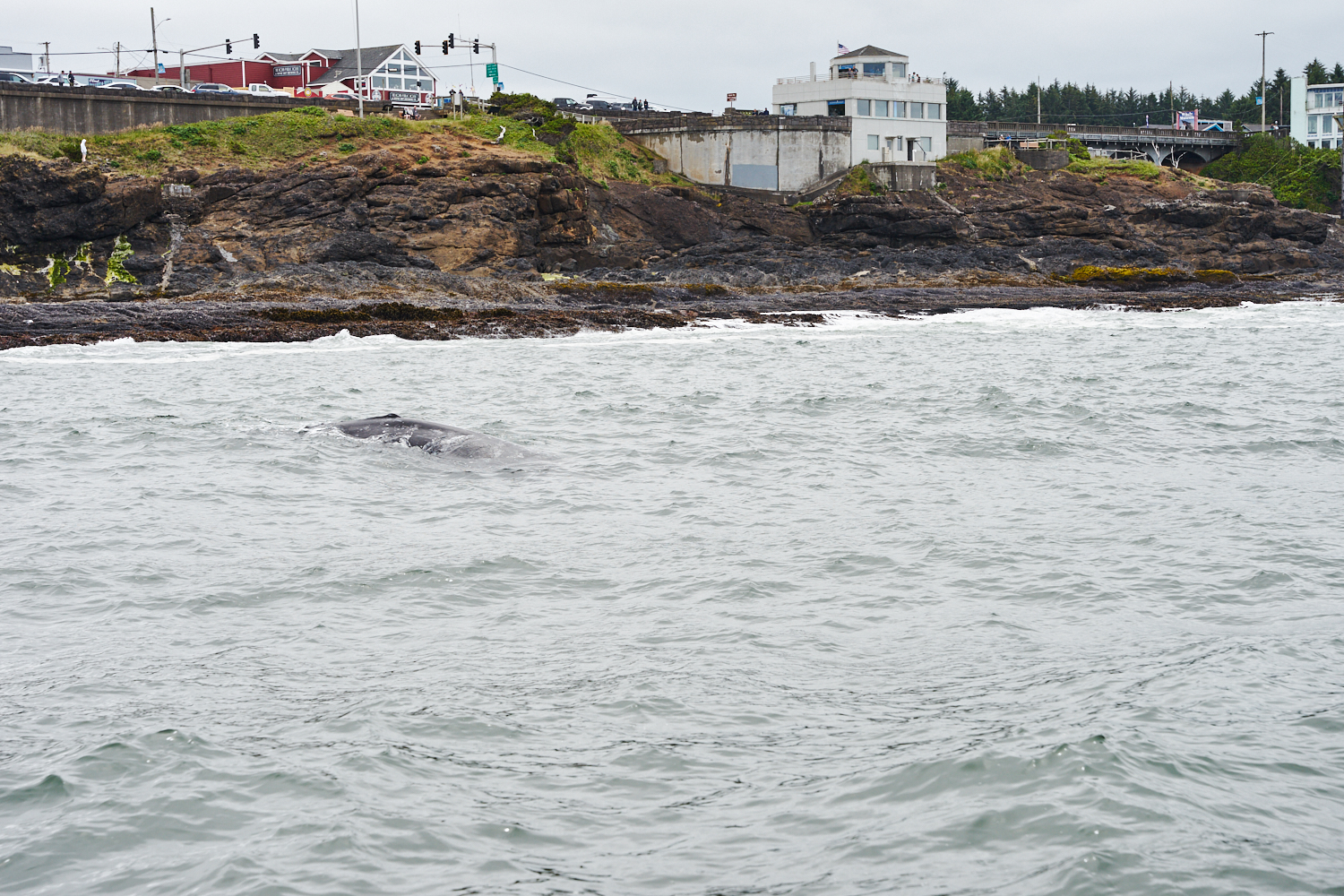
  • βœ‡The Statesider
  • Tracing a Trail of Black Rebellion
    Where did Jalen Coats’s ancestors first set foot on US soil? It might have been Charleston, South Carolina. As with so many Black American families, there is no way to know. No record. Not even a monument to their history. As Jalen found on a trip to visit the site of the Stono Rebellion, “ancestry travel” can provide some answers, but it also raises new questions. “Should I be worried about alligators?” I ask the desk attendant after skimming exhibits about
     

Tracing a Trail of Black Rebellion

9 October 2022 at 12:01

Where did Jalen Coats’s ancestors first set foot on US soil? It might have been Charleston, South Carolina. As with so many Black American families, there is no way to know. No record. Not even a monument to their history. As Jalen found on a trip to visit the site of the Stono Rebellion, “ancestry travel” can provide some answers, but it also raises new questions.


“Should I be worried about alligators?” I ask the desk attendant after skimming exhibits about slave trade routes flanked by taxidermied otters. She and I are alone in the only staffed building at the Caw Caw Interpretive Center, a former rice plantation turned wildlife preserve that spans over 600 acres of swampland outside of Charleston, South Carolina. She hands me a brochure and says, “If there are alligators, they’ll hurry off the path when they hear you coming.” 

About a quarter mile into the hike, the map and I agree to disagree and I fold it into my pocket. I follow the dirt trail damp with quiet onto the crunch of gravel before turning into an aperture framed by tall grass. Ahead, a kiosk reads, “The 1739 Slave Rebellion occurred here.” There’s a diagram of the probable layout of the main house and outbuildings based on the elevation. I look out to the absent space where willows hover over lush meadows and picture a stately white house with chipping paint and sheer curtains peering through half open shutters — the kind of place I’ve seen in movies — as if from memory.

I’m just minutes from Charleston’s port where my Black ancestors likely landed on this country’s shores in bondage. But standing in the stillness of this bog, surrounded by the algae-coated waters of cypress swamps — it almost feels like another country. I’d come to the Caw Caw Interpretive Center for the same reason I’d come to South Carolina: in search of clues to my Black ancestors’ stories; in that mire, I felt like I was stepping into one. Were the vultures as hushed and the lichen as bright on the eve of what would become the largest slave rebellion in the thirteen colonies? I imagined people who were, or nearly were, my ancestors, wading through the neon green film in the pitch black of night. I imagined they knew exactly which way to go.

A section of swamp at Caw Caw Interpretive Center (Photo: Jalen Coats)

It turns out that the Stono Rebellion was almost nothing like I’d imagined. Where there’s now dense brush, 283 years ago would have been wide open. Now, you can’t see very far in any direction without having to peer between tree trunks; then, your view would have been unobstructed for miles. In addition to the fact that white European settlers wanted land cleared for rice cultivation, timber was a busy industry. Enslaved people were tasked with cutting down thousands of acres of longleaf pine and cypress trees using axes and hand saws, and the timber was used to build structures on the property or, among other things, ships for transatlantic trade. Where I had pictured shadows slipping from behind the cover of one tree to another, there had been a movement unfolding out in the light of day, more like a celebration than a secret, more like a riot than a tryst.

Though clearly the result of meticulous planning, the Stono Rebellion — once underway — was not an exercise in stealth. The dozens of rebels shouted chants and drank booze. They carried guns and a banner that read “LIBERTY.” At different points in their revolt, they played drums: the echo an invitation to potential comrades to join the fight for freedom. The goal was seemingly to make it to St. Augustine, Florida, where the Spanish were antagonizing the British by promising freedom to enslaved people who reached their territory and accepted the Catholic religion. But it does not appear to have been a single-minded mission. At one point, the rebels marched north toward Charleston, where they killed a white slaver and his family, before pivoting south. “They must have had some kind of vendetta,” says Thomas Thornton, the Caw Caw Interpretive Center’s facility manager and a retired high school teacher. “Because that was the wrong direction.”

On the acreage where the Caw Caw Interpretive Center now sits, on that specific Sunday in September of 1739, there were two plantations belonging to the Rose and Elliott families. In this part of the Lowcountry, enslaved people could typically spend Sundays tending to their own gardens, hunting, fishing, and working on crafts. White plantation owners did not generally live in the rural areas where rice fields were year-round, because their odds of surviving the conditions that plagued summers in the swamp were low. In fact, that September of 1739, the Charleston area was still reeling from a dangerous bout with yellow fever that Lieutenant Governor William Bull estimated killed six people a day

The relative independence of Africans and their descendants in coastal South Carolina is thought to be a primary reason for the richness of the Gullah Geechee culture: the distinctive language, food, crafts, and customs of the Black Carolina Lowcountry. But despite being more independent, they weren’t left alone. “Key men,” so-called because they typically had access to several plantations in an area, would ride from plot to plot, working as satellite managers for absentee slavers. There was also the slave driver: an enslaved person assigned with keeping their fellow enslaved people on task in exchange for privileges like less back-breaking work. 

The Stono River, Boones Island and Charleston, from “A compleat description of the province of Carolina in 3 parts” by Edward Crisp, c. 1711 (Source: Library of Congress)

The 1739 Slave Rebellion occurred here. “Occurred here” is a bit of a generalization. The rebellion had started “down the road a bit,” says Thornton, off what is now Highway 17. The rebels marched to present-day Caw Caw, where there ensued not a quiet conspiracy but a shootout. A Black man named July hid the white family who enslaved him, and defended their plantation with gunfire, killing one of the rebels. Later, a legislative committee recommended that the governor grant July his freedom, “as a reward for his faithful Services and for an Encouragement to other Slaves to follow his Example in case of the like Nature.” In addition, they suggested he be gifted “a Suit of Cloaths, Shirt, Hat, a pair of stockings and a pair of Shoes.” We do not know if July was a slave driver, but we know he would qualify as the kind of archetypal character inspired by the slave driver. The Uncle Ruckus of The Boondocks, the Stephen of Django Unchained.


I do not know for sure that my family was in South Carolina, having only been able to trace us back to Murfreesboro, North Carolina in 1867 on one side and around that same time in Caroline County, Virginia on the other. About 40 percent of captive Africans brought to the US entered through Charleston. Over the next 200 years of what’s been called the slave-breeding industry, the Black population in South Carolina quadrupled, leaving some historians to conclude that as many as ninety percent of African Americans in the US today can trace an ancestor back to the busiest port of the time. So there are odds, and odds are information. I’d followed generations of research before hitting what genealogists call the “1870 brick wall” — so named because it was the first year that Black people who were enslaved in this country were counted on the census as people rather than property. Prior to 1870, most Black Americans were identified only on slave schedules, as a check mark, maybe an age, and, rarely, a single name. 

Several years ago, in Marseille, a boy with charcoal-colored hair and an Algerian father asked me where my people were from. “We’ve been in the USA for centuries, as far back as I can go,” I told him. “No, but where are you really from?” he asked. I searched his face for any sign of disingenuousness; found his large eyes looking back at me curiously. “You have heard of slavery in the Americas — you do know what happened, right?” I asked. “Sure.” “Ok, so that means I don’t know where my family is from.” He looked almost incredulous at the literalness of it all. Did he think I was exaggerating? 

How do you explain just how literal not knowing is? 

Of course, some Black people in America do manage to recover their histories despite the dearth of resources and lack of official support. But most hit a brick wall somewhere in the Lowcountry or the Delta, left to seek the story from the whispers of the water, the rustling of the leaves. 


Toni Morrison said she wrote Beloved to stand in for the monument to enslaved people that didn’t exist. “There is no place you or I can go, to think about or not think about, to summon the presences of, or recollect the absences of slaves,” she said in 1988; “nothing that reminds us of the ones who made the journey and of those who did not make it. There is no suitable memorial or plaque or wreath or wall or park or skyscraper lobby. There’s no 300-foot tower. There’s no small bench by the road.” Twenty years later, the Toni Morrison Society dedicated the first “bench by the road” on Sullivan’s Island in South Carolina. The New York Times covered it in an article titled “Bench of Memory at Slavery’s Gateway.” 

“Finish this thought,” says the bench by the road. “Imagine what I mean.”

Nearly 30 miles east of Caw Caw, I spent about an hour searching for the bench on Sullivan’s Island, which was not by the road at all, trying to piece together its location from tidbits on the internet. I eventually found it: a little black steel thing sitting on a slab of concrete, a small plaque on its back and a large one at its feet, the latter of which quotes Morrison’s musings. I sat for a while and looked out at the water. At that site, Africans had been forced to quarantine in “pest houses” upon their arrival, to ensure that any diseases they may have had would either dissipate or kill them before they could spread. The bench was not a book, but still struck me as an object that was standing in for something else. An invitation to consider a narrative that wasn’t being told. An opportunity to contemplate the lives sacrificed to the land and to the ocean with its endless horizon and its shore just steps away. An ellipsis. 

Mary Oliver calls the ellipsis “a construct of weakness.” The ellipsis, she writes, is “trying to imply a weighty ‘something’ that has not been said but that the poet wants felt.” It would be, seemingly, less weak to try to express that weighty something. Oliver is talking about poetry and not about the utilitarian ellipsis used to indicate omitted text, nor about gestures or symbols–though the ellipsis of Oliver’s ire is a kind of generalized symbol for “but there’s more…” Those three dots say: “imagine what else I might mean.” In poetry, where finding the right word is half the point, that may not be very desirable, but off the page, in the world of gestures, it might be rather productive. “Finish this thought,” says the bench by the road. “Imagine what I mean.”


At the Maison des Esclaves on Gorée Island, Senegal, nearly 4100 miles east of Sullivan’s Island, I saw the chains, isolation chambers, and torture implements that were used on enslaved people. Originally built around 1776, slavers imprisoned Black captives in dank cells throughout the maison before forcing them onto ships headed for the New World. I peered at the Atlantic Ocean through a rectangle carved into the side of the red clay-colored house. The sky looked faintly warm with sunlight at the horizon while the waves lapped the rocks just below. A beautiful site? The last sight so many Africans would have seen from the vantage point of their homeland.

Looking Out the Door of No Return on Goree
The Door of No Return on Gorée (Photo: Jalen Coats)

When I looked out from the Door of No Return, I didn’t know that some historians had decided it, too, was a symbol. The result of a “sincere fiction” and subject of heated debate since at least the 1980s, the House of Slaves, some argue, was most importantly the private residence of a wealthy family. Some argue that a relatively small percentage of enslaved Africans disembarked from the location, while others argue that the House never contained “slaves of trade” at all. The reigning narrative, which claims enslaved people passed through the House in the millions, is thought to be the work of Léopold Senghor appointee, Boubacar Joseph Ndiaye. Ndiaye served as curator to the site for decades, shaping its interpretation amid the affirmation of diasporic blackness emanating from Senghor’s negritude movement, and “remembrance” recommendations from UNESCO. These were among the factors that led to the crystallization of the whole idea of a “gateway” to the New World in Gorée, but also at Elmina Castle in Ghana and Ouida in Benin. Duly influential was Alex Haley’s Roots, which was published as a novel in 1976 and adapted into a widely-watched television miniseries the following year. Haley’s story is partly responsible for the boom in heritage-based tourism that saw Black Americans crossing the Atlantic due east in search of more information about where their people came from.

I can’t claim to have chosen a trip to Senegal based on any particular desire to discover more about my family’s history. It was, of course, in the back of my mind that this location was not insignificant to the slave trade, but I was not knowingly engaged in what’s come to be known as ancestry travel. I was compelled by a confluence of impressions I couldn’t quite name: the poetry and political theories of black Francophone thinkers who I imagined convening in the walled-in gardens of Dakar, legs crossed, cigarettes-in-hand, discussing African independence and black power; photographs of seemingly-secret swimming holes off the rocky coast; videos of black people in dark suits and bright dresses gliding through the sand-dusted alleyways that snaked between skyscrapers by the sea.

The year that Roots aired on ABC, the Caw Caw Interpretive Center was managed for hunting. The acreage that became the park started as Native American territory, then was colonized in the early 18th century with land grants: that nifty government-backed wealth transfer that encouraged Europeans to settle in what would become the US by essentially giving them land for free. After that, there was a series of hand-changings and property-line-shiftings due to purchases, marriages, inheritances and the like. Over the course of hundreds of years after the Stono Rebellion, the land was used for rice fields, a tea farm, vegetables, livestock, hunting, and, finally, an interpretive site. It was almost a golf course. But hired consultants advised Charleston County that anything other than an interpretive site would be contrary to the land’s best use. The area is too unique historically and archaeologically, they said; plus, it holds all the coastal plain habitats within one square mile.

When I looked at the “occurred here” kiosk again, off the edge of the meadow where the main house and outbuildings would have been, I noticed a section of the rendering labeled “Cemetery.” I walked over to the area that I thought the map was referring to. What was, on the map, a cream-shaded open space next to a bush was, in real life, a piece of land where grass was growing in the same way that grass was growing indiscriminately throughout the reserve. There were no headstones or indications otherwise that there were bodies buried beneath the earth. 

Thinking about it now, I ask myself: Was the cemetery a symbol? A “memorial” like the Door of No Return? A bench by the road? I do not personally know the people who are buried there; I do not even know for sure that they are buried there. But at the same time, I know. I know that if not there, then here; if not in 1776 then five years later; if not in Charleston, then in Murfreesboro. Intuition. Imagination. These have to be as important to me as information. How else would I even attempt to answer the question I asked myself as I looked out onto the seemingly mundane, comparatively small section of the park that was the “cemetery”: What does this mean?

(Top photo: Toni Morrison’s “Bench by the Road” on Sullivan’s Island by Ron Cogswell)

The post Tracing a Trail of Black Rebellion appeared first on The Statesider.

  • βœ‡The Statesider
  • Twistin’ the Night Away
    In this Issue of the Statesider American elections as tourist experience, tornado tourism (but safe), tortilla masters, not flying (and not caring), Chicago time travel, mushrooms take over Puerto Rico, why we love big red barns, Fire Island memories, the whitewashing of American music, and a visit with our oldest living things. The Tornado Map You Never Knew You Needed A close call left Rachel Heston Davis with an obsession for tornados. She’d prefer to be nowhere near t
     

Twistin’ the Night Away

13 November 2022 at 13:00

🌪 In this Issue of the Statesider 🌪
American elections as tourist experience, tornado tourism (but safe), tortilla masters, not flying (and not caring), Chicago time travel, mushrooms take over Puerto Rico, why we love big red barns, Fire Island memories, the whitewashing of American music, and a visit with our oldest living things.

The Tornado Map You Never Knew You Needed

A close call left Rachel Heston Davis with an obsession for tornados. She’d prefer to be nowhere near the megastorms, but she can’t quite look away. Her compromise? Find the monuments built after the storm.

“If you, like me, are transfixed by these beautiful cones but also sort of want to kill them with fire, I have found a way to satisfy my curiosity without risking my life in a tornado chase: tornado memorials. Our great nation is freckled with tornado memorials — monuments, plaques, even statues — commemorating tornadic events throughout history.” 🌪 Read this Statesider Original Story — And, Of Course, Check Out the Delightful Map 🌪


Vote Early, Vote Often (For Us)

Did you read a Statesider Original this year that just stuck with you? Please submit it for the Reader Favorites of 2022 on Longreads! Here’s the form, and yes, you can submit more than one story.

Need a refresher? We’ve featured stories on searching for a monument to Black history, stumbling into a wildflower paradise, an ER doctor going to hunting school, living in the shadow of roadside crosses, dealing with grief through pie and motorcycles, and more. We’ve had some goodies.


Stories Across the US

Staying Grounded: Meet some of the hundreds of Americans who quit flying for the sake planet. Spoiler: they’re still traveling and doing just fine. Jen Rose Smith, Sierra Magazine

Democracy Inaction: We are all aware that American elections are a bit of a spectacle, but elections as a tourist attraction? One company offers a 6-day tour of the American political landscape to travelers from abroad. Gwen Snyder, Jezebel

Bringing Masa to the Masses: Meet the chefs bringing heirloom corn tortillas to the people of Texas. Who’s up for a research trip? José R. Ralat, Texas Monthly

Under the Branson Sun: The Washington Post sends their theater critic on safari the entertainment hub of the Ozarks. Peter Marks, Washington Post

“Sir, are you carrying a concealed weapon?” asks the front-door attendant at “Dolly Parton’s Stampede,” a show complete with a gut-busting chicken dinner, during which 1,000 guests sit around a rodeo-style ring for a pageant of horsemanship, real live buffalo roaming and agility dog contests.

Statesider Throwback: Here’s Pam’s dispatch from a Branson theatrical performance. It was a thing.

Time Travel to the White City: Chicago’s famed 1893 World’s Fair is being brought back to life with augmented reality. Andy Koval, WGN Chicago

Cruising with Ancestors: Crossing the Atlantic on a luxury cruise may be relaxing for some, but for Nylah Burton, it was a reminder of what her ancestors endured on these same waters. Nylah Burton, Sweet July

What Could Go Wrong? A new entry into the Darwin Awards travel category could be coming to a city (and emergency room) near you. Who’s ready for personal helicopters for sightseers? Ben Brachfeld, AMNY

The Patience of Pines: Two visits to California’s trees — not the big ones, but the old, gnarly, twisty ones. One bristlecone pine, the oldest tree on Earth, has survived for 4800 years. Naturally, we’re mucking things up.
In California, Where Trees Are King, One Hardy Pine Has Survived for 4,800 Years — Soumya Karlamangla, photos by Adam Perez, New York Times
Why Mystery Surrounds What May be Earth’s Oldest TreeErik Ofgang, Washington Post

Fire Island Fantasies: The history and significance of New York’s Fire Island to the queer community. Jack Parlett, GRANTA

Betting on Mushrooms: Why Puerto Rico is having a mushroom boom, and what it means for the future of Puerto Rican cuisine. Alicia Kennedy, Foreign Policy

Doggy Diner: This is the way the world ends. Not with a bang, but a whimper. And a $75 tasting menu for dogs. Soleil Ho, San Francisco Chronicle

American Barns: The history and symbolism of the big red barn in America, where big red barns are becoming a thing of the past. Joshua Mabie, Places Journal

What’s the Buzz? A visit to Beaufort, South Carolina, the kazoo capital of America. Stephanie Burt, Thrillist

The Oregon of Our Minds: A typical Friday in Oregon, as imagined by my East Coast friends. Gracie Beaver-Kairis, McSweeney’s


What We’re Listening To

Black Roots. In this limited series for BBC Radio 4, musician and historian Rhiannon Giddens explores the history Black roots music and how it was whitewashed from the story of American folk and country music. A mix of music and interviews, Giddens pays homage to the forgotten pioneers we have to thank for influencing generations of later musicians across America. Listen now


The post Twistin’ the Night Away appeared first on The Statesider.
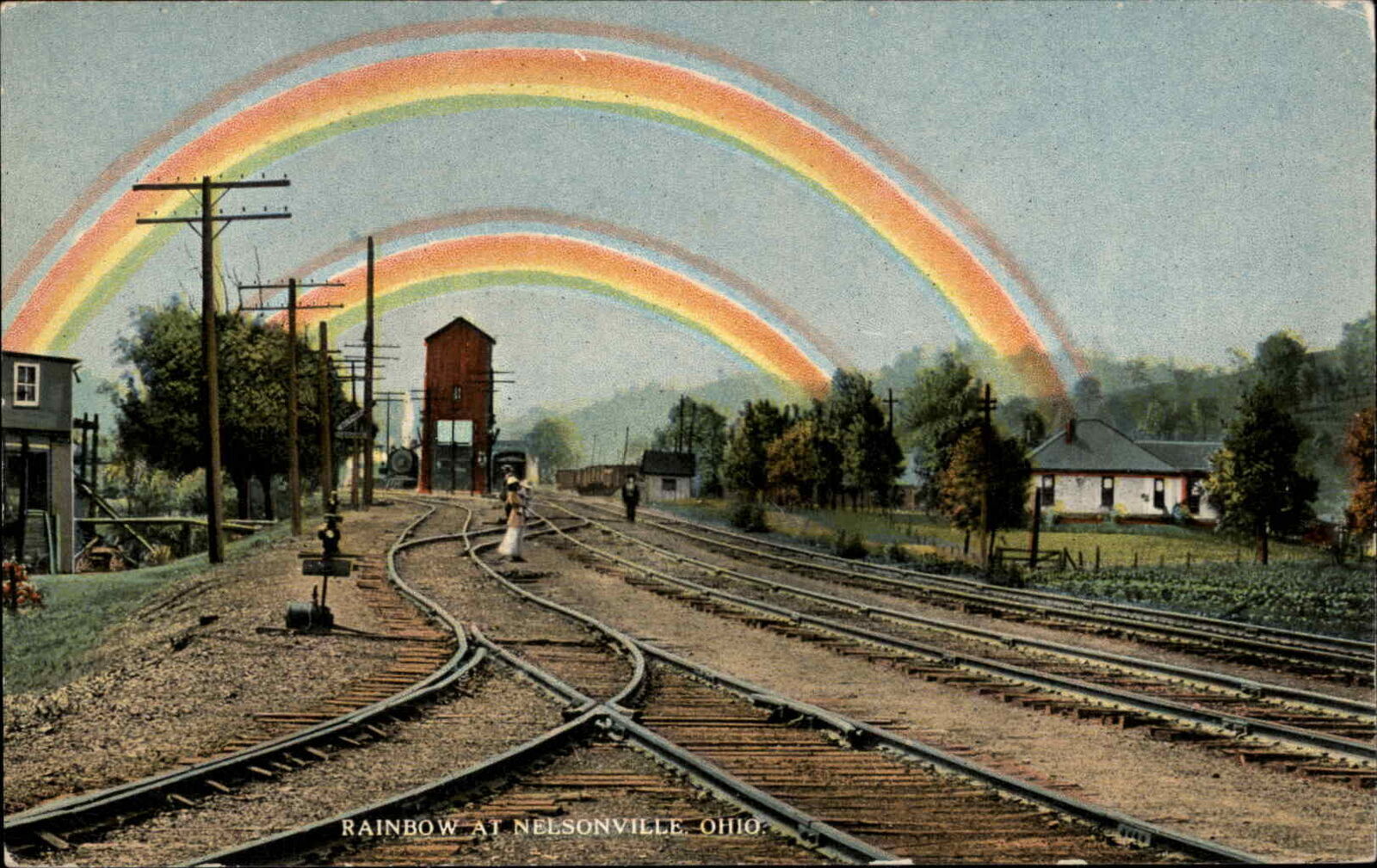
  • βœ‡The Statesider
  • The Tornado Map You Never Knew You Needed
    For a time, Rachel-Heston Davis suffered from lilapsophobia: the unhealthy fear of tornadoes. (If you had asked her at the time, she would’ve told you it was quite healthy, in fact totally rational, to fear tornadoes.) That fear turned to fascination over time, and a particular fascination with the many memorials to historic tornadoes across America. There are a lot of them. On the day I thought I would die, the western sky glowed a watery shamrock green. Everything else was black.
     

The Tornado Map You Never Knew You Needed

13 November 2022 at 13:01

For a time, Rachel-Heston Davis suffered from lilapsophobia: the unhealthy fear of tornadoes. (If you had asked her at the time, she would’ve told you it was quite healthy, in fact totally rational, to fear tornadoes.) That fear turned to fascination over time, and a particular fascination with the many memorials to historic tornadoes across America. There are a lot of them.


On the day I thought I would die, the western sky glowed a watery shamrock green. Everything else was black. I crouched in the dark with the rest of the senior class, our foreheads pressed to metal lockers while the skylights rattled above us in the roaring storm.

The latches holding the skylights gave way and the panels crashed open, drawing a collective scream from the student body and showering us with hail pellets. 

Outside, a state trooper watched a funnel cloud spin lazily over the school. It hesitated, deciding whether to drop and finish us, but finally moved on. It left power lines in the road and a tree on my best friend’s house. 

Just another day in Middle America.

If there’s anything more American than apple pie, it’s tornadoes. The U.S.A.’s weather patterns and topography make us a tornado manufacturing plant. Each year we produce about 1,200 twisters (the runner-up, Canada, clocks in with a paltry 80–100). This surplus of cyclones is either the best news or the worst news, depending on how you feel.

I was fascinated by tornadoes as a kid, terrified of them after that high school encounter, and gradually came back around to liking them as an adult. But my fondness is mixed with wary caution. I’m the first to the basement when a storm gets rowdy.

If, like me, you are transfixed by these beautiful cones but also sort of want to kill them with fire, I have found a way to satisfy my curiosity without risking my life in a tornado chase: tornado memorials. Our great nation is freckled with tornado memorials — monuments, plaques, even statues — commemorating tornadic events throughout history. Some of these events are straightforward, others bizarre, but each guaranteed to intrigue.

Midwest Tornado Memorials

Some people call the Midwest the “Flyover States,” which is fair considering that tornadoes do, indeed, fly over us all spring and summer. But when it comes to tornado memorials, you absolutely don’t want to sail past this region.

If you dare visit sites that have attracted multiple twisters, start with the late, great Irving, Kansas, home of the real-life Dorothy Gale. Today it’s an eerie ghost town of old roads and building foundations, but in 1879, Irving was a sleepy prairie settlement like any other—until the night when it was blasted by two twisters in a row. 

Among the dead was a girl named Dorothy Gale. Years later, author L. Frank Baum would read about her in an old newspaper clipping. Struck by the cruel irony of a girl named Gale being killed by a windstorm, Baum borrowed her name for his literary heroine.

If you’re inclined to pay homage to either Dorothy at the Irving tornado memorial, leave a note at the mailbox next to the plaque.

Four decades after Irving suffered two tornadoes in a row, the community of Codell, Kansas said “Hold my beer!” and went for a three-twister streak. Tornadoes struck Codell in 1916, 1917, and 1918, always on May 20. Spooky, right? 

Codell dubbed May 20 as Cyclone Day and erected a 15-foot metal sculpture of a twister. This metal cyclone is definitely worth the visit (but maybe not on May 20).

In Oklahoma, you can find the site of the very first tornado forecast in history. In March of 1948, a tornado damaged Tinker Air Force Base in Oklahoma and prompted officials to ask the base’s military weather officer to develop a tornado forecasting method. In trying to suss out which weather patterns contribute to twisters, the weather officer realized the same patterns that preceded the first tornado were developing again, in the same place, just five days later.

It seemed outlandish, but he predicted a second tornado in the same spot less than a week after the first. Sure enough, a second tornado tore across the base that night, making this the first successful tornado prediction in meteorological history. The freakishly fantastic occurrence is forever memorialized on a plaque at Heritage Airpark on the base, where you stop and salute the memory of this intrepid weatherman. 

Midwestern Nightmare Fuel

I’m sorry to inform you that fire tornadoes are a thing. A fire tornado is exactly what it sounds like. “Firenados” happen amidst large wildfires when the fire produces a quickly rising column of heated air, and cool air rushes toward it to fill the vacuum. This creates a dust-devil effect, but with flames instead of dust. Even worse, heat from very large fires can sometimes generate a pyrocumulonimbus cloud — a fire-produced storm cloud capable of triggering a firenado on the ground.

On October 8, 1871, the town of Peshtigo, Wisconsin was barbecued by this phenomenon. Major wildfires swept the upper Midwest that day, killing thousands. In his book Storm Kings: America’s First Tornado Chasers, author Lee Sandlin uses historical survivor accounts to reconstruct the scene at Peshtigo:

…a gigantic funnel cloud of fire extend[ed] up from the burning forests to the sky. Its heat was so intense that everything around it instantly exploded…on the riverbanks, as the funnel passed directly overhead, may people were consumed where they stood and were instantly reduced to ash. Others were found dead, apparently untouched, but with every coin in their pockets melted.

People above the water burned, people in the water scalded, and at least one survivor was blinded by looking at the funnel. 

Today, Tornado Memorial Park in Williamsonville stands as a testament to the indomitable spirit of the survivors. Despite its dark history, it’s a pleasant road trip stop with landscaping, picnic tables, restrooms, and a cobbled walkway, reminding visitors of the beauty of Mother Nature in addition to her power.

Even less pleasant is the event memorialized in black stone outside of El Reno, Oklahoma. It marks the spot where three talented storm chasers died pursuing the El Reno, Oklahoma tornado of May 31, 2013. 

The El Reno tornado was the largest tornado ever recorded at 2.6 miles wide. Professional storm chasers Carl Young, Tim Samaris, and Samaris’ son Paul were chasing this behemoth when it unexpectedly changed directions and caught them in its fury.

Images of the three men are engraved in white on the black memorial stone. This tragic incident serves as a reminder that not even cautious and knowledgeable chasers can guarantee safety near a cyclone.

Although the El Reno tornado was the largest ever recorded, it wasn’t the deadliest. That title belongs to the Tri-State Tornado of 1925. This monster dropped into Missouri on the afternoon of March 18 and didn’t leave the ground for over three hours, incredible considering that most tornadoes last just a few minutes. It killed 695 souls and set the record for the longest tornado damage track, tearing across 219 miles through Missouri, Illinois, and Indiana. 

Before it finally vanished, the Tri-State Tornado demolished the town of Griffin, Indiana in Posey County. An Indiana State historical marker in Griffin memorializes the event. Eastern and Southeast Tornado Memorials

It may not pack the punch of the windswept Midwest, but the eastern third of the United States holds its own when it comes to erecting monuments for twisters.

Massachusetts is known for historical sites important to the American Revolution, but it’s also home to lesser-known memorials of extreme weather. The pleasant seaside community of Revere, Massachusetts, home to an international sand sculpture competition, has a meteorological claim to fame, too. On July 28, 2014, a brief but extremely ambitious tornado mowed down two miles of Revere homes and businesses in under four minutes, but miraculously no one was killed. A twister that size is no small occurrence in a state far outside of Tornado Alley, and it earned the tornado its own plaque at the Revere City Hall.

Forty miles west of Boston, Quinsigamond Community College in Worcester bears witness to the 1953 tornado that killed 94 people and was on the ground for a whopping 90 minutes. You can find the memorial on campus listing the names of those killed in the storm.

Perhaps one of the most haunting tornadoes of the eastern U.S. was the Rye Cove Cyclone, which hit the Rye Cove, Virginia school in May of 1929 and took the lives of 12 students and one teacher. The school was destroyed, so Rye Cove built a memorial high school in 1930 bearing a plaque with the names of the dead. You can visit it today outside the Rye Cove Intermediate School. The small memorial structure also houses the bell from the original school building destroyed in 1929.

Twisters Out West

 Tornado from 08/16/2020 east of Loyalton, California and west of Cold Springs, Nevada, Wikimedia

It’s harder to find good twister stories out west because the majority of U.S. tornadoes happen east of the Rocky Mountains. But if you research diligently you’ll find them!

The Pacific Northwest is not prone to deadly windstorms, but on April 5, 1972, the neighboring cities of Portland, Oregon and Vancouver, Washington were hit by the same twister. Six were killed, 300 injured, and millions of dollars were accrued in property damages. In the immediate aftermath of the tornado touchdown, students and teachers of the Vancouver High School sprang into action to help their fellow citizens recover. Their selflessness moved the community to dedicate a monument stone in their honor, one of the more uplifting tornado memorials you’ll find in the U.S.

A similar testament to the power of a post-storm community can be seen in Salt Lake City, Utah. In 1999, Salt Lake City’s downtown park was badly damaged when a tornado ripped up dozens of trees in the park’s Memory Grove, destroying what had been a beautiful expanse of shade in the city center. Hundreds of residents descended on the park after the disaster to plant new trees. The new Memory Grove is still thriving today. While not a traditional tornado memorial, it is a reminder that life goes on after disastrous storms.

If you’re up for a longer jaunt into the beautiful wilds of the western states, visit the Nature’s Destruction plaque in Bighorn National Forest, Wyoming. The marker can be found along the Bighorn Scenic Byway — and boy, is it scenic! Gaze down into the large canyon where a 1959 tornado twister cut down a huge swath of trees. Decades later, the clearing is still a visual demonstration of the size and scale of tornado damage.

Find Your Own

This atlas is by no means an exhaustive list of tornado memorials in the U.S., but it is a starting point for the curious. These swirly murder clouds can show up in any of the 50 states and often shape the collective memory of a community for decades. When you visit tourism centers, historical societies, and museums, ask around for the tornado stories that may not be plastered on a sign or made immortal in a statue.

And if on your journeys you see the sky melt into green and the clouds begin to swirl, just remember: you’re witnessing a very American phenomenon.

(But seriously, get to a basement.)


Map of tornado memorials across the US. Click for larger image.

Tornado Memorial Site Listing

STATEMEMORIAL LOCATIONS
AlabamaLimestone County, Tuscaloosa 
ArizonaTucson 
ArkansasVolinia
ConnecticutBantam
GeorgiaAdel, Albany, Clermont, Ringgold
IllinoisBelvidere, Marion, North Utica, Plainfield
IndianaGriffin, Monticello, New Albany, Petersburg
IowaCharles City 
KansasAndover, Codell, El Dorado, Greensburg, Manhattan, Topeka, Udall
KentuckyLouisville
MarylandLa Plata
MassachusettsGreat Barrington, Revere, Worcester
MichiganChesterfield Township
MinnesotaBuffalo Lake, Tracy
MississippiSmithville, Vicksburg
MissouriJoplin, Kansas City, Poplar Bluff 
Nebraska Grand Island, Primrose
New YorkBurke, Red House
North DakotaFargo, Langdon
OhioLorain, Millbury Lake Township, Xenia
OklahomaAntlers, El Reno
PennsylvaniaAlbion, Kinzua Viaduct
South DakotaKingsbury County, Spencer
TennesseeClarksville, Henderson, Mt. Juliet
TexasGoliad, Lubbock, Rowlett
UtahSalt Lake City
VirginiaRye Cove
WashingtonVancouver
West VirginiaShinnston
WisconsinNew Richmond, Siren, Williamsonville
Wyoming Bighorn National Forest, Shell

The post The Tornado Map You Never Knew You Needed appeared first on The Statesider.

  • βœ‡The Statesider
  • Depoe Bay: A Photo Essay on the Gray Whale Capital of Oregon
    Jeurgen “JT” Turner remembers when the first whale watching charter started up in tiny Depoe Bay, Oregon, in the 1970s. Back then, “the world’s smallest navigable harbor” — Depoe Bay’s claim to fame — was home to a mix of commercial fishing enterprises and fishing excursions geared toward tourists. And while whales can be easily spotted from Depoe Bay’s shoreline during migration season, no one had latched onto the idea of taking visitors ou
     

Depoe Bay: A Photo Essay on the Gray Whale Capital of Oregon

22 December 2022 at 13:00

Jeurgen “JT” Turner remembers when the first whale watching charter started up in tiny Depoe Bay, Oregon, in the 1970s. Back then, “the world’s smallest navigable harbor” — Depoe Bay’s claim to fame — was home to a mix of commercial fishing enterprises and fishing excursions geared toward tourists. And while whales can be easily spotted from Depoe Bay’s shoreline during migration season, no one had latched onto the idea of taking visitors out on the water to watch them by boat. JT says that first season with one vessel was so successful, the company he worked for invested in a second boat for the following season, and grew from there. “Now everybody around here has a whale watching operation,” he says. 

Depoe Bay, tucked into the Oregon coast west of Salem, has always been a popular spot for charter fishing. Its small, sheltered harbor and proximity to the open ocean make  it a fishing destination rivaling its much larger neighbors, the hub of Newport to the south and the beach town of Lincoln City to the north. 

Both charter fishing and whale watching have been a boon to Depoe Bay’s economy. Fishery collapses in the late 90s and early 2000s shuttered commercial fishing operations and processing plants all along the Pacific Northwest coast, forcing many life-long fishermen to take other paths. Although fish populations have rebounded significantly in the past 25 years, tourism is now the occupation of choice for most of the vessels docked in Depoe Bay’s harbor. 

One such operation is Dockside Charters, owned by JT’s son, Tyler Turner, who has embraced both charter fishing and whale watching with his fleet. He says that while he can accommodate a lot of people on a charter fishing excursion, the overhead is higher than whale watching. Fuel especially has been a major concern this summer with diesel prices skyrocketing. This is where Depoe Bay’s unique geography particularly favors whale watching tours. 

“In other ports, like Newport, you have to go 10, 15 [miles] out before you hit open ocean,” Turner says. “Here, we can stay close, and we use less fuel.” 

He’s not kidding: The narrow channel leading out of Depoe Bay’s harbor opens right into water deep enough for whales to swim. During feeding season, gray whales pop up just yards from the rocky coastline, much to the delight of visitors on the decks of Turner’s boats. 

“I still get excited every time I see a whale,” says Turner, who grew up in Depoe Bay. “If my dad could go whale watching from 8 a.m. to 5 p.m., he would.”

Like many small towns transformed into tourism hotspots, it hasn’t always been smooth sailing for Depoe Bay. Housing has become much more expensive for the local population of just over 1600. Property management companies have gobbled up many single-family homes and turned them into vacation rentals. Wealthier retirees from outside the area have chosen the town as their golden-years homestead, and building new affordable housing has become a contentious political topic. But despite the rough patches, Turner and his partner Eva, who runs much of the administrative side of Dockside, say that they are in favor of enticing visitors to Depoe Bay as much as possible. And for gray whale spotting, JT says there’s no place for tourists like Depoe Bay. 

“Down in San Francisco, the Bay Area, they have a lot of tours but they are mostly staying within the bay,” he says. “Seattle has a lot of whale watching but they are looking at orcas. Depoe Bay—we’re the gray whale capital.”

Visual Portfolio, Posts & Image Gallery for WordPress

All photos copyright Sarah Arnoff Yeoman, 2022

The post Depoe Bay: A Photo Essay on the Gray Whale Capital of Oregon appeared first on The Statesider.

  • βœ‡The Statesider
  • Watching the Whales Go Round
    In this Issue of the Statesider Big whales, small harbor, Native control of national parks, hot potatoes, wayfinding, surfing for everyone, Black Wall Street reborn (twice), and a major find in the world of pants archaeology. Also: give us a piece of your mind in our reader survey! The Gray Whale Capital of the West Depoe Bay, Oregon, is known for two things: the smallest navigable harbor on the West Coast and whales. Lots of whales. Once a productive fishing port, now the town
     

Watching the Whales Go Round

22 December 2022 at 13:01

🐋 In this Issue of the Statesider 🐋
Big whales, small harbor, Native control of national parks, hot potatoes, wayfinding, surfing for everyone, Black Wall Street reborn (twice), and a major find in the world of pants archaeology. Also: give us a piece of your mind in our reader survey!

The Gray Whale Capital of the West

Depoe Bay, Oregon, is known for two things: the smallest navigable harbor on the West Coast and whales. Lots of whales. Once a productive fishing port, now the town is navigating the sometimes choppy waters of transitioning from a working fishing town to a tourism-focused economy. Earlier this year, photographer Sarah Arnoff Yeoman paid a visit to the Gray Whale Capital for the Statesider. 🐳 Take a photographic visit to Depoe Bay 🐳


Tell us what you really think

We’re wrapping our fourth year here at the Statesider, and we want to hear from you. Is once a month enough Statesider? Do the Statesider Originals stick with you? Do they stick with you enough that you’d be willing to help pay for them? (We remain completely reader- and self-funded and all donations go to pay our contributors.) Are there too many stories in each issue, or not enough? Got any ideas about what we should or should not do going forward? We’d love to know what’s missing, what’s what’s working, and hey, we just like hearing from you. Really. 👉 Take our short survey 👈

🦣 Oh, yeah, we ARE on Mastodon, since you asked. Here. 🦣


Stories Across the US

This is Our Love Language: Trips don’t have to be long to be meaningful. The unsung joy of short trips. Sara Benincasa, Pipe Wrench

Finding Your Way: Essays don’t have to be long to be meaningful, either. The art of wayfinding in the mountains of Colorado — and in middle age. Claire Boyles, Sierra Magazine

Rosin Potatoes: The elusive roots of rosin potatoes. What are rosin potatoes, you ask? Imagine that you have a boiling pot of pine rosin and you drop a potato into it. Ta-da: rosin potato. It’s a thing in parts of the Southeast — but where did it come from? Caroline Hatchett, Bitter Southerner

Iowa Hummus: Growing up Palestinian in Iowa — and finding community through food. Khalid El Khatib, Food52

Strangers in a Van: After their flight got canceled, 13 strangers rented a van and drove 652 miles together. Cathy Free, Washington Post

I Just Wanna Surf: A new book of photography focuses on surfers who are regularly left out of the surfer culture and narrative: Black women and nonbinary surfers. Photographs by Gabriella Angotti-Jones, Story by Leah Asmelash, CNN

Native Management: The US Government has a long history of stealing land from Native tribes. Is co-management of land the way forward? Len Necefer, Outside

With, Not Without You: Joshua Tree National Park will be co-managed by California’s Twenty Nine Palms Band of Mission Indians. Mary Beth “Mouse” Skylis, Backpacker

The Next National Monument: Spirit Mountain, Nevada, May Be the Next National Monument. “Avi Kwa Ame (pronounced Ah-VEE kwa-meh) is the place of origin for ten Yuman-speaking tribes of the Mojave, as well as a sacred site for the Hopi and Chemehuevi Paiute people.” Emily Pennington, Outside

Black Wall Street(s): Two new efforts to create Black Wall Streets pop up in Hattiesburg, Mississippi (Stacy Jackson, Black Enterprise) and Baltimore, Maryland (Niko Mann, Black Enterprise).

Via LeviStrauss.com where there’s a cool collection of ghost signs.

Pants in the News: An anonymous pants collector bought a pair of pants recovered from a shipwreck for $114,000 at auction. They *might* have been made by Levi Strauss. Amanda Holpuch, Seattle Times

Hey Siri, Show Me the Most Statesider Headline Possible: “Gay Montana Moose Comes Out in Bozeman, Celebrated on Holiday Pie Crust” Moose Radio

This year’s pie commemorates a very special occasion that took place about a week ago. I’m honored that Bullwinkle chose to come out right here in my yard. Thanks, Mother Nature, for the reminder about all that’s good in the natural world.


What We’re Reading

The Cassandra by Sharma Shields. A young woman who has disturbing visions of the future goes to work on a secret research project at the Hanford Research Facility in Eastern Washington. It’s the 1940s and, as readers, we know what she’s working on. Ultimately she does too — because her visions show her the results. A disturbing and compelling read not just about the nuclear arms race, but about how little society listens to women sounding the alarm. While the main character is fictional, the setting and the Hanford project are very, very real. The long-term results from Hanford dumping on the surrounding area are still a threat to wildlife, the water supply, and the community. Buy a copy today from the Statesider bookshop

The post Watching the Whales Go Round appeared first on The Statesider.

  • βœ‡The Statesider
  • More than a Feeling
    In this Issue of the Statesider Back “home” in Boston, park overpopulation, getting down in Puget Sound, and looking up at an icon. Plus, a newly public archive from the Smithsonian and a primate park-and-ride. Back to Beantown After an extended stint outside the US, Melissa Watkins returns to a city and a history that was never hers to begin with. To understand her new city, and confront her growing unease with American culture, she goes looking for the Boston bey
     

More than a Feeling

24 January 2023 at 13:00

🐎 In this Issue of the Statesider 🐎
Back “home” in Boston, park overpopulation, getting down in Puget Sound, and looking up at an icon. Plus, a newly public archive from the Smithsonian and a primate park-and-ride.

Back to Beantown

After an extended stint outside the US, Melissa Watkins returns to a city and a history that was never hers to begin with. To understand her new city, and confront her growing unease with American culture, she goes looking for the Boston beyond the city’s own myths. 🇺🇸 Read “A Repat’s Guide to Boston” 🇺🇸

I’m from Denver. I’m also Black. Boston is full of history, but it doesn’t feel like mine. Every other block there’s a giant statue of a guy who fought in the Revolution but also owned slaves.


Stories Across the US

The Desert, Not Deserted: Nowhere is immune from the national park boom. Joshua Tree’s delicate ecosystem is another victim of overcrowding. Brad Rassler, Alta Journal

Guilty as Charged: Statesider editor Pam Mandel is snowbirding right outside Joshua Tree National Park right now. She’s been up early, camera in hand, lots. Asked about crowds she said, “Not at 5 am, nope.” Nerd’s Eye View

Get Ready for Death Valley: The summertime extremes of Death Valley feel like a dangerous dare today, but what if they are the new normal of tomorrow? Chris Colin, Alta Journal

Like wildebeests trudging off to Masai Mara each year, a distinct breed of tourist makes this summertime Death Valley pilgrimage.

Geezer Happy Hour: At Ann Arbor’s coolest rock show, almost everyone is over 65. Also, it starts at 6:30 and ends at 9:00 because people gotta sleep. New York Times (free)

That’s Deep: Washington State’s peaks get all the love, but it’s got remarkable depths, too. No one has ever been to Washington’s lowest point. John Ryan, KUOW

Mystery Monkeys: We missed this story when it originally ran, but we couldn’t help but share a story about the mystery of the monkeys that have lived at a park & ride lot by the Ft. Lauderdale airport since the 1940s. Go monkeys. Suzanne Rowan Kelleher, Forbes

Birding in Alabama’s Black Belt: A third-generation Black farmer has made it his mission to welcome everyone into the wonders of nature of his home region. Jennifer Kornegay (words), Wes Frazer (photos), Bitter Southerner

Here Today, Gone to Maui: Writer Jennifer Billock ponders why Hawaii seems to inspire her to reexamine her relationships. Jennifer Billock, Shondaland

The superstitious side of my personality blames my two disastrous marriages on Hawaii.

Pie, Charted: Ours is not to question why, but to say “Damn, that’s a lotta pie.” NYC Slice, Liam Quigley

Location, Location, Location: In Hollywood of the 1920s — and pretty much ever since — California was a stand-in for anywhere around the world. Spain, Wales, the South Seas. Where to find the rest of the world without leaving California: Brilliant Maps

An Icon Deconstructed: Well, that’s cool. 11 minutes with architect Michael Wyetzner on why the Chrysler Building matters. YouTube

Over Austin: The Texas capital of weird is just another sprawling western city now. Texas Monthly

Who’s Tom McCleod? A mystery billboard on California’s Interstate 5 and various Tom McCleod’s are not saying. Joshua Bote, SF Gate


What We’re Spending Too Much Time Looking At

The Smithsonian made over 4.4 million images open access to the public, so of course the first thing we did was go search through postcards from the National Postal Museum and the National Museum of African American History and Culture, like this one from Deadwood, South Dakota:

On the back: “Dear Mama, You will see by this that I am in Deadwood. I am attending Grand Lodge. Am having a fine time. Wish you were here. The scenery here is just beautiful. Emma.” May 20, 1909

Or this 1930s map of US airmail routes. You can reach us via the Pacific Airway and the Chanute & Bell Airway.

Excuse us while we go look up what a “chanute” is.

The post More than a Feeling appeared first on The Statesider.

  • βœ‡The Statesider
  • A Repat’s Guide to Boston
    When Melissa A Watkins moved back to the US, she chose Boston, a city deeply woven into American history. But she wasn’t content with the story that Boston tries to tell, she wanted to see behind the veil — the Boston beyond the myth. I left America 15 years ago. I never intended to come back. After 15 years in Europe and Asia, I became so accustomed to things like affordable health care and reliable public transportation that the comparative merits of police violence and fun
     

A Repat’s Guide to Boston

24 January 2023 at 13:01

When Melissa A Watkins moved back to the US, she chose Boston, a city deeply woven into American history. But she wasn’t content with the story that Boston tries to tell, she wanted to see behind the veil — the Boston beyond the myth.


I left America 15 years ago. I never intended to come back. After 15 years in Europe and Asia, I became so accustomed to things like affordable health care and reliable public transportation that the comparative merits of police violence and fundamentalist Christianity lost their luster. While I was gone, America changed. The more it changed, the more confused and angry and frustrated I became. 

But despite that, America is still my home, the place where, to paraphrase Robert Frost, they have to take me in when I have to go there. In 2021, I decided it was time to return and see what was happening to my country up front. 

I choose Boston as my point of return. I wish I could say there was a logical reason, like a job or a romance, but the truth is, I decided if I was going to go back to America, I was going to go back to America. In the movies, America is New York or LA, but in the history books that nerdy elder millennials were forced to read as kids, America is Boston, and so there I went. 

I’m not from there, of course. I’d visited the city twice before on long layovers and managed to hate it both times. All I’d gotten to know of the place was Irish-Italians, Fenway Park and sharp, nasal accents. Oh, and apparently, it’s the birthplace of American history, at least the parts that begin with British colonization. 

I’m from Denver. I’m also Black. Boston is full of history, but it doesn’t feel like mine. Every other block there’s a giant statue of a guy who fought in the Revolution but also owned slaves. Every white Bostonian I meet immediately tells me whether they’re Irish or Italian, not realizing that they probably wouldn’t get a warm welcome in either country (I’ve been to both, and the key word in Europe is American. Nobody in Europe cares where your grandmother was from unless they’re her.). I don’t expect I’ll get a warm welcome here. That, to me, seems like the standard for whatever America’s becoming. But not only is home the place that has to take me in, it’s the place I have to go, sometimes. 

I’m from Denver. I’m also Black. Boston is full of history, but it doesn’t feel like mine. Every other block there’s a giant statue of a guy who fought in the Revolution but also owned slaves.

I decide that my approach to understanding Boston will be the same as it has been in many other cities across the globe. Basically, I’m going to make friends. There’s nothing better than having a local show you what makes their life great. It worked for me in Ubud, in Vilnius, in Ulaanbaatar. 

It eventually works in Boston. My new friend’s name is Tristan, and he’s a historian, an anthropologist, an Irish guy with a Spanish surname who speaks fluent Cantonese.

Like most people that are interesting, he’s a teacher. So am I. He leaves a few too many “r”’s off of his words in casual conversation in the break room and with every broad ‘a’ sound, I can see my way into understanding the city opening up. I ask him what’s good to do in Boston, if he knows what the deal is with all of the colonial statues everywhere, and why Dunkin’ Donuts has such a stranglehold on the local coffee market.

He blinks his big blue eyes at me, then tells me he can just show me around if I want to know so much. Suddenly, I’m glad to be back in America again.

The real history of Boston, peaking through the veil. (Photo: Melissa A Watkins)

The first thing Tristan tells me is that Boston is a city that doesn’t really know what it is. He calls it a place of imagined history. To the tourists of the world, it’s a place of history and prestige with a little fun on the side. In reality, it’s a former company town that is defined by the constant struggle of different groups of people to settle down and belong to a place that isn’t really theirs. Because of its position in American legend, the Boston that exists now is just as much myth as metropolis. 

I’ve already done some of the normal tourist things on my own. I’ve seen the harbor, the sports venues, and the museums. I’ve gone up to Cambridge, which is where two of Boston’s most famous places — Harvard and MIT — actually are. All of these places are nice, but a little too manicured to connect to. 

So, when Tristan asks me what I want to see in Boston, I tell him that I want to see the places that are real, not imagined. We walk the city for hours on two separate occasions. A few places in particular stand out. 

The first is in Boston Chinatown. 

Thirty years ago, Washington Street, which runs through Chinatown and across the city, was considered the worst area in the Northeast. Locals knew it as the “Combat Zone,” a notorious red-light district. 

Boston Chinatown in the 1950s

Right in the heart of it is an old grocery store with a sign in the window spelling out Jia Ho in English and Chinese characters. Above it is a place called Empire Garden. For a little over 90 years, it was a theater —first for vaudeville, then for films. In 1995 it was turned into a lavish dim sum restaurant. On weekends it’s packed, filled mostly with visiting Chinese families and Asian-American locals, as well as Bostonians of other backgrounds with good taste in dumplings. The place is beautiful — the tables are all set out on the old mezzanine and the kitchen is hidden away somewhere in the walls, like in most Boston restaurants. The domed, vaulted ceiling is painted with clouds and eating here feels far removed from the city streets below. 

Empire Garden has a character to it that is uniquely Chinese and American. It wouldn’t fit in anywhere I’ve been in the Chinese world. It doesn’t quite fit in America either according to some. But it occupies a space that combines the two wonderfully well, and the food is delicious, to boot. 

It’s also very Bostonian. There’s a clear effort here to preserve a gilded, cloud-topped history. In Empire Garden, there’s never been a combat zone. 

We leave Chinatown and head towards the North End. Boston is definitely a walking city. If you’re willing to wear good shoes and wander you can get to know it well, quickly. Walking is the only way to really see where we’re going, in this case. The North End has narrow streets and is tricky to drive in, by design. If you turn the wrong way, you’ll wind up having to leave the neighborhood and get on the highway to get back to where you started. 

This is part of the well-kept, old-fashioned look of the area, due to its historical status in the city. There are no Starbucks or Dunkin’ Donuts in the neighborhood, and when I point that out, Tristan wonders if that level of preservation will ever be expanded to Chinatown or historically Black Roxbury. 


The North End is a very Italian community, but specifically Italian-American. Unlike a lot of other places in Boston, it’s more or less what it says it is. 

It’s an Italian neighborhood, but a large portion of it is dedicated to a long-dead son of a Frenchman, Paul Revere. A statue of him stands in the Paul Revere Mall, right in the center of the neighborhood. At the far end of the mall is the North Church, where Revere famously kept watch for “one if by land, two if by sea” if Longfellow can be believed. In between Paul and the church where he got the signal to start the Revolution, there’s a joint memorial for local veterans of the Korean and Vietnam Wars tucked into a corner.

There’s a similar, but much larger memorial for Korea and Vietnam a few miles away, near the famous Fenway park. I ask Tristan if he knows why these war memorials are in pairs and why the Korean side is better kept in both places, but someone else answers. There’s an elderly man walking up the stairs towards the church behind us and he throws a glance and a sentence over his shoulder, pausing at the top to make sure we’ve heard him. 

“Because,” he says, “One of those wars wasn’t popular.”

It’s news to me that either of them were, but this is just another piece of the view of American history that Boston represents, another reminder that what is remembered and what is taught are often not the same.

Polcari’s Coffee. (Photo: Melissa A Watkins)

When you get deeper into the North End, things look less preserved and more lived-in. A lot of the places tourists are told to go in Boston look a bit artificial, like the plastic cover was taken off before company came over. The North End, however, is much more comfortable, like the couch the whole family piles onto to watch the game. This shows best in a place called Polcari’s. 

It’s a dusty coffee shop that first opened in the 1930s. Sweets and spices in jars line the shelves, and everything is carefully labeled in blocky black marker. There are old books displayed in the windows that were clearly printed a few decades ago and have the campy illustrated covers to prove it. A hand-lettered sign advertising Italian lemon slush hangs on the open front door. The newest thing inside, or at least the best-kept, is a shiny espresso machine. It’s not crowded, but there’s a steady line of customers the entire time we’re in there, all buying small things — a packet of licorice, a few ounces of oregano, a coffee, a box of tea. 

Around the corner is Galleria Umberto, a tiny hole-in-the-wall Italian joint. It’s not quite as old as Polcari’s, but it’s just as genuine. There’s no frills, no imaginary history, no performances for the tourists. There’s just startlingly cheap eats, long lines, and quick service. Their pizza is good and costs two bucks, even in this economy. Their arancini, washed down with a cheap local beer, is better. Munching on a slice and an arancini while perched at a wood-topped corner table makes me feel about as Bostonian as I’ll ever get.

Galleria Umberto (Photo: Melissa A Watkins)

The last place Tristan shows me is Boston Common. Not the whole thing, of course. There’s a specific monument he wants to show me, because I’ve finally gotten frustrated and asked him, point blank: “Where are all the Black people in this town?”

I’m Black, of course, but that doesn’t make me qualified to speak on, or understand Blackness in Boston because I’m not from here. What we hear in the rest of the country is that Boston is racist. What you hear in Boston is that it isn’t: the city is liberal and open and was a stop on the Underground Railroad long ago. What you see is a steady wave of gentrification and erasure. I live across the street from a busy construction site that used to be the Harriet Tubman Center, in an area that used to be all Black. Now it’s all white, and the local who tells me about the old Tubman Center is tickled by my presence. He calls me a Black gentrifier, which I guess I am, unintentionally.

Leaving was surprisingly easy. Coming back is hard.

I’m not qualified to speak on Blackness in Boston, but the ingrained segregation of the city is one of the first things I notice when I arrive. As Black people in the US have been saying since forever, there’s a deep structural racism throughout America that manifests in separation and ignorance long before it gets to violence. That makes it all the harder to combat.

It’s with this in mind that I follow Tristan to the corner of Boston Common directly across from the Massachusetts State House. Facing the street is a memorial to Robert Gould Shaw, the guy Matthew Broderick played in the film Glory. Shaw famously led the first battalion of Black soldiers into combat during the Civil War. 

The memorial is awful. During the Movement for Black Lives protests in 2020, it was defaced with red paint and flour. Even though the paint is gone now, I think that it must have been an improvement. 

The main frieze of the memorial depicts Shaw, large and proud in bronze, surrounded by a crowd of marching Black soldiers, all of whom seem to be nameless and story-less. The text underneath only describes Shaw. 

It’s not until you walk around and down to look at the lowest point of the monument’s back that you see the names of those Black soldiers, carved into the stone. There are precious few identifying details, and unlike Shaw, they don’t get any poetry. The monument was cast and installed in 1897. The names of the Black soldiers weren’t added until 1981.

In its defense, showing Black men in any sort of heroic light was quite progressive at the time. By all accounts, Gould was a decent guy, and even a hero. But he wasn’t the only hero, just the one who fit the imagined history of the war.

The memorial doesn’t end my tour of Boston or define my entire experience of the city. But it does remind me that even though I came home to see what was really happening in my country, there’s no way to guarantee that what I’m seeing now is the whole story, even if I am where so much of it began. 

Later, in my Black, gentrified, Boston apartment, I spend a little time thinking of what I’ve seen and learned. Tristan left me with a few parting words about how much he and every other locally-bred Bostonian want to leave and find their fortunes elsewhere, but it’s clear that he loves the city, especially in the places like Polcari’s where reality pokes through the mythical veil. I’m not sure I’ll ever have that love.

In fact, I’m not sure I’ve ever had that love for any part of America, not even my own hometown. Leaving was surprisingly easy. Coming back is hard. My tour of the city in all its historically significant glory hasn’t convinced me that it’s a place I should plan on committing to long-term, and hasn’t given me the best of impressions of the country I’ve returned to.

Whether or not I should stay in Boston or by extension in America is not a decision I’ve come to yet, and what I’ve seen so far leaves me with far more questions than answers. Should I choose to stay, I’ll have to do what works for the people who seem to understand this place best do; focus on the metropolis, and criticize the myth.

The post A Repat’s Guide to Boston appeared first on The Statesider.

  • βœ‡The Statesider
  • So Long and Thanks for All the Cake. Or Pie.
    In this Final Issue of the Statesider Lessons learned, meals eaten, roads traveled. And our thanks. In 2021, Randall Munroe at XKCD published a funny-because-it’s-painfully-true cartoon “Types of Scientific Paper.” Much internet riffing ensued, giving the XKCD comic new life as a social meme. In our Statesider Slack channel, we immediately started toying with a travel version.  Boy, was there a lot of material. With our combined years of experience in and aroun
     

So Long and Thanks for All the Cake. Or Pie.

25 June 2023 at 13:00

🥧 In this Final Issue of the Statesider 🍰
Lessons learned, meals eaten, roads traveled. And our thanks.

In 2021, Randall Munroe at XKCD published a funny-because-it’s-painfully-true cartoon “Types of Scientific Paper.” Much internet riffing ensued, giving the XKCD comic new life as a social meme. In our Statesider Slack channel, we immediately started toying with a travel version. 

Boy, was there a lot of material.

With our combined years of experience in and around the travel industry, we knew just where the tender spots were — we had become fairly cynical about the state of the industry as it exists in the 2020s. Clueless colonialism: check. Callous environmental damage: check. Whitewashed racism: so much check. Advertorials and feature articles completely indistinguishable from each other: check — and it never ends. 

We ended on a particularly dark note for anyone who has worked in travel publishing — or media at all: “This Is Our Publication’s Last Issue.”

We were not unaware that we were also writing our own eventual obituary. 

Which is to say: This is goodbye for The Statesider. After four years of operation, we’re turning the sign (and please picture a hand-carved wooden sign held by a chainsaw art bear) to “CLOSED.”

Our end, as a publication, is not the result of the typical reasons that travel publications wink out of existence. We didn’t go bankrupt (we never made money to begin with, which is a funny way of insulating yourself from worrying about bankruptcy). We did not get bought and killed by a multinational media conglomerate (but we’d be willing to try it once, what the hey). We didn’t fail in any standard way — or at all. 

This was, from the beginning, a labor of love started when all three of us were in very different places in our lives, and now we’re somewhere else — somewhere with not enough time to devote to keeping The Statesider running.

Before we sign off, we wanted to share some things we learned along the way. The experience of launching the Statesider and running it through a global pandemic changed how we view digital media and the act of travel. Despite the cynical, snarky perspective in that graphic above, we do see reason for hope or something like it. 

The narrative about our national character is inadequate. 

One of the subjects we kept coming back to over the last few years was the incredible breadth of the USA’s many cultures and threads of history, even when considered through the lens of standard-issue Americana. Take cowboys, that classic archetype. Beyond all the John Wayne/Clint Eastwood/Marlboro Man tropes, there’s also a rich history of Black cowboys and Jewish cowboys and trans cowboys and LGBTQ rodeos and Native American rodeos and Mexican-American rodeos and women riding the range and playing essential roles in the Old West. It’s not just that so many myths about American identity and “exceptionalism” are bullshit — it’s just as important to understand what stories have been left out of the collective narrative. 

It takes the most trivial of effort to find stories about our history written by people who are not straight white men, and the history of the people who were here before any Europeans arrived, and it is such a worthwhile pursuit. Plus, taking a more expansive view of the American experience, past and present, leads to so many interesting chapters. Like, there’s a prevailing colonialist narrative around the establishment of the US as a country, but there was a hotel operating in Santa Fe before the pilgrims landed at Plymouth Rock! That’s fascinating! 

Put another way: Read the plaque, but also question the plaque.

See: Tracing a Trail of Black Rebellion by Jalen Coats 


We undervalue the options in our own country.

We also don’t think enough about the USA as a travel destination with endless intrigue. It’s easy to aggrandize the museums of Paris or the temples of Southeast Asia, but all too many Americans act as though we can’t find great cultural or historic iconography right here in the US. 

The national parks and state parks (and local parks, for that matter) offer more than enough wonders to fill a lifetime, and even as a relatively new nation, we have a richness of architecture, art, music, and history. “Hamilton” is an American production. Helen Frankenthaler is an American artist. Chicago has world-class architecture and so does Columbus, Indiana. Dearborn, Michigan has all manner of remarkable Middle Eastern food, and you could spend a week in Philly eating nothing but sandwiches and never eat the same thing twice (see also: tacos in Los Angeles, Cubanos in Miami, barbecue in Kansas City, etc). You do not have to go abroad to have a remarkable cultural experience.

See: Life in the Crosshairs by Ramesh Reddy


Expect the unexpected.

When considering places you’ve never been, let curiosity, not half-formed assumptions, be your guide. National publications are forever “discovering” that there are immigrant communities outside New York and Los Angeles, or expressing surprise that places are more than just the stereotypes. But across the nation, you’ll find immigrant communities and cultural enclaves that play an essential role in local life, from the Marshallese residents of Springdale, Arkansas to Hmong farmers in Walnut Grove, Minnesota to French-speaking families in northern Maine to, lest we forget, the many tribal nations with their own remarkable history, language, and cultures. For that matter, you can find a mermaid bar in Montana or amazing prosciutto in Iowa or the second-oldest synagogue in the Western hemisphere in the US Virgin Islands, none of which is “surprising” if you know the backstory. So … learn the backstory! 

See: Zoo Orleans by April Blevins Pejic 


“Boring” things are so often not boring. 

Okay, we’ve all been fans of the mall food court as a travel destination, which is part of why we came together to make Statesider. The food is affordable and fresh and the people-watching is top-notch. But we learned that strip malls are community hubs camouflaged in boring architecture and shadeless parking lots. Truck stop plazas are object lessons in our changing demographics and yes we have had excellent Indian dinners at Punjabi truck stops, including one in a restaurant with a giant sign reading “MARISCOS” but with no seafood (or Mexican food) to be found. The biggest tourist traps in the world take on an entirely different mood if you pay a bit less attention to the kitschiness of it all and a bit more attention to the people who are there, having a grand old time. Go to Wall Drug or Times Square or the Mall of America and strike up a conversation with your fellow tourists. You may be utterly jaded, but try seeing it from their perspective and see if that shifts things at all. 

Read: My Sense of America by Milagros Costabel


Travel writing is changing — and that’s okay.

One of the things we never wanted to try to do at the Statesider was to provide travel advice. There’s plenty out there already. The web is awash with listicles and best-things-to-do-in articles. Some of these are great — but often they’re just rewrites of the same things, a problem that is just about to get infinitely worse thanks to AI tools. We set out to help people find great writing about the US, writing that’s out there, but often hard to find, tucked away in corners of the internet that don’t get a lot of attention. Much of the time, it’s not exactly travel at all, it’s just good writing about our country, the culture, the food. You’re just as likely to find it in a sports section as you are in a popular science magazine, but the core of the story is someone going out and experiencing the many sides of the US and telling a great story. Capital-t Travel Writing is less and less its own thing, but great writing continues, and it’s coming from more perspectives than ever before.

See: Welcome to the Land by Adam Karlin


Our choices as travelers matter. 

There was a brief blip of good news during the pandemic where emissions from air travel dropped precipitously, Venice’s murky canals became clear, and wildlife wandered into cities. We got a glimpse of a future we can make, and make quickly if we wanted to. 

But now we’re busy erasing those gains and forgetting what we saw. The notion of “revenge travel” is surely one of the most infuriating artifacts of travel’s revival after the worst part of the pandemic, and something that could only emerge from a self-centered, entitled group of people. We were prevented from spreading disease and advancing climate change and we’re… mad about that? So we’re going back to taking mileage runs and spewing carbon to get back at… who, exactly? The world’s resources are not our playground, nor are we doing anyone a favor by insisting that visiting is to their benefit. 

Yes, we need systemic change, but it’s a cop-out to wait for corporate and government actions to address climate change. Air travel has an outsize impact on the climate, and only a small fraction of the world’s population is responsible for that impact. Look in the mirror. We refuse to take responsibility for the impact of our travels, acting as though we are being wildly deprived of something when really, we are exercising a tremendous privilege. There is so much to see and do and experience right here in our backyards. It’s not a sacrifice, it’s a gift to learn this about ourselves as Americans. Internalizing that has been, we think, our favorite — and hardest — lesson from working on The Statesider.

See: The Losing Coast by Elizabeth Miller


Our mission has always been to find ways to think differently about the United States. We started The Statesider in an Elko, Nevada Denny’s over midnight breakfast and ended it at a Punjabi truckstop over saag paneer and samosas in California’s Central Valley. So, yeah, mission accomplished. 

With gratitude to our contributors, supporters, and readers,

Andy, Pam, and Doug

The post So Long and Thanks for All the Cake. Or Pie. appeared first on The Statesider.

❌