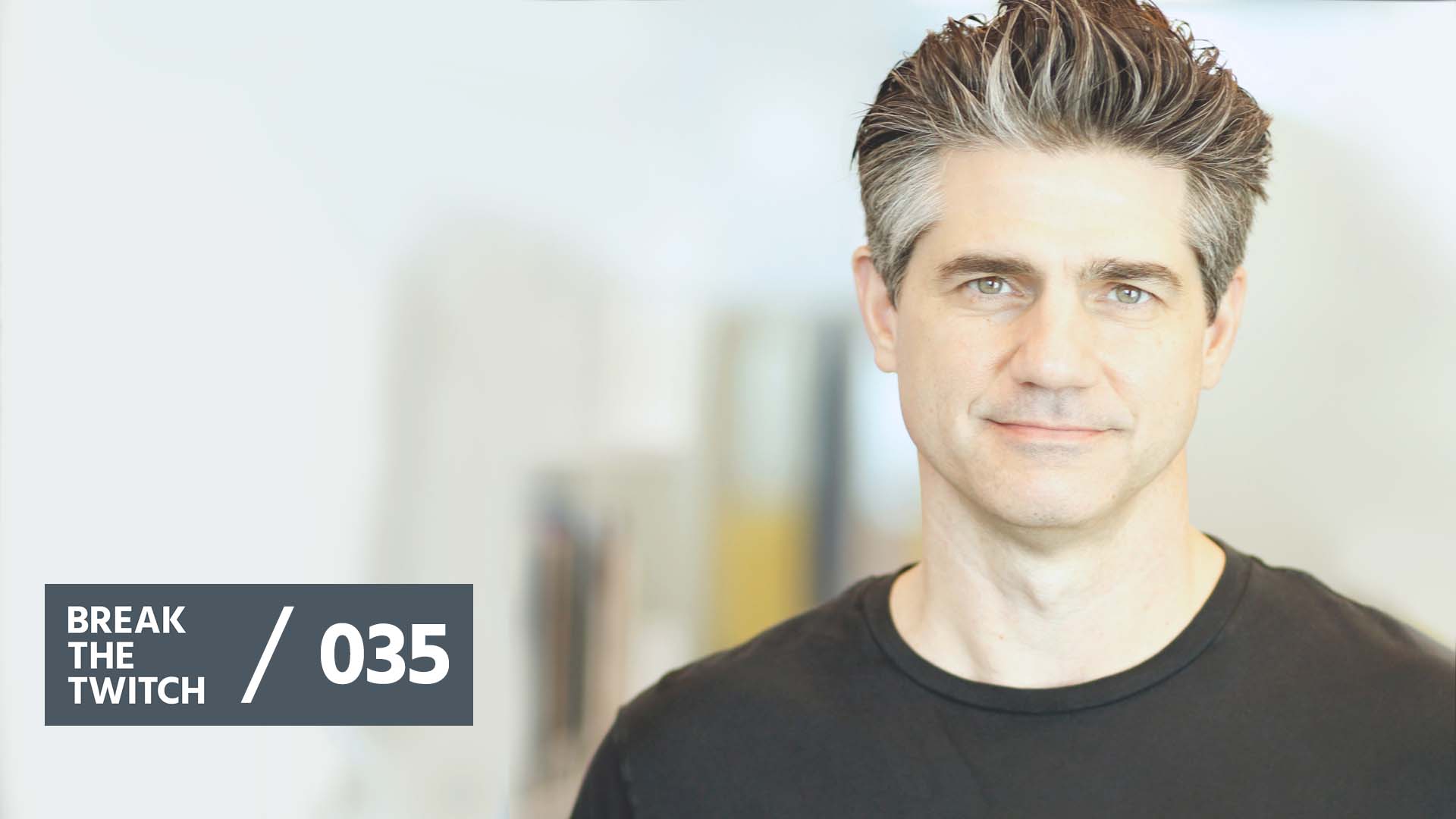
Wall Street Journal Best-selling Author, Joshua Becker, joins me to discuss the ideas behind his new book Things That Matter, and catch up after a two-year Break the Twitch podcast hiatus. Pre-order his new book, coming out April 19th anywhere books are sold. Or right here.
Subscribe to the Break the Twitch Podcast:Apple // YouTube // Stitcher // Spotify // TuneIn
Do you want to live a meaningful life—with very few regrets—and ma
Wall Street Journal Best-selling Author, Joshua Becker, joins me to discuss the ideas behind his new book Things That Matter, and catch up after a two-year Break the Twitch podcast hiatus. Pre-order his new book, coming out April 19th anywhere books are sold. Or right here.
Do you want to live a meaningful life—with very few regrets—and make a positive difference in the world? But is culture distracting you from doing so? Perhaps moments, days, and years go by without you stopping to ask yourself, Am I living out my true purpose? Even if that question whispers to you, are you brushing it aside because you don’t know what to change in life’s busyness?
Things That Matter is a book about living well. It’s about overcoming the chatter of a world focused on all the wrong things. It’s about rethinking the common assumptions of today to find satisfaction and fulfillment tomorrow.
If you enjoyed this episode, please leave a review on Apple Podcasts. Every review we get helps boost the Break the Twitch podcast so we can reach more people.
The Break the Twitch podcast is an interview-based podcast hosted by Anthony Ongaro featuring guests from all walks of life on living better and doing more of what matters. See previous seasons, episodes, and the latest news on the Podcast page.
On the surface, there isn’t much to the popular plastic-tomato-kitchen-timer-based productivity system. Take a deeper look behind it’s simple facade, and you’ll find something quite profound. And perhaps most importantly, it’s something that is easy to miss when trying the system out for yourself.
What is the pomodoro technique?
The Pomodoro Technique uses a timer for tracking work sessions, and subsequent break sessions. Francesco Cirillo, the technique&rs
On the surface, there isn’t much to the popular plastic-tomato-kitchen-timer-based productivity system. Take a deeper look behind it’s simple facade, and you’ll find something quite profound. And perhaps most importantly, it’s something that is easy to miss when trying the system out for yourself.
What is the pomodoro technique?
The Pomodoro Technique uses a timer for tracking work sessions, and subsequent break sessions. Francesco Cirillo, the technique’s inventor, accomplished this by using his kitchen timer that looked like a tomato*, which led to the quirky name: tomato, or pomodoro in Italian.
I credit much of this method’s eventual popularity to the chance that Cirillo had a tomato timer on hand, not an egg* timer.
*The Uovo Technique doesn’t have the same ring to it.
How does pomodoro work?
The process has two stages, a work block and a break block—here’s a look at one simple round.
Set timer for 25 minutes
Work for 25 minutes
Set timer for 5 minutes
Take a 5-minute break
Beyond that, the times are entirely customizable. You can do any work/break split that helps your brain the most — and it requires a bit of experimentation.
I’m studying a relatively complex subject to prepare for a certificate program this fall, and have experimented with using around 200 of these work/break blocks (so far).
For efforts that require multiple elements of working memory held in place, longer work blocks are most effective for me. My favorite splits have been both 60/30 and 90/30.
With my current area of work, slightly longer breaks allow for both focus mode thinking and diffuse mode* thinking.
*While focus mode is straightforward, diffuse mode is a more open, relaxed mode where your brain simply processes what you’ve already given it during focused work.
This allows my brain to process and chunk the information while I’m exercising or making lunch during these longer 30-minute breaks.
The truth is, when it comes to how long your work and break times are, there is no “right” or “wrong” way to do it. Just like most things, it’s all about trial and error. Try experimenting with what might work best for you — the type of work you’re doing will influence the results, too.
What’s important to note is that there is a way to do the pomodoro technique that largely defeats its beneficial outcomes. Interestingly enough it’s more related to the fun part of the technique — the break or reward. Speaking from experience, this is the most common reason the system doesn’t work for many people who try it.
Fortunately, there is a better way — and if it hasn’t worked well for you in the past, it’s worth another look.
The problem with pomodoro
Realistically, the biggest flaw of this system is the one I hear most commonly, and one I was guilty of myself. When the work timer ends, we don’t want to stop, and I can understand why. Especially for the attentionally-diverse brains* out there,deep focus is a golden gift — one that comes at no small cost. The last thing anyone would want to do after achieving that state is leave it, right?
*You know, the ones that decide to use words like attentionally.
If the point of the pomodoro technique is to achieve superhuman levels of focus and productivity, why should you stop once you get there? Why take a break and have to go through the effort of getting in the zone all over again… isn’t that missing the point?
No, it’s not missing the point — and to understand why that is, we have to go deeper… into emotions.
The kid doesn’t trust you… yet
Imagine that you have a child. If you have a child above the age of five, imagine… your child. You’re spending the day together, going to the park, reading some books, and playing with Legos. After a fun day, it is time to clean up.
The problem is, no one likes cleaning up Legos—especially six-year-olds. So as the adult, you cut a deal.
Alright kid, if you spend 25 minutes cleaning up these Legos, we’ll go get an ice cream cone to celebrate.
You, the very much adult
The kid considers the deal, and shakes on it — who can turn down ice cream? You set a timer for 25 minutes, and the clean-up process begins. It takes a while to pull out the bins and find a groove, but the little one completes the task as agreed. Sure, there are still other things to clean up, but after 25 minutes a ton of progress is made.
Excited for ice cream, the kid feels a sense of satisfaction for completing the task, and is ready for the reward.
Oof, you know what—we’re on such a roll, let’s just keep cleaning. I don’t think we have time for ice cream today, anyway.
You, still the adult
Not only does this more or less ensure a meltdown, but it’s setting the expectation for future arrangements. In short, the kid can’t trust you — and trust takes a long time to rebuild. Adding to this predicament, kids don’t really know how to communicate that lack of trust. So when it comes time for the next clean-up, they procrastinate, complain, and drag their feet.
We’ve all seen it (and experienced it) before.
These seemingly insignificant violations of trust, when repeated over and over, build a pattern which starts to look a lot like avoidance. Procrastination. The things that, as adults, we beat ourselves up* about thus continuing the pattern.
*why am I the way that I am??
So about this kid…
Here’s the kicker, which may by now be obvious. That kid we were just talking about isn’t your kid or (anyone else’s kid for that matter). That kid, is you — your inner child — or as I like to refer to it, your emotional self. It’s that feeling in your gut, the tightness in your chest, along with the full range of wonderful and horrible emotions that we experience as humans.
In my experience, one of the most impactful perspectives to take is this: all those human feelings we feel are just the inner child trying to communicate its current status.
In the same way that a kid doesn’t really know how to effectively communicate what they need at a young age, your inner child doesn’t either. It can’t say words, so it communicates through a complex language of emotions — which are a major piece of how (and why) we do* anything at all.
*or don’t do…
Just think, when you’re excited about something, how quickly do you jump up to take action? How hard do you work at it? When you’re dreading something, how about then? Both cases are just driven by emotions.
What about the adult?
In the ice cream story above, the adult is your big-old human brain. The “if-we-don’t-get-this-done-we’re-a-failure” adult brain trying to keep the chaotic train of modern life on the tracks. And hopefully going vaguely in the right direction.
The managing expectations, calculating future consequences, if this happens I’ll die alone, adult brain. Luckily, the brain is the negotiator and deal-maker in the relationship. Constantly navigating the messages that the child is sending up through emotional messages passed through the nervous system.
Interpreting those messages isn’t as obvious as it seems* — it’s like speaking any language, it must be learned and practiced. But whether you think they are or not, they’re there — and they’re motivating a lot of the action (or inaction) in your life whether you like it or not.
*This is where things like yoga, meditation, and breathwork come into play. Slowing down enough to actually bring awareness to your body and the feelings it’s sending you.
As an adult in this world, if you have the awareness to see it (therapy can help uncover this), you are constantly navigating these two parts of what you most often refer to as ‘I’ (or, ‘you’ depending on how the voice in your head is reading this right now).
When the emotional self is ignored, dismissed, told to suck it up, and lied to, that pattern continues over years and years, getting deeper and deeper. All of a sudden, these things look more like a character flaw than a long-built habit. Eventually, the negative thought cycles as an adult reinforce the pattern more deeply. “Ugh, why am I so bad at focusing? Why can’t I just sit down and do this?”
One might literally feel incapable of doing certain things based on this feedback loop.
Thus, a new paradigm is needed. A self-compassionate practice with exposure therapy, taking small but consistent steps to rebuild the trust that was lost. It is but one small piece of the puzzle, but perhaps you see where I’m going with this.
The secret pomodoro sauce
Set a timer for 25 minutes, settle in, work on something until the timer goes off, then stop.
Get up, stretch, eat a snack, or heck, go get ice cream. Celebrate.
Most importantly, let go of the expectation that this is supposed to “work” immediately. It’s going to be uncomfortable because it’s a departure from what you’re used to — but that’s the entire point.
Start small, and work your way up to longer sessions over time if that’s what works best for you. If a work session runs over by a minute or two, that’s fine. If every now and then you’re on such a hot streak that it doesn’t make sense to stop right now, that’s fine, too*.
You’re allowed to be gentle with yourself! Really!
Take a moment to consider the possibility that if you don’t want to stop because it’s hard to get focused again, that not stopping until you’re burned out could likely be the reason that getting focused is hard in the first place.
The point of pomodoro isn’t to trick yourself into focusingon a task you didn’t want to do. It’s not about achieving a state of deep focus and then staying there for as long as possible.
It is about creating a trusting relationship with your child self over the long term. When done with this approach, it creates a new dynamic entirely. It is about managing negative emotions in a healthier way as an adult, listening to our bodies and our emotions while repairing a long-strained partnership.
In effect, it’s about working a system that allows you to heal your relationship with focus and work. It’s about reducing the effort required to start, focus, and get into that zone over the long-term. It’s not a quick fix, it’s healing self-work. That means you can use this system for all kinds of things — creative work, reading, etc. If it’s always a grind when you set the timer, that adds negative reinforcement to the system so mix it up!
“Healing work with a tomato timer? Come on, Anthony.” I can hear you thinking it. But it is just one of the many small ways we can begin to approach our lives and work with compassion and understanding. Without giving it to ourselves, there’s no way to truly understand how to give it to others. It has to start with you.
The ironic part about all of this, is that this method eventually becomes so much more wildly productive than any other approach. Not in the sense of “look at how much more I can get done now that…”, but in the way of, “look at how productive I am when I allow myself space throughout the day while listening to (and meeting) my emotional needs!”
Maybe it falls under the slow is smooth, smooth is fast principle, or something similar.
What I do know for sure is that strong negative emotions take a lot of energy to overcome. They’re incredibly draining, and can often throw multiple days askew. There is a dang good reason that parents of young children adhere to strict schedules of bedtime routines and naps for their kids. When those emotions are high to the point of fight-or-flight levels, mental recall declines, working memory suffers, and it takes even more energy to accomplish the tasks required.
Thus, the cycle continues and burnout is always around the corner.
Two steps back
There is an inherent “two steps back, one step forward” aspect to all of this. If you’re used to using adrenaline as focus motivation, it’s going to be hard to unwind. It’s, yes, going to actually slow you down at first. It’s going to take a lot of patience and effort to break the patterns of dependency on that style of work. But there is a better way — and one worth exploring.
While there are many ways to approach rebuilding self-trust, using a little plastic tomato timer is absolutely one worth exploring.
If you’re curious about, new to, or simply interested in learning more about minimalism, this is a great place to start. Below you’ll find various definitions of minimalism, the benefits, challenges, and real-life examples so you can decide if minimalism is right for you.
Spoiler alert: it probably is.
Ironically, this isn’t going to be a minimal post about minimalism. It’s a more comprehensive one—so get comfortable, and enjoy the learning process.
Fo
If you’re curious about, new to, or simply interested in learning more about minimalism, this is a great place to start. Below you’ll find various definitions of minimalism, the benefits, challenges, and real-life examples so you can decide if minimalism is right for you.
Spoiler alert: it probably is.
Ironically, this isn’t going to be a minimal post about minimalism. It’s a more comprehensive one—so get comfortable, and enjoy the learning process.
For my wife Amy and me, it all started in early 2014 when we learned about the idea of minimalism. While we both had explored concepts around mindfulness and intentional living, we hadn’t yet come across the concept of minimalism outside of modern art.
We had no idea minimalism would have as big an impact as it did. Looking back, it has been one of the most important changes we’ve implemented in our lives.
Minimalism is how I reduce distractions in my life so I can do more of what matters.
If you’re feeling overwhelmed with the idea of doing more of the things that matter most to you, your calendar is overscheduled, or your physical space is filled with items that don’t serve you and your family, minimalism will help you make more space in your life. Space to take bigger risks, try something new or simply spend more time with the people you care about. Over time, minimalism can potentially help in making a radical lifestyle change like moving to a new city, changing careers or exploring entrepreneurship.
Minimalism, An Overview
What is Minimalism?
Minimalism is defined as a design or style in which the simplest and fewest elements are used to create the maximum effect. Minimalism had its origins in the arts—with the artwork featuring simple lines, only a few colors, and careful placement of those lines and colors.
More recently, it has become representative of a lifestyle that aims to remove clutter from all facets of life.
Here at Break the Twitch, we define minimalism as a lifestyle practice focused on minimizing distractions that keep you from doing what matters to you.
Minimalism is all about owning only what adds value and meaning to your life (as well as the lives of the people you care about) and removing the rest. It’s about removing the clutter and using your time and energy for the things that remain. We only have a certain amount of energy, time, and space in our lives. In order to make the most of it, we must be intentional about how we’re living each day.
How we spend our days is, of course, how we spend our lives.
– Annie Dillard
There are many different approaches to minimalism, but it’s really just a tool to help you prioritize what’s important in your life.
Joshua Becker of Becoming Minimalist offers this definition: “Minimalism is the intentional promotion of the things that bring you joy and the removal of those that do not.” It might be called simple living, tiny living, intentional living, and a myriad of other things—but there is at least one common thread: the idea of curating the things we own to best reflect our priorities and vision for our lives.
If the idea of minimalism sounds intimidating to you or if you’ve seen some images and thought, “that’s a nice idea, but I’d never want to live like that,” don’t worry. You can benefit from applying minimalism in your life whether you live in a tiny home, suburban house, or a mansion. You can use minimalism as a guiding philosophy and customize based on what works best for you.
Here are some minimalism guidelines that have worked best for Amy and me over the past several years of intentional living.
Contrary to what some people think, there aren’t any actual rules to minimalism. There’s no official board of minimalism to determine whether or not you’re doing minimalism right. Minimalism truly looks different for everyone.
You don’t have to own below a certain number of items. You can still have nice things, and no, you don’t need to get rid of your favorite collection—whether it’s books, shoes, or music. Minimalism doesn’t have to look like white-walled, modern and sparse homes you’ve probably seen in magazines and videos, a common minimalism mistake.
Minimalism is also not a one and done project. Amy and I have used minimalism as a continual practice to ensure everything in our lives is working for us in our vision, not against us. We’ve used it over the years to make substantial changes in our careers, home, lifestyle, buying behaviors, and more recently, our big move across the country.
Everyone can benefit from applying the principles of minimalism to their lives. It’s a process of removing distractions and things that no longer add value to our lives.
Realistically, everyone should be a minimalist.
It would be silly not to be, right? Who doesn’t want to be surrounded by everything that’s important and nothing that weighs us down? It makes a ton of sense when you start to think about it. Here are some additional thoughts on what it means to be a minimalist.
There are no credentials needed to call yourself a minimalist and no official governing entity on whether you’re doing minimalism right. But you don’t have to call yourself a minimalist either. The way I see it, minimalism isn’t my identity or some goal to achieve; it’s a tool Amy and I use as part of the framework of doing more of what matters.
Why Minimalism Is An Effective Tool For Living An Intentional Life
In the end, minimalism is less about owning fewer items and more about actively making choices on what kind of things truly matter to you.
We exist in a society that creates false value on owning more stuff and having no time to use them much. The constant pursuit of bigger and better is an endless cycle. There will always be a nicer car to buy, a bigger boat, a larger home, and or a faster private jet. Did you know that there’s a website for billionaires to shop? Yeah. It never ends.
It may seem like an overwhelming challenge at first, but as you untangle the life you built around owning more things, you’ll find the stress disappearing and the world starting to slow down. Those choices you make will begin to build a muscle that will fundamentally change the way you live your life.
How to Get Started With Minimalism
Find one thing, remove it from your home.
There’s a lot of reading you can do and plenty of videos to watch on minimalism (such as on the BTT YouTube channel). You can research yourself into oblivion, but the best way to get started is to just find one thing you don’t need anymore and let it go. You’ll get to experience what it’s like to start creating space in your home and get over that initial hump of not knowing where to start. Starting small is the best way to get started on something that feels like a big change. Check out these minimalism tips for the beginner for more inspiration on getting started.
The next immediate step is to stop the influx of new things that you don’t actually need. Whether that means logging out from Amazon or not going to the mall anymore, take steps to prevent yourself from purchasing new things that will continue to clutter your home. Create some guiding questions about what types of things add value to your life and which types of things don’t add value. Beware of the False First Step—buying something for the aspirational version of yourself instead of taking a minimally viable action using what you have already.
Find a decluttering method to try.
The best way to get started is to find a decluttering method that works for you and simply get started on building that decision-making muscle! Here are 6 of the most popular decluttering methods.
It’s important to remember that major changes don’t tend to happen overnight. Bit by bit, you’ll start to see the space in your home open up around you. Surfaces will begin to clear and closets will lose their overstuffed status. You’ll eventually have more time and energy to do more of what matters. When the going gets tough, you can find inspiration in these decluttering tips to motivate you to keep going.
Ready to take action with secret member-only content and community resources? Join Attention Collective, our online community of like-minded humans from around the world, and get full access immediately. See you inside!
Imagine you’re driving home from work and hear your phone ring. You pick up (on the speakerphone of course) and an acquaintance lets you know she’s in the neighborhood and asks if she can pick up the jacket she left at your place. She lives an hour away, so it would be great if she could get it right when you get home.
Are you panicking yet? Usually, it takes you a half hour to tidy up the house before company comes over, but now you have only five minutes. Maybe less.
But, what if a quick clean up only took you a couple of minutes or so? Just picking up a few things here and there? Or maybe there’s no clean up involved at all? It sounds a lot less stressful, doesn’t it? While it might sound far off, it’s entirely possible—and it’s possible thanks to a lifestyle philosophy called minimalism.
Having clutter around your home and in your life also contributes to stress. When you’ve cleared off surfaces in your home and simplified other areas in your life, you’ll feel a sense of peace and marvel at the difference.
More time
Time is arguably our most valuable resource. Once it is spent, it is gone forever. We never get more than 24 hours in a day and we never know when our time will run out. With less stuff to worry about, less clutter to organize and maintain, we regain time in our days. This provides the opportunity to begin implementing daily habits that will guide your life in the direction you want.
It is time with our spouses, children, friends, and family members that we look back upon fondly. I’ve never heard of anyone regretting spending quality time with a family member before they passed away. Similarly, a eulogy never seems to mention how big of a house the person had, how many sports cars owned, or how rich they were. Mentioned most often are the times that were shared and the memories created together.
More possibilities
A unused item cluttering your home or your mind is a finite object. In a very practical yet philosophical way, the item can only be what it is. The space created by the item’s removal, on the other hand, is infinite. The possibilities of how the cleared space might be used are completely at your disposal. When you continue to create more space, you become more flexible with your time, energy, and productivity.
By removing the clutter, the resources taken by that object are returned to you and more.
The principles can be applied to nearly every facet of life in the physical, digital and other realms. Instead of thinking of minimalism as a lifestyle, consider it to be a decision filter that you use to make important decisions in your life. Those decisions start small and might not carry much weight in the beginning, but the value you gain from it certainly grows over time. With each decision, you increase your ability to shift your life in any way of your choosing.
Minimalism can be applied to many areas of life. Below are some real-life examples.
Home
Walking into an uncluttered, peaceful home environment is an amazing feeling. A space where surfaces are clear for use, seating areas empty for relaxing, and no visual to-do lists competing for your attention the minute you walk into the door. Whether the space in your home is your living room, bedroom, closet, refrigerator or garage—you can benefit from applying minimalism in the area. Physical clutter in and around the home is the most common focus of minimalism. Here are some fun ideas on ways to reduce household clutter.
Schedule
Having your schedule jam-packed with meetings, errands, and activities can result in overwhelm, anxiety and exhaustion. By creating more space in your day and letting go of the nonessentials, you’ll have more time in your day to focus on what truly matters. Spending time with family, loved ones and friends. Reading a book while drinking a cup of tea. Heading to bed earlier and getting a good night’s rest. Working on a project you’re excited about. The opportunities open up when you have more space and time in your schedule.
Money
The way you manage your money can also benefit from minimalism. When you spend more intentionally and buy fewer things, you have more money to use towards what matters most to you. Whether it’s fun experiences with family and friends, a new project, travelling the world or taking a leap into a new career or entrepreneurship— minimalism will help you better prioritize where your money is going. You may find this video on minimalist money management tips to be helpful.
Relationships
When it comes to relationships, quality over quantity matters. Minimalism can be particularly beneficial in this area. Relationships with people who are chronically negative, unsupportive or abusive aren’t healthy for us in the long run. They use up our energy and resources that frankly, are better directed elsewhere. Toxic relationships distract us, put us down, and often prevent us from reaching our potential. If you have people who aren’t supportive, positive influences in your life, it’s in your best interest to either remove or reduce the time spent with them. It is often said that we become the average of the five closest people around us, and I find it to be true.
Digital
With everything becoming more digital and mobile these days, the digital realm can be a huge mess if we aren’t intentional. These alarming statistics show just how addictive our devices are. From email, apps, files, photos, to multiple devices, there is an overload of digital information coming at us. In order to maintain our sanity, it’s best to declutter and maintain our digital environment.
Energy
Ever become so exhausted that all you can do is scroll on your phone? We only have so much willpower and self-discipline each day. This mental energy is the decision-making muscle. Read more about decision fatigue and why minimalism is important to better managing your energy for loved ones, yourself, and your creative flow.
There’s also emotional energy. Let go of the old stories you’re telling yourself. Let go of the anger, resentment, and grudges—even if you’ve been wronged in the past. All of that is weight you’re carrying around at your own detriment. You’ve paid enough already; there’s no need to keep on suffering in the present.
Embracing minimalism in all aspects of life has helped us in more intentional use of energy. From the decisions we make to not engaging in past stories that don’t serve us in a positive way.
Challenges of Minimalism
Things often get worse before they get better.
Whether it’s the contents of a closet exploding all over the room or random things everywhere, things often get messier and more difficult before it gets easier. There will likely be challenging moments during your decluttering process. Work on the easy stuff first and then work up to the harder stuff. Know that it gets easier as you build your decision-making muscles and practice letting go of items.
Once you’ve decluttered, it can be difficult to know what to do with your decluttered things. Instead of automatically donating, consider selling, giving to friends or neighbors or other options in this intentional decluttering guide.
People who were in your life before minimalism may not understand. They may have questions or pass judgment on the changes you’re making. Their reaction may not be helpful, but remember, mainstream society is centered on earning more income to accumulate more. Explain to them what you’re doing, that you understand if it doesn’t resonate with them, but it’s what you need right now. Be living proof of what’s possible and lead by example. It may take time, but once people start seeing how much better you feel, look and live—they’ll begin to come around and ask questions.
There’s regular maintenance involved.
As much as I’d like to say that once you’ve applied minimalism to your life, you’re done—that’s not the case. We’re all evolving beings, and as our needs and lives change, so does everything else. Just like the weeds in your yard, embracing minimalism in your life requires regular maintenance. Minimalism is not a once and done thing, although it does get easier as you go along.
Eventually you realize minimalism is not the magic answer.
While there are definite benefits of minimalism that we’ve (and many others) have experienced, at some point you will reach a plateau on the benefits. At some point, you’ll realize that minimalism isn’t the answer to living a well-lived and intentional life. Breaking the “Twitch” is only the start.
Minimalism helps you to create the space—physically, mentally, emotionally, and with your resources and time—but it’s not the end goal. What comes next is building the habits to form the foundation you need in order to do more of what matters to you. And with the space cleared and foundation of habits built, to create things, find your creative flow and make a positive impact in the world.
More Inspiration on Minimalism
While many resources can be found online or at your local library, there is a special place in my heart for books. Perhaps that’s the case for you as well and I’ve listed my favorite books on minimalism if you’re interested in exploring more.
There are also many different voices and ways to approach minimalism. Here are some other recommended websites and blogs on the topic.

 Login
Login