
❌

Normal view

How to Start A Blog: A Simple Guide for 2022

17 April 2022 at 17:34

How to Start A Blog: A Simple Guide for 2022

Want to learn how to start a blog?

Below is the most comprehensive resource on the internet!

From setting up a domain, hosting and WordPress…

To driving Pinterest & SEO traffic and making money from affiliate marketing and products.

It’s all here.

How to USE This Blog Tutorial

If starting a blog is just an idea in your head (meaning you haven’t done ANYTHING yet)…

I’d suggest following along with the first few sections of this guide, and doing the work at the same time:

  1. Choose a topic,
  2. Grab a domain name and hosting package on Bluehost, and
  3. Set up WordPress!

Do these things while going through the first few sections!

Then, bookmark this post and refer back to it once you’ve actually got your blog set up.

If you already have a WordPress blog set up, use the navigation above to head to the subjects you’d like to learn more about!


Blogging for Beginners - What Does Blogging REALLY Look Like?

First, take note!

80% of bloggers don’t make it through their first year.

Blogging is really hard.

  • You will be surprised how LITTLE website traffic you’re getting.
  • You’ll be amazed at how much time it can take.
  • You WILL lose focus and struggle with motivation.

WAY too many bloggers quit in their first year due to overhyped expectations!

Don’t be that blogger.

blogging for beginners

FAQ: How long will it take to build a profitable blog?

If you want full-time income from your blog, it’s going to take 18+ months in the best case scenario. Part-time income could occur much sooner!

I’d bet my life savings (not a huge risk) on the following: If you were to publish 3 pieces of content a week for 3 years, you would be bringing in a few thousand dollars a month.

Bloggers who persist and consistently publish good content are the ones who thrive. Let’s be THOSE bloggers.

The bloggers who see the most growth in year one are those who get connected with awesome blogging groups.

Build relationships and DO NOT HESITATE TO ASK QUESTIONS!

Speaking of communities, Click here to join the Do You Even Blog private Facebook group.

You’ll get free access to a TON of helpful bloggers, some of which make $100k+ from their blogs, and you’ll find NO spammy self-promotion or sales (even from me, and it’s my group!)

Choose a topic and define your target reader (avatar)

I KNOW you’d rather jump into setting up WordPress and buying domains…

But defining your mission and reader avatar is a VITAL step to connecting with people and driving BLOG TRAFFIC.

define your topic

It’s important to choose a topic and figure out who your reader is first!

Knowing your blog’s purpose helps decision making!

  • Which affiliate products will make me the most money?
  • What topics should I write about to attract THOSE readers interested in that product?

“Find your why!” is corny, but it CAN actually be helpful to think through while choosing a topic to blog about! Speaking of which…

FAQ: Help! I don’t know what to start a blog about!

First off, nothing is permanent! If you end up choosing a niche and HATING it 6 months from now, you can quit. It’s more like dating and less like marriage.

That said, list out 5 subjects you’re

  • passionate about
  • qualified to teach about
  • itching to learn about.

Out of those 15, pick the topic that fires you up the most and START.

It’s incredibly important you understand exactly who you are creating content FOR.

Definition – An Avatar is a hypothetical representation of your ideal reader, or your target customer, etc. Why is this important?

Later on, when we talk about creating good content and monetizing your blog, we will talk about solving your reader’s problems. It’s the single best way to connect with people, make a difference, and sell products.

If you don’t fully understand your readers, you will not be able to connect and sell to them.

To define your avatar, answer these questions:

  1. Hold old are they?
  2. Gender?
  3. What are their struggles as it relates to your blog topic?
  4. Frustrations?
  5. Conversely, what are their likes?
  6. What do they desire the most as it relates to your blog topic?
  7. What do they want to learn? Why do they want to learn it?
Here are extra credit questions that could help you market your blog later…
  • Where does my avatar hang out online?
  • What’s their social media platform of choice? (Pinterest or Reddit?)
  • What other blogs does my avatar follow?
  • What podcasts do they listen to?
  • What YouTube channels do they watch?
FAQ – The more human you can make your avatar, and the more details you can attach to him/her, the better! Knowing them is the first step to solving their problems (thus growing traffic and selling to them).

Example: Here is Do You Even Blog's avatar:

Pat has already read about blogging a bit. He’s seen a few “how to start a blog” courses or articles like this one already 🙂

But, he’s either

  1. Not pulled the trigger yet, or
  2. He’s pulled the trigger and has a blog, but he’s not satisfied with its growth.

He wants MORE traffic, email subscribers, and monthly blog revenues!

Despite the insane amount of blog tutorials on the internet…Pat has been overwhelmed and struggles with the actions needed to facilitate growth.

Pat also struggles to find TIME to blog, as he has a day job, is a parent, or simply underestimated the amount of time it takes to run a blog.

Do You Even Blog aims to help Pat with every piece of content of our blog & podcast, and it’s built into every piece of marketing.

blog avatar

Choose your topic, then define your avatar.

Write and market for your avatar.

This will make it 10x easier to make money from a blog. ✅

Choose a website host & find an available domain name

what is blog hosting

Ok new bloggers, here’s the ORDER of actions:

1 – Choose and find an available domain name, but DON’T buy yet.

2 – Settle on a platform (WordPress)

3 – Choose a “host”

4 – Purchase a hosting package and domain at the same time. (You’ll save money!)

Choosing a Name for Your Blog and Finding a Domain Name

Your name is one of the first ways potential fans decide what you’re about and who you are. That’s why your name is so important. If you were a 45-yr old single mother of 3 kids, which blog would you be more attracted to?
  • parentinglife.com
  • momlife.com
  • singlemomlife.com
#3 of course. It’s much more specific to what you care about.

What should a great blog name have?

Your blog name doesn’t need ALL of these, but the more the better.

  1. A blog name should be easy to say aloud!
  2. It should be easy to spell & type. If you use fancy words or weird combinations, it can be really tough for people to type in your domain.
  3. Keep it short and brandable.
  4. Grab .com’s please! .net, .org, and .co are also ok, but avoid the fancy .ninja or .site or whatever.
  5. Avoid hyphens.
  6. Avoid double letters between words – petessite.com looks odd.
  7. You should like it and be proud of it 🙂

“doyouevenblog.com” wasn’t my 1st choice, but it was brandable, easy to say, and is easy to read and type out.

instant domain search

Where can we find available domain names?

Instant Domain Name Search is my GO-TO. Start typing and you’ll see availability and suggestions pop up in real time.

You can also use the widget below to check for some available domain names right this second!👇

How much does a domain name cost?

Note: If you grab a Bluehost hosting plan using my link (details below), you’ll get a FREE domain name! So don’t go buying one separately yet.

Assuming a domain is available for sale, it’ll run you about $10-15 per year.

This does NOT include hosting, which is more. However, we’ll show you how to get a FREE domain with your hosting below 🙂

Which is the best blogging platform to use (to make money?)

By platform, we mean the actual software tool you’ll use to create and publish a blog.

Here are the most common blogging platforms:

  • WordPress.com
  • WordPress.org (the same software, but installed on your YOUR host)
  • Wix
  • SquareSpace
  • Medium

My recommendation? Use the WordPress software hosted on your own 3rd-party hosting account.

WordPress powers 30-40% of the entire internet, for good reason: It’s easy to set-up, use, and offers the most flexibility for design AND monetization plugins!

This is the cheapest AND most flexible option!

What is blog hosting? How much is it, and which host should I choose?

When bloggers refer to “hosting,” we are referring to disk space essentially.

A website is nothing but a bunch of files–like files on your computer–and these need to be hosted somewhere.

That’s what you’re paying for.

How much does hosting cost?

Anywhere from $2.95/month to $30/month and more!

I’ve actually worked out an exclusive deal with Bluehost for those who use that affiliate link–you’ll grab a $2.95/month rate! (I think it usually starts at $3.95/month).

Every bit counts!

“Shared” hosting means there will be other websites hosted on the same server.

This is totally cool!

[lasso ref=”bluehost” id=”7431″]

Always choose the cheapest shared hosting plan to start with–you can always upgrade later once your traffic starts going up.

For new bloggers, I recommend Bluehost for 4 huge reasons:

  1. You’ll get a FREE domain when you get a hosting package.
  2. It installs WordPress automatically (it’s amazing actually)
  3. Their hosting is priced well.
  4. Their customer support is quick and geared towards bloggers.

Why I Stand Behind My Bluehost Recommendation 110%

I recently went through the new blog set-up process again…

And Bluehost’s pain-free experience blew me away.

When you sign up for a new account–they will install WordPress for you automatically.

bluehost blog hosting

This is valuable if you’re new and have zero experience in cPanel, website backend settings, etc!

Bluehost is the best, quickest, and cheapest host if you’re just learning how to start and grow a blog.

Click here to use my Bluehost affiliate link, and you can follow the section below to have a working blog published within the next 15 minutes.

FAQ: How can I start a blog for free?

There are several platforms that allow you to blog for free, including:

However, you will NOT get a custom domain with free blogs–you’ll have .wordpress.com or .blogger.com on the end of your url.

Example: www.yourblogtitle.wordpress.com

You’ll also be limited in terms of themes & plugins.If you don’t care and just want to write today and have it published, go with Medium!

If you want a bit more control over the design, go with a free WordPress.com blog.

How to set up hosting and install your WordPress blog

Here’s a start-to-finish video of me setting up a new blog–in 60 seconds!

The full details are below.

For this tutorial, I purchased a brand new domain to use as an example–theparentline.com!

How to install and set-up WordPress on Bluehost, step-by-step!

Step 1 – Head to Bluehost and click “get started” on the homepage.

Choose the basic hosting package. You DON’T need those extra features right now! You can always upgrade later 😉

[lasso ref=”bluehost” id=”7431″]

Then, enter your domain name you found already.

Step 2 – Enter your contact details and select extras for your blog.

Enter your info, but CHANGE some of the pre-selected extras.

YOU DON’T NEED THESE.

The only one you MIGHT want to grab is the $0.99/month domain privacy protection. This will simply hide your name and address in the domain database records (which is public information).

Other than that, just pay for 12 months. It’s worth sacrificing the $1/month for a cheaper upfront payment.

3 – Enter CC information and pay.

THAT’S IT.

Bluehost will take care of pretty much everything else. 🔥🔥

  1. You’ll be directed to your Bluehost dashboard
  2. Bluehost will install your domain and WordPress software.

They’ll also hook you up with a temporary domain and log-in so you can get started on your site! All changes you make immediately will be carried forward to your real URL once it’s ready.

They’ll send you an email with some advanced information. File it away in case you need it in the future.

bluehost dashboard

FAQ – Where Do I Log-in to My WordPress Blog?

You don’t need your BlueHost dashboard to log-in to your blog’s WordPress dashboard–but rather navigate to yourblogurl.com/wp-admin.

I’d suggest adding it as a bookmark. I’ve got doyouevenblog.com/wp-admin on my bookmarks bar.

Important Note: It will take Bluehost a few hours to get your site set-up, but they’ll give you a temporary domain name in the meantime.

wordpress login url
Add this to your bookmarks so you can find it easily!

Important: Change Your WordPress Password!

Click “log in to WordPress” in your Bluehost dashboard.

You should be automatically in your dashboard, at which point you’ll go to the top-right corner and hover over “admin.”

From there, you can click to update your email and scroll down and click “generate password.”

change wordpress password

NOW you should be able to log-in the normal way to your WordPress dashboard.

(Note: At first, you’ll probably be redirected to your temp domain site until BH finishes your install)

FAQ: What is cPanel? Do I need it for my blog?

cPanel is a dashboard software that most hosting providers use, and is what you use to access the actual files of your website, set up email addresses for your domain name, and much more.

If you’re going with another host like Namecheap or Siteground, you’ll use cPanel to install WordPress!

I made a video on how to install a WordPress blog via cPanel here!

If you choose Bluehost, you won’t need this right now.

But if you do need it, you can click “advanced” on the left menu in your Bluehost dashboard 😃

A quick tour of your new WordPress blog

Before we choose a blog theme and design/customize it, let’s take a quick tour of your blog!

Note: WordPress is like riding a bike–you will get frustrated and overwhelmed at some point, but it gets way easier once you learn it!

Here’s a full video walk-through (25 minutes) 👇

The WordPress Dashboard: What You Need to Know:

Your blog name at the top – This will take you to your homepage! (Once you’re there, the same button will take you back to the dashboard)

Posts – Here is where you create and publish new blog posts, view all published posts, and manage blog categories.

Podcast – You won’t see this on YOUR dashboard, but this is an important point: The side menu in the dashboard will eventually show the settings for various plugins 🙂

Links – Ignore this. You might not ever click this.

Pages – Similar to posts, here’s where you create and manage your pages, such as “About Us” or “Start Here” or “Contact,” etc.

Comments – When people comment on your posts, they’ll show up here for you to approve, deny, mark as spam, reply to, etc.

Appearance – Where you customize the look of your site, your theme, and menus. More on this in a below.

Plugins – Plugins are little add-ons to the WordPress system that perform various functions. We’ll dedicate an entire section to these below.

Settings – Controls broad settings for your website. We’ll dive in here in a second.

How to Choose Your WordPress Theme

It’s time for every new blogger’s favorite part of the process…

Building an awesome looking website!

Our best piece of advice? Start simple.

If you have no WordPress or HTML/CSS experience, stick with a WP theme you don’t have to customize a lot.

What are themes in WordPress?

A theme is technically a folder full of files, and these files control the appearance of your WordPress website.

what is a wordpress theme

Your theme can be customized, and changes things like…

  • The format and layout of your blog
  • Your fonts
  • Color schemes
  • and more.

Themes can be free or paid, simple to use or built for designers and developers.

Which theme is best for WordPress?

There are thousands of themes available, and you should select which one best works for you!

The theme you choose should be…

  • In your price range (or free)
  • A design style you like
  • Mobile-friendly (most are these days)
  • user-friendly (or have documentation available!)

How do I install WordPress themes on my blog?

There are two ways to install themes. If you have downloaded themes from the web, you can manually upload the zip files.

Don’t extract the zip files. Upload them as is!

how to upload wordpress themes zip files

Otherwise, you can browse, select, and install themes right from the WordPress dashboard, under “Appearance > Themes.”

You will click “Install,” and then “Activate.” All themes you install will be available in your theme dashboard, ready for you to switch if you choose!

wordpress apperance
adding new wordpress themes in dashboard

Where do I find themes for my blog?

You can browse blog themes right in your WordPress dashboard, under “Appearance > Themes > Add New.”

There are also thousands of themes available from 3rd party companies all across the internet!

which wordpress themes free or paid

Recommended provider or premium themes: StudioPress.

Pro Tip: StudioPress gives a 20-30% discount for repeat customers, so purchase the Genesis framework (the base theme you will need anyways), and then purchase a theme separately.

Recommended provider of free themes: Either the default WordPress theme (literally called “twentynineteen,” or a free minimal theme from this post.

Your WordPress blog should come with the default theme already installed–but if not, you can search for it in the theme dashboard.

WordPress makes a new “default” theme each year, and they are AMAZING.

They are simple, easy to get started on and offer the latest features. More new bloggers should use them.

A quick warning on free WordPress themes for your blog (that aren’t made by WordPress)

Some free themes might include limited features and want you to pay for a “premium” version of the theme.

What makes a great blog theme?

  • It needs to be mobile friendly! Most themes will say whether it is or not in the description.
  • You need the ability to quickly get up and running. Simple or “minimal” themes are best for this.
  • You need to be satisfied with the design (even though it WON’T be perfect)–so you can START blogging asap.
studiopress themes

Pro tip for beginners: When choosing a blog theme, look for one where the preview contains a lot of white space and looks LESS fancy. These themes are generally easier to set up.

FAQ: Do you recommend Divi or other drag-n-drop page builders?

Do not use Divi!

My students have started referring to Divi themes as “dreadful Divi” as they are a pain to build–and an even bigger pain to switch themes! They also slow down your blog.

Instead, I recommend the Elementor page builder.

  • It works on top of all other themes
  • It’s powerful and user-friendly
  • It’s free.

Interested in learning more? Check out my full Elementor Tutorial and Walk-Through!

elementor page builder

Before you start customizing your blog, create 1-2 test blog posts & pages.

In your dashboard, click “add new” under blog posts, add in a post title, and add in some dummy text.

As you choose different themes and start to customize them using WordPress, having test content will give you a better picture of what the theme will look like in the future–once you have actual content.

test blog posts to start

How to use the WordPress customizer to design your blog theme.

Good news and bad news, bloggers!

Bad news – Every theme is WAY different, so you’ll have to figure a lot of it out for yourself 🙁 🙁

Good news – You hopefully only have to do this process once, then you can focus on, ya know, blogging.

Head here under your WP Dashboard – Appearance – Customize.

That will bring up the live customizer.

accessing wordpress customizer
customizer dashboard

This is where you’ll shape most of the look and feel of your blog theme.

You’ll be diving through this section in the first month of blogging, and it’s important to remember you WILL get frustrated at some point 🙂

It’s a learning experience!

If this is your first day in WordPress, and you just installed a theme you like...

Here are the customize options you should take care of first!

Site Identity

This is important. If it’s not in there already…add the name of your site under site title, and an optional tagline.

Don’t bother with the site icon for now (though if you already HAVE a logo, great. Resize it to 512×512 pixels and upload it there.

Menu & Homepage Settings

We’ll be covering this below in the “how to create posts and pages” section 🙂

Widgets

Go ahead and play around with the widgets. You’ll see a bunch of random things to choose from that won’t mean much right now.

As you start to add content, build an email list, and install plugins, you’ll figure out which widgets you should put where.

Feel free to play around with whatever other settings your theme has–but do try to keep it simple! Don’t spend days and weeks here.

Get it 95%, then start blogging.

Installing essential WordPress plugins

What are WordPress plugins?

WordPress Plugins are “add-on” pieces of software that are not theme-specific and serve a wide variety of functions.

There are plugins to help with email marketing, images, comments, design, custom fonts, and more!

You can’t start a blog without plugins, period 😃

what are wordpress plugins

How do I install plugins on my blog?

There are 2 ways to install plugins:

  1. Search, install and activate via the WordPress plugin dashboard
  2. Upload manually from the same dashboard

Similar to uploading themes, you can download plugins from 3rd parties and upload them in ZIP format.

1 – Go to “plugins” in your WordPress Dashboard, this will show all the plugins installed on your blog!

wordpress plugin dashboard

3 – Click on “add new” at the top of that dashboard screen.

4 – This is the search function! From here you can search and browse plugins for your blog.

5 – To install, click “install now,” BUT YOU’RE NOT DONE YET. That button will eventually be replaced by an “Activate” button–you’ll need to press that too.

6 – For plugins you’ve downloaded from 3rd parties, the “upload plugin” button is at the top.

plugin installation

What are some good plugins for new bloggers?

Note: ALL of these are available today, for free, searchable right from the WordPress plugins dashboard!

Google Analytics Dashboard for WP (GADWP)

We’ll use this plugin to connect our Google Analytics account (see below), allowing us to access blogging stats!

ShortPixel

This is easily the best image compression plugin (you simply install the plugin, change 1-2 settings, and it will shrink the file size of your image automatically–making your website load faster–which is important btw).

Yoast SEO

The most widely used SEO plugin on the internet, and it’s insanely easy to set up and use.

Autoptimize

All I can tell you right now is that you want your blog to be load really, really fast on people’s computers. You do. And this plugin will help.

UpdraftPlus WordPress Backup Plugin

What if you screw things up on the technical end and lose your entire blog? What if hackers destroy everything? Backups act as your safety net. This is the best free plugin for this.

Social Warfare

Used to get great looking social media share buttons for your posts! You won’t get hundreds of shares overnight, but you still need to give readers the opportunity!

Elementor

This is a drag-n-drop page builder–as we mentioned a minute ago.

Pretty Links

You’ll use these to create redirects for your affiliate marketing links–making your URLs contain your blog name. We’ll talk more about this below

Over the first several months of blogging, you’ll end up installing 5-10 more plugins probably, as you discover more of your needs. Don’t think you have to get everything to 110% today! Blogging is a long-term game.

Start simple.

Additional Resources 👉👉 Here is my full list of blogging tools I use every day!

How to set up Google Analytics on your blog.

Why should we do this NOW?

You will want to see historical data, even if you don’t use Google Analytics (GA) for the next 6 months.

Bloggers LOVE to obsess over website traffic. You might even find yourself constantly logging into GA and checking your stats.

HOWEVER:

Blog Traffic is NOT a measure of your self-worth as a blogger and is additionally a USELESS blog metric on its own.

It’s a metric you’ll eventually use to figure out what’s working, and what types of content your audience enjoys best.

But to do that, you need it installed ASAP.

Sign up for an analytics account here (it’s free)

Once you sign in to your Google account, you’ll be shuffled through set-up questions.

google analytics dashboard

You’ll want to create your first “property,” i.e. “website.”

analytics property

Once you’ve added your first property, you’re done in Google Analytics, but you still have to go back to WordPress, and into the Google Analytics Dashboard for WordPress plugin we installed…

  1. Go click on “Google Analytics” item on your dashboard (on the left towards the bottom probably).
  2. Click “authorize plugin”
  3. Click “Get access code”
  4. You might have to click “allow” on the next screen, else COPY the code and go back to your WP dashboard
  5. Enter the code
  6. Click “save access code.”
google analytics plugin setup

How to create blog content in WordPress

Here’s where most “how to start a blog” posts fail:

Getting your blog installed up and running is the easy part–it’s the creating content and marketing part that’s hard!

But don’t feel overwhelmed, we’ll walk through it!

Read on, blogger.

How to create pages and blog posts

It’s helpful to create a few sample posts and pages, (you can delete them later), so you’ll have SOMETHING on your site when looking at themes.

FAQ – What’s the difference between posts and pages? Pages are thought to be static and NOT attached to any particular date in time. Posts are dated and will show up in your “blogroll” (more on that in a second).

Here’s a basic tour of publishing a post. (and below that is the blog post dashboard)

how to publish a post in wordpress
wordpress all pages dashboard

Blog pages are similar, but often have different features depending on your theme.

If you have’t already done this, I’d suggest you create:

  • an about page
  • a BLANK page named “blog.” You’ll see why in a minute.
  • a BLANK page named “home.” Write 1 or 2 paragraphs explaining what your blog is.

Then create your first menu!

What is WordPress Gutenberg?

A few years ago, WordPress relased an optional, new version of their blog post editor!

If you’re starting fresh–Gutenberg is actually your default editor!

Go read this post for my Gutenberg tutorial (but it’s actually pretty straightforward for new bloggers 👍)

How to create a blog menu in WordPress

Menus are incredibly important to help your blog readers find their way around–and it can also be helpful to have a menu created BEFORE you start customizing your theme

(So you can see what it looks like)

creating a wordpress menu

You can add the pages you created, individual posts, categories, or custom links to the menu.

NOTE: You’ll still need to DISPLAY your menu once you’ve created it. You can do this under the WordPress Customizer, simply selecting the menu you just named and created.

NOTE 2: Many themes have different “menu locations,” such as one in the header, one in the footer, etc.

If you want, you can create different menus just for the different locations!

What is a static homepage? What is a blogroll homepage?

You have two options for what to display on your blog’s homepage.

  1. A static page
  2. Your blogroll

Blogroll = Shows your blog posts on the home page, beginning with the most recent.

Static page = Shows a welcome page of sorts as your homepage (you can choose to show any of your WordPress pages).

static homepage vs blogroll

Remember when we created pages named “home” and “blog,” and left them blank? This is why.

wordpress static page or blogroll

Feel free to assign your “home” and “blog” pages you created to see what it does.

There’s no right answer, but if you’re just starting out, I’d recommend sticking with the blogroll 🙂

How To “Produce Good Content”

You’ll hear those words often from people like me, but what does that actually mean?

  • The bad news = when you first start out, your content isn’t going to be great! (sorry)
  • The good news = you’ll get a little bit better with every single post 🙂

It takes time. Prepare mentally for that.

Your content will be “good” when it serves your blog’s purpose and accomplishes your goals.

Here are a few questions that'll help you create better blog content:

Is it well-written?

Are there typos or poor grammar? Is the prose readable and conversational?

Is it formatted correctly?

Are there enough line breaks, images, and sub-headers to make it easy to digest and/or skim?

NOBODY likes “walls of text”

wall of text example

Do you have an enticing intro and headline?

It doesn’t matter how good your content is if nobody clicks through your headline! Click here to learn how to produce awesome headlines using a headline analyzer.

Are your facts straight? Are your examples/metaphors relevant?

Put another way, do you actually know what you’re talking about? (Important if you’re trying to teach something).

Does it present a unique take?

Do you present any original ideas, stories, or theories, or is everything basically found elsewhere on the internet?

Have you infused passion, opinions, or idealism into the content?

Do you have something to say?

Are there share buttons?

THERE MUST BE SHARE BUTTONS.

Is it a good fit for your audience?

Will it connect with (or attract) your target reader?

It is something people want or need?

Be honest, does anybody want to read this? (If so, who and where do they hang out online? #marketing)

Remember: the quality of your content will improve over time, and the growth is directly related to how much “practice” you get. Write a lot!

You Must Optimize the 2 Most Important Pages of Your Site

what is blog optimization

Note: You should optimize ALL your blog posts and pages around your goal.

Is your goal to sell e-commerce products? Or to get people on your email list?

EVERYTHING on your site should be designed to funnel people to this goal.

That said…

Over time, your home and “about” pages will be the most visited pages on your entire blog.

A good home page might have a:

  1. Logo and/or name.
  2. Menu.
  3. Way to follow (opt-in and/or social follow)
  4. Links to your best or most recent content

A GREAT home (and about) page will have all the above, AND the following:

  • WHAT is this site about?
  • WHY should I follow this person (as opposed to other bloggers in your niche!)
  • WHAT is in it for me? (Or what is this blog going to do for ME)
dyeb home page

Where should you put this information?

  • “Static” homepage? use whatever widgets or plugins your theme has…and put it anywhere you can.
  • Blogroll? Put it up top in the sidebar! (With your opt-in right underneath it)

Your home and about pages exist to sell people on why they should follow YOU and reinforce what they’ll be learning on your blog.

If you’re interested in learning more about how to brand your blog, check out The “What Why What” Formula For Nurturing True Fans.

How to generate blog post topic ideas & create a content strategy

Sometimes blog post ideas just flow in your brain–and other times you’ll question every topic you’ve ever thought of.

This is normal…

…but the pro bloggers make blog post ideas into a repeatable system–called a content strategy.

Let’s start blogging with those systems now…

How do I come up with blog post ideas?

For random topic ideas that come out of nowhere, it’s important to have a “place” to capture those ideas for later, like an app on your phone.

However, you can also actively come up with ideas, too!

Method 1 – Prompt blog post topics with questions

  • What makes you angry about your blog topic?
  • Happy?
  • What advice needs to be said more often?
  • What would a complete beginner at [broad blog topic] need to know?
  • etc.

Method 2 – Use categories and sub-categories as topics.

First, lay out your 5-10 blog categories. If you need help, check out this post.

seo categories example

If you can’t think of your categories, go Google your blog’s competitors!

Example: Google “best personal finance blogs,” and dig through the results, noting their categories and sub-categories.

From there, brainstorm 2-3 sub-categories for each category.

Use these to brainstorm individual blog post topics.

Sometimes it’s easier to generate post ideas when we’re constrained to a specific topic or sub-topic! That’s easier than fighting a blank page.

Method 3 – Go to another post and break out one little detail.

Open up a previously published post, and find one section to dive deeper–creating a separate post just for that!

Method 4 – Use Google and Pinterest “suggestions.”

Just type “seed” keywords into Google or Pinterest, and use their search suggestions as blog post topic ideas.

How to create a content strategy.

  1. Generate blog post ideas in bulk first.
  2. Set long-term (2-3 years) and short-term goals (6-12 months)
  3. List out all the topics and individual posts that will contribute to those goals!
  4. Prioritize based on which posts contribute more.
  5. Organize ideas into months or weeks.

This process is basically “reverse-engineering” your blog goals.

dyeb content planner
Team DYEB keeps all our content ideas, and schedule, in an Airtable base

Start with the end in mind.

  • What are my monetization goals?
  • Traffic goals?
  • Which posts will get me to those goals faster?

Generate a ton of ideas first, then organize them onto the calendar based on your goals!

Further reading: How to Create a Blog Plan (That You’ll Crush💪)

Taking too long to produce content? Try 1HR BLOG POST or Jasper AI

1HR BLOG POST is my content template & framework for producing content–and it’ll 1,000% help you save a HUGE amount of time.

It costs $27 🙂

Jasper.ai is an artificial intelligence (AI) writing assistant that is a GAME-CHANGER for bloggers.

It will literally write content for you (you’ll have to give it some direction of course, and edit the output, but it can drastically speed up the writing process).

Click here to read our full Jasper AI review.

I use the Boss Mode plan for just about all content I create these days. 

How to Start Driving Blog Traffic (For Beginners)

Part 1 - social media

So what’s the goal?

To drive traffic to your blog, which you will convert into regular readers, loyal fans, and buyers.

Honest warning: driving traffic is not easy, and will take a while to ramp up!

blog traffic for beginners

Google and Pinterest were specifically meant to drive traffic to blogs.

Everywhere else?

Not so much…

Social media channels were not designed to send people to your blog. They’re designed to keep people on THEIR SITE.

Facebook wants to keep you on Facebook and will do everything in their power to keep you on Facebook.

Any “tactics” or “strategies” we talk about is technically using these platforms for ways in which they are UNINTENDED to function.

That said, social media still plays a vital role in early blog traffic!

How do I know which social media channels will work for me?

what is marketing

Simple. Where does your audience hang out?

Is your target reader on Pinterest all day? Or Reddit?

It’s crucial you target the websites and social platforms that your readers are actually using!

How to drive blog traffic from Twitter

For some niches (blogging, personal finance, travel), Twitter is a GREAT place to start connecting with people and also drive traffic.

How to get started:

  • Head to Twitter, sign up for an account, and start following other bloggers and people in your niche.
  • Some will follow you back, some won’t….but the MORE you engage, the better chances you have of connecting with people and ultimately driving traffic.
  • It’ll take a while though.

Where to find out more: How to Use Twitter to Drive More Traffic to Your Blog : Social Media Examiner

How to drive new blog traffic from Facebook

Yes, feel free to create a Facebook page for your blog!

But in 2021, Facebook has changed their algorithms to favor people staying on Facebook!

They want you to use paid Facebook advertising to send blog traffic–and use your pages & groups to interact and engage followers/fans ON Facebook.

What does that mean for us?

  1. Facebook groups are probably more beneficial to us than having a page for our blog.
  2. Facebook Ads are where it’s at.

However, when you’re first starting, every little bit helps!

  1. Create a Facebook page for your blog. Make it public.
  2. Spend a bit of time adding your logos, writing a description, etc!
  3. Invite your friends and family to “like” the page.
  4. Promote new blog posts on the page–but also create content just for Facebook! (Facebook live video, text updates, funny memes and gifs, etc)

If you don’t mind doing it, share your blog posts on your personal timelines as well!

You’ll get a small trickle of traffic, but it’s not going to make or break your blog traffic.

New blogger homework: create a "blog hitlist."

Once you work for a few hours on a blog post and hit “publish,” the LAST thing you’ll want to do is spend more time promoting it.

So why not make it easy on yourself?

blog marketing hitlist

Objective: Create a standard checklist of ALL promotional duties you should do after you hit publish for post. (example above)

  1. Grab a piece of paper (or open a Google Doc)
  2. Write out every social profile you promote each post on.
  3. Print it out and USE IT every time you publish

In the early days of your blog, social media will account for the most traffic!

But without a huge following, those traffic numbers are going to be quite small.

The blog traffic strategy I recommend: create social profiles and start promoting when you publish something new–but start playing the long game for SEO and Pinterest at the same time!

It takes time, but it’ll be worth it.

A beginner's guide to driving blog traffic with SEO

what is seo

Warning: Me trying to teach you all about SEO in 5-10 minutes is impossible!

Below are the beginner blogger tactics you can start taking action on now–but if you’re interested in learning more, I suggest taking my FREE 60-Minute SEO course!

First, the basics.

What is SEO?

Search Engine Optimization (SEO) are strategies designed to get your blog posts listed in Google search results (or other search engines) for various “keywords.”

SEO is perhaps the top way of driving traffic to your blog, even though it takes a while to make happen!

Is SEO a viable strategy for beginners?

Yes and no.

It takes a while for Google to start seeing your blog as relevant and authoritative on your topic! It can be slow going….but YES, today is when to start, despite the fact that you might not see results for 6 months or more.

Is SEO free?

Yes, trying to rank in Google is among the free-est of free marketing strategies. 💰

How long will it take me to build SEO traffic?

It depends on several things!

  • How often do you post new blog content?
  • What niche are you in? Some topics are easier to rank for than others.
  • How much will you work on promotion and building backlinks?

On average, you’ll likely start to see organic SEO traffic around months 3-4, building slowly over the next 3-6 months, and then more substantial growth periods between months 12-18.

What do I need to "do" for SEO?

  1. On-site SEO – set your site up to make Google happy
  2. On-page SEO – create content that makes Google’s users happy
  3. Off-site SEO – promote your blog content and earn relevant backlinks!

New Blog SEO Part 1 - Get your site set up.

new blog seo site structure optimization

If you’re just learning how to start a blog, here are the first steps to an SEO strategy:

1 – Make sure Google knows your site exists

2 – Choose a mobile-friendly theme!

3 – Take care of your site title & description for SEO purposes

4 – Set up your blog categories

5 – Install 2 plugins to make your blog load faster

1 - Make sure Google knows your site exists!

This will allow Google to “crawl” your site, searching for new posts and updating search results accordingly!

  1. Install the free version of Yoast (via the link above or in your WordPress plugins dashboard)
  2. Sign up for a free Google Search Console account using the link above.
  3. Here’s how to connect your website, step-by-step!
After you’ve done this, Google will have an easier time digging through your site! It might take 24 hours to kick in when you first set this up.

2 - Test your blog theme to make sure it's mobile-friendly

Make sure your theme is mobile friendly by using Google’s own mobile test here.

If it’s not, you should choose a new theme that is.

3 - Set your site title & description.

If your homepage is set to a static page…navigate to that page in WordPress and update the title and description in the Yoast SEO snippets box (see image below)

If your homepage is set to a blogroll, you can edit your site’s title and description in the Yoast SEO plugin settings dashboard under “Search Appearance.”

site title and description

4 - Make your blog categories SEO-friendly

We use your broad blog categories (“Parenting,” “personal finance,” “travel”) to tell Google what your site is about!

Go ahead and create these in WordPress, even if you don’t have content yet!

  • Name – Make it descriptive! “Tips” is bad. “Dog Grooming Tips” is better.
  • Slug – The name in all lowercase and with hyphens in there (“dog-grooming-tips”)
  • Description – Write 2-5 sentences explaining what the category is about
wordpress categorie dashboard

5 - Use a compressor and caching plugin to make your site load fast.

We’ve already discussed ShortPixel and Autoptimize (above in the plugins section).

Google favors sites with quick load times–and these 2 plugins will speed up your blog!

New Blog SEO Part 2 - Identify keywords and produce content that satisfies "user intent"

User Intent = What Google searchers really want and need to find when they enter a search query.

Google’s business model is built on MATCHING the right content to their users’ intent.

If your blog post focused on [XYZ] keyword is actually the best thing on the internet for the search term–theoretically, it should rank #1 in Google.

That’s the mindset of an SEO expert: Try to produce the best possible piece of content (and make sure Google sees it as such) for the given user intent.

When I'm first starting a blog, should I bother with keyword research?

I would do a very basic brainstorming session!

  1. Take your broad topic (parenting, travel, blogging, etc)
  2. Identify your categories & sub-categories
  3. Use those as “seed” keywords to plug into a site like Answer the Public!

If you install the super-cheap Chrome extension Keywords Everywhere, you’ll also be able to see rough search estimates!

I made a 10-minute video on free keyword research for new bloggers here.

keywords everywhere

How to produce blog content that ranks for SEO:

  1. Know what keywords you’re targeting.
  2. Understand the intent behind the keywords!
  3. You accomplish this by opening Google, typing in your keywords, opening the first several results and browsing through! Take notes on what sub-topics THOSE posts cover.
  4. Craft your content. Be incredibly thorough, detailed, and engaging–all the while trying to satisfy that “user intent” behind the keyword.

Example: 

If I’m going to target “budgeting app,” I’d do a quick search in Google for that keyword, and open up the 1st 10 results.

After looking at those, it’s pretty clear what Google is ranking–round-up and review posts talking about the best budgeting apps.

After knowing that, I’d head back and craft my content.

I’m not worried as much about keywords–but rather the idea behind the keywords.

Take the free 60-Minute SEO course for way more details!

What are backlinks, and are they important for SEO?

Backlinks are crucial for ranking in Google!

If a relevant and authoritative website links back to your content, Google looks at that like “Woah! This must be good! Some other trustworthy website thinks so at least!”

If I’m trying to rank for the search term “best personal finance tips” and CNN Money links back to my article…Google gives me some “link juice” (SEO lingo for “strong backlink”).

At the time of this writing, DYEB has over 6k backlinks and 600+ unique referring domains.

How do you get backlinks as a new blogger?

1 – You produce blog content worthy of linking back to.

Not quite the answer you wanted to hear, right? The fact is, nobody wants to link to and share crappy content, so do your best to produce excellent content! You WILL find people linking to it over time.

2 – You ask other bloggers for backlinks.

I’m not a huge fan of this, but some are. Read Brian Dean’s link building guide for more info!

A new blogger's guide to Pinterest traffic

Why is Pinterest good for driving blog traffic?

Pinterest is actually less of a social media channel and more of a search and discovery engine.

This means that it is in Pinterest’s best interest to send traffic to your blog.

It’s part of their business model!

Pinterest traffic overview for new bloggers

Initial steps = set up your Pinterest profile and boards, and verify your domain name

Ongoing Pinterest marketing = create enticing pins for your content, and pin them to relevant boards on Pinterest (manually or using Tailwind).

Here are the specifics, blogger!

How to set up your blog's profile on Pinterest

  1. Create a Pinterest business account.
  2. Set up your name and bio. (using niche keywords if you can!)
  3. Create 15-20 boards based on keywords!
  4. Fill up your boards with other people’s content. (Make sure you’re pinning GOOD and RELEVANT content! It matters!)

Pro tip: How to find Pinterest keywords.

Go to the top search bar on Pinterest, and search for something around your niche.

how to find pinterest keywords

The suggestions that pop up are what other users are searching for!

This is helpful for naming your boards, as well as generating content ideas and finding keywords to include in your Pin descriptions.

How to create great pins for your blog posts

Your pins should…

  1. Stand out & grab attention
  2. Contain only high-quality photos
  3. Optional: contain keywords that are easy to read (big enough to read on mobile!)

I suggest starting with Canva to create your pins. It’s free and easy enough to learn! You can grab stock photos from within the app, or from a site like Pexels.

Here is the pin image for this post. (Feel free to pin if you desire!)

What's a good pinning strategy to drive traffic?

Here is how Alisa Meredith from Tailwind laid it out for me when I spoke to her on the podcast.

  1. For every new blog post, create a pin (or 2-3 pins if you have the capacity to experiment with testing)
  2. First, you’ll want to pin it to the most relevant boards of yours. (not a group board).
  3. At the same time, add the pin to your Tailwind Tribes if you’re a part of any (see the link above for more info).
  4. Next, you can pin it to other relevant boards of yours (it could be the next day, or spread out over a week, etc, using a scheduler like Tailwind)
  5. After that, feel free to pin to any relevant group boards you are a part of.

Note the word “relevant” appears a lot!

Pinterest will NOT send you more traffic just because you’re spamming your pins 30 times a day. Publish the pin in boards that are highly relevant to your post’s content.

An Email List-Building Tutorial for New Bloggers

Sending an email newsletter will be your most effective marketing platform!

When you post to Twitter, Facebook, Pinterest….your content MIGHT be shown to your followers.

With an email list, there’s a 100% chance your followers will see you emailed them (assuming your email didn’t go to the spam folder).

build email list

Here's a new blogger's overview of email list-building

  1. Sign up for an email service provider (ESP) like ConvertKit (starts at $29/month), Mailchimp (free), or Mailerlite (free).
  2. Install an opt-in form on your website
  3. Convince people to join – Via a freebie (lead magnet, content upgrade), by running a giveaway, or just asking them.
  4. You will “date” your list. (more below)

What do I actually email my blog followers?

Think of your email list like dating.

You don’t want to come on too strong too quickly (spamming new subscribers with loads of emails, links, and sales pitches).

On the other hand, you don’t want to let them completely forget they’re on your blog’s newsletter! (waiting several months between emails).

what to email list

Even when you’re just starting your blog, I believe you should start emailing your small following 1-2 times a month!

  • Notify them of new blog posts, and give a quick “here’s what you’ll learn” summary.
  • Send them content they won’t find anywhere else, i.e. “subscriber-only” content! This will make them feel special and encourage them to keep opening your newsletter.
  • Keep the sales and affiliate marketing pitches to a minimum.

How to get your first 100 email subscribers

Do this BEFORE worrying about an email tool or opt-ins.

  1. Call, text, and FB message your friends and family and ask them.
  2. Use the template below (but PLEASE customize a bit)
  3. Write down their emails on a piece of paper. Upload them to your email service later.
email outreach template

Why do this?

You’re not trying to CON your friends into caring about your blog–you’re trying to get your first bit of support.

A jumping off point. Something to get the ball rolling for a new blog. They don’t need to be super interested in your topic, they just need to know, trust, and like you!

Send them something completely honest, like…

Hey [name]!

So I’ve recently started a blog about [your topic], because [reason you’re doing this].

I thought it might be something you’d be interested in (or at the very least able to support me on). Can I include you in the first newsletter?

–your name

You’ll be surprised how this close group of 100-200 people can kickstart shares and growth.

How to Technically Setup an Email List - a guide for new blogs!

For bloggers with less than 500 subscribers, I recommend Mailchimp (If you need more automations later on, go with ConvertKit.)

  • On a budget? Use Mailchimp. It’s free up to 2,000 subs
  • Ok to pay $29/mo and want the BEST? ConvertKit.
Once you have an account created, here’s the process.

FAQ: My email provider is asking for a physical address--do I have to give it to them?

YES. It’s the law! You must include unsubscribe information and an address in your email footers.

Most bloggers I know rent out a P.O. Box so they don’t have to use their home address. I pay $100 a year for mine. You can also use a work address!

1 - Create a form

In both Mailchimp, Mailerlite and ConvertKit, you’ll need to create a form.

New bloggers should keep it simple! We’ll talk about what language to use on your form below.

(Also, go Google “[your email tool] form guide” to get instructions!)

2- Embed the form on your new blog

There are 2 options:

  1. Copy and paste the Javascript OR HTML code your email provider gives you.
  2. Use a WordPress plugin!

Both ConvertKit and Mailerlite have WordPress plugins that you’ll connect to your account using an API key (if you’re having trouble with this, look up some documentation on your provider’s site!).

However, it’s pretty easy to copy/paste the HTML code into your blog posts, sidebars, or widgets.

3 - Test your new opt-in!

Technically, you should have a working opt-in form on your new blog, which allows people to follow you via email!

But you should always test your form to make sure it works! Enter your own email and make sure it works.

How Do I Convince People to Opt-in to My Blog Newsletter?

how to grow an email list 2

“Subscribe here” doesn’t do ANYTHING for anybody.

Here are a few proven ways to attract email subscribers.

Method 1 - The Freebie

freebie optin
A personal finance blogger offering a freebie download

A “bonus” piece of content you give away in exchange for somebody’s email. It needs to be something your reader REALLY wants!

  • A bonus video
  • A PDF checklist or printable
  • A PDF version of the blog post
  • A free email course
  • Anything more than a single blog post!

If the freebie isn’t desirable enough, it’s not going to attract emails. (see more below)

If you’re new, go for the short (but effective) free email course, as you don’t need to learn how to produce video or design a nice-looking ebook, etc.

Method 2 - The “Purpose Ask”

Share the purpose of your newsletter and ask people to join.

Include 2-3 sentences on WHAT your emails cover and WHY they should join!

the purpose ask optin

Example:

Be sure to join our infrequent newsletter, where we send out exclusive content you won’t even find on the blog, as well as updates, deals, and other really useful content on [your topic].

Our emails don’t stink 🙂

Want to learn more? Here are 20 email list-building strategies for beginners.

How to Create Your First Freebie

  1. Brainstorm 5 topics your audience cares about.
  2. Choose 1 you feel the most confident teaching people about.
  3. Outline how you’d teach it over 5-7 lectures.
  4. Write it out for a 3-7 day email course.

Just make sure it’s GOOD and personal!

The more time and effort you put into making it good, the more likely people are to stick around to your email list….or even share it.

Summary: New bloggers should still grow an email list!

There’s not better platform for communicating with your audience, whether that’s informing followers of new blog posts, selling blogging products, or just sharing thoughts or ideas.

Also, it’s not rocket science!

  1. Get your forms installed
  2. Add some compelling language convincing followers to join you (tell them why they should!)
  3. Start emailing them 2-3 times a month.
  4. Give it time to grow!

How to Start a Blog That Actually Makes Money

First, know that making money from a new blog is hard, and it takes time to grow!

But it is possible.

In section we’ll cover blog monetization methods to use when you first start a blog, as well as long-term strategies to produce part or full-time income.

blog monetization for new bloggers

IMPORTANT: I have a massive, thorough, GREAT guide on blog monetization here. Go reach that for way more useful info!

***

Blog monetization 101

Before we discuss different ways to make money–and strategies–know this first.

There are 2 factors for making money from your blog:

  1. Number of followers
  2. Trust from your followers

Bloggers who make money either have lots of traffic & followers, or a great deal of trust from their audience, or both!

Obviously a blogger who has millions of pageviews a month stands to make more money than a brand new blogger.

However, building a transparent & authentic blog can help jumpstart the earning process, because the followers you DO have will know you and trust you more.

FAQ: How do you become a blogger and get paid?

Blogs are monetized in a few different ways:

  • display ads on your site (and get paid when they’re viewed or clicked).
  • promote other people’s products on your site and get paid referral fees when your readers purchase them (affiliate marketing).
  • create your own physical or digital products.
  • freelance blogging services for other sites.

We’ll cover all of these below!

A New Bloggers Guide to Affiliate Marketing

What is affiliate marketing?

Affiliate marketing is process of promoting other people’s products (usually through a special link given to you), and receiving a “referral commission” when somebody buys through your link.

For example, I applied to be a part of ConvertKit’s affiliate program, they accepted me, and now I can share my “special URL.”

convertkit affiliate link example

If anybody signs up through one of my links, I get 30% of everything they pay ConvertKit!

How Do I Get Started in Affiliate Marketing?

  1. Find products you want to promote
  2. See if they HAVE an affiliate program
  3. If so, apply to join
  4. You’ll get a “special link”
  5. Share that link in your blog posts
  6. Hope people click through and buy 🙂

Obviously, there are strategies to increase the likelihood of your readers purchasing through your link.

We’ll discuss those below!

Where do I find affiliates to promote as a new blogger?

There are 3 different places to find affiliates:
  1. Amazon (see below)
  2. Affiliate networks (see below)
  3. Company-Specific platforms (such as ConvertKit)

Amazon allows you link to any product on Amazon and receive a small commission if the clicking person buys anything.

The Amazon affiliate program is great for new bloggers

You can apply for the Amazon Associates program here.

Once approved, you’ll have a new stripe at the top of your Amazon pages.

There are also several networks of companies that make finding affiliate products a breeze:

new blogger affiliate network

Once you have an account with any of these networks, you can search for products by category, and they also have a streamlined application process for each “vendor.”

They work the same way, but it’s for different companies outside the Amazon bubble.

Do I Need Massive Traffic to Start Promoting Affiliate Links?

Massive? No. Some? Yes.

In order to make referrals, you’ll need people clicking through the links and buying!

There are two ways to improve conversion rates:

  1. Build more trust with your readers (so they’ll know your recommendations are solid)
  2. Build more traffic and clicks (the more clicks, the more likely someone will buy)

An affiliate marketing strategy for new blogs:

There are 2 kinds of affiliate marketing:

  • Passive = casually dropping in affiliate links in your blog posts.
  • Active = creating blog content, social media content, or email marketing content, specifically to promote affiliate products!

In order to make $500/month or more via passive affiliate marketing, you’ll need traffic!

Lots of traffic.

That’s where “active” promotion comes in.

How to actively promote affiliate products:

It’s simple. Create content specifically designed to sell other people’s affiliate products.

SmarterQueue is my recommended social media sharing tool for new bloggers, and I created an in-depth review and tutorial post for it:

Creating blog or social media content specifically to sell an affiliate product is much more compelling to your readers, and it also gives off a feeling of “trust me!”

Else you wouldn’t have gone through the trouble of creating the entire blog post.

Here's another important strategy:

Only promote products that are a good fit for your audience, and that you ACTUALLY recommend.

Do you believe in your own recommendations? If not, DON’T PROMOTE.

Sacrificing reader trust is not worth the chance of the small commission.

Important: You Need a Disclaimer to Promote Affiliate Links!

Warning: I am not a lawyer, nor does this blog post provide actual legal advice. The following are just my tips and opinions.

The government has mandated we disclose that we’re sharing affiliate links! This means

  1. Creating a disclaimer page on your site
  2. Linking to it in EVERY post you include affiliate links.
affiliate disclosure note under blog post title

If you want to get into affiliate marketing when you first start a blog, do this:

Overwhelmed?

When you first start a blog, do this:

  1. Sign up for the Amazon Affiliate program (only because it’s easy and free)
  2. Start blogging.
  3. You’ll find yourself naturally recommending products.

When that happens, do a quick Google search to see if that product has an affiliate program, and apply at that time!

Don’t waste time applying to 18 programs before you have the audience in place to click on your links!

Traditional blog advertisements (display ads)

should new bloggers show ads 2

What are display ads?

Blog ads are “dynamically inserted” advertisements from 3rd party ad platforms, like Google Adsense, Adthrive, or Mediavine.

“Dynamically inserted” just means that all you do is install a bit of code on your blog, and the content of the ads (and which companies are being advertised) update automatically!

You earn a tiny amount of revenue when a visitor sees the ad, and a bit more if a visitor actually clicks through the ads.

How to start showing display ads on your blog

  1. Apply to an ad network.
  2. They review your site, check your traffic, etc.
  3. Once approved, you’ll be able to choose sections of your site to place ads (in the content, in the footer, in the sidebar, etc)
  4. That’s it. You’re done. You collect checks.
Here are a few ad networks:

You can technically sign up for Google Adsense when you start your blog–but until your traffic grows to 1,000-5,000 page views a month, it’s not going to pay you anything!

I do not suggest putting ads on your site as a new blogger! The ads distract from your content, and there are far better ways to make money 😃

How to make money with sponsored blog posts

There are companies out there who will pay you to produce content that talks about their product or service!

However, if the thought of emailing influencers or companies asking them for money scares you…this monetization strategy is not for you.

When you’re a big-time blogger, companies will reach out to you asking to sponsor you!

But when you first start a blog, you’ll have to do the outreach ☹

new blog sponsorship

NOTE 👉👉 I have a whole separate post on blog sponsorships here, including an interview with a lady named Rachel who is BOSS at sponsorships!

***

How do I get sponsored content for my blog?

  1. Have something to offer the brands you want to partner with (Can you send them customers, leads, or other exposure?)
  2. Conduct outreach to build relationships with the brands you choose.
  3. Once you’re communicating with a decision-maker, usually in the “partnership” or marketing departments, send them a pitch!
  4. Work with the brands on a content strategy that will benefit both them, and you, and your readers.

And by “brand,” I mean another blogger you could provide value to, a small business, or a large company.

How much do you charge for sponsored blog posts?

When it comes to sponsorship pricing…

  1. Be honest and truthful
  2. Your audience comes first
  3. Don’t sell yourself short

That third part is crucial! Even as a new blogger, you have more to offer than you think!

When you first start out–start with asking the brand/company what their budget is!

Use that as a first step to negotiating and to get a rough idea of what you should charge.

A New Bloggers Guide to Creating Your Own Products

new blog digital products

From ebooks, online courses, membership sites, etc…

Creating and launching your own products is more difficult than affiliate marketing–but also more lucrative.

There’s only one rule for creating your own products: It must be worth paying for. The format matters less than whether or not your audience WANTS the product.

Build products people ask for, and making sales will be 10x easier.

What are some examples of digital products (info products) I can sell on my blog?

  • Online courses
  • Workshops or other learning programs
  • Membership sites
  • eBooks
  • Other downloads (spreadsheets, videos, anything)
  • Online “virtual” summits

Out of all the world-class bloggers I’ve interviewed, 90% of them sell their own product in some way!

Here is a screenshot of my friend Liz’s ebook sales widget.

liz wilcox ebook

2 Real Example of Products I sold in the early days of this blog

A 30-day blogging challenge.

My first product was a 30-day email course, prompting bloggers with challenges to grow their audience. 20 people purchased it for $1,600 gross.

What I learned:

  • The more you can build trust and respect from your audience, the easier it is to make sales.
  • Your first product might stink. Mine fell flat with those who bought, but it gave me a roadmap for making it better.

The “Most Productive Month Ever” Program

This was a service where I called bloggers to check-in on their goals each week—and also give them encouragement and advice.

I charged $125 for the month and had 6 people buy-in for $750 total.

What I learned:

Get creative trying to answer the most important question: What does my audience need?

I eventually took everything I learned with those early products and started creating blogging courses & workshops!

I made over $31,000 from courses alone in my first 18 months.

As of 2021–digital products make up over $100k/year of my business 🙂

A Step-by-Step Formula for Creating Blogging Products

Step 1 – Have at least some small audience.

If you’re a new blogger, you won’t be holding six-figure product launches.

However, you can (and should) start small, with a small audience, and work your way up!

Step 2 – Establish a connection with your audience.

That ebook pictured above sold over 100 copies when Liz launched it to a list of only 300 people.

How??

Because Liz took extra time to email back and forth with her early followers, asking them questions & creating a real connection! This allowed her to “warm up” her audience, as well as understand them much better.

The responses I get help me establish a connection and create products people want!

Step 3 – Brainstorm ideas for your product.

Here are a few questions to help:

  • What are other people in my niche selling?
  • What topics or sub-topics do my readers generally find more useful?
  • Where does your audience get stuck?
  • What “how to” subject could you teach that could NOT be covered in a single blog post?
I also send surveys out once or twice a year to learn more.

Step 4 – Validate your product.

Repeat after me: I will validate a product’s potential BEFORE I do the work of creating it.

So how do we validate product ideas?

We ask people to pay for them (buy) before the product even exists.

Sure, you could ask readers if they would buy your product, but nothing compares to actually asking for their money. That’s when you know you have a viable idea, or a dud.

Step 5 – Build the product.

  • Online courses? Podia (not Teachable!) is what I’d recommend for building your course.
  • Membership Site? Restrict Content Pro is a great WordPress I’ve used in the past.
  • Ebook? Use Canva to help design book covers, then sell the PDFs via Easy Digital Downloads.

Step 6 – Launch the product.

I’ve already mapped out a simple product launch checklist you should read.

Go read that, and good luck!

Blogging Frequently Asked Questions (FAQ)

Many of these questions might not mean much to you know–but they might soon!

When you first start a blog, you don’t actually know what you don’t know.

I.e. there may be things you’re doing wrong or could be doing better–but you’re simply unaware of that fact!

FAQs related to starting a blog:

Click the boxes to expand the answers!

The process of starting a blog has never been easier in 2021! You’ll simply choose your topic & domain name, purchase a hosting account and install WordPress, then customize your site and start producing content!

The only change for 2021 is the fact that so many new blogs are created every single day!

The importance of niching down, standing out, and remaining consistent has never been more important.

Starting a personal blog brings several benefits, including…

  • An opportunity to teach people something you know
  • A fun hobby
  • A potential side hustle to make money
  • In-demand technical skills you could leverage in your career
  • and more.

The cost of starting a blog depends on the medium you choose!

You can start for free using a site like Medium, Blogger, or a free WordPress account.

If you want more customization and a custom domain name, you can start with a hosting company like Bluehost, Godaddy, or SiteGround for as little as $3 a month.

FAQs related to making money from a blog:

It depends on how they are monetizing their blog.

Bloggers who run ads on their site get paid a small amount (from the ad network) per page view and per click.

Affiliate marketers earn a small referral commission every time one of their readers make purchase after using their unique “affiliate ink” URL.

Bloggers who create and sell their own products usually get paid from their customers directly using an ecommerce platform, etc.

When you first start a blog, it could take several months to ramp up an income stream.

The most common forms of beginner blog monetization include serving display advertisements on your blog posts–and making money through affiliate marketing.

New bloggers need to build both the size of their audience, as well as trust and respect from their audience.

This process can take several months, and even 1-2 years.

However, display advertising and affiliate marketing strategies can be implemented starting from day one–and usually grow slowly as traffic starts to increase.

FAQs related to driving traffic to a new blog:

The platforms that tend to drive the most traffic quickly include social media channels and Pinterest.

The first steps to driving traffic quickly is to set up social media profiles on the platforms you believe will serve you the best, then start connecting with other bloggers in your niche (as well as potential readers!).

Next, set up a Pinterest profile and start creating pins for new blog posts, pinning them to relevant boards you’ve created.

Your traffic will not explode immediately, but these strategies are quicker than long-term SEO traffic.

First, you’ll need to define who your audience is in as much detail as possible. This will help you create content that will attract them better!

Next, brainstorm where your audience hangs out on the internet. Which social platforms do they use? Etc.

Next, you’ll need to start creating content (consistently) that matters to them! Once you understand your readers, their lives, and their problems, this will seem easier.

Last, ask them to follow you. Literally.

Ask to follow you on social media and opt-in to your newsletter. Be direct and tell them what’s in it for them to follow you!

There are four primary blog traffic sources that can utilized for free:

  1. Social media platforms
  2. Organic SEO (Google, Bing)
  3. Other people’s websites (that link back to you)
  4. Your email newsletter

By creating quality content that matters to your specific audience, and promoting your blog posts on these channels, you’ll be driving traffic for free.

But it’s a long, hard process!

For short-term traffic strategies like promoting on social media–the speed at which you drive traffic depends on how quickly you can grow your followers!

You can always reach out to your immediate network of family or friends when you first start–this will help you send an initial wave of traffic to your blog.

For long-term strategies like SEO, you’ll need to build authority and backlinks, as well as body of content. This generally takes months to start sending 1,000+ page views a month, and roughly a year to start sending 5,000+ page views a month.

When you first start out, commit to at least 12 months of blogging!

First, you’ll need to identify the “smallest viable audience” within your niche. I.e. “niche down.”

Creating content for this subset of your audience makes it much easier to stand out to those individuals. You can broaden your scope later on.

Also, a catchy brand name, domain name, and professional-looking brand colors can help you stand out in social media promotion.

Your headlines are also incredibly important for grabbing attention on social media or Google SEO–so spend time making sure your headlines are enticing (but also relevant to your audience and to the topic at hand.)

Did I miss anything?

If you have any questions, please drop me a question in the comments section below!

How to Survive Your First 12 Months as a New Blogger

survive new blog

At some point, every new blogger wants to quit during their first year.

Seriously.

Below is a guide to quitting or not quitting–as well as how to set yourself up to make it through the tough times and come out ahead with a success blog!

How to Know When to Persist–or Quit Your Blog:

0-3 months

Do not quit. Period. Commit to at least 3 months.

3-6 months

You’re past the technical frustrations and feeling comfortable producing content.

If you’re feeling frustrated over…

  • not seeing the results you want – DO NOT QUIT
  • spending so much time on your blog – DO NOT QUIT. Do less blogging.
  • realizing you don’t like any of this – QUIT ASAP.
quit blogging

6-12 months

This is when NOT seeing growth wears down your enthusiasm, motivation, and stamina.

It SUCKS.

Quit if you believe it’s right, but I’d HIGHLY encourage you to focus more on the process, and less on the results.

This tough period is why I built most of my courses and programs–to usher people through the other side to blog sustainability!

Here’s How to Make It Through the Tough Times:

Get connected and lean on others.

A blogger support network (friends and groups) will be the difference between success and blog mediocrity.

First, join the Do You Even Blog Tribe Facebook group.

There will ALWAYS be a great group of bloggers willing to step up and help you with any problems you might be facing.

Next, email pete@doyouevenblog.com. I open every single email I receive.

If you’re thinking about quitting but not sure, email me and I’ll do my absolute best to help you make the right choice.

Last, make a blogging friend.

I mean “friend” in the real sense of the word!

Somebody you can confide your struggles with, ask for advice, and generally just grow with!

Start hanging out in blogging groups, be real, and seriously try to find a blogging buddy.

Where to go from here...

A wise person once said “Blogging success isn’t about one big event–it’s about a million small events you conquer every single day.”

Truer words have never been spoken.

Now that you’ve started a blog and began the journey, let’s talk about what to do next in order to grow.

next steps to starting a blog 2

First, start blogging.

  1. Write every single day, even if it’s only for 3 minutes! Build those writing productivity muscles.
  2. Commit to a publishing schedule. Once a day or once a month. Make a commitment and be consistent.
  3. Make a marketing hitlist (described earlier in the traffic section)
  4. Choose a long-term traffic strategy to work on and learn first. SEO or Pinterest?
  5. Write, publish, email your list, promote, learn, and repeat.

Do the work! Blogging is about a 1,000,000 small changes and wins performed every day.

To learn more about Pinterest marketing...

I have amazing podcast interviews with Alisa from Tailwind, as well as Kate Ahl from Simple Pin Media.

However, I do not teach Pinterest marketing on Do You Even Blog!

I recommend checking out Kate Ahl’s blog and podcast over at Simple Pin Media!

To learn more about SEO for blog traffic...

Take my free course, 60-Minute SEO!

I’ll take you to 90% SEO mastery in 10 minutes a day for 6 days.

60-minute SEO

To learn more about PODCASTING (yes, bloggers should probably be podcasting!)

To learn more about blog monetization...

Here’s my megapost on monetization.

You should also subscribe to my YouTube channel, as I talk a LOT about monetization there.

You might also grab my free $1K/MONTH PLAYBOOK.

Enjoy this post?

First,

If you’d like to join the Do You Even Blog Tribe, you can do so below.

Our email list sends out blogging content you won’t fine anywhere else–including on this site 😃

Second,

If you already have a blog (bonus points if you have your own “how to start a blog” post!), you can support DYEB by linking back to this post from your own blog! 

Third,

If you feel so inclined, share this post with your friends!

Facebook
Twitter
Email
LinkedIn
Pinterest
Reddit

Questions or comments? Drop a comment below!

If you don’t have any questions, feel free to comment and say “hello” anyways!

I love hearing from you all 🙂

The post How to Start A Blog: A Simple Guide for 2022 appeared first on Do You Even Blog.
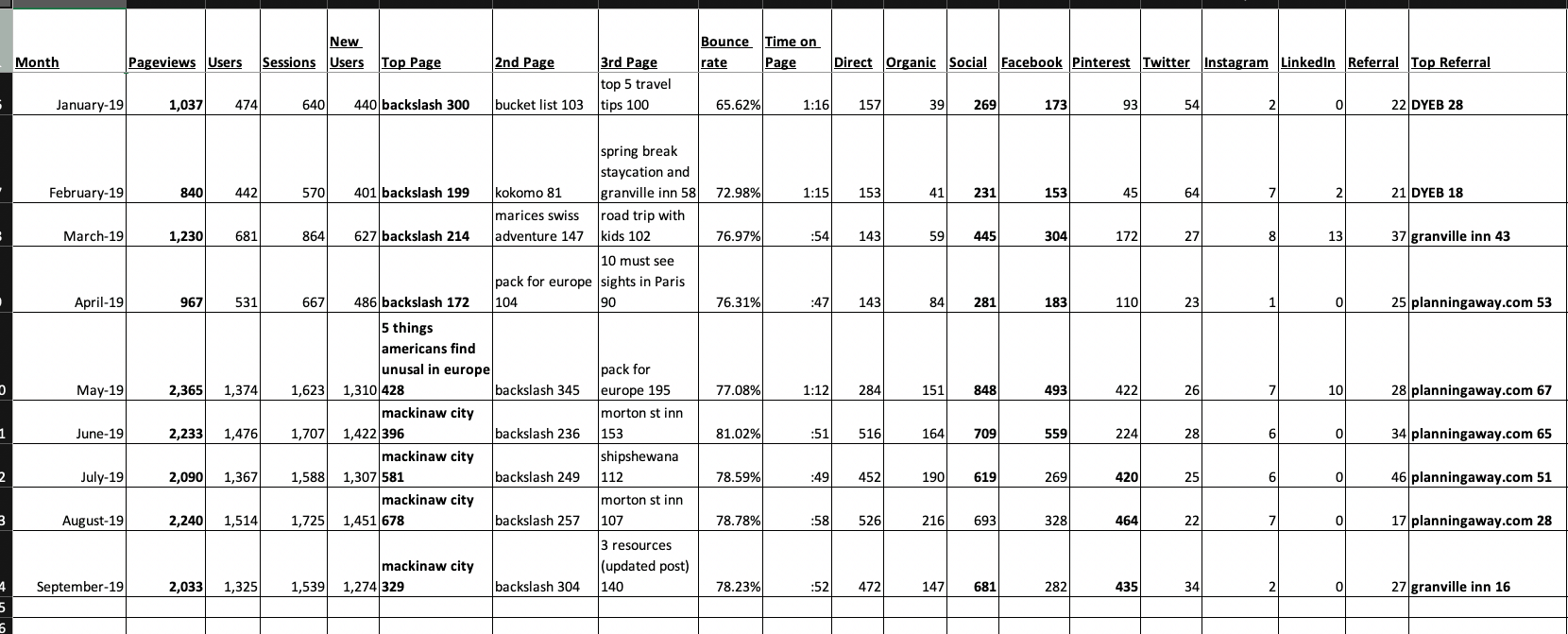
  • βœ‡Do You Even Blog
  • The Lazy Blogger’s Guide to Website Speed Optimization ⚑
    Honestly? I do NOT care about site speed optimization. You know what I DO care about? SEO traffic gainsHappy readersNot having users close my site because a blog post is taking forrreeeevvvverrrr to load In this guide, we WON’T be diving into every nitty-gritty optimization detail–but rather the three BIG (and quick) things you can implement to get your site 90% of the way there. I honestly believe that you could implement every tool I cover in this article in less than
     

The Lazy Blogger’s Guide to Website Speed Optimization ⚑

8 April 2022 at 16:52

Honestly? I do NOT care about site speed optimization.

You know what I DO care about?

  • SEO traffic gains
  • Happy readers
  • Not having users close my site because a blog post is taking forrreeeevvvverrrr to load

In this guide, we WON’T be diving into every nitty-gritty optimization detail–but rather the three BIG (and quick) things you can implement to get your site 90% of the way there.

I honestly believe that you could implement every tool I cover in this article in less than 45 minutes.

#actionable

Why does website speed optimization matter?

There are two huge reasons why this is important:

  • Google (SEO)
  • Website visitors

Google has said repeatedly (here’s proof) that page speed is an important ranking factor in the mobile-first world!

If you want to drive SEO traffic, it’s vital you optimize your site for fast-loading pages.

Then there are the actual human beings that land on your website.

They’re impatient ????

Did you know that the BBC once did a study–and found that for every ONE second it takes your page to load, you lose 10% of visitors?

Think about that…

If you took a page’s load speed from five seconds to two seconds, you could be getting 30% more visitors to actually SEE your content.

Mind = blown.

Fast load times matter, therefore site speed optimization matters.

Our 3-Step Process for Improving Page Load Times

  1. Make sure images are compressed
  2. Implemented page caching
  3. Use a CDN service

Let’s breeze through these.

But first–let’s quickly check how fast our site is now…

How to test your site’s speed:

You can use any of those to not only see how fast your site loads, but also diagnose specific issues that are slowing your load times.

GTmetrix is my fave

Best practices for using these tools…

1 – Don’t just test a URL once.

Run some tests over a few minutes, or even over a few days. Take an average (though the issues will likely stay the same)

2 – Don’t just test your homepage URL.

Test blog posts you want to rank for as well!

3 – Don’t stress over the “grades.”

Remember, you’re a lazy blogger!

The grades are somewhat arbitrary–you really just need an overall diagnosis and a picture of what issues to fix.

Don’t nitpick.

Now let’s move on to the three big steps that should take care of most of any issues you’d see from these speed test tools 🙂

Image Compression: An overview

Though there are several things that contribute to slowing down your website, nothing will destroy load times more than big files.

And images are often big files! (I’m talking bytes, kilobytes, and megabytes)

This photo of me and Darren is 1.8MB

An image compressor will take an image, do some background magic (I don’t know how it works), and spit out an image that looks almost EXACTLY the same, but with a smaller file type!

ShortPixel is my favorite image compression tool, and I’ve tried them all.

Imagify, Smush, Compressor.io, TinyPNG–I’ve tried em all.

ShortPixel is the way to go.

Note: You get 100 free image credits a month on their free plan, which is likely enough for most bloggers! However, I HIGHLY recommend splurging $9.99 to buy 10,000 image credits that never expire.

Note 2: OR you could join us in the Online Impact community, where you have unlimited ShortPixel credits included in your membership 🙂

How to Set-Up ShortPixel

  1. Head to your plugins dashboard in WordPress
  2. Search for “ShortPixel”
  3. Install & Activate
  4. Request an API Key (it’s free)
  5. Enter API key

You can also sign up via the website (needed if you’ll need some bulk image credits) and grab an API Key from your dashboard)

Congrats! You now have ShortPixel installed, and it will automatically compress images when you upload them WordPress!

You can continue adding images to your posts, etc, and ShortPixel will compress them in the background on autopilot.

Three quick notes on ShortPixel settings

The REALLY lazy blogger could probably stop now–but there are few things to note:

For every image you upload, you will be using MULTIPLE CREDITS!

This is because your theme automatically creates a few “thumbnails” for each image–but if you don’t use thumbnail sizes, you can exclude these!

That’ll save you some credits.

Next, it’s important to note where you can access individual image settings–it’s in your media library, but in “list view.”

You can also revert a compressed image back to its original, uncompressed version here.

Last, you can bulk compress all of your existing images in one click!

Again, while the 100 free credits a month is probably fine for ongoing use–you’ll probably need to buy additional credits if you’re doing bulk work.

Caching: An overview

Kinsta did an awesome job of explaining this (super boring) subject:

We can break down the idea of caching by comparing it to a simple math problem. What’s 10 times 2? Most people can immediately tell you the answer is 20. Why is that? They’ve memorized the answer. In fact, there’s probably a minimal amount of calculation going on their head.

Gross oversimplification warning…

A “cache” is pretty much like a little memory bank–it “memorizes” a bunch of website files, server requests, etc.

When a browser loads your site, it just spits back what it’s memorized, rather than calculating a bunch of stuff from the server.

You’re welcome >_<

Different cache plugins:

There are others, but these are the only ones I recommend.

Let’s get it up and running.

Oh, and Online Impact membership also includes unlimited access to WP Rocket for free!

How to set up WP Rocket

  1. Purchase the plugin and download the zip file!
  2. Upload the plugin in your WordPress dashboard as usual, then activate.
  3. Congrats, your site is faster!

Seriously, it actually does wonders right out of the gate.

However, there are some additional settings that I’d recommend checking.

wp rocket file optimization
File Optimization

Under file optimization, I’d suggest checking the first two boxes under each category:

  • HTML
  • CSS
  • Javascript

Checking some of those will bring up a little “confirmation” warning you’ll have to check, but I’ve personally never had any issues.

Note: If checking one of these boxes breaks something, uncheck it and then read more documentation here!

wp rocket media settings
Media settings

I personally check all three boxes for lazy loading images & replacing iframes and YouTube videos.

Should you lazy load images? I’d argue yes, but here’s what Google has to say on the matter.

Don’t forget to “clear” your cache!

Remember the math metaphor?

Your cache is memorizing “20” for the calculations 10 times 2.

What if you changed it to 10 times 3? (I.e. made CSS or Javascript changes or installed a new plugin or deleted an old one?)

You’ll need to “clear” your cache so it’ll run the new calculations!

wp rocket clearing cache
I do this after I change anything.

Luckily, we can clear our cache with one button, found on the WordPress top bar (or in WP Rocket settings).

You shouldn’t have to do this often, and luckily WP Rocket is smart enough to prompt us to clear the cache whenever we add/delete a plugin!

Wooooooo site optimization on easy mode.

What’s a CDN?

CDN stands for Content Delivery Network.

Using a CDN basically takes your content and distributes it to different servers all over the world!

That way, if somebody in Turkmenistan visits your blog post, their browser will pull your content from a nearby server, rather than YOUR server (which could be in San Francisco or something).

Having your content on a server close to your reader = a faster-loading website.

How to set up Cloudflare CDN

Cloudflare is 100% free for one site!

Important Note: You WILL be changing your nameservers in this step!

This requires access to the backend of your website, etc.

I HIGHLY recommend Googling instructions based on your domain registrar (not necessarily your host). I.e. “how to change nameservers Siteground,” etc.

First, you’ll sign up for an account.

Second, you’ll add a site.

Honestly, Cloudflare does an incredible job walking you through this process step-by-step.

Third, choose the free plan.

The next screen will be a bit funky.

The official “to-do” item for this screen is usually just to double-check the records Cloudflare found.

Cloudflare also says to “manually add missing DNS records.” (See their documentation here).

As a lazy blogger–I ALWAYS just hit continue–and troubleshoot later if things don’t work out!

My official recommendation is to know what you’re doing–my unofficial recommendation is just to blaze forward and reach out to their support if something doesn’t work.

????

Do this, then wait! It could take up to 24 hours

The next (and really the last) step is to change your nameservers!

As mentioned above–I recommend Googling “how to change nameservers” + “your-domain-registrar” and following instructions.

do some googling 🙂

Note: You change nameservers where your DOMAIN settings are–which could be a different spot than your hosting settings. For example, Godaddy is still my domain registrar, and where I update nameservers, even though my site is hosted on BigScoots.

Change your nameservers like Cloudflare tells you to, then wait a few hours!

I updated nameservers. Now I wait.

You should receive an email once your site is “active,” then you’re good to go!

You’ll also see this in your dashboard:

wooo fast loading websites!

Bonus Step: Connect WP Rocket and Cloudflare

Did you know WP Rocket can actually control some settings in Cloudflare–right from your WordPress dashboard?

WP Rocket settings

Once you enable the addon, you’ll immediately have the option to enter some API credentials from Cloudflare.

These are found in your Cloudflare dashboard, in the sidebar.

Copy and paste that stuff in, and don’t forget to hit “save changes” in your WP Rocket settings.

Congrats!

Your site speed should be way more optimized.

*

Want WP Rocket and ShortPixel for free? (and a full site optimization course?)

Join us in Online Impact 🙂

I just published a super short & actionable site optimization course–which walks through everything we’ve done here, as well as a few more advanced things.

Just published a nice little course 🙂

SEO Gains woot woot.

Did I mention you’ll also get access to premium tools, included with your membership?

  • WP Rocket
  • Unlimited ShortPixel credits (handy for bulk-optimization)
  • Elementor Pro
  • StudioPress themes

Now go get your site nice and speedy!

The post The Lazy Blogger’s Guide to Website Speed Optimization ⚡ appeared first on Do You Even Blog.

  • βœ‡Do You Even Blog
  • Choosing Business Models for Tough Blog Niches – Stephanie Schuttler
    Stephanie (stephanieschuttler.com) has a wildlife biologist position, but that position is ending. She’s traveled the world, done a TON of speaking engagements (including TEDx), been featured in the media, and has interests in fashion, sustainable living, and blogging. And now she needs to turn it into a business… *cue dramatic music Ok–it’s not really that dramatic, but I DID want to have Stephanie on the show to talk… How to choose a business mo
     

Choosing Business Models for Tough Blog Niches – Stephanie Schuttler

18 September 2019 at 09:19

Stephanie (stephanieschuttler.com) has a wildlife biologist position, but that position is ending.

She’s traveled the world, done a TON of speaking engagements (including TEDx), been featured in the media, and has interests in fashion, sustainable living, and blogging.

And now she needs to turn it into a business…

*cue dramatic music

Ok–it’s not really that dramatic, but I DID want to have Stephanie on the show to talk…

  • How to choose a business model
  • (i.e. how to get clarity and find a focus for monetization)
  • How to leverage the blog for future career opportunities
  • etc.

Enjoy this interview!

Listen to my episode with the Fancy Scientist, Dr. Stephanie Schuttler:

or listen on Apple Podcasts \\ Google Podcasts

Here are some of my top takeaways from this episode…

1. Set yourself up for FUTURE success…

…no matter what.

If you’re looking to your blog/podcast to replace a full-time income, or even just make a few bucks on the side, there are few different outcomes.

  1. You hit it big and make $$$$ really quick
  2. You grow and make money, but it takes way longer than you expected.
  3. You don’t make money and do something else.
  4. You don’t make money and keep blogging

Given the uncertainty of blogging as a business, it’s crucial you make decisions that will help out “future you,” regardless of the outcome.

Re-read that 👆

Whether it’s choosing a blog topic, experimenting with a podcast, or going all-in on a new project or business model–make sure you are getting something out of the process.

Set yourself to learn something or have a resume-boosting experience.

Set yourself up for success–even if you fail.

Don’t limit yourself to the “standard” blog monetization methods.

There are TONS of different ways to make money in this world, and even different ways to monetize a blog.

Take a close look at my friend Alex, who runs a real estate blog.

That’s Alex 🙂

How does he monetize his blog?

By leveraging it to make connections offline that yield real estate deals.

Similarly, almost all of the travel hacking podcast guests (like Lee Huff or Traveling Tanya) leverage their blog to save big bucks on travel.

Could you use your blog to…

  • Get more freelance clients?
  • Grow a local small business?
  • Get a better full-time job?
  • Get paid speaking gigs?

When it comes to your blog and making money, have a bigger picture in mind.

**

Speaking of monetizing…

Next week on the podcast, Chelsea from Smart Money Mamas will be joining us to chat about finding product ideas (and how she made $90k in 12 months from a PDF).

Don’t miss it!

The post Choosing Business Models for Tough Blog Niches – Stephanie Schuttler appeared first on Do You Even Blog.

  • βœ‡Do You Even Blog
  • How to Create Digital Products (The CrissCross Drill for Discovering Product Ideas)
    The first time Chelsea (Smart Money Mamas) appeared on the show, it was only her 2nd podcast appearance ever, and she had JUST started to grow Pinterest traffic. Since then? She’s made over $250k+ from her first product, The ICE Binder. Today she’s stopping by to chat… The story of the accidental six-figure PDF (The ICE Binder)The “CrissCross Drill:” A simple exercise for exploring product ideasHow to set products up to stand out and succeed Thi
     

How to Create Digital Products (The CrissCross Drill for Discovering Product Ideas)

6 April 2021 at 09:00

The first time Chelsea (Smart Money Mamas) appeared on the show, it was only her 2nd podcast appearance ever, and she had JUST started to grow Pinterest traffic.

Since then?

She’s made over $250k+ from her first product, The ICE Binder.

Today she’s stopping by to chat…

  • The story of the accidental six-figure PDF (The ICE Binder)
  • The “CrissCross Drill:” A simple exercise for exploring product ideas
  • How to set products up to stand out and succeed

This episode will go down in DYEB history as one of the BEST pieces of content for discovering, creating, and launching your own products.

Enjoy, don’t miss my takeaways below! I’ll also highlight the exercise 🙂

Listen to my episode with Chelsea Brennan

or listen on Apple Podcasts \\ Google Podcasts

The CrissCross Drill

Note: Chelsea created this little exercise, not me. She’s the brains–I’m the silly idiot who likes to name things 😃

crisscross drill

Here are the steps:

  1. What does your audience need help with?
  2. What helps them DO those things?
  3. What are you good at?
  4. What do you enjoy doing?
  5. Where’s the crossover?

How to DO this CrissCross Drill:

  1. Grab several sheets of paper, or open a Google doc
  2. Brainstorm and braindump everything you can for each question!
  3. Do the “crisscross,” I.e. find the crossover ideas
  4. Expand on those

I HIGHLY recommend giving yourself a blank sheet of paper for EACH question.

This gives you plenty of space to think, draw, and write.

First, what is the exercise for?

The “CrissCross Drill” is a simple exercise you can do for two applications:

  1. Formulating unique product ideas
  2. Getting clarity about pain points your audience has (and how you might help them)

That said, here are the questions:

1. What does your audience need help with?

What are their goals and what is stopping them from achieving those goals?

Where are the pain points? The obstacles they’re currently looking for help with?

Do they need more blog traffic?

Do they need to learn about investing? How to discipline their children effectively? Take better photographs?

My step 1 from when Chelsea first shared this with me.

Note: I also ended up categorizing my audience for “skill level,” I.e. B = beginner, I = intermediate, A = advanced.

2. What helps them do those things or achieve those goals?

  • What systems?
  • What courses?
  • What support systems?

What type of content? What format?

Is a PDF enough? Digital or print-out? Emailed or snail-mailed?

Course, summit, or membership site? Coaching or mentoring or mastermind groups?

My part 2

3. What are you good at?

What specifically are your best skills in this arena?

Are you good at talking? Writing? Editing video?

Are you skilled in creating courses quickly, like me? Or in thinking big, planning, and executing like Chelsea?

4. What do you enjoy doing?

We all know of things we can do really well–but we hate doing.

So what do you enjoy?

Creating content? Organizing and planning events?

Connecting people in person? Giving advice like a coach/mentor?

5. Crisscross: Identify where there are crossovers!

If you have fleshed out those questions in full, you should be able to go BACK through your notes/answers–and look for crossover ideas.

A few examples to help you out:

  • My audience feels an emotional need to “be prepared” financially (especially for emergencies). They want comfort.
  • They need something QUICK and EASY to start fixing this problem today, else it’s completely overwhelming. They also need something affordable (since they’re concerned about money already).
  • I’m really good at creating printables, and genuinely enjoy it.

That’s the ICE Binder.

Here’s another:

  • My audience wants to grow their platforms and make more money to supplement or quit their jobs–but they usually lack a clear strategy, a bit of knowledge, and support.
  • Courses do ok, but there are several other systems and FORMATS that actually help them achieve their goals a lot more.
  • I’m really good at creating tons of course quickly, and connecting people with assets that’ll provide them support.

That’s Online Impact.

Don’t be shy in generating a LOT of luke-warm crossover ideas, either.

It’s rare to do this exercise and immediately be hit with a “home-run” idea. However, it can be useful for generating several “base hit” ideas that’ll hopefully lead to a home-run later.

🙂

One of my crossover ideas 🙂 🙂

So there it is. One of the first times I specifically sat down and mapped out what my membership site would look like 🙂

And now Online Impact is BACK. Click here to learn more and join the text waiting list!!!!

Did you enjoy this exercise? Drop a comment!

I’d love to hear if you found this helpful or enjoyed this podcast!

Drop us a comment below 🙂

The post How to Create Digital Products (The CrissCross Drill for Discovering Product Ideas) appeared first on Do You Even Blog.

  • βœ‡Do You Even Blog
  • How to Magically Find Time to Work (Consistently)
    I meant to start working on this blog post last week, but then something happened… Actually, a lot of things happened… I had to fix a critical issue. I needed to edit podcast episodes for this week. I got sick. My grandmother died. There are roughly 1,799 things calling for my attention these days, only two of which are DYEB and launching Online Impact. Wait, what’s that? You understand???? I know you do. After 2 years, 100+ podcast interviews, and thousa
     

How to Magically Find Time to Work (Consistently)

27 September 2019 at 09:00

I meant to start working on this blog post last week, but then something happened…

Actually, a lot of things happened…

  • I had to fix a critical issue.
  • I needed to edit podcast episodes for this week.
  • I got sick.
  • My grandmother died.

There are roughly 1,799 things calling for my attention these days, only two of which are DYEB and launching Online Impact.

Wait, what’s that?

You understand????

I know you do.

After 2 years, 100+ podcast interviews, and thousands of emails with bloggers…

“Struggling to find enough time” is easily the #1 issue we all feel.

In this post, I’ll show you how to “find” more time to work in your blog and business every week.

Sound too good to be true?

Possibly. We shall see.

A quick note of caution…

I will NOT be suggesting productivity hacks, focus hacks, or any other magic hacks that’ll result in your calendar mysteriously containing more free time.

No, what is in this post is sadly a lot harder than that.

You’ve been warned.

Last Saturday, I was sick (but it didn’t matter).

I may have woke up feeling exhausted (never a good sign), but there was no way in HECK I was missing my son’s soccer game.

(I also missed out on college football, which I’m into.)

This was my 4yr-old’s first organized sporting event, and I was determined to be there.

There was no need to pencil it in on the calendar or set reminders. I thought of little else.

It was important to me.

We set aside time for things–for a reason.

  • You spend time with your friends because it makes you happy.
  • You spend time at work because you need money.
  • You spend time parenting because–well, you don’t have a choice.

#jokes 😉

If your podcast makes decent money, it’s probably fairly easy to spend time on that.

If working on your blog sincerely brings you INCREDIBLE joy every time you sit down to work on it–you probably don’t have issues finding time to do that.

If that statement makes you feel “UGH NO Pete–I love blogging and still wish I could have more time to work on it…” don’t worry, I’m with you!

But…

  • Exactly how much do you NEED or WANT to build the thing you’re building?
  • Exactly how much is your online business already contributing to your financial well-being?

Carving out 12 hours a week for your 14-month old blog that’s producing $500/mo is far easier than if it’s producing $0/mo.

Just how strong is “your why?”

There’s no shortage of people trying to help you figure out what’s important to you

For those who have been in self-improvement or blogging for more than a hot minute–you’ve probably heard phrases like “find your why!” and “you MUST know your why!

  • Corny? Yes.
  • Overused? Yes.
  • Misunderstood? Yes.
  • Still important? YES.

My “why” for attending my kid’s soccer game was insanely strong…

  • I want to be there for him.
  • I want to be a good dad.

My “why” for working 40 hours a week on DYEB and Online Impact is equally strong.

  • I want to change the way people work.
  • I want to help people build better lives for themselves
  • This is my job. I NEED this to put food on the table.

Note: It’s 9:01pm as I’m writing this and I DO NOT WANT TO WRITE. I’m tired–but this post is important to me on it’s own AND it’s part of my launch strategy for Online Impact. It’s getting done.

What’s your “why” for working on your online business? Is it strong enough to warrant commitment?

In terms of putting your blog on your calendar, your “why” has to be important enough to push other stuff off.

Just how high a priority is your side hustle work?

Luckily, there is something you can DO.

Get clarity.

For creators who feel overwhelmed, unfocused, and wish they had more time–clarity is like a magic bullet.

Clarity brings focus and excitement.

When you know exactly what you need to be working on in order to progress towards a crystal clear vision–time becomes less of an issue.

Why?

Because you now have more free time after work, or after kids going to bed?

Of course not.

It’s because you’ll start to understand which time-consuming activities are essential, and which aren’t.

It’s because shiny objective syndrome evaporates.

Get clarity.

  • Where you want to go
  • How you’re going to get there
  • What you need to do to make that happen

Clarity makes working easier, worth looking forward to, and worth spending time on 😃

How we’re answering this in Online Impact

There’s one little problem I left out until now…

Gaining clarity about your content business is hard.

It can’t always be done in one sitting, or even with one person…

The 3 types of group calls in Online Impact

In our membership community, we’re doing a few things to face this problem for you:

  1. You’ll have a quick intro call where we chat about your ultimate goal
  2. You’ll have one month to prepare for an extended strategy call. At the end of this call–you should walk away with a MUCH clearer vision about what strategies you need to be focusing on in order to grow you business.
  3. One of our two monthly calls is ENTIRELY FOCUSED ON STRATEGY. We’ll split into groups and take turns sharing the “hot seat,” where that person shares their strategy/focus and gets feedback.

That stuff will be on your calendar.

You’ll also have access to a network of people you can reach out to in order to get more clarity when it starts to get muddy.

And it always gets muddy again.

Clarity brings confidence that what you’re working on is the optimal thing to be working on.

Clarity saves time and brings motivation.

The bottom line:

Stuff that doesn’t make it to your to-do list, calendar, or whatever–is the stuff that “gets done when there’s time for it.”

And there’s never time for it.

Setting aside the time to work on your biz CONSISTENTLY only happens it’s important enough to you.

Important enough.

So–if you feel like this is something you struggle with (or wouldn’t mind consistent accountability and help with!), come join us in Online Impact.

We’re like your gym.

Online Impact is the gym membership for your online business journey.

The place you can go to get feedback, support, accountability, and tools–but you still gotta work.

  • You still gotta lift your own weights.
  • You still gotta show up.
  • But we’re there.

We’re there with the tools you need to move forward, and a place that’s open where you can come.

Online Impact Price: $35/mo A membership community for bloggers, podcasters, and online entrepreneurs who want to grow their income. Online Impact has tons of courses, 1-on-1 support, monthly events, and access to premium tools. Learn More Online Impact

The post How to Magically Find Time to Work (Consistently) appeared first on Do You Even Blog.

The Four Stages of Blogging

4 October 2019 at 09:04

The Four Stages of Blogging

Knowing where you’re at on this spectrum can help you focus on the RIGHT things to grow your blog & business.

As a blogger, you (almost) literally have the world at your fingertips.

Thanks internet!

You can write whatever you want, however you want, whenever you want to.

  • SEO
  • Pinterest
  • Podcasting
  • Products
  • Affiliate marketing

The choices, paths, and strategies are endless!

Which is also what makes GROWING a blog so dang hard.

After interviewing hundreds of bloggers (many of which in their first two years), I’ve come to see four distinct stages of growth.

Below I’ll break those out, so you can figure out where YOU are at–and how you might progress faster to the next stage!

Let’s roll 😉

Important Note 1

There are endless stages of blogging–these just happen to be the first four in the beginner stages!

Important Note 2

This post is absolutely designed to help you figure out if our membership community, Online Impact, is a good fit for you!


If you are clearly in stage 1–don’t join Online Impact! The ROI will not be there YET.

Important Note 3

Do not let your “stage” discourage you in any way. The differences between the stages has nothing to do with your self-worth (and very little do to with your skill, actually!)

These stages have arbitrary borders, and are really just defined to help you figure out what to do next.

Stage 1 - I Don't Know What I Don't Know

“I am soooo excited about blogging! This is so much fun and it’s gonna be amazing!”

Luckily, starting a blog is still something that attracts people!

It even sounds fun.

The first stage of blogging is made up of a sort of “ignorance is bliss” sorta thing…

  • I’m thinking about starting a blog
  • I’m planning on doing it
  • I’m setting up my site!
  • Weeeee I have a blog post up!
  • Now I gotta make my site look perfect…

We’ve all been there, right? It’s a glorious time!

We have ideas and plans for what we want to talk about, and we might even expect to generate revenue from our blog.

The bottom line though?

We really have no idea what “successful” blogging looks like, or we’re at least unaware of what successful blogging will look like for our blog.

Stage 1 in a Nutshell:

Timeframe: Pre-blog to a few months in.

Characteristics:

  • Don’t yet realize how much TIME blogging will take
  • Think it’ll be nothing but fun
  • Unlikely to have a long-term strategy, much less one they feel confident in
  • Don’t feel the need to get organized

Stage 1 bloggers are all over the place, but they are taking action, excited, and eager to get readers!

Warning! Alert alert!

The red boxes in this post are opinions 😉

What I'd Recommend to Stage 1 Bloggers

Produce more content, even if it’s bad.

Let nothing stand in the way of you hitting publish.

Don’t worry about site issues (nobody’s on your site anyways)–just focus on getting a minimum viable website up and functioning, then produce more content.

You probably don’t realize what it takes to drive useful amounts of traffic or how to start generating income, and that’s ok!

You’ll figure it out as you go along!

And prepare yourself, it’s about to get overwhelming real fast.

At some point in EVERY bloggers journey, they have the lightbulb moment…

Oh, this is not what I thought it was…

Stage 2 - Overwhelm

Woah SEO! And Pinterest? And I need to start paying for ConvertKit and blogging courses and social media tools…

And I realize how bad my WordPress theme is now–and my site just crashed–and I have zero clue how to fix it–AND HOW ON EARTH DO I GET MORE TRAFFIC?

While bloggers in stage 1 don’t know what they don’t know–stage 2 bloggers are quickly realizing what they don’t know–and that’s pretty much “everything.”

It’s overwhelming.

What started out as a fun hobby or “oh I think I’ll make a side hustle out of this!” has turned into rabbit holes.

  • Now I gotta learn SEO
  • Now I gotta build an email list (not sure why yet though)
  • Now I gotta figure out Elementor (but only because some dude named Pete said I should have it. I don’t even know what it really does…)

Stage 2 bloggers do NOT have issues filling their to-do lists!

There’s lots to do, but even more to learn about and look into.

I spent a LOT of money in Stage 2

Stage 2 bloggers often still believe in the “magic bullet,” a course, tool, or strategy that WILL lead them to make money and find success.

Stage 2 in a Nutshell:

Timeframe: Starts around months 2 or 3, and could last anywhere from 6 to 12 months.

Characteristics:

  • Starting to follow meta-bloggers (like me).
  • Finding more and more things to spend money on.
  • Experimenting with ALL THE STRATEGIES
  • Have zillions of affiliate links in their content–but “why am I not making money??”
  • Spending a lot of time on activities and it’s feeling like work.

Stage 2 bloggers can easily get lost and overwhelmed in the different options before them.


What I'd Recommend to Stage 2 Bloggers

This is going to sound odd–but just keep doing what you’re doing.

Without experimentation, slopiness, and failure–the long-term journey to Stage 4 and beyond might actually take LONGER.

“Cut your teeth,” so to speak.

  • Try SEO.
  • Pinterest.
  • Guest posting.
  • Backlink outreach.
  • That shiny new plugin.
  • All those courses!

But realize this: there ISN’T a magic bullet that’ll give you success.

Not in ANYBODY’S courses.

You probably don’t realize it, but getting out of Stage 2 is all about persistence & survival!

A blogging friend or support group does wonders for Stage 2 bloggers.

Also, stop worrying about your website (Spending $39/month on Leadpages, Pete? Really? 🤦‍♂️) and focus on producing useful & interesting content.

At some point during the overwhelming “this is actually WORK” phase, something special happens…

Stage 2 bloggers fit in nicely in Online Impact.

And if I’m being honest, it’s probably easiest to sell to Stage 2 bloggers, because they see the SEO and monetization courses and can’t HELP but think “magic bullet.”

It’s sexy, and it sells.

The GOOD news is that we’ve spent a ton of time figuring out how to deliver what stage 2 bloggers ACTUALLY need 😉

The Turning Point

Moving out of stage 2 and into stage 3 is a HUGE turning point.

Bloggers start to realize that the challenging parts are actually the important, meaningful parts.

There is zero change in difficulty, but the overwhelm leads to systems of prioritization and organization.

They realize “the obstacle is the way,” (quoting Ryan Holiday’s book).

Stage 3 - Experimenting

I’ve finally started to see some things starting to work! I’m even diving deeper on previous strategies (like SEO or Pinterest), and also thinking about YouTube or podcasting!!

I have people that follow me now!

I really wanna try launching a product now. Maybe a course or downloadable thing or–I dunno.

Stage 3 bloggers are starting to feel way more comfortable with the chaos and hard work that is blogging!

They’ve worked out publishing schedules, got their website to a decent place, and probably even made their first dollar.

That’s the good news.

The bad news is stage 3 bloggers still do NOT have clarity about what their “thing” is.

They’re starting to get clear on strategy and a repeatable, scalable business model that they can focus on–but it’s not dialed in. It’s not proven.

In my Road to $83k post, I detailed my Stage 3 experimentation–the products and strategies I tried were VASTLY different than each other.

I didn’t have “my thing,” (i.e. a scalable & proven business model that makes me happy and is something I can continue to focus on again and again).

Stage 3 in a Nutshell:

Timeframe: Starts around 9-12 months, and could last 3 months or 3 years!

Characteristics:

  • Know blogging “success” is tough, and requires a lot of work.
  • Seen success from various strategies, but STILL not satisfied with where they’re at.
  • Experiment with monetization more.
  • Experiment on a bigger scale, diving into podcasting, YouTube, or multiple platforms.

Stage 3 bloggers might get discouraged looking at what OTHER bloggers have accomplished, and might find themselves wondering if they were cut out for this…

They’re 1-3 years in at this point, and though they’ve made a dollar or two, they haven’t really settled into proven business model.

My stage 3 was filled with TONS of tough experimentation and failure

That uncertainty and lack of a clear focus can be frustrating.

What I'd Recommend to Stage 3 Bloggers

There are two things stage 3 bloggers need ASAP:

  1. Clarity & confidence about what they’re working towards.
  2. A proven business model or product they can improve upon.

Stage 3 bloggers should be intentional and mindful about the “business model experiments” they run (i.e. launching new products, doubling-down on affiliate marketing, etc).

Feedback, accountability, and encouragement are a MUST in this stage.

  • Mastermind groups are fantastic.
  • In-person meetups.
  • Friends also in your space.
These folks help me survive ups and downs

Their ultimate goal should be to find what works and can be repeated, again and again, a little better each time.

I.e. running a business. 😃

Online Impact was pretty much MADE for bloggers in stage 3.

An intentional 1-on-1 strategy call. Group strategy calls every month. Group WORK calls every month. Connection, community, encouragement, and shoulders to cry on.

The entire purpose of Online Impact is to get our members to the point of profitable (and sustainable) & impactful business models.

What else can I say?

Stage 4 - Settle Down & Refine

Whew. There’s still a ways to go. It’s still hard. I’m still not where I ultimately want to be…

But I’ve found something that works, and I’m clear and confident in my vision.

I’m ready to work.

Stage 4 means you’ve totally made it, right? Your blog must bring in $47,000/month and you’ve retired to sit on beach somewhere, right?

Of course not.

Stage 4 is defined by one thing: clarity and what it takes to grow.

You’ve dabbled in podcasting, worked hard at SEO and Pinterest, and tried different monetization methods.

You’ve GONE THROUGH the ups and downs, the overwhelming and frustrating parts–and are starting to make peace with the fact that those never fully go away 😃

Based on what has worked (and hasn’t), you’re starting to see YOUR path to grow your blog.

You’re not 20 miles down the path–it took you this long to FIND the right path.

Stage 4 in a Nutshell:

Timeframe: Starts whenever you’ve kinda proven your sustainable business model, and I have no idea when it ends 🙂

Characteristics:

  • Experimented enough with big things
  • More comfortable not trying new big things–or at least waiting on those initiatives until months or years later
  • More clear on how their business will continue to grow financially
  • Have more confidence in their long-term vision (that it’ll actually work!)

Stage 4 bloggers are starting to understand the “game” they’re playing.

What I'd Recommend to Stage 4 Bloggers

Continue to be patient. There’s still no guarantee of “success,” and chances are high you’ll still have challenges and fires to put out.

But refinement and “front-end” experimentation is now your game.

Don’t waver on the mission or vision. If you have a HIGHLY proven product/service/model, don’t waver much on that either.

Instead, continue to experiment with front-end marketing (like starting a podcast, like hiring a part-time SEO to help out, like getting BACK into Pinterest…), while continuing to make your monetization offer better and better.

You’ve got a business model. Now make it better, more profitable, and get more customers.

Dial it in.

Online Impact is part of my Stage 4 journey 🙂

Bloggers, podcasters, and entrepreneurs in this phase will definitely feel at home in our community–specifically for the community & group call benefits.

But…

If I’m being honest–MOST of the content in Online Impact is geared towards Stages 2 & 3! Our main mission is getting our members to stage 4 as quickly as possible!

We do have ongoing value for once you reach stage 4 and beyond (premium tools, courses on different mediums like podcasting, and group stuff), but at this point you’ll be a happy senior member. 🎆

What to Do With This Information

I can do this…

I can do this…

I’d like to break this stuff down with a simple little “do this do that.”

Side Note: I personally feel meta-bloggers should be more direct sometimes. Bloggers need a bit of leadership in some ways–but that’s a blog post for another day.

If you think you're in Stage 1: "I don't know what I don't know"

  • Don’t spend money on courses, tools, or membership sites.
  • Don’t get bogged down with how your website looks.
  • Do realize that the honeymoon will end at some point.
  • Do produce as much content as humanly possible.

If you think you're in Stage 2: Overwhelm

  • Don’t quit.
  • Do surround yourself with helpful people (and join Online Impact).
  • Do find systems & organization that helps you combat overwhelm.

If you think you're in Stage 3: Experimenting

  • Don’t compare yourself with others.
  • Don’t stop trying new things (especially if stuff fails!).
  • Do get outside opinions & feedback–mainly geared towards strategy (and join Online Impact).
  • Do be patient.

If you think you're in Stage 4: Settle Down & Refine

  • Don’t lose your hungriness, edge, or ability to fight fires.
  • Do think about scale & the future
  • Do interate & adapt
  • Do it again and again and again

Did you enjoy this blog post?

I just made a HUGE update to my ‘How to Create a Blog Plan‘ post, and the 100% free-as-in-beer 12-Week Blog Planner!

That is an interactive email course where you won’t just learn about planning and organizing a vision for your blog–you’ll actually DO it within the program.

And it’s free!

Happy strategy-setting and executing 😉

Online Impact, our membership community for bloggers and podcasters looking to make more money via the internet to improve their life…

Launches Monday, October 7th, 2019!

Click the button below to learn more and join the text message waiting list.

The post The Four Stages of Blogging appeared first on Do You Even Blog.

  • βœ‡Do You Even Blog
  • A Chat With My β€œFocus Consultant,” Raina Willick!
    “Everything is figure out-able. With enough time, effort, and support–you can do it. Everything is figure out-able.” Today on the show? Raina Willick from Do You Even Blog! Raina and I got connected in 2018, and she has been helping me out a TON in the past several months. She’s my “focus consultant” 😃 Raina has a knack for helping people with a messy vision (that’d be me) figure out what to do. In this podcast, we chat How we
     

A Chat With My β€œFocus Consultant,” Raina Willick!

7 October 2019 at 09:00

“Everything is figure out-able. With enough time, effort, and support–you can do it. Everything is figure out-able.”

Today on the show? Raina Willick from Do You Even Blog!

Raina and I got connected in 2018, and she has been helping me out a TON in the past several months.

She’s my “focus consultant” 😃

Raina has a knack for helping people with a messy vision (that’d be me) figure out what to do.

In this podcast, we chat

  • How we’ve shaped the features & services of Online Impact! (#salesy-sales-sales-alert!)
  • Creating digital products based on first principles
  • How to better your odds at success by surrounding yourself with the right resources

Enjoy!

Listen to my episode with Raina Willick!

or listen on Apple Podcasts \\ Google Podcasts

Join us in Online Impact!

It’s the membership community for driven bloggers & podcasters looking to make more money on the internet to better their life.

AND IT LAUNCHES TODAY, October 7th, 2019!

But also closes this Friday, October 11th, 2019, at 11:59:59pm ET 😃

Online Impact Price: $35/mo A membership community for bloggers, podcasters, and online entrepreneurs who want to grow their income. Online Impact has tons of courses, 1-on-1 support, monthly events, and access to premium tools. Learn More Online Impact

<3

The post A Chat With My “Focus Consultant,” Raina Willick! appeared first on Do You Even Blog.

  • βœ‡Do You Even Blog
  • How to Create a Blog Plan (That You’ll Crush)
    Here’s a secret: I, Pete McPherson, am a master procrastinator. Ya know the stories you hear about college students waiting until the day before the exam to start studying?  Nice you meet you! I ALWAYS wait till the last minute, but I somehow still get stuff done by the due date. However, it wasn’t until later in life that I discovered this is actually an asset. Question for you: Why is it that late December is the best time of year to buy a used
     

How to Create a Blog Plan (That You’ll Crush)

22 November 2021 at 12:00

Here’s a secret:

I, Pete McPherson, am a master procrastinator.

Ya know the stories you hear about college students waiting until the day before the exam to start studying? 

Nice you meet you!

I ALWAYS wait till the last minute, but I somehow still get stuff done by the due date.

However, it wasn’t until later in life that I discovered this is actually an asset.

Question for you:

  • Why is it that late December is the best time of year to buy a used car?
  • Why do companies tend to push themselves harder than ever in Q4 every year?
  • Why do you seem to get SO much work done the day before you leave for vacation?

Answer: Deadlines.

Car dealerships and corporations set annual sales goals—and December brings a mad dash to meet their quotas.

When you know you’re leaving on vacation, you work extra hard/smart to make sure you won’t be thinking about work when you should be throwing your kids into swimming pools at Disney World ????????

People work harder during periods of procrastination—because they have to. Deadlines and short-time frames encourage harder and/or smarter work.

How you can use this for your blog:

That’s the real trick, isn’t it?

Trying to replicate the feeling of “OMG I HAVE to get this stuff work work work,” even though you don’t have an actual deadline.

It turns out, the answer is simple—but still really hard?

  1. Use shorter timeframes for your goals
  2. Set strategic plans on the weekly (or even daily) levels

Step 1 – Cast aside “annualized” thinking for a second…

When folks start blogs, businesses, or any project, it’s almost ALWAYS accompanied by annualized thinking.

Annualized thinking = setting a 2020 goal.

This is why 99.99% of New Year’s resolutions fail—it’s simply too long a time frame to accurately predict what’s going to happen!

You have NO idea where your blog will be 10 months from now. Planning that far out has diminishing returns

Consider a long road trip.

Annualized thinking/planning is like if I decided to drive from Georgia to California—with no maps, GPS, or asking for directions.

I know which way is west from my hometown, and I’d probably make it a few states over—but I’d soon need to course-correct before I get completely lost, eventually getting stranded with no food, eventually resorting to a life of crime on the streets in order to survive.

Here’s a quote from “The 12-Week Year,” the book that spurred this blog post and the 12-Week Blog Plan course. (my affiliate link above)

“At the heart of annualized thinking is an unspoken belief that there is plenty of time in the year to makes things happen. In January, December looks a long way off.”

This is totally true.

We get a tad behind in late January or February, and we’re not worried, because “there’s so much time left!”

Back to the book…

“We mistakenly believe that there is a lot of time left in the year, and we act accordingly. We lack a sense of urgency, not realizing that every week is important, every day is important, every moment is important. Ultimately, effective execution happens daily and weekly!”

So what to do?

Shorten the timeframe for your goals.

Note: I’m not saying you should scrap your annual New Year’s resolution or your 2022 goals.

By all means, set a general target for 2022!

Implementing the 12-Week Blog Planner is not a replacement for an annual goal—it’s a supplement.

A necessary supplement if you’re like me.

In fact, an annual goal can help you step back from day-to-day grinds and think objectively and long-term.

That’s a crucial step to 12-week years as well–but it HAS to be coupled with shorter-term planning.

How to create an #actionable blog plan.

Again, we go through this in a step-by-step, interactive format within the 12-Week Blog Planner below—but I did want to leave an overview here.

Here are the 3 steps:

  1. Define a vision for your blog/biz
  2. Create 2-4 SMART(ER) goals
  3. Map out tactics on a weekly (and daily) basis.

1 – Why vision is incredibly important

Simply put, you need to know where you’re going.

You can work 23 hours a day at PEAK efficiency, but if what you work on isn’t aligned with where you want to be in life, it will have been worthless.

A compelling vision = a crystal-clear picture of the future.

It is critical that your business/blog vision aligns with—and enables—your personal vision. This alignment ensures a powerful emotional connection that promotes a sustained commitment, and continual action.

No vision = no emotional connection to stick with the plan.

Got it?

“If you’re lacking in passion for your business or in a relationship, it’s not a crisis of passion; it’s a crisis of vision.”

Brainstorming and completing the Vision Worksheet is the first step in the 12-Week Blog Planner.

You’ll need a vision for your blog

  • 12 weeks from now
  • 3 years from now

You need to make dang sure your short-term vision/goals line up with your long-term vision.

Here’s an (outdated) 12-week DYEB vision:

My vision is a picture of what I want to be working on, and what I want my biz to look like.

2 – Why 2-3 goals is optimal for a 12-week year.

The next step is to create a few goals you can aim for 12 weeks from now.

These goals become planning “targets” on which you’ll base your weekly and daily actions.

If you’ve never heard of the “SMARTER” framework for goals, you can read about that here, but I’mma just hit you with what I think is crucial for bloggers:

1 – Make them specific and measurable.

This is the bare mimimum.

“Make more money”

“Get affiliate revenues”

“Grow email list”

THESE ARE NOT GOALS. They are not specific or measurable.

“Make $1,000 gross from the blog via ads and affiliate links, and grow my email list by 75%.”

That’s a bit better.

3 – They should be obtainable within the time frame!

This one’s huge.

Honestly. Realistically. Set 2-3 goals that you CAN legitimately complete in a 12-week timeline.

Why? Because you’re going to be DOING IT.

Goal setting should not JUST be some inspirational-motivational-super “it’d be great but it’ll never happen” sort of process.

You’re going to be hitting these goals, and if you do, you should have been working to your vision.

4 – But still a tad lofty 🙂

My friend Jenny from Good Life, Better once referred to them as “stretch” goals. I like that term.

Targeted goals should make you a tad uncomfortable.

There is a proper balance of “I can do this” mixed with “Wow—what I’m currently doing won’t hit that goal, so how can I hit it?”

5 – They should align with your vision.

You might even just change the way you’ve phrased your vision—to be specific and measurable goals.

Here’s my (outdated) goals for DYEB 12 weeks out:

my 2 business goals

6 – Each of these 12-week goals becomes a planning target for which you need to write tactics.

The overall 12-week goals are then broken out into weekly goals and corresponding #actionable tactics.

That’s up next 🙂

3 – Identify the actions that MATTER

Using your blogging vision and the goals—this is where we’ll set a strategic, weekly plan of action—that if completed, will move you to your goals.

Mmmmm tasty.

Important: What makes a good tactic?

1 – Your tactics should start with a verb and be a complete sentence.

“Email 3 people this week with a guest post pitch.”

“Write 1 blog post and publish, and write 1 blog post draft to get ahead.”

“Create automation workflow “shell” in Drip, start-to-finish.”

2 – Your tasks should be “executable in the week they are due to be delivered.”

I.e. If your task can’t be completed in one week, it’s too long. Break it up into smaller chunks.

How do I create weekly plans?

2 ways:

  1. You could take your big 12-week plans and break them into 12 chunks (hard)
  2. You could brainstorm—then organize—your tactics into weeks, and THEN make weekly goals (what I have to do).

For me personally, I have to start with the overarching goals (the 12-week ones), then create tactics, then create weekly goals in the process of organizing the tasks.

Here’s a step-by-step to your weekly plan.

Step 1 – For each goal, brainstorm ALL actions that are required to hit your goals

What do you need to work on to hit your goals? 

Braindump everything on a sheet of paper or spreadsheet.

Step 2 – Identify the high-priority and high-leverage tasks

Not all activities will move you towards your goals equally.

  1. Checking email
  2. Scheduling social media posts
  3. Fixing broken backlinks
  4. Writing and perfecting SEO content

Which of those are more important for hitting my SEO goals?

  1. Finding new productivity apps
  2. Going through a new blogging course
  3. Recording and editing podcast episodes
  4. Setting up my advanced email funnel

Which of those are more important for hitting my monthly recurring revenue goals via my funnel?

Which actions will have the greatest impact?

Step 3 – Map out high-priority tactics by week

This is the hard part. The time-consuming part.

Map out every week for 12 weeks using high-leverage tasks.

In the 12-Week Blog Planner, we complete a worksheet containing this weekly breakdown—and send you the results—but it’s also crucial to keep some sort of spreadsheet/document.

See below for why.

Keep score & Keep track = stay committed.

There’s one more obvious reason why people fail on their blogging and/or life goals = a lack of commitment.

“It’s one thing to define new actions that will lead to higher results, it’s another thing to consistently do them.”

Entire books and classes attempt to cover this subject.

However, for the 12-week blog plan, there are 3 slices that help make up your commitment pie:

  1. An emotional connection to the outcome of your work—or non-work—i.e. a proper vision
  2. Effective tracking & “reminding” at weekly intervals
  3. Effective measurement—i.e. scorekeeping! Woot!

To-do 1 – Have a weekly recurring meeting—with yourself.

I’m running mine every Monday directly after my mastermind call.

In this meeting you’ll

  1. Score the previous week (see below)
  2. Plan out the current week in greater detail
  3. Refresh yourself on your long-term vision and goals.

To-do 2 – Keep score on your progress!

This is the magic bullet for the 12-week year—literally assigning yourself a percentage-based SCORE for every single week, based on how effectively you completed your tactics.

Every single week (that’s important), you’ll calculate the percentage of tactics you fully completed. I.e. the number of tactics you did, divided by the number of total tactics.

That’s your score

Aim for 80% or greater, and aim for improvement.

The idea behind this:

If you’ve done the homework starting from the vision, the goals–then determined the highly-leveraged actions to take to accomplish your goals—the ONLY step left is execution.

So what if you execute—and you don’t hit your goals?

Measurement is the ONLY way to properly diagnose a lack of results and figure out whether it was your plan that was flawed or your execution.

Tactic scoring example:

If you had 4 tactics in week 1, and you completed (and I mean completely completed) 3 out of the 4, your score for the week is 75%.

Insanely important note: If you score less than 100%, you have NOT failed! You should aim to score around 80% and above. If you were to correctly plan, then execute 80% of the identified tactics, chances are high that you have realized a lot of your goals/vision!

The problem is doing the work 😉

Want help creating your blog plan? Introducing the Interactive 12-Week Blog Planner.

Using the lessons taught in The 12-Week Year, I’ve assembled an interactive email course to walks you through creating a blog plan.

  • 3 email lessons
  • 3 worksheets
  • BONUS Email Lesson (fires if you complete the worksheets)
  • BONUS Custom Summary Email (fires if you complete the worksheets)

Sign up below to begin the planner!

Let’s get some clarity and focus!

The post How to Create a Blog Plan (That You’ll Crush) appeared first on Do You Even Blog.

  • βœ‡Do You Even Blog
  • Blogging Productivity 101: Where Should Your Time Be Spent?
    Here’s what us bloggers spend time on: creating content promoting back-end administrative The 1,028 items on our to-do lists can be put into those broad categories. The question is… How should we split up our time working–so as to MAX out our blog growth potential? As new bloggers? As experienced bloggers? Where should we focus our time and energy and resources? Here’s Heidi’s original question: read her responseHere’s the rest: With
     

Blogging Productivity 101: Where Should Your Time Be Spent?

15 October 2019 at 18:00

Here’s what us bloggers spend time on:

  • creating content
  • promoting
  • back-end administrative

The 1,028 items on our to-do lists can be put into those broad categories.

The question is…

How should we split up our time working–so as to MAX out our blog growth potential? As new bloggers? As experienced bloggers? Where should we focus our time and energy and resources?

Here’s Heidi’s original question:

blog productivity question
read her response

Here’s the rest:

With 35 posts–how should she be spending her time?

Note: what follows is absolutely my opinion.

Other blogging influencers might tell you something completely different. You should always judge for yourself and find what works for you!

You can also listen to this post in podcast format!

or listen on Apple Podcasts \\ Google Podcasts

Advanced or Experienced Bloggers: Here’s how you should be spending your time:

If you have more than 100 total pieces of content published–you automatically fall under this category.

If you have less than 100 total pieces of content but feel you’re ready–use your best judgment.

experienced blogger productivity'
  • creation = 20%
  • marketing = 75%
  • admin = 5%

If this time split sounds stupid or unreasonable, here’s my rationale.

If you’ve been blogging a while have a body of work built up–there is oftentimes NO reason to publish new content.

Every blog post you write has the POTENTIAL to be evergreen. Updated, revamped, and republished.

Experienced bloggers have the option to revamp and repurpose old, existing content.

In fact, not only do they have that option, but it is Pete’s personal opinion that they SHOULD make this “repurposing” cycle a larger and larger part of their content strategy.

Robert at The College Investor (who has hundreds of old posts) publishes 5x a week.

  • M, W, and Fri = new content
  • Tu and Thurs = old content, revamped.

Brennan Dunn has a year-long email funnel that walks new subscribers through all of his best content.

So–if you have loads of content already–you can easily update and revamp it–and re-release! This takes a fraction of the time as opposed to starting from scratch.

Experienced Blogger Admin & Marketing

There’s another benefit to NOT being a newbie–you’ve likely already started to solidify a marketing strategy.

  • you’ve found your tribe (at least a little)
  • you’ve nailed down your social channels
  • you’ve built some relationships

Once you have a body of content–my semi-pro opinion would be to focus more on marketing.

  • continue guest posting
  • (for media features & backlinks)
  • double-down on preferred channels
  • build more partnerships and collaborations

What about 5% of the time spent on admin? Like, wtf?

This is a tough one…

It’d be easy to say “At this point, you should hire your first virtual assistant!” or something–but I don’t think that’s entirely doable for many bloggers.

Experienced bloggers CAN start to systemize and create scalable processes for engaging with and managing their community (email, FB groups, etc).

Rather than respond to every single question–write a post about it (example: this post), or do a Facebook live. Then you can simply reference the post anytime you get the question again.

That, and you’ll hopefully start to get better at creating your own systems to save time in email, responding to comments, working on back-end website stuff.

This stuff takes a TON of time as a newer blogger just starting to get traction.

Beginner Bloggers: Here’s how to spend your time for max productivity and ROI:

First–there’s no magic number to go from “beginner” to “experienced” blogger. It’s different for everybody.

However…

If you don’t have a ton of “passive” traffic–your traffic tends to die off a few days after each new post, etc–or you don’t have a lot of old content to work with (less than 50 posts)–you qualify for the following recommendations.

Here’s my recommend time split for newer bloggers:

new blogger productivity
  • creation = 75%
  • marketing = 15%
  • admin = 10%

Why it’s vital for new bloggers to spend MOST of their time on the creation process.

Two huge reasons…

  1. to get better and more efficient at it
  2. with no following, your content IS YOUR BEST MARKETING.

When you first start–it takes a super long time to develop your “content muscles.”

There’s a reason I can sit down and record a decent podcast episode in one take, and publish it 10 minutes later–I’ve done it a lot (and I’m lazy).

The more time you can spend focusing on the creation process–the quicker you’ll find your voice, and the more efficient you’ll get at creating.

And the marketing time?

When you have massive organic traffic, 30,000 email subscribers, etc–you can hit publish, email your list–and watch the traffic roll in.

Not so for newbies.

new blog traffic
anddddddd…no traffic.

You can spend all the time in the WORLD on various marketing strategies only to see small ROI.

The biggest marketing ROI for new bloggers? Really, really, really remarkable and useful content.

Let’s talk about things that matter–and stuff that doesn’t.

  • a pixel-perfect website
  • 300 more twitter followers
  • learning advanced technical SEO
  • rock-solid branding across every pixel of your blog

There are tons of bloggers who have this stuff–and as a new blogger, you’re competing with all of them! (for attention btw).

Until you have a body of work–spend your time obsessing over producing quality content consistently.

Quality content consistently.

Also, it’s never too early in your blogging career to utilize tools to save time…

Even in month zero–there are definitely “must-have” tools. The trick is learning when enough is enough–for now.

A new blogger shouldn’t spend hours on hours learning 15+ WordPress plugins.

If you’d like a run-down on my tried-and-tested blogging tools, read this guide.

Conclusion:

New blogger?

I believe with all my heart that you should spend a LARGE majority of your time on the creation process.

  • brainstorming remarkable content ideas
  • writing writing writing
  • learning how to produce images and graphics that engage
  • learning about headlines and intros
  • making engaging and interest posts that people talk about.

This will grow your following more than tricks or tactics for more Pinterest followers or nit-picky SEO optimization. You’ll get better at that stuff in time.

However…

If you have a nice body of work built up, and have a decent flow or passive/organic traffic–it’s time to explore more advanced marketing tactics.

  • Go deep on technical SEO. Use a paid tool to track your posts across the first few pages of Google–then update, revamp, and re-release.
  • Go back through your Pinterest boards and clean up crappy or outdated content.
  • Focus on influencer outreach and use your time finding strategic ways to grow your blog and business.

You can afford to spend less time creating original content–until you just want to again 😉

*

The post Blogging Productivity 101: Where Should Your Time Be Spent? appeared first on Do You Even Blog.

  • βœ‡Do You Even Blog
  • The 12-month New Blogger Case Study – Traveling Tanya
    It’s been a DREAM of mine to release a long-form case study that takes place over 12 months, and I’m excited to present part 2! Please meet Tanya from Traveling Tanya! She’s a brand new blogger (at the time of this post), and we’re going to be following and picking apart her journey over the next year. This is part 1 of 4! Here are links to the updates: October 2018 – 1 month in January 2019 – 4 months in April 2019 – 7 months in September 2019 &nda
     

The 12-month New Blogger Case Study – Traveling Tanya

15 October 2019 at 18:55

It’s been a DREAM of mine to release a long-form case study that takes place over 12 months, and I’m excited to present part 2! Please meet Tanya from Traveling Tanya! She’s a brand new blogger (at the time of this post), and we’re going to be following and picking apart her journey over the next year. This is part 1 of 4!

Here are links to the updates:

This case study is currently in progress! I’ll be updating this page as we go along 🙂

Here’s how we’re going to cover each part of this series:

Rather than craft an entire blog post based on the podcast episodes–which is normally what I do for podcast episodes–we’re going to keep things simple and straight forward.

We’ll structure each part of the series like this:

  1. the facts
  2. the questions & answers
  3. Tanya’s progress
  4. Tanya’s “to-do” list
  5. Big Takeaways

Got it? good.

Side note for brand-spanking-new bloggers reading this: Please check-out my comprehensive guide to starting a blog in 2019 and beyond. This should be your blueprint for the first year.

1 Month in: The Facts for Traveling Tanya.

Listen to my interview with Tanya – Part 1 (Months 0-3)

FYI – you can also listen to all four parts on these channels (maybe just search for “Tanya” 🙂 Apple Podcasts \\ Google Podcasts

Website: https://travelingtanya.com/

Started: September 1, 2018

Experience: None before this blog, 1 month as of the time of podcast recording.

Niche: Travel, specifically for “busy people.”

Big Goal(s): To EXIST a year from now, cultivate a tribe to help, an eye for monetization in some form.

The Q&A’s from Part 1: “I don’t know what I don’t know”

“I have Google Analytics installed on my new site–but how can/should I use this information right now?”

You shouldn’t–like at ALL.

You simply don’t have the data to make this information useful, and seeing 5 visits a day is not going to bring any joy after week 1.

New Blogger Takeaway: Please DO install the Google Analytics (and FB ad) pixel on your site–then forget about it!

“I’ve heard that I need plugins, and have downloaded a few–which ones should I spend time learning? What more do I need right now?”

Keep it as simple as humanly possible!

As a new blogger, please do NOT concern yourself with learning 3+ plugins. You simply don’t need to right now. Focus on publishing good content consistently and learn plugins as the needs arise (and they will!)

Grab these in your first 3 months:

  • A plugin for Mailchimp just to get a form up! https://wordpress.org/plugins/mailchimp-for-wp/
  • A plugin for connecting analytics: https://wordpress.org/plugins/google-analytics-dashboard-for-wp/
  • A plugin for share buttons: https://sumo.com/ maybe–else just search for a social sharing plugin and pick one.

The trick is to NOT waste time right now. Don’t think you have to learn everything overnight.

“Do I need a freebie or lead magnet to grow my email list–at this stage of my new blog?”

Absolutely not.

Not only is this going to take time to learn how to do–but you probably don’t have a great idea of WHAT your audience really wants right now anyways…

…plus, ya know–you don’t have traffic (which you’ll need for optins).

Here’s what new bloggers should do to get people on their email list:

In short, write out 1-2 small paragraphs on WHY they should join.

Specifically, read this post on the WHAT-WHY-WHAT formula–then do that.

Example:

Hi! I’m Tanya, and I help busy adults find the time and money to travel the way they dream of!

Join my newsletter, and I’ll send you less than 3 emails a month with my very best travel tips, deal alerts for hotels and airfare, and general inspiration to travel better (and more often!)

🙂

Tanya’s Progress: Month 1

After exactly one month with a brand-new site–Tanya’s blog is looking great!

tanyas travel blog after 1 month

Also, she already has posts up. Sweet!

I’d call this a winning month 1, and a great springboard to jump off from.

New Blogger To-do List for months 2-5 (the 3 months before our next check-in):

1 – Fight to produce “good” content–consistently.

This is priority #1. It’ll take a long time to figure out what “good” is for her writing skills–and also her audience, but it’s what she should focus on for the 1st 3 months.

2 – Ignore tech stuff for 3 months.

She already has the site set-up w/ some plugins, and should not concern herself with anything further at this time–at all.

3 – Go BROAD on her marketing channels.

As in, a new blogger should probably experiment across all the big channels, and post everywhere to begin with.

After time and analysis–Tanya will probably be able to figure out exactly where she is getting the highest ROI for her time spent marketing–and then focus almost exclusively on those channels.

4 – Build a loyal following above all else (specifically for monetizing later!)

Monetizing a blog is 100x easier with a built-in audience–specifically a loyal and trusting audience. Courses like EBA, 10K Subs, Blogger U, etc–and promote the “get to 1,000 subscribers then test products) formula–and I’m no different.

Build tribes. Monetization is a byproduct of that.

Part 2 – 4 Months in as a New Blogger:

Listen to part 2 with Tanya

The Q&A’s from part 2 – The honeymoon phase is over 🙂

The idea of starting a blog is often intoxicating–it seems like so much fun, and often seems sooo easy at first!

Until you realize how hard it is and how much time it takes ?

Tanya’s main questions in month 4:

  1. The “newness” is wearing off; How do I persevere and thrive? (specifically balancing time and a posting schedule?)
  2. The blog growth vs. time spent spectrum. How do deal with?
  3. Google Analytics – What good is it? How do I use it?

Let’s dive in.

1 Key to conquering the “marriage phase” of publishing.

Publish less, but publish better.

*gasps

Oh no you DIDN’T PETE. You’re constantly yelling at new bloggers that “consistency is key key key!”

It’s true.

Publishing blog content consistently is key to growth–but not at the expense of stress, unhappiness, a feeling of “the grind” leading to burnout, etc.

And here’s the thing...

There are different ways to “publish” consistently–including revamping old blog posts, introducing different–and quicker–formats, and more. These will help struggling bloggers persist.

Here’s the thing…

Tanya’s blog isn’t new anymore. She’s been publishing several posts a week for 3-4 months now. (40ish total posts)

That’s a nice body of content to work with!

My personal recommendation to bloggers in this situation: You shouldn’t feel pressured to keep hitting publish 3x a week.

Question:

What do you think the difference would be if Tanya continued posting 3x per week–vs 2x per week–over the next 3 months?

Huge difference? No difference?

Think about it.

Instead of a publishing goal–adopt a writing goal.

Or a “creation” goal, including videos, podcasts, images, etc.

Instead of “I want to post 3x a week,” the goal becomes something like “I want to write 250 words every single day.”

The benefit of this is 2-fold:

  1. It removes deadline pressure while maintaining a personal productivity pressure
  2. It aims to make you equally prolific

250 words a day.

You can use something like this to write better, longer, in-depth posts–or simply get ahead on content.

This little switch in attitude can help new bloggers overcome that feeling of “oh this is starting to become a grind.”

Introducing the blog growth spectrum.

blog growth spectrum

At some point you have to make a decision: Where do I want to shoot for on this spectrum?

Example – Pete McPherson

I could probably grow DYEB and BU quicker if I worked more–and sometimes I do want to work more.

But I can’t.

I’m married with two kids–and frankly, I don’t like working for more than 6-8 hours a day. I’m not willing to give up the hours of 5pm to midnight, which I usually devote to kids, my wife, and to my hobbies.

Will I grow slower than if I gave up those hours to work on my blog/business?

Possibly.

Where do you want to be on the spectrum?

  • Some bloggers don’t have full-time jobs and don’t need a steady income like you do.
  • Some bloggers have 50-70 hours a week to blog–and do.
  • Some bloggers don’t have 4 kids and 2 jobs.

You can’t always control your circumstances–but you can choose where you want to aim for on the blog growth spectrum based on reality.

Re-read that.

Choose where you want to aim for. Make a decision and be comfortable!

When it comes down to how much time you spend working on your blog–embrace your decision and embrace the resulting growth curve you can expect.

?

Part 3 – April 2019, 7 months in as a new blogger:

Blog Tribe–if you’re still reading, can you drop a tip for new bloggers in the comment?

What do bloggers in months 0-3 NEED to realize? What should they focus on?

Leave a comment below!

Part 4 – September 2019, 12 months in as a new blogger:

Woooo the final chapter in a new blogger’s journey!

Listen to my FINAL episode with Tanya

Here’s a screenshot from the blog tracker Tanya mentioned in the episode:

Click for larger view

There were a few big takeaways from Tanya’s one-year mark:

1. After a while–you should probably CHANGE how you spend your time blogging.

Actually, I wrote an entire post on this: Blogging Productivity 101: Where Should Your Time Be Spent?

The gist of that post is this: Once you have a respectable body of published content–you can probably start to spend less time creating new content, and more time marketing (and/or updating existing content).

Spending a ton of time on SEO and list-building with a new blog that has less than 20 posts is fairly low ROI.

Once you’ve been at this for a while, you’ll begin seeing a higher return on time spent marketing! (optimizing your site, finding partnerships, updating and republishing old content, etc).

2. Finite vs Infinite Games (like blogging)

There’s no “winning” your blog.

  • There’s no cap on traffic
  • There’s no “end” of any kind
  • There’s no “Well I finally hit THIS metric and now I’m DONE.”

Blogging is not finite.

Note: Some strategies are finite, though. There is a CAP on how many people are searching for one of your keywords in Google. There’s a number there. It’s not infinite. Trying to rank for that keyword in SEO is a finite game you’re playing with your “competitors.”

But the overall blogging game you are playing is infinite: Once you hit your own defined “success,” the definition changes.

Why this matters:

You can and should set goals for growing your audience and making money. 100%.

But if ever find yourself feeling like you’ve lost–you haven’t. You’ve just failed, experienced set back, etc…

and you need to CHANGE THE RULES of the game you’re playing.

Move the goals. Redefine your timeline for “success.”

Learn, move on, and get better. ALWAYS.


The real strategy in the blogging game is to do whatever it takes to be able to CONTINUE playing the game.

👍

Thoughts?

Watching Tanya go in and out of the “honeymoon” phase of blogging has been incredibly interesting to me.

It’s now one year in, and she seems to be having fun, growing slowly but steadily, and even getting some monetization benefits!

Did you get anything from this little case study?

Please drop us a comment below!

The post The 12-month New Blogger Case Study – Traveling Tanya appeared first on Do You Even Blog.

  • βœ‡Do You Even Blog
  • How to Manage (& Monetize) 5+ Blogs – Elna Cain
    I kept seeing Elna Cain’s name everywhere. In Google search results. In random articles on freelance writing, blogging, etc. On Facebook. As it turns out, she’s just insanely prolific. She… Runs a freelance writing site Is a freelance writer Runs a mom blog Occasionally acquires new blogs And more. In this episode, we chat about blogging productivity, managing freelancers & contributors, and monetization! Listen to my episode with Elna Cain! or listen on
     

How to Manage (& Monetize) 5+ Blogs – Elna Cain

23 October 2019 at 09:00

I kept seeing Elna Cain’s name everywhere.

In Google search results. In random articles on freelance writing, blogging, etc. On Facebook.

As it turns out, she’s just insanely prolific. She…

  • Runs a freelance writing site
  • Is a freelance writer
  • Runs a mom blog
  • Occasionally acquires new blogs
  • And more.

In this episode, we chat about blogging productivity, managing freelancers & contributors, and monetization!

Listen to my episode with Elna Cain!

or listen on Apple Podcasts \\ Google Podcasts

Big fat takeaway from this episode w/ Elna:

Give your projects individual time to grow

  • One blog
  • One blog & one podcast
  • One blog & one podcast & one YouTube channel
  • Five blogs

Doesn’t matter.

I think managing multiple blogs (or even multiple channels or marketing strategies) can easily lead to spreading yourself thin (duh).

One important aspect from Elna’s own projects is that she focus on one initiative at a time–until it had grown to a reasonable point.

Past a certain point on your blog, you can probably focus on other things without killing the first blog.

But you gotta give things time to grow.

The post How to Manage (& Monetize) 5+ Blogs – Elna Cain appeared first on Do You Even Blog.

  • βœ‡Do You Even Blog
  • How Carrie Monetized Her Podcast in Month ONE
    Making money from a podcast is reserved for those with like, 1,500,000 downloads a month right? NO. NOT IN THE LEAST. In part 2 of this “how to start a killer podcast” series, I’m joined by Carrie from the Hippocratic Hustle podcast to talk all things starting and EARLY monetization. Enjoy! In the 2 months of the Do You Even Blog podcast, here are the stats: Downloads = 1,200 Expenses = $170 (hosting and mic) Revenue = $150 Made $50 in month 1, $100 in month 2Is t
     

How Carrie Monetized Her Podcast in Month ONE

25 October 2019 at 19:26

Making money from a podcast is reserved for those with like, 1,500,000 downloads a month right? NO. NOT IN THE LEAST. In part 2 of this “how to start a killer podcast” series, I’m joined by Carrie from the Hippocratic Hustle podcast to talk all things starting and EARLY monetization. Enjoy!

In the 2 months of the Do You Even Blog podcast, here are the stats:

  • Downloads = 1,200
  • Expenses = $170 (hosting and mic)
  • Revenue = $150
podcast monetization month one
Made $50 in month 1, $100 in month 2

Is this John Lee Dumas or Tim Ferriss level money?

Of course not–But it’s something, and it almost paid for a YEAR’S worth of podcast hosting and a nice USB mic. (this one)

Not only is it POSSIBLE to monetize a podcast from the very beginning, I’ve personally found it much easier than monetizing a blog. This post is going to show you how.

Carrie’s story was similar:

  • Downloads = 300 in month 1
  • Revenue = $75 per episode

That’s crazy. Let’s dig in.

The “How to quickly and easily run an amazing podcast that builds an audience” series:

  1. Chris from Popcorn Finance
  2. Carrie Reynolds (you are here)
  3. Steve Stewart
  4. The Podcast Launch Checklist

Listen to my episode with Carrie from the Hippocratic Hustle podcast

or listen on Apple Podcasts \\ Google Podcasts

So why is it relatively easy to make money from podcasting *so early?*

A few reasons:

1 – More and more people “understand” what it entails.

When you pitch folks for blog or YouTube sponsorships–it’s not mainstream enough yet to really be understood.

But anybody that listens to podcasts (50% of Americans) know that sponsorships are how podcasts are monetized. 95% of popular podcasts have live-reads.

FAQ: What on Earth is a “live read?”

It’s taken from radio, but really just means “you read the advertisement out loud, live on the air.”

It’s not really “live” for most podcasts, but it just means an audio advertisement.

2 – You can start small.

We’ll talk more about this in a minute, but it’s obviously easier to land a $50 sponsorship than it is a $500 sponsorship. (or is it? More in a sec).

3 – Audio is superior to text when it comes to authority and brand-building.

When you read “I fully recommend Freshbooks” on my blog post, that could even be copy/pasted from some Freshbooks partnership manager.

But when you hear my voice whispering in your ear while you’re washing dishes in your underwear–telling you how awesome Freshbooks is–it’s a different experience.

Sincerity and authenticity shine through in audio. It’s a podcaster’s weapon.

Here’s Why You Should FORGET the Industry Standard CPM Monetization Models

Have you seen guidelines like this?

podcast CPM guidelines
Um no. We’re not Art of Charm.

Let me share how I really feel:

Feel free to use CPM models when you reach 10M downloads a month. Until then, these models are stupid and limiting, and can EASILY be overcome with a bit of creativity and hustle.

Carrie got $75 an episode.

Per these “standards,” that would mean she’d require roughly 3,000 downloads an episode.

She had 300/month.

Here’s Exactly How to Monetize a Podcast From Day One.

Step 1 – List out all the different ways you can add value.

Remember what we said about live reads?

It’s the obvious benefit people pay for, but ask yourself this:

What do live reads really offer sponsors?

People listen to podcasts while they’re

  • driving
  • cleaning the house
  • sexing?

Never, in the history of podcast sponsorships has anybody dropped what they’re doing to rush to a laptop and check out a sponsor. That’s why we MUST offer more than just live-reads!

#overexaggerating

If you’re looking to make money in month one, with small download stats, you’re going to need to list out more ways to add value.

podcast sponsorship pitch
Part of my old pitch template

The full template is available below by the way.

So step 1? List out all the ways you can add value!

Even if you don’t have tons of downloads, traffic, Twitter followers, etc–it can add up.

  • Email newsletter mentions
  • Social media shares
  • Live-reads for one or several episodes
  • An add in your blog sidebar
  • Wear their t-shirt every day for a month.
  • etc

Get creative and find ways to add value top every sponsorship. Blow them away.

Make it a no-brainer.

Related: Don’t forget to check out my MEGA guide to monetization here!

Step 2 – Find a very specific person/brand you can add value to.

So you’ve got a few ways you can help a brand–but what brand?

The next step in the process is to investigate your audience, and your authority/expertise, and then create a small list of targeted sponsor prospects.

The goal?

To be able to show a sponsor how your podcast topic and target listeners can benefit THEIR brand.

What do I mean by “brand?” What type of entities routinely sponsor podcasts?

Brands = businesses.

This could be anything from Fortune 100 companies to tech startups to small local businesses to other bloggers–as long as they have one small trait: They want to grow their business and are willing to invest some amount of cash to do so.

The people you target MUST have that trait.

So where should you start? Who should you target first?

Freshbooks? No.

Small businesses, fresh startups, or bloggers.

Find other bloggers who…

  • want to grow (hey, that’s everybody!)
  • can benefit from YOUR audience
  • are willing to experiment and drop cash

When Carrie started her podcast (geared towards women physicians), she booked a “friend of a friend” who was directly interested in her niche.

When I started the DYEB podcast, most of my audience was personal finance bloggers (carried over from my previous blog), so who did I target?

Non-newbie PF bloggers on the Rockstar Finance Forums (sorry J$).

rockstar finance forums
Where I pitched my first few sponsorships

Speaking of month 1 sponsorships…

How Much Should You Charge for Podcast Sponsorships?

It depends on one thing: your ability to add unique value.

Note: I did NOT say “how many downloads you have.”

This can make it difficult to land on a fee, but I’ve put together a baseline below. These are all based assuming you provide multiple services in addition to just a live-read!

Baseline for a podcaster in months 0-6 = $50 per episode

Do you have an existing audience before launching? = Add $50-100 per episode

Are you really good at pitching people? Be honest. = Add $25

Is your sponsor’s niche competitive? = Add $25

Are you alive? = Add $25

Example 1 = Brand new podcaster w/ no existing audience in a standard niche (travel, personal finance, blogging). $50-75 an episode.

Example 2 = Podcaster in month 4 w/ 100-300 downloads per episode and an email list of 150 people. $75-100 an episode

Example 3 = Podcaster in month 9 w/ 300-500 downloads per episode and an email list of 500 people who are LOYAL. $125-150 an episode.

Example 4 = Podcaster in month 12 w/ 700-1,000 downloads per episode and an email list of 1,200 people who are LOYAL (Hey that’s me!). $200-300 an episode.

FORGET CPM models. Add more value than live reads.

Charge what your worth, then add $25 😉

Step 3 – Customize & Craft the Pitch.

First, you need to realize something:

You will get rejected. Plan on it. Embrace it. WELCOME IT.

I pitched about 10 people in my first 2 months, converted 2 of them to sponsors, and the 8 others to friends 🙂

Huge Important Bold Text: Your primary goal when pitching people for anything is to build a relationship. The actual sponsor/deal is of secondary importance. Friendships are 10x more valuable in the long-term.

That said, here are a few DOs and DON’Ts of landing sponsors via a cold/warm pitch:

1 – DO keep it short and sweet and to the point.

Nobody likes their time wasted. If the email takes longer than 8 seconds to read, it’s too long.

2 – DO ask permission to pitch them first.

This is adapted from Seth Godin’s Permission Marketing, but asking permission to pitch brings several advantages, such as

  • it’s polite and unexpected.
  • it all but guarantees they’ll open the actual pitch email
  • it gives them an easy “out” if they know they don’t want it
  • it’s respectful

An example would be:

“Hey Freshbooks marketing person!

Straight to the point–I run the Do You Even Blog podcast, and I have a pitch I’d love to run by you.

Cool to send it along? It’ll only take 37 seconds and would make Freshbooks money for sure 🙂

Pete”

3 – DO be completely honest about your podcast stats

Valuable relationships are built on trust.

4 – DON’T send 6 follow-ups

Send 1 follow-up. Maybe 2, if spread out over enough time (a month or so).

5 – DON’T be clever.

There’s a fine line here somewhere, but if you want people to take you seriously, don’t do this:

#fail

Have a personality, but be a professional.

make money podcasting
Pin me!

The post How Carrie Monetized Her Podcast in Month ONE appeared first on Do You Even Blog.

  • βœ‡Do You Even Blog
  • Podcasting, Google, and Why Audio Reigns Supreme – James Cridland
    The best time to start a podcast was 12 years ago–the second-best time is right now. If you’ve followed DYEB for any length of time now, you’ve probably heard me shout about the awesome benefits of reaching people via audio… Builds trust in your brand Builds authority Reaches new audience Takes less time than blogging (for some) Generally influences people better than text. Is fun. In today’s chat, I am THRILLED to bring on James Cridland from Podnews!
     

Podcasting, Google, and Why Audio Reigns Supreme – James Cridland

30 October 2019 at 09:00

The best time to start a podcast was 12 years ago–the second-best time is right now.

If you’ve followed DYEB for any length of time now, you’ve probably heard me shout about the awesome benefits of reaching people via audio…

  • Builds trust in your brand
  • Builds authority
  • Reaches new audience
  • Takes less time than blogging (for some)
  • Generally influences people better than text.
  • Is fun.

In today’s chat, I am THRILLED to bring on James Cridland from Podnews!

He’s a “radio futurologist”

I saw James give a talk at Podcast Movement (on Google Podcasts and what their recent changes mean for podcasters)–and immediately made a note on my phone to reach out to him to come on the show.

Now it’s here!

  • Why podcasting (and audio content in general) is so effective
  • Where the medium is going
  • Some recent Google changes (listen for this alone)
  • Practical advice and tips for podcasters!

It’s a good one. Enjoy!

Listen to my episode with James Cridland from Podnews:

or listen on Apple Podcasts \\ Google Podcasts

Psst current podcasters! See how I only linked to Apple Podcasts and Google podcasts above?

Hat tip to James for that one as well! You can read more in his Medium article on that here.

Twas a fantastic show today folks. Thanks for listening!

The post Podcasting, Google, and Why Audio Reigns Supreme – James Cridland appeared first on Do You Even Blog.

  • βœ‡Do You Even Blog
  • How to Be a Confident Podcast Host – Joe Saul-Sehy
    “I could never be a podcast host.” – loads of bloggers everywhere. Or maybe… “I don’t have a good voice.” “I don’t know what to say.” “I don’t even know where to start.” Fam, I got you. Actually NO. Joe Saul-Sehy has you! You’ll know him from the Stacking Benjamins (and Money With Friends!) podcast(s), and I’d argue he’s a bonafide expert when it comes to running a microphone. So if yo
     

How to Be a Confident Podcast Host – Joe Saul-Sehy

6 November 2019 at 10:03

“I could never be a podcast host.” – loads of bloggers everywhere.

Or maybe…

  • “I don’t have a good voice.”
  • “I don’t know what to say.”
  • “I don’t even know where to start.”

Fam, I got you.

Actually NO. Joe Saul-Sehy has you! You’ll know him from the Stacking Benjamins (and Money With Friends!) podcast(s), and I’d argue he’s a bonafide expert when it comes to running a microphone.

So if you’re curious about starting a podcast (or already have one), Joe is here to help us…

  • Run engaging interviews
  • Create interesting content that keeps listeners coming back for more
  • Generally be capable of producing quality audio content.

It’s good. I’m excited for you to listen & learn.

Listen to my episode with Joe Saul-Sehy

or listen on Apple Podcasts \\ Google Podcasts

Fun quotes from Joe:

I would tell anybody that wants to go into podcasting–Don’t worry about getting it right, get started! We started roughly eight years ago, and we should have started nine years ago. Had I started a year earlier, we would have made the mistakes earlier that everybody makes and we’d be further ahead.

and one more…

Make the show you’d want to listen to.

💪

How can I get more comfortable & confident in front of a microphone?

From Joe…

You’re going to mess it up. You’re going to hate your voice.

It’s going to really sound like nails on a chalkboard and you’re not going to be good because it is a 10,000 hours kind of thing.

So, Realize you’re going to make mistakes, and the only way NOT to–is to start talking, because you will figure things out as you go along!

You get on the microphone, and you evaluate yourself. I think the important question is: “Can I constantly sharpen your saw and think about how can I get better?”

How can I “get better” as a podcast host?

Joe brings up two points:

1. Think in terms of stories:

Think in terms of Stories.

Podcasts are phenomenal story vehicles, and instead of trying to get facts–try to get stories!

Facts are fantastic if you’re in listicle world and blog world–but facts suck on a podcast. Our eyes are designed for factual stuff. Our ears are designed for storytelling.

Further reading? Check out my blog post: How to tell marketing stories!

2. Put away the overused questions and focus on the conversation:

For a new podcaster, those pre-arranged questions can actually be a crutch.

As a host, you WILL probably have a few huge points, lessons, and topics that you want your guest to get to–but those are just lead-off topics.

You’ll want to simply kickstart that conversation, story, example, etc, and have your guest do most of the storytelling and explaining!

While YOU listen attentively with the goal of understanding and staying involved in the conversation for proper follow-ups, etc.

Do you INSTANTLY feel more confident about producing podcast content?

Or still “meh?”

Drop me a comment below!

I’d love to hear if podcasting is even on your radar, and if you found this chat with Joe Saul-Sehy helpful 👍

The post How to Be a Confident Podcast Host – Joe Saul-Sehy appeared first on Do You Even Blog.

  • βœ‡Do You Even Blog
  • How to Use Research to Quickly Grow Backlinks and SEO Traffic – Kyle Byers
    If you hate SEO traffic and generating quality backlinks in a short time frame–this chat with Kyle from Growth Badger isn’t for you. Kyle started his site about a year ago and has since SKYROCKETED a few posts using a very specific strategy. (utilizing surveys & research & other unique approaches to content). holy SEO batman!We’re talking thousands of shares, 100+ referring domain, and an 843% increase in traffic–from one blog post. In this post &
     

How to Use Research to Quickly Grow Backlinks and SEO Traffic – Kyle Byers

13 November 2019 at 10:00

If you hate SEO traffic and generating quality backlinks in a short time frame–this chat with Kyle from Growth Badger isn’t for you.

Kyle started his site about a year ago and has since SKYROCKETED a few posts using a very specific strategy.

(utilizing surveys & research & other unique approaches to content).

holy SEO batman!

We’re talking thousands of shares, 100+ referring domain, and an 843% increase in traffic–from one blog post.

In this post & podcast, we’re chatting about…

  • Using data-driven content to grow your SEO
  • How to run effective surveys
  • Other ways to produce unique content for SEO that DOESN’T require a huge audience already.

Enjoy 😉

Listen to my episode with Kyle from Growth Badger:

or listen on Apple Podcasts \\ Google Podcasts

Want to grab Kyle’s freebie where he walks you through his Double Survey techinque step-by-step? You can grab that here!

Survey resources & more:

Other highly relevant content:

The “Double Survey” Technique (the quick version)

In short, here’s the formula

  1. Choose a topic you feel would be interesting to do research on.
  2. Poll or survey your audience (or conduct research another way)
  3. Share THOSE findings with other influencers in your space.

The first step is actually tougher than it seems…

Let’s say you run a personal finance blog, don’t have a huge audience, and want to start ranking for budgeting related keywords in Google.

So you’re into budgeting worksheets, templates, planners, etc. Great!

But how to turn that into original content backed by data or research?

  • Poll your audience on what makes worksheets good/bad to them?
  • Download and personally analyze as many budgeting worksheets as you can get your hands on?
  • Something different?

If we’re shooting for some quick shares, backlinks for SEO, etc, I might choose the 2nd one–ESPECIALLY if we don’t have a huge audience to survey.

The goal:

  1. Do original research around budgeting worksheets, and come up with SOME finding, interesting tidbit, anything.
  2. Present your findings to other personal finance bloggers, podcasters, and YouTubers, asking for their opinions.
  3. Present the findings AND the influencer opinions in one blog post.

Yes, even this small-scale data-driven blog post would take a bit of time–but doesn’t that sound like a MUCH more interesting piece of content than a super-standard budgeting worksheet blog post?

THAT’S the kind of content that Kyle has used to generate backlinks and SEO wins.

Some other approaches to “unique” content for backlinks:

Like I mentioned above, you don’t necessarily need a mega-huge audience to use research, polls, etc.

How about the “Myth Busters” approach?

“bust” other people’s research/data

The idea is simple.

Since you don’t have access to a huge audience in which to poll or survey–you can test other people’s data, findings, research, etc, and report on it.

Bust that myth and present your findings (and make sure to tell the original researchers about your detailed work!)

Or do your own original research.

Run an experiment about a topic in your niche.

Use yourself as a guinea pig.

Example:

Let’s say you run a health & fitness blog.

Here are a few made-up headlines that would be based on your original research:

  • “I did 500 situps every day for 60 days, here’s what happened [Case Study]”
  • “I ate pizza for every meal for a week, here’s what happened [Case Study]”
  • “I asked 373 people in my hometown about their biggest weight-loss challenges. Here’s what they said.”

Run your own experiements.

The bottom line: this content is great for backlinks & SEO

Let’s not forget WHY we’d be doing this: It’s to bump our SEO traffic.

Unique, original content gets shares and backlinks–even if it doesn’t rank for anything!

Boom.

The post How to Use Research to Quickly Grow Backlinks and SEO Traffic – Kyle Byers appeared first on Do You Even Blog.

  • βœ‡Do You Even Blog
  • We asked 100 bloggers about blog income reports: Here’s what they said.
    If you’ve been in blogging for a while, you’ve seen ’em. A detailed blog income report detailing how “Bloggy McBlogga” made over $79,940.12 in her 1st month blogging! Inspirational, motivating, and interesting! (Impressive Mr. McBlogga!) However… If you been a blogger for more than 48 hours, you’ve also seen the dark side of these reports… The “look how much money I made this month neener neener” income report. Ok,
     

We asked 100 bloggers about blog income reports: Here’s what they said.

14 November 2019 at 20:40

If you’ve been in blogging for a while, you’ve seen ’em.

A detailed blog income report detailing how “Bloggy McBlogga” made over $79,940.12 in her 1st month blogging!

Inspirational, motivating, and interesting! (Impressive Mr. McBlogga!)

However

If you been a blogger for more than 48 hours, you’ve also seen the dark side of these reports…

The “look how much money I made this month neener neener” income report.

Ok, so they don’t have the “neener neener” part, but still.

For better or worse, blog income reports are an A+ marketing tool.

Why?

Because we all want to make crazy revenues from our blog, and when we see other bloggers making serious cash from their RV somewhere…

We want to know how.

So we click through. And subscribe to their email lists, and leave comments like this…

But here’s the kicker…

I’m tired of monthly income reports. Even my own.

(hey gimme a break. It’s only my 4th month).

  • Do you really receive value from these posts?
  • Do they legit help your blogging efforts?
  • Which bloggers produce the most valuable income reports?

Well, the DYEB team (there are technically 2 of us now yippee!) set out on a mission to answer these questions.

First, the results of the survey. Monthly Income Reports: How useful are they?

Here’s the choices:

I got 87 responses from a few tweets, emails, and post to 2 different Facebook groups.

(Nice engagement Pete! Thanks Tribe member!)

Here are the broad level results:

mostly as expected?

The takeaway:

For the most part, bloggers approve of monthly reports, and find them useful.

Very few people found them not useful at all, but a HUGE majority agreed on one premise: blog income reports should be detailed, and provide MORE than just the numbers.

Specifically,

  • lessons learned
  • wins, losses
  • strategies
  • a detailed breakdown of affiliate income,
  • etc.

Though I definitely include goals, wins, fails in my own reports, even from the get-go (here’s my first month for $51, woot!), I’m not planning on doing even more of this.

It’s clearly the value proposition with these reports. The more we can provide actual, concrete insights, the better.

In addition, I also asked the Do You Even Tribe what they thought…open-ended style.

Several folks responded with some reallllly great points.

If you publish income/blog reports of any kind, these will definitely help you make em even more appealing and valuable 🙂

Eric at High Five Dad

I LOVE them with one caveat. As a newbie knowing there is a pot at the end of rainbow is super exciting. I’m super analytical (my wife hates it), so I look at their income report and then scrub their website/ emails sent through their list to figure out HOW they did it.

The one caveat that I wish more bloggers would include is expenses.

It does me no good seeing someone saying they made $3500 on Bluehost when in reality they spent $2400 on Facebook ads or used an affiliate service so their profits really was 1100. Way more transparent.

One of the reasons bloggers quit before the first year is they never peek behind the curtain or never connect the dots. They see huge income reports and think I’m a failure because I’m not there. What they fail to realize is that those bloggers are networking, paying for ads, building connections and creating affiliate partners that help pitch their product.

Okay rant over. Income reports good just be transparent. Mic drop

Mandi from Big Tiny Steps

A lot of income reports spread “noise” about what blogging is really like and can be discouraging to new bloggers.

Also, larger sites that make a ton don’t say their cost of running the blog itself so that can be misleading. And I have also seen people who list their side jobs and stuff that is totally unrelated.

(Pete’s note: note a trend from these already? Seeing huge $$$$$ can be super discouraging for new bloggers)

CJ at CJ The Money Guru

They mostly make me feel like s**t.

We’ve been blogging for almost 3 months now and we haven’t made a dime yet. When I see bloggers pulling in thousands of dollars every month, it makes me feel bad about myself.

I will read the reports and see if I can do what these other people are doing so I can start making money. But so far I just can’t replicate even a fraction of their results.

I really don’t want to be a statistic and quit after 9 months ( I learned that from your podcast), but hopefully reading these income reports will encourage me to keep going instead of giving up.

That’s my rant.

Lee from Bald Thoughts (also an upcoming guest on my podcast)

I don’t always read them, but blog income reports add value to other bloggers.

Like one of your recent guests said, by inspecting the income reports of blogs in your space and that you admire, you can see where their revenue is coming from and seek to duplicate that success.

And if you follow a blog and want to support them, you can see how you can best do that by supporting companies that provide revenue to the blog.

Kiwi and Keweenaw (great name)

I definitely don’t think everyone should write monthly blog income reports!

They need to add something to the conversation, provide valuable information for other bloggers, and not replace better content. I think they are definitely appropriate for a blog like yours! But there are lots of blogger that publish monthly income posts in the personal finance field, so I wouldn’t choose to do that on my site.

Cato at The Dollar Build

As a blogger I’ll occasionally read other people’s income reports to learn a few tips and tricks about how to make it in the blogging world. I find it encouraging to read about other bloggers having success.

However, I’ve decided not to publish income and traffic reports for my blog for a couple reasons.

It’s not what my readers want. (I’m assuming this, of course. My blog has only been live for a month, who knows what they really want. Or if they even exist.) I assume those who visit my site are there to learn about personal finance – not about page views.

If my blog were about blogging (like yours), then sharing site traffic and income makes sense. It’s proof of authority.

What bugs me most is when it crosses the line into a heavy-handed or semi-misleading sales technique. Too often, I see bloggers who say straight up “It’s easy to start your own blog.” That’s true, but they leave out “…but it takes a ton of hard work to make money from blogging.”

I know this sounds a bit rant-ish. I hate to sound like an old curmudgeon. You know, the ole’ “get off my lawn” type thing. Overall, I don’t mind income reports when done tastefully.

Really. I swear.

Shivika at Dirt Cheap Wealth

My main gripe with monthly blog income report is – meh! they mean nothing and add absolutely zero value. Here is why:

  • you undermine your true blog audience (remember, not everyone who comes to your blog wants to become a blogger, since you may have some really kick-ass content)
  • you get into unnecessary competition with self, and assume things for other bloggers based on superficial information you see
  • the reports never ever calculate the value of time, which when calculated correctly, will always negate your reports

Lisa at Mad Money Monster

I like income reports. They’re motivating and informative. I like to gauge how other bloggers are making their money. In my opinion, they have their place in the blogging community, but I’m sure they’re not enjoyable for most readers.

Kathy at Baby Boomer Super Saver (A+ blog name!)

As someone who is new to blogging, I have found the monthly blog reports to be very inspiring. I don’t read them all anymore, but it was great to see the financial growth so many different bloggers were able to achieve. It opened my eyes to possibility and opportunity, always a cool view!

(Pete’s notes: me thinks this: Income Reports are more useful the EARLIER you are in your blogging journey, yes?)

Jenny from Good Life Better

I haven’t read a ton of these but the ones I have read I don’t really find that helpful for a number of reasons:

For people in my niche, they are often not specific enough to guide what I might want to pursue (e.g., “$XXX from affiliate income” vs. “$XXX from my affiliate contract with Bluehost that is a mix of 500 ongong clients and 8 new ones.”). I would especially find helpful the new and reoccurring client info because that lets me know how much readers value that product now.

I think I would actually prefer quarterly statements or year over year statements. Blogging is seasonal so let me compare an April to an April vs. an April to a September. And with a quarterly summary, it can even out a product lunch that inflated income and visitors.

Maybe I am being naïve but I am enjoying blogging for me. I want people to read my blog and I want to make money from it but I think I would do it anyway if those things never happened. Income statements make me question the satisfaction I get from just hitting “publish.”

Linda from She Climbs the Ladder

I think they were interesting and actually sparked my interest into blogging as a real side hustle.

It might be nice to see a mix of them though so it’s not just those people that are like ‘hey I make $$$$ blogging every month.’

Jeff Proctor from Dollar Sprout

I have a love/hate relationship with them.

If more than 20% of it is copy and pasted from the previous month, I hate them. If you are sharing original content and REAL business insights and it’s simply delivered as an income report, I absolutely love them.

Pee Hermanos (I have NO idea who this guy is, but he’s in the DYEB Facebook group >_< )

nooooo income reports are great! it’s something to relate to and take inspiration from, also a great way to spark a convo. The only time I don’t enjoy them is when the income is super huge as its no longer personal or relatable.

(Pete’s note: Rosemarie Groner’s income is also totally unrelatable, but she decided to publish OTHER blogger’s reports that ARE relatable for her audience. Brilliant.)

Physician on Fire

I think bloggers like looking at income reports. I’m not sure how the non-bloggers feel about them.

Some might be curious, but I would guess the interest level drops off for those who don’t have sites of their own.

Araminta from Financially Mint

I think they’re really helpful because not only do they give you an idea of how much blogger earn, but I also find them very motivating, it’s easier for me to see myself in the future earning that kind of money.

Chris from Keep Thrifty (also a former guest on my podcast)

I LOVE income reports (even though I don’t publish my own). Please keep em going!

Veneta from Becoming Life Smart

I actually like looking at them because it gives me an idea of how bloggers earn money. Before I stumbled on them, I didn’t realize how much money can be made from blogging and how it’s done.

Barnabas from The Dad Wallet

But for me, they can be useful if done correctly, but I do not think monthly reports are useful once you hit like 10k/month as it becomes either so far out there that people get this idea they can do the same easily. Or for people who have been around awhile, it becomes oh well I bet they spent 5k as well on costs. Just my two sense.

***

Our all-time favorite monthly blog reports

Note: Some of these have very little to do with blog income, but rather traffic, marketing, etc!

Those insights are actually more relevant to more bloggers, as some bloggers seriously couldn’t care less about replacing full-time incomes.

Rosemarie Groner from The Busy Budgeter (Here’s the latest report).

Why it’s awesome: Rosemarie is a rockstar for sure, but she actually doesn’t publish her own reports. She publishes other beginner bloggers, and produces amazing feedback for them! It’s. so. good.

Loads of value here. (She’s also gave a killer podcast interview here)

Pat Flynn from Smart Passive Income (Here’s the latest report).

Why it’s awesome: Pat is skill a king of blogging for good reason: He really does have valuable content. Plain and simple.

His income reports are the best of the best. Inspiring and motivating, but also really well designed, personal….and he shares a detailed breakdown of expenses as well.

Mrs. FAF from Frugal Asian Finance (Here’s the latest report)

Why it’s awesome: She isn’t concerned about blog revenues per se, but her traffic stats and strategies are compelling, engaging, smart, and useful.

Highly recommended.

Lily from The Frugal Gene (Here’s the latest report).

Why it’s awesome: The exact same reason Ms FAF’s is. She goes deep into her traffic stats and sources, and generally just produces incredible fun and engaging content.

These two were on the podcast as well, found here. Might seem like I’m just plugging podcast guests, but that’s because I am. They give extremely valuable income reports. So they deserve to be plugged.’

JLD from Entrepreneur on Fire (Here’s the latest report).

Why it’s awesome: Well laid out, transparent, includes accounting and legal tips, and very personal and engaging. A+.

Youuuuuu guessed it. Also had him on the podcast.

(Internal link madness!!!)

***

What are your thoughts? Anything surprising here?

If you publish regular blog reports, did this give you any insights as to how to make them better?

The post We asked 100 bloggers about blog income reports: Here’s what they said. appeared first on Do You Even Blog.

  • βœ‡Do You Even Blog
  • How the Flea Market Flippers Built a Crazy Profitable Blog
    Rob and Melissa, from the Flea Market Flipper, almost didn’t have a blog. After a few months of documenting their flipping lifestyle (they made over $80,000 flipping items last year) and trying to sell an online course, they quit. For months. They didn’t see immediate results, lost focus, and decided it wasn’t worth it. Luckily–for them and us–they did return to their blog and have managed to build a&nbs
     

How the Flea Market Flippers Built a Crazy Profitable Blog

15 November 2019 at 15:45

Rob and Melissa, from the Flea Market Flipper, almost didn’t have a blog.

After a few months of documenting their flipping lifestyle (they made over $80,000 flipping items last year) and trying to sell an online course, they quit.

For months.

They didn’t see immediate results, lost focus, and decided it wasn’t worth it.

Luckily–for them and us–they did return to their blog and have managed to build a budding flipping empire!

Want to listen to my chat with the Flea Market Flippers?

or listen on Apple Podcasts \\ Google Podcasts

Really quick, lemme hit you with my 2 huge takeaways from this chat with Flea Market Flipper:

1 – How much free content do you give away–before charging?

There are two types of thinking about this:

  1. Give away as much as humanly possible for FREE. It’s great marketing for you.
  2. Give away a lot for free, but some/most of your content deserves to be behind a paywall.

What do you think?

Where’s the line?

Note: I don’t have an answer for YOU here. You’ll have to figure it out for yourself!

Here’s something important to keep in mind though.

When people pay for things–they are “enrolling.”

I.e. voluntarily committing, to themselves and sometimes others, that they will use your product.

A payment is a commitment.

When you charge for your content (via courses or otherwise), your students who DO end up in front of the content–are far more likely to take action based on what they’ve learned.

This helps both parties.

I’d be curious to hear your thoughts on this.

Drop me a comment below?

Is there a great way to KNOW when you’ve given away too much for free?

2 – What’s the “right order” to build your monetized blog?

Should you monetize your blog in month one?

Should you build an audience first and foremost before even THINKING about selling courses, etc?

Sadly, there’s no “right” answer for all of us…

but…

95% of bloggers should seek to grow an audience that knows and trusts them–before monetizing *heavily,* especially with their own products.

Note the word “heavily.”

Ads and affiliate marketing can and should be utilized as soon as you can reasonably expect to get some views and click-throughs.

*opinion alert.

But in order to really get a high-ROI from your time, I’d personally recommend waiting to launch your flagship courses, books, products, etc, until you have an audience!

It simply won’t be worth your time until then.

?

One more secret to the success of Flea Market Flipper, specifically…

They are DOERS.

They LIVE the life that they teach others how to do.

Honestly–Rob was a master flipper before they started this brand. This is actually a big takeaway for building “authority.”

  • Do things
  • Show how you did them

That’s an incredible recipe for a successful blog. Kudos to the Flea Market Flippers for, ya know–actually flipping stuff.

That’s obvious, but powerful.

What do you think? Drop us a comment below!

Is there a good way to tell when you’re ready to start monetizing? Launching courses? Switch to meta-blogging?

The post How the Flea Market Flippers Built a Crazy Profitable Blog appeared first on Do You Even Blog.

  • βœ‡Do You Even Blog
  • How to Get Podcast Sponsorships (Even With a Tiny Show) – Andy Hill
    If there’s one area of podcasting that I haven’t done much with, it’s this: Book podcast sponsorships 💰 That’s why I ended up attending my buddy Andy’s presentation at FinCon–where he laid out a nice little system & strategy. Andy runs the Marriage, Kids and Money podcast, and has had some incredible success booking podcast sponsorships–starting when he had 500 downloads a show! His show is not so tiny anymore 😎 For co
     

How to Get Podcast Sponsorships (Even With a Tiny Show) – Andy Hill

20 November 2019 at 10:00

If there’s one area of podcasting that I haven’t done much with, it’s this:

Book podcast sponsorships 💰

That’s why I ended up attending my buddy Andy’s presentation at FinCon–where he laid out a nice little system & strategy.

Andy runs the Marriage, Kids and Money podcast, and has had some incredible success booking podcast sponsorships–starting when he had 500 downloads a show!

His show is not so tiny anymore 😎

For context, 500 downloads/episode is technically right around podcast “averages,” but I know a ton of people with more downloads–who haven’t been able to do what Andy has. The DYEB podcast averages around 2k downloads/episode in the first few weeks and I definitely haven’t done what Andy has lol.

In this show we chat about 👇

  • How to FIND podcast sponsors (specifically where to look and figure out who is paying)
  • Putting together the proposal
  • Media Kits!
  • Turning getting sponsorships into a repeatable system.

Enjoy. I have just a weeeeeeee few takeaways in text format just below.

Listen to my episode with Andy Hill from Marriage, Kids, and Money.

or listen on Apple Podcasts \\ Google Podcasts

Show Notes:

Here are some tips for booking podcast sponsorships:

These are my personal takeaways & reminders from this episode:

1 – Build long-term relationships with these brands.

Psst. This tip applies to WAY more than just podcast sponsorships. Blog sponsors, partnerships, guest post outreach, etc.

You WILL hear “no” a lot.

It’s vital to remember to keep the relationship open at all costs. You may have plenty of different opportunities to partner up in the future–even if they turn down your sponsorship!

True story: I just booked about $2,200 in freelance work from a long-term brand relationship that initially started with a “no” outreach!

2 – Be persistent

This also applies to any other blog/podcast strategy that involves outreach.

Just because they don’t reply, doesn’t mean it’s a no.

  1. Follow up with unread emails
  2. Try different channels (Instagram or Twitter direct message)
  3. Do it again.
  4. But be professional!

You don’t have to be nagging or annoying or spammy. You do have to be persistent.

The difference is how professional and respectful you are.

3 – Start your search with brands how have advertised on podcasts before.

Go check out other podcasts in your niche (the large and medium-sized ones) and see who is sponsoring their shows.

It will be a LOT easier to pitch sponsorships to companies who know what podcast advertising actually looks like.

It’s a different beast than other types of PPC advertising to these companies.

Podcast sponsorship track records. Go find those brands.

4 – Create a snazzy media kit

This doesn’t have to take you days and days and a professional design team.

Brands care less about that, and more about “will this show give us sales?”

Here’s a handy article on creating media kits, and I’ll also throw out this media kit from Podcast Junkies as an example.

It’s spot on!

5 – Deliver value beyond “live reads.”

In Podcast Junkie’s sponsorships packages (shown above), you’ll notice they add additional benefits other than “live reads.”

Live reads = you reading your sponsor’s ads on your show in audio format.

  • Banner ad on your site?
  • Social media promotions on show day? Every week?
  • Email mentions?
  • You’ll run an ad campaign with your money? (I know people who do this as part of their package).

No need to get super creative either, just try to get your sponsors a great deal!

Sending referral traffic and/or direct leads is a great additional benefit.

6 – Grow your podcast (and don’t give up)

If you’re just starting a podcast and have little “existing audience,” you might only get 50 downloads the first month.

You might actually be too small to start booking sponsorships. Don’t you worry!

With more downloads comes more opportunities.

Yes, I’m aware this is a cop-out, but it’s also a vital thing to remember.

Grow your show. The sponsors will follow.

Questions? Tips? Drop a comment!

I’d love to hear from you! Did you enjoy this episode w/ Andy?

The post How to Get Podcast Sponsorships (Even With a Tiny Show) – Andy Hill appeared first on Do You Even Blog.

  • βœ‡Do You Even Blog
  • Blogging Taxes: What to deduct to save money!
    Yes, taxes are uber boring (even blogging taxes). But you know what’s NOT boring? Saving money. 💰 Bad news = any income your blog produces is taxable Good news = you can TOTALLY offset that income with your blog-related expenses! But the best news of all? All the money-saving & blogging tax tips in this post do NOT just apply to those making $100k/month from their blogs! I’d argue these strategies are actually more important for those of us not earning ANYT
     

Blogging Taxes: What to deduct to save money!

24 November 2019 at 21:44

Yes, taxes are uber boring (even blogging taxes).

But you know what’s NOT boring?

Saving money. 💰

  • Bad news = any income your blog produces is taxable
  • Good news = you can TOTALLY offset that income with your blog-related expenses!

But the best news of all?

All the money-saving & blogging tax tips in this post do NOT just apply to those making $100k/month from their blogs! I’d argue these strategies are actually more important for those of us not earning ANYTHING yet.

Today we’re going to dive into:

  • What blogging expenses can/should you deduct?
  • How non-accountants can organize your businessy-stuff year-round without wanting to scream.
  • LLC? Sole-proprietor? S-corp? What should you do and why?
  • and more.

Let’s blog like a business.

Disclaimer: All tips, tactics, strategies, advice, etc that appear in this blog post and podcast–are MY OPINION, not professional legal or accounting advice. Consult your lawyer and CPA, please. I can’t be held responsible 😉

I also have a podcast on blogging taxes, featuring another accountant, Eric Nisall!

or listen on Apple Podcasts \\ Google Podcasts

What blogging expenses can I deduct come tax time?

A lot.

Anything that you have to spend in order to make money.

Here’s a more specific list of stuff I know that you probably spend money on.

Deduct the basics for starting up a blog:

  • Domain name
  • Hosting (lol)
  • Premium WordPress themes
  • Paid plugins
  • Logos you had designed

If your blog makes any money, or you plan on it making money in the near future–you can deduct these expenses!

Deduct educational expenses:

If your learning expenses are related to your business, deduct.

Deduct blog marketing expenses:

  • Your paid SEO software
  • Facebook ads
  • Social Media software (Buffer, SmarterQueue, Tailwind, etc)
  • Your ESP (Mailchimp, ConvertKit, Drip)
  • Anything other product you pay for to run the blog

As long as these things are “directly related to your business” and you plan on making money from your blog–deduct ’em.

deduct facebook ads
keep the receipts though (more on that below)

Sell stuff? Deduct processing fees and CC interest:

Misc. deductions for bloggers, contractors, freelancers, solo entrepreneurs:

Note: Calculating the following can be a bit tricky. Again, we suggest speaking to your accountant officially and reading up on the “work-at-home” specifics here from Turbotax.

  • Home office expense (proceed carefully here. Further tips)
  • Daycare or storage expenses (see above link for more)
  • business cards
  • conference expenses (coming to FinCon? Deduct the tickets, as well as travel and meal expenses
  • Podcasting mic. DSLR & Laptop (if NEEDED for your business, etc)

Does the IRS want me to prove that my blog is a “legit” business? Yes.

From this Intuit Turbotax article:

The IRS will disallow your tax deductions if your blogging business is categorized as a hobby. To claim your deductions, you must demonstrate to the IRS that you are running a bona fide business. The most obvious way to prove this is to earn a profit. If you have a profit in at least three of the most recent five tax years, you can usually qualify your business as legitimate.

Other things the IRS may consider are the time and activity you put into the business, whether or not you depend on income from it and if you can reasonably expect to make a profit in future years.

The bottom line?

Yes, you should be prepared to prove that your business is legitimate–and this is done via demonstrating profits, as well as how much time you spend on your blog!

And also demonstrate that you can reasonably expect profits in the future (as your site grows).

Neato.

So I can deduct stuff. How do I organize these expenses and receipts?

You could pay for fancy-pancy receipt software like ShoeBoxed, but I personally don’t think it’s needed for most bloggers.

Here’s what I’d recommend:

  • A separate Google Drive folder
  • A separate Dropbox folder
  • A separate label/inbox in Gmail

Notice how I used “separate” 3 times? Hint hint. That’s key to this process!

Choose your “one stop” to house all your receipts–digitally–and make it a routine to automatically send your receipts there throughout the year. Come tax time–double-back and add them up!

Here’s my process over here at DYEB:

I house everything in a separate label within my personal Gmail.

how i manage blogging receipts
I set-up a “rule” to have stuff sent here. More below.
  1. Physical receipt? Snap a photo with my phone and email to pete+receipts@doyouevenblog.com
  2. Digital receipt? Email to the same address, or drag-n-drop to that RECEIPTS label if already in the inbox.
  3. Wait until tax season
  4. Create a Google Sheets and list every expense out, 1 by 1 (doesn’t take that long surprisingly)
  5. Categorize expenses (marketing, advertising, processing fees, software expenses, education)
  6. Calculate home office and travel expenses
  7. File taxes

Gmail Pro Tip: Set-up a “skip the inbox” filter for receipts:

Watch the gif below:

gmail filters for receipts

This allows me to email receipts, etc, to “pete+receipts@doyouevenblog.com” and Gmail will have them skip the inbox and move straight to my little “folder,” i.e. Label.

Handy!

You can also add to Dropbox and Google Drive folders from just about anywhere as well (including from inside Gmail for emailed receipts).

Should you incorporate your blog? What business entity should you choose?

The short answer?

Consult a lawyer! This is mainly a legal decision, not a tax and money-saving decision (for the most part. See below).

Here’s a brief rundown of the legal entities 97% of bloggers will likely consider:

Disclaimer: I, Pete McPherson, am not a lawyer. These are just my opinions based on limited knowledge!

Sole Proprietorship

I like to consider myself a Soul Proprietor. #dadjokes.

Unless you’re hiring employees are your lawyer thinks there is a risk to your personal assets (house, cash, cars, anything)–this is the choice for most solo bloggers.

Also, there is NO DIFFERENCE between a single-member LLC, as far as taxes are concerned. You’ll simply deduct expenses on your personal tax return (specifically on the Schedule C for self-employment income!)

Plus, you don’t have to register anything with the state.

Want your blog to be a business? Say the words and it’s done. Boom.

FYI, the only downside is that if you DID get into legal trouble, your personal assets would be put at risk.

Limited Liability Company (LLC)

This is the most blogger-friendly “separate entity” option, meaning your personal assets would have limited liability!

From a tax perspective, it’s essentially the same thing as a sole proprietorship though.

(You can actually choose to be taxed like a partnership or a single-member entity. Pretty neat.)

While an LLC does require registration with your state, it’s generally fairly simple and cheap (compared to the options below)

C-Corporation

This means your blog/business would be a completely separate entity from you.

This means your personal assets would be separate–but you’d also be subject to double-taxation (meaning your sweet blog revenues would get taxes TWO TIMES, one for your business return, and again when your business pays you. Ew)

This isn’t necessary for most bloggers.

S-Corporation.

This has the same limited liability as the C-corp, but your income would NOT be subject to double-taxation. Woot!

Why shouldn’t bloggers do this? Because they’re expensive to create, and you also have to file paperwork, comply with corporate formalities like creating bylaws and holding board and shareholder meetings.

Um, no.

DYEB Recommends:

First, consult your lawyer, not me.

Second, if you’re not doing anything risky (legal-wise) or otherwise require a separate entity for other reasons, stick with a Sole Proprietorship and deduct blogging expenses on your personal return (Schedule C)

That’s it.

Over to you. Do you deduct blogging expenses? Did I miss any opportunities to save?

Drop me a comment below!

The post Blogging Taxes: What to deduct to save money! appeared first on Do You Even Blog.

  • βœ‡Do You Even Blog
  • 22 Perfect Gifts for Bloggers & Podcasters (Updated for Christmas 2019)
    Gifts for outdoorsy folks? Grab them a fleece. Knitting enthusiasts? Grab some crazy yarn. But what about gifts for bloggers? Podcasters? WordPress nuts? SEO slaves? Side hustlers? (It’s ok if you don’t know what these words mean. We’re here to help!). Here are some solid gifts for bloggers: Pro Tip to save cash: Make sure you’re using Ebates to save money while shopping online. You can often get up to 20% cash back from places like Amazon, Wal-Mart,
     

22 Perfect Gifts for Bloggers & Podcasters (Updated for Christmas 2019)

29 November 2019 at 20:00

Gifts for outdoorsy folks? Grab them a fleece.

Knitting enthusiasts? Grab some crazy yarn.

But what about gifts for bloggers? Podcasters? WordPress nuts? SEO slaves? Side hustlers?

(It’s ok if you don’t know what these words mean. We’re here to help!).

Here are some solid gifts for bloggers:

Pro Tip to save cash: Make sure you’re using Ebates to save money while shopping online. You can often get up to 20% cash back from places like Amazon, Wal-Mart, and more.

Click here to get $10 extra when you sign-up for Ebates!

Blogging gifts under $25-$50

1 – Books ($)

There are plenty of amazing reads for bloggers to help them grow their audience and learn!

Can’t go wrong with those 👍

2 – A GOOD set of Earbuds or headphones ($)

Anyone who works at a computer should invest in a decent pair of earbuds or headphones. Good news is….you CAN get a decent pair for less than $9.

The Panasonic Ergofit Earbuds ($9) are absolutely incredible, but if you feel like splurging a bit more, go with the Audio Technica M20x.

I use the big brother M50x myself 🙂 🙂

December 2019 Update: Better Ways to Charge Gadgets!

I’m not joking when I say that a good portable charger can change your life. I HIGHLY recommend these as Christmas gifts–they’re incredibly useful for everybody and affordable!

  1. Jackery 6,000 mAh Portable Charger – If you can spend $10 more–upgrade to the 10,000 mAh version. It’s what I have and I LOVE IT.
  2. 2-port USB Wall Charger (3-pack for $11!)
  3. POWRUI Multi-Wall Outlet Surge Protector – 4 USB plugs? Yes please.

3 – Laptop stand ($$)

For laptop users, the computers overheat on your lap and can get uncomfortable. Laptop desk and lap stands are affordable and effective.

The Amazon Laptop Stand ($19) is super easy, but the Rain Laptop Stands are bar-none. (It’s also rated 5/5 stars on Amazon, which is rare).

4 – A sturdy laptop bag ($$-$$$)

Laptop bloggers often carry around a LOT of stuff. Journals, USB drives, External SSDs, Miss, Webcams, Chargers, and more. Their gear is expensive, so a solid bag is essential.

For podcasters, or anybody with lots of gadgets (mics, webcams, etc), the Case Logic DSLR bag ($63) should do the trick.

If you’re looking for something more snazzy, I love all the CoolBELL bags I’ve tried over the years. (try this messenger bag)

5 – A WordPress theme ($)

First, ask your blogger if they’re on WordPress. If so, write “5 Pro WordPress Themes” on a piece of paper and wrap it. Sit down together with your blogger and pick out the themes!

Let him or her choose why they want. It’ll be fun for you too 🙂

I HIGHLY recommend a StudioPress Genesis Theme. There are loads to choose from.

They make beautiful themes at a great price.

6 – A productivity app designed for digital creators (bloggers and podcasters) ($$)

Distractions stink when you’re trying to get stuff done! Our personal favorites are Freedom.to ($30/year) and Hey Focus ($20) (Mac only).

Both of these can block social media sites, etc to force your blogger into, ya know…blogging.

Then there’s TextExpander–one of the most useful and time-saving tools ever. 😃😃

TextExpander Price: $30-40 Easily insert text snippets in any application from a library of content created by you! A HUGE time-saver for anybody who does stuff on the computer! Buy Now TextExpander

You could grab a year’s worth for LESS than $40–and it’s an amazing gift for any blogger.

7 – Coffee! ($)

No explanation needed, right? May we suggest Death Wish, The World’s Strongest Coffee ($19)? Or for mere mortals, how about a tea variety box ($11)?

8 – USB Flash Drive ($-$$)

These are pretty handy for everyone, but especially those of us constantly creating images, graphics, videos, and content for our blogs. These are incredibly cheap these days. Grab a metal Samsung 32gb for $14. This is an excellent gift idea.

9 – A Writing and Organization App ($-$$)

Bloggers = writers, and getting an app specifically designed to enhance the writing process can make a world of difference.

We use Bear Pro ($15/year and FREE!) for all-things brainstorming and writing, but Evernote ($40/year and FREE!) is still the gold standard for organizing notes, to-do lists, writing, and pretty much everything you can think of.

10 – A Journal ($-$$)

This might seem like an odd gift for a digital-enthusiast, but a physical journal provides a much-needed break from computer screens.

You can start basic with an Amazon Basic Journal ($9), nerd out with the Traveler’s Notebook ($25), or grab a more guided journaling experience with The Freedom Journal.

Medium-sized Blogging gifts $50-$100

11 – Gift Cards ($$-$$$) Let’s be honest, this is the easy AND effective route.

You can never go wrong with an Amazon gift card.

Is it kinda lame? Only from your point of view as a gift-giver? I personally love getting gift cards lol.

12 – Personalized Mouse Pad

This is more fun and quirky, but we’d sure love a Do You Even Blog Podcast mousepad. Shutterfly is easily the fan-favorite for customized…well, anything really.

13 – A Pro upgrade to their favorite Social Media Management Tool ($$)

Managing social media can be a pain, but luckily there are fantastic (and affordable) tools to help with this.

Buffer ($120/year) is widely-used, but SmarterQueue ($20/month) is actually our platform of choice. It has just as many features as MeetEdgar ($50/month, it’s arch rival), but at half the cost. Click here to get a double-length free trial!

If your blogger uses Pinterest, grab them Tailwind. It’s the gold standard.

14 – ConvertKit Subscription ($$-$$$)

This is the single most valuable SOFTWARE blogger gift idea in this entire guide.

Email marketing is crucial to the success of any blogger, and while there are dozens of platforms on which to host your newsletter, ConvertKit ($29/month) is the only one specifically made with bloggers in mind.

If you really to support your blogger loved-one, grab her a ConvertKit subscription, a book, and one of the online courses below.

You’ll be her favorite relative by FAR.

THE hot tool for bloggers right now.

Ok, now for some audio and video focused gifts!


Gifts for Podcasters and YouTubers!

Podcast & YouTube gifts under $100

Podcasting books! ($)

There is only ONE book on podcasting I really recommend, and it’s So You Want to Start a Podcast by Kristen Mienzer.

I listened to this one on audiobook a few months back, and it’s solid 👍

USB Microphone ($$-$$$)

If your blogger creates any kind of webinar, YouTube videos, podcasts, etc, a decent microphone goes a long way.

The Blue Snowball ($49) and Blue Yeti ($129) are great choices for bloggers, along with the Audio-Technica ATR2100 ($65, definitely better for podcasters).

Oh, and here’s the desktop mic stand ($30) we use for the ATR2100.

It’s amazing.

Podcast & YouTube gifts over $100+

A decent Webcam (and/or a light!) ($$-$$$)

If there’s ANY video involved, a decent webcam is mandatory. The Logitech C920 ($49 on sale at the time of this writing!) is the only choice.

It’s the gold standard, and it’s affordable.

If you’re doing any YouTube work, you’ll also benefit from some light! It helps more than you’d think.

The tiny Neewer LED ($33) is fantastic, as are the LimoStudio Umbrella 2-kit ($52).

Recommended cameras for YouTubers. ($$$)

I personally recommend Canon! I’ve been using them for years, and have had ZERO disappointments.

There are 2 cameras I’d recommend for aspiring YouTubers, and these are both in the YouTuber gift price range as well 🙂

  1. Canon SX740 (above)
  2. Canon Rebel T7i (below)

Both of these have HD video quality (up to 4k), dual-pixel autofocus (a MUST for YouTubers), and are generally awesome.

A new Laptop ($$$$$)

Mac-fanatics love their upgrades, and this very blog post is being written from a high-powered MacBook Pro w/ Touch Bar ($2,300). Expensive but worth every penny.

But you don’t NEED to spend $2k+ on a computer!!

The big thing every blogger should care about is the processor, and thankfully you can grab a Window’s based Lenovo Thinkpad for around $600, and an Ideapad for under $250.

That is more than enough!


Online courses your blogger is sure to love (and find immensely valuable)

Blogging is hard, and courses (both free and paid) are the QUICKEST way to help you blogger grow their audience!

FREE – My mega-guide to starting a blog.

If you’re loved one doesn’t actually have a blog yet, there’s no need to spend any money–I’ve put over 100+ hours into that guide above, and it covers EVERYTHING they’d ever need to know for their first year!

$197 – Michelle Schroeder’s Affiliate Marketing Course ($$$)

Michelle makes over $100,000 a month from her blog. Yes, you read that correctly. Her course, Making Sense of Affiliate Marketing ($197), is a crash course on using affiliate marketing, in connection with a blog, in order to generate side-income (or full-time income!)

It’s highly regarded as one of the best online courses for monetizing a blog.

Membership to Online Impact (a private community of experienced bloggers and podcasters) $50/month

This program is game-changing for bloggers.

There are over 15 full-sized courses.

  • SEO
  • Affiliate Marketing
  • Blog Traffic
  • Website Design.

Everything’s in there!

Sadly, this membership community is only twice a year, but if you email me, I can let you pre-purchase access as a gift for when the membership community opens up again.

So that’s that. What gifts are you getting your internet-obsessed love one?

The post 22 Perfect Gifts for Bloggers & Podcasters (Updated for Christmas 2019) appeared first on Do You Even Blog.

❌