
 Login
Login
An Atheist’s Creed
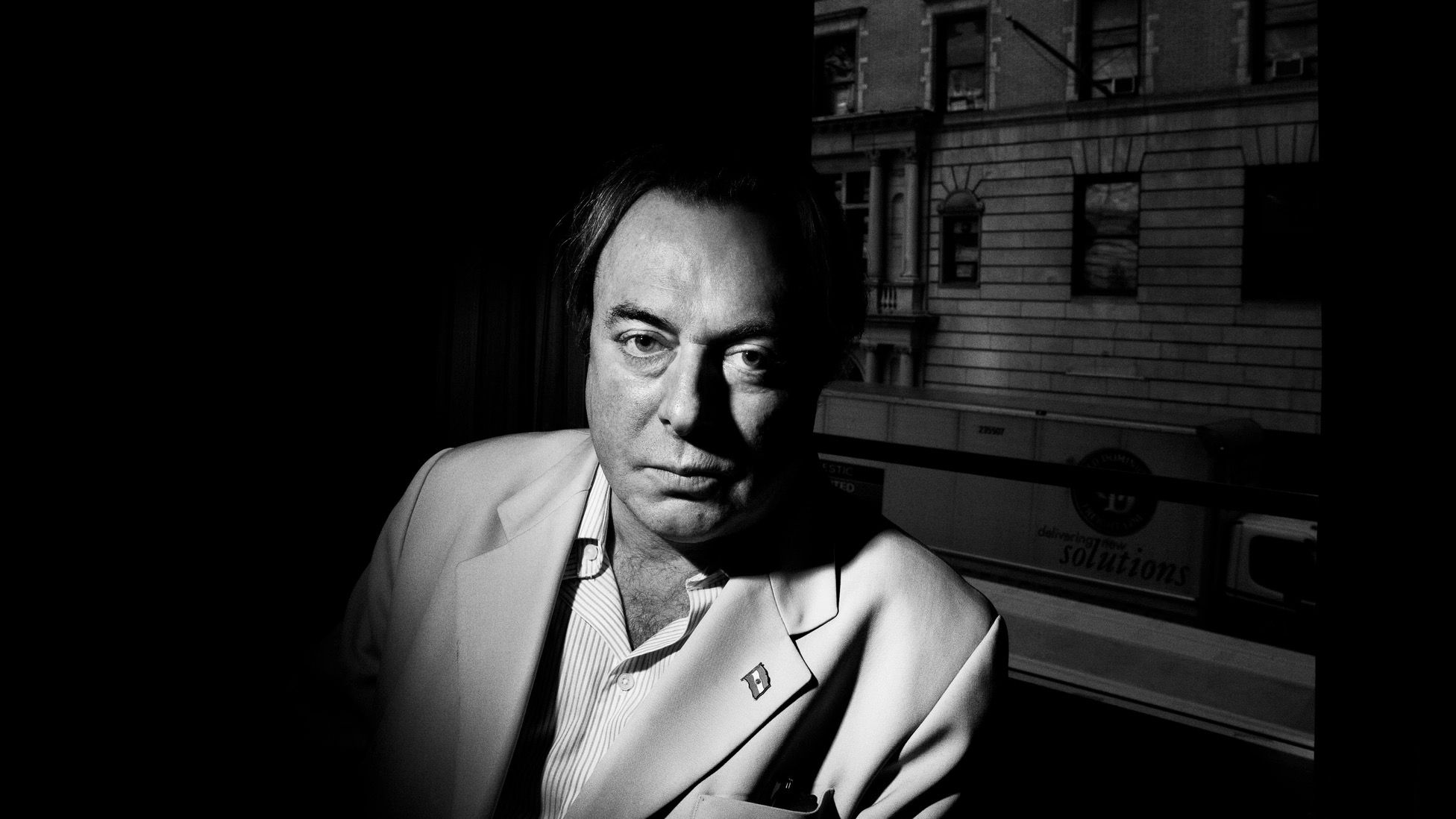
Today is the birthday of one my favorite authors, the late Christopher Hitchens. (He’d have been 77 years old.) How I wish he was still around to layer the current goings on with his profound erudition and incisive wit! Alas, he is not, so we celebrate his memory and the rich body of work he left behind.
One of the cornerstones of that work is God is Not Great: How Religion Poisons Everything. My favorite passage is from the first chapter, in which he makes his opening statement and puts his atheism in context. Along the way, he sets down (perhaps inadvertently) a sort of Atheists’ Creed. At least, that is how I have come to connect with it both emotionally and intellectually.
I’ve excised some digressions and tangential passages — which I’ve noted — but the essential tenets remain and his words are otherwise unaltered.
Our belief is not a belief. Our principles are not a faith.
We do not rely solely upon science and reason, because these are necessary rather than sufficient factors, but we distrust anything that contradicts science or outrages reason. We may differ on many things, but what we respect is free inquiry, open-mindedness, and the pursuit of ideas for their own sake.
We do not hold our convictions dogmatically.
[…]
We are not immune to the lure of wonder and mystery and awe; we have music and art and literature, and find that the serious ethical dilemmas are better handled by Shakespeare and Tolstoy and Schiller and Dostoyevsky and George Eliot than in the mythical morality tales of the holy books. Literature, not scripture, sustains the mind and — since there is no other metaphor — also the soul.
We do not believe in heaven or hell, yet no statistic will ever find that without these blandishments and threats we commit more crimes of greed or violence than the faithful.
[…]
We are reconciled to living only once, except through our children, for whom we are perfectly happy to notice that we must make way, and room. We speculate that it is at least possible that, once people accepted the fact of their short and struggling lives, they might behave better toward each other and not worse.
We believe with certainty that an ethical life can be lived without religion. And we know for a fact that the corollary holds true — that religion has caused innumerable people not just to conduct themselves no better than others, but to award themselves permission to behave in ways that would make a brothel keeper or an ethnic cleanser raise an eyebrow.
[…]
We do not need any machinery of reinforcement. We are those who Blaise Pascal took into account when he wrote to the one who says, “I am so made that I cannot believe.”
[…]
There is no need for us to gather every day, or every seven days, or on any high and auspicious day, to proclaim our rectitude or to grovel and wallow in our unworthiness.
We do not require any priests, or any hierarchy above them, to police our doctrine.
Sacrifices and ceremonies are abhorrent to us, as are relics and the worship of images or objects.
[…]
To us no spot on earth is or could be “holier” than another. To the ostentatious absurdity of the pilgrimage, or the plain horror of killing civilians in the name of some sacred wall or cave or shrine or rock, we can counterpose a leisurely or urgent walk from one side of the library or the gallery to another, or to lunch with an agreeable friend, in pursuit of truth or beauty.
It is not a perfect creed and if it were up to me I might make a few further edits. (And maybe I will some day.) But for now it stands as a pretty good encapsulation of what it means to me to be a person without faith.
