❌

Normal view

  • βœ‡Mad Fientist
  • Millennial Revolution – Denouncing the Cult of Homeownership
    Joining me on today’s episode of the Financial Independence Podcast are FIRECracker (Kristy) and Wanderer (Bryce) from Millennial Revolution! Kristy and Bryce exploded onto the scene after a video clip of them attacking the religion of homeownership went viral (it is now the most-viewed and most-shared video on CBC.ca, Canada’s largest news website). During our interview, we dive into the viral video, explore why they believe buying a home is usually a terrible idea, and find out wh
     

Millennial Revolution – Denouncing the Cult of Homeownership

1 December 2016 at 04:15

Joining me on today’s episode of the Financial Independence Podcast are FIRECracker (Kristy) and Wanderer (Bryce) from Millennial Revolution!

Kristy and Bryce exploded onto the scene after a video clip of them attacking the religion of homeownership went viral (it is now the most-viewed and most-shared video on CBC.ca, Canada’s largest news website).

During our interview, we dive into the viral video, explore why they believe buying a home is usually a terrible idea, and find out what they’ve been up to after retiring in their early 30s!

Listen Now!

  • Listen on iTunes
  • Stream audio file here
  • Download MP3 by right-clicking here

Highlights

  • Buying a house vs. retiring early
  • Delusional homeowner math and how to avoid it
  • Why you should rent everything
  • The benefits of using a financial advisor
  • How reaching financial independence is different in Canada
  • Why you should follow your dreams on the side

Show Links

Full Transcript

Mad Fientist: Hey, what’s up, everybody? Welcome to the Financial Independence Podcast, the podcast where I get inside the brains of some of the best and brightest in the personal finance space to find out how they achieve financial independence.

On today’s show, I’m excited to introduce Kristy and Bryce from Millennial-Revolution.com. Kristy and Bryce are Canadian. They took the world by storm when they challenged the cult of home ownership. Especially in Toronto, it’s a big deal up there. Everybody seems to be buying houses and the prices are getting crazy. But rather than do that, they used their savings instead to retire.

So now, they’re retired in their early 30’s, and they’re traveling the world. That would not have been possible had they just done what everyone else seems to do in Toronto, and that is sink all their money into a house and then spend the rest of their lives working to pay that off.

I’m looking forward to diving into their story. So without further delay, Kristy and Bryce, thanks a lot for being here. I appreciate it.

Kristy: Glad to be here!

Mad Fientist: So, Kristy, you’re FIRECracker. Bryce, you’re Wanderer. I just want to put the link of those two up, so people from your blog know who’s talking. Is that right?

Kristy: Yeah, that’s right.

Bryce: Yeah, that’s awesome.

Mad Fientist: Good! So, where are you guys at?

Kristy: So, right now, we’re in Chiang Mai, Thailand. And we’re staying in Thailand for the next two months. So, we’re chilling out in Chiang Mai, and then heading out to check out the beaches.

Mad Fientist: Nice! Where, what beaches?

Kristy: So, Ko Lanta has actually been our favorite because it’s more low key. The beach is not too crowded. So that’s the main one that we’re going to be checking out.

Bryce: And after that, down south Vietnam, Cambodia. Just kind of wherever the wind takes us, that’s where we go. That’s basically what we’re looking at. And I got to say, it’s pretty awesome.

Mad Fientist: That’s awesome. So, how long have you been on the road?

Kristy: About a year now, after we quit our jobs back in 2015, we’ve just been traveling around the world. And then, every now and then, we’ll just go home and visit our family. But mostly, we’ve been bouncing around countries.

We started off in the States, then we headed off to the UK. We bounced around in Europe. And then we came to Southeast Asia.

Bryce: Yeah, there’s this misnomer that when you start traveling, you kind of get it out of your system, and then you say, “Okay, now I’m done. I guess I’m ready to settle down.” And I’m sure you can attest to that. That does not happen. Once you start, you just can’t stop.

Mad Fientist: That’s awesome! So you guys, there’s no end in sight to the traveling? You guys are just planning on bouncing around for the foreseeable future?

Kristy: Yeah! As far as we’re concerned, that’s a pretty awesome life right now. So we’ll continue that trip.

Bryce: What we actually found when we started doing that, it was really just supposed to be, “Let’s travel for a year because we never did that and because we’re retiring now.”

But then what we found was that when we came back from our first year-long kind of thing, we looked at our expenditures, and then we found that traveling around the world actually costs about the same as staying in one place in North America.

Life is actually very, very expensive in North America. We’re from Canada. But people from the States can also attest to that. When you go out and you live like a local in all these other kinds of countries, especially when you average down countries—

In Eastern Europe and Southeast Asia, you’ll find that the cost of living is way lower out there than when you’re just staying still.

So then you start asking the question, “I could travel around for the same price as staying in one place. Why would I stay in one place?”

Mad Fientist: Right! No, that’s a great point. And especially if you’re still earning some sort of income or a little residual income from some old side project or something, you’re earning money in dollars, and you’re not having to pay taxes because you’re not in the States—or in Canada, I’m assuming you have something similar. Canada doesn’t tax citizens who live abroad. The State does. So you don’t have to worry about that, right?

Bryce: Right, right. Before we left, we published a children’s book. So, our publisher is earning American dollars, a small amount of American dollars. But then we changed that into Vietnamese Dong. You just end up living like a king because it’s like, “Wow! This is so much money here in Southeast Asia.”

Mad Fientist: Oh, it’s fantastic. So yeah, give people an idea of how much you’re spending in Chiang Mai because that’s one of the cheapest places and it’s a fantastic place to live. So yeah, how much are you paying in rent and food and things?

Kristy: Yeah, it’s amazing! I mean, this condo that we’re staying in right now, it’s got a swimming pool and it’s pretty modern. We’re only paying $19.50 a day. You would never be able to find something like that with pool back in North America.

The weather is amazing. We don’t have to worry about seeing a snowflake which is something that we did not like when we were in Canada.

And the food is ridiculous! Every time we go out to eat, it’s like a dollar, two dollars. We never had a meal that cost more than CAD$5. It’s just ridiculously cheap.

Bryce: And again, this is all Canadian dollars. So when we translate that to US, it’s even lower comparatively.

Kristy: Yeah.

Mad Fientist: That’s awesome! So, let’s take a step back. We’re getting ahead of ourselves with all these traveling. Tell a little bit about your background and your story.

Kristy: So, how we started this whole journey was back in 2012, we are actually trying to buy a house.

In Toronto—I don’t know if you know, but in Toronto, the housing market has been pretty crazy for the last decade. So, in 2012, at that time, we have been married for two years and we were thinking, “Okay, the housing market is crazy. It’s really expensive. We have to save a ridiculous amount of money to put a down payment because it’s going to be very competitive. And at that point, we have saved up $500,000 because we have been working like crazy in savings because we knew that we needed as big of a cash […] as possible to get into the market.

And it was around this time that we started to realize (as we look at the different houses) different options that there’s actually a lot of people trying to flip houses for money. We saw this dilapidated house on our street that was basically fixed up in less than a month. They did not put any effort into making it last. They just basically wanted it to look nice and then sell it as much as possible.

So, it was a dilapidated house that the builder bought for $500,000, flipped it in less than a month, and then sold it for $800,000. And when we went to the open house, we saw that the floor boards weren’t even, and then they just did a very rushed paint job. We knew that it was not going to withstand the stand of time for sure.

It had eight bids. And we got into a bidding war so very quickly. So, at that point, we started to realize, “This is kind of a scam. I don’t want to be in the housing market. Everyone is just going crazy and losing their mind. They’re not even looking at whether it makes sense to get into the market. You just want to rush right in.”

So then, it was around this time that we thought, “Maybe we can go a different way. Maybe we don’t need to be struggling and being stressed at our jobs just paying off a mortgage. Maybe there’s something else we can do.”

So, it was around this time that we discovered Money Mustache and JL Collins, and we decided, “Hmmm… financial independence. That sounds really interesting. That might be a different path that we’ll be able to take.”

And at the time, I was really stressed out at my job, and there were rumors of lay-offs as well. So, we thought, “Let’s try this. Let’s try questioning the status quo, not buying a house, and instead, saving towards financial independence.”

So, that’s what we did.

So, from 2012, we started investing. And then, we grew our nest egg from that point on until 2015. We actually ended up growing our portfolio to a million dollars. And then at that time, we decided, “Hey, this is actually the passive income generated from the portfolio using the 4% rule. It’s actually enough for us to retire. So let’s do that instead.”

So then, that’s when we started traveling around the world. And then, basically, here we are. It’s been awesome!

So, you totally do not regret not buying a house. And I think we attribute that to our success a lot because we didn’t have to pay for all those expenses that our poor friends have to go through with property taxes and maintenance and all those headaches that a lot of people don’t realize they have until they actually get into the headache of home ownership.

That’s basically the drain in a nutshell.

Mad Fientist: That’s fantastic! And that dilapidated house you mentioned, that’s the one where the crazy guy was living there and he was digging six foot deep holes all around the property. Is that right?

Kristy: Yeah! Wow…

Bryce: People have panic emailed us saying, “What was the address?!”

Kristy: Yeah! “Please tell us the neighborhood. I don’t want to have bought that house.”

Bryce: I don’t want you to start digging because I don’t want you to find a skull and freak out. It’s better that you not know.

Kristy: Yeah, that house is just really creepy. You walk by and you’re like, “Why are there holes all over the backyard? What is going on? I don’t want to look. I really don’t want to look. Let’s just walk by really fast and pretend we didn’t see anything.”

Bryce: The guy is 100% a serial killer. I’m calling him “serial killer.”

Mad Fientist: Yeah, that’s crazy. So, somebody paid $800,000 to inherit all of those problems which is absolutely crazy.

Bryce: And that is happening all over the city. And when we threw out those numbers, our friends from New York say, “Oh, $800,000, that’s adorable.” So, even our kind of crazy housing market is still happening all over the place. The same struggles can be heard from all these people that are just so frustrated because they have this idea that you have to buy a house because you’re an adult now. And if you don’t, you’re some kind of weirdo or some kind of loser.

That’s the reason why most people don’t actually ever accumulate any money. They buy into that idea. And then they say, “Oh, I’m so smart. I’m saving money on rent.” But then they don’t realize that all the other costs start adding up and you have to end up paying maintenance and you have to end up paying property taxes.

And then when you sell, you still have to pay a 5% commission just to sell the damn thing.

So, they wind up into these situations where they pay off this mortgage for decades. And at the end, they come out and they’re like, “Why don’t I have any money. I don’t get it. I thought I made the right decision.”

Mad Fientist: Yeah, it’s absolutely crazy. I completely agree. We’ve done two houses in our lives. And luckily, we didn’t buy in high cost of living areas like Toronto or New York or anything, so it wasn’t crazy to buy the places. But yeah, the cost associated are just insane. The 5% or 6% in the States at least, where we were, to sell it was just nuts!

Kristy: Ouch!

Mad Fientist: It’s a whole racket.

Bryce: It is! It’s just a racket.

Mad Fientist: Our first house in Scotland, when we were selling that—I actually sold it myself because I was like, “This is crazy! Why am I paying someone over there?” It’s only 1.5%. I was like, “I’m not paying somebody 1.5% to sell my house.”

Bryce: What the…?!

Mad Fientist: I’m like, “That’s insane!” So, I sold it. I created this whole website and everything and I sold it myself. And then, I got to the States, and it was like 5% or 6%. I’m like, “That’s nuts! Absolutely crazy.”

Kristy: Wow! But good for you for being able to sell it yourself.

Mad Fientist: Yeah, thanks. It almost backfired because it was right before the financial crisis. It was like 2007.

Kristy: Oh, wow! Just in time.

Mad Fientist: Yeah, no kidding. So, we only had three viewings. And luckily, the third one bought it, and then the whole world collapsed.

Kristy: Oh, my God!

Mad Fientist: It almost completely backfired just to save 1.5%. But it was worth it at the end.

So, you guys have definitely challenged the code of home ownership more than a lot of people because your video, as you just told me beforehand, went viral. What did you say? 4.5 million views.

Kristy: 4.5 million, yes.

Mad Fientist: And your article talking about all these stuff is the most shared and the most viewed CBC article. Is that right?

Kristy: Yes, it is, yeah.

Bryce: Yeah.

Kristy: We cannot believe that we’re saying, “Don’t buy a house.” It’s almost like you’re saying something sacrilegious. It’s like, “What?! What do you mean? I can’t not buy a house. That’s what everyone does.” So yeah, we’re not surprised.

Mad Fientist: And has there been a big backlash.

Bryce: Yeah.

Kristy: Yup!

Bryce: Because when you say something like this, every decision that people have made for the past five to ten years (where they did this five to ten years ago), you’re kind of saying—

Like the people that we sat down and we did the math, and people around us said, “Oh, you’re not going to buy a house. You’re going to be sorry. Mine is going to go up to $1 million, $2 million. And you’re going to be sitting there with nothing.” And then, now, not only did that not happen, they are stuck with these houses that are sucking them dry. We are traveling the world and having a blast.

People interpret it as an attack on themselves. People get really, really wrapped up in their identity when they’re homeowners. So when you attack the house, even if you’re doing it—the numbers, when you talk just the numbers of it, it feels almost like they’re attacking themselves.

So, yeah, the backlash has been a lot more intense I think than a lot of the other financial independence bloggers have had.

Kristy: Yeah, I believe that it’s more of an emotional decision than a practical one. And I think we’ve been pretty fair when we did the numbers. I like to say, “No, math, just shut up!” You’ve got to do the math. You can’t just base decisions based on emotions.

But a lot of the times, even when we do the math, people just justify it by just saying, “Yeah, well, the math doesn’t work.” But I’m doing it as a lifestyle decision. It doesn’t have to do with math.

But then I’m like, “Well, yeah, you can do that. But later on, when you run into financial problems, then you know that you made the decision emotionally, not based on that. So you have to understand that risk.”

So, the reason why we’re getting so much backlash is because it’s an emotional decision and not based on math—it’s based on feelings.

Bryce: Yeah, it’s a “lifestyle decision” is just a code word for “I didn’t do the math, and I just buy it anyway.”

Mad Fientist: Yeah, absolutely. There are so many arguments against it. I’m sure you’ve been given lots of them. Have you felt that you’ve convinced anyone or is it just like politics, it doesn’t matter what your candidate does because you’re voting for them anyway?

Kristy: Actually, surprisingly, when we sat down to do the math and we actually broke down an article of “Would we have been richer if we have bought a house?” and we did all the math, people actually came to our site (including real estate agents) and they actually looked at the numbers, and they said, “Yeah, that’s actually pretty reasonable. That is how much it would cost for ownership.” And then, it actually made people go back and rethink their math.

A lot of the times, people just say, “This is how much I bought the house for. This is how much I sold it for. And this is how much money I made” disregarding completely all the ownership costs.

It actually did encourage people to do the math. So, we thought that that was a very positive thing that came out of that whole calculation.

And then, one of the things that we made people question because they kept saying like “Leverage, leverage, leverage. You can use leverage to make money. This is all about leverage,” and then we actually did the math for that, they were like, “This is very depressing. I’m going to go do the math, but this is really eye-opening and depressing.”

Bryce: Just to summarize the article a little bit, what we did was we said, “Okay, between 2012-2015, we took an average house, and it made $150,000. It went from $500,000 to $750,000. Yehey, everybody wins.”

But then we actually started taking into account all of the transaction cost and the property taxes and all the maintenance, the mortgage insurance you have to pay and the mortgage interest itself and all these kind of stuff. We found that for the hypothetical person who bought in 2012, sold in 2015 when the capital value of their house went up $150,000, 95% of the profits got taken away by those costs. They only got to keep a tiny, little fraction of it. But they think that, “I’m a genius! I made $150,000.”

That’s why housing is so dangerous. It makes you think that you are winning. Well, in reality, everybody else is winning—the bank, the real estate agent, the contractor who you had to pay $10,000 to stage the place or whatever […]

So, it’s true that housing does make people money—just not you.

Mad Fientist: Yeah! That’s good. What is the name of that article, and I can link to it in the show notes. That’s fantastic.

Bryce: Sure! I think it’s Leverage: Is it Your Friend or Your Enemy? I can send you the link. Have fun!

Mad Fientist: Cool! Awesome. I’ll put that in the show notes. It sounds like a great article.

Bryce: And then, as Kristy was saying, people came on and tried to attack it. And then, some of the real estate agent, they looked at all the line items and said, “Okay, that’s true, that’s true. That is true… uh-oh…” At this stage, it was like, they said, “I have to go home and rethink my life a little bit.”

Mad Fientist: That’s amazing!

Kristy: Because one of the questions we asked for that article was like, “If it’s such a lucrative investment, the bank has lots of money. Why don’t they buy the house? They have enough money to buy the houses. Why did they want to lend you money, so you can buy the house? And if the house goes up or goes down, then they get their money regardless. You have to take your hair cut. It’s so lucrative. Why doesn’t the bank buy it? Hmmm…?”

And it’s like, “Yeah, that’s true. Why doesn’t the bank buy it?”

Bryce: “Houses always go up.”

“Why don’t you buy it?”

“Well, I don’t want to.”

“Well then, you’re lying to me.”

Kristy: It’s a scam, it really is.

Bryce: It’s a scam. It’s a total scam.

Mad Fientist: Yeah, definitely. And once you buy into that, it’s like, well, you’re always going to have your money locked up in the house because you’re not going to just make your fortune, and then start renting because.

Even if you actually do make a fortune, and you’re like, “Well, buying is the best thing,” and then you’re just going to sink it into a bigger house, a more expensive house, then your money, if you do make any, is just going to be locked up in that asset for your entire life, and you’re never going to benefit from it really.

Bryce: Yeah, that’s the fascinating thing, isn’t it? More than any other of your asset, it is tied to your sense of identity. And once it is tied to your sense of identity, you can’t get rid of it because then you’re getting rid of part of your identity.

I mean, if you’re an index investor like us, we don’t go, “Oh, VT stocks is my identity. I can never part with it.”

Kristy: “Don’t ever attack my VT stocks.”

Bryce: That doesn’t make any sense, but it makes people go crazy.

As you know, if you’re making investing decisions based off of like—if you’re buying something and you say, “I can never sell this in the future,” you’re not investing. You’re just throwing money at something to make yourself feel better.

Mad Fientist: You’re right. Yeah, yeah, absolutely. I completely agree.

And then, the whole argument of renting and you’re throwing money away, it’s just insane to me. You’re getting shelter for that money. That’s a valuable trade of dollars for something. You’re not throwing money away. You’re buying something very important. And it’s just costing you less than what you’re earning.

I’m so happy to be renting again. We’ve been renting for the last year. And we’re renting furnished places now, which is even better. It’s like we have nothing that we own.

Have you guys been loving it?

Kristy: Yeah, we love it as well. That’s why we wrote the article on—we did a guest post on JL Collin’s blog which is Buy Your Freedom & Rent the Rest because it really is awesome to be renting.

When we lived in Toronto, we also rented cars from Auto Share instead of actually owning a car because any time anything breaks, you don’t have to worry about it.

And then, this one time, this crazy white van—I hate white vans. They’re like my arch nemesis, seriously. The worst! This white van came in. It swerved. It went on the other side of the street and then hit us. Everybody, all the witnesses said, “Okay, that van was driving dangerously. It’s completely their fault.” They told the police and everything. And then the insurance company still ruled it 50/50.

But luckily, because it was a rental, we didn’t have to pay anything. It was just covered as part of the insuring policy, as part of the Auto Share agreement. It was just like, “Okay!” So, we just got another car the next day. We didn’t put out any money at all.

So, renting everything really does take away the stress. Like you said, you’re renting a place with furniture right now. It’s like, “If anything breaks, it’s the landlord’s problem, not your problem at all.”

Bryce: I mean so many readers write in to us and just kind of saying, “I’m trying to get ahead, but it just seems like, every month, there’s an emergency—a pipe burst, my car tire blows,”—something about a muffler. I don’t even know what a muffler is. Something goes wrong, and it just ends up costing you a lot of money.

And then you have to think… if every month, there is a once in a blue moon emergency, that’s not normal.

Kristy: Yeah. What do you save for retirement if you’re constantly having costs that you can’t predict? It’s just popping out of nowhere.

Mad Fientist: Yeah, I completely agree. Renting has just been amazing. You can rent exactly what you need at that moment and you’re not buying this house that has three bedrooms because you think you may have kids in 10 years and a big mini-van because you may have those kids and all these crazy things that are costing more money just because, one day, you may need them.

You just rent exactly what you need at the time. And yeah, it’s fantastic! It’s easier than ever now with all of these start-ups coming up that lets you rent other people’s houses, rent other people’s cars, rent everything. It’s just amazing.

Bryce: Life is far simpler than what most people think it is, isn’t it?

Mad Fientist: Oh, yeah. Absolutely.

Bryce: People think life is so difficult because they’re constantly working hard riding this treadmill, paddling, and they don’t realize that they added all of these baggage onto themselves without realizing it. They’re completely optional. They’re completely a self-inflicted wounds.

Then when they’re done, we take all those things up and you realize how far you can go, life becomes so much easier. It’s just eye-opening. You just want to tell people. You don’t have to do all that stuff that you think you have to do.

And that’s what makes people so stressed out, freaking out over where the next paycheck is going to come from—but it’s all self-inflicted.

Mad Fientist: And the Buy Your Freedom & Rent the Rest article that you mentioned, that’s how we actually got talking. I left my first blog comment in probably like four years when you posted that on your website. I felt so strongly about it.

So, I’ll definitely link to that article as well because it’s great. And the example I gave in that comment is that when we were in Mexico, we wanted the pool for the week, and so we just rented an AirBnB or a VRBO with a pool. And then, my buddy came down to visit us, so we needed an extra bedroom. So then we just moved to another place that are 2-bedrooms.

Kristy: Yeah, that’s awesome.

Mad Fientist: And then, we moved back to the pool place. And it’s like you can’t do that if you bought something. Renting allows you to get exactly what you want when you need it. That’s just awesome. And I don’t think I’ll ever go back. It’s just been fantastic!

But back to you, guys, let’s dive into what you do invest in then. So if you don’t invest in real estate, where is all your money part?

Kristy: So, we structured our investments into a 60/40 portfolio—60 equities, 40 bonds. So what we’ve done is because we’re now in retirement, we need to actually rely on the income for our expenses. From that portfolio, we generate 3.5% approximately of dividend income.

So, a lot of people have been asking, “Oh, no! Trump has been elected. What happens if your portfolio gets decimated? Have you thought about that?” It’s like, “Yes, we have.”

And so one of the things we can do is live off that dividend income without having to ever sell anything, and then use rebalancing to come out of it.

And so, using the 60/40 portfolio, and using the strategy of indexing, using the cost ETFs, and then rebalancing periodically has actually helped us survived 2008. We were actually investing back in 2008 before we decided to buy the house. And this current strategy is actually the strategy that allowed us to survive without losing any money at all.

It’s a tried-and-tested method, and we’re definitely going to stick to it. That’s why the Trump presidency hasn’t really scared us at all. We survived worse, so it’s going to be fine.

Mad Fientist: That’s awesome. And it wasn’t all smooth sailing there. You did sell all your stocks in 2009, is that right? Can you tell that story?

Kristy: Yeah, that was a really stupid mistake.

Bryce: Well, yeah. But it wasn’t actually because we’re just kind of, “Okay, now, we’re scared.” When we sold that we had gone back to break even, we were like, “Oh, geez! Thank God for index investing. So now we know that it works.”

Kristy: But now, we’re like, “Let’s go badass!”

Bryce: At the time, we had decided to get married. We were independent. We were just investing for the sake of investing back then. We weren’t investing for financial independence back then because we haven’t even heard of it.

Well, at that time, 2009 or 2010, we were getting married. And then, we figured we didn’t even need all these money that we have.

Kristy: Probably in the future, we would need to have more money in cash…

Bryce: …in order to go and buy that house.

Kristy: Yeah, settle down and all that stuff.

Bryce: Then we realized what we actually wanted to do. We ended right back into the same portfolio we had before […]

Mad Fientist: Nice! So, how long did you end up being out for?

Bryce: I think 2010 to 2012. That’s how long it took for us to discover M&M and you and these other guys that had done all these amazing things. We’re like, “Wow! Can we do it too?” And apparently, the answer was yes.

Mad Fientist: Nice! So, it obviously wasn’t too bad because now you guys are just hanging out in Chiang Mai and enjoying life. But yeah, it was a funny story when I read it. If that’s your biggest mistake, as you’ve said, in that article, then that’s not so bad.

Bryce: Yeah, not too bad.

Kristy: Yeah, champagne problems.

Bryce: Champagne problems.

Mad Fientist: Right, exactly. And at least, like you said, you didn’t do it for fear or something. It was a calculated move.

Bryce: Yeah, yeah.

Mad Fientist: So, that’s been going well.

And you guys actually have a financial advisor, which is quite rare in the FI space I would say as far as bloggers doing it all themselves. But you’ve had good experiences, is that right?

Bryce: Yeah, that has been a very positive experience. Our financial advisor is actually another blogger, Garth Turner who wrote the blog Greater Fool, who taught us about a lot of the other stuff as well as how dangerous housing is. He was one of the big anti-housing kinds of bears in Canada. And then, we got to talking with him. And together, we kind of figured out the mechanics and the actual nitty-gritty details of how to build this portfolio and how to actually structure it.

A lot of the finance bloggers out there, you just kind of go 100% equity, and then just go, “Yee-haw!”

So, we wanted it to be a little bit more conservative. We needed some help doing that. It’s been a pretty big experience. And yeah, we highly recommend it.

Mad Fientist: That’s cool! I can link to him as well. You said Greater Fool.

Bryce: Yeah, GreaterFool.ca.

Mad Fientist: GreaterFool.ca. Cool!

So, obviously, you interact with a lot of US bloggers and people I’m sure. Are there any major differences between reaching FI in Canada as opposed to the US?

Bryce: I think that the biggest difference is healthcare which is far more complicated in the US than it is in Canada. In Canada, it’s just kind of like, “Yeah, you’re done. If you ever get sick, you fly back to Canada, and you’re just good to go.”

And in the US, until recently, people would be scared. They didn’t want to leave their work because they were scared of losing their insurance. And then, ObamaCare came around, and then that was the way that we were trying to tell people, “It’s going to be okay. It’s going to be okay.” And then, Trump happens.

We’re still not sure what’s going to happen with that. Just base on my conversations with the rest of the FI community, everyone is still trying to figure out what to make of that, especially on the ObamaCare stuff. So, that has the potential of blowing up a lot of math. And that is something to be concerned about.

Once an answer kind of clears up, we’re all going to write about it and figure out what the right thing to do is. But right now, we actually don’t know yet, which is unusual.

In Canada, it’s just easy. But in the US, it’s far more complicated.

Mad Fientist: Yeah, I’m back in the UK now as a full-time resident—well, once we get back from this trip. I’m just so amazed having the NHS there to back you up. It’s just such a different feel to everything. You go to the doctor, it just feels like they want to help you and make you better. It doesn’t matter if have to get sent to a specialist or two specialists or whatever. They just want to make you feel better and help you get well. You go to the pharmacy, and they just give you free drugs. It’s just amazing! I absolutely love it.

Do you feel the same about your socialized medicine in Canada?

Bryce: Yeah, absolutely, absolutely. And the strange thing that I kind of noticed is that a lot of the financially independent people have a dual citizenship or they grew up in another country. So, I know that Mr. Money Mustache is Canadian I believe. You have ties to the UK. We’re Canadian. Jeremy and Winnie from Go Curry Cracker, she’s Taiwanese. So they’re right now in China […]

So, I think part of that is the optimism from the people who become early retirees comes from the fact that they have this idea that they’re not scared of healthcare issues coming up and blowing up their life—part of it. But people who actually were born, raised and grew up in America, that’s always part of their calculations. And that scares them for a good reason, right?

So, I think that’s an odd thing that I’ve noticed about a lot of us.

Kristy: Well, on one plus side, from traveling, we’ve noticed that there are other countries that actually have very, very low cost and very high quality healthcare compared to the States. I think Thailand has one of the highly rated places for medical tourism. A lot of people come here and get treatment. It’s very fast, very high quality.

A lot of the doctors and dentists have actually been trained in Boston and other places in the States. Seeing the doctors is $12 or something. It’s ridiculously cheap!

That’s another option that early retirees have found, that they can move abroad and get very cheap healthcare that way. That’s something we discovered as well outlining with the idea that most of America is very over-priced and there are many other options abroad that you can tap into.

Bryce: Yeah. There were some early retirees that we met who found it actually cheaper to exit the US and then get their healthcare through travel insurance which is counterintuitive when we think about it, right? It’s like, “Really?! Okay.”

But it’s because the healthcare system in the US is so complicated.

Kristy: Complicated, yeah.

Mad Fientist: Do you guys have some travel insurance for when you’re outside or are you just self-insuring?

Bryce: We have travel insurance, yup. It’s not that expensive. It’s like $1500 for the year for the two of us and it covers the entire worldwide—any kind of travel, you’re covered worldwide.

I don’t know what the cost is if you were to self-insure in the States, but I suspect it’s higher than that.

Mad Fientist: Yeah, definitely. We’re currently on a 3-month trip. We get 3-month insurance for the two of us for something like £230 or something like that. And it covers the US, so we’re completely covered now in the States. We’re paying a fraction of what most people pay per month just to have insurance in their home country which is crazy.

Bryce: Yeah, crazy.

Mad Fientist: Yeah, I completely, completely agree if you’re willing to travel. And that’s the beautiful thing about early retirement. People are young and able and willing to do things like that. That’s a great way to handle that equation at least for the early year. Just go and travel other places and get cheap travel insurance rather than crazy American style insurance which is…

Bryce: Yeah. Again, it’s the thing that we’ve discovered. Life is so much simpler and cheaper outside of North America. We’re in one of the most expensive countries to live in. It’s a great country to make your money in work, but it’s far easier to retire outside of it because the costs are so inflated.

Mad Fientist: Absolutely! You mentioned that you write children’s books. Can you talk a little bit more about that? And also, what’s been keeping you occupied ever since leaving your jobs?

Kristy: Yeah, sure. The writing the children’s book, the funny thing is I had this crazy idea back in 2008 because I was reading Twilight. I was like, “Oh, my God! She made how much money from writing this book?” And when I read it, I was like—I mean, it’s fine, but it’s not JK Rowling level. So I’m like, “Hmmm… I could probably do this too.”

So, I was like, “I’m going to accomplish my dreams of being a writer outside my day job of being an engineer. I’m totally going to do this. This is going to be really easy.” And it was totally the opposite of what I thought. I have so much respect for others now because it was just five years of just being stuck in the writing trenches—just rejection after rejection after rejection after rejection.

And it actually made me very grateful that I decided to chose the engineering STEM path and they kind of follow my dreams on the side rather than rely on that for my income because there’s just so many writers out there and so few writing jobs. It’s so hard to make it in the publishing industry. I was really, really glad for that experience because it really humbled me and it taught me a lot about writing.

But man, am I glad I decided to go the STEM route in terms of the salary and then just do that on the side.

But happily, we did get through it. We did get through all the rejections. We wrote all three novels together. And two of them got completely thrown out. And it was the third one that got published by Scholastic which actually happens to be the biggest children’s publisher in the world. And it took us…

Mad Fientist: Oh, congratulations.

Kristy: Yeah, thank you very much. It took us about five years to get here. But that’s one of my passions. And now that we’ve been able to retire and become FI, I can actually do that full-time now without having to worry over where’s the money going to come from and “Can I actually pursue this because, financially, it doesn’t make sense.” But now, we can just do that and actually really enjoy it.

Mad Fientist: That’s fantastic! So you’re writing another one then?

Kristy: Yeah! So…

Bryce: Yeah, we’re writing the series […] And people has been really, really receptive to that.

The whole dream of becoming a writer professionally, it ended actually becoming true, strangely enough, after we left our jobs. We’re now writing pretty much every day, writing articles for the blog, writing on the fiction route and the non-fiction route. So, it’s been pretty crazy.

When we came out with our story, it kind of blew up in Canada and it also kind of went into the States pretty strongly as well. We were in Business Insider and Yahoo Finance […] People really, really want to hear about this whole financial independence thing because I think it really addresses a big problem that people didn’t know that they had.

Mad Fientist: Mm-hmmm… no, that’s fantastic. That’s so good.

And we actually didn’t talk about this. But what did you both do before you retired?

Kristy: We’re both computer engineers, and we actually went to the same university. We were like lab partners. It was a very nerdy love.

Bryce: Software development. You’re in software development too, right?

Mad Fientist: Yeah, yeah. Yup.

Bryce: Yeah, yeah, yeah.

Mad Fientist: Lots of us in this…

Bryce: That’s one of the strangest things. It seems to be happening a lot. There are a lot of people that are engineers that ended up doing this other type of thing.

Kristy: Mostly engineers, yeah.

Bryce: It’s very fascinating. I’m not sure why.

Kristy: MMM is an engineer. His wife is an engineer.

Mad Fientist: Yup! Yeah, yeah, yeah. Jeremy.

Kristy: Jeremy. Jeremy is an engineer. I think Justin, also an engineer.

Bryce: Yeah!

Kristy: Yeah, it’s just really funny that that just happens to be the pattern.

Mad Fientist: Yeah, I think MMM did a post on his site a while ago, many years ago. He polled his readers. I think it was like some crazy percentage where over 60% were some sort of…

Bryce: I think it’s because we get turned on by spreadsheets.

Kristy: Yeah, we all like optimizing the crap out of that.

Mad Fientist: Oh, yeah. It’s definitely optimization. Yeah, absolutely.

Bryce: And it’s a natural part of our thought process. You put a dollar in instead of milli-amps and then it’s the same process.

Mad Fientist: Right, exactly. So you guys are still coding, right, but you’re doing it for a non-profit. Is that right?

Kristy: Yeah! So, that’s one of the rewarding things we’ve been doing as well. We’ve been able to give back to the community. We met a group of writers through our writing. They started a non-profit to promote more diversity in children’s literature. So I’m actually working with them to develop an app to help people find more diverse books.

So that’s one of the passion projects that we’ve been working on. And then, as a result of that, because we have those writing skill and the coding skill and it’s very portable, we can actually do that anywhere in the world. We just need our laptop and an Internet connection. So that actually fits really well with our lifestyle currently.

Bryce: Yeah.

Mad Fientist: Any other big projects that you’re working on at the moment? It sounds like that would keep you plenty busy, all of that stuff, especially with the traveling and everything.

Bryce: Well, the biggest part is the blog. Right now, we’re kind of experimenting with what we want to do with the thing.

Right now, we’re running this thing called the Investment Workshop. There are so many people that have talked to us and said, “I like the idea of index investing. I don’t know where to start. I’m scared. I don’t even know where to sign up” and this kind of stuff.

So, we started doing this as an experiment. It just kind of says, “Okay, here’s what we’re going to do. We’re going to pretend that we are building our portfolio with real money. We’re going to use the real stock market. We’re going to show every single move that we do. We’re going to show screenshots you can follow along and you can learn.”

“You can follow along and mirror our steps if you want to. We’re going to tell you every decision that we make along the way, why we’re doing it, and how we’re actually implementing it. And you can see the results.”

People have been really receptive to that. I don’t think anyone has done it before. It’s all for free because we want anybody to be able to participate and learn how all these stuff works.

You know what? If you walk into a bank, and you say, “How do I invest?” they just shove you into the worst high fee-paying mutual fund at all. There’s a lot of people out there that want to learn this stuff, but they don’t know who to trust because the entire finance industry is geared to helping you make the wrong decision or you and the best decision for them.

That was something that really frustrated us. We’re trying to do something about that right now. We’ll see how that goes.

Mad Fientist: Yeah, that’s fantastic. I’ll put a link to the investing workshop in the show notes. It’s really good. I went through all the articles you have so far. It looks fantastic. That’s such a good idea.

Bryce: Oh, thank you.

Mad Fientist: It’s no surprise that people are into it.

Bryce: That means a lot coming from you, man.

Mad Fientist: Oh, thanks. Yeah, it’s great. I’ll link to that in the show notes.

So, yeah, I don’t want to keep you guys too long. I know it’s 9 p.m. in Thailand right now?

Kristy: Yeah, it’s around that time.

Mad Fientist: So, there’s time for at least one more Pad Thai?

Kristy: Yeah, Pad Thai, maybe a foot massage.

Bryce: Yeah, yeah. Absolutely!

Kristy: Oh, my God! The massages are ridiculously good. It’s like $10. It’s just ridiculous. I’m like, “Wow!”

Mad Fientist: Oh, that’s so good. Up in the northeast corner of the old town is where we found the cheapest ones. I think it was 200 baht for an hour or something (or half an hour, I can’t remember). It was super cheap and fantastic!

So, yeah, I don’t want to keep you too long. But I usually end all of my interviews with asking, “If you had one piece of advice for someone who wants to pursue financial independence, what would it be?”

Kristy: I would say, “Question the status quo.” Don’t just do what everybody else is doing.

That’s what we were doing. We were just heading in that direction. Everybody is buying a house. I know it’s expensive in Toronto. “I have to buy a house because that’s what everybody does. There’s no other way to live your life.”

And when we started questioning it, then we started thinking, “Maybe we don’t have to do this. Why do we have to do what everyone else is doing? And maybe we’ll regret it, but let’s try. Let’s try something different.” And that’s actually completely made a huge difference. That completely changed our lives.

Now, I actually get to do work for non-profits. I get to do passion projects. I get to interact with people on the blog. It really is life-changing to question the status quo.

Like Steve Jobs said, “Everything that you know around you is made up by people that are not smarter than you are.” He’s absolutely right about that. You have to question.

Mad Fientist: That’s fantastic! And Bryce, would you give something else or would you agree with that?

Bryce: Yeah, I would say just to add to that… find people who are living the life that you want and ask them. The financial independence community has been growing as a movement by leaps and bounds. And the great thing about this community—

Even if you don’t believe our blog, go to yours, go to Money Mustache’s, go to Jim Collins’. We’re all trying to help people do it themselves. We’re all trying to shake up the system in some way […] what it means to be working and what it means to be like a middle-class kind of guy.

And we’re feeling that the movement is starting to become more and more—it’s not mainstream yet, but it is gaining momentum. When we were first starting out, when this whole thing first started out, it was Money Mustache and Jim Collins. They were seen wildly as freaks and weirdos doing this strange kind of stuff. And then, you came along and Go Curry Cracker came along. And then, Justin from Root of Good came along. And then, we’re coming along.

It’s starting to feel like it’s becoming harder and harder to dismiss us as a real thing. It’s harder to attack us saying, “These aren’t real.”

So, I would say read these blogs and learn from these guys. Everybody wants to help people. Everybody wants to teach the stuff that they learn. We’re not trying to keep and hoard this knowledge for ourselves. We want it to get out there as much as possible. So take advantage of that, right?

Mad Fientist: Nice! I completely agree. I highly recommend people check out your site. So, how can people find you?

Kristy: So, go to www.Millennial-Revolution.com. We post there three times a week.

Mad Fientist: That’s insane. How do you do that? I can barely post once a month. And it’s like stressing me out. How is that possible? You guys are natural at this.

Kristy: Well, having two of us does help.

Bryce: There are two of us. And we are fiction writers.

Kristy: We used to writing more.

Bryce: We’re used to writing more, like every single day.

Mad Fientist: Oh, that’s good. I need to get into a better habit. I can’t even imagine.

How about emails? Can people email you from there or just leave comments on your post? Is that the best way to get in touch if they want to just say hello?

Bryce: Yeah, absolutely. Our email is in our contact us form—and as well, just in our comments. We try to answer every single one.

Mad Fientist: Awesome! Well, thank you both so much. This has been great. I really enjoyed talking to you. And hopefully, I’ll see you somewhere in the world, maybe Southeast Asia in December which would be really cool.

Have a great time! Thanks again. I really appreciate it.

Bryce: You too!

Kristy: Alright!

Mad Fientist: Alright, bye.

Kristy: Take care.

Want a PDF version of the transcript?
Just enter your details below and I’ll send it to you!

Related Post


The post Millennial Revolution – Denouncing the Cult of Homeownership appeared first on Mad Fientist.

💾

  • βœ‡Mad Fientist
  • Sane Fientist – My Wife’s Thoughts on Financial Independence
    On today’s episode of the Financial Independence Podcast, I interview my wife, Jill! It took a lot of persuading to get her on the show but I’m glad she agreed because her perspective is very different from mine so it was interesting to hear her thoughts on financial independence, early retirement, and this unconventional life we lead! Listen Now! http://traffic.libsyn.com/madfientist/sane-fientist-interview.mp3 Listen on iTunes Stream audio file here Download MP3 by right-clicki
     

Sane Fientist – My Wife’s Thoughts on Financial Independence

22 December 2016 at 19:54

On today’s episode of the Financial Independence Podcast, I interview my wife, Jill!

It took a lot of persuading to get her on the show but I’m glad she agreed because her perspective is very different from mine so it was interesting to hear her thoughts on financial independence, early retirement, and this unconventional life we lead!

Listen Now!

  • Listen on iTunes
  • Stream audio file here
  • Download MP3 by right-clicking here

Highlights

  • When my wife found out I was a weirdo with money
  • My lowest point as a cheapskate
  • Why Jill and I kept our finances separate
  • The importance of figuring out your perfect life
  • How to get your spouse on board with FI
  • Why you should start small when trying new things
  • What I do that annoys my wife most

Show Links

Full Transcript

Mad Fientist: Hey, what’s up, everybody. Welcome to the Financial Independence Podcast, the podcast all about financial independence and early retirement.

My wife Jill and I just got back from your 3-month trip around the world. We’re back in Scotland. And I’ve been reunited with my podcasting microphone, so hopefully, I’m sounding better than I have over the last few episodes. I’ve actually just been using my iPhone headphones and doing a lot of post-processing to make it sound good. So hopefully, you couldn’t tell too much, but I’m back to normal now.

Today, I’m excited to introduce my guest, which is my wife, Jill. I’ve been wanting to get her on the show for quite a while now. It’s taken a lot of persuasion to get her on. But she finally agreed. And I’m excited to dive in and see what life has been like on this crazy journey and find out how she actually feels about all the things that we’ve been doing and the direction our lives have gone.

So, without further delay… hey, Jill! Thanks for being here.

Jill: Thank you.

Mad Fientist: So, for the people that don’t know you, maybe just tell a little bit about yourself before we dive in.

Jill: Well, I’m Jill. I’m from Glasgow, Scottland. I’m an optometrist. I’m obviously married to the Mad Fientist…

Mad Fientist: …which she feel very good about, right?

Jill: It’s very exciting.

Mad Fientist: So, Jill wasn’t too excited to actually do this. It has probably been a few months of me pestering her to ask if she could do this. And today, she finally agreed. So I’m excited to finally ask her everything I’ve always wanted to know that she won’t tell me in real life.

So, maybe just go back and talk a little bit how we met maybe.

Jill: Yes. So it was almost exactly 14 years ago…

Mad Fientist: Yup!

Jill: We were both studying in Glasgow. We had a mutual friend who introduced us at an ceilidh which is a traditional Scottish dance. And yeah, I guess, we hit it off right away and we’ve been seeing each other ever since.

Mad Fientist: So, when did you realize that maybe I wasn’t normal when it came to money?

Jill: I think that was quite early on.

Mad Fientist: See, I thought I played it cool because our first day, I remember you insisted that we split it, which I was really pumped about. But did I insist and I ended up paying or…?

Jill: Yeah. I think at the beginning, you were trying to be a gentleman and pay for everything, but I didn’t really care. That did not last too long. I convinced you we can split everything.

Mad Fientist: And we’ve been splitting everything ever since […] I was used to the American style where the guy pays for everything all the time. So that was a nice treat.

So, you think pretty early on, you realized that I wasn’t like everyone else at least when it came to finances?

Jill: Yeah, I think probably when we first started traveling together, which is fairly early on, not that you were being stingy or anything bad, but just that, yeah, you were maybe a bit more frugal than I was used to.

Mad Fientist: And I was even more frugal than you.

This is probably a low point in my life as far as financial frugality is concerned. After my “study abroad” period ended, I had to move back to America for my senior year college. We were apart for that whole year, but we stayed together. You came to visit me once. I came to visit you in Scotland once. And then, we met in Switzerland once.

That seemed like a good idea because I was able to find cheap flights to Switzerland for some reason. But we didn’t realize how expensive Switzerland actually was until we got there. I was a broke student, you were a broke student. And we went out—I think it was probably the first day that I got to Switzerland, right?

Jill: Probably.

Mad Fientist: I think it was like the first dinner. We decided to go get some fondue. We had planned to split a fondue because who needs a big pot of cheese each. But this fancy restaurant we were in didn’t let us. And then, we tried to get tap water and they didn’t let us.

I was freaking out, and I was trying to play it cool like I wasn’t. But I was super thirsty. And I kept disappearing a lot during the meal. I went down to the men’s room and just stuck my head under the spigot and drank a lot of water, which I didn’t end up telling you about until probably…

Jill: Years, years later I think.

Mad Fientist: So, that was a definitely low point and me being cheap. But besides that, hopefully, it hasn’t impacted your life too much at least in those early years.

Jill: No, it hasn’t impacted my life hardly at all because we just kept all our money separate.

Mad Fientist: And talk about how that came about. For us, it was natural. But a lot of people I think maybe struggle with either proposing that or getting to that point. So, can you talk a little bit about how that came about for us?

Jill: Yeah, it just seemed very natural for us. I don’t think it was ever a big discussion when you moved over to Scotland and we bought our first house. We just decided to have one joint account that paid for all the bills and the mortgage and everything and keep our separate accounts. It was just our own personal money that we could do what we want with.

We weren’t earning exactly the same money at that point.

Mad Fientist: And you were kind enough to offer—I mean, you were actually earning quite a bit more than me at that point and you’re kind enough to offer to put a proportional amount into the joint account. But then I insisted that we just do it 50/50 because I figured, eventually, we’d earn the similar amount of money.

But yeah, thanks for that offer.

Jill: So, yeah, it just made sense because we knew at that early stage that I definitely like to spend a lot more money than you did. It just seemed like an easy way to prevent arguments with keeping our money separate. I could do what I want with my money; you could do what you want. Everyone was happy.

I don’t remember it being a big discussion or a big discussion. It just became a natural thing for us as a couple to do.

Mad Fientist: Yeah, and also since a lot of our relationship was spent—well, not a lot, but a fair amount of our relationship was spent on separate continent sometimes, sometimes you have to stay in the States and apply for a VISA or go back to college for my senior year and things like that, I think being separate part of the time and having two separate accounts make even more sense, don’t you agree?

Jill: Yeah, yeah, I think so. It just kept everything easier.

Mad Fientist: So, do you think it was a good way to go about it?

I talked to a lot of people and some people have actually even said to me, “Oh, if you don’t merge your finances, then your marriage is doomed” and all these sorts of things. Do you think it’s worked out well?

Jill: Yeah, I think our marriage would’ve been doomed if we had everything in a joint account. I think that would’ve caused a lot of arguments.

Mad Fientist: Yeah, that is definitely confirmed I think. That would’ve been a disaster. So you would recommend it to other couples potentially?

Jill: Yeah! I think everybody just has to work out what works for them. Some people feel a lot more comfortable keeping everything joined and feeling like they’re doing everything as a couple. I think that’s fine.

But if you’re really not on the same page when it comes to spending money, then I don’t think there’s any reason not to just keep your finances separate. It just avoids that whole issue.

Mad Fientist: Yeah, definitely.

So, were you always a spender? Definitely, when I met you, you were quite a big spender. Was that always the case?

Jill: Yes, ever since I had my own money. I couldn’t wait to spend on anything. I’ve always been very easily influenced by advertising. So as a kid, I wanted all the latest and greatest things. If I had pocket money, I would be just spending immediately.

And I don’t think that has anything to do with my upbringing. My older sister was a saver. She was very into saving her money. But I just couldn’t wait to spend. I was always like that.

As a teenager, I remember, just every weekend, I was going to Glasgow with friends and just finding things to spend money on. I never saved any of my money.

Mad Fientist: And your parents are also good savers too, so definitely, it doesn’t seem like it is from your upbringing.

And you’re talking about advertising, it’s still something that we sometimes struggle with to this day. You insist on the brand name thing even though it’s probably made in the same, exact factories as the generic one. Why do you think it is?

Jill: I have no idea. I don’t know. I’ve just always been very susceptible to any kind of—yeah, just advertising affects me.

Mad Fientist: But you’re completely different now. It’s been like a complete 180 over the last five or so years ever since actually I started the Mad Fientist I would say.

So, what do you think has changed over these years?

Jill: It was all basically the conversations that we had that sort of shifted my whole mindset.

It was I think on our honeymoon, we had a conversation where you said to me, “What would be your perfect life? Describe. If you could design your life any way you want, then what would it be like?” So, we had this big conversation.

I found that actually as a hard question. It’s not like the “What would you do if you won the lottery?” It’s more of a realistic version of that where you don’t have just unlimited money to do whatever you want.

So, we talked about that a lot. And we both were in agreement about where our priorities were and what we would like to spend more time doing—spending times with friends and family and traveling, volunteering and all those kinds of things.

So, when we talked about that, and then we talked about would it be possible to do more of that stuff if it we weren’t having to work full-time, it just really kind of opened my eyes to the benefits of financial independence.

I think when you started me on this journey, I didn’t have the same motivation that you did for achieving financial independence. It didn’t really appeal to me. But when we talked about what our life could look like if we weren’t having to work full-time, then that was really appealing to me.

So, as soon as I had that big goal, a side effect of that was that I didn’t want to really buy things anymore. I suddenly realized how silly it is just to be buying stuff for the sake of wasting money on things when you could be putting your money to a lot more use.

And so, it was just a really easy and a kind of “overnight” transition I guess.

Mad Fientist: Yeah, it was crazy. Your one and only post on my site called An Unexpected Guest Post which I’ll link to in the shownotes, that was just a letter that you had written to me on your computer one night. I don’t even know when you wrote it. You went up to bed one night, and as you were going up to bed, you said, “Hey, look on your computer. There’s something I want you to read.” And it was incredible.

Luckily, after months of persuasion, I got you to let me post it on the Mad Fientist. It’s a great insight into someone who flips the switch. And it was! It was a complete 180 overnight pretty much. You’ve changed ever since.

And I think I made the mistake when I stumbled upon this early retirement thing. I immediately put you to early retirement extreme because that was the first that I realized this was all possible.

Jacob, I think, at the time, was living on $7000 and living on a mobile home and doing all these things that had no appeal to you whatsoever. But I was just so pumped that, hey, I didn’t have to work for a boss for the rest of my life, I could do my own thing, whereas you loved your job.

You’re an optometrist. You love it, and you still love it. You don’t expect to not be doing it, right?

Jill: Yeah, I really enjoy my job. I feel like I’m always learning new things. So, as long as it continues to be challenging and fulfilling, I definitely want to keep doing it.

So, when you talked about, “Oh, you know, if we saved up this much money, and we don’t really spend that money, then we don’t have to work,” I was like, “Well, that just doesn’t make any sense to me because I want to work.” So, I figured if I’m working anyway, I have the money, then I might as well spend it.

So, your motivation definitely did not motivate me to follow down the same path in the beginning.

Mad Fientist: So, a lot of people email me and ask, “Okay, my wife/husband is not onboard. They don’t care. They don’t want to do this. They’re completely different. How do I bring them around?” What advice would you give because I think had I tried to persuade you or bring you around to my way of thinking, you would have rejected it and went the opposite way probably just to spite me maybe? So what do you think?

Jill: Yeah, I think if you really just pushed your vision of a FI on me, then it would’ve made me go the other way probably. So yeah, I think it’s just about figuring out for each person what is the thing that motivates them.

Everybody is going to have a different thing. And that’s been one of the really cool things about meeting so many people through the blog and chatting to different people because everybody’s journey is different and everybody’s motivation is different. So that’s been really interesting.

So, I think just sitting down and having the conversation about “if you could have any life you wanted, then what would it be?” and then you can work backwards from that to see, “Well, how do we get there? Is work a part of that or does that get in the way of what you want to do?” and just figure it out that way.

Like I said, I think if one person has a really strong vision of what the reason they’re pursuing FI, that’s not necessarily going to mean anything to their spouse and just trying to drill that into them or giving them lots of numbers and calculations, explaining exactly why it will work or why it’s a good idea. For some people, that’s just not going to be appealing either.

So, yeah, I think just sitting down with that person and figuring out what their motivation would be. And for me, as soon as I had that motivation, then like I said, everything else just kind of fade away. I didn’t want to buy things anymore. I didn’t want to spend money anymore.

I think you’re going to have to do it that way. If Brandon had persuaded me to cut back my spending by a lot when I still wanted to buy things, then it just would’ve felt like deprivation and I wouldn’t have been happy and it would’ve been really hard to motivate myself to do that.

Whereas once I was able to just get rid of that urge to spend money and I didn’t want to anymore, then I’ve just become a lot happier. Not wanting things, not wanting stuff all the time, it creates this nice, simple life which is a lot happier and easier. And then, the side effect is you’re saving money which is nice.

Mad Fientist: Yeah, definitely. And the thing that I found is you want less, that becomes natural, and then it feels like you can have everything you want. You want less and you have the funds to buy those few things that you do really want, so then it just feels like the world is yours. You could buy and do whatever you want, and it’s actually not that much money. Have you found that as well?

Jill: Yeah, definitely. Yeah, I think that we got to a point where we’re in a position where we could buy things or spend more money than we’re spending, but neither of us wants to. And it feels really nice. We’re both a lot happier, I would say.

Mad Fientist: I know. It’s three days before Christmas. We just talked yesterday because we just finished a big 3-month trip around the world and neither of us had done any Christmas shopping or anything. We just agreed that we’re not going to buy any presents for each other because there’s literally nothing either of us can think of that we want. Is that true?

Jill: Yeah! And it’s the first year we’ve actually done this. Usually, we’ll buy each other small gifts. We don’t spend a lot of money on each other, but we’ll buy each other small gifts. But it just gets to the point where it’s just a stressful thing leading up to Christmas trying to think of something—especially for Brandon, he literally doesn’t want anything. So trying to think of something that he’ll like is hard. We’re just spending money for the sake of it basically.

So, this year, we finally said, “Alright, let’s just skip the Christmas presents.”

If there was something I think that either of us really wanted, then we would probably get it for each other. But on the years like this year where neither of us want anything, then yeah, we’ll just skip it.

Mad Fientist: So, you mentioned the “perfect life,” and there’s an article on my site called the Perfect Life where I sort of described that whole thing that we went through back in the day (and I’ll link to it in the shownotes), maybe for the listeners out there who are running in the car and won’t be able to check out that post, can you just describe a little bit about how that process went and what conclusions we came to?

Jill: Yeah. When we sat down to discuss it, like I said, I think our priorities were pretty much the same which was nice. It made it an easy conversation. So, we just sort of listed things in order of priority.

I can’t remember exactly. It was like time with friends and family I think was at the top of the list. And then, maybe traveling, volunteering. For you, sort of starting your own business ideas and things like that. We had this list of things.

And then, we sat down and tried to figure out how we could work that into a realistic plan that would work.

So, what we came up with at the beginning—it was awkward for us because my family is all in Scotland and Brandon’s family is all in the States. So it’s hard to split your time evenly between that. We had decided that we were going to spend—I think it was originally six months in Scotland for me working and seeing my friends and family. And then, we would do three months in the States where I wouldn’t be working. We could just spend that time traveling around and seeing people, and then three months traveling anywhere else in the world.

That was the plan that got me really excited because, at that point, we were living in the States, so it just seemed like an improvement in all aspects of our lives. I get a lot more time with my family and friends. And we’d actually spend a lot more time with Brandon’s family and friends as well. They were so spread out that it was difficult to see them for a lot when we were both working there. And then, we would be traveling a lot more. So it was a really exciting plan for the both of us.

But I guess, we’ve been trying out a little bit. We’ve been doing sort of a test or run and probably changed our minds about what that plan looks like.

Mad Fientist: Yeah, definitely. It’s amazing how hard it is to figure out what you actually want in life. And I think there is a lot of trial-and-error to figure that out.

So, last year, we went on a 3-month trip around Southeast Asia. And I think both of us found three months to be a bit too much. Do you agree?

Jill: Yeah, I think three months is probably our limit. I know other people can travel full-time or travel a lot more than that. But I think for us, we definitely realized that that’s about the maximum that it continues to be fun for us, and then it starts feeling too much like normal life and you start focusing more on the stressful parts of it and things.

Mad Fientist: Yeah. Like I love getting things done and there’s so many things I want to do for Mad Fientist and for other projects I’m working on. And I just find that I can’t get stuff done on the road. If you emailed me in the last three months, you know I’ve probably not replied. I’m hoping to get through that backlog. There’s just not a lot of time when you’re traveling because you’re either looking into hotels and places to eat all the time or trying to figure out what you’re going to do and go next.

So yeah, I find that I can’t get a lot done. I think three months is max.

And we also spent a lot of time in the States—or at least I did last year because I was dealing with visa things in 2015. I spent a lot of time seeing friends and family. We realized that three months of doing that is too much too because it’s great seeing people but you don’t want to feel like you’re imposing when you’re coming in and just being like, “Hey, I’m going to stay for a month.” Well, no, they’ve got their own lives that they’re doing and you don’t want to impose on that.

So, I think we agreed that even three months in the States is even too long, right?

Jill: Yeah, yeah. When we thought about that at the time, we were like, “Yehey! We can just go stay with all these different people. It will be fun!” And then, you go and stay with people for like a week or two, and then you realize, “Oh, well that’s definitely long enough to impose on somebody’s life. You can’t just move in for extended periods.”

Mad Fientist: So, have there been any other ways that we’ve sort of morphed the plan? Where do you think we’re at now? I think we both probably should sit down and try to figure out a Perfect Life v2.0. What do you think? Where has it gone? And what conclusions have you reached in that time since we did version one?

Jill: Yeah, we probably want to limit our travel to periods of time where we’re both still excited about it and it’s fun and not be on the road for too long.

We also realized that when we’re doing the traveling, it’s more fun to kind of base that around people rather than places. So, in the future, when we’re doing that, we can plan to go places where we either have friends or family there or we can meet up with people or travel with people because that kind of makes it more rewarding than just picking a place to go and see for the sake of it. I think we’ll do more of that in the future.

I don’t think we’re ever going to settle on a “perfect plan.” I think we’re just going to keep tweaking it and keep experimenting. It will just change as we get older. It’s really hard to know what you’re going to want in five or ten years time and plan all that out. I think we just sort of plan out the next couple of years, which, at the moment, it’s looking like being a lot more based in Scotland, do that and try out different things.

Yeah, just keep tweaking the plan I think. I don’t think you ever get to a point where that’s “perfect.”

Mad Fientist: Yeah. No, I completely agree. I think that’s a great reason why you shouldn’t lock yourself into something like—before you go out and buy a 40 ft. RV and sell your house and sell all your stuff, maybe rent an RV and do a one-month trip and test it out and things like that. Things are a lot different in actuality than they are in the planning stages.

Like you said, something you like right now may not be the same thing you’ll like in a year or two years’ time. So, just keep experimenting and tweaking. Yeah, I think that’s definitely what we’re going to be doing.

So, as you’ve said, you love your job and you don’t plan on quitting, but you’ve actually used the power that all these savings provides just recently. Maybe talk a little bit about how you negotiated to take three months off over the last three months, so that we could take a trip all the way around the world.

Jill: When we were planning the trip, I just kind of assumed I’d have to quit my job. I didn’t think getting on paid leave was even going to be an option.
So, I went back and forth, I wasn’t even going to do the trip because I was worrying about losing the job that I like, and I thought, “Well, that’s silly. This is a big adventure that I don’t want to miss out on. I can always find another job that I liked.” So, I kind of got myself into the mindset that I was going to walk away from the job anyway.

And then, I decided—whilst I was prepared to quit then, you might as well just ask for what you want anyway and see if it happens. So, I kind of went to my boss and—

Well, in the past, I think what I would’ve done is sort of go in groveling and saying, “This is what I’m asking for. Please, can you make this happen? Is there anything I can do to persuade you?” and all these kind of thing.

And Brandon had said to me, “No, you just need to go in and don’t ask. Just tell them that we’re going on a trip, and this is what’s happening.” So, that’s not really in my personality to be like that. So I was really nervous about having the conversation with my boss. But I was able to approach her in a sort of non-confrontational way, but say to her, “We’re planning to do this trip. And the options are either I can come back afterwards and take the unpaid leave or I can just hand them my notice.”

And I gave them a lot of notice as well. I think I spoke to her three months before it was going to happen. I said, “The other option is if that’s not okay with you, then I’ll just hand in my notice.”

And actually, she was really great about it and said, “Well, we’d like you to come back. You can have the unpaid leave. We’ll figure it all out so that you can come back again at the end of it.”

So, that was a really nice surprise to me, to see how easy those negotiations can be 1) when you’re prepared to that, “Okay, worst case scenario, they don’t give me what I want and I just walk away and accept that” and 2) that people, I think, if you’re good at your job and you’re valuable, then people will do more than you expect to keep you there.

And so that was a nice surprise and a good lesson for me, that once you have that power that you don’t need that job, you’re not terrified to lose a job, then it does give you a lot of power and you can just ask for what you want and see what happens.

So, I think I’ll definitely be doing that more in the future as well.

Mad Fientist: Yeah, that’s great. Also, I read an article about this a few years ago called The Power of Quitting—and I’ll put that in the shownotes too because that’s one of my favorite articles. I think people don’t utilize the power that they’re getting from all the money they have until they’re ready to quit. But if you use that power even before you’re ready to quit, then you can work yourself into an even better work situation and negotiate all sorts of things.

I think that’s a great lesson to learn. I wish I had learned it before I was walking away from my job because that could’ve made my career a lot more enjoyable probably.

So, speaking of that big adventure we just got back from, I always feel like I’m dragging you on these things around the world. I come up with these big, crazy plans, and then I book them and we sort of freak out that we have all these stuff to do and all these places to go. So, how was the big adventure?

Jill: It was amazing! I enjoyed it even more than the first time we did it. The first time, you probably were dragging me along a little bit which sounds peasy because who would complain about going traveling in Southeast Asia for a couple of months. But at that time, I don’t know, it seemed like too long to be traveling. And I didn’t really enjoy it the first time.

So, this time around, I kind of knew what I was getting myself into and knew what to expect. It just exceeded all expectations this time. It’s been amazing. It’s been kind of the trip of a lifetime. So yeah, we really enjoyed it.

Mad Fientist: So do you have any advice for other people out there with crazy spouses that do these sorts of big, scary things?

Jill: Probably try in a kind of smaller version first maybe? Maybe if we’ve done like a month or something, traveling, just to try it out and see what that was like, then I would’ve been more up for that the first time. Just break it down into a smaller version of your big adventure. Try it out and see how it goes.

Mad Fientist: And you’re a perfect partner to be doing this stuff with because I think, last year, when we did our 2015 big trip, I wanted to do at least six months or something. You were like, “I want to do a max of a month.” And then, we settled on three. And three was even too long for me. So you definitely reigned me in to a point where I still enjoy this also.

Jill: Good!

Mad Fientist: So, since I’ve been the Mad Fientist since 2012, your life has been a little bit ridiculous, going to events and meeting people and reading a bunch of text-heavy documents and proofreading a bunch of boring numbers and things.

So what’s it been like? You just came back, we just went to Chautauqua, Ecuador and that was your first big event, big financial independence event? You’ve joined me at FinCon’s which is like a blogger conference. You’ve been to a couple of those. So what’s that been like? And have you noticed anything when meeting other people on this path?

Jill: Yeah, it’s been a really weird journey since you said you were going to start doing a blog. I remember when you told me, I laughed at you. I think Mrs. 1500 has talked about this as well. We both kind of said, “I don’t know what you’re going to talk about. You’re going to run out of stuff to talk about. This seems like a bad idea.” We tried to talk you out of it. And I never imagined that it would’ve brought all these amazing stuff into our lives and all the amazing people that we’ve met.

So, yeah, going to the big events is really cool. That’s been my favorite part of this whole thing. It’s just all the people that we’ve been able to meet through the blog. Everybody is so interesting and smart. Everybody has a very different story, so it motivates you when you hear all these different things that people are doing or planning to do. It just reassures you that you’re not crazy.

And yeah, Chautauqua, again, not just exceeded expectations. That was really fun. The same, just meeting amazing people and having interesting conversations and just come away from it really motivated to change your life for the better, it’s been great.

Mad Fientist: And then, let’s talk a little bit about just regular life. So, we’re in our mid-thirties. We’ve just been living out of our backpack for three months. We have one, tiny, little European car. We’re currently homeless. We’re going to rent an AirBnB for a month in Edinburgh next month. We don’t do anything that most of our friends do. We have this really weird lifestyle that you probably didn’t expect when you were graduating from university.

So, what are your thoughts on it? And would you change anything?

Jill: No, I would not change anything. It’s definitely not what I imagined I would be doing when I was in my mid-thirties, that’s for sure. But when I think about the life that I thought I would be living right now, then I’m so happy we’re doing what we’re doing because it’s exciting and it’s adventurous. We never know where we’re going to be living in a year’s time. And I really like that.

I used to think that I wanted to just be settled down, buy a house and know what life was going to be like. But then you realize that even if you plan it, your whole life, and you think you’re in control of what’s going on, you’re really not because you just don’t know what’s going to happen.

So now, I really thrive on the fact that we really don’t plan very far head. We never know what we’re going to be doing. And that’s exciting. I really like that. I like not knowing that, “Okay, this is the house I’m going to live in for the next 20 years. This is the job I’m going to be doing for the next 20 years.” It’s just, okay, now we take it as it comes. And I love it!

Mad Fientist: Good! So, since I’ve got you in the hot seat, I’m going to ask you a couple of personal questions. What about me annoys you the most?

Jill: Oh! I think your procrastination and not being able to just—yeah, sometimes it just stresses me out when you’re trying to plan something or especially pay for something that it takes such a long time.

And then, the fact that you can’t just let things go. If you’ve already spent months to find the perfect flight, and then you book that flight, and then the next day, you’ll be checking to see if there’s a better flight even though… so yeah…

Mad Fientist: Yeah, I need to stop doing that. I waste too much time on things like that. Okay, I can’t think of any more rapid fire questions.

I usually end all my interviews with, “What’s one piece of advice you’d give to someone pursuing FI?”

Jill: Well, I suppose my advice would be specifically for the couples where somebody’s all excited about FI and the other person is not onboard. Just what we talked about earlier, just try and have the conversation, find out what their motivation, what they want out of life, and then try and work backwards from there to plan it all out and get them onboard.

Yeah, I guess that’s the main thing.

Mad Fientist: Well, great. I really appreciate you doing this. I know that you didn’t want to and you’re freaking out a little bit about it. But usually, I also ask how people can get in touch, but I think the best way to get in touch with you is just to come hang out at in-person events and you can chat to Jill. She doesn’t have her Mad Fientist email. And I don’t think she wants to share her personal email or anything because you’re not interested in writing lots of emails, right?

Jill: No.

Mad Fientist: So, maybe just…

Jill: Come to Scotland. Come to Scotland, and we’ll be happy to host you and show you around.

Mad Fientist: Yeah, that’s the best idea. Come down to Edinburgh, we’ll show you around and we’ll have a few beers. Otherwise, come to one of the events that we attend like the Chautauqua and Camp Mustache and things like that.

So, yeah, thank you for being here. How was it?

Jill: Weird! I’m not really in the habit of being interviewed, so being interviewed by my husband is strange, but it wasn’t so bad.

Mad Fientist: Well, I appreciate it. So, since this is probably the only chance I’m going to get to do this, I’m going to end this interview with a kiss.

Alright, thanks for being here. Alright, bye. Fience.

Want a PDF version of the transcript?
Just enter your details below and I’ll send it to you!

Related Post


The post Sane Fientist – My Wife’s Thoughts on Financial Independence appeared first on Mad Fientist.

💾

  • βœ‡Mad Fientist
  • Fiery Millennials and Millennial Boss – A Millennial’s Guide to FI
    On today’s episode of the Financial Independence Podcast, Gwen from Fiery Millennials and Julie from Millennial Boss join me to talk about millennial finances and what young people should do to reach financial independence as quickly as possible! Listen Now http://traffic.libsyn.com/madfientist/fiery-millennials-and-millennial-boss-interview.mp3 Listen on iTunes Stream audio file here Download MP3 by right-clicking here Highlights Thoughts on Chautauqua and Camp Mustache (including
     

Fiery Millennials and Millennial Boss – A Millennial’s Guide to FI

30 December 2016 at 11:50

On today’s episode of the Financial Independence Podcast, Gwen from Fiery Millennials and Julie from Millennial Boss join me to talk about millennial finances and what young people should do to reach financial independence as quickly as possible!

Listen Now

  • Listen on iTunes
  • Stream audio file here
  • Download MP3 by right-clicking here

Highlights

  • Thoughts on Chautauqua and Camp Mustache (including the awful financial advice Julie received in Ecuador)
  • How Gwen landed her dream job and how Julie increased her income by 600% in 5 years
  • The benefits of starting your own blog
  • Why Gwen is the real-life Guinea Pig
  • How to get a college degree for free (or as cheaply as possible)
  • Why everyone should have a side hustle
  • How to negotiate a higher salary (including Julie’s story of how she earned an additional $80,000 by negotiating!)
  • What to do if you already have an inflated lifestyle

Show Links

Full Transcript

Mad Fientist: Hey, welcome everybody to the Financial Independence Podcast, the podcast where I interview some of the best and brightest in the personal finance space to find out how they’re pursuing financial independence.

It’s the last episode of the year. And I can’t believe it, but I actually lived up to my promise. I’m not sure if you remember way back maybe six months ago or so, I offered to do two podcast episodes per month if you guys all left me a bunch of reviews on iTunes.

You thankfully did do that. And then, I had to start producing two episodes per month which seemed reasonable at the time, but I forgot about the fact that I was going on a 3-month trip around the world. So it turned out to be way more challenging than I expected. But luckily, I was able to get them all done. And this is the final two per month of the year.

So, I hope you’ve enjoyed the additional frequency. I’m definitely going to have to cut back I think early next year because I haven’t been writing any articles because I’ve just been focusing on producing these podcasts. But hopefully, I’ll be able to still continue at least maybe one every month or so.

So, on today’s show, I’m excited to welcome Gwen from FieryMillennials.com and Julie from MillennialBoss.com.

Gwen and Julie are both personal friends of mine. I met Julie at the Ecuador, Chautauqua last year. And I met Gwen at Camp Mustache last year. So, I was excited to get them on the show not only because they’re friends of mine and it’d be fun for the New Year’s episode, but I haven’t actually spoken about young people finance too much and I haven’t written about it, so I wanted to get them on the show to dive into 1) what problems millennials in particular are facing and 2) what to do about them since I don’t really write about that.

So, without further delay, Julie and Gwen, thanks for being here. I appreciate it.

Julie: Thank you for having us.

Gwen: Yeah, you’re welcome.

Mad Fientist: So first, Merry Christmas! It is now I think the 29th. We just finished Christmas. I hope you guys had a good Christmas. And Julie, congratulations on the big wedding.

Julie: Thank you.

Mad Fientist: You married a fantastic man called Doug. Doug is actually going to be whipping me into shape next year into a hunk of a man which I’m excited about. You can tell why. He’s actually a weightlifting coach and stuff. We all met on the Chautauqua, so that’s why it’s not too weird. But I’m really looking forward to that. So, hopefully, he’s ready for a skinny mad fientist to try to work on. I’m not the biggest…

Julie: He’s up to the challenge.

Mad Fientist: Good, good.

So yeah, the reason we all know each other and the reason I wanted to get you onto the podcast especially for the party New Year episode, I know you guys would be fun since I’ve met both of you in person.

Julie, I met you at the Chautauqua, I met you at the Chautauqua in Ecuador. And Gwen, I met you at Camp Mustache. So yeah, if you guys maybe want to just talk a bit about those experiences starting with Julie since she actually picked the Chautauqua that I was on. She’s going to get preferential treatment for the whole episode since Gwen actually picked a different week.

So go ahead, Julie.

Gwen: Oh, yeah, thanks for that.

Mad Fientist: What is your experience there?

Julie: So, in early 2015, I heard about the Chautauqua, but I didn’t sign up right away. I kind of waited on it. And then, I think in April, I regretted not signing up, so I emailed [Cheryl] and asked if she had any openings. She happened to have two openings. She had two cancellations. So Doug and I signed up.

We went for one week in Ecuador. We stayed in this beautiful resort. And we were lucky enough to have you, Brandon, Jeremy from Go Curry Cracker as well as Jim from JCollinsNH. And Cheryl stayed with us and we had about 15 or so other amazing, inspiring people. We just hung out for a week.

And you’d think we talked the whole time about finances, but we didn’t. We had fun and we had a good time. We hung around a very lukewarm hot tub and drank bottles of probably really bad wine and whiskey. It was a great time!

Mad Fientist: Nice! And yeah, we mentioned that we didn’t talk about too much financial stuff. But when we did, we pretty much gave you the absolute worse advice that you could possibly imagine. Can you talk a little bit about that advice just to give people an idea of what kind of finance talk that actually goes down at these things?

Julie: No. Well, we had great advice given. At the time, Doug and I had just bought a huge house, a 3600 sq. ft. house that we did not need. This is before we really came into our own with all of these concepts.

So, we were trying to poll everyone to ask what should we do about this house.

And one night, around the hot tub, we took a boat with everyone. Should we sell the house or should we rent it out? And selling the house definitely won over. But there was a piece of interesting advice from Jeremy that we should strip all of the appliances including the cupboard and […]

We didn’t go with that approach at all. But it was a pretty […]

Mad Fientist: Yeah, nice. Yeah, Doug was sleeping at the time, so we decided to […] and strip out all the actual valuables.

So Gwen, you went to the week after I was there. You went with Paula Pant from Afford Anything. But then we did get to meet at Camp Mustache. So can you talk a little bit about those two experiences?

Gwen: Yeah, it’s good that I don’t have to tell you about my Chautauqua experience because, basically, it’s exactly the same as Julie’s minus the people. I had my own set of amazing people there.

But yes, I met you at Camp Mustache for the first time. It is a 4-day event in Seattle hosted over Memorial Day. And it’s in this beautiful lodge at the foot of a giant mountain—and I say “giant mountain” because I’m from the Midwest where we don’t have any mountains, so anything larger than about 10 ft. high is a mountain to me.

And you just get to meet 50 people in four days. You have sessions that you can go to (you don’t have to) on any topic imaginable that could potentially be related to financial independence — taxes, real estate, what kind of books and podcasts people are listening to (this one was mentioned, by the way).

And then, yeah, you just hang out with and meet a bunch of new people. And it’s incredible!

I got to meet—let’s see who’s there. Pete was there. Brandon, you were there. Nords from the Military Guy was there; and also, Paula. We just had a blast in the northwest. I’m hoping that I win the lottery this year and I get to go back. That would be really fun.

Mad Fientist: Nice, yeah. The reason I asked is because that’s going to be a big focus for me next year I think. It’s just so amazing to meet up with like-minded people who are interested in this stuff.

And everyone has such an interesting story. It’s just amazing, the friends that you form at these sorts of things.

I know me, personally, I’m going to be trying to do more in-person events next year. And I’m going to get you guys’ opinion on it and maybe make some listeners look into it a bit more, which I definitely recommend.

So, you guys would both recommend either Chautauqua or Camp Mustache?

Julie: Absolutely!

Gwen: Hands down.

Mad Fientist: Nice, cool. I haven’t even asked about you guys yet. I haven’t even delved into your story. But before I do, what exactly is a millennial because you’re Fiery Millennial and Millennial Boss, and obviously, you focus on writing to millennials, but I still really don’t know what that is.

And that’s probably because I’m like on the fringe of potentially being one, but really not. I think 1982, I was born. So technically, I am a millennial. But I don’t feel like I relate.

So anybody want to take that and explain exactly what a millennial is before we dive in?

Gwen: Yeah, I can take it. So millennials are anyone who are really born somewhere right around where you start—usually from about ‘83-ish through about 2010 is a millennial. Just the people who were born right as technology started taking off and changing the landscape of how we live our lives.

So, we have a lot of different characteristics than the generations before us. That’s why, Brandon, you’re a cusper. You’re right on the cusp between Gen X and millennials. So you share some traits from one and some traits from the other. So you kind of got the best of both worlds.

And we’re the generation that everybody loves to complain about.

Mad Fientist: Right, yeah. And how old are you guys just so the audience has an idea?

Gwen: I’m 26.

Julie: Twenty-seven.

Mad Fientist: Okay, cool. So you’re not too much younger than I am luckily. But yeah, I think it’s been a world of difference because I can remember pre-computer times. I don’t think your friends probably had pagers and stuff. That was like the first big thing. It was like, “Whoa! This is amazing. You can get a pager and people can get in touch with you when you’re out and about.” You guys are probably just straight cellphones. So it’s probably quite different.

So, let’s talk a little bit about your blogs and things.

Julie, you’re Millennial Boss. And you’ve just been killing it over there. Can you just talk a little bit, one, about your personal background, but then also how Millennial Boss came about?

Julie: Sure, I graduated college in 2011 with a political science degree. I really value my liberal arts education, but I was quickly realizing that I didn’t know what I wanted to do with my life and maybe that degree doesn’t have the best ROI in the short-term.

So, I kind of fell into tech. And I’ve been kind of working my way to hack my career ever since.

Mad Fientist: So, how did you fall into tech? How did you fall into tech?

Julie: At first, I wanted to be a lawyer. I was working as a legal assistant right when I graduated college and I was living with my parents. I just remember thinking, “This is the worst thing in the world. I love my parents. I need a ticket out.”

So, I was creating this blog at night. It was a Study Abroad blog. Blogging was becoming kind of a thing, and a lot of my friends had blogs back then, but I didn’t want to blog about myself because my life is just so boring. I was living with my parents. I didn’t want to write about myself. So, I wrote about something I really loved which was student travel.

And from there, I sort of created a website. And my website got noticed by a start-up. I joined with them. And then, I ended up changing my whole resume and sort of taking out all of the internship and educational experiences I had prior and putting all of these stuff that I learned with the website. I ended up landing an internship at the US Olympic Committee. And that’s where I met Doug, at the Olympic Training Center. And it was in digital media.

It wasn’t in tech at all, but I ended up later parlaying that to try to make it sound techie, so I could land my first tech job. And that’s a lot of what my career has been, just pushing myself to get into a better position by also changing up my resume and learning how to interview so I can land a bigger job.

Mad Fientist: That’s awesome! Yeah, you’ve done some fantastic stuff. And we’re going to definitely touch on that as we continue on with this.

But how did Millennial Boss come about? Was that once you started progressing in the tech world, you just decided you wanted to start writing about it or was it after you found financial independence and sort of wanted to get there quicker and write about the ways you’re trying to get there quicker?

Julie: Exactly! So, I learned about FI and I had about—well, my husband now and I—$89,000 worth of debt together. And we wanted to start a blog to track that pay-off to sort of motivate us. Every time you publish a post, it’s sort of telling people “This is the situation I’m in,” and then it forces you to get better because it’s almost embarrassing to not make any progress. Although at the beginning, you have very few readers, so you really shouldn’t be that worried about it, but I was.

So, it’s so motivating. It pushed me to do better financially and professionally by having it published on the Internet.

Mad Fientist: That’s awesome. And you knocked out that $90k in debt in 18 months. Is that right?

Julie: Yeah, 18 months.

Mad Fientist: That’s fantastic! Yeah, we’ll come back to that, but I don’t want to leave Gwen out in the cold for too long.

So Gwen, what’s your story and how did Fiery Millennials come about?

Gwen: So, I originally went to college for law enforcement. And then, I joined the military and figured out that I’m really bad at telling people what to do and being in a position of authority.

I had a tech job in the military. I came back and I said, “Oh, that was pretty easy.” So I switched my major over to computer science and landed a really great internship and discovered that office life is kind of terrible.

So, I came back for one semester. And while I was finishing up that semester, I was [surfing] around the Internet one day and stumbled across Mr. Money Mustache. I was like, “Wow! That’s a great idea. I already have a taste of what the office environment is like, and that’s not something I want to be around for 30 years or more.”

So, when I started this job, I started saving right away basically as much as possible. So, as we stand, that was three years ago. And I just cracked the $125,000 milestone net worth.

Mad Fientist: That’s awesome. Congratulations!

Gwen: So, I went on this Chautauqua. We’re talking to people and they’re like, “Hey, your story is really interesting. You’re only 24 or 25. That’s really young to be starting all of these. I bet that there are other people out there who want to hear about it.” And so that really kickstarted Fiery Millennials.

I had it started, but I had lost focus. I wasn’t sure if I wanted to keep with it. And then, everybody at the Chautauqua was like, “No, no, no. Your story is really interesting. We want to follow along. So please, blog about it and we’ll follow.”

So, I’ve been sharing my story for almost two years now. And I love it! That whole accountability thing is really key. If I’m out shopping and I’m like, “Hmmm… should I grab a sandwich on the way home or should I go make dinner at home?”, it’s like, “Well, do I want to explain to my readers that I spent way more money on food this month like usual or do I try and be better?” It provides a little bit of push for me to do better.

Mad Fientist: That’s awesome. And the really cool thing about you and your story and where you’re at financially is that you are pretty much in lock step with the optimized guinea pig in my guinea pig experiment which is really cool. So you’re pretty much racing him to financial independence. How has that been, to have an optimized fictional person to compete against?

Gwen: Well, on one hand, it’s great because I’m like, “Oh, yeah. I can compare myself to see this.” On the other hand, it sucks because your guinea pig doesn’t go to Chautauqua, doesn’t go to Camp Mustache. It just has the same level of spending all year long whereas mine fluctuates like crazy. So, I spend a bit more than your optimized guinea pig. But I’d like to think that your optimized guinea pig doesn’t have a life, and so I’m living better.

Mad Fientist: Yeah, you’re definitely right. Absolutely! You are motivating me to even try to figure out some more optimization. Since we are, in fact, racing, I sort of take it as a challenge. I’m going to try to beat you in 2017 somehow. But I think you’ll win out.

So you both are obviously writing about what sort of problems that millennials, in particular, are facing. And one of those things is paying for college—eitehr they may currently be in college or they’re trying to pay off their debt.

So Gwen, you fully financed your own education and you did it in a pretty good way. Can you talk a little bit about all the scholarships you got and getting all the college credits in high school and things like that?

Gwen: Yeah! So, my parents sat me down towards the end of my sophomore year and said, “You’re basically on your own for paying for college. They offered me the deal where they would pay for two years of community college and offer subsidized living at their house for something stupid like $200 or something. Or I could go to a 4-year college and pay for it myself.

And unfortunately, at the time, our relationship was fraying badly, so staying with them wasn’t an option. I did not want to live with them for the next two years. So, I decided to go off on my own and pay for it.

And then, I decided I had no idea how I was going to pay for it.

My high school offered all of these dual education courses where if I took it at high school, it counted for high school and college credit. So, I graduated with 23 college credits to my name which made me a 2nd semester freshman my first semester at college.

And then, still, even with all that, I didn’t know how I was going to pay for college because I was basically broke. So I joined the military. They were going to pay for things. And then, right after I signed my name on the dotted line, I got a call from the scholarship office at school, and they offered me a full ride scholarship for academics which paid for everything but some fees and books.

So, I was able to graduate completely debt-free and with a little bit of savings in the bank as well.

Mad Fientist: That’s fantastic! And Julie, I think your undergrad was pretty typical. I think you had some student loans and stuff. But then you went back to school after to get a grad degree in tech and it seems like that was financed in a really cool way. So can you talk a little bit about that?

Julie: Sure! So, first, I wanted to get my MBA. I pictured myself going to Harvard Business School. And a lot of my classmates from undergrad, that was the path that they chose. But I slowly started realizing that following the money or following the growth in my career was working for me and tech was the industry I wanted to be in.

Also, I found a blog, MyHarvardDebt.com. That was someone who did get their MBA from Harvard. They ended up spending a long time trying to pay off the debt. And I was already was in debt.

So, I started looking into intern programs in IT. But it was really hard for someone who has a political science degree to get accepted without a technical undergraduate degree I found. So, I ended up applying for an online program where the admission requirements [were low], which made me a little bit nervous. But I ended up finding a great program. I maximized tuition, reimbursed it with my employer.

My employer offered $5250 of tuition reimbursement per year. And many employers do that—I wouldn’t say most—just because of the tax credits that they get for that.

And then, you can deduct on top of that if it’s a work-related expenses any extra cost.

So, I decided to take only two courses a year for the first two years just so I could really maximize the reimbursement. And then, in the third year, I ended up switching jobs, so I could collect the 5250 from each employer because my second employer didn’t have a waiting period in order to apply for tuition reimbursement.

And then, the last hack is the fall semester, I’m going to wait—I just actually took my last final a few weeks ago, the weekend after my wedding (which was really difficult, pretty crazy). And now, in January, I’m going to submit the final reimbursement. So I’ll collect my 2017 5252.

Mad Fientist: Nice! That’s fantastic. And yeah, you broke up a little bit there in the middle of that. But what you were saying is that you were looking at other full-time programs I think, but then you decided to go for an online part-time program and you were worried that it wasn’t going to be up to the standards that employers would want. But you found the part-time online program completely find. And you obviously built an impressive career off of it, so there’s no regrets there?

Julie: No, not at all. And I ended up applying for scholarship in the middle of it. I was accepted into the scholarship program along with students from Harvard and Carnegie Mellon and all these others schools […]

And then, I ended up getting offers from some of the top technology companies, which totally surprised me. But it made me realize that the face of education is changing and you don’t always have to pay for the reputation with a more expensive brand name education.

Mad Fientist: That’s awesome. And you talk about the opportunity cost of going full-time and taking two years out of your job and things like that. I think you calculated it to be like—you saved like $300k or something because over the time that you were doing part-time school, you doubled your salary and then you received two more promotion opportunities and things like that, is that right?

Julie: Yup! So, if I assume that school would’ve taken me two years full time, in that time, I doubled my salary, I was put in a management position. I got my bonuses increased. And those are things that necessarily wouldn’t have happened if I had […] put my career on pause to go get a degree.

And I like to think about it as if someone gave me $300,000, what would I do with it? I probably wouldn’t put it towards my education. There are great other opportunities out there.

Mad Fientist: That’s awesome. Yeah, I couldn’t agree more. Both of you have shown interesting ways to get a good education for cheap. And I found the same thing. I got my job just so that I could get a free master’s degree. I was working for a good Boston company at the time. I was working remotely. That was a good situation. But I always thought I wanted to go back for a master’s or some sort of graduate degree—and why not do it for free?

So, yeah, I completely agree. If anyone is out there wanting to improve their education and get another degree, then there are definitely ways to do it without drastically impacting your path to financial independence.

So, another thing that millennials are worried about, I would imagine, is getting the good jobs that allow them to save and invest and reach financial independence.

So, Julie, I know you’ve done a ton of really cool articles on your site about this and have offered lots of good advice. And now, you’re in this amazing tech position in Silicon Valley and you’re making great money.

So can you talk a little bit about how you progressed and how you made that happen and how you made it possible to now be in a position where you paid off all your debt and you’re saving rapidly for financial independence?

Julie: Sure, I definitely didn’t know when I was in college that I should maybe change my major to computer science or even pursue that at all. And I had three disconnected internship experiences. I’ve worked for a lobbying firm in DC. I worked at a hospital. And then I worked for a non-profit law center because I was trying to figure out what I wanted to do.

So, when I was applying to jobs after I graduated, my resume didn’t make sense at all. I didn’t know how to interview. I kind of started out taking what I could get.

But then once I started building my own website and then realizing that you don’t have to include everything on your resume, you only have to include what you think will help you get the next job, then I kind of got some momentum going.

And then, I learned over the years how to maximize your potential within your current job. I think a lot of people think they need to switch jobs to get those big salary boosts (which I’ve definitely seen), but there are so much in your own job that you may have available to you.

I’m definitely a fan of working for a big company. Even though it maybe seem kind of soul-sucking to work for a big company, they do have a lot of nice benefits and opportunities for growth that I did not see at the smaller companies that I worked at.

And the two biggest things, I would say, the first one, making yourself invisible in the office, a lot of people hate playing the office politics game, but what I found is no one is going to recognize the work that you’re doing. You need to make sure that others recognize it in a nice way.

And then, the second one, I don’t know if any of you are How I Met Your Mother fans, but there’s a phrase, “a woo girl,” and it’s a girl who kind of is super excitable and very friendly.

My personality at work is not like that at all. I don’t like to talk to anyone before I’ve had my coffee in the morning. I’m that type of person. But I forced myself to be a hundred times friendlier than I normally am. I’m much more interested in everyone’s lives around me and helping them in the office. I found that that has sort of rewarded me with more opportunities, promotions, bonuses, et cetera.

Mad Fientist: Now, if there’s anyone who’s a natural woo girl, I would have to imagine that would be Gwen. Is that true?

Gwen: It is very true. That is my personality to a T all the time.

Mad Fientist: Yeah, I don’t know how you do it, but it is impressive and it’s nice to be around. So, well done for being able to do that all the time. I’m definitely more like Julie where I have to try really hard to not be just boring and tired-looking.

But Gwen, you are always on fire. And so you used that to work your way into a really enjoyable job that pays more. Could you talk a little bit more about that transition? Any sort of tips or advice you’ve discovered while you were able to work your way into that job?

Gwen: Yeah! So, I fell into this company. I got an interview in college, and then got my internship. I put in a lot of hard work to get where I’m at. This job just didn’t fall into my lap.

So, this internship that I had was actually very similar to the job that I have now. But when I came back after I graduated, they made me go into a 3-year rotational program. So it’s two 18-month rotations in different aspects of IT in the company. So, I actually had to put up with three years of jobs that I hated and didn’t like in order to get this job that I really wanted.

And the whole time that I was in these other jobs, I kept making contacts with people and I kept in touch with the people from my former teams that I knew would help me get to the job that I wanted.

I sent Christmas cards. I popped in to see them when I was in town after I moved to a different location. I just kept them thinking of me and kept me on their radar.

So, when this perfect job popped up, they actually contacted me and said, “Hey, this job is going to be on the job board in a couple of days. Can you apply for it yet?” and I said, “Yes, I can. I would love to apply.” They said, “We really want you to apply for this job.”

And so it wasn’t necessarily a foregone conclusion because I didn’t know who I was up against. But I had a really strong chance of getting this job that was a perfect fit for me because they remembered who I was and they knew how I worked and they knew that I would be a good fit on the team.

Mad Fientist: And you were one of the first people to hear about it as well because of these contacts, right?

Gwen: Yeah, exactly. They kept me in touch. They said, “Oh, the job can’t be posted yet because we don’t have the money for it yet.” And then, things changed in the office environment and they had to get the money for it and it would have to be approved, so they let me know, “Yeah, hey, we’re going to put this up.”

So, that was really, really good. But I never stopped working towards this job. I knew that I wanted this job. And I made sure everybody around me knew that I wanted something like this when I got out of the program.

Mad Fientist: That’s awesome. Yeah, congratulations! And you’ve been loving it so far?

Gwen: Yes. Yeah, it’s great. The best day is ten times better than both of the best days of my last two jobs combined.

Mad Fientist: Oh, that’s fantastic. And you make more, right?

Gwen: And I got a raise. And they paid me to move over here. So I’m getting ridiculous amounts of money just to move to a job that I love, which is great.

Mad Fientist: That’s fantastic!

So, speaking of raises, I think that’s really important. Especially for people on this path to financial independence, it’s like we’re in such a much better situation than pretty much 95% of the population. We have a big savings in the bank and we can sort of take more risks, we can make more demands, we can ask for things and not be afraid of losing our jobs and being homeless in the next month just because we can’t pay our bills. So using that power while you’re on the path to FI can help you get there so much quicker.

So, Julie, can you talk a little bit about how you negotiated some higher salaries over the years? I know you’ve taken some really big jumps in your career. And that’s obviously supercharged your debt pay-off and your savings. So can you talk a little bit about that?

Julie: So, the first job that I had, I didn’t know what salary to put, so I just picked one. But then I realized after by researching that I had lowballed myself. So, I called them back and I asked for $5000 more which is not necessarily the right way to go about it after you’ve already kind of like accepted the offer. So I totally failed.

But then, luckily, I think my boss was excited to have me. He gave it to me anyways. So, that was my first taste of like, “Oh, actually, you can negotiate your salary. I just made $5000 for doing nothing.”

So later, over the years, I tried to really push the envelope. My most recent career jump, especially in technology, you can’t really negotiate your base salary, but you can negotiate bonuses—sign-on bonuses and stock. So I ended up negotiating $80,000 more into the contract.

And the way you do that, you leverage competitive offers. So try to time when you’re applying to jobs so that everything sort of aligns at the same. And then, you can provide them with a competitive opportunity.

They will ask you questions like, “Is this job the same or comparable?” Even if you’re applying to two different jobs, just how you answer the question is what’s important.

But I did have a salary negotiation that went poorly—and poorly meaning I didn’t get it. At the same time that I was negotiating the $80,000 more into the package, I asked for something similar from another company. This was after they provided me with the original offer. I just did something like, “I’m so excited to work here, but I really wouldn’t make the move unless it was this number that I have been hoping for.” And they said, “I’m sorry. We can’t offer you that number.” And that just kind of ended that conversation. They sent me a generic email saying, “Sorry, we couldn’t meet your salary expectations.”

And that was a little bit heart-wrenching because that was a job that was closer to where I grew up and I’ve been looking to move back soon. So that kind of stunk. But it didn’t matter and I’m glad I still asked for it because I asked the other company and they ended up coming up with the right offer.

But in a twist of fate, the company that rejected my negotiated has actually reached out to me, and they want me to continue to apply there. I haven’t heard from them from nine months, so I’m like, “That’s so strange.”

So, if anyone is kind of hesitant about negotiating their salary, just be a good person when you’re talking to them and go for it.

Mad Fientist: That’s awesome advice. Yeah, I couldn’t agree more.

You had talked about how your side business blogging led to the whole tech thing in the first place. And I think side hustles seem to be something that millennials do more than other generations. Do you guys believe that to be the case, Gwen? And I want to talk about your side hustle as well. So Gwen, you can kick off.

Gwen: Yeah, yeah. I do actually. It seems everyone in my friends not only has a daytime job, but they also have something else that they do on the side either to have beer money or just vacation money or just even because they want to do it.

I’m the same. I started a side hustle this year, although mine is a bit unconventional. It’s more kind of a hobby at this point. But I’m hoping to monetize it further in the future when I have more time to work on it. I do stain glass.

Mad Fientist: The snowy tree one looked fantastic, by the way.

Gwen: Thank you, thank you.

Mad Fientist: I have a suggestion, like a Mad Fientist flask would be pretty sweet with some nice sunlight shining through it. So, just a tip. I know you like to do the nerdier pieces. That’s pretty nerdy I think.

Gwen: It is pretty nerdy. I think I can work on that.

Mad Fientist: Nice! That’s cool. And then, obviously, your blogging as well which must take up a lot of time.

Gwen: Yeah, it does. So it’s a constant juggling act between work and the blog and any hobbies that I have in general. I just don’t have enough time to work on all of them. So unfortunately, hobbies are getting the axe right now for a little bit. But I’m hoping that when I’m FI, I have lots more time to work on my hobbies and pursue the interest that I want.

Mad Fientist: So Julie, is there anything besides the blog that you’re working on at the moment? Or have you noticed that a lot of your peers and things have side hustles as well?

Julie: I think it is. Maybe something that’s popular with millennials earlier this year—I have a Craigslist side hustle. And I made $4500 in three weeks. I went crazy!

I just moved into a new apartment complex and I think my neighbors were kind of freaked of because I was exchanging cash with people at all hours of the night and had all these crap out on the patio. But then eventually, they were down because they started bringing over their stuff for me to sell for them. So, we became friends. It was great.

Mad Fientist: That’s really cool.

Julie: But then I think just blogging is something I do. And then, we talked a little bit about this in the beginning, but my husband, Doug, is a strength and conditioning coach. And he primarily works with elite athletes like Olympic or professional athletes. But lately, he’s done some personal training. So that’s kind of our side hustle too. Although I have nothing to do with that except encouragement.

Mad Fientist: That’s good. Yeah, I think side hustles is an incredible way to not only earn extra income, but just to be creative. If your job is especially soul-sucking, it’s a great way to have something that you’re passionate about and potentially something that you could do after you hit FI. So it’s cool to hear that you guys are doing so much stuff.

Is there anything else that millennials need to focus on that I may have missed since I’m not really one? I’m a—what did you call me again, Gwen?

Gwen: You’re a cusper. You’re on the cusp.

Mad Fientist: Cusper, yeah.

Julie: A Gen X and a Millennial.

Mad Fientist: Since I’m a cusper, is there anything that I missed that you guys think should be discussed in this episode?

Gwen: I would just take advantage of any learning opportunities whether on the job or off the job. The Internet is so full of incredible resources that most people don’t even leverage. It’s all out there and a lot of it is free. And all you have to do is go out and just explore.

So that would be what I would recommend, never stop learning. Always be trying to learn something new.

Mad Fientist: That’s great advice. Julie, do you have anything particularly for millennials?

Julie: Sure! Everyone tells millennials to avoid lifestyle inflation, but what about those of us who accidentally may have inflated their lifestyle already?

We bought a big house. I have financed a new SUV. I filled up the house with $10,000 of furniture from 0% interest credit card sort of before I found this world because I was making a big salary and I thought I had made it?

So, for the millennials that have already accidentally done those things, you can easily reverse your life. And it only takes about four months. It’s stressful, but I’ve done it.

I sold my SUV. It was 15 months old. And I lost all of the money I already paid into it, but I ended up walking away. I had some scuff marks and I bought the same exact color paint off the Internet, and then sold it. I ended up kind of walking away from that.

Now, we’re a one car family. We’re not a family. It’s just the two of us. We just got married two weeks ago. I need to slow down.

But yeah, we sold our house. We tried to sell it, but weren’t able to sell it. We rented it out. But now, we live in a small apartment and I essentially take the bus to work. We kind of reversed our consumer lifestyle.

So, if you are out there and you feel like you’ve already made some bad choices, you can reverse them in a second.

Mad Fientist: That’s awesome. And how has that affected your life? Are you happier or do you miss some of the stuff? What’s it like?

Julie: Honestly, it’s the same. What I found recently is that when I make the cheaper choice, I never looked back from it, and I’m just as happy. If you’re a generally happy person, you’re going to be happy no matter if you have a bigger apartment or a smaller apartment.

Mad Fientist: Yeah, I agree, completely. I have a really spend-y friend, and I’ve been trying to figure out a way to get it across to him. He looks at me and he just thinks that we’re just depriving ourselves of so much. He thinks that I’m brainwashing my wife into depriving herself too and we’re both actually just miserable.

I haven’t been able to figure out a way to do it. But just only recently, I was just chatting with Jill, my wife. I was like it really does feel like we can have anything we want, and we do. We buy anything that we want. And just the fact that we had trimmed down our wants to only the things that really, really do make us happy—

It’s like I’m excited to see him. The next time I see him, I’m going to be like, “Look, you’re never going to be
happy because your wants are unlimited and you always feel like you can’t have what you want. Whereas we feel like we have every single thing we want and we can buy and spend money on everything and anything we want. That’s the big difference.”

I don’t know if it’s the same for you. But the more I cut back, the more I get better at knowing what I actually want. And then, I just feel happier with all the things that I do have. Have you found that?

Julie: Yeah, totally.

Gwen: I found that as well. I just moved from an apartment that cost me $1200 a month—two bedroom, two baths, 1100 sq. ft. I moved into my friend’s basement for $400 a month. And I’m still happy. I have everything that I need. So I’m saving $800 a month, but I’m just as happy.

Mad Fientist: That’s awesome. Yeah, that’s a good lesson. Just try stuff out. As long as you’re not committing large sums of money to try something out, you could always reverse course. Even if you are spending large sums of money, just like Julie said, you still can reverse course, which I think is definitely a really important lesson.

Now, I always end my interviews with one piece of advice you’d have for somebody on the path to FI. I’m worried that I stole that with my millennial question. But do you guys have a different piece of advice just for the general population? If not, that’s fine too because I just asked a similar type of question.

Julie: So, one piece of advice I would give is to reach out and find other FI’ers. Gwen and I, I discovered that there are many millennials out there. I thought my domain name was so unique. It turned out it was not at all. There are 15 of us. But I reached out to Gwen and we Skyped. And then when we met in person at FinCon (as well as meeting you, Brandon, and some of the other folks I’ve met in community), it’s kind of helped strengthen my motivation to achieve FI and really kicked me in the butt to get going even faster.

So, I would recommend to others to make some sort of connection because, often, your friends and family don’t provide the best sounding board for these types of ideas.

Mad Fientist: That’s fantastic advice, yeah. And the more I meet people, the more that it just rings true. It’s just so motivating and inspiring. Yeah, that’s fantastic.

How about you, Gwen?

Gwen: I would say my piece of advice is you are capable of doing whatever you think you can. So if you tell yourself you can’t do something, you are never going to be able to do something and you’re writing a self-fulfilling prophecy.

But if you say, “I want this dream job or I want this amazing lifestyle,” then you’re going to do everything you possibly can to work towards it and you’re going to achieve your goal.

Mad Fientist: That’s great. And set specific goals because I know you had wanted to hit $100k by a certain time, and then $125k. And then, you’ve done both. Whereas I think had you just set a random goal of like, “I just want to have a higher net worth at the end of the year,” then you may not have hit those actual stretch goals. So, do you think that was important, setting those actual numbers for those stretch goals you had?

Gwen: Absolutely! And I hate to say it, but they need to be SMART goals. They have to be—what is that—specific, measurable, attainable, all those other ones. So you have to set very specific goals and reach those.

I said I wanted to hit $100,000 this year and my stretch goal was hit $120,000 by the end of the year—and I hit $125,000. So yeah, definitely, having that number helped me work towards it. It was like, “Oh, do I really want this thing or do I want my higher net worth instead?” and it was like, “Well, I really actually want a higher net worth, so I’ll wait.”

And then, it turns out that I didn’t even want that thing after all because I’m just happy without it.

Mad Fientist: That’s awesome. That’s good advice. Thank you guys so much. If people want to get in touch with you, what’s the best way? Gwen, you can start.

Gwen: I can reach via email at Gwen@FieryMillennials.com or I am, sadly, […] to my phone and we’ll see any Twitter alert that comes through it. That’s @FieryMillennial.

Mad Fientist: Nice! And Julie?

Julie: You can tweet me, @MillennialBoss or email me MillennialBoss@gmail.com.

Mad Fientist: Cool! And I’ll put links and stuff to all that good stuff and your sites in the shownotes.

But thank you both so much. This has been fantastic. I hope I can see you guys at some point somewhere in the world in 2017. And yeah, this was a lot of fun. So happy new year. And hopefully, I’ll see you soon.

Julie: Happy New Year!

Gwen: Thanks, Brandon. Hi to Jill.

Mad Fientist: Thanks! Bye.

Julie: Bye.

Gwen: Bye.

Want a PDF version of the transcript?
Just enter your details below and I’ll send it to you!

Related Post


The post Fiery Millennials and Millennial Boss – A Millennial’s Guide to FI appeared first on Mad Fientist.

💾

  • βœ‡Mad Fientist
  • The Incredible Tax Benefits of Real Estate Investing
    Today, I’m excited to share a guest post with you that was written by Chad Carson from CoachCarson.com. This is a post I’ve been wanting to write for years but since I’m not a real-estate investor, I didn’t have the knowledge or experience to do it. Luckily, Chad has both (he’s been a full-time real-estate investor for nearly 15 years) and was kind enough to write the ridiculously informative post you’re about to read. Side Note: Chad’s new book, Retire
     

The Incredible Tax Benefits of Real Estate Investing

14 September 2018 at 10:50

Today, I’m excited to share a guest post with you that was written by Chad Carson from CoachCarson.com.

This is a post I’ve been wanting to write for years but since I’m not a real-estate investor, I didn’t have the knowledge or experience to do it.

Luckily, Chad has both (he’s been a full-time real-estate investor for nearly 15 years) and was kind enough to write the ridiculously informative post you’re about to read.

Side Note: Chad’s new book, Retire Early with Real Estate, was just released yesterday and it’s fantastic so go check it out!

A big thank you to Chad for taking the time to put this together and I hope you enjoy it as much as I did!

Take it away, Coach…


The Mad Fientist is well known for dissecting and explaining amazing strategies to avoid taxes and achieve financial independence earlier. Some of my favorites are:

Like the Mad Fientist, I love benefiting from tax laws to help me reach financial independence earlier. But instead of pretax retirement accounts and stock index funds, my primary focus has been on the tax benefits of real estate investing.

I’d like to share 10 specific benefits with you in the rest of this article (including updates from the Tax Cuts & Jobs Act enacted by the U.S. Congress in December 2017).

But first, a little background on me.

My Real Estate Investing Background

I’ve been a full-time real estate investor since 2003 soon after I graduated from college. But my foray into real estate was not an obvious choice.

When my NFL football dreams fell flat (I was a middle linebacker at Clemson University), I stumbled upon the idea of real estate investing while reading a book. With a Biology degree and German minor, I was basically qualified to tell you the species of trees at a house and translate them to German! But I loved the freedom of entrepreneurship and the challenge of learning something new.

So, a business partner and I dove into real estate investing in 2003 and never looked back.

Real Estate Business vs Investment

As fledgling real estate investors, we had two challenges. First, we had to use real estate to make a living. Second, we had to use real estate to build wealth so that we could achieve financial independence.

To make a living we got into the real estate business. We learned how to find and quickly resell deals for a profit. Sometimes we sold these in as-is condition to other investors (aka wholesaling). Other times we fixed them up and sold them to end-users (aka retailing).

To build wealth and retire early, we also began buying real estate investments. We wanted our investments to grow and fund our early retirement with regular, steady income. Luckily, real estate has many different strategies to do both of those very well.

Along the way, we bought and sold hundreds of properties. And today we still own 90 rental units in and around the small college town of Clemson, South Carolina.

I don’t tell you this because you need to replicate what I have done. The opposite is true. If you have a regular job to pay the bills, you can accomplish amazing financial results with just a few investment properties. And the real estate strategies I have used work very well in conjunction with other investment strategies like stock index fund investing as taught by the great JL Collins.

How to Make Money in Real Estate

Without profits, tax benefits are not relevant. So, let’s first look at how you make money in real estate investing.

Just remember that real estate is an I.D.E.A.L. investment:

  • Income: Regular cash flow from rents or interest payments. I consistently see unleveraged returns of 5-10% from this one method of making money. With reasonable leverage, it’s possible to see these returns jump to the 10-15% range or better.
  • Depreciation: A required accounting method that spreads the cost of an asset over multiple years (27.5 years for residential real estate). This paper expense can “shelter” or protect other income from taxes and reduce your tax bill. I’ll explain depreciation in more detail later.
  • Equity: If you borrow money to buy a rental property, your tenant essentially pays off the property for you. You use the rent to pay the mortgage, and each month the principal paydown (aka equity) gets bigger and bigger like a forced savings account.
  • Appreciation: Over the long-run real estate has gone up in value about the same rate as inflation (3-4%). This passive style of inflation helps, but active appreciation is even more profitable. Active appreciation happens when you force the value higher over a shorter period of time, like with a house remodel.
  • Leverage: Many investors use debt leverage to buy real estate. This means, for example, $100,000 can buy four properties at $25,000 down instead of just one property for $100,000. Leverage magnifies the profits mentioned above (and potentially the losses). Plus, interest on debt is deductible as a business expense.

Not every real estate deal has every one of these profit centers. And sometimes you have to give up one in order to get another.

For example, one time I purchased a mobile home on land. I paid cash (so no leverage and no equity growth). The mobile home itself went down in value like a car (negative appreciation). But the income was excellent. And the depreciation sheltered some of the income from taxes.

Another investment was a more expensive single family house in a great neighborhood. Initially, the net rent after expenses barely paid the mortgage (no income). But my equity built up quickly because the loan amortized quickly. And the property was in a great location likely to appreciate at or above the overall inflation rate.

Now you know the basic ways to make money. Let’s move on to 10 different tax benefits of investing in real estate.

Top 10 Tax Benefits of Real Estate Investing

The Top 10 Tax Benefits of Real Estate Investing

1. Depreciation Shelters Income From Tax

The IRS uses depreciation to acknowledge that an asset wears down over time. Somehow they discovered that residential real estate wears down in exactly 27.5 years (sarcasm intended). Other assets have different timelines.

Unlike other business expenses, depreciation is a paper loss. This means you don’t spend any money, yet you still get the expense. This expense can offset taxable income and save money on your tax bill.

Here is a basic example:

Scenario #1 (without depreciation expense):

$5,000 taxable rental income x 25% federal income tax rate = $1,250 taxes owed

Scenario #2 (with depreciation expense):

$5,000 rental income – $3,000 depreciation expense = $2,000 taxable rental income

$2,000 x 25% federal income tax rate = $500 taxes owed

Tax Savings = $1,250 – $500 = $750

The higher your tax rate, the more taxes you would save in this example.

Depreciation is not unique to real estate, but real estate investing uniquely benefits from depreciation. Why? Because the cost of real estate is so large and often purchased with debt.

A $200,000 building depreciated over 27.5 years provides tax shelter of $7,272 per year. If you had 3 rental properties, you’d shelter $21,816 of income from taxes and possibly* save $5,454 on your tax bill (at a 25% rate)!

There are also other nuances and details related to applying depreciation expenses. If you want to go deep and nerd out, Depreciation For Side-Hustlers by Jeremy at GoCurryCracker.com is a great place to start. And the IRS publication about Depreciation of Rental Property makes for excellent weekend reading with a craft beer.

Also keep in mind that what the IRS giveth, the IRS taketh away. When you sell a rental property, it’s very likely that you’ll have to recapture the depreciation and pay taxes on it. The tax rate on this recaptured real estate depreciation is usually 25%. This creates a big incentive to keep real estate or to use other tax savings strategies when selling, like a 1031 exchange. I’ll discuss the 1031 exchange later in the article.

*There are catches to how much you can depreciate. I’ll cover those in the next section.

The Catch to Depreciation

Prior to the Tax Reform Act of 1986 real estate investors took full advantage of depreciation and real estate losses to shelter other sources of income. This was so popular that many high-earning investors bought real estate simply for its tax advantages.

Eventually, president Reagan, congress, and the IRS caught on. So, the rules changed (this is a good lesson to not depend upon beneficial tax rules forever).

To summarize the changes, depreciation expense on a rental property was and is still deductible against other passive income. But let’s say there is an excess loss. For example, your rental income is $3,000, depreciation expense is $5,000, resulting in a $2,000 rental (passive) loss.

Can that $2,000 loss shelter other nonpassive income, like your dividends or job income? After the tax reform, usually no.

But there are exceptions:

  1. $25,000 exemption – You can deduct up to $25,000 of passive rental loss against nonpassive income if your income (MAGI to be exact) is below $100,000 and you actively participate with your rental.
  2. Real estate professional – You can deduct ALL of the passive rental loss against nonpassive income if you or a spouse qualify as a real estate professional (here are the standards).
  3. Year of sale – You can deduct ALL of the passive rental loss (even from past years) against nonpassive income the year you sell the rental property.

So, you’re good up to $25,000 of deductions if your income is below $100,000 and if you’re active with your rental. Many early retirees accomplish this anyway to benefit from other tax angles like Obamacare subsidies and Roth IRA conversion ladders.

You’re also very good if you’re a real estate professional. But among other things, the rules require you to spend 750 hours or more with your real estate activities. Sort of defeats the purpose of retirement, doesn’t it?

The third exception means you get to eventually use your passive losses when you sell. These losses can be used to offset depreciation recapture and capital gains from the sale. This is not as good as immediate deductions, but it’s a decent consolation.

Some of the other tax benefits of real estate are more straight forward.

2. Avoid FICA (Payroll) Tax on Rental Income

Just like dividends and interest income, rental income is not subject to social security and medicare taxes (aka FICA). While this is not an enormous benefit when compared to other investments, it is significant when compared to normal earned income.

If you earn money at a normal salaried job, you pay 7.65% (as of 2018) of your salary in FICA taxes. If you’re self-employed, you pay 15.3% towards FICA tax.

With a $100,000 salary, that’s $7,650 or $15,300 out of pocket from your salary. But if you earn $100,000 in rental income, you avoid the tax completely. This is a big incentive to start earning your money from rental income.

3. No Tax On Appreciation (aka Buy & Hold Like Buffett)

One of the most tax-efficient methods to build wealth is simply not selling. Warren Buffett often says “my favorite holding period is forever.”

When you sell, you pay transaction fees, commissions, and taxes. All of these costs drag down your long-term performance because you forever lose the ability for those dollars to compound and grow.

And real estate appreciation doesn’t get taxed by the IRS. So, if you buy and hold for many years it’s possible to let your net worth grow with minimal tax exposure.

And when you do choose to sell, real estate has other benefits.

4. Capital Gains Tax at Lower Rates

As of 2018, long-term capital gains tax rates are between 0% to 20%, depending upon your tax bracket. Of course, the shifting political climate can always change these rates. But in general capital gains tax rates are lower than ordinary income tax rates.

Low capital gains rates are an advantage if you build your long-term investment strategy around strategically selling real estate for growth or living expenses.

For example, one year my deductions and rental depreciation placed me into the second lowest tax bracket. I happened to sell several properties that year, so my long-term capital gain tax rate was 0%!

But even in the higher brackets of 15% or 20%, capital gains tax would have been better than the equivalent income tax on ordinary income.

5. Live In Your Flip = No Taxes

What if you want to avoid capital gains tax altogether? Then just buy and immediately move into the house as your principle residence. As long as you live in the home 2 out of the next 5 years, in the U.S. you can make a tax-free profit of up to $250,000 as an individual or $500,000 as a couple. Canada and the U.K. have slightly different rules, but the principle is the same.

A real estate strategy called the Live-In Flip takes advantage of this generous tax exemption. Carl from 1500days.com wrote an awesome guest post for me explaining how several live-in flips built enormous wealth and accelerated his path to early retirement.

Keep in mind that this doesn’t have to be a permanent strategy. You could do 2 or 3 flips, reinvest the earnings, and move on to other investment strategies.

6. Exchange Properties For Tax-Free Growth

Another way to avoid capital gains tax (and also depreciation recapture tax) is a section 1031 tax-free exchange. This technique is named after section 1031 of the U.S. tax code.

A 1031 exchange allows you to trade one property for another without paying taxes. You must follow specific rules, and you must be classified as an investor (i.e. not a dealer who flips houses).

Why is this helpful? Because you get to use 100% of the profits from the sale to reinvest in the next property. This maximizes the growth and compounding of your investments.

For example, let’s say you sell a property for $300,000 without a 1031 exchange and pay $35,000 in capital gain and depreciation recapture taxes. By avoiding these taxes using a 1031 exchange, you would keep that $35,000 invested. At 10% for the next 20 years, that $35,000 would grow to over $235,000!

I am currently doing my first 1031 exchange. The technical side of the process has been relatively straightforward because I hired a third party “qualified intermediary” to handle it for me. The most difficult part has been finding a good replacement property in time, but fortunately, I do have one under contract.

Perhaps a future post can spill all of the details!

**UPDATE** The Tax Cut & Jobs Act of 2017 did retain the use of 1031 Tax-Free Exchanges. But there was one negative change for exchangers. Now only real property (the real estate building and land) can be exchanged. Any personal property (appliances, furniture, etc) can not be exchanged. For large apartment complexes with furnished apartments, this could mean significant taxes paid on a transaction.

7. Installment Sales For Income & Deferred Taxes

The IRS gives property investors another tool to reduce taxes on the sale of real estate. This tool is called an installment sale (aka seller financing or seller carry-back mortgage).

Like 1031 exchanges, installment sales are only available to property investors and not to dealers (house flippers). Also like 1031 exchanges, installment sales allow an investor to defer capital gains tax, but unfortunately the entire amount of accumulated depreciation must be recaptured at the initial time of sale.

From a practical standpoint, an installment sale just means the seller of an investment property receives the sales price over time. The seller is essentially extending credit to the buyer instead of the buyer getting a bank loan (here is my visual explanation on YouTube).

For example, a duplex owner could sell me her property for $300,000. $30,000 could be a down payment, and I would still owe $270,000 in the form of a seller financing mortgage. The terms of the financing might be $1,934 per month at 6% for 20 years.

This arrangement would be most beneficial if the duplex owner owned the property for a long time and experienced a huge run-up in prices. For example, my duplex owner might have bought the property for $50,000 over 30 years ago.

An installment sale would allow this owner to only pay taxes on the profits received each year. A $250,000 gain at one time would have pushed the seller into higher tax brackets. But the installment sale allows the seller to slowly receive the gains and possibly stay in lower, more favorable tax brackets.

It’s also worth mentioning that installment sales can be a great way to transition out of active property management and into a period of more passive income. I have done this on many properties myself.

8. Borrow Tax-Free Instead of Sell

To raise cash most investors consider selling investments. As I’ve shown above, this exposes you to taxes or complicated procedures to avoid tax. But with real estate you have another choice. You can simply pull capital out of an investment tax-free by refinancing.

This is exactly what I plan to do to help fund my two daughters’ college educations. I shared all of the gory details with spreadsheets and graphs at How to Pay For College With Real Estate Investing.

In the end when I need money, I am leaning towards refinancing the properties instead of selling. This has a few benefits, including:

  • Get to keep a well-performing property that I know very well
  • Benefit from future loan amortization as my tenants pay it off again
  • Benefit from future appreciation of rents and property price
  • NO tax paid on the cash from the refinance because it’s borrowed

You’d be right to say this technique increases my risk by incurring new debt. But as long as the debt is attractive (fixed interest, low rate, long amortization) and covered conservatively with cash flow and cash reserves, this is a risk I am personally very comfortable with given the benefits.

9. Self-Directed IRA Real Estate Investing

IRAs and 401k style retirement plans are incredible tools to build wealth while minimizing taxes. But most people think of them only as tools to invest in traditional investments like stocks, bonds, mutual funds, and REITs. While this is the norm, it’s not the rule.

The IRS does not describe what your IRA account can invest in. It only describes what you can NOT invest in. The “do not invest list” includes life insurance and collectibles like artwork, rugs, and antiques. Non-traditional investments like real estate, private mortgages, limited partnerships, and tax liens are therefore allowed. But most larger retirement account custodians (i.e. Vanguard, Schwab, etc) do not choose to offer them as a possibility.

So, there is an entire industry of specialized custodians who do allow investments in these non-traditional assets. A google search will give you dozens of possibilities. I personally use a company called American IRA .

While self-directed IRAs are a wonderful tool, there are many pitfalls and strict rules to be careful of. For example, you can’t self-deal by loaning money to yourself or to another disqualified person, like a close family member. If you break one of the rules, you could face large penalties and disqualification of your account from tax-free status.

My favorite way to invest with my IRA is a loan against real estate. It’s lower risk and has fewer moving parts than actually owning the real estate itself. I have also purchased local property tax liens, which often pay high interest rates and even sometimes get you a deed to real estate for pennies on the dollar.

10. Die With Real Estate (Seriously)

This may sound like a joke, but one of the best plans (at least as a tax strategy!) is to die with your real estate. Instead of facing the tax issues of recaptured depreciation or capital gains tax, your heirs instead get a stepped-up basis.

For example, let’s say you bought a rental house for $100,000. Forty years later you die and the house is worth $500,000. When your heirs sell the house, they would not pay capital gains tax on the $400,000 gain. Instead, their basis would be $500,000, which means they could sell it for $500,000 and have no capital gains tax to pay.

Keep in mind that inherited assets are still subject to estate taxes. But as of this writing (2018) $11.18 million of assets are exempt from any estate taxes. So, your heirs would inherit a lot of property before paying any taxes.

Of course, you don’t have to let the tail wag the dog. Tax benefits are only part of the overall equation of finances in your life. You may have plenty of legitimate reasons (like enjoyment of life!) to pay taxes and spend the money before you die. You could also contribute a portion of your assets to charity, still pay no taxes, and help decide how worthwhile causes will benefit from your wealth while you’re alive.

Real Estate Investors Benefit From the New Tax Law

Now let me cover the highlights of how the Tax Cuts & Job Acts of 2017 affected real estate investing.

After the recent U.S. tax law change, real estate investors retained almost all of the existing benefits already explained in this article. But there were some changes to pay attention to. Most will make real estate investing even more beneficial tax-wise. But a couple may negatively affect investors in certain situations.

I’ll describe the highlights of these changes below. But if you have a lot of time and enjoy punishing your brain, knock yourself out with the entire new tax law.

Personal Income Tax Rates Decrease

Most real estate investors own property personally or in an LLC (Limited Liability Corporation). Because in both instances taxes are paid on a personal (not corporate) level, the new tax law was a win with its reduced personal tax rates. Here are the new tax brackets for single and joint tax filers as of 2018:

Single Filers

Tax rate Taxable income bracket Tax owed
10% $0 to $9,525 10% of taxable income
12% $9,526 to $38,700 $952.50 plus 12% of the amount over $9,525
22% $38,701 to $82,500 $4,453.50 plus 22% of the amount over $38,700
24% $82,501 to $157,500 $14,089.50 plus 24% of the amount over $82,500
32% $157,501 to $200,000 $32,089.50 plus 32% of the amount over $157,500
35% $200,001 to $500,000 $45,689.50 plus 35% of the amount over $200,000
37% $500,001 or more $150,689.50 plus 37% of the amount over $500,000

Married Filing Jointly

Tax rate Taxable income bracket Tax owed
10% $0 to $19,050 10% of taxable income
12% $19,051 to $77,400 $1,905 plus 12% of the amount over $19,050
22% $77,401 to $165,000 $8,907 plus 22% of the amount over $77,400
24% $165,001 to $315,000 $28,179 plus 24% of the amount over $165,000
32% $315,001 to $400,000 $64,179 plus 32% of the amount over $315,000
35% $400,001 to $600,000 $91,379 plus 35% of the amount over $400,000
37% $600,001 or more $161,379 plus 37% of the amount over $600,000

Limited Itemized Deductions (Bad For High Cost Areas)

Both property taxes and mortgage interest deductions are now limited for a primary residence. But rental property taxes and mortgage interest ARE still deductible. So, this change only negatively affects owners of a primary residence in high-cost areas, like someone doing a live-in flip in San Francisco.

Mortgage interest is now only deductible on the first $750,000 of acquisition financing on primary and secondary residences. If you previously purchased a residence, a grandfather clause will allow you to continue deducting the interest on up to $1,000,000 of debt.

And state and local taxes are now limited to a total $10,000 deduction. This means, for example, that even if your total state income and property taxes (for your residence) are $20,000, you can only deduct $10,000.

20% Pass-Through Deductions (Section 199A)

Perhaps the biggest new tax-break for small businesses is the 20% pass-through deduction (explained in section 199A of the new tax law). The Mad Fientist literally got the guy who wrote the book on this tax break to write an awesome guest post. I can’t hope to improve on what he already said, so I’ll be brief here.

In summary, the pass-through deduction represents a 20% reduction in taxes on your business income if you qualify! That’s huge!

But will real estate investors qualify? As far as I can tell, the answer is murky. People who flip houses should be fine. But rental property investors will need to qualify as a “trade or business,” meaning you have to engage in your business with “regularity and continuity.”

What does that mean? Even tax professionals argue about it.

But on one extreme, a very passive commercial landlord who simply collects net-lease rent checks from a Walgreens does not seem to pass the test. And on the other extreme, an Airbnb host who actively moves people in and out does seem to qualify.

Landlords in between are in the grey area.

So, I recommend you work closely with a tax professional and keep an eye on updated IRS regulations if you plan to use this deduction as a real estate investor. It could be profitable, but you need to have a good defense for your position.

Increased Depreciation (Personal Property Only)

The new tax law made it easier to quickly depreciate personal property (i.e. save more on current taxes). This means your purchase of rental property equipment like carpet (unless it’s glued down), refrigerators, stoves, washers, dryers, and other non-attached property can often be 100% depreciated in the first year. You can also quickly depreciate computers and other eligible office equipment used for rentals or other business.

Creative investors and their tax professionals may also use cost segregation (ie. splitting up the basis of a rental into separate components) to also write off land improvements. This means things like sidewalks, driveways, and landscaping which could be depreciated more quickly.

But this area of tax law is another tricky one. Tread carefully and get professional tax help.

And if you read tortuous (yet sometimes humorous) tax articles for fun (Mad Fientist, GoCurryCracker, and I are raising our hands, anyone else?), then have fun reading my favorite tax geek in this Forbes article Changes to Depreciation in the Tax Law.

Opportunity Zones

A new concept called an “Opportunity Zone” is perhaps the most innovative and profitable tax law change for real estate investors who can take advantage of it.

To benefit from the change, you must invest in certain areas of the country that are designated as Opportunity Zones. These zones are typically economically-distressed areas (national map of all economic zones).

The vehicle for this investment is called an Opportunity Fund, which is just any partnership or corporation that self-certifies that it is an Opportunity Fund (i.e. you just fill out an IRS form).

How exactly do real estate investors benefit? Here’s an explanation of three primary ways that I learned from the Economic Innovation Group, who has followed the rollout of opportunity zones closely:

1. A temporary deferral of capital gains taxes if funds are invested in an Opportunity Fund. You eventually pay taxes on the deferred gain either when the opportunity zone investment is sold or December 31, 2026, whichever is earlier.

For example, you could sell $200,000 of appreciated stock (i.e. a basis of $100,000), reinvest in an opportunity fund, and pay no taxes on your $100,000 of gain until the fund’s property is sold or December 31st, 2026.

That’s years of tax-free compounding!

2. A step-up in basis for capital gains reinvested in an Opportunity Fund. The basis is increased by 10% if the investment in the Opportunity Fund is held by the taxpayer for at least 5 years and by an additional 5% if held for at least 7 years, thereby excluding up to 15% of the original gain from taxation.

So, in addition to the deferral of tax in #1, you get a reduction of your original taxable gain by holding onto the investment for 5 to 7 years or more.

3. A permanent exclusion of your taxable capital gains from the sale or exchange of an investment in an Opportunity Fund if the investment is held for at least 10 years. This exclusion only applies to gains accrued after an investment in an Opportunity Fund.

For example, if you bought an Opportunity Zone property for $200,000 and sold it more than 10 years later for $500,000, you’d pay zero tax on $300,000 of new capital gain!

As you can see, this is an incredibly generous tax benefit. But it’s such a new provision that the method of implementation and long-term effects are unknown.

I plan to keep a close eye on it, so perhaps the Mad Fientist and I can brew up a future article to keep you updated!

Conclusion

As you have seen, tax benefits are a compelling reason to get involved in real estate. But tax benefits are never the sole reason to invest in real estate or anything else. Basic economics and quality of your investments are primary factors to consider when choosing your strategy.

And you also need to make sure real estate fits your lifestyle. I think real estate is often overlooked as a viable retirement strategy, especially by early retirees. But it’s clearly not for everyone. Do your homework and figure out what’s best for you.

And if you choose to invest in real estate, be sure to build a team of professionals to support you. One of the most important team members will be a tax professional like a CPA or qualified tax attorney. All of the strategies I’ve mentioned here are a start, but a professional can help you apply the details to your situation.

What do you think? Have you benefited from investing in real estate? What tax angles have been most beneficial to you? Did I leave any out?


Hey, it’s the Mad Fientist again.

That was amazing, wasn’t it?

If this post got you excited about real estate and you’re interested in learning how you can use real estate to retire early, Chad just published a book that dives into exactly that topic – Retire Early with Real Estate!

I’ve also interviewed Chad twice for the Financial Independence Podcast so check out this episode to hear more about Chad’s personal story and real-estate investing experience and listen to this episode to discover some of the best real-estate-investing strategies you can use on your journey to financial independence!

Chad has a podcast of his own and he just released an episode about the tax benefits of real-estate investing so check that out here to go even deeper into this topic.

Finally, make sure you head over to his site to say hello and to check out all the great stuff he’s got going on over there!

Related Post

The post The Incredible Tax Benefits of Real Estate Investing appeared first on Mad Fientist.

  • βœ‡Mad Fientist
  • Coach Carson – The Simple Way to Retire Early with Real Estate
    After delivering an epic guest post on the tax advantages of investing in real estate, I asked Chad Carson from CoachCarson.com to join me on the podcast to hear more about his own experiences with real estate investing. Chad started with only $1,000 in the bank and was able to build up a real estate empire that now consists of over 90 units! It’s an incredible story of hard work, intelligent money management, and perseverance so listen to find out how he did it. And if you’ve ever
     

Coach Carson – The Simple Way to Retire Early with Real Estate

20 January 2017 at 18:37

After delivering an epic guest post on the tax advantages of investing in real estate, I asked Chad Carson from CoachCarson.com to join me on the podcast to hear more about his own experiences with real estate investing.

Chad started with only $1,000 in the bank and was able to build up a real estate empire that now consists of over 90 units!

It’s an incredible story of hard work, intelligent money management, and perseverance so listen to find out how he did it. And if you’ve ever wanted to know what it felt like to be a full-time real estate investor when the entire housing market collapsed in 2008, hear how Chad survived despite making over 50 acquisitions in 2007 alone!

Listen Now

  • Listen on iTunes
  • Stream audio file here
  • Download MP3 by right-clicking here

Highlights

  • How to get started in real estate with no money
  • What the hell is ‘bird dogging’?
  • Why you should invest in something that’s simple and understandable
  • The numerous ways to finance real estate purchases
  • What it was like to survive the financial crisis as a real estate investor after making 50+ acquisitions in 2007
  • The importance of having a cash reserve
  • Why you should house hack or do a live-in flip if you want to retire early
  • What Chad would do if he was starting again and wanted to reach financial independence as quickly as possible
  • Why you need to be cautious when considering passive real estate investing options
  • How buying real estate to live in is much different than buying real estate as an investment

Show Links

Supplemental Reading

Getting Started with Real Estate

Use Your Residence as an Investment

The Keep-it-Simple Plan

Early Retirement/Ecuador Trip

Full Transcript

Mad Fientist: Hey, welcome to the Financial Independence Podcast, the podcast where I get inside the brains of some of the best and brightest in the personal finance space, to find out how they achieved financial independence.

You’ll be familiar with my guest today if you read my last article. It’s Chad Carson from CoachCarson.com. Chad was kind enough to publish an incredible guest post on my site, all about the tax optimization strategies when investing in real estate.

It’s a phenomenal article, and it’s an article I was hoping to write over the past few years. But since I didn’t have the expertise to do it, since I’m not a real estate investor, I wasn’t able to.

So when Chad came along and offered to write it for me, I took him up on the offer, and I couldn’t be more pleased with it.

So if you haven’t checked it out yet, head over to the blog, and check out the most recent article, and I will also link to it in the show notes of this post, in case you’re listening to this far in the future.

But once Chad delivered his post to me, I knew I had to get him on the show to talk to him about his own story, and how we was able to accumulate 90-plus rental units with his partner, and how he got started, and what he learned along the way.

So I wanted to get him on the program because he and his family just moved to Ecuador for the year. And that seems like quite an adventure. They have two small children, and they just uprooted their entire lives, and just landed this past week in Ecuador. And that’s where they’re going to be for the year. It seems like it’s going to be a really cool experience. So I wanted to dive into that as well.

Speaking of Ecuador, the Chautauqua has just opened for booking this week. So if you’re listening to this near the release date, there should hopefully still be some slots left.

So, if you’re interested in joining us down in Ecuador for a week, definitely head over to AbovetheCloudsRetreats.com. It’s AbovetheCloudsRetreats.com and see if there are any tickets left.

I’m pretty sure I just talked to Chad into going, so if you like this interview and wanted to chat more with Chad, hopefully, he’s going to be there too since it’s only going to be a short flight away for him, since he’s living down there this year.

I’m excited to dive in, so Chad, thanks a lot for being here. I appreciate it.

Chad Carson: Yes, I’m glad to be here, Brian. Thanks for having me.

Mad Fientist: So before we dive into all this good stuff, I just realized something today. I may have actually watched you play football. For the people that don’t know, you actually played college football for Clemson. Is that right?

Chad Carson: That’s right. I feel like it was ages ago now because I played football in 1998 through 2001 or so. But yes, I was actually a middle linebac­ker […] I was about 48 lbs. bigger when I played. I had a big neck and I was kind of a muscle man-looking guy.

Mad Fientist: That’s awesome.

Chad Carson: That was another lifetime ago.

Mad Fientist: That’s really cool. So I went to UNC Chapel Hill. My buddy went to Clemson. I actually came down to Clemson to watch your football game one time. I was in college from 2000 to 2004, and I’m thinking that I possibly went down there in 2001 to watch that game. It’s possible I watched you play football which is pretty crazy.

Chad Carson: That’s pretty cool. Yes, Chapel Hill. I love Chapel Hill too. It was actually one of the schools I looked at going to when I was going to college, but they didn’t offer me a football scholarship and Clemson did. So that swayed my decision-making.

Mad Fientist: For people in the audience that aren’t familiar with you, can you just tell a little bit about yourself, and tell a little bit about CoachCarson.com?

Chad Carson: Sure, yeah. My hometown is in Clemson, in South Carolina, the same place where the university is. Since I’ve graduated from college, actually, I’ve been a full-time entrepreneur. I had the decision matrix of going to like—I was a biology major in college, and I was leaning towards medical school, and I was actually applying to medical schools. I also thought about going to the NFL, but […] that fell off the cliff at the end.

Right before I went to NFL, I had a bad senior year. Our team was bad, and it just didn’t work out, which is probably for the better, given concussions and things like that in the NFL.

My third choice was I went into entrepreneurship as a real estate entrepreneur, meaning I figured out how to start buying and selling houses and finding good deals on real estate.

I thought it would be a short-term thing. I would just figure out how to do that and then I’ll get a real job after that. But about 15 years later since I started that, I’m still rolling with it. And that transitioned from being just buying and selling properties just to make a living and putting food on the table, it transitioned into also being a real estate investor where I bought rental properties and notes.

I’ve pretty much done it all, in terms of residential real estate since that time.

So, that’s been my business finance story. Other than that, personally, my wife and I like to travel a lot and learn foreign languages. My wife is a Spanish teacher, and so I picked up Spanish, learned Spanish, and took German in college. So that’s our hobby—it’s to learn new languages, travel, and do things like that.

Mad Fientist: You’re speaking to us from Cuenca, Ecuador.

Chad Carson: Exactly, yes. You caught me at a time, at a cusp of a big, new transition in our lives. We’re going to Ecuador for a year. We’re living here with two daughters, a three-year-old and a five-year-old daughter. They’re going to go to school here locally like a local elementary school. Hopefully, they’ll become fluent and speak Spanish here which is something we’ve been planning for a while.

We could talk about how that happened maybe. It’s been a year in the making when we actually uprooted ourselves, get out of town and go to this trip to Ecuador. But it’s a cool, big moment for us in our lives.

Mad Fientist: I know! And I appreciate you taking the time to talk with me because you literally just got to Ecuador in this last week. Is that right?

Chad Carson: Exactly, yes. We’re getting over jetlag and we’re at 8500 ft. altitude. We’re like walking zombies for a couple of days. But I think we’re finally on the up-and-up now.

Mad Fientist: Cool! We’ll definitely talk about that. I definitely want to hear that story of how you made that move and how you made that decision to do that.

But let’s get back in the day. How did you pick real estate? How did that decision come about?

Chad Carson: I was fortunate enough. My father owned rental properties. My mom was a dentist and my father is an entrepreneur. I sort of just observed it that way. I never thought I wanted to get into rental properties because when I was in middle school, my dad would, in the summers […] in Georgia—super hot summers. My dad would buy these houses at foreclosure sales or something. And typically, when that happens, somebody abandons the house. So their refrigerators are full of food and meat. He’d drop us off and say, “Hey, boys. Go ahead and clean up this refrigerator. I’ll be back in an hour or two.”

It was nasty old refrigerators, and houses with clothes piled everywhere and rats running out the back door because it’s been abandoned six months ago. I was like, “This is ridiculous. Who in the world would ever want to buy anything like this or do anything like this?”

So, we kind of hated real estate just because of the personal experience of nasty houses. But after I got out of college, when I was sort of in that decision time, just thinking about what I wanted to do, it popped back in my mind. I was like, “Wow, my dad was a pretty smart guy, doing some of that.”

And so I started picking his brain and asking about it. He had some books on his shelf, and so I just started reading some books about it and thought I would give it a go. Just try it out for myself.

Mad Fientist: That’s fantastic. Quick aside, did you have air conditioning in Clemson? When I was at UNC for freshman/sophomore year in the dorms, we didn’t have air conditioning.

And like you said, it was ridiculously hot in the summer. And it’s still ridiculously hot in August and September when you’re moving in, and having your first two months of classes.

So did you guys have air-conditioning down south?

Chad Carson: I think we have one thermostat in a five-story building. And I think the thermostat was in the basement. So the first time I went to the basement, I was like, “Man, it’s cold in here.”

If you’re in the third floor, it’ll be like 90° and sweating. I don’t know. Maybe that was part of the hazing of freshmen or something. I’m with you. It was totally hot all the time.

Mad Fientist: So nasty, yeah. That was terrible.

Anyway, you graduated in 2003. And I think you said you had $1000 in the bank at the time. So how did you start your real estate career from having a grand in the bank?

Chad Carson: I was fortunate. I had about $1000 rather early in my bank account. And I owned a car free and clear when I got in high school. I didn’t have any debt on that. I was also fortunate I didn’t have any college debt because I played football, and that paid for my school.

So, I was in the position where I didn’t have a lot of—I think that was really the thing that pointed me towards being an entrepreneur because I think that if I would’ve had $40,000 in debt, I would be more inclined to go get a job that paid me some money that I could actually use to make those payments.

Because I didn’t, I felt really free to be able to make different choices.

The choice I made to just start a business—I had a friend who also wanted to get into real estate. And so, the two of us talked about it. And his father had been in real estate too. I actually got my start just by bird-dogging houses.

So, I didn’t have any money and I didn’t really know the business. I read somewhere that the idea was finding an experienced investor and trying to figure out a way to bring good leads and deals to them.

So, I might walk around the neighborhood and just see “for sale by owner” houses or find a vacant house in the neighborhood. I’m going to knock on the door of the neighbors and say, “Hey, do you know anything about this vacant house? Who owns it? Why is it vacant?”

All I had was energy and time. I really didn’t know anything. And so I would just knock on the door.

If you knock on 10 doors of 10 vacant houses, you might find a couple where they say, “Yes, so and so moved out of town for a new job, and they’re just making payments on this house. They’re probably just going to get rid of it.” And so I would find those stories.

And then, I didn’t know what to offer on the house. It turns out, my father was the one I ended up buying houses for the first year I was in business. And so I would bring that lead to him and say, “Hey, what would you offer for this house?” And then he would buy the house, and I’d make a small mark-up on it or something—a couple thousand bucks—every time he bought a deal.

And so that’s how I learned the business and saved a little bit of money.

And then, my second year in business, my friend from college and I decided to do it on our own. And so, I moved back […] to Clemson, South Carolina. And we started doing the same thing.

We would find deals, and then we went to other individuals. I didn’t have a job, so I really wasn’t bankable to be able to go and get a regular loan. And so I would just find other people who had money or had the credit. And then we would partner on the deal.

I would find the deal, they put up the credit or the money, and then we’d split the profit somehow when we sold it.

And it was as simple as that. As long as I could find a good deal, […] And then I’d save the money up. Eventually, I started using our own money to do some deals as well in addition to that.

Mad Fientist: That’s amazing. That’s called bird-dogging?

Chad Carson: Yes. The first year when I first started, I was just bird-dogging. That’s a southern term […] When people go hunting for birds or something, they’ll bring a dog who will point out where the birds are in the bush. And so the dog will point to it and say, “There’s the bird.” That’s all the dog does. The dog can’t get the birds.

So, that’s pretty much what I was. You just sniff out good deals. It’s really handy though because I learned how to find good deals. And that’s one of the most important parts of real estate, being able to evaluate and find these diamonds in the rough because there are a lot of properties that aren’t good deals. You’ve got to figure out a way to sniff them out and figure out where those ones that you can actually make a profit on are.

Mad Fientist: So, what did you learn over those years, just the fact that you need to really hit the streets, and start talking to people, and form relationships? Was it the relationships that was the most important thing? Or was it just the hustle?

Chad Carson: I think it was both. I think you hit the nail on the head.

First of all, hustle. I can’t tell you how awful I probably was when I first started. Think about the disadvantages. You’re 23 years old. I’ve never even owned my own house. I’m living in the spare bedroom of my business partner. And so I really had nothing and no experience.

And so what do you bring to the table when you’re talking to people about buying their house? There’s a couple or a retiree or somebody who owns this property, and they’re going to try to sell it to you. And so what do you have other than hustle and sincerity?

When I first started—and this really applies to any business—I would just say, “You know what? I’m brand new, but I do know people who have money to buy properties like this. If you’d give me a chance, I’d like to make you an offer to buy it.”

It was as simple as that. You’re just honest about it, and you hustle. And then the relationship part—just like what you said, you have to have relationship. It’s like a puzzle. You have people who have money, you have people who have their property, and you’re the hustler in between. You’re just trying to bring these people together. If you can arrange it the right way, you can find a way to make a profit doing that.

You could really get complicated with real estate, but it really comes down to properties and money. And so if you’re doing the business yourself, if you’re just buying a rental property on the side, you might be going and getting a loan yourself, and then you’re going to have to go find the property. But you might hire a real estate agent to help you find the deal or you might find a bird-dog like me. Find a young college grad and say, “Hey, go bird-dog some houses for me. I’ve got money. Go find me a deal.”

Mad Fientist: That’s fantastic. So you focused on residential real estate. I’ve read on, I think it was Bigger Pockets, whenever you’re guest posting on Bigger Pockets, just promoting residential real estate because you said it’s simple and understandable. You live somewhere, and you know what you like about where you live, so it makes sense that other people like those things as well.

It seems like you’re happy that you fell into residential real estate. But it sounds like you got into it just because that’s what you’re walking around and seeing. Is that how it worked?

Chad Carson: Yes. I’m a big fan of Warren Buffet. You probably read some of his stuff too.

I like one of his maxims for investing was to always invest in something that’s simple and understandable. That transitions perfectly to real estate because there’s a huge universe of real estate properties. You could buy skyscrapers in Downtown Manhattan—that’s real estate—or you could buy a piece of land out in the country or you could buy mobile homes or single family houses or apartment buildings.

But really, if it comes down to it—I read a book that you might want to link to in the show notes called Building Wealth One House at a Time by John Schaub. It’s the book I always recommend to people when they start because the point is—

He’s bought all sorts of properties, and I have too, but single family houses, when you come down to it, are the simple and understandable parts of real estate. They’re simple because there are lots and lots of people who need to live in them whether they’re renters or buyers. And they’re understandable because most of us have lived in a house. We know the things that make a house good or bad or a neighborhood good or bad.

When I first started bird-dogging, it wasn’t like you had to read a book to understand that this neighborhood is a little bit sketchy, and you need a gun to walk around this neighborhood at the end of the day. “Alright, I don’t think I’m going to buy in that neighborhood.”

Or you go to another neighborhood, it’s trendy, and there are people who are remodeling houses, you get the feel that there’s a buzz and excitement in that neighborhood.

And that’s as intuitive as it is. If you shopped for houses renting or gone on AirB&B to shop around, you understand the fundamental part of real estate, which is it’s got to be a good location, it’s close to parks, it’s close to public transportation, or if you’re in a more suburban setting, good […] neighborhood that’s in a good school district. It’s safe. It’s got nice amenities.

And so really, you don’t have to learn a whole lot in terms of the principles of real estate. The thing that might not be as intuitive is going back to the other side—the money, the finance. That’s a little bit more complicated. But you can keep that simple too.

I know people who paid cash for every single real estate property they buy, and that’s pretty simple. “The property is $100,000. Do I have $100,000 or do I not?”

And so, you’ve got to keep the whole business super, super simple, or you can make it more complicated if you want to and there are advantages to that as well.

That’s one of the main things I like about real estate. I didn’t have to go learn how to read a stock and analyze a report about this certain company. I didn’t have to figure things out. As a business, I could get into it pretty quickly, and be up and running within six months, being a semi-expert on my little niche within my market.

Mad Fientist: That’s really cool. And you said, obviously, residential real estate is understandable and simple, but you can complicate it quite easily with financing.

So do you want to talk about a little bit about all the things you’ve gotten into? At the beginning of the show, you said that you’ve done every sort of residential real estate deal possible. So could you talk a little bit about wholesaling and all these other things that people may have heard about?

Chad Carson: Sure! There are different niches that you hear about in real estate. The niches are either in the property type. It’s a single family or multi-unit building. That’s one way you can divide the universe.

The other way is the types of deals you do depending on the financing. If you have this single family house, it’s $100,000, maybe that number is too low. For somebody in San Francisco, it might be a million dollar for a single family house. And you have to come up with the money somehow to buy that house.

So, really, the question is: “Who is going to come up with the money?”

The simplest scenario is, “I’ve got $100,000 in the bank. I’m going to be the person that puts up the money.” That’s super simple.

On the other end of the spectrum, when I first started, again, $1000 in the bank, how do you buy a property? You’ve got to use some sort of leverage.

There are a lot of different kinds of leverage. The most common kind I think most people are familiar with, go get a mortgage at the bank. And so you can put 20% down, get a conventional mortgage if you can qualify for that. And it’s a good loan, 30-year fix, […] these days. That’s your standard leverage.

But that’s not the only way to do it. I was unlucky (and lucky) in that I started and I couldn’t go get a conventional mortgage because I didn’t have a W-2 income—meaning I didn’t have a regular salary. Banks giving you loans want to have a regular salary. That’s a lower risk profile.

I was basically unemployed, so how do I buy properties and find the money?

So, what I did was go to alternative sources of financing. And all that was I had to find an individual who had the money.

The individuals I typically used to put up the money was—the first one I found was a professor at Clemson. I took some classes for fun. He was a business professor. He happened to have some money in a self-directed IRA account. So he had his retirement money. There’s a little niche within the retirement community where you can actually make loans on real estate.

He had $100,000 in the bank, I found a good deal, he understood real estate. He knew that this $100,000 property that I was buying was worth $150,000, so he might say, “All right, Chad, here’s what we’ll do. I will loan you the $100,000 to buy this property. My IRA will loan you the money. And then we’ll figure out a way to split it on the backend.”

And so, the simple scenario might be that I pay him 50% of the profit, and I get 50% of the profit. That will be a venture capital deal.

But then, what I evolved to over the years was paying that same lender, just paying them interest just like I would a bank.

When I first started, I paid all my investors 10% interest. I would borrow money from them for six months. Let’s say, the $150,000 house that I bought for $100,000, I will borrow $100,000 for six months at 10% interest. And so $5000 would be my cost of money.

But when I sell the property, I might make $20,000 or $30,000. That was just the cost of doing business for me at that time.

Mad Fientist: That’s really interesting stuff. So let’s go back to your progression. Bird-dogging led to you getting your own property. And then did you flip that property in that manner you just described where you’d take on a short-term loan, and then fix it up, sell it, make the profit, and then pay back the interest?

Chad Carson: Exactly! So my bread and butter for several years was just buy/fix up/sell, buy/fix up/sell. You mentioned the wholesaling. Instead of fixing it up, just like wholesalers for any other product, I would just make a small mark-up.

So, instead of me making $30,000 on a house and fixing it up all the way, and selling it to an end customer, I might take that $100,000 house and sell it to a rental property investor who just wanted to keep it as a rental.

I might sell it to them for $105,000 or $110,000. You just make some quick money like that.

So, that’s one distinction. You can wholesale the property, you can retail the property. If you’re flipping properties, that’s one whole business model of real estate—flipping houses.

But then my progression was, at some point, I didn’t want to just have a job. Probably a lot of your listeners started reading books about financial independence, and how, at some point, you need to build wealth.

And in real estate, a lot of the focus is on passive income. You want to have income coming in, so that you don’t have to flip another house with your money. You actually have some money coming in every single month.

And so really, the natural progression was to start buying rental properties.

And so that was the next step-up for us. After we had saved a little bit of money, and learned how to flip some houses, we also started—we might flip two houses, and find one that we could keep. That was our next step.

Mad Fientist: So, how many years into your real estate journey was this, do you think, that you started actually keeping some of the properties?

Chad Carson: I think it was about two and a half or three years into it.

Mad Fientist: So you guys really hustled to build a bit of a nest egg to invest.

Chad Carson: Yes. I think some of the principles that you talk a lot about like living frugally, and saving your money—I really lived in a spare bedroom of my business partner. He had a house. It was just sitting there with storage. I said, “Hey, can I sleep on that bed over there in your house?” He’s like, “Okay, I guess that’s fine.”

My business partner and I kept our overhead super, super low. You might flip a few houses and make a bunch of money for the first six months of the year. The second six months, you might not make any money or the deal might go bad.

And so I think the progression was, those first three years, we got really good at keeping our expenses low, living cheap. That way, when we didn’t make money, all that cash just went in the bank, and we were able to save that money.

And they gave us a nest egg or reserve fund which is really important with real estate or any business. Have a good reserve fund before you start owning rental properties.

Rental properties are wonderful for building wealth, especially if you buy leveraged rental properties. They’re not going to produce a lot of income on the front-end—at least not consistently because you might make $200 a month on a rental property, but then what happens if a year and a half from now, the heating and the air system goes out on that rental property? That’s a $4000 to $5000 hit. And so it takes a lot of $200 a month to make up for that kind of hit.

And so really, the rental property game, as opposed to flipping properties, is all about generating big chunks of cash that you can use to pay your bills, and hopefully, to save money.

Basically, my job was flipping houses. But then, the wealth-building came in when I started using a chunk of that money that we had flipped and investing that as a down payment or a reserve fund for a rental property.

In my mind, the game of rental properties is eventually getting it free and clear of debt, so that you have a very low risk, high income investment that allows you to go to Ecuador and do whatever else you’re going to do with your life—leave your job or have a little independence to do other things.

Mad Fientist: Right, absolutely! So you’re flipping a couple of houses a year, and you’re now starting to accumulate these rentals as investments. Over time, these rentals are going to start being able to pay for houses themselves and things like that.

What was the progression? Did you just start slowing down on your flipping? As you said, it was your job. Slowly, you just transitioned into just managing these rentals as an investor? Now, you own over 50 properties. So what was the transition? How long did it take to accumulate all this?

Chad Carson: I wish the progression would have been nice, even curve on a graph. But unfortunately, real estate markets and financial markets happen.

Just to give everybody a context, I started buying houses—I learned the business the start of 2003. And we really started growing in 2004, 2005, 2006. Anybody who knows the financial story can see that coming—2007, 2008. What happened then? You’ve got a global financial meltdown led by the US real estate market, which we were in. And so it’s amazing for me to think about it now.

But in 2007, right before everything hit the fan, we had 50 closings that year where we acquired 50 deals, 50 properties.

Mad Fientist: You did 50 deals in 2007?

Chad Carson: Fifty deals. That was acquisitions. We sold some other ones. We were really, really ramping up in 2007.

And so, the story is, a lot of those, we flipped. We had some deals that we made $60,000 on, these $300,000 that we bought, fixed and flipped. They were huge chunks of cashflow. Then we had other properties. We were getting into rental properties at this point too.

And going back to the financing part of the story, I still was a little bit leery about getting bank loans even though we had a couple of years of history. So, most of our rental properties, instead of going to the banks and getting the loans, […] like the guy I told you about, we had a private investor. We might pay them 6% interest instead of 10% because we’ve been going steady for 5 years or 10 years.

So, we started buying it with private investors, or we started buying those properties with self-financing where I would go to a motivated seller who was a landlord who’d owned the property for 30 years, he kind of let the property run down and he couldn’t get any good tenants anymore. I would make him an offer to pay him $10,000 down cash if he would finance the balance of the property to me at $500 a month or something.

And so, the positive side of that […] were most of the deals were bought with private money. They have longer term balloons on them or longer term buy-outs, so we didn’t have a lot of loans coming due 2008, 2009, 2010. And that’s where most of the people who had a really tough time was hit—when they had to pay off loans when they couldn’t get a loan from anybody else.

So, what we did, we went through it because out of those 50 properties we bought, maybe 90% were really good deals, but then 10% were horrible deals where I bought in the wrong location or they had negative cash flow or we had to spend $20,000 more in repairs than we thought we were going to spend.

It probably took—I’d say 2007, 2010 or 2011, where we had to sell off some bad properties, we had to figure things out, and just eat off of our reserves, to be honest, on some of those, because we weren’t just making a lot of money flipping properties at that point.

And so, I go back to the frugality, the fact that we were super frugal, we can live off $20,000 a year or something, made it a lot easier to go through the downturn and to make it through.

And by the time, 2012, 2013 came around, we had sold off some of the bad stuff, and made it through it. And flipping houses is a little bit easier at that point. And so, we got back into the progression of climbing like we were before.

We’re in 2016/2017 now, so that was three or four year ago. And it’s back to the point where we’ve been able to clean up our portfolio. We actually have about 90 units right now. We just bought a bunch last year that were just good deals.

We’re and better-positioned with our portfolio, our debt portfolio where we paid down some properties, we paid off some properties. And the ones we’ve kept, we have longer term, low interest financing that […] cash flow really well. We don’t mind keeping some of that leverage on the property. It’s just a hedge long-term for inflation and other things.

Mad Fientist: That’s an amazing story. Was it ridiculously stressful? I can’t even imagine doing 50+ buying deals and let alone however many other deals you were doing that year when all of that stuff was going on. Was it just insane?

Chad Carson: Yes. I got too good at buying properties. People call me left and right. I was just making offers and people were buying.

So yes, I think it got stressful at the end of the year when my business partner, he’s probably the smarter guy than me, he was like, “We need to slow down a little bit.” And I said, “Yes, you’re right. We need to slow down.” We just sold what we had.

And I don’t know. We weren’t smart or anything in terms of seeing the future. But when you’re in the business, you can notice things. It’s harder. The houses take longer to sell, things are happening. You can at least get a three or six months headway on what things are coming down the pipe. And so we saw that, and we kept on saving more money.

I think the thing that I learned as much as anything is the resilience and adaptability that we have as entrepreneurs. When you’re an entrepreneur, […] And so when things are going well, people are going to pat you on the back and say, “Hey, you’re great.” When things are going poorly, they’re going say, “Hey, you suck,” either way.

And so, it forces a little bit of responsibility to yourself to where you go back to hustle.

Right when I started, I had to hustle just to put some food on the table. In 2008, you can complain about it, and fight it, and resist it, or you can just say, “You know what? I’m going to hustle to make this work because that’s what I got to do.”

And so, we just hustled a lot. We worked really hard to sell some of the properties that we had that weren’t that good a deal.

We had tenants in a lot of these properties, and we would go talk to the tenants and say, “Hey, do you want to buy a property? Do you want to buy this house instead of rent it?” And some of them would say, “Yes, but my credit is not any good.” And so I would help them and coach them along on how to pay off this debt, or this thing.

I found that no matter what you’re up against, it’s given me some confidence to know that as an entrepreneur, and in real estate in particular, a lot of your success depends on your own ability to build relationships, to hustle, and to learn, and to get better.

That might be why real estate might be for some people, and it might not be for other people. If that thing totally scares you, and you say, “That’s crazy! I never want to get into that all,” there are plenty of other alternatives like Jim Collins […] Do that. Do something else.

If you’re making a bunch of money in your job, and you just don’t want to get into this, fine. But if you’re somebody who wants a little bit more control over your destiny, and you have some fun, you love challenging yourself to see, “What can I do, buying a couple of rental properties on the side to see if I’m up for it if I can meet the challenge of buying a property, and financing it, and making some really good returns in the process,” that’s I think the profile of people who are more attracted to real estate.

Mad Fientist: That’s really cool. And don’t lose your frugal roots because I am sure there are lots of real estate investors with similar portfolios, similar skills, who probably—I imagine you’re making pretty good money at that time if you’re doing that many deals in a year. They probably bought themselves a huge house and a fancy car. And then 2008 happened, and then their whole business and their whole lives were flushed down the toilet.

But you guys, luckily, didn’t have that happen.

Chad Carson: It’s amazing. It really does come down to—when I look in the rearview mirror to look at how we made it through it, the fact that we lived super frugal is number one—both when we were making money and when we weren’t making money, both at the same time.

I just kept on driving my Toyota Camry that I had in high school. And it wasn’t an issue for me. There were other investors that were doing a lot better than we were actually, and making more money, who bought a bigger house, a bigger car. You get caught up in it.

They also were more aggressive with their financing. They were using like more commercial loans. They had short-term balloons. They were just getting well and beyond their capacity to handle what they had financially.

And so that was a big lesson for us too, that you’ve always got to have reserves, no matter what business you’re in because you can’t predict exactly how things are going to go. You’ve just got to build some big cash, money on the side, just to make sure you can withstand the uncertainty of what’s going to come.

Mad Fientist: That’s a great lesson. Were you still living with your business partner at that time?

Chad Carson: No. I moved out after a year. I kept the same philosophy financially.

One of my favorite niches in real estate—I’ve written an article on this too—is called house-hacking. I had some articles that I can send to you. But house-hacking basically was a way—I moved out of my business partner’s house. I bought a house, a quadruplex that had four units. I lived in one unit, and then I rented the other three units out. And so I was basically living for +$200 a month by getting $400 a rent for my three tenants. So that’s $1200 coming in. And my mortgage, taxes and insurance were about $1100.

So, I was living positive by using my skills as a real estate investor, and by living in an apartment that kept my overhead super low, even when I went and bought my own property.

That was my progression. In addition to buying houses as an investor as a business, I think house-hacking—or another way of doing it is called “live and flips” where you move into a house, and don’t try to make this your forever home. Make it a home that you’re going to live in for a couple of years, fix it up, turn around and resell it two years later and make a big profit.

In the US (and I think UK and Canada too) have similar laws where, if you live in a property, you can make 100% of your profit tax-free (up to a limit in the US).

And so that’s one way or the other. Whether you house-hack or whether you do live-and-flips, my main recommendation to everybody, whether you get into real estate investing or not, is if you’re early in your career, or if you’re growing your wealth, there’s no reason—you either need to do the house-hack, do a live-and-flip or rent somewhere because those are your three most financially-viable ways to treat your residence.

If you just go and buy the nice pretty house and a pretty neighborhood and pay retail prices for it, it’s costing you a ton of money to do that. One way or the other, you got to figure out a way to reduce your housing expenses.
Across the board, if you read any financial blogger, other people who talk about building wealth and getting financial independence, figuring out the housing expense is such a big deal.

Mad Fientist: Absolutely! Just as you’re talking there, I realized that we actually did a live-and-flip, and I’ve never realized that until right now.

I know Mr. and Mrs. 1500 from 1500Days.com. They’ve built great wealth from doing live-and-flips over the years. But I really didn’t realize that that’s what I did unintentionally right back in—I graduated in 2004, moved over to Scotland since my wife, that’s where she lived (or my girlfriend at the time lived, now wife).

We’re like, “We’re adults now. I guess we have to buy a house.” So, we stupidly got, I think, a 95% mortgage, and then borrowed the $10,000 off of her parents to buy a car that we could use to get to work from our new house, and then covered the rest of the down payment that we couldn’t cover.

And so, that was really stupid. But it ended up working out great because it was a live-and-flip. We did it up every two years. We just did room by room as we lived there. We picked one and did it up, and then we picked another one.

And then luckily, we sold it in 2007 for over 15% more than we bought it for. That was a huge boost to our financial security and put us on this path to financial independence eventually.

I wouldn’t have called it a live-and-flip because I don’t think that was what we intended. But yes, it was two and a half years, so that’s probably a good live-and-flip timeframe.

Chad Carson: Challenge your listeners to put it in the calculator and just think about it. If your first seven years of investing or building money, if you bought and flipped three houses, and you just really, really optimized it, and you make $50,000 per flip, two years, two years, two years, put that in your retirement calculator to figure out how much […] that puts on your plans in terms of retiring early.

It’s unbelievable how if you start compounding that tax-free money, how much that can do for you.

I think you had Mr. and Mrs. 1500 on the show. They’re friends of mine too. That was a big momentum for them, moving forward. They saved a bunch of money and had good savings rates.

The fact that they had these huge chunks of money from real estate, and it was a big factor in being able to do what they want to do it as early as they’ve done, if that’s something you’re inclined to, or if you accidentally do it like you did, either way, it’s something you could at least just do once or twice.

You don’t have to be a lifetime homeowner. But if you want to take advantage of that, that’s one of the best angles on the tax code, to take advantage of a live-and-flip. And then you can rent for the rest of your life if you want to. But you take advantage of that for a few years while you’re willing to do that and able to do it, and then move on to another strategy after that.

Mad Fientist: Absolutely! And yeah, your guest post on my site with all the different tax advantages of real estate is just phenomenal, so I’ll obviously link to that in the show notes of this show as well.

There are just so many different tax advantages to the whole real estate game as well that can lower your costs dramatically and increase the amount you can save.

So, looking back, you’ve learned a ton over the years, I’m sure. If you were starting from scratch, and early retirement, financial independence was your goal, how do you think that would look? What would you do?

Chad Carson: If you […] me down, and I found myself a good job with steady savings, really good, high savings rate (I’ve got all of that to figure out first), I think I would look at the whole financial world.

I would say, number one, I’m going to have some retirement savings, like my 401K, and do all the stuff that Brandon teaches you with the HSA’s and the 401K’s, and all of that stuff first. But that’s one whole chunk of your retirement. And whether you invest in real estate, stocks or index, or whatever, that’s your personal preference.

But then I would look at real estate as a side hustle, as a side business, that you can do. And so you might take a chunk of that savings that you have. And maybe you put a chunk to 401K and do all that, and then you put another chunk into this little business you’re going to start in the side—

And that little business could be—my preference would always be to start off with a live-and-flip or a house-hack if you could. The only downside of it is the fact that they’re a little more uncomfortable with your living arrangement because some people would complain […] living in a quadruplex. There’s “Oh, my God. You’ve got to have to live next to your tenants? That’s awful. I don’t want to live next to my tenants.”

But for me, it was awesome. I became really good friends with my tenants. To this day, I still communicate with some of them.

And so if you could buy a good property and you treat your tenants well, it’s just a non-factor. They might knock on your door on a Saturday to say, “Hey, my toilet is leaking.” I am not handy at all. People need to know that. I don’t fix those stuffs. I make a bunch of lists and I call handymen and contractors who do fix stuff. So, it was never like—

I could be in Ecuador. At one time, my wife and I were traveling to Chile in Patagonia. I remember Skyping on this little laptop I had where one of the tenants called and said, “The hot water is leaking. It’s not working.”

I literally got on Skype for two minutes. I was sitting on the Magellan Strait in this little internet café, looking out over the water, and we were about to go on a tour of a penguin colony. So I made my call to the plumber over Skype, and they went and fixed it. I went off to my tour of the penguin colony after that and went on my way.

I got started on that story because house-hacking seems uncomfortable because you’re living in the property that you’re renting out, but the benefits of that are way beyond that.

It’s not a forever thing. It just might be two or three years of you living in the property, and then you move out. And now, you’ve got a built-in rental property that you can keep for the rest of your life, pay the thing off, and use it to produce income for you forevermore.

I would start off with house-hacking. If you’re in an area that doesn’t have small multi-units that are affordable or if you live in an area that has some single family houses, you found a neighborhood that had a lot of older homes that needed work, that would be where you would do the live-and-flip.

You can do that in one of these older houses where the kitchen is completely dated and the bathrooms are dated. The worse it smells, and the worse the carpet is, the more awful it looks, the better. That’s really what you want. You want the ugly duckling.

And then your job is then—you’re willing to live in the ugly duckling and deal with some saw dust and some sheetrock dust for a couple of years until you turn around and sell it.

I would start with those. But then, you could also get into—I know a lot of people who, if they’re not in the position to do the house-hacking or live-and-flips, you could just buy a rental property on the side.

There’s a lot of thinking about where that location should be. If you’re in California, or if you’re in the UK, in certain locations, the prices might out-pay the rents by a good bit. And so you’ve got to choose a location where it really makes sense to rent the property and actually be able to make some income either to pay for the loan or to pay yourself.

So there’s a whole science of analyzing locations and rent-to-price ratios and that sort of thing. But I think that’s a pretty good progression to the people who wanted to save up their money for a down payment and buy a rental property or two on the side. That’s also a good way to go.

Mad Fientist: That’s fantastic. You mentioned one book, which I’ll link to in the show notes, but you also offer a real estate investing toolkit on your site. I can link to that. I’m assuming that’s free for anyone to get and do something?

Chad Carson: Definitely, yeah. On my site, I have some basic tools on how to analyze niches. If you’re looking at all these different niches of real estate—buying duplexes, or buying single family houses or being a private lender—I have some core information on my site. I have these ideas on how to get started and think about that.

This is so personal. You might hear this stuff I’ve done and say, “That’s crazy. I would never want to buy all those houses.” And I wouldn’t recommend it either. The majority of people are going to have different niches than I have. And you might be on a different part of the country.

So, part of the game of real estate is getting in and trying to find a match between your personality, your financial stage, and what’s a good opportunity in your market.

And so, I think that’s a big part of what I focus on on CoachCarson.com. I just try and break it down to the simple parts of real estate. Don’t try to over-complicate it and try to figure out that little niche that works for you.

It might be rental properties like I’ve been talking about, or for some of you who are a little bit further along in your wealth-building, you might just want to be a private lender.

I don’t know, Brandon, if you’re written anything on this or talked about it with people. I haven’t got into a lot of this. But there are people who do crowd-funding sites where they get into real estate by being just basically a passive investor with somebody else who is the active investor.

That’s something you definitely got to do your due diligence on. I don’t recommend that for beginners because I think the problem with a lot of people that get into that is when you’re a private investor, when you’re putting your money and you’re depending on some other active person to do it, you need to do as much due diligence as that active investor does to make sure that they know what they’re doing, that the property is good. And so, you need to be able to be more involved than they make it out to be sometimes.

I think it would be better to start off by owning one little rental property by yourself to learn the whole business and then get into private lending down the road.

Once you’re a little bit more savvy, once you figured that out a little bit more, because when you’re loaning $100,000 to somebody, or $200,000, that money can disappear. They’re using leverage. There’s a lot more risk that you’re taking.

That’s why it’s a little bit more of an advanced strategy to understand what it is you’re getting into. There are a lot of opportunities there, but that’s the next level of control. You have a lot less control than you would have in this one little rental property on the side where you have 100% control over that.

Mad Fientist: Yes, definitely. That sort of stuff always never sounded appealing to me. That always scared me. So yes, I’m glad to hear you say that.

I could talk to you about this stuff all day, but we haven’t even talked about your move to Ecuador yet and also the fact that you’re not renting.

So, you own all these properties, but your own personal residence will be a rental, presumably, yeah?

Chad Carson: Yes. Part of our preparation to leave for Ecuador last year was to get our primary residence rented out. We’re kind of up in the air. We’re probably leaning—because we liked the elementary school where we are. But we can move back into that house afterwards if it made sense. But we’re also open to the fact that we can just own 100% of our properties as investments, and then spend a lot of time just renting properties.

This year in Ecuador, there’s no way I want to buy anything anywhere in a foreign country. I’m totally a local investor. I like to look at it and understand the market. I can’t understand enough here—the political system, everything else—about buying. Some people do, but it’s just not my thing.

And so I’m totally okay. It makes sense to rent a property, and then own that rental property that you live, and then own a bunch of investments. There is no problem with that at all, in my mind.

Mad Fientist: That’s really cool. I had Millennial Revolution on, and there was a lot of backlash to their interview just because they’re saying don’t buy a house to live in. And a lot of the comments were more focused on investing. In my mind, I see two very different things. Do you agree?

Chad Carson: Absolutely!

Mad Fientist: Buying a house to live in versus buying an investment property to rent is a whole other world.

Chad Carson: Exactly! You really have to separate those two things in your mind. The only way they cross over is the live-and-flip. If you live in a flip, or you have a house-hack, that’s the hybrid world between investing and residence. I totally think those are something to look at.

But otherwise, most of the time, a residence is not as good an investment as you could do just going out and buying properties on your own.

One of the biggest benefits of real estate is it produces income. The long-term appreciation rate for a real estate as a whole is 3%. It keeps up with inflation. But the big horsepower is that it produces really good income if you buy it right.

And so when you live in a house, yes, if you own it free and clear, you might not have any mortgage payment. But you also have the opportunity cost of that huge amount of money you used to pay off your house that you live in. You could have invested that in another property and made 6%, 8%, 10% in income instead of having that mortgage payment.

In my own mind, I separate those two out. Real estate as an investment, it’s clearly got some really good advantages. You can make a lot of money with that.

Real estate as a residence, I could see at some point where you say, “I’ve got enough money. I’m not that worried about growth. I like to live in this neighborhood. I like doing my own house.” As long as you’re making that decision with an open eye, and you say, “I guess living there is not the best investment,” that’s fine.

When you make enough money, you can start making those decisions. But the thing that you need to know about—and if you don’t mind linking this article in the show notes too, I wrote an article showing the opportunity cost of living in a— The title of the article is How to Get Rich by Living in Ugly Houses and Embarrassing Old Cars. It just went over the math of showing— Particularly, in your first 10 years, if you make mistakes of buying emotionally on your residence as opposed to buying in a very calculated manner by making your residence a house-hack or a live-and-flip or just renting and investing that somewhere else, the magnitude of that mistake is huge 20/30 years from now.

It’s like $700,000, a million dollar difference for somebody 20/30 years later who made the choice to make their first home a nice home, a great neighborhood and being in the top high school as opposed to making a decision to treat your home like an investment or just rent. It’s a major, major difference.

And so if there’s one message I could leave people with whether they ever invest in real estate or not is when you’re first starting in your early years of your wealth-building, make the most of your residential decision […]

If you can make that decision right, if you can be boring with the rest of your investments, you’ll still do pretty well over the long run if you just take care of that part alone.

Mad Fientist: That’s fantastic! That’s exactly what I’m looking for, so I’ll definitely link to that in the show notes. And then hopefully, that will make people understand where Millennial Revolution was coming from when Christy and Bryce were both saying similar things.

I just didn’t have the link to give anyone to explain it, so that’s perfect. I appreciate that.

Chad Carson: I loved that interview because I like how they took it a step further and said, “We don’t really want to own a car. We’re just using car-sharing.” I was like, “Wow! That’s really incredible.” So I thought that was so cool.

Mad Fientist: Good! So, briefly, before we end the interview, I’d love to just hear more about why you’re in Ecuador and how that came about.

Chad Carson: My wife and I, on our very, very first date practically, we talked about we both love traveling and studying abroad. And I had some good studying abroad experiences in Germany, learning German in high school and college.

She’s a little bit more ambitious and brave with her study abroad experiences than I was. She took off to Guatemala by herself and wandered around for two or three months. She’s been to Spain, El Salvador. She’s been all over in the Spanish-speaking world. And so it’s really exciting to both of us.

Pre-kids, we took some trips, back-packing trips to South America and Spain together, and just really loved it. We took some mini-retirements for four or five months.

Once we had kids, we put it on hold for a little while. We have a five-year-old and a three-year-old, so we’ve taken some smaller trips. But we really had that itch to get back out there and do something a little bit more ambitious.

There’s a book I really love by Rolf Potts called Vagabonding. Some people might appreciate that book. It’s about long-term travel, but not travel in terms of just like going and seeing some sights, and checking them off your list and doing everything really fast. But more like really slow, enriching way.

You might not make it past one city or another country. You just go to one place, and you’re really going to soak it in and travel slowly.

That appealed to us, to my wife and I. And so that’s what this trip has been about for us. We want our kids to have that experience of, number one, learning a foreign language. We think that’s a pretty important thing in today’s world, and it just opens your mind to another way of thinking when you learn how to use another language.
But also, just the experience of us coming together as a family and just the crap we’ve got to go through to get out of our house. We just had stuff in the basement. For six months, my wife and I were doing yard sales and selling stuff.

It was such an eye-opening experience to learn how embedded we were in a good way and a bad way. We were so invested in our community. We had a lot of friends and had a lot of things that we were contributing to which was awesome.

But then we also had these things like, “What is this baggage we have?”—literally like the stuff, but then also these activities we were doing that really weren’t that helpful.

And so by us detaching ourselves from our normal lives just brought all of those things to light and to show us, “Wow! Do we really need that? Do we really need that?”

That Vagabonding book is a lot about that. Travel is a mindfulness exercise where you learn about yourself and you learn about other cultures, of course, and you’re immersing yourself and opening your mind to different places.

And so Ecuador, we didn’t have our sights on Ecuador originally. We were looking at Argentina because we had been there on a big trip and really loved Argentina and the people there.

And I think we were just looking at the cost of living and the fact that the flights there are really expensive this year and the housing. And so, we started looking around other places,

I think we saw the statistics in some article that the happiest countries in the world—Ecuador is one of the happiest countries in the world by whatever this rating was. This seemed to be a really interesting place for us that had different culture.

I was a biology major in college, so I really enjoyed the different rainforests and learning about that and the Galapagos Islands, part of Ecuador.

So, it just had a lot of personal stuff for us that was interesting in addition to the fact that we were going to live in a place that our girls can learn Spanish, and go to school somewhere safe and interesting.

Mad Fientist: That’s really cool.

Chad Carson: That’s what it came down to.

Mad Fientist: I’m glad you picked there because I hopefully talked you into joining us for the Ecuador Chautauqua in October. So I’ll hopefully see you there. I’d love to chat more in person and have a few beers.

Chad Carson: Exactly! I’m sold on it. I think it’s an easy flight, like a $75 flight to get from here to where Chautauqua is. If I can get in, I’ll be there by all means.

Mad Fientist: That would be great. This has just been fantastic. I really appreciate you taking the time. And I appreciate the guest post. I’m so excited about that guest post.

I’ve been wanting to write that for years ever since I started writing about tax minimization and tax optimization. I just didn’t have the knowledge to do it. I’m so thankful that you came along and offered to do it for me, so I appreciate that.

Chad Carson: I loved it. It was fun. The information on your site, I recommend it so many times to other people, and I said, “Look at this! Look at these strategies.” Your HSA article, I think people get sick of me, hearing about it. “You’ve got to read this Mad Fientist guy.”

“The Mad who? What is that?”

“Hey, you’ve got to read this. Read it!”

The fact that I got to share and write an article for you and help you out is awesome. I was happy to do it.

Mad Fientist: I appreciate it. Thanks for those kinds words.

So, I usually end all my interviews with asking if you had one piece of advice for someone who is hoping to achieve financial independence, what would it be?

Chad Carson: It sounds boring, but I just think that you’ve got to keep it simple. I think keep it simple in a couple of different ways, just the personal finance stuff of just increasing your savings rate and keeping your life simple, that’s really what it all comes down to. Whether you invest in stocks, index funds, or real estate, there’s really no changing the basic formula that you have to save money and you’ve got to keep your expenses low.

So, that simplicity is really important. But then, also the simplicity of your investments.

If you’re listening to me talking about my portfolio, I might sound a little ironic, buying 50 properties here and there. But I think part of the lesson we took from that whole experience was that we don’t need to be crazy ambitious, and we don’t need to be doing a bunch of deals, and owning a bunch of properties to accomplish all of our goals. You can be really, really simple.

I think in real estate if you chose to go that route, all you have to do is work it backwards from if you need $5000 a month to pay for your expenses, work it out, how many properties do you need to own free and clear to pay for $5000?

It’s super simple. For many people, it’s like, “I need 5 properties or I need 10 properties.” And so then that’s a really simple plan. Go buy five properties, save your money, pay them off, you’re done.

There are many sophisticated analyses in the financial world. And if you get overwhelmed by those, real estate is super simple. You don’t have to be a rocket scientist to do it. Even if you are a rocket scientist, maybe that might even be a handicap for you getting into real estate.

You just need to keep it simple, get a simple plan, pay off the properties, and then live off the income. It’s really as simple as that.

So, that would be my recommendation… keep it simple.

Mad Fientist: That is fantastic. Most things in life are better when they’re simple.

I’m obviously going to link to all the stuff we talked about in the show notes, including the Vagabonding book that you mentioned. Hopefully, you can send me over some of the other links from your site that you wanted to slide in there because I know you have a lot of great stuff there that probably covers a lot of the things that we talked about in even more details.

I’ll link to that. But how else can people get in touch with you?

Chad Carson: My home online is CoachCarson.com. You can check me out there. I think I have my links to my social media profiles on there as well. But that’s the main place you can click and contact me if you want to e-mail me from that site. I’m chad@CoachCarson.com. That’s my e-mail. It’s pretty simple.

Yes, if anybody who wants to say hello to me and ask a question, I’m happy to talk to you. I’d love to hear from you.

Mad Fientist: Awesome, Chad! Thank you so much again. Have a great time getting settled there in Cuenca. And hopefully, I’ll see you down in Ecuador soon.

Chad Carson: Sounds good. I really appreciate you having me on.

Mad Fientist: Thanks, Chad. Bye.

Want a PDF version of the transcript?
Enter your details below to join the Mad Fientist email list and receive an instant download link!

Related Post

The post Coach Carson – The Simple Way to Retire Early with Real Estate appeared first on Mad Fientist.

💾

  • βœ‡Mad Fientist
  • How to Travel Around the World for Less than $1,000
    One of the things I was looking forward to most about early retirement was having the freedom to travel whenever and wherever we wanted. After walking away from my full-time job last August, we utilized my newfound freedom and spent 3 months traveling all the way around the world. We visited 14 countries on 4 different continents and here’s what our itinerary looked like: Around-the-World Itinerary The amazing thing is, the total cost for all those flights was only $947.91 per person!
     

How to Travel Around the World for Less than $1,000

15 February 2017 at 20:38

One of the things I was looking forward to most about early retirement was having the freedom to travel whenever and wherever we wanted.

After walking away from my full-time job last August, we utilized my newfound freedom and spent 3 months traveling all the way around the world.

We visited 14 countries on 4 different continents and here’s what our itinerary looked like:

Around-the-World Itinerary

Around-the-World Itinerary

The amazing thing is, the total cost for all those flights was only $947.91 per person!

Not only that, the purple lines on the map were flights in business/first class on some of the world’s fanciest airlines!

How is This Possible?

So how did we have the trip of a lifetime, traveling around the entire globe, for the same price many people spend on a roundtrip flight to Europe?

Let’s dive in…

Frequent Flyer Miles

The main reason we were able to travel so cheaply and luxuriously is because we utilized frequent flyer miles.

We easily saved over $5,000 on this trip alone and enjoyed many unique experiences we never would have had otherwise, all thanks to miles and points, but here’s the best part…

We accumulated all the frequent flyer miles that we used on our trip for free!

Bonus: If you are a resident of the US and want to utilize the strategy I used to earn hundreds of thousands of miles for free, sign up to the Travel Card segment of my email list by entering your email address below:

Our Flights

Here are all of our flights and their costs per ticket:

Origin Destination Cash Miles Mile Type
Manchester, England Los Angeles, USA $327 0
Tijuana, Mexico Guadalajara, Mexico $69 0
Mexico City, Mexico Bogota, Colombia
Bogota, Colombia Cusco, Peru
Cusco, Peru Bogota, Colombia $157 20,000 United
Bogota, Colombia Quito, Ecuador
Quito, Ecuador Panama City, Panama
Panama City, Panama Tampa, USA
Orlando, USA San Francisco, USA $79 52,500 United
San Francisco, USA Osaka, Japan
Tokyo, Japan Taipei, Taiwan
Taipei, Taiwan Hong Kong, China
Hong Kong, China Bangkok, Thailand
Bangkok, Thailand Doha, Qatar $77 30,000 American
Doha, Qatar Muscat, Oman
Muscat, Oman Abu Dhabi, UAE
Abu Dhabi, UAE Amman, Jordan
Amman, Jordan Glasgow, Scotland $239 4,000 British Airways
Total $948 106,500 AA/BA/United

Accumulating Miles/Points

We obtained the vast majority of our miles for free thanks to lucrative credit-card signup bonuses.

Credit cards are so important to our travel plans that I created a custom web application back in 2011 to help me find the best signup offers.

Since some credit cards earn flexible points that can be transferred to many different airline and hotel programs at different ratios, it can be confusing which card is best to get for a particular airline or hotel.

Also, the other search tools that existed focused on things like APRs, balance transfers, etc. and didn’t display the things that matter most to travel hackers (i.e. annual fees, foreign transaction fees, etc.) so I decided to use my software developer skills to build a credit-card search tool specifically for travel hackers.

I just released version 2.1 of this application so let me know what you think after you try it out and if you want to watch a short video describing all the reasons it’s the best credit-card search tool for travel hackers, check this out:

Warning: You should only apply for credit cards if you can pay them off in full every month. It doesn’t make sense to earn free miles if it means you’ll have to pay a lot of money in interest every month.

Sweet Spots

To maximize the value of the miles we earned, we utilized two “sweet spots” in two different airline award charts.

United Sweet Spot

The first sweet spot we used was the Central/South America redemption with United.

Here are all the flights we were able to get for only 20,000 United miles each:

  • Mexico City, Mexico to Bogota, Colombia (24-hour layover)
  • Bogota, Colombia to Cusco, Peru (destination)
  • Cusco, Peru to Bogota, Colombia (24-hour layover)
  • Bogota, Colombia to Quito, Ecuador (8-day stopover)
  • Quito, Ecuador to Panama City, Panama (open jaw)

Those flights, particularly to and from Cusco, are expensive so we saved a lot of money with this award.

Machu Picchu

Machu Picchu

AA Sweet Spot

The other sweet spot we utilized was the Asia to Middle East redemption with American Airlines miles.

We paid only 30,000 miles each (and about $77 in taxes) to travel from Japan to Amman, Jordan on some of the nicest business class planes in the world!

I don’t usually like to spend extra miles to travel in business class but economy class on this route was 23,000 miles so traveling in business class for an extra 7,000 miles is a no-brainer.

Note: The price of this redemption has increased to 40,000 for business class but it’s still a fantastic deal!

Petra

Pretending to be Indiana Jones at Petra

The best part of this redemption is that you’re able to have unlimited stopovers on the journey (as long as they are less than 24 hours and aren’t too far out of the way) so we were able to stretch our luxourious flight to over a week of free food, free drinks, and even a free hotel!

Here are all the flights we got for those 30,000 AA miles and $77 in taxes:

  • Tokyo, Japan to Taipei, Taiwan on Japan Airlines business class
  • Taipei, Taiwan to Hong Kong, China on DragonAir business class
  • Hong Kong, China to Bangkok, Thailand on Cathay Pacific business class
  • Bangkok, Thailand to Doha, Qatar on Qatar business class
  • Doha, Qatar to Muscat, Oman on Qatar first class
  • Muscat, Oman to Abu Dhabi on Etihad business class
  • Abu Dhabi to Amman, Jordan on Etihad business class

If you ever book a similar itinerary for yourself, try to book as many of your flights on Qatar Airways as you can.

Even though many of those other airlines are renowned for being the best in the world, Qatar still blows them out of the water.

And if you do book yourself on Qatar, make sure you book an intra-Middle-East flight out of Doha because then you’ll get to access their amazing first-class lounge (Qatar don’t have business class seats on regional flights so they will just put you into first class instead)!

Not only does the lounge provide unlimited amounts of free high-class food and booze, they also have free “quite rooms” (a.k.a. hotel rooms) to use!

Qatar First Class Lounge

Free Hotel (with Private Bathroom) and Free Steak in Qatar’s First Class Lounge

We already visted Doha before so rather than go out and explore like we did during the other layovers on this itinerary, we decided to stay in the airport and maximize our lounge visit instead.

Our Bangkok flight landed at around 10pm so we went straight to the first-class lounge, got a delicious snack (prepared by an always-staffed kitchen full of chefs), had a glass of fancy $200 champagne, and then retired to our private “quiet room” for the night.

When we woke up the next morning, we went for an Arabic breakfast, got some work done on the internet for a while, and then headed back to the restaurant for lunch.

Lunch in normal aiport lounges usually consists of some finger sandwiches and maybe some soup with a gross film at the top.

This was NOT one of those lunches.

First, we began by tasting every single red wine they had behind the bar (7 in total, including wines costing hundreds of dollars per bottle).

Our sommelier then asked what we’d like to order (we both got steak) and then he paired the food with even more delicious wine.

After a fantastic meal, he then asked if he could order us a cheese platter so that he could let us try some desert wine and 20-year-old port (if you insist)!

We enjoyed it all, ate some Arabic deserts, and then ran to catch our afternoon flight.

Best layover ever!

The entire Asia to Middle East leg of our trip was incredible though so if you wonder what you can do during 24-hour layovers, here are some of our highlights:

Go Curry Cracker in Taipei

Hanging Out with the Go Curry Crackers in Taipei

Tim Ho Wan

Eating at Tim Ho Wan, the Cheapest Michelin-Starred Restaurant in the World

Grand Mosque Abu Dhabi

Visiting the Grand Mosque in Abu Dhabi

All of those fantastic experiences for just $77 per person!

How to Plan Your Own Free Trips

The trips I’ve described probably seem a bit complicated and that’s because they are. They take hours and hours of planning and require knowledge of the airline’s award rules.

If you’re just starting out though, you don’t have to go crazy like me. It’s possible to drastically reduce your travel costs with very little work.

Here’s a ridiculously simple 2-step process:

Step 1 – Figure Out What Miles You Need

When you know where you want to go, plug those details into Award Hacker to determine which type of miles you’ll need for the journey.

Let’s assume you will be joining us in England for this summer’s UK Chautauqua and afterwards, you want to head to Jordan so you can pretend to be Indiana Jones at Petra like we did.

Here’s what Award Hacker shows you when you plug in London to Amman:

Award Hacker

Use Award Hacker to Find Out What Miles You Need

As you can see, the best option is to use BA miles for only 12,500 BA miles each way.

Step 2 – Determine the Best Card to Get to Obtain Those Miles for Free

Now that you know you need BA miles, you can head over to the credit-card search tool I created to find the card you should apply for to get those miles for free!

In this case, you would just click the British Airways button and then the application will automatically display the best card offers that earn BA miles.

BA Card Filter

Find the Best Card that Earn those Miles

That’s really all you need to do to drastically reduce your travel costs!

No Trip Planned?

If you don’t have a specific trip planned yet but want to have a big stash of miles waiting for you when you hit early retirement, just start accumulating flexible points instead.

Flexible points protect you from program devaluations (i.e. when airlines/hotels make it more expensive to use their miles) and they give you more options when you actually do need to book a trip so they are the most valuable type of points available.

Check out the Flexible Points section at the top of my credit-card search tool to find some of the best cards that earn flexible points.

Paying Cash

Sometimes it makes more sense to pay cash for a flight instead of using miles.

When I’m buying flights, I tend to use Google Flights to search because it’s really fast and it allows you to search multiple airports at once.

Another service that has been very helpful for finding really cheap flights is All the Flight Deals. You simply enter your home airport and then they email about any great deals or mistake fares that originate from your home airport.

You can get some ridiculously good bargains if you keep an eye out for them and are flexible.

Carry-On Only

Each time Jill and I do one of these big trips, we feel like we add new tools and tricks to our arsenal that help make future travels easier and more enjoyable.

One thing we figured out before this trip but was reinforced when traveling around the world was the benefits of traveling with carry-on luggage only.

We loved being able to comfortably walk around town with everything on our backs, it was reassuring to have our belongings in our possession at all times (on planes, trains, etc.), and having less crap to worry about in general was liberating.

My bag is a 43L Kelty Flyway (which appears to be discontinued but is very similar to the 44L Kelty Redwing) and Jill’s is the 40L Ospray Farpoint and both are fantastic!

And as I’ve mentioned in the past, packing cubes seem like a ridiculous accessory but they improve the carry-on experience exponentially so are totally worth it.

I Hate Taxis

I’ve always hated taxis but I hate them even more after this trip.

Before we arrived in Amman, Jordan, I read that the taxis there are notorious for ripping off tourists so I was ready for a bit of hassle but it was even worse than I expected.

Jill and I literally jumped out of a moving taxi at one point because the driver turned the meter off after we already started going and another time I got in a 5-minute screaming match with a taxi driver when he tried to charge us more than we had previously agreed. If you’ve never been aggressively cursed out in Arabic, I definitely wouldn’t recommend it.

Anyway, all of this nonsense is avoided when you use a ride-sharing app on your phone so if you haven’t signed up to Uber and Lyft yet, do it now so that you have it when you need it.

You can actually get some ride credits so click here to sign up to Uber and click here to sign up to Lyft (I think I’ll get some free credit too so thanks)!

We used Uber exclusively during our month in Mexico and it made everything much less stressful because we didn’t have to worry about dealing with the language barrier and we felt much safer knowing our entire journey was already mapped out.

This was the first trip we ever used Lyft and it’s just as good and convenient as Uber (although it’s sadly not in as many countries yet).

Airbnb

This is also the first trip we booked accommodation with Airbnb and it too was fantastic. Not only were the places cheaper than equivalent hotels, they felt more homely, which was welcomed on such a long trip.

Guanajuato Airbnb

Roof deck at our Airbnb in Guanajuato, Mexico

We liked Airbnb so much, we actually just finished renting an Airbnb for a month here in Edinburgh while we looked for a more permanent place to stay.

All utilities are included when you rent an Airbnb so it was great not having to pay for heat during the coldest month of the winter! I don’t think we’ve ever been that warm in January before :)

If you don’t have an Airbnb account yet, sign up here to get money off your first booking.

Good to Be Home

At the end of it all though, I realized how much travel helps you appreciate home.

Our trip was incredible and it was one of the things I was looking forward to most when I thought about leaving my full-time job but after over 3 months of being on the road, I was ready to get home again.

It’s funny how you appreciate small things about ordinary life when you get back. We’ve been home for nearly two months and I still get a lot of joy out of getting a nice cold glass of water to drink directly out of the tap!

Another reason I’m happy to be back is because it’s hard to be productive when you’re constantly sightseeing, figuring out where to eat next, looking for flights, etc. so I didn’t get much done when I was travelling.

I’ve realized that I get a lot of happiness by making progress on projects that are interesting and important to me and I’m able to get more done when I’m in a routine so I’ve come to accept that perpetual travel is not on the cards for us.

Trips like the one we just completed are fantastic though so although we’re not going to be full-time nomads, I look forward to planning our next big trip soon.

Hopefully some of the tips and tricks described in this article will help you book your own low-cost adventure and you too can enjoy a nice victory lap around the world after you quit your job!

Related Post

The post How to Travel Around the World for Less than $1,000 appeared first on Mad Fientist.

  • βœ‡Mad Fientist
  • Our Next Life – Retiring to a Life in the Mountains
    Later this year, at the ages of 38 and 41, the couple behind OurNextLife.com will be quitting the stressful, time-consuming jobs that they’ve held for most of their adult lives and will be retiring to a life in the mountains. This is particularly interesting to me because one of my dreams is to live on the side of the mountain and get a part-time ski patrol job. Because really, what could be better than waking up early after a big snowfall, grabbing a cup of coffee with your buddies, the
     

Our Next Life – Retiring to a Life in the Mountains

27 February 2017 at 09:28

Later this year, at the ages of 38 and 41, the couple behind OurNextLife.com will be quitting the stressful, time-consuming jobs that they’ve held for most of their adult lives and will be retiring to a life in the mountains.

This is particularly interesting to me because one of my dreams is to live on the side of the mountain and get a part-time ski patrol job. Because really, what could be better than waking up early after a big snowfall, grabbing a cup of coffee with your buddies, then strapping on your skis and heading up the mountain to throw bombs and trigger avalanches?

It was actually the Our Next Life Instagram feed that prompted me and Jill to start talking about making that mountain dream a reality within the next ~5 years.

Here is one of their many photos that make me sick with jealously:

Our Next Life Instagram

So much glorious snow

Join me for a Financial Independence Podcast interview with Ms. ONL to hear all about this exciting transition to the mountains and to find out what their next life has in store for them!

Listen Now

  • Listen on iTunes
  • Stream audio file here
  • Download MP3 by right-clicking here

Highlights

  • What to do if you’re not naturally frugal
  • Why you should gradually trim your expenses if your spending is high
  • The risk of losing your identity when leaving a long-term, time-consuming job
  • Finding meaning after early retirement
  • Using your money to help out your family
  • What it’s like living in a ski town
  • The additional costs of mountain life
  • How to transition from the big city to the mountains
  • Preparing for the two phases of early retirement

Show Links

Full Transcript

Mad Fientist: Hey, what’s up, everybody? Welcome to the Financial Independence Podcast, the podcast where I get inside the brains of some of the best and brightest in the personal finance space to find out how they achieve financial independence.

Before we dive into today’s episode, I just want to let you know that I released version 2.0 of the credit card search tool I created for travel hackers. You may remember a few years ago, I wrote a web application to help travel hackers find the best credit card sign-up bonuses. Well, I got a lot of feedback from you, so thanks a lot of that, and I’ve implemented a lot of the new features.

So, if you want to check it out, just head over to Cards.MadFientist.com.

I also created a short video just describing why I think it’s the best card search tool for travel hacking. I’ll put a link to that in the shownotes if you want to check that out too.

Today, I’m excited to introduce my guest. It’s Ms. ONL from Our Next Life. Ms. ONL has a sensitive employment situation, so she wants to remain completely anonymous until she quits later this year. I completely respect that. That’s why she will be referred to as Ms. ONL for the rest of the episode.

But she is living one of my early retirement dreams actually. She put herself in this position with her husband before hitting financial independence. I am excited to talk to her about it because it’s something that my wife and I are considering as well.

She currently lives in the mountains and is just enjoying all the fantastic things that come with living in the mountain like skiing and hiking. It sounds like a really exciting existence. I think that may be one of our next steps as well, moving to somewhere like that, so we can just enjoy all the free things that the mountains have to offer.
So, I’m excited to talk to her about that. I’m excited to see what her next life looks like because she’s going to start it at some point in 2017.

So, without further delay, Ms. ONL, thanks for being here. I appreciate it.

Ms. ONL: Yeah! Thanks for having me.

Mad Fientist: So, this one is going to be a little different because you still haven’t revealed your true identities yet. But that’s coming in 2017, is that right?

Ms. ONL: That is right! We are super excited to unveil ourselves because the whole anonymous thing and referring to ourselves with fake names is getting a little old. We can’t wait to do that.

Mad Fientist: Nice! And that was all based primarily on just the fact that your jobs are quite sensitive I think and you’re just worried that that would maybe hinder your progress to financial independence if they found out?

Ms. ONL: Yeah, that’s exactly right. We’ve wanted to share our journey. We started really just to have a log of it for ourselves. But then it really turned into something where we’ve been able to share with a big community, and we’ve loved that. But it would pretty much destroy our whole plan if our employers found out. We sort of need those incomes to get to full early retirement.

Mad Fientist: Nice! Yeah, and I completely respect that. Maybe just tell a little bit about yourself. I know you can’t say exactly what you do and how you got to financial independence, but maybe just give a little idea of your journey.

Ms. ONL: Yeah, absolutely. I’m going to awkwardly refer to my husband as Mr. ONL even though he has a proper human name. We’ve been married for, my gosh, almost nine years. And unlike a lot of folks who got into FI, we didn’t start out as naturally frugal people.

We met when we were in our twenties, and Mr. ONL was definitely in kind of that bachelor phase of life where he had the big TV and the fancy sound system and really liked to impress me when we were first dating, and so he introduced me to some embarrassingly expensive meals along the way (though I will say that those are the kinds of meals that you remember for your whole life. We don’t regret spending that money).

But somewhere along the line, we realized that we could still do fun things and save a lot as well. And a big part of that is we have above average incomes. We’re both consultants. We travel a lot for work. We do the kind of work where you’re expected to be online essentially 24/7 and trade your soul and all your free time and all your free brain space to work, and so they pay you a little more in exchange for that. So, that really gives us the luxury to be able to have a nice life and still save a lot.

But once we actually learned about FI and did the math, we realized that we actually could make some pretty minor cuts to our lifestyle and get to FI within about 10 years. And so we initially had what we call the “10-year plan.”

And then, over time, we realized—actually not over much time. Over about a year, we realized that we could cut some other stuff and we could get there a whole heck of a lot faster. And so then it turned into the “6-year plan.”

And by the time we quit our jobs at the end of this year (or possibly a little sooner), it will actually have only been the 5-year plan, which, we realize, is super fast! We know that that’s totally just a factor of higher than average income and a few other things we’ve been really lucky with.

We’ve bought our house which we just paid off in 2011 when it was pretty much the bottom of the housing market. We got a really good deal there. If we bought two years earlier or two years later, I think we’d have to save up a bit more to be able to do that.

So, I think luck has been a huge factor in all of it, but also, we’re so thankful that we discovered this concept.

I think we always knew we didn’t want to work forever. But we didn’t really know how to do that. We just knew that as a theory. And yeah, that’s the basics.

Mad Fientist: That’s awesome! And congratulations on paying off your mortgage. That’s very exciting stuff.

Ms. ONL: Thank you. I know not everybody is in favor of doing that. But for us, it felt like the right thing, to just know we’d always have a permanent home base, a roof over a head, and we could really then reduce our living expenses a ton.

Mad Fientist: Yeah, absolutely. And you live in an amazing location which we will talk about soon definitely because I’m really interested in it.

But five years ago, what made you switch? Was it a pretty drastic change from those spending years to the “saving tons of money” years? What was the catalyst for it?

Ms. ONL: There was never a drastic moment to be honest. We had started saving really in earnest a couple of years into our relationship to buy our first place. We lived in a really expensive city, and I was definitely the bubble years. We felt like even earning very good incomes, we were never going to be able to afford a home. And so we got pretty aggressive about saving.

But it wasn’t in terms of making big cuts. It was just like we would bank every year-end bonus. We know that actually just having a compensation structure with a year-end bonus has been a huge factor in our success and not one that we can tell people, “Go out and replicate that.” But having a chunk of money that comes in at the end of the year that you can save straightaway has been such a gift to us.

So, we started doing that. We started banking all of our pay increases, so that we essentially still live on, I would say, our 2007 salary. So, for 10 years, everything that we’ve gained in raises is just going straight into savings.

And then, it really helped a lot actually when we moved to the mountains from the big city about 5 ½ years ago. That let us start saving on restaurants and on the types of things that you just easily spend on the city.

When you get together with friends in the city, you’re easily in for $100 a person if you’re going to a restaurant. But here in the mountains, it’s totally different.

First of all, there just aren’t as many restaurants. And the ones that are here are much cheaper. And so if we go out with friends, it’s not a $100 per person affair. And people are much more likely to say, “Hey, do you want to go for a hike?” or “Do you want to have a picnic?” or “Do you what to come over and play games?”

And so the types of things that we’re doing with friends are just free most of the time.

And that has helped us save money—and then, some other little stuff like we cut the cord, so we only have Internet in the house instead of cable, and little optimizations we’ve made along the way.

But I still wouldn’t describe us as extremely frugal. It’s been more just kind of a gradual set of trimming here and there, so it never felt like a huge lifestyle shift and nothing we have ever done has ever felt like a big sacrifice.

We’ll still splurge on things once in a while. We have a big international trip coming up. I know that’s not going to be cheap. And we’re okay with that. That stuff is still worth it to us.

But I definitely recommend for those who are used to spending a lot, used to living a certain lifestyle, trim those things little by little. Don’t try to cut it all at once or you’re just going to feel really miserable.

Mad Fientist: Yeah, that’s great advice. You definitely don’t want to get into the deprivation zone. And trimming little by little makes it a lot easier.

Yeah, it was the same for us. We found we didn’t miss anything. We weren’t huge spenders to begin with. But the stuff that we did cut out, we actually are happier now that we don’t have that stuff in our lives because a lot of that stuff just adds stress and complexity.

So, what was it that put you on the path to financial independence then? So you’re saving your year-end bonuses and you’re cutting back in some ways. But then, it sounds like you really ramped up at some point.

Ms. ONL: Yeah. After we saved for our first place which we bought in the city, we realized that even though our expenses went up a little bit at that point (because we have been living in a super cheap rent-controlled apartment which let us save aggressively at that point), after we’ve adjusted to the new mortgage payment, we realized that we could still save. And so we kept saving.

And this is maybe more history than you want, but then we decided to buy our house in the mountains while we still lived in the city. And we kept that place. We actually had a couple of years when we owned two places which I feel slightly embarrassed admitting as an FI person.

But given everything, it actually worked out because then, the market picked up in those years. And when we sold, we were able to do okay with that. And then, we were able to actually put that money into the rental property that we own now. So it all worked out.

But we realized that even with the two places, we had gotten sufficient raises that we could still be saving. And so we just made a decision not to inflate our income. And that realization I think that we could still save even with that, and then after we sold the place in the city, we realized we could bank all of that.

It was sort of that combined with, I think, reading an article somewhere about Mr. Money Mustache. We read a great book by Robert Charlton and Robin Charlton called How to Retire Early that’s on Amazon. It really laid out the math. We applied our numbers to it and realized we can actually do this quickly.

And I think that was the thing. After we moved to the mountains, there’s so much here that we want to do. We felt like, “It’s great that we live here, but we aren’t really getting to enjoy it the way we’d like to. We’re still standing in the long ski lift lines on the weekends with all the crowds. We’re going out on the trails on the weekends when it’s packed.

We want to be able to do the mid-week stuff, and we wanted to be abl do all these outdoor aspirations that we have while we’re still young and able-bodied enough to do them.

And I will also say there’s an added factor for me which is my dad has a significant disability which limits his ability to do the kinds of stuff that we do outdoors. And we’ve never known if I’m going to get that. It has a genetic aspect to it. Some people have a non-genetic form. Unfortunately, it’s not well-studied, and so they don’t actually have a test for it. And so I don’t know if I have the gene to get what he has.

As every year passes, the chances that I’m going to get it get lower and lower. So I think now at age 37, there’s a pretty good chance that I’m in the clear. But when we started on all of these, we didn’t know that.

And so it was really important to me to, first, move to the mountains. And then, to pursue FI as fast as we could, so that I can still make sure that I have some good years even if this happens.

And that’s just always been a big thing on my mind. My dad came down with that when I was late in elementary school. So it’s something that I grew up around. It was a big part of my thinking and deciding that I didn’t have kids because I don’t want to risk passing that on. So, that has always been a big factor.

And I think connecting the dots between that and FI was really such a gift and something that really helped to motivate us.

Mad Fientist: Wow! Yeah, that does sound like that would be very motivating. So, when your father came down with that, how old was he at the time?

Ms. ONL: I think that it snuck up for a few years before I was really aware of it. And he’s like a stoic guy of the baby boomer generation, so I wasn’t kept up-to-date as a kid on all the in’s and out’s of it.

But he had to stop working because of it when I was in 7th grade. And I think it was outwardly visible from maybe about 5th grade for me. He was I think 40 when it started to be visible, and 42 when he stopped working—which is a whole other funny thing because it means that I grew up with an early retiree. That is our role model—which is funny because Mr. ONL also had an early retiring dad. He retired in his early fifties from a military career. So, in a weird way, we’re both just living our family destiny.

But yeah, I think from middle school on was really when I saw that. And then I saw it progress to some extent.

He’s still healthy. It’s not something that’s ever going to shorten his life. It just really limits his mobility.

Mad Fientist: Sure! So, you moved to the mountains. That must have been a big change from East Coast big city living to West Coast mountain town living. How has that transition been because it’s something that I’m really interested in potentially doing at some point? I think living close drive to ski destinations is probably the early retiree life that would make us happy, just being outside a lot and always having some activities to do that are fun. So what was that transition like?

Ms. ONL: The transition wasn’t as jarring or dramatic as you might expect. I think the thing that people maybe don’t understand or appreciate about ski towns is that they are full of people from the cities because people are traveling here. There are a few sleepy ski town still, but for the most part, we all get kind of a deluge of weekend folks or we get lots of people like us who moved from the big city to be here.

So, I think unlike a small town that’s not a ski town, we still mostly are populated by people who have lived in the city at some point, people who are educated, who are interested in the world.

In terms of the people we met here, I think we feel like they’re mostly pretty similar to folks we knew in East Coast cities and then when we were in the West in a big city. I will say the things that I love the most are the lack of traffic except maybe on powder days to the resorts. That’s obviously a huge factor in most big cities.

And then, little things like, at first, when we first moved in, we didn’t have our kitchen boxes unpacked, and we were trying to get food delivered at 9 at night and realized that no one would bring us food, that was a funny moment of realizing that.

But after you accept that stuff, it’s actually—at least in our town—not that different. We have a big grocery store. We have all the services we want. Plus, you can order things online now. So if you need something, you can get it in town. It’s still easy to get it.

And just if anyone has this image of us living up on a mountainside all by ourselves, that is definitely not our situation. We live in a normal subdivision which looks like probably a suburb anywhere except that we have bigger trees and the houses mostly have wood siding instead of being painted or something. They look like mountain houses, but it’s just a normal neighborhood.

I think interacting with the neighbors, that’s actually really nice. In the city, people don’t often have that same kind of connection.

But I think the adjustment overall was not really that big of a deal other than just recognizing that we’re going to probably want to travel to the city more. When we lived in the city, we would spend all of our vacation time going to mountains or going to wilderness areas. And now, living in the mountains, we spend our vacation time mostly going to cities. So that’s been the big flip.

Mad Fientist: Nice! Yeah, we always want what we don’t have. It’s always the case no matter how much you try to stop that from happening. You’re like, “Oh, man. I got to get back into the city again.”

Ms. ONL: Yeah.

Mad Fientist: So, how is it to build community in a place like a ski town? Like you said, there’s a lot of people just coming in for the weekends. I guess there are quite a lot of people that do live there.

But when I was in Ecuador, I was listening to Mr. Money Mustache’s talk down there. He was talking about happiness and all these things. He was talking about how community plays a huge part in happiness. I realized that’s something that Jill and I don’t really have because we travel so much, and we want to see so many different places, and we always are flip-flopping back from Scotland to America and vice versa. We’re never really settled in a place for more than two to four years. It’s hard to build that community around you in that short of a time.

So, the big question on these ski town questions is: we’re thinking about maybe our next big move being a more permanent one and somewhere like a ski town or somewhere obviously with mountains around it that we could get to easily at least, is it easy to build a community in a place like that?

Ms. ONL: Yeah. I actually think it has been super easy. It’s certainly much easier to build community here than it was in the city. In the city, it took us several years to feel like we had a good group of friends, especially after we were both working remotely and didn’t have that kind of built-in social structure at work.

But the biggest thing is everybody who moves here has a set of common interests. No one would move up here and deal with all the winter snow and all the tourists on the weekends if they didn’t love all of the things that the mountains have to offer.

So it really makes it easy to just strike up a conversation with someone and have a common understanding. The biggest differences are: do you ski or do you snowboard? Do you ride full suspension or hard tail? Those are the only differences. But otherwise, everyone is into all the same stuff. And so that, for sure, makes it easy.

You may not have necessarily the greatest intellectual connection with someone, but you can at least find people to go on a hike together or to go out paddling with you or do whatever you’re into. And so that has made it easy.

And the other thing is, I don’t know if you found this in the city in the past, but traffic is such a factor in so many places that people won’t get together during the week or people are busy and you have to schedule things a month out. We felt like we were doing really well in the city if we saw our good friends once every other month. That felt good.

But here, we’re more likely to see people almost every weekend. Especially with a very small town center, if you just go downtown, you bump into people and you say, “Hey, you want to grab dinner?” and you can actually make spontaneous plans which we never did in the city. And so that is definitely something I love.

I can’t speak to every ski town. I think that they all have a little bit different vibe and some tend to be a little bit more resistant to outsiders moving in and they have a much more pro-local vibe. That’s something we definitely discovered when we used to travel a lot more for skiing and went all over. But there are definitely plenty of good ones that have a really good, inclusive vibe and are thrilled when cool people move to town.

So, I would say for folks considering it, I think go check out the place you’re considering moving. Don’t just blindly move there. And make sure that people feel warm and open to you. But if you find that, I think it’s definitely easier here to form a social circle.

Mad Fientist: That’s really cool! That’s great to hear.

Ms. ONL: I think you should do it. You guys should definitely maybe move here.

Mad Fientist: Yeah, it sounds great. I’ve been talking to Carl of Mr. 1500 from 1500 Days for the past couple of weeks. We realized that we both have the exact same dreams of building a ski lodge—not a lodge, it probably makes it sounds a lot bigger than we’re thinking, but a little energy efficient ski house somewhere on a mountain. So I’ve got him scoping out Colorado for me. I’ll have you scope out west as well.

Ms. ONL: Yeah! No, talk to me about that. We can get in on that with you guys.

Mad Fientist: That would be awesome. One last question for you before we move on though. Is real estate prices a lot more? Obviously, you went from a big East Coast city, so you’re probably used to high prices. But were you surprised at how reasonable a house in the mountains is or where you…? Was it what you expected?

Ms. ONL: No. No, it’s expensive here. And I think that that’s true of virtually any ski destination—at least in the U.S. There are probably still a few hidden gems on little, itty-bitty mountains. But for all of the ski resorts that have real services, you’re going to pay a premium to live nearby.

And so we knew that. And that’s actually been an essential part of our FI plan, acknowledging that we want to live in a high cost of living place.

And there are so many different things too beyond just housing prices where we call it the “mountain tax” of what we pay at the grocery store or we pay for gas or we pay for utilities. I mean, that is definitely something to take into consideration because it was a rude awakening for us when we got our first natural gas bill, and it was $400 to heat our house to 62°. Do you know off-hand what that is in Centigrade for our…?

Mad Fientist: No, geez.

Ms. ONL: It’s cold! And that’s actually the area where we are most weirdly frugal. Now, we keep our house at 55°.

Mad Fientist: Nice! Well done.

Ms. ONL: Yeah, I know. You can’t see me now, but I’m super bundled up. And that is just how we do that because utilities are a fortune in rural areas. But I do think that that was, to us, such a huge part of being lucky and buying in 2011 when housing prices were way down.

So, what I can equate it to is the home prices here were roughly similar to what we were looking at in the big city. But you’ve got a bit more space. So, what we would’ve paid for a condo in the city, we could get a medium-sized house here.

And so, we didn’t save money, but we got more space. We aren’t sharing walls with neighbors anymore. We don’t have the condo board president coming in and being nosy in our business. So, it’s definitely been a good trade-up for us.

But then now, housing prices are back up to crazy levels here. So, I do think timing is hugely important as well.

Mad Fientist: Sure, definitely. So, you’ve paid off your mortgage, you own your own house, you have a rental property. What other sort of investment strategies have you used over the years to get to within a few months of FI.

Ms. ONL: And actually, we are technically a FI. We know that, at this point, we could live off the investments at a low level—I mean, above like an early retirement extreme level, but not quite where we want to be. So, we’re working this last year to get to where we can be pretty comfortable.

But overall, our investment strategy is super boring. We completely do the low cost index funds. We’re all about Vanguard. We mix roughly 70/30 of stock funds to bond funds (although we’ve been reducing our bond funds lately because we have a personal loan out that we’re using instead. And then, as those payments come in, then we’re buying bonds with them to keep that mix).

We like the SMP fund. We like the total market fund. We have been putting a little more on the international side lately just given all of it. But we try really hard not to time the market. So, we put money in twice a month no matter what.

And I think the thing that’s been the best for us is that Mr. ONL especially got a really early start on his 401k. So he started maxing in his early twenties. He’s definitely way ahead of me.

So, our 401k’s have actually been at a point for, I think, well over a year now where we could stop. And then, by the time we hit 60, they would support us. We’re still maxing because we can, and because why not. We’d rather have a big chunk of money sitting there for us later.

But I think the big difference in our strategy is we’re thinking of our retirement in two phases:

So, in the first phase, we’re really just going to live off of taxable. We’re hoping not to need to do any of the backdoor ROTH stuff and bring any of that 401k money over. So, we call it kind of our “dirtbag” year.

So, between about age 40 and age 60, we can live a little cheaper. We can travel the less fancy way. If we need to stay hostels, we will. We have a ton of airline miles which is great. We’ll hopefully be able to travel on planes for quite a few years on those.

So, we can live pretty cheap until we hit 60. And then, once we can get to the 401k, then based on our current projections, at even pretty low returns on the market, we should be able to double or possibly triple our annual spend by the time we hit 60.

And I would say that’s not even living super meager, 40 to 60. It’s just a more scaled back kind of thing.

So, for us, that’s comfortable. We’d rather know that that money is sitting out there because who knows what’s going to happen with healthcare, who knows if we’ll have high healthcare expenses. There are so many variables out there in the world. We could have to take care of family members; we just don’t know. \

So, having that, what we call the “big nest egg” for later, having that there is something that’s really comforting.

Mad Fientist: That’s cool! And your rental property experience, how has that been?

Ms. ONL: So, we probably broke all the rules. I think most people who are professional landlords would not love how we went about it, but we specifically bought a rental property to rent to a relative. And so we were a little picky about the property and made sure it covered all the needs, checked all the boxes.

And it’s still a good cap rate (the ratio of rent to purchase price that people look at), but it’s not awesome. I think we would’ve looked for a cheaper place if we were just doing it strictly for the money. But to us, we sort of feel like “Why save all these money if we can’t help the people we love and if we can’t do some good in the world?” And so, that was a priority we placed.

Right now, the rental is cashflow neutral. We’re actually a little bit cashflow negative if you look at the income tax on it because we’re on a pretty high bracket right now. But once we retire, then it will definitely shift into a tiny bit positive. And then, when we pay off that mortgage in 12 years (we’re not speeding up the payments on that one. We wanted to pay off our house fast, but we’re going to just let the rental mortgage on schedule), once we pay that off, then that’ll be really good cashflow. And that’s definitely factored into our planning.

Mad Fientist: That’s cool! Is your relative still renting it?

Ms. ONL: Yup! And we feel super happy. That relative has a really solid stream of income. So that feels like really rock solid. We feel like we have the world’s best tenant. We feel super lucky about that. We know that it’s going to be a long-term gig.

I think if we were thinking about tenant turnover, and having to find good tenants, I don’t even know that I would want to do that. That’s not something that interests me particularly.

Mad Fientist: That’s cool! So, no more real estate for you then? You’re just sticking with the one then?

Ms. ONL: Maybe. I mean, you talked to Chad Carson recently. He’s so knowledgeable about this stuff and has helped us see some of the possibilities. So if the real estate market goes significantly down again, I wouldn’t say never on that, but it’s not top of our list.

Mad Fientist: Yeah, definitely. I think I’m in the same boat.

So, you obviously live in the mountains, but you are a consultant. So that’s a lot of telecommuting and a lot of travel as well. How long have you been telecommuting for?

Ms. ONL: Six years for me, and a bit longer I think—actually, possibly 11 years for Mr. ONL. So, we’ve been at this a while. And people are always asking how we got this gig, and I can’t actually give any solid advice there because it was just completely circumstantial with our companies. We didn’t apply for telecommuting jobs. We both have proper bricks-and-mortar offices. And then, for a couple of different reasons that we’ll share once we unveil ourselves, we were just able to start telecommuting.

So, it’s definitely different, but we feel super lucky to have been able to look into this and live in the mountains and still do these jobs that pay us enough to save rapidly for FI.

Mad Fientist: You’ve been with your current companies for quite a while—most of your career, right?

Ms. ONL: Mm-hmmm… yeah.

Mad Fientist: So, are you at all concerned about maybe like having a loss of identity when you finally walk away from your jobs because it seems like you’re quite tied to the company and the job itself?

Ms. ONL: Yeah, absolutely. And I think that that’s something that people really should think through. Think about what is it that defines you, what is it that you want to define you in the future. This is something that we think and write about a lot on the blog.

But yeah, I think we have the types of careers that are really defining. Especially just feeling relevant in the world is something that I wonder about. We’ve thought about that and thought about ways that we can replace a little bit of that through some of our volunteer work in the future.

Also, we don’t see early retirement as not working. It’s just going to be working on projects that we want to do and that we care about. So I think that, for me, it’s really important to have creative outlets. I think the blog will do some of that. There are some other things we’re going to do to try to just create a new identity.

I agree with you. I think having all this diappear overnight could be really tough. And if you look at the research, I know early retirees don’t often want to compare ourselves to traditional retirees, but there are actually pretty high rates of depression that set in right after people retire. I think early retirees have this incredible luxury of retiring on our own terms, which isn’t true for most people.

Most people envision that they’re going to work until 65 or later. But in reality, something happens, and they get forced to retire more like at age 62 or earlier. And so just being able to retire on our own terms, to do some of these thinking ahead of time of “What are we going to do? What’s important to us? What are our goals?”, I think all of that is super helpful to kind of ease that transition.

Although all of that said, I haven’t actually retired yet. So this could all just be an academic exercise.

But what have you found? Have you found that that was tough?

Mad Fientist: Oh, yeah.

Ms. ONL: Yeah?

Mad Fientist: Well, I was so thankful to have a few projects that I have already started before because I think that first Monday, I freaked out a little bit even with having all these stuff. And even though I was telecommuting, and really, from an outsider’s point of view, that Monday looked pretty much identical to the Monday before it when I was working, had I not had the Mad Fientist stuff to work on and a few other software projects I was working on, and some of my hobby-based projects that I was working on, I think I would’ve really freaked out.

And yeah, I think depression would’ve been a possibility have I not found something quickly to fill the void even though my work void was probably a lot smaller than your work void—it sounds like it could be.

So yeah, I think that’s a huge thing. And that’s definitely something I’m going to focus more on in the writing this year, sort of trying to figure out how best people can find these other things to find meaning in things.

Ms. ONL: I love that you’re doing that. It’s so important. And I think it’s so easy with especially FI bloggers to just talk about the money, but the money is a tiny piece of it. Of course, savings is important. But really, once you automate this stuff, mostly, saving for retirement is just waiting. It’s just waiting for the money to pile up. And so, while you’re waiting, you might as well do some of that work to think about: “What do I want to do next? What wheels can I put in motion now to give me something that’s fulfilling later?”

And maybe it’s different for some folks who don’t love their jobs or don’t feel defined by them, but I still think that there’s value in thinking that stuff through.

I’m so thankful to have the blog now. That’s pretty time-consuming. So I think I’m still going to have something that feels a little bit like a job. But I’m so excited.

I don’t know if you felt this way. At FinCon, when we hung out, I didn’t notice you reaching you for your phone compulsively every five seconds like I do. But I cannot wait to try to break that twitch—to wake up in the morning, and not (as soon as my eyes pop open) reach over for my phone and get into that world right away or not to get out of bed and come right to my desk.

That’s the stuff that I hope will change where, even if we’re doing cool work and feel perfectly well-defined by it, that it’s not so dominating, that we can still be humans and not humans with this robot appendage.

Mad Fientist: Yeah. No, you’re going to love that. It’ll probably take you a while to detox from it and come down from the habit…

Ms. ONL: I bet!

Mad Fientist: But yeah, you’re going to love it.

So, your blog is called Our Next Life. You’ve already given us a glimpse of what your next life could potentially look like. But is there anything that you didn’t share that you’re looking forward to doing once you finally are free?

Ms. ONL: Oh, my gosh, yes. I think the reality is that even when we don’t have these super time-consuming jobs anymore, we’re still not going to have enough time to do everything we want.

We love to travel. There are so many places in the world where we want to travel, and we want to go slowly. I recently crossed over to a million lines in my United account, so I’m plotting every day how to use them.

And I think we’re trying to prioritize that in terms of places that are changing most rapidly. So we have Iceland at the top of the list, to make sure that we go see the glaciers there before global warming takes them away. I think some of the islands in the South Pacific, we want to hit up on their earlier sides since, someday, they’ll be underwater soon.

Things like that are definitely how we’re structuring our travel dreams.

We also want to buy a small RV and be able to travel around. We have this concept of [inaudible 00:35:16] This is a well-known name with skiers. We want to do the endless winter where we take our little, tiny RV and just follow the snow for a whole season. And ideally, we’d love to follow it down to South America and ski there through the summer and do that for a whole year.

I don’t know if we’ll pull that off, but that’s definitely something that we’re dreaming above. Mr. ONL I think is especially stoked about a lot of the outdoor stuff here in our larger region.

We love all of it! We love skiing probably the most. And then, in the summer, we like to backpack and do some mountaineering which really is just hiking but with some ice tools up glaciers and things. I think “mountaineering” sounds very mysterious to people who have never done it, but it’s really just walking with spikes on your feet.

Mad Fientist: That’s right.

Ms. ONL: I rock climb a little bit, but I think he’s much more into it. Who knows? We might get more into climbing and want to go climb the big walls like some of the ones in Yosemite. But that’s all stuff that we’d love to figure out.
And then, I think I’m more on the side of wanting to do some creative stuff. I would really love to start writing books. I have some ideas there. And then, we’re looking at some different ways of doing some multimedia storytelling that will probably tie into the blog—and a couple of other things.

So, I think we’ll be plenty busy.

And I didn’t even talk about the volunteering which is we really want to help the non-profits in our area be as effective as possible. And so we’re hoping to do some non-profit coaching for free or maybe just a tiny, tiny, little fee if it makes sense at that time. But that’s something where we want to still have that really good purpose and do good work and have a local impact which we can’t do right now. We can’t devote that kind of time, but we’ll feel really lucky to be able to do that once we have more time.

Mad Fientist: That’s great. Well, if you need housesitters when you’re off and traveling the world, just let us know, and we’ll come and watch after everything for you, no problem!

Ms. ONL: We’ll talk.

Mad Fientist: I usually end all my interviews with just asking for one piece of advice you’d give to somebody on the path to financial independence. So what would that be?

Ms. ONL: The one that I’ve been saying the most often recently is for folks who feel like I’m getting too late a start. It’s easy to look at folks who—like you think about the Frugalwoods who were able to pull off their big move to Vermont in their early thirties or Steve at Think, Save, Retire who retired at 35 recently or Matt and Daniel at the Resume Gap which is one of my favorite blogs, they were able to pull it off in their twenties, they’re people who are doing this so early that I think it’s easy to feel like, “Oh! Well, I’m 35 and just starting, so haven’t I missed the boat or isn’t this too late?”

But I think if you just compare yourself to this tiny, freakish fraction of people on the Internet who have blogs, then you’re bound to feel dissatisfied. I remember, we even wrote a post about this about a year and a half ago on feeling like we were late to the game. We’re going to be retiring at 38 and 41, so not late at all!

But my advice is, every day of freedom that you can steal back from 65 is a win. And so even if you are retiring at 64 ½ or 62, that’s still huge. And that’s still a lot more life that you get to live on your own terms than most people will ever get to say. Or just even being able to retire on your own terms is huge.

So, don’t be discouraged by how old you are now or where you’re starting. This stuff tends to accelerate and pick up the pace. I don’t know of anyone who didn’t ultimately end up getting there faster than they thought they would because as you get into it, you start optimizing things, you start finding other ways to cut expenses and save more or to side hustle and get more income that you can save.

You still have a lot of capacity no matter when you’re starting to make this happen for yourself. So there’s really no downside to it.

Even if early retirement isn’t on the table, if you’re 60 and you’re thinking about this, there’s still huge value in becoming financially independent and knowing that you can support yourself no matter what happens.

Especially right now, with so much uncertainty in the world, there has never been a better time to pursue FI.

So, it’s always worth it no matter where you are in life or in your journey. Go for it!

Mad Fientist: Fantastic advice! How can people get in touch with you?

Ms. ONL: They can go to our blog which is OurNextLife.com. We have, on the about page, all the ways you can contact us. We have our email address there.

We’re also super active on social; Twitter is where I do the most. And unfortunately, someone else got the @ournextlife handle to do a sad unrequited love Twitter that they haven’t used for five years. But you can find us there at @our_nextlife which is also our handle on Instagram where I post a lot of photography from our different mountain adventure and travel. So that one is not going to be any financial wisdom. That’s just going to be pretty travel and outdoor pics.

And then, we do Facebook too. But really, Twitter and Instagram are where we focus.

Mad Fientist: Cool! I’ll link to all those. And I definitely have to give all of the listeners out there a warning. Do not look at the Instagram if you’re a fan of snow and skiing because it will just make you so sick with jealousy. I look at it constantly, and then I just feel terrible.

It’s great though. It’s making me more enthusiastic about our potential mountain move.

Actually, the reason I started looking into that in the first place, I saw your Instagram and I was like, “Oh, my God! I need that in my life.” I started looking into it, and then I started talking to Carl. And now, who knows what’s going to happen from all that? I blame your Instagram.

But yeah, I’ll link to all that good stuff in the shownotes. This has been great!

So, thank you so much. Hopefully, I’ll get out there soon to see how good the skiing actually is.

Ms. ONL: Yeah, please do at any time. You guys are always invited. It’s been a total pleasure to talk with you. Thanks so much for having me.

Mad Fientist: Yeah! No it’s been great. Thanks! Talk to you soon.

Ms. ONL: Okay, bye.

Mad Fientist: Bye!

Want a PDF version of the transcript?
Enter your details below to join the Mad Fientist email list and receive an instant download link!

Related Post

The post Our Next Life – Retiring to a Life in the Mountains appeared first on Mad Fientist.

💾

  • βœ‡Mad Fientist
  • Traditional IRA vs. Roth IRA – The Best Choice for Early Retirement
    Traditional IRA or Roth IRA – Which one should you contribute to? Everyone has an opinion but nobody has a definitive answer. Until now. This article shows that there is a clear winner for people who plan to retire early. And if you choose the right option, you could accumulate an extra $100,000 over the course of your lifetime! Types of Retirement Accounts Before I get into the specifics, let me first recap the two major types of retirement accounts. Tax-Free-Contribution Accounts Tax-Fr
     

Traditional IRA vs. Roth IRA – The Best Choice for Early Retirement

21 March 2017 at 20:00

Traditional IRA or Roth IRA – Which one should you contribute to?

Everyone has an opinion but nobody has a definitive answer.

Until now.

This article shows that there is a clear winner for people who plan to retire early.

And if you choose the right option, you could accumulate an extra $100,000 over the course of your lifetime!

Types of Retirement Accounts

Before I get into the specifics, let me first recap the two major types of retirement accounts.

Tax-Free-Contribution Accounts

Tax-Free-Contribution accounts are the most-common type and have the following characteristics:

  • Funded with pre-tax (i.e. untaxed) dollars
  • Grow tax free
  • Taxed at withdrawal

Here’s a simple illustration showing when your money gets taxed:

Traditional Retirement Account Taxation

Traditional IRAs, 401(k)s, and 403(b)s are all examples of this type of retirement account.

Tax-Free-Withdrawal Accounts

Tax-Free-Withdrawal accounts, on the other hand, are:

  • Funded with after-tax dollars
  • Grow tax free
  • Allow tax-free withdrawals
Roth Retirement Account Taxation

Roth IRAs and Roth 401(k)s are examples of this type of retirement account.

Taxable Accounts

Both options are good because they provide some tax benefits that allow your investments to grow faster than they would if simply invested in a normal taxable account.

Here’s what a taxable account looks like:

Taxable Account Taxation

Not only is your money taxed before it enters the taxable account, your investment growth is also taxed along the way.

Bonus: To keep track of all of your accounts, click here to download a free copy of the spreadsheet I used on my own journey to financial independence and early retirement!

Choosing Between a Roth IRA and a Traditional IRA

When choosing between a Traditional IRA and a Roth IRA, you are effectively choosing when you want to pay tax on your money.

If you decide to go with a Traditional IRA, you pay tax when you withdraw the money and if you go with a Roth IRA, you pay the tax up front.

Roth IRA Conversion Ladder

Today, I’m going to show you how to get the best of both worlds – tax-free contributions, tax-free growth, AND tax-free withdrawals!

Tax-Free Investing

Here’s the strategy:

Step 1: Contribute to a Traditional IRA During Your Working Years

While you are working, your tax rate will likely be higher than it will be after FI so shield as much of your income from the taxman as possible by contributing to a Traditional IRA.

Step 2: Slowly Convert Traditional IRA to Roth IRA

Once you begin your early retirement, you’ll have less taxable income than you did when you were working so use this period to convert your Traditional IRA to a Roth IRA.

You didn’t pay tax on the money when you contributed to your Traditional IRA so you have to pay tax when you convert to a Roth. Your income will be lower after you retire though so you’ll likely pay very little tax on the conversion. In fact, if you convert an amount equal to your deductions, exemptions, and credits every year (and assuming you have no other ordinary income), you could execute these conversions without paying any tax at all!

Step 3: Enjoy Your Completely Tax Free Retirement Money

After converting your entire Traditional IRA to a Roth IRA during your early retirement, you can withdraw that money from the Roth tax free!

Note: To avoid paying a 10% early-withdrawal penalty, you have to wait five years after the conversion (or until you turn 59.5, if that’s sooner) to withdraw the converted funds from the Roth.

How is This Possible?

This strategy is referred to as a Roth IRA Conversion Ladder and you may be wondering why everyone doesn’t do this.

Well, there are a few reasons this strategy only makes sense for early retirees…

Low Income and Living Costs

Most early retirees live on a modest amount of income from tax-efficient sources like long-term capital gains and dividends (which are taxed at 0% when you’re in the 15% tax bracket or below). This means they can use their tax-free space (i.e. deductions and exemptions) for things like Roth conversions.

Long Conversion Timeframe

Conversions from a Traditional IRA to a Roth IRA are taxed as ordinary income so it’s beneficial to spread the conversion over a large timeframe. That way, you don’t increase your taxable income too much in any given year.

Since most people work full time until they reach retirement age, they never have periods of lower income to do these conversions cheaply. Any amount converted while working would increase the amount of tax they have to pay at their marginal tax rate and wouldn’t be worthwhile.

Here’s a typical income/spending graph for someone on the standard retirement track:

Normal Income Spending Patterns

As you can see, income is high (and growing) from age 20 to age 60 so there aren’t any good opportunities to do the conversion.

Early retirees, however, can use their low-income years during early retirement to gradually perform the conversion, tax free.

Here’s a typical income/spending graph for an early retiree:

Early Retiree Income Spending Patterns

Let’s see how this entire strategy could play out…

To save on taxes during your working career (i.e. when your income is high), you contribute to a Traditional IRA:

Contribute to Traditional IRA

When your income drops during early retirement, you start rolling over that money to a Roth IRA:

Roll Over to Roth

Five years after you begin the conversions, you begin withdrawing money from your Roth, penalty free:

Withdraw from Roth IRA

The Power of this Strategy

A simple example will highlight how much money this strategy could save you over the long run.

Imagine two 30-year-olds who hope to retire by the age of 40.

To make things simple, assume they each start with nothing, make $60,000 a year, and can happily live off of $18,000 per year.

Investor A decides to max out his Roth IRA between now and when he retires at 40.

Investor B instead decides to max out his Traditional IRA and then slowly convert it to a Roth IRA after he turns 40.

Both invest all leftover money into taxable accounts.

The following graph shows the value of the accounts of these two investors:

Traditional IRA vs. Roth IRA Graph

Investor A is represented by the light green lines and Investor B is represented by the dark green lines.

The solid lines are the investors’ normal taxable accounts, the dashed lines are the investors’ Roth IRA accounts, and the dotted line is Investor B’s Traditional IRA account.

At age 40, both investors stop contributing to their accounts and begin withdrawing $18,000 per year from the taxable accounts. Investor B also begins converting his Traditional IRA into a Roth IRA at this time.

Since Investor B converts less than his standard deductions and exemptions each year, he avoids paying taxes on the conversion and ends up having exactly the same amount of money in his Roth IRA as Investor A does when they reach standard retirement age.

What you’ll notice though is that Investor B actually has quite a bit more in his taxable account. Contributing to a Traditional IRA reduced his taxes when he was working so he had more money to invest in the taxable account during his 30s. As a result, he ends up with over $100,000 more than Investor A when he reaches retirement age!

It’s pretty incredible that a simple choice between two good options can result in a six-figure difference in retirement savings!

Why Stop There?

In this article, I’ve shown how a Traditional IRA can become a completely tax-free retirement vehicle when combined with a Roth IRA.

In the Ultimate Retirement Account article, I described how an HSA can also be used as a completely tax-free retirement account.

What about the other major retirement accounts like the 401(k) and 403(b)?

Yes, they too can potentially become completely tax free!

Tax-Free 401(k)

Since you can easily convert your 401(k)/403(b) to a Traditional IRA after you separate from your employer, it is just one extra step to get your 401(k)/403(b) money into a Roth IRA using the tax-free method described above.

What if You Earn Too Little or Too Much?

The upfront tax deductions provided by traditional retirement accounts are the reason this strategy is so beneficial.

If your income is low enough that you don’t have to pay taxes anyway, additional tax deductions aren’t going to help you so you should just put your money into a Roth. That way, you can withdraw it later, tax free (when you could be in a higher tax bracket).

Conversely, if you earn too much to get the Traditional IRA tax deductions, you’d also be better off contributing to a Roth, a Mega Backdoor Roth, or simply a taxable account.

Here are the 2018 income limits for obtaining Traditional IRA tax deductions:

Accessing Retirement Accounts Early

Many future early retirees worry about putting too much money into retirement accounts because they don’t want their money locked up until standard retirement age.

As this article has shown, the Roth IRA Conversion Ladder is a great way to access that money early but here are even more ways to access retirement account funds before standard retirement age.

Traditional vs Roth IRA

So there you have it.

Finally a definitive answer to the Roth IRA vs Traditional IRA debate.

For future early retirees, the clear winner is the Traditional IRA.

What do you think? Will this strategy work for you? Do you expect your income after FI to be low enough to allow for completely tax free conversions?

This post was originally published on February 12, 2013 but was updated on March 21, 2017

Related Post

The post Traditional IRA vs. Roth IRA – The Best Choice for Early Retirement appeared first on Mad Fientist.

  • βœ‡Mad Fientist
  • Your Money or Your Life – An Interview with Author Vicki Robin
    I can’t believe it… One of the founders of the financial independence movement, Vicki Robin, joined me for an episode of the Financial Independence Podcast! Vicki and her partner Joe Dominguez wrote the book, Your Money or Your Life – a New York Times Best Seller that many people consider to be the bible of financial independence (the FI-ble?). Your Money or Your Life is actually what inspired me to create the FI Laboratory many years ago. Vicki has been a driving force in th
     

Your Money or Your Life – An Interview with Author Vicki Robin

5 April 2017 at 19:22

I can’t believe it…

One of the founders of the financial independence movement, Vicki Robin, joined me for an episode of the Financial Independence Podcast!

Vicki and her partner Joe Dominguez wrote the book, Your Money or Your Life – a New York Times Best Seller that many people consider to be the bible of financial independence (the FI-ble?).

Your Money or Your Life is actually what inspired me to create the FI Laboratory many years ago.

Vicki has been a driving force in the FI community since the 1960s and has a wealth of knowledge and inspiring stories to share so hope you enjoy the interview!

Listen Now

  • Listen on iTunes
  • Stream audio file here
  • Download MP3 by right-clicking here

Highlights

  • The story behind Your Money or Your Life
  • How Joe was able to retire at the age of 31 in 1969 with $70,000 in the bank
  • Why Vicki’s quest to change the world didn’t succeed (yet)
  • How a stage-3 cancer diagnosis changed her plans
  • What’s going to be different in the new version of Your Money or Your Life
  • What she believes are the most important steps in the Your Money or Your Life program
  • How the book’s investment advice has changed and what she is current investing in

Show Links

Full Transcript

Mad Fientist: Hey! What’s up, everybody? Welcome to the Financial Independence Podcast, the podcast where I get inside the brains of some of the best and brightest in the personal finance space to find out how they achieved financial independence.

I can’t believe it, but Vicki Robin, the author of Your Money or Your Life is joining me on today’s show.

As you probably know, Vicki and her co-author, Joe Dominguez, wrote one of the most important and most referenced books on financial independence. And she’s done so much over the years to further the message of financial independence.

So it’s an incredible honor to get her on the show. I really can’t wait to hear 1) how the book came about in the first place and how this whole idea of financial independence emerged, and 2) I want to find out what’s changed.

Vicki and Joe had been talking about financial independence way back in the ‘60s and had seminars in the ‘80s and wrote the book and published it in the ‘90s. A lot of years had gone by. And I am really interested in hearing how people’s receptibility to financial independence has changed and also if there’s anything in the book that now just doesn’t apply and if there’s anything new that she’s learned over the years that she now plans to add to the next version.

So, without further delay—I can’t believe I’m saying this—Vicki Robin, welcome to the Financial Independence Podcast. Thank you so much for being here.

Vicki Robin: It’s my pleasure.

Mad Fientist: I know you’re currently in the process of updating Your Money or Your Life, so I really appreciate you taking the time out of that to talk with me. And also, before we start, I just wanted to say a big thank you from the whole community. I know Your Money or Your Life is like the bible of the FI community. It’s everything. It’s the book that everyone references and things. So, just thank you from all of us for your contributions.

Vicki Robin: Well, you’re so welcome. It’s actually been such a surprise to discover you all. Until I took on this update of Your Money or Your Life, I actually had no idea there was a big community out there. I presumed that people would say, “Oh, how are people responding to your book?” I say, “I’ll have a little recording in every book. I don’t know what’s happening out there.”

And to stumble on this community and to realize—as Christie said, she said, “You guys, you and Joe are like the Adam and Eve,” and I feel like […] Adam died and Eve stumbled off to this little island in the Pacific northwest to tend her garden and wandered out to this whole crowd of people who seem to think highly of the work that Joe and I did which is just so moving. It’s really moving that it’s had that effect.

Mad Fientist: Oh, yeah, definitely. That’s really cool that you sort of just stumbled upon this online resurgence. And we’ll definitely touch on that. I want to talk to you more about that.

But I want to go back to the beginning if that’s alright. I am not going to touch too much on the nine steps on the book or anything like that because most of my audience has read it—and if they haven’t, they will be soon, I’m sure.

So, I want to just go back and figure out how it all came about. Obviously, this all started back in the ‘60s. So if you wouldn’t mind just taking us back to when you met Joe and how you came around to this idea.

Vicki Robin: Well, you do have to start with Joe. And you have to go back to 1950 when he was 12 years old. He was in like PS38 or some ghetto high school or junior high school, I guess, in Spanish Harlem in New York City, having grown up on welfare cheese with his father having TB and being in a TB sanitorium and his mother not being able to speak English and him running the family from the time he was like 2.

Mad Fientist: Wow!

Vicki Robin: So, he is like a total survivalist and uber smart. IQ testing, really, really smart, but who knew back then?

And he had to write this little essay about “what do you want to be by the time you’re 30,” and he said financially independent. He had no idea what that meant, but it was like a guiding light.

I don’t have to do his whole story, but actually by the time he was—just like days before he turned 31, he declared financial independence. He had amassed about—and you’re going to find this amazing—$70,000. But at that time, interest rates and treasury bonds (which were the smart money went if you wanted to be financially independent) were some place around 7%. And in the next 10 years, they peaked at 15% when I actually got onboard with a lot of my investing. And of course, the dollar was worth a third of what it is now.

So, he had an adequate income for life at a very, very minimal lifestyle. But having grown up in poverty, he knew how to do that.

His goal really was freedom. But it wasn’t just freedom like getting out. He also trained as an altar boy. He had that classic Catholic moment where “Do I go into sin? Or do I go into being a priest?” So he had a deeply religious sense, and he wanted to get back to that.

Anyway, that’s Joe. And actually, my story is very different. I grew up where both my parents were professionals. I grew up fairly privileged. I went to an Ivy League university. I graduated at the top of my high school class. I actually graduated cum laude from an Ivy League university. And I had no interest in it at all. I knew there was something more to life.

I didn’t know what it was, but I spend my junior year, I wangled away—it was not a common thing to do, but I wangled away to spend my junior year in Europe, study in Spain and travel extensively and live in a pittance. I learned how to live on oranges and bread and travel everywhere.

So, for me, I learned my frugal habits early on. For me, frugality meant freedom. Frugality meant freedom to roam, to experience. I’m somebody who learns about life by being in it, by being close to it and having sort of edgy experiences where I have to solve a problem—I have to solve for it in order for me to survive.

And so I met Joe actually in—well, we were both traveling. And I had enough money barely to survive for who knew how long. So his methodology, and of course his quest for freedom and spiritual evolution, matched mine perfectly. And so we teamed up.

It was very common back then. All you had to do was say, “Oh, I went on the road in 1969,” and everybody knows what you were up to.

And so, we actually went on this spiritual quest: “What is true? What makes life worth living?”—really, the questions that are embedded in Your Money or Your Life. People see it as a money management system, but it’s really a consciousness system. It’s actually asking you to reflect on what is concrete in terms of what is really valuable.

And so, we went on that quest, and we found answers for ourselves. And eventually, what we found was people didn’t want the spiritual teachings. What they wanted to know is why we didn’t have to work. And so out of that was born this seminar that we taught for about a decade before Your Money or Your Life came to being.

We first taught it in our living room. And then, we taught it in the basement of a church. And since we were sort of resolutely financially independent—you know, we were financially independent not only as a money reality, but as a stand in the world that you don’t need all these stuff to be happy, there’s something greater than consumerism, we really wanted to change minds and hearts. So, we would give away all the money from our seminars.

We would find an organization we wanted to support. We would produce the seminar in order to give them all the money… which also blew people’s minds. Over the course of many years, we gave away a million dollars and 800 small grants to organizations.

Mad Fientist: Wow!

Vicki Robin: They didn’t have to prove a track record. They were often very small start-ups. And what we would assess was the integrity of the person and the team that was doing this project, what their goals were and how clearly they lived their truth.

And so, we just give away money, $500 or $5000. Our biggest one was $25,000. And that one was to publicize the film, Affluenza, which I’m not sure you know about.

Mad Fientist: I don’t.

Vicki Robin: It was my generation’s version of the minimalist really. And it was about consumerism and this disease of affluenza, basically being addicted to affluence. It’s a great film. I’ll send you a link because somebody’s put it up on YouTube.

Mad Fientist: Oh, perfect! I’ll link to it in the shownotes.

Vicki Robin: It’s fabulous! It’s fabulous. And you know, a lot of our one-liners are the ones that the minimalists use now. It’s like every generation discovers this because it’s so obvious, it’s so hidden in plain sight, that you don’t have to over-consume in order to be happy.

And it’s very America, every generation—the simplicity movement, the arts and crafts movement, of course, the transcendentalists. This is like completely embedded in the American character, this whole idea of minimalism at the material level, so that you could liberate your Spirit for something that’s greater than stuff.

So, anyway, we produce these seminars. We could take the whole podcast telling the story.

Mad Fientist: I’ll try real quick just to give everybody a sort of like time scale. I believe you met Joe in the late 1960s. And just to give everyone an idea of how much $70,000—1969 dollars—when Joe retired. That’s roughly about $476,000 in 2017 dollars. So that gives people a better idea because $70,000 sounds very low, but obviously that was quite a while ago.

So, all of these seminars, they’re taking place in the early 1980s, is that right?

Vicki Robin: Yeah, in the early 1980’s. Our first one was in 1980. And from 1980 to 1984, we produced many seminars throughout the western United States. The first one was like four people, and the last one we did was 400. People just packed into these seminars.

Then we actually transformed that into a tape course. We sold that. There was another 10,000 tape courses that have sold.

And finally, the media discovered us. There was an article and a magazine about us in this program. An agent in New York sitting in a bath tub read this article, and she said, “This is it!” She convinced us to write a book.

Mad Fientist: Wow! And then, the first version of the book was published 1992, is that correct? You were the main driver behind the writing of the book, is that right?

Vicki Robin: Yeah! So, a bit about my story is that, number one, I’m very social, I’m verbal, I’m articulate, and I like being out and about and among people.

And so I went to a conference in 1989 in LA. It was the first public hearing in the United States on this idea of sustainable development which has now been completely corporatized. But back then, it was revolutionary. It was really how are we going to resolve economic expansion and environmental integrity.

There was a World Commission on Environmental Development that traveled throughout the 1980s, early ‘80s, through the world, asking this question, holding hearings. But the United States wouldn’t have a hearing because this is not—as George Bush Sr. said, “The way Americans consume is not up for discussion. This is not up for discussion.” After 9/11, Jr. said, “Go out and buy a tie. That’s how we’re going to deal with this.”

So, this was the first US hearing. And so all of the commissioners who traveled the world, all these people were there. And all the heads of major environmental organizations were there. And I was like this little pipsqueak in the back row.

And every single one of them would come up to the stage, and they would do their spiel, and then they would basically say, “The driver of all of these that we’re talking about is the level and pattern of consumption in North America.” And then, they would shrug like, “We can’t do anything about this.”

I’m sitting back there, and I’m going like, “We’ve been teaching this program for nine years now.” We’ve surveyed people who did the program. And we found out that, on average, people who actually did the program for six months, their expenses would go down some place between 20% and 25%. And almost to the person, they said their quality of life had gone up.

Many people said, “I don’t know what I used to buy. I don’t know where that extra 25% used to go. Or even if I do, my freedom to live the life I love is more important than whatever that stuff was.”

So, I’m sitting back there, and I’m thinking, “We have the solution to the biggest problem on the planet. It just has to be… everybody has to do it.”

And I got on fire! I mean, I was like a race horse that took the bit in the mouth, and didn’t care if it died before the finish line. It was like, “I’m doing this.”

So, I brought that passion back to Joe and the community of people who had formed around us. And that’s what made us willing to listen to this agent and write the book.

So, basically, Joe, he said he had a writer’s block. I don’t know what it was, but I wrote the book. We would sit together, we would talk about each chapter, and then I would write it.

And then, he refused to go on the road and do any publicity. And I was like panting, “Let me go!” because I really thought we were going to get everybody.

And at the end of that conference in 1989, Noel Brown who was the head of the United Nations Environment Program gave this eloquent, beautiful, African accented English, “Ladies and gentlemen, we have a decade to turn this around. This is the turnaround decade.” And I thought, “Yup! We’re going to do this. By 2000, we’re going to have this thing nailed. We’re going to lower consumption in North America by 20% to 25%. And we’ll be living within the environmental means.” And all we had to do was get everybody.

And within weeks of publication, our publicist got us on Oprah. Oprah held up the book. This was back in the day before she was popular. She held up the book, and she said, “This is a great book. It’s going to change your life.” And the next day, it was a New York Times Bestseller.

Mad Fientist: Wow!

Vicki Robin: And so, that began the mercurial rise of this book. It was, I don’t know, an idea that time has come. It was the right people. It was maybe our idealism and our purity or our attempt at purity (we weren’t pure). It brought an integrity to the work that made it shine. I had no idea.Or maybe it was just truth being spoken into a society of lies. I had no idea what happened.

But it was a New York Times Bestseller. And then, it was five weeks on the Business Week Bestseller List. The year Joe died in 1997, it was one of the top 10 business books in the United States.

And we were a bunch of people who lived in the woods! But we had this huge heart for the work and this huge mission.

So, that’s what started happening. I was on Oprah again. Joe, he used to do anything but the morning shows, the big ones. And I did probably 2000 media interviews in that decade.

And he was diagnosed with cancer soon after the book was published. And he died in 1997, the first weeks of 1997. And I was still shot out of canon, basically, really, until 2000 which is when we set our goal like, “The world is going to be changed!” It felt like clap your hands together, and go on and do something else.

All the indicators were that even though, tangibly, you could say a million people had read the book, was in a dozen languages (when it came out in Spain, I traveled to Spain, and it became an instant bestseller in Spain; same with Taiwan), even all of that, even the best Humpty Dumpty efforts—the savings rate in the United States was down, opportunity was too consumed, had multiplied out of control—I went into a sense of despair. I mean, I had repeated myself for the cause I can’t tell you how many times. I was bored with it. I’m stuck. I’m an avatar for something, and everybody projects on me that I’m—

And I don’t have any space. Why do I get to be financially independent? When do I get to travel and screw up again? When do I get to find out what else is in me? When do I get to be free?

Mad Fientist: So now, we’re in the last ‘90s when you’re feeling this.

Before we move forward, I just wanted to see what you thought like—obviously, as you’re preaching this message for so many years, you must have seen some different changes and sentiment, like the receptibility of people. Were you able to correlate that with anything going on like economic booms and busts or anything like that? Has it been just pretty much is a steady acceptance of the message, but then not as much implementation potentially sometimes as opposed to others?

Vicki Robin: Yeah, that’s a great question. What I would say is that, really, the message went down like butter because it’s common sense. We weren’t preaching environmentalism. We weren’t preaching spiritual transformation. We weren’t preaching anything. We were just trusting that if people paid attention to the flow of money and stuff in their lives in light of their lives and what really made them happy, that the transformational process would happen.

I have a great faith in individuals that, if you free your mind and your time from doing things—you know, as Will Rogers said, “buying things that you don’t need to impress people that you don’t like”—if you free yourself from that insane process that only surge the industrial growth economy, then you will find, within you, that something that is yours to do.

And I trusted that if we could liberate people to be themselves in their world, to give their gifts, that things would change.

And I also bought into a change theory that basically, it says, “If you can get 5% of the population to think in a new way,” then that idea is anchored. And that 5% goes out and influences the next 15%, and you have 20% of the population who believe the same thing, and that idea is going to spread. So, we had utter faith that all we had to do was find the 5%.

We tallied up one time. Between all the morning shows, and then People Magazine and New York Times and blah-blah-blah, we’d reach half the country. We were like systematic. We were going to do this!

But the theory didn’t work because there are system conditions that are resistant, deeply resistant, to individuals waking up.

But that said, in my travels, I couldn’t find anybody who wasn’t frugal. In all my radio interviews, I knew I hit the mark when the interviewer would say, “You know, actually, this is exactly how I live.” And then they’d tell me about some bargain they had.

This idea of frugality is deeply American. It just needs to be framed not in a punitive way, but offering somebody an opportunity to free themselves up from keeping up with the Joneses.

So, I didn’t find that the idea gained more reception. There was a lot! This was Clinton years. This was like the go-go nineties. This idea was counter-cultural. We had people pooh-pooh us about our investment things because they were getting 40% on their money—of course, they lost it. But we weren’t around to watch that.

Yeah! So, I would say that we were speaking to the 20% of the population who already knew it. I used to say, “I’m making the world safe for frugality. I’m standing up here. I’m healthy. I don’t like bad. I’m well-dressed. And I live on about $7000 or $8000 a year.” So, you’re free to own this part of yourself that loves a bargain, that doesn’t love getting into debt for things that really don’t make any difference.

I was able to affirm a segment of the population to surface themselves and sort of have bragging rights with other people.

Mad Fientist: So, what systemic things do you think stopped it from expanding beyond that 20%?

Vicki Robin: Well, what’s driving consumerism!

Basically, early on in the industrial growth economy, we were actually liberating people from hard labor. You’d go from cooking on a woodstove to cooking on an electric stove. And you’ve got electricity that comes right into your house. You’d go from carrying water to having a spigot in your house where you can have water. And then, you go to having hot water.

I mean, we have to realize that we came out, you know, United States was in a tremendous depression. And also, before the Industrial Revolution, most stuff happened through human laborer.

So, this liberating people with things they really, really needed to free up their time like hot water, hot-ready water in the house, that habituated people to that sort of “more is better” mentality.

And after a while, the company—the manufacturing company that produce all these products—discovered that in order for them to survive, they needed to increase their markets.

Mad Fientist: Yeah. I’m reminded of a Henry Ford quote I think it was. When he decided to introduce the 40-hour work week, he’s like, people need time to consume all of these stuff that we’re making. Currently, they’re working too much and don’t have enough time to consume everything that we’re producing.

Vicki Robin: Bingo! Bingo, bingo, bingo.

So basically, it was like in the 1950s when advertising started to come to its own, there was like one major spokesperson for the advertising industry who said, “We have to convince people to want what they don’t need. That’s how we expand our markets.”

Export, at that time, it was like a bigger deal. The United States was still quite insular. So, basically, the advertising industry was born in order to convince people to want what they don’t need and service to corporate profit. And that’s very, very, very deep in us.

They say that 75% of the American economy is consumption. I don’t know if that number is still true. That’s the number I repeated in the 1990s. But basically, to question people, to question the whole activity of consumerism is not anti-American, it’s deeply American—it’s just anti-corporatism.

And I used to say to audiences, I said like, “Look, this is nuts. You don’t eat a high fat diet and overeat in sugar and salt and fat and all those stuff in order to keep your neighbor who’s a heart surgeon employed. You don’t do that. That’s nuts!”

Well, that’s what’s happening when you fill your garage with more cars and toys and stuff that you don’t need. We’ve lost a basic sanity.

And you know, now we can take a look at the corporate environment. In the United States politics, you were immune basically—the dark money and the PAC’s and the super PAC’s and Citizens United. I mean, this has been so enshrined that—in the Reagan year, it was the Laffer curve and the trickle-down economy. People were sold that idea. “Well, if the rich gets richer, then it’s going to rain money on us all.”

The population has been so confused by, fundamentally, this huge experiment and propaganda, dirtying our minds with ideas that, rationally, don’t make any sense. The mind is confused.

We failed to notice that “the rich getting rich” hasn’t done squat for the rest of us. But that story still persists. And it persists in service to the people who have the money and have the ability to own politicians and media.

Now, we’re sort of into my leftie politics. But it’s like you’re at one end of the river, and you notice that—this is a terrible image, but this is the story that I used to tell. You see all these dead babies floating by or little kids just struggling. And so everybody jumps in to save the little kids who are struggling, they’d fish them out. But my question was: “Who’s tossing these kids in the river? Let’s go upstream however hard the path is and find out who’s doing that.”

I don’t think I have it nailed. I think there’s probably forces I don’t understand, but surely, there are.

Mad Fientist: So, do you think the solution is to go upstream or is it to convince so many people downstream—or not “convince” them, but show them how good life could be within this other way of life, have them discover that, and then reach some critical mass where, obviously, the people upstream have to take notice?

Do you have any thoughts on that?

Vicki Robin: Well, here are my thoughts on that. And now it’s great that I’m talking to you because I’m so heartened by encountering this FI community.

The downstream actions, it is what our theory was in the ‘90s. If we changed enough these people, if we save enough these people, there’ll be an awakening. Teach the little babies to swim, right?

And then, I had this come to Jesus moment where I was at the meeting in the late ‘90s with these global leaders and realized, “This is way bigger than I knew.”

And so, just after Joe died, I gathered all of the authors and activists who are the “for simplicity and frugality” of that time of my generation into a group. I raised money so that we could meet. And we formed something called the Simplicity Forum.

And the idea was, “Is there a way to, together, we can challenge, we can form common cause and challenge these big ideas—write op-eds in the newspapers, not be like individuals who can be picked off one by one, but be a force? Can we be a force? Can we be a political force?”

And we met as long as the money lasted, then we stopped meeting. It was a great period of time.

But what I see now is that you all are naturally collaborative because the environment is naturally collaborative. You all hyperlink to one another. You […] another’s stuff. You understand how to do this…

Which we didn’t understand back then—we didn’t have the tools, we didn’t have the Internet. Can you imagine? I mean, we just had books and we had writing an op-ed for one of the three main newspapers. Really, it was a very different environment.

So, there’s an environment now where there can be a spread strategy for financial common sense, freedom, happiness and service, purpose, service to the whole. There’s a better opportunity for this to spread.

And that’s one of the reasons not only that I like y’all, but one of the reasons I’m excited to convene with you all is to talk about how do we be a collective force in the collective conversation, not just be a sidelight for a small number of people who wake up.

I don’t know how. I don’t know how you do it. I don’t know if it’s an either/or. I don’t know if we have to have people all along the river and have people fish out the little kids and have people who change the laws and religious leaders who awaken people’s conscience.

You know, one of our biggest allies right now is the Pope. […] is all about the toxicity of consumerism.

So, in a way, it’s coordinating or noticing or hyperlinking—or whatever we do. It’s having people all along the river with this different message.

And it may be that we have to work deeply political—we probably do because we’re in the United States, and in Europe. I mean, we’re on this edge of this hyper-nationalist impulse which is very dangerous. And so, there’s an element to this of just biting the bullet and being political, taking stands, speaking truth to power, getting yourself meetings with the governors and the senators and the President, getting yourself meetings with people. I think all of it is currently necessary.

And that’s just my politics. That’s not financial independence. I’m fine with people just getting on their sailboat and sailing, fishing through your sailboat. I mean, I’m fine with whatever floats your boat, whatever is really truly yours to do and brings you great joy. I trust that in people.

But for me, I am now focused on the systemic forces.

Mad Fientist: I can’t wait to talk to you more about this when we meet up in the UK in August. I’m really, really excited to meet you. I’m sure there’s going to be lots of really good conversations.

I’d like to just jump back again to the late ‘90s. Joe has just passed away, and you’ve been delivering this message for quite a while, and you’re feeling that you might have hit a critical mass at this point possibly. So what happened after that?

Vicki Robin: As I say, I was like the Energizer bunny. Joe died, and I kept going. And it was really in that period of time between 1997, ’98, ’99 and 2000 when I was going to these international meetings, just starting to do organizing. I was going upstream. I was trying to find the upstream places.

So, as I say in the year 2000, some place around there, I started to despair. And given my personality, I just did more. You know how I like […] you do more of the same, to think, “Oh, well…”

I convened a group of thought leaders in the United States who had developed strategies like Your Money or Your Life that had influenced hundreds of thousands of people, if not millions, with this change of consciousness and change of practice. That’s what I saw Your Money or Your Life is. And we were going to find the leader long enough. We were going to form common cause and find that leader.

And out of that group came quite a number of initiatives, including a training program that’s gone around the world that is called Awakening the Dreamer & Changing the Dream.

I developed something called Conversation Cafés which because part of what we saw was needed was not just a person standing up on the stage and broadcasting ideas to people out there who would adopt the ideas, but what we needed was a conversation among everybody like: “Is this working for you?”

People needed to talk to each other, not listen to us.

And so, I developed this process called Conversation Cafes. It’s a very simple process and a great set of processes and agreements that actually can shift the conversation—we used to say “shift from small talk to big talk.” And it’s a combination of very classic dialogue processes, but designed for people who didn’t know each other in public spaces like cafes to be able to have substance of conversation about the things that matter most.

So, I developed that one in 2001. And I started the Simplicity Forum. And out of that came something called Take Back Your Time which has been a fabulous initiative to raise awareness about how we have traded—we have gone from more money instead of more time that the promise of the Industrial Revolution was that it would liberate human time, but we got convinced to spend more and more time on the job to have more and more money. And so it’s trying to raise awareness. It’s like a time activism. It’s very interesting.

And then, in 2004, just almost exactly seven years after Joe died, I was diagnosed with stage III colon cancer. So I had my own wall that I hit.

Mad Fientist: Yeah, that’s something I wanted to dive into a little bit more if you don’t mind. You’ve been talking about these ideas. And all of these ideas get to the core of what you want as a human and what you want your life to be. You’ve been living this life for decades. But I would imagine that a stage III cancer diagnosis would then even force you to look more into those big ideas. Was that the case?

Vicki Robin: No, actually. What it did is force me to face my own care of living in a world that’s coming apart. A lot of my activism was trying to build a big enough bubble of sanity around me, convince enough people around me to wake up, so that I could feel safe in this world.

I was completely disconnected from self-care. So I was completely subsumed in my mission and purpose, which would seem noble—and it was deeply noble and satisfying—but there was a little human being inside me that was not getting fed at all.

When you become somebody who’s like a public figure and all the […] people project everything on to you, you can lose the sense of anything fresh or new.

I sort of went back down to the very spring of my life where my life was bubbling out to find out: “Who am I now?” I asked the question: “What else in my body wants to live that hasn’t had a chance to live in this body?”

And so I resigned from world-changing. I really did.

I moved to this village. I live in another island. I painted, I sang in the choir. It was the first time I really just “This is my life! This is my life.” This is Vicki gets financially independent.

I was like the littler picture. All my friends, all my old friends were still into like “bigger picture,” “change the world.” And I’m like, “I just like this little picture.”

Anyway, I lived in this town of a thousand people. And a couple of years later, I got on to the relocalization movement. I used to call that Your Money or Your Life at the Level of Community. It’s like tracking and evaluating the flow of resources through a community, a town, an island, a city. What does it take us collectively to survive?

In an era of diminishing resources and climate destruction, et cetera, I think we’re going to be thrown on our own more. People are going to have to become resourceful again.

And so what does it take to be resourceful in a real community?

I live in an island. We have a little bridge 45 miles to the north, and we have a ferry to the south. You cut those off—and I live in an earthquake zone, those could get cut off. These 70,000 people (or 65,000 people) who live on this island, this is it! It’s a perfect thought experiment about what does it take really to survive. This island is my go-bag. This island is my emergency kit.

And so, I got deeply interested in that. And I organized (with some friends) one of the early transition town groups. I don’t know if you’ve heard of “transition towns,” but it’s an approach to community organizing in light of the possibility of less fossil fuel energy in the fuel, and also the possibility that there would be greater joy, fun, connection, things that make life worth living if we take our eye off of the fossil fuel growth economy and put our eye on what is life here. It comes out of the UK.

And so, we organized a group and did a lot of potlucks and working groups. We did a lot of work. And basically, I’m still doing that work here on the island. I’m still paying attention to what’s it going to take for us to be self-sufficient.

And out of that, I came to understand that even though it’s a semi-rural island, even though in the middle of the island, we have some of the best farmland actually, the deepest, deepest topsoil—best farmland in the United States—and we have our prairie, even though all of that, we import 95% of our food.

Mad Fientist: And you could only survive for two weeks in August or something like that if you had to feed everyone?

Vicki Robin: That was like my “Oh, my God!” moment. And when I have an “Oh, my God!” moment, I get busy on that one. I don’t go into denial, I go into action.

So, at that point, I undertook with no interest in changing the world, just my own curiosity of “Could I eat within 10 miles of my home? What would that look like? Could I survive?”

So, I did a month-long experiment, and learned deeply about the abundance of what’s around me and the deep flaws in the industrial food system. And I learned some of what we need to do here, some of the big missing pieces in our food economy that we need to grow.

I have worked with different groups and friends in the years since to build up our local food system. It’s not like you snap your fingers, and it happens, because it’s a real community and not everybody agrees with you. You can’t just be a dictator. Work with real people with diverse interests.

Mad Fientist: And this all lead to your other book, Blessing the Hands That Feed Us, all these experiments, and all these thinking about sustainable living?

Vicki Robin: Totally, yes! So, I wrote a book about my experiment in my 10-mile diet called Blessing the Hands That Feed Us. It has not been a market success like Your Money or Your Life. But Your Money or Your Life is I’m asking people to wake up and smell the roses. And in this one, I’m asking people to do something pretty hard which is to wean yourself increasingly from the grocery store as your source of food. So, it’s asking people to wean themselves from convenience.

I am very interested in working with people and communities now who are doing some aspect of this kind of localization work—building up local food economies, building up local manufacturing, doing planning processes where you take a look at what are our natural resources here. And I guess that is what I encourage other people to do.

So, I’m in the middle of this. And then, I heard a lecture where I realized—somebody, one of my old colleagues, talking about some vision for a sane economy. I thought, “Buddy, we tried that. I don’t know that we’re going to get everybody to do anything different.”

I was so disturbed that there wasn’t anything new in the horizon that could change that dominant story of money. I realized, “Oops, maybe I have more to do on this money realm.”

And so, I convened a group at that conference around this question of: “Should I update Your Money or Your Life? Is there another conception of money and consumption that can guide us forward?”

Half the conference showed up for that session. And everybody, from the oldest person to the youngest person, was in fear about their financial future. I thought, “That is nuts!”

And I especially had a failing. I didn’t really know the debt that young people are into. They have been convinced to go into debt for educations that will never make them enough money to pay off the debt.

Mad Fientist: That’s crazy, absolutely crazy.

Vicki Robin: Yeah! And I thought, “What kind of society bags its old people to poverty and treats its young people as the next profit center, the next tulip crazy.” This is not okay.

So, that’s where the energy came for doing what I call The Millennial Makeover, partnering with some millennials to understand what’s the circumstance that people are fledging into now, how are they making it, and how can the Your Money or Your Life program, the classic program, be relevant to people now, people in their 30’s and down.

And that’s what I’m in the middle of. I’m working with some great millennials. I’m actually deeply energized. And that’s when I found you guys! Oh, my God! The world is full of people who think this way. It’s full of people who think this way. How exciting!

So, I feel like I’m doing this not in a vacuum, but in a context of millennials really. There are some people who are older than that, but people who are figuring out that we can complain all we want about the condition that the billionaires have left the world. But you know what? We’re going to actually live in this world, and we’re going to figure out how one lives in this world and makes a beautiful life in this world.

Mad Fientist: That’s fantastic! And yeah, it’s great that you’re back into it all. I’m excited to see what you come up with.

I don’t know how far along in the process you are for the new version of Your Money or Your Life, but is there anything that you know has changed? Is there any advice that hasn’t held up? Obviously, step #9 is investing, and that changes quite a bit. And even the core steps that you think haven’t held up? Or is there anything that you know you want to add for this new version that wasn’t in the original?

Vicki Robin: Hmmm… that’s a great question, really great question.

What I noticed after years of people doing this program and communicating with me is that the core of the program really is steps #2, #3 and #4. It’s really realizing that money is—in your experience, money is simply the life energy, the hours you trade for it. And so personalizing that definition of money is the transformational heart of this program.

And so, from that realization, from doing the calculation for the real hourly wage, it transforms your sense of consumption from being the prize for a hard work week to being something that’s going to send you into another hard work week. So people become natural savers.

I’m not dinking with the 9-step program, per se, but the emphasis is on a different [soul level]. It is basically that transformational core.

And then the putting your expenses into categories rather than—it’s sort of like a zero budgeting process where rather than sitting down around the kitchen table and deciding how to spend your income, it’s basically an experiential process of buying something and asking yourself, “Is this worth the life energy?”

It’s a process of being conscious in your relationship with the material world. And I think that is another transformative step. You take your expenses, and you put them into categories. And you tell yourself the truth about yourself. “Yeah, I have a drug habit.” It’s like, “I don’t know if it’s in the food category, but a third of my money is going to my drug habit.”

But you discover that. You stop telling yourself lies by actually concretely thinking about where each of these expenses fits in a pattern that is your life. It’s not a budget book pattern. It’s patterns derived from your life.

And then, for each of those steps, you ask yourself those core questions:

“Does it make me happy?”

“Is it in service to anything that I think is important?”

“Would I be spending this money this way if I didn’t have to work for a living?”

That piece, if I could just deliver that piece in all its glory, I trust that the rest of it works out.

So, the whole thrust for financial independence, I’m redefining that.

And yes, there are going to be people like you guys who figured it and you become FI and there’s a fascination with how to do it when you do it through a job or through investing.

Anyway, all of that is for a rarified group of people who actually want to commit to that. But I think the majority of people that I will reach are the people who are willing to undertake this consciousness process.

And you’ll not be surprised that in the chapter on financial independence, I spend quite a bit of time talking about what I call your ARK, to build your ARK that will float your boat for the rest of your life.

There are basically four pillars of wealth. One of which involves money. But the other three, I call it an ARK:

A is for your abilities. These are the things you can do for yourself, so you take it out of the economy and have it in the do-it-yourself economy. But they’re also skills that you can sell or trade if need be.

So basically, building those skills, whether it’s website design or whatever those
skills are, coaching people on success, investing in those skills that will both make your life happier, less expensive and valuable to others sufficiently with it that’s tradable or can bring you money, that’s a big part of it.

I want to live among empowered people, people who can do stuff, who are competent, who don’t just flap their arms when anything goes wrong, trying to figure out the person I should call to fix it for me.

So your abilities are part of your kit. It’s part of your financial independence.

And then, the R is for your relationships. Loneliness is epidemic. And loneliness is expensive because there’s a range of things that you will go and do that costs you money—from your yoga workshop, from your therapy to your bar tab. It’s expensive to be lonely.

And so I think consciously building and repairing your close relationships, the people who will take care of you over time—

I just went through a hip replacement surgery, and I had probably 20 friends take care of me. They’ll come in, cook a meal, put my laundry in the washer.

And I call that “community is currency,” that relational field.

So, your relationships are the intimate people who will show up for you in times of need—a friend in need is a friend indeed. Otherwise, you’re going to have to use every kind of insurance to survive because you’re going to have old age insurance and you’re going to have your chicken scare insurance. You turn to the insurance industry to assure yourself of things that people used to provide for one another.

And also, in the United States—and I don’t know if it’s in Europe now—we’re losing our social safety nets. You lose all your social safety net.

And then, the K is the hard C in community. I wish it worked better, but it doesn’t. So it’s like the ARK.

And community is different from relationships. Your relationships are the intimate people who show up for you. Your community is: “What is the social safety net? Can I grow food? Is there water?” It’s your place on Earth. What grows here? What is the climate like? Are there community organizations where people tend to one another?

It’s choosing and building and participating in a real place in the planet. I think that’s important.

And then, S is for your stuff. Is it durable? Are you transforming things that are flows like “I’m going to upgrade my computer every two years?” to things that are your stock pile, things that will last longer than you will? They can be put in your grave with you like the ancients did with their gold?

So basically, that’s a piece I want to draw people’s attention to. Becoming a competent, connected human is a piece of your security, and it’s maybe their piece of security than your final S which is your savings.

And then, from that, I go to, “Okay, fine. We saved your money somehow or another. Now, where do I put it?” I go to Joe’s strategy of treasury bonds, why that worked brilliantly back then, may work brilliantly again. We don’t know. Right now, it’s so conservative that most people won’t do it. But here’s what the traditional was.

I go through my choices which are diversity. I invest in local businesses. I invest in solar companies. I’m a values investor where I’m putting my money—basically, I’m getting 5% of my money free and clear—and a lot more because I built two little apartments on the ground floor of my house, and so I have rental income. And eventually, I’ll trade one of those apartments for somebody to take care of me because I’m 72 and I think about this now.

So basically, I’m a values-based investor. I talk about those choices.

I talk about the index funds, all the varieties of people who are using index funds; and then some people who are using real estate and some people who are active investors.

So, I’m just saying there’s a range of choices. But I want people to have a basic foundation. And then, from that basic foundation, you build.

And I’m also redefining financial independence really as having choice in your life about where you put your life energy. I don’t think “set for life” works anymore. I’m not sure it ever worked.

Mad Fientist: Were you guys the ones that popularized that term or created it even?

Vicki Robin: Well, I mean, financial independence was la-la land. That was like the really rich people. But I think we were probably the ones who popularized the idea, that this is available to anybody and everybody who was willing to pay attention.

Yes, somehow or another, yeah. The original seminar was called Transforming Your Relationship with Money & Achieving Financial Independence. Financial independence was such a big hook like, “What are you talking about?” That was an amazing promise, and it really caught people’s attention.

And of course, it’s what we have done. We’ve done a pittance, but we were free! We were free. We’re free to explore the world in the way we chose to do it, and I’m still there.

That’s really my great joy. I can place my attention onto what matters the most right now to me.

Mad Fientist: That’s fantastic! And I’m so glad that it’s on the next version of Your Money or Your Life. I know that I’m the only thing that’s standing in the way of that new version, and I don’t want to take up too much of your time. We’ve already gone over an hour, and I could talk to you for many more hours. But I know that you have work to do.

So, I usually end every interview with just asking: “What’s one piece of advice you would give to somebody pursuing financial independence?” which seems like a ridiculous question to ask you. But since I’ve done that in 33 other episodes…

Vicki Robin: Exactly!

Well, I was just talking to a friend this morning about that one piece of advice thing because everybody asks it. I just went to this lecture on climate change and these slides about “We’re just about over the cliff! And here’s the terrible thing that’s going to happen. Big picture! We have to get millions of people in the street, blah-blah-blah… and then organize.” Well, that’s one thing somebody can do more of.

So basically, here’s what I think. I think the human mind can’t stand being in the presence of something really big like changing their lives, like really rethinking their lives in light of what they deeply, in their hearts, know to be true.

So, to get off of that uncomfortable space, they want to do one thing. They want to get advice for one thing they can do because one thing you can do is something you can wake up in the morning and do.

My experience is if I give people one thing they can do, then they’re off the hook, and they don’t do it… just the one thing.

However, given that you asked the question, and I have answered this before, I would say the one thing you can do is track all the money that comes into and out of your life for one month and see what happens.

Mad Fientist: Yeah, that’s a fantastic exercise. Shocking, I’m sure, to pretty much everyone that does it.

Vicki Robin: I think it will be. And I think there are easier ways to do it, but that miniscule attention—

You know, Joe used to say it’s a meditation practice. In meditation, they say watch your breath. When you go off your breath, come back and watch your breath. Well, watching your pennies is like a spiritual practice for living in a very material world. Every time, bring yourself back to that practice in the month that you’re going to practice it (which I’m sure everybody listening is going to do)…

Mad Fientist: That’s right.

Vicki Robin: You will have momentary experiences of what do I think I’m buying when I’m buying this ice cream bar.

“What do I think I’m buying here? Is it making me happy?”

Mad Fientist: Yeah, I hope everyone does it. And don’t wait until the first of the month because that’s just an excuse to put it off. Just start whatever day this gets released. Hopefully, it gets released soon.

Vicki Robin: Thank you.

Mad Fientist: And then, yeah, prove everyone wrong and do it. And then, comment and tell us what crazy things you found out about your spending that you probably didn’t know.

And I’m actually analyzing my own spending again just because what makes you happy changes so much, and you just have to constantly be making sure that that spending is aligned with it.

And I’m coming from the opposite end of the spectrum. I’m a bit too frugal, and a bit too crazy. So I’m trying to find ways to make sure that the highest percentage of my spending is going to happiness as possible, even if that means I have to increase it a little bit.

I could pay $500 and I live 30 miles outside of town, but if I pay $800 a month, and all $800 of that is contributing to my happiness because I’m able to walk places and spend time in the park and see friends more often and all that sort of stuff, I’m coming at it from that angle, not where I can cut back, but just to make sure that the maximum amount of my spending is going towards happiness as possible. I think that’s a great exercise to do no matter where you are in the journey to financial independence.

Vicki Robin: I love it! I had to do that after my cancer. I actually lived by myself (not in a group home, sharing expenses and everything). When I had to live by myself, my monthly expenses tripled.

I had, what I called, cash register mind. My mind was always working like, “Oh, my God! I just bought that thing. I have to figure out how to save that.” I mean, I would’ve bought something that was for my little apartment that I had all by myself, and then my mind would go like, “You have to want three more things that are equal in price to that thing you bought, and not buy them. And that’s how you’re going to…”

Mad Fientist: Oh, man!

Vicki Robin: I was nuts! I was just insane. And I had to break the back of that enough, so that I could maneuver in a world as it is, not in the world as it was.

So, I get it. I get it, yeah. In the exercise, some of you will figure out that are you self-denying, self-punishing, hyper-frugaling, you’re so proud of yourself for not spending money that you’re a bore and you’re insufferable to everybody.

So, I want to say thank you so much for your kindness and your interest. I’m so looking forward to being with you guys really.

Mad Fientist: I’m so excited too. And yeah, I think you’re really going to enjoy it. I don’t know if you have any sort of expectations what it’s like, but I’ve gone to a couple of the Chautauqua’s in the past years and they’re just phenomenal. You meet just the most amazing people with incredible stories.

I know I personally learned so much from everyone I talked to at these things. And you just form these really tight bonds. So I’m so excited for you to experience it for yourself.

Vicki Robin: Totally! I’m there. In just a few short months, I’m there with you.

Mad Fientist: So, if anyone wants to find out more about you and get in touch—obviously, Your Money or Your Life, I’ll link to that in the shownotes—VickiRobin.com, is that a good place for people to go?

Vicki Robin: It is! My online presence is really like a vacant lot with weeds. But it will get fixed soon.

But yeah, you can go to VickiRobin.com or you can go to YourMoneyorYourLife.org. There are resources there that you can learn a little bit more about. The 2008 version of Your Money or Your Life is still quite available. I get a course through the Shift Network. You can buy that course through the Shift Network.

There’s an audio version of the 2008 Your Money or Your Life which is actually not me reading the book, but me talking you through the steps. And some people just love that because it’s very personable, and it’s very connected. “I bet you feel this, but here’s the idea. This is why you’re going to do it differently.” So, it’s Grandma Vicki taking you through the program. And that’s distributed through Sounds True. I can really recommend that.

Mad Fientist: Cool! I will link to all of those great things in the shownotes. And also, I’ll link to the Chautauqua page because I think—well, as of now when I’m speaking this—there are a couple of spots still open. Whether or not there will be when this gets published is another story, but I’ll link to it anyway just in case anyone is wanting to join us in Stratford-Upon-Avon which should be fantastic.

So yeah, Vicki, thank you so much. I really appreciate you taking the time out especially when you’re in the middle of updating such a classic book. I really appreciate your time. I can’t wait to meet you soon.

Vicki Robin: Yeah! Well, I knew I would find it inspiring… and I have. So I’m juiced for the journey. I probably got about three hours of writing right now.

Mad Fientist: Well, thank you again. I’ll speak to you soon.

Vicki Robin: Okie-dokie! Take care.

Mad Fientist: Bye!

Vicki Robin: Bye bye.

Want a PDF version of the transcript?
Enter your details below to join the Mad Fientist email list and receive an instant download link!

Related Post

The post Your Money or Your Life – An Interview with Author Vicki Robin appeared first on Mad Fientist.

💾

  • βœ‡Mad Fientist
  • There’s Been an Explosion in the Lab
    I finally did it… I figured out a way to create $100 bills out of neon green liquid. The chemical reaction was more intense than I expected though so there was a big explosion and now there are $100 bills floating everywhere. What the hell am I talking about? I redesigned my site! Check out my homepage to see for yourself. Redesign A friend of mine is a designer so we took some ridiculous pictures (with glassware borrowed from my brother-in-law’s lab) and his design firm helped me
     

There’s Been an Explosion in the Lab

20 April 2017 at 18:05

I finally did it…

I figured out a way to create $100 bills out of neon green liquid.

The chemical reaction was more intense than I expected though so there was a big explosion and now there are $100 bills floating everywhere.

What the hell am I talking about?

I redesigned my site!

Check out my homepage to see for yourself.

Redesign

A friend of mine is a designer so we took some ridiculous pictures (with glassware borrowed from my brother-in-law’s lab) and his design firm helped me restyle my site.

I still have more work to do but the majority of the redesign is complete so I wanted to share it with you.

Besides the fantastic new homepage, here are some other big changes:

No Ads

I’m excited to say that there are no more Adsense ads!

I’ve always hated the ads because they look terrible, there’s no way to control what’s being advertised, and I’m not a fan of advertising in general (since the whole point of it is to entice you to spend money on things you don’t need).

The ads were here to cover the running costs of the site but now that the revenue from my credit card search tool does that, the ads are gone!

No Sidebar

The other thing I’m excited about is the removal of the sidebar from my posts.

When reading other articles on the internet, I noticed that I really enjoyed the experience on some sites but not on others.

I tried to figure out what it was about the sites that I liked and it boiled down to these things:

  • Uncluttered Interface
  • No Ads
  • No Distractions

Not having a sidebar means that there are no longer any other graphics vying for your attention when you’re reading.

You can now focus 100% on the content, which I assume is the whole reason you’re here anyway.

Feedback

If anything looks weird on your computer or if you have any suggestions for additional improvements, please let me know in the comments below.

If things look really funky or if the site looks the same as it did before, your browser may not have the latest version of some of the files so clear your cache and press the refresh button to get the latest stuff.

T- Shirts

To celebrate the redesign, I’m doing another batch of Mad Fientist t-shirts.

Mad Fientist T-Shirts - Mr. 1500

Mr. 1500 and me after our podcast interview

I originally printed around 35 t-shirts to give as thank-you gifts to my past podcast guests but a lot of other people saw them on Twitter and Facebook and asked if they could buy one. Since I only printed a small number to give away to specific people, that wasn’t possible.

After months of trying to find a good way to offer them for sale online, I gave up because I couldn’t find a company that offered the high-quality shirts I wanted at a reasonable price.

Mad Fientist T-Shirts - MMM and JD Roth

Two of my favorite finance writers of all time (Mr. Money Mustache and J.D. Roth) showed up to a conference wearing MF shirts and I wasn’t even there to see it

I have a trip to the States planned for next month though so here’s what I’m going to do…

I’m just going to order the same shirts I got before but I’ll do the packaging and shipping myself so that I can keep the price down as low as possible.

How to Order

I’ve created a Custom Ink group order form so if you want a MF shirt, order one here by next Friday (4/28/2017).

Once all the orders are in at the end of next week, Custom Ink will print all the shirts and will ship them to my parents’ house.

When I’m there visiting in May, I’ll package up all the individual shirts and will ship them to you.

Mad Fientist T-Shirts - Winnie from Go Curry Cracker

The better half of Go Curry Cracker modeling her Mad Fientist shirt

This obviously isn’t an ideal solution but it’s the only way I could offer the high-quality shirts I got before (American Apparel 50/50 shirts) while keeping the cost-per-shirt below $20.

You may be wondering why I only want to use American Apparel 50/50 shirts. Well, they’re nice and soft, they fit well, and then don’t warp when you wash them.

There’s no point in buying a shirt that looks terrible after washing it a few times so that’s why high-quality shirts are the only option.

Cost

I have no idea how many people will order a t-shirt or how much shipping will be so I just set the price to $18.54 (shipping included) because that seemed affordable but high enough to hopefully cover the costs.

The price is a weird number because Custom Ink calculates the price for you based on the number of shirts you expect to sell (you can’t specify an exact sales price, only an estimate of the number of shirts you think you’ll sell).

Since I am paying the shipping costs myself, I’m only going to be able to ship to US addresses this time so apologies to my foreign readers.

Don’t Forget Your Address

When you purchase a shirt, make sure you enter your address on the optional Private Note field so that I know where to send it to!

Secret Feature

As if the t-shirt isn’t cool enough already, Noah from MoneyMetagame.com discovered that the logo glows under black lights!

Mad Fientist T-Shirts - Noah from Money Metagame

Radioactive Mad Fientist Logo

Sizing

There are two versions of the shirt to choose from: Adult and Junior. The Adult is just a normal t-shirt cut but the Junior is a women’s cut with an open neck (not sure why it’s called Junior instead of Woman).

I’m 6’0″ and weigh about 170lbs and the Adult Large fits me well (MMM, J.D. Roth, and Noah are all wearing size L in the photos above).

My wife is 5’5″ and weighs 120lbs and she wears the Junior Small (which I think is what Winnie is wearing in her photo).

There’s a sizing guide on the order page so check that out if you’re not sure what size to get.

The Ultimate Guide to Financial Independence and Early Retirement

Now that I’ve completed the majority of the work for my site redesign, I’m going to focus more on writing again.

There’s been one project I’ve been planning for a while but haven’t gotten around to yet. Something Vicki Robin said in our recent podcast interview, however, has motivated me to finally get started.

Vicki mentioned that the exciting thing about this new online resurgence of the FI movement is that we are able to hyperlink to our peers and spread the FI message much more effectively.

To help facilitate this spreading even more, I want to put together an Ultimate Guide to Financial Independence and Early Retirement.

This guide will be nicely designed (similar to this one) and will link to the best articles on FI-related topics from around the web.

I plan to structure it in a way that will allow someone new to FI world to be brought up to speed very quickly. So rather than find one blog, randomly read through some of the posts, find another one, etc., they’ll instead be able to easily read through the core ideas and principles in a logical order.

Since the guide will ultimately be a collection of webpages, it will be free and easily shareable so it will hopefully help spread this idea to the masses.

Crowd-Sourced Research/Writing

I need your help on this though.

I’ve been focusing so much on creating stuff lately that I don’t actually read as many blogs as I used to.

I obviously remember all the great articles from sites like Early Retirement Extreme, Mr. Money Mustache, and JL Collins NH that I want to include in the guide but there’s probably a lot of other articles from newcomers that I’m not aware of.

Google Doc

I’ve created a Google Doc with a very basic outline and I’ve made it possible for you to add your suggestions:

The Ultimate Guide to Financial Independence and Early Retirement

If there’s a topic you think the guide should cover, add it as a heading (or subheading).

If there’s an article that you know needs to be in there, add a link to the appropriate section.

I’ll try my best to stay on top of reviewing the edits so that all the suggestions get integrated into the document.

You don’t even need to sign into Google to add your comments so take a look and add a couple of your favorite links right now!

What do you think?

Do you like the new design? Do you think the Ultimate Guide to FI and ER is a good idea?

Let me know in the comments below.

The post There’s Been an Explosion in the Lab appeared first on Mad Fientist.

  • βœ‡Mad Fientist
  • Think Save Retire – Selling Everything and Retiring to an RV
    On today’s episode of the Financial Independence Podcast, I had the pleasure of speaking with Steve from ThinkSaveRetire.com! Steve initially planned to retire at the age of 40 but after making some drastic lifestyle changes, he ended up walking away from his job at 35. One of the biggest factors that reduced his time to FI was his and his wife’s decision to sell nearly everything they owned and move into an Airstream. If you have dreams of spending your early retirement traveling
     

Think Save Retire – Selling Everything and Retiring to an RV

16 May 2017 at 12:58

On today’s episode of the Financial Independence Podcast, I had the pleasure of speaking with Steve from ThinkSaveRetire.com!

Steve initially planned to retire at the age of 40 but after making some drastic lifestyle changes, he ended up walking away from his job at 35.

One of the biggest factors that reduced his time to FI was his and his wife’s decision to sell nearly everything they owned and move into an Airstream.

If you have dreams of spending your early retirement traveling around North America in an RV, this episode is for you!

We dive into the costs of RV life, the benefits of drastic downsizing, and Steve’s advice for anyone who wants to hit the road after retirement!

Listen Now

  • Listen on iTunes
  • Stream audio file here
  • Download MP3 by right-clicking here

Highlights

  • How to shed the golden handcuffs
  • The problem with promotions and the joy of stepping off the ladder
  • The costs of living in an RV full-time
  • Using a health share ministry for health insurance and going to Mexico for dental work
  • Why you should start with a smaller RV than you think you need

Show Links

Full Transcript

Mad Fientist: Hey! Welcome, everybody, to the Financial Independence Podcast, the podcast where I get inside the brains of some of the best and brightest in the personal finance space to find out how they achieved financial independence.

On today’s episode, I’m excited to introduce Steve from ThinkSaveRetire.com.

Steve is 35 and just retired in December. And now, him and his wife are about to embark on a trip around the country in an RV. They just sold both their houses, bought an RV—an AirStream actually—and they’ve been living in it for the last year. And as soon as his wife steps away from work, they’re going to start a big trip around the States and just live in it full-time.

I know a lot of people out there have dreams of traveling in an RV after they retire. So hopefully, this episode is going to give you a lot of useful information.

Steve’s story is also very interesting because he wasn’t frugal to begin with initially. But then quickly embraced the whole FI lifestyle and the frugality and really accelerated his path to financial independence.

He discovered this whole scene in his thirties, declared that he wanted to retire by 40, but ended up doing it by the time he turned 35.

So, lots of good stuff to unpack here. So hey, Steve, thanks a lot for being here. I appreciate it.

Steve: Thanks a lot for having me. I’ve been looking forward to it.

Mad Fientist: So, where are you right now?

Steve: I’m in Tucson, Arizona. We’re finishing up our full-time working careers—well, actually, my wife is. I retired in December. She’s retiring at the end of the month, and we’re going to set sail April 1st.

Mad Fientist: That’s exciting! Congratulations.

Steve: Thanks so much.

Mad Fientist: So, you retired at the age of 35. And that was just last December.

Steve: Yup! December 23rd was my last official working day.

Mad Fientist: Nice! How was that?

Steve: It’s really hard to put it into words, knowing that you’re 35 and you’re done with full-time work.

And usually, when I describe this to people, I use the term: “I’m retiring from full-time work; I’m not just retiring.” So, I’m not going to hold down a full-time job, but that doesn’t necessarily mean that I’m not going to do anything in the future.

So, I certainly had that at the back of my mind. I’m not just going to sit there bored all day. But knowing that I’m free from having to hold down a job, it just continues to be an amazing feeling.

Mad Fientist: That’s awesome.

And for people that may not know your story, can you just give a little background and give a little intro to Think, Save, Retire.

Steve: Sure! I run the ThinkSaveRetire.com blog. I originally started it about a couple of years ago. I was really dissatisfied with what I did for a living. I worked in IT. And IT pays well, but it also has the ability to just drain the life out of you with the demands and the schedules and the requirements. It’s always there. It’s always this omnipresent thing that you’re thinking about.

Some people thrive under that kind of pressure, but I guess I’m just not that kind of person.

So, to be honest with you, over the last five years, maybe ten years, I’ve been considering a career change kind of in the back of my head. But I never really went down that route because I felt that I had this golden handcuffs on me where the money was just so great. Even though I didn’t really like my job, I just couldn’t get myself to change career because I know my lifestyle would change so much. And I didn’t want that initially.

However, back in 2013, I met my wife (the person who is now my wife. We got married a year later), and we both had a dream of travel. And neither of us drew all that much satisfaction out of your jobs, so it just worked out so well. We put two and two together. And we’ve finally decided that if we save as much as possible, live a little bit more frugally now—well, really, a lot more frugally now—and save as much money as we possibly can, maybe we can quit.

The initial age timeframe was by the time I’m 40. And it’s interesting how this frugal lifestyle starts to snowball. You do one thing, you get used to it, then you do another, then another, then another. And your retirement date just rolls up slowly but surely every single time you make a change. It was so amazing.

Eventually, we just got to the point where, “Well, if we maximize our savings spending to the nth degree, we might be able to get this thing done by the time I’m 35.” And sure enough, it worked out that way.

Mad Fientist: Yeah, it’s been fun to watch your progression. It was first 40, and then I think you dropped it down to maybe 37 or 36.

Steve: Thirty-six, yeah.

Mad Fientist: Yeah, 36… and then you dropped it down to 35. And it happened. We’ll definitely talk about that progression. But just so people know, what’s your job in IT. I know you’re the director of an IT group at age 32 which is pretty impressive stuff. But what did you do before that? And then, what did you do after that once you actually went to a telecommuting role?

Steve: Yeah. I got a degree in IT. I worked the majority of my career just doing programming support roles. I was a software developer, web applications developer for the longest time, writing applications in languages like Java, Javascript, PHP, and things like that.

I eventually got my opportunity to step up into a director role because that role was vacant. The organization I was working for at the time went through a major overhaul in their management structure. And I wanted to try my hand at leadership.

And so, I just kind of assumed that I had the job. And I was actually told, “Pretend you have the job.” I went down that route. I really got exposed to the demands and responsibilities of a true leadership position. This was a director role, so it was two or three levels of management above what I was already at.

So, it was a big step. But I ultimately realized—in short order, mind you—that this really wasn’t for me. All the politics and the management and the performance reviews, that’s not what I like to do.

So, I ultimately demoted myself by moving to another company into the telecommuting role.

Mad Fientist: Nice! And you went back to a more hands-on technical person?

Steve: Yeah. Yeah, exactly. So, I was doing database work remotely which is an easy thing to do remotely. I still wasn’t all that satisfied, but it was good enough, and the money was good. So it worked out well.

Mad Fientist: Yeah, it’s amazing. As a developer myself, your whole career, you think you’re either going to work your way into a managerial role as a director or something like that or a manager of other programmers or maybe in a more senior technical role like a software architect or something like that.

And when I realized that I was just going to retire early, it was like this huge weight had been lifted because I loved the programming aspect of it and I hated dealing with people and I hated being the go-to guy that needed to deal with critical software bugs. Both of those trajectories were not appealing.

But then, yeah, when I was like, “Well, this is probably my last job ever anyway. So what’s the point of working my way up the ladder? I make good money as a programmer, and I love that aspect of it,” that’s what I ended up doing.

I don’t think that would’ve happened if I haven’t found early retirement and financial independence.

Steve: Yeah. I wrote an article a year and a half ago titled something like The Awesomeness of Not Being Important at Your Role. I went through the same kind of thing. I went to work, I did my job, I went home. I didn’t care about raises and promotions.

I mean, there was still a little bit of stress naturally because you are holding down a full-time job, but it certainly was not the level that it was before. It was an awesome feeling!

Mad Fientist: That’s fantastic! I’ll link to that in the shownotes. I actually haven’t read that one yet, so I look forward to reading that after this interview.

Steve: Oh, awesome!

Mad Fientist: And your wife, she’s a rocket scientist? Is that right?

Steve: Yes, yes. She’s an actual rocket science which is kind of cool to say even though she doesn’t think it’s that big of a deal. It’s kind of cool!

Mad Fientist: So, she’s in the same sort of position. She doesn’t really like it? Or she likes it, but she’d just rather be traveling with you?

Steve: Yeah, exactly. She gets a little bit more satisfaction out of her job than I do. She really likes her team and the people that she works with. But yeah, if it’s that or a lifetime of travel or not having to worry about a full-time job, she definitely chooses the latter.

Mad Fientist: Cool! So, she’s only got about a month left, you said?

Steve: Yup! The last day of March is the last working day, then we set sail for a while.

Mad Fientist: Cool! And we’ll talk about setting sail and what that actually means. But I want to dive back in to how you went from 40 to 35 because that’s a pretty nice jump especially considering you’re probably in your thirties at the time when you started making all these decisions?

Steve: Yes.

Mad Fientist: So, I definitely want to dive into that.

But I also want to point out that you weren’t really naturally frugal. Is that right?

Steve: I wasn’t horrible, but I definitely was not frugal. That is a correct statement. I mean, I made a lot of mistakes, a lot of financial mistakes. The year that I graduated from college, I blew half my salary on al ’99 Corvette convertible.

Mad Fientist: Nice!

Steve: Yeah. It was fun, but it was such a money pit.

Mad Fientist: And you ended up putting like $25,000 on top of that to soup it up, right?

Steve: Oh, yeah. I put a [00:10:01] and supercharger on top. It looked great when you popped the hood. It sounded great. GHL Straight Through mufflers, headers, race cam, twin-disc clutch, [Forge] 390 rear end. It was a monster car, but it broke a lot. Fun to drive, but it’s just not…

I mean, eventually, I got to the point—I think the water pump broke yet again. I was like, “Okay, as soon as I get this towed and fixed, this thing is gone. I am done.”

Mad Fientist: Nice! So, not naturally frugal.

Steve: No.

Mad Fientist: And you said 2013 is about when you sort of realized…?

Steve: That’s about right.

Mad Fientist: And what was the catalyst or were you just searching online and stumbled across Mr. Money Mustache or Early Retirement Extreme or something like that?

Steve: Well, when I first started my career, my dad had mentioned something to me. He said, “Some people are on the 10-year plan.” And at that time, I didn’t really give it much credence. Some people live a traditional life. You buy things, you get nice cars, nice homes. And then, you retire in your sixties just like a traditional lifestyle in this country. But some people choose the 10-year plan where you just save as much as you can and retire in 10 years.

That’s always been at the back of my head, but I didn’t want it bad enough.

Then I met my wife. We like to travel. Initially, when we got married, I was like, “Oh, cool! We can have two salaries now instead of one. We can go out to eat. We could do $100 dinners every month” and that kind of thing. But this nagging, I don’t know, element in the back of my head, it never went away. It kept surfacing.

“But you don’t like what you do. You don’t like what you do. You don’t like what you do. There’s got to be something else to your life than just working and spending money.”

And in 2013, once we combined finances, yeah, we could spend a lot, but what if we saved this instead, how early could we retire?

And that’s when I went online. It was mainly the Mr. Money Mustache blog. I liked how he wrote. I liked how he kind of bashed society a little bit—a little bit passive-aggressive here and there. That’s just the kind of writing I like. I really connected with that. It just snowballed from there.

Mad Fientist: Nice, okay! So, it was 2013, you make this declaration that you want to retire at 40. How did you bring it down so quickly? You said that the frugality started snowballing. Can you just take us through how that actually looked?

Steve: Yeah, initially, it was maybe we don’t go out to eat as much or maybe we cancel cable, television or magazines, those kinds of things—the easy stuff. But the more we got into it, the more it’s like, “Well, we don’t live with this, maybe we don’t have to live with that either.”

The more frugal you live, the more you get used to that lifestyle. And you are willing to accept more and more and more. You’re actually learning to live with less. And the more you do that, the easier it gets to live with less.

We walk the dogs every evening. We talk about what’s going on in our lives, our future, and where we want to be, and more and more, a life of travel, a life of experiencing things rather than just spending money. That was a recurring them in our discussion.

Originally, we wanted to move to Sedona. Sedona, Arizona is one of the most beautiful places I’ve ever seen. The Red Rocks are absolutely spectacular. But it’s very expensive to live there, and we still wanted to travel even if we did move there.

We kind of went in a circle from just relocating to a relatively expensive area to “What if we don’t live anywhere permanently, and we just move around from place to place? So what do we have to do to put the pieces in place to get to that point?”

I think that’s really where the extreme—and I use that term loosely—frugality really comes into play. If we really want this bad enough, let’s sell both of our homes. Let’s get into this AirStream or RV, whatever we wanted at the time. I don’t think we initially wanted an AirStream. We just wanted something that was mobile.

So, yeah, selling both homes, not spending money on anything that isn’t absolutely critical, and your retirement moves up fast.

Mad Fientist: Yeah, definitely. So, I’m assuming, in 2013, you weren’t saddled with a bunch of debt or anything. Maybe you’ve had mortgages on the houses or something?

Steve: Mortgages, yes. I think I had an auto loan at the time. But other than that, zero credit card debt my entire life. That was something my dad drilled into me from a teenager. You never, ever, ever let credit card debt rise. So, I certainly didn’t have which was nice.

Mad Fientist: Nice! So, how long did it take to really unwind your previous maybe more consumerism lifestyle, and start unloading the houses and the cars? Is there any other big things that you sold to help increase that net worth and lower that spending?

Steve: Yeah, really home subscriptions to either magazines or cell. We don’t upgrade our cellphones every year like we used to. Things have become a lot more simple. And I almost get a high every time I get rid of something that I used to spend money on that I used to believe brought me happiness that no longer does. It really is kind of a high for me. So, I almost like… I like doing it.

And when we shut ourselves of our second home—I owned a home, and my wife owned a home (we sold my wife’s first; mine, second)—once we got rid of my house which was our remaining home, it was this feeling of ecstasy. I’m no longer tied down with a mortgage or tied down to a location. I don’t have to worry about renters. That was just an amazing feeling.

And I think I got used to that feeling over the years of getting rid of stuff. And I just couldn’t stop.

Mad Fientist: I couldn’t agree more. When we sold our house, it just felt so good not to be tied to that place and have complete freedom.

Steve: For sure.

Mad Fientist: So, I assume you sold or gave away most of your stuff or do you have a big storage unit somewhere hiding all your belongings from two houses?

Steve: No. Yeah, we sold (or gave away) probably 99% of our things. My brother-in-law made out like a bandit. He got a lot of our stuff that we didn’t want including computer parts and things like that.

We do have some things stored, maybe a container or two of stuff at my in-laws place in their garage. But other than that, we just got rid of everything. We don’t miss a thing of what we used to have.

Mad Fientist: Oh, that’s so good. We haven’t even touched on this yet, but maybe tell everybody where you’re talking from now, and what you’ve been doing for the last year?

Steve: I am sitting inside of our 2005 AirStream Classic. And we’ve lived in this AirStream full-time since April 1st, April Fool’s Day of 2016. So, we’ve almost lived in here for a full year now. We went from a 1600 sq. ft. house to a 200 sq. ft. AirStream with very little storage.

The initial transition was—I don’t know, I guess it was a little intimidating. But there was also an element of excitement in it. And the one thing that I think is remarkable is how quickly we get used to our living arrangement.

It took about a week or two for us to get settled into our new routine. But honestly, every morning, I wake up, I don’t even think about the fact that “Man, I’m only living in 200 sq. ft. I want a house again.” I don’t think I’ve ever thought about that. You just fall into your routine. You don’t think about it. And you find happiness in whatever situation you happen to live in.

Mad Fientist: That’s really cool. And yeah, you have some good YouTube videos where you show a little bit of the AirStream. And the way it’s laid out, it does—I was trying to imagine myself living there. And it’s totally fine. It looks like there’s plenty of space to do everything that I currently do. And it seems like it would be pretty comfortable.

But were there any freak out moments where you’re like, “Oh, shit! What have we done?”

Steve: Nope! It was more like, “Oh, shit! Why didn’t we do this sooner?” We don’t have the backyard or we don’t have a tool shed or those kinds of things. But there’s always a way to get around that. You take what’s important to you. We have some storage in the truck. That’s where my tools sit.

So, really, everything that I want, I have here. I just may not be to the degree, to the volume that I might have in a larger house. But neither my wife or I have regretted this decision at all.

Mad Fientist: Oh, that’s great to hear. So, you’ve mainly been just in Arizona, is that correct, because your wife is still working?

Steve: Yes, yes.

Mad Fientist: So, have you a monthly lease or parking space? What’s the situation there?

Steve: We’re at a camp around here where we rent by the month, which means it’s a certain price for your “rent,” but then you also pay for whatever electric you happen to use on top of that. And that’s really it.

Everything, 100% of your monthly expenses just goes to the camp ground.

Mad Fientist: And you just got some solar panels installed too, so that should bring down your electric?

Steve: Oh, yeah. Granted, it’s the winter, so electric will be a little bit lower anyway. But the last three or four months, we’ve paid a total of $8 in power usage.

Mad Fientist: Wow! That is pretty good.

Steve: Of course, solar is not cheap. And we certainly did not install solar to save money in the long run. We installed solar for the flexibility of being able to boondock and live absolutely free out there in the middle of nowhere and still be able to generate our own power.

Mad Fientist: That’s really cool! So, how much does your monthly parking place run, the monthly fee that you pay the camp ground?

Steve: Yes. Here, it’s $775 a month which is actually pretty high. But we’re at a “resort” camp ground. It’s really nice. We have citrus trees. I have an orange tree right behind the AirStream. There are lemon trees around. There are pools, hot tubs, laundry facilities. So, it’s really a self-contained almost like a city in here.

This is definitely one of the more expensive places to stay. But we’re okay with that expense because we are still working full-time—well, my wife is now, but we both were through 2016. So, we were certainly okay with that expense.

But yeah, once we retire, we won’t pay anywhere near $775. In fact, we probably won’t stay in a campground more than half the month any given month.

Mad Fientist: And while you’re in the campground, do you use their showers or things like that or you try to stay within the AirStream itself?

Steve: I used to stay within the AirStream itself, and it was perfectly fine. There was no real problem with that. But while I have the nice shower facilities, I might as well use it. So yeah, I have been using the showers here, and of course, the hot tub and the pool, things like that. We’re paying for these amenities, so we might as well use them.

Mad Fientist: Sure, sure. Absolutely.

So, utilities are a lot lower, your rent, reason (and will be a lot lower once you hit the road). And I’m assuming that an AirStream and a truck to pull it is cheaper than a normal house, is that right, depending on what truck you’ve got?

Steve: Yeah, especially if you buy a used AirStream. When this thing was new—the AirStream that we’re living in now—when it was new in 2005, it was probably around $130,000.

Mad Fientist: Oh, wow!

Steve: …which was really expensive. And new AirStreams today are around that same price, even a little bit more expensive.

But we got in, AirStream and truck, for I want to say $65,000, maybe $70,000.

Mad Fientist: Oh, wow! Okay…

Steve: So, yeah, it’s definitely a lot cheaper. And you can go cheaper than us. You certainly don’t need to buy an AirStream. You can go buy a $10,000 trailer and a $5000 truck too. You can make it significantly less expensive than the price that we paid. But we happened to like the AirStream. We liked the design. It’s like this classic RV in America. We like that feel. And it’s well-built. So we thought the cost was worth it for us.

Mad Fientist: Cool! Yeah, that’s actually less than what I would’ve expected I think. My grandparents, when I was young, they always used to have those massive tour bus-sized RV’s that must’ve cost a fortune—which were a lot of fun to go on trips with them with, but it must’ve been a fortune.

Have you had any issues towing it or has that been relatively easy?

Steve: It’s been so easy.

Mad Fientist: Has it? Oh, good!

Steve: We have a Dodge 2500 HD, and it pulls it like there’s nothing behind it. We have a nice hitch too. We have a $1300 hitch that we bought used. So that helps a lot with the towing, the quality of towing, and not being blown around in the wind and things like that.

Yeah, it’s been nothing but good times so far.

Mad Fientist: And how about gas mileage on something like your set up with?

Steve: When we’re on towing on relatively flat roads, we’re looking at between 10 and 12 miles a gallon which isn’t bad for towing a 10,000 lb. But when I’m not towing, I get between 15 to 16 depending on how I drive.

But my parents, by the way, lived in an RV for 13 years full-time. And they did have one of those buses, those huge 42 ft., three slide-outs. And they got I think 3 or 4 miles a gallon in that thing. So, big difference. Big difference.

Mad Fientist: That’s good. So, are there any other costs that I may not be aware about? Or is that pretty much everything?

Steve: Well, there’s insurance, and there’s healthcare. But other than that, I think you’ve covered everything.

Mad Fientist: So, insurance, is that quite expensive on an AirStream?

Steve: No. Actually, it’s quite cheap. It’s a few hundred every six months. And it’s about the same for the truck. So, we’re in the $600 to $700 every six month range. That works okay for us.

Mad Fientist: And then, healthcare, what do you plan to do after your wife leaves?

Steve: That’s something that we thought about a lot. We’ve toyed with co-bring for the first year, but that may or may not be worth it.

What we’ll probably end up doing is going with one of those health share ministries. We’ve gotten some feedback from other RV-ers who have done the same thing. They recommend—I don’t remember the company off the top of my head. I think my wife remembers.

But there’s a particular health share ministry that doesn’t require a lot of beliefs and how you live your life which some health share ministry do. But this one is pretty laid back and it’s relatively inexpensive. So, we’ll probably go that route and spend, I don’t know, $150 or $200 for our healthcare.

Mad Fientist: Oh, that’s not bad. Have you written about that at all?

Steve: Not yet because nothing is official. Once we actually sign on on the dotted line, I’ll probably write about that to let people know exactly what we’re doing. And we probably won’t get dental insurance at all. We’ll just go down to Mexico and get our dental work done there. We have many recommendations from dentists right across the border. And they’re set up to work on Americans who just jump the border and go right back. So, that’s probably what we’ll end up doing for that.

Mad Fientist: Nice, cool! So, your wife’s got a month left, and then you guys are hitting the road. So, what does the future have in store for you?

Steve: Well, the first two nights, we’re going to spend at the Cato Peak which is just north of Tucson. It’s an area that we wanted to visit for a long time. But that’s really on your way up to the northwest. And that’s where we’re going to spend our first summer.

We’re going to start in Utah actually which is where my folks now live. And then, we’re going to go out to the Oregon coast and spend the majority of our summer there.

Mad Fientist: Wow! And then, is everything open-ended after that or do you have some tentative idea?

Steve: Yeah. Well, my wife might be conned into coming back to work for four or five months because her team really, really, really needs her. So, what we’ll probably end up doing is spending the summer in Oregon, and then meandering our way slowly back down south. And we may spend this coming winter here in Tucson as well.

But other than that, we don’t really have any hard and fast plans. In fact, we have campsites reserved for holidays which is when you actually do need to have something reserved for the holidays. It’s when everybody that has any interest in camping or RV’ing goes out and does that. So you definitely want a spot to stay in there.

But yeah, things are very, very open-ended, especially in 2018 and beyond.

Mad Fientist: That’s cool! And working for five to six months, that would be pretty fantastic I think. I just had my first really vivid work dream last night—or I should “nightmare.” I had this dream that I went back.

When I left, they were like, “Oh, we’ll give you letters of recommendation or whatever if you need them.”
And obviously, I haven’t been in touch because I’m not getting another job, so I haven’t asked for them.

So, my dream was that I went back just to see everybody. And then, they thought I just couldn’t get a job, so they felt so bad that they hired me back on. And I was trying to say, “No, I don’t want the job.”

Steve: “No, I’m good. I’m good.”

Mad Fientist: But then I ended up having it. And yeah, I was working again. And then, I woke up this morning, and I wasn’t working, and it was even better.

Steve: It’s like a nightmare averted.

Mad Fientist: Exactly! So, going back for five or six months, and seeing what you’re not missing is probably going to be a really cool experience and make 2018 even more exciting.

Steve: Exactly! So, technically, what she’s doing right now, she’s taking a sabbatical. She will be out with me traveling until October. So, once I guess this time 2018 rolls around, then it won’t be a sabbatical. That will probably be it.

And it’s always nice to have another five months of income coming into yourself.

Mad Fientist: Yeah, yeah. That will make the transition a bit easier and less stressful I’m sure.

And then, do you plan to stay within America or are you hoping to go South eventually or is that still really just not been talked about too much?

Steve: Well, we have two dogs. So, while we have our dogs with us, we’ll probably stay in the Continental US maybe, maybe Canada. But we’re certainly not going to do any overseas traveling until our dogs are no longer with us.

But once that happens, then definitely South America. In fact, Costa Rica is a country that we hit on our hit list; Thailand as well. So, yeah, we definitely do plan to travel internationally once we don’t have our dogs with us.

Mad Fientist: Cool! So, for anyone out there who’s interested in this sort of life, is there any advice you would give or are there any resources that you used as you’re preparing to transition to this lifestyle that you would recommend?

Steve: We just went on a lot of RV forums, and just kind of listened to what people are talking about what problems they’re having, what advice they have. But really, there’s only so much that you can do. You really do learn as you go.

I guess the one bit of advice that I would have especially as you’re buying things to start this lifestyle is the first RV you buy, whatever it happens to be (whether it’s a trailer or a fifth wheel or a motor home), I can guarantee you, that will not be your only RV. In fact, you will probably find many reasons to upgrade (or downgrade) for that matter in the very near future.

So, don’t spend your life savings on your first RV. Just get a relatively inexpensive RV that works for you, get out there, and just live with it. See what you like, see what you don’t like. And you’ll probably be changing in the relatively near future.

If you can, buy something a little bit smaller than you think you need, do it. The smaller, the better when it comes to camping. Especially when you want to get out there in the middle of nowhere and boondock, in the middle of the desert or the wilderness or whatever, the smaller your rig, the easier job you will have to actually get there.

And some camp sites even will not allow RV’s longer than—30 ft. is generally the cut-off with some of these RV parks. So, definitely the smaller, the better with RV.

Mad Fientist: Cool! And to define boondocking, that’s just staying out in the middle of nowhere without any sort of plugs or anything like that.

Steve: Exactly! No hook-ups, no water connection, no sewer, no power. So if you have solar, you could certainly generate there. If you have a generator like a Honda 2000, then you can generate your own power that way. But there’s nothing to plug into. You are literally parked out in the middle of nowhere with no communication around you…

Mad Fientist: …and no rent.

Steve: Exactly! Zero rent. That’s the key.

Mad Fientist: So, what have you learned over the last year? What do you think your next RV would look like?

Steve: If anything, it would be a smaller RV. We have a 30 ft. AirStream that’s, like I said, about 200 sq. ft. But if we were to change this thing out, it would probably be something in the 25 or maybe 28 ft. length. So, we would definitely go smaller just so we can get to more places.

But we don’t really have a good idea about that yet because we’ve really only stayed in one place, this RV park here in Tucson. Once we start traveling, we’ll get to know some of the camp sites a little bit better—where we can fit, where we can’t. So, we’ll have a better idea of what we would upgrade to (or downgrade as the case may be) later on after we do some traveling.

Mad Fientist: That’s awesome. I can’t wait to read about all your adventures once you hit the road full-time. It’s going to be fantastic!

I usually end all my interviews just asking: “If you had one piece of advice for someone who’s hoping to achieve financial independence, what would it be?”

Steve: One piece of financial advice I would have is you need to want it bad enough. That’s it! Once you want it bad enough, all the other pieces just fit into place. You’re motivated to downgrade your cellphone or not upgrade your phone every year. You’re motivated maybe to cancel cable or satellite TV. Maybe you don’t need ESPN, maybe you don’t need the movie channels, things like that.

If you want it bad enough, the pieces often fall into place. If you don’t, then it’s probably going to be a little bit more of a struggle.

Mad Fientist: Yeah, I couldn’t agree more. So, if people want to get in touch with you, what’s the best way?

Steve: Well, my blog, ThinkSaveRetire.com. On Twitter, it’s @ThinkSaveRetire. We also maintain the YouTube channel that you mentioned earlier. I do have a Think, Save, Retire YouTube channel, but the one that we maintain more is called aStreaminLife. That’s “stream” without the G at the end. So, StreaminLife. That’s where we document our RV adventures and film the majority of what we do on a daily basis.

Mad Fientist: Cool! I was getting sucked into some of those videos today actually. They’re really good. What kind of camera did you use for that, just curious?

Steve: I have a Sony A6000 digital camera. It’s very small, very lightweight, and it works well.

Mad Fientist: Yeah, it looks really good. Cool! I will link to all those things in the shownotes. But Steve, I really appreciate you taking the time today to talk with me. This has been great. I’m sure there are a lot of people out there with an RV dream, so this is going to be a lot of good information.

So, good luck making the transition to the full-time on the road in a month. I can’t wait to see where you guys go.

Steve: Thanks so much for having me.

Mad Fientist: Alright! See ya! Take care. Talk to you soon.

Steve: Alright! Bye.

Mad Fientist: Bye.

Want a PDF version of the transcript?
Enter your details below to join the Mad Fientist email list and receive an instant download link!

Related Post

The post Think Save Retire – Selling Everything and Retiring to an RV appeared first on Mad Fientist.

💾

  • βœ‡Mad Fientist
  • Mr. Money Mustache – Early Retirement Made Easy
    Update: This interview with Mr. Money Mustache was republished on 6/12/2017 to celebrate the 5-year anniversary of launching the Financial Independence Podcast. Click here to listen to the newly-recorded introduction that tells the story behind the interview! Introducing…The Mad Fientist’s Financial Independence Podcast! In each episode, I pick the brains of some of the most respected fientists in the field to discover their strategies for reaching financial independence. For the
     

Mr. Money Mustache – Early Retirement Made Easy

12 June 2017 at 17:55

Update: This interview with Mr. Money Mustache was republished on 6/12/2017 to celebrate the 5-year anniversary of launching the Financial Independence Podcast.

Click here to listen to the newly-recorded introduction that tells the story behind the interview!


Introducing…The Mad Fientist’s Financial Independence Podcast!

In each episode, I pick the brains of some of the most respected fientists in the field to discover their strategies for reaching financial independence.

For the first installment, I had the privilege to talk to the original Mustachian himself, Mr. Money Mustache!

Mr. Money Mustache retired in his early thirties and has recently emerged as one of the most inspiring personal finance authors in cyberspace. His entertaining and informative articles, which can be found at MrMoneyMustache.com, give you the “punch in the face” you need to get you on the right track to financial independence.

It was great having him in the lab to talk about his journey to financial independence so I hope you enjoy the discussion as much as I did!

Listen Now

  • Listen on iTunes
  • Stream audio file here
  • Download MP3 by right-clicking here

Highlights

  • How Mr. Money Mustache and his wife retired in their early 30s
  • Why he decided to start writing about financial independence
  • The benefits of raising children after you’ve already retired
  • What MMM likes most about early retirement
  • Why you need to ride a bike

Show Links

Full Transcript

Intro: I’m blinding you with fience!

Mad Fientist: Wow! What a ridiculously amazing intro. Welcome everyone to the first episode of the Mad Fientist, Financial Independence Podcast. I’m thrilled to introduce my guest today. He was able to retire in his early 30s and is now one of the most entertaining and informative personal finance writers around. It’s only been just over a year since he started his blog, mrmoneymustache.com, but his popularity has exploded and continues to grow with each intelligent and hilarious article he writes. Without further delay, it’s my absolute pleasure to welcome Mr. Money Mustache. Thank you very much for being here. I really appreciate it here.

Mr. Money Mustache: All right. Thanks a lot, Mad Fientist. It’s good to be here.

Mad Fientist: Thanks. For those that don’t know your story, could you just take us back to the start? How did you get on this journey to financial independence?

Mr. Money Mustache: Yeah. The thing about the story is that it’s not really all that amazing. In fact, it seemed pretty normal to me. That’s what led to the blog, because I did something that I felt was fairly normal and then I ended up as sort of semi-retirement shortly after age 30. Then I looked around and nobody else was even closed to retired, so that’s what compelled me to feel like I had to start writing about it. If you go back before that, how it started, I think I got a relatively early start to saving up some cash and getting to financial independence. I had slip-ups along the way and I wasn’t particularly hardcore, but a few things that did speed me up were … I started pretty young.

In high school, my parents made it clear to me that I need to pay for most of my own education, so I had jobs starting around age 15 working at a gas station, the convenient store, a hardware store and all those years I saved up towards college. The understanding was like when you get these part-time jobs, you’re not just buying a car with it or just drinking it away. You have to save most of it. I probably saved up maybe 10 grand towards college tuition back in high school. Even then, there was room for spending, too. I had a motorcycle back then, a nice stereo and girl friend. I thought I was leading a normal high school life.

In college, I think that’s where the real difference happened because I just got a good job every summer. I’m making 12 to 15 bucks an hour and I would save that for the next year’s tuition. I notice a lot of my co-students, they had stuff that I thought was amazing. They had laptop computers and back then that was pretty an amazing thing, expensive thing to have. They had cars. They had their own dedicated $600 a month apartments, whereas I was just living with my family. It’s a real difference in … My goal was spend no more than what I earned. For other people, borrowing was an option. It’s really just a foundation of not living beyond your means. I think I didn’t even know that you could get loans back then, or if I did, I’d thought, “Why would want a loan? It’s scary.”

Mad Fientist: Right. That’s interesting when you said that you didn’t even realize that this was eventually your goal. You were just living this lifestyle and it just came easy. As you discussed a lot in your blog, this isn’t rocket science and that it isn’t impossible for average earners. You’ve demonstrated that you can still live a really good life without all of the stuff that all the other people are buying. Now you’ve retired and living an even better life. That’s incredible. As you amassed this amount of savings, when did it click that you’re like, “Hey, wait a second. I could actually stop working soon”?

Mr. Money Mustache: Yeah, that took a while because at first, once I graduated as engineer, I got a job, so the pay was better. I was making like $40,000 when I first graduated. That eventually went up to just over 100 grand over the next five years. I just kept spending at the normal level of what a typical person who makes 30 to 40 grand might spend. Eventually, my goal was just to make as much as possible and I figured I don’t want to waste money but I’ll just spend on whatever I want, so travel and everything else. Then the money just start building up. I think I just read books on investing and I started to think, “What do you do when you have extra money and you don’t want to spend it?” Then the idea of getting more serious about understanding investment gradually formed itself in my mind. I finally, I didn’t have like an epiphany moment, but I just realized that money makes money for you. Your real goal is just to have enough money that it continually makes money so that you don’t have to work anymore.

It was probably about, I don’t know, like five years into my career and I had savings growing and then I thought, “Let’s just go the rest of the way and get these savings up to a big enough level where we can quit.” I was also, by the time I just recently gotten married, my wife and I were thinking of starting a family at some point and we always wanted to have the type of…not the busy kind of lifestyle that we saw other people with kids have where you’re like shuttling your kid around and you’re always busy. We wanted to be just home with the kid. Free to do whatever you want. You can spend days at home with them or you can go out on trips with them. There’s no mandatory office shifts mixed in with this already difficult thing of having a baby or a young child in our house.

Mad Fientist: That’s the one thing when reading your blog that I really picked up on this just how lucky your child is to have both parents at home. You see all these parents buying three different types of strollers for all different terrain and things like that, but then they have to work 40 hours, 60 hours a week. It really comes out in your writing just how great financial independence is, not only for you and your wife, but for your son.

Mr. Money Mustache: Yeah. It really changes the parenting experience, which is a little hard to express to people who don’t have kids yet. Kids are such a huge commitment. They take so much time and they keep you all up at night when they’re babies. The more time you have for your kid the better, especially if you’re one of those types of people that really wants to do a good job at whatever you do, say you’re a dedicated career person. Then you have a kid or two, you’re going to be comparatively quite crappy at your job because all of a sudden you have to miss sick days and you’re always taking calls from home or you don’t feel like you can work late because there’s people waiting for you at home. Your mind is divided.

I really like the idea of if you are lucky enough to get started early, thinking about this plan like when you’re 20 to 23 or whatever, get your money earning and your career kickassing done in advance while you have time to focus on it. Then when you have the kids, you have time to focus on them. It’s OK if you suck at your job or preferably you don’t even have a full-time job during your kid-raising years because just one thing at a time.

Mad Fientist: Yeah, absolutely. That seems definitely like the best way to go. You mentioned five years before you actually became financially independent, you started seeing your savings grow and thought, “Hey, I need to invest this and help it grow it more.” You mentioned that you read a few books. Do you have any that you would recommend to other people that are in the same shoes you were at that stage?

Mr. Money Mustache: Yeah. Investing is pretty simple at least if you do the stodgy old man way, which is basically you don’t buy Apple stock, you don’t buy a Facebook stock, you just buy a big index funds from the Vanguard Company where you’re basically buying a huge slice of the US economy and then you buy another huge slice of the European economy. You’re not trying to predict ups and downs. You’re just throwing all your money in there. It grows by itself. It’s very stable. You get dividends from it. The funny part about that style of investing is that it’s the easiest kind. From an academic perspective, people who do studies on this, they prove that it’s also the most efficient kind in terms of risk versus reward ratio and stuff. Yeah, it really does work great. Vanguard is, in my opinion, one of the best companies to do that because their fees are the lowest, so it ends up being hundreds of thousands of dollars that you save up for lifetime in investment management fees, which is pretty significant. It makes it really simple.

One book that talks about that and nice, all-in-one, is one called The Four Pillars of Investing by William Bernstein, I think is the author. That’s pretty good. You can go from a beginner to everything you need at one book. Another one is cool, it’s called The Random Walk Down Wall Street by … I forget. Is it the same author or another one? Anyway, it’s a pretty famous book. It basically will be able to teach you to fear crazy, active investing, which you should fear. You should be afraid to buy Facebook stock on its IPO day. You should be afraid to try to time the market. That’s the kind of the stuff that you want to beat out of your natural personality if you want to become a long-term wealthy investor.

Mad Fientist: Excellent. Five years, you started to invest in index funds and it’s really starting to grow then. Can you describe that day that you realized you’re going to be able to stop working and quit your job? I guess you said that you and your wife are both on this path together. Was that a joint decision or did one of you work longer than the other?

Mr. Money Mustache: Yeah. The having the wife on board thing was really great. I think if you want to put a chronology to it, it’s the guy and the girl decide they want to have kids and then they decided to get more serious about the savings. I think we would just each made our own spreadsheet of how much we’d saved up and how things are doing. Maybe after each paycheck or every couple of paychecks we would update our stuff and get the latest stock prices and stock amounts and dividends and add it all in. We were excited because we would see this forward progress.

Then we started tracking our spending a little bit and we figured … I thought then we were spending a lot because we were traveling a lot and still with mortgages and everything, too. I think we were spending about $40,000 a year just between the two of us with no kid. The idea was get enough money saved up so that the passive income could equal this $40,000 we need. Gradually, that formed into rough guess of how much we needed to save, so then we just started working towards that number, savings, and then got closer and closer. There were various hiccups along the way and changes, but eventually, once we got to the number safely, then we felt, “Oh, it’s fine to quit the jobs,” so we did. I quit mine and she quit hers and then my wife moved into a part-time casual job for a while and then I’ve done a bunch of stuff since then. I’ve done various kinds of work and non-work.

The parenting part has really cut down our ability to work. We’re really unproductive individuals now compared to when we were in our 20s. We’re just being conscious and saying, “Yeah, that’s just part of being a parent.” You’re not going to kick ass at anything in particular. It’s OK if I can’t answer all my Mr. Money Mustache emails or do the best blog posts that I would if I had eight hours a day free. Later on, kids grow up and then there’s a chance you might get more hardcore about something in the future.

Mad Fientist: Did your employer know what you guys are up to or did you just quit or did they actually know that you’re retiring? If so, what was their reaction like?

Mr. Money Mustache: Yeah, they did because I was pretty close with my co-workers at the hi-tech company. I told them over that final year. It’s almost like a religion, financial independence because you start to wonder out loud, “Why that guy just bought a BMW when he doesn’t even have his house paid off,” or stuff like that. We talk about various financial crazinesses in the world and then that leads to talk about how you would eventually want to stop working. When I did stop working, by that time, my co-workers had figured out that I was planning to not get another job. Yeah, most of them thought it was pretty cool. There were a couple of people that were far ahead of me but they just were enough tuned in to work but they didn’t want to quit even though they can easily afford to. Those guys and girls, they were just pretty supportive and not skeptical at all because they’re like, “Yeah, that’s what I’ve been in the situation for the last 10 years but I just work because I like engineering or something.”

Mad Fientist: Wow! Did any of your colleagues see the light and say, “Wow! I should be doing this.” Did any of them drastically change and start on that path to meet you in retirement in a few years?

Mr. Money Mustache: Yeah, there are a couple of people. It’s like a spectrum of people, consumers and spectrum disorder you could call it. There’s some people who were sort of like you, the Mad Fientist, who had the tendency of this and then they got the tendency to want to be financially independent. Once you realize it’s possible and someone tells you, then you start to go more and more that way. On the other side, there were people who were the extreme spenders who just always insist that it’s impossible. Those people still work there today or at other company. Whereas, some other people I know have actually gone into early retirement since in the six years or seven years since I quit there. It’s kind of neat. I don’t know if I influenced them all that much. Some of them are Mr. Money Mustache readers.

Mad Fientist: That’s awesome.

Mr. Money Mustache: With those one maybe are getting more influenced.

Mad Fientist: Nice. You mentioned that you were planning to have your passive income be able to sustain you. How did you generate the passive income? Was that from dividends on your investments alone or did you start any passive income businesses?

Mr. Money Mustache: Yeah, that’s still changing over time. During the saving years, my plan was that it was just going to be stocks. I didn’t really know much about dividends at the time. I just knew that stocks go up and they give you a bit of dividends. You get dividend checks and then you also sell a tiny bit of your shares, that you can live off them. Right before I quit that job, we moved to a different town, nearby town, and I kept the old house and rented it out. At that time, interest rates were going down a lot, too. My first mortgage was 7.8% interest rate, which people thought was good at the time, and then that dropped and dropped and dropped. At one point, I refinanced it down to the fours or something. All of a sudden, the mortgage was lower, but my neighborhood was doing great because it’s right next to Boulder, Colorado, so I was able to rent out the house a lot for a great high rate.

Then the rent from that was just paying for itself and for our new house’s mortgage, so then I basically had stumbled into the magic of real estate and landlording, which a lot of people have known about that for many generations. For me it was new, so I thought, “Wow! This house is working for me and doing a lot more work even though it takes almost no work to manage it.” Then I got a bit more interested in owning rental houses. Now, my biggest source of passive income is another rental house that I have in this town, the city I live in right now. Overall, for people who are interested in stuff like that, like interested in houses and real estate, that’s a source of passive income that’s much better than stocks and dividends if you know what you’re doing, because the rate of return is much higher. In stocks, if you buy a dividend fund at Vanguard, you can get 3% to 4% per year. You can buy real estate investment trusts through the stock market that pay 6% to 8%, which is fairly good. $100,000 invested will give you a 6,000 to 8,000 a year.

A rental house or like a small apartment building or a duplex or whatever, it’s not unheard of for those things to give you 10% of their value even after paying for all their expenses per year. In that sense, you could just have three rental houses worth $100,000 and then you could have 30,000 of income from them. There’s all kinds of people who comment on the Mr. Money Mustache forum who are really crazy into this. People with dozens of properties or somewhere between three and 30. Even if they borrow money to buy these things on 30 year mortgages, these guys have become financial independent with hardly even any of their own capitals. They just have this flock of well-chosen rental houses. Mortgages are paying themselves. They had to put small down payments on but not a huge amount.

There’s all kinds of fancy ways to get a living without even having to resort to stocks. It just depends on how conservative you are. Stocks are the most conservative and safe. Real estate takes a bit more knowledge and skill. There is a risk because if you don’t know what you’re doing, you can end up getting underwater properties with loans like everybody did in 2008.

Mad Fientist: Sure. Reading the Mr. Money Mustache site often, I know that you’re very handy and you have many skills that would be good for fixing up houses and things like that. Do you think that’s essential in getting into that rental investing? It obviously can’t hurt, but do you think it’s something that’s essential or could somebody with minimal skills develop them as they go along with their first rental property?

Mr. Money Mustache: Yeah. It’s definitely not essential because it just depends on your personality type. If you like managing people or making phone calls, you can hire contractors and handyman to take care of your properties and you never have to lift the screwdriver at all. I personally, am the opposite kind of personality where I really don’t like having to call people and deal with people screwing up and everything. I just love doing stuff myself. For my personality, I would only be a happy landlord if I was able to take care of minor or major stuff myself. It all depends. Yeah, there’s definitely some super successful property owners who are not carpenters at all. My idea of fun is building stuff. Even now in retirement, I do a lot of building stuff. Time flies by when I do that and I have a great time. I’m never going to stop that.

By mixing it in with property ownership, it makes even more of a game of it. On the blog, we documented a thing where we bought a really junky house in my neighborhood that was unlivable and then fixed it up over a couple of months period to be somewhat stylish and then rented it out for a pretty good rate. By buying it so cheap from this bank, it was like a foreclosure situation, then fixing it up. You get this great combination of artistic design and carpentry work and a little bit of business work of renting it out. Then it turns into this passive income which is paying 10% per year or whatever.

Mad Fientist: Yeah, that’s amazing. It sounds like you have the ability to continue to make more and more money even after you retire. People will probably get scared that, “Oh no. I quit my job and then this chunk in the bank has to sustain me until I die.” Reading your blog and seeing all the great things you’re doing after retirement. It just makes you think that there’s even more income out there than you can probably expected when you first quit your job.

Mr. Money Mustache: Yeah. That’s a cool part. A job is a bit of a soul-sucking enterprise, especially if it’s not the perfect job for you. All of your creative energy goes into that. Once you quit it, what I find anyway in a couple of other people who have been in the same situation, your creative energy and your skills come out of the woodwork and then all of a sudden, you find yourself doing stuff that you didn’t have time to do before. Then it takes on a life of its own because you’re not too worried about the money and then you end up with neat new careers you never would have thought of. Since you and I have both written blogs now, that’s an example in itself. I never thought I would be a writer of any sort. I enjoy writing and reading and blah, blah, blah, but all of a sudden, this thing has become super addictive and I love writing.

Now my blog is maybe even a bigger job than the carpentry was because it’s taken off in a sense. In fact, even the blog even started making money, which I never expected. Yeah, a bunch of unexpected and fun stuff happens when you stop working for a living. That’s a real key. It makes your life a lot more of an adventure which I like.

Mad Fientist: Yeah, it sounds amazing. What do you think, is that one of the things about being financially independent? What do you think the best part is?

Mr. Money Mustache: It’s hard to pick one as the best part. The idea of freedom is great and the idea of weekdays becoming your weekends. It’s really neat. I still get a bit of a thrill every Monday morning and I wake up and I’m like, “Yes! It’s not a workday today.” Then it feels like … I don’t know. It’s just the idea of an unlimited weekend is really magical. Probably because I worked really hard during my days; I was a bit of a workaholic. In school, I was a bit of a schoolaholic where I always thought you had to get these super good marks. I was probably torturing myself unnecessarily during those years. If I could back in time, I would teach myself to relax then. Now, with the actual lack of a real job, then relaxation comes automatically, so you get this nice thrill like I don’t have to do anything, but I just want to do stuff. It’s just a really nice feeling every morning you wake up and there’s the sun and there’s more stuff you can do. The days aren’t really planned out and stuff like that.

Mad Fientist: Oh, man, that sounds great. Were there any tools or spreadsheets that you used that were particularly helpful as you’re on your journey towards financial independence?

Mr. Money Mustache: Yeah. I heard that the Mad Fientist is into spreadsheets and I definitely advocate that to people who are saving, but it’s been so long since I used my own spreadsheets. I don’t have a good one to share. On the blog, we’ve had a series of them on the Mr. Money Mustache blog. The most recent one, especially for US-based people, there’s a thing called the Ultimate Retirement Calculator. The people who made it put it on their own website after giving it to me. It’s called lifespreadsheet.com and that thing is a great place for tracking your own earnings and savings and stuff. It’s a pretty fun spreadsheet.

Personally, what I use right now, is just the Mint, you know that financial service thing that’s free. I just use that as a net worth tracker. It just sucks the information out of your bank account and your investment accounts to keep track of how things are going. The spending tracking is the part I find most useful. I’m not super interested in net worth anymore, but I do find it interesting to see how much I spend each month and then what it looks like more, you just click on little part of the pie chart and it zooms in. It’s like entertainment, $500, you can zoom in on that, like, “Oh yeah, this was the month that I bought the whole bunch of stuff for a party or something like that.”

Mad Fientist: Cool. I also use Mint. That’s an excellent tool.

Mr. Money Mustache: Yeah. Mint is great for tracking. Spreadsheets are maybe better for predicting, so making your own predictions of … I’ve been saving say like 10,000 a year for a certain amount of time but it’s been going up. Then my investment are probably going to go up by a certain amount, so making your own spreadsheet is a great idea for when you’re in the early saving years and you want to get some estimates. Also, the spreadsheet that I mentioned, Ultimate Retirement Calculator on lifespreadsheet.com also I think has some pretty good prediction stuff.

Mad Fientist: Excellent. Perfect. I’ll put a link to that on the show notes. Any final advice you’d give to anybody out there, if there’s one thing maybe that you wish you would’ve done five years earlier and you could have been retired before you’re 30? Is there any final advice, that one piece of advice you would give anybody out there that are starting on this path?

Mr. Money Mustache: I think the thing that I would tell other people, I just mostly got lucky. I mean, lucky in the sense that I did things that ended up being the right thing to do, looking back. For other people, what I would suggest is make sure you’re thinking about your spending even more than your income. By understanding what happiness means and helping to decouple the idea of happiness from owning certain things, you can really amaze yourself at how fun your life can be because that’s the whole secret to living a rich life is not feeling like you need more than you already have; otherwise, you’re going to just be always craving more and more and more until you get to the Gulfstream G650 jet. Then you’re like, “Now I have everything but I’m still not happy. Crap!” That’s because the happiness does not get increased by buying stuff.

Learn about happiness. Read books about happiness, that’s number one advice because that’ll help you spend a lot less because all of a sudden it’ll just kill so many of your material desires and then you’ll be so much happier. Really this whole thing about retirement and early retirement and financial independence, it’s really a quest for happiness, so study that independently of the money and then that makes the money part easier.

Then another tactic that’s a little bit less deep is my golden rule is that everybody has to ride a bike, which is almost a little bit related to the happiness thing. A bike is like this distilled essence of life where you get where you want to go, you get fitness, you get socialization, nature, badass-ity in the sense that you get tougher and you’re forced to deal with nature. A bike is like a microcosm of leading a good life and it also saves you a ton of money. Basically, if you lead a life and you’re an able-bodied person and you’re not riding a bike, there’s something wrong in your life and you got to fix that. It’s funny because it sounds so shallow, but it’s actually pretty deep. Basically, if you can get to enjoy riding a bike all the time, then you’re probably on the right path to leading a happy and financially independent life.

Mad Fientist: That’s great. Thanks a lot Mr. Money Mustache. It’s been an awesome interview and I really appreciate you taking the time. Anybody out there that wants to learn more then go to mrmoneymustache.com. Is there anywhere else they can email you from there if they wanted to get in touch?

Mr. Money Mustache: Yeah. Everything you need is there on the site. Yeah, I hope to see some of your readers hanging out there, and I’ll be checking out Mad Fientist as the site grows, too.

Mad Fientist: Excellent. Thanks again.

Mr. Money Mustache: All right, bye-bye.

Mad Fientist: That’s the end of the first Mad Fientist Financial Independence Podcast. I hope you enjoyed the discussion with Mr. Money Mustache as much as I did. If you’ve not checked out his site yet, you should really head over there now and take a look. He recently launched a forum that is very active with great discussion about all things related to financial independence. All the articles he writes are top-notch so you should definitely check it out. That’s it for now. Thanks for listening and I’ll see you next time.

Outro: E=MC Fience

Want a PDF version of the transcript?
Enter your details below to join the Mad Fientist email list and receive an instant download link!

This post was originally published on May 31, 2012 but was updated on June 12, 2017

Related Post

The post Mr. Money Mustache – Early Retirement Made Easy appeared first on Mad Fientist.

💾

  • βœ‡Mad Fientist
  • How to Optimize Your Journey to Financial Independence
    Think back to the first time you found out that early retirement was possible. The idea of walking away from your job in your 30s or 40s may have never crossed your mind but once you learn that other people have done it, you decide to investigate further. After doing a bit of research, you realized that early financial independence (FI) is in fact possible and may not even be as difficult as it first seemed. You simply need to save up 25 times your annual expenses and then you can live off your
     

How to Optimize Your Journey to Financial Independence

27 June 2017 at 16:28

Think back to the first time you found out that early retirement was possible.

The idea of walking away from your job in your 30s or 40s may have never crossed your mind but once you learn that other people have done it, you decide to investigate further.

After doing a bit of research, you realized that early financial independence (FI) is in fact possible and may not even be as difficult as it first seemed.

You simply need to save up 25 times your annual expenses and then you can live off your portfolio for the rest of your life (e.g. if you spend $40,000 a year, you can retire when you have a million bucks).

At this point, your life changes forever.

That’s what happened to me, anyway.

Once I realized that I could escape the world of bosses, commutes, and pointless hour-long meetings, I knew I had to dedicate all of my energy into achieving that goal.

Birth of the Mad Fientist

To speed up my journey to FI and help others do the same, I launched the Mad Fientist in early 2012 with the following two objectives:

  • Talk to others who retired early to find out how they did it
  • Research and write about innovative ways to achieve financial independence quicker

Since early retirees are so different from the standard work-until-65 employee, the normal financial advice you always hear doesn’t apply.

So rather than regurgitate the same information I was used to reading at the time, I decided to dive into the actual numbers. I ran experiments to test my strategies. I created software tools and calculators to use. And when I don’t know something or didn’t have experience with a specific topic, I asked experts who knew better.

It worked.

On August 1st, 2016, at the age of 34, I walked away from my full-time job as a software developer for good.

Financial Independence, Not Early Retirement

Early retirement wasn’t actually the main goal for me though.

I enjoy working hard and I derive a lot of happiness from being productive so the idea of sitting on the beach all day didn’t appeal to me.

I just wanted full control over what I spent my time on.

So even though I left my job, I still don’t consider myself retired because I’m now working harder than ever.

The difference is, I’m working on things that are important and exciting to me, rather than what my boss tells me to work on.

Financial independence provides freedom. What you do with that freedom is up to you.

There’s no right answer but having the freedom to do whatever you want is the most valuable thing that money can buy.

What will you do? What will your days look like when you have full control over your life?

Financial Independence Podcast

As I mentioned, one of my goals when I started the Mad Fientist was to talk to people who already achieved FI to find out how they did it.

Since I didn’t know anyone in real life who retired early, I started the Financial Independence Podcast to give me an excuse to interview the people I wanted to learn from.

Financial Independence Podcast

I launched the podcast in May of 2012 and my very first guest was Mr. Money Mustache.

I’ve since gone on to interview dozens of early retirees, including the blogger behind the first blog I ever read (JD Roth of Get Rich Slowly) and the author of the FI classic, Your Money or Your Life (Vicki Robin).

Important Lesson #1: When you want to do something, find others who have already done it and learn everything you can from them.

Investing Optimizations

For my second goal of researching ways to reach financial independence faster, I first thought that I could achieve that by figuring out how to become a better investor.

I began studying financial theory to see if there were ways to optimize and here’s what I found…

Diversification

When looking into the relationship between risk and returns, I discovered that you can lower your risk while potentially increasing your expected returns through diversification.

I also discovered that the best way to get the risk-reducing benefits of diversification while maintaining as high of returns as possible is to invest in a minimum-variance portfolio.

Luckily, it’s really cheap and easy to invest in a minimum-variance portfolio…you just invest in the market portfolio (i.e. all the stocks in the market) and you can do that by buying a low-cost, total-market index fund from a company like Vanguard.

Around the time I reached this conclusion, I chatted with another intelligent investor, JL Collins (author of The Simple Path to Wealth), and was pleased to learn he recommended the same strategy.

Important Lesson #2: The best way to invest is to just pump as much money as possible into low-cost, total-market index funds and then leave it there.

Investor Psychology

In addition to studying investment strategy, I also studied investor psychology.

What I found was that there are hundreds of Cognitive Biases that threaten to sabotage your investment plans.

To combat this, I set up automated investing so that I invested no matter what the market valuations (or my feelings about the market) were at the time.

Important Lesson #3: Figure out your investing plan (e.g. asset allocation, etc.) then take yourself out of the equation as much as possible so that you don’t get in your own way.

Portfolio Tracking

Although I wanted to keep my brain out of investing as much as I could, I still wanted to keep an eye on things and track my progress to financial independence.

I was able to monitor my asset allocation and investment fees with this free online portfolio manager and I kept track of my expenses with a custom spreadsheet that I built.

Bonus: Click here to download a free copy of the spreadsheet I used on my own journey to financial independence!

There wasn’t a good way to keep track of my progress to financial independence though so I used my software-developer skills to build a web application to do it!

FI Laboratory

I created an app called the FI Laboratory and now over 50,000 other people are using it to track their progress to financial independence!

Click here to sign up for a free FI Laboratory account and start tracking your own progress to FI.

Tax Avoidance

After the FI Laboratory was completed, I felt like I had everything in place from an investment standpoint.

The problem was, I still wanted to take action and speed up my journey to early retirement.

That’s when I started looking into new ways to optimize.

When people try to increase the amount they save, they usually focus on reducing their spending or increasing their income (preferably both).

Savings and Spending

Reducing the “Spending” slice of the pie or making the entire pie bigger (by increasing your income) will help you save more but focusing on just these two things misses the one area that has the most opportunity to be optimized…taxes!

Here’s what the pie actually looks like:

Savings, Spending, and Taxes

Legally reducing your taxes is a great way to save more without negatively impacting your quality of life so that’s where I decided to focus next.

Throughout my career, I always took advantage of tax-advantaged accounts because I knew they had the power to triple the value of my income.

It wasn’t until I started investigating tax-avoidance methods specifically for future early retirees though that I realized how powerful tax avoidance really is.

This is also when I realized that most financial advice doesn’t apply to early retirees.

For example, mainstream financial media usually recommends Roth IRAs but my research found that Traditional IRAs are a far better option if you plan to retire early.

In fact, choosing traditional retirement accounts over Roth accounts can allow you to retire years earlier!

Experiments

To test the optimizations I was writing about, I started a real-time Guinea Pig Experiment.

The experiment follows two theoretical scenarios – one that utilizes the strategies I write about here and one that doesn’t.

The experiment has been running for over three years now so check out the Year #1 Summary, Year #2 Summary, and the experiment’s homepage.

Spoiler Alert: The Optimized Guinea Pig is over two years closer to financial independence than the normal Guinea Pig, despite earning and spending the same exact amount!

Access Retirement Funds Early

A big objection to utilizing tax-advantaged accounts is that they tie your money up until you’re in your 50s or 60s so they aren’t good for people who want to retire early.

I too thought this was the case but I contributed to tax-advantaged accounts anyway because it was the most efficient way to save for standard retirement.

People forget that early retirement actually contains standard retirement so you still need to save for age 59.5 and above!

Early Retirement Contains Standard Retirement

Once I got to the point where my standard retirement savings were fully funded though, I began looking into ways of accessing retirement funds early so that I could keep utilizing the tax benefits of retirement accounts.

Not only did I find great strategies for accessing retirement accounts early, I realized that early retirement allows you to potentially save a ton of money and pay no tax on the money ever!

After I realized that, I made it my mission to investigate and utilize as many tax-advantaged accounts as I could.

For example, I showed that a Health Savings Account is actually the ultimate retirement account and can be used for completely tax-free saving!

Important Lesson #4: Legal tax avoidance can drastically reduce your time to FI without impacting your quality of life.

Other Tax-Reduction Strategies

Once I had maxed out all the tax-advantaged accounts I could, I explored other strategies to lower my tax burden even more.

I discovered that maxing out your retirement accounts as early in the year as possible could increase your expected returns.

I also found that you could use Tax-Loss Harvesting to further reduce your taxable income and Tax-Gain Harvesting to lock in gains without paying taxes (while making future tax-loss harvesting even more beneficial).

Note: Set up your investment accounts to use the Specific Identification of Shares accounting method to make tax-loss harvesting and tax-gain harvesting easier.

Help from Experts

I realized that real-estate investing could provide even more tax-avoidance opportunities but I didn’t have any experience investing in real estate so I asked a real-estate expert to share some of his best real estate tax-avoidance strategies.

Extreme Strategies

Once I exhausted the low-hanging tax fruit, I then began exploring even more extreme strategies.

For example, there’s a trick to contribute over $50,000 to your Roth IRA every year (see Mega Backdoor Roth) and there’s a way there used to be a way to make your Roth IRA conversion ladder even more tax-efficient (see this post for how the 2017 tax reform legislation impacted some popular tax avoidance strategies).

I even started thinking about alternatives to early retirement that would be even more tax efficient but just as fun, like Semiretirement.

Minimize Spending

Reducing your taxes is great because you increase the amount you can invest without cutting back on things you enjoy spending money on.

Luckily, there are ways to reduce your normal spending that won’t negatively impact your quality of life either.

In fact, being frugal can be even more enjoyable than being a big spender, if you approach it in the right way.

Since I’ve always been a naturally frugal person, my expenses were already low so I had to get more creative to reduce my spending further.

Travel Hacking

Travel was my biggest discretionary expense so my first goal was to decrease my travel costs.

I planned to use Geographic Arbitrage to further lower my expenses after FI so the first thing I did was talk to perpetual travelers like Retire Early Lifestyle and Go Curry Cracker to see how they were doing it (I also chatted with others who were utilizing geographic arbitrage while still working).

I then dove into the world of travel hacking.

Realizing how valuable miles and points were, I focused on building up my Other Portfolio and was able to accumulate hundreds of thousands of miles/points for free.

Over the years, I used some of those points to take incredible trips for very little money. For example, we traveled all the way around the world for less than $1,000 each and also spent 3 months living in Southeast Asia!

Bonus: If you want to utilize the credit-card strategy I used to accumulate hundreds of thousands of miles for free, sign up to my Travel Card email series:

After travel hacking for a while, I became frustrated that there was no good way to find the best credit cards for a particular airline or hotel program so I built a credit-card search tool to do just that.

Credit Card Search Tool for Travel Hackers

The software keeps track of which points transfer to which airlines/hotels (and at what ratios) and it automatically displays the most valuable signup bonuses for the program(s) you want to earn points in.

Increasing Income

Minimizing your expenses will help you reach financial independence sooner but increasing your income can do the same thing while being even more fun.

Real Estate

Real estate is a popular income-increasing pursuit and I’ve talked to many people over the years who have done it successfully.

From live-in flips, to income-producing residential properties (see here, here, and here), to even investing in hotels…there are plenty of opportunities to increase your income with real estate.

It can be a lot of work though and it’s definitely not for everyone so do your research before diving in.

Entrepreneurship

Besides real estate, entrepreneurship seems to be the next most popular income-increasing pursuit.

Starting your own side hustle can be a great way to speed up your journey to early retirement (but only if you start and build your business the right way) and it can provide you with something enjoyable to spend your time on after you retire.

If you don’t want to create your own business from scratch, there are now ways to buy online businesses. While internet-business investing can be profitable, it can also be very risky so make sure you learn how to mitigate the risks of website investing before you get started.

Dark Times

So by this point in my story, I had sorted out my investments, minimized my taxes, reduced my expenses, and started building up additional sources of income.

I was on the fast-track to FI but there was one big problem…I was miserable.

My obsession with reaching financial independence as quickly as possible caused my healthy frugality to morph into harmful deprivation.

I was aware that I wasn’t happy but I figured it wasn’t a big deal because I would be happy eventually once I reached FI.

What I didn’t realize though is that this seemingly-harmless unhappiness was actually turning into depression.

My wife and I were living in the woods of Vermont at the time and I was busy pursuing a Free Ivy League Degree so in addition to my full-time software-developer job and all the Mad Fientist research/writing I was doing, I was enrolled in a demanding academic program.

Although I was learning cool things, I was very busy and always had something I needed to do so that busyness gave me the perfect excuse to stay in the house all the time.

I would stress about spending money when I was out anyway so I figured staying in and getting stuff done was better.

That self-imposed isolation, however, made the depression worse and eventually it got to the point where I was never happy.

The shift from happy to depressed was gradual though so I didn’t realize what had been happening. It wasn’t until my wife got fed up and decided to sit me down and explain exactly what had been going on that I realized how big the problem had become.

From that point on, I started focusing on increasing my present happiness again instead of putting happiness off for some time in the future.

Important Lesson #5: Don’t put off happiness until FI.

Lessons Learned on Happiness

To get out of the funk I got myself into, I began focusing more on the emotions of financial independence, I started researching the science behind happiness, and I talked to people who successfully increased their own happiness.

It turns out humans are terrible at predicting what will make us happier, which is why people who spend a lot of money to be happy are rarely successful.

We are good at realizing what makes us unhappy though so it’s possible to increase your happiness by removing the things that make you unhappy.

Luckily, having a lot of savings in the bank makes it much easier to easily remove things from your life that you don’t like!

We realized that being isolated in the woods of Vermont wasn’t good for us so we decided to remove that negative from our lives by moving back to Scotland (where my wife is from).

It was at this time that I discovered the Power of Quitting, which I believe is one of the most underutilized but most incredible powers that saving for FI gives you.

I had crossed my 4% FI finish line by this point (see this interview for more on the 4% rule) so I planned to just quit my job when we moved back to Scotland.

When I told my bosses I was moving though, they immediately asked me if I’d be interested in working remotely. I agreed, and in one 10-minute conversation, I successfully removed most of the things I hated about my job – the commute, being stuck in the office all day, attending pointless meetings, etc.

It was fantastic!

Important Lesson #6: Use the power that your increasing net worth gives you to make positive changes in your life so that the journey to FI is more enjoyable.

Spouse and Money

By this point in the story, my wife had also come around to the idea of financial independence.

When I first started on this journey, she wasn’t interested in saving the majority of her paycheck because she loved her job and also enjoyed spending more than I did so she had no reason to save so much.

Thankfully, we both earned roughly the same amount of money and just kept our accounts separate so it never caused any arguments but we weren’t exactly working towards the same goals.

After years of writing and talking about financial independence though, she surprised me one night with a letter she wrote.

Turns out that a conversation on our honeymoon about figuring out what our perfect life would look like caused her to see the real value of financial independence.

FI wouldn’t force her to quit a job she enjoyed but it would give her the freedom to do other things that are also really important to her, like traveling and spending time with family and friends.

Once it clicked for her, she did a complete 180 and is now even more hardcore than I am (as she shared when I interviewed her for an episode of the podcast).

Important Lesson #7: Don’t try to force FI on anyone. If you want to convince someone of the benefits of saving towards financial independence, frame the benefits in a way that will motivate the person you are trying to convince (and realize that their motivations may be much different than your own).

Financial Independence is for Everyone

Just as people’s motivations for FI are different, their paths to FI are different as well.

From teachers who became millionaires through agressive saving to other teachers who were able to retire in 5 years thanks to real-estate investing.

I’ve talked to a military man who retired early after leaving the Navy, an engineer who amassed a million dollars in a decade by saving consistently, and a person who started pursuing financial independence after experiencing a personal tragedy.

Whether it’s an early retiree who has been retired for over a decade or a couple of millennials just starting on their FI journies, there’s a lot to learn from everyone on this path.

These money conversations have also shown that financial independence and early retirement is possible no matter what your income or situation (even if you have 13 kids)!

Interesting Post-FI Lifestyles

What people decide to do after they retire is just as varied as the paths they take to get there.

Whether it’s retiring to an outdoor life in the mountains or selling everything and living/traveling full-time in an RV, the important thing to realize is that after FI, anything is possible.

So challenge your assumptions, question everything, and start working towards the life that will be most meaningful and enjoyable to you.

And if that new life happens to be in outer space, maybe I’ll see you there :)

Finally Pulling the Plug on Work

After leaving Vermont and moving back to Scotland, I continued working remotely for another two years. Since I didn’t mind the job as much after leaving the office, I was in less of a hurry to quit.

It actually would have been difficult to quit such an easy and well-paying gig but thankfully the decision was made for me in 2016.

My HR department found out I was working from Scotland, and not the US like they had incorrectly assumed, so I was told I’d either need to move back to the States or resign.

Since I had enough money saved up and didn’t want to move back to the States, I told them I would be leaving and in August of 2016, I finally walked away from my full-time job for good.

Freedom

Since “retiring” from my career as a software developer, my life has completely changed.

My first year of freedom was an incredible ride and the second year is shaping up to be even better.

Although the experience has been overwhelmingly positive, there have been some challenges.

When you have the freedom to do anything, you have to decide how to best spend your time. This leads to being confronted by heavy topics like your purpose and the meaning of life.

Even though these thoughts can be intimidating at first, it’s a privilege to be able to tackle some of these tough questions when you’re still young enough to change course and it’s incredibly exciting to have the money and time to fully pursue your passions.

When Will You Reach Financial Independence?

So that’s my story up until this point.

Hopefully it’s shown you what’s possible and has provided you some new strategies to help you reach your own financial goals quicker.

If you’re just getting started on the path to FI, the first thing you should do is calculate your net worth. You need to know where you are before you can know where you’re going.

Once that’s done, start tracking your progress to FI for free in the FI Laboratory. You only need to enter a single month’s worth of information to learn when you can expect to achieve financial independence so find out today!

When you get a little bit more hardcore, download a copy of the spreadsheet I used on my journey to financial independence and start figuring out which expenses are delaying your progress the most and try to reduce or eliminate them.

To stay motivated along the way, subscribe to the Financial Indepenendence Podcast and hear tips from others who have already crossed the finish line.

And if you want to even hear more details about my own story, check out this podcast-takeover interview or this live Q&A session from Camp Mustache.

The Future

As for my future plans, I feel like the most interesting part of this story is just beginning.

I have a lot of great Mad Fientist stuff lined up so the best way to stay up to date with what’s going on around here is to sign up to the email list:

I only send out one or two emails a month and over 73,000 people are currently subscribed so it must not be too bad :)

Thanks for joining me on this incredible journey and I look forward to helping you make your path to FI as quick and enjoyable as possible!

The post How to Optimize Your Journey to Financial Independence appeared first on Mad Fientist.

  • βœ‡Mad Fientist
  • The Happy Philosopher – Semiretirement and Finding Happiness
    On today’s episode of the Financial Independence Podcast, Jeff from The Happy Philosopher joins me to discuss the unique challenges that doctors and other professionals face on the journey to early retirement. When you invest so much time, money, and energy into your career, it’s no wonder that walking away from your job is much more difficult. We discuss alternatives to early retirement, which provide a lot of the same benefits but limit the downsides, and we also dive into ways yo
     

The Happy Philosopher – Semiretirement and Finding Happiness

17 July 2017 at 08:01

On today’s episode of the Financial Independence Podcast, Jeff from The Happy Philosopher joins me to discuss the unique challenges that doctors and other professionals face on the journey to early retirement.

When you invest so much time, money, and energy into your career, it’s no wonder that walking away from your job is much more difficult.

We discuss alternatives to early retirement, which provide a lot of the same benefits but limit the downsides, and we also dive into ways you can increase your happiness during your journey to FI!

Listen Now

  • Listen on iTunes
  • Stream audio file here
  • Download MP3 by right-clicking here

Highlights

  • The unique problems that doctors face when pursuing financial independence
  • How you can separate your identity from your job
  • Why you should focus on happiness instead of FI
  • The benefits of the best drug in the world
  • Why you should stop watching news (and stop worrying about things you can’t control)
  • What is a ‘job share’ and why it’s a great alternative to early retirement

Show Links

Full Transcript

Mad Fientist: Hey! Welcome everybody to the Financial Independence Podcast, the podcast where I get inside the brains of some of the best and brightest in the personal finance space to find out how they achieved financial independence.

On today’s show, Jeff from the Happy Philosopher is joining me. I met Jeff back at the first Camp Mustache I attended. We had some great chats there and it was the first time I actually realized how unique the pursuit of FI is for doctors and lawyers and anyone else who’s invested a large amount of money and time into their careers. I didn’t really realize how much identity is tied up in those careers. And obviously, when you make such a huge investment like that, it’s hard to just step away after less than a decade of working.

So, I was excited to get Jeff on because he’s a practicing radiologist. And he’s come up with the unique solution to this. And it’s sort of like a semi-retirement which seems to be working really well for him.

So, I’m looking forward to diving into some of these unique challenges and some solutions to them. So without further delay, Jeff, thanks for being here.

Jeff: Brandon, thank you. I’m delighted to be here, man.

Mad Fientist: Yeah, I know! It’s been a while since we last chatted actually. We met back at Camp Mustache which I believe was in May of 2015, is that right?

Jeff: Was it 2015? I think it was 2016.

Mad Fientist: Wasn’t it? Was it last year?

Jeff: Yeah!

Mad Fientist: Oh, right! Geez, I don’t know how long I’ve been there anymore.

Jeff: When you retire, you get senile, and the years just kind of float by.

Mad Fientist: That’s right, man. I know I never know what time it is, what day it is. It’s great.

So yeah, we had a great weekend in the Pacific Northwest. We had some good chat over coffee one morning. I got to learn all about your story, so I knew I had to get you on eventually. I’m finally glad we made this happen. I appreciate you coming on.

Jeff: Yeah, absolutely.

Mad Fientist: So, before we dive into all the stuff I know I want to talk about, maybe just introduce yourself and tell a little bit about your back story and the Happy Philosopher.

Jeff: My story is pretty typical I think for—I’m a physician, a radiologist. I grew up in a typical middle-class world. Nothing particularly crazy about my childhood. I did well in school, got good grades. And it was just sort of assumed that I would go to college and get some sort of fancy job that required an advanced degree. And I was interested in science and medicine. It seemed like a pretty good fit for me. And I went for it.

I went to medical school which was an awesome experience. I just met a bunch of brilliant people while learning a skill that’s quite unique and quite awesome so.

So, I went through medical school. I had a little bit of a crisis in the latter part of med school. And I realized that I just didn’t know what kind of doc I wanted to become. Eventually, I settled on radiology. And my wife and I—who we got married in med school, met in college—went to go do our residency which is a training program after medical school. And then, at the tender age of 31, I was done with all my training and went into private practice.

And private practice was challenging. It was exciting. I was just living a typical life.

On paper, everything in my life was perfect. But after a few years of work, I just slowly got less and less satisfied with my job. I was noticing that I was becoming more anxious. I couldn’t really recharge on my weeks off. All of the exciting things about medicine, after a few years, just no longer were exciting for me anymore. So, all of the positive things, all the joy I got out of work, really went away. And all that was left was stress and anxiety and just sort of wanting to get out. I felt trapped.

And this was 35 or 36.

Mad Fientist: And how old are you now just to give the audience an idea of timescales?

Jeff: Forty-four.

Mad Fientist: Forty-four.

Jeff: Forty-four.

So, I came out around 2005 (I think I started my job). And so right around 2010-ish is sort of when I was going through this crisis.

And the economic situation around that time—so my entire investing career was sort of centered from 2000 to 2010. If you pull up a graph of the SNP500, for instance, between those years, it’s quite depressing. I wasn’t seeing any progress in my financial situation over that decade.

Mad Fientist: Did you have a lot of medical school loans to pay off? Or did you come out of med school pretty unscathed?

Jeff: By the end of residency, it was about $200,000 between the both of us. I know that sounds like a lot probably to a lot of your listeners. But really, that’s almost nothing for docs. And we could touch on this a little bit later in the interview, but some docs now are coming out with half a million dollars in student loans which is…

Mad Fientist: Crazy!

Jeff: Pretty crippling, yeah.

But we were always fairly frugal and good savers. And so when I came out of residency, when we started work at again around age 31, my net worth was still negative, but it was almost zero—which was a victory coming out of that.

Mad Fientist: Yeah.

Jeff: So anyway, here I am kind of going through burnout, and I really didn’t know what to do. And the only thing I knew that was certain was that I didn’t want to work forever. I didn’t want to work into my 60’s.

So, I went online and I typed and started researching early retirement. And of course, the stuff that comes up back then when you type in “early retirement” are the big brokerages, saying, “Hey, you can retire at 55” and that’s early retirement. I was like, “What?! I mean, that’s 20 years away. I can’t do that. That’s just not feasible.”

So, I typed in—I think I typed in “extremely early retirement.” You can imagine what popped up in my web browser, right? So, Early Retirement Extreme is the first hit.

I went on Jacob’s site. And I think the first article I read was how to retire in five years. And after I sort of picked up pieces of my brain that had flown all over the room and put them back in my head, I just started reading everything on the site. And after a few days, I was very impressed and thought it was awesome and also completely unfeasible for my life.

Mad Fientist: So, at this time, are you a pretty big spender? Obviously, you’re out of med school year radiologist, you’re making pretty big bucks, I would imagine, right off the bat as soon as you qualified, I would imagine. Is that correct?

Jeff: Yeah. The financial life of a physician is really interesting. It creates an interesting dynamic. So you go from poverty, which is medical school, where you’re going into debt (you’re borrowing all the money that you can and barely scraping by and still going into debt), and then you go into residency where you make a typical middle-class average salary.

I think now the average salary for residents is about $50,000 or $55,000 (which I think is about average in the United States for earning).

And then, you live that for a while. And then you go into practice and it’s multiples of that. So it’s sizable. It’s a lot of money.

And to be honest, I don’t know how much I spent those first five years. I don’t think it was crazy. I mean, we bought a nice house. We had to furnish the house. So there were some expenses there. But again, we were pretty naturally frugal, and just didn’t have the inclination to spend a lot of money. But we probably spent a lot more than we’re spending now. I still kept the car that I was driving in residency. I didn’t go out and go crazy or anything.

Mad Fientist: So, it wasn’t you’re spending then that you didn’t think that early retirement in five years wasn’t possible. And it wasn’t your income obviously because you’re making more than enough to make that a reality.

So, was it just the psychological aspect of pulling away from work after just such a short career or is that the sunk costs of you’ve put so much money and time into this career to then walk away? I imagine there’s so many different challenges for doctors (which is why I was really excited to get you on) that maybe some normal careers don’t have.

So, can you talk a little bit about why your initial reaction to Early Retirement Extreme was like, “I couldn’t do that in five years?”

Jeff: Yeah. I mean those are great points that you make. And I definitely want to dig into those.

For me, it was that Early Retirement Extreme was so extreme, and I couldn’t really visualize taking those actionable steps and principles and applying them to my life. For me, I was earning plenty of money, and I was not spending a lot. For me, it was lack of knowledge. I didn’t really know that I could retire in five years because I didn’t know how much I needed.

I remember one conversation I had with a spouse of a physician that I know. He said, “Yeah, you probably need like $10 million to retire.” I was like, “Holy!” I’m doing the math in my head. “$10 million? That’s a lot of money. I’m going to have to work awhile for that.”

But I just sort of accepted that. I didn’t realize, I didn’t know really about the 4% rule and all the things that most people seeking FI know about.

And so, I was reading Early Retirement Extreme, and I read a guest post by this guy. You may have heard of him, Mr. Money Mustache. I’m reading this, and I’m like, “Mr. Money Mustache? Who are these people? What’s going on here?” But that’s sort of the post that got me over to Pete’s site.

And this was back in 2011 or 2010 or whenever it was. He had just started.

Mad Fientist: Yeah, it was probably the same guest post that I found out about him from I think as well.

Jeff: Yeah, yeah. So, there wasn’t a lot on his site, but he was very prolific back then, and he was posting new material like every few days. So every few days, I would read these earth-shattering things and ideas from him.

And it didn’t take me long to realize that the math part was really easy for a physician as long as you can get your spending under control. It’s not an earning problem. The math part was really easy. But you’re right, the psychological part is a lot bigger deal for physicians in particular and I think a lot of other high income or sunk cost professions like you mentioned.

So, becoming a physician is a different job than any other that I’ve had. My identity sort of merged with being a doctor.

For instance, when I was a busboy or waited tables or even did some door-to-door sales for a while, as soon as I stopped doing that for the day, I no longer identified with it. I went back to being Jeff. But becoming a physicians a little bit different—and I imagine a lot of other professions—where you never really detach from that identity when you go home from work.

So, the idea of giving that up early in life is like giving up a part of your identity. And ego has a really tough time with this.

It’s interesting. Physicians, if you look at the statistics, they retire later than the average population (a few years later than people on average). And that’s kind of ridiculous when you think about how much money they make. But I think a lot of it has to do with just they can’t detach. It’s psychologically painful.

And if you look also look at statistics like job satisfaction, there’s a lot of really dissatisfied docs out there. I’d like to believe that it’s a psychological problem, not a money problem or a job satisfaction thing. I don’t know that for certain. But that’s my guess. Talking to a lot of docs, I think that’s true. I think that’s true. It’s hard to untangle from that. That is probably the biggest challenge because the math is easy for a doc to retire early.

Mad Fientist: And there are other things to consider. It’s pretty much impossible to go back after stepping away. That’s something I’ve heard you say in person and write about. So can you maybe talk about that and how that’s definitely different for a lot of professions? I have no doubt that I could go back to software development in a few years and say that I was just working on my own stuff in the meantime. Maybe I would spend a few months catching up on the latest technologies, but I could go back. But that’s not really the case with your profession.

Jeff: Yeah, and I think that colors a lot of my views with respect to retirement, how much money I need. You’re absolutely right. It’s not impossible to go back into medicine after a long hiatus. But for all practical purposes, it’s very, very difficult. You have to use these skills to sort of stay on top of things. The technology is constantly changing. And to be honest, you have to keep all the licensing and all the continuing education.

And who’s going to want to hire a physician that’s been out of practice for 10 or 15 years when you can just hire somebody fresh out of training who is eager.

There are just a lot of questions. And I think that it would be very hard to get back into the field after being out for so long.

That, and it’s just so darn hard. I mean it’s really intellectually demanding. I think it’s hard to keep that edge after being out for a prolonged period of time. I know there are some people out there that have done it, but it’s hard. I think it’s easier to go back in if you love it, if you’ve always loved it, and then you go out for some reason and you go back in. It’s easy. But if you burn out, then you’re out 10 years, the thought of going back is—psychologically, I don’t think that I would be able to do that.

So, I feel like this is my chance. I’m reimbursed very high amounts of money for my time. And this is my chance to make that trade, the most advantageous rate that I can. And then, when I’m ready to step away. I don’t want to have to worry about that.

I think talking to a lot of physicians, sort of people that I’ve interacted with who’ve come at me through my blog, a lot of them feel the same way. They just have this underlying unease about leaving medicine too early and fear of having to scramble later in life. And I think it’s justified.

I mean, a lot of people in the early retirement community, the FI community don’t have those thoughts because it’s so easy for them to just slip back into work.

Mad Fientist: Okay. So you stumbled upon Early Retirement Extreme. You realized you weren’t happy. You wanted to make a change. So how did you get to the point where you actually were comfortable with the idea of walking away at some point much earlier than you probably anticipated before?

Jeff: So, that was actually kind of a compressed crisis in my life. I was going through all of the reading, learning. And it didn’t really do anything to improve my situation at work. Just after a particularly bad stretch of work and call, I came home one day, I had rough math in my mind, and kind of knew what I could do, and I just told my wife like, “I can’t do this long-term. I’m committing to five more years, and then I’m walking away. I think we’ll have enough money. But that’s all I can mentally and emotionally commit to right now.”

Mad Fientist: How did she take it?

Jeff: Surprisingly well! I’ve made a lot of mistakes in my life, but the big decisions have been really good. My decision of who to choose as a spouse was perhaps one of my best decisions. She was very supportive. She kind of understood what I was going through. And I think we both really want each other to be happy. And this was my path to happiness. It really is what I thought.

Mad Fientist: Now, she’s a doctor too. But she did step away to become a full-time mom, is that right?

Jeff: That’s right.

Mad Fientist: So, had she done that at this point or is she still working as a full-time doctor?

Jeff: Yeah, she was a stay-at-home mom at this point. That was the irony of this. She probably would have been the better one to keep working. But I would have made a really bad stay-at-home dad. She’s way better being a stay-at-home mom than I would be a stay-at-home dad.

But yeah, she was out of medicine for a few years at that point. And I mean that’s a whole other podcast, that transition…

Mad Fientist: Yeah! How was that transition in a nutshell? Did she handle that okay or was she going through the same things that you were going through thinking about stepping away?

Jeff: She was going through a lot of the same things that I was going through. But she struggled with walking away, potentially not going back to it. But she really wanted to be a stay-at-home mom too.

And when we were both working, we just could not find the balance in our lives. Our lives were not fun—trying to arrange the childcare, trying to arrange just living life around two call schedules and the kids.

So ultimately, that was a really good decision for all of us. And I don’t think that she’s regretted it.

Mad Fientist: So, you tell her that you’ve got five years max left. What happened after that?

Jeff: I realized that although I shortened my prison sentence, so to speak, I didn’t really make my cell any more comfortable. I still had five years to go, and I was still burned out, and I still wasn’t happy. So I had to figure something else out.

I had to start focusing on being happy now with whatever situation I was in rather than saying, “Okay, I’m just going to go through this and wait five years, and then I’ll be happy.”

So, to me, just that decision is really what pushed me in a different direction, focusing more on being happy, rather than delaying it, rather than just being miserable now, and then at some point in the future, sort of guessing that I’ll be happy because I’m financially dependent.

Mad Fientist: So, what steps did you take to work on that during the five years?

Jeff: Mainly, I did a lot of self-reflection, self-experimentation, reading. I went down the Mr. Money Mustache philosophy of life. You read his blog. He’s got a great philosophy on doing things for joy, having gratitude, using stoicism and negative visualization, meditation, all these sort of tools.

I started doing a lot of meditation, experimenting with that, experimenting with diet, and just doing all kinds of things in my life to try to make myself the best version of me regardless of what my situation was.

Mad Fientist: And did it work?

Jeff: It did actually. I mean, it was amazing. It was a complete transformation. And a big part of it was just eliminating things from my life that were negatives. I know you’ve written about this, Brandon—maybe one of my favorite articles that you wrote was happiness through subtraction.

Mad Fientist: Yeah, yeah, it was.

Jeff: Yeah, absolutely brilliant article.

And so, I started just getting rid of unnecessary things in my life, both physical and mental obligations. I got rid of news and most of television. And it’s just amazing.

Mad Fientist: I know that one will make you happy. That one’s so huge!

Jeff: People don’t believe me when I tell them this, “Just get rid of news.” They look at me like I told them to chop off their arm. I’m like, “No, just try it 30 days. Nothing will change in your life except for the better.” There’s no actionable information. It’s just designed to flick your adrenal glands and get cortisol into your blood and make you anxious.

Mad Fientist: Right, exactly! It’s all outside your control, so don’t even stress out about it.

So, that was a big effective one for you. Was the meditation good? That’s not something I’ve ever tried.

Jeff: Meditation is amazing. I wrote a big post on it on my experiences with it.

Mad Fientist: What’s the name of the post? I’ll link to it on the show notes.

Jeff: I think it’s something really stupid, like 1 Simple Trick to Increase Your Awesomeness.

Mad Fientist: Okay, cool. I’ll link to it.

Jeff: It was, by far, my most ridiculous title ever on the blog. But I’ll send that to you.

But the great thing about meditation is you don’t have to be good at it. You don’t have to do it consistently. It has lasting effects. I mean, it’s amazing! If it were a drug, it would be illegal because it’s so good. There’s little to no downside. It’s such a small time commitment.

And it improves sort of the day-to-day mindfulness without you even really realizing it. I’m terrible at it. I’m not a great meditator at all.

Mad Fientist: So, what does it look like for you because I know there are lots of different types?

Jeff: I do more of a mindfulness meditation. I break it down into two categories—the mindfulness or just sort of paying moment-to-moment attention, and then the more concentrative, focused concentration. I don’t do that. I just do the mindfulness where I sit quietly. And I usually do guided meditation for 10 minutes, kind of just pay attention my breath. And then, every time I get distracted by a thought, I just observe it, and then gently go back to the breath.

It’s just this repetitive practice of not getting caught up in your thoughts and just letting them sort of float around like clouds and not get too attached to them.

Mad Fientist: Yeah. I’ve heard lots of really intelligent, successful, smart, happy people talk about it. When enough people say something, then you should probably take notice and try it out for yourself.

Jeff: Yeah, I got into it, really, I was listening to Tim Ferris and his podcast (which is pretty great). And he made this observation that all of these high achievers that he interviewed, a ridiculously high percentage (something like 70% of them) had some sort of meditative or mindfulness practice. So he realized there was something to it. And that was my gateway into it.

Mad Fientist: Right! So, you’re doing all these things, and you’re becoming happier. Are you happier work or is it just you’re happier in general so you can deal with not enjoying work as much, you can deal with that better?

Jeff: Yeah, I think I did become happier at work in spite of nothing changing. I mean I still had the same job. It was still just as stressful. But the simple act of not worrying about things that I couldn’t control—There are so many things that are out of our control. And once I stopped worrying about those, I noticed a big improvement. I could just deal with the day-to-day stresses of the job a lot better.

It still wasn’t optimal. I still didn’t want to do it full-time, and I was still looking for ways to either shorten it or change it, but at least I was in a place where I wasn’t spiraling down. I wasn’t getting worse. I was getting better.

Mad Fientist: That’s great! So, can you talk a little bit about where you’re at now and how you got there?

Jeff: Yeah, absolutely. So, what you’re referring to is I now work half time. I work part-time. And this was a job share that I engineered. And it was about three years after my initial episode of burnout.

So, I actually worked full-time two to three years after that initial five year declaration of independence. And at that point, I finally engineered this job share and convinced my group that that would be a positive addition. So, me and my job share partner are…

Mad Fientist: One full-time employee?

Jeff: Yeah. So, when we’re plugged into the schedule, one of us is working on that day. And we just decide which days we’re going to work and which days the other person is going to work. So it’s great. There’s a lot of flexibility.

We are dependent on one another. So, we have to coordinate which days are working. And we have to both sort of be on the same page there. But it’s fantastic! It’s definitely saved my career. If I had been full-time and not been able to do this, I’m convinced I’d probably not be working right now.

Mad Fientist: Right! So yeah, because the five years is pretty much up, and you’re still going. So, what’s your plan from here on out?

Jeff: That’s a great question. It’s something that I’m still trying to figure out. As I get closer to achieving this bulletproof FI number—and as you know, there’s a lot of deliberation and debate about when do you actually become financially independent. I like how some of the people—like JD Roth I think has written about this, The Degrees of Financial Freedom and Independence.

Mad Fientist: Yeah, that’s a fantastic post, and I will link to that in the shownotes. That’s one everyone should read I think.

Jeff: Absolutely! One of his best, I like it a lot.

But as I get to this place where work is becoming more and more optional, I don’t know. I don’t know what I’m going to do. A few more years… tomorrow…? I don’t know.

Mad Fientist: It’s really that up in the air.

Jeff: I’ve matured my thinking to a point now where I’m working for money and I’m going to do that as long as I’m satisfied and doing good work in my job. And at some point that that exchange will not make sense—you know, the marginal utility of additional work is not going to make sense just because I don’t need any more money—

Mad Fientist: Yeah, you have a great post on that, which I’ll link to as well, where you talk about how money gets less valuable as you get older and time gets a lot more valuable as you get older because you have less time left. So each second is more valuable. So I will link to that because that’s really good as well.

Jeff: And stacked upon that, each additional dollar spending you stack on the top of your topline spending, you’re going to get less marginal return on the happiness. You have three things working against you as you keep working later into your life.

Mad Fientist: So, I end all my interviews with asking, “What’s one piece of advice you would give to somebody on the path to financial independence?” But I’m going to ask if you could maybe give two pieces of a advice—one for someone in a job similar to yourself that has unique struggles that we touched upon on this interview, but then also, you can give one general piece of advice to everyone else out there.

Jeff: Yeah. So I guess my one piece of advice to a physician or somebody in my situation is to think about separating your identity as a physician from who you are as a person. Do your best to keep boundaries between those two things. You can really become unhappy fast in medicine and dissatisfied. And if your identity is that of a physician, and it’s so intertwined, when you fail at medicine, or you fail to be happy, you become the failure. And it can be really emotionally destructive.

Physicians have a pretty high rate of depression and suicide compared to the average population. So it’s just important to be aware of these things and to get help if you need it.

Mad Fientist: So, separating your identity from your job, that seems like it’s easier said than done. Is there any sort of specifics that you could give to help someone do that? I’m not exactly sure where I would start with that if I was working all the time and just totally consumed by the job.

Jeff: Trying to create boundaries like when you come home, try to create some sort of ritual maybe to leave your work at work and focus on things at home that are important to you. Learn to say no to obligations that suck all your energy—because medicine will. It will take everything from you—and more—if you let it. It’s never satisfied. There’s always more to be done.

But I think just knowing yourself and deeply reflecting on these things and being aware of them is a step in the right direction.

Mad Fientist: Excellent! So now, your general piece of advice to anyone out there that’s pursuing financial dependence?

Jeff: Yeah, I think my one piece of advice is to not focus on financial independence, but instead to focus on happiness. When I started down this path, I used to think that freedom, or more specifically, financial independence, leads to happiness. And I think it can. But I think it’s reversed. I think happiness leads to freedom.

And the reason I know this is because I know a lot of people that are financially independent that are 100% miserable. They’re lonely, they’re anxious, they’re fearful… but they’re free. Financial independence is not the end goal; happiness is the end goal. So we need to always keep that in mind. We just need to internalize that message. Happiness leads to freedom.

And to be honest, it’s not that expensive to become happy. When you can cultivate happiness in your life with really simple things that I write about like gratitude, getting rid of negatives from your life, decluttering all the physical things you don’t need, the mental baggage and the obligation—like I said, stop watching the news, just walk and meditate—those things don’t cost anything, but they’ll make you happy.

Happiness is freedom. You have to practice. It’s a skill. Happiness is definitely a skill. It’s not something that we just blunder into for the most part.

Mad Fientist: I completely agree. And that’s a fantastic advice and a great way to end the interview.

So Jeff, I really appreciate you taking the time to talk with me today. And if anybody’s interested, head over to theHappyPhilosopher.com. You can get in touch with him there.

So Jeff, I appreciate it, man!

Jeff: Yeah. Hey, keep doing great work, man.

Mad Fientist: Thanks very much. Aright! I’ll talk to you soon.

Jeff: Alrightee!

Mad Fientist: Bye.

Want a PDF version of the transcript?
Enter your details below to join the Mad Fientist email list and receive an instant download link!

Related Post

The post The Happy Philosopher – Semiretirement and Finding Happiness appeared first on Mad Fientist.

💾

  • βœ‡Mad Fientist
  • Valuable Lessons from My First Year of Freedom
    Finally, the post I’ve been waiting for. After starting this site back in early 2012, I dreamt of the day I would write my freedom post. I imagined it would be published the day after I left my job and would be the grand finale of my pursuit of financial independence. Well, exactly one year ago today I left my full-time job and yet I’m only now writing about it. Why? There are a few reasons but the main one is that early retirement is a lot more complicated than it first appears.
     

Valuable Lessons from My First Year of Freedom

1 August 2017 at 15:51

Finally, the post I’ve been waiting for.

After starting this site back in early 2012, I dreamt of the day I would write my freedom post.

I imagined it would be published the day after I left my job and would be the grand finale of my pursuit of financial independence.

Well, exactly one year ago today I left my full-time job and yet I’m only now writing about it.

Why?

There are a few reasons but the main one is that early retirement is a lot more complicated than it first appears.

As with everything Mad-Fientist related, I wanted to deeply explore the subject matter before writing about it.

So I decided to capture my thoughts and feelings over the entire first year and write about it after I had the chance to process everything.

It’s been a wild ride and I’ve learned a lot of lessons along the way so let’s dive in…

First Morning of Freedom

On Friday, July 29th of 2016, I finished my final day of work as a normal career man.

Bonus: To download a free copy of the spreadsheet I used on my own journey to financial independence, click here!

Since my last day was on a Friday, the weekend didn’t feel different than any other weekend.

It wasn’t until I woke up on Monday, August 1st that it really hit me.

And boy did it hit me.

You would have expected it to be the best morning ever but it was actually the only time in the entire first year that I freaked out about the whole thing.

I had escaped the normal life script but now I was in uncharted territory.

I was staring into the vast unknown and the immense gravity of the situation freaked me out (much more than I expected).

It’s crazy that I wasn’t mentally prepared for it, considering early retirement was something I had been thinking about and working towards for over five years.

The best way I can describe it is this…

Have you ever planned a really big trip? Maybe it was your honeymoon or a trip to a place very far away that you had to dedicate a lot of time to plan out.

Even though you spent months booking flights, researching hotels, and telling all your friends about your upcoming trip, the reality of what you were doing didn’t actually hit you until you got off the plane.

That’s what happened to us when we moved to China for three months.

We did a lot of research, talked about it all the time with our families, and thought about it daily but when we landed in Wenzhou and got off the plane, I freaked out and thought, “Holy shit, we live in China now…what are we doing?”.

Wenzhou

Our Home in Wenzhou, China

This was sort of like that.

FI was something I talked about and thought about so much that it just became this abstract concept in my mind and didn’t relate to anything in real life.

It was a long-term goal that I guess I never actually pictured achieving.

In fact, after writing and talking about it so much, the entire idea of it became condensed into two meaningless letters – FI.

So the first morning of freedom was tough because I couldn’t process it all.

Try it out for yourself right now.

Close your eyes, imagine waking up on the first day after leaving your job, and think about the rest of your life.

You no longer have a normal script to follow and you hopefully have 60+ years of time to fill.

Pretty heavy, right?

First Day of Freedom

Although the first morning of freedom was pretty intense, luckily the rest of that first day got better.

To distract myself from the overwhelming task of figuring out the meaning of life, I just got back to work instead.

I had a lot of Mad Fientist tasks I wanted to complete so I threw myself into that.

It felt great. It felt normal.

I filled the void left behind by my job with other work that I wanted to accomplish.

I was happy to be making progress on things that were important to me and I started getting really excited about the idea of doing that every day.

Maybe life wouldn’t look so different, after all? I would still be working but I’d just be working on things I’m passionate about.

That was the whole reason I pursued early retirement in the first place so I’m not sure why I didn’t think about that when I woke up that day.

Lesson #1: Have a project in place that you’ve already started and are passionate about so it can fill the void in your life after you leave your job.

First Week of Freedom

After getting a lot of Mad Fientist stuff done on that first day, I continued getting even more accomplished the rest of that week.

Since I was working normal hours, that first week didn’t feel any different than the week before when I still had a job.

That made me realize how good of a career situation I had worked my way into. Since I worked from home and had a lot of autonomy, I had achieved 80% of the benefits of early retirement during my last two years of work and yet I still received a full paycheck.

Lesson #2: Use the power your money gives you to make your job as enjoyable as possible (see the Power of Quitting).

First Fortnight of Freedom

Ahh, fortnight…a word I hear often here in Scotland but one that is underutilized in America (it means “a period of 2 weeks”, by the way).

So although my first week of freedom was similar to working life, my second week gave me a glimpse of what my new life could be like.

New Experiences

I decided to start trying new things – things I had always said I wanted to try but just never got around to trying.

There was a climbing wall right next to where we used to live so Jill and I went and had some climbing lessons.

We loved it!

I thought to myself afterward, “Maybe I’ll become a rock climber or a mountaineer”.

That probably won’t happen but it could.

Anything is possible after financial independence and it was very exciting to think about all the possibilities FI provides.

Lesson #3: There’s an exciting world of things you can learn about and explore and FI gives you the energy, freedom, and time to do it.

Richer Experiences

During that second week, I also decided to dive deeper into things that I already enjoyed.

Coffee, for example, was something I liked drinking every day but didn’t really know anything about.

As my experience with beer and wine has shown me, the more you learn about something, the more you enjoy it so I signed up for a coffee tasting during that second week.

Jill and I went to the cafe that was hosting it and we tasted a bunch of different types of coffee. We learned a lot about growing the beans, how it’s made, how you should brew it, etc.

Now, my enjoyment of coffee has increased exponentially and I can appreciate the subtle flavors that I never knew existed before.

So rather than sucking down cup after cup of mediocre coffee every morning just to survive a normal workday, I now drink one or two cups of really good coffee and fully appreciate the experience.

Lesson #4: FI allows you to slow down and appreciate things on a different level (after reading this great post on Raptitude, I’m trying to expand that enjoyment to even more aspects of ordinary life).

First Month of Freedom

After my first fortnight of freedom, I started to see the possibilities of FI and it made me really excited.

To continue my exploration into new things, I decided to get a gym membership.

Health

I had always said I would focus more on my health after I left my job and now there was no excuse. I had all the time in the world so fitting in a few hours at the gym every day was definitely possible.

Losing your excuses is exciting but it’s also scary because you finally have to do what you’ve said you were going to do.

Luckily, the gym near me was offering a special discounted one-month trial so I took full advantage.

I found a one-month weight lifting program online and I stuck to it for the entire month.

The first week wasn’t fun because I was weak, I got sore after every workout, and I didn’t know what I was doing in the gym.

The next week though was easier because I had more confidence and was starting to feel stronger.

By the end of that month, I felt great, I was actually enjoying the workout sessions, and I was happy with the changes I could see in my body.

Surprisingly, going to the gym also had a positive effect on my eating habits.

Once I started to see positive changes in my physique, I wanted to increase those changes even more so I started eating healthier.

It was crazy…in just one month I went from being an unhealthy, wimpy software developer to a healthy-eating, gym rat.

Lesson #5: FI = Rebirth. What you were before FI doesn’t matter. You can be anybody you want after FI so figure out the type of person you want to be and start being that person.

Less Stress

The gym helped my mental state but so did time away from work.

I didn’t realize it when I was working but I had a lot of low-level stress that was with me all the time.

My job was easy and wasn’t very stressful, so I didn’t think I was stressed, but I definitely noticed a big improvement by the end of the first month. I just felt more relaxed and less anxious.

I still had the occasional work nightmare (where I would be called into my boss’s office to talk about a certain Mad Fientist website that he just stumbled upon, haha) but I felt much calmer than before.

It also helped that I kept getting work emails for a few weeks after I left because it was nice to see all the work that needed to be done and all the problems that needed to be fixed, knowing I didn’t have to worry about any of it!

More Present

Another thing I realized during that first month was that I felt more present in my normal life.

Rather than thinking about the Mad Fientist stuff I wanted to get done while hanging out at my in-law’s house, for example, I would instead just enjoy my time there with everyone and not worry about anything else.

Since I had so much more free time, I knew all that things I wanted to do would get done eventually so it allowed me to enjoy the present more.

There’s less urgency when you feel like you have enough time for everything.

First Quarter of Freedom

While my first month of freedom gave me a taste of what normal post-FI life could be like, the next two months were anything but normal.

Instead, I used my newfound freedom to do something I had always wanted to do – travel around the world.

Kyoto

Kyoto, Japan

Jill and I spent three months traveling through 14 countries on 4 different continents and we went all the way around the globe!

During our trip, we visited Vermont and I got to drive my old commuting route on a weekday but instead of going into the office, we met the Frugalwoods for beer and barbecue instead.

Much better :)

Lunch with the Frugalwoods

My New Colleagues

First Year of Freedom

The trip was amazing but it wasn’t until we returned to Scotland that the reality of FI finally sank in completely.

Deep down, I think I expected to return to work after traveling because we had taken multi-month trips in the past and I always had to go back to work after them.

When I realized that I didn’t have to go back this time though, I can’t explain the excitement I felt.

The closest I can get to explaining it is this…

Have you ever woke up thinking it was Sunday morning but it was actually Saturday instead?

It was like that but 1,000 times better because it wasn’t just an extra day off that you didn’t expect but the rest of your life!

Instead of being sad about returning to a job that didn’t interest me, I immediately started making progress on new projects that I’ve been wanting to start for years.

I felt so lucky to be able to dedicate all my time to these things and I can’t remember a time when I felt more invigorated.

Worried Wife

In fact, it was around this time that I started to worry Jill.

I’m normally a solid sleeper and usually fall asleep shortly after laying down and stay asleep until morning.

When we returned from our trip though, I kept getting out of bed multiple times every night and I was also staying up way later than normal.

After a few weeks of this, Jill finally confronted me and asked what was going on. She was concerned that I was stressed about my new jobless life.

In actuality though, it was the complete opposite.

I was so excited about all the things I was working on during the day that I didn’t want to sleep at night!

When I still had a job and was commuting into the office, I hated going to bed because that meant that before I knew it, my alarm would be going off and I’d have to head to work again.

Now, I hated going to sleep even more but it was because it felt like such a waste of time when I could be doing all these other exciting things!

Full-Time Travel is Not for Us

The happiness I felt making progress on the projects I was working on made me realize that perma-travel is not for me.

I had previously assumed that I would be a full-time traveler whenever I finally reached financial independence.

Although eating new things and seeing interesting sights every day is a lot of fun, it’s not as fulfilling to me as being creative and productive.

When I’m on the road, it’s difficult to stay focused and get things done so I now know I need some normalcy in my life every once in a while.

Also, now there’s less need to escape normal life so travel isn’t as appealing as it once was.

Before when I was working, travel was a great change from the boring routine.

Now that post-FI life is so exciting and interesting, there’s no need to break up the monotony of normal life because normal life is so enjoyable.

Lesson #6: What you think you’ll do after FI may actually not be the thing that makes you happiest so don’t fully commit to a new lifestyle until you try it out first.

New Joys

To give you an example of how normal life can be so much better after FI, let’s take a look at food.

Before FI, lunch would be the most annoying and unsatisfying meal of the day because it would be eaten quickly and I would eat whatever was most convenient (when I was in the office, I would usually eat store-bought pita bread and hummus).

After FI, here’s what lunch looks like:

Food After FI

Do I feel like fresh-baked bread today? Sure, I’ll just bake some before lunch.

Poached eggs are so delicious so why not try to learn how to do cook those today?

Since lunch is now a meal to be enjoyed, might as well invest in some of the highest quality olive oil and balsamic vinegar I can find, right?

Health

In addition to cooking more and eating healthier again, my gym activity has ramped up too.

My buddy Doug, who is a professional strength and conditioning coach, put me on a focused weightlifting routine for the last four months.

Since he doesn’t live near me, he just enters my workouts into a free mobile app called Trainerize. The app allows me to see what I need to do each day, watch videos to learn how to do the exercises, message Doug if I have questions, and keep track of my stats while I’m working out (which Doug reviews and uses to plan my next routine).

It’s been great and I like having a virtual coach because listening to podcasts in the gym is much better than having someone bark orders at me.

Bonus: If you want Doug to whip your ass into shape too, he has kindly offered a discounted price for Mad Fientist readers so take a look at the programs he offers here.

I’ve been going to the gym at least three days a week since I got back to Scotland and I feel better than I have in decades so it’s been fantastic!

Lesson #7: When you realize how good life can be after FI, you’ll want to make sure you have as many healthy years left as possible so you start to see fitness in an entirely new light.

Finances

I haven’t even mentioned finances yet but that’s because money hasn’t been an issue.

I was really worried about drawing money out of the accounts I spent so many years building up but I thankfully haven’t had to do that yet.

The reason is, all the websites and mobile apps I’ve built over the years have started bringing in more money than we spend (it seems the credit-card search tool I created is getting some traction in the travel-hacking community so it’s been generating a lot more income recently).

Travel Credit Cards

Screenshot from My Credit-Card Search Tool

Ironically, the income from this application only increased after I had already quit my job (i.e. when I didn’t need the extra money) but it has made the transition into joblessness much easier to deal with.

I had actually planned to write a lot of articles this past year about various withdrawal strategies but those will sadly have to wait until I actually start drawing down from my accounts.

Lesson #8: Start building a side business while you’re still working (but make sure you do it the right way) so that you have a meaningful project to work on after you leave your job and the potential to generate income without withdrawing from your portfolio.

Biggest Mindset Shift

This leads to the biggest mindset shift that occurred after reaching FI – the realization that money is no longer motivating.

This is quite a shocking and uncomfortable shift for me.

Money has motivated my entire adult life until this point.

I worked hard in high school so that I could get into a good college because I wanted to be able to get a job that paid a lot.

I worked hard at my job so that I could get promoted and earn more money.

I started side businesses in hopes of increasing my income.

I chose where to live, where to travel, and what to do, all based on how much I could earn or how much it would cost.

Now, I have enough money (plus some unexpected income coming in) so it’s not as important anymore.

This is a great position to be in but losing your main source of motivation is incredibly disorienting.

Some of the projects I planned to start after leaving my job were business ideas but now that earning more money isn’t as appealing, I don’t see the point.

If you stop and think about how many of your decisions and plans are motivated by money, I’m sure you’ll find that most of them are.

I’ve had to reevaluate my entire life and all my plans while simultaneously finding a new source of motivation.

Crazy, right?

I still haven’t fully come to grips with this but I’m slowly getting there.

For example, I recently removed all ads from this site. The ads have been annoying me for years because I thought they made my site look cluttered. I left them though because nobody was complaining about them and they were helping to cover the costs of running the site.

Once I realized the money they were generating was no longer necessary, I decided to remove them completely.

It should have been an easy thing to do, now that money is less important, but it was still really difficult. How could I just give up hundreds of free dollars every month?!

Luckily, I was able to power past my old mindset and realize the new reality so I removed the ads and I’m very happy I did.

That struggle showed me that although money is less important to me now, it’s still not meaningless so I still have some work to do.

It’s hard though because I’m trying to undo decades worth of programming and the new mindset seems so unnatural.

Completely Content

Since we have this unexpected extra money coming in, I asked Jill if she could think of anything we could buy or spend money on that would make our lives better.

We thought about it and realized that we love where we live so we wouldn’t want to move somewhere bigger or nicer because our current place is perfect.

Our cheap little car does everything we need it to so no need for an upgrade there.

Honda Jazz

Our $3,400 Honda Jazz – Best Car We’ve Ever Owned

We eat out enough and wouldn’t enjoy it if we ate out more.

We travel enough and actually plan to cut back on travel next year because less travel will make us both happier.

We racked our brains for a while and the only thing we could come up with was to buy a foam mattress topper and a couple of better pillows.

So we bought those two things for less than $100 and now we have everything we want or need.

Feeling like you can buy or do anything, while simultaneously being completely content with what you already have because you know more won’t make you happier, is one of the best benefits of pursuing FI.

New Motivation

Being content with what you have is great but you still need something to motivate you. Otherwise, what is there to get you out of bed in the morning (especially when that bed is much more comfortable, haha)?

I’m not exactly sure what my new main source of motivation is going to be but here’s what’s been motivating me the past year:

  1. Quality – I have an image in my head of what I know the Mad Fientist could be so I’m very motivated to make that happen. Producing something that I can be proud of and is as good as possible drives me to work hard.
  2. Helping People – I save all the emails and messages I get from people whose lives have benefited from Mad Fientist content because it motivates me to do even more.
  3. Creating – When money doesn’t matter, you can instead create things just because they are beautiful or bring people joy. Most of my time this year has been spent working on an artistic project (which I plan to write more about soon) and the act of creating something new from thin air motivates me to create even more things.

Freedom!

Well, there you have it…my freedom post, one year late.

It’s been an incredible adventure and better than I imagined so I can’t wait to see what year two brings.

How About You?

If you’re already free, what was your first year like? What motivates you these days, now that you don’t need more money?

If you’re not free yet, what do you think you’ll do once you pull the plug on work? What will get you out of bed in the morning?

Let me know in the comments below!

Related Post

The post Valuable Lessons from My First Year of Freedom appeared first on Mad Fientist.

  • βœ‡Mad Fientist
  • Michael Kitces – The 4% Rule and Financial Planning for Early Retirement
    One of the internet’s most-respected retirement researchers and financial planners, Michael Kitces, joins me for an episode of the Financial Independence Podcast! You may remember that my Safe Withdrawal Rate post drew heavily from the incredible research Kitces has done on the topic so it was great to talk to him directly to dive even deeper into important topics related to early retirement. During the interview, we discuss… Safe Withdrawal Rates and whether the 4% rule is still
     

Michael Kitces – The 4% Rule and Financial Planning for Early Retirement

31 August 2017 at 09:01

One of the internet’s most-respected retirement researchers and financial planners, Michael Kitces, joins me for an episode of the Financial Independence Podcast!

You may remember that my Safe Withdrawal Rate post drew heavily from the incredible research Kitces has done on the topic so it was great to talk to him directly to dive even deeper into important topics related to early retirement.

During the interview, we discuss…

  • Safe Withdrawal Rates and whether the 4% rule is still safe in the current market environment
  • The unique challenges early retirees face that normal retirees don’t (and also some of the unique advantages early retirees have)
  • How Michael tackles early retirement from a financial planning perspective

If you’re worried about figuring out how much you can withdraw from your portfolio after you retire, this episode is for you!

Listen Now

  • Listen on iTunes
  • Stream audio file here
  • Download MP3 by right-clicking here

Highlights

  • Why Michael began researching safe withdrawal rates
  • What the Shiller CAPE is and how it can be used to determine a better safe withdrawal rate
  • Why the initial criticism of the 4% rule was that it was too low
  • What would be a safe withdrawal rate to use today, considering current market valuations
  • Human capital vs. financial capital and the advantages of having both
  • How to find a financial advisor and what Michael would do if a client came to him with early retirement plans
  • The biggest wild card that early retirees need to be concerned with that standard retirees don’t

Show Links

Full Transcript

Mad Fientist: Hey! Welcome, everybody, to the Financial Independence Podcast, the podcast that gets inside the brains of some of the best and brightest in the personal finance space to find out how they achieved financial independence.

Today’s guests, I’m super excited about. It is Michael Kitces from Kitces.com. And if you’re not familiar with his work, he is one of the Internet’s most respected retirement researchers and financial planners. And if you read my Safe Withdrawal Rate post, his research was the core driver for that post. I referenced many of his articles and white papers. He’s just created some great stuff.

And he’s an incredible guy. I’ll list some of his qualifications. He’s got a Master of Science in Financial Services. He’s got a master’s in taxation. He’s a certified financial planner, a chartered life underwriter, a chartered financial consultant. And he speaks probably at I think like 50 to 70 events every year talking about all this stuff. And he’s got over 17 years of experience in the business.

So, loads of knowledge. He puts out some great content. And I’m excited to dive in deeper and really talk to him about unique challenges that early retirees in particular face and to dive into some of the early retirement research that he’s done and the research into safe withdrawal rates.

So, before I get him on the program, I wanted to run a quick experiment. This story just proves how bad I am at like internet business stuff.

As I mentioned in my First Year of Freedom post that I released earlier in the month, the credit card search tool I created has been bringing in some unexpected income. So rather than just keep that income and be taxed on it, I’ve been trying to think of ways to reinvest it.

So, I was listening to a podcast at the gym, and I was like, “Oh, maybe that would be a good way to reinvest the money. I could pay for advertising on somebody else’s podcast, and then tell more people about the credit card search tool. And that may be a good investment. That would be a way to spend some of these profits productively.”

It wasn’t until later that I thought to myself, “Hey, you idiot, you have your own podcast, and you haven’t even tested it out there.

So why would you pay money to put an ad on somebody else’s podcast when you don’t even know if podcast advertising works.”

Really stupid not think of that. But I’m going to test it out here.

So, this episode is brought to you by the Mad Fientist Travel Credit Card Tool. So if you go to MadFientist.com/cards, you’ll be shown a list of all the best sign-up bonuses currently on the market today.

The real power of the app though is in the filter. If you know you want to earn BA miles, for instance, you can just select BA, and it’ll automatically display all the best sign-up bonuses that will earn you BA miles, which is really useful in today’s complicated travel environment because there are all these different kinds of flexible points that transfer to various airlines and hotels. It’s really complicated to figure out which cards actually would earn you the most points for a particular program.

The filter also lets you filter out cards with annual fees or first year fees. So you can find the exact card that’s going to be the best for your travel needs. So again, head over to MadFientist.com/cards. You can check it out there and let me know what you think.

And I’ll be able to see if podcast advertising actually does work. And then, I could decide whether I want to actually invests in podcast advertising elsewhere.

So, thanks for letting me run this experiment. And without any further delay, welcome, Michael Kitces. Thank you so much for being here. I appreciate it.

Michael Kitces: Thank you! Good to be here in the Mad Fientist laboratory.

Mad Fientist: Yeah, I’m excited to have you here. I’m really thankful you’re able to do this especially considering how busy you are. You’re one of the busiest guys I know. So, maybe just give people out there an idea of what Michael Kitces’ life is like.

Michael Kitces: Oh, man! So, I work a couple of different hats. I am a partner and the Director of Wealth Management for the Pinnacle Advisory Group, an independent management wealth firm in the Baltimore, Washington area, overseeing about $1.8 billion dollars for more than the thousand clients that we work with.

I’m also the co-founder of a group called the XY Planning Network which is a community of about 450 financial advisors specifically focused on working with younger folks, with Gen X and Gen Y people. That’s the XY in the name. And our focus there is doing financial planning for people for just an ongoing monthly subscription fee. So many advisors in our world require big asset accounts or sell products. And our focus is just straight, independent fee per service advice, pay on an ongoing subscription to work with an advisor in an ongoing relationship. And we’ve got a couple hundred advisors that have joined that.

And then, I publish a blog myself called the Nerds Eye View. So of course, I have a an affinity for laboratories and all things science and research. And I’ve been running that for, gosh, almost 10 years now with kind of a range of topics we cover there. About half of it is actually for the advisory industry. So, we talk about practice management trends and business strategy for advisors. But the other half, much of my work in my career has been around retirement research and kind of the intersections of retirements and investment theory as well as retirements and tax strategies.

And so, I publish a lot of research both in some of the journal publications for financial advisors as well as a lot of research that we just publish directly on my own site of all the stuff that we’re studying and analyzing about how to do retirement and make it work better.

Mad Fientist: And that’s fantastic stuff that I stumbled across. I’m not sure when or how, but yeah, I’ve been a reader of your blog for many years. It’s just fantastic stuff.

If anyone out there had read my Safe Withdrawal Rate post, they’ll know that I linked to probably about five different posts that you had written on Kitces.com that were just like incredible. That post could have been a book report of all of these—and it pretty much was.

Michael Kitces: Much appreciated! I know it’s the cool just about blogging and publishing research from—you live it as well. As a blogger, there’s nothing more exciting like, “Oh, my God! Someone linked back to me, reference something that I wrote. It’s so exciting!” And so I’m just thrilled to see that it’s getting out there and getting read, and hopefully having some helpful, positive impact for people who are trying to plan their retirement path.

Mad Fientist: Absolutely! It was incredibly helpful for me. And yeah, everyone that’s read that post hopefully has got a lot out of it as well.

So, I’d actually like to talk to you about that research you did into safe withdrawal rates, if you don’t mind.

Michael Kitces: Sure!

Mad Fientist: That seems to be one of your biggest areas of research. So, how did you start looking into that? And what caused you to really dive deep into that research?

Michael Kitces: The safe withdrawal rate research has been kind of an interesting path for me. I really came and into spending a lot of time studying it in the early, mid-2000’s.

So, as you know, the original version of a study that put that on the radar screen for the advisor community was an article by Bill Bengen in the October 1994 issue of the Journal of Financial Planning. And the research has kind of lingered out there in the advisory community. Not only did it not get a lot of adoption in the early years. Bengen, at the time, was actually pretty harshly criticized by the advisor community who said that 4% number, that’s just ridiculously crazy low.

Mad Fientist: Right!

Michael Kitces: Why would you spend that little? In 1994, I’m like, “I know how to solve retirement. You just pull out a spreadsheet. You put in that the long-term return of stocks is 10% to 12%. You buy a diversified portfolio. You calculate how to amortize your portfolio over a multi-decade time period. And it’ll tell you that you can spend like 6.5% or 7% because that’s what you get when you plug in 12% returns on stocks which back then would have been like a conservative estimate by some people’s views.” So, he got lambasted for being too low.

And in the mid-2000’s, I was working at the Pinnacle Advisory Group as the Director of Financial Planning at the time. And my job was to build out and develop our financial planning process. And we had a strong focus on working with retirees—we still do. And so it was my job to kind of take in the research and figure out how we’re going to analyze and evaluate retirement situations.

And so, that for me was at least the starting point of starting to gobble up some of the safe withdrawal rate research as well as spending a lot of time looking at the Monte Carlo Analysis Tool. There are a lot of different modeling techniques that have evolved in the preceding 10 or 15 years around retirement.

Up until basically the 1980s, your retirement was basically just “buy bonds, invest, and spend the interest” or “buy stocks and spend the dividends.” Unless you wanted to literally pull out an abacus, it was kind of hard to do all the number crunching to figure out what sort of retirement would work.

It wasn’t until the ‘80s, late ‘80s, showed up when we started getting personal computers that we could actually begin modeling this stuff (no coincidence that Bengen’s study came out a couple of years later).

And so, the 1990s and the early 2000s was kind of an explosion of all these different tools and techniques to analyze retirement. And I was trying to take them all in to figure out how we were going to do it and build an approach for our clients.

And at the same time, I was also deeply involved with our investment team. And our investment team at Pinnacle, we’re not fans of trying to time markets and buy individual stocks. We just find markets are way too efficient to really be able to add a lot of value there.

But it still gets pretty clear to basic level that bonds that yield two are probably going to produce less of a return than bonds that yield eight, and stocks with an earnings yield of two are probably going to produce less than stocks with an earnings yield of eight.

And earnings yields is really just P/E ratios and valuation flipped upside-down. And so we kind of came at investing with this view and philosophy that valuation matters. When you want to set everything from a reasonable allocation for a retirement portfolio to just figuring out what you can spend, knowing that stuff has really lousy yields matters, and knowing that stuff is really good yields matters. And that needs to be weighed in the consideration.

And so, I was kind of at this point of spending a whole lot of time looking at safe withdrawal rate research as well as Monte Carlo tools and all these different ways to model retirement while I was also immersed in an investment team that had a very long-term valuation-driven investment process. And it kind of led me to bringing the two together to say, “Well, what happens if you actually start looking at all of this retirement withdrawal research through the lens of market valuation.”

And that was what led to the study I’d put forth in 2008 that basically said, “What happens if we take something like long-term valuation measures (so Shiller P/E ratios, the CAPE 10 ratio), and then screen what’s actually happened with withdrawal rates using Shiller CAPE,” which now, CAPE has become very popular as a mechanism to look at. The fact that Shiller got a Nobel Prize didn’t really hurt so much.

Back then, no one was talking about it. No one knew what it was. The first thing I had to do when I talked about the research was just explain what a cyclically adjusted P/E ratio was and all the work that Schiller had done in creating that measure.

But what I found was that when you look historically in all the time periods where you had to use the safe withdrawal rates number where you can only take out like 4% to 4.5% of your initial account balance adjusting subsequently for inflation, that initial withdrawal rate was really only set by like three or four different starting points for retirement in history, all of which were time periods where you retired when valuations were really, really high.

And it turned out all of the historical scenarios that necessitated these really low withdrawal rates were specifically environments that were high valuation. If you got into merely average valuations, it really wasn’t a 4% rule, it was a 5% rule. And if you got into cheaper valuations, it was more like a 5.5% to 6% rule.

And so, we published this study that said, “If you want to figure out how to set an appropriate initial withdrawal rate, and what’s a sustainable portfolio, you’ve really got to look at what’s going on with overall valuation levels of the market at the time because 4%, frankly”—and we wrote it at the time. It was a good idea at the time. I published this in the early 2008. I said valuations are really high, you really should be spending conservatively because there’s a risk of a material market decline (not actually knowing that was going to play out within six months when I published the study). And so it kind of worked in that context.

But then, likewise, after we went through a market decline, and we had people coming in in 2009 and 2010 and saying, “Well, what can I spend?” well, the answer was it’s really not a 4% rule for you anymore, it’s a 5% rule.

Five percent is a slightly smaller account balance (which is kind of a bummer from the bear market), but the withdrawal rate is different after you see that kind of market volatility and stocks get cheaper.

And that’s a really important thing to consider when you’re trying to set policy around “how much of this can I spend” or conversely, “do I have enough in my retirement assets to make this retirement goal work? Am I actually financially independent?”

Mad Fientist: I’m looking at the graph that you created with the safe withdrawal rates versus the Shiller inverse of the P/E 10, and it’s just amazing, lots of correlation there. And I will link to that in the show notes. I think it’s in your Understanding Sequence of Return Risk post…

Michael Kitces: Yes.

Mad Fientist: But yeah, it’s just incredible that you could predict these safe withdrawal rates based on something that you can look at today. It’s that predictive. That must’ve been an incredible realization.

Michael Kitces: Yeah, it was pretty striking when I really finished that first study, that first take on it, and just started this modeling of P/E ratios and subsequent safe withdrawal rates.

We’ll make sure you get a link to the original report that we actually did which was all the way back in May 2008. We called it the Kitces Report. It was the research, white papers, that I was publishing at the time—and still do.

We had this chart in there. I still remember working on it where like, “Alright! Well, let’s plug in P/E 10 ratios at the beginning of retirement, and then the safe withdrawal rate for retirement, and see how well these things line up. It was just the perfect mirror image to each other that the predictive value was phenomenally high. I think it was like a 0. 74 correlation.

Actually, my background, I was a psychology major. And in psych research, the brain and human psychology is so complex that, if you’re doing a psych study, and you get results that have like a correlation of 0.1, you get excited. If you get a correlation of 0.2, it’s basically guaranteed to publish as long as you don’t screw up the article or you didn’t have broken methods.

So, to find this correlation of 0.74 between valuation levels and 30-year safe withdrawal rates that no one had ever written about before, I got pretty excited at the time.

Mad Fientist: That’s crazy. Yeah, I’m actually looking, and it’s 0.79 actually too. So it’s even better than 0.74, it looks like. When you look at the graph, it’s just such a clear trend.

So, for people who maybe are in their car right now and aren’t able to google Schiller CAPE 10, can you just give a little description about it, and talk about why it is so predictive in this case?

Michael Kitces: Yeah! So, the idea of Shiller CAPE and this P/E 10—so, the basic idea of a P/E ratio is, as the name imply, P and E. The P is the price and the E is the earnings of the company. And I find for most people, it’s easiest to actually think about it as the flipside, which is an E/P ratio—earnings on top.

So, when you think of any investment like a bond, a bond pays 5%—or a bond pays 3%.So, if a bond pays 3%, that simply means, for every dollar that you put in, you’re going to get ¢3 back as a yield.

And stocks really mechanically function the same way. If I’m running a business, and my businesses are worth say $100, for every hundred dollars of business value, if my E/P ratio is 3, that means for every hundred dollars of business value I have, I make earnings of 3%.

Now, with businesses, it’s a little bit more complex because I actually get a choice. As a business owner, I can take that 3% and keep it and re-invest in my company, I can take that 3% and pay it out to the shareholders as a dividend. Most companies do a blend of each. They pay a sum up to dividends, and they keep the rest. But if you hope that they’d re-invest the money productively into something that helps to grow the company, whether they re-invest it themselves or they give it to you, it’s kind of there for future growth.

And so, if we look at just the earnings of a company relative to the price, we can get an understanding of its yield or what kinds of earning power it’s generating.

And it really functions pretty similar to bonds. Things that have high earnings yields are producing a lot of dollars; things that have lower earnings yields produce very few dollars for each hundred dollars of value in the company.

So, in the stock world, we tend to flip that yield over. And instead of talking about it as earnings over profits, we talk about it as price over the earnings—and so P/E. So, if you think of something that has a 3% ratio, that means it’s generating $3 of earnings for every hundred dollars of profits. And I flip that over, I get 100/3 which means my P/E ratio is 33—or 33.333 (repeating).
And so, we can look at this to start understanding what kinds of perspective earnings power does this company have. High P/E ratios means low earnings yield; low P/E ratios mean higher earnings yield and so and so. In this case, low P/E’s are good, high P/E’s are bad.

Now, the problem with this in the short-term is that companies are volatile. Some have good years, some have bad years. 2008, the whole S&P and the aggregate lost money because the financials lost as much money as the rest of the economy put together or as the rest of the S&P stocks put together. And so, because earnings get really, really volatile, it gets challenging to use earnings from year to year as a measurement of valuation.

And 2008 is actually a really good example. 2008 was so horrible that companies hardly made any money, which means if you calculated a P/ E ratio, the price over the earnings, and the earnings went to zero. Because the market was so bad, the market had this implied P/E ratio of a thousand or basically of infinity if you try to literally divide by zero. Even though they actually just crashed and went down 40%-something, in theory, it should be a lot cheaper after they just went on sale by 40%. Yet if you calculate a traditional P/E ratio, the E is so volatile in a recession that it makes them look worse after the crash than it does before.

So, to fix this, the great revelation of Schiller was that, instead of just taking the current earnings of the company and dividing that to the stock’s price, you take a 10-year average of the last 10 years worth of earnings.

So, by the time you take a 10-year average of company earnings, you start to smooth this out a little bit. Yeah, there are some bad years in there, but there’s also some good years. They kind of offset each other. And you get to a balancing point that starts to work.

And that was basically what Shiller found. If we take a 10-year average of earnings, we get a pretty stable predictor of earnings yields valuation and a pretty strong relationship to subsequent returns, particularly long-term returns.

That Shiller P/E 10 ratio actually doesn’t do a very good job at all of telling you where the market’s going to be in the next three or six or twelve month. But it’s amazingly good at telling you what’s going to be going on in the markets over the next 10 years and whether the next 10 years are going to be good or bad which is really important when you’re talking about retirement distributions because, as we know, the biggest driver of the long-term outcomes is the sequence risk—basically, what happens in the first decade.

So, if you know a valuation and a measure like Shiller P/E 10 tells you what’s going on with valuation over the next 10 years or it tells you what returns are likely to be over the next 10 years and whether they’re going to be above average or below average, that becomes incredibly informative about whether you can take a higher or lower withdrawal rate than 4%. And that was basically what we found in the research.

Mad Fientist: That’s amazing! So right now, we’re sitting at CAPE of 30. We’re getting into really high territory. I think the only other time it’s been higher is leading up to the big crash in the 2000s.

Michael Kitces: Yup!

Mad Fientist: So, we’re sitting at high CAPE. But there’s a floor to the safe withdrawal rate that you found. Can you talk a little bit about that?

Michael Kitces: Yeah. You know, as bad as it can get when you get these bad sequences, what we still ultimately found is it still doesn’t seem to get any worse than about 4%.

Even when we look at horrible time periods like if you retired in 1929 on the eve of the Great Depression, the market went down about 85% in the first three years. Fortunately, if you had a diversified portfolio with some bonds in there, you mitigated that a little bit.

But that’s horrific, truly horrific. It makes the financial crisis look mild by comparison. But the market really did go down about 85% from top to bottom from 1929 to 1932. Yet the 4% rule worked through that time period—the combination, the diversification, and keeping our spending modest, and frankly, the fact that the Great Depression had a lot of deflation which is really bad economically, but is technically good if you’re a retiree. It means, bad news, the market went down; the good news, you don’t need as much for your portfolio anyways because everything got cheaper (because that’s what happens with deflation, the stock gets cheaper).

And so, this 4% initial withdrawal rate worked.

And likewise, when we look at other time periods, like retiring in the mid-1960s, the interesting historical footnote, 1966 was the first year that the dow hit a thousand. And unfortunately, it actually wasn’t a very good year in the markets. The markets had to pullback. It took them a couple years to recover. And by early 1973, the dow still was not any materially higher than a thousand.

Then ’73/’74 bear market crash happens, and the market declined about 45% from top to bottom. And it took another eight years for the market to recover.

So, in 1981, the dow was still at a thousand, trying to break through to a new high.

So, if you imagine being in retirement, and for the first 15 years, the market gives you no capital appreciation whatsoever, you begin to get a sense of what it was like to be a 1966 retiree.

Now, on top of that, it gets even worse because inflation went from about two to twelve, which also caused the worst bond bear market of the century at the same time that stocks generated no appreciation for 15 years.

Mad Fientist: Geez!

Michael Kitces: And despite that, or even through all of that, what we find is this 4% initial withdrawal rate adjusting for inflation works.

Now, the good news for both these time periods—retiring on the eve of the Great Depression and the 1966—is the second half of your retirement was great. In fact, the 30-year returns were not that bad. They were only down a little bit. But the first half of retirement was so horrific in these scenarios that you needed to spend a more conservative number so you had enough money left for when the good returns finally showed up because finally stocks are super cheap.

When you got to the bottom in 1981, the bad news is you made no appreciation on stocks for 15 years. The good news was stocks were giving cash dividend yields of like 7% to 9% by the end of that.

So, you weren’t making any appreciation, but the economy kept growing. And if your stock isn’t going up while your economy is growing, eventually, there’s just more and more earnings powering through, and you’re getting bigger dividends. And eventually, you start to make it up.

But what we find is this 4% number just seems to work. And I don’t think there’s anything really magical or sacred about it. It’s really just a recognition that if you actually look historically, we’re pretty consistent that about once every 20 or 30 years, we do something really, really bad and dumb to our economy. I mean, we kind of do it like clockwork.

We did it in the 1970s. 1966 was kind of a slow start, but the bad stuff didn’t really hit until the 1970s. We did it during the Great Depression in the ‘30s. If you actually go thirty years back before that, we did it in the first decade of the 1900s as well. A giant national financial crisis completely froze the economy, ultra low interest rates, massive real estate crisis (actually surprisingly similar to the one we had in 2008).

And so, we just seem to do these every 20 or 30 years. We did it in the first decade of the 1900s, we did it in the 1930s, we did it in the 1970s. And then, we did it to ourselves in the 2000s. And what we find is 4% just seems to be a number that’s low enough that, even if you start when valuations are high, and risk is elevated, or returns are likely low, and then you add a whole bunch of bad stuff on top, the withdrawal rate is moderate enough that you can still make it to the good returns.

Mad Fientist: Right!

Michael Kitces: You still have something left, some moderate amount left, so that when the good returns finally show up, you can work through to the end.

And when we actually look even in the international data, you see something pretty similar. Safe withdrawal rates in even places like Canada and Australia were right in this 3.5% to 4.5% range as well.

It stays pretty stable around the globe with kind of the small historical asterisk that, if you’re a retiree in a country that loses a global war, it doesn’t go well for you. So if you run the safe withdrawal rate of a 1939 retiree in Japan, your safe withdrawal rate is like 0.5% because you’re actually losing global war and getting hit with nuclear bombs. It really does bad things to your economy. Safe withdrawal rate in Germany was about 1% to 2%; in Italy, it was about 1.5%.

Those kinds of like truly external global war sorts of events still change this number because now you’re not just talking about “Hey, we made some bad decisions for our economy, and we’ve got to heal them,” now you’re talking about like we destroyed all of our factories and lost a third of our working populations to death and war. Unfortunately, things on that order of magnitude can still break even that 4% rule.

But literally, it’s about what it takes. Short of anything from that, we find this number in about 3.5% to 4.5% seems to work pretty much around the globe.

And most of those studies are actually just based on very simple [unintelligible 29:51] portfolios, large cap stocks, and government bonds. And of course, today, we tend to own more diversified portfolios which actually just brings even a little bit more stability to those results.

Mad Fientist: And it’s worth mentioning, we’ve been focusing on the worst case scenarios here. I’m just going to quote some of the things that you said in some of your other posts like “the safe withdrawal rate actually has a 96% probability of leaving more than all of your original starting principle.”

Michael Kitces: Yes!

Mad Fientist: So, it even survives all these terrible times. But in most cases, it’s doing even better than surviving. You’re going to have a lot more money than you even started with

So, like over two-thirds of the time, the retiree would finish with more than double their starting principle, 66%. You’ve doubled your money, and you’ve lived off of it for 30 years.

Michael Kitces: Yeah.

Mad Fientist: My audience is all early retirees or people that are hoping to retire early. So a lot of questions that I get are: “Well, yeah. All these studies are great, but they focus on a 30-year time horizon. I’m only 30, and I’m hopefully going to live another 60 years. So what does that do to my safe withdrawal rate?”

You’ve actually done research on that. So can you just share what you found there?

Michael Kitces: Yeah, yeah. We’ve published a couple of pieces over the years looking at the safe withdrawal rate framework over different time periods. And actually, the first person to publish on this was Benget himself. He did the original study in 1995.

And no great surprise, even then, people responded to him like, “Hey, neat study. But I’m a little younger, and I’m not planning for 30 years,” or some people said, “Hey, neat! But I’m already 73 years old. I’m not really planning for 30 years right now. Twenty would be awesome, thanks!”

So, he published a follow-up study. And we’ve since replicated the research and the results as well.

Basically, when you move the time period from 30 years out to 40 to 50 years, you end up going from a 4% rule to about 3.5% rule. So it’s a haircut, but it’s actually just a fairly small one.

And the reason, in large part, is markets on average go up way more than 4%. Even balanced portfolios, on average, go up way more than 4%. If we just plug in long-term market returns, you find that the safe withdrawal rates based on average returns should be about 6.5%. And actually, if you just calculate all of the historical withdrawal rates that would have worked on average, you find that’s about 6.5%.

So, in this world where, on average, 6.5% works, but we have to take out 4% just to defend against the bad luck that we could be on the eve of the next great economic catastrophe and we might happen to be like that 1929 retiree or that 1966 retiree or one of those horrible scenarios, the few that crop up, we take 6.5% all the way down to 4%. But we’re still only doing it because once every 30 years, we manage to do something that’s so horrible to our economy that we need 10 to 15 years to recover, and then the good returns finally show up. And once the good return show up, the bull market that eventually shows up is so good, it pretty easily carries you to the end.

Mad Fientist: Whether that’s 30 or 45 or 60…

Michael Kitces: Right! And that’s the thing. Once you make it through the first 10 to 15 years and you have what I call a decent chunk of money for the rest of the time thereafter, the difference between having money for another 15 or 20 years or another 30+ years (which on top of the first 15 is now 45+), it’s not actually that big of a difference.

And actually, because of that, I and a few others now have been starting to work on figuring out some kind of rules-based systems to make this a little bit more dynamic. The effect that really ends up happening, particularly if you’re looking at things like 40- or 50- or 60-year retirement time horizons, is if the first 10 years go well (or even just not horribly, you just get decent returns and things move up a little), and you’re only withdrawing something like 3.5% or 4%, your portfolio is going to climb 30%, 50% or 100% in the first 10 years.

And at that point, you’re going to sit down and say, “You know, I probably don’t need to still take this 3.5% withdrawal rate because, actually, my portfolio is up so much. What started out as 3.5% is now down to 2%. And 2% is way more conservative than we need to be even in bad sequences.

Mad Fientist: Sure!

Michael Kitces: And so, you end up with this path where, for the first 10 or 15 years, if things are good, frankly, you’re going to realize certainly 10 years and probably earlier that it’s okay to start ratcheting your spending a little bit higher because you’re already so far ahead of even that initial 3.5% rate that you might have started with.

But we start down at that lower number just in case it turns out we really are on the eve of the next horrible bear market or the next Great Depression and that things could be lousy for 10 or 15 years. And if that’s the case, you’ll be thankful that you were at a low number. You’ll spend very conservatively for the next 10 or 15 years. And then, eventually, by like the 2030s, eventually, when the good market returns show up in the 2030s, you’ll get to start lifting your spending up then at that point once the good returns finally set in and show up again.

And that really then becomes the dynamic. You won’t realistically stick with this one initial withdrawal rate and lifestyle for the next 50 or 60 years because 30 years in—in fact, frankly, probably 10 years in—you will either already be so far ahead that the number will seem trivial, and it will be clear that you need to re-anchor, or you’ll have gone through some difficult time period. But once the good returns show up, if the good returns show up (and they’re not just good, but they’re great), you’re still going to end up getting ahead at some point. a
That’s the nature of this threshold style approach of safe withdrawal rates. When everything anchors around literally the one worst case scenario of horrible below average market returns that we’ve ever, ever seen at any point in history, anything that’s better than that means that, at some point, you’re going to end up not getting a little ahead, a lot ahead, or really far ahead, and be able to adjust your spending.

And a lot of what we’re working on right now is just trying to figure out how far ahead do you realistically need to be in order to start dialing up your spending.

I don’t necessarily want to move it really far up the minute I get a good year in the market, so if there’s a market pullback, then I’m not going to have to sell that awesome, new thing that I just bought. So ideally, we want to ratchet this a little bit more slowly. But we’re trying to figure out what are the good trigger points for when are you far enough ahead that it’s okay to lift up your lifestyle a little bit because you’re far enough ahead that it’s safe.

Mad Fientist: And I think a lot of people who are thinking about early retirement, they want to be super conservative. A lot of people say like 3% or even less. Some people have said they’re trying to wait until they could only withdraw less than 3%. And I think they missed the point, the fact that if they have a really bad initial five years or ten years—
Early retirement is so different than standard retirement. When you’re planning for your standard retiree clients to retire, they’re probably not as marketable in the job market at that stage—maybe they’re not able to work as long hours or do a variety of different things potentially at an older age. Whereas somebody in their 30’s, they could get a job at the bar down the street if things got really bad, if you know what I mean.

Michael Kitces: And truly, the fact that when you retire young—
So, economically, the way I’d put it is when we work with older retirees who tap out when they’re 60 or 70-something, there’s not a lot of working options left for them. Either they literally don’t have any physical capability to work anymore, or they just don’t have good skill sets to get paid well. And so they don’t really have many working options left.
When you’re younger though, work is still an option. And work has an economic value attached to it. In fact, one of the ways that we like to look at it and talk about it with our younger clients is to literally say like, you know, when you’re in your 20’s and 30’s—and frankly, even still in your 40’s—your single greatest asset is your ability to work and generate income. We call it human capital.

So, you’ve got human capital which is your ability to work and generate some income, and you’ve got financial capital which is basically human capital that you had in the past that you converted into money and you saved. And now you’ve got financial capital.

So, our goal is to get to the point where our financial capital covers all of our needs, and we don’t need the human capital anymore. That’s what we call financial independence, “I don’t need to work to get paid anymore.” But it’s still your choice about whether or not to harvest your human capital and turn it into additional dollars—and you can.

You can continue to “work in retirement.” That’s actually why I’m a huge fan of even just the label of “financial independence” and not “retirement” because we see this routinely with clients—and have for years and years now.

If you’ve got any physical and mental capability to keep working in retirement, most people we see continue to work in retirement for a period of time, or they take a little bit of time off, and then they realize they’re kind of bored. They go back and they end up working in retirement.

Now, work looks completely different for them. Sometimes, it’s free work. It’s volunteer. It’s non-paid. It’s non-profit. Sometimes, it’s drastically lower paid than anything they were doing before. But hey, you don’t need the money, so who cares? Anything is better than nothing. It’s fun spending money.

And more importantly, particularly in the context where people are doing extreme early retirement scenarios, the fact that you can turn the human capital back on means you ultimately always have another fallback if things are going really badly for your financial capital, which is you just find a little bit of work to supplement it.

And the good news is you don’t even necessarily have to find a ton of work and supplement it a lot because when I’m only trying to spend a few percent of my financial capital in the first place, even a moderate amount of work that just brings in a little bit of money dramatically reduces what your ongoing spending need is if you are living fairly frugally in the first place.

And I find for a lot of prospective retirees or early financial independence folks, they actually grossly underestimate the sheer impact of just doing a little part-time work for like $10,000 a year. Bear in mind, if you were assuming that this 3.5% withdrawal rate was your number, an extra $10,000 a year of side gig income in retirement is like having another $300,000 in your portfolio.

Mad Fientist: Exactly!

Michael Kitces: If you were only going to assume a 2% rate, that $10,000 of side earnings—that’s a couple of hundred bucks a month—is like having another half a million dollars sitting as part of your retirement portfolio.

And so, when you view it that way, a little bit of side gig, side hustle, part-time, fun work, but you get paid, whatever you want to call it, actually has a dramatic impact on making that early retirement even more easily sustainable, including, for a lot of people, we point out like, “Hey, I know you’re trying to work another seven more years to hit your number for extreme early retirement, but you realize if you just cut your work back to 50%, you have enough today.”

Mad Fientist: Right!

Michael Kitces: Just cut back 50%. And if you cut back your income 50%, you don’t even have to keep doing your current job.

In fact, it’s funny. I see a lot of people that are really buried into a current job and feel like they’re stuck and they have to do it. But what I say to them is like, “if all you needed to earn was $10,000 or $20,000 a year”—for some people, it’s a higher number. But $20,000 or $30,000 a year is more than enough to supplement that early retirement goal”—you could do anything on the planet you wanted that would pay you $20,000 or $30,000. Could you come up with something that might be fun that you might even enjoy a little bit more than your current job?

Mad Fientist: Yeah.

Michael Kitces: And a whole lot of people say yes once you put it that way. They’re like, “I don’t even need to be done. If all I’ve got to do is earn $20,000 or $30,000, yeah, I can find some stuff to do that would be a lot more fun and a lot more enjoyable, that I might actually enjoy my day, and I wouldn’t even have to work as many hours. I could clear $10,000 or $20,000.

Mad Fientist: And it’ll be a much easier transition from work life to early retirement as well. Just taking the leap is probably pretty scary for a lot of people. So yeah, just dialing it back or switching careers into something that you actually enjoy is an excellent idea, definitely.

Michael Kitces: It makes a huge impact on how much you need or not need to be able to make that transition the first place.

Now, if you truly want to say like, “No, no. I’m so financially independent that I can take a zero on that work income for the rest of my life,” then okay, you’ve got to hit your whole FI number.

Mad Fientist: But even then, you’re maybe in your 30’s or your 40’s, and you’re more adventurous maybe than somebody in their 70’s. If crazy inflation hits the states, then you could just go to Asia for a year and have an amazing experience.

So yeah, you have a lot more flexibility as an early retiree on the earnings side, but you also have a lot more flexibility on the spending side. So if the really bad 10 years hits, there’s so many things that you could do rather than work an extra 10 years so that you can only withdraw 3%.

Michael Kitces: Yup! It’s so true. And again, I know even just from the flipside, having been through this with lots of clients over the years, the number of people who insisted on getting to their pure, standalone financial independence number because they never ever, ever, ever wanted to have to work again, within three years were working again.

Mad Fientist: Yeah, definitely. That’s something I’ve realized just within a year of leaving my job. It’s like I get the most happiness and pleasure from making progress on projects. It’s great doing these projects with no worry for whether it’s going to have a monetary reward, but most of these things do.

Michael Kitces: Yeah! Except they end up actually still having a monetary reward, right? I mean, even in the financial independence community, you look at folks like Mr. Money Mustache. He tapped out for his financial independence because he saved up to hit his number, except then he was bored in retirement and made a blog. The blog turned out to be so successful that now he’s making I think more money than he was when he was working off of the hobby that he was going to do when he didn’t have to work and earn any more money.

And I think, really, just the challenge for so many people is we get so stuck in this way of thinking that “I’m in a job now, and I don’t really enjoy my job. So the only path forward I can see is getting to a number where I can say goodbye to my boss and never have to work again” because working is, for some folks, unfortunately so unpleasant. It feels like the only relief is not working and getting to financial independence, when in reality, we need things to wake up to in the morning, and we need to be able to have a sense of progress. We want to crave to have something that gives us a feeling like we’re having an impact.

And most of those things end up being activities that earn some money—even if you didn’t mean to or even if it’s like, “Hey, I’m bored. And I really want to get some social fulfillment.”

We had a client like that. Two years later, he’s a really successful bartender. He was a programmer. He was a really social programmer who wanted to be on the computer world I think in part because he wanted more social interaction. He didn’t feel like he got it as a programmer. And he ended up being a bartender. He gets to chit-chat with people and have fun. He pretty much enjoys it because he only takes the shifts that he wants. And he only works a couple of days a week. And he’s making money—and it’s not trivial money.

You never would have thought like, “Hey, have you ever thought about quitting your good computer engineering job and being a bartender?” I mean, if we’ve had that conversation at the time, he probably would have laughed it off. That’s exactly where he ended out because he just—
Having 50 years in front of you is so much time. You’re going to want to find things to do. And a lot of the things you’re going to end up wanting to do are going to end up producing some dollars.

And again, the irony for him and so many is if he just admitted that even doing a little bartending work might have been on the table in the first place, he probably could’ve been out two years earlier.

Mad Fientist: Yeah, definitely. And it’s funny you mentioned Mr. Money Mustache. Just within the last 24 hours, somebody asked him and I a question on Twitter. And his response was the secret of very early retirement is that almost everyone makes money after retiring. Too much happy energy to avoid.

And I definitely agree. You just have so much more energy and so much more passion for things. And you can devote all that passion and energy towards something. And when that happens, it usually creates something good, and people somehow pay money for it or somehow money gets generated from it. So no, that’s great.
So, I’d like to just take a step back and have you put on your advisor hat. Is there anything in particular that you focus on when someone comes to you with maybe like really early retirement dreams?

Obviously, the savings aspect, and maybe talk a little bit about what you focus on. Is asset allocation different? I’m assuming for a longer time horizon, more stock-heavy portfolios are probably better.

But yeah, just talk to me as an advisor. What are some of the things that you consider when someone comes to you and says, “Hey, I want to retire really early.”

Michael Kitces: So, there’s a few things. One is just there’s a little bit of blocking and tackling around just the portfolio and the dollars and the savings, how it’s invested, what are you doing to actually produce cash flows from this.

Are you going to invest in a total return portfolio and simply spend some combination of interest dividends and capital gains? Are you are you buying real estate to generate cash flows? Is a bunch of the money tied up in pre-tax retirement accounts where we have both tax consequences—the truth is, if you’ve got a big account, but it’s an IRA, basically a quarter of that is earmarked for Uncle Sam. So, your financial independence’ nest egg is maybe not quite as big as you thought it was when you consider that Uncle Sam is going to lay claim to a portion of that.

And do we have a plan about how we’re going to get the dollars you need to spend given practical rules like IRA’s, have early withdrawal penalties before age 59 ½, which we can work around with what are called the substantial equal payment rules, but that limits how much money we can get out.

So, the first part of it is just kind of setting the cash flow plan and how the investments are going to be allocated to make sure that we can generate the cash flow dollars that we need.
The next thing –although, in truth, it’s really the first thing that I tend to talk about with folks—is just this whole early retirement/financial independence thing. What does it actually mean to you? And what’s your vision of how this is going to go for the next couple of years?

Just paint a picture for me. Where are you going to be living? Are you staying where you are or are you moving somewhere else? Are you going to travel? Are you going to sell your house and go nomad? Are you just going to hunker down where you are because you love where you live, you just hate it that you have to leave it to go to work every day? Paint picture for me of what this looks like.

That starts getting us into things like what is your cost of housing, what is your cost of living, what kind of cars are you going to have, or how many cars do you need, what’s your overall lifestyle expenses and spending.

For a lot of folks, that starts opening up the follow-up question we actually were just talking about earlier, which is: “So, there’s 168 hours in a week. You don’t have to spend any of them showing up for a job anymore. So what are you going to do to fill your time so you’re not just horrifically bored?”

Mad Fientist: Yes.

Michael Kitces: Everyone says, “I’m going to relax, be on vacation.” Like, “Okay, great! So you do that for three months. Then what? You’ve got 59.8 years left.”

Mad Fientist: Right, exactly.
Michael Kitces: After you take a couple of months off and take a breather, what are you thinking about doing with your time?

And sometimes, it gets in hobbies. Sometimes, it gets into volunteer work. But sometimes, that gets into side hustles, new jobs, new gigs, starting businesses.

Okay, if you’re going to start a business, how much of your money are you going to allocate starting your business, so that you don’t actually blow up your financial independence trying to start your new thing?

Just how are you going to fill all these time you’ve got for the rest of your life, particularly because most people tend to view what I find is a “I’m retired, and I’m not going to work anymore”? So, we try to kind of break that down a little bit into “Well, no, you don’t have to work anymore. But whether you’re really not going to work anymore, let’s talk about that because I’m slightly questioning it just having seen a lot of people go through this.”

The next big block in tackling issue usually is talking actually about health insurance and just making sure we’ve got a plan for how we’re handling health insurance.

So, this goes all over the map. The Affordable Care Act to me was an unbelievable blessing for early retirees because it gives you a path to guaranteed access to health insurance without being employed. And we had a lot of clients that pulled the trigger on early retirement basically as soon as the health insurance exchanges showed up because their only gap they couldn’t effectively solve was what to do with health insurance.

So, we can do health insurance exchanges now. The quality of the policies and even some of the pricing dynamics varies not trivially from one state to the next. So you’re just getting a handle on what are we doing for health insurance.

Sometimes, we see people split. One spouse is going to early retire, but the other one actually kind of likes his job, so he’s going to keep going. She’s going to retire, but he’s going to keep going—or maybe vice versa.

So, as long as one of them is working, they’re going to get health insurance through their employer. But if both of them is going to stop, are we buying it from an exchange? Are you going to start a business, and then buy your health insurance for yourself through your business (which you can do in some states, but not others)?
So, just figuring out what is the health insurance plan because, to me, that’s still one of the areas. You don’t mess around with your health insurance. That blows up not only early retirements, but entire family financial situations and individual financial situations. Medical expenses are still one of the leading causes of bankruptcy. Unexpected medical expenses are one of the leading causes of bankruptcy.

So, we’ll just usually spend some time just figuring out what’s the plan for health insurance and how are we making sure that’s covered.

And that’s really the primary focal points. I mean, there’s lots of little nuances for particular situations. But for most, the big three I find is just how are we going to generate cash flow from your retirement assets, what do you actually going to be doing with your time (you’re actually going to be earning some money because that will change some of the other decisions), and do we have a clear plan for health insurance.

If I can buckle those three down, there’s still a lot of other details that come after that, but most of the rest is not nearly as hard to sort out as making sure we’re good on those big three.

Mad Fientist: Great! And yeah, that seems pretty standard. It doesn’t seem like there’s any very unique challenges facing early retirees than someone retiring in their 50’s or 60’s.

Michael Kitces: Yeah. Again, figuring out the health insurance…

Mad Fientist: … is the big one.

Michael Kitces: It used to be a much bigger thing. My 57-year old retiree might have been able to get some employer continuation retiree medical plan to get us until age 65 to Medicare. Basically, for people in their 50’s and 60’s who retire, health insurance is a race to age 65 Medicare.

Mad Fientist: Gotcha!

Michael Kitces: When we’re retiring in our 30’s or even 40’s, we need another plan. Yes, at some point, in the 2040’s, I think Medicare will be available for you (unless we change it sometime the next 30 years), but we need a plan between now and then. That’s not going to include Medicare.

So, just figuring out what that is. Again, the health insurance exchanges made that much easier. Before that, it was lots of “Okay, can we find some kind of work that still attaches you to decent insurance? Can you start a business and buy insurance through it (which we could do in some states)? Do you need to move to a different state that has better insurance coverage that you can buy as an uninsured individual? Are we going to set a path where we go through COBRA Continuation Coverage from your former employer, and then exhaust that. You can get what’s called a guaranteed-issue HIPAA policy that they have to give you regardless of pre-existing conditions. But you can only get it if you expire your COBRA coverage first.

There’s all these maze of options that we’re sometimes messy, sometimes literally require people to move and relocate just to get to a state that had more accessible health insurance. And fortunately, a lot of that got easier with the health insurance exchanges—not perfect, but way, way easier than it was previously.

Mad Fientist: So, if somebody wanted to talk to somebody like you or another advisor, how would you recommend them go about it?

Obviously, the XY Planning Network sounds fantastic because it’s fee-only advisers, so you’re not forced about getting sold some crazy thing that’s just going to earn them a bunch of commission or things like that.

So, any sort of advice for somebody out there who is interested in just chatting to somebody about this?

Michael Kitces: Certainly, XY Planning Network is a great resource. I mean, we created it in part to help people through challenges like this. You can go XYPlanningNetwork.com. There’s about 450 advisors on there.

Again, we’re simply a support network for them. It’s not like, literally, our advisor firm. We just tried to create a community of advisors that tackle and solve these kinds of problems.

And frankly, there’s a wide range there. Not all of them work with people that are doing early retirement/financial independence. But many of them do. And you can kind of search by their specialties, and who they work with, and even where they are (although a lot of people actually engage our XY Planning Network advisors virtually). The Internet’s an amazing thing. You can hire expertise where they are and video chat your way to good discussions.

And then, we do work with some folks in this context as well at our advisory firm. Our Pinnacle Advisory offering is designed to be a combination of investment management and financial planning. And we do both for folks.

So, we’re a better fit for those that have accumulated a nest egg, and they just want to go do their retirement thing and not have to worry about the money and how it’s being managed and how to generate the retirement cash flows because we have a system and process about how we do that. And then, we give them all the other financial planning advice and guidance that they need along the way—but different solutions for different folks.

Pinnacle is really built to do that combination of “We’ll watch your retirement dollars, so you can enjoy your retirement and give you all the other advice you need along the way.”

XY Planning Network advisors are more varied. They are a few of them that will help with the retirement nest egg. But a lot of them are like, “Hey, you want to manage your own portfolio assets, but you just want some ongoing advice about things to navigate,” great! We’re here for you. However you prefer to engage advisers, to each their own.

Mad Fientist: Cool! Okay, I will link to all of that good stuff in the shownotes. So, if anybody is interested, you can go there.

We’re already over an hour, which I’m so sad about because I think I got through like maybe 40% of all the stuff I wanted to gel with you about today. But this is been fantastic. I really appreciate you taking the time to chat with me.

I usually end all my interviews with just what one piece of advice you’d give to somebody who’s hoping to retire earlier or reach financial independence early in life.
Mad Fientist: Hmmm… so the biggest tip I’d give to people that are trying to reach financial independence early in life is watch out for that thing called lifestyle creep. The truth is when you look at even the research, most of us get our biggest raises through our 20’s and 30’s. That’s the biggest stage when our income grows.

And the trap that a lot of people get into is your income goes up, you feel like you can afford more stuff. You can go buy more stuff. Once you do that, you suddenly find that things that you never had in your life, you suddenly can’t live without. Once we add something to our lifestyle, it’s really, really unpleasant to subtract it even though we went for years and years without ever having it in the first place.

And because of that, once those expenses creep in, they’re so hard to subtract back out, and it ends up gobbling up a lot of the money that you could have ended up saving. And when we look at the people that are most successful in early retirement, every now and then, it’s just like, “Hey, I made a company, and I sold it for $10 million. Now, I don’t have to work anymore,” I’m like, “Cool, dude! Kudos to you,” but most people that go through successful early retirement, there’s a level of frugal living that tends to go with it.

But for most, I find that do it happily and successfully. It’s not because they took all the things that they enjoy and cut it out of their life, and suddenly, “Darn it! I’m going to live like a monk for 10 years if that’s what it takes for me to get to retire,” it’s that they just didn’t lift their lifestyle up as their income went up. They spend their 30’s living like they were still in their 20’s. And they live to spend their 40’s living like they’re still in their 30’s.

And if you do that, you’ll usually find you’re done by 50—sometimes, much, much earlier.

And so, particularly for those who are listening that are in their 20’s or maybe early 30’s where I find this tends to happen the most, just be careful about what new things you introduce in your life that quickly become a part of your lifestyle that are hard to go backwards on. Once you buy a new car, you almost never buy used again. Once you upgrade to a bigger house, you almost never downsize to a smaller one.

And so, if you spend time thinking about being cognizant of those permanent lifestyle additions that you make, even things down to like—boy, I’ll tell you. Once you hire someone to mow your lawn, you are never going to want to pull up that lawn mower again.

So, when you view it that way, it’s not—or whatever’s your area—it’s not $50 to get my lawn mowed this week. It’s if I do this, it’s $50 every other week every summer for the rest of my life, which is like $50,000—or whatever that adds up to—decision not to mow my lawn.

Mad Fientist: That’s a really good exercise, actually, yeah. Frame all of your spending as if you’re going to do it for the rest of your life. And then, add that up and see what that number is.

Michael Kitces: And particularly for the things that tend to be recurring. So when we hire housekeepers and landscapers and people to mow the lawn, and we buy new cars, and we buy new houses, those are the things that become lifestyle expenses that are hard to go back on.

And when you get good at those, what you find is—sort of the one-off stuff suddenly doesn’t get nearly so hard anymore.

I’ve spent most of my life living in houses that are, at worst, 20% of my income. Most of the time, I’ve lived in housing that’s less than 10% of my income. And when you spend less than 10% your income on housing, all that stuff about whether you should save money buying a $5 Starbucks coffee or not, I don’t give a crap. I just go buy the coffee. You know what? I feel like buying it, I just stop and buy it. I don’t care. When you get the big stuff right, and when you manage the recurring stuff, it’s actually amazing how not much the one-off stuff even adds up to at that point—unless you really go all out and splurge. If you’re going to buy $200 bottles of wine, you could probably add this up.

But there’s so much one-off stuff that just doesn’t matter when you make a good decisions about the big, recurring expenses that do.

And so, again, for the folks that are already there, unfortunately, you’ve got the challenging pain of figuring out some things that you may need to cut. But if you’re in your 20’s and early 30’s, you’ve still got a lot of raises likely ahead of you as you continue to grow your career and your income and your earning power. Just be cognizant about not introducing things into your life in the first place. Just be a little more restrained on that end, and you’ll be amazed at how quickly you actually reach that financial independence crossover.

Mad Fientist: That’s great advice. And I completely agree with what you said about just like the normal one-off’s. When I hit my FI number, and then I ended up working for an extra two years after the fact, one of those years, I was like, “Look, I’m getting this whole salary. I’m just going to go crazy because I didn’t expect to have this salary. I’m just going to, finally, for once in my life, just relax with money and just go nuts,” it felt like I went nuts.

We were going out to eat a lot. We were having drinks occasionally with friends. And it just felt like we were going crazy. But since all that big stuff was already taken care of from the years of me being really frugal, my wife and I didn’t increase our spending by more than a grand that year, and it felt like we were just going crazy!

Michael Kitces: Yeah. I mean, when you’re otherwise just kind of accustomed to a more moderate lifestyle, and you’ve gotten some of those big things right, again, it’s amazing how not much a lot of that little stuff adds up.

I find so many people inflict so much stress on themselves like, “I’ve got to save a couple of dollars a day by bagging my lunch instead of buying it in a Chipotle in the area.” You could just split an apartment with a friend for the next couple of years and save hundreds or a thousand dollars a month on rent and eat whatever the heck you want.

I spent the decade of my 20’s splitting an apartment with two buddies. It gave me enough savings to buy my house, pay for my marriage, and start my business just because I kept my housing dirt cheap. And you that I live in a standalone house, and I’m raising a family, there is no way I could go back to an apartment and split it with two buddies at this point.

But that’s the whole point. As long as I was doing that, it was fine. It was my lifestyle. I liked hanging out with them. It was all good. Once you move away from that to something else, it’s so hard to go backwards or to feel like going backwards. But if you just don’t introduce it in the first place, it’s amazing how quickly the saving start to accumulate.

Mad Fientist: Yeah, absolutely. Well, Michael, thank you so much. If people want to get in touch with you, obviously, Kitces.com—which I’m going to spell because it’s…

Michael Kitces: Yes, it’s K-I-T-C-E-S dot-com, Kitces.com.

Mad Fientist: And that’s the best place to reach you?

Michael Kitces: Yeah, yeah. You can reach me through the site or Twitter, @MichaelKitces. It works as well.

Mad Fientist: Yes, you’re very prolific on Twitter, which is…

Michael Kitces: I love me some Twitter. But yeah, Twitter or just through Kitces.com is the best way to reach me.

Mad Fientist: Awesome! Michael, thank you so much. I really appreciate it again. And I look forward to seeing you in Dallas in October.

Michael Kitces: Absolutely! Good to see you at FinCon. I’m looking forward to it.

Mad Fientist: Awesome, man! Well, thanks again. Take care.

Michael Kitces: Absolutely! Thank you. You too.

Mad Fientist: Bye.

Want a PDF version of the transcript?
Enter your details below to join the Mad Fientist email list and receive an instant download link!

Related Post

The post Michael Kitces – The 4% Rule and Financial Planning for Early Retirement appeared first on Mad Fientist.

💾

  • βœ‡Mad Fientist
  • Physician on FIRE – Geographic Arbitrage, Sunk Costs, and Gangsta Rap
    It’s been a while since I posted a new Financial Independence Podcast episode but I’m excited to share one with you today! Mr. and Mrs. 1500 from 1500Days.com joined me live at FinCon in Dallas to interview the Physician on FIRE! The Podcasting Bug We sadly only had 25 minutes to record so it’s a short interview but it’s a fun one. If you ever wanted to hear Mrs. 1500 rap, this episode is definitely for you :) And if you ever wanted to hear what a podcast sounds like w
     

Physician on FIRE – Geographic Arbitrage, Sunk Costs, and Gangsta Rap

14 November 2017 at 10:00

It’s been a while since I posted a new Financial Independence Podcast episode but I’m excited to share one with you today!

Mr. and Mrs. 1500 from 1500Days.com joined me live at FinCon in Dallas to interview the Physician on FIRE!

Podcasting Bug

The Podcasting Bug

We sadly only had 25 minutes to record so it’s a short interview but it’s a fun one.

If you ever wanted to hear Mrs. 1500 rap, this episode is definitely for you :)

And if you ever wanted to hear what a podcast sounds like when two out of the three hosts are ridiculously hungover, this one is also for you (see if you can figure out which host is the sensible one).

I’ll be back to my longer, more in-depth interviews soon but for now, I hope you enjoy this wild and entertaining conversation with the Physician on FIRE!

Listen Now

  • Listen on iTunes
  • Stream audio file here
  • Download MP3 by right-clicking here

Highlights

  • How to separate your identity from your job
  • Using geographic arbitrage to spend less while getting paid more (without ever leaving the United States)
  • How to deal with sunk costs
  • What it’s like finding FIRE after already achieving financial independence
  • Plus, an amazing (and original) gangsta rap verse performed by Mrs. 1500!

Show Links

Full Transcript

Mad Fientist: Hey! Welcome, everybody, to the Financial Independence Podcast, the podcast where I get inside the brains of some of the best and brightest in the personal finance space to find out how they achieved financial independence.

I know it’s been a while since I’ve released an episode. And I’m sorry for that. I’ve been traveling quite a bit for the last few months. But I’m back in Scotland now. And I have a lot of really exciting episodes planned for the rest of the year. So I’m excited to be back behind the mic. And I’m looking forward to sharing this episode with you today because it’s a special one.

You may remember in previous episodes, I’ve recorded podcasts live from FinCon, the financial blogger conference. And this year was no different.

So, I was just in Dallas for FinCon 2017. I had a great time. I got to record on the podcasting stage there. And if you recall from previous years, every time I’ve recorded live at FinCon, I’ve had Mr. & Mrs. 1500 from 1500Days.com joining me. In 2015, they interviewed me for episode #14. And in 2016, I interviewed them for episode #26.

For this year, I figured why not they join me as co-host and we can interview someone else.

So, that’s exactly what we did. And we had the pleasure of talking to the Physician on FIRE from PhysicianonFIRE.com. The one problem with the recording at FinCon is they only give you like 25 minutes. So we didn’t have a full episode like you’re used to, but we had a really fine chat.

So, this is a nice introduction to the Physician on FIRE. And hopefully, I can get him back one day to do a full episode, so we can really dive deep into his story and what he’s learned on his path of financial independence.

But this is a really fun episode. There’s lots of craziness. Any time you hang out with the 1500’s, there’s going to be some surprises. And this was definitely no different.

I hope you enjoy it. Thanks again to Mr. & Mrs.1500 for co-hosting. Thanks to the Physician on FIRE for joining me for what was a very unorthodox episode. And thank you guys for listening. I’m excited to be back. I look forward to putting out more episodes soon.

But now, here’s the live episode from FinCon ’17. I hope you enjoy it.

Mad Fientist: Hey! Welcome to the Financial Independence Podcast. This is a very special episode today. We are recording live in Dallas from FinCon. We are staring at a VW Bug that has been converted into a podcast boost which I put a picture up in the shownotes.

And Mindy, you’re showing me something?

Mrs. 1500: Special thanks to the FinCon Podcast Network for sponsoring our live podcast recording at FinCon 2017.

Mad Fientist: Wow! You are perfect. That sounded great. Thanks! That was a little sneak-peek-a-hoo we have here.

So, in the past three years, I’ve done a live podcast from FinCon. The first year, the 1500’s from 1500Days.com interviewed me. And then, I interviewed them. And I thought, “I can’t do a live podcast without them.” So this year, they’re co-hosting. So say hello!

Mrs. 1500: Hello! Thanks for having me.

Mr. 1500: Yeah, thanks for having us again. It’s a pleasure.

Mad Fientist: And today, they’re going to help me interview none other than the Physician on FIRE.

Physician on FIRE: Hi! Thanks for having me. It’s great to see you guys again.

Mrs. 1500: Welcome to our podcast!

Physician on FIRE: Yeah! Happy to be here.

Mr. 1500: I’m honored. My wife and I had the honor of visiting the Physician on FIRE at his house. And the thing about him is he wrote a post a while ago about how he’s just a normal, average guy. And that’s completely true. If you meet this guy, and you go to his house, he could be your doctor, but he could be your garbage man too. You just don’t know.

And I thought about that with the Happy Philosopher interview that you did I think a couple of podcasts ago. Mad Fientist said, “What’s the deal? How do you separate your identity?” What Jeff, the Happy Philosopher, said was “Doctors, their whole identity is tied up. Your whole life is being a doctor.” But you, it’s not like that at all. You’re just a normal, average guy who happens to go and stick needles in people through your job maybe.

I saw your house. It was a modest house. But do you have like a secret doctor bat cave with a Mercedes for every day of the week that you are hiding from us?

Mrs. 1500: No, I’m jumping in here. He doesn’t have a modest house. He doesn’t have a doctor house. But he has a beautiful house. He has spent a lot of time furnishing this amazing house. You walk into this house, and it looks like he hired somebody. But he did it all himself. It’s beautiful! You should post pictures of your house.

Physician on FIRE: Thank you, Mindy. I think I might have one in a post somewhere. I have to find it. It might be in my 50 Ways I’d Like to Enjoy a Retirement. Like you said, I did actually go out and find some mid-century modern furniture and re-finished it myself.

There’s one shot of our living room. So if you dig in there, you’ll find it. But thank you for the compliment.

Mrs. 1500: It’s a beautiful house. I’m really jealous.

Mr. 1500: We really do like it.

Mrs. 1500: My house is like mid-century kids trashed the furniture.

Physician on FIRE: Yeah, yeah.

Mrs. 1500: So, okay. I’m sorry. Back to Carl’s question. How do you separate yourself?

Physician on FIRE: How do I separate myself from my job? I’ve always viewed it as a great job. Many physicians do feel that it’s a calling and maybe had a little bit of a higher esteem. But to me, it’s been a great way to make a living. But when I leave the house, when I take up the scrubs, I’m just your, like you say, ordinary, average guy—or at least I try to be.

Mrs. 1500: A great way to make a living. Ten dollars an hour, right?

Physician on FIRE: Yeah! Sometimes, $12 if you work overtime.

Mr. 1500: So, my next question is how do you reconcile your sunk cost. You’re a physician, you went to school. And then you went to more school. And then, you probably went to more school after that. Then you did a residency. You’ve got a whole lot of time.

And I know you’re a smart dude, so you got some scholarships. But how do you reconcile all that work and time with early retirement. And I should mention, you just went part-time this month, is that correct?

Physician on FIRE: I did, yeah. It’s been great. I haven’t quite had the time to really feel the relaxation from working less because I’ve been to two conferences here in one week. I just went to the biggest anesthesia conference in the world. And I’m at the biggest personal finance blogging conference in the world.

But back to your question, I like to look at life going forward, decide what’s best from this point on. And looking back, it doesn’t really help. It doesn’t really make a difference.

There’s something in psychology called the sunk cost fallacy where you’re thinking about what you’ve already done and using that to decide how to live the rest of your life or the rest of your day. It doesn’t really help.

So, I just look at what I want to do next week, next month and next year, and figure it out from there.

Mad Fientist: That’s a fantastic way to approach it.

So, for some of the people in the audience who may not be aware of Physician on FIRE, maybe just give a little bit of a background, your story, and why you decided to pursue financial independence.

Physician on FIRE: Sure! So, like Mindy mentioned, I do stick needles into people. I do that as an anesthesiology to also help get them through surgery safely. And I’ve been an anesthesiologist now for 11+ years. And for a few weeks, I’m now a part-time anesthesiologist which is a good way to be.

How I became a blogger? Like 88% of your guests, they say they read something about Mr. Money Mustache.

Mrs. 1500: Who’s that?

Physician on FIRE: He’s your neighbor.

Mrs. 1500: Hush!

Physician on FIRE: Oh, never mind. I read him, found him, through just a news article in Market Watch. I came back to it when I was just studying for a board exam. That was just a real pain. It wasn’t any fun. I was spending all these time studying. I thought, “Gosh! I’m going to have to do this again in 10 years, aren’t I?” Then I thought, “Wait! I read about that guy, Pete. Now, what’s his name?”

I found his blog. I started thinking a little bit differently about the next 10 years. And then, I found the White Coat Investor who’s now a partner of mine in my site. We collaborate. But he’s got a great site that teaches physicians about personal finance topics. And I guess I tried to take some of the best elements of those two personas and those two sites. And I launched my own blog.

Mad Fientist: Nice!

Physician on FIRE: That’s about a year and nine months ago.

Mad Fientist: Nice. And so, you’re cutting back to part-time. What do you think your post-FI life is going to look like when it settles down with all these conferences?

Physician on FIRE: Well, we’ve got some pretty great plans. Like I said, we look at what we want to do going forward. And one of those things is to travel more and not just take vacation where you’re just seeing three sites a day and exhausted when you get home.

So, in November coming up, we’re taking three weeks and doing a Spanish immersion experience as a family. We’re going to attend a local school in a Spanish-speaking country and just try to live like the locals (or maybe a little better than the local). And we’ll plan a few trips like that.

I was talking with Mrs. Waffles on Wednesday who I see just 8 ft. away from us. She did a mission trip in Peru last year and just thought it was a remarkable experience. And if I can find a similar mission type trip, I’ll take the family so my kids can see what it’s like to live in a third world country, maybe help some people, play with kids in an orphanage, whatever it is that they might do during the day. That’ll be awesome. So I’m looking for something like that too.

Mad Fientist: Very cool! And I apologize to the audience for rushing through this. We have a 25-minute time constraint.

Physician on FIRE: Yeah.

Mad Fientist: So, we’re going to try to pack a lot in, but I could always get him back on later to do a proper episode.

But one of the key points to your story that I wanted to touch on was your geographic arbitrage that you did throughout your career because it’s unique in a couple of ways: 1) it was all within the US and 2) it actually was more pay than you would’ve gotten had you lived somewhere more expensive.

So, please just talk a little bit about that.

Physician on FIRE: Right! Well, first, you have to question your motive because I used to rank number one in Google for geographic arbitrage. But now, you rank number one. And now you’re bringing it up again. And on your site, it’s going to be in the shownotes.

Mrs. 1500: Ooh, nice play, Mad Fi.

Physician on FIRE: So I’ll have to republish my post and maybe try to sneak up at the top.

But no… in medicine, it’s rather unique in that there are jobs in rural America, in smaller cities, in middle America that pay better than cities on the coast that might be seen as more desirable. And so, those places also that have the higher pay tend to have lower cost of living. And that’s a double win if you’re someone that isn’t interested in living in San Francisco, New York, LA, et cetera.

And we both grew up, my wife and I, in small towns in the upper Midwest. And that’s where we are now. And it’s worked out really well help me become financially independent within 10 years.

Mad Fientist: It’s amazing! And it helps not being in one of those big cities too for the lifestyle inflation that maybe plague some of your colleagues.

Physician on FIRE: Right! I hear like the parking lots at the Medical Center in UCLA are going to have a whole lot of different cars than we do in Minnesota—a lot of trucks and Fords, Chevys, Hondas, et cetera.

Mad Fientist: Nice!

Physician on FIRE: Fewer Joneses to keep up with.

Mr. 1500: Okay! I’ve got a professional question for you at this time. Well, let me back up a second. I was a computer programmer. And I spent $3800 on my education. I found that hard to get over. So I can’t imagine what you’re going through with the sunk cost. But that was not my question.

My question was, sometimes, when I was at work, I would leave and I’d take my computer home, and I’d do some of my own work with my work computer. It wasn’t probably ethical. It’s probably against my contract. But I did it anyway.

As an anesthesiologist, do you ever bring nitrous home and…?

Mrs. 1500: You can’t ask him that! Shut up! Not on the…

Mr. 1500: Ladies and gentleman, that was a joke. The Physician on FIRE holds himself to the highest ethical standards.

Mrs. 1500: When we were at his house earlier this summer, I asked him the same question like, “Can you prescribe me drugs?” I’m not looking for them. It was just like a question like, “Can you do it? Can you prescribe your wife drugs? Can you…?” He’s like, “Technically, you can. But that’s not a thing. It’s way better to not.”

Physician on FIRE: It’s ill-advised. And yeah, you have to keep actual progress notes, like a medical record of some kind to back up that prescription. And of course, there are certain kinds of prescriptions, kinds that you’re probably looking for even though you said you weren’t that would never risk for friends and family.

Mrs. 1500: I think he did say one time he prescribed an antibiotic for his kid over Christmas or something, but maybe not even that…?

Physician on FIRE: No, I haven’t even done that. We go to the doctor, the real doctors.

Mrs. 1500: You go straight to the doctors.

Physician on FIRE: I’m an anesthesiologist.

Mrs. 1500: I mean, with all the i’s you need to dot and t’s you have to cross, it just doesn’t seem worth it.

Physician on FIRE: I’d be very careful.

Mrs. 1500: It’s so easy, but so much hassle.

Mad Fientist: Maybe you’re trying to force his hand at early retirement by getting him to…

Mr. 1500: Yeah, that would take care of that in a hurry once the license is gone. Well, I’m just thinking about how bad you would feel if you maybe don’t do a complete exam and then maybe you get a bad diagnosis, a wrong diagnosis, for a friend or your own son…

Mrs. 1500: Can you refill my Oxy prescription? I’m just kidding! I’m not even on Oxy.

Physician on FIRE: Do you have those bigger pockets full of cash? No, that was all a joke.

Mrs. 1500: Okay, we should get back to the real topics.

Mad Fientist: Yeah, we’ll bring it back around again.

Mr. 1500: I’m sorry. This’ll be my last podcast with the Mad Fientist.

Mad Fientist: No, no. This is perfect.

Mrs. 1500: This will be your last podcast ever.

Mad Fientist: So they say you’re a very normal guy. Was that always the case as a doctor? Or once you found FI, did you change and then became less on that normal doctor path?

Physician on FIRE: Right! I think I’m starting to find normal—probably abnormal for a physician, and maybe more normal for the average person.

But I didn’t really change much. When I found FI, when I discovered what it was, what it meant, I realized I had it. And so that made it pretty easy. It was kind of an amazing discovery because I hadn’t really thought about the concept of not working—at least until my kids were up and out of the house. Our boys and 7 and 9 years old right now. When I discovered this, they were not even kindergarten and preschool age.

Mad Fientist: So, I know Mr. 1500 has some closing questions. So I’m going to hit up my own pre-closing questions that I always like to ask people just so we get to it eventually because who knows what Mr. 1500 has in store for us. I don’t know personally, so I’m excited to see.

But if you have to give a piece of advice to somebody, what’s the one piece of advice would you give to somebody on the journey to financial independence?

Physician on FIRE: I would listen to the Mad Fientist.

Mad Fientist: Nice!

Physician on FIRE: I would read my article on geographic arbitrage…

Mad Fientist: …while I’ll link to in the shownotes. I’ll give you some of that good follow.

Physician on FIRE: Alright! And just try to minimize how much money flows out from your investments. So minimize your fees, minimize taxes in the tax records. Most physicians, that’s a really big deal.

Mad Fientist: There was also one thing I wanted to cover—unless you want to jump in? No, you’re good? Yeah. So if people want to get in touch with you, learn more, what’s the best way to reach you?

Physician on FIRE: Come to my site, PhysicianonFIRE.com. I’m on Twitter, @physicianonfire.

Mad Fientist: Nice! And also, you donate profits that you make from the blog to charity?

Physician on FIRE: Right! So I have started to realize a little bit of money from people coming to visit the site. And I donate half the profits to charity, mostly through our donor-adviced fund. And it’s easy to do because, like I said, when I came to start this blog, I was already financially independent. So it’s kind of all gravy to help some local and national charities. And it’s a wonderful thing to do.

Mad Fientist: That’s fantastic! So, Mr. 1500, I see you chomping at the bit over there for either a question. We got these thoughts in time. I just wanted to get those out of the way and I can…

Physician on FIRE: The anticipation is palpable.

Mr. 1500: Oh, no, I think we’re good. I’d like to let the audience know that I haven’t even been drinking it.

Mad Fientist: I was promised beer, by the way.

Physician on FIRE: I know!

Mrs. 1500: Not today. Well, technically, you were drinking today.

Mr. 1500: Yeah. Technically, yeah. It was a late night last night. So if my voice is a bit off…

Mad Fientist: So, I just wanted to thank these guys for co-hosting with me because it was the most ridiculous late night. I haven’t had that much good beer. That was something that Carl put together. He put together an amazing beer-tasting event where everyone brought great beers from where they live, and we had them last night.

And it has been an awful morning. I promised everyone beer here, but I couldn’t even think about bringing it down because I think if any of you had opened it, and I smelled it, I would have to end this very early.

Mr. 1500: And I left at midnight because nothing good ever happens after midnight. But it was a great time!

Mrs. 1500: I want to shout out to Wiley Roots Brewing in Greeley, Colorado for giving me some really great beer to share with you.

Mad Fientist: Oh, it was amazing!

Mrs. 1500: That was difficult this morning, but it was so good last night.

Mad Fientist: It was fantastic!

Mrs. 1500: Speaking of pint glasses that you drink beer out of, how was that for a smooth segway?

Mr. 1500: So, I saw your Twitter feed […] Most anesthesiologists, I wouldn’t think would be big fans of gangster rap. Are you a gangster rap aficionado? Were you ever a rapper?

Physician on FIRE: Well, I’m more a fan of his message, it’s very similar to mine—how you live in biggie smalls and mansions and benzes. That’s kind of what I try to tell people to do.

Mrs. 1500: The notorious PoF.

Physician on FIRE: That’s right.

Mad Fientist: That’s awesome! So you are an early ‘90s gangster rap fan?

Physician on FIRE: It’s kind of what I grew up with. I like a whole lot of different stuff, not country. But yes, I do. I do enjoy it.

Mad Fientist: That is a secret that I am not sure—like my entire college career was spent learning Bone Thugs & Harmony lyrics so that I could rap them perfectly. So that is amazing. That’s great to know about you. And we’ll make the next two nights of parties even more fun if we had a rap battle.

Physician on FIRE: Absolutely! Yeah, yeah […]

♪ Baby, I got yo’ money. ♪

Mr. 1500: May I ask you what kind of car you have?

Physician on FIRE: Yes, I drive a Chevy HHR.

Mr. 1500: Yeah! That thing with bulletproof windows, armored doors or…?

Physician on FIRE: Sixteen switches.

Mr. 1500: So, there’s some action up there in Minnesota.

Mad Fientist: Right!

Mr. 1500: Well, we have a special way to close. And actually, Notorious B.I.G., even though he’s dead, is going to make a reappearance as Notorious P.O.F. So here we go! Brace yourselves, audience. Oh, yeah, I’m sorry. We have to get the lyrics. It’s not like we just planned this five minutes ago or anything like that.

Mrs. 1500: I did not spend the early ‘90s learning Biggie lyrics.

Physician on FIRE: Meaning you did not memorize?

Mrs. 1500: I did not.

Mr. 1500: But Mrs. 1500 was actually a rapper. Not many people know this. Here she comes out of her rapping career.
♪ [rapping]♪

Mrs. 1500: Physician on FIRE, can’t you see all the other doctors drive Mercedes? And you don’t even fly first-class. I bet you even take up your own trash.

Physician on FIRE: Yup!

Mrs. 1500: Physician on FIRE, can’t you see…?

Physician on FIRE: Uh-huh…?

Mrs. 1500: Sometimes, your nitrous just puts me to sleep. And I just love your frugal ways. Everyone broke while you get paid.

Mad Fientist: That was awesome.

Mr. 1500: Thank you.

Mad Fientist: That was amazing!

Mrs. 1500: I just won the rap battle.

Physician on FIRE: You did! I did a little improv, “Uh-huh… uh-huh…”

Mad Fientist:That was a fantastic ending! So thank you to the 1500’s for being with me here onstage again. It’s been a fun tradition that I hope we’ll continue. We’ll have to figure out some other way to do it next year.

Mr. 1500: Thank you so much for having us.

Physician on FIRE: Yeah, thank you for inviting me.

Mad Fientist: And Physician on FIRE, yeah, thank you so much for being here. It was a pleasure. And hopefully, I’ll chat to you more at another stage when we actually have more time.

Physician on FIRE: We can do that. I would love that.

Mad Fientist: Awesome! Thanks, guys. Bye.

Mrs. 1500: Thank you.

Mr. 1500: Thank you.

Physician on FIRE: Thank you.

Want a PDF version of the transcript?
Enter your details below to join the Mad Fientist email list and receive an instant download link!

Related Post

The post Physician on FIRE – Geographic Arbitrage, Sunk Costs, and Gangsta Rap appeared first on Mad Fientist.

💾

  • βœ‡Mad Fientist
  • Chris Hutchins – Why You Should β€œRetire” Before You Hit Your Number
    On today’s episode of the Financial Independence Podcast, I interview a serial entrepreneur who has achieved financial independence three different ways! You’d think that selling a company to Google or buying San Francisco real estate before prices went crazy would be the best way to reach financial independence but that’s not been the case for today’s guest, Chris Hutchins from Grove. Although he’s done all of those things, Chris shares how consistent saving actua
     

Chris Hutchins – Why You Should β€œRetire” Before You Hit Your Number

19 December 2017 at 15:25

On today’s episode of the Financial Independence Podcast, I interview a serial entrepreneur who has achieved financial independence three different ways!

You’d think that selling a company to Google or buying San Francisco real estate before prices went crazy would be the best way to reach financial independence but that’s not been the case for today’s guest, Chris Hutchins from Grove.

Although he’s done all of those things, Chris shares how consistent saving actually impacted his net worth more than anything else.

This episode is packed full of useful information, especially if you plan to start your own business or want to do something meaningful after early retirement, so hope you enjoy it!

Listen Now

  • Listen on iTunes
  • Stream audio file here
  • Download MP3 by right-clicking here

Highlights

  • What it’s like being an investment banker
  • How to get a job you really love
  • Biggest business lessons learned from working at Google Ventures
  • Why you should always say “Yes”
  • The benefits of doing something interesting every month
  • How aggressive saving can impact your net worth more than selling a company to Google or investing in San Francisco real estate
  • Why you should “retire” before you hit your FI number
  • My new favorite definition of retirement

Show Links

Full Transcript

Mad Fientist: Hey! Welcome everybody to the Financial Independence Podcast, the podcast where I get inside the brains of some of the best and brightest in the personal finance space to find out how they achieved financial independence.

Before we get into today’s show, I have a little holiday giveaway for you. Jim Collins from JLCollinsNH.com kindly donated a few audio book codes for the Simple Path to Wealth which is his book that he released this year that’s been an absolutely huge success.

So, if you want the chance to win one of those codes, then just go to MadFientist.com/iTunes, leave a review for the show and then shoot me an email just to say that you did it. And then I will pick a couple of winners from all the iTunes reviews I received in December, including my most recent review from swerty24 who says, “I’m the Oprah of financial independence.” So that was a very cool review. I enjoyed reading that. So thanks for that.

Anyway, onto today’s show! I’m excited to introduce my guest. And he’s a bit different than my other guests. He’s not a writer, he’s not a blogger. He’s a guy I met recently when I was in Dallas, Texas. And he has an incredibly interesting story.

So, this is a guy who has sold a company to Google, has invested in San Francisco real estate before it was crazy expensive like it is now. And despite all of that, he said that the thing that impacted his savings the most was saving. So just flat out boring saving is what contributed most to his financial independence.

He said financial independence about three different ways. He’s currently starting a new company even though he’s financially independent which is also something I wanted to talk to him about because the more I learn about financial dependence after quitting work, the more I see that people don’t just sit on beaches all day. So I wanted to chat with him about why he’s deciding to start another company at this stage and find out what motivates him these days.

So, we had a great discussion. There’s a lot of really good information in this episode, especially if you’re unsure about what you’re going to do after you achieve financial dependence, or if you’re interested in starting your own business. Chris, as a successful entrepreneur, he’s helped build lots of businesses when he worked at Google Ventures. And now he’s starting a company called Grove which is aiming to help people get control of their financial lives by combining technology with classic financial advisor advice. Really cool stuff! And he has a lot of great information and knowledge to share.

So, without further delay, here’s my interview with Chris Hutchins from UseGrove.com.

Mad Fientist: Hey Chris, thanks a lot for being here. I really appreciate it.

Chris Hutchins: Yeah, thanks for having me.

Mad Fientist: So, we just met in Dallas a couple of months ago. We both were invited kindly by Teresa and Shannon from the Center for Financial Services Innovation. We were invited to this really nice dinner for the Financial Solutions Lab which is something you’re a part of, right?

Chris Hutchins: Yes! Yeah, we are one of the eight companies they chose this year to be a part of their program.

Mad Fientist: That’s very cool. And yeah, I don’t know why I was chosen, but it was nice to join and get to talk to people like you. And before dinner started, we had this really good chat. And there was a few incredibly interesting things you said to me about your story. So I’m excited to chat to you about some of that stuff.

You mentioned that you’ve done a couple things that people think you need to do to become financially independent or wealthy. You sold a company to Google and you bought real estate in San Francisco back before it was really cool. So, those two are really interesting things that I definitely want to talk about.

But the thing that you said to me that just struck a chord was that, despite doing those two things, the thing that has impacted your net worth the most is just consistent saving. So tell me about that comment.

Chris Hutchins: Sure, yeah! So, like you, I have my own kind of my financial independence and situation spreadsheet. And as I look at it, I kind of have the categories of sources of money. And some of it was from when we were fortunate to sell a company to Google and some from the house. But the largest bucket by almost a factor of two is just real savings.

Mad Fientist: That’s incredible. So to give the audience an idea, how old are you currently?

Chris Hutchins: Sure! I’m 33 right now.

Mad Fientist: Wow! So 33, and you’ve done these amazing things, and yet savings is the biggest impact to your net worth.

To give people a little bit of background about you, can you talk about how you got into starting companies?

Chris Hutchins: Sure, yeah. I think if I go back to, I guess, high school (maybe before, but I’ll start there), I went to a school where a lot of people at my school had a lot more money than I did. Their parents gave them great allowances. And so I’d realized early if I’m going to be able to keep up, I need to figure something out.

So, I remember, in high school, I created t-shirts for our football games and sold them. I created a job at our school where—I ended up in a boarding school where I was like running the mail room.

And so, I’ve kind of always been creative in finding ways to generate income because I knew that I didn’t have what everyone else did and needed to figure out a creative way to do it. And that kind of grew on and on.

I didn’t know what I wanted to do after college, but I took the traditional route of a job at an investment bank and a management consulting firm and quickly realized that those things were not for me. And I think that’s what really sent me down this path of financial independence. I was like, “Man, these jobs are not for me. I don’t know what job is for me, but there’s no world in which I want to do a job I don’t love for the rest of my life. So I need to make some sort of radical change to save enough money because I have not yet found a job or a career that I love.”And if I don’t find it, I want to put myself in a position where I don’t have to be doing something less than exciting for the rest of my life.”

And that’s what kind of led me to be more entrepreneurial. I went to this event in New York called Startup Weekend. And it was basically an opportunity for a bunch of people to get together that are engineers and designers and business people and create a company over a weekend and launch a product.

And the products that were launched never really amassed anything. We made a Windows desktop app that would remind you every 20 or 40 minutes that you should get up and stretch. It’s called Desk Happy. It never went anywhere, but it kind of made me realize that “Wow! This is something I enjoy.” And almost immediately after that event, I told my wife, “We have to move to California. There’s people that are doing this thing that’s amazing and are starting companies.”

And I’ve always been a closet—or maybe not closet—Internet nerd. And so we started a process to move out to the Bay Area which is where I first found startups and just a sea of entrepreneurship. And that kind of drove me down the path of finding more and more things that I was excited about. But I kind of already put myself into the ways of really efficient living, optimizing everything, from travel to life to money. And so it just seemed like such a lucrative benefit of putting yourself on that track that, despite finding a career I liked, I just stayed on it.

Mad Fientist: Nice! That’s really impressive. and it’s impressive that you were able to do that as an investment banker or a management consultant as well. Those are two careers that are probably not many frugal people are hanging out in those circles. Isn’t that true?

Chris Hutchins: Yeah, those are not frugal careers. I did my investment banking stint for about nine or ten months, and I was like, “This just isn’t for me.” So I missed the majority of the compensation in those careers coming in the form of bonuses. So I didn’t stick around the first job long enough for a bonus. And the second job was at a company that eventually needed to be sold, but never paid bonuses the year I was there.

So, I was somewhat also in a situation where everyone around me were spending money as if they would make lots of bonuses, but I had never seen them.

I’m not surrounded by frugal people, but also not with enough money to be in New York and have a choice other than frugality.

Mad Fientist: And what is investment banking like? Obviously, it was not very fun for you if you’re less than nine months. But yeah, it’s always been something that’s intrigued me. What was the lifestyle like?

Chris Hutchins: I would think it’s a pretty demanding career—I mean to the extent I know about it. But I definitely have other friends in it. And it didn’t mean anything to me until I started interviewing in college. But essentially, investment banks were hired by other companies to assist and aid in transactions—mergers, acquisitions, IPO’s. And those things are always the most important thing to a company at the time. And the investment banks bear the brunt of a lot of the work.

And so, it’s the kind of job where—I think that my tipping point that came about 8 ½ months was that there was an entire week where, Monday through Friday, I got home after my wife had went to bed, and I left before she woke up. I was like, “It was not a fulfilling enough job to get home at midnight and leave at 5:30 or 6:00 in the morning to get to work because there was just so much to do. And I was so low on the totem pole that it was truly a 24/7 other than a few hours of sleep job.

Mad Fientist: Yeah, that does not sound like a good time.

So, you’re entrepreneurial pretty much from what you’ve said about growing up. It sounds like you’ve had that entrepreneurial spirit. Was it hard to convince your wife to just pick up and move all the way across the country or…?

Chris Hutchins: So, at the time, my wife didn’t totally love her job and didn’t totally love New York. So I said, “Hey, I want to move. These are the four cities that the company I work at has an office. I would love it to be San Francisco. But I know you don’t love New York. The other options were Boston and L.A. and Chicago.”

We went out to San Francisco for a weekend. And we were like, “This seems like the right of those places, so at least one of us would still have a job when we got there.” And San Francisco it is!

It just happened to be very, very perfectly aligned with this whole industry that I was just getting acquainted with. And it seemed like the perfect move.

Mad Fientist: And what year is this?

Chris Hutchins: October 31st 2008. And it seemed like we moved out to San Francisco, everything’s going well. And I think somewhere around November 20th—or maybe right after Thanksgiving before Christmas, but December/November 2008—I got a call at the management consulting firm I worked for to come meet with someone who I’d never heard of. It was a senior director. I came in and got laid off on the spot as part of the end of 2008.

Mad Fientist: Oh, man. Geez! Yeah, that’s a good time to get out of New York I guess. But you can’t really escape it in California either.

Chris Hutchins: Nope! So that kind of kicked me into an entrepreneurial spin too because it’s the end of 2008 and it’s not quite easy to get—you know, jobs aren’t just growing on trees. And I needed to do something with my time.

Mad Fientist: So, at this point, did you have enough saved up that you weren’t stressed or were you pretty much freaking out at this point?

Chris Hutchins: I think at this point I saved up enough that we weren’t too stressed out I think. I’m trying to put all the pieces together. My wife had already gotten a job in San Francisco in the first few months. She’d been interviewing. And she actually moved out a month before me.

And so, she had a job. We had an apartment. San Francisco hadn’t kind of hit the arc of becoming the most insanely expensive city in America yet. And so we had a buffer. It’s like, “Let’s figure out something because these last two things didn’t work out.”

Mad Fientist: So, did the entrepreneurship/starting a company start first or was the real estate something that you started looking into pretty much immediately after getting up there?

Chris Hutchins: Yeah. So when I got laid off, I was like, “I don’t know what to do.” But everyone else is in this situation, and I ended up starting—I guess not a company because we didn’t make money, but an organization called Laid Off Camp. So I was like there’s a lot of people in this circumstance, maybe there’s something we can all do together.”

So, I started this event. It was called Laid Off Camp. We did one in San Francisco. We had tons of media there because it was so timely. And we had hundreds of people show up. And it was kind of an ad hoc unconference where you had sessions being led by people who’d been in HR for their whole careers teaching people how to interview, you had younger kids teaching older people how to use LinkedIn, how to set up an online presence. And it kind of became this really supportive environment of people learning how to put their skills to use and freelance, what to do to start a company.

Everything kind of came together. And a few people came up from L.A. And then, they decided to, with my support, help put on one in L.A. And by the end of 2009, I think we’ve done 20 Laid Off Camps around the country.

Mad Fientist: Oh, wow! What a great idea. I know a lot of my listeners are interested in entrepreneurship and starting their own businesses. And that seems like a fantastic idea. You took the situation as it was, and you figured out a way to help other people in that situation. Is that what you found? You just need to be cognizant of what’s going on around you and figure out ways to help people. Is that how you structured some of your other companies.

Mad Fientist: Almost every kind of interesting or exciting opportunity, at least from an entrepreneurial, but if not, from a life standpoint, has always come from working on something, realizing there’s a big opportunity, and just being able to jump on it.

I think I had an assist from the fact that I got laid off. So I didn’t really have a choice . I didn’t have to make the decision to quit my job to pursue something. Someone else made that decision for me.

But just putting yourself in the right place and the right time, and taking advantage of interesting opportunities to learn or to try things out has been what kind of consistently led me to the next thing almost every time.

And almost as a life principle, I would say “just say yes.” If someone invites you to go to something that you’ve never done before, say yes. Go do it! Go somewhere new. Meet someone. Try something. It seems like when you open up the doors to everything, and you’re kind of aware of what’s going on—

It’s the reason we started the company I’m running now called Grove. I’m really interested in financial optimization. And I had a bunch of friends say, “Gosh! You should do this for a living,” and I was like, “Oh, I wonder what that would look like.” And that path led me down a road to eventually start a company that helps people with their finances and financial planning, to raise some venture capital money to do it, and to build that out.

So, it seems to be a consistent theme of just being aware of when opportunities are there and not being afraid to take it.

Mad Fientist: And it’s also proactively putting yourself in these positions too. We were just chatting before the call, and I was asking you how you found FinCon to be, and you said, “Yeah, it was great. It was my one thing that I do every month to put myself out there, and it paid off.”

So, can you talk a little bit about that goal for you and how that’s helped foster some of these opportunities?

Chris Hutchins: Yeah! So, I guess someone once told me that their new year’s resolution was to make sure that they did something interesting every month. And I thought, “Wow! That’s such a great idea.” And so, I immediately was like, “I’m going to do this, but I’m not going to do it this year. I’m going to do it the rest of my life.”

And so, I put together a spreadsheet of ideas. And I just made sure that every month for the rest of my life, I did something memorable, unique, something where I learned something, took some opportunity.”

I think that was in March of 2014 when I started. And since then, every month is accounted for.

Mad Fientist: Wow! That’s amazing. And can you give any examples of the most fun ones, the most lucrative ones, anything like that? Any ones that stand out that were just like, “Wow! I’m so glad that I did that.”

Chris Hutchins: Yes! So I’m trying to think of some random ones. Some of them are as small as I’d almost wanted to just host a multi-course dinner party. So I just planned a seven-course dinner that I cooked myself and invited a bunch of friends, things like I built an igloo in Colorado one winter and actually cut ice with a chainsaw and built blocks.

A woman that I had met and didn’t know very well had texted me on a random evening and said, “Hey, are you free on…”—I think it was like a Tuesday afternoon. And I was like, “Well, I’ve got work,” and I was like, “Why?” And I knew she used to work at the White House. I was like, “I could be free. What’s going on?” She’s like, “Oh, do you want to drive a press van when Obama is in town.”

I didn’t really know the full extent of what she was asking. And it turns out that when the president travels, they invite random citizens to drive all of the vans in the motorcade. And so, I’d taken the day off, and I ended up driving one of the staff vans in the presidential motorcade from San Francisco down to Stanford in Palo Alto, so the president could give a speech.

I met the president. And my wife was like, “Well, I have work. Should we do this?” And she ended up driving a press van. It seemed like something where on two days notice to just not go to work for a day and move things around for some random thing that a person you just met told you about, like don’t do it. But it ended up being some crazy wild experience.

Mad Fientist: Fantastic! So saying yes, that’s a good tip for everyone. And then, do you do anything to actively seek some of these stuff out?

Chris Hutchins: Yeah! So, what’s interesting is San Francisco has an opportunity for a random meet-up every day. And so I probably go to events around San Francisco somewhat regularly—a little bit less so since starting a company, but I’ve tried to create the bar of my monthly experiences as things that I couldn’t just do any day.

So, if you were talking to me in 2008 or 2007, I’d be like, “Yeah! Going to meet-up of entrepreneurs would totally be this monthly experience,” now in San Francisco, it’s like, “Oh, I could literally do that every night if I wanted to.”

And so I’ve been trying to raise the memorability bar to something that I would remember for the rest of my life. And that was really the idea. I didn’t want to ever look back on life and say, “April 2015, nothing happened. An entire month went by, and not one memorable thing ever happened.”

It seems like life should be something where, at least once a month, something memorable happens.

Mad Fientist: That is very cool. I really like that.

So, to get back to your story, you’ve just been laid off, you create this organization to help other people that are laid off. Where does that go from there?

Chris Hutchins: So, from there, I went down a path of helping people put these events on. We ended up having sponsors. I ended up meeting some of them. They were really excited by a few different random pieces of my past, one being putting these events on, one being doing some investment banking. And I ended up getting a couple of different freelance jobs.

And so, it turns out that actually ended up creating—while Laid Off Camp never made money, it did create an income stream through the relationships I built that sustained me for the next nine months. And because I was in laid-off mode, we were super efficient those next nine months.

I went to every event I could that had free meals. I would get company swags. I had tons of free shirts and all kinds of stuff.

Mad Fientist: That’s so cool. Yeah, it’s amazing what comes from things that don’t look like it can earn money themselves, but then they lead to other things.

And that’s sort of what happened with the Mad Fientist. It’s like you would never start a blog on financial independence and hope to make money over it because you’re telling everyone that reads your site not to buy anything or not to spend money. But then it’s just amazing .
Like the card tool that I created before the Mad Scientist is now starting to earn money as a result of having the Mad Fientist. It’s weird how that happens. But I think when you serve people and you help people out, then good things just come back to you some way.

Mad Fientist: Yeah, I think that’s my number one rule I tell people about financial independence. The creativity you get from having free time often leads to making money. So people are kind of rapidly trying to save enough so they can stop working, and then they have all of these interesting opportunities to pursue their passions. And maybe that’s a blog, maybe that’s a tool you make, maybe that’s a company you start. And then, you end up actually making more money than you thought.

So, it’s almost like you could take whatever you think you need for financial independence and hair cut it by 30%—you probably could argue that’s not the most conservative approach, but it seems to kind of be a rule of thumb that probably works more often than not.

Mad Fientist: Yeah, I couldn’t agree more. And the more and more people I interact with, not only bloggers and things (obviously, they have something that they’ve been working on even before financial independence), but just even people at the meet-ups that I go to, it’s just amazing what they’re doing, and yes, they’re generating a lot of income that they didn’t expect.

So, any time anyone asks, “Oh, the 4% rule, is that really going to be perfect for the future?” and it’s like, “Wow! Nobody ever knows.” But you’re 35 years old, you obviously are a hard worker, you’re intelligent, and you’ve been able to accomplish this. Even if the market’s tanked, I think you’re going to be fine, and you’ll figure out a way to earn money. And you’ll probably be earning money anyway that you didn’t expect.

So, to get back to your story, how did the company start that you eventually then sold to Google?

Chris Hutchins: Yeah! There’s a big long interlude that I’ll just skip over. And if we want to, we can come back.
My three contracts have come up. And my wife’s job that she had, she didn’t love that job, and it was not the best work environment. And we were like, “You know what? We’ve been being really efficient with our money which resulted in a little bit more savings that we had thought,” and I’d always been kind of a miles and points nerd, “We have some miles and points saved up,” and we just decided we were going to take two or three weeks and go on a trip before we kind of pedal to the metal and figure out what we want to do for our careers.

And that two to three weeks ended up turning into a seven-month trip around the world where we spent I think less than $30 a day for seven months. We were renting our apartment furnished back in San Francisco for a little bit more than we were paying for it because a furnished apartment can rent more. That whole trip ended up costing me like $7000. But I think the rent arbitrage ended up making us like $500 or $600 a month. So it ended up costing us just a few thousand dollars each.

And so, that happened. And we came back. And we were like, “We need to get serious about what we want to do.” And I had been given an opportunity to speak at a conference called South by Southwest. And we actually ended our trip flying straight from Singapore to Austin. And I gave a talk about being [fun employed] and how to turn that into something. And at that conference, I was like, “I know that I want to start a company one day. I know that I want to work in technology. I need to go spend a little bit more time learning. I’m going to find an amazing company.” And I sought out a company that I knew had a great group of investors, a great group of founders and employees and was in a kind of an interesting space at the time.

I went there. I wanted a job there. I did the atypical job search thing of, instead of sending a resume to a hundred companies, I just picked one company. I was like, “This is the company. I’m going to work at this company.” And every time I met someone, I was trying to find the right path to that company.

I ended up finding someone who convinced one of their investors to convince the founders to let me give them a presentation on why they should hire me. And so I put together like a 20-slide presentation and gave it to the two founders of the company and said, “This is why you should hire me.” And I think they turned around and said, “As I now know as a founder of a company, anyone that’s willing to go to those lengths to work here, we can find a way to make that hire.”

Mad Fientist: Right!

Chris Hutchins: And so, I worked there for about a year. And in that process, I had met a guy named Kevin Rose who had started a company called Digg before. And he was looking to start another company. And he was looking for someone that could just essentially hustle to figure whatever necessary out and just make everything happen.

And so, he had asked me, “Hey, do you want to come and start this company with me? We’re getting it off the ground. It’s going to be a mobile incubator.” And it just seemed like the perfect opportunity.

It was everything I like to do. It was a new challenge. It was starting at the ground floor. And that led to that company where we spent about a year trying a few different mobile apps. I ended up doing operations, HR, product management, finance, accounting, business development—basically, every function of the company.

And about 11 months into the company, Google+ was just trying to get a lot of their social efforts off the ground. And there was an opportunity for that team to transfer over to Google in what I guess you’d call an acqui-hire because they didn’t necessarily want to keep the product. And so we all went over there and worked for Google+ for a little bit.

Mad Fientist: Wow! That’s fantastic. And I just want to highlight the job searching advice again because I think that’s incredible advice. Rather than just spray out a hundred resumes, generic resumes, to a bunch of companies, just targeting one and then doing everything you can to get that job…

Yeah, I’ve been on the other side of the hiring table as well a little bit later in my career. And if somebody did that, it would just be like a no-brainer. If they worked that hard to get the job, then you know they’re going to really want the job and enjoy the job hopefully and keep working that hard for your company. So I think that’s just incredible advice.

So, you started working at Google. Actually, before that, I would like to just ask how that year was. Did you love it? Was it everything that you thought like entrepreneurship and startups would be?

Chris Hutchins: I think there’s this allure that entrepreneurship, running a company, starting is just like super easy and exciting and just amazing every day. And it’s a hard job.

I try to convince people not to start companies because I know that the people that end up doing it are probably the right people. And people that I can convince not to in a 5-minute conversation probably shouldn’t do it in the first place.

But yeah, I mean it’s tough. We launched a mobile app. We tried to figure out how to make it work. We thought it was an idea that people would like. The product was called Oink. And we let people rate things at places.

So if you went to a restaurant, you could rate the meal you had, you could rate the cocktail you’re drinking. If you went to a gallery, you could rate the exhibits or the pieces of art you saw. We thought it was a great way for people to find things more specific than a venue.

But it’s a lot of data to input. We add a core group of users that added the data. But most people just wanted to use the app. And there just wasn’t enough data in there. So it had a really chicken-and-egg problem which was we needed data at restaurants to let people rate things, but people didn’t want to put the data in unless the app was useful.

And so, it was tough trying to make everything work. And I think if you are cognizant of how tough it will be, you’ll force yourself only to work on things that you really care about which is why now that I’m running the company along with a good friend of mine as co-founder, we both care about the personal finance space so much that, when stuff is hard, it’s easy to overcome because you actually really care about you’re working on.

And I think that’s the most important lesson. Make sure that whatever you’re going to throw your life into, you care about at almost a crazy level because running a company is hard.

Mad Fientist: That’s really good advice too. And even something as just a silly little blog as well, it’s like you’ve got to love the topic to really write about it for long enough to see any sort of traction. And if you don’t, that’s why you see so many people just quit after a year because it’s not easy. And it takes a long time for any sort of success, which I’m sure it’s the same in the startup world as well.

Chris Hutchins: Yeah! I mean, at Google, my path led me to Google Ventures where I was a venture capitalist, and we’re investing in startups.

We kind of expected that, more often than not, our early stage investments would fail. Entrepreneurship and startups is not something where the hit rate from ground zero is like, nine out of ten times, it works out. So you just have to be aware of that.

I told someone once that you have to be aware of the fact that this company might not work out. Compartmentalize that, throw it away, and act every day as if it’s going to be the biggest thing in the world because you have people’s jobs depending on it, you have investors.
And so, I run every day as if it’s going to be incredible even though, deep in the back of my mind, I know it’s a hard thing to make work.

Mad Fientist: Sure. That’s definitely a good way to look at it because you can’t be just fearing that all the time, but you have to keep that in mind at some points too I’m sure. So you’d mentioned that you were renting out your house during this trip. So I assume that you had bought before all of this took place?

Chris Hutchins: No, actually, we were doing what I guess you would call rental arbitrage. We have rented an apartment. We had then sub-leased it on—I think at one point, a 3-month, and then a 2-month, and then another 2-month basis as a furnished apartment.
So, we hadn’t bought any property yet. It wasn’t until we came back from our trip that we started thinking about “Okay… well, where do we want to live? We’ve lived in this apartment for a long time.” It was one of those kind of industrial lofts where the bedroom looks down to the living room. So if you ever had friends or family stay over, everyone can see everyone at every point in time except in the bathroom.

So, there is very little privacy. My wife and I were both working when we got back. On a stressful day, if you want to just like to have your own space, it was like, “I’m going to go to the bathroom.”

And so, we were casually looking for places for maybe a year and a half once we got back from our trip. And it wasn’t until one weekend when my parents were in town—and when you’re in your late 20’s, and your parents are visiting a new city, it’s like, “What do you do with them when you’re not eating? Do you go to the museum…?”

And so, on the third day, it was like, “I don’t know what to do. Do you want to go look at houses? My parents were like, “Yeah! Let’s go look at open houses.”

And so, we just went to look at open houses. And it was on the last house that was supposed to close in five minutes that my wife and I just totally saw the opportunity to buy this house where there was essentially a third bedroom with its own entrance that we could turn into a studio. And we were like, “This is it!”

We knew we wanted a place where we could make it more affordable. And San Francisco’s a city at least where the cost to rent a room compared to the cost to buy the same number of square feet in mortgage payments is kind of opportune for the purchaser—at least it was five or six years ago.

So, it seemed like a great chance to do something. I was fortunate to be able to take out a second loan from my parents for part of the down payment and pay them back over time because San Francisco real estate is very expensive.

And so, I recognize that’s not something everyone has. And I’m pretty lucky for it. But the most amazing thing was finding a way to—I guess I now learned years later is called house hacking where you can turn a home you own into income that as property prices and real estate and rents went up, now actually pays for pretty much our entire cost of living.

Mad Fientist: Wow! That’s incredible. So you’re still living in the main house, but then you’re renting out the studio?

Chris Hutchins: Yeah! It’s a three bedroom house. And one of the bedrooms is on the ground floor. And we’re on the next floor up. It has its own entrance. And we installed a new lock on the door that locks from the inside. And we rented out like a studio.

In most cities, it would be strange to have a studio without a kitchen. But with so many startups in the Bay Area that provide all the meals and with restaurants and cafes on every corner, it ends up there are a ton of people who are young, single, don’t cook that are just looking for a place where they can have a nice bedroom and bathroom and don’t really care about the kitchen aspect. There’s a mini fridge and that kind of stuff in there.

And so, the income from that has helped us kind of subsidize the cost of living and put us in a situation to be able to save even more than we thought we could.

Mad Fientist: That’s really cool. And yeah, I would have never thought that you could rent a house without a kitchen, but it makes sense in the Bay Area, definitely. That’s crazy.

So, I’d like to chat a little bit about Google Ventures because I’m sure you learned a lot that you now are able to use as the founder of Grove. So what were some of those big lessons that you learned over those years working in Google Ventures? And how long did you actually work there for?

Chris Hutchins: So, I was at Google Ventures for about three years. I think in my time there, we probably did easily over a hundred investments. I was probably involved in 20 or 30 of them personally.

And man, I could probably write—I’m sure there are plenty of venture capitalists who could write longer books, but I feel like I learned so much as someone who both had started a company, went to Venture, and then left to start a company.

I think one of the biggest things was how important the people are—not just the people who start the company, which I would say was my number one requirement in investing in companies. At the earliest stages, it was never about some business plan that in fact if someone had sent me would be a deterrent from investing in their company. It was always about the people, how passionate they were about the industry.

You watch companies face adversity. And the thing that gets them through it is either luck or perseverance. And it’s really hard to bet on whether people will be lucky. So it was much easier to bet on people that seemed so passionate and resourceful about the thing they were doing that they would be able to get through anything.

And so, watching people do that was amazing. And it made me realize how important hiring is and how important finding the right people to surround yourself with at a company is.

And I never would have thought three or four years ago that, as the founder of a company, you would spend half your time on people. I thought, “Oh, half the time, I’ll be running the company and creating the products.” But I would say half the time…

And I would encourage other founders do the same, making sure the right people are in the room, making sure the people that are in the room are as efficient and empowered and capable as they are.

And so, we spent a long time finding the people who work at Grove now. And I couldn’t be more excited about the team we have. And I hope that just continues and it stays a focus. I don’t think we would be able to achieve any of what we’ve done or we will end up being as successful as I planned for us to be without all the people here. And it’s certainly impossible to do without them.

Mad Fientist: So, did you enjoy that side of it, the venture side, or did it get you itching to have your own startup? Is that how that led to Grove or…?

Chris Hutchins: So, I was [fortunate that timing] made it happen in that Google Ventures had gotten so big that we stopped doing early stage investing, and I kind of loved the early stage of it, so it forced me to think about what was next. I mean, it’s one of those things where you’re watching, and every day, someone comes in and says, “Here’s the dream. I’m going to go chase it. I’m more excited than you’ve ever seen excited about anything.” You’re like, “Great!” And then, they get to go do it. And you get to watch them do it.

That is something that I think people who have done it a few different times are like, “I remember that, the nostalgia. I’m okay not doing it.” And a lot of younger VC’s are like, “Yup! I want to go do that.”

And so, I wanted to make sure I wasn’t running blindly. I wasn’t just starting a company for the sake of starting a company. I didn’t want to just go, “Oh, I’m going to go start a company.” I wanted to be very aware of what I cared about, things that I loved, to make sure that if I did start a company, that it was something that, when times got tough, I would still be excited when I needed to convince people to join me on this journey. I could do it from the deepest bottom of my heart because I believed in it.

And I can imagine how hard it would be to do all of those things if it wasn’t something that was just so core to your passion.

Mad Fientist: So, that brings me to another question. So you’re financially independent. You probably made a good amount of money from selling a company to Google. Your real estate is paying your living expenses. And you’ve been a great saver.

So, is it that that made you start another company? You could’ve just hung out and went back to Southeast Asia and hung out on beaches with your wife if you wanted to.

What is it that made you want to start that company?

Chris Hutchins: Yeah. I mean I think similar to the way that I never knew there was an entire movement about financial independence, the US is interesting in that people don’t really talk about money.

And so, I had always been a great saver. I had convinced my wife to go down the crazy path of doing strange things to optimize money and travel and life. I convinced her it made sense to have random people live in our house with us to save money. And I think she’s on board though that wasn’t an easy adventure.

And what lead from that was, as I started to build a reputation in at least Silicon Valley with a lot of people as being this kind of crazy person that doesn’t have to sacrifice life to still be able to save.

I would say it’s maybe less about being frugal and more about optimizing for me. And so friends of mine would say, “I know you’re this person that’s always saving money and that’s always trying to be financially dependent. But you and your wife took a trip to Japan, and you did so many amazing things. I don’t understand.” And I was like, “Well, we’ve been playing the miles and points credit card game. That’s it!”

And a good recent example was a friend of mine. There’s a company called Peloton. And they make an indoor cycling bike with a built-in LD display and classes. And it ends up actually costing about $2500 to buy this indoor bike and $40 a month. But it beautiful. It has these great classes. And a friend of mine friended me on the platform and was like, “I don’t understand, you never spend any money, how do you have this expensive thing.” I was like, “Well, actually, I bought a $300 indoor bike. I mounted a couple of sensors that I bought for $30 on Amazon to it. And then I mounted an iPad to it. And now for about $400, I’ve built my own version of it—and I used their iPad app.
And so, my kind of mantra in life is I’m not trying to tell people to go stay at home, never eat out, never travel, and buy beans and rice so that you can retire early. Find the things that matter to you and optimize your life in a way that they can be affordable within your means so you can still do all the stuff you love.

And so, as I did that regularly and people kept bringing it up, they’re like, “Yea, how do I do that? Is there a service where, instead of asking you a question, we could like sit down, and you could just help me figure out how I could do that better?” I was like, “Surely, that exists… of course!” It’s like, “People had money issues for centuries. There has to be a way to make this happen.”

And I started looking at the industry. I was like, “Financial advisers, of course! Everyone needs a financial adviser. This must be what people are describing.” And as you look at the industry, you find out that most financial advisors in the US have no obligation to act in a client’s best interest.

And so many of them are pushing products that aren’t in people’s best interest. They’re pushing life insurance policies that make them really large commissions, but are nowhere near as good as the alternative. And so that’s not great.

Some of the ones who do have this fiduciary obligation to act in your best interest, many of those financial advisors only work with people with millions of dollars—which is great if you have millions of dollars, but not great if you’re trying to get to that point.
And so, I realized that there wasn’t really a resource other than reading blogs and learning to do something on your own for people to get financial advice before they had millions of dollars that was in their best interest.

Mad Fientist: And even the people that are reading the blogs. I get e-mails all the time who just want someone to look at their exact situation and help them with their exact numbers and not just some general numbers.

So, even the people that are reading the blogs, that’s still something that’s in high demand I would say.

Chris Hutchins: Yeah! And so, that was the conclusion we came to, was “This is crazy. There’s not a single affordable way for someone to get personalized financial advice.” All the startups I had seen had been focused on very specific problems like, “Oh, if you know you need to invest for 30 years, we’ll create an automatic rebalancing portfolio for you. It’s like an even better version of your 2040 retirement fund.” But when it comes to “Understand my situation. Help me figure out if I should be spending more, saving more, whether I have enough money to take this vacation or how to prepare to make sure that I can save enough to buy a home or send my kids to college,” there wasn’t a service that really was helpful that didn’t cost thousands of dollars a year.

And I was just so motivated by the fact that my life had seemingly been so fortunate and great because I had some of these core principles that I somehow was fortunate enough to be born into or learned. And for some people, coming to those conclusions is a lot more difficult.

And it seemed like this is something anyone can do. We have to find a way to make it possible because people would just be so much happier and so much less stressed. I’m sure you know money is one of the biggest causes of stress in the world and certainly in relationship issues and all kinds of stuff.

And so, if we could find a way to affordably help people be confident in their finances, we could do a lot of good.

Mad Fientist: That’s fantastic. So yeah, can you please describe what Grove offers?

Chris Hutchins: Yeah! So, we took a common principle of financial planning which is going through, taking an inventory of how you’re doing and planning for the short term and optimizing your situation. We kind of created a little bit of a program around it.
We hired a team of financial planners. We have CFP’s that work at Grove. And we offer financial planning. Right now, we will make a personalized financial plan. And you’ll work with a human to do that assisted by software we’ve built for $600.

I think the average cost of financial planning in the US right now is a little over $2500. And it’s primarily driven by poor software and a previous generation’s demand for services that were in person and very, very, very hand-holdy. And so we took the demands of a new generation and built some software, so that we could make financial planning affordable.

So, for $600, you can work with a financial planner. They will help you make sense of your situation and your goals. And we’ll build a personalized plan that walks through what you can be doing today and how you can plan for the future and how your current situation lines up with your goals and help you get on track to something that makes sense. And we’ll leave people with really actionable advice where they can know exactly what kind of account they should open and how much to put in it to start having an emergency fund or the exact investment options they should put in their 401k.

Mad Fientist: And so, their fiduciary advisors, you don’t have to worry about them selling you something that’s going to benefit them instead of you. So that’s fantastic.

And I’m assuming with your background, the advisers that you do have on staff are familiar with the whole financial dependence/retire early sort of thing that seems to be taking off all over the country these days?

Chris Hutchins: Yes. We were lucky. We found two amazing first CFP’s to join the team that are both in our generation and understand the modern needs of people in their late 20’s or 30’s, early 40’s, but who’ve also spent almost a decade each in the industry. So, we have both the relatability of someone that understands the needs of this generation, but also the experience of someone who’s seen a wide breadth of concerns and issues.

Mad Fientist: How big of a role does the technology play? Is that just like sort of streamlined the onboarding process so that the information that gets to the advisor is easier to then process? How does the technology integrate into your system?

Chris Hutchins: So, when you sign up for an account with Grove instead of kind of filling the traditional shoe box of financial statements, we’ve built technology to let you sync your accounts. That helps both for the ingestion of information early on, but it also helps down the road on an ongoing basis. Our advisors can kind of stay in tune with what’s going on and proactively be able to help reach out and help with things.

So, if an advisor noticed, “Oh, your bonus was paid out,”—hopefully, you work in a company, unlike me, where the bonuses do get paid out, hopefully we can help you figure out what to do and how to adjust your plan accordingly when things like that happen.

It also helps with just the creation of a financial plan. Traditional software would require the advisor to manually input a lot of data and would spit out a 50- or 60-page PDF that doesn’t make much sense. And so our software was designed with this generation in mind, so that the financial plans we generate for people are both personalized, but also just comprehensible. They make sense. We wrote them in kind of common, understandable English instead of lots of jargon-y terms. We have a full-time designers so that they actually look good and they make sense.

The bar is pretty low, but I think we’ve built the best financial plan there is. And so both technology and design have really made this something.

It’s a shame that with other advisers—and not all of them, but with many of them—you’re paying for an advisor to explain something to you because the end product was produced by software that feels like it’s a decade old when, if it were just designed properly, and it were written well, the average person could actually understand it themselves.

So, we’re trying to trim away the time that advisors spend doing things that people can do themselves and make sure that the advisors really add value in understanding someone’s unique circumstance or tackling a challenging issue instead of just walking someone through their net worth which is something that, if you design it right, people can understand on their own.

Mad Fientist: Very cool! If someone who is similar to you in that they get really excited about the idea of starting a business to help people and things like that, how big of a role do you think moving to San Francisco played? Is it worth doing in sucking up the higher cost of living to get out there to do these things? Or do you think you can do it elsewhere, it would just be a lot maybe more complicated or time consuming or it takes longer to get to where you’ve gotten to in your career?

Chris Hutchins: Yeah, I think it is an interesting question. A part of me wants to say, “Look, if you want to start a venture-backed technology company, and to do that, you want to hire the best talent of engineers and designers, and you want access to capital and everything, San Francisco, you could make a compelling case, is the best place in the world to do it.”

But if your bar isn’t “I want to start the hardest technology company in the world, and I need access to the best engineers,” and you want to start a company, and you want to provide a service, and maybe you want investors, and maybe you don’t, I’m not convinced that you have to do it in San Francisco.

There are great investor ecosystems in cities all around the world—New York, Boston, Chicago, Denver, Austin, Texas, LA, London. There’s a lot going on in Southeast Asia. There’s a lot going on in Japan, in Korea and the UK.

So, I’m not convinced people have to move to San Francisco. I think that if a company ends up going down a path to being the next Google, Apple, Tesla, it will probably ultimately make sense for them to have some amount of the company based here because that’s where a lot of the talent is.

But a lot of what I got from being in San Francisco could have happened for a few week-long trips where you go meet a lot of people, go to a lot of events, schedule a lot of meetings. But some of it is just the serendipity of you’re at a dinner and you run into someone and that conversation leads to something that maybe is next week, and if you didn’t live here, it would be hard to do.

So, I’m a little torn. I think there are some amazing people that end up in cities all around the country. And I could imagine if, having started Grove in Austin or New York, I don’t think it would have held us back. But I guess it depends how important the capital needs and the human resource needs are to how important it is to be in those hubs. It’s certainly a lot cheaper to start a company, hire a team, rent an office basically anywhere else in the world. So it is not necessary to be in the Bay Area. But I would if you’re serious about starting a technology company. I would make sure you spend a few weeks out here just meeting interesting people.

Mad Fientist: The other question I had is everything you learned from Google Ventures and your experience with that—obviously, you’re too busy now, but later on in your career, do you ever see yourself doing any angel investing or…?

Chris Hutchins: It’s funny. While you could look at my path and say, “Wow! You’re really risky. You left jobs and you took the path of entrepreneurship,” when it comes to my personal financial situation, I’m fairly conservative.

I like to save a lot of money. I like to do index fund investing. I’m not on the train of dumping my entire net worth into Bitcoin right now.

And so, when I think about angel investing, it’s really a tough subject for me personally because I feel like I have access to lots of interesting companies and I’ve had the opportunity to invest in companies that ended up doing really well.

But my kind of personal financial independence journey and my risk profile doesn’t totally match up with the incredible amount of risk that comes with angel investing and investing in private companies.

And so, at least for the time being where I work at a super early stage startup (my wife works at a late stage startup), we live in the Bay Area where real estate prices are tied to the tech industry, it seems like all my investing personally would probably benefit from being a little bit removed from the same market dynamics.

But I could see if we ended up retiring and moving out of the Bay Area and not working startup jobs, would that be a good part of diversifying the portfolio? I could see that. But for me, I tend to tell people that to make angel investing work, you really need to make sure that you’re going to write 10 or 20 different investment checks. And the minimum amount of investment for a lot of companies are anywhere from $10,000 to $25,000. And so if you’re going to write ten $20,000 checks, you need to set aside $200,000 to really get into angel investing.

And I have been very fortunate—but not fortunate enough—that I have $200,000 that I want to allocate to something that risky.

And so, for me, it doesn’t fit into the profile. But I say that and I have friends that have put a few thousand dollars (and maybe $10,000 or $20,000) in companies and turned it into millions of dollars. And I’m like, “Man, that was…”

If you had put all of your net worth into Bitcoin a year ago, you’ll be happy today. But the risk that comes with that—it would also shock no one if the price of Bitcoin tomorrow—and the funny thing is it doesn’t matter when you listen to this podcast. If the price of Bitcoin tomorrow drops by 50%, I still don’t think anyone would be shocked.

And so, I don’t know. I like to play a little bit more conservative with my finances given how much risk I take in my day-to-day life and job.

Mad Fientist: That sounds like a very wise move. You mentioned retirement. And obviously, you’ve saved for financial independence and have been a great saver and investor over the years. Can you ever see yourself actually retiring?

Chris Hutchins: Yes. I considered myself retired when I left Google. And so, in my mind, I am retired right now. But retirement to me means you are only working on things you care about. You’re not having to do a job for the purpose of making money that you don’t love.

And so, in my mind, I kind of am retired. But from the perspective of not doing anything from day to day—you know, when my wife and I traveled for seven months, six months in, we were kind of like, “We just have to do something. We want to get back to work.”

And so, I’ve been in a place where six months was as long as I could go without doing anything. And so what that means is probably not. I will probably be finding some way to fulfill my drive and passions and energy that isn’t just sitting on a beach or on the porch reading probably for the rest of my life.

My dad is almost 70 now. And I think he’s still going. He runs a good part of the company he works at. He’s talking about retirement. And in his mind, retirement is stopping working 50 hours a week and starting working 30 hours a week. It’s not stopping working.

So, I would be shocked if there’s ever a time where I just want to sit around and do nothing. That doesn’t seem that exciting to me.

Mad Fientist: Nope, me either. And yeah, I’m impressed you lasted six months. I think by two and a half months, I was like, “Alright! I need to do something. This is crazy.” Even though it was super fun—nice Thai beach, perfect weather, great food, super cheap—I was like, “No, I need to get back.”

Chris Hutchins: [cross-talking 57:54]

Mad Fientist: Oh, it’s amazing, isn’t it? So good.

So, I usually end all my interviews with just asking what’s one piece of advice you would have for someone who’s hoping to achieve financial independence?

Chris Hutchins: Yeah. My biggest piece of advice is two things that I’m straddling. Well, the biggest one is just evaluate everything on whether it makes you actually happy. There’s a great book I read called Happy Money which has presented me with a lot of data to think about what really makes you happy . And in a world where people are buying new sneakers and buying hand bags and clothes that are really expensive, I kind of came to the conclusion that like those things didn’t make my life more fulfilling.
And so, the easier you can get out of the mindset of spending money on things you don’t need, the easier it is to start to save more.

The biggest rule of thumb I tell everyone is it’s almost impossible to find an investment where you can double your money. But if you can cut your spending in half, you’ve essentially done that.

Mad Fientist: Right, instantly.

Chris Hutchins: And so, just being more aware of how you’re spending and optimizing it exclusively around happiness, and not what you think society is telling you, and getting really creative about things, whether it’s points and miles or those crazy sites where you click shopping portal cashback links, all those things end up adding up over the over the years. And the more you do and the less you spend, the easier it is.

My framework for savings isn’t atypical. A lot of people I talk to, they’re like, “I’m going to save 20%.” As far as I’m concerned, a hundred percent of every dollar my wife and I make goes into savings. And I treat every expense as “Do I want to dip into my savings to make this purchase?”

And so, it can be overwhelming for some people to make the transition to that idea. But in my mind, my savings rate is a hundred percent. Everything goes into savings. And if I want to buy a pair of shoes, does this pair of shoes compare to where this money will be if it earns interest and compounds over the years?

There was a great conversation someone had with Warren Buffett where he was trying to buy furniture in his house. HIs wife suggested this couch. She’s like, “But it’s only $700, and it will last 30 years.” He’s like, “No, it’s not only $700 because if that $700 compounds over the next 30 years, it’s so much more. So what you don’t get is that this is actually like a $10,000 couch.”

Mad Fientist: Yeah, that’s a great answer. And it’s amazing how similar we are. And as you were talking earlier about just optimizing, I think that’s just the key. You’re not depriving yourself. You’re just optimizing.

And everything that you’ve talked about, it’s like, “Yeah, I do that,” all the travel hacking, all the shopping portals. And it does add up. It’s just amazing. You feel like you can do everything you want to do.

So, thank you so much for coming on the show. It’s been fantastic. If people want to learn more about Grove or maybe get in touch with you, what’s the best way? Just go to UseGrove.com?

Chris Hutchins: Yeah, you can find me—Grove is UseGrove.com. I’m @Hutchins on Twitter. And yeah, feel free to reach out. Check us out.

Actually, I could probably set up UseGrove.com/MadFientist. And anyone that goes to that link could just jump through the wait list right now if people want to check it out.

Mad Fientist: Oh, cool! Yeah, I’ll link to that in the show notes. And yeah, thank you so much. Again, it’s just been a pleasure. And hopefully, I’ll see you in San Francisco next time we’re there.

Chris Hutchins: Yeah! I’m excited. Come on out. And thanks for having me. This has been great. It’s not every day you get to spend some time talking to people that think so similarly about savings and stuff in a day and age where people are spending lots.

Mad Fientist: Absolutely! Alright, man, I appreciate it. Hopefully, I’ll speak to you soon.

Chris Hutchins: Sounds good! Take care.

Mad Fientist: Alright, bye.

Want a PDF version of the transcript?
Enter your details below to join the Mad Fientist email list and receive an instant download link!

Related Post

The post Chris Hutchins – Why You Should “Retire” Before You Hit Your Number appeared first on Mad Fientist.

  • βœ‡Mad Fientist
  • The New Tax Law and How It Impacts Your Early Retirement
    The most significant tax-reform bill in decades has just been signed into law. Although one of the primary goals of the new bill was to make taxes simpler, the tax code is still very complicated and littered with loopholes that we can take advantage of. Some additional optimization opportunities have also emerged, which I’m excited to write about soon, so if you want to be notified when new articles are published, just enter your email below: Today though, let’s dive into some of th
     

The New Tax Law and How It Impacts Your Early Retirement

22 December 2017 at 19:37

The most significant tax-reform bill in decades has just been signed into law.

Although one of the primary goals of the new bill was to make taxes simpler, the tax code is still very complicated and littered with loopholes that we can take advantage of.

Some additional optimization opportunities have also emerged, which I’m excited to write about soon, so if you want to be notified when new articles are published, just enter your email below:

Today though, let’s dive into some of the strategies I’ve already written about to see what’s still possible under the new legislation…

Roth Conversion Ladder

The Roth Conversion Ladder is a strategy that allows you to legally access the funds in your retirement accounts before standard retirement age, without paying any penalties.

Here’s how it works:

  1. Contribute to pre-tax retirement accounts like 401(k)s, 403(b)s, Traditional IRAs, etc.
  2. Transfer your 401(k)/403(b) funds to a Traditional IRA
  3. Roll the money from your Traditional IRA over into a Roth IRA (paying tax on the conversion)
  4. Wait 5 years
  5. Withdraw the converted money, penalty free

Here’s a graphic that illustrates the strategy:

Roth Conversion Ladder

So is the Roth Conversion Ladder still valid under the new legislation?

Verdict: Still valid!

The new legislation still allows the Roth Conversion Ladder but if you decide to convert money from your Traditional IRA to your Roth IRA, you can no longer change your mind and undo the conversion.

Substantially Equal Periodic Payments

Another way of getting access to retirement account money early is through Substantially Equal Periodic Payments (SEPP).

Here is a graphic to illustrate this strategy:

Substantially Equal Periodic Payments (SEPP)

Verdict: Still valid!

The SEPP rules appear to be unchanged in the new legislation.

Backdoor Roth

The Backdoor Roth strategy allows someone who wouldn’t normally be able to contribute to a Roth IRA (due to exceeding the income limits) to legally fund a Roth account.

The way it works is this:

  1. Make contribution to a non-deductible Traditional IRA
  2. Immediately roll that money over into a Roth IRA

Verdict: Still Valid!

Since this is such a blatant skirting of the rules, I figured this loophole would be closed but it wasn’t!

The new tax legislation still allows for the Backdoor Roth but the only difference is, you can’t undo the Traditional-to-Roth conversion after you execute it.

Mega Backdoor Roth

The Mega Backdoor Roth is similar to the Backdoor Roth but it allows you to potentially contribute an extra $36,000 to your Roth IRA every year.

Here’s how it works:

  1. In addition to your normal pre-tax 401(k) contributions, make additional after-tax contributions
  2. Perform an in-service withdrawal and move your pre-tax contributions to a Traditional IRA and the after-tax contributions to a Roth IRA

Is the Mega Backdoor Roth IRA still possible with the new tax legislation?

Verdict: Still Valid!

This loophole has also survived!

Roth IRA Horse Race

The Roth IRA Horse Race is an advanced strategy that allows you juice your IRA conversions.

You can check out the link above to get all the details but you may not want to waste your time because now this strategy is…

Verdict: Eliminated!

You can no longer recharacterize or undo IRA conversions so sadly the Roth IRA Horse Race and all other IRA-recharacterization strategies are dead.

Tax-Loss Harvesting

Tax-Loss Harvesting is a strategy that allows you to lower your taxes by:

  1. Selling shares that have decreased in value
  2. Buying simliar but not identical shares (e.g. selling a Total Stock Market index fund and buying an S&P 500 index fund) so that you realize the loss but remain fully invested
  3. Using the tax loss to reduce your taxable income

Verdict: Still Valid!

You can still harvest your losses and use those losses to decrease your taxable income.

Tax-Gain Harvesting

Tax-Gain Harvesting is a strategy that allows you to increase your cost basis so that when you eventually sell shares, you have less gains to pay taxes on.

Here’s how it works:

  1. In tax years that you are in the 0% tax bracket for capital gains, you sell shares that have appreciated and pay tax on those gains (since you’re in the 0% bracket though, you actually pay nothing)
  2. Immediately buy back the same investment
  3. Since you bought the investment back at a higher price, you’ll have a higher cost basis and will therefore have less gains to pay taxes on when you eventually sell the investment (or you’ll have a bigger loss to harvest next time you do some tax-loss harvesting)

Verdict: Still Valid!

Specific Identification of Shares

To make tax-gain harvesting and tax-loss harvesting easier and more effective, you should set your taxable investment accounts to use Specific Identification of Shares so you can pick individiual shares to sell.

There were rumors that the new tax bill would require FIFO accounting (First In, First Out) but that didn’t make it into the final bill so Specific Identification of Shares has survived too!

Verdict: Still Valid!

Using the Health Savings Account as a Retirement Account

The HSA is actually the Ultimate Retirement Account when used as an investment account rather than a savings account.

Here is the strategy:

Maximize the Benefits of a Health Savings Account

Verdict: Still Valid!

Although the Obamacare individual mandate has been repealed, the HSA rules haven’t changed so this strategy is still valid!

Conclusion

It’s great that all the tax-avoidance strategies I’ve written about over the years (except for the Roth IRA Horse Race) have survived the new legislation.

Not only that, there seem to be some exciting new opportunities that early retirees can take advantage of so I look forward to exploring those soon (I’m looking at you, “20% deduction for pass-though entities”).

It will also be interesting to see if the new cap on state/local/property tax deductions causes people to focus more on domestic geographic arbitrage. Or, if the increased standard deduction makes people realize the mortgage interest deduction isn’t all it’s cracked up to be, resulting in more people renting instead of buying.

There’s still a lot to process with these changes but at least most of the core early retirement tax-avoidance strategies are still in place.

If you want to read more about the new tax legislation, check out this comprehensive summary by past podcast guest, Michael Kitces.

And if you’re a glutton for punishment and have nothing better to do over the holidays, here’s a link to the actual tax bill so you can see all the details.

What do you think? Will the new tax law help you achieve financial independence sooner? Are there any new strategies you plan to take advantage of? Anything you plan to do differently? Let me know in the comments below!

Related Post

The post The New Tax Law and How It Impacts Your Early Retirement appeared first on Mad Fientist.

  • βœ‡Mad Fientist
  • Hierarchy of Financial Needs (and the Meaning of Life)
    When I was in Ecuador last year, Mr. Money Mustache came up to me and said he was pissed off. Someone had been asking him questions about FI but when the discussion started getting into the numbers, the person said that they’d just save those questions for me. MMM jokingly asked me if that means he’s lost his edge? Has writing about happiness and more philosophical topics resulted in him not being viewed as a financial mastermind anymore? Obviously he was just messing around and wa
     

Hierarchy of Financial Needs (and the Meaning of Life)

18 January 2018 at 18:25

When I was in Ecuador last year, Mr. Money Mustache came up to me and said he was pissed off.

Someone had been asking him questions about FI but when the discussion started getting into the numbers, the person said that they’d just save those questions for me.

MMM jokingly asked me if that means he’s lost his edge? Has writing about happiness and more philosophical topics resulted in him not being viewed as a financial mastermind anymore?

Obviously he was just messing around and wasn’t really angry/concerned but this topic actually came back up a few days later.

After I finished my presentation to the group, Mr. Money Mustache raised his hand and said, “Fientist, it seems you too are turning soft in your old age. Do you not care about money or numbers much these days either?”

Turns out, my presentation had nothing to do with numbers. No graphs. No math. Nothing even close.

I laughed and said, “Yes, it’s weird but I don’t think about numbers much at all now and I’m starting to realize that money is the least-interesting and least-important aspect of this whole journey.”

I’ve built my whole blogging career on numbers so it’s been an unexpected turn of events, to say the least!

After the presentation, I was chatting with some of the other attendees and was saying how I wondered why I stopped focusing on money as much. Thankfully, one of the attendees offered a perfect explanation for it – Maslow’s hierarchy.

Maslow’s Hierarchy

Maslow’s Hierarchy of Needs shows what motivates humans, the relative importance of each need, and the order in which the needs are generally fulfilled.

Maslaw's Hierarchy of Needs

At the bottom of the pyramid, the first human needs that have to be met are those necessary for human survival (e.g. water, food, etc.).

Once a person’s physiological needs are met, focus then turns to safety.

It’s obvious safety is less important if you don’t have fresh water to drink so you’d need to focus first on finding water before then getting somewhere safe from predators.

That doesn’t mean you’re not on the lookout for hiding places or shelter when you’re searching for water, it just means water is your first priority and the other things are less important.

So that’s a really brief summary of how Maslow’s hierarchy works.

I’d say a similar hierarchy exists for financial needs as well.

Here’s what I came up with:

Hierarchy of Financial Needs

At first, you need to pay for all the things that you need to survive. If you have to use debt to do that, it doesn’t matter because you need to buy food to stay alive so that’s what you do.

That is not sustainable though so eventually you’ll need to make enough money to pay all your expenses.

You could live quite happily at the Sustainability level for a while but you’re not necessarily safe there.

One small injury or unexpected expense could derail everything so ideally you’ll soon reach the Accumulation level. On this level, you make more than you spend so you are able to save for future unplanned expenses.

The next level is Independence. Since it’s unlikely you will be physically able to work your entire life, you eventually need to get to the point where you can pay all your expenses without working.

Finally, you reach the Utilization phase. This is when you know you’ll never run out of money so your sole financial focus is aligning your spending and giving (to charities, heirs, etc.) with your life’s purpose.

Usefulness of the Pyramid

The Hierarchy of Financial Needs is useful when talking about finances with other people because it allows you to be more understanding of different situations and more empathetic.

For example, it’s easy for someone on the Accumulation level to say, “Payday loans are bad and you should never use them” but if you are at the Survival level and have no other way to put food on the table for your kids, it may be something you are forced to consider.

And although we’d all like to think that Independence is what everyone should be focused on, someone who is at the Sustainability level may be too stressed to even think about something like that because they’re just one unexpected expense away from big problems.

So they first need to focus on increasing their income and/or lowering their expenses so they can reach the Accumulation level and then once they’ve built up a bit of a buffer (i.e. an emergency fund), they can think more about investing and pursuing FI.

My Journey

When I started writing this blog, I was on the Accumulation level so my primary focus was getting to the Independence level as quickly as possible.

The problem was, I don’t even think I realized there was a level above Independence that I should have also been thinking about and planning for.

In hindsight, this was a big mistake.

Because the real goal isn’t to have a lot of money.

As the idea of FIRE becomes more popular, it seems people are becoming more obsessed with FI and all they want to do is talk about FI, read about FI, and hang out with others pursuing FI.

This is useful for improving your finances but may cause you to miss the real point.

Financial independence isn’t life, it’s just a tool you can use to help you live a life that’s most meaningful to you.

It’s a means to an end, not the end itself.

The more you think about the top level of the pyramid while you’re on the journey to financial independence, the easier and more enjoyable that journey will be.

After achieving FI and accumulating more money than I had planned, I can now see the Utilization stage more clearly.

Is it the top of the pyramid? I’m not sure but it’s the level I’m focused on now and it’s what MMM has already been brilliantly writing about for years.

What is the Meaning of Life?

Before we can figure out how to best use our money for our life’s purpose, we have to figure out what that is first.

So what is the meaning of life?

That’s the big question and I’m still not exactly sure but I have a few theories…

Immortality

At first, I thought the point was to achieve some sort of immortality.

If you’re immediately forgotten after dying, isn’t that like you were never here in the first place and isn’t that pretty meaningless?

To achieve immortality, or at least lengthen your impact on the world, I thought there were a few options:

Having Kids

Having kids seems to be the default option.

Of course your kids are going to remember you and then you have the added bonus of passing on some of your DNA to future generations.

Kids don’t guarantee immortality though.

Do you know anything about your great-great-great-great grandmother? No, me either.

Doing Something to Be Remembered

What if you instead do something memorable?

Einstein has been dead for over 60 years but he still lives on due to the things he accomplished when he was alive.

I thought this was the answer for a long time because it seemed like the best way to achieve something close to immortality.

But even that plan isn’t great either.

Memories fade. Civilizations die out. Planets are consumed by their suns.

Does it really matter being remembered for slightly longer than the average person?

Probably not.

When you realize how insignificant we are in the universe and how short our species has actually existed, can one little human actually make a noticeable dent in the grand scheme of things anyway?

Ignorance is Bliss

So if immortality isn’t the point, what is?

I’m not sure but I know one thing…these are very heavy things to think about!

I hate to admit this but at times during the past year, I’ve actually been jealous of people still in the daily grind because they’re too busy and preoccupied with normal life to think about stuff like this.

Everytime I think that though, I remind myself that it’s actually an incredible priviledge to face these big questions while I still have so many years (hopefully) to make adjustments and change course, if necessary.

Because I think everyone faces these questions eventually but unfortunately, many people face them on their death beds, when they are out of time and options.

There is No Point

The conclusion that I eventually arrived at was that there may not be a point.

It’s likely our existence is just a happy accident so the only point is to enjoy it as much as possible and help others enjoy it too.

That’s it.

If I was religious, maybe I’d think there’s a higher purpose or more to come after this life on Earth but I’m not, so I don’t.

At first, this conclusion may seem sad or anticlimactic but it’s actually very freeing.

No pursuit is more noble than any other so when you achieve FI and have the power to do whatever you want, you can just try to live the life that makes you happiest (assuming it doesn’t infringe on the happiness of others).

Any external pressures that have influenced your life in the past can all be ignored because no lifestyle is better than any other so just live the life you want to live.

What Life Do You Want to Live?

Figuring out what that life is though is also very tricky!

Just like people don’t know what makes them happier, they also don’t know what they want out of their lives.

For example, I thought I wanted to travel all the time after leaving my job but I tried it for a bit and realized that long-term travel isn’t as fulfilling as I expected.

Kobe Beef

This Kobe beef in Kobe, Japan was pretty damn good though

What I’ve now realized is that the reason traveling didn’t make me happier is because it didn’t align with my own personal purpose.

What’s Your Purpose?

So how do you figure out your purpose?

My buddy J.D. Roth from Get Rich Slowly and Money Boss suggests you try to craft a personal mission statement.

Can you boil down what you want your life to be in just one sentence?

After a lot of thought, I was able to come up with a sentence and here it is:

I want to learn and improve my skills so that I can create things that have a positive impact on my life and as many other people’s lives as possible.

Looking back at my past and reflecting on some of the best and most rewarding things I’ve done, they all seem to fit that one sentence.

This is why travelling wasn’t as fun and fulfilling as I thought it would be.

Sure, I had a great time experiencing new cultures, eating new food, seeing interesting sights but I wasn’t improving my skills (besides maybe my travel-hacking skills), I wasn’t really creating anything, and I wasn’t doing anything that positively impacted a lot of other people.

The Mad Fientist, on the other hand, does tick all those boxes and that’s why I still work so hard on it and get so much pleasure from it 6 years after I started it. I’m constantly trying to improve my writing/interview skills/etc., I frequently create new articles/podcast episodes/web applications/etc., and all those things hopefully help millions of other people improve the quality of their lives.

Asking Why

If the personal-mission-statement approach doesn’t work for you, another way to figure out your purpose is to identify something you’ve done in the past that was particularly fulfilling and then ask yourself why it was fulfilling and then keep asking yourself, “Why is that fulfilling?” until you can’t answer the question anymore (thanks to Vicki Robin for sharing this tactic with me when we were together in England last year).

Here’s how it works…

As I mentioned, the Mad Fientist has been incredibly rewarding so I’ll choose that (since you’re all obviously familiar with that project as well).

Why has the Mad Fientist been fulfilling?

Because it has allowed me to develop my writing skills, interview skills, and programming skills while helping myself and thousands of others reach financial independence sooner.

Why is that fulfilling?

Because it’s allowed me to learn new things, improve my skills, and help myself and others start living lives that are more enjoyable and purposeful.

Why is that fulfilling?

Because it’s allowed me to learn new things and improve my skills while also making my life and the lives of many other people better.

There it is! Asking “Why?” eventually got me to that mission statement I mentioned above.

Future Projects

Once you have a defined purpose, you can judge future plans against that purpose and figure out if what you plan to do has a high probability of improving your life or not.

I’ve actually been working for the past year on a secret project that I’ll share with you soon and luckily, it fits my purpose so that’s why I know it’s worth the effort and will likely be more rewarding than simply doing something fun like traveling around the world.

Moving to the Next Level

So that’s where my head’s been lately.

I definitely don’t have everything figured out and as I continue moving up to the next level of the pyramid, I’m sure there will be new challenges to face and interesting questions to try to answer.

As always, I’ll share what I learn along the way and don’t worry, I still love numbers so expect plenty more of those in the future as well :)

How about you? What kind of life will be most rewarding to look back on? What do you plan to do after you retire? Do those plans align with your purpose?

These are important questions to answer, no matter where you are on your journey to FI, so give them some thought and if you come up with your own personal mission statement, please share in the comments below to help inspire others!

Related Post

The post Hierarchy of Financial Needs (and the Meaning of Life) appeared first on Mad Fientist.
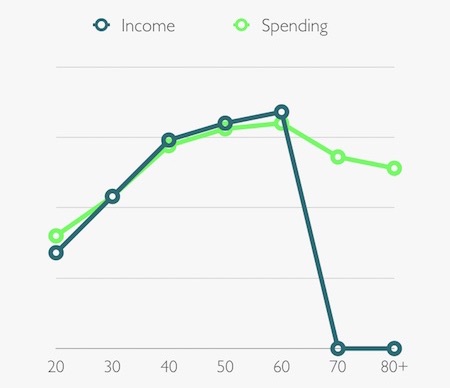
❌