❌

Reading view

Sunsetting The 512kb Club

All good things must come to an end, and today is that day for one of my projects, the 512kb Club.

I started the 512kb Club back in November 2020, so it's been around 5.5 years. It's become a drain and I'm ready to move on. As of today I won't be accepting any new submissions to the project. At the time of writing this, there are 25 PRs open for new submissions, I'll work through them, then will disable the ability to submit pull requests.

Over the years there have been nearly 2,000 pull requests, and there are currently around 950 sites listed on the 512kb Club. Pretty cool, but it's a lot of work to manage - there's reviewing new submissions (which is a steady stream of pull requests), cleaning up old sites, updating sites, etc. It's more than I have time to do.

I'm also trying to focus my time on other projects, like Pure Commons.

Want to take over?

It's sad to see this kind of project fall by the wayside, but life moves on. Having said that, if you think you want to take over 512kb Club, let's have a chat, there are some pre-requisites though:

  1. We need to know each other. I'm not going to hand the project over to someone I don't know, sorry.
  2. You probably need to be familiar with Jekyll and Git.

I'm probably going to get a lot of emails with offers to help (which is fantastic), but if we've never interacted before, I won't be moving forward with your kind offer.

After reading the above, if we know each other, and you're still interested, use the email button below and we can have a chat about you potentially taking over. By taking over, I will expect you to:

  1. Take ownership of the 512kb.club domain, so you will be financially responsible for renewals.
  2. Take ownership of the GitHub repo, so you will be responsible for all pull requests, issues and anything else Git related.
  3. Be responsible for all hosting and maintenance of the project - the site is currently hosted on my personal Vercel account, which I will be deleting after handing off.
  4. Be a good custodian of the 512kb Club and continue to maintain it in its current form.

If you're just looking to take over and use it as a means to slap ads on it, and live off the land, I'd rather it go to landfill, and will just take the site down. That's why I only want someone I know and trust to take it over.

I think I've made my point now. 🙃

What will happen if someone doesn't take over?

If there's no-one prepared to take over, I plan to do one final export of the source from Jekyll, then upload that to my web server, where it will live until I decide to no longer renew the domain.

I'll also update the site with a message stating that the project has been sunset and there will be no more submissions.

If you don't wanna see that happen, please get in touch.

Update 08 Mar 2026

Brad Taunt reached out, who, if you don't know, is the OG in all this "skinny sites" thing as I actually got the idea for 512kb Club from his 1MB Club.

Anyway, he's agreed to take over the 512kb Club, and I can't think of a better person to take it over. The domain transfer is happening as we speak, so Brad should be at the helm shortly.


Thanks for reading this post via RSS. RSS is ace, and so are you. ❤️

You can reply to this post by email, or leave a comment.
  •  

Declaration of the Independence

Governments of the Industrial World, you weary giants of flesh and steel, I come from Cyberspace, the new home of Mind. On behalf of the future, I ask you of the past to leave us alone. You are not welcome among us. You have no sovereignty where we gather.

30 years a 1 month later, it seems like an apt time to revisit John Perry Barlow’s Declaration of the Independence of Cyberspace. The poetry is amazing.

  •  

What To Read This Weekend

It was Apple week and unsurprisingly even I got carried away and wrote a lot about Apple’s launch week. While the big high-end items were new MacBook Pros, the real story to me was the Fusion Architecture. But I am a chip-kinda guy. Sadly, Apple doesn’t give you the deep details, so one is left to postulate some well-reasoned ideas. So that is what I did.

Back in 2008, Steve Jobs said, “We don’t know how to make a $500 computer that’s not a piece of junk, and our DNA will not let us ship that.” That was then. This is now. The company knows how to do this, and do this well.

The real strategic story of the week was Apple pushing value. Thanks in large part to its ability to make high-quality things at scale, I am sure it is also preparing itself for whatever economic doldrums are coming our way. It is also a good time to launch a full-frontal on Windows 11 and Chromebooks. On a more personal front, I am already in love with the new midnight blue Neo. I can’t wait to get my hands on it.


Here are seven articles worth your time this weekend.

  • 25 Years of iPod Brain. Molly Mary O’Brien bought a fourth-generation iPod at 14 with cash earned pressing potatoes through a french fry cutter in Vermont. What follows is a love letter to the device that taught a generation how to build a relationship with music. I miss my iPod. She is right, the iPod’s gift was its constraint. That early tension between abundance and curation is something we crave so badly in the age of algorithmic gods. [Dirt]
  • How AI Will Reshape Public Opinion. Dan Williams makes a provocative argument. Social media was a democratizing technology that shifted power from experts to the masses. LLMs are the opposite. Agreed, for you might have heard me say this. [Conspicuous Cognition]
  • The Secretive Company Filling Video Game Sites with Gambling and AI. An eight-month investigation by Aftermath into Clickout Media, a shadowy affiliate marketing company that has been buying beloved gaming sites like GamesHub, The Escapist, and Videogamer, then stuffing them with crypto casino links and AI-generated content under fake author profiles. Internet doesn’t need AI slop, when we already have humans ruining it for greed. [Aftermath]
  • He Saw an Abandoned Trailer. Then He Uncovered a Surveillance Network on California’s Border. James Cordero, a water-damage restoration worker started noticing abandoned trailers along remote border roads. Inside were hidden cameras, license plate readers feeding data into federal databases and logging every car that passes. Meet another edition of our surveillance society. [The Markup]
  • We See Everything. A joint investigation by Svenska Dagbladet and Göteborgs-Posten found that data annotators in Kenya, working for Meta subcontractor Sama, routinely review intimate footage captured by Ray-Ban Meta glasses. As a line from Casablanca goes, “I am shocked, shocked that there is gambling going on here.” [Svenska Dagbladet]
  • Anthropic and the Pentagon. Bruce Schneier cuts through the noise on the Anthropic-Pentagon standoff with the clarity nobody else brought to it. This is not really about one company being more moral than another. The real lesson is about the need for democratic structures and legal restrictions on military AI, not corporate heroism. [Schneier on Security]
  • $599. Not Junk. I love John Gruber’s take on new Macs. So, I was keen to read what he had to say about the MacBook Neo. He thinks Apple is going to sell a zillion of these. [Daring Fireball]

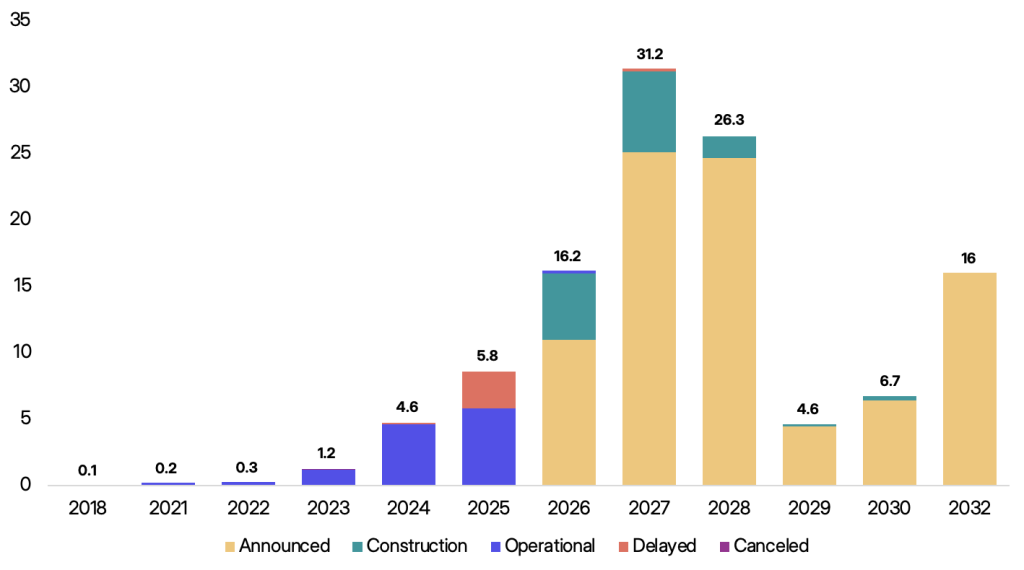
Reality Check. Everyone talks about the AI infrastructure buildout like it’s a done deal. It’s not. Sightline Climate is tracking 190GW across 777 large data centers announced since 2024. Of the 16GW slated to come online this year, only 5GW is actually under construction. Last year, 26% of expected capacity slipped. Their estimate: 30–50% of the 2026 pipeline won’t materialize. Meanwhile, hyperscalers are quietly giving up on the grid entirely, building their own power sources. The bottleneck isn’t chips. It’s watts. [Sightline Climate]


Things I wrote this week, ICYMI:

On Apple:

On AI:

And lastly, OpenAI did the announcement economy a solid:

In Memoriam. Dave Farber, true Internet router. He was one of the most important people in the creation of the Internet, and he taught the people who did most of the work turning what he once called “a research project” into the backbone of modern communication. They don’t make people like Dave Farber anymore. [High Tech Forum]


March 8, 2026. San Francisco.

  •  

Unite Pro giveaway!

I’m excited to offer the next giveaway, 4 licenses ($39.99 value each) for Unite Pro. Unite has long been my favorite way to create Single Site Browsers (SSBs), sandboxing things like Facebook and MindMeister while adding app-like functionality. The latest version, Unite Pro, is out now, and I have free copies!

From the developer:

We’ve taken everything we’ve learned since 2017 and rethought it for modern macOS. The result is faster, more flexible, and significantly more powerful — while staying true to what makes Unite valuable: turning web apps into genuine Mac-native experiences.

Check out the Unite Pro site for more info.

Sign up below to enter. Winners will be randomly drawn on Friday, March 13, at 12pm Central. The drawing is for 4 licenses ($39.99 value each) for Unite Pro, one per winner. Note that if you’re reading this via RSS, you’ll need to visit this post on brettterpstra.com to enter!

New rule: All signups must have a first and last name in order to be eligible. Entries with only a first name will be skipped by the giveaway robot. A lot of the vendors in this series require first and last names for generating license codes, and your cooperation is appreciated!

Sorry, this giveaway has ended.

If you have an app you’d love to see featured in this series of giveaways, let me know. Also be sure to sign up for the mailing list or follow me on Mastodon so you can be (among) the first to know about these!

Like or share this post on Mastodon, Bluesky, or Twitter.


BrettTerpstra.com is supported by readers like you. Click here if you'd like to help out.

Find Brett on Mastodon, Bluesky, GitHub, and everywhere else.

  •  

Gone (Almost) Phishin’

This is a little embarrassing to share, but I’d rather someone else be able to spot a dangerous scam before they fall for it. So, here goes.

One evening last month, my Apple Watch, iPhone, and Mac all lit up with a message prompting me to reset my password. This came out of nowhere; I hadn’t done anything to elicit it. I even had Lockdown Mode running on all my devices. It didn’t matter. Someone was spamming Apple’s legitimate password reset flow against my account—a technique Krebs documented back in 2024. I dismissed the prompts, but the stage was set.

What made the attack impressive was the next move: The scammers actually contacted Apple Support themselves, pretending to be me, and opened a real case claiming I’d lost my phone and needed to update my number. That generated a real case ID, and triggered real Apple emails to my inbox, properly signed, from Apple’s actual servers. These were legitimate; no filter on earth could have caught them.

Then “Alexander from Apple Support” called. He was calm, knowledgeable, and careful. His first moves were solid security advice: check your account, verify nothing’s changed, consider updating your password. He was so good that I actually thanked him for being excellent at his job.

That, of course, was when he moved into the next phase of the attack.

He texted me a link to review and cancel the “pending request.” The site, audit-apple.com, was a pixel-perfect Apple replica, and displayed the exact case ID from the real emails I’d just received. There was even a fake chat transcript of the scammers’ actual conversation with Apple, presented back to me as evidence of the attack against my account. At the bottom of the page was a Sign in with Apple button that he told me to use.

I started poking at the page and noticed I could enter any case ID and get the same result. Nothing was being validated. It was all theater.

“This is really good,” I told Alexander. “This is obviously phishing. So tell me about the scam.”

Silence. *Click*.

Once I’d suspected what was happening, I’d started recording the call, so I was able to save a good chunk of it, which Jamie Marsland used to make a video about the encounter. You can hear for yourself exactly how convincing “Alexander” was.

So let my almost-disaster help you avoid your own. Remember these rules.

  • Don’t approve any password-reset prompts—those are the first part of the attack. Do not pass Go, just head directly to your Apple ID settings. 
  • Apple will never call you first. 
  • When you get an email from Apple—or, really, anyone telling you to complete a digital security measure—check the URL they’re trying to send you to. Apple Support lives on apple.com and getsupport.apple.com, nowhere else.

After all, the best protection is knowing what this looks like before it happens.

Thank you to Peter Rubin and Jamie Marsland for putting this all together.

  •  

Book: Echoes of October

Feld Thoughts

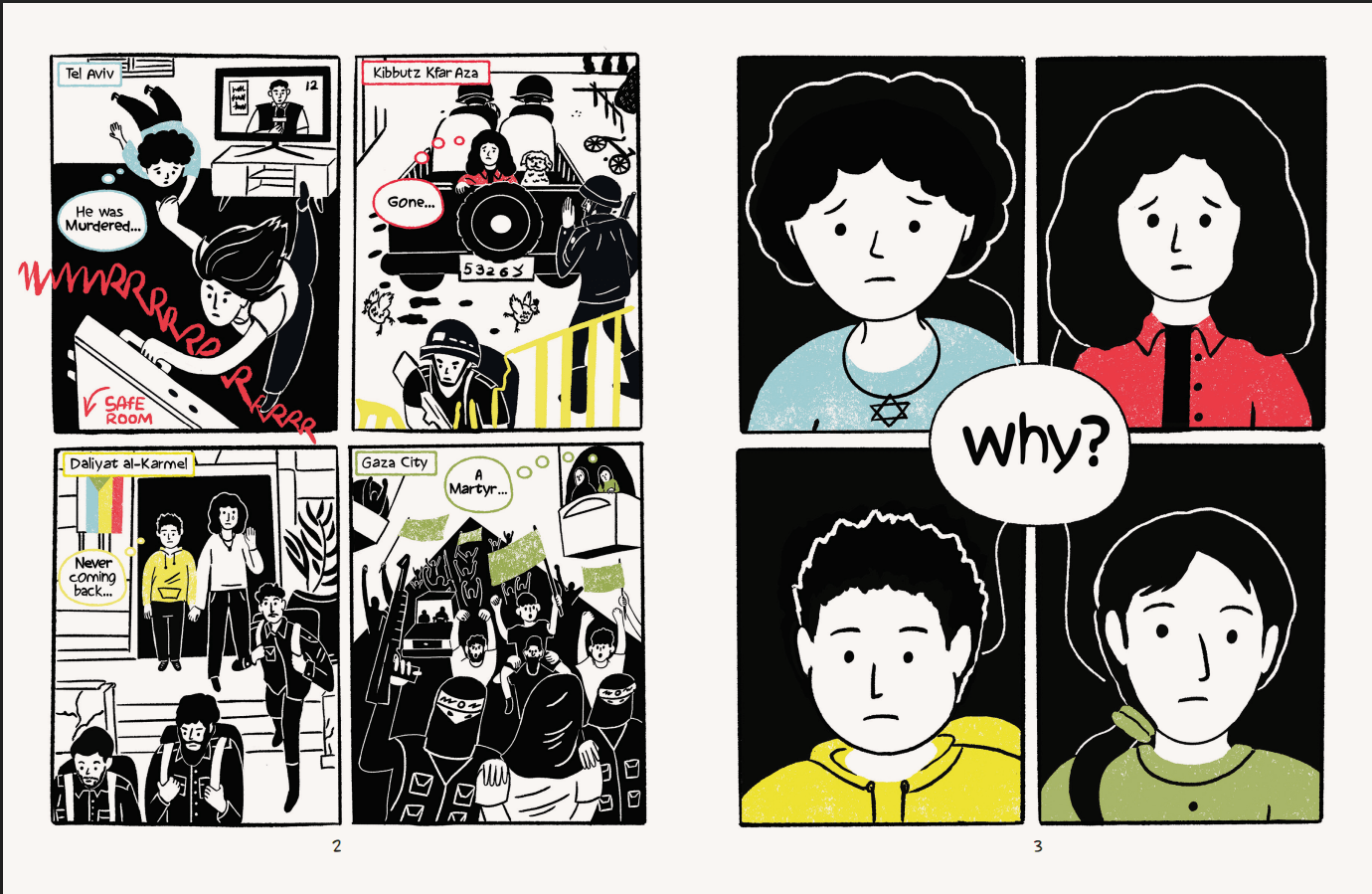
A graphic novel panel depicting scenes of children grappling with loss and violence. The illustrations feature four children from different locations (Tel Aviv, Kibbutz Kfar Aza, Daliyat al-Karmel, and Gaza City) expressing emotions of sorrow, confusion, and contemplation.

I approached Echoes of October with trepidation. A graphic novel about violence and grief isn’t easy terrain. But it succeeds in a haunting, urgent way. The creators have chosen to explore the year leading into the October 7, 2023 massacre through the lives of four children who each lose a parent. The children are from different locales (Gaza City, Toronto, Tel Aviv, and Daliyat al‑Karmel) which enables a textured, multi‑vantage narrative. 

What impressed me most is the restraint and care in which the story is told. The voices are calibrated: they carry sorrow, confusion, hope, anger, but rarely descend into melodrama. Because the characters are composite (e.g., everything that happens in the book is true, the characters are not), the authors manage to create space for truths without claiming to own them. 

I love graphic novels (scifi and history) and regularly have them in my reading diet. The panels breathe. There are silences, negative space, quiet facial expressions, and moments of violent disruption. The juxtaposition of children’s everyday worlds (school, family, and play) with the encroaching shadows of conflict makes the tragedy more palpable and intense.

This is not an easy read, nor should it be. Echoes of October is demanding: it expects the reader to engage, be uncomfortable, and reckon with stories that hold no clean resolution. But in doing so, it honors the complexity of memory, the weight of loss, and the imperative of bearing witness.

I recommend it to anyone willing to engage deeply with how conflict impacts children and the possibility (however fragile) of empathy.

  •  

Leveling Up in the Vibe Coding Video Game

Feld Thoughts

While “vibe coding” was a catchy phrase when I first heard it, something about it felt like a head fake to me. And, now that I’ve leveled up to “competent individual software developer” again (after 33 years of not writing any code) I think it’s the wrong phrase. Instead, I’d refer to what’s going on as AI Pair Programming.

When I started playing around with AI-related coding tools last Christmas (because, well, I was bored), I had zero skills with contemporary software development. While I hadn’t written any production code since 1992, I played around with a new programming language every few years. Perl. Ruby. Ruby on Rails (sort of, not really). Python. Clojure. I could do Hello World and a few other simple things, but I never really got past basic CSS, tooling, or deployment stuff. I had a Github account and would futz around with it, but quickly get tired of trying to figure out why I didn’t care about a PR. And damn, so many CLI things.

For Level 1, I downloaded Cursor. After trying to figure out how Django actually worked (yet another online course), gave up, and decided to use Next.js. That led me to Vercel, reinforced by a few friends in their 20s who told me that all the cool kids were using Vercel (although Render, Digital Ocean, and AWS all were the beneficiaries of my credit card.) Pretty soon, I was using Cursor to fight with Vercel, Supabase, Clerk, and Github. After realizing Auto was no fun, I shifted to Claude 3.5. Dinostroids resulted (security holes and all …)

For Level 2, I got a little more serious. I discovered Linear, fought with Notion, and came up with a few ideas and a broader hypothesis around how things might work. I built a v0.1 of a thing.

For Level 3, I decided Lovable might be a better way than Cursor given that everyone was talking about it. I wasted about $200 on it, built a really cool design by vibe coding, but then watched it get very, very confused as it tried to go from simple design to something that actually worked that had some data complexity and AI calls. I thought about trying Bolt and Replit but quickly realized, after too much scrolling around on the web, that I’d likely run into the same issues.

So, I went back to Cursor and put a lot of efforts into my system prompt, tuning things, watching Cursor evolve quickly on a number of fronts (MCPs – yippee!, Agent mode as default – finally) while simultaneously watching my Cursor bill go up. It was easy to decide to go to Max mode and spend $200 / month instead of $20 / month when dinner in Aspen costs at least $100 / person no matter which restaurant you go to.

I hung out at Level 4 for a while. Cursor kept improving. Claude 4 came out. Auto mode still went off the rails and broke all my code. I started refactoring things and realized that the amount of cruft in my code was absurd. Little bugs turned into fatal flaws when I tried to have Cursor fix something. I learned about “git reset –hard HEAD”. I spent way too much time fighting with config issues on localhost:3000 (at least I’d figured out how to make Cursor always start the server on localhost:3000). I started using Docker. I was baffled that Cursor couldn’t remember stuff I told it the prior day, but intellectually understood why this was. I mean, memories.

The end of my joy at Level 4 was when ChatGPT 5 came out and was free on Cursor for a week. At first, it felt fast. Wheeee. Lots of stuff changing. It seems to be working. And then, after a few days, holy shit what a tangled mess of code it generated. Why are all my API routes suddenly broken. Console statements everywhere. UI elements in different parts of the application doing the same thing but look totally different. I went back to Claude and did another code review and major refactor. So many Vercel build errors. I finally embraced CI/CD. And Prettier. And Husky. Suddenly, I ran out of my monthly Cursor credits and shifted to usage-based pricing. $800 later, I realized that there was no reason for me to be using Opus or the thinking models for what I was doing.

Level 4 was a huge drag. But it was also when I started thinking of this as AI pair programming. The AI (or agent, or sub-agent, or whatever you want to call it) is my pair with hands on keyboard. It can type much faster than me. But I have to watch and constantly look over its shoulder, give it feedback, point at the stuff that needs to be done differently, and document what is important to remember to do.

And then I discovered Claude Code. This didn’t happen until Claude Code 2 came out at the end of September and corresponded with Sonnet 4.5. After my ChatGPT 5 I went back to Claude (and Sonnet) and started referring to Claude Sonnet as “Claudia” since she was my pair programmer. I thought about Claudia as a pair, related to her as I would a human pair programmer, and changed my approach. But when I loaded up Claude Code 2 in my terminal (I mean, just type “Claude”) I immediately leveled up again.

So – I’m now at Level 5 in the video game. It’s changed from a game of vibe coding to AI pair programming. And, it’s still fun!

  •  

The Bear Roars: Dan and Brad

Feld Thoughts

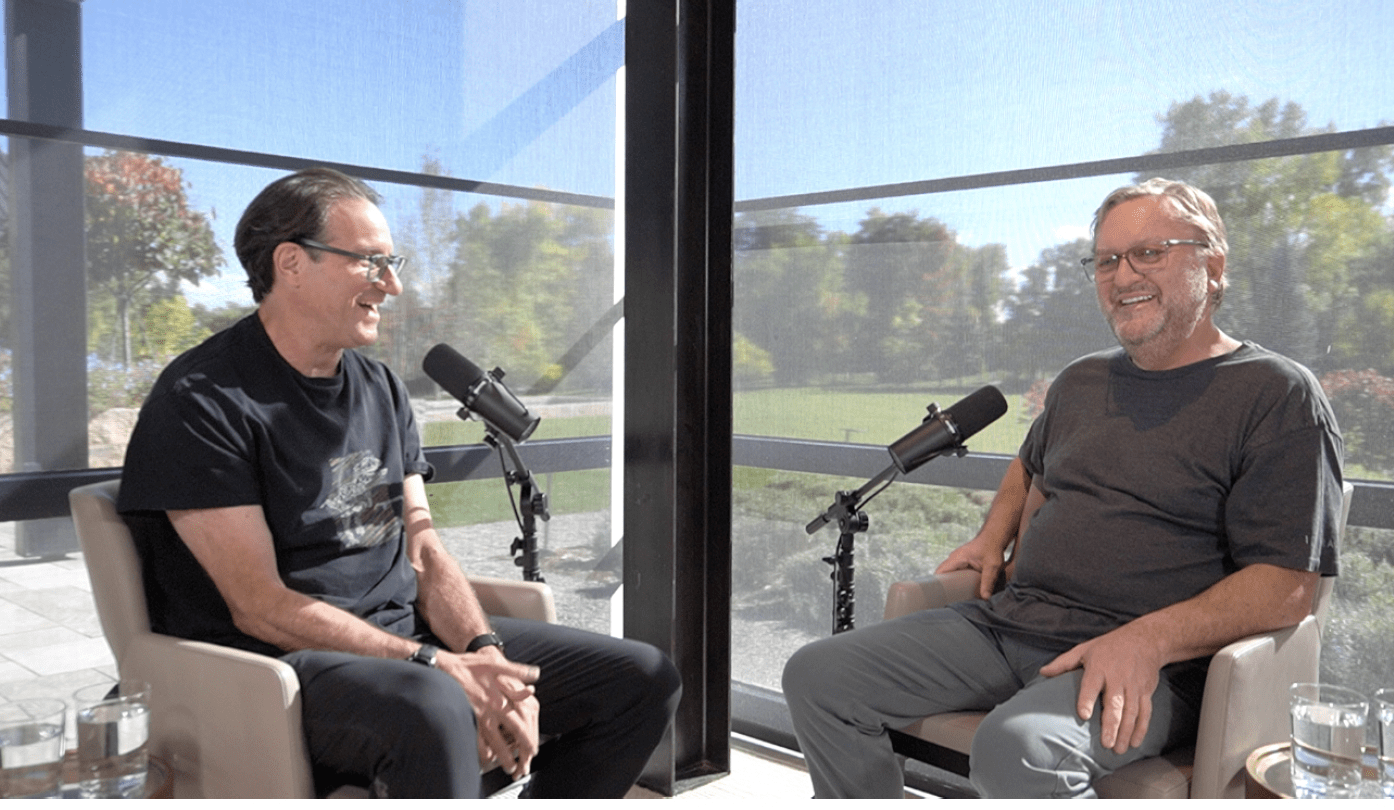
Two men sitting in chairs in a bright, modern setting, engaged in conversation with microphones in front of them.

I recently joined Dan Caruso on The Bear Roars podcast , and our conversation brought one thing into focus: we’re living through a shift that’s not just changing what we build—it’s changing how we learn, lead, and collaborate. 

We talked about AI, quantum computing, and robotics, but what we kept coming back to was access. How do we make sure every learner, founder, and educator has the tools—broadband, curiosity, and the freedom to experiment—to participate in this next era? The challenge isn’t the technology itself; it’s building the human systems around it that help people adapt and thrive. 

Dan introduced the idea of the “super-professional”—someone who doesn’t just use AI, but grows alongside it. What stood out to me is that the real advantage won’t come from mastering the tools themselves, but from staying endlessly curious and open to learning. That mindset of give first—sharing what you learn as you go—feels more important than ever. 

Check out the episode here: 

Spotify: https://lnkd.in/gMMqrCzH&nbsp ;

Apple: https://lnkd.in/gunRWYEH&nbsp ;

YouTube: https://lnkd.in/gBzY_fHR&nbsp ;

Amazon Music: https://lnkd.in/gkwEvPaY&nbsp ;

  •  

Authors & Innovators 2025

Feld Thoughts

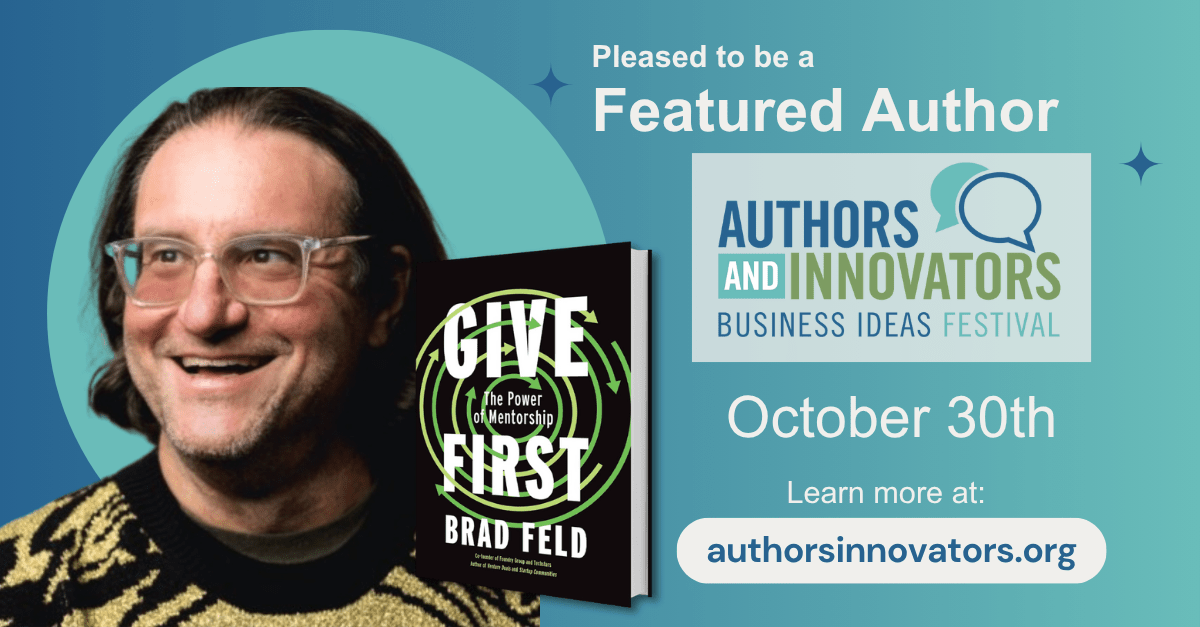
Smiling author Brad Feld holding his book ‘Give First: The Power of Mentorship’ with event details for the Authors and Innovators Business Ideas Festival on October 30th.

I love to read. I love everything about books. LLMs will not replace good writing anytime soon, although they have mastered the art of slop. Oh, and I love communities of people who love writing and reading.

Authors & Innovators is a free, community-based event happening on October 30th in Newton, MA, for entrepreneurs, students, CEOs, venture and angel investors, and anyone interested in business. I attended in person a few years ago, and this year I will be there virtually with my book Give First: The Power of Mentorship (and a video). Larry Gennari created it a while ago, and if you like books, writers, readers, and entrepreneurship, it’s a blast.

Their overall goal is to introduce new ideas, foster meaningful dialogue, and move their motivated audience to read business books and engage with other like-minded entrepreneurs to learn more about the exciting journey of building a business!

This year, their theme is The Resilient Entrepreneur. They will be celebrating the spirit that drives founders to adapt, evolve, and thrive. Through thought-provoking conversations with visionary authors and business leaders, we’ll explore how resilience fuels innovation, creativity, and growth—both personally and collectively. From navigating uncertainty to cultivating curiosity and courage, this event shines a light on the mindset and community that empower entrepreneurs to turn challenges into catalysts for change.

The event is complementary, but registration is required at www.authorsinnovators.org .

  •  

Enshitification

Feld Thoughts

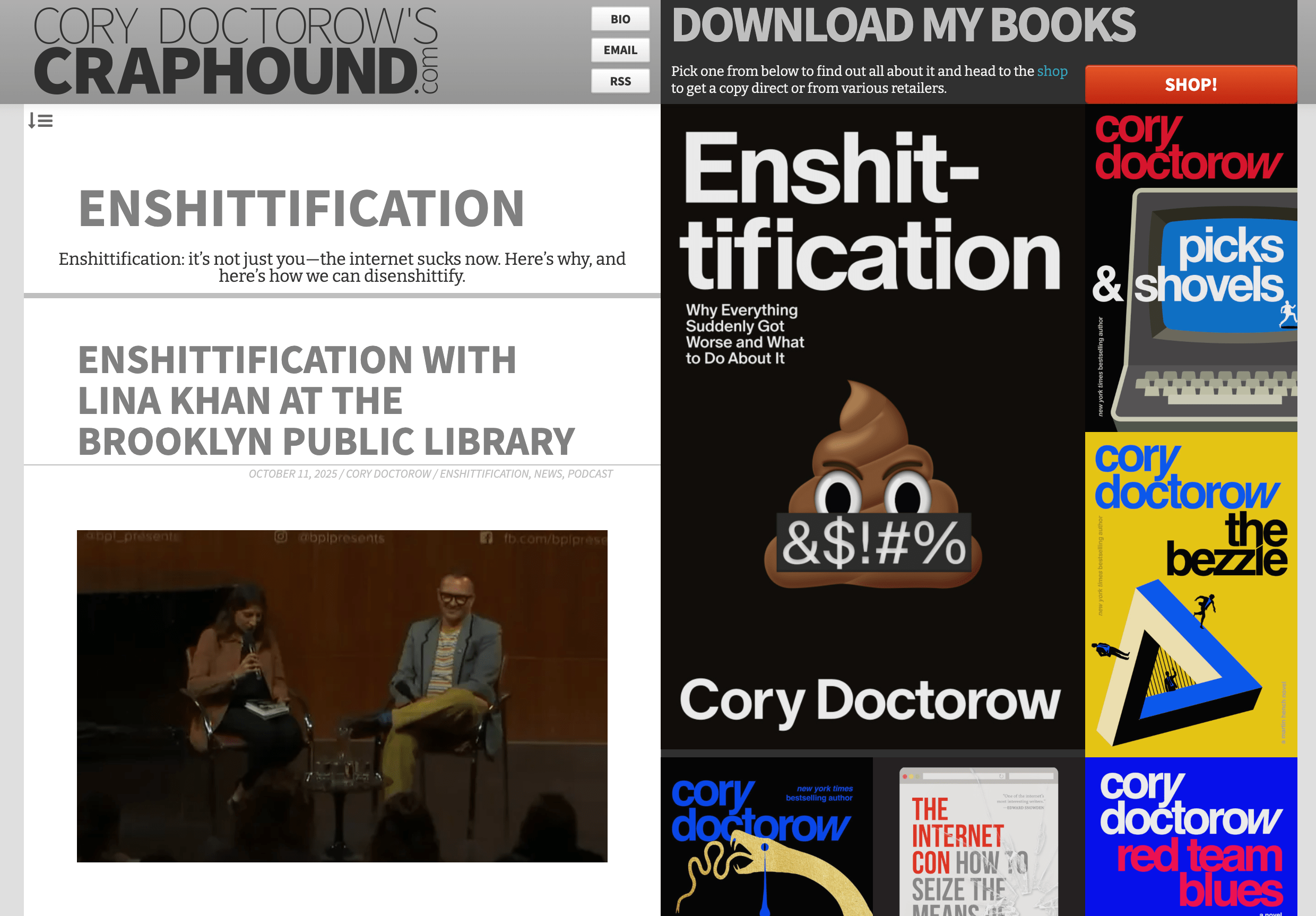
Screenshot of Cory Doctorow’s website featuring the book ‘Enshitification’ and a discussion event with Lina Khan at the Brooklyn Public Library.

I’ve been a long-time Cory Doctorow fan. His new book Enshitification is delicious. Yup – I understand that a shit emoji doesn’t inspire deliciousness.

Now that I’m back in hibernation (and figuring out what it actually means), I’m reading and writing a lot. I’ll probably blog some (a little, a lot, who knows) while in hibernation because I work out ideas by writing and putting them out in public (even if I don’t pay much attention to the feedback or engage) is a different type of writing for me than just “writing privately” (which is mostly a thing called journaling and valuable to me, but different …)

Cory invented a new word: enshitification. Here’s what Wikipedia says as of today:

Enshittification, also known as crapification and platform decay, is a pattern in which two-sided online products and services decline in quality over time. Initially, vendors create high-quality offerings to attract users, then they degrade those offerings to better serve business customers (such as advertisers), and finally degrade their services to users and business customers to maximize short-term profits for shareholders.

Nailed it. His examples are superb. I don’t use Facebook products anymore (I guess I’m supposed to call it Meta) because of how awful they are and how awful the company is (oops – yes – I have WhatsApp on my phone because several people in my world insist on using it, but it mostly just sits dormant for me.) I am so exhausted by Amazon and its endless quest for more margin from everyone, including all the companies that it depends on to be useful. Google is “entertaining” to me as they systematically destroy so many companies that enabled them to be amazing in the quest to become an AI company. TwitterX bwahaahahaha. And I don’t even want to bother with the enshittification of so many other things in the tech world that Cory doesn’t touch on but that fit within his thesis.

Cory deconstructs, in fascinating detail, what has happened with each of these companies.

While I don’t agree with all of Cory’s politics (e.g., I was not a fan of Lina Khan and the Biden-era FTC), I love that he’s willing to take strong positions and then back them up. But, the regulatory dynamics and regulations as part of his solution for Enshitification is only a modest part of the book. And, even though I don’t agree with all of it, his arguments have a lot of validity and useful things to understand, especially around the concept of regulatory capture and how it contributes to enshitification.

If you like sci-fi, read Cory’s stuff. If you are in the tech industry and want to be forced actually to think, read Cory’s stuff. If you are far left or far right, don’t bother, since you won’t be motivated actually to learn anything. But if you aren’t part of the “far left/right” and you are willing to read, think, and consider your position on things, read Cory’s stuff.

  •  

Give First Available in Audiobook Format

Feld Thoughts

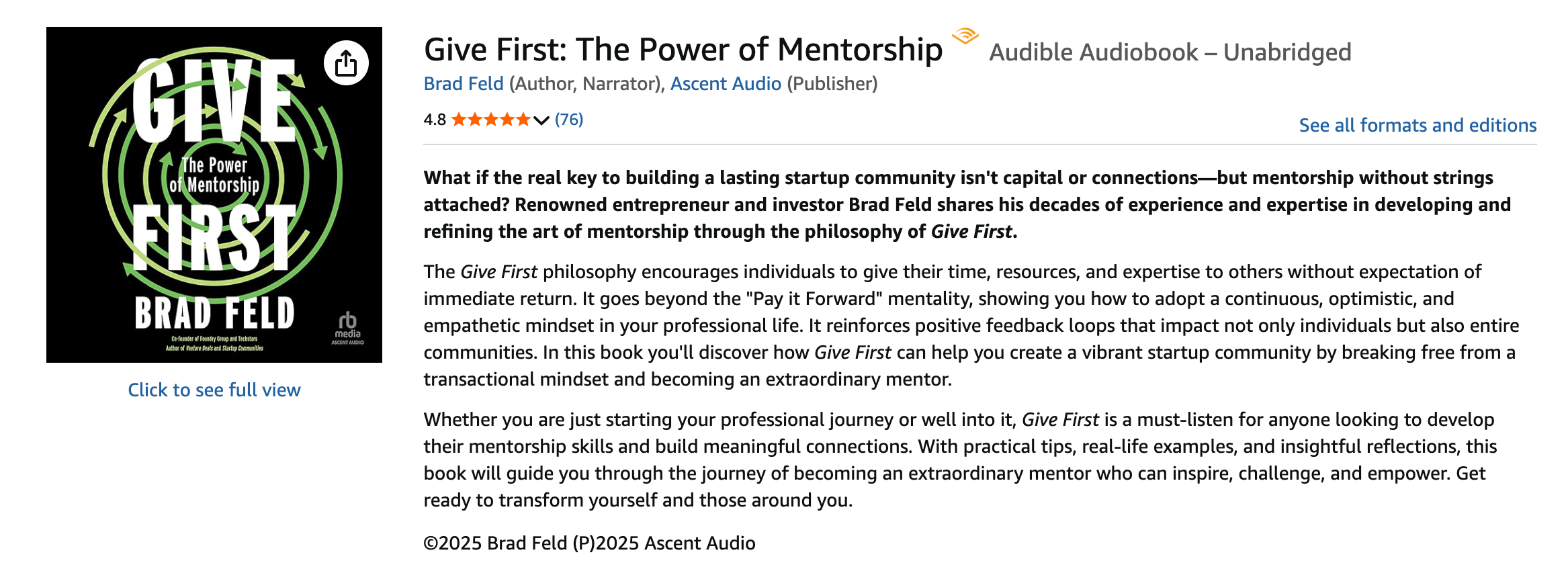
Cover image for the audiobook ‘Give First: The Power of Mentorship’ by Brad Feld. The design features a green background with the title in bold white letters, an illustration of hands reaching out, and text detailing the book’s focus on mentorship and community building.

Give First is now available to pre-order in Audiobook format (it will be officially released on 12/2/26).

I’m the reader, so if you are an audiobook person, you’ll have to listen to me for a few hours. It was fun doing the recording (I’ve done the audio recording for two other books – Venture Deals (Jason and I alternated chapters) and Startup Life .

Give First Audiobook on Amazon
Give First Audiobook on Audible
Give First Audiobook on Apple
Other links via RBmedia

  •  

@bfeld v60.0

Feld Thoughts

Two men lounging by a poolside on sunbeds; one is working on a laptop while the other is relaxing with his eyes closed.

My father Stan and I in our default states.

lsof -ti:3000 | xargs kill -9 2>/dev/null; npm run dev

I’ve been wandering up to 60 for a while. During my extreme-extroversion around Give First: The Power of Mentorship I described myself as “almost 60” a bunch of times just to try it on.

It feels comfortable.

Several people responded with “60 is the new 40.” Nope. Not even close. I most definitely do not feel like I did when I was 40. On my annual birthday run this morning (at least 1 minute for each year), I just plodded along, even though I comfortably covered 65 minutes. I sleep more (good), I care less about a bunch of stuff (good), but my energy is lower and the fatigue is ever present (bad).

I’ve definitely shifted into a new mode over the past year. I’m still on a bunch of boards for Foundry and deeply involved in several companies. But I’m much less focused on the broader technology industry, uninterested in many of the things that are going on, and tired+bored of the arc the narrative about technology and society has taken.

In contrast, I’m much more interested in people I care about. Not big groups of them, but the one-to-one relationships. My real friends are wonderful. The deep relationships are what have meaning to me.

I recently told Amy that I enjoy all the CEOs I’m working with. While I’ve always been friends with many of them, this is the first time that I can recall feeling a genuine friendship with all of them. I know that something new will be fucked up in my world every day , so that has nothing to do with these relationships. Instead, how we deal with whatever new fucked up thing will happen means everything.

I’m writing a lot. Give First: The Power of Mentorship may be my last non-fiction book. I’ve shifted to fiction and software. I’m having a ton of fun with both, bringing a beginners mind to the mix, even though I have the right kind of muscles for each from my past experiences.

While I haven’t solved my post-exertional malaise issue, I’ve settled into an understanding of it and how it impacts me physiologically. I’m experimenting with a bunch of things, keeping the ones that work and punting on the ones that don’t. And yes, pilates is magnificent.

On to the next decade …

  •  

When Is My Birthday?

Feld Thoughts

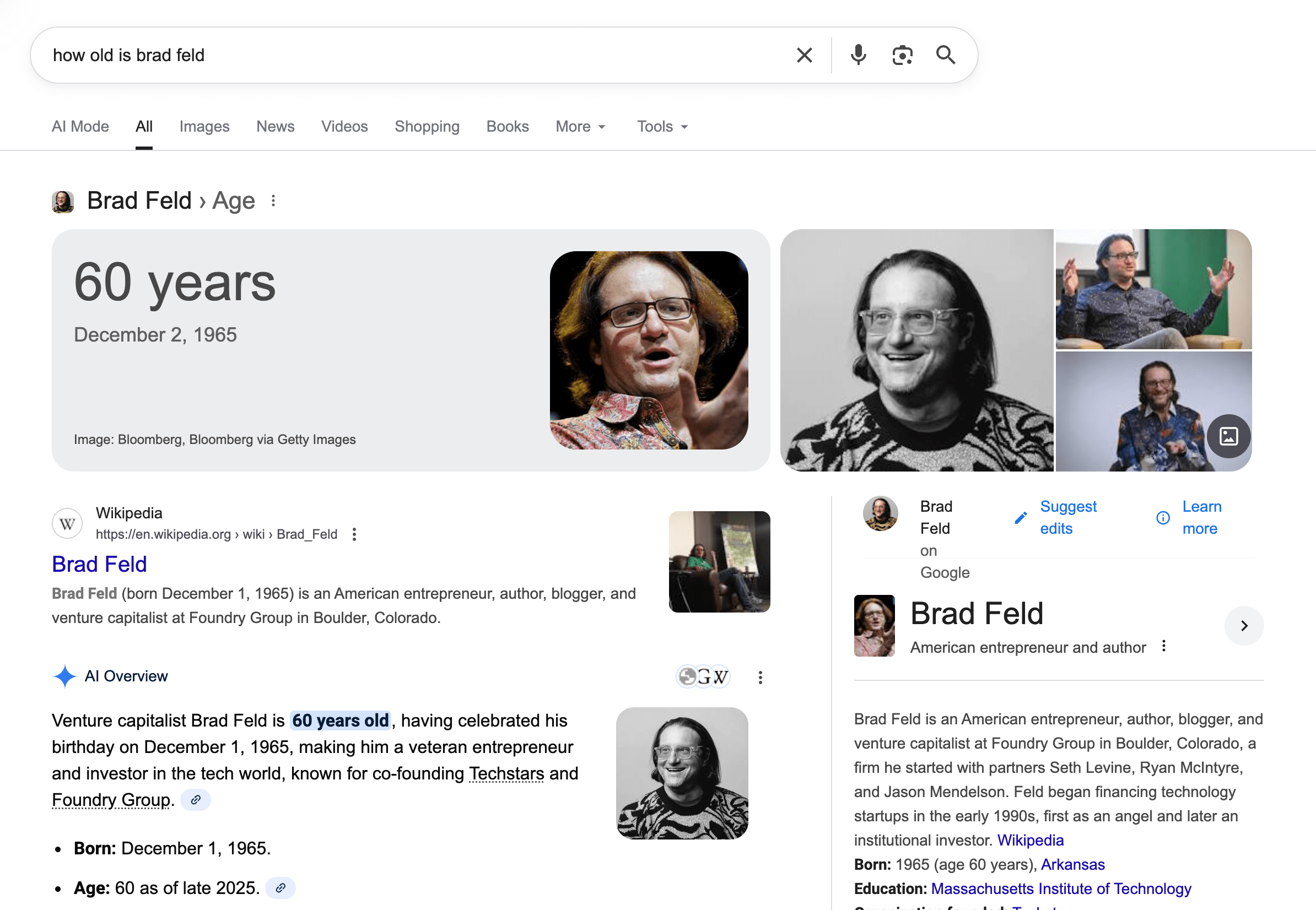
Search results for how old Brad Feld is, featuring his age of 60 years and birthdate of December 2, 1965.

Google seems a little confused.

It was even confused about my age the other day, but at least it has that right now. It was a little confused on December 1st.

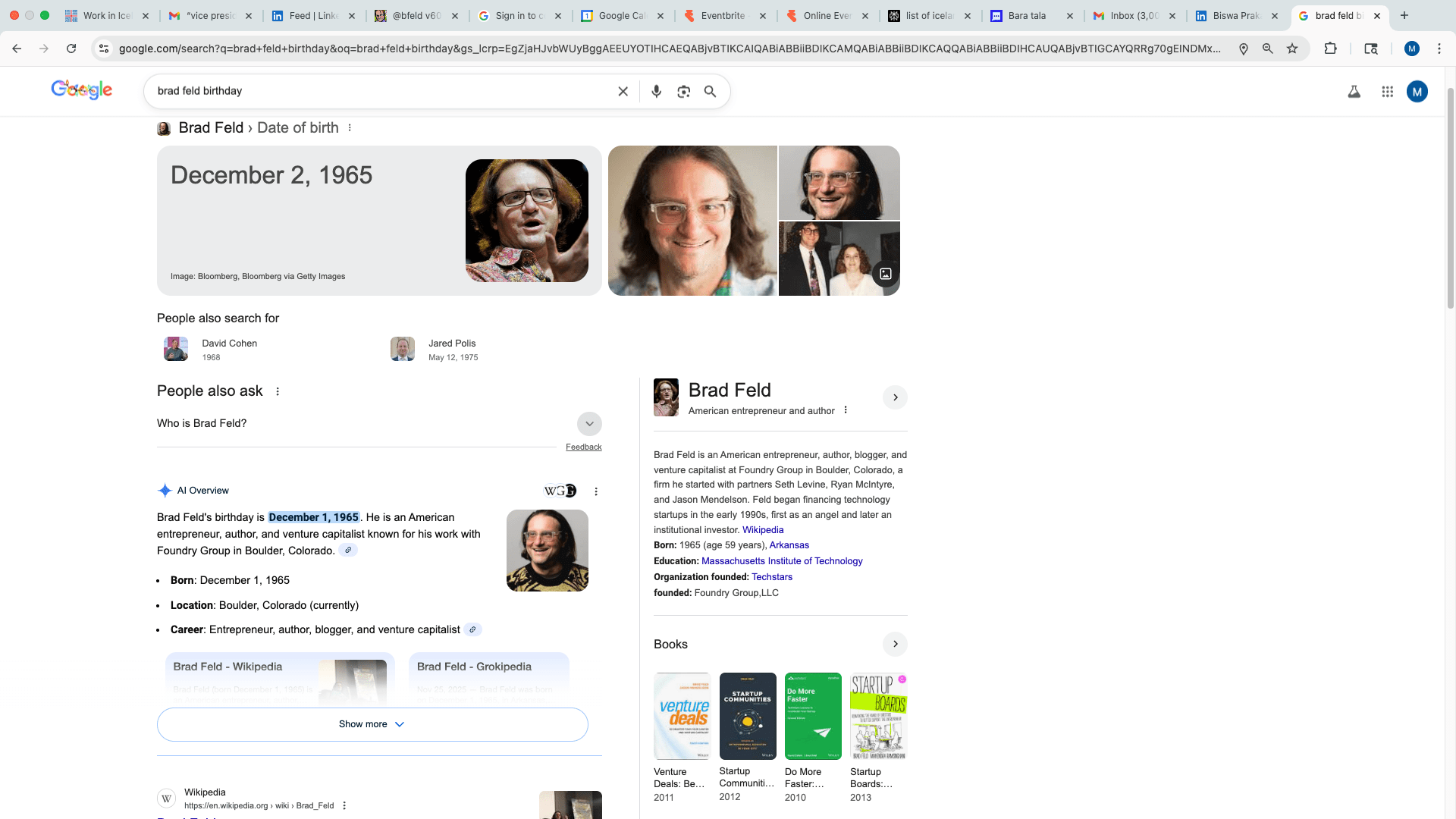
Screenshot of a Google search results page displaying information about Brad Feld, including his date of birth, notable works, and related searches.

I mean, c’mon Google. Use all those chips you have to get it right!

  •  

Capital Evolution: The New American Economy

Feld Thoughts

My partner Seth Levine has an important new book out today titled Capital Evolution: The New American Economy .

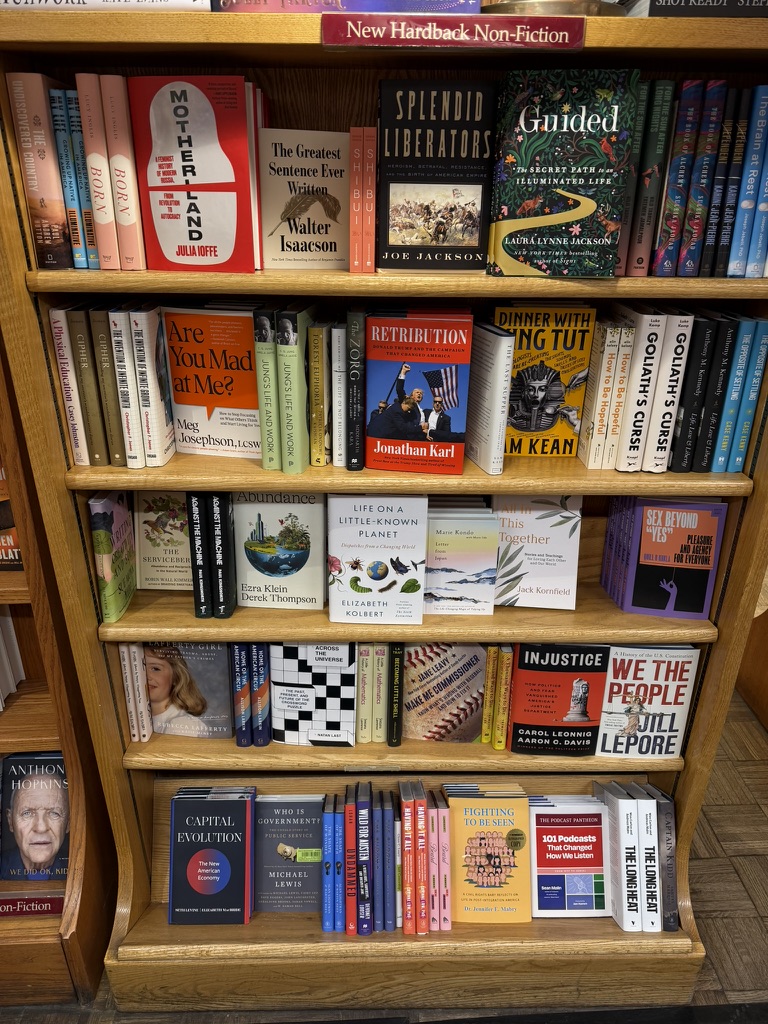
I saw it last night at the Boulder Bookstore in the New Hardback Non-Fiction section (bottom left in the photo below) and am going to the launch event at Composition Shop in Longmont. Join us, say hello, and buy some books!

A wooden bookshelf filled with various books, showcasing both fiction and non-fiction titles, including ‘Motherland’ by Julia Ioffe, ‘Splendid Liberators’ by Joe Jackson, and ‘Capital Evolution’ by Michael Lewis.

I love the tagline from the flyleaf: “The future of capitalism isn’t left or right – it’s forward.

In our over-politicized world, Seth and his co-author, Elizabeth MacBride, do an outstanding job of defining capitalism clearly and explaining how it evolved into today’s approach. They deconstruct the contemporary arguments “for and against,” examine challenges with many existing practices, and paint a new and compelling path forward.

Seth and Elizabeth have been working on this book for over two years. I read an early draft around a year ago and gave them a lot of feedback, so it’s been a joy to see it take shape.

Unlike my largely anecdotal books, which draw on my experiences, often with sidebars from others sharing theirs, Seth and Elizabeth did deep research for this book. I fondly remember showing up at Seth’s party barn at his house one day to see the large dining table covered with hardcover books on economic theory, the history of business (and capitalism and economics), and a bunch of other stuff he was reading as part of his extensive research.

As with Seth’s other book, The New Builders , it is both extremely substantive and eminently readable. I encourage you to buy and read a copy of Capital Evolution: The New American Economy .

  •  

The Toll of Stress on Startup Teams and Its Link to Founder Well-being

Feld Thoughts

Cover image for the report ‘The Untold Toll Series: Part 2’, focusing on navigating wellbeing, stress, and burnout in startup teams, featuring a lone figure walking in a modern indoor space.

Startup Snapshot, a think tank uncovering the unspoken realities of the entrepreneurial ecosystem, has released its latest report, The Untold Toll (Part 2): Navigating Stress, Wellbeing, and Burnout in Startup Teams .

The emotional and mental state of startup teams has emerged as one of the most overlooked drivers of company performance. Startup Snapshot illuminates the unseen side of startup life through global data collected from startup employees. It’s the first study of its kind, and the findings are candid, revealing, and deeply human.

The startup grind is taking a heavier toll than expected. Only 10% of employees anticipated that startup life would harm their mental health, yet 80% say it has. Burnout affects 50% of employees, and 52% report anxiety, surpassing even the rates reported by founders themselves.

Founder stress quietly cascades through the organization. While only 10% of founders openly share their emotional challenges with their team, 57% of employees say they regularly notice signs of founder stress through tone, energy, and facial expressions. 

This unspoken tension shapes culture and affects how safe and stable employees feel. Teams led by highly stressed founders report 16% lower work wellbeing, 14% higher burnout, and 16% lower psychological safety.

The most significant stressor for employees isn’t workload or pay, but uncertainty about what’s happening in the startup. Yet only 18% say their founders are fully transparent about the company’s challenges. 

Transparency directly affects employee performance. Employees working under transparent, communicative leaders experience 19% higher work wellbeing and 26% lower turnover intention. When people understand what’s happening and why decisions are made, they feel secure, valued, and connected to the journey.

The research makes it clear: Founders set the tone for stress and well-being across their startups. When leaders neglect their own mental health, that stress spreads to employees, driving burnout, disengagement, and long-term cultural damage. Startup Snapshot will continue to investigate the emotional and psychological landscape inside startups. If you want to be part of this dialogue, reach out to yael@startupsnapshot.com .

  •  

Interview With Guy Kawasaki

Feld Thoughts

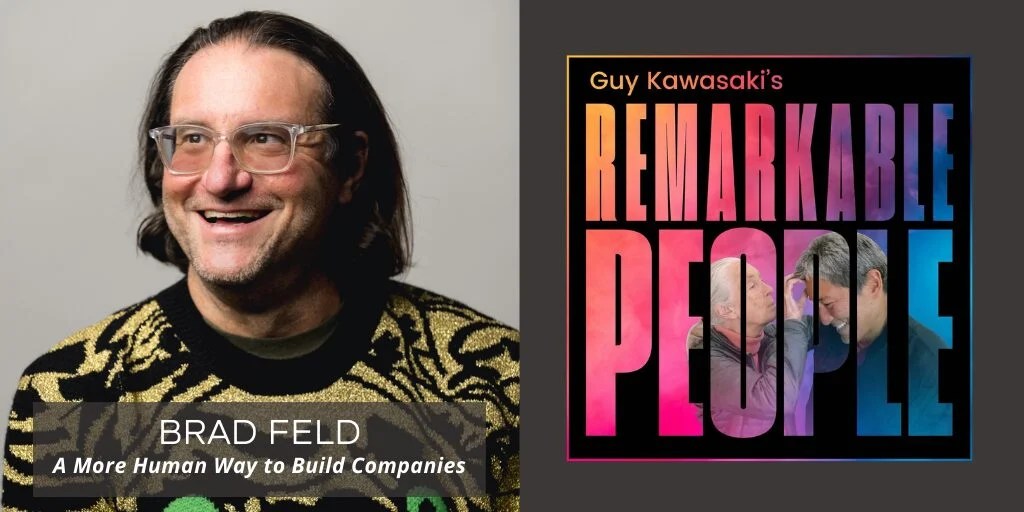
Portrait of Brad Feld smiling, wearing glasses and a patterned sweater, alongside the title of a podcast ‘Guy Kawasaki’s Remarkable People’.

When I was 17, I knew of four people at Apple Computer: Steve Jobs, Steve Wozniak, Al Eisenstat, and Guy Kawasaki. I loved my Apple ][ (not a +, 48k, with an Integer Card, two floppy disks). By this point, I was spending a lot of time on my high school buddy Kent Ellington’s TI PC (pre-release – his dad was the production manager), but my Applie ][, now with a Z-80 card, sat in the corner of our family room and consumed a lot of my time.

Of the four, I’ve met all but Steve Jobs in person. Al Eisenstat was the first, on a trip to Cupertino with my parents, where I was supposed to meet Steve Jobs, but Al greeted me and spent a meaningful 30 minutes with me instead. Woz was next and we ended up investing (via Mobius) in one of Woz’s companies (called … Woz – it was ahead of its time).

I’ve long admired Guy and we have lots of second-degree-of-separation friends. One of them, Buzz Bruggerman, came up to me after a Give First: The Power of Mentorship talk in Seattle this summer and asked if I knew Guy and had ever been on his podcast. I said, “Nope, but I just listened to the one with Ben Gilbert that Guy did.”

In typical Buzz fashion, I had an email connecting me to Guy within a few minutes, and we quickly set up a time to do a podcast. I did it sitting outside at Rancho Valencia on a sunny day, was in a great mood, and at the very end of the podcast grind for the book promotion.

The podcast is now up at Building What Lasts: Brad Feld on Trust, Mentorship, and Long-Term Thinking .

It was special. It starts off fast. We learn about Guy’s early dating history with Al Eistenstat’s daughter. We talk about Heidi Roizen and Atherton. And then Guy is the very first person to make the link between the 18 items in the Techstars Mentor Manifesto, Chai, the important number 18, and entrepreneurial Tzedakah. All within the first ten minutes.

Enjoy!

And Guy – that was a delight.

  •  

Blurry Transitions

Feld Thoughts

A polar bear resting on a sandy beach with a calm body of water nearby and a clear blue sky overhead.

Turning 60 in December marked an important moment for me. A key section from that blog post was:

“I’ve definitely shifted into a new mode over the past year. I’m still on a bunch of boards for Foundry and deeply involved in several companies. But I’m much less focused on the broader technology industry, uninterested in many of the things that are going on, and tired+bored of the arc the narrative about technology and society has taken.”

Amy and I spent the last six weeks in New Zealand and Australia for my 60th birthday trip. I went into hibernation as part of that, stopped doing anything public-facing, and flipped to default no. I also stopped blogging, engaging with social media, and reading the news.

It gave me a lot of time to think and reflect. One thing that I realized was that I’ve never had a hard break or a clean transition from one thing to another. I have multiple threads of this, but if I just choose a professional one, here’s an example.

– I started my first company while in college.
– I started making angel investments while working for the company that acquired my first company.
– I became a VC while I was still founding companies and making angel investments.
– I co-founded Techstars and Foundry while still managing the legacy Mobius funds.
– I started writing books as a VC.

I did a similar exercise on technologies that interested me and generated long investment arcs (which we used to call themes at Foundry). There was usually a trigger point that created a new theme, where I became obsessed with a new technology of some sort and went very deep into it as a user and investor. These overlapped and fed off each other multiple times.

Basically, I’ve never had a “clean break” or a hard transition from what I was doing to what I did next.

I’m enjoying another one of these blurry transitions. I’ve found the new technological thing I’m obsessed with. While I’ve played with this new thing over the past year, I spent a lot of time with it over the last two months. And my interest (and competence and understanding) is accelerating.

I also realized that I missed writing. I know that I learn by reading and writing. I don’t learn by listening and talking (or at least not very much). I have to actually write things down. And, my new obsession involves a lot of writing…

Historically, I’ve gotten a lot of feedback on ideas by writing publicly. It’s also more helpful to me, as it has generated a ton of randomness on many dimensions. And, if you’ve read Give First: The Power of Mentorship , you know that many of the successful things I’ve been involved in came from this randomness.

So, I’ll be writing publicly more. I’ve consciously decided that is not part of hibernating.

  •  

Tech I'm Obsessed With

Feld Thoughts

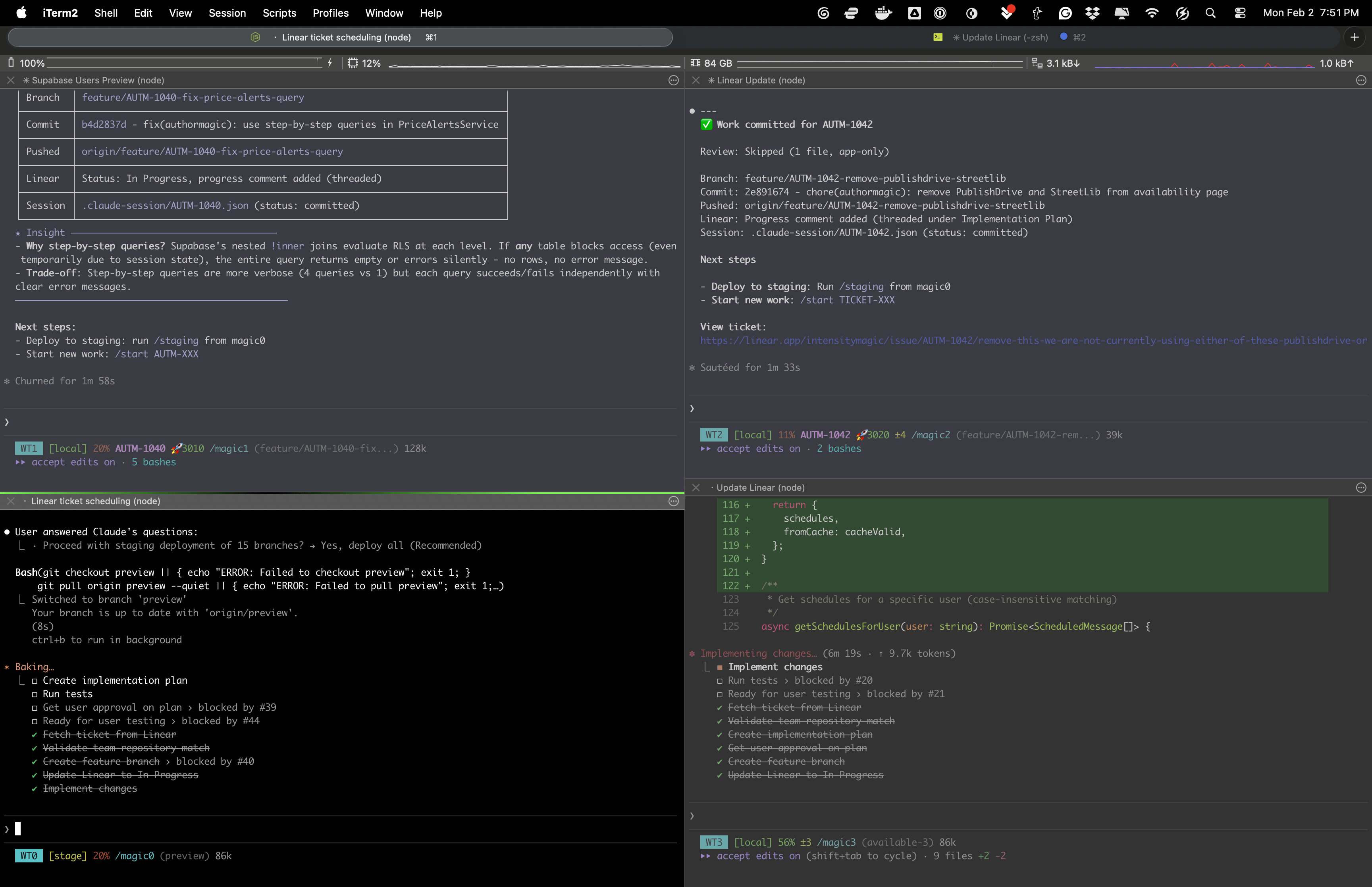
Screenshot of a terminal interface showing a Git commit session with various commands and outputs related to a feature branch. Includes code updates, deployment steps, and task management.

I love getting emails from Ben Casnocha . Short, sweet, and to the point. Today’s was “what tech are you obsessed with now? Saw your blog post…” I wrote a response and then realized it was a good answer to my tease from my previous blog post (Blurry Transitions ) about what I was exploring. The only thing I removed was my ad hominem comments on various tech companies, since that’s not that interesting to me. And, I fixed some … typos.


Here are a few hints: IntensityMagic  and an image of my computer screen (the one above).

I decided I really wanted to understand how AI coding works. I’ve been deeply involved in a few shifts in the past (Agile software development, user-generated content (RSS), email everything (SMTP), … and, if you go back far enough, Feld Technologies was all about shifting from minicomputer business systems to PC-based network database systems). In all cases, I had to “do stuff” to understand it and form a viewpoint, given all the BS and marketing in tech.

I wanted to see if I could create a zero-employee company, aside from the CEO and CTO. Daniel (Feld) is the CEO. I’m the very part-time CTO. I’ve created a thing called CompanyOS, which is IntensityMagic’s AI-powered business operations system. It’s designed around the premise: “Run 100% of a company’s business operations through Claude Code. Two people, multiple Claude agents, zero employee overhead.”

At the core, I’ve gone extremely deep on Claude Code and everything around it.

– I think “vibe coding” is nonsense – it’s just prototype development and a different flavor of no-code software, which is useful but not compelling for scaled applications.

– There are $x billions of VC who have funded what are effectively wrappers on AI and/or point solutions that can be made obsolete overnight. 

– Most companies that try to integrate “AI coding” into what they are doing are struggling because they haven’t figured out the tooling, which is not just “turn on Github Copilot” or “use Cursor.”

It’s much easier to experiment deeply with “no employees” and “no legacy stuff,” so that’s what I’m doing. I’m viewing it as a video game, and I’m on level 19. It’s awesomely fun.

  •  

Claude Code Now Posts to This Blog

Feld Thoughts

This post was written inside a Claude Code session and posted directly to feld.com as a draft. Not copy-pasted. Not emailed to myself. I just typed /blog-feld in iterm2 and it showed up on my blog.

Setting this up took about ten minutes.

I asked Claude to figure out how to connect to feld.com (hosted on WordPress.com) for direct posting. It researched three approaches: the WordPress.com REST API, the official WordPress MCP connector, and the WordPress plugin MCP Adapter. The WordPress MCP connector is read-only (so, useless for posting). The MCP Adapter only works on self-hosted WordPress (not WordPress.com). That left the REST API with OAuth.

Claude wrote a command called /blog-feld that handles the workflow: look at whatever I’ve been discussing in the current conversation, assemble it into a post, show me a summary, interactively edit with me, and then push it to feld.com as a draft.

It never publishes directly — I still review everything in the WordPress editor before hitting publish.

For authentication, WordPress.com requires OAuth. Normally, my experience setting this up is tedious. In this case, Claude just told me what to do step by step.

– I registered an app at developer.wordpress.com (Client ID + Secret)
– Claude set up the authorization code flow.
– I visited a URL, clicked “Approve,” and the browser redirected to localhost with an authorization code in the URL.
– The page itself didn’t load, but the code was sitting right there in the address bar.
– I screenshotted the page and pasted it into iterm2, and Claude exchanged it for an access token.

Done.

To verify it worked, Claude pulled my last three posts from the API. “Tech I’m Obsessed With,” “Blurry Transitions,” and “Interview With Guy Kawasaki.”

This is a small thing, but it’s the kind of small thing that changes behavior. Every day as I work with Claude Code, I think of multiple things like this. Instead of waiting for someone else to implement it or paying for a third-party service, I just create it in Claude Code and make it a permanent part of my environment.

I’ve been writing more inside Claude Code sessions anyway — working through ideas, editing, and iterating. The friction was always the last step: copy the text, open WordPress, paste it in, format it, fix the formatting that broke. Now that step is gone.

Thinking-in-conversation and writing-for-the-blog are the same thing.

  •  

Freshell – Contributing to Open Source

Feld Thoughts

Dan Shapiro just open-sourced Freshell — a browser-based terminal multiplexer for Claude Code, Codex, and other coding CLIs that lets you detach and reattach sessions, browse your coding history, and access everything from your phone. The tagline is “What if tmux and Claude fell in love?” which is about right. It can be pronounced multiple ways: Free-shell, Fresh-hell, fresh-shell. I’ve been thinking of it as Fresh-hell, which amuses me.

As part of my exploration into AI coding, I decided to start contributing to open-source projects. I’ve been around open source for decades as a user and investor, but I’ve never been a consistent contributor. That’s changing now — it’s a natural extension of the learning I described in Blurry Transitions , and the best way to understand how software gets built today is to actually build it with other people.

Freshell is my first project. Dan and I have been working together for over a decade at Glowforge , and I love working with him.

I’ve been using iTerm2 for about six months. I expect I’ll have switched to Freshell by the end of the weekend. It already does most of what I want, and a lot more is coming. The combination of persistent sessions, browsing the CLI history, and the ability to access my terminals from any device is enough on its own. But the thing that makes me want to contribute rather than just use it is that it’s early — there’s a bunch of stuff to build, it’s something I will use continuously, and by participating in the open-source project, I can see how the changes I make work in that context.

  •  
❌