❌

Reading view

Citi Bike: Far From Home

In 2015, Jeffrey Tanenhaus rented a Citi Bike in New York City. This was often his commute of choice — in fact, he had grown to love the freedom and control he felt navigating the ever-changing obstacle course between his home and work — but he had different plans for this ride. The bike would go where no Citi Bike had gone before. Suddenly out of work and feeling the urge to find a fresh start, Jeffrey decided to try something unexpected: he would ride a Citi Bike from coast to coast. Was it possible? Would the police be after him for stealing a hefty blue bike? Was he out of his mind?

The trip was not guaranteed to go well. Citi Bikes are notoriously heavy, designed for the abuses of city life, but not for hills. Jeffrey had essentially no experience with bicycle maintenance, was relying on free places to sleep through friends and volunteer hosts found on the Warmshowers.org network, and — perhaps most importantly — he had never attempted anything like this before.

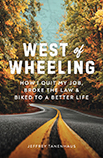
His new book, West of Wheeling: How I Quit My Job, Broke the Law & Biked to a Better Life, tells the story of his journey, the people he met along the way, and how an unlikely bicycle that came to be known as “Countri Bike” helped him chart a course for the next phase of his life. I spoke to Jeffrey from his new home in Tulsa, Oklahoma, a place he fell in love with on his cross-country ride, and where he is starting a local tour business.


Some of your happiest moments of the ride were on the long rail-to-trail projects that have been popping up around the country. I’ve never considered them as anything more than a local feature, but it sounds like they proved to be a real advantage to you on your trip.

These rail-to-trails are essentially old railways that have been torn up — and railroads do not do well uphill. If there is a hill, it’s a very slight grade, you know, 1% maybe, so following a former rail bed basically guarantees a flat ride. In the cases where there is a hill — in my book I mentioned a 23.5 mile hill in Pennsylvania — and that sounds insane, but when it’s at 1%, even on a Citi Bike, it was no sweat because it was very gradual.

Since I’ve finished writing, even more rail-to-trails have opened. They opened up one [the Empire Trail] across New York state, where you can go from Buffalo down to New York City, and then up from New York City to around Plattsburgh. Then that’s connecting into something called the East Coast Greenway, which is supposed to go from Maine to Key West mostly along trails or at least bicycle friendly roads. I think you’re going to hear more about these rail-to-trails or greenways as cycling becomes more popular. If there’s any kind of silver lining to the pandemic it was that it got people on bicycles more just to be outside or at least away from crowded public transport.
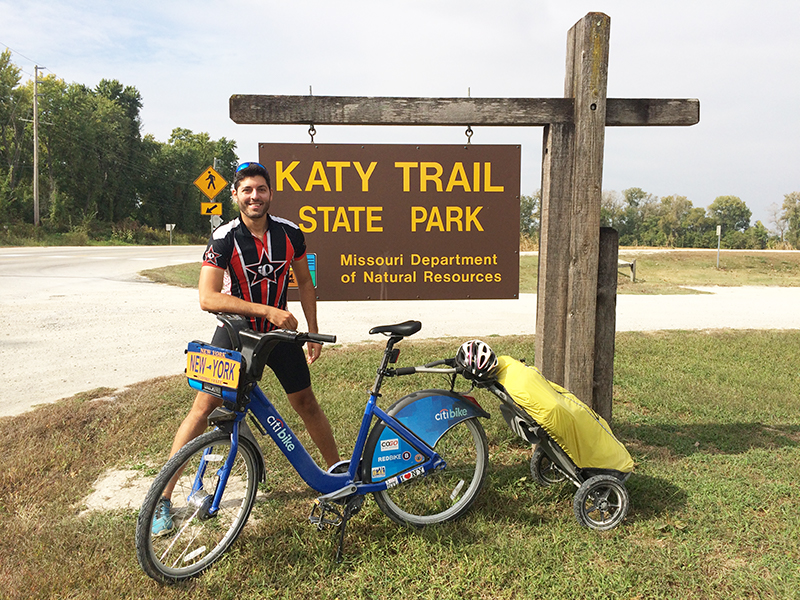
Jeffrey Tanenhaus on the Katy Trail, a 237-mile rail-to-trail project gives cyclists a smooth ride across most of Missouri.

You said in the book that every detour you take is a big choice when you’re on a bike, because that’s all extra effort. But on the other hand, you’re often writing about places that cars don’t go. You saw a side of the US that you wouldn’t have experienced in a car.

There’s back roads and then there’s like really back roads, right? Back roads where cars can’t go because they’re a rail-to-trail or a greenway. The railroads connected all of these little towns where the road through the town was the railroad. So you pass through small towns often that suburbanization has skipped. On a bicycle you can’t be doing 60 miles an hour. You’re going to need to stop in this next little town to see if it has a vending machine, or you hit up the local diner for a chocolate shake. And I was very partial to my chocolate shakes.

You were also partial to beer. Beer comes up a lot in the book. I’m assuming you’re a beer fan, but it seems like there’s a lot of cases where bike culture and beer culture converge in the same place and in the same people. Is there a reason for that? 

That’s a great observation. Yes, I am a fan of craft beer, not because I’m snobby, but because I think it tastes better than the mass-produced beers. Although I did hit up the Anheuser-Busch factory in St. Louis and it does taste better from the source, so I’ll give them that. But yeah, I did try to stop at as many breweries as possible just because these craft breweries have interesting people that are hanging out there and they are often bicycle-friendly. Beer brings people together. Food brings people together. A brewery is a great social spot for gathering, and a hyper-local spot as well. 

Bicycling also brings people together. It’s a social activity. But it can also be solitary, and I enjoyed the solitary aspect of it as I was trying to get through a pre-midlife crisis and figure out what I wanted to do and where I wanted to do it.

You said that you think of yourself as a bit of an introvert. Did having the bike, having your story, did that help you connect with people that you may not have been able to?

The bike was my icebreaker. The bike looked unusual, so people had questions about it. And then I had a souvenir New York license plate attached to it. So even if they didn’t quite know what the bike was, and maybe were too intimidated to ask, because maybe they were introverts themselves, everybody knew where New York was and the farther west I got, the farther away New York was. It almost became easier to approach me and ask, “Did you really ride that from New York?”

I was almost a little bit worried about advertising the fact that I was from New York. You know, riding through places, rural areas that may associate New York with different values from their “Heartland” values, and that NY license plate may have been an unwelcome sight. But in fact it was not, and it inspired a lot of questions, curiosity, and that created a conversation.
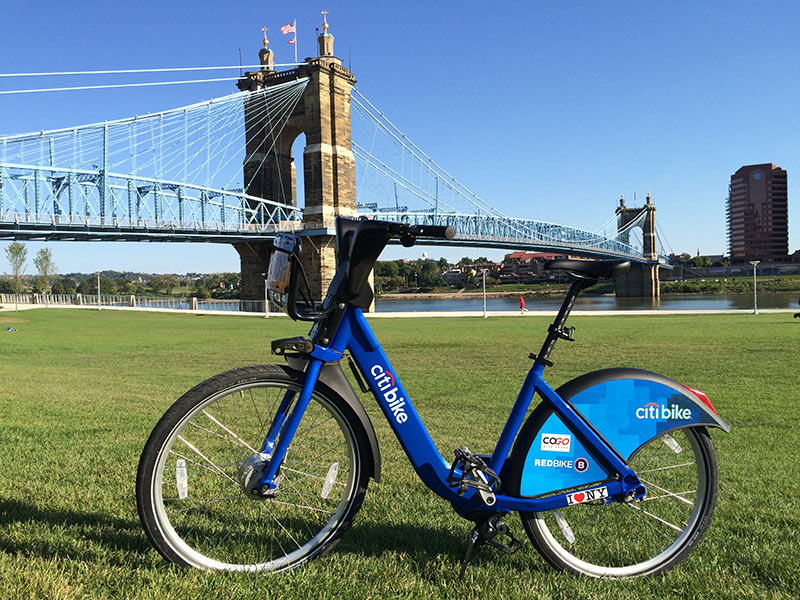
Almost like home. Cincinnati’s Roebling Bridge.

The way you described the cities you visited, it seemed like you were almost shopping for a new place to live. Was that explicitly on your mind?

It was very much on my mind. I didn’t know if it was on my mind on day one, but as I began making progress, I realized that I was auditioning these cities. Could I see myself living in DC? I had spent time there on a government internship in college, but I hadn’t been there in 16 years It’s a pretty cool city. It’s got a very low skyline compared to New York, and I got a good vibe. 

Then I ended up in Pittsburgh and liked that even better. It had a grittier spirit that I kind of liked compared to the DC political scene. Maybe Pittsburgh was where I needed to be? Lots of entrepreneurs, it’s a tech-friendly city and also very bicycle progressive. I arrived right on time for a big bicycle event and ended up getting connected with a woman who had started her own bike touring company. I wrote about her story quite a bit in the book, and she became a lifelong friend. So yeah, I was like, “Hey, Pittsburgh is pretty great.”

Then Cincinnati was the next big city and I already had cousins there, but had never visited. When you’re from New York, why would you ever go visit Cincinnati? You should just come visit me because New York is the end-all be-all. But I went on some group rides there and, hey, there’s these cool breweries in this place? It has all this old, historic residential and commercial architecture. These buildings are just crumbling, and they have these adopt-a-building programs. I am really interested in placemaking to make an impact for the community. How cool would that be to fix something up and create a B&B or a brewery or something?

Then there was Louisville, St. Louis, Tulsa, Oklahoma City, Albuquerque, Santa Fe, Flagstaff and Los Angeles. I was hanging out in these places, meeting other bike-friendly, like-minded people and seeing the city through their eyes. 

It sounds like you mostly had really great interpersonal experiences across the country, with other bicyclists, Warmshowers hosts, and people in local businesses wherever you went. Did it leave you with any sort of big takeaways about your fellow Americans?

This was all before the election of 2016, which really began to accelerate the partisan polarization. And now there’s disinformation and there’s a pandemic. I mean, there’s some real fractures in our society. But at the time, I certainly was attuned to the fact that I was riding places that were not aligned with me politically, but I was very much not going around sharing my New York City viewpoint of how I think the country should run. So by being a listener and being humble and respectful I was able to have great conversations without getting into politics or religion and things like that.

When you just have a conversation, it can still be personal. I told people where I was from and why I was on this ride, how I was trying to see America. I think that’s something everybody can relate to.
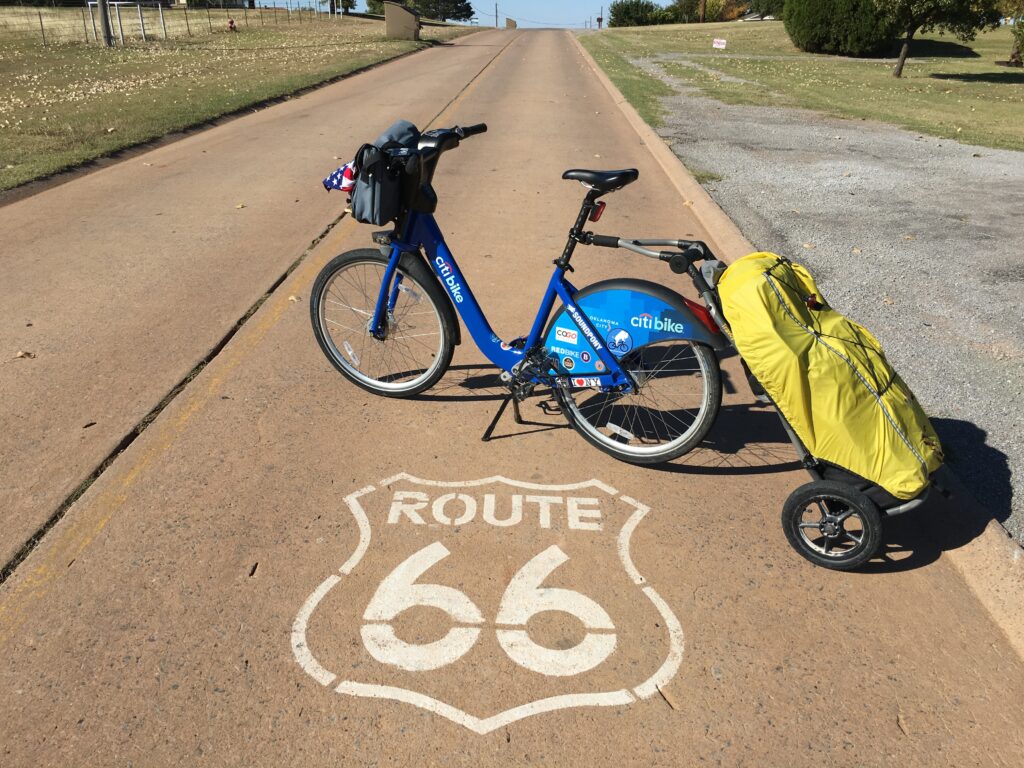
Citi Bike on Route 66
It wasn’t all kicks — Route 66’s uneven pavement and high winds made for some difficult days.

Pie or cake? And where?

I’m still going for the chocolate shake on this. I’m a chocolate shake fan. I know that wasn’t an option, but I was on a mission to find the perfect chocolate shake. 

I did have a really good slice of a German chocolate cake in Hermann, Missouri, which was founded by two German immigrants, because they were worried that Philadelphia was becoming too corrupted, so they established this more remote community to better preserve their traditions. About an hour west of St. Louis by car, there’s this fabulous small town right on the Missouri river. They chose that area because it looked like the Rhine.

Did you know that German chocolate cake is actually named after a person from Texas whose last name was German?

Don’t tell Hermann, Missouri.

Did you ever find the perfect chocolate shake?

There was a great one that I wrote about in leaving Pittsburgh, which was a very tough day climbing out of the Allegheny Valley. And getting out of Pittsburgh was a bit of a mess. You’re going through some depressed little suburbs, and not good road conditions. Then I came across a diner creatively called “The Diner,” in Oakdale, Pennsylvania, and had a nice little interaction at that diner and stopped in for a chocolate shake and was so glad I did, because that was a very sweet end to my Pennsylvania experience. 
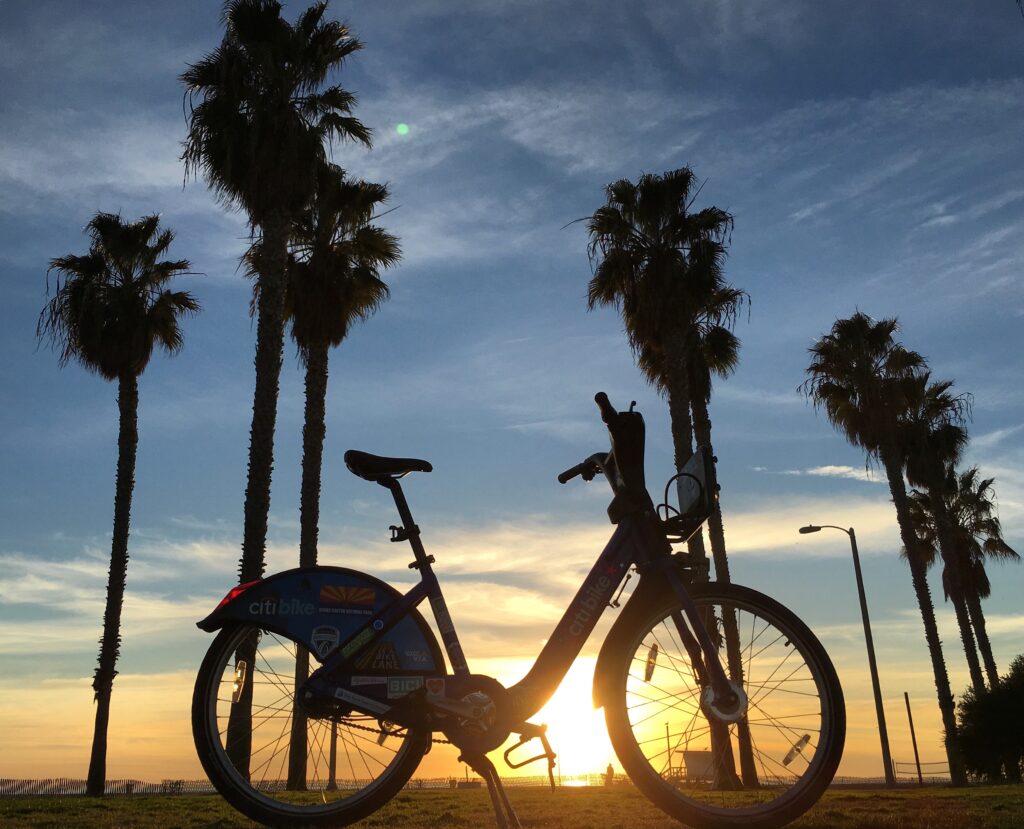
Spoiler alert: This is Santa Monica, California

West of Wheeling: How I Quit My Job, Broke the Law & Biked to a Better Life, by Jeffrey Tanenhaus (2021, Houndstooth Press). Order a copy today and support local independent bookshops across the country.

All photos courtesy of Jeffrey Tanenhaus

The post Citi Bike: Far From Home appeared first on The Statesider.
  •  

Strange Creatures in the Woods

People go camping for a variety of reasons. Andy Murdock wanted quiet and a chance to check out an unusual carnivorous plant. But there were others at the same Northern California campground for a very different reason — and mysterious screams in the night.


It’s said that when humans mastered fire, it brought us the power to conquer the darkness. Whoever says grandiose things like that hasn’t spent much time around campfires. A glowing fire makes the darkness beyond the reach of its light feel even darker. When you’re camping and the sun sets into a moonless night, the horizon shrinks to a radius of just the few meters illuminated by the firelight.

When you wander out into the darkness to see the stars or water the trees, you see one thing fire does quite well: it allows whatever is lurking in the darkness to have a clear view of everything that happens around the fire. This unsettling thought has occurred to me more than once, but I don’t dwell on it. I’m typically more concerned with where I put the cookies than what lies in the darkness — unless that’s where the cookies are. 

But on a chilly autumn night camping along the shore of Gumboot Lake, a scream came from woods, and my priorities suddenly changed.


Strange things happened at Gumboot Lake the moment we arrived. They began with The Liar.

We were hunting for solitude. Midweek, after school was back in session, at an out-of-the-way campground in Northern California west of Mt. Shasta, we expected the place to be empty. That was the point: find somewhere with as few people as possible. 

This year it was just three of us: me, my brother, Aaron, and our old friend Steve. We’ve been doing some variation on this trip for years, a small group of friends, scouting for new spots around California, looking for those 45-minute-drive-down-a-bumpy-road kinds of places that guarantee a quiet, peaceful spot, away from crowds, drunken yahoos, and RVs with noisy generators. If there were going to be any drunken yahoos in the campground, it would be us.

As we pulled into the campground, it was clear that we had miscalculated. Every campsite was taken. We managed to find one informal overflow spot on a little dirt track along the eastern shore of the lake. There was no table, no steel lined fire pit, just a flat space with a hastily built rock ring that had hosted a fire or two. That was it: take it or leave it. We took it.

Why the campground was busy, none of us could guess. You won’t find Gumboot on a list of prettiest mountain lakes in California, but it’s a pleasant spot with easy access to a beautiful stretch of the Pacific Crest Trail and remote enough to lose the crowds. Usually. If it was this packed at Gumboot Lake, we figured, why risk losing the one spot we had by gambling on space at the more popular campgrounds in the area?

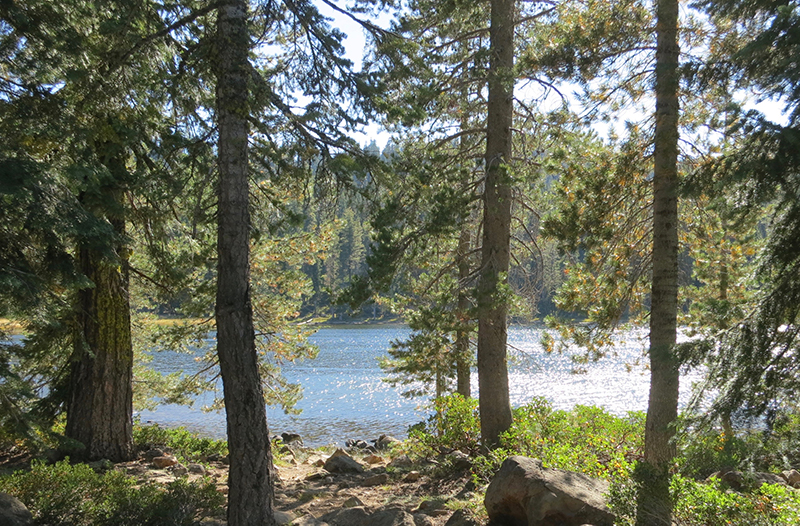
We got out of the car to stretch our legs and scope out the site. It had room for a couple tents, only a handful of trees between us and the water, and we were far enough from the main part of the campground that we felt mostly in our own little world. I walked to the lake to do that thing that cityfolk do when we find ourselves at mountain lakes: stare out over the water, letting the quiet ripples of light and breeze slowly rinse the city off you. This would do nicely.

Gumboot Lake. This’ll do.

My reverie was short-lived. A man — white, early 30s, ripstop pants, baseball cap, looking fresh from a Bass Pro shopping trip — approached along the lakeshore heading toward the center of camp.

“How’s it going? You guys with the group?” he asked, smiling. He clearly assumed we were.

“There’s a group?” I asked. “I guess that explains why the place is so full. We weren’t expecting to see much of anyone around here.”

“Oh, yeah,” he said, surprised. “There’s a group of maybe 20 or 30 of us.”

“Reunion of some sort?” I asked.

“No, we’re here on a biological survey.”

This added up. He had a generically outdoorsy weekend naturalist look about him. If he had pulled out a pair of binoculars to track the flight of an osprey across the lake, I wouldn’t have been surprised.

“In fact,” he added, “I just walked around the lake, and there’s a big patch of some kind of carnivorous plant on the far side. It’s really cool, you should check it out.” He waved in the general direction.

Just his luck: out of everyone in the world, he ran into me, a California plant nerd with a head full of Latin plant names that I can recall faster than my own phone number. 

“That’s right,” I said, “Darlingtonia californica. I’ve seen it here once before.” 

The Latin caught him off guard. I had intended it as a sort of biologist’s secret handshake, but he looked confused.

“What was that again?” he asked.

Darlingtonia. The cobra lily. Pretty rare to see it in the wild, and this is one of the best patches I know.”

I had scoped out Gumboot Lake a year earlier, and slammed on the brakes when I spotted a small patch of cobra lilies along the road. It was one of the reasons I had suggested this spot for our camping trip, though I had probably neglected to mention that particular detail when pitching the idea.

“Wow, okay, cool,” he said, eyes glazing.

“Are you with a university?” I asked.

“Oh, well…we’re from all over. Kind of a loose group of friends. We meet up occasionally to survey interesting places,” he said. It was a dodge. He suddenly seemed uncomfortable, though I couldn’t begin to guess why.

“What are you surveying for?” I was probing a bit now.

“Just a general survey. We just want to see what’s around here.” He was getting increasingly fidgety, and just as I was starting to get interested, he cut it short. 

“Well, you guys enjoy,” he said and walked away toward the center of the campground.

Why did he have to ask if we were with the group if it was a group of friends? Who organizes vague biological surveys late in the year after school is back in session? Something didn’t add up. 

I walked back to the campsite, processing the conversation. 

“Who was that guy?” Aaron asked.

“I don’t know, but he was a liar.”


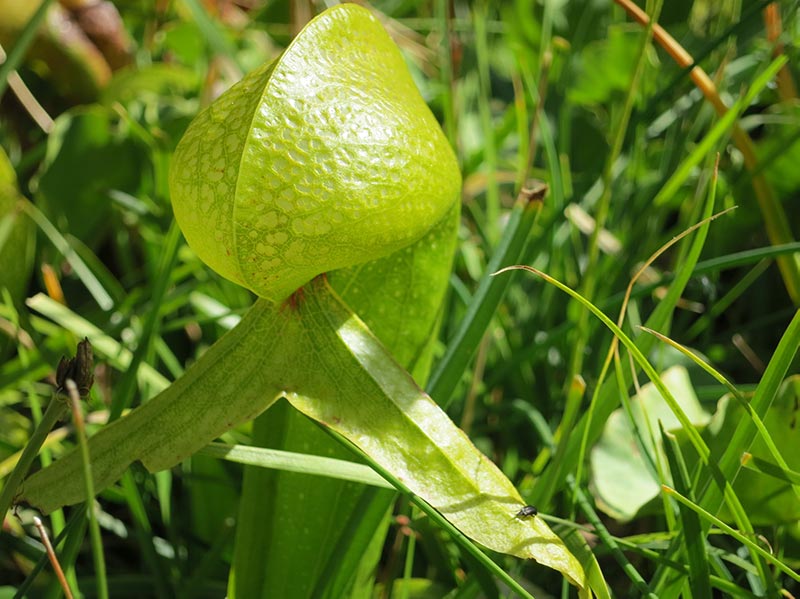
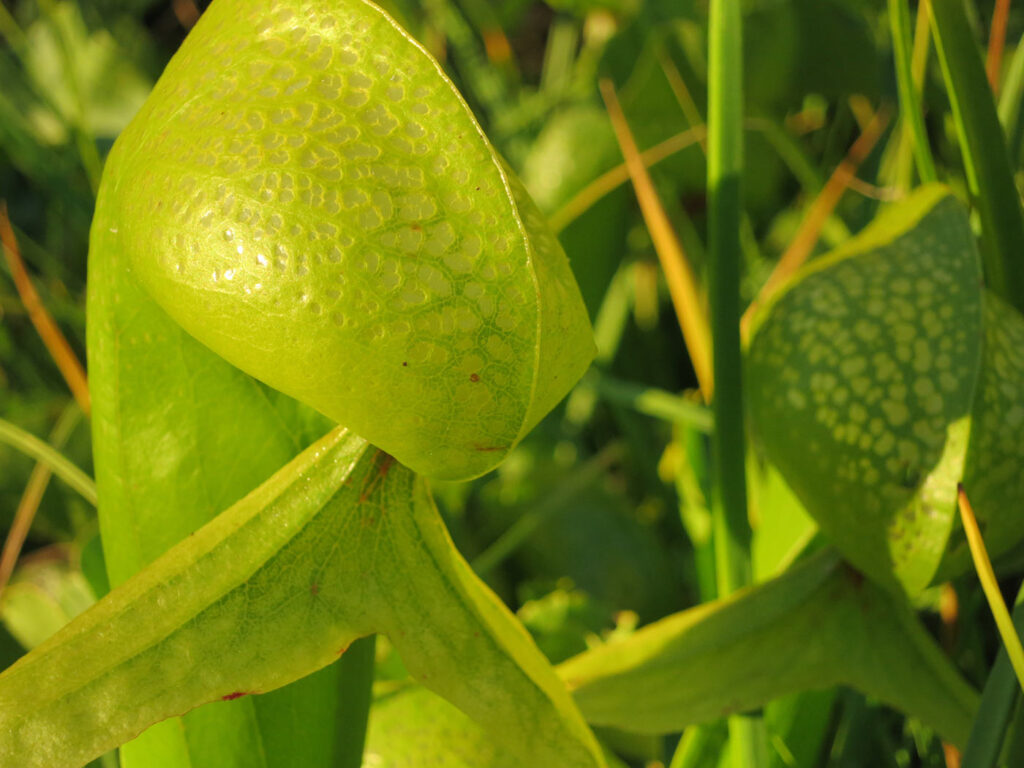
It’s worth taking a moment to introduce the cobra lily. It’s neither a cobra nor a lily, but the name is spot-on: the inflated leaves look more like the arching heads of serpents than leaves. It’s veined with a translucent web of green with splashes of crimson as they age and the snake-like effect is completed by a keeled hood and what almost looks like a long forked tongue. Even those who happily walk through life blind to plants around them will stop and wonder at the sight of them.

Darlingtonia californica, the cobra lily at Gumboot Lake
Cobra lily (Darlingtonia californica) and a small soon-to-be snack at Gumboot Lake

If you happen to be a flying insect who buzzes into a patch of cobra lilies, though, you’re in for a different experience. At first, everything’s calm. Unlike the Venus flytrap, cobra lilies don’t move, they lure. The forked tongue-like structure displays droplets of sweet nectar. A pungent blend of volatile fruit-like fragrances waft up from somewhere. Colors only visible in the UV range show you where to land. When you land on the tongue, you can tell where the scent is coming from: a small, circular opening tucked under the hood. Crawling through the hole, you find the inside is very waxy and slippery. Then you tumble down a long tube into a pool at the bottom.

When you try to leave, something is very wrong. You can see daylight above, but angled hairs make it hard to ascend. When you manage to fly up toward the light, you bump into a wall you didn’t see: clear “window cells” look like paths to freedom, but are as solid and unyielding as the rest of the tube. 

You slip back down the waxy chute. 

You try again, but each time the same thing happens. How did you get into this place again? Wasn’t there a hole somewhere? Each attempt makes you more and more tired, until finally you sink into the pool of fluid at the bottom and drown. Trust me: you don’t want to know what the bacteria and mites living in the plant do to your body after that.


A full campground and a random liar didn’t dissuade us. We had a private site, a lake view, and the idea of getting back in the car seemed terrible. We were staying.

We set up our tents, built up the fire pit with some new rocks, scrounged for some kindling in the nearby forest, and grabbed baseball gloves to play catch along the dirt road — a fun but painful reminder to the muscles in my shoulder that I don’t do this more than once a year.

A car pulled up and a man asked out the window, “Are you with Bill’s group? Is this where we’re supposed to be?” 

We didn’t know Bill. We didn’t know where he was supposed to be.

A little while later, another man walked past and asked, “You boys here with the BFRO?”

BFRO. Biological Foray Research Organization? Bullshit Friends Roving Outdoors?

The Liar had said it was a group of friends, yet no one seemed to know anyone else. The Liar looked outdoorsy, the next person looked like a pediatrician, another was an IT guy straight from central casting. They all saw three nondescript white men camping and immediately assumed that we were part of the group, whatever this group was. 


The scream echoed across the lake. It was the first of several.

We had finished our dinner, played Hearts, and settled into chairs around the fire with some bourbon and cookies. We were puzzling out why The Liar would need to lie and who this group of mysterious campers might be when the first shrill howl from the far side of the lake interrupted us.

We turned toward the darkness. There was nothing to see —  too far, no lights in the woods, our own fire too bright. Then it happened again. The howl was animal, but also clearly human. It wasn’t someone in distress or angry — if anything it sounded somewhat…horny.

“Somebody’s been drinking,” my brother said.

By the third or fourth time, we decided to join in. Horny animal call. Exaggerated drunken response. Horny animal call. Even more exaggerated drunken response. We were having a great time. The howling monster person doing whatever it was they were doing in the woods? Unclear.

Eventually, whoever it was fell silent, leaving the crackle of our fire and a growing chill in the air.  I grabbed my headlamp and picked my way along the small track toward the center of the campground to find the bathroom. Something was bothering me, but I didn’t put my finger on it until I started heading back to our site. It was dark but not late, somewhere in the 9 o’clock hour, yet in a completely full campground, ours was the only lit fire. There was darkness at every other campsite, as if everyone had disappeared — but all of the cars, all of the tents were still there.

I hurried back to camp. “Guys,” I said, “I think we’re in the middle of a Bigfoot hunt.”


I got up before sunrise to spend time with the cobra lilies. When I’m camping, my brain will click on when the barest light of the day is visible. It’s a great time to grab a camera and take a stroll, to capture the fleeting golden moments of the morning light, and scope out the flora.

My theory that we were surrounded by Bigfoot hunters was met with amused skepticism by Aaron and Steve. They agreed it was a possibility, but only I was completely convinced. I needed more evidence.

But first, I wanted to visit the cobra lilies. The largest patch at Gumboot Lake is on a wet slope, a boggy seep with water oozing out of the soil, trickling slowly down to the lake below. Even in the cold morning, before most insects are active, the bog feels alive with action, rich with decay. It’s a hard place to get a solid footing. Just being there feels itchy. You can’t kneel or sit without getting soaked. I sacrificed a pant leg to get a closer look and snag some photos of the cobra lilies in the early light of day. It was a fair trade.

Cobra lily - Darlingtonia californica
Morning light on the window cells of a cobra lily’s leaf

How did these peculiar and complex traits evolve? Why don’t local insect populations learn to avoid them? Is the community of microbes inside the cobra lily leaves the same in every place? Every question answered raises several new ones in its wake. The more I learn about the natural world, the more I realize how little we know about things that are right in front of us everyday, much less rarities like the cobra lily. 

There’s a bias in the sciences known as the “streetlight effect.” It comes from an old joke where a policeman sees a drunk man searching for something under a streetlight at night. The drunk man says he has lost his keys, so the policeman kindly stops to help him look. After a few minutes with no success, the policeman asks, “Are you sure you lost them here?” The man replies, “No, I lost them in the park, but this is where the light is.”

We often look for things where it’s easiest to look, not where we’re most likely to find the answer. It’s easy to think we have the full picture, when we don’t know what lies beyond where we looked because we simply haven’t looked there yet. But it doesn’t mean that the truth is out there waiting for us in the dark.


We put the mystery of these other campers on hold for the day, taking a day hike on the Pacific Crest Trail. For the evening, I had plans to do a little reconnaissance into the main part of the campground to gather more evidence for my theory. I didn’t have to: the evidence came to us. 

As we started our dinner, all the other campers gathered at a campsite just across the tip of the lake from us. It was time for an audio presentation, amplified through two large portable speakers. Sound carries across water, so we got free seats for the show.

The recording first presented a series of animal calls to aid identification in the wild: wildcats, coyotes, some unidentifiable howl, bears, wolves, that same unidentifiable howl repeated. It sounded vaguely familiar. After a time, the audio switched to recordings of phone conversations, 9-1-1 calls.

“I just saw a… I don’t know. A big creature crossed the road. It was standing upright. It jumped down off the road into the woods and then I couldn’t see it anymore.”

“Where did this happen, sir?”

“Right in front of my truck, on my way home…”

We had come to Gumboot Lake expecting to find nobody; they had done the same. They were having a Bigfoot hunting party and we crashed it. It explained everything: the strange howls in the woods, the campground that emptied at night, a man on a “biological survey” that he wouldn’t define.

I was torn between screaming with delight and desperately wanting to catch every word drifting across the water. Aaron and Steve felt the same. If you had walked into our campsite at the moment, you would have seen something that looked like a crazy mime celebration: three grown men, wide-eyed, jumping around gesticulating wildly while trying to stay completely silent.

With the mystery out of the way, our question changed from “What the hell is going on here?” to “Now what do we do with that information?” I had to learn more about what these Bigfoot hunters were up to. Answer one question, it raises many more. What’s involved in a Bigfoot hunt? What type of people are drawn to a Bigfoot hunt?

As we strolled down to the center of the campground after dinner, we chatted idly about the day, tossed a few pebbles into the lake and tried to look as nonchalant as possible while scoping out the scene going on around us. At each campsite, people were decked out in camos. In place of weapons, various electronic gadgets were being readied. Sitting on the gate of a truck bed, one man was making sure the straps on his night vision goggles fit snugly. No one paid us any mind.

A man walked by wearing a hat that said “Gone Squatchin’.”

This was a group of people — almost entirely white men — happily getting ready for the main event. This was their chance to head out into the woods at night with a bunch of high tech toys and a group of new friends. They were buzzing.


There are natural reactions to finding yourself in the middle of a Bigfoot hunt: laugh or run. But seeing the group getting ready for a night of fun made me twist the dial from mockery to amused curiosity. I got up before dawn to kneel in a bog and ponder the mysteries of an obscure carnivorous plant. I’ve taken trips to remote locations specifically to find miniature, nearly invisible ferns called moonworts. I’ve had leeches suck blood from my ankles, slipped down muddy cliffs in rain storms, and nearly leaned on a sleeping pit viper, all in the name of finding some obscure plant that might be just around the corner. I wasn’t about to go traipsing off into the night with these guys, but if they want to creep through the woods with sasquatch-o-scopes whirring, hollering Bigfoot mating calls, who am I to judge?

Still, I can’t help but worry about the Bigfoot hunters and what it means that so many people are ready to believe the unbelievable. Around 11 percent of Americans believe Bigfoot is real, according to a 2020 survey, but no one has bothered to ask how many Americans believe in cobra-shaped bug-eating plants that live in serpentine bogs; that’s clearly the wrong question. 

But why invent mythical creatures when there’s no shortage of real wonders in the world?


On our last day, I paid another visit to the cobra lilies, hoping to get some photos of the morning light shining through the translucent cells on the top of the hood, or of an insect on the edge of making a very bad life choice.

As I started back down the hill, I noticed another camper up and about, one of the Bigfoot stalkers. I could see picking his way around the lake, shoulders hunched from the chill. When he reached the spot between the cobra lily patch and the lake, he turned up the hill in my direction, although it didn’t look like he had spotted me. 

This lifted my spirits. Perhaps this was one Bigfoot hunter who could also appreciate the marvels of nature that we can actually see and touch.

A few yards up the hill, he stopped and stepped up onto a stump within easy view of the cobra lilies. Then he turned his back on them and looked east, toward the rising sun.

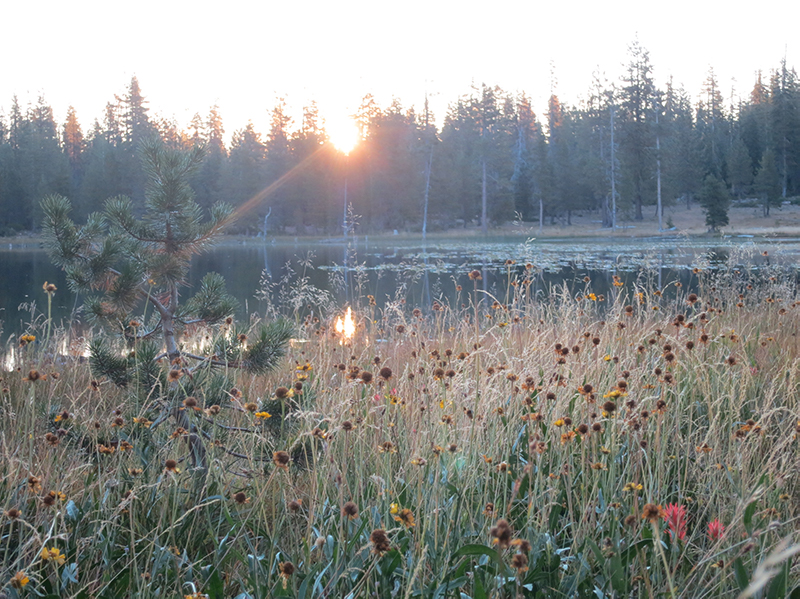
I passed by him and said good morning. He was holding his cell phone up in the air trying to find a signal, hoping that the stump might help. There wouldn’t be a signal for miles in any direction, stump or no stump, but he’d find that out soon enough. The rising sun lit up a patch of wildflowers by the lake, and I headed off to investigate.

Dawn light on late-season wildflowers at Gumboot Lake

All photos by Andy Murdock

The post Strange Creatures in the Woods appeared first on The Statesider.

  •  
❌