❌

Reading view

Pursuing (My) Our Independent Life


I’ve always wanted to be very independent. The ideas I had in my mind, I wanted to make a reality and whenever those dreams felt out of reach or taken away, I would find myself crushed and my confidence fading away.

A Little History

Jaime in college with her hand on her chin

In college, I really wanted to study abroad. It was a dream of mine to live somewhere else. I wanted that experience more than anything. I struggled with my grades and wasn’t able to apply. I tried looking for other alternatives, but I was navigating it alone and kept hitting roadblocks. Studying abroad never happened. I eventually thought I was never meant to travel.

In my senior year of college, I wanted to buy my own car and my parents surprised me with a red SUV. I was really excited, but a part of me also felt like a growing experience had been taken away. I wanted to have to go to a car dealership, figure out how to navigate that situation (Chris said he would go with me), and come out on the other side, even if that meant a loan.

When I became a personal trainer, I thought I would pursue a full time job with a PT specific company. It was a bit daunting to think about navigating - creating a resume, going to an interview, etc. But it was the next step and I was going to push through and make it happen. Then my parents opened up a gym where I could help manage, personal train, and hold classes. It was awesome, but in the end I wanted (and needed) my own identity, something that I created and wasn’t handed.

I probably sound completely ungrateful. Maybe spoiled. And I won’t fault you for judging me. I am grateful (and spoiled), but I also need to be me. I need to know that I can do things on my own. That I am strong. That I can make my dreams a reality. That I can persevere through the tough times and find success on the other side.

Gaining My Confidence Back

Jaime sitting with our three kids when they were younger - a toddler and two babies

My confidence has been lacking for a long time. You can ask Chris - I’m always talking about how I can’t do something. When I became a stay-at-home mom and left the world of personal training, I put all my energy into my little ones. Their identity became my identity.

I remember when N was about to go to Preschool and I panicked - All three of our kiddos would be in school soon. We need to have more babies! Chris went white in the face when I said that, haha. We didn’t need more babies. I needed my own identity.

I needed to find me again. I needed to gain my confidence back and start pursuing my dreams. That’s when I started remodeling our house. I didn’t have the skills, but with Chris’s support, I took it one step at a time and figured it out. My confidence grew a little and our house transformed.

I also started decluttering, realizing that I didn’t need to fill the void I felt with stuff. We saved money and we found that our home was too big. We talked about downsizing and Chris stepping away from his corporate career to pursue his own dream of working for himself. And if we could make an income remotely, then we could live where ever we wanted. I had always dreamed of experiencing life somewhere else and never thought that would be an option. And now it might happen!

Chris and I are here, working on Keep Thrifty every day (well, 5 days a week) and love what we do. Chris gets to work on growing his coding skills, and talk finance. I dreamed up our Freedom Story Series, put it out there, gotten the chance to meet so many awesome people, and am starting to network with companies that bring you awesome tools to help you accomplish your dreams.

I’m being me. I’m dreaming, pursuing, not giving up, and building my confidence. My dream of living somewhere else is in the works and Chris is by my side, supporting and navigating with me.

I shared a bit of our journey and our plans for location independence with Laurie at The Three Year Experiment. Check out it!

  •  

What New Graduates Should Know About Money


It’s May, which means college graduations are taking place across the country. The transition out of college and into your first job can be challenging, as new opportunities and new responsibilities are quickly put in front of you.

That’s why I thought it would be a great time to put together advice from myself and my amazing network of personal finance peers for all the new graduates out there ready to strike out on their own.

We’ll break out the pointers into three major sections - Employment/Income, Savings/Investments, and Budgeting/Spending.

I really encourage you to read all three sections. Personal finance is holistic; mastering any one of these while ignoring the others is going to give you much poorer results than doing your best at all three.

Fair warning, though - there’s a lot of information below! It may be a good idea to tackle one section of the post at a time :)

Employment & Income

There are lots of resources out there on how to make great resumes and cover letters and how to nail that interview, so we won’t cover those here today. Let’s fast forward a bit and say you’re in the wonderful position of having one or more offers in front of you and you’re trying to figure out which job to take.

Pick the Right Job

If you’ve got multiple offers, don’t just make your decision based on the salary. Here’s why:

  1. If the jobs aren’t located in the same city, it’s not an apples-to-apples comparison because the cost of living in each city could be different. I remember when I was graduating from college, I had an offer in Chicago that was 10% higher than my job offer in Madison. After taking the cost of living into account, the two ended up being roughly the same in terms of how much I’d have left after expenses.
  2. Salary is just one piece of the puzzle. You should also compare benefits; if Job A has a killer healthcare plan, that might save you thousands of dollars a year. If Job B has a better retirement plan, that could tip the scales.
  3. Beyond the financials, look at the “squishy stuff.” Which job has a better path for advancement? Which job has a team and leadership that you can learn from? Which job will better train you in skills that are transferable should you choose to change jobs later on?
  4. Finally, remember that your first job likely won’t be your last. If you take a job and it’s not a good fit, that’s ok. You have the chance (and the right) to try something different.

Negotiate Your Starting Salary

In the process of picking your job, I’ll also encourage this: negotiate your starting salary. I know that can be intimidating, but raising your starting salary can have a big impact on your long-term earnings.

If you have other job offers with higher numbers, use those as leverage. The conversation could go like this:

Working here would be my number one preference. I think this place is a great fit for me and I know I’ll bring a lot to the position to help you be successful. That said, I do have some competing offers with higher salaries. Is there room for negotiation in the salary you’ve offered me?

Phrased this way, you’re not saying that you’d turn down the existing salary, but you are advocating for yourself to get something better. It doesn’t hurt to ask - the worst they can say is no. If that’s what happens, then you can choose whether or not the original salary is good enough.

Always Do Your Best

Once you’ve got that job, work hard and do your best. When getting your first job, the things that determine your salary are your degree, your GPA, and what potential the hiring manager sees in you.

After that, you’ll find out that those things very quickly lose their importance. Your raises, promotions, and anything else all come down to one simple factor - what value you provide to the company.

There will always be someone who has a better name, better connections or more God-given talent; the only thing you can do about it is outwork them.
Michael Dinich, Your Money Geek

But Don’t Burn Yourself Out

Let’s not misconstrue that last one as a suggestion that you should work 90-hour weeks though. Burnout is real - I’ve experienced it firsthand - and it can be detrimental to your health and your career.

Here’s something important to remember: good companies don’t measure their employees by their inputs (like how many hours you work); they measure employees by their outputs.

Find ways to optimize everything you work on. Look for things that you have to do over and over again and find ways to automate or simplify them. If you can get done in 35 hours what someone else does in 50, you’ll be able to work a 40-hour week and still provide more value to your employer.

Read Your Benefits Handbook

Employee benefits make up about 30% of your paycheck. But if you don’t know what they are, you can’t be sure you’re getting all 30%.

Most benefits handbooks are written in overly-formal language, often bordering on legalese. But it’s in your best interests to hunker down and read each section so you can understand all of the benefits your employer offers you.

So, read your handbook. Then read it again. For areas you don’t understand, ask your human resources department or your manager. Ask friends or family members who have been in the workforce a while what everything means and see what makes sense for you.

Savings & Investments

OK, now that you’ve got that job picked out and know what to do once you get there, what should you do with those paychecks as they start coming in?

Everything in this section will center around a fundamental principle of personal finance:

Pay Yourself First

What does that mean? It means that you should be setting money aside for your longer-term goals before looking at your expenses. The easiest way to do this is to start with your very first paycheck; once you get accustomed to spending a certain amount of money, it’s a lot harder to scale back.

Saving and investing early in your career can drastically improve your finances when you’re looking to retire (and earlier). Investing $5000 a year starting at age 27 (with a 7% return rate) could lead to a $1 million nest egg at retirement. Starting just five years earlier at age 22 bumps that number to over $1.4 million!

Further Reading:

Convinced? Ok, let’s take a look at the ways to pay yourself first.

Understand Your Retirement Benefits and Take Advantage

Does your employer offer a 401k retirement account program? If so, there’s a good shot that they also provide incentives for you to contribute.

Many employers will match the money that you contribute to your 401k either on a dollar-for-dollar basis or a 50% basis. This is free money, but you only get it if you invest in your 401k.

Let’s take an example. Say you make $30,000 a year and your employer offers to match 50% of the contributions you make (up to a maximum contribution on your end of 8%).

  • If you put in 4% ($1,200), your employer will kick in another $600.
  • If you put in 8% ($2,400), your employer will kick in another $1,200.
  • If you put in 12% ($3,600), your employer will kick in that same $1,200 because you’ve exceeded the matching limit.

The key here is to think of that money as a bonus, but that bonus is only contingent on you doing something that we’ve already established is good for you - paying yourself first.

In the example above, if you simply pay yourself first with at least 8% of your salary, you get the equivalent of a 4% annual bonus from your employer!

Sunburnt Saver agrees that starting early and saving through a tax-advantaged retirement plan is best: “You’re already used to living on little and honestly won’t notice 10% being invested for you. It reduces your tax burden (this will matter, I promise) and will help you get a big head start on saving for retirement.”

Pick Your Investments Wisely

You don’t have to be a finance guru to invest wisely. In fact, the biggest finance guru out there (Warren Buffett) says the simplest strategy is the best - investing in index funds.

An index fund is an investment that tracks what the stock market (or another asset class) does in general. Over the long haul, the stock market has a great track record of going up. At the time I wrote this, there hasn’t been a single 20-year period of the S&P 500 (which has been around since 1871) where the stock market lost money.

Given that you’re just getting out of school and normal retirement is ~40 years away, you’re probably good to get started.

Note: there are no guarantees in the market; past performance is not a predictor of future performance. For past performance numbers from above, see this awesome calculator from DQYDJ

The reason Index Funds are so popular with Warren Buffet and others (like me) is because they have very low fees. Whenever you buy a fund, you’re paying someone to manage that money, but index funds tend to be significantly cheaper than others. Whenever you’re dealing with compounding interest, small amounts can be amplified into big ones, so minimizing your fees is critical.

Further Reading:

Pay Off Your Debt (ASAP)

If you’ve got student loans, credit card debt, or car loans, it’s time to start paying them down aggressively. Minimum payments may get you debt-free eventually (if you don’t accrue new debt), but the amount of money you waste in interest could cripple your finances.

There’s no bad way to prepay debt - just a good way and a better way. Find any extra money you can and apply it to either your highest interest loan (the better way) or the lowest balance loan (still a good way) that you have.

To learn more about these methods of paying down your debt and how much money you can save, check out my post on Debt Snowball vs Debt Avalanche.

One of the magical things you’ll find about paying off debt is the amount of freedom in your finances once the debt is gone. If you’ve been paying 50% of your income toward debt, you’ll feel like you got a 100% raise once you’re done paying it off!

Further Reading:

Automate Your Savings & Investments

Set up direct deposit of your paychecks with your bank. And if your employer’s payroll system allows it, split each paycheck into different buckets. Consider funneling a portion off to a “debt payoff” savings account so you’re not tempted to spend it.

You can do the same for establishing an emergency fund. If you put aside just $8 a week for an emergency fund, you’ll have $400 saved up after a year, which puts you better off than the 46% of Americans that can’t handle an unexpected $400 expense.

We set up a savings account for everything - emergency savings, travel, home remodeling, kids savings, the list goes on. We do our banking with Capital One 360 because they have reasonable interest rates and make it ridiculously easy to set up new savings accounts. At one point, I had my paycheck getting split into 5 different accounts to “pay myself first” and work toward my financial goals.

Seller At Heart recommends putting $100 from each paycheck into a side savings account that you don’t have a debit card for. That way if you need the money, you’ll have to go to the bank and wait 2+ days to get the funds transferred. The inconvenience will prevent you from spending it unnecessarily.

Budgeting & Spending
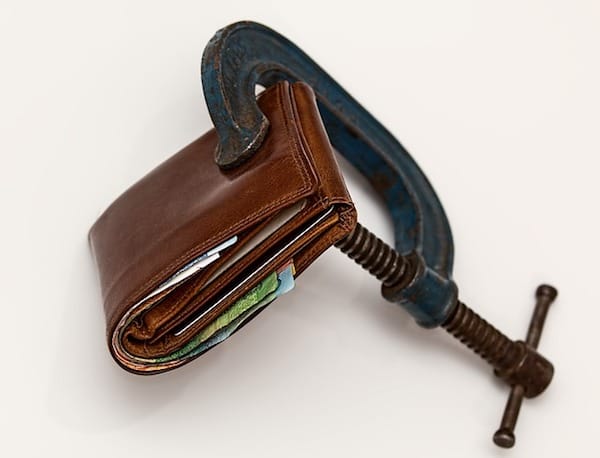
If you’re still with me at this point, I know you’re going to be successful - it takes a lot of patience to dive this deep into a money article!

Let’s talk about budgeting and spending, but we’ll start with a couple questions.

Did you live like a king or queen in college?

Probably not.

Did you still have fun?

Probably so.

This is an important lesson to remember. Your income and living situation in college probably wasn’t luxurious, but you still found happiness and joy.

As you transition out of school and into the working world, there will be a lot of temptation to succumb to “lifestyle inflation.”

Avoid Lifestyle Inflation

Lifestyle inflation is when you find yourself spending more because you make more. If you can avoid that trap, your raises and promotions can help further your long-term financial goals instead of just getting you an extra scoop of ice cream whenever you go out.

Your spending and income should only be loosely related - in that your spending should be less than your income. When your income goes up, it’s a great opportunity to pretend like that never happened and instead funnel more into savings and investments.

Some amount of increase is realistic; after all, your life is going to change. Someday you may have kids, buy a house, or travel more. You might want to sleep on something other than a futon. But remembering that you can live on less and still enjoy yourself is a powerful, freeing mindset.

Save it Before You Spend It

One of the big consumer traps that trips a lot of people up is getting in the habit of buying things on credit (either through a credit card or through a loan - AKA financing). Even when the purchase is at 0% interest, this is dangerous. Here’s why:

It’s a reversal of the money timeline. Buying something on a credit card today and then paying it off at the end of the month can lead you to spend money before you’ve earned and saved it.

Life is dynamic and you don’t know what the future will hold, so the safest course of action is to live by a simple rule:

Save it before you spend it (Tweet this )

If you follow that one little rule for everything in your life (except maybe getting a mortgage for a home), you’ll have a whole lot more security!

Make a Budget

If you know what your income is and you know what you want to set aside to pay yourself first, then you’ve got the remaining amount for your budget.

Creating your first budget can be hard. After all, how do you know how much you’ll be spending on stuff?

The answer is that you probably won’t.

Your first budget will be imperfect. You’ll overestimate some expenses and likely underestimate many more. You’ll forget about the random things (like annual car insurance) and be taken off-guard by the unexpected (like being asked to be a part of someone’s wedding and having to pay for a dress or tuxedo).

But the best thing you can do is to create a crappy budget and then improve it from there.

Every month, you’ll better learn your spending needs and habits and will be able to refine your estimates. After a full year, you should have a good sense of where you’re at and your confidence will grow after that.

When creating your budget, it’s helpful to break things down into categories. Here are the ones I recommend starting with:

  • Charity
  • Clothing/Shoes
  • Eating out
  • Education
  • Entertainment
  • Fitness
  • Gifts
  • Groceries
  • Healthcare
  • Hobbies
  • Household care (cleaning products, etc.)
  • Pets
  • Services (haircuts, life insurance, etc.)
  • Shelter (rent/mortgage, renters/homeowners insurance, etc.)
  • Transportation (car, gas, auto insurance, public transportation, etc.)
  • Travel
  • Utilities

Track Your Spending

A budget is great, but if you don’t track your spending, you won’t have any accountability.

There are tons of ways to track your spending, and you just have to pick what’s right for you:

  1. Track on paper or in a spreadsheet on your computer
  2. Use Thrifty, the money tracking app we made. It comes pre-loaded with all the budget categories I listed above and you can create your own as well.
  3. Use Personal Capital, an automated expense and investment tool

As you track, you’ll find out what your spending habits are - both the good and the bad. Look at the categories that take up the most of your spending and see how you can improve. Most likely the big three are going to be shelter, transportation, and food.

Let’s take a look at how you can save on each.

Saving on Shelter/Housing

Remember what I said earlier about living on the cheap in college but still having a good time? Yeah, the whole thing about lifestyle inflation.

Chances are, you spent at least part of your college career with roommates. It’s tempting when you graduate to feel like you “deserve” to live on your own, but that is going to come with a hefty price tag.

When I graduated college, a one-bedroom apartment would have cost me $750 a month in the Madison area. Instead, I got three roommates and we rented a 2500-square-foot house with 4 bedrooms and 4 bathrooms, paying just $375 a month each.

That’s a savings of $4500 a year!

In addition, those roommates and I split utilities and had a built-in support network if we needed any help from each other.

Further Reading:

Saving on Food

Personal Finance for Beginners nailed this one:

When you start working a 9-5, it’s tempting to go out for lunch with coworkers every day or grab dinner on your way home from the office. Without a budget, it’s easy for your food spending to spiral out of control. It’s important to create a budget/goal for food spending and learn a few basic tips, like buying in bulk, learning how to cook, and setting aside time each week to meal prep!

If you’re looking for ideas, PF Geeks has a list of 46 recipes that you can make for less than $2 a serving.

Saving on Transportation

Do you already have a car? Great! That means you don’t need to lease or buy a new one.

You may even explore whether you need a car. Are you in a place with good public transportation? The license, insurance, and maintenance of a vehicle may be an unnecessary expense.

If you do need a car and don’t currently have one, don’t be tempted to use your newfound purchasing power to get an extravagant ride. Cars, by-and-large, provide the same function whether they cost $3,000 or $300,000.

If you need a car to get to and from work, to visit family, to run errands, and go out with friends, buy something that will perform the function of doing those things. Anything beyond that is a status symbol, and those status symbols can drain your bank accounts.

As Winning Personal Finance points out, your car could be costing you millions

Further Reading - Other Personal Finance Tips for New Graduates

If you’re looking for more ideas, check out these other great resources to help you get started with money after graduation:

Parting Thoughts

Phew - That was a ton of information! There’s a lot to take on here, so I’d like to leave you with a few parting thoughts.

Understanding everything you need to know about money as a new grad is no easy task. Turning those into practice is even harder. You’re going to have slip-ups and mistakes and that’s ok.

You won’t be perfect with your finances, and that’s OK

Try to do something every week to improve your financial situation. Learn from your mistakes and keep an eye on the goal.

Oh yeah, that reminds me of an important one. What is the goal anyway?

Don’t make the mistake of thinking money is the goal. Money is a tool to help you achieve the goal. (Tweet this )

Money is necessary and it’s a powerful tool to open up doors in your life. But it’s not the end-game. It won’t give you everything you want and you won’t get to take it with you when you die.

Use your money to help you live a fulfilled life, focused on your relationships, your passions, and serving a higher purpose.

Don’t be afraid to ask for help

Money is complex and there’s a lot to learn. So don’t be afraid to ask for help. We’ve all been there. I didn’t understand compound interest until my dad explained it to me. I didn’t know the difference between a 401k and an IRA until I dove into the details and picked my coworkers’ brains.

If you have questions or need help, find me on twitter or leave a comment below. I’ll do my best to give you an answer or find someone who can.

Congrats on your graduation and best of luck in this next big phase of your life!

What advice do you have for new graduates that you wish you had known? If you’re a new grad, what money questions are keeping you up at night that we can help with?

  •  

How I Traded The American Dream For My Surfing Dream


Shawn from Freedom 33 has an awesome freedom story about remembering his dream, pursuing a new life, and to riding the bumps waves along the way!

Living The American Dream

I grew up in British Columbia, Canada, living a relatively normal childhood. When I finished high school, I took a gap year backpacking across Australia and SE Asia. It was an amazing experience, spending my days learning how to surf and going scuba diving. It was a dream year and I found myself wishing I could live somewhere warm where I could spend more time on my new found passion, surfing.


However, I returned home and got down to ‘real life’ in Canada. I started University, eventually getting my degree in biology at the age of 27. I settled into my adult life, met a girl, bought a house, and worked away in my career. I moved forward in following the American dream, settling for the Canadian surf scene over an hour drive away from my home in Victoria, BC.

Pushed to Question My Life

Then everything changed. My live-in long-term girlfriend decided our relationship wasn’t working and moved back home to England. Instead of working through and healing from that break-up, I patched up my feelings with an intense, fast-moving new relationship. Ten months later, I was single again and left to deal with my emotions.

This led to a lot of self-analysis and ultimately getting real with myself. I thought I had been happy with the American Dream, but I came to realize I wasn’t happy at all. I didn’t like being house poor. I didn’t care for my career, lifestyle, or some of my friends.

I found myself on a path of self-discovery. I learned to let go of things I couldn’t control. I learned to self-validate rather than seek external validation. I remembered my dream life, but didn’t know how to make that happen.

I was stuck in a mortgage and couldn’t afford to change my career. I was already near the high-end of my potential pay-scale and I wouldn’t be able to match that at a new job. This led me to start thinking outside the box.

Making The Trade

Could I sell my house, break even, and get a fresh start? I started looking at the housing market and realized I stood a good chance of turning a significant profit. Selling my house became a no-brainer. With that decision made, I asked myself what I really wanted to do. Maybe travel around New Zealand? While considering my options, I decided to take an impromptu vacation to Baja California Sur near Cabo San Lucas. A friend of mine had owned a small place there and suggested I might like it. I ended up staying with a friend of hers, who was also a bit of a real-estate hustler. Before long, I found myself with a new opportunity.

I could use the income from the sale of my house to build a small duplex in Mexico. This would allow me to be debt-free, earn a modest rental income, and live simply with easy access to good consistent waves!

That became my grand plan, but life is full of unexpected waves. As I was in the process of building and paying for the duplex, I could see that the numbers weren’t going to work out as magically as I had hoped.

Right around this time, I got the chance to return to an old job as an Environmental Coordinator at a fly-in/fly-out mine. I would work three weeks on (at a remote location in Northern Canada) followed by three weeks off. My employer would cover room and board and most of my travel costs.

I had been miserable in this position in the past, but now it seemed like a godsend, even though I was nervous about being pulled back into my old life! I did a little mental accounting and figured I would only need to work for about six months. I decided it was worth it and took the job.

Ten months later, I was still at the job, failing to meet my financial goals. I knew I had to dig deeper and find a way to improve my accounting. This was sort of a ‘get real’ financial moment. I really wanted to have my full-time life in Mexico and needed a real plan to make that happen ASAP in a sustainable manner. I turned to my spreadsheet and got to work on my expenses and making an updated budget.

My duplex is now built, fully paid for, and bringing in rental income that pays for my day-to-day bills and living expenses. I spend about $150 (Canadian dollars) per week in Mexico and about $200 every six weeks on travel for work. At this point I could quit my job, but I’ve decided I want to invest a little more in my future. If I work another year even, I can achieve complete financial freedom.

As I work towards living in Mexico full time, I’m dreaming of adding to my AirBnb empire in other foreign surf locations, meeting my wife and starting a family, adopting a few dogs, and having more free time to visit my parents as they get older.

In the meantime, I’m enjoying the time I do have in Mexico, fostering pups (sometimes finding them forever homes in Canada), and having my parents come visit!

Advice When Trading in The American Dream For Your Own

  • Never waste a good crisis: When things are going smoothly it’s hard to implement any change and disturb the peace. However, when you have nothing to lose, it becomes a lot easier. Take advantage of this.
  • Know Your Why: I knew I wanted a different life and I needed to figure out why first. Then the how became easier.
  • Spend Time Thinking About Your Dream: Mohammed Ali once said - What you’re thinking about, you’re becoming.
  • Stay Strong When Others Don’t Support You: When the people you love don’t support your lifestyle changes, its easy to let them convince you that you’re crazy and to stay in your current life. My father and I didn’t speak for months when I made my decision. One thing I’ve learned is that most of the time, the way people act has much more to do with them than it does with you.
  • Be patient: It takes a while for these types of goals to really take shape. Find a way to stay positive through the transition.
  • Live and Learn: You don’t have to have everything figured out in the beginning. Take steps, learn from the successes and failures, and keep moving forward.
  • Create a solid budget: I had tracked by expenses and had a budget, but I would miss certain things (whether by a psychological quirk or paid with cash). This left me with gaps in my budget and was why I ultimately needed to get really serious about tracking all of my spending.

Thank you to Shawn for sharing his story! We are excited to follow his journey over the years and wish him the best as he settles more into his life in Mexico. And ladies - he’s single :) And if you want to reach out to Shawn, you can find him on twitter @freedomthirty3.

Do you have a freedom story you would like to share? We would love to hear from you! Submit your story here!

  •  

The One Category That High-Income People Spend Less On


Just for fun, I spent an hour the other day digging through the Bureau of Labor Statistics’ Consumer Expenditure Survey. I wanted to see if there were any interesting things I could learn about how Americans from different backgrounds spend their money.

Yes, I’m a blast at dinner parties.

While I found a lot of interesting information, most of it was fairly common-sense. People with high incomes save a higher proportion of their income, all while spending more on just about everything. There was only one surprise I ran across.

There was one category in the entire set of BLS data that high-income people spent less on - tobacco.

For reference, here’s the data I pulled/computed:

Annual Income Annual Tobacco Spend Per Household Annual Tobacco Spend Per Person
Less than $15,000 $297 $186
$15,000 - $29,999 $313 $165
$30,000 - $39,999 $356 $155
$40,000 - $49,999 $371 $148
$50,000 - $69,999 $368 $142
$70,000 - $99,999 $390 $134
$100,000 - $149,999 $376 $121
$150,000 - $199,999 $254 $82
$200,000 and More $204 $64

These numbers can be a bit deceiving though. I don’t have any evidence that higher-income smokers consume less tobacco product than lower-income smokers.

Since the table shows the average across all households (including those without tobacco consumption), the most likely reason for the difference is that fewer high-income people are smokers.

We all know that smoking isn’t good for your health. To amplify things, it’s not good for your finances either. How bad is it?

How Much Does Tobacco Use Really Cost

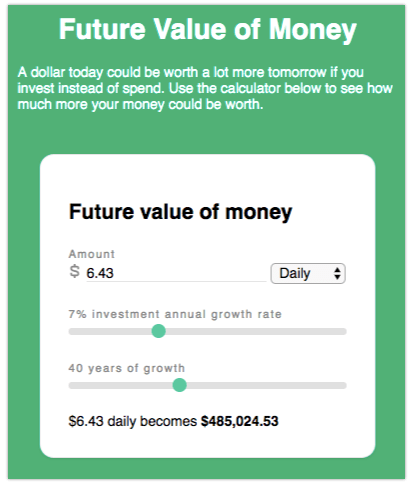
$6.43 per day over 40 years at a 7% growth rate could be worth  $485,000

To keep things simple, we’ll ignore incremental healthcare costs and just look at the cost of the product.

Let’s say our subject smokes one pack of cigarettes a day at a cost of $6.43 per pack.

Using the MNY Future Value of Money calculator, we can calculate what that daily cost could be worth over the long haul. If the $6.43 a day were invested instead and got a 7% annual growth rate:

  • It’d be worth $34,000 after 10 years
  • It’d be worth $100,000 after 20 years
  • It’d be worth $230,000 after 30 years
  • It’d be worth $485,000 after 40 years

That’s right - a 40-year smoking habit would be worth nearly half of a million dollars. And that’s assuming prices don’t go up (which they usually do).

If You Don’t Use Tobacco

A good percentage of you that have made it this far don’t have tobacco as a part of your life and are wondering what you can do with any of this information.

I challenge you to think about what habits you have that are costing you on a daily, weekly, monthly basis (Tweet this ) .

Some of those habits - like a gym membership - might be good for you. But if you dig, maybe you can find an unhealthy habit that’s costing you health and money. Here are some ideas:

  • Eating out for lunch with coworkers instead of bringing food from home
  • Snacks from the vending machine
  • Soda habits
  • Excessive TV/Movie watching time (with a streaming service)
  • High alcohol consumption

For any of these, you can use the MNY Future Value of Money calculator to convert those habits into their dollar value and see what you could be missing out on.

This kind of thinking helped me give up soda, switching to coffee instead. Beyond saving a bunch of money, I also feel healthier and happier!

Resources to Quit Smoking

If you are a tobacco user and are considering quitting, here are some great resources to get you started. Your wallet and your health will thank you!

  •  

Creating Our Dream Life: Family, Work & A Little Homestead


Chelsea from Mama Fish Saves had a dream to be able to work from home, pursuing her passion of spreading financial literacy, and having the location independence to buy a small homestead. Sounds awesome! Here’s how Chelsea and her husband changed course with a mini-retirement and are making this dream a reality!

Days Spent In The Office

Woman working on laptop computer

My work took up most of my time. I was an investment manager at a hedge fund, working long hours (often 60+ hours). This left me with less than 30 minutes each day during the week to see my young son.

My husband was, and is, an amazing stay-at-home dad, which did provide me some comfort that our son was getting lots of quality parent time. But I missed him like crazy and struggled with feeling like my job didn’t serve a greater purpose.

About a year before pursuing my dream to work from home, I started a family finance blog. That tacked on an additional 20-30 hours of work a week. Luckily, that was all completed while my little guy was sleeping.

Then I became pregnant with our second son and faced some major back issues. I would go through multi-day periods where I couldn’t stand upright and spent the second half of my pregnancy only allowed to sit or stand in 15 minute increments. Because I was pregnant, they couldn’t do imaging or provide medication.

The pressure to continue to sit at a desk and operate at the highest level at work brought all my struggles with the purpose of my career to the forefront. We were also hyper aware of my difficulties with postpartum depression after having to return to work once my first son was born. We weren’t keen to go through that again.

We had saved 50%-70% of our pretax income since I started working post college. With all that savings and the extra push to pursue a different life, we started to strategize how we could make a change.

How We Decided To Make A Change

Chelsea and her baby boy

My husband and I have modest taste. We didn’t buy expensive cars, we bought a house at less than half the value we were approved for, and stuck to lower cost hobbies like hiking and gardening. I also made a strong income and used YNAB (You Need A Budget) to budget every dollar I made since college. This helped us to consistently save 50%-70% of my pre-tax income.

I discovered the early retirement movement a little over a year ago. With my income and our lifestyle, I realized we were rapidly approaching full financial independence. I could have stayed in my career 4 or 5 more years, until I was 32 or 33, and have been retired! This was awesome, but I love working and am far too high-energy to ever do the full on early retirement game. What I really wanted was the opportunity to spend more time with my young kids and to do work that fulfilled a purpose and helped the community.

The stress of my current career environment and wanting to live by our values pushed us to make a change now instead of in 4 or 5 years. We took a closer look at our budget to see where we could cut and what things would look like if I left post maternity leave.

Our math determined that my last bonus (in investment management, this is over two-thirds of your annual pay) and pay through maternity leave would give us enough assets to live on for 2 years, including healthcare costs. I could take a two year mini-retirement, focusing on my kids and working to build my blog and freelance business into a full time income.

Our retirement savings would stay on autopilot. If my new venture never provided enough to continue to contribute to that account, we would still be able to early retire around the age of 45 if we desired.

My Worst Case Scenario

Woman laying on bed, covering her face

The biggest challenge in pursuing this dream was swallowing the risk we were taking. We would go from this massive income cushion to zero cash flow. The blog was, and is still, in the red and I had never done any freelance writing before.

We were able to push through because of the opportunity the risk offered. And we also knew we had a safety net. If it worked, I would have been home with my boys through their earliest ages and would have developed a business in line with my passion.

If I fell flat on my face (worst case scenario), we weren’t leaning on our retirement assets for this business development period anyway. I maintain a large network in the investing world and my husband has his Masters in Engineering & Construction project management as well as a large ship captain’s license. Either of us could get back to work quickly.

Our Mini Retirement Life

Chelsea and her family hiking

I left my job in December 2017 and my son was born January 16, 2018. His brother turned 2 in February 2018. Our lives are a bit intense and I am still transitioning from the rigid world of an old school hedge fund environment to completely controlling my own schedule. Sometimes it is pretty daunting!

What I’m most surprised about is the number of opportunities presented to you when you no longer have a traditional job. In the last 5 months I have become a regular contributor to Forbes, was accepted into a completely free MBA program, and created the #WomenRockMoney movement that provides a community for women to advance their financial literacy and learn from each other.

We also sold our home outside of Boston and will be renting a home for the next two years closer to my mom in Connecticut. (And two doors down from one of my husband’s best friends!)

As we move through this mini-retirement, my next goal is make our dream of buying a small homestead a reality. We believe the food system in this country is broken in a way that is hurting our health, creating large amounts of waste, and greatly damaging the environment. A homestead will allow us to live by our values and give us the chance to spend more time outside and connected to our food sources, intimately understanding what we are putting into our bodies.

Our hope is to pay cash for our homestead. We have already started researching potential locations across Connecticut, Vermont, and upstate New York and will be saving up! Selling our house outside of Boston put us at around 60% of our goal and we are working hard to add to that dream! In creating our mini-retirement financial plan, I assumed no income from my blog or freelance writing. As such, 50% of whatever we make will be added to funds for after our 24 months, and 50% will be put towards the homestead goal.

A Note For Anyone Considering Entrepreneurship

Coffee mug with words "Be Strong"

Believe in yourself and trust your cushion. Even though we still have over a year and a half for me to develop my business, I have moments of panic that we are going to go broke.

The transition to entrepreneurship is real and scary. Moments of panic are normal. Prepare for this and make sure you are okay moving forward before you dive in.

Thank you to Chelsea for sharing her story! I can’t wait to hear how the mini-retirement progresses and the homestead dream develops!

Do you have a freedom story you would like to share? We would love to hear from you! Submit your story here!

  •  

Can You Mix Friendship & Finances?


The world likes to assess you based on your finances, or what they think your finances are, based on your lifestyle. If you live in a nice neighborhood, wear expensive clothes, or have an impressive job title, the world tends to view you in a better lens - as someone they would want to spend time with and befriend.

If you have a green thumb and garden to save money while your best friend eats out all the time - can you maintain that friendship without stepping on each other’s toes? Can you choose to spend your money differently than the people around you and still be friends? Or do you need to find a community that fits your financial style?

Andrew and Jaime think that finances and friendships should be able to mix. That we can look past the superficial and embrace each other for who we are, allowing amazing friendships to develop! Here are some of our thoughts and stories.

Jaime (a personal story)

Chris and Jaime's living room setup

Last month, Chris and I hosted our bible study group. We were a little self conscious about welcoming everyone into our little apartment.

We are the only family in the group who lives in a small home, let alone an apartment. There are a lot of nice homes in our neighborhood and we aren’t living on one of those streets.

We also don’t have the nicest of furniture. We’re talking an old futon and Ikea chair we bought on craigslist and a hand-me-down chair that my parents gave us to use.

To say we were nervous about being looked down upon is an understatement. Luckily, we had a great discussion full of laughs. I pulled out a kids table with a tray of cheese, sausage and crackers (few bottles of beer too). It was a great evening. Our home may be a humble abode, but we all had a great time.

Andrew (a personal story)

Street view in city

Last year, Annelise and I moved out of a large apartment in a fancy, amenity-rich building where lots of our neighbors had high incomes and lavish lifestyles. We moved into a much smaller apartment in an old row home, and our rent was significantly lower.

When we moved, Annelise pointed out to me that her portion of the rent amounted to the least she’s paid for housing since she relocated to DC in 2010. She’s paying less to live now than she did in her mid-20’s. That’s pretty crazy to think about! It isn’t often that people choose to deflate their lifestyle as they get older.

The move didn’t diminish our quality of life at all – our apartment is on a beautiful tree-lined street in one of DC’s most attractive neighborhoods. But by most metrics, our move would be considered a step backwards. While our peers are upgrading their lives by moving into larger/more expensive homes as they get older, we’re doing the opposite. Instead of adding space and filling it with expensive things, we subtracted space and got rid of many things.

From the outside looking in, it might look like we are adjusting our lifestyle down due to financial struggles. In actuality, we are making intentional decisions about how we want to deploy our money so that we can live the lifestyle we envision for ourselves. This includes creative pursuits, travel, and an opportunity to leave the workforce at a significantly younger age. We don’t want to be slaves to our jobs in middle age, so we are making decisions today that will give us the freedom and flexibility we desire. Barring unforeseen circumstances, we are on track to obtain full financial freedom by our mid-40’s.

If You Have Different Incomes + Lifestyles

Friends on swings

Jaime’s Thoughts: I think a lot of friendships start with a common ground in finances. You may be co-workers, live in the same neighborhood, or send your kids to the same ballet class. You find that you have a common lifestyle with similar financial backgrounds and bond over those similarities.

It’s great to get to know people you can relate to and these relationships can turn into great friendships. As the years go by and we grow into the person we are meant to become, our financial path may change.

This might include going back to school, leaving corporate America/union job, or maybe the business you were in or running collapses. All these changes lead to handling your finances differently than before. Sometimes with those changes friendships end as you have less in common. Sometimes they persevere - those are amazing friendships - the ones that support and love outside of our financial situations.

We’ve been blessed with a friendship that has continued as we’ve made our crazy financial + lifestyle changes. As we went into mini-retirement mode and scaled back on our spending, we still enjoy each other’s company and are excited for each other in our own journeys!

Friends joking and looking out over the mountains

Andrew’s Thoughts: I have lots of friends that share my interest in financial independence, because I’ve been an active member of the FI community for awhile. My closest friends and family do not share this interest, though. They have varying incomes and lifestyles, and they aren’t as motivated by the idea of saving aggressively or clamping down on their lifestyles. The factors that sustain these friendships and relationships have nothing to do with money or lifestyle choices.

My close friends and family know about my pursuit of financial independence, and they know that I’m here to help them with any money questions/issues they encounter. But they have to come to me because I’m not going to give unsolicited ideas, advice, or feedback (although I often made the mistake of doing this earlier in my journey).

Maintaining Balance Despite Financial Differences

Friends eating together

Andrew’s Thoughts: Our culture focuses on social activities that revolve around spending money. Because of this, it can be challenging to balance a healthy social life with reasonable spending. I live in a vibrant city, so most social outings with friends include bars, restaurants, or some form of entertainment that comes with a cost attached to it.

I also come from a large family that often celebrates birthdays/holidays with big meals out and gifts. My siblings and I are close in age, and we all like spending time together. Because there are so many of us, there are always invitations and ideas floating about, and the activities can be expensive.

This can be tough to navigate, and it’s something that I struggle with. It’s difficult to say no without feeling guilty, or worrying that my family thinks I’m being a cheapskate. There have been times in the past that I’ve caused tension by letting money stop me from partaking in family activities. I’ve found that communication and providing attractive alternatives works really well to help alleviate this.

It’s important to be intentional with how much you are willing to spend in these categories every month. Tracking how much you’ve spent can help decide what to say yes/no to. For example:

  • If you are comfortable spending $100/month out at restaurants and bars, and you’ve committed to 3 occasions in the coming month, it’s a good indicator that you need to push back and say no to any further opportunities.
  • It helps to have cheaper options in mind, such as a picnic, free cultural event, or a potluck-style meal at someone’s house. I recently caught up with my parents over lunch, and they suggested a few restaurants to meet at. The assumption was that we would be eating out. But I’m crunching down on my dining out budget this month, due to some other big expenses. I suggested we have a simple lunch at home, and it turned out to be just as enjoyable as going out (if not more so). The important thing is spending quality time together, and this doesn’t have to cost money.
  • I’d also say it’s important to make this agreement with yourself, but it’s equally important not to let it consume you to the point that it makes it painful to do anything at all. That could put a damper on your relationships in a hurry. As with anything in life, moderation is key.

Gift-wrapped packages on a doorstep

Jaime’s Thoughts: Maintaining balance when you want to spend your money differently can be tricky. For us, Christmas is a really good example.

Christmas time used to be a big spending season for us. We had dollar amounts to spend on each family member (on each side of the family). The funny thing is, as you grow up, you have your own money to spend on the things you want. So what do you get each other?

Sometimes we made lists and sometimes we would take a guess. The lists took the meaning out of the gift and the guess was usually wrong. We found all this to be stressful and inconsistent with our values. We wanted to change this, but we we didn’t want to upset anyone.

Eventually, we reached out to our family members and said that we would like to pass on getting gifts and just wanted to focus on enjoying our time together. In the same vein, we wouldn’t be purchasing gifts, but we didn’t ask our families to stop gift giving as a whole (that’s not for us to decide).

It was nerve racking to express ourselves, but our families respected our request. It’s important to speak up in a loving way when something doesn’t fit your financial values. The balance is in finding a way to ask for what you need without requesting others to live like you. When you are able to do that, respect and understanding can usually find their way in.

Having an Open Heart + Mind

Hands spelling out the word Love

Andrew’s Thoughts: I have many friendships that have lasted despite largely differentiated lifestyles. It’s sometimes challenging to understand the decisions some of my friends and family members make, especially when they express frustration or anxiety about their financial situation. So it’s not always easy to be a quiet observer.

In situations like this, it’s important for me to remember to separate my thoughts and observations from the relationship or the person. We might not always see eye-to-eye and it’s OK to have disagreements from time to time. I’d argue that something is probably wrong if you pretend everything is perfect. Frustration and disagreements are natural and to be expected in any human relationship.

Many times, my friends and family are happy with the decisions they make, even though I might not fully understand them. In these cases, I try to learn from it, and understand what is driving them. That can only help me be more open-minded and understanding towards others.

For example, my sister has a completely different outlook on lifestyle than I do. However, it works for her and her family, so rather than judge it, I find it admirable. She and her husband have always wanted a large house with ample property, and they like to dedicate time and money to decorating and fixing up their home. It makes them happy, and their happiness makes me happy. What works for me might not work for someone else, and I try to remember this.

Happiness is the key to healthy friendships and relationships outside of the context of financial or lifestyle decisions. As long as my friends and family are genuinely happy, deep down I don’t care if they make decisions that I struggle to understand.

Having friends that don’t think the way I do (or believe the same things I do) helps me keep an open mind. It serves as a reminder that there’s no single right or wrong way to do approach something.

I never considered a difference in opinion, in politics, in religion, in philosophy, as cause for withdrawing from a friend.
Thomas Jefferson

Friends on the beach

Jaime’s Thoughts: We are all trying to live our best life, whatever that may be for each of us. And whatever that best life is (or looks like), it will definitely include finances.

Some people want a big home to host friends and family while others want to spend their money traveling the world. Others may focus on a super thrifty lifestyle in order to invest in early retirement. Any of these options can be good, you just have to follow your heart and push out all the clutter, negative comments, and comparisons.

When you start following your unique path, you find a joy that you can never find when letting the world’s opinions lead you. I’ve also found that when you focus on yourself, you find a more open/less judgmental mind towards others. What’s right for you, isn’t what’s right for someone else.

When we have an open heart and mind when it comes to our own and other’s finances, we find ourselves in an uplifting community. One that encourages and celebrates, instead of tears down. And with that mindset, amazing friendships can flourish!

What do you think? Can you mix friendship and finances?

  •  

How Our Broken Down Truck Led Us To The Path Of Financial Freedom


We want to thank You Need A Budget for sponsoring this inspirational story!

Have you been financially strapped to the point of maxing out your credit card, finding yourself unable to pay for something in a time of need? One of our readers, J.C., found himself in this situation during a family vacation!

Our Broken Story

Pickup truck and camping trailer on the side of the road

Two years ago my wife and I had no freedom dream. We didn’t even have an emergency savings. What we did have was a broken down truck with a camper attached, and no way to get home.

We had just gone camping with our two teenage boys, on a vacation we had no business taking in the first place. We had been limping along the interstate and pulled over in a mall parking lot. I got out of the truck to find it pouring out power-steering fluid. Insistent that I could fix the problem, I began to investigate the source of the leak and determined it was the power-steering pump. I found a replacement and set about making repairs.

That’s when the Waltons appeared out of nowhere and offered their assistance. Remember The Waltons on TV? As a kid I always remember the Waltons taking in travelers and helping them in their time of need. Well, this couple was our modern day Waltons. They provided mechanical assistance, transportation, and entertainment in an attempt to get us heading once again towards home.

My attempts at fixing our truck failed. We were exhausted and decided to call it a night and get a hotel room. In the morning, the Waltons were there helping us. My mother and step-father even drove down to lend a hand!

I was determined to get the truck running again, but my second attempt failed. We had work in the morning and still no working vehicle. With no other options left, we called to have the truck and camper towed to a repair shop (they wouldn’t look at it until the next day) and proceeded to rent a car to get us home.

This should have been a simple transaction, but of course it wasn’t. We had funded our trip with money in our checking account and some of my wife’s savings. The car rental company wouldn’t take cash, check, debit, or first born child (just kidding). They needed a credit card payment and ours was maxed out. Thankfully, my parents were able to bail us out.

Needless to say, we drove back home on fumes…financially, physically, and mentally. I was absolutely horrified at what I had allowed to happen to my family. I felt singularly responsible for our financial situation in every regard. I never wanted to be in this situation again. We needed to repair our finances!

Repairing Our Financial Life

Two people plotting through finances

My wife had been on me for a while about our looming financial issues and creating a budget. Being the stubborn, hard headed person that I am, I dragged my feet on the whole thing. I guess you could say when our truck broke down, I realized that she was right.

Once the dust settled on that rolling disaster, my wife and I started to rethink our finances. We did a bunch of research, eventually landing on You Need a Budget (YNAB).

This became the glue that put our finances back together. We now account for every dollar and give each one a job. We know our true expenses and plan for them. We have a cushion in our accounts to roll with the punches and are able to make adjustments when needed. We are aging our money (this is part of the magic of YNAB) and finally feel in control of our finances.

Life is beyond different for us now. The financial stress we used to feel on a daily basis is gone. We have 5.4 months worth of emergency savings. Our mortgage is our only debt and we are making additional monthly principal payments. We are even starting to focus on additional savings and investing!

Let’s be clear though…this was not easy. It has required a lot of time, effort, and sacrifice. However, YNAB has been a huge part of the process. I can honestly say that there is not a day that goes by without YNAB being a part of our financial journey - from immediately entering transactions to planning for the future. YNAB allows us to financially see where we’ve been, where we are, and where we need/want to go.

Not only are my wife and I a financial team now, we are providing for our family in the way we had always wished, along with educating our boys for their financial futures. With the financial security we now have, we are also finally free to dream.

That’s right, we now have a freedom dream, working towards becoming financially independent and retiring early!!

Two years ago we couldn’t imagine feeling this blessed. We’ve made huge progress in just two years and I’m confident we are capable of so much more. When you set the stage for good things to happen it seems that even better things follow. My wife will graduate with a doctorate in nursing at the end of this year. We are creating side hustles, living a minimalist lifestyle, conquering consumerism, and developing a wealth building strategy!

Sure, there are always challenges, but life planning, keeping your eye on the ball, and moving in positive forward steps (every day) changes everything.

PS. As for the Waltons, they remain very good friends of ours. God bless them!!!

Thank you to J.C. for sharing his story! We are so excited that they found YNAB and it helped them take control of their financial future! We can’t wait to see what happens for them in another two years!

Do you have a freedom story you would like to share? We would love to hear from you! Submit your story here!

  •  

Swimming Lessons and Sponsorships - May 2018 Income, Savings, and Spending Report


Another month come and gone. Let’s look at how our family did on spending, earning, and savings. But first, let’s start with some personal updates.

Personal Updates

To say this month was intense would be an understatement. As the timeline for our one-year mini-retirement approaches the 12-month mark, I’ve been having some issues with anxiety.

Anxiety to the point of panic attacks.

I’ve realized over the last year that the stress of entrepreneurship is more than I’m able to handle at this point in my life. It was hard to come to this realization, but it’s also been a bit of a relief once I was able to admit it.

That’s left us with the big question of “what’s next?” when it comes to our income and it feels like we’re finally circling in on an answer.

I had thought at the start of this mini-retirement that my back-up to entrepreneurship would be finding a remote job as a software developer. As I’ve gotten closer to it though, I’m realizing that there are some significant things about a co-located 9-5 environment that I’ve really been missing.

I always said that I loved the people I worked with at my old job and that I loved the products I worked on, but things went deeper than that. I felt like I was a part of a bigger mission - especially working on designing life-saving medical devices. I felt like I was a part of a community; I had co-workers that were more than just peers - they were friends. I had structure to work with and I was able to make a difference using my talents.

Entrepreneurship has been a hell of an adventure. I’m not giving up on it altogether - I’ll still have some side projects here and there (like MNY). Remote work as a software developer sounded great, but I’m feeling called back to the world of medical devices.

I’m ready to get back to work in a more stable environment where I can put my skills to use, make a difference, and be a part of something bigger. I’m ready to get back into an office job in my old field and put my leadership and systems engineering skills to good use!

I’ve started reaching out to my network to see what opportunities are available and am excited to see where this all leads.

As we get this whole thing figured out, you’ll hear more about the journey here :)

With all of that, let’s look at how the month went for us financially.

How We Track Our Spending

We’ve been manually tracking our spending for the last 2.5 years and it’s helped us make a big improvement in our spending habits.

I couldn’t talk Jaime into loving spreadsheets, so I created a web app for us instead. Once we had it for ourselves, it was a logical next step to put it online for anyone to access.

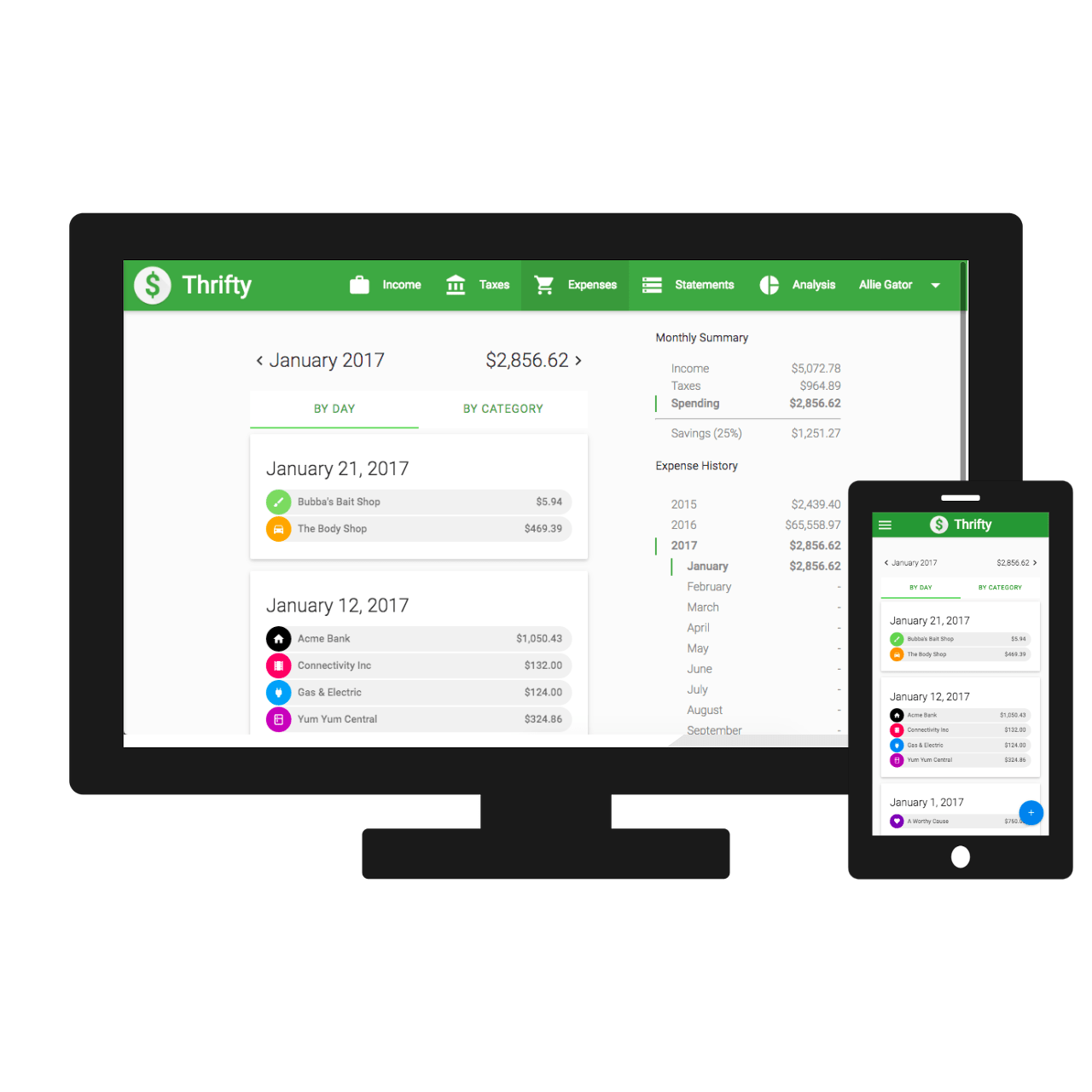
In the spending summary below, you’ll see screenshots straight out of our Thrifty account.

If you’d like to learn more, check out Thrifty and sign up for a free 7-day trial.

How We Manage our Money

We’ve been using Capital One 360 for our checking and savings accounts for years. We’ve been really happy with their ease-of-use and interest rates. For travel rewards, we’ve been using a Capital One Venture Card and should be hitting the spending threshold to get our signup bonus soon!

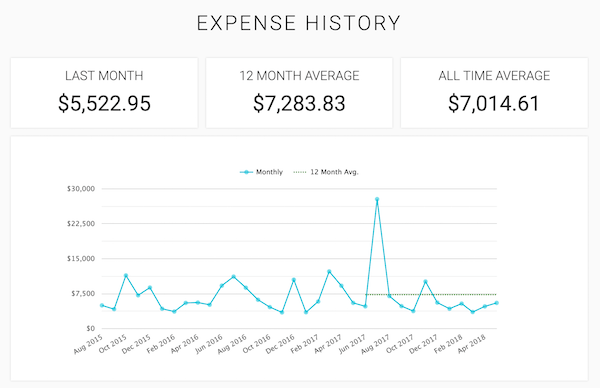
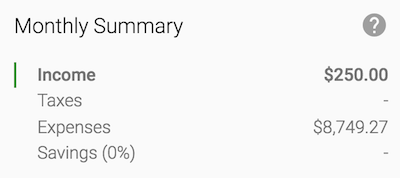
Spending Summary - $5,522.95

In May, we spent a total of $5,522.95. Our mini-retirement budget for the year is $60,000, so we were a bit over our monthly average target of $5,000, but things are still looking good.

Here’s how we’ve been trending on our spending:

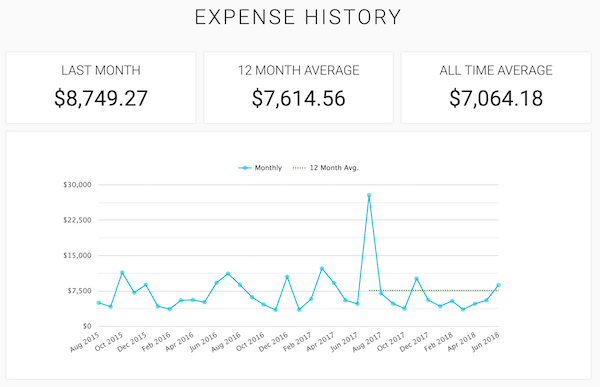
March spending: $5,522.95; 12-month average spending: $7,293.01

Our average is skewed high because of the $18,000 we spent in July for closing costs and real estate agent fees in selling our home

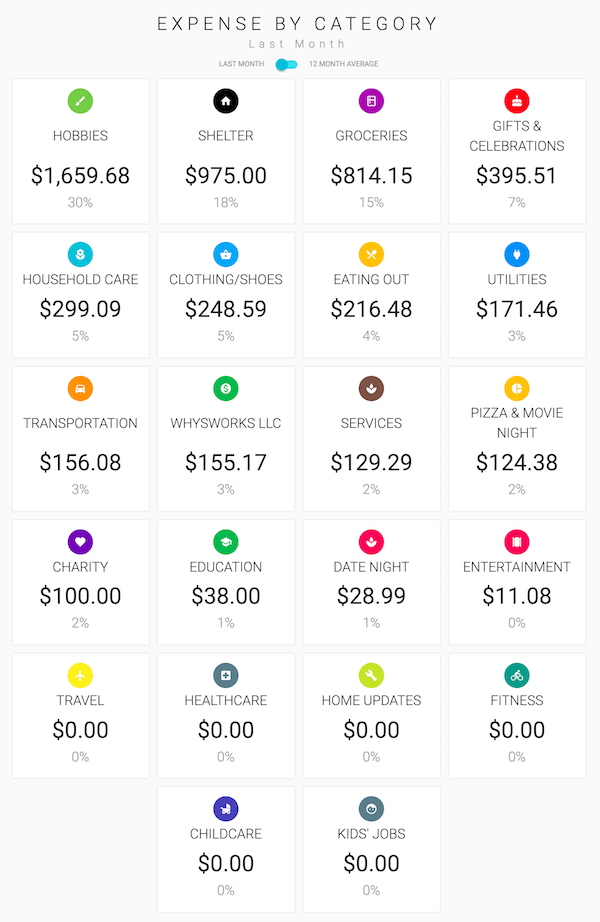
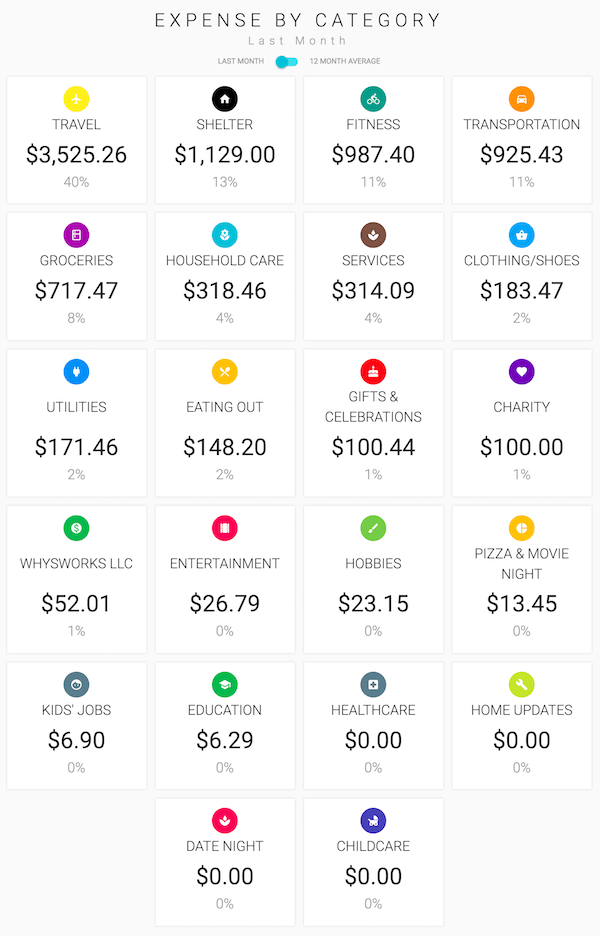
Next, let’s take a look how we spent by category this month:

2018 spending - reference table below for details

And here’s a breakdown of each category:

Category Amount Notes
Charity $100.00 We continued our regular contributions to our church and The Hope Effect, one of our favorite charities.
Clothing/Shoes $248.59 After many months of minimal clothing purchases, we had to eventually restock. We got a t-shirt, a dress, a swimming cover-up, and a pair of dressy sandals for each of the girls. We got a pair of flip-flops and a pair of tennis shoes for our oldest daughter. Finally, Jaime re-stocked with 2 tops, 3 shorts, and a zip-up hoodie.
Date Night $28.99 All three of our girls were invited to an evening birthday party this month, so Jaime and I took the opportunity to duck out and have a short date night together. It was great to just have a couple hours just the two of us - we’re really grateful for the time!
Eating Out $216.48 We had a lot of treats and small purchases this month that added up big. One that was well-worth-it was paying for dinner with some friends.
Education $38.00 We paid the fees for our kids’ summer school enrollment and Jaime attended a field trip.
Entertainment $11.08 We got a few movies this month from Redbox. It was nice to see some more recent releases :)
Gifts & Celebrations $395.51 We let each twin celebrate with their own birthday party this year, so we spent a bit more than past years but it was well worth it
Groceries $814.15 We’re still hovering around the $700-800 a month mark for groceries. Really proud of us for bringing this number down over the last year!
Hobbies $1,659.68 Phew! We paid for swimming lessons for this month and pre-paid for the summer to get a discount. In addition, we signed our kids up for an afternoon outdoor camp after summer school. Finally, Jaime bought a bible and journal for a new bible study she’s joined.
Household Care $299.09 Laundry detergent, stain remover, face cleanser and toner, hand soap, bubble mix, band-aids, shampoo, cleaning products, moisturizer, dish soap, sunscreen, two ponchos, conditioner, toothpaste, air freshener, toilet paper, a replacement charger for Jaime’s laptop, and roses. We also got three cork boards for the girls to each organize their papers from school when they come home each day.
Pizza & Movie Night $124.38 Our Friday night family tradition continues.
Services $129.29 Life insurance from Haven Life for Chris, shredding papers at Staples, and paying our landlord to list our apartment for sublet (which we later canceled).
Shelter $975.00 Rent for our 1150 square-foot apartment
Transportation $156.08 We used three tanks of gas this month.
Utilities $171.46 Internet and gas/electric
Business Expenses $155.17 Business expenses - app hosting fees for Thrifty and MNY and our email management tool (we use ConvertKit). Also, I purchased a book on app testing and we paid transaction fees for invoices paid through Paypal.
Total $5,522.95  

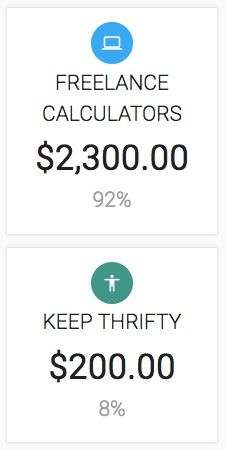
Side-Hustle Income Summary - $2500.00

Last month, Jaime and I launched our Work With Us page to give us an avenue for some side-income.

This month, we both had big victories here.

  • I got paid for two freelance calculator projects (three calculators for ESI Money and one for Your Money or Your Life).
  • Jaime got paid for two sponsored freedom stories. She found an awesome way to keep the spirit of the freedom stories pure while giving us a chance to get paid a bit along the way. We have two stories sponsored by You Need a Budget - one that came out last month and one that will come out later this month - featuring individuals that used YNAB to help them achieve a freedom dream.

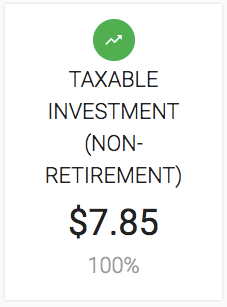
Savings Summary - $7.85

We’re now a full month into our experiment with Acorns and based on rounding up our transactions on our normal credit card, we had $7.85 invested into our account this month.

We like what we’re seeing with Acorns so far - it’s definitely a non-intimidating way to get started with investing. We’ll give you more info as we get deeper in.

If you sign up for Acorns here, they will invest $5.00 for you! Almost as good? They’ll give us $5.00 too :)

How Was Your May?

Overall, we’re doing really well with keeping our spending on-track with our mini-retirement budget. Just one more month to go - we’ll give you the full report next month!

Don’t forget to check out Thrifty, the app behind all the pretty screenshots in these reports. You can get your own tracking started for free with a 7-day trial!

  •  

On My Way To Happiness: Student Loan Debt Freedom


I’ve got an awesome freedom story for you today from Kelsey. She’s passionate about helping college grads change their money mindset with daily tips and step-by-step action plans to get unstuck and set up for a lucrative financial future while enjoying their daily life. Here’s her personal student loan freedom journey!

My Adult Freedom

Kelsey and friends after graduation

As I stepped out of my college graduation cap and gown, I felt the freedom of entering my adult life.

Having grown up in Maryland and attended college in Delaware, I was heading into my new life in a new state. I was starting my career in sustainable energy systems and ready take on the world. Bring on the the downtown life, the cocktails, and new friends! I was twenty-two, didn’t know a single person, and off to Connecticut. Hello world! I’m coming for you!

I jumped into my new life head first with an impractical apartment near downtown (far from work), went to the bars as often as possible, and never limited myself on those fancy expensive drinks. I splurged on eating out, makeup, clothes, jewelry, new furniture, and taking trips to visit friends. I never thought twice about how much I was spending because my checking account never went in the red.

Overall, I was being responsible with my money and in some ways frugal. I didn’t upgrade my college kitchen gear - 3 mismatched plastic plates, 5 forks, 2 spoons, 1 muffin tin. I even cooked for myself one day a week that included the occasional vegetable! I always paid my rent on time and got a roommate. I was even automating 10% of my income to a savings account and putting 5% in my 401k.

I was rocking my adult life. I made great friends and the guy I was crushing on asked me out! All my efforts in spending money on my social life were paying off! That is, for the first six months of my adult life.

Adult Responsibility Hits

Kelsey

Did I forget to mention that I had $28,000 in student loan debt? I hadn’t forgotten, but I had a six month grace period before I had to start making payments. When January 2017 came around, I logged in to make my first payment and was smacked in the head. Why did I owe $31,000?

My dad had tried telling me, but I didn’t listen to him. During those six months of grace, I was actually racking up interest! Crap!

In my defense, I had tried to create an auto payment system after I started my job, but it didn’t let me. I took this as not needing to pay yet, and moved on instead of trying harder to get my auto payments set up. Oops!

I made my first payment of $700 (pure interest), finally set up my auto payment, and moved on with my life. As the months ticked on, I was trying to keep up with the lifestyle I had created, but seeing those $700 sucked out of my account every month was getting to me. By November I was ready to try something different.

Then I found out about high yield savings accounts (earning 1% interest instead of 0.01%) through Pinterest. That seemed like a smart switch! I created an online high yield savings account, filled out my information, and transferred in $6,000. Then I remembered the last time I made a financial decision and ignored my dad’s advice - I ended up $3,000 in the hole. So I called my dad and asked for his advice:

  • My Dad: “Well what’s the interest rate on your student loans?”
  • Me: “I don’t know, I have different loans, the lowest is 3% and the highest is 7%”
  • My Dad: “Why don’t you put the $6,000 to your loans? You’re going to lose way more money in interest than you gain from the 1% from the bank”.

This was EYE OPENING. I knew interest was annoying if it was taken from you and good if it was given to you, but I never actually thought about what it was and how it worked (This is why we need personal finance courses in school!). I left my conversation with my dad and created a new plan. I was going to pay off every last dime of my student loans as quickly as possible!

Paying Off My Debt

Kelsey with thumbs up after a race

I had already started making changes in my spending. While I enjoyed going out, the drink prices were crazy and my boyfriend was over the bar scene. At work, my clothes always got dirty (hello engineering job) and the other girls didn’t wear makeup. I found myself no longer buying clothes for work or spending hundreds on make-up. These changes helped adjust my spending habits and focus more on paying off my loans!

I had $20,000 in debt left. I took a look at my bank accounts for money just sitting there, not growing or working for me. I found $5,000 I could transfer out of my checkings and into my student loans.

After my high yield savings money hit the new account, I transferred $5,000 of that money right out and into my loans (keeping $1,000 in savings). Boom, I was halfway to debt freedom!

I calculated that if I saved like a maniac, I could pay the remaining $10,000 plus interest off within the next 4 months. In order to do this, I created a strict-ass budget. I got paid every two weeks and decided to create a bi-weekly budget, refreshing my numbers every two weeks with my EXACT expenses. Here’s what my general budget looked like:

Kelsey and her boyfriend

  • First Paycheck:
    • Bills: rent, electricity, internet
    • Groceries: $150 (me & boyfriend)
    • Personal Needs: shampoo, etc
    • Social Life: drink with friends, etc
    • Left Over Money: DEBT PAYOFF
  • Second Paycheck:
    • Bills: gym, student loan payment
    • Groceries: $150 (me & boyfriend)
    • Personal Needs: toilet paper, etc
    • Social Life: attend wedding, etc
    • Left Over Money: DEBT PAYOFF

I created my two-week budget, making sure that I always had money left over from my paycheck to put towards my student loans. During the two weeks, I tracked my spending every day and then calculated my actual left over money at the end. I divided my left over money by 14 to create daily loan payments. Every morning I logged into my student loan account and made that payment!

I know I could have paid the full amount in one lump sum, paid a blind $20 a day, or just upped my auto payments, but making the daily payments helped me create a healthy habit. I made my payment first thing every day. When I pay off all my debt, I could keep doing this, making payments to investment/savings accounts instead!

This wasn’t easy and at times I wasn’t as strong as I wanted to be. Let me just say one word - Target. Need I say more? One day I walked in with a plan to spend a $15 gift card on a $10 calendar and walked out with $45.37 of merchandise and my gift card forgotten at home! Ugh! And this is one of many budget hurdles I’ve gone through!

Kelsey

My daily habit is what kept me going when I was feeling depressed, defeated, or when the tears were streaming down my face. Eventually, I started seeing real progress and paid off the last of my debt on April 5, 2018, less than two years after starting my job!

Now that I’m debt free, I’m continuing my daily payment habit and putting money in savings/investments in order to pursue financial independence. Right now there is nothing I want more than financial freedom. Even though I’m far from my goal, I love knowing that I’m working towards it every day!

Thank you to Kelsey for sharing her story. We love her strict-ass bi-weekly budget and how she conquered her student loan debt! We wish her the best as she continues sharing her thoughts at On My Way To Happiness and works towards FI.

Do you have a freedom story you would like to share? We would love to hear from you! Submit your story here!

  •  

Florida Road Trip Photo Update


Our family is currently on a road trip to the beautiful town of Venice, Florida. As such, we don’t have a normal update for you this week, but we thought you might enjoy seeing a few pictures from our trip so far.

Enjoy the photos!

Our daughters in the doorway of the Cannonsburgh Village Schoolhouse in Murfreesboro, TN

Our daughters in the doorway of the Cannonsburgh Village Schoolhouse in Murfreesboro, TN

Playing at the splash pad in downtown Venice, FL

Playing at the splash pad in downtown Venice, FL

Exploring the canopy walkway at Myakka River State Park

Exploring the canopy walkway at Myakka River State Park

Chris and one of our daughters in the pool

Chris and one of our daughters playing in the pool

Our daughters climbing the rocks on Venice island

Our daughters climbing the rocks by the ocean on Venice island

That’s all for now. We’re still traveling through Saturday, so we’ll have more photos to share in the near future.

We hope you’re having a great week - God bless!

-Chris and Jaime

  •  

Following A New Path To A Healthier Life


Michelle from The Classy Simple Life had been walking the same path for years until she was forced to change course. She found herself facing new challenges that broke her down so she could grow into a healthier life. Here’s her story:

The Humdrum Path

I spent over a decade following an ordinary path. I thought it was the road I was supposed to be on. I was married, had a good job in corporate sales/marketing, and a full home life. But after sixteen years, I realized that this humdrum path was crumbling.

I was exhausted, burnt out, and the stress was starting to negatively affect my health. My marriage had ended in divorce. I had to sell my cluttered home. I was days away from having a nervous breakdown. I couldn’t go on like this. I needed to simplify my life. I needed a change. I just didn’t know how to get off this path and onto a different one.

The Unexpected Path

Instead of finding a new path, it found me. In the Fall of 2015, I was laid off. I hadn’t planned for this and found myself having to quickly throw together a survival plan. Luckily, I had recently paid off my car loan and had at least $1000 in an emergency savings fund. I was forced to cut my monthly budget drastically from $5k to $1k!

In order to make this happen, I sold my home and rented a room with family in exchange for helping around the house with cooking meals and cleaning. I cut my Starbucks habit in half, stopped going to restaurants, got frugal with my groceries, started repairing my possessions instead of replacing them, and sold the things I no longer needed.

Finding myself without a job was a kick in the pants, but I needed it. The Universe was telling me - Hey lady, it’s time to live a simpler, stress-free lifestyle. Even if I wasn’t prepared, I was starting down the path of a classy simple life. At least I had my termination pay and small emergency savings to help me get started.

Becoming An Entrepreneur

I had always wanted to work for myself and this seemed to be the best time to give it a try! I took a turn down the path of entrepreneurship and started my blog. For the first time I was my own boss and made time for my health and wellbeing. It was great, or so I thought.

Entrepreneurship is challenging and progress can be slow (really slow). As the months ticked on, I found myself struggling mentally. I didn’t think this would happen, that the loss of my career would hit me so hard, but it did. It was a huge blow to me! I had worked for 16 years, was super successful, and had never been laid off before. For the first time, I felt like I wasn’t successful. I needed to find a way to pick myself up, even just a little bit.

I ended up finding some relief by getting a part-time job. I know, this seems like a backwards move, but sometimes what seems backwards is just a side step. I was lonely working at home all day. I needed more community in my life and I found that in a part-time job at a coffee shop. This became a sanity saver and has brought me a lot of other positives - extra income, great connections, and health benefits.

I wish I could say that from that point on, things became easy, but life never moves in a smooth line. After a few months of feeling good, my grandmother passed away. This hit me hard. I found myself more depressed than before and started leaning on old bad habits to get through the sadness.

I found myself questioning whether the path I had taken was the right one. What if I had made a huge mistake? Was I good enough? Could I get this business off the ground? I stopped looking at my successes and only looked at my failures. It was awful. I began to feel like I was never going to be successful.

By late 2017, I was mentally exhausted and had enough with beating myself up. I decided it was time to once again pick myself up. I turned to daily affirmations and reminding myself to think positively. I started doing yoga and meditation (life saver!). I turned to self-help books and motivational videos. Women like Danielle Laporte, Oprah, and Gabrielle Bernstein became my coaches for getting past it all.

I also re-evaluated how to move forward in my business. I created a regular routine for myself. I now schedule when I write, take photos, and do admin work. I even set aside my Sundays for self-care so I don’t run myself into the ground.

While my part-time job is awesome for my finances and having a social working environment, I knew I needed more support in my entrepreneurial journey. I tend to find myself stuck in the planning stage and not taking action. I joined a local mastermind group for female entrepreneurs and it has been just what I needed. They are kicking my butt!

Looking Back, Looking Forward

These past few years have been challenging. I expected to go straight into entrepreneurship, not supplementing with a part-time job. I thought I would be filled with energy, not crushed by depression. Sometimes I look back on 2017 and feel like I wasted a year of my life, but I needed to go through that hard time and allow myself to heal.

Along this path I have become tenacious and persistent. I’ve found a strength that I never knew I had. I’ve taught myself to focus on my wins, recognize the abundance I have, and find gratitude in the simple things in life. I’m healthier than ever and continuing to slowly grow my own business.

And as my income increases, I’m looking forward to adding a little travel back into my life - maybe even living and working from anywhere in the world!

Thank you to Michelle for sharing her story! Chris and I can relate to so much of the same struggles. We are so happy that Michelle found a way to work through life’s crazy challenges and we can’t wait to hear where this path takes her!

Do you have a freedom story you would like to share? We would love to hear from you! Submit your story here!

  •  

We Just "Wasted" $2,400 on Travel and Couldn't Be Happier


As we pulled up to the parking attendant’s booth and I took out my credit card, my daughter called out from the back seat with a tone of frustration:

“Great, now we have to waste our money to park here?”

I asked her to hold on to that thought as I finished paying the $22.00 for our parking space at Disney World’s Magic Kingdom. I was a bit surprised by her comment, but as a parent, I could recognize a teaching moment when I saw one.

As we wound our way through the parking lot, I asked my daughter whether she was excited to be going to Disney World. As you’d expect from just about any 6-year-old, the answer was an enthusiastic yes.

I asked if this road trip was something important and valuable to our family. She nodded.

I asked if this was more important to us than some of the other things we’ve chosen not to spend money on. She smiled and I knew the message had gotten across.

Our $2,400 “Waste” of Money

Jaime and the girls in the parking lot tram at Disney World

We spent 10 days this month road tripping from Wisconsin down to Florida and back. We stopped at parks, playgrounds, and restaurants. We stayed with family, went to the beach, and swam in the pool. On our way home, we spent a day at Disney World, meeting princesses, riding flying elephants, and spinning in teacups.

All told, the trip cost us $2,400. That may seem like a big chunk of change, but for the memories we made and the time we got to spend together as a family, it was worth every penny.

We didn’t finance this with a loan, or credit card debt - we had the money set aside for the whole trip before we booked our first night.

This trip (and all of our trips) was the result of intentional savings so we could intentionally spend on what’s important to us (Tweet this )

How We Could Have Actually Wasted $2,400

Saving up $2,400 for a trip may seem daunting. But breaking things down into pieces, it’s $200 a month.

Even that may seem daunting, but here are the things we’ve chosen to forego that make a $2,400 annual trip possible:

  • Cable TV ($60/month)
  • Netflix ($8/month)
  • Amazon Prime ($13/month)
  • Eating out for lunch on work days ($5/day * 20 days/month = $100/month)
  • Drinking coffee instead of soda ($32.50/month)

Boom - that’s $213.50 a month, or $2,562 a year in savings that can fund a trip.

And when I compare the joy, memories, and fulfillment that I’d get out of a 10-day family road trip to what I’d get out of watching more TV and eating/drinking things that are less healthy, the winner is clear.

Spending money on what’s important to you isn’t a waste - it’s precisely what you’re supposed to do.

Yes, you have to cover the necessities first, but after you clear that bar, the best way to utilize your money is to identify your priorities and put your money where your heart is.

How to Know if You’re Wasting Money

A few years ago, we didn’t really know where our money was going. We weren’t accruing new debt, but we also got to the end of every month wondering why our paychecks had disappeared.

We knew we had to start tracking our spending to see what was eating up our money. So, I developed Thrifty and we’ve been tracking every penny since.

We discovered that we’d been spending $3,300 more each year on food. We saw the money we were sinking into home updates.

As we dug into our spending habits, we started seeing waste everywhere and knew we could do better.

We had dreams we wanted to accomplish but felt financially limited. What we hadn’t realized was that we were our own biggest barrier.

Over the last three years, we’ve worked hard to eliminate the waste so we can redirect our money to our true values. Family adventures, investing in our relationships and being healthier in what we consume (both food and entertainment).

If you have a dream you want to accomplish but feel like you can’t get there, it’s worth looking first at your situation and seeing what you can control. You may not be able to negotiate a 50% pay raise tomorrow, but maybe you can find one bad habit to eliminate that frees up a bit of your budget.

So, start tracking, keep dreaming, and don’t be afraid to eliminate some waste.

Join Me for #TomorrowTalk

Related to this topic, I’ll be the guest for #TomorrowTalk this week - a twitter chat where we talk about tips and tricks for saving for your family vacation. Get on Twitter at 8PM EST on Thursday, June 22nd to join the conversation!

#TomorrowTalk Thursday, June 22nd at 8PM EST

  •  

How We Got Through The Ups & Downs In Life And Created A Financial Foundation


We want to thank You Need A Budget for sponsoring this awesome story!

Laurie shared her first freedom story a few months ago - How We Are Moving Towards Location Freedom - and now she’s sharing a bit a of prequel to that story. Before pursuing location freedom, Laurie and her husband went through a bunch of ups and downs in their financial life. Here’s how they worked through those struggles and found a budgeting system that has created the financial foundation they needed to move towards location independence!

Digging A Financial Hole

Sign on desk with words "Ever Tried. Ever Failed. No Matter. Try Again. Fail Again. Fail Better"

I became a stay-at-home mom eleven years ago. When I became pregnant with our first son, I knew I wouldn’t want to go back to work. My job had covered 40% of our income and 100% of our health insurance. It was going to be a big obstacle for our finances, but this was the life we wanted and we were determined to make it work. Unfortunately, we didn’t cut our expenses as much as we needed and found our credit card bills slowly increasing each month.

To make things even more challenging, seven months later, my husband was laid off from his job. He received a three-month severance, but we felt completely unstable with our credit card bills, the search for a new job, and providing for our baby boy. It was an emotionally reeling time. I didn’t want to have to go back to work and leave our son in daycare and my husband was nervous about landing a job just to be laid off again.

Thankfully, my husband found a job a month later. It was a contract job with no benefits, but it paid 20% more than his previous job. We could make that work. And for a moment, we felt relieved – all our problems had been solved!

I wish that were the case, but the position ended up being a horrible fit for my husband. He felt like he was doing a terrible job and expected to get fired any minute. The stress was wreaking havoc on our marriage and we felt more out of control than ever. Each day my husband went to work to provide for our family, hoping that he wouldn’t lose his job once again.

Nine months later, this company laid off all their contractors. We were once again left without an income for the second time in a single year. Luckily, within a month of this happening, the original company that laid my husband off, wanted him back. This was a huge blessing. My husband returned to a job that he was good at, he now earned more income, and we had a little more stability.

Pulling Ourselves Out of Debt

Laurie and her sons in costumes

My husband’s two layoffs changed our financial outlook forever. We wanted to be debt free, build a large emergency fund, and grow such a solid net worth that no job loss could ever inspire the panic we had lived through again.

As a stay-at-home mom who was not making any income, I felt helpless in our financial journey. When my husband was at his contract job, I found myself at the local Barnes and Noble and happened upon Dave Ramsey’s book The Total Money Makeover. I was intrigued by the title, opened the book, started reading, and was hooked. This guy was selling freedom from debt and uncertainty along with control over your finances!

We had $38,000 in debt (credit card & car loan, not including mortgage) and we needed a budget in order to pay it off. We started with paper and pencil and then we switched to an online tool, Mvelopes. Using an online budget was much easier and helped us become aware of how much we were spending in each category. We finally started cutting expenses:

  • We cancelled the alarm system even though we paid a penalty.
  • We cancelled our yard service.
  • We stopped going out to eat as much.

While this online tool helped us make progress, we found that it wasn’t flexible enough for us. We would overspend in a category and felt like we were always playing catch-up. We needed to be able to move funds and start fresh each month. While we were able to pay off our $38,000 in debt and start growing our net worth, we still didn’t have a good budgeting system. We knew we could make even more progress if we could figure this out!

Creating A Solid Financial Foundation

Laurie, her husband, and their sons in dress clothes

Several years passed. Our second son was born and we moved to New Hampshire for a new, more stable job. In January 2017, we were introduced to You Need A Budget (YNAB) by Stephanie of Six Figures Under. Her family had used it to budget and were able to get one month ahead. This sounded like a phenomenal idea. And since I was now in a Master’s program, I could get the first year for free as a student. I signed us up and haven’t looked back.

YNAB has proven to be the change we needed in creating a budget that is flexible enough for our family. We’ve paid off a lot of recurring monthly payments and have a larger portion of our income available for saving. We still overspend from time to time (don’t we all!) but we are able to use our extra savings fund to pay for that expense. Transferring money out of our virtual savings is painful, so we’re less inclined to overspend and find that we do this less and less.

We are actively making progress towards getting one month ahead in our budget. We should hit this goal in December, allowing us to start 2019 off by budgeting a month ahead. When we make our budget for next January, we’ll only spend what’s available to us and fully save for our other goals - becoming location independent and traveling!

We made some bad financial decisions early in our marriage. We started off with a lot of debt, but we didn’t let that deep hole bury us. We were able to slowly pull ourselves out with tiny steps (even some missteps along the way) that led us to YNAB and creating a solid financial foundation. I want to encourage anyone reading: if you feel like it’s impossible, or if you can only take tiny steps forward, don’t lose heart! Over time, those tiny steps add up.

We want to thank Laurie for sharing her prequel. We are thrilled that she found YNAB and that it has helped her family find success in creating a budget! You can catch up on Laurie’s location independence story here, and visit her blog - The Three Experiment.

Do you have a freedom story you would like to share? We would love to hear from you! Submit your story here!

  •  

Book Review: The Year of Less


Do you find yourself ending each month wondering where all the money went? Do you find yourself coming home from a shopping trip with a feeling of excitement that lasts for only a few brief moments? Do you find yourself anxiously awaiting your online order to arrive, only to bury the precious item in the back of your closet?

Shopping can be addictive. And like any addiction, it is destructive and incredibly challenging to stop. First attempts may fail, but persistence can get you there.

Just ask Cait Flanders.

Cover of 'The Year of Less'

Cait’s book, The Year of Less chronicles her journey through a one-year shopping ban (which eventually extended to two years) - sharing her mindset, doubts, missteps, and triumphs.

Cait’s shopping ban was such an inspiration for us, that it led to our own Nothing New Year Challenge, which permanently changed how we view consumerism, money, and what’s important in life.

But don’t think this book is just about the shopping ban - that’s just one piece of Cait’s much larger story. She opens up about her history with addiction, family issues, career questions, and ultimately shares her pathway to self-discovery. Cait’s willingness to be vulnerable is refreshing in a world of carefully curated Facebook feeds and picture-perfect Instagram filters.

The Year of Less is much more of a memoir than a how-to guide, but that’s precisely what makes it such a powerful read. Sure, you’ll find lessons on money and shopping, but you’ll learn much more about life itself - developing healthy relationships, investing in self-improvement, conquering demons, and figuring out what really matters in life.

I highly recommend Cait Flanders’s book, The Year of Less. You’re bound to connect with Cait’s journey and you’re sure to be inspired by her persistence, her attitude, and her relatability.

Have you read The Year of Less? What did you think? What did you take away from Cait’s journey?

  •  

How I Changed My Financial Family Tree


Have you ever felt your financial future seemed hopeless, that you were destined to struggle? Bailey felt that way, but she was determined to change her future! Here’s how she did it!

My Financial Family Tree

As I looked towards my financial future, I felt hopeless. I came from a family that had made poor financial choices for generations and I felt myself slipping down that same path. At just 21 years old, I was $25,000 in debt due to student loans, a car loan, a personal loan, and one maxed-out credit card. Would I be stuck in debt, following in my family’s poor financial footsteps as well?

I didn’t want financial hardship to shape my story or continue to be a branch in my family tree. I dreamed of getting married someday, of meeting my person, and creating an amazing life together. I didn’t want to bring “financial baggage” into that life. I wanted to change my family’s story, eliminate my debt, and create a new path for a brighter future.

Making Changes

Bailey

My dream gave me hope and a vision. It gave me the motivation I needed to work towards eliminating my debt, but it wasn’t easy.

My first full-time job in Human Resources barely paid above minimum wage. There was no way I would be able to get out of debt, let alone pay my rent at my current income. I knew that if I wanted to change my financial future I needed to change my circumstances. So I set out to change course!

I gave up a lot in order to pay off my loans:

  • My Independence: I moved in with my mom to save on rent.
  • My Fun: I cut out extras like entertainment and travel.
  • My Time: I took on a part-time job working at a bookstore on evenings and weekends.

It was hard - super hard. I was working a total of 55-65 hours a week and found myself completely exhausted. I remember arriving home from a 12 hour day in tears from pure exhaustion. The only thing that kept me going was reminding myself that it would all be worth it when I was debt-free.

I wasn’t perfect about being frugal (it’s not easy) either. Some months I would get distracted from my goal and go over budget. This would cause setbacks. I could have beat myself up over it, but I accepted that I wasn’t perfect and gave myself the grace I needed to move forward in paying off my debts.

Each month I was able to pay off my debt little by little. After a year of this I had paid off $14,000! I was making progress towards my debt freedom dream. I figured it would take me another year to rid myself of this baggage and then I would then be ready for the next phase of my life!

Gaining A Partner

Bailey and Andy wedding photo

Plans never go the way you expect - the way you plan them to go. I had wanted to become financially successful on my own, before meeting my future husband, and definitely before getting married. But that wasn’t God’s plan for me. I started this journey on my own, but I was meant to continue down this path with a partner.

Andy entered my life a year and a half into my debt freedom journey. We clicked perfectly and planned to say “I DO” a year after we met! I wasn’t going to be debt-free by June 2016, but we were ready to start our life together.

Beyond still having debt, we didn’t have the cash for our wedding and decided to take out a loan for our big day. I don’t recommend this and I agree that this isn’t a good financial decision, but we were considering a lot of other factors than finances (namely, Andy’s military career.) As we became husband and wife, we walked into more debt, but we were going to tackle it as a team.

We worked hard together. Since I struggled with finding full-time, professional employment after our wedding, I worked two part-time jobs for 4 months. At times, I worked as many as 80 hours per week. (Talk about exhausting!) In addition to his busy work schedule with the military, my husband took care of things on the homefront so that I could focus solely on work. Our teamwork paid off, literally - haha. Less than eighteen months into married life, we made our last debt payment in November 2017.

My New Family Branch

Bailey and Andy

When I started this journey, I felt hopeless in following my family tree in financial struggles. It took a total of three and a half years to change my branch in the tree, but the journey has been totally worth it. I sleep better at night, no longer worrying about bills or debt. Andy and I are living in a lovely little cottage in Iowa with our dog and cat. We are building up a six month emergency savings fund, have the financial freedom to freely give to those in need, and start traveling - things I never imagined possible!

No longer do I feel hopeless or destined for financial distress. Andy and I have created a new family branch together. One that is bright and full of hope. We are currently dreaming of taking an international trip to Europe or the Caribbean (we haven’t quite decided yet where we’ll travel). And who knows what will be next for us! All I do know is that debt no longer has a hold on me, my future, or my family tree. There is hope, there is light, and there is success in this branch!

Thank you to Bailey for sharing her story! We love that she she persevered through the tears and that her and her husband were able to take on their debt as a team and create a brighter future for their family! We can’t wait to see what they pick - Europe or Caribbean?!

Do you have a freedom story you would like to share? We would love to hear from you! Submit your story here!

  •  

Bikes and Automobiles - June 2018 Finances


It’s time for another spending report! We spent a lot this month on getting from point A to point B - gas for our road trip to Florida, maintenance and insurance for our car, and two bikes (one for Jaime and one for our oldest daughter).

I’ll give some personal updates first and then we can dive into our full spending report.

Personal Updates

Girls at an old schoolhouse on our road trip

We had another action-packed month. The girls finished up the school year and within an hour of leaving class, we were on the road to Florida for our summer road trip.

With summer in full swing, we’ve been busy with water balloons, soccer balls, and science experiments. Add in summer school (the fun kind) for the kids and afternoon camp and we’ve been even busier than the school year.

That said, it’s been a good kind of busy - the kind that leaves you tired at the end of the day and a smile on your face.

Girls playing on air hockey table

One of the really fun things we picked up this month was a fully-functioning air hockey table that a neighbor put by the curb. The girls are becoming air hockey experts and Jaime and I are trying to keep up :)

My job search is progressing - I’ve had conversations with a number of companies and am making progress on a few promising positions. I anticipate we’ll have clarity within the next 1-2 months on where I’ll be headed for my work day and what our finances will look like going forward.

How We Track Our Spending

We’ve been manually tracking our spending for the last 2.5 years and it’s helped us make a big improvement in our spending habits.

I couldn’t talk Jaime into loving spreadsheets, so I created a web app for us instead. Once we had it for ourselves, it was a logical next step to put it online for anyone to access.

In the spending summary below, you’ll see screenshots straight out of our Thrifty account.

If you’d like to learn more, check out Thrifty and sign up for a free 7-day trial.

How We Manage our Money

We’ve been using Capital One 360 for our checking and savings accounts for years. We’ve been really happy with their ease-of-use and interest rates.

For travel rewards, we’ve been using a Capital One Venture Card and we just hit our spending threshold to get 50,000 bonus points - that’s $500 in travel!

Spending Summary - $8,749.27

In June, we spent a total of $8,749.27 - quite a bit more than our monthly target of $5,000. Almost all of this was travel-related (both our family road trip in June and paying ahead for parts of our 10-year anniversary trip in July).

Here’s how we’ve been trending on our spending:

June spending: $8,749.27; 12-month average spending: $7,614.56

Our average is skewed high because of the $18,000 we spent in July for closing costs and real estate agent fees in selling our home

Next, let’s take a look at how we spent by category this month:

2018 spending - reference table below for details

And here’s a breakdown of each category:

Category Amount Notes
Charity $100.00 We continued our regular contributions to our church and The Hope Effect, one of our favorite charities.
Clothing/Shoes $183.47 Last month, we refreshed clothing for Jaime and the girls. This month was my turn - 3 t-shirts, a pair of shorts and a new belt. In addition, we got a new pair of shoes for each of our twins. Kid feet grow so fast!
Eating Out $148.20 With our busy, activity-filled month, we bought a lot of food while out doing fun activities. We only ordered-in for food one time this month outside our plan, but lots of treats this month at home and while we were out.
Education $6.29 We bought some supplies for our 1st-grader’s end of school class party.
Entertainment $26.79 We rented three movies from Redbox this month and took the kids to a local pool.
Fitness $987.40 Whoa - big month this month! We bought a bike for our oldest daughter and one for Jaime too. In addition, Jaime signed up for Krav Maga classes (3x/week) as a way to learn some self-defense and work out at the same time. She’s tried some moves on me already - I’ve got the bruises to prove it :)
Gifts & Celebrations $100.44 We had a pretty simple Father’s day, and Jaime had lunch with her mom as a Mother’s day present from last month. In addition, we got a gift for our nephew for his baptism.
Groceries $717.47 We’re still hovering around the $700-800 a month mark for groceries.
Hobbies $23.15 We got some markers and coloring books for the kids. In addition, we got supplies for a science experiment that our girls did at summer school and wanted to do with us again at home.
Household Care $318.46 We had a number of one-offs this month: an ice cube tray, a veggie peeler, a calendar, some storage bins to organize art supplies, a pencil sharpener (with batteries), 5 beach towels, a small cooler, and 2 ice packs. Of course, we also had our standards: dishwasher detergent, toothpaste, floss, hair gel, toilet paper, sunscreen, aloe, bleach, shampoo, conditioner.
Kids’ Jobs $6.90 Our kids started asking to earn some money again, so we set up a cool system for Saturday morning chores (post to come). We’re two weeks in and it’s working well. The kids are earning good money, and we’re getting a chance to teach them housekeeping stuff they’ll need to know as they grow up :)
Pizza & Movie Night $13.45 This month, we cooked “mini-pizzas” for our pizza nights as a cost-saving experiment. Cut an English muffin in half, put sauce, cheese, and other toppings on and pop in the oven for 10 minutes at 375 degrees. Tasty, healthier, and cheaper! We have the cost of these in our groceries, so the $13.45 is movie rentals and an order of breadsticks.
Services $314.09 Life insurance from Haven Life for Chris, a haircut for Chris, and paying an old neighbor to mow the lawn at the land we own (for May, June, and July).
Shelter $1,129.00 Rent for our 1150 square-foot apartment (which went up by $25) and renter’s insurance (for the year)
Transportation $925.43 Three tanks of gas, a car wash, car insurance (for the year), and maintenance. This time, I paid for the oil change but replaced the engine intake filter and the cabin air filter myself - it was super-easy and saved about $50.
Travel $3,525.26 About $2,400 for our trip to Florida and $1,130 for our hotel for our upcoming trip to Costa Rica.
Utilities $171.46 Internet and gas/electric
Business Expenses $52.01 Business expenses - app hosting fees for Thrifty and MNY and our email management tool (we use ConvertKit).
Total $8,749.27  

Side-Hustle Income Summary - $250.00

Jaime and I made a bit this month from the blog (and the connections its made for us). Our $250.00 is a combination of income from our Freedom Series sponsor and from freelance writing. You can see our Work With Us page for the full list of opportunities we have.

How Was Your June?

How was your spending this June? We had a lot of seasonal expenses hit this month and some big investments in our health and travel. Everything was in alignment with our values, so we feel good about it even though it was a higher-spend month!

Don’t forget to check out Thrifty, the app behind all the pretty screenshots in these reports. You can get your own tracking started for free with a 7-day trial!

  •  

How Frugality Led Us To Colorado & South America


I’m so excited to have Ellen from Uncommon Dream share her family’s Financial Independence story! It’s amazing the dreams you can accomplish when you live frugally!

Our Frugal Beginning

Michael and I have always lived on the frugal side of life. We chose to buy a low cost home close to work, paying off our mortgage in two years. We even sold one of our vehicles (keeping a single old paid off car) and traveled by foot or bike as much as possible.

We’ve always worked hard and found ways to have fun without spending a lot of money. We would take our sweet dog for hikes, have friends over for game night, travel to visit family a few times a year, and stay up too late binge watching shows like The Wire or Breaking Bad.

Living frugally allowed us to live off my teacher salary (even after fully investing in my 403b) and invest Michael’s salary into index funds at Vanguard. Michael was really excited to see our projected retirement date as we saved his income. He would spend hours working on a spreadsheet he created and then pull me over to update me on our progress. This helped me get on board with the financial independence thing and showed me how high spending months impacted our projected date.

After seven years of marriage and living frugally, we achieved financial independence. We were both happy with our jobs, and had a baby on the way; so we decided to keep working and saving. Once we welcomed our son into our arms, our focus started to shift more toward parenthood. We found ourselves questioning our current lifestyle and talking about how we wanted to raise our family.

To Move Or Not To Move

Ellen, Michael and their two kids on a bridge

We were living in the suburbs of Dallas, Texas. While it’s a great place for many people, it just wasn’t for us. We had moved there from Olympia, Washington for Michael’s work with the plan to stay 2-3 years. We would often talk about where we wanted to move to next, where to put down roots. We’d be out walking our dog at 10pm, sweating in the summer heat, and go back and forth between moving back to Washington (where Michael wanted to go) and Baltimore (close to my brother). We just couldn’t come to an agreement.

One weekend we took a little getaway to a cabin overlooking the Palo Duro Canyon in West Texas. We worked together on our five year plan and had something of an epiphany. COLORADO!

If we moved to Colorado, we could be in a beautiful area with a lot of other family perks:

  • Close to Michael’s extended family (Michael’s aunts, uncles, cousins, and his grandfather).
  • A short flight from Michael’s parents in Texas.
  • Within driving distance of my dad and stepmom in Arkansas.
  • A reasonable flight away from Baltimore!

It’s one thing to make a decision, it’s another to make the move. Despite settling on Colorado as our destination sometime in 2012, we didn’t get there until 2016. I became pregnant with our second child and we realized that moving would need to happen now or not for a few years.

While a good friend of ours was visiting over Thanksgiving, we took my one year old to the park and brainstormed over our lives. She was looking to move from New York out west for a change of pace. Michael and I were hesitant to leave Texas and our support system right before having our second child. Our talk resulted in a whirlwind of a plan:

Michael and I would buy a house in Colorado a couple months before my due date, and she would move in with us for a few months, helping us make the transition to a two kid household.

I drove home pretty giddy to share our thinking with Michael, but we didn’t take the leap right away. There were a lot of back and forth moments. One week we’d tell ourselves no, that’s crazy! Other weeks we’d decide we were going to do it no matter what. Ultimately, we felt very strongly about moving before our daughter was born.

We flew out to Colorado in January 2016 and bought a house that weekend (we were very lucky). Our house in Texas sold within 24 hours and above our asking price. By the first week in March we were moved into our new home in Colorado. Our daughter was born exactly two months later!

Leaving our life in Texas came with another change. We decided to take advantage of the financial independence we had gained before our kids were born. We started co-parenting full time while working on passion projects on the side (such as FI Clubs).

Michael finds himself working about 70 hours a month (this happens to cover our expenses and allows us to continue saving). This allowed us a lot of flexibility in our life and we started talking about the things we wanted to do when we both “retired”. We had always dreamed of traveling abroad again.

But, yikes, we now have two very young kids! Who travels with little kids? As it turns out, we do.

Ecuador & Beyond

Ellen, Michael, and their two children in Ecuador

Michael and I met at a language school in Mexico back in 2004. We both speak Spanish and would love for our children to acquire some authentic bilingual skills as well. With that in mind, we spent a lot of time deliberating on where to travel.

Michael had used a site called TheEarthAwaits.com to find the safest, cleanest, most affordable Spanish-speaking locations to choose from. We eventually decided on Cuenca, Ecuador.

We put our house up on AirBnB, and spent an awesome three months in Ecuador during the winter of 2017. We met some really wonderful people during that time and decided to return to Cuenca for the winter for 2018. Our lifestyle there was really pretty normal. We walked everywhere, drank beer with friends, and took short trips to beautiful parts of the country. We enrolled both of our kids in a local preschool where they were immersed with native Spanish speakers for 3-4 hours a day.

We’ve been back in Colorado for about two months now and are enjoying time in our community, working on house projects, and spending time with friends and family. Along with enjoying our time back home, we are talking about taking a longer international trip. Our friends Chad & Kari have inspired us to take a bigger leap!

Ellen and one of her children walking in a market

This time, we are looking at a longer stretch of time. We’re talking about slow traveling Latin America (starting in Costa Rica or maybe Colombia) for a full year and a half beginning in January. We may stay in one spot if we fall in love with it or we may try out a few different cities and countries. We’ll then return home to Colorado in time for our son to start kindergarten, enrolling him in a local bilingual elementary school that has a great reputation.

Life is still busy with balancing parenthood, doing work that fulfills us, taking care of our home, building our life in Colorado and traveling. These past two years have been full and crazy, but we wouldn’t change it for the world.

Thank you to Ellen & Michael for sharing their story with us! We love how frugality enabled you to save, become financially independent, and raise your little ones in your values! We wish you the best and can’t wait to hear more about your slow travels in the future!

Do you have a freedom story you would like to share? We would love to hear from you! Submit your story here!

  •  

The Undersold Benefits of a 9-to-5 Job


In the personal finance space, the phrase 9-to-5 often gets treated as a four-letter word. Everyone seems to be looking to escape the 9 to 5, whether that be through early retirement or a leap to entrepreneurship.

I’ve been lured by that thinking as well, but through a year of mini-retirement, I’ve come to recognize and appreciate some of the things that a 9-to-5 provides.

Before the internet police come in and fill up the comment section, I’m not saying you can only get these things through a 9-to-5. There are lots of ways to get these; for some a 9-to-5 is a great way to get them.

Community

Team hands in the middle

When I was growing up in the suburbs of Minnesota, we had a high concentration of families in our neighborhood and the kids spent a lot of time hanging together in the backyards. The parents would get together, play cards, talk about parenting, and support each other when they needed help.

Our neighborhoods used to be our communities.

One of my good friends and I were talking about this recently and he remarked how much more of that community is now found through the workplace.

I certainly found this to be true. My coworkers were the people I spent the most time interacting with every day. We came to know one another on a personal basis, supporting each other and developing real friendships.

While peoples’ connections with their companies seem to be decreasing, their connections with their co-workers seem to be on the rise.

When you leave the 9-to-5 for entrepreneurship or retirement, you’ll find life is a whole lot quieter. That may sound idyllic for some, but even introverts like me need socialization for a healthy life.

Team-based Learning

Two women working on a computer together

I consider learning to be one of the most enjoyable parts of life.

Being in a 9-to-5 provides a great opportunity to learn from the community around you. You may have the benefit of learning from the 40-year-veteran of the industry. You may be able to develop new and creative approaches with your peer. Or you may have your perspective changed by an insightful intern.

Being around people with a diverse set of backgrounds and experiences puts you in a position to learn things you’ll have trouble doing through blog posts, tutorials, and courses. The powerful dynamic of direct personal interaction can’t be oversold.

Impact

Man working on a laptop with a skyline in the background

As an entrepreneur and blogger, I’ve had the honor to reach a number of people. But there’s only so much you can accomplish as an individual or a small team. When you’re a part of a bigger team (with a bigger vision), you can take advantage of the compounding effect of diverse talents to reach a larger audience in bigger ways.

In my old career, I contributed to the development of safe and effective medical devices - ones my own family members have relied on. There’s a great feeling that comes from being a part of a business or project that makes the world around you a better place.

In the last year, I’ve worked hard to spread the word about our app, Thrifty, but have come to realize that sales and marketing isn’t my strong suit. Without that skillset, my ability to help people get their finances in order has been limited.

As I’m applying for jobs now, one of the biggest areas I’m looking at is the impact of the work I’d be doing based on the team I’d be with. Will my work be directly benefiting my friends and family? Will I be helping to enable others who do great work? Or will I be pouring my time and energy into developing luxuries and splurges?

I think you can guess where I want to head :)

9-to-5 Has Its Benefits

While the good ol’ “day job” gets a bad rap, it’s important to remember that there are a lot of non-financial benefits of working a standard job.

As you consider your future career and what you want your retirement to look like, keep these items in mind. If they are important to you, make sure to find a way ahead of time to ensure you can still achieve them no matter what path you take.

  •  

How We Travel To Europe Twice A Year On A Small Income


Chris and I have a goal to eventually travel to Europe (after we visit all 50 states - 3 more to go!). So when I heard that Millionaire Mob found a way to travel to Europe twice a year with his wife, I had to hear more! Here’s his story!

Discovering Our Love Of Europe

When my wife (girlfriend at the time) and I were in college, we studied abroad in Florence, Italy. This is where we fell in love with Europe’s culture and history! Walking along those ancient cobblestone streets were unbeatable. After spending all that time in Italy, we knew we wanted to return to Europe as often as possible.

When I graduated from college, I landed a job in investment banking. This allowed me to make a healthy income and support our love of travel, but after five years, the job was taking a toll on my spirit - the long hours and high pressure environment was burning me out. Realizing I needed a change of pace, I hung up my suit and left my job to pursue my passion in a more relaxed environment.

I took a steep pay cut to work in a more engaging, small team environment where I’m focused on energy investing. I love it. I don’t feel like I’m at work. My hours are much more manageable and I get to meet other energy professionals around the U.S. Work can still be stressful, but if it didn’t have some stress it wouldn’t be exciting.

While I took the pay cut, my wife has been working her way through law school to avoid student loans. Our monthly bills and expenses add up fast on my income, leaving little cash available for travel. We didn’t want my lower income to hold us back from the travel we love. So we decided to look into travel hacking and found a way to travel to Europe twice a year on our small income.

Travel Hacking To Europe & Beyond

Paris - the Eiffel Tower

We recently traveled to France, taking the opportunity to trace both of our family’s heritage. We had so much fun and learned that my wife’s family was from all over France. We even got to visit some of her long lost relatives! It was an amazing experience and I definitely recommend exploring one’s family roots! You never know what you will discover!

While this trip could have cost of thousands of dollars, we were able to stay in Paris and the South of France for free via credit card hacking. We used our Chase Sapphire Reserve and Delta Skymiles credit cards.

Discovering our own history in France was amazing, but we love taking in all the different cultures that traveling to Europe offers. That’s was makes Europe such an exciting place to travel - so many different cultures in close proximity to each other!

When my wife and I said “I Do” a year ago, we knew we would travel to Europe for our honeymoon. We took advantage of Europe’s diversity and easily hopped from one country to another! Naturally, we returned to Italy, sharpening our Italian communication skills. Then flew to the Netherlands and tried to learn Dutch. It was a crazy experience. Let’s just say the culture of Italians is a lot different than the Dutch. Luckily, one similarity is that they both have amazing cheese… We love cheese, haha.

For our next trip, we are stretching beyond Europe and flying to Japan. I racked up enough points through credit card hacking and manufactured spending that our round trip tickets only cost $3.20!

I love how travel hacking has allowed us to continue to travel. While travel hacking can be complicated, it doesn’t have to be. Credit card hacking can be simple - try opening one credit card like the Chase Sapphire Preferred and earn the bonus with the minimum spend. This card is great for starters. Manufactured spending is even easier - you can fund a new bank account with a credit card and hit your minimum spending requirement instantly.

Our Retirement Dream: Living In Europe

A couple relaxing by the water

While we love that we are able to travel twice a year, we would love to be able to extend our travels in the future. Living a carefree life in Europe is at the top of our list every time we talk about our dreams and goals.

Right now, work and school take up most of our time, but we are hoping that this investment up front will allow us to retire early (in our 40’s). We are hoping that when that happens we can split our time between the U.S. and Europe!

Retirement, let alone early retirement, is hard to work towards when you don’t have a large gap between your income and expenses. In order to help with that, I’ve started focusing on a few side hustles: freelance consulting, blogging, ecommerce, and travel photography. With these side incomes, I’m able to invest in saving for our dream.

How I’m Investing For Our Dream

There are a lot of options for investing, but I’ve found dividend growth investments to be the most rewarding. I focus on investing in undervalued stocks. This way I’m able to receive additional income (yearly payouts) while also seeing stock values increase over time. You can see my portfolio and follow our investing journey here. I also created a guide to help others build a successful dividend portfolio!

My wife and I are a long way from reaching early retirement, but I’m glad that we’ve started the journey now. So far, I’m happy with our investing success and bi-annual travels!

Thank you to Millionaire Mob for sharing his journey! I’m officially interested in manufactured spending and intrigued by Dividend Investing! We wish you and your wife the best as you work towards early retirement and traveling the world!

Do you have a freedom story you would like to share? We would love to hear from you! Submit your story here!

  •  

Reader Case Study: Use Inheritance to Buy a House?


Today we’ve got something new at Keep Thrifty - our first reader case study! One of our readers, Alex, reached out with the situation below. I’ll provide my response and some commentary. I encourage all of you to provide your thoughts in the comments section as well. Our collective wisdom can certainly provide Alex with some direction and hopefully help him make a thrifty decision!

Here’s Alex’s situation:

I inherited a house, sold it, and netted 338,000. I maxed my Roth IRA out at 5500. And stashed enough away into emergency reserves. Now I have 300,000 to invest. But I am grappling with using half of that to purchase a 300k house. I don’t have the income to finance 80%. Typically houses don’t yield as much as long-term stock investments. I own 2 vehicles outright and I am debt free. I’d be interested in your perspective.

After talking with Alex further, I got clarification that the home purchase would be for personal use, not for rental income.

My Analysis

First off, kudos to Alex for maxing out his Roth IRA and topping off his emergency fund. The tax benefits of a Roth IRA are definitely worth taking advantage of if he wasn’t already getting there. Ensuring he’s got a healthy emergency fund is a wise move before any major investing.

That leaves us with the big question of buying half of a house (financing the rest) versus investing the amount (presumably in something like passive index funds).

Let’s take the home purchase on first.

The Case For Buying a House

Big home

If Alex’s goal has been to get into personal home-ownership, I certainly see the allure of putting a portion of the inheritance toward home ownership.

In Alex’s part of the country, $300k can easily get him a 1700-square-foot home (or more) with a pool and a great location.

Financing $150k with 30-year mortgage rates in the low 4% range would give a monthly payment of about $700-$750, which is a fraction of comparable rents in his area for similar houses.

Getting into a situation where he’s building equity and having a nice living situation for low monthly cost certainly has its appeal.

But having some appeal doesn’t necessarily make it the right move. Let’s check the flip side.

The Case Against Buying a House

Progressively smaller piles of money and a house

Alex is currently renting and it seems to be working ok for him. Putting his money into a personal home has a number of limitations that are worth considering.

First, there’s liquidity. While Alex has built up his emergency fund (which is a big help here), homes aren’t very liquid. If Alex finds himself in a situation where he needs to move or needs to free up more money, he’s going to be in the position of selling his home under pressure.

In the case he needs to sell, Alex may not get the price he wants in the timeline he’s looking for and could risk getting a lower sale price and/or being unable to sell in time for his needs altogether.

Second, there’s return on investment. Typically, people comparing real estate investing with stock investing are in the business of real estate rentals. Rental properties have monthly cash flow and the chance for value appreciation over time.

A personal home doesn’t have true monthly cash flow, so the investment upside is limited to value appreciation. As the experts will tell you, most home value appreciation is due to inflation anyway, so as an investment strategy, home-buying is a pretty poor choice.

Another Option

Small home

One of the items Alex highlighted in his scenario was the fact that he’s debt-free. The fact he took the time to mention this lets me know that this is something he’s proud of and is valuable to him. It sounds like Alex wants to get into home ownership at some point, but his $300k home idea would be a step in the wrong direction.

Whenever presented with two options that you don’t love, it’s always worth exploring if there are other options available. Fortunately, there’s another option here that I think is worth considering.

My big question to Alex was, why a $300k house?

As I mentioned earlier, $300k would buy a 1700-square foot house in Alex’s area. With 3 bedrooms and 2 bathrooms and a pool, Alex would be living the high life.

With just a minute of searching, I was able to find an 1100-square foot home with 3 bedrooms and 2 bathrooms (but no pool) listed for $150k. By sacrificing a small amount of space (and his own personal pool), Alex could buy the house outright, still invest $150k into index funds, and get the best of both worlds.

He’d have no rent payment, no mortgage payment, and know that he should be getting a good return on investment from stocks over his 40+ year time horizon.

With his reduced monthly costs, he’s in a better position in case of job loss or other financial hardship and having $150k in passive investments working for him should ensure he’s got a liquid secondary emergency fund.

My Recommendation

Were I in Alex’s situation, that’s the route I’d go - buying a smaller place outright and putting the rest into investments.

That said, a lot of this has to do with my personality. I’m not a fan of debt but want to be a homeowner as a part of my pathway to complete payment freedom.

If Alex is open to taking on more debt or is comfortable renting for the long-haul, putting a higher share of the $300k (or all of it) in passive index funds is the strategy that is most likely to bring higher returns.

What Do You Think?

What would you do if you were in Alex’s situation? Do you have an Option D that I didn’t think of? Leave your thoughts in the comments section below!

P.S. I’d like to give a big thanks to Alex for reaching out with his scenario. If you have a scenario you’d like to hear our thoughts on, sign up for our newsletter below and let us know!

  •  
❌