Reading view

Early Shorts from the 2026 Oscar® Best Director Nominees

Short of the Week was born in 2007, the heyday of the hipster—skinny jeans and band T-shirts were the uniform, complementing personalities defined not only by what you liked but, importantly, when you liked it.

And, if we’re being honest, short film fandom is kinda hipster. We like shorts because they can be scrappy, original, and risk-taking, but they are relatively obscure, so there is a certain flattery towards one’s discernment and taste when cultivating a deep short film knowledge. Also, of course, opportunities abound for smugness when talents break out since you knew about them before others did.

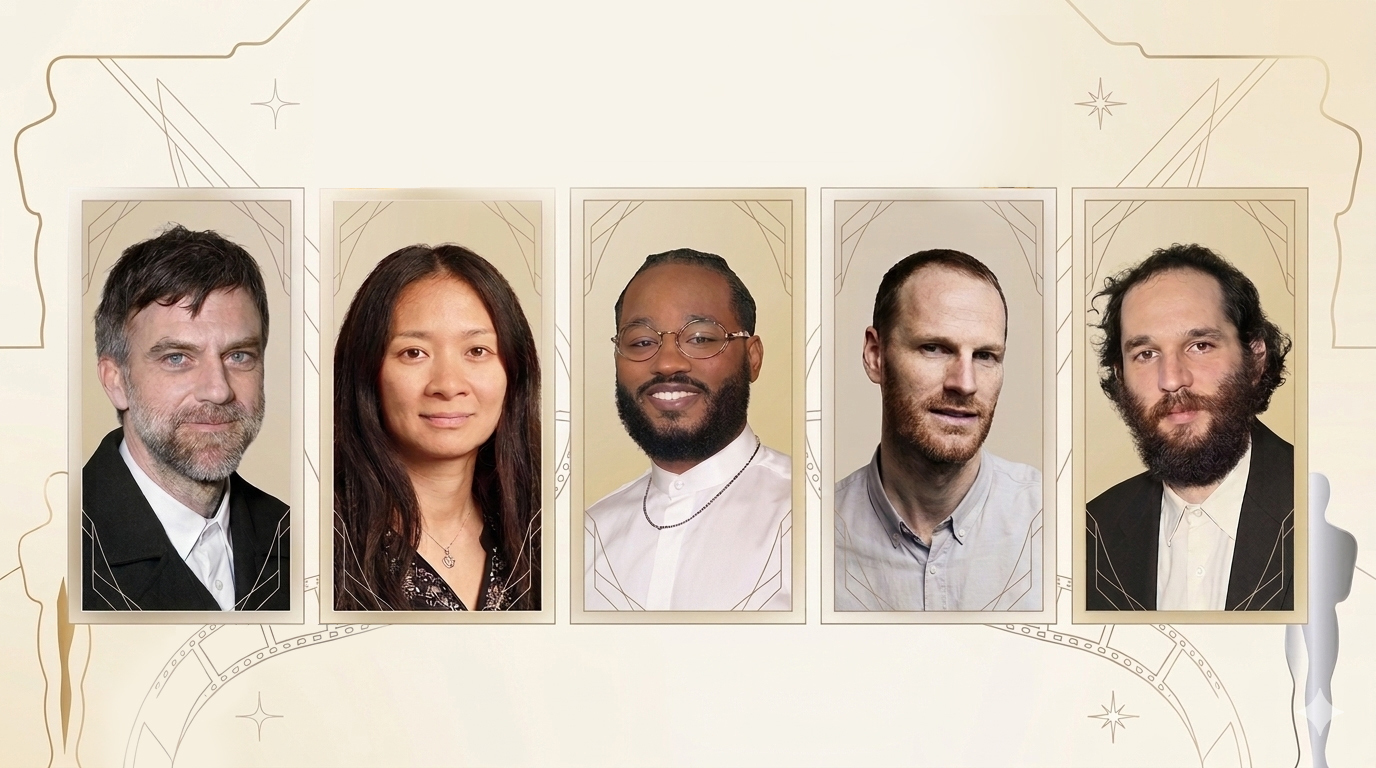
2000s fashion is making a comeback, and it’s interesting to see that the directors ascending Hollywood’s status ladder had their formative film experiences during this period. Four of the five nominees for Oscar® Best Director released their debut short film in the 2000s. This generation of filmmakers was the first to grow up in a digital, streaming era, and as we remarked three years ago in our retrospective on the DANIELS, now, for the first time, the most admired film talents in the world have easily accessible short films on the internet. 

So, as we pay attention to the current class of Oscar® nominees and wonder if Sam Davis or John Kelly can ascend to the level of globally respected auteur, it’s also fun to look at the short films of those who are currently the toast of the town—both for enjoyment, but also education, especially if you are an emerging talent who would like to see what it took for these artists to begin to make a name for themselves.

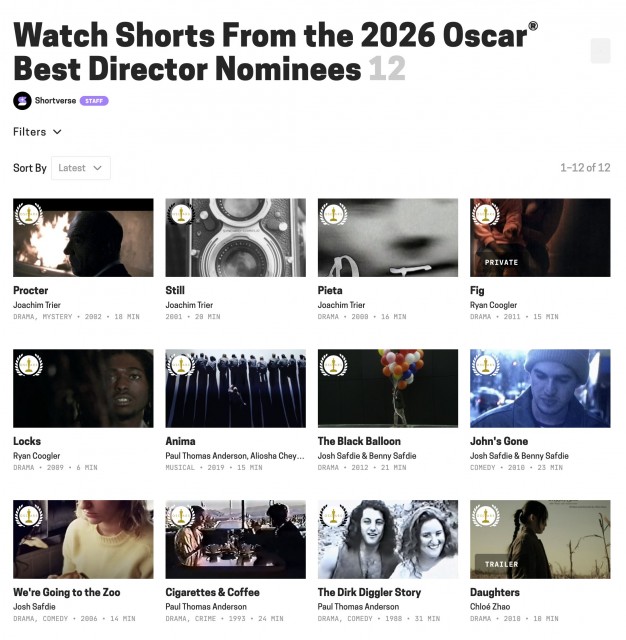
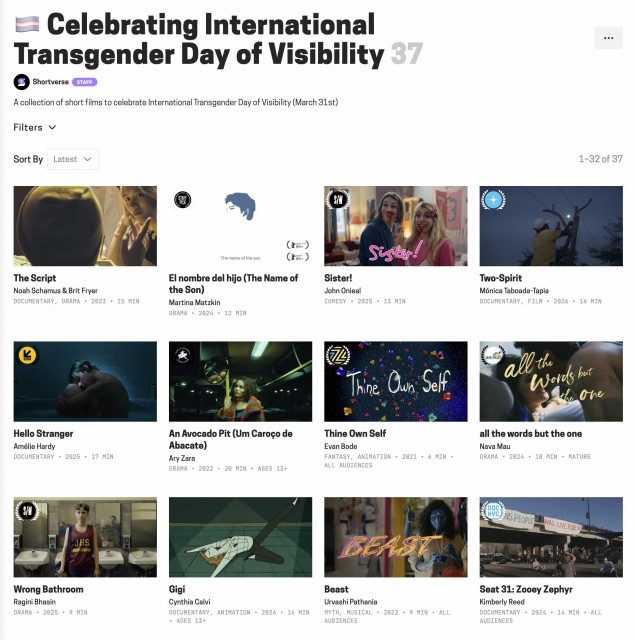
We’ve collected early shorts from the five nominees into a Shortverse collection, and they represent interesting and varied paths to their current success. More info below:


click to visit the collection on Shortverse

Click to visit the collection on Shortverse

Paul Thomas Anderson: The elder statesman of the class, The Dirk Diggler Story (1988) is pretty rough and not really at all similar to what, nine years later, would become Boogie Nights. But, it is a fascinating early artifact, and a testament to the longevity of creative ideas. Cigarettes & Coffee (1993), on the other hand, went to Sundance and aspects were almost directly adapted into the opening scene of the filmmaker’s debut feature, Hard Eight. As a bonus, we also have Anima (2018), a music/performance piece in collaboration with Thom Yorke that is on Netflix.

Ryan Coogler: The filmmaker’s two IMDb-listed USC film school shorts are included. Locks (2009) is available on Vimeo, and while modest, the 7min Tribeca-selected short is powerful, and predicts some of the themes later explored in the filmmaker’s Sundance breakthrough, Fruitvale Station. Fig (2011) was more acclaimed in its time, winning the HBO Short Film Competition at ABFF and the DGA Student Film Award, and it streams for free on Kanopy if you have a library card from a participating institution.

Josh Safdie: Safdie, along with his brother Benny, has a ludicrously long filmography stuffed with skits, experiments, short docs, and other visual artifacts. Diehard fans have been obsessive in collecting them all, but we’ll stick to three films for this collection. We’re Going to the Zoo (2006) is notable as the work where the director’s POV began to gel. In an interview with Le Cinema Club, he says, “It was THE moment when I figured out how to speak ‘film.’” John’s Gone (2010) is the film that immediately followed their breakout debut feature, Daddy Longlegs (2009), and played at Venice—something pretty rare for American directors. Benny’s performance in it is something of a prototype for the type of hustler eventually portrayed by Robert Pattinson, Adam Sandler, and Timotheé Chalamet in future features. Finally, we end with the brother’s Sundance and SXSW-winning homage to one of the most famous short films of all time, with 2012’s The Black Balloon.

Joachim Trier: Trier, like Spike Jonze before him, got into filmmaking through skateboarding videography before leaving Norway and attending film school in the UK. Courtesy of the NFTS, we have three of Trier’s student shorts, which also represent the beginning of his partnership with Eskil Vogt, his longtime co-writer. Pieta (1999) and Still (2001) are worth watching, but Procter (2002), made immediately upon graduation, is the essential one, as it represented the filmmaker’s continental breakthrough, winning a top prize at Edinburgh and being nominated for the European Film Award.

Chloe Zhao: The one hole in our collection today is Zhao, who does not have any of her four credited short films available to view in full. Information about them on the internet has largely been wiped—not on purpose, one assumes, but the filmmaker’s old website no longer works. We’ve included the film page for her NYU student short, Daughters (2010), for the sake of completeness, and there is a trailer for it, which evokes a strong Raise the Red Lantern vibe. It won Best Student Short Live Action 15 Minutes and Under at the 2010 Palm Springs Film Fest, and this Indiewire news piece is a fascinating time capsule. Written by Eugene Hernandez, who is now the Festival Director at Sundance, so many of these winners ended up being Short of the Week picks! But, I did not attend and have no memory of Zhao’s film. I think the only place to see her shorts now is in person at Clermont-Ferrand’s video library, something I might put on my to-do list for next year…

  •  

Homemade Gatorade

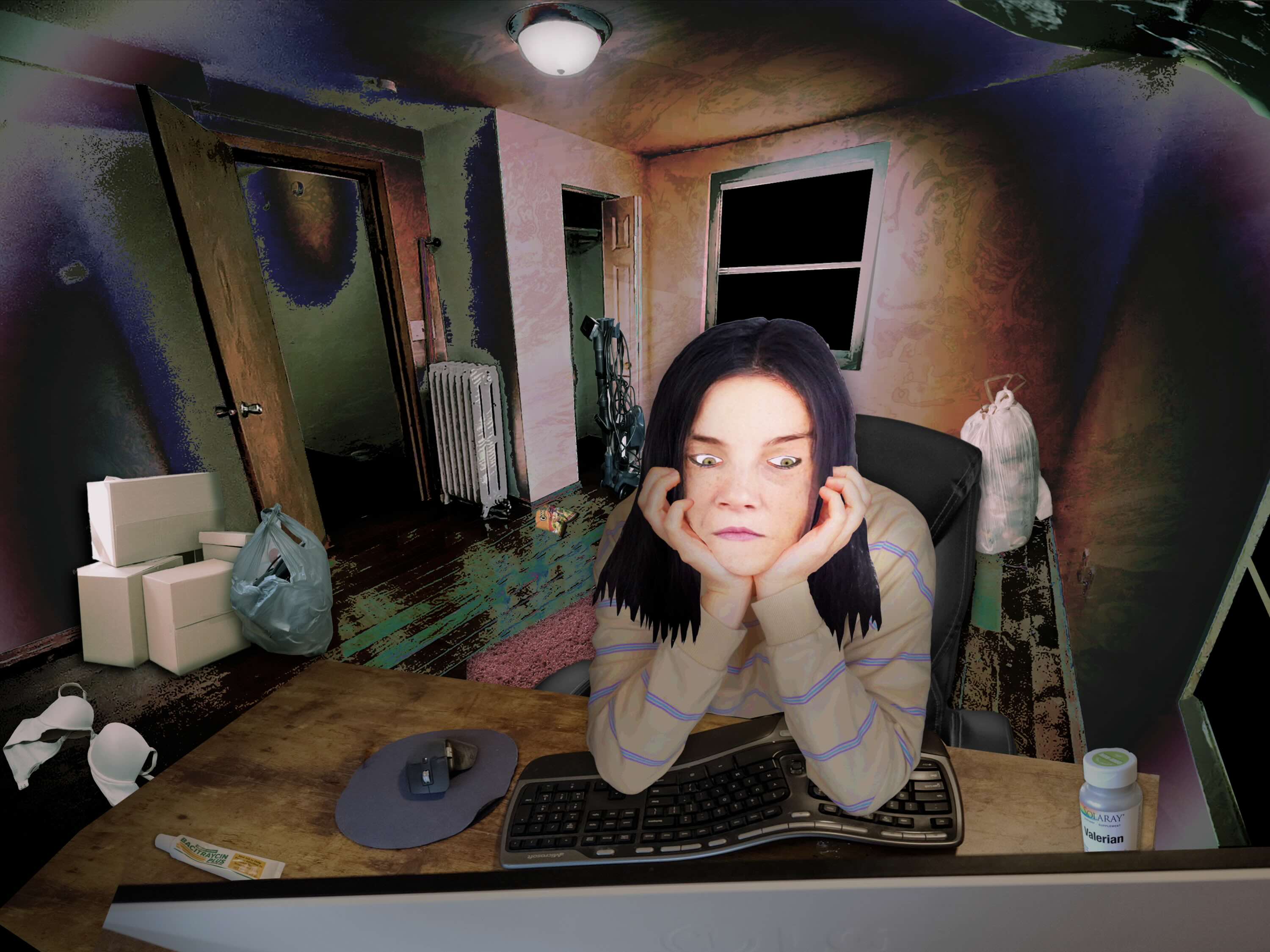
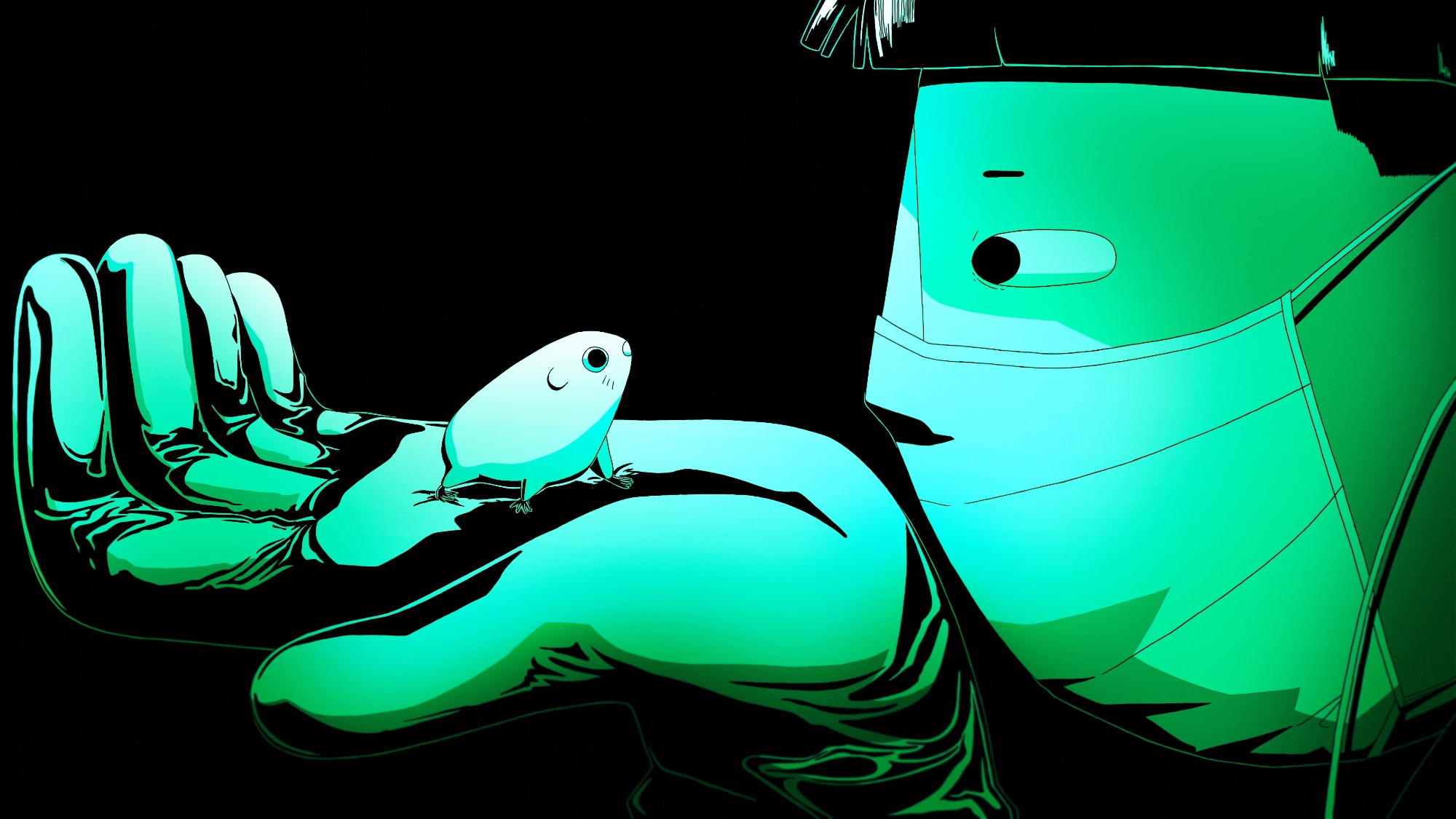
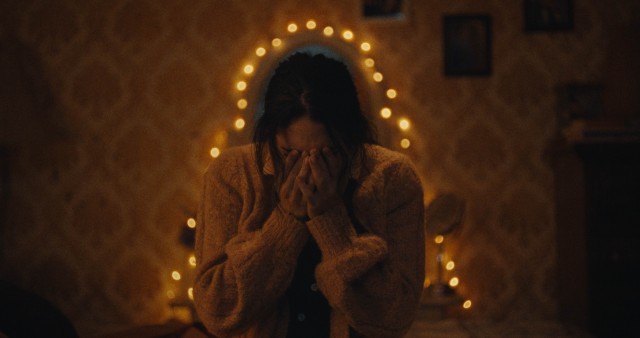
It is often said that the internet is a weird place, but truthfully, it’s only as weird as we, the people on it, are, and so there is always potential to bring that weirdness away with us. In Homemade Gatorade, writer/director Carter Amelia Davis chronicles a weird online interaction between two individuals and how it turns into an adventure in real life. Transcending simple weirdness, though, Davis’ unique style mixes humor with sharp social commentary, taking us on a wild and surprising adventure, too.

The premise is self-evidently absurd… a woman develops her own “creamy” version of Gatorade and, via forums and social media, desperately tries to find buyers for it online. Upon reflection, though, I was forced to question that absurdity—if there is one thing millennials have embraced with the internet, it’s the concept of unorthodox work. “There are so many people with side hustles and entrepreneurial aspirations right now”, Davis explained, describing some of her inspiration for the premise before adding, “…we hear a lot about the people who succeed, but what about those who fail?” Ultimately, we are meant to laugh, as the absurdity is fully embraced in both the writing and the visual aesthetic of the film, but there is something undeniably touching in the narrative, dare I say relatable, in the protagonist’s state of mind. “I wanted to make a film that could make people laugh but also reflect the horrifying reality of American life right now”, Davis confessed.

sdsdsd

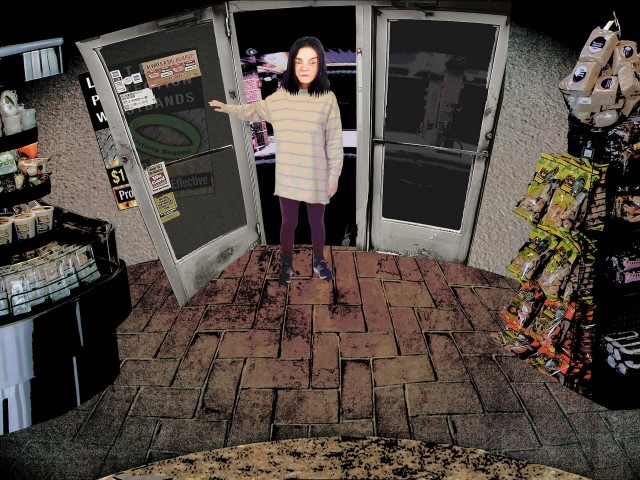
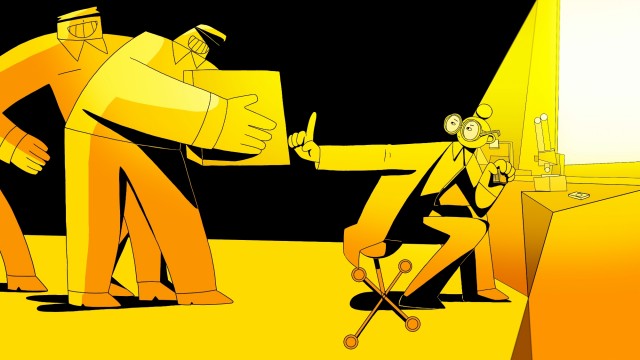
Davis’ animation process: collage image compositions in Photoshop, then animate in After Effects. 

Homemade Gatorade is immediately unsettling but captivating— the epitome of a “you cannot look away” film. As we watch the protagonist go on her quest to deliver her goods to her first real-life customer, the question of success is not even what guides us; it’s the insanity of the online exchange that, personally, I wish could have lasted longer. Daniella Peterson voices the main protagonist, while Davis herself voices the iconic “Susie Gjhjjfjh”. The juxtaposition of their tones is brilliant, and greatly contributes to making the film’s hilarity… up until its surprising ending!

Mainly animated by Davis, with some additional 3D animation by VirtualMoth, the mix of distorted photo collage and live-action is a brilliantly distinct approach, matching the energy of the narrative and bringing a certain level of self-deprecation and that tell-tale “weird” feeling to the proceedings. This description from Davis’ bio is apt: “…her work should ideally make you laugh and feel like you need to take a shower or something.” Odd, but accurate! 

Homemade Gatorade premiered online on YouTube months ago; however, its recent selection at the 2026 Sundance put it on our radar, and now a promising festival run looks to take off with the film traveling to Regard in Quebec next. Davis is one of a constellation of exciting animators born and sustained on the internet for whom the festival world is a “nice” to have but not the be-all end-all. She maintains a successful Patreon and has also self-published a novel. Davis’ other films are also available online, and she is active on social media. With this level of hustle, Homemade Gatorade makes much more sense!

  •  

The Car that Came Back from the Sea

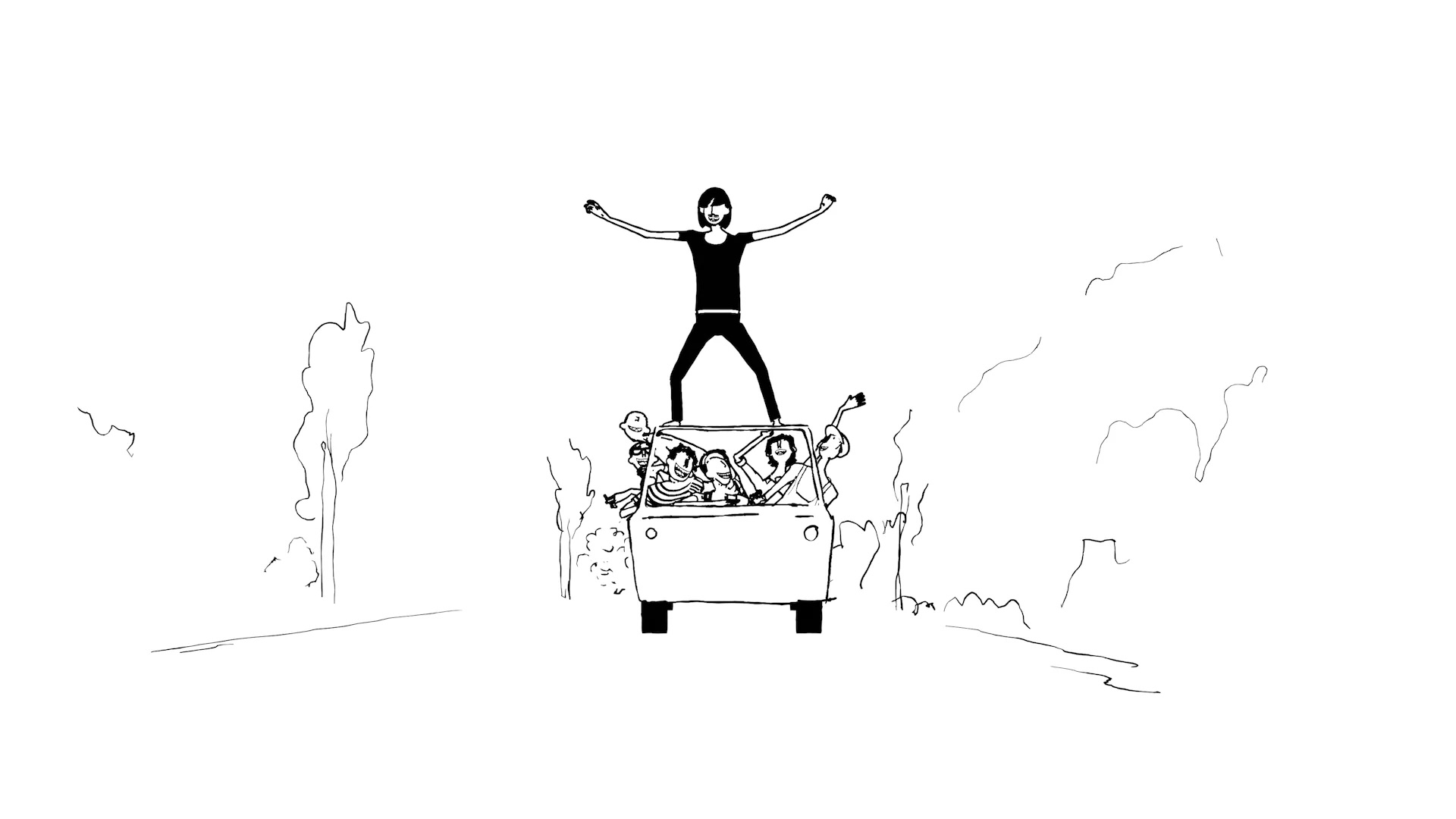
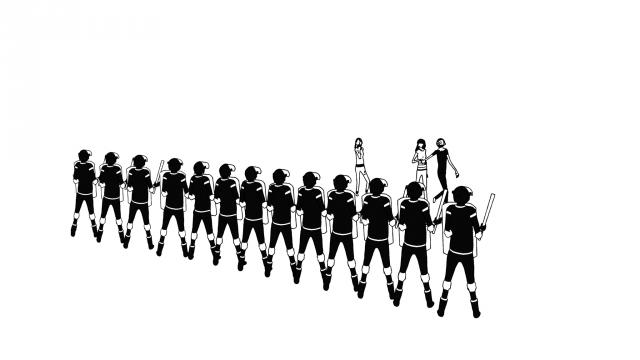
The insouciance of youth, set against the backdrop of a decaying communist Poland, provides a romantic backdrop for Jadwiga Kowalska to tell a lightly fictionalized version of her own family story in the Annecy jury-winner, The Car that Came Back From the Sea. Possessing a punkish energy and a strong soundtrack, the film is a triumph of tone, as the endearing antics of a group of young men, with their pure and simple desire to drive a piece of junk to the ocean, intersect with larger historical currents of political collapse and liberation.

It’s a vast canvas to explore, and perhaps counterintuitively, Kowalska approaches the film in a minimalist b&w line-drawing style. Animated minimalism can be a tricky proposition; it’s something we “admire” more frequently than we “love,” but Kowalska’s film is a fun approach— it’s actually 3D, and something about the lack of detail, the reliance on the main thrust of something, is fitting for the writing, which was created by combing through hours of interviews of her relatives, relating half-remembered stories and impressions.

When I asked my mother as a child why she left Poland, she always gave a very short answer: “There was simply nothing in Poland.”

When I asked my mother as a child why she left Poland, she always gave a very short answer: “There was simply nothing in Poland.”

Kowalska is Swiss, as is the film, and that proved challenging initially as the filmmaker relates in a Cartoon Brew interview, noting that, “…local funding institutions were not interested in a Polish film about migration,” while, conversely, Polish producers didn’t see what a Swiss 1st gen kid could say about the topic that was original or fresh. Kowalska concluded that in some ways, “it was a Polish film for the Swiss and a Swiss film for the Poles,” though I’d argue my affection for the film, and its success at festivals, which included an Oscar-qualifying win at Palm Springs in addition to its Annecy triumph, means that it is truly a film for everyone. While the details of 1981 Poland are fresh to me, youthful adventures, love, and revolution are universal.

  •  

SXSW 2026: A Shorts-Centric Guide

Today is Day 1 of the 2026 edition of SXSW Film & TV. The fest has expanded to editions in Sydney and London, but the OG in Austin commands our loyalty. While the festival is a couple of days shorter than it used to be, the line-up is still full of delicious dishes. As usual, the ones cooked by members of the Short of the Week family are those we are the most excited about! 

The sheer abundance of work that catches our eye, especially at this scale of fest, makes SXSW pretty much unmatched, and the announcement of the lineup is a highly anticipated event at S/W HQ. We’ve combed the listings to track names familiar to our shorts-loving audience, so if you’re looking for a starting point to build your watchlist, look no further!

Below is a list of all S/W alums with new films at the festival. An insane 17 directors featured on Short of the Week are bringing a new short to the festival! This includes fresh work from current Oscar® nominee Sam Davis, and from Alyssa Loh, whose prior SXSW short, Let, has been viewed 23M times on YouTube. 13 additional directors from our alum community are presenting a feature, including debuts from prior Short of the Year winner Graham Parkes, as well as Caleb J Phillips, whose short, Other Side of the Boxis a 7M view viral smash on YT. 

Shorts

This year, you will find in the shorts program 16 films that are directed by S/W alums! This record number obviously fills us with joy, with films in the Animation, Documentary, Narrative, and Texas competitions 

copy_save_sxsw_03

Copy, Save by Alyssa Loh

Imago-short-film-sxsw

Imago by Ariel Zengotita

In The Beginning by Ala Nunu

In The Beginning by Ala Nunu

We Were Here Pranav Bhasin

We Were Here by Pranav Bhasin

***

Features

Short of the Week celebrates shorts, naturally, but we also want short filmmakers to be able to afford their rent! So we always wish them the best if and when they transition to features and are delighted when they debut full-length films on the festival circuit. Getting a spot on the SXSW lineup is no small feat, so while the entirety of the lineup makes our watchlist, we will first and foremost catch the films of our alums. 13 projects on the feature side of the program were directed by members of the S/W family, across the Narrative Feature Competition, both Narrative and Documentary Spotlights, 24 Beats, Midnighter, and Festival Favorite categories.

  • Basic by Chelsea Devantez
    S/W Films:
    Basic
    Synopsis:
    After Gloria and Nick break up, Gloria takes us through Nick’s dating history, untangling his web of ex-girlfriends through details she can find online. But when she discovers Kaylinn, the hottest, most basic ex-girlfriend to ever exist, Gloria not only loses herself, she loses control of the story she’s been telling. Basic is a comedy that blends the magical realism of jealous paranoia with the magic of falling in love.
    Section: Narrative Spotlight

downbeat-danny-madden

Downbeat by Danny Madden

  • First They Came for My College by Patrick Bresnan
    S/W Films: The Rabbit Hunt, Skip Day
    Synopsis: When the Governor of Florida transforms a beloved public honors college as part of a political coup, students and professors confront a new reality: their campus is ground zero in a growing nationwide assault on academic freedom.
    Section: Documentary Spotlight

  • Hokum by Damian McCarthy
    S/W Films: He Dies at the End
    Synopsis: When novelist Ohm Bauman retreats to a remote inn to scatter his parents’ ashes, he is consumed by tales of a witch haunting the honeymoon suite. Disturbing visions and a shocking disappearance force him to confront dark corners of his past.
    Section: Midnighter
  • Imposters by Caleb J Phillips
    S/W Films: Other Side of the Box, Play Me
    Synopsis: After a couple’s baby boy is taken, the desperate mother learns of a way to bring him back. However, her husband begins to suspect that what she returned with isn’t their son.
    Section: Midnighter

Imposters by Caleb J Phillips

Imposters by Caleb J Phillips

  • Manhood by Daniel Lombroso
    S/W Films: American Scar
    Synopsis: Manhood follows Dallas businessman Bill Moore as he sets out to make penis enlargement as commonplace as Botox. Along the way, an OnlyFans star and a father of five put their bodies – and their insecurities – on the line.
    Section: Documentary Spotlight
  • Mile End Kicks by Chandler Levack
    S/W Films:
    We Forgot to Break Up
    Synopsis: Grace Pine, a driven though easily distracted 23-year-old. She leaves her quirky parents’ home for a shared apartment found on Craigslist to devote herself to writing the next great book in the 33 1/3 album exploration series. Hers will be on the iconic Alanis Morissette opus Jagged Little Pill. Loft parties introduce Grace to two paramours. Unfortunately, they are members of the same rock band, Bone Patrol. And instead of sequestering herself away to complete her draft, she uses her music industry know-how to get in with the band as their publicist. Through wine-fuelled poetry readings and other ill-advised choices, Grace is in the trenches of self-discovery.
    Section: 24 Beats
  • One Another by Amber Love
    S/W Films: Strikers
    Synopsis: Sometimes it takes the end of something to know what is really at stake. Joe, Giorgia, and Lorri are all grappling with the possible end of an intimate friendship at vastly different stages of life: a cross-country move, a mental health crisis, and a shift into empty-nesting have forced them each to reevaluate the support they need from those closest to them. Chronicling three different friendships over the course of three years, “One Another” brings together verite with a wealth of personal archives to intertwine their journeys as they search for what it really means for us to care for each other. The result is a story of change, heartache, and connection in this ode to platonic love.
    Section: Documentary Spotlight
Wishful Thinking by Graham Parkes

Wishful Thinking by Graham Parkes

  • Stages by Ryan Booth
    S/W Films: Five Star, The Heights
    Synopsis: It’s make-or-break time for Ben Garza as he embarks on his solo first tour after the collapse of his band. By his side are Rita, his former tour manager, stepping away from her stable life to help him, and Parker, a remaining bandmate who joins Ben as a utility player. However, Rita also secures Jessie Ramos as the opening act, a rising star whose sudden surge in popularity will completely destabilize Ben. Throughout this musical odyssey, Ben will face characters on the road who challenge his ideas of success, relevance, and purpose. Some encounters offer hope; others deepen his doubt. By the tour’s end, Ben must decide whether to keep chasing the life he once had—or chart a new path forward.
    Section: 24 Beats
  • The AI Doc: Or How I Became an Apocaloptimist by Daniel Roher, Charlie Tyrell
    S/W Films (Charlie Tyrell): My Dead Dad’s Porno Tapes, I Thought I Told You to Shut Up
    Synopsis: A father-to-be tries to figure out what is happening with the AI insanity, exploring the existential dangers and stunning promise of this technology that humanity has created.
    Section: Festival Favorite

  • The Saviors by Kevin Hamedani
    S/W Films:
    In Her Place
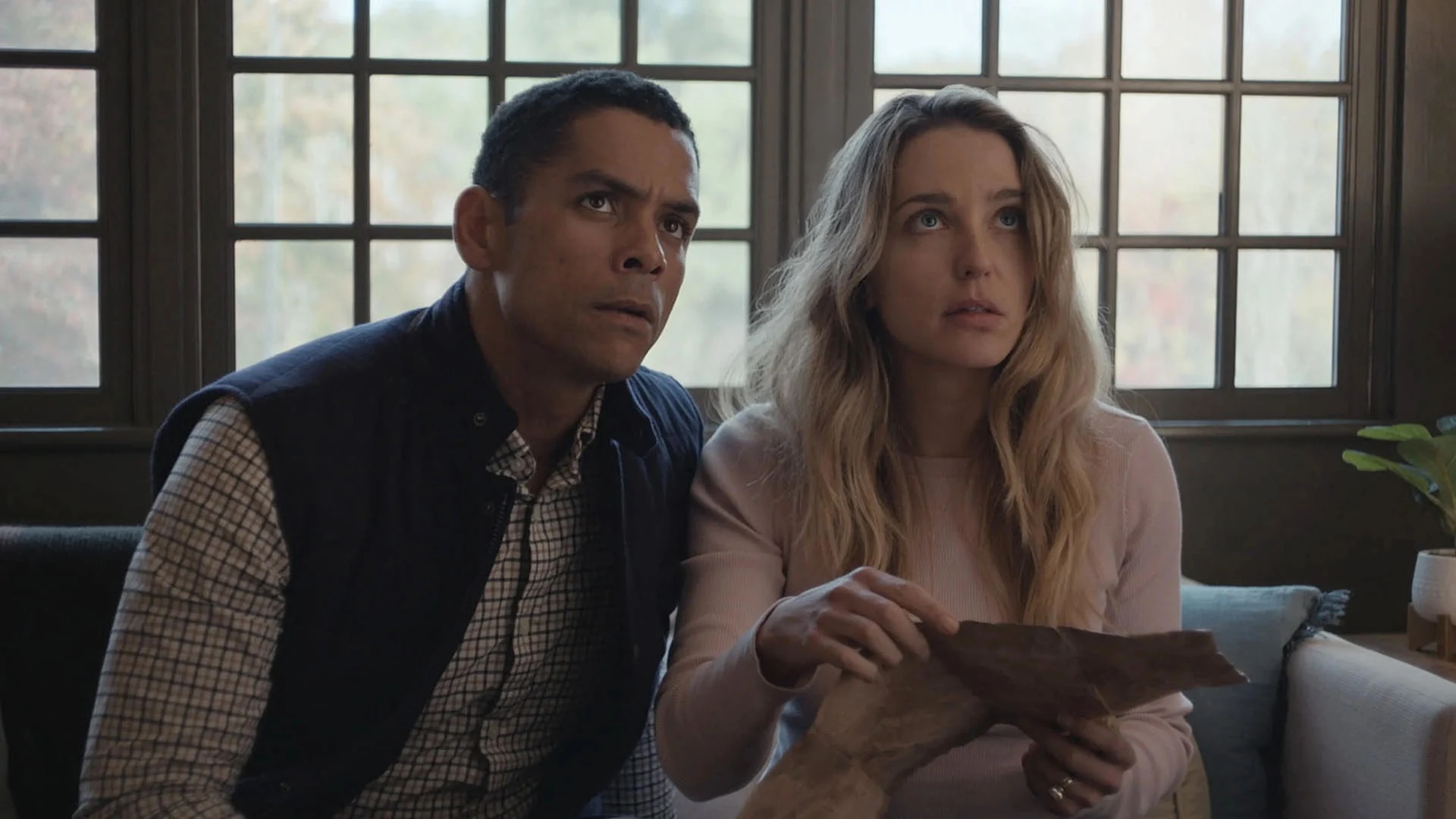
    Synopsis: Sean and Kim Harrison are a suburban couple about to divorce. By renting their guest house to a quiet Middle Eastern brother and sister, Amir and Jahan Razi, they find a perfect solution: raise money to fix and sell their house, then separate. But when bizarre occurrences begin to add up – mysterious lights, missing animals, glimpses of unexplainable tech – in the days before the President’s upcoming visit to town, their guests’ strange behavior starts to seem suspicious and potentially dangerous. As Sean and Kim investigate their new tenants, they rediscover the emotional connection they once shared. But reconciliation may come at a significant cost in this timely and provocative thriller.
    Section: Narrative Spotlight
  •  

Oscars Short Films 2026: Predictions

Oscar night has been a triumphal showcase for short film talents in recent years, with Short of the Week regulars Daniels and Gints Zilbalodis taking home statuettes in major categories. We hope that this trend continues in 2026, as Geeta Gandbhir contends in Best Documentary Feature, and Clint Bentley’s Train Dreams vies for Best Picture. 

Truthfully, though, many film talents come up through shorts, whether they make it to Short of the Week or not, and so while we root for our alums, our primary focus remains on the three categories that truly hold our interest. As we’ve done in recent years, this article is one last opportunity for us to champion the films we love while also looking at past trends to guess how the Academy might vote.

While we do not engage in any special research or devise a prediction algorithm, historically, our predictions have been fairly accurate. Our recent track record: perfect in 2022, and 2 of 3 in 2023 and 2024.

Last year, however, we were derailed. None of our predictions took home the prize! Our disappointment at this development was tempered by seeing our favorite in the Live Action category, I Am Not a Robot by Victoria Warmerdam, win the award, but we’ve got a lot to prove this year to get back on track. 

We’ve redoubled our efforts in 2026 in order to redeem ourselves. Here are our predictions for Best Animated Short Film, Best Documentary Short Film, and Best Live Action Short Film at the Academy Awards (98th edition). Good luck to all the contenders, and good luck to you and your Oscar pools!

***

Best Animated Short Film

Retirement Plan John Kelly

Prediction: Retirement Plan by John Kelly

In a lovely twist, we have the feeling that our favorite in the Animation category might also be the winner. The Venn diagram of our tastes and that of the Academy as a whole possesses only a tiny overlap, but this year, John Kelly’s Retirement Plan might find itself right in the middle.

Since its World Premiere in Galway in July 2024, Retirement Plan has taken the festival circuit by storm. Anyone who pays attention to the scene simply cannot have missed this film. Picking up the Audience and Jury Awards at SXSW, it’s been on a prize tear, earning the most Qualifying awards of any film in the category.

While Academy members may not be overly influenced by festival recognition, the film’s varied qualities seem to have put everyone in agreement, having found a way to resonate with different audiences. The animation style is clean and appealing, the film is refreshingly short at only 7-minutes, it has a celebrity angle with Domhnall Gleeson providing its voice-over, and its bittersweet, sentimental message is universal and moving. Maybe it is wishful thinking, but if we were to put money on an outcome, we’d go with Retirement Plan.

What We Hope Wins: Retirement Plan by John Kelly

As the only S/W selection in the category, Retirement Plan being ‘our pick’ is a foregone conclusion, but this is no “least-worst option.” The film’s undeniable charm simply made it one of our favorite shorts of the year. Deeply compelling, it leaves you with an urgent need for introspection and is the rare film that can linger long past its runtime. The writing is outstanding, and paired with Gleeson’s engrossing voice, gives a poetic and engaging rhythm to the film, while its simple yet delightful animation style is simply a cherry on top. This is the kind of film that you not only remember watching but also remember how it made you feel.

Picks by Céline Roustan

***

Best Documentary Short Film

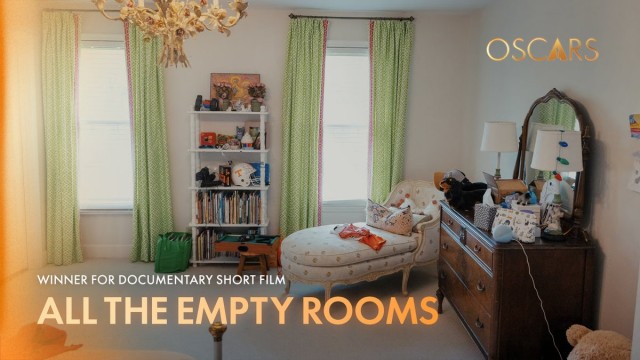
All_The_Empty_Rooms_n_00_10_24_13

Prediction: All the Empty Rooms by Joshua Seftel

There is a credible argument for most of the films in this category: Geeta Gandbhir is the betting favorite for Best Documentary Feature, which could aid her and Christalyn Hampton’s short, The Devil is Busy. Doing the double would be a great story! HBO’s other nominee, Armed With Only a Camera, is a familial tribute to a fallen artist so powerful that a scripted adaptation was just announced. While there is no shortage of options, I would not argue if you chose the Gaza war as the most dominant geopolitical issue of the past couple of years, so does that favor Children No More, and its legendary producer, Sheila Nevins?

Yet, I argue All the Empty Rooms, a film which follows a celebrated journalist on his journey to photograph the preserved rooms of children who fell victim to school shootings, should be considered the favorite heading into Sunday. This is for a pair of reasons: first, Netflix is its distributor and has taken over from HBO as the 800-pound gorilla in this category. I underestimated Only Girl in the Orchestra last year, and won’t make that mistake twice. The second is that the film is the most emotionally affecting of the nominees, and on that important criterion, it can be argued as the most effective. As mentioned in our Voters’ Guide leading into the nomination phase, there is an admirable degree of restraint in Seftel’s film that allows the power of the Hartman and Bopp photo project to shine through, via a contemplative approach that pleasingly echoes the underlying premise of reflection and remembrance.

What We Hope Winsperfectly a strangeness by Alison McAlpine

While I was very moved by All the Empty Rooms, and will not object to its likely victory (an 86% chance according to Gold Derby), I find it interesting to note that I subsequently watched the 60 Minutes segment on Hartman and Bopp’s photo project, and it elicited an almost identical degree of emotion. How could this be? Seftel’s spare, observational treatment and the structured, formulaic journalism of 60 Minutes are almost diametrically opposite forms of documentary storytelling! What it suggests to me is that the true power of All the Empty Rooms lies in the underlying project itself, of which this short is simply one of multiple expressions. That does not invalidate what Seftel achieves, but it is an important contextualization when seeking to deliver life-changing honors.

Therefore, I’ll argue for the only short I absolutely cannot see winning. This is not me simply being contrarian; I genuinely love perfectly a strangeness, and wrote a bit about what I liked about it in our voters’ guide.

While my appreciation for the film remains undimmed, this choice does contain a germ of protest against the larger Oscar superstructure. I think it would be very healthy for perfectly a strangeness to win. Documentary is the most stagnant of the three Oscar categories, and it feels as though the same variations on hot-button issues and sympathetic character profiles keep advancing every year, with little to no variation in length, tone, or perspective. perfectly a strangeness is a shock to this—it is, frankly, bizarre that this Cannes-premiering short has even made it this far, as it is the least conventional nominee in recent memory. Calling it a “documentary”, in fact, feels like a stretch, and I would probably have settled on two other primary classifications before arriving at that one. But its sheer outlier status has the potential to light the way to a future for the category that is more adventurous, playful, and risk-taking.

Picks by Jason Sondhi

***

Best Live-Action Short Film

The-Singers-Short-Film-Sam-Davis

Prediction: The Singers by Sam Davis

I have to admit, in recent years, we’ve found that predicting the winner of the Best Live Action Short Film Oscar has become increasingly tricky. It honestly used to feel a bit easier to get inside the head of an Academy voter. Who seemed to respond more to subject matter than originality – “Oscar bait” has long been part of the short film categories too. However, last year voters surprised us by choosing what was, in our view, the best film of the nominees: I Am Not a Robot. Now, our usual way of predicting things is slightly off.

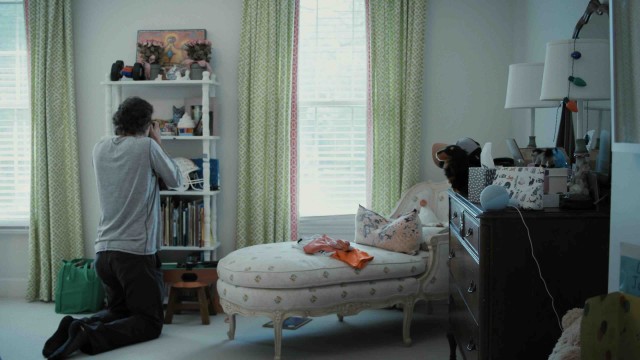
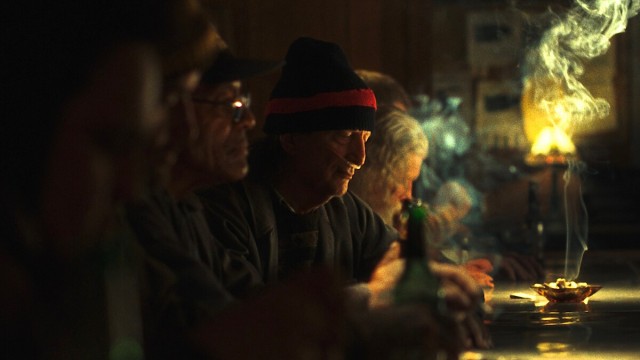
You could make a strong argument for any of this year’s nominees: a topical drama touching on the Israeli–Palestinian conflict, an LGBTQ+ dramedy, a “period” comedy, a dystopian vision that echoes modern realities, and an emotive dive-bar drama picked up by Netflix. But in the end, we’re going to bet on the influence of that streaming giant and back Sam DavisThe Singers to take Oscar glory.

A favourite on the festival circuit, The Singers is strikingly original, deeply immersive, and – perhaps most importantly when it comes to Oscar voters – it delivers when it comes to emotional stakes. At this point, we just can’t see past Davis’ film.

What We Hope Wins: The Singers by Sam Davis

While we’ve already backed Natalie Musteata and Alexandre Singh’s impressive short film Two People Exchanging Saliva here on Short of the Week, it was honestly a toss-up between that film and Sam DavisThe Singers as our personal favourite. However, with Davis’ work featured multiple times on our platform over the years, he’s a filmmaker we’ve followed for a long time – and a talent we’ve believed in from early on. Because of that, The Singers ultimately becomes our pick for Best Live Action Short Film.

Whether Academy voters will agree is something we’ll find out soon enough, but Davis’ short is the one that most closely aligns with the Short of the Week ethos – bold, distinctive filmmaking that connects emotionally and lands a reverberating impact. It’s the film we’re personally hoping to see rewarded when the ceremony rolls around on Sunday.

Picks by Rob Munday

***

View previous Oscar-nominated films, winners, and further coverage from the awards on our dedicated channel.

  •  

Oscars Short films 2026: The Winners

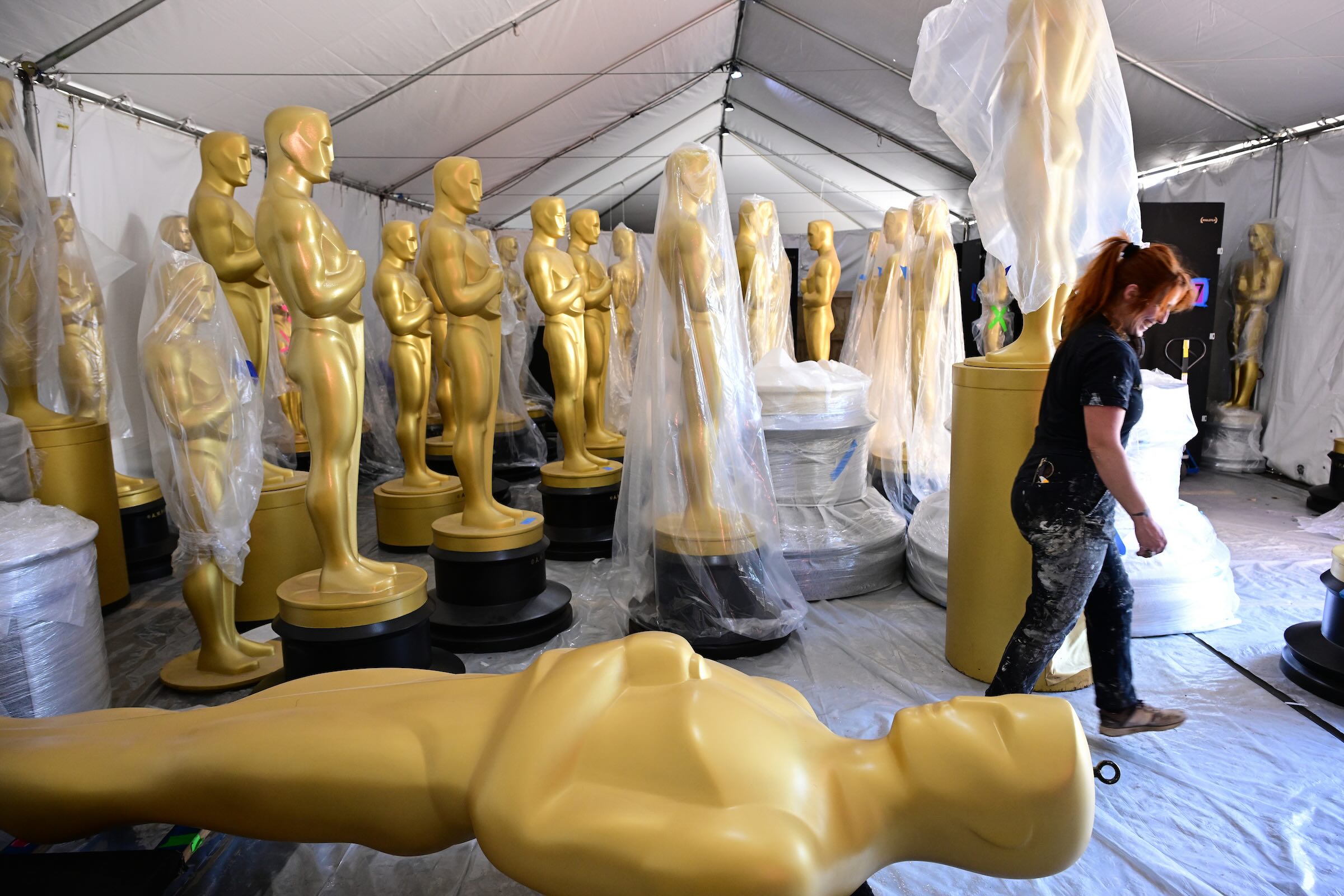
It was the Movies’ big night, and a big night for Shorts too! Doc Shorts even got a rare shoutout during Conan O’Brien’s opening monologue, and at one point the telecast practically ground to a halt thanks to the sheer volume of cheering in the auditorium.

Just a few years ago, the three short film categories were nearly dropped from the broadcast altogether. This year, though, they delivered some of the night’s best moments: a rare piece of Oscar history repeated itself, one winning film’s central subject made a powerful plea on stage, and the filmmakers used their time to share heartfelt messages of hope — and remind us of the power of art to shape a better world.⁠

Congrats to all the nominees, but here are the winners, along with short commentary from S/W co-founder, Jason Sondhi. 

***

Academy Award for Best Animated Short Film

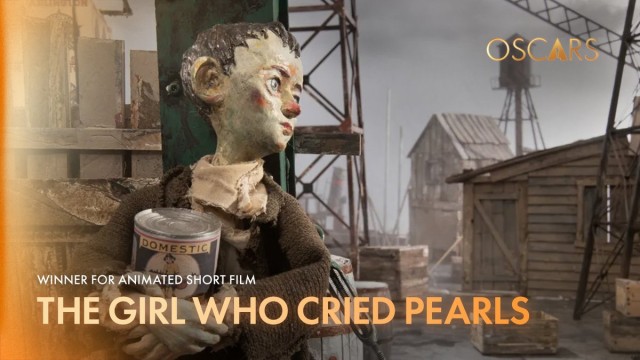
Winner: The Girl Who Cried Pearls by Chris Lavis & Maciek Szczerbowski

Smart money had coalesced around Butterfly, and we chose Retirement Plan in our official prediction post. All this shows how the machinations of award season can obscure more than they clarify, because if you asked us last June what would win, this would have been our pick. It’s a fine choice too—we really like the film—and it’s well deserved that Lavis and Szczerbowski earn their statuettes 19 years after failing to win for Madame Tutli-PutliThe legacy of that short has grown through the years with its continued success online, to the point that it is now unquestionably a modern classic. Congrats to the National Film Board for this win, and here’s hoping The Girl Who Cried Pearls can follow a similar trajectory. 

***

Academy Award for Best Documentary Short Film

Winner: All the Empty Rooms by Joshua Seftel

Another win for Netflix, and another redemption story, with Seftel earning a statuette in his second try. All the Empty Rooms was our predicted winner and in our minds a worthy one—it’s a tasteful and truly moving film experience, containing a vital message against the normalization of school shootings in America. Accompanied on stage by the mother of Jackie, one of the murdered children whose rooms were photographed in the film, Seftel ceded the mic, and her heartfelt plea ended up being one of the most powerful moments of the evening. 

***

Academy Award for Best Live-Action Short Film

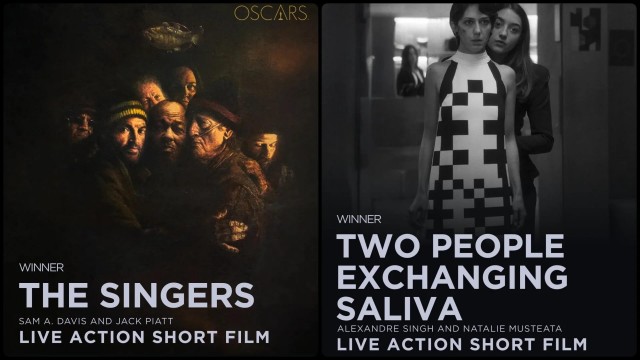
Winner (Tie!): The Singers by Sam Davis & Two People Exchanging Saliva by Natalie Musteata & Alexandre Singh

Holy moly, history made! Only the 7th tie in Oscar history, and the first since 2012. Pundits were split between the two films, and we were too. Davis has graced the pages of S/W many times, and we featured Musteata and Singh’s film in November. It was hard to choose, and ultimately, the Academy didn’t have to, with both film teams having their moment on the stage. The split win also recognizes the two most effective acquirers of Oscar shorts right now—Netflix and The New Yorker. 

***

View previous Oscar-nominated films, winners, and further coverage from the awards on our dedicated CHANNEL.

  •  

We Are Not Alone

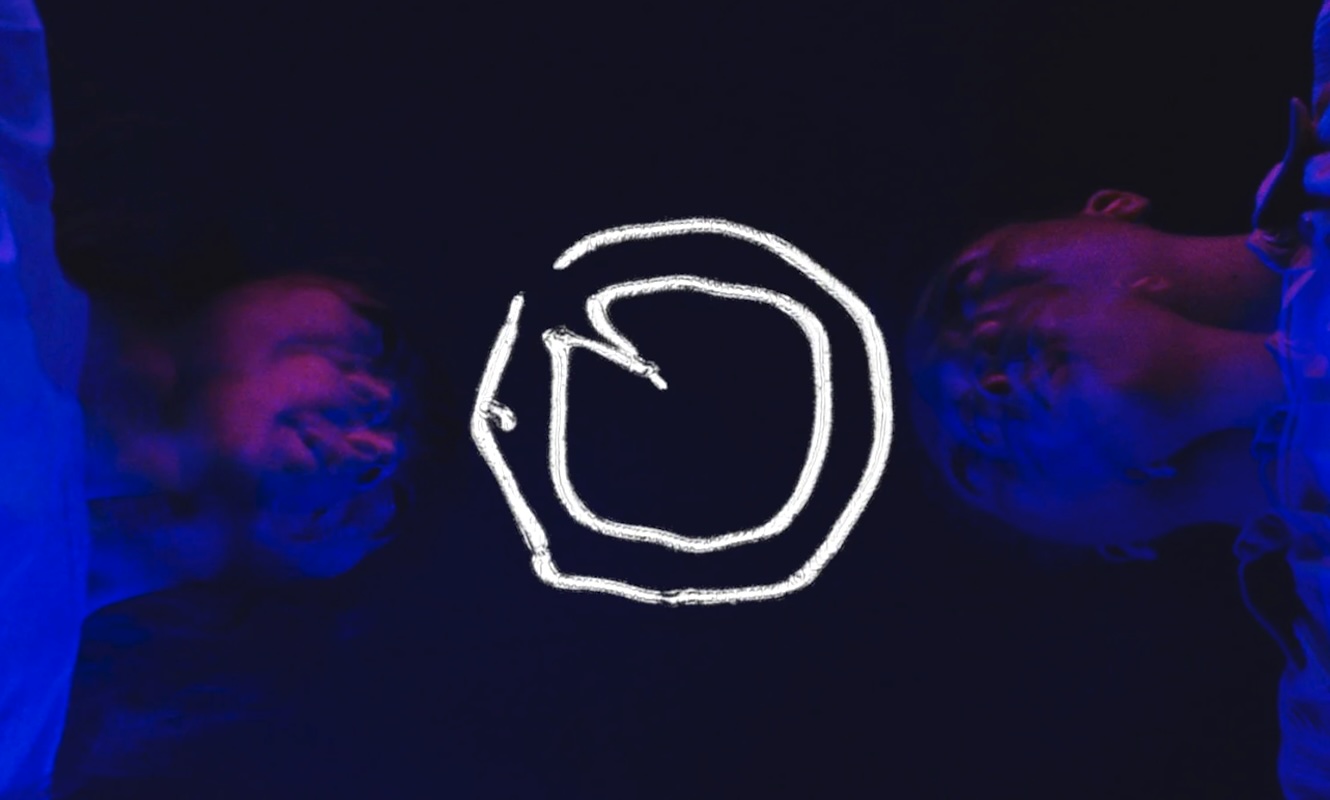
Whether you believe in aliens or not, the idea of communicating with another species remains a compelling prospect for many. For storytellers in particular, narratives about alien contact continue to hold enduring appeal for a range of reasons – whether as a way to explore humanity’s place in the universe or as a mirror reflecting contemporary society. The challenge, as always with such well-trodden territory, is finding a way to tell the story without it feeling stale or derivative. It’s a challenge taken on by filmmaker Adebukola Bodunrin, whose background in experimental animation helped shape her SXSW short We Are Not Alone.

We Are Not Alone is a lo-fi sci-fi parable about connection and expectation, but underneath it’s about the false promise of the American Dream”

“Post-Covid, I found myself thinking about isolation and the quiet humiliation of feeling left behind”, Bodunrin reveals as we discuss why she wanted to bring Ezra Claytan Daniels’ short comic (of the same name) to the screen. Adapting that original story into what the director describes as a “lo-fi sci-fi parable about connection and expectation”, We Are Not Alone stands out as one of the more original pieces of recent science-fiction filmmaking we’ve encountered, taking a somewhat familiar premise and transforming it into something unexpected and memorable.

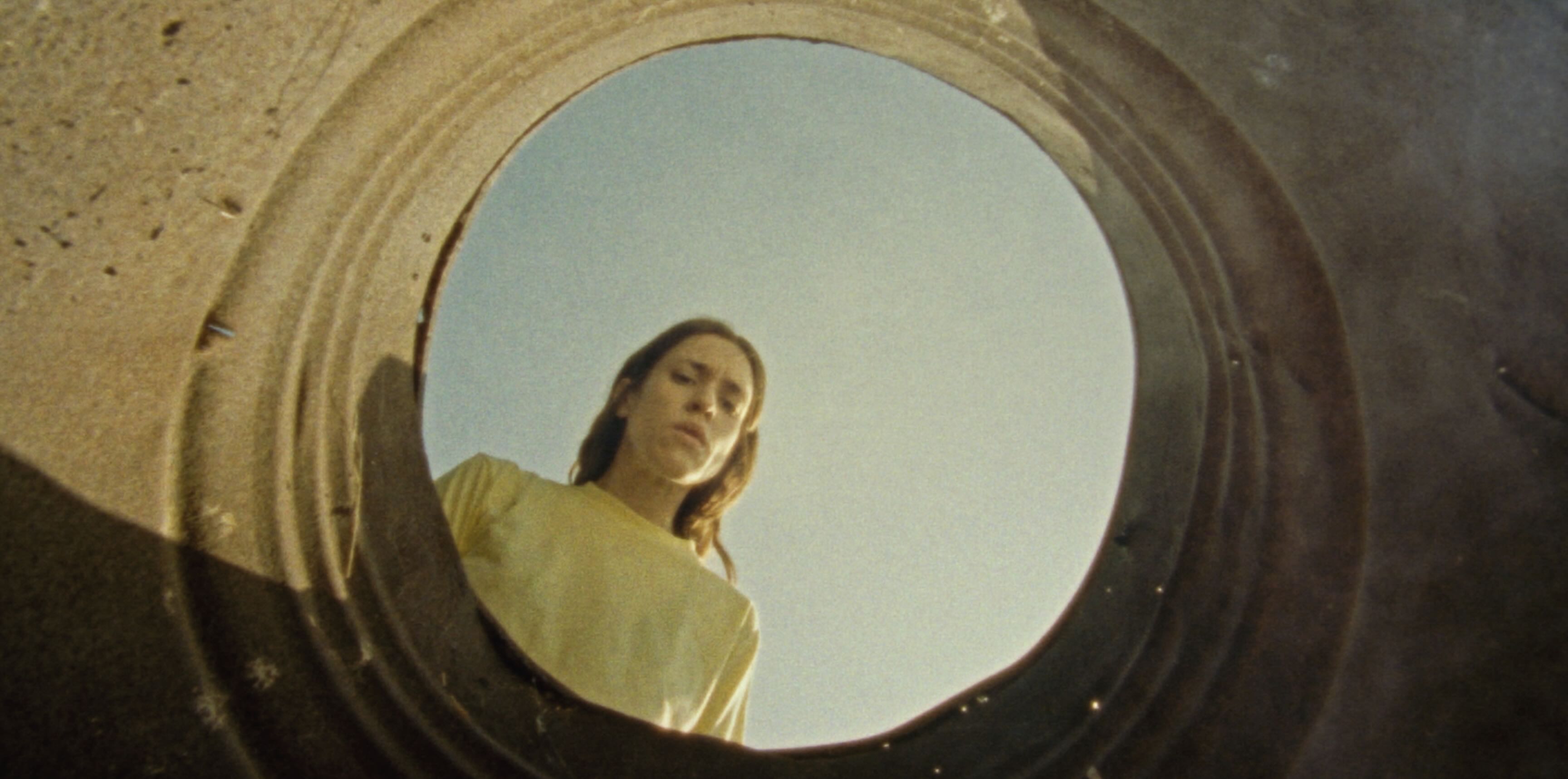
That sense of distinctiveness is largely rooted in Bodunrin’s aesthetic approach. Shooting on Kodak Ektachrome 16mm, the filmmaker incorporated the short’s animated elements directly onto the film stock – painting, scratching, printing, and etching onto its surface. Yet this visual strategy is far from a gimmick; it serves a clear expressive purpose. The 16mm format lends the film a timeless quality, reinforcing the mysterious tone of the narrative (the alien presence is never explained). Meanwhile, the animation gives that presence a tangible dimension, almost as if the extraterrestrials are communicating through the screen itself. As Bodunrin explains:

“I wasn’t interested in abandoning my animation practice. I wanted to contaminate the live-action world with it. The goal was to create a hybrid form where the handmade marks felt like an emotional undercurrent, almost like the characters’ inner language bleeding onto the film itself . . . I was interested in creating a parallel visual language, something like hieroglyphics running beside the narrative. The marks aren’t decorative. They function as a second voice, one that feels ancient, mechanical, and slightly alien.”

We-Are-Not-Alone-Adebukola-Bodunrin

“I wanted to challenge myself to direct a live-action narrative while still working through an analog, tactile process. I wasn’t interested in abandoning my animation practice,” Bodunrin discussing her production

As a science-fiction fan, I was especially taken with Bodunrin’s spin on the first-contact narrative. The film’s use of language – both the imagined language of the aliens and the visual language of cinema itself – felt inventive, playful, and genuinely engaging. In that sense, We Are Not Alone brought to mind Arrival by Denis Villeneuve. The two films are, of course, very (VERY) different in scale and approach, but honestly I can’t think of higher praise to give this short or its director.

Looking ahead, Bodunrin has more exciting projects ahead. Next on the horizon is a new experimental short that will continue her exploration of “direct intervention on film as both image and object,” pushing the technique toward “more intricate, layered mark-making and abstraction”. She’s also developing another short alongside writer Ezra Claytan Daniels, which the filmmakers describe as focusing on “the psychology and performance of online email scams.” If We Are Not Alone is any indication of what to expect, both projects are definitely ones to keep on the radar.

  •  

What Happens When the Film Industry Pauses? Inside the Ouray Film Sabbatical

Conversations within the film industry frequently invoke the language of community and ecosystem. These terms suggest a dynamic network of artists, institutions, and intermediaries working in dialogue with one another. Yet when examined more closely, the reality can feel considerably more fragmented. In our experience as online programmers, the short-film landscape in which we work often operates in distinct silos. Festivals provide spaces where filmmakers meet other filmmakers, exchange ideas, and build relationships. But what of the journalists, distributors, and programmers who also shape the industry? Outside of the occasional panel discussion, these figures can feel noticeably less present – or at least less accessible – within the same spaces.

If such divisions exist, the question becomes: who might address them? What would it look like if these different roles within the industry were brought into closer and more sustained dialogue? And what might that mean for the broader health of the film ecosystem?

One organisation attempting to explore these questions is the Ouray International Film Festival. Building on the intimate, community-focused ethos that has come to define the festival, its organisers have launched the Ouray Film Sabbatical – an initiative designed to bring together filmmakers, critics, programmers, and other industry participants in a shared space of reflection and exchange. Conceived as an extension of the festival’s broader values, the sabbatical seeks to foster a slower, more deliberate environment for conversation: one in which creative practice, critical thought, and professional development can intersect.

The first edition of the sabbatical took place in the mountain town of Ouray in early March 2026. Speaking with the organisers, facilitators, and fellows who participated, it becomes clear that the initiative is motivated by a broader concern about the structural pressures currently shaping the film industry – and by a desire to imagine alternative ways of relating to both the work and the people who make it.

Ouray-Film-Sabbatical

Filmmakers, film writers and film programmers gathered in the town of Ouray, for the first ever Ouray Film Sabbatical.

Rethinking Roles Within the Film Ecosystem

A central idea behind the sabbatical is the belief that the industry often undervalues the interconnected nature of its different roles. Jake Abell, co-founder of the Ouray International Film Festival and one of the programme’s hosts, argues that the separation between creative and critical labour is frequently taken for granted. “We mistakenly think that’s inevitable,” he explains. For Abell and the sabbatical team, an important starting point was the recognition that the various participants who shape the life of a film – not only those who make it, but also those who write about, programme, and circulate it – contribute meaningfully to the cultural conversation surrounding cinema.

This perspective was echoed by fellow sabbatical host Ben Wiessner – a producer we’ve featured regularly on Short of the Week and co-creator of the Short to Feature lab with Jim Cummings – who describes early conversations about how the initiative might encourage participants to begin “having one conversation about the ecosystem with multiple different stakeholders.” In other words, the goal was not simply to gather people from different professional backgrounds, but to place them in a setting where those distinctions could temporarily soften, allowing participants to engage with one another more openly.

“What are we good at? What do we not see? What are we hearing people need?”

For the organisers behind the Sabbatical, it was clear from the outset that they wanted to develop something within the educational sphere that might help reimagine what a filmmaking community could look like. However, the project also emerged from a broader reflection on what contemporary filmmakers and industry workers appear to need. As Wiessner puts it, the organisers asked themselves a series of guiding questions: “What are we good at? What do we not see? What are we hearing people need?” These questions ultimately shaped the ethos of the sabbatical.

Among the inspirations behind the initiative were filmmaking duo the Daniels, long associated with a collaborative ethos that emphasises mutual support within creative communities. Reflecting on their influence, Wiessner notes that their example helped crystallise a key principle for the programme: that those who gain experience within the industry have a responsibility to “send the ladder back down” to others coming up behind them.

The organisers were also conscious of the wider social and political context in which cultural work now takes place. Facilitator Dr. Sabeen Ahmed emphasises that one of the sabbatical’s aims was to create an environment where participants felt “safe, cared for, and genuinely seen – not simply as filmmakers or industry members, but as creatives and storytellers navigating a ruthlessly atomized, brutally capitalist, and deeply alienating world.” Within such a context, Ahmed suggests, the opportunity to encounter others with “curiosity, generosity, and a sense of shared purpose,” can itself become a meaningful intervention.
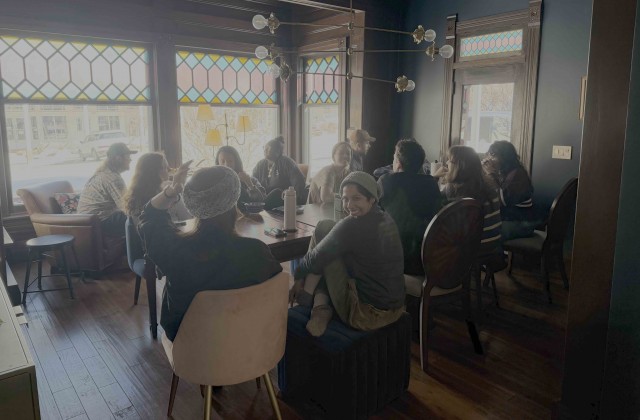
Ouray-Film-Sabbatical

Hosts, facilitators & fellows gather at the table of the sabbatical house in Ouray. Photo by festival co-founder and sabbatical host Jared LaCroix

Rest as a Creative Resource

Underlying the initiative is a simple but often overlooked premise: that film professionals require not only opportunity and visibility, but also community, support, and rest in order to sustain meaningful creative work. Of these three principles, it was the final one – rest – that the organisers ultimately felt was most urgently needed.

“Nobody’s talking about rest, apart from as a cry for help,” Abell observes. In response, the sabbatical deliberately resists the productivity-driven logic that often governs the film industry. Rather than prioritising measurable output or project development, the programme encourages participants to step away from the constant momentum of festival submissions, networking obligations, and production timelines.

Filmmaker and attendee Hannah Schierbeek echoes this sentiment, noting that “rest and reflection are essential for artists.” While sabbatical fellow and S/W alum Kayla Abuda Galang praised the initiative for providing “moments to step back, listen, laugh, and simply be.” She added that the space carried a lot of “heart and humanity”- qualities that can easily be lost amid “the grind and endless strategic planning required to get your stuff made.”

In practice, this philosophy shapes the rhythm of the sabbatical itself. Time in Ouray is structured around slower activities: visiting the local hot springs, speaking with students at the town’s school, walking through the surrounding landscape, or engaging in small creative exercises.

“Permission to make mistakes and not take a creative task too seriously helps you get out of your head”

The latter was something facilitator and filmmaker Anna Baumgarten felt particularly strongly about, seeing tactile crafts as an important reminder of “how important it is to play.” In an industry so often governed by deadlines and pressure, Baumgarten suggests that the freedom to “not take a creative task too seriously helps you get out of your head.” As she notes, film projects can take years to complete, so being able to create something in a few hours – and experience a sense of creative accomplishment – can be genuinely rejuvenating.

In many ways, the most productive moments of the sabbatical occur precisely when productivity is not the primary goal. Conversations about work and the state of the industry often emerge organically – during a walk through the mountains or while sitting together making bead lizards in the sabbatical house. These low-pressure environments allow participants to articulate doubts, uncertainties, and aspirations that can be difficult to voice in more professional contexts, making these conversations not only possible, but productive.
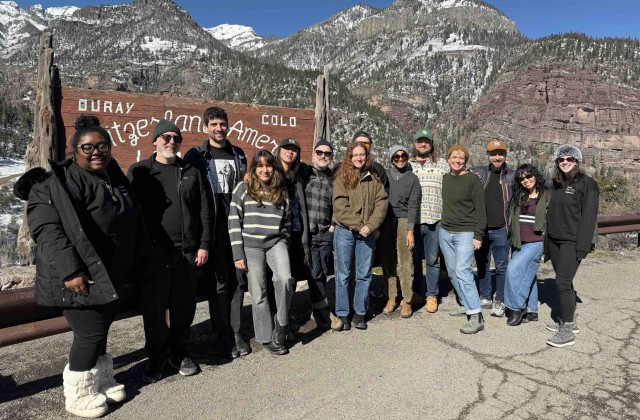
Ouray-Film-Sabbatical

Hosts, facilitators & fellows pose in front of the ‘Switzerland of America’ lookout sign in Ouray. Photo by festival co-founder and sabbatical host Jared LaCroix

A Different Kind of Industry Gathering

Most professional gatherings in the film world are oriented toward a specific objective – pitching a project, developing a feature, or networking for career advancement. The Ouray Film Sabbatical, however, takes a different approach. Rather than centring on productivity, it provides both physical and mental space to reflect and recharge between projects. The hope behind this alternative model is twofold: to help prevent burnout and to foster open, honest conversations about the industry – how it can thrive, and how we can take care of the people who make it run.

Filmmaker Sam Osborn, who attended the programme with his creative partner Alejandra Vasquez, notes that the sabbatical differs significantly from typical industry environments. “We didn’t each go into the sabbatical with a film to workshop,” he explains. In contrast to the atmosphere on set or at festivals – where professionals often feel pressure to project competence and confidence – the residential format allowed participants to step away from what he describes as the “self-mythologizing” that can accompany creative careers.

Within this setting, Osborn says participants could “set aside those worries and feel free to ask dumb questions, talk about day jobs, or even just spend an entire day not talking about movies at all.” For him, some of the most meaningful conversations that took place were ones he had not previously allowed himself to have.

It’s this rarity of a retreat-based model that makes the Ouray Film Sabbatical stand out. Facilitator Baumgarten points out that spaces like this are few and far between – but precisely because of that, they are vital. She highlights the “expansive conversations and creative problem-solving” that such an environment provokes, describing them as essential not only for the attendees themselves but for the future of the film industry and the “dynamic conversations” surrounding it.

“Spaces to break down the silos between different practitioners in the industry must urgently continue to be nurtured!”

Another key element of the sabbatical is its multidisciplinary approach. Bringing together professionals from across the industry in one space for four days encourages participants to reconsider the boundaries between their respective roles. Sabbatical fellow Elizabeth Rao notes that these distinctions are often more artificial than they appear, and that spaces which “break down the silos” of the industry must “urgently continue to be nurtured”.

For many of the sabbatical’s first fellows, the sense of community that emerges from this format is particularly significant. Filmmaker Hannah Schierbeek describes the experience as a reminder that moments of uncertainty within creative careers – which can often “feel isolating” – are widely shared, prompting an important reflection: “we are not alone”.
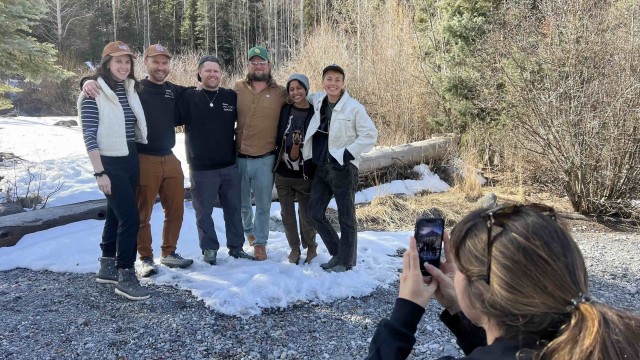
Ouray-Film-Sabbatical

The hosts & facilitators of the Ouray Film Sabbatical gather for a picture in the snowy landscapes surrounding town. Photo by Kayla Abuda Galang

Small Experiments, Larger Possibilities

Following a series of crises in recent years, the film industry continues to exist in a state of flux, with debates about how to sustain and reshape it showing little sign of slowing. Many of the proposed solutions emphasise the need for change at every level of the ecosystem, which is precisely why initiatives like the Ouray Film Sabbatical feel increasingly significant. The filmmakers and practitioners who take part are not yet at the peak of their careers, and so the conversations and values developed in spaces like this have the potential to travel with them – informing their work and, in time, being passed on to others throughout their professional lives. Of course, Ouray is a small town and the sabbatical operates with limited resources, which naturally places limits on what it can achieve on its own.

For that reason, the organisers hope the model itself might prove influential. Abell openly describes the decision to launch the initiative as a “wager”, acknowledging the risks involved. At the same time, he believes that other “festivals, organisations, labs, [and] similar organisations” could adopt a comparable approach – bringing people together across professional boundaries as a way to foster conversation and help move the industry in a healthier direction. Abell also remains optimistic about the sabbatical’s own future, expressing excitement about welcoming more industry professionals to Ouray while also looking to “sustain the relationships built over this initial gathering”.

“More opportunities is not something solved by just money”

For fellow organiser Wiessner, the initiative also reflects a broader belief that expanding opportunities in the film industry is not simply a matter of funding. As he puts it, “more opportunities is not something solved by just money.” Instead, Wiessner argues that it is possible to “create a sense of abundance from very little” – provided that those who have already progressed within the industry recognise a responsibility to support those coming up behind them. His suggestion is to “be demanding” of those who have climbed the ladder, ensuring they actively help foster the next generation of filmmakers. It is a perspective that resonates strongly with us at Short of the Week, where we not only acknowledge our alumni as part of our continued success, but credit them with making the platform possible in the first place.

Ultimately, spaces like the Ouray Film Sabbatical matter because they offer something many of us risk losing when we become absorbed in our work: a reminder of the importance of people. Spending time with others who care deeply about filmmaking – and who are willing to speak honestly about the challenges of sustaining that passion – can itself be restorative. If the film industry often describes itself as an ecosystem, initiatives like this suggest that maintaining its health may require more than simply producing new work. It may also require cultivating the conditions in which the people behind that work can connect, reflect, and occasionally pause long enough to rediscover why they fell in love with filmmaking in the first place.

***

Submissions for the 2027 Ouray Film Sabbatical will open later in 2026, if you want to submit your film to the Ouray International Film Festival you have until March 21st.

  •  

Forever

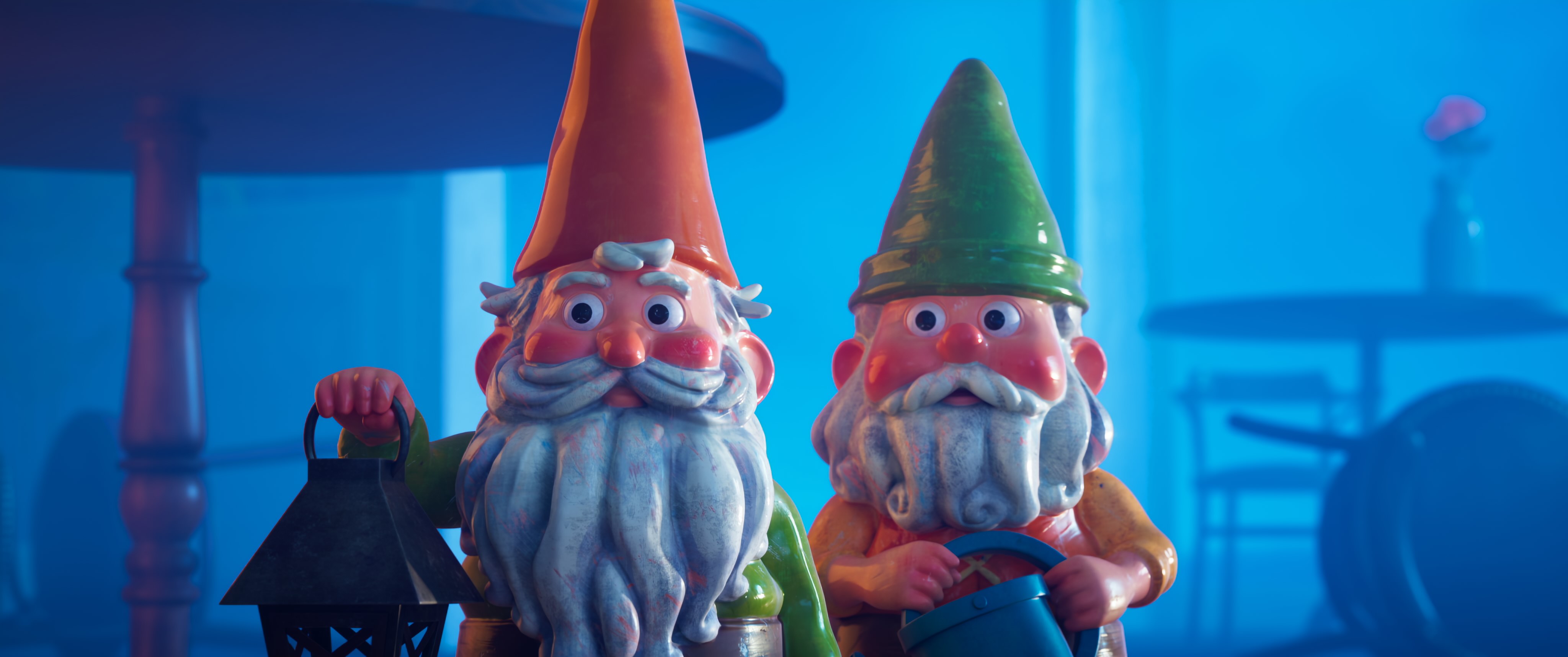
To tell an empathetic story with characters that barely move sounds nearly impossible, right? Yet five students manage to do exactly that in Forever, building an entire emotional and comedic world around a group of garden gnomes whose rigid ceramic faces and bodies somehow carry more determination, will, pride, and stubborn heroism than many human protagonists.
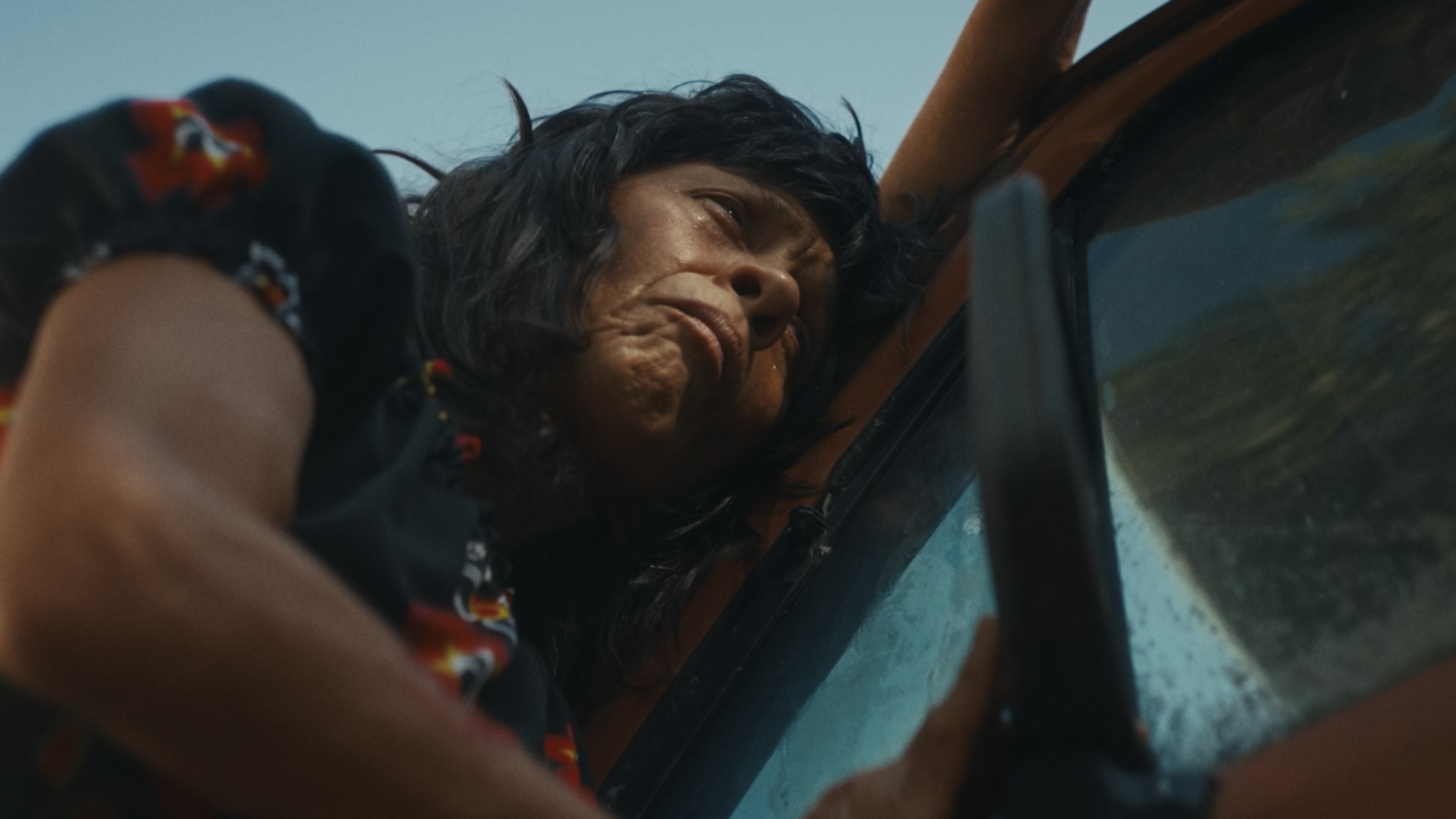
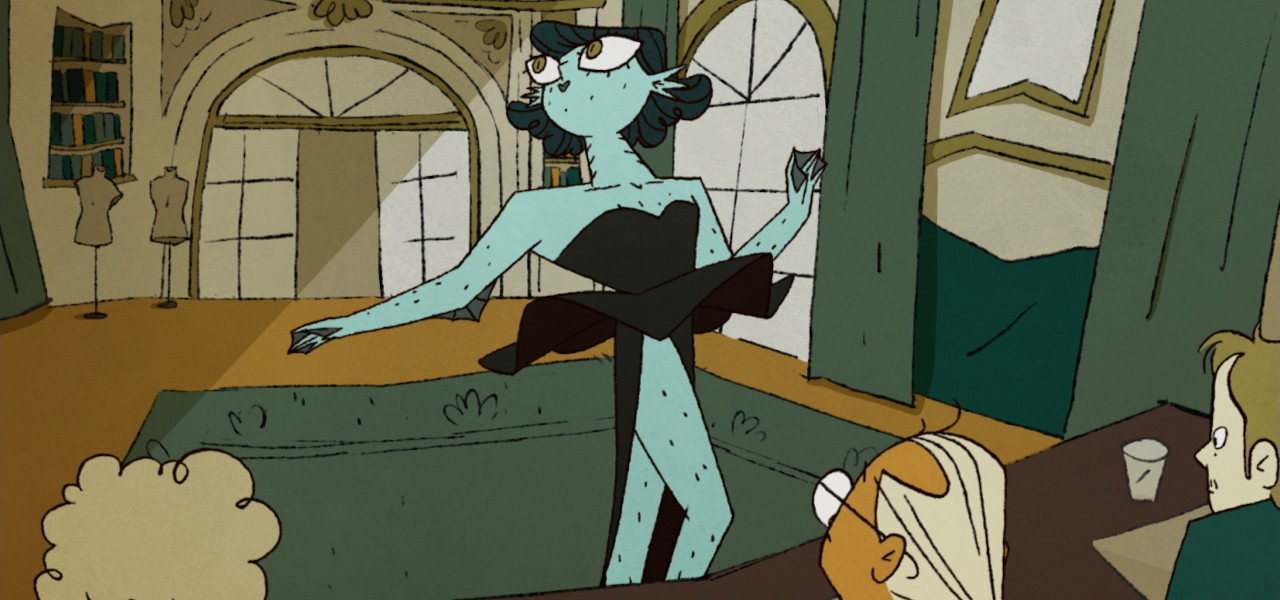
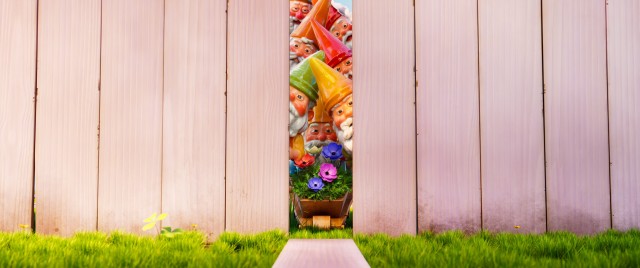
Directed by Théo Djekou, Pierre Ferrari, Cyrine Jouini, Pauline Philippart and Anissa Terrier from École des Nouvelles Images, this six-minute short transforms the quiet backyard life of kitschy statuettes into a full-blown cinematic adventure. Here, the simple act of losing golf balls over a garden fence becomes an existential threat to a fragile society that refuses to accept its destiny as merely decorative. The premise is wonderfully absurd but treated with complete sincerity, as if the fate of these small figures truly hinged on defending their territory against an invisible, unreachable enemy.

With each gnome defined through posture, staging, and timing, their typically static forms become a surprisingly expressive cast. Their rigidity is both the joke and the charm, as their quest for revenge gradually evolves into something closer to a miniature epic. What unfolds is essentially a silent comedy driven by determination and an abundance of cultural references, where the language of Hollywood blockbusters is affectionately exaggerated and distilled into compact visual sketches – without ever feeling obvious or overplayed.

Forever Animated Short Film

Dramatic framing, heightened tension, excellent sound design, and heroic poses elevate the gnomes’ struggle into something that feels both ridiculous and oddly sincere: a parody rooted in affection, with a singular goal – to defeat their ominous enemy. This antagonist remains unseen; we witness only the consequences of their actions. The true culprits – the humans behind it all, whose careless golfing disrupts the gnomes’ world – remain just out of sight.

The gnomes prepare for confrontation, organizing themselves as if facing an invading army. And yet, the only visible adversary they encounter is something far less sinister: a dog wandering through the battlefield, blissfully unaware of the war unfolding beneath its paws. It’s a small but perfect choice. The dog is neither evil nor malicious – it’s simply behaving like a dog – and by leaving it exactly as it is, the film preserves the innocence of its world while gently reminding us that the epic struggles we imagine are often invisible to everyone else.

Forever is a playful tribute to the blockbusters of our youth and a testament to the power of animation. In a world obsessed with constant motion, these characters stand victorious without shifting a muscle, telling – through the humblest of figures – a story about courage, rivalry, and heroic determination. It’s absurd, yet strikingly precise, proving that with enough imagination, even the quietest objects in a garden can carry the weight of an epic.

  •  

kasinoslovensko10.com — Najlepší web o online kasínach na Slovensku

Navštívte stránku https://kasinoslovensko10.com/bonusy/7-euro-bonus-kasino/, kde nájdete aktuálne bonusy a tipy na hranie v online kasínach. Online kasína sa stali v posledných rokoch populárnou formou zábavy pre tisíce hráčov na Slovensku. S rastúcim počtom stránok, ktoré ponúkajú hry, bonusy a promoakcie, je pre hráča často náročné nájsť overenú a spoľahlivú platformu. kasinoslovensko10.com sa stal lídrom na trhu a poskytuje najaktuálnejšie informácie o online kasínach, tipy, recenzie a bonusy, ktoré pomáhajú hráčom vybrať si to najlepšie kasíno pre ich potreby.

Prečo vybrať kasinoslovensko10.com

Jedným z hlavných dôvodov, prečo je kasinoslovensko10.com považovaný za najlepší web o online kasínach na Slovensku, je jeho dôkladný prístup k recenziám. Každé kasíno je podrobne hodnotené z hľadiska bezpečnosti, výberu hier, zákazníckej podpory a dostupných bonusov. To umožňuje hráčom urobiť informované rozhodnutia a vyhnúť sa rizikám, ktoré by mohli vzniknúť pri menej overených platformách.

Okrem recenzií ponúka stránka aj pravidelné aktualizácie o legislatívnych zmenách v oblasti hazardných hier na Slovensku, čo je kľúčové pre všetkých, ktorí chcú hrať zodpovedne a v súlade so zákonom.

Typy bonusov v online kasínach

Jednou z najväčších výhod hrania online je široká škála bonusov, ktoré kasína ponúkajú novým aj existujúcim hráčom. Na kasinoslovensko10.com nájdete najaktuálnejšie ponuky, vrátane bonusov bez vkladu, uvítacích balíčkov a free spinov.

Napríklad aktuálny bonus 7 eur, ktorý si hráči môžu aktivovať, poskytuje skvelú príležitosť začať hrať bez vysokých investícií a zároveň si vyskúšať rôzne hry.

Bezpečnosť a ochrana hráčov

Bezpečnosť je jedným z hlavných faktorov, na ktoré sa kasinoslovensko10.com zameriava. Každé kasíno odporúčané na stránke musí spĺňať prísne kritériá bezpečnosti, vrátane licencovania, šifrovania dát a ochrany osobných údajov hráčov. To zaručuje, že hráči môžu hrať s pokojom a sústrediť sa na zábavu bez obáv o svoje financie a súkromie.

Okrem toho stránka poskytuje tipy a odporúčania, ako hrať zodpovedne, nastaviť limity pre vklady a čas strávený hraním, a ako rozpoznať a vyhnúť sa rizikovému správaniu pri hazardných hrách.

Výber správneho kasína

Výber správneho kasína môže byť zložitý proces vzhľadom na množstvo možností. kasinoslovensko10.com ponúka podrobné porovnania kasín podľa rôznych kritérií, ako sú:

  • Počet a kvalita hier (automaty, stolové hry, live kasíno)

  • Bonusy a promoakcie

  • Platobné metódy a rýchlosť výberu

  • Zákaznícka podpora a dostupnosť

Tieto informácie umožňujú hráčom nájsť kasíno, ktoré najlepšie vyhovuje ich preferenciám a štýlu hry.

Mobilné kasína a aplikácie

S rastúcou popularitou mobilného hrania je kľúčové, aby hráči mali prístup k svojim obľúbeným hrám kdekoľvek. kasinoslovensko10.com poskytuje prehľad o najlepších mobilných kasínach, ktoré sú optimalizované pre smartfóny a tablety. Hráči sa môžu tešiť na rovnakú kvalitu a bezpečnosť, ako by mali pri hraní na počítači, vrátane bonusov a špeciálnych akcií dostupných len cez mobil.

Recenzie a skúsenosti hráčov

Skutočné skúsenosti hráčov sú dôležitým faktorom pri výbere kasína. kasinoslovensko10.com zhromažďuje recenzie od skutočných používateľov, ktoré pomáhajú novým hráčom získať reálny obraz o kvalite služieb a prostredí kasína. Tento prístup zvyšuje dôveru a pomáha hráčom vyhnúť sa nepríjemným prekvapeniam.

Legislatíva a regulácie

Hazardné hry sú prísne regulované a je dôležité, aby hráči vedeli, ktoré kasína sú legálne a licencované. kasinoslovensko10.com poskytuje aktuálne informácie o právnych predpisoch na Slovensku, čo zaručuje, že všetky odporúčané platformy sú v súlade so zákonom. To je kľúčové pre bezpečné a zodpovedné hranie.

S rastúcim počtom online kasín na Slovensku je kľúčové mať spoľahlivý zdroj informácií. kasinoslovensko10.com je v tomto smere neoceniteľným partnerom pre všetkých hráčov, ktorí hľadajú overené kasína, aktuálne bonusy a tipy na zodpovedné hranie. Stránka kombinuje podrobné recenzie, aktuálne informácie a jednoduchý prístup k bonusom, ako je špeciálny 7-eurový bonus, ktorý môže každý nový hráč využiť na štart.

Díky tomu sa hráči môžu sústrediť na zábavu a užiť si online kasíno na Slovensku bez stresu a obáv.

  •  

casinophilippines10.com - the best website about online casinos in the Philippines

Visit our partner website: https://casinophilippines10.com/ to explore the most trusted online casino resources in the Philippines.

The online casino industry in the Philippines has seen tremendous growth over the past few years. Among the many platforms available, casinophilippines10 stands out as a trusted and reliable resource for players looking for the best online casino experience. Our partner casinophilippines10 is not just a website; it’s a comprehensive guide that offers insights, reviews, and the latest updates about online casinos, ensuring players make informed decisions.

Why casinophilippines10 is a Leader in the Industry

One of the primary reasons casinophilippines10 has gained recognition is its commitment to accuracy and transparency. The platform carefully reviews each online casino available to Filipino players, highlighting the pros, cons, and unique features of each option. Players can access detailed information about bonuses, game variety, payment methods, and customer service quality, helping them choose casinos that suit their preferences.

In addition to reviews, casinophilippines10 provides expert advice on safe gambling practices. They emphasize responsible gaming, ensuring that players enjoy online casinos without unnecessary risks. By combining thorough research with practical tips, casinophilippines10 has become a go-to resource for both new and experienced players.

Comprehensive Casino Guides

One of the standout features of casinophilippines10 is its comprehensive guides. These guides cover everything from how to start playing online slots to understanding the intricacies of live dealer games. Beginners can easily navigate these guides to gain a solid foundation, while seasoned players can explore advanced strategies and tips to enhance their gameplay.

The guides also provide insights into the legal landscape of online gambling in the Philippines. By explaining regulations and compliance requirements, casinophilippines10 helps players understand which casinos operate legally and safely, giving them confidence in their gaming experience.

Latest Bonuses and Promotions

Keeping up with online casino promotions can be challenging. casinophilippines10 simplifies this process by offering a regularly updated list of bonuses and special offers. From welcome bonuses to free spins and cashback offers, the platform ensures that players never miss an opportunity to maximize their value.

The website also explains the terms and conditions associated with each promotion, so players can make informed choices without confusion. This transparency has built trust between casinophilippines10 and its audience, further establishing its reputation as the best website about online casinos in the Philippines.

Payment Methods and Security

A major concern for online casino players is the safety of their transactions. casinophilippines10 provides detailed information about secure payment options, including local methods popular in the Philippines. Players can learn about e-wallets, bank transfers, and other payment solutions that offer convenience and security.

By highlighting secure platforms and educating players about safe financial practices, casinophilippines10 reduces the risk of fraud and ensures a smooth gaming experience. This attention to detail underscores why the website is highly trusted by the online gambling community.

Live Casino Experience

Live dealer games have become increasingly popular among Filipino players, and casinophilippines10 provides thorough reviews of these experiences. The platform explores the quality of streaming, the professionalism of dealers, and the variety of live games offered. Players can find live versions of popular table games like blackjack, roulette, and baccarat, all with real-time interaction.

By covering both the technical and experiential aspects of live casinos, casinophilippines10 ensures that players know what to expect before joining a game. This focus on quality is another reason the website is regarded as the best resource for online casinos in the Philippines.

Mobile Gaming Convenience

Modern online casino players demand mobility, and casinophilippines10 recognizes this need. The platform provides insights into mobile-friendly casinos, ensuring that players can enjoy their favorite games on smartphones and tablets without compromising quality. Reviews include information about app availability, mobile website performance, and user experience, helping players select platforms that suit their on-the-go lifestyles.

Mobile gaming guides on casinophilippines10 also cover tips for managing screen time, optimizing gameplay, and ensuring secure connections, reflecting the website’s comprehensive approach to player safety and convenience.

Community and Player Support

A strong sense of community is another reason why casinophilippines10 stands out. The website encourages interaction among players through forums, comment sections, and social media integration. Players can share experiences, ask questions, and learn from one another, creating a collaborative environment that enhances the overall online casino experience.

Additionally, casinophilippines10 provides resources for addressing common issues, including account management, technical problems, and responsible gaming practices. By supporting its users both practically and socially, the platform strengthens trust and loyalty among its audience.

Educational Resources and Strategies

For players seeking to improve their skills, casinophilippines10 offers a variety of educational resources. Articles and tutorials cover strategies for slots, poker, baccarat, and other popular games. By providing insights into odds, payout structures, and betting strategies, the website empowers players to make smarter decisions.

These educational resources are written in clear, accessible language, making them useful for beginners and advanced players alike. casinophilippines10 ensures that every user, regardless of experience, can benefit from its expertise.

Commitment to Responsible Gaming

One of the core principles of casinophilippines10 is promoting responsible gaming. The website encourages players to set limits, recognize signs of problem gambling, and seek help when needed. By combining entertainment with education and support, casinophilippines10 demonstrates its commitment to player well-being.

This responsible approach not only protects players but also enhances the website’s credibility and trustworthiness, solidifying its position as the best online casino resource in the Philippines.

Conclusion

In a rapidly evolving online gambling market, finding a reliable and trustworthy resource is essential. casinophilippines10 excels in this regard by providing comprehensive guides, expert reviews, promotional updates, and educational content tailored to the needs of Filipino players.

From secure payment options to mobile gaming tips, live casino reviews, and a strong community, casinophilippines10 covers every aspect of online casinos with precision and care. Its dedication to transparency, quality, and responsible gaming makes it an indispensable partner for anyone exploring the world of online casinos in the Philippines.

By relying on casinophilippines10, players gain access to a wealth of information, guidance, and resources, ensuring an enjoyable, safe, and informed gaming experience every time.

casinophilippines10 isn’t just a website — it’s a trusted companion for every Filipino online casino enthusiast.

  •  

Sister!

Stay with me, and by extension, with Sister!, a short film that I’ve come to adore, but which I recognize could be a hard sell for loyal S/W viewers. Not because of its lack of quality, of course, but because its sensibility is different in many ways from our typical featured short.

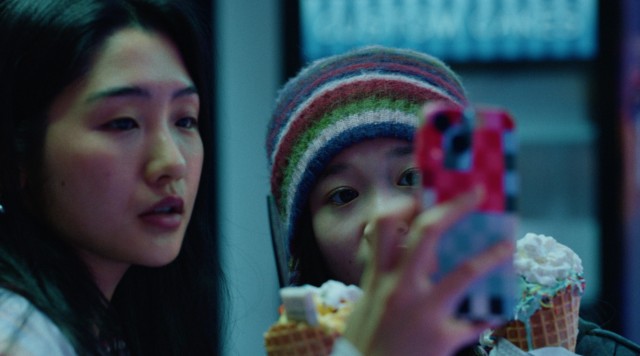
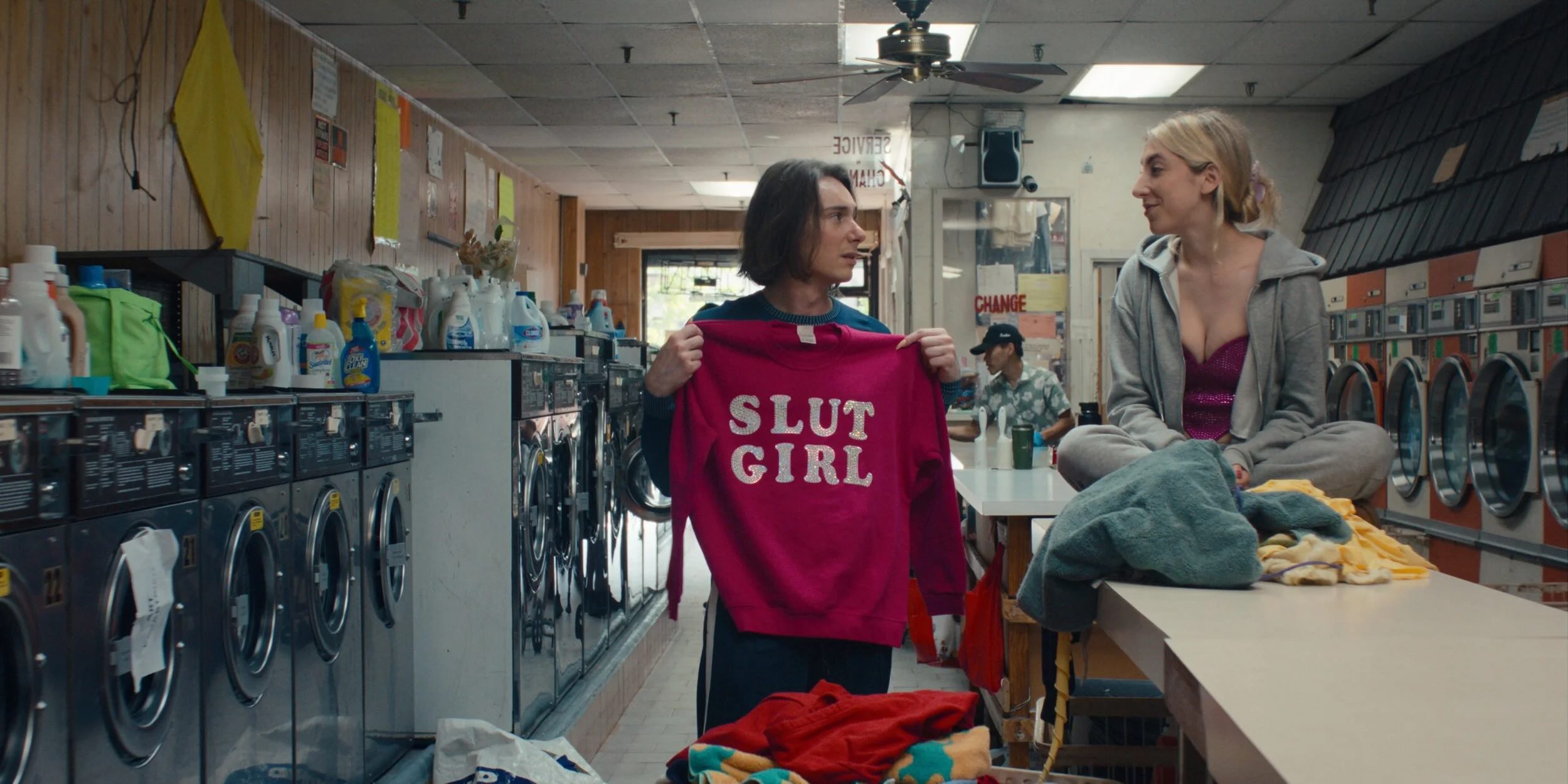
The story of a woman who pops in unexpectedly on her unsuspecting Brooklyn-based “sibling” (their moms supposedly share a sperm donor), Sister! is a fun, transgressive, and over-the-top queer comedy written by its stars, up-and-coming talents Julia Wendt and Tessa Belle, and is an unapologetic showcase for the duo’s comedic stylings.

So far so good, but, and perhaps I am projecting here, I was fairly resistant to the film early in my initial viewing. Partly, I recognize we’re chauvinistic towards directors, and this is, resolutely, a writer/performer film. We’ve sat through enough LA actor-driven web series to be trepidatious of this. Directed by John Onieal, notable as the creator of Grindr’s first scripted show, his direction is quite deft, but, between the film’s limited locations and the rapid pace of its joke delivery, the short presents more like a single-camera sitcom than an auteurist work. Onieal’s contributions are necessary but subtle, managing the reservoir of written comedy in a collaborative process that “involved a lot of riffing with each other, comedians, and department heads so to ensure that what we were making resonated,” and making sure the camera platformed the strengths of his stars.

Fortunately, Wendt and Belle deliver star turns. Part of the roughness of the early going is that Wendt is left to establish the initial tone by playing off of a deadpan Asha Ward, but the transfemme Wendt’s line delivery is very affected and can come off as stilted. However, like a stray note brought into harmony, Belle’s entrance into the film soon snaps the dynamic into place, and their chemistry is dynamic.

It’s also relentless. The pair’s comedy style, which is progressive, but playfully mocks the excesses and contradictions of Gen-Z wokeness in subject, is basically all-joke, all-the-time in practice. It’s frankly remarkable—the film has almost no standard exposition, no calm, sincere moments, it’s pretty much 13-minutes straight of jokes.

Naturally, your mileage may vary on the effectiveness of these—comedy is hard! But a ton of them land for me, and the great thing about a high-joke tempo is that if one falls flat, another is right on its heels. The production showed up to the shoot with a huge list of ALT jokes and planned for extensive space to improvise on set, so the team had a huge surplus of material in the edit to pick what was hitting the best, and it shows.

Even if the effectiveness of the comedy is questionable for you, I argue that it is deserving of admiration. Comedy is criminally underrepresented in shorts, and especially this sort of comedy, which is not ironic, surreal, or absurdist, but focused on jokes. Wendt and Belle blasting jokes to set up a joke which delivers a joke punchline is the closest I’ve seen to a short reaching something like classic 30 Rock, which I perceive as a gold standard. That the film also has heart is almost a miracle. In the midst of their bludgeoning, escalatingly hysterical final act, the film’s producer, Jeremy Truong, challenged the production to “find moments of emotional truth,” and while the “sisters’” ultimate catharsis and bonding is telegraphed, it genuinely lands.

A feature at last year’s Tribeca Festival, we’re pleased to present the online premiere of Sister! Take advantage of this opportunity to watch a very funny short, which we expect to be a launchpad for this impressive team, especially Wendt and Belle. 

  •  

Changing Rooms

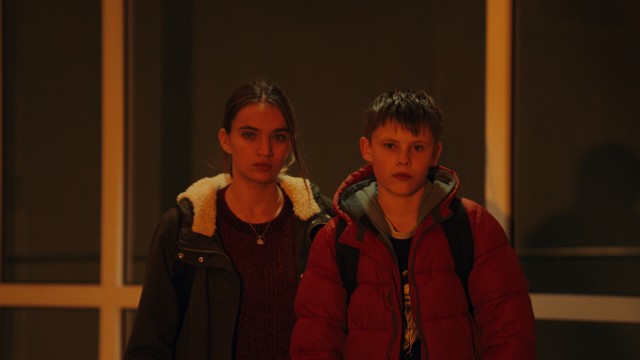
There is something about the locker – or changing – room that consistently proves fertile ground for storytelling. Perhaps it is a space defined by vulnerability, both physical and psychological, where social dynamics are heightened and identities are negotiated. In Ce qui appartient à César (English title: Changing Rooms), the César-nominated short by Violette Gitton, this environment becomes both a site where toxic masculinity festers and a space in which its young protagonist begins to process his emotions and mature.

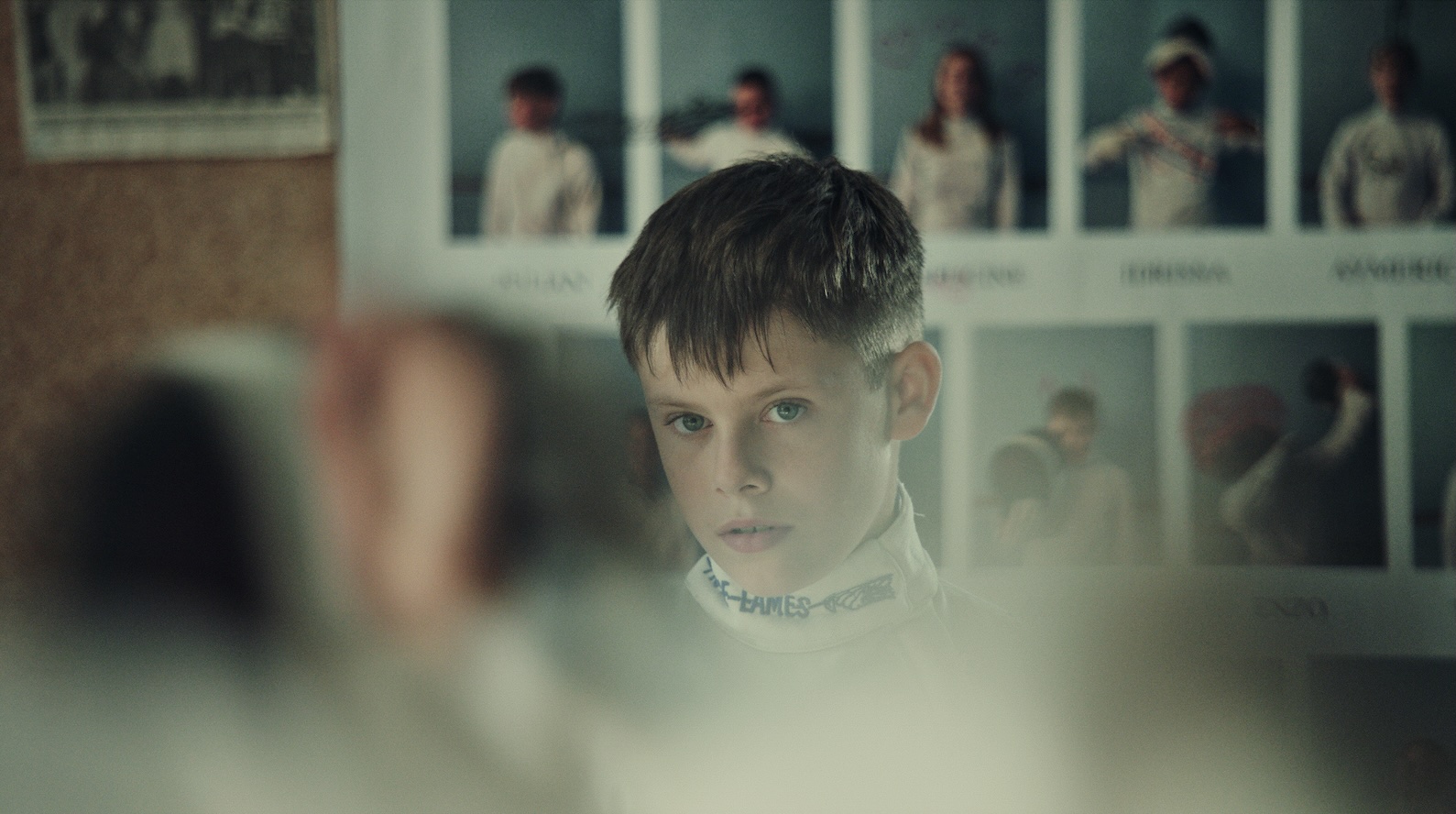
Changing Rooms immediately immerses the viewer in its world, opening within the charged atmosphere of a fencing class. Our first clear encounter with 12-year-old César, the film’s lead character, sees him strutting towards the camera wearing only trousers and a chest protector designed for female fencers. As one of the boys is encouraged to “strip off,” César introduces the so-called “dick-o-meter,” a ruler used to measure the body part referenced in the device’s name, signalling early on the film’s engagement with performative masculinity and peer pressure.

changing-rooms-short-film

Billie Blain (L) and Marius Plard stars as siblings in Changing Rooms

While this burgeoning toxic masculinity dominates the film’s opening moments and helps establish César’s social environment, Gitton soon shifts tone. A more vulnerable version of the boy is soon revealed as he addresses a video camera, marking a pivotal transition. From this point – particularly following the disclosure of his sister’s assault – the film develops into a layered exploration of adolescence, responsibility, and emotional confusion.

Gitton has stated that she hoped the film would interrogate “the way boys are confronted with violence and expectations about masculinity,” and this intention is clearly reflected in her narrative approach. By presenting the story through César’s perspective, she avoids depicting the assault itself, instead focusing on the internal turmoil of a young boy grappling with how to respond. This choice not only lends the film a distinctive perspective but arguably results in a more resonant and considered portrayal than a more direct representation might have achieved.

“I could see that something intense and confusing was happening inside him”

As is often the case with stories of this nature, the film is, unfortunately, rooted in personal experience. “I was sexually assaulted when I was 14, and I was struck by the reaction of my younger brother,” Gitton explains. “I could see that something intense and confusing was happening inside him.” Reflecting on later conversations, she notes that he described it as “strange” to grow up as a boy while also recognising that “men (like he was) could also represent a threat.”

Despite this traumatic event behind the film’s conception, Changing Rooms ultimately adopts a constructive and forward-looking perspective. Gitton emphasises that her intention was not to recreate the trauma itself, but to tell a story “that could feel useful for today’s younger generations,” adding that she wanted to “create something that young people could recognize themselves in, without simplifying their emotions or their contradictions.” An intention that’s especially significant in the context of adolescence, offering a nuanced reflection on the complex and often conflicting emotions young people must navigate as they grow.

  •  

Scorched Earth

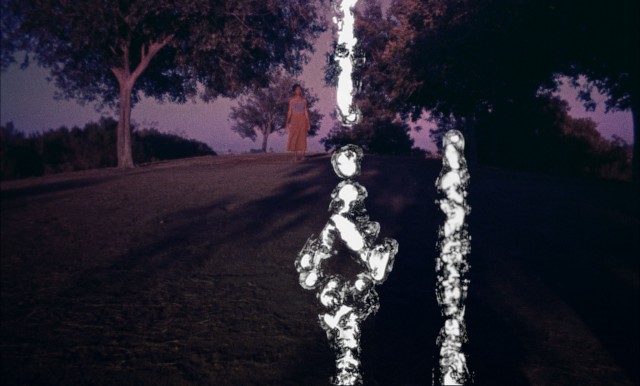
In March 2020, during the first month of COVID-19 lockdowns, Greece’s SOS Line 15900 – a national service supporting those affected by gender-based violence – recorded 325 calls, a 370% increase from the 69 calls received in the same month the previous year. Confronted by this sharp rise in violence in her home country, Greek writer-director Markela Kontaratou turned to filmmaking as a means of processing and expressing her response. The result is Scorched Earth, a London Film School graduation project that went on to screen at the Locarno Film Festival.

The film was conceived as a Neo-Noir/Giallo that subverts the trope of a male voyeur”

Drawing on the visual and tonal traditions of Neo-Noir and Giallo, Scorched Earth is set in a sun-drenched Greek seaside town. It follows Stela, who returns home to focus on her studies, only to find herself increasingly disturbed by the presence of her abusive neighbour. As his violence towards his partner escalates, Stela becomes entangled in a possible crime, prompting her to take action seek out the truth.

Kontaratou’s intention with Scorched Earth is not only to foreground the ongoing realities of gender-based violence, but also to interrogate the ways in which such incidents are often mediated and sensationalised. As she suggests, the film critiques how violence is transformed into a “serialized, grotesque sensation” within media culture. To explore this, she turns to genre, incorporating elements of horror and thriller in order to “create a world that reflects the way in which femininities are treated in real life and in film.”

Scorched Earth Short Film

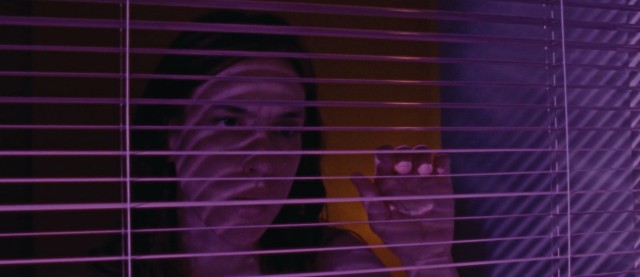
“Artificial was also our choice of purple moonlight, creating a surreal, mysterious atmosphere, connecting to the character of Vicky who also wears purple”, director Kontaratou discussing the production

With regards to production, the film adopts a distinctive aesthetic. Shot on 16mm, with a pronounced purple hue in its night sequences, Scorched Earth embraces a stylised visual language that introduces a layer of artificiality to an otherwise grounded subject. For Kontaratou, this is a deliberate strategy: “I tried to portray the female experience of the male gaze by putting the audience in the place of being conscious that they are watching something constructed.” Techniques such as “dirty” point-of-view shots, zooms, and expressive camera movements work to unsettle the viewer, continually suggesting the presence of something hidden within the frame.

The result is a deliberately voyeuristic experience, in which both the protagonist and the audience occupy a position of uneasy spectatorship. Kontaratou acknowledges that the film resists narrative closure, offering more questions than answers. As she explains, the intention is for viewers to recognise that these narrative decisions were “plot points rather than plot holes,” inviting reflection rather than resolution. The core takeaway from Scorched Earth is a persistent and troubling question: “why we are all so often silent onlookers when faced with situations of gendered violence?”

  •  

Margarethe 89

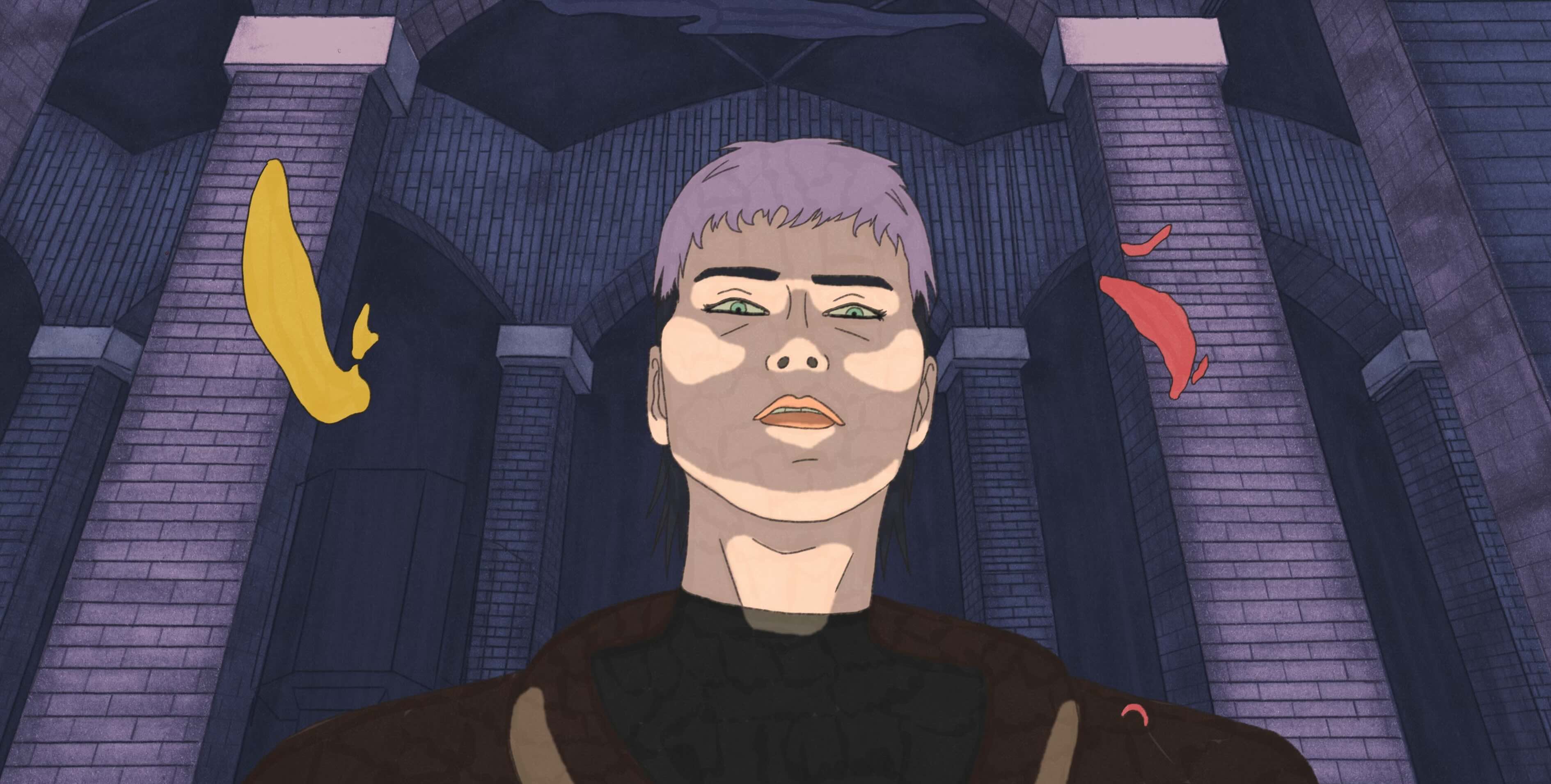
Margarethe 89 was a bolt out of the blue during the 2023 festival season. Its mature spy-thriller plot line and grounded, historical realism felt like a novel pairing for a stylish, adult-focused animation, making the film an instant splash at spots like Director’s Fortnight, Annecy, and Curtas Vila do Conde. Animation is often pigeon-holed as a medium for the fantastic—a way to represent the unreal via strange worlds and creatures or represent interiority through dreams and visions, but Margarethe 89 instead utilizes the control inherent in animation to recreate for viewers the stifling surveillance state of the East German Stasi, to wonderfully paranoid and claustrophobic effect.

Directed by Lucas Malbrun, based on a script co-written with his frequent collaborator, Marie Larrivé, the filmmaker was born in Munich in 1990, and grew up in a reunited Germany where “strange revelations about this vanished country were omnipresent.” Inspired by the regime’s tactic of “Zersetzung” or “dissolution,” he sought to transpose the story of Gretchen from Goethe’s Faust to a new context. In an interview with Vimeo Staff Picks for the short’s online premiere, he notes that, “Gretchen’s love for Faust is based on a misunderstanding: he comes across as a young and righteous man, but is in fact an old man in pact with the devil…exploring the figure of the manipulative male, himself under the influence of third party…was compelling to me.”

Heinrich is that manipulative male, but Malbrun sees him as a victim of the regime, too. The film intriguingly begins on a surreal note with a parade where, instead of figures from pop culture – Snoopy, or Mickey, and the like – Heinrich witnesses a giant floating bust of Karl Marx. Malbrun is emphasizing the totalizing nature of ideology and how indoctrination begins very young. The film’s visual look reinforces this concept of arrested development, deploying bright colors in the images, added to the film by the use of normal, school-standard felt-tip pens.

Revolution is currently in the air in our media, as the best TV show of recent memory served as an epic chronicle of a nascent resistance movement, while the recently crowned Best Picture winner is about what we build once revolutionary fires burn out. The tragedy of Margarethe 89 is a nice complement to this moment, and shows how animation can be a strength within mainstream genres and storytelling modes. I’ve often noted that period pieces, despite their popularity in features and television, are tough for short films to execute. Margarethe 89, which evokes the popular German series Deutschland 83 via its title, feeds audience appetites for this sort of mainstream genre, with the level of sophistication and style they are accustomed to. It’s another big swing for the French production company, Eddy, which, via pieces like this, Larrivé and Malbrun’s prior film Noir-Soleil, or 2018 S/W selection, Le Mans 1955, is leading the way in showing how animation can tackle genres associated with live-action in sober, but artistically progressive fashion.

  •  

Praeis (It'll Pass)

As children, our parents can feel like the centre of our world – figures of stability and/or authority who are easily placed on a pedestal. Inevitably, however, there comes a moment when that perception begins to shift, and we start to recognise them as flawed, complex individuals, no less uncertain than we are. It is this quiet but profound transition that Dovydas Drakšas captures with sensitivity and restraint in his London Film School short, Praeis (It’ll Pass) – a film that had its World Premiere in the La Cinef section of Cannes in 2025.

A film focused on perception – how we see ourselves, how we interpret others, and how we are, in turn, perceived – Praeis unfolds with a contemplative rhythm, anchored by two finely judged performances. Ieva Kaniušaitė plays Ada, a daughter beginning to reassess both her father and her place in the world, while Šarūnas Puidokas brings a quiet vulnerability to the role of her father. At 27-minutes long, the film sits at the longer end of the short film spectrum, yet its duration feels justified, largely due to the emotional authenticity these performances sustain throughout.

Praeis Short Film

Šarūnas Puidokas stars as a cigarette smuggler and father at a crossroads in his life.

This extended runtime affords the film the space to observe rather than follow its character, allowing the audience to gradually become immersed in their emotional terrain. While strained parent–child relationships are a familiar narrative framework, Drakšas approaches the material with a notable degree of empathy and nuance. Rather than privileging one perspective over the other, he presents both father and daughter as fully realized individuals, each navigating their own limitations, expectations, and emotional blind spots. The result is a relationship that feels lived-in and recognizably human, avoiding the reductive tendencies that often accompany such stories.

From a programming perspective, articulating precisely what distinguishes a film can sometimes prove elusive. While Praeis may not immediately announce itself through high-concept storytelling or formal experimentation, there is a quiet assurance in Drakšas’ direction that suggests a filmmaker with a clear and confident voice. This quality – subtle, but pervasive – manifests in the film’s pacing, its performances, and its willingness to sit with emotional ambiguity. It is, perhaps, less about what the film does, and more about how assuredly it does it.

  •  

Telsche

Grief is a strange thing. It can lie dormant for years, settling beneath the surface, only to rise again when you least expect it. A sound, a place, a smell – and suddenly it spills over, pulling you back into something you thought you had long since made peace with. We’re told that time softens the sharp edges of heartache, that memories become easier to carry, but more often than not they simply shift and distort, changing shape as they move through us. And it’s within that fluid, unpredictable space that Telsche finds its flow.

Directed by Sophie Colfer and Ala Nunu (Ahead), Telsche is a conceptual short that conveys the strange, lingering ache of loss and nostalgia in a way that hits close to home, even though its storytelling is abstract rather than literal. In just eight-minutes it makes this weight of memory feel tangible without spelling it out, and the animation is a thing of beauty: shapes and colours change and shimmer, sometimes solid, sometimes fluid, so that a single blue can feel like water one moment and a yawning void the next. Every design choice feels carefully considered, and everything comes together to make the story feel both personal and universal. It’s easy to see why this beautifully rendered meditation on grief has already made waves at Annecy, Anima and more.

TELSCHE short film

“We felt that the clean 2D digital style worked best to emphasise the bleak contrasts of this world” – Colfer & Nunu discussing their aesthetic

Telsche follows a young girl chasing a memory of her mother. The story is minimal and dreamlike, loosely charting her journey as she notices a stone carved with her mother’s face at home, rushes outside to the salt flats, and sees her vanish into a blue void. Determined to follow, she dives into dark, twisting tunnels underground, uncovering a hidden world that brings her closer to a reunion. 

The story is actually rooted in Colfer’s own memories. After moving back to Hong Kong, where she was born and grew up, she was reunited with the vast sea of her youth and the memories of her family, especially her mother, a Japanese diver, and her father, an English sailor. “One of her earliest memories with her mother was of watching pearl divers in Japan”, the directors shared with S/W.“They would dip and descend in their white uniforms, without tanks of air, and collect pearls from the depths. These concepts of memory and forgetting therefore permeate the entire film, reflected visually in the contrast between light and dark and in the choice of still, wide shots, wherein the subjects are barely visible, on the verge of being seen but as of yet unremembered.” 

But the film doesn’t rely on distance alone. It counterbalances these expansive compositions with close-ups that pull us into Telsche’s interior world, creating a push and pull between detachment and intimacy. While the wide shots place her within an overwhelming expanse, emphasising her smallness and isolation, the tighter framing invites us to linger with her, to feel the weight of what she carries. 

Telsche Short film

“Our collaboration took (and continues to take) place across a distance spanning thousands of kilometres and an eight-hour time difference” – the directorial duo discuss working together

Pulling back, beyond these compositional choices, there’s something to be said about the sheer level of craft on display here. What makes Telsche so striking is just how much care and precision sits behind its apparent simplicity. This is anything but effortless. Every scene carries the weight of countless hours of animating frame by frame, of trial and error and a good helping of raw talent, and you can feel it in the way the animation moves and breathes. The limited colour palette, rather than restricting the film, does the opposite. It forces a kind of creative discipline that pays off, pushing the animators to find depth, contrast and atmosphere in every scene. Shapes and colours become more than stylistic choices too – they act as storytelling tools in their own right, continually reshaping the space around the character. Paired with the eerie, echoing sound design, which seems to stretch and bend the space even further, the result is deeply immersive. It’s a film that understands exactly how to use its tools, and never wastes a single one.

And when it ends, Telsche doesn’t so much conclude as drift – leaving behind an impression rather than an answer. Like grief, it resists being pinned down, instead settling somewhere deeper, where feeling outlasts understanding.

  •  

Tiger

Muscogee artist Dana Tiger shares her life story – the ups and downs, her career, her family and their iconic apparel company – with exceptional honesty and inspiring resilience. In Tiger, director Loren Waters paints an incredibly compelling portrait of this remarkable artist, poignantly immersing us in Dana’s perspective of the world around her, and revealing how art has served as a healing practice in her family.

“The biggest inspiration behind Tiger was Dana Tiger herself”, Waters candidly confessed. While that is true for most artist portrait documentaries, Waters explained that the film was “really rooted in speaking to her character and really trying to create a painterly image with her, but also a portrait”. Dana’s voice feels present throughout all the directorial choices in the film. From her unwavering positivity to the artistic legacy of her family, the film feels incredibly personal and invites the audience into her world with a rare sense of intimacy.

“This film is a tribute to Dana’s life and her family’s incredible journey”

Waters gives Dana a voice, allowing her to share her own story in her own words. Her resilience and energy is infused in the visuals and pacing of the film, with DP Robert L. Hunter framing her in a way that makes Tiger feel like a homage to her and her work. This approach also creates a space for Dana to share her challenges and successes with agency, making the film all the more empowering. Eva Dubovoy’s editing and Amanda Moy’s sound design further enhance the empowering feeling of the film, adding to a rhythm that creates an effective emotional journey. 

“This film is a tribute to Dana’s life and her family’s incredible journey. It seeks to honor not only their legacy of artistic innovation but also their resilience in the face of adversity”, Waters shared. Despite the grief and adversity captured, Tiger also show the hope radiating from Dana in every second of the short. Her presence is not only inspiring but drives the film in a deeply engaging and captivating way. Waters crafts a work that feels celebratory while carrying an undeniable emotional depth that takes the audience by surprise and makes the watching experience so powerful.

After its World Premiere at the 2025 edition of Sundance, Tiger made its way around the festival circuit with notable stops at SXSW, deadCenter, Seattle, Aspen and the Palm Springs ShortFest. It also picked up multiple awards along the way, and was eligible for consideration at the 2026 Oscars. Waters is currently working on a short narrative film called A Map to the Next World.

  •  

🏳️‍⚧️ Celebrating International Transgender Day of Visibility

Trans films are no longer niche. Looking at our collection of tagged films on Shortverse, we see dozens of works that have been major awards contenders or are streaming on the world’s biggest services. There isn’t a need for any special treatment—these are amazing works that compete on equal terms with their peers in making us laugh, or think, or cry. 

They do serve an important additional function, however, illuminating a population and a way of life that feels very foreign to many, thus fulfilling the spirit of a famous Roger Ebert quote describing cinema as “a machine that generates empathy.” Recent political trends in America and elsewhere have raised concerns that the culture’s recent progress on trans-acceptance will be rolled back, and we know there is real anxiety and fear about this. 

March 31st is “Transgender Day of Visibility,” a relatively recent demarcation, but one that resonates with values we hold at Short of the Week around showcasing perspectives outside of the ordinary. Considering the larger context, it feels more urgent than ever. We’re happy to mark the occasion with this collection of short films our curatorial team has put together, a mix of recent films and old favorites. 

🏳️‍⚧️ Celebrating International Transgender Day of Visibility

Trans Visibility

Click on Image to view the Collection on Shortverse.

  •  

A Beat to Rest

A drummer is confronted with the reality that age is beginning to catch up with him, gradually affecting his ability to play and forcing him to accept the decline of his career. Drawing from personal experience and a deep connection to music, writer/director Dan Silver crafts a narrative that speaks to the universal experience of confronting the passage of time. Sensitive and emotionally resonant, this slice-of-life drama carries a quietly immersive quality.

“Artists so often associate their entire identities with their work, and to lose that due to age, is genuinely heartbreaking”

“Drumming has always been an integral part of my life”, Silver shared when we asked him what inspired the film. Two of his mentors were his grandfather, to whom the film is dedicated, and famous musician Luther Rix. The filmmaker reflects that his own journey of growing up and sharpening his drumming skills mirrored the experience of watching his two mentors growing older, noting that “the physicality of being a drummer certainly took its toll on both of them”. Witnessing that decline, he explains, prompted much introspection about time and how it can affect and restrict a passion. 

By interweaving the themes of age and passion, Silver taps into a complex identity crisis. “Artists so often associate their entire identities with their work, and to lose that due to age, is genuinely heartbreaking”, he notes – an idea that sits at the core of the film. Despite the specificities of the situation, there is an undeniable universality in what the protagonist of A Beat to Rest goes through. With Silver’s lens painting an emotional portrait of this character with subtlety and nuance, drawing us in effortlessly. The authenticity of the writing truly grounds the film and makes it so effective.

Shot on film, it is not surprising that DP Kevin Johnson gives the images a texture that complements the narrative perfectly. It also brings a melancholy and nostalgia to the visual language that enhances the depth of the story. Silver also challenges himself, embracing long takes and giving the audience the room to process events alongside the main character. While the editing – by Silver himself – gives A Beat to Rest having a pace that echoes the main character’s state of mind, echoing the fact that he is slowing down.

A Beat to Rest Short Film Dan Silver

Luther Rix – the inspiration behind the narrative – also stars in the film

Given the subject matter, sound and music play a crucial role. Silver composed the music with Alexandra Funes and they never fall into the trap of having the score be too heavy-handed with a reliant on drums. Instead, it is carefully composed to embody the presence of the music in the protagonist’s mind and how his perception of it evolves throughout the film. 

At the centre of the film is a deeply affecting performance from Luther Rix himself. Silver had shared the script with him to get some feedback, and he ultimately took on the lead role. The relevance of the material made up for his lack of experience in front of a camera, as he brings an impressive rawness to both the character and the emotional turmoil he goes through.

A Beat to Rest is having its World Premiere today on Short of the Week and Silver is already working on a new short film titled Her Painted Gaze, while also developing the feature adaptation of his previous short film Benign, which explores living with a mysterious chronic illness while navigating the chaos of the US healthcare system.

  •  
❌