❌

Reading view

Apple’s Future-Proof Car

Always in the future and lacking proof…

Photo by Andy Wang on Unsplash

Ah, the Apple Car. It’s a rumor so old and so unconsummated that it’s entering the mythical realm of the Apple Television.¹ But it’s not there yet, and that’s largely because there clearly have been various huge projects (aka “Titan”) throughout the years within Apple working on a car or car technology of some sort. There’s way too much smoke for there not to be fire.² And yet, we’ve yet to see the fire.

It also has long made some amount of sense. Almost six years ago, when arguing why it would be weird if Apple wasn’t working on a car project, I called out the fact that Apple was running out of industries where the revenue could actually move their needle. Automobiles is certainly one of them.³ That doesn’t mean it’s not insanely daunting and perhaps the biggest logistical challenge Apple has ever undertaken. But those are the types of things Apple can and seemingly likes to solve. Tim Cook used to eat such challenges for breakfast. Now he may snack on them during a quick lunch with Jeff Williams and Doug Field.

Anyway, the rumor was back again this past week with a report from Stephen Nellis, Norihiko Shirouzu, and Paul Lienert for Reuters:

Apple has progressed enough that it now aims to build a vehicle for consumers, two people familiar with the effort said, asking not to be named because Apple’s plans are not public. Apple’s goal of building a personal vehicle for the mass market contrasts with rivals such as Alphabet Inc’s Waymo, which has built robo-taxis to carry passengers for a driverless ride-hailing service.

Now, is this latest report 100% accurate? Who knows. We’re so far out from that would-be launch date (or is it just a start of production date?) — over three years away — that even if this is fully accurate right now, so many things will change between now and then. And even this report couches things noting that production — not shipping — could slip until 2025!

And then in comes often accurate analyst Ming-Chi Kuo noting that the timetable for Apple’s car project is more like 2025 at the earliest, and maybe more like 2028 or later.⁴ And like that, we’re back in science fiction territory.

To be clear, while such timetables seem to run a high risk of approaching vaporware status, I think it’s fine to work within such boundries given what we’re talking about here: the production of a full automobile. It has already taken a ton of time, it will take a lot more time.

And one big reason for that: I tend to think the only thing that makes sense for Apple to do here is build and ship a full car, not some underlying system to be used by other car makers, as has been rumored in recent years.⁵ This is Apple. Apple makes products consumers buy and use.

Later on, in the Reuters report:

It remains unclear who would assemble an Apple-branded car, but sources have said they expect the company to rely on a manufacturing partner to build vehicles. And there is still a chance Apple will decide to reduce the scope of its efforts to an autonomous driving system that would be integrated with a car made by a traditional automaker, rather than the iPhone maker selling an Apple-branded car, one of the people added.

If we’re talking about the earlier ends of the timetables above, undoubtedly, Apple would have to partner to assemble the car so as to avoid “production hell” as Elon Musk famously talked about with regard to the Tesla Model 3. I’m sure Apple would prefer to do everything themselves, and will probably get there eventually if and when they do make their own cars, but they do have a history of partnering first in varying degrees, of course.

But again, I don’t believe that last part above will be true. I just don’t see them developing some system other car-makers use in their cars. Or at least, I don’t believe that will ultimately be the primary driver of Apple’s car project.⁶

I’m reminded a bit of the Rokr, the failed Motorola phone which Apple partnered on to feature iTunes. That was quickly scrapped for the iPhone, of course. Would Apple do a “Rokr Car” at first to test the market? I just don’t see it. Or I do, but it’s already out there: it’s called CarPlay.

Beyond that, the most interesting bits of the report:

Central to Apple’s strategy is a new battery design that could “radically” reduce the cost of batteries and increase the vehicle’s range, according to a third person who has seen Apple’s battery design.

And:

Apple’s design means that more active material can be packed inside the battery, giving the car a potentially longer range. Apple is also examining a chemistry for the battery called LFP, or lithium iron phosphate, the person said, which is inherently less likely to overheat and is thus safer than other types of lithium-ion batteries.
“It’s next level,” the person said of Apple’s battery technology. “Like the first time you saw the iPhone.”

Creating some new killer technology that alters the state of the art does seem like a very Apple thing to do. And the battery element (pun intended) could be just the thing. Everyone knows that Tesla got to where they are leading the electric car revolution by essentially using laptop batteries in tandem. Who knows how to manipulate and maximize laptop batteries better than anyone? Apple.

Not that they would use the same batteries, of course (nor does Tesla anymore). What they’re talking about above sounds like some new breakthrough. No less than Musk himself is intrigued (but confused and seemingly skeptical) about this. But again, you could envision a world in which Apple cracks some sort of code here — and, as with the M1 chip, their work on laptops/phones at scale could feed into this project and vice versa, making all the products better — and that plus the obvious design and user interface elements combines to create one killer product.

Not a “Tesla-killer”, mind you. This obviously won’t be a winner-takes-all market and by the time Apple came to market — if Apple comes to market — Tesla would have an immense scale advantage.⁷ But those other guys who gave funny quotes five-plus years ago may be in for some bumps in the road.⁸

My two favorite from back then — just to keep them top of mind for 2030 or whenever —from former CEO of General Motors, Dan Akerson:

I think somebody is kind of trying to cough up a hairball here. If I were an Apple shareholder, I wouldn’t be very happy.

And

“We take steel, raw steel, and turn it into car. They have no idea what they’re getting into if they get into that.”

“They’re not just going to walk in!” No, but they could drive in!

The question, really, is when?
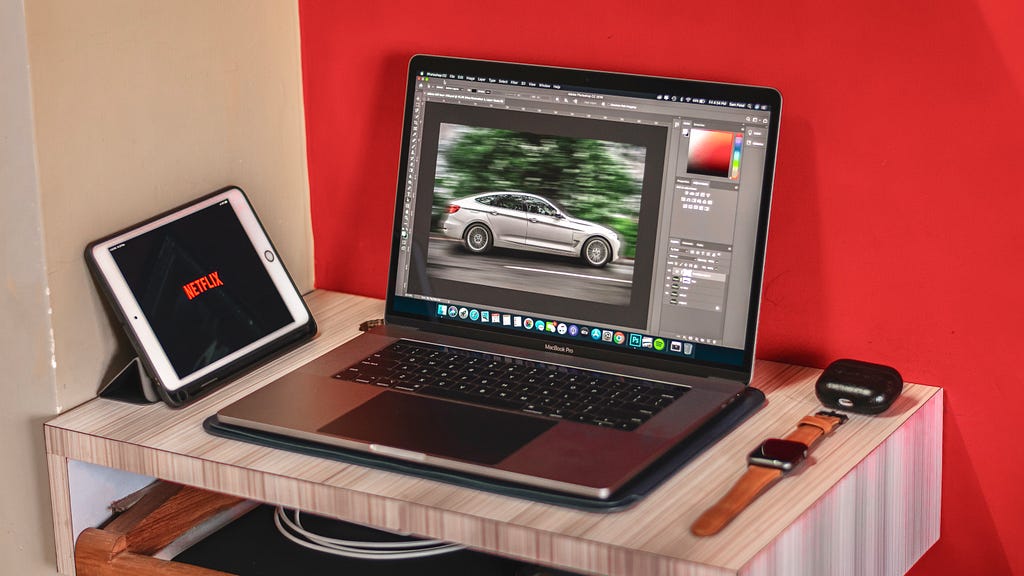
Photo by Sahil Patel on Unsplash

¹ Not the Apple TV set top box. And not the Apple TV app. And not the Apple TV+ service, but an actual television set. As in, a massive screen that would be built by Apple.

² Also, you can’t throw a rock in Silicon Valley at this point without hitting someone who has worked on the project themselves. Plus, Apple has had cars on the street to test their autonomous driving tech. It’s legitimate, but it has also legitimately been rebooted or restarted a number of times. Hence, no car. Yet.

³ Television sets? Not so much

⁴ While Kuo clearly has excellent supply-chain sources — which are obviously going to be important for a project as large and all-encompassing as a car — his timetables are often off. This shouldn’t be surprising, things shift all the time and especially when we’re talking about seven or eight years out, it’s impossible to pinpoint a date, I imagine.

⁵ I recognize that no less than Tim Cook has given on-the-record quotes about autonomous driving systems being core to Apple and “the mother of all AI projects” — but that was also over three years ago. Again, things change — and often have with this project.

⁶ And yes, I acknowledge that various reports over the years — and in a way, Cook’s quote above — have implied Apple would just build the underlying tech. To me, that reads as if their first few attempts at the whole shebang didn’t work out, so they were looking for a way to commercialize the technology they had built. But if the Reuters reports is to be believed, they’re back to the whole shebang plan.

⁷ Though I am curious how this is looked back upon in ten years time…

Previously heard giving such quotes about Tesla ahead of the Model 3 launch. Fast forward a few years, and Ford’s market cap stands just under $35B. GM’s is just under $60B. Tesla’s is just under $630B.


Apple’s Future-Proof Car was originally published in 500ish on Medium, where people are continuing the conversation by highlighting and responding to this story.
  •  

Pretty Great, Pretty Loud, Pretty Expensive, Pretty Heavy, and Pretty

Some thoughts on the AirPods Max…

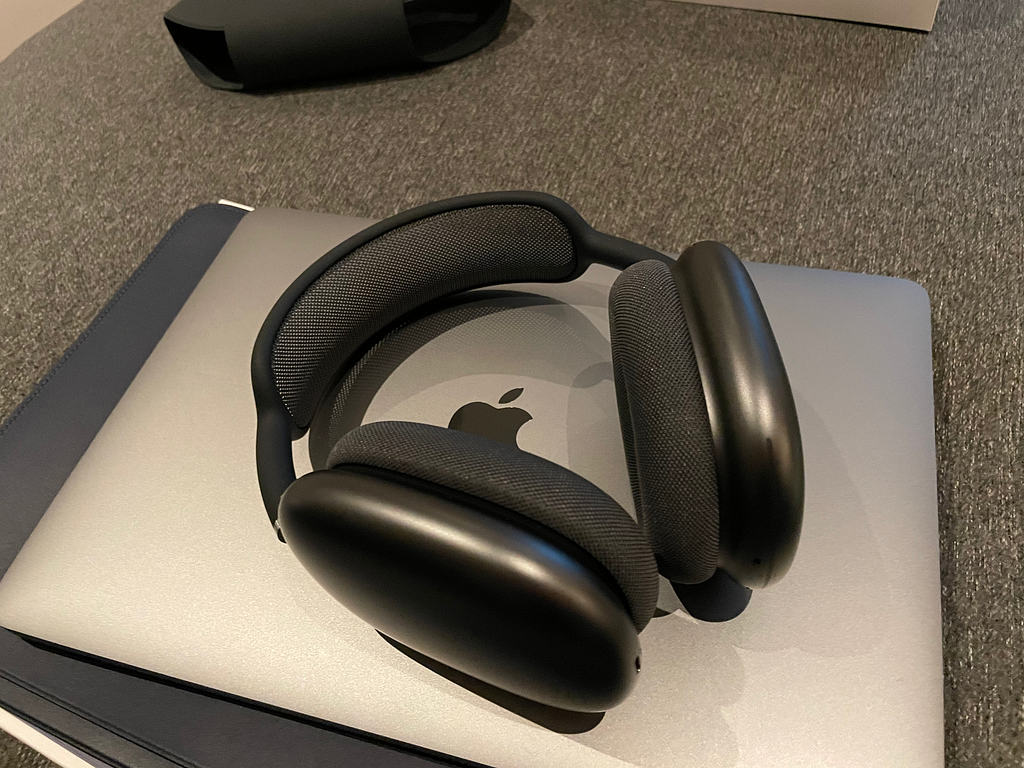
I am not an audiophile. But I am an AirPodphile. I loved the first version. I loved the Pros. And so when the AirPods Max were announced in a “one more thing” twist on 2020 — finally, in a good way — I knew I would get them. I’m not going to lie, $550 did give me pause. Precisely because I’m not an audiophile. Why pay that much for a pair of headphones?

Some thoughts on the AirPods Max…

First and foremost, they look nice. Very minimal, but I like the aesthetic. I opted for the ‘Space Gray’ variety, but I was very tempted by the ‘Sky Blue’. I’m honestly sort of surprised Apple went with so many color options for the highest end of the line, but it’s a pleasant surprise.¹

Putting the AirPods Max on for the first time is sort of weird. It’s very hard to pull down the ear cups. At first, I was sure I was doing it wrong. I was not. The “telescoping arms” are just tight — for “fit and seal” says Apple. To that end, putting them on they felt tight. Not in a bad way, necessarily, but very snug. Much more so than, say, the Bose QC35s (more on those in a second). I should mention that I have quite a large head. I’m told it’s my Norwegian heritage. So I won’t fault Apple too much here.

But more so because I do think this close of a fit makes for a great seal. These have by far the best noise cancelling I’ve ever heard — or not heard, as it were. Again, I’m far from an expert here, though I have been a happy owner of the aforementioned QC35’s for years at this point. Those are nice. These are better. And more expensive, of course. I also have the AirPods Pro which have solid noise cancelling for their size. But this is next-level.

Of course, the true test of that may be on an airplane. Something which, sadly, 2020 has not allowed me to test thus far. But even if it did, I’m not sure I would because of the purse.

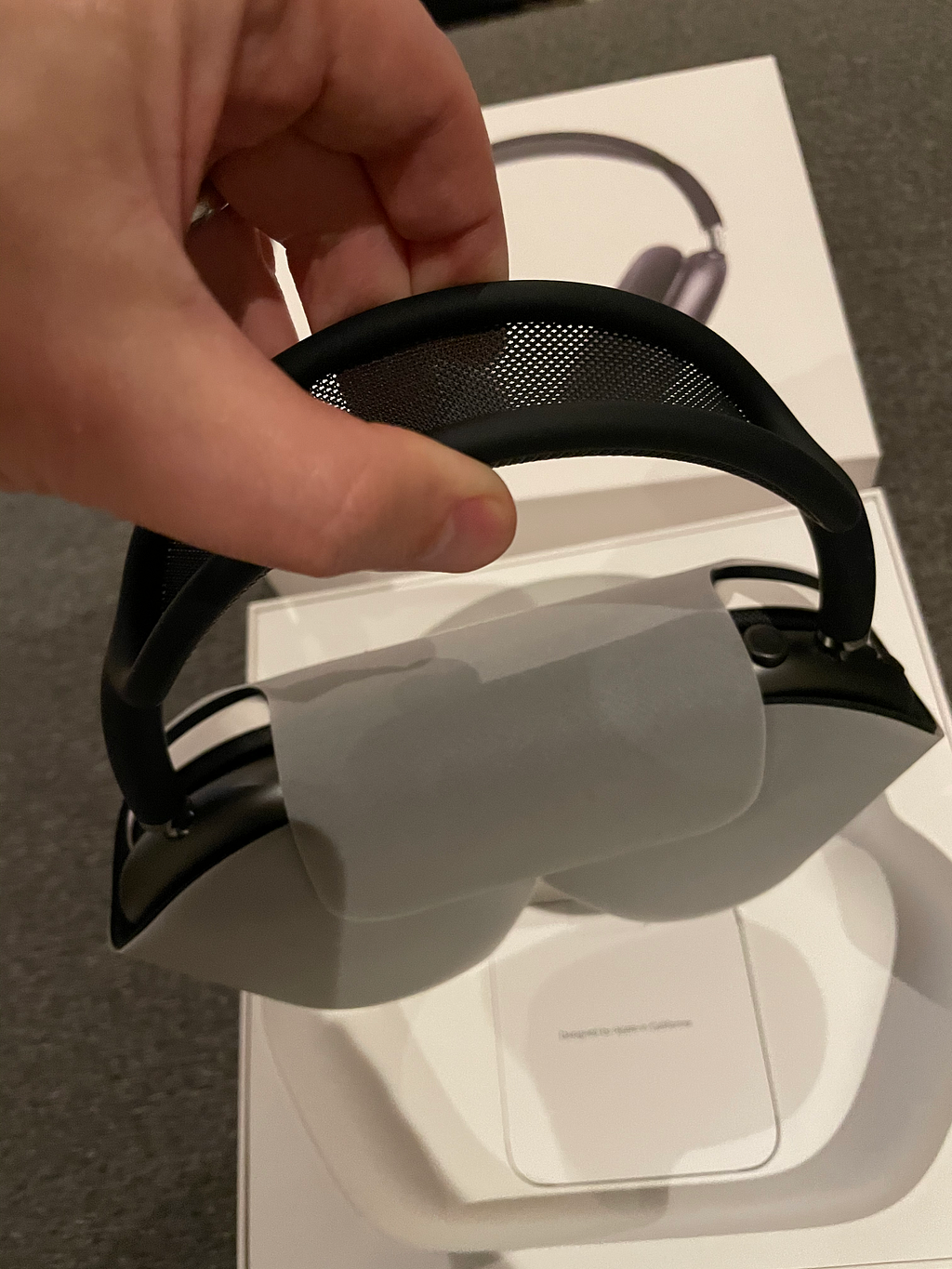
I speak, of course, of the carrying case for the AirPods Max. Yes, it’s mildly ridiculous. But I think less for the look — warranted purse jokes aside — and more because it just doesn’t seem like they’ll really protect a $550 pair of headphones in a travel bag. The QC35’s come with a case that seems as if it could stop a bullet.² It was a strange choice Apple made here…

Luckily, the third parties are quick on the draw. I have already ordered the Waterfield AirPods Max Shield Case, which certainly looks the part of what I’m looking for. But I’m clearly not alone in thinking that as they’re quite backordered at the moment. So it will be a while before I know for sure.

Interestingly, the purse does serve a purpose beyond not really protecting the premium headphones: they help put the AirPods Max to sleep. (The Waterfield case has the required magnets to make this happen too.) Yes, this is also a little weird. And yes, Apple has had to clarify this bit. Long story, short: your very expensive headphones should be fine battery-wise even if you fail to purse them. But they’ll do better in purse form.³

The battery itself seems solid in use. No issues or complaints there, save one: I assume the reason why the AirPods Max cannot hold a connection to two devices at once is about the battery. Perhaps I’m wrong here. But I’ve long-wondered why other headphones do this and yet no Apple wireless headphones (including Beats headphones) do — most people point to battery life. With the original versions of the AirPods, I get it, they’re tiny. The AirPods Max are not tiny.

Yes, yes, the quick switching for iOS devices (and Macs) is all well and good (though often quite buggy, in my experience), but I would still like to maintain connection to two devices at once.

Other hardware bits of note: the bridge — sorry “canopy” — between the ear cups is impressive.⁴ It seems very well engineered to alleviate the weight of the AirPods Max, which is substantial. The digital crown, which serves to change the volume as well as play/pause when pressed, is fantastic. Yes, borrowed (and embiggened) from the Apple Watch. I like it a lot. I also like having a simple button to swap between noise cancellation and transparency mode. Yes, I know the AirPods Pro have this too in the stems, but this is more seamless. Also, yes, the transparency enhancement seems… enhanced here. It’s really good.

That leads back to the main purpose of these things: sound. Again, I’m hardly the person you should listen to in this regard, but they are fantastic to my ears. Better than the QC35s and certainly than the smaller AirPods (as you might hope given the price). I’ve turned them up loud, they not only get loud, they do not seem to distort.

So are they worth $550? I suppose that’s really a question of what $550 is worth to you. My guess is that for most people, they’re going to be too expensive. Perhaps less so because of the actual cost and more because of the way Apple has made them decidedly unportable. I would imagine that most people would be far better suited to get a pair of regular AirPods or the AirPods Pro and save the money here. But if you’re looking for a very specific at-home, high fidelity use case, then sure. In particular if you’re as into Apple products as I am, and want features such as spatial audio — which is pretty amazing (but amazingly does not work with the Apple TV).

It also occurs to me that with the branding, Apple has left the door open for an “AirPods Pro Max”. I fully expect a pair of 50-pound headphones, plated in platinum, and costing $5,500 somewhere down the road. Until then, the AirPods Max are pretty great. Pretty heavy. Pretty loud. Pretty expensive. And just plain pretty.

¹ Especially since color varieties are one of the hallmarks of Beats, that other Apple brand that makes headphones. But I guess those are more “fun” while these are more serious? Unclear what the line will be going forward. Also unclear if it really matters…

² I have also not tested this.

³ IT’S A EUROPEAN CARRY-ALL!

⁴ Also impressive: how easy it is to detach (and re-attach) the ear cushions on the cups magnectically. This is very satisfying to do.


Pretty Great, Pretty Loud, Pretty Expensive, Pretty Heavy, and Pretty was originally published in 500ish on Medium, where people are continuing the conversation by highlighting and responding to this story.
  •  

Looking Back at My 2020 Homescreen

The Widget and WFH Shuffle…

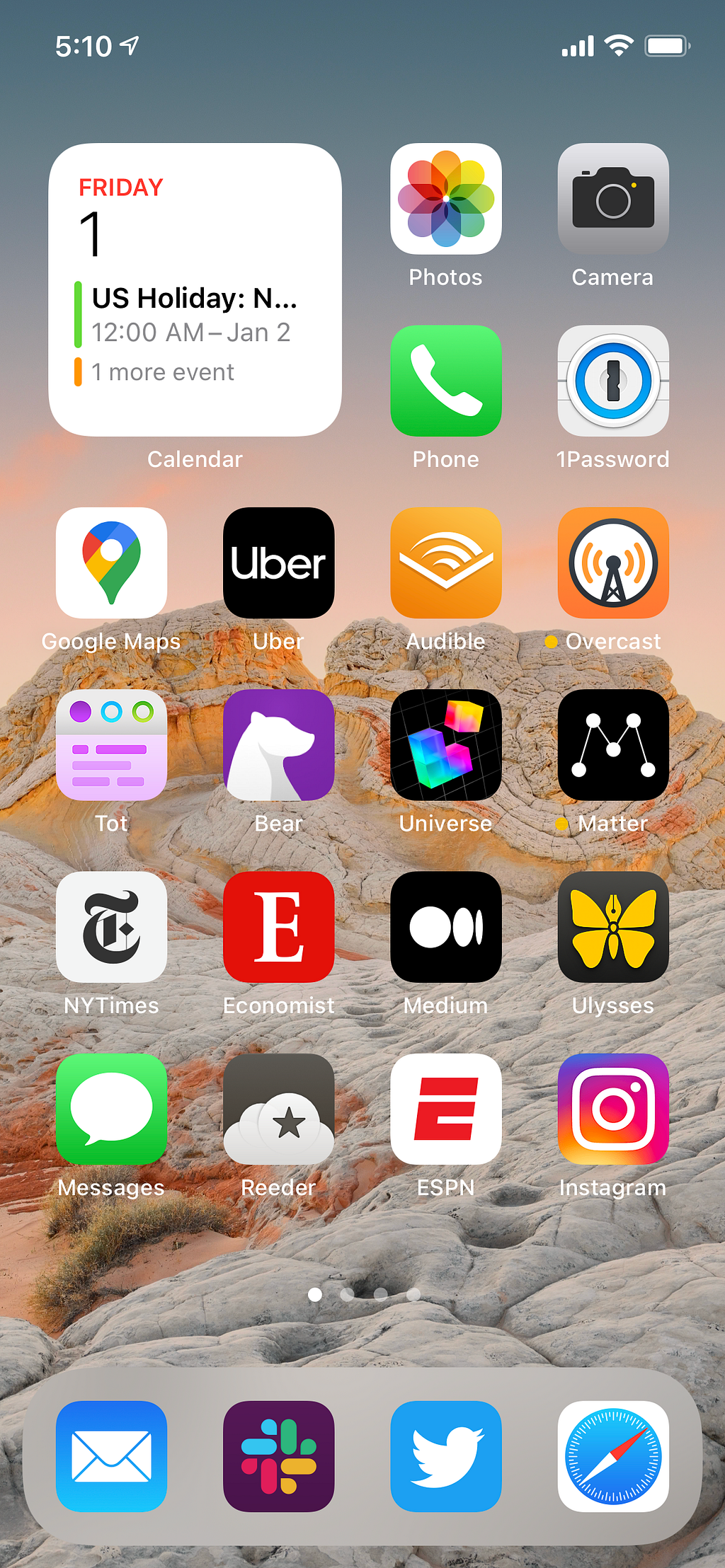
The hellscape that was 2020 was nothing if not disruptive. To basically everything. So why should my iPhone homescreen be any different? After years of relative stasis — 2019, 2018, 2017, 2016, 2015, 2014, and 2013 — things look a bit different here on the first day of 2021. One very big, very obvious reason for this: widgets.

While iOS 14 finally broke up the grid-of-apps monotony, it perhaps wasn’t as crazy as I thought it might be, at least on my actual homescreen. As you can see, I’m only using the Calendar widget right now, to get a quick view into upcoming meetings. I’ve found this useful, but, to be honest, I’m still fidgeting around with how I should be using the widgets. After all, even this relatively small widget replaces the homescreen slot for three other apps (on top of the Calendar app). I’m more adventurous with the widgets on my other screens, after the homescreen.

Okay, so after the Calendar 2x2 widget, the Photos and Camera apps remain. As does Phone, which I actually started using far more than in years past due to the pandemic and remote work/life. In the other top slot we now have 1Password, which has long been my password manager of choice and finally got “upgraded” to the homescreen. It’s a long-overdue change.

Google Maps remains in its slot (with its new icon), with Uber still right next to it. Yes, I still have Uber there even though I can count on zero hands the number of times I’ve taken an Uber since the pandemic began. So while you could consider it aspirational as we start 2021, there is an actual reason to keep it: I am using Uber Eats more than ever. And while Eats has its own app, it’s also smartly now baked into Uber itself too.

Audible is still here, locked and loaded. While in another overdue change, Overcast has replaced Apple’s own Podcast app. Between “Smart Speed” and “Voice Boost”, it really is so much better. More importantly, it’s far more performant, in my experience.

On the note-taking side, I added Tot by IconFactory as a quick way to jot things down. Not only is the app super simple and fast, it syncs insanely fast with the Mac app (which can live in your toolbar). It does this, apparently, by not using typical iCloud sync, but rather their own engine on top of iCloud. Yes, it’s ridiculous they have to do this, but seeing how other apps perform with iCloud sync — which is to say, awful — it’s definitely a welcome change. One of those apps which use iCloud is Bear, which remains my main note-taking app despite that impediment.

Next up, two new apps which — full disclosure — happen to be GV portfolio companies. That said, as my (literally) documented history will hopefully show, I don’t just put any apps on my homescreen. The real estate is too valuable. Both of these earn it by being useful.

Universe is how I power my personal website. And because the service was built from the ground up with mobile in mind, it’s insanely easy to update my site — which I do often, to update links to my latest posts — on the go.

Matter is still in private testing — you can sign up here if you want access — but it has quickly become my go-to reading app. And, as of an update a couple weeks ago, listening app too. It has elements of Pocket and Instapaper for saving articles to read later, but it’s more heavily focused on discovery. And again, the reading/listening experience itself. Regular readers will know my affinity for this general space. It’s early, but I’m really loving this new entrant.

NYTimes remains — and I definitely appreciate their new COVID-19 tab in the main navigation as I sadly check this constantly. Economist remains too. Medium’s app has changed quite a bit in the past year, icon and all. I find myself using it more with the UI tweaks but also because I’ve actually been using it to publish more on-the-go (more on that in a future post). Speaking of publishing, Ulysses remains my go-to writing app for iOS/Mac.

As for the last row, everything is a constant, just slightly shifted around. Messages remains. As does Reeder, but the latter got a 5.0 update which makes it even more solid than it already was as an RSS reader. ESPN is still there as, thankfully, sports came back after only a few months absence during the pandemic. Instagram is still Instagram — though I’m quite worried that it won’t be for long

The dock remains the same — which, amazing, it has since 2017! Slack’s app icon changed last year — and I switched it back to “Aubergine” this year — but otherwise, it’s locked in the second slot for the fourth straight year. Next to Mail, Twitter, and Safari. How wonderfully boring and constant!

In Memorium

So, to make room for these changes, some apps sadly had to depart the homescreen in 2020 — mainly due to the aforementioned widget. Those include Swarm, Foursquare’s “check-in” app, which doesn’t exactly make sense in a world where we’re locked inside our homes 99% of the time. We already discussed Podcasts going away in favor of Overcast. Apple Music is gone too as it’s now a pretty nice-sized widget (2x4) on Page 2. That’s where you’ll find Instapaper and Pocket as well — again, my many read-it-later services have started to be taken over by Matter (but not entirely — there are plusses and minuses to each…).

Widgets

I’m honestly surprised my homescreen didn’t change more given the emergence of widgets for iOS in 2020. But, of course, they really only launched a couple months ago and it feels like third party developers are still getting their feet under them with regard to what they could — and more importantly should — do with them.¹ But it would take a pretty amazing widget to enter my homescreen in 2021 just given how much space they take up, and away from individual apps. We’ll see.

¹ Shout out to Weather Line here — my favorite weather app, which also has a great widget (really a set of widgets that serve different purposes). It has prominent placement in the swipe-right widget area. As does Google’s search app widget, which is well done.


Looking Back at My 2020 Homescreen was originally published in 500ish on Medium, where people are continuing the conversation by highlighting and responding to this story.

  •  

So I’ve Been Blogging Again

If you follow me here, on Medium — which quite a few of you do, thank you! — you may have noticed an uptick in activity in the past few months. In fact, since early October, I’ve been doing one or more posts almost every day. But I haven’t been publishing most of them here, on 500ish, but rather to my Medium profile page. With the recent revamp to those pages, I wanted to try to blog in a more OG-style. Less polish, fewer words, more links, some images, embeds, etc. Kind of like a cross of what made old school Blogger fun mixed with what made old school Tumblr fun.

Anyway, I’m writing this now because remarkably, I have stuck with it. Here I am, three months later, at the start of a new year once again writing about my intention to write more. But this time with some progress to show for it.

But wait, another place to write/publish? Well, sort of. The nice thing about doing this all on Medium (which powers 500ish as well, of course) is that all I have to do is open the editor and start writing.¹ I can then decide where to publish — if it’s going to be a longer-ish more fully formed essay, I’ll publish there. If it’s just some quick blurb-y thing, I’ll just post it right to my profile stream.² The good news as an end-user/reader is that the 500ish posts automatically go into that stream as well. So if you, say, wanted to see everything, you could just visit that page (or subscribe to its RSS feed).³ But if you just wanted to more substantial posts, you could just go there (or subscribe to that RSS feed).⁴

I’m making this sound more complicated than it is, honestly.⁵ The reality is that this has been my latest “hack” to try to write more. And again, it’s working. And it’s working for a very obvious reason: when you remove the baggage of thinking you need to write something fully formed, you just start to write and sometimes a fully formed thing forms! And sometimes it doesn’t, and that’s okay too!

The key is just to write, to write, to write. To start.

I will add that Medium’s mobile app also makes it pretty easy to do these short posts on-the-go. I’ve long struggled with trying to “write” on a phone, but again, when the baggage is removed…

If I’m being honest, I’ve also liked writing these quick posts/thoughts/blurbs without worrying about sharing them or knowing that people who follow 500ish will see them. At the same time, analytics indicate that quite a few people are actually seeing them (again, thanks to the Medium follow functionality and the revamped homepage which highlights those follows, I assume). So there’s no use being coy about it.

It’s a blog.⁶ It’s fun. It’s not too serious. But sometimes it’s more serious than I let on. At the same time, it gives me an outlet to do what I want to do, which is write more. And I want to do this because to me, writing is thinking. If I see something interesting, I jot down notes about it and then write those notes back in the form of sentences (or half sentences) to organize thoughts. Some people seem to like following those thoughts, others prefer things which are more fully baked. No worries, either way, I’m doing it regardless.

And see: here I was thinking this would be a quick blurby thing, but I’m already past 500 words, so… to 500ish it goes. And so it goes.

Yeah, that’s… a lot of followers. Thank you!

¹ Still by far the best editor/CMS, in my opinion. Which is a biased one. But still, I’m not wrong. It’s just such a fantastic, simple space in which to write.

² Don’t I want to own my own domain for this, rather than mgs.medium.com? Honestly, sort of, but again, I’m not taking this too seriously at the moment. I obviously have and use 500ish.com for this reason. But I’m not too worried about it, right now. I own all those posts and could re-publish them elsewhere if I ever needed and/or wanted to. That’s more than I can say for Twitter, where I now have over 14 years (!) of glorious content.

³ I have a simple Twitter account for links as well, if that’s more your style.

⁴ And yes, a Twitter account for that as well.

⁵ And none of this event mentions how I’ll use Twitter and/or my newsletter going forward. I have thoughts, but let’s not get to those just yet…

⁶ And as you’ll see if you go back through the past three months, I’ve been experimenting with various formats too — link posts using Medium’s automatic link expander, some without it, some with titles, some without, etc. I would expect that to continue. Tone too. I’ve always found that writing more unlocks new writing styles, as I get bored with the same old “voice”.


So I’ve Been Blogging Again was originally published in 500ish on Medium, where people are continuing the conversation by highlighting and responding to this story.
  •  

A Coup of the Soul

Donald Trump ends not with a bang… actually, with a bang

image via 11thHour

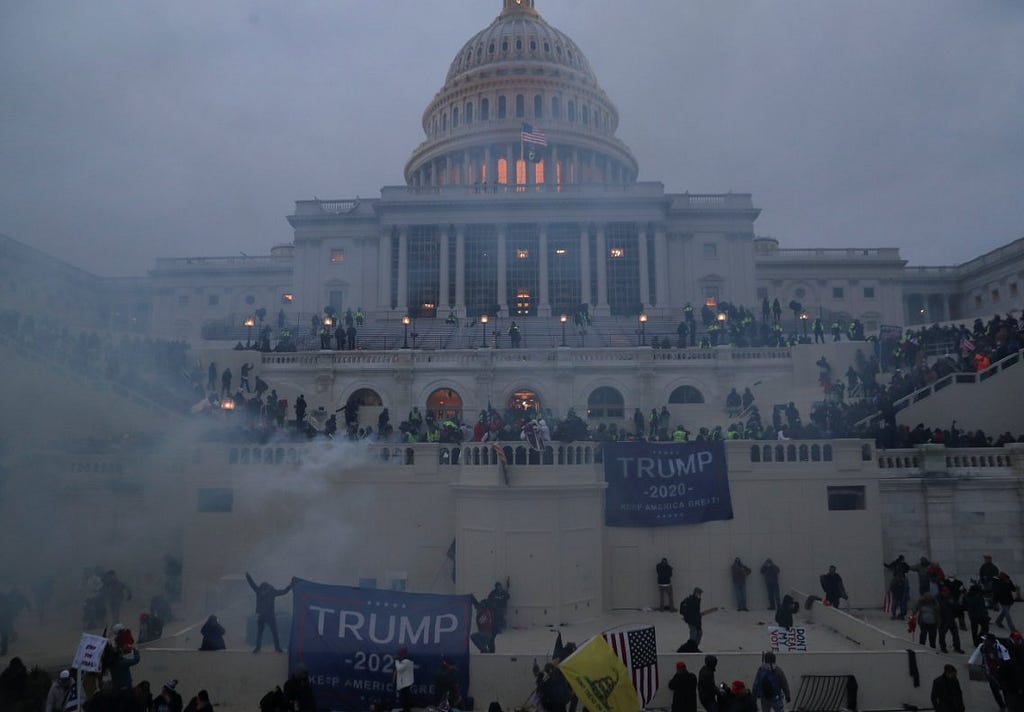
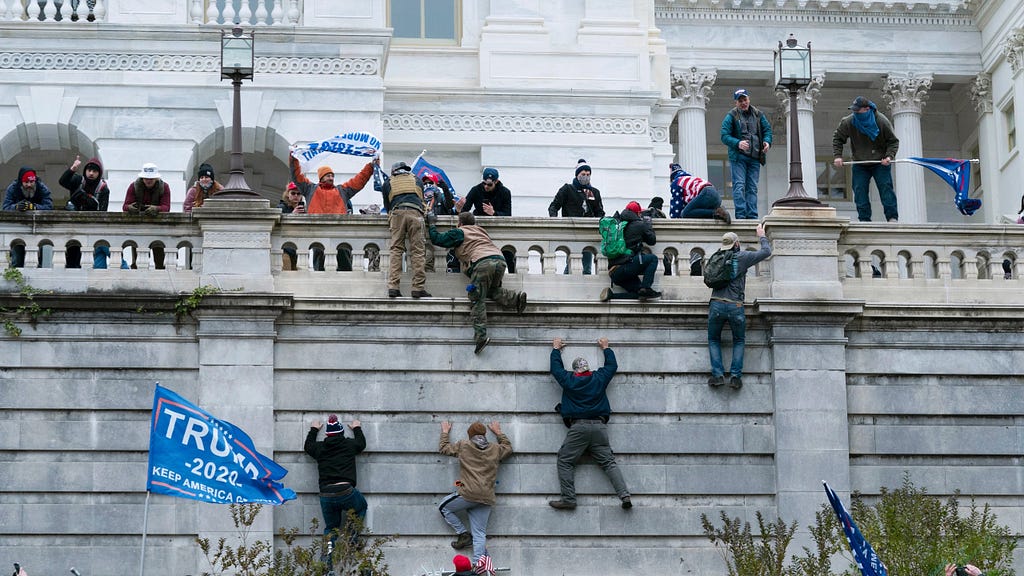
What a day. Just when we think we’ve cleared the latest hurdle after a year of hurdles, one more appears. This time, a brand new and particularly high one. One that would have seemed unimaginable save for maybe a couple hundred years ago. When people rode in carriages and went to war with muskets. An angry mob storming the U.S. Capitol Building. In 2021.

I would say it’s surreal, but 2020 gave a new definition to surreal. We’re still in the middle of a pandemic which has us mainly locked in our homes. It’s more exhausting than anything else at this point, to be honest. It’s another moment that feels like we’re living in some shitty B-movie, not living life.

Yet this latest insanity also isn’t all that surprising if you’ve been paying attention. I’d say “I hate to say I told you so” but I don’t hate saying it, I just hate that you didn’t listen. I used to write down my thoughts about Donald Trump more often, but it got too depressing because it was clear the path we were going down. Which is: the path of learning the hard way.

The only thing I got wrong was not recognizing that “the hard way” would be established and redefined a half dozen times in one term. And I want to say that today is the cherry on top — but we still have 14 days to go.

To call Donald Trump a con artist is an insult to artists. He’s a con man, who has spent his entire life conning many men and women into believing he’s a winner when he’s the ultimate loser. He’s a hyena preying on the weak and downtrodden while others in stronger positions think they’re preying on him, but the joke is on them. Because who wants to eat a hyena?

He’s the ultimate narcissist with absolutely no shame, no taste, and no tact. And today ensures that he will go down as the worst President in American history. And that several people who aligned with him for political reasons will go down in flames, in the long run.

At the same time, he’s really just a personification of a problem. The problem is less about Trump, who is but one man, but rather the 70+ million people who voted for him. I spoke of a lesson we were going to have to learn. We had four years to learn it, and did not — in fact, many learned the opposite lesson. And while I want to believe that today will be different, the reality is that it will also likely push the two sides farther apart.

We have a lot of Republicans in positions of power finally saying the right things about Trump tonight, but that doesn’t really matter. They were all the camp that was attempting to use him for their means, from Mitch McConnell on down. And now that McConnell got what he wanted — three Supreme Court justices (!), not to mention countless other judges and appointments — he’s happy to break back to reality, of course. As are most others who tried to get something from Trump and either did or got played by the con man. They all sold their souls. History will collect the debt, but they’ll all be dead when it does.

And again, they don’t even really matter. It’s those 70+ million people who are not in on the con. They’ll say they are because they think they are, but they’re not. And the sad — honestly sad — thing is that they won’t realize the reality until it’s far too late. Until their lives never improve. As they’re lying on their deathbeds wondering why things never got better.

This is harsh. But it is reality. Reality is harsh. And the other reality is that I’m not sure how much Trump, the person, matters to many of these people. Again, he’s the personification of something. A symbol at best. An excuse at worst. Lonely? Sick? Tired? Bored? Join the movement.

And some of them will think, “yeah, but it’s not like it would have gotten better with the other guys” and they won’t be wrong. But society as a whole would have been better without Trump. Fewer people would have died in our pandemic with actual leadership. Etc. Etc. Etc. But that is a very hard argument to make, I recognize. It’s a plea for the greater good when the burden of failure in our era is on an individual level.

And so those of us in a relative position of luxury learn the hard lessons from Trump. While others learn the wrong lessons. The lesson that nothing is true if you just refuse to acknowledge it. That lies are true if repeated enough. That you too can con your way to the top. But you can’t. And that’s a good thing. Because it means you’re not as immoral and narcissistic as Donald Trump. The ultimate con man. Who became President.

A President who incited insurrection today. Who should be thrown out of the White House. But won’t be because it’s far easier to run out the clock. Yet another insanely dangerous precedent set in a Presidency of dangerous precedents. And because everyone must quote Abraham Lincoln:

“I am a firm believer in the people. If given the truth, they can be depended upon to meet any national crisis. The great point is to bring them the real facts.”

Of course, he may not have actually said this. We’ll ignore that.


A Coup of the Soul was originally published in 500ish on Medium, where people are continuing the conversation by highlighting and responding to this story.
  •  

Free as in Twitter

Twitter v. Trump actually isn’t all that complicated…

Photo by Ravi Sharma on Unsplash

I obviously get why people are reacting as they are to the banishment of Trump from Twitter. It’s a big deal. He’s still the President of the United States. For now. And the issue strikes several nerves that are exposed in our current political environment — across a few different constituencies. Big Tech. Free Speech. The 2020 Election. Etc. But let’s not over-think this.

Take a deep breath and a step back. Twitter is a private enterprise. They can set their own rules for what they want or do not want on their service. Including whom they want or do not want on their service. Full stop.

You may not like that. But, to quote someone on the topic of Trump last year, “it is what it is.” And it is that way and has been that way for a long, long time. On the flip side, it’s rather amusing to watch some folks try to extrapolate what the Founding Fathers writing in the 18th century meant about social media in 2021. Toilets weren’t yet in widespread usage, let alone Twitter.

Yes, the fact that Twitter has allowed for some types of problematic content Trump was putting out there previously has made this decidedly more murky than it needs to be. The only thing people like less than change is contradiction. Which is to say, they should have probably kicked him off a long time ago. But again, that’s their choice to make. Not yours, not mine, and certainly not the government’s. At the same time, we’ve never had a week, a month, or a year like the ones we’ve just been living through. It sounds like there were and are credible threats of more violence to come which is being incited by Trump’s tweets. So Twitter made a call.¹ Again, their call to make.

This is not a free speech or First Amendment issue. To argue otherwise is disingenuous at best. Again, Twitter, the company, can do as they wish. Any other company can do the same — including, of course, those that would allow Trump to remain on their platforms.²

That’s all very simple and straightforward, where it seems to get more complicated is one level up the stack, as it were. But actually, it’s still pretty straightforward. If the App Stores want to remove an app like Parler, they can do so.³ Why? Because again, these are companies that can do what they want. They already do this on a daily basis by accepting some apps and rejecting others. They have since day one.⁴ One would hope they have clear rules around this for the sake of transparency and best business practices, but even if they don’t, they can do as they wish.

You can get why that’s frustrating to people who, say, want to use an app they can no longer download from said App Store. But it’s also not a legal issue. If you’d like it to be, then what you’re saying is that you would like Twitter or App Stores to be regulated. That’s a separate argument, but it’s moot right now because they’re not.

But even if they were, there’s at least another couple of levels still: CDNs and ISPs. Those are also (largely) free to decide what they serve up or don’t. Because again, they’re companies. And that will really piss some people off because it’s much harder to get around those types of restrictions. Unless there is a truly competitive market for such service (which there often isn’t), you could be out of luck. But again, that’s also not illegal. It’s perhaps a case why those should be regulated to some degree — hello, net neutrality — but this is tangential at best to the current upheaval.

Anyway, Twitter removing Trump is pretty far away from all that. But you can see the line that connects the dots which is why varying different parties are upset. It’s fine to be upset. But it’s also fine for Twitter to do what they did. James Madison would agree.

¹ And as morbid as it may be, part of the calculus must be: “do we want blood on our hands?” If Twitter leaves up content they believe is going to lead to violence, they would need to make the case to themselves (and just as importantly, their employees) that there’s a reason to do that when there is no legal rationale to do so. Seems like they could no longer make that case.

² Unless, of course, he were to do or say something illegal — which seems up for debate right now with the incitement.

³ And yes, one such App Store is run by the company which is an LP in the fund where I’m a partner. My views are my own, obviously.

⁴ With no less than Steve Jobs pointing to Safari, the iPhone’s web browser, as the work-around/bypass mechanism. I would expect that we talk a lot more about this in the coming months/years…


Free as in Twitter was originally published in 500ish on Medium, where people are continuing the conversation by highlighting and responding to this story.
  •  

Intel Outside

Can an old school CEO restore the company as a certain “lifestyle” company once did?

Photo by Agung Raharja on Unsplash

It is wild to me how badly Intel has dropped the ball in recent years. Yes, it perhaps at least symbolically started with not doing everything within their power — quite literally — to develop the initial chips for the iPhone. But hindsight is still 20/20 there. It’s everything that has happened since which is truly devastating. And continues to be.

So can yet another CEO change shake the company out of stasis? Certainly Patrick Gelsinger, formerly a 30-year Intel vet, sounds like the right person for the job. Don Clark and Steve Lohr for The New York Times:

The leadership change is designed to address that issue, returning an engineer to the top post. Mr. Gelsinger, who is 59 and joined Intel when he was 18, got his college education with the company’s help and swiftly rose in its technical ranks. He was the lead architect of the widely used 80486 microprocessor and managed development of 14 chip projects.
Mr. Gelsinger became Intel’s first chief technology officer and for years hosted the company’s annual conference for hardware and software developers. He learned management skills from Andrew Grove, Intel’s acclaimed former chief executive.

Again, all of that sounds great. The 486 wasn’t my first Intel chip, but it was the one I really grew up with. I worked that chip to death — well, technically the hard drive died on that machine — and the fact that I still remember it, says a lot about the kind of loyalty and brand cache Intel built up back in the day. “Intel Inside” and all that.

And yet, listening to what Gelsinger is actually saying is mildly worrisome already. Mike Rogoway of The Oregonian was relayed some of what was said during a recent Intel all-hands announcing the CEO change — one thing in particular stands out:

“We have to deliver better products to the PC ecosystem than any possible thing that a lifestyle company in Cupertino” makes, Gelsinger told employees Thursday.

That is, of course, in reference to Apple. And specifically in reference to Apple’s new (and first) laptop-class chip, the M1. From the get-go, it sounded like that chip might smoke the vast majority of Intel’s chips out of the gate. And now that many of us have such machines (I’m using one right now to type this), that can be confirmed. These machines are so much faster, with such longer battery life, than their Intel versions. I would say it’s almost a joke, but it’s not that funny. Certainly not if you’re Intel.

So yes, they have to compete with this “lifestyle” company. Sure, it’s a throwaway line, but history does some funny things with such lines. It recalls another famous derisive comment about Apple, of course.

“PC guys are not going to just figure this out. They’re not going to just walk in.”

That was then-CEO of Palm, Ed Colligan talking about the (still-rumored at that point) iPhone. They would, of course, just walk in. They would, of course, just figure this out.

At the same time, Intel still controls some 80% of the PC and server market for chips. This is true even after years of manufacturing delays for new chip processes, while their rivals (and “lifestyle” companies) lap them:

In July, the company said its 7-nanometer production would arrive a year later than previously planned. That followed a three-year delay in the introduction of the preceding 10-nanometer generation, which is only reaching mainstream use now. Those holdups have allowed TSMC and Samsung to lay claim to better technology for the first time, with TSMC already producing 5-nanometer silicon at volume for Apple and others. That timeline suggests other customers could move to better TSMC production before Intel would.

The above is why Intel is talking with folks like TSMC about outsourcing some of their chip production. Something that would have been unheard of until recently. But activist investors will do that.

Anyway, back to Gelsinger. The question now is if the prodigal son returning can right the ship. Is this akin to Steve Jobs returning to Apple and is this TSMC outsourcing akin to the Microsoft deal/investment? That’s probably a stretch and too tall an order, of course. And again, Intel is still in a better place than Apple was when Jobs returned.

Still, there’s a bit of an Anagnorisis feeling here. Like Blackberry back in the day. They’re not dead (yet), but they know they’re in real trouble. Which is a good first step, I suppose. If years late.


Intel Outside was originally published in 500ish on Medium, where people are continuing the conversation by highlighting and responding to this story.
  •  

A Touching Ending and Return

Farewell, TouchBar — Welcome back MagSafe?

Photo by Sumudu Mohottige on Unsplash

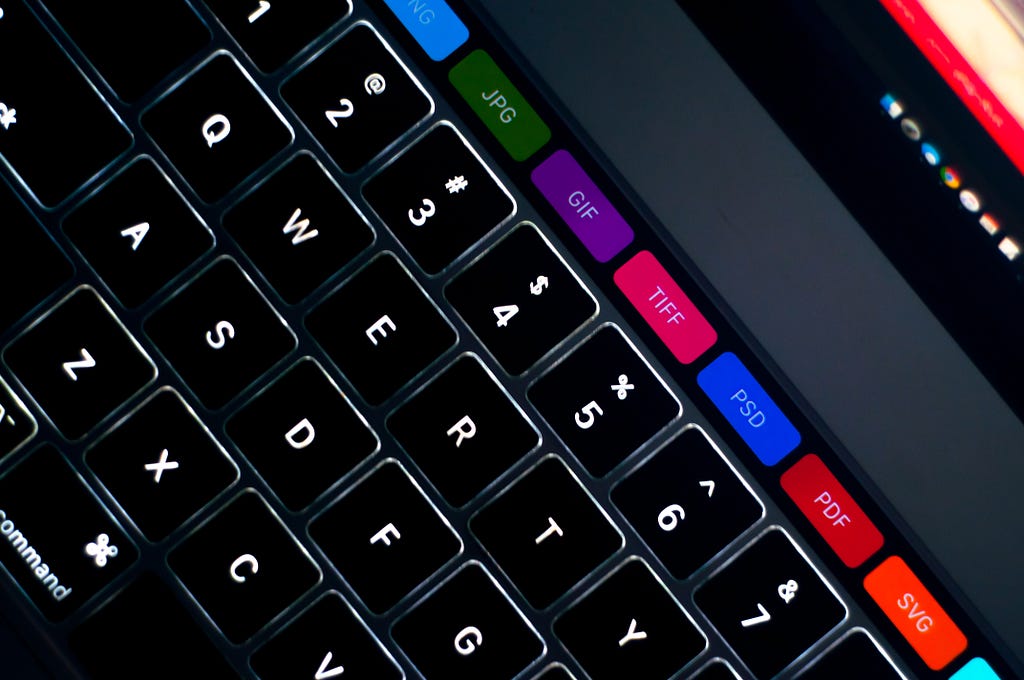
Joyous Day! Not one, but two reports now point to the end of the Touch Bar for forthcoming MacBook Pros. First, here’s Juli Clover summarizing a note from Apple analyst Ming-Chi Kuo obtained by MacRumors:

According to Kuo, Apple is developing two models in 14 and 16-inch size options. The new MacBook Pro machines will feature a flat-edged design, which Kuo describes as “similar to the iPhone 12” with no curves like current models. It will be the most significant design update to the MacBook Pro in the last five years.
There will be no OLED Touch Bar included, with Apple instead returning to physical function keys. Kuo says the MagSafe charging connector design will be restored, though it’s not quite clear what that means as Apple has transitioned to USB-C. The refreshed MacBook Pro models will have additional ports, and Kuo says that Most people may not need to purchase dongles to supplement the available ports on the new machines. Since 2016, Apple’s MacBook Pro models have been limited to USB-C ports with no other ports available.

Both the Touch Bar and MagSafe element was quickly corroborated by Mark Gurman for Bloomberg — though he notes: “The new Macs will look similar to the current versions, albeit with minor design changes.” Still, you could see a world in which the design is more similar to the iPhone 12, and yet doesn’t look that much different. I’m mainly curious if they’ll be thinner and lighter, or if Apple’s opts to keep some bulk for the insane battery life the M1 chips are getting in the old shells.

Anyway, the far more interesting bits are around Touch Bar and MagSafe. If the former really is going away — a feature I’ve disliked from the get-go — it will be a pretty big admission that it was a failure. A design flourish born out of “whether or not you could, not stopping to think if you should”. I do agree that some developers stumbled into some interesting use cases eventually, but certainly not enough to necessitate the whole bar — nor the feature at all for most people. Maybe they can do a ‘Touch Button’ going forward? A single customizable button? Right next to the Touch ID button — the only good part to come out of the bar…

I’m more torn on MagSafe. Like seemingly everyone, I loved it and miss it but I also love the convenience of needing one USB-C charger for many devices — including the iPad Pro. Of course, Apple still has not brought USB-C to the iPhone — and it’s looking increasingly like they never will, instead going straight to wireless-only charging. And new devices like the AirPods Max use Lightning too. So perhaps the intention is just to offer USB-C as an I/O standard, but stop using it for power in the few devices where they do?¹

I almost wish they’d make a compromise here and offer some sort of MagSafe USB-C accessory — a tiny dongle which plugs into a USB-C port and allows for a MagSafe power connection. As a bonus, that would bring MagSafe trip protection to all sorts of USB-C devices! But presumably this wouldn’t fulfill the faster charging rate that Gurman notes.

Mainly, since Apple is clearly feeling nostalgic, I want them to bring back the glowing Apple logos on the back of MacBooks — something they seem to want to do themselves if you just look at all their recent marketing!

¹ Though we’ll see what they do with the iPads Pro going forward. On one hand, there’s only the one port so seemingly both power/peripherals need to run through it. On the other, there is the Smart Connector, which routes power through things like the Magic Keyboard…


A Touching Ending and Return was originally published in 500ish on Medium, where people are continuing the conversation by highlighting and responding to this story.
  •  

An Apple TV Universal Remote

An idea to get Apple back into the living room game…

Photo by Kelly Sikkema on Unsplash

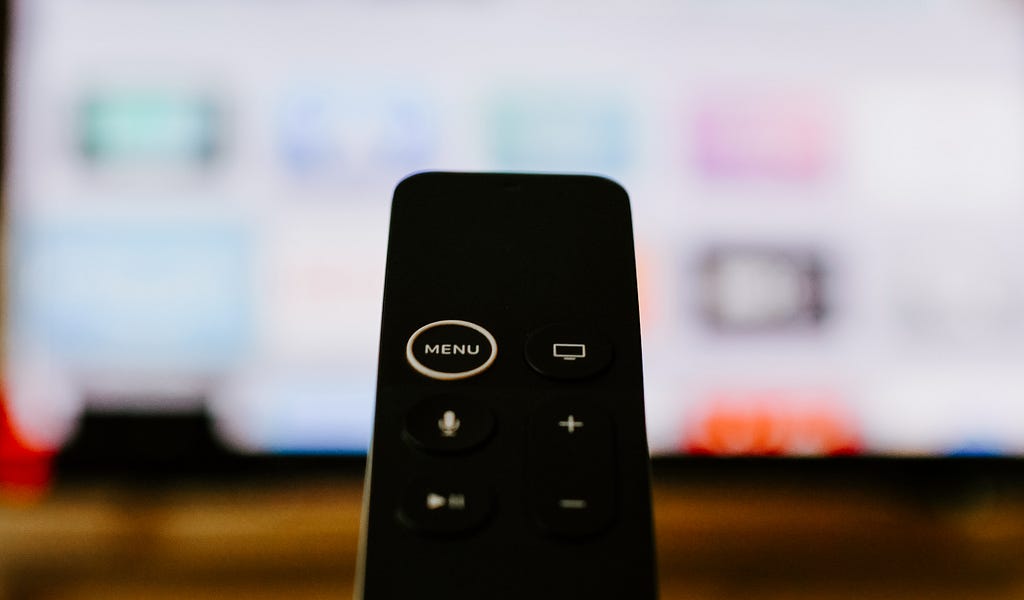
Few things make me angrier on a regular basis than the Apple TV remote. I know it’s ridiculous. But I also know that I’m not alone. I think what drives me nuts is this: in many ways it’s the antithesis of the old Steve Jobs design mantra: “It’s not just what it looks like and feels like. Design is how it works.” Compared to other remotes on the market — and certainly those that came before — the Apple TV remote looks nice. It does not work nice.¹

I think we can all understand why Apple tried to make a sleek and svelte remote with an emphasis on touch. It just doesn’t work in day-to-day usage. The touch elements range from too sensitive to not sensitive enough. If and when the thing slips into the couch cushions, you will immediately be fast-forwarded 45 minutes into the future of whatever you’re watching. And good luck using the touch controls to rewind to your previous spot. Well, that’s if you’ll even be able to find the remote ever again in those couch cushions. And if you do, you will pick it up upside down and try to rewind by touching something that is not a touch pad but looks the same as the touch pad. This all happens monthly if not weekly if not daily. There are other issues as well.

One thing that is not an issue with the Apple TV remote, however, is button bloat.² I came across this term in a recent piece by Janko Roettgers for Protocol, talking about the trend of newer TVs and streaming boxes including branded buttons on their remote controls.³ That is one good thing about the Apple TV remote — you’ll have none of that. And while I do think those buttons are useful from time-to-time — the Netflix button, in particular, which just showcases how dominant Netflix currently is — they’re tacky. And ugly. They’re the modern day version of the peripheral stickers on PC laptops mixed with pre-installed bloatware on those machines (and these days some Android phones). Apple famously doesn’t even allow the cellular carriers any branding space on the outside of the iPhone. Netflix won’t be getting a button on the Apple TV remote anytime soon.

So how do you fix the Apple TV remote then? Well, if the reports are to be believed, Apple will release a fix this year alongside new Apple TV hardware. I’m guessing the remote will be fixed in a way similar to how the MacBook keyboards were “fixed” — that is, going back in time, to a more tried-and-true approach. Maybe something like the remote for the new Chromecast devices, which is solid, if simple (and yes, has a Netflix button — on top of a YouTube button, neither of which we’ll see on an Apple remote any time soon would be my guess).

I would do something entirely different.

Apple has badly dropped the ball on their Apple TV strategy despite the device being a rare instance where they were actually a first-mover (or, at the very least, an early mover) in the living room. The first Apple TV was unveiled ahead of the iPhone! Remember iTV?! Again, the rumors now indicate they’re going to aim to out-gun the competition, as it were. A super-powerful Apple TV running on Apple silicon will undoubtedly be enticing to folks if — a big if, years in the making — they can figure out the right gaming strategy for the machine. That sounds good, but…

Imagine if on top of their new, souped-up Apple TV box, Apple also sold an Apple TV Remote as a stand-alone product? Here’s what I’m thinking: a decent sized touchscreen iOS device which is solely meant for media. Maybe it would be like an iPod touch, but longer (a 16x9 ratio screen with an area for physical buttons — the horror! — or gaming controls) or an iPad mini, but narrower. Again, this wouldn’t be meant as a full-fledged iOS device like those two devices, instead it would focus first and foremost on being a great remote for the Apple TV. And secondarily, on being a media playback device for the couch. And lastly, perhaps something for gaming (a D-pad joystick which doubles as up, down, left, right for TV navigation?).

Yes, yes, the iPhone and iPad can serve such a role right now. I just think it could be interesting to have a new device which is solely meant for media playback/control (and perhaps gaming too). It could come with the new souped-up Apple TV, and Apple could potentially even raise the price of the hilariously expensive Apple TV as a result. $499?⁴ Or the remote could be sold as a stand-alone device for say, $199?⁵

And if it’s stand-alone, it could still work as an AirPlay device to your TV (many newer TVs now have the tech built in). It would essentially be the “cheaper” Apple TV device, without the box.⁶ Maybe there’s a way — apps? — to even let it control boxes from other manufacturers? I’ve had a few “universal” remote controls over the years. They range from clunky to suck. Apple has a lane to do this for a much larger audience.

Back to the remote hardware itself. Everyone knows that not only would Apple not fall victim to “button bloat”, they actually seem required to remove physical buttons whenever possible. So we won’t get this. Instead, we could have a power button, a volume rocker, a mute button, and maybe one other programable hardware button? Or maybe the D-pad/joystick mentioned above for gaming. (Or maybe that would be a simple add on via the Lightning port?) The rest — the core — would be the touchscreen. Software.⁷

Yes, it would be yet another thing to charge. But we’re already in that world with remotes. And a MagSafe wireless charging “hub” could be upsold, of course — the added bonus here would mean you’d be less likely to lose the remote if you put it back on the charger each night.

Also, if you’ve tried to use any current remote with the newer streaming services, you’ll know that it’s less than ideal, to say the least. It’s a ton of clicking around or worse — text field entry. Yes, voice recognition alleviates some of this, but it’s not the perfect solution. A lot of people still yearn for the simplicity of channel-up or channel-down. With software, we can make this happen, even in our insanely and increasingly complex streaming world.

All of this could also allow for, say, a child to watch something different than their parents in the living room (with AirPods, of course). Yes, again, you can do this on an iPhone or iPad right now, and many people do. But I do think there’s something to be said for a device dedicated to this. And it could morph into a gaming pad, undoubtedly too.

Anyway, I just found myself thinking about such a solution while using the god awful current Apple TV remote, the better Chromecast remote, and thinking through the end game for every streaming service needing their own hardware button. Apple can solve their own problem and the industry’s. And they can re-enter the living room in a meaningful way.

Update 1/24: Parker Ortolani over at 9to5Mac had a similar idea (and the design mock chops I lack) just a few days later. Though he envisions more of an iPod nano-style remote, running watchOS. Great minds and all that.

Concept: The Apple TV remote solution was right in front of us - 9to5Mac

¹ The Apple TV remote also, oddly, doesn’t actually feel all that nice. It’s too small and thin. Plus, you will absolutely never know which side is up, per my comments above.

² A term I wish I would have thought of it a decade ago — five or so iterations of ‘Google TV’ ago…

³ Not exactly a new trend, here’s me making fun of a Blockbuster — yes, Blockbuster — button six and a half years ago.

⁴ If you really want a powerful, always-on computer in your living room. Both for gaming but also as a HomeKit hub. And maybe even a HomePod of sorts?

⁵ This effectively would be the new iPod touch. But again, with a very specific use case and design.

⁶ Also, a very portable Apple TV box, in a way. I’ll admit that I’ve traveled with the Apple TV hockey puck in the past. This could be much more seamless.

⁷ And a new variation of tvOS with a new, smaller UI for this device.


An Apple TV Universal Remote was originally published in 500ish on Medium, where people are continuing the conversation by highlighting and responding to this story.
  •  

At Dawn

A shift back to boring. Hopefully.

Photo by Robert McGowan on Unsplash

You know what I’m most excited about? Not having to write about politics anymore. You could say that was a choice, and sure. But it also wasn’t when seemingly every waking moment of every waking day of every waking week of every waking month was polluting my mind with the latest infuriating nonsensical bullshit. I look forward to politics once again being background noise. Being boring. One can only hope.

Donald Trump leaves office tomorrow as the worst President in the history of the United States. I thought we’d have to wait 100 years to definitively say this — as it turns out, we didn’t even have to wait 100 months. By basically any measure you can muster both quantitatively and qualitatively he’s the worst. Yes, history will highlight this further, and really drive home what a mistake we made here. But tomorrow is a day to celebrate the fact that it’s over for those of us who recognize this in full right now.

Because Trump was such a stain on our country, everything I’ve written politically in the past four years comes across as decidedly Democrat. But truth be told, I don’t really like the Democrats either. I mean, I like them because they’re the party opposed to Donald Trump. But they’re also the party that gave us Trump, in a way. They were too smug four years ago to see and focus on a real risk. Then they were too weak and ineffective to do anything about it once it became clear. And I truly worried they would fail to rise to the fight again. Thank god.

Republicans, meanwhile, now have revealed themselves to be for the most part spineless. They would not stand up to the most obvious failure of both a person and President. I would say that they should be ashamed, but clearly nothing can shame them at this point. Again, except time, which will do the job for us, eventually.

The fact that 70-plus million people still voted for this joker is the worst indictment of our country I could possibly imagine. It’s honestly fucked up. He’s a con man who doesn’t even try to hide that fact. He touts it. The con this time couldn’t have gotten any bigger: convincing millions of people to vote against their own self interest. The corrupt ones are easy. It’s this other batch that is truly troublesome.

It’s easy to jump to the conclusion that these people, for lack of a better word, are just dumb. I’ve made that mistake too. Oddly, I think there’s a silver lining of the QAnon bullshit, in that it highlights that at least a subset of the people in this bucket are really just bored. Or lost. Or lonely. Or all of the above.

That’s a failure of society. Which probably more directly than indirectly led to Donald Trump. We need to figure that out.

I’m mainly happy that we bought ourselves at least four years of an administration that for the most part shouldn’t lead the country from one self-own to the next. Will President Biden fuck up? Sure. All Presidents do. Will he fuck up on a daily basis, multiple times a day, often on purpose? One would hope not. Our warming world with its fires and pandemics is scary enough as it is. We don’t need more drama. We need some stability. Good riddance, Trump.


At Dawn was originally published in 500ish on Medium, where people are continuing the conversation by highlighting and responding to this story.
  •  

Apple’s Bundle Grows…

Apple Podcasts+ doesn’t make sense, until it does

Photo by Jonathan Farber on Unsplash

The report last week that Apple was thinking about launching a premium version of their podcasting service shouldn’t be a huge surprise. I mean, it is because it’s Apple, the company which birthed the movement and has repeatedly declined to take any sort of ownership of it. But this was always inevitable — certainly since Spotify started doing their thing in the space for the past couple of years.

Many folks, certainly old school podcasters, don’t like this notion because Apple has been viewed as a benevolent ruler, of sorts. A way to keep the format “open”. But the reality is far more nuanced. Apple didn’t care about monetizing podcasts because Apple didn’t think they could monetize podcasts in a way that would be meaningful to the company. And certainly not without doing advertising, which Apple doesn’t want to do.

At the same time, this left the door open for someone else — or a number of players — to step in to fill this void. In stepped Spotify. And now in steps Amazon. As such, Apple has to make a move.

As Lucas Shaw reports for Bloomberg:

Spotify has already dethroned Apple as the leader in online music, and by fusing podcasts with its music service, the company threatens to do the same in that market. Spotify has eclipsed Apple as the leading provider in many territories outside the U.S.
Amazon, a competitor to Apple in the market for smart speakers, is also increasing its investment in podcasting. The company has bankrolled original series for its audiobook arm Audible and added podcasts to its music service as well. It also agreed to acquire podcasting company Wondery last month.

Both of these are big deals. One figuratively, one literally. And Apple now likely knows the playbook it has to run:

The company recently launched Apple One subscription bundles as well, and it would make sense to make the podcasts service part of that. If it does, Apple would likely add a significant number of users automatically by charging them little or nothing.

In other words, this is the Apple News+ playbook. As a stand-alone entity, that service wasn’t interesting to most people. But as part of Apple’s bundle, sure, why not? I suspect Apple Podcasts+ will be in the same boat. As with many of the things Amazon bakes into Prime, Apple is starting to understand the value of creating the illusion of value. You’re probably not going to sign up for a premium podcast service by itself, but it’s a great deal as a part of the bundle you’re already paying for. Customer retention.

Is that a good enough reason to start paying would-be podcast partners in this hypothetical service? Not at first, but if enough people bought into the bundle, and again, enough people stay in the bundle, then perhaps. And if Apple can use the service to augment the other services — say, exclusive podcasts based around Apple TV+ content — then things start to make even more sense.

But mainly, they just can’t cede the space to Spotify and Amazon (with Google and others trying to make inroads as well). And it propels the all-important services narrative forward a bit more. And so the bundle grows

 — @mgsiegler


Apple’s Bundle Grows… was originally published in 500ish on Medium, where people are continuing the conversation by highlighting and responding to this story.

  •  

The Eyes Have It

Apple’s Rumored Tesla-Like Approach to VR/AR Hardware…

Photo by Stella Jacob on Unsplash

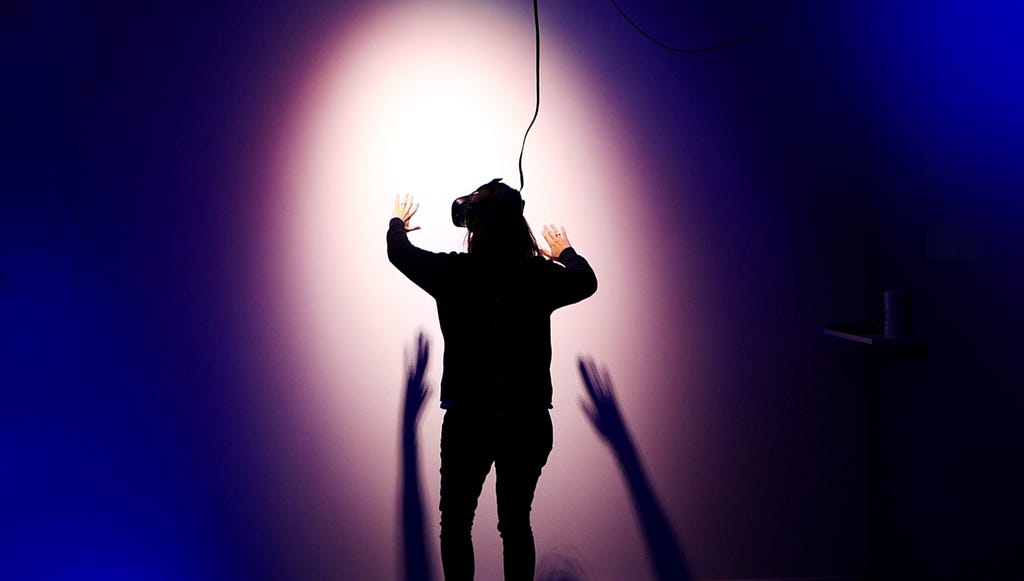
A bunch of interesting tidbits in Mark Gurman’s latest report for Bloomberg about Apple’s VR/AR ambitions. Notably, perhaps, that order. Per his reporting, it now sounds like Apple is aiming to do a VR-focused headset first (perhaps in 2022) focusing on an extremely high-end, expensive device with muted sales goals. This would be followed by their more ambitious (and more mainstream) AR device in 2023 (or later, as Gurman notes).

I’m trying to think of what this strategy would be akin to in Apple’s history. With multi-touch, Apple originally set out to make a large, high-end tablet first — though that project ended up being scrapped and eventually morphed into the iPhone (before morphing back into the iPad). If anything, this reminds me a bit more of the Tesla strategy. Launch the high-priced Roadster first. And work your way towards the Model 3 eventually.

It worked for Tesla, will it for Apple? Here’s Gurman:

Apple is aiming to include some of its most advanced and powerful chips in the headset along with displays that are much higher-resolution than those in existing VR products. Some of the chips tested in the device beat the performance of Apple’s M1 Mac processors. The company has also designed the headset with a fan, something the company usually tries to avoid on mobile products, the people said.

The usage of their own silicon sounds good and makes sense. It’s something no other VR headset could match. The use of a fan sounds less good. Then again, perhaps the work they did with the fan for the new M1 MacBook Pros points to how they could make this work…

The powerful processors and the inclusion of a fan initially led to a device that was too large and heavy with some concern about neck strain in early testing. Apple removed the space VR gadgets usually reserve for users who need to wear eyeglasses, which brought the headset closer to the face and helped shrink the size. And to address consumers with poorer eyesight, it developed a system where custom prescription lenses can be inserted into the headset over the VR screens, the people said.

Certainly you could argue that one thing still holding back VR headsets is how bulky they are (and how ridiculous you look while wearing them). Anything Apple could do to remove such bulk would be key — and focusing on how to accommodate eyeglass wearers (of which I’m one) certainly seems like one approach. Though a complicated one, to say the least. Still, this sounds like something Apple could conceivably do with Apple Stores. They’ve been adding complexity to device customizations with Apple Watch and the like. Prescriptions could be a next step, albeit a tricky one.

Another weird thing: Tim Cook has been on the record multiple times as being very skeptical of VR and instead preferring AR technology. Apple has a history of downplaying a technology only to later launch a product in the space, but that was primarily a Steve Jobs tactic, not a Cook one. And Cook has remained awfully negative on VR, even recently. Apple would, of course, say they’re doing things differently, but are the form factor tweaks alone enough there?

And then when the AR glasses are ready, does the VR headset just go away? Or do they remain two different sides of a coin? This report makes it sound as if the former is likely true. Again, that this VR device is just the “explorer edition” of sorts for the true aspirations here.¹ But as everyone knows, VR and AR are quite different. And Apple hasn’t historically done “beta tests” for their hardware (though I’d argue the first Apple Watch was close to that).² A lot remains to be… seen.

¹ Something else that comes to mind: teaming up with Motorola to do the “ROKR” iTunes phone ahead of the iPhone. It was almost a beta test in a way (mainly in that it taught Apple what not to do). That has been top of mind recently with all the renewed Apple Car chatter, and Apple possibly teaming up there as well, of course.

² Also, wasn’t at least part of the point of Apple baking ARKit into iOS to help test it at a massive scale ahead of a would-be stand-alone device?


The Eyes Have It was originally published in 500ish on Medium, where people are continuing the conversation by highlighting and responding to this story.
  •  

Twitter’s Revue of Monetization

Changing models and content types on the fly…

Photo by Chris J. Davis on Unsplash

I think Twitter’s deal to buy the newsletter startup Revue is interesting. Which I recognize is just about the least interesting thing one could say. So I’d point to two of the best newsletter writers I know: Ben Thompson and Casey Newton. In a way, both have the same general take, but with different areas of emphasis which give them a different bent. That is, both seem to think it’s generally a good idea for Twitter to try something like this given the Twitter user base and product, but whereas Casey is certain Twitter will fuck it up, Ben is just pretty sure they will.

I’m pretty familiar with Revue, as I started using it four and a half years ago to start my first newsletter as an experiment. 177 issues later, it was an experiment I took over to their competitor Substack to switch things up as I continued to play around with the format (something which continues to this day).¹ In a way, I think Revue is actually the better product, while Substack has the better model. And that’s one element that’s interesting here: this deal changes that equation. (Well, maybe — keep reading...)

While Revue (and others) were first out of the gate, Substack’s insight was that direct payments could be a powerful motivator for content creators to jump over. They took inspiration from Ben Thompson on this, and have been able to get to a solid scale, with a number of big names now using their tool. Revue would also eventually launch a paid offering, but even with a more attractive cut (6% versus Substack’s 10%) it was too little, too late. (Not to mention that writers had to pay to use many of Revue’s features.)

In comes Twitter with two weapons. Scale and money. If Twitter can figure out how to leverage their network (no sure thing, per both Casey’s and Ben’s points), it will super-charge Revue’s growth. And making all the previously premium features free will certainly help. And just to make extra sure, Twitter is twisting the knife a bit more: that 6% take is now 5% — exactly half of Substack’s. In plain English: if you move your newsletter from Substack to Revue — which is pretty easy to do given that you own your email list — you will get to keep half of the money you were previously paying to Substack.

The bigger your newsletter is, the bigger this number will be, the more compelling this number will be. Said another way: Twitter is promising better discovery and a better rate.

Of course, Twitter has promised a lot of things over the years. And yes, they often fail to live up to such promises. So we’ll see. But two parts stand out in their blog post. First:

With a robust community of writers and readers, Twitter is uniquely positioned to help organizations and writers grow their readership faster and at a much larger scale than anywhere else. Many established writers and publishers have built their brand on Twitter, amassing an audience that’s hungry for the next article or perspective they Tweet. Our goal is to make it easy for them to connect with their subscribers, while also helping readers better discover writers and their content. We’re imagining a lot of ways to do this, from allowing people to sign up for newsletters from their favorite follows on Twitter, to new settings for writers to host conversations with their subscribers. It will all work seamlessly within Twitter.

Actually, there are two parts just in that. First, Twitter clearly recognizes the power they wield over writers for distribution. That sounds negative, but I actually think it’s a good thing that Twitter recognizes this — and that they’re finally trying to take advantage of their advantage. This could be good news for both sides! Second, “new settings to host conversations with their subscribers” sounds like an entirely new product/idea. Or perhaps this is one way they aim to use Spaces (the in-beta Clubhouse competitor)? Next:

And for those looking to generate revenue, we’re creating a durable incentive model through paid newsletters. Bringing Revue to Twitter will supercharge this offering, helping writers grow their paid subscribers while also incentivizing them to produce engaging and relevant content that drives conversations on Twitter. You can expect audience-based monetization to be an area that we’ll continue to develop new ways to support, whether it’s helping broaden revenue streams or serving as a cornerstone of someone’s business.

This is really Twitter’s first stab at a “Twitter Pro” bit of functionality. No, you’re not paying for Twitter power features, but you are indirectly paying Twitter by way of their 5% Revue cut for content you discover on Twitter, with 95% of the money going to creators. That’s actually a pretty smart and compelling way to monetize if — and again, a big ‘if’ — it works at scale.

And they’re suggesting this is just the first such tool they intend to use in order to monetize in this way (and to help their audience monetize in this way). As a Twitter shareholder, this excites me.²

But this is all much easier said than done, of course. Especially when a network wasn’t built from the ground-up to monetize this way. But in some bizarro way, Twitter’s messiness as a product over the past many years may actually help with this transition. Because Twitter is still very much a scaffolding built around a massive opportunity, there is a real chance for pretty fundamental changes to actually work. Get to work, Twitter.

¹ Incidentally, Casey made the same jump from Revue to Substack, but both of his were in a much more professional context: his newsletter when he was still with The Verge was powered by Revue, whereas his newsletter when he broke out on his own, is now powered by Substack. Again, this makes sense since Substack clearly was smart to focus on paid newsletters from the get-go.

² As a Medium investor, I’m honestly not sure how to read all of this. But I’ll leave that to the far larger elephant in this room…


Twitter’s Revue of Monetization was originally published in 500ish on Medium, where people are continuing the conversation by highlighting and responding to this story.

  •  

My Once and Future Travel Buddy

Some thoughts on GV’s investment in Gowalla…

The year was 2011 and it was my first trip to London. I was there by myself. But I wasn’t alone. I had Gowalla with me.

I was still a reporter at the time, and for a couple of years before that, the “location wars” between players like Gowalla and Foursquare had been one of my key beats. To be honest, I probably followed them too closely, but I was drawn to the idea of location-based networks buoyed by the rise of the still-young iPhone and the hype around “geolocation”.

I still vividly recall that time spent walking around London guided solely by the recommendations Gowalla was serving up to me. It was a great first tour of a great city. And it was a magical experience — and I have the receipts to prove it. This, to me, was the promise of location-based services. Beyond the “check-in”, they could highlight the power of place and the realization of real-time recommendations and discovery.

But it didn’t quite work out that way at that time.

As a social app, Gowalla reached an impressive scale, but they couldn’t quite figure out how to pair that with a viable business model at the time. So the team moved over to Facebook to help them build out some of the same ideas.¹ But now here we are, a decade after that London trip, and Gowalla is back. Founder Josh Williams believes the timing is right, this time. As does his co-founder this time around, Patrick Piemonte, who knows a thing or two about the location-based functionality pioneered by the iPhone, as he helped invent it.

I’m also a big believer in timing, and in entrepreneurs so driven that they return back to the ideas and spaces that they obsess over. And so I’m happy to announce that GV is co-leading a seed round of funding for the reborn Gowalla with our friends at Spark Capital (Nabeel Hyatt also knows a thing or two about this world) and alongside a great group of other firms and angels to back Josh and Patrick to get back to work on their vision.²

Of course, it’s not all about timing. The technology in our pockets has advanced significantly in the past decade. That includes cameras, processors, and location capabilities, but also newer technology such as augmented reality. It’s still the early innings in that game, but it’s going to be a new piece of the puzzle for Gowalla this time around.

It’s incredibly exciting to be “getting the band back together” in a way, all these years later. Especially after a year in lockdown with the possibility of a spring and summer outdoors looming on the horizon. Exploration and fun around our neighborhoods await all of us. And eventually, once again, travel.

Gowalla should be poised to take advantage of a world awakening, knock on all the wood. And to light up lives with the sense of adventure once again.

Also here’s a fun video/conversation with Josh reminescing about the history of the company, the space, and talking about what’s to come:

My Once and Future Travel Buddy: Some Thoughts on GV's Investment in Gowalla

And Lucas Matney of TechCrunch on the news:

Gowalla raises $4 million from GV and Spark for its AR social app

And finally, Gowalla itself on the news:

Going Out Again

The service will be rolling out in beta in the summertime, but if you want to get an early start on helping to build this (augmented) reality, you can sign up for the Gowalla Street Team here.

An early look at the Gowalla Street Team…

¹ How much does Josh live and breathe this space? After Facebook, still having the itch he didn’t quite scratch, he set out again with a new, tangential attempt, The Last Guide Company. The timing still wasn’t quite right. As the saying goes, the third time will be the charm.

² Including, I should note, Niantic. The company which actually spun out of Google back in the day and perhaps now best known as the makers of Pokemon Go, a pioneer and absolute beast in the real-world AR space. And yes, incidentally where my wife is Chief Operating Officer.


My Once and Future Travel Buddy was originally published in 500ish on Medium, where people are continuing the conversation by highlighting and responding to this story.

  •  

A Quiet Sunday

Using the power of Twitter ‘Mute’ and ‘Lists’…

Photo by visuals on Unsplash

This past week I seriously considered quitting Twitter.

I know what this sounds like. For years, I’ve been one of the people poking fun at others who said they were going to quit Twitter and then either never do, or do and quickly come back. But truth be told, this has been a gathering storm inside of me for a while now.¹ It hasn’t been any incident, it just feels like Twitter is getting worse over time and the line between what I get out of it versus what I lose in terms of time, in terms of life, is blurring.

To be clear, this is my own experience. And it’s one I make for myself by way of whom I follow. This actually has nothing to do with Donald Trump — well, tangentially; more on that in a second — I’m firmly in the camp that believes his banishment both was Twitter’s right and was the right thing to do. It simply has to do with how I feel when using Twitter.

Anyway, this is a grandiose build up for a meek payoff. I’m not going to quit Twitter. But I am trying something new in an attempt to take my timeline back into my own hands as we start 2021.

No, I’m not unfollowing everyone. I know for many people this makes sense. Especially for those of us who have been on the service for coming upon 15 years now. Those we followed over a decade ago probably should be revisited. But actually, I’m quite proud of the curation work I’ve done over the years.² And I also know the bullshit baggage that comes with unfollowing people.³ So I’m relying on Twitter’s actual most powerful tools: Mute and Lists.

I’d like to think that Twitter has not gotten worse post-Trump because again, I’m happy Trump is gone, both from Twitter and especially from the Presidency. But if I’m being honest, I do think his removal has created a vacuum that is quickly being filled by other types of bullshit.

Said another way: Trump may have been a flytrap for people who might otherwise say stupid things about any number of topics to instead focus on Trump. Or his presence on Twitter for years may have drawn in people who say stupid things and who are now looking for other stupid things to talk about. Either way, with his removal, people seem to be acting out more to say stupid things or just generally spew out verbal diarrhea because they’re now bored.⁴ Or whatever. Again, my own opinion is just that Twitter — my timeline — has gotten worse, not better.

And I think I have a better solution, at least short-term, than ‘Unfollow’, partially because of how in-your-face that move is, but more so because ‘Mute’ is actually far more powerful. I can remain following all these people that I just don’t care to see or hear from anymore,⁵ but actually I won’t see what they have to say. Unless, of course, I want to in some very specific ways.

Taking this a step further, rather than just muting folks, I’m also adding them to my own “Muted” private Twitter list, where I can turn if I wish to see what I’m “missing”. Everyone loves a good hate follow, this list is that on steroids. If I’m ever bored or just feeling a bit masochistic, I can easily load up this list and let it punch me in the face over and over again.

I honestly love this. I know it sounds silly. Perhaps childish. Again, just unfollow these people, right? But it’s so passive-aggressively empowering to do it this way. I don’t have to make a “life or death” call, to blow up years of curated follows, I can just put these people in their own little holding pen. My new favorite thing right now is to scroll through Twitter and find a new person to add to my Muted list. It feels like I’m vaccinating my timeline.

A few days in, it’s working wonders. What I really care about using Twitter for is real-time information flow. If someone/something is a good source for that, that’s a good follow. Secondarily, there are people who have good commentary/insight on information. Lastly, there are countless other people who are just entertaining. Many people I follow started in one of these three camps and are now the aforementioned Twitter sewage. Again, we all get it. It’s easy to fall into this. I’m sure some people would even put myself in such a bucket. And that’s great! Feel free to mute me. I highly recommend it.

If 2020 taught me anything, it’s that some people are really awful at using Twitter.⁶ And while I held out hope that 2021, post-Trump, might have been better — and while there was an initial burst of joyous Twitter — I think the opposite has actually happened as a massive void has been left to fill.

So I’m going to try this new, quieter version of Twitter for a while and see how it works. And if it turns out that those muted users in list purgatory do not spark joy then, well… Hopefully others get something positive out of this idea as well.

¹ And while I’m not quitting now or any time soon, I do think I’ve firmly added to my life goals the ability to quit Twitter. Email remains first and foremost in this aspiration, but I think at the very least only using Twitter as a real time news source and perhaps as a broadcast channel is a worthy goal. One day…

² Also, while for years I had an entirely arbitrary rule of only following 999 people max, in the past couple of years I’ve sailed past that and have found most of those new follows to be great additions (versus some of the legacy follows), certainly in terms of broadening my perspectives.

³ Even if it doesn’t lead directly to the “why did you unfollow me?” question/confrontation, it’s well known that many people both follow such things and care about such things. This is a flaw in the system in some way, but it’s also the natural side effect of the follow system itself, which is, of course, the core power of Twitter. I do think ‘mute’ is a nice work-around. It’s quietly slipping out of the back door. It’s ghosting.

⁴ I want to recognize that the pandemic/lockdowns likely play a large part here as well. Some people — people I actually know — often seem to be losing their minds on Twitter. Some of it may be that they’re losing their minds in real life, but I think a bigger factor is the temptation of Twitter to say something that gets a reaction. In normal times, when we have normal lives, day-to-day gets in the way. In lockdown times, we load up Twitter…

⁵ Which reminds me, obviously Twitter should have a way to distinguish between those you follow and mute and those you don’t follow and mute. This is a real distinction! Ideally you could also see other layers like those that follow you and that you mute, but I’d settle for the former. These are all super interesting signals!

⁶ It’s honestly sort of amazing watching people showcase themselves as tone deaf beyond belief, or those that simply cannot help but put feet in mouths. In a perverse way, it’s another reason not to fully unfollow these people on Twitter; it’s a good signal for whom I want to avoid in real life too!


A Quiet Sunday was originally published in 500ish on Medium, where people are continuing the conversation by highlighting and responding to this story.

  •  

Hyundai/KiaΒ : Apple CarΒ :: Cingular/AT&TΒ : iPhone

Hyundai/Kia : Apple Car :: Cingular/AT&T : iPhone

Forget smoke, the rumors are a ball of fire at this point

Several years ago, there was some smoke around the idea of an Apple Car. Then it dissipated. Then it came back. Then the smoke was blown away again. More recently, stronger smoke signals have started to emerge, starting just over a month ago. And then a fire broke out a couple days ago. Then the past 24-hours has seen a full-blown forest fire seemingly ablaze.

Specifically, yesterday came word that Apple might invest a very-specific $3.6B into Hyundai/Kia as part of the tie-up to help make the Apple Car. Today, Phil LeBeau and Meghan Reeder for CNBC got more:

After years of speculation that it will eventually get into the auto business with its own vehicle, Apple is close to finalizing a deal with Hyundai-Kia to manufacture an Apple-branded autonomous electric vehicle at the Kia assembly plant in West Point, Georgia according to multiple sources who briefed CNBC on the plan.
The so-called “Apple Car,” which is being developed by a team at Apple, is tentatively scheduled to go into production in 2024, though people familiar with the talks between Apple and Hyundai-Kia say the eventual rollout could be pushed back.

That’s a very specific plant with a fairly specific date. But why — why would Apple do this?

Sources familiar with Apple’s interest in working with Hyundai say the tech giant wants to build the “Apple Car” in North America with an established automaker willing to allow Apple to control the software and hardware that will go into the vehicle.
In other words, this will be an “Apple Car,” not a Kia model featuring Apple software.

Whereas I was a bit skeptical at first about the Hyundai/Kia partnership a few days ago, I eventually landed at why this makes sense. This is akin to Apple’s original AT&T partnership for the iPhone.

At the time AT&T wasn’t the AT&T we know today. Hell, it wasn’t even called AT&T. “Cingular” was struggling in the market against Verizon. And Apple needed a carrier partner. They couldn’t build an entire cellular network, as much as they might like to (and, in fact, they still haven’t). Verizon said ‘no’. So Cingular it was.

The iPhone changed many equations. But it was a leap of faith on both sides at the time. This is similar — well, both sides hope

And, oh yeah, Hyundai/Kia, like Cingular back then, is going to let Apple do what they want to do branding-wise. This will absolutely be an ‘Apple Car’ if and when it arrives. Speaking of, another interesting tidbit:

“The first Apple Cars will not be designed to have a driver,” said one source with knowledge of the current plan. “These will be autonomous, electric vehicles designed to operate without a driver and focused on the last mile.” That could mean Apple cars, at least initially, could focus on package food delivery operations and firms incorporating robotaxis.

Again, that makes some sense if you’re trying to hit a timetable that is less than a decade from now to have something on the road.

Did I mention that Apple quietly hired the former Porsche chassis Vice President recently? What about the fact that the supply chains are also now corroborating Apple’s intention to use Hyundai’s E-GMP Battery Electric Platform for the car. Again, FIRE!!!

Update 2/7/21: Hyundai is now saying the talks with Apple are not happening. Well, that’s not exactly what they’re saying. Per Sohee Kim:

Hyundai’s statement comes a month after the company muddled its message around the highly anticipated Apple vehicle, first confirming local Korean media reports that it was in discussions with the tech giant, then revising its statement twice in a matter of hours. It finally said it had received requests for potential cooperation from a number of companies.

Which reads a lot like:

Apple: You need to shut up and issue a statement.
Hyundai: But we already did and our our stock…
Apple: Issue the statement.
Hyundai issues the second statement.

¹ No, the analogy isn’t perfect, of course. For one thing, Cingular/AT&T didn’t have to make/assemble the iPhone, just provide it with wireless service. (In that regard, Hyundai/Kia may be more akin to Foxconn.) But I think it holds up in that these two partnerships are the single most important part of the equation for both products. There would be no iPhone without Cingular/AT&T (or which ever carrier they eventually convinced to partner with them). And there will be no Apple Car without Hyundai/Kia (or whatever carmaker they eventually convince to partner with them).


Hyundai/Kia : Apple Car :: Cingular/AT&T : iPhone was originally published in 500ish on Medium, where people are continuing the conversation by highlighting and responding to this story.

  •  

WandaVision’s Missing Link

Son of a bitch. They did it.

Warning: Spoilers ahead. If you are not caught up on the Disney+ show WandaVision through Episode 5 do not read on. 

The first episode of WandaVision — the first Marvel Cinematic Universe show to roll out on Disney+ — is weird. That’s a nice way to put it. A less nice way is boring. An even less nice way is bad. It’s a gimmick. But it’s also a full episode of that gimmick. It’s tedious. And it’s clearly intentional.

Episode 2 gets ever-so-slightly more interesting. Episode 3, more so as at the very end we finally get a teaser of the point of the gimmickry. By Episode 4, we’re basically back in the MCU we all know and love, though it’s unclear how long we keep going with the faux suburban sitcom schtick. The opening of Episode 5 makes it very clear: we’re sticking with it. But the seams are fully bursting. As is Vision. Then comes the end.

Wait. Who is that? Is that silver hair? Waaaaiiiittt. They can’t do that. Can they? Can they?! Whoa…¹

I somehow avoided spoilers despite watching the episode a few days late and I sincerely hope you did too, because it’s great. Well, it’s great assuming you’re in the subset of viewers who are both MCU completists and X-Men completists. Given the comicbook lineage — and specifically, the Marvel comic book lineage — presumably there is a high level of overlap. But undoubtedly it’s not 100%. First and foremost because the MCU has historically been much better than the X-Men franchise.² And that’s because Disney — and specifically Kevin Feige — was in charge of one, while Fox was in charge of the other.

Maybe you heard: those two companies are now one company. And while that wasn’t enough to save Dark Phoenix (or, apparently The New Mutants), there’s now reason to see real light in this tunnel.

Yes, ladies and gentlemen, WandaVision, this seemingly bizarre spin-off that seemed like it was at best going to be a quirky throw-away is now the full-on missing link. The show rope-a-doped us for 4.5 episodes and then landed the knock-out punch.

Well, presumably.

I say that because I obviously have no idea what WandaVision intends to do with Pietro — the X-Men version of Quicksilver — back in the picture. But it almost doesn’t matter. The fact that he’s there points to a future where the rest of the X-Men find their home in the MCU, either one-by-one in the sideshows, or, presumably, in a major way in a major motion picture.

But the Pietro appearance — specifically this Pietro/Peter — points to a world in which the “younger” X-Men cast is also now free to enter the frame. Does that mean that James McAvoy, Michael Fassbender, Nicholas Hoult, etc,³ would all agree to reprise roles after already playing the characters four times — the last two of which must have already been like pulling contractual teeth?

I wouldn’t put it past Feige.

An even better question may be Patrick Stewart, Ian McKellan, and yes, Hugh Jackman, who had previously stated he was done after playing his part 60 or so times. But come on, he’s the Tom Brady of playing Wolverine.⁴

This unification was always the promise — and perhaps in its own small way, even part of the point — of Disney taking over Fox. But while we were all hoping and waiting for a huge movie reveal a la Spider-Man (still controlled by Sony, but under lease of sorts to Disney), Disney went for the total screwball curveball reveal.⁵

The long-lost brother trope meets the not-so-subtle character recast trope as a bridge between two universes and studios and franchises. Brilliant.

¹ It was a particularly big “whoa” for me as I had done the work years earlier to look up the fact that the the X-Men movies Peter Maximoff and the Avengers movies Pietro Maximoff were indeed one in the same character, despite the very different backstories. I like these kind of quirks — especially here since the two characters debuted within a couple months of one another in 2014: Pietro Maximoff first appeared in an end credits scene in Captain America: The Winter Soldier, which was released on April 4, 2014; Peter Maximoff first appeared in X-Men: Days of Future Past, which was released on… May 23, 2014— but you almost never see them attempted to be reconciled. And so cleverly!

² Yes, a few of them are good to very good. The first two Bryan Singer films are good. Third meh. The first of the rebooted franchise with the younger cast, First Class, is good enough with fun retro-vibes. The second of those, Days of Future Past, is actually good. And then there’s Logan, the James Mangold Wolverine spin-off, which is just legitimately a good movie (the first Wolverine spin-off is awful, and second one is decent). X-Men: Apocalypse is pretty bad. Dark Pheonix is a mess (for very clear reasons).

³ Presumably not Jennifer Lawrence who is— again, spoiler, but less so — dead at the end of Dark Phoenix. But maybe Sophie Turner, who they set up to be resurrected, of course.

⁴ He’s also only a mere 9 years older than Tom Brady. Also, the Tom Brady + Wolverine reference is intentional. #GoBlue

⁵ And yeah, can’t wait to see how they work Deadpool into this…


WandaVision’s Missing Link was originally published in 500ish on Medium, where people are continuing the conversation by highlighting and responding to this story.
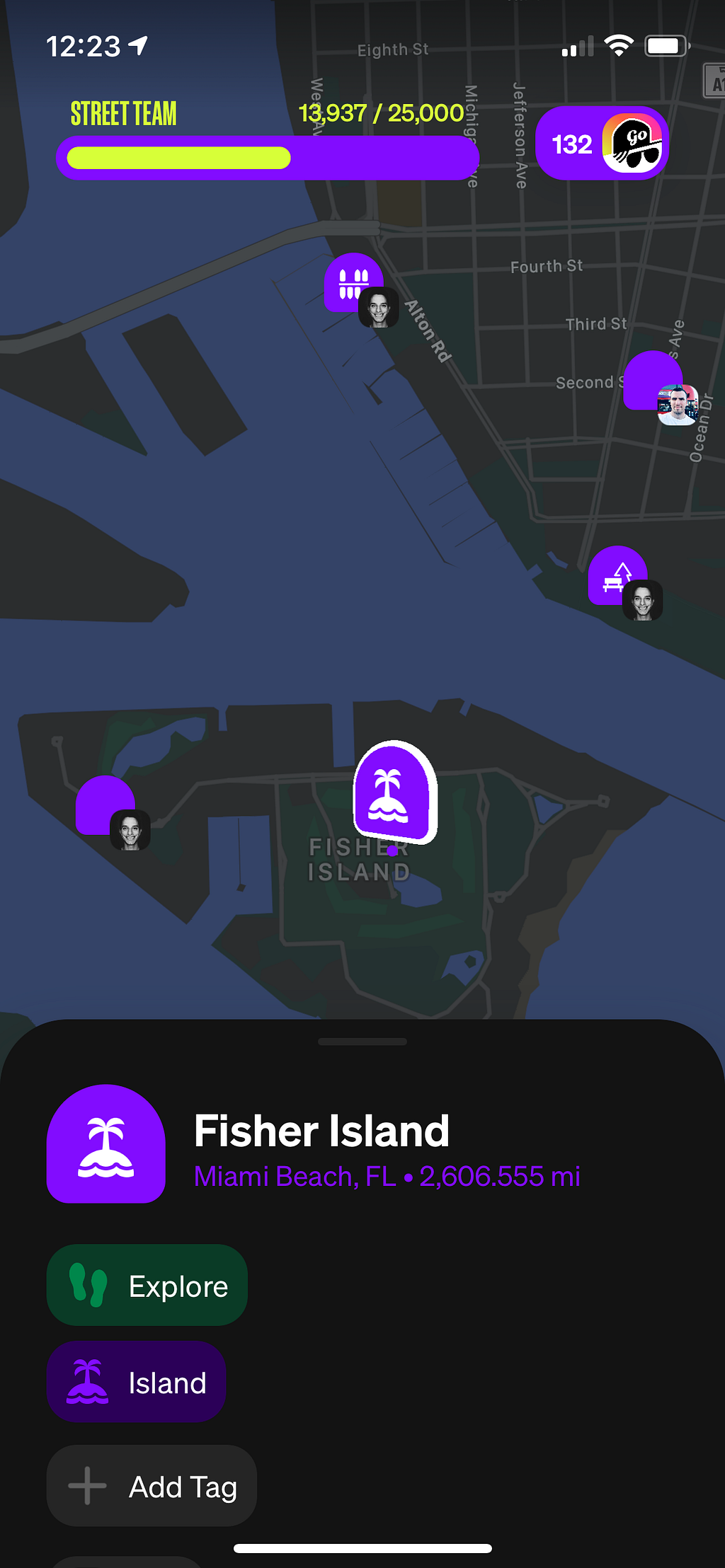
  •  

β€˜Twitter Prime’

It’s finally time for a premium Twitter

Photo by Regine Tholen on Unsplash

The idea of a premium version of Twitter — ‘Twitter Pro’, ‘Twitter+’, ‘Twitter Max’, ‘Twitter Prime’, call it whatever you want — is basically as old as Twitter itself. In the early days, users were just trying to come up with a way for Twitter to stay afloat — hello Fail Whale — and to make money, since it clearly never would as a silly little service.

Fast-forward 15 years and Twitter is now a quite big and decidedly more serious service.¹ It is also a very real business. Twitter reported Q4 2020 revenue yesterday of $1.29B. With net income coming in at $222M. Yes, our little old twee service is making money! As a result, the stock hit an all-time high today, and Twitter’s market cap is now past $50B.²

And all of this has happened without the need for a premium Twitter. The service was able to get to a scale — 192M (monetizable) daily active users — where the preferred method of monetizing social networks, advertising, finally started working. That’s all good news, but it’s also exactly why now is the right time to switch things up a bit.

And to get back to the idea of Twitter Premium...

Twitter has been talking about the idea of a subscription service — or multiple subscription services — for a while now. Both in interviews and even in earnings calls. Such things would seem to be inching closer, as earlier this week, Kurt Wagner of Bloomberg reported on the various paid options being explored and some other ones likely on the table.

In that report, at least one analyst tried to poo-poo the idea of moving beyond advertising-based monetization:

Michael Levine, a senior analyst at Pivotal Research Group, doesn’t think people will pay for ad-free Twitter, but agrees that the company’s best option is to start selling some type of exclusive content.
“If they’re going to do this and they’re going to get this right, there needs to be some premium content that they are going to lean into that’s going to require investment,” he said. Levine also worries that Twitter won’t be able to entice enough signups to make a subscription business work. Even if Twitter, which had 187 million daily users in the third quarter, were to reach 10 million subscribers, Levine said, it wouldn’t be enough. Building a subscription product that’s only interesting to a small subset of users would be “an utter waste of time and a distraction,” he said.

I mean, define ‘enough’? 10 million Twitter users paying $10/month is $100M a month in revenue. Twitter is not Apple, $300M in revenue a quarter for a company doing $1.3B in revenue a quarter right now is certainly meaningful! That’s adding almost an extra 25% to the top line! And sure, maybe $10/month is too high a price point (it depends on what is being offered, of course), but I would also argue that 10 million subscribers — just 5% of their DAUs — is also likely too low (again, depending on what is offered — more on that below).

I also think that mentality, mixed with the idea also talked about in the article that social networks need to be fully ad-based in order to reach the widest possible audience is ripe to be questioned.

In a way, I’d think of Twitter more like a streaming television service in this regard. No, not Netflix in this case, which would be all “premium”, but more like Hulu or Peacock — both of which offer entirely free tiers, supported by ads, but also have paid tiers with either reduced ad-loads, or that remove ads entirely.

Again, social networks have largely shied away from this idea in the past — though, notably, YouTube does this as well with Premium, if you want to consider that a hybrid social network and streaming video service — because of the aforementioned scale aspirations. But it should be clear to everyone at this point — first and foremost, Twitter themselves — that Twitter is never going to be Facebook.³ And they were also long ago passed by Snapchat in daily users. Others are coming. And that’s fine. Twitter is still growing their user base, but it also feels like that base is at a certain general level where it’s going to remain.

This is why the time is right for a premium layer to augment the ad-based monetization layer. Twitter should take advantage of the fact that they’re not Facebook, that they don’t have this amazing ad business which they have to keep growing to appease Wall Street. They have just a pretty good ad business. And that means they can try to build a pretty good subscription business as well. If — yes, a big ‘if’ — done well, it will move the needle.

To me, it’s a no-brainer right now that boils down to what you bake into such a package. Per Wagner’s post, there’s a lot they can try and a lot they likely are thinking about. But I would argue that they need to keep it pretty simple too. Two options, with a third that encompasses both.

Twitter Plus

This would be the premium consumer offering that I think could encompass a few things. First and foremost, it would remove the ads from Twitter. To me, the ads on Twitter suck. I know they’re having some success with app install ads, like Facebook before them, but I don’t need to or want to see any of that. I often mute every ad I see in my timeline. And at times, the ad load is really annoying. What I value most from Twitter is information flow. Anything that gets in the way of that, be it annoying ads or annoying Fleet bars taking up space, is a distraction and something I would gladly pay to remove to clear up and speed up my information feed.

I think this package also includes some premium customization options. The ability to preview new features. And a set amount of tokens to do things like tipping/paying for certain types of content on the platform. And things like access to premium content — perhaps via a paid Twitter Spaces layer. Or Periscope live video streams. Revue newsletters. Etc. There’s a lot you could do here, obviously. This might be $9.99/month.

Twitter Pro

This would be the premium version of Twitter geared more towards professionals and creators. I think that means more powerful analytics. Better tools for the aforementioned Spaces and live video features. I’m sure they could do something with Revue here too.

I think this would include access to TweetDeck as well, as a power user/pro tool. The ability to have multiple tweet streams all updating at once in real time. Maybe even the ability to edit tweets?! (Who am I kidding — still, there could be an “unsend” grace period option or whatever.) Given the professional target group, this might be $14.99/month.

Twitter Prime

I think the most hardcore Twitter users would appreciate the features of both ‘Plus’ and ‘Pro’ and so I would have a ‘Prime’ offering to bundle everything together as well. Maybe it’s $19.99/month.

Yes, that’s a lot of money to pay for a social networking service for which you’re currently paying $0. But for a feed without ads, with professional creation tools, with some baked in ability to help creators monetize, and with the ability to unsend tweets, I think it could be worth it. Or maybe it’s Plus: $4.99/Pro: $9.99/Prime: $12.99.

Or maybe Twitter Prime is $280/year. Get it? Yeah, in a world where Amazon Prime is $119/year, that feels like a lot. How about $140/year? A nice call back to the humble beginnings.

I don’t know what the exact pricing should be — Apple One is $14.99/month but the ‘Premier’ layer is $30/month, Twitch Turbo is $8.99/month, YouTube Premium is $11.99/month, Discord Nitro is $4.99/month or $9.99/month — but you get the picture of the intent here. Something to augment the ad business which is either going to hit a growth wall, or will try to burst through it by shoving more ads in our faces. Now is the time to roll out premium, but to keep it simple.⁴

I’m also sure Twitter could come up with far more on-brand, cuter names than ‘Plus’, ‘Pro’, and ‘Prime’. ‘Robin’/‘Hawk’/‘Eagle’? ‘Nest’/‘Egg’/‘NestEgg’?

Photo by Mrg Simon on Unsplash

¹ Some might say a little too serious these days — with former U.S. Presidents being banned and whatnot — at the very least, a service where many tweets have very serious ramifications in the real world.

² As a longtime Twitter shareholder, I will just add: finally.

³ Nor should it necessarily aspire to be anymore! With great scale comes… well, a lot of headaches.

⁴ Though, for the record, I do like the idea of Twitter attempting to monetize via a 5% cut of Revue subscriptions. I think that for businesses which are being run separately, it’s fine to monetize them outside of these simple bundles, though perhaps also giving some options there for Twitter users.


‘Twitter Prime’ was originally published in 500ish on Medium, where people are continuing the conversation by highlighting and responding to this story.

  •  

An Overnight Success, Six Years in the Making

The Apple Watch on 100 million wrists…

Photo by Kreeson Naraidoo on Unsplash

The Apple Watch now has an installed base of 100 million, according to analysis from Neil Cybart of Above Avalon:

At 100 million users, the Apple Watch is Apple’s fourth-largest product installed base behind the iPhone, iPad, and Mac. At the current sales trajectory, the Apple Watch installed base will surpass the Mac installed base in 2022. Surpassing the iPad installed base will take longer and likely be measured in a number of years based on the current sales trajectory.

That is 10% of Apple’s recently announced 1 billion active iPhone base, but the percent is more like 35% of the iPhone base in the U.S., Cybart suggests. Anecdotally, this rings true as you seem to see them everywhere these days — something which was not true in the early days of the device, as it searched for a use case. One other big reason? Perception shift:

The Cool Factor. People want to be seen wearing an Apple Watch. The Apple Watch brand has evolved to become cool yet approachable. The device has wide appeal across gender, age, occupation, and social status. Apple Watch wearers are able to add customization to the wrist through various Watch band, case, and face / complications combinations. Thanks to Apple Watch’s comfortable bands, it’s easy to wear the device all day, every day.

While Apple went to great lengths — and prices points! — to try to make the Apple Watch a fashion accessory on day one, it didn’t play out that way. The first version of the hardware was a bit of a clunker, and the apps were pretty poor. And it still seemed like a fairly nerdy thing to wear until the health angle of the device, mixed with the device feeling comfortable in its own skin — er, watch straps — allowed it to become normalized and even cool in daily wear.

This has been a slow build to huge success, but that’s not exactly a surprise. As I wrote nearly five years ago:

So will the Apple Watch be the next iPhone (slow to start, then nearly exponential) or the iPad (explosive growth to start, then trickled off)?
Impossible to say right now, of course. But it seems entirely unrealistic to think it will match the iPhone’s trajectory. Because, again, no other business ever has. If I had to guess, I’d imagine the Apple Watch lands in between the two product categories in terms of how it progresses. I think it will be more upgrade-worthy than the iPad, but less so than the iPhone has been thus far.
The caveat here is that it has to get better than it is right now. But if history is any guide, this is always what happens with Apple products. I happen to believe Apple Watch is a bit more “v1” than a lot of other products the company has put out there. But that may just mean that it has more opportunity to grow into something truly unique, useful, and worth upgrading for as iterations come.

And indeed, it has.

As an aside, this past year of pandemic has truly proven the Apple Watch’s worth to me. I went from paying with a credit card 80% of the time (because Apple Pay uptake was oddly mixed in the U.S. versus, say, Europe) to paying with Apple Pay nearly 100% of the time. And because of our mask reality, it’s 100x easier to pay with Apple Pay on Apple Watch — something which was easier before, but I just always forgot to do. Now it’s a godsend as no Face ID fail/passcode input time is needed.

Speaking of, the new ability in iOS 14.5 to unlock your iPhone while wearing an Apple Watch and a mask may be reason alone to get the device. I’ve been using the beta for a couple weeks now and it’s fantastic. “It just works” as the saying goes…


An Overnight Success, Six Years in the Making was originally published in 500ish on Medium, where people are continuing the conversation by highlighting and responding to this story.
  •  

β€œWhopping”

Can Airbnb ever turn a profit?! (Oh, aside from the profits they’ve historically turned.)

Photo by Daniela Cuevas on Unsplash

Look, losing $3.9B in a quarter, as Airbnb just did in their first quarter as a public company, is a big number, no question. At the same time, the framing of this New York Times blurb on the results is silly:

Airbnb’s loss approaches the $5.2 billion lost by Uber in its first full quarter as a public company and renewed questions about whether unprofitable tech start-ups can turn a profit. Although most money-losing tech companies say that they are spending money to fuel fast growth, Airbnb’s shrinking revenue makes that argument a harder sell.

It’s true that Uber has yet to turn a profit — though they continue to make inroads there, and seems likely to later this year or next. And they may or may not have already had the world not completely shut down for the past 12 months, all-but eliminating Uber’s core business.¹

Anyway, that’s Uber, and it’s fair to question the company in that regard until they can prove otherwise, but lumping in Airbnb and trying to make this some sort of trend piece on unprofitable tech giants — never mind Amazon’s famous/infamous strategy in this regard — strikes me as decidedly silly.² Hell, you don’t even need to read between the lines for the story here — it’s right there in the paragraph above the one just excerpted:

The company brought in $859 million in revenue in the last three months of the year, down 22 percent from a year earlier. Its loss was driven by $2.8 billion in costs associated with stock-based compensation related to its I.P.O., as well as an $827 million accounting adjustment for an emergency loan it took out last year to weather the pandemic.

Simple math: $3.6B of the $3.9B loss was due to one-time charges. Every company that goes public has these³ — including Uber in that huge loss mentioned above. If you click on that link you’ll find:

For the second quarter, Uber said it lost $5.2 billion, the largest loss since it began disclosing limited financial data in 2017. A majority of that — about $3.9 billion — was caused by stock-based compensation that Uber paid its employees after its I.P.O.

Again, one-time. Those go away next quarter. And if you took them away this quarter for Airbnb, the picture was much brighter. Again, simple math: a $300M loss. Still a loss, but that’s actually a pretty incredible outcome given the pandemic and Airbnb’s core business. Something which, of course, is also directly responsible for the year-to-year revenue decline obviously.

With that in mind, you probably shouldn’t be shocked to see that Airbnb’s stock is trading up nearly 15% today on the earnings news. If you just read The New York Times attempted framing of the situation, you would be shocked. But it might also shock you to learn that in the years before the pandemic, Airbnb was actually a profitable company.

This is not complicated. Airbnb, a travel and experiences company, was one of the businesses impacted the most by the lockdowns over the past year. So much so that it derailed the original IPO plans. But the company rather miraculously found their footing (thanks in large part to local stays for people looking to break up the work-from-home monotony) and regrouped to still get out in the public market.

If you believe the world is going to open up again, and signs are finally looking very good in this regard, there are few businesses better situated than Airbnb to take advantage of this. And if that happens, the company is likely to quickly return to profitability. “Renewed questions about whether unprofitable tech start-ups can turn a profit”, aside.

¹ Disclosure: I am an Uber shareholder, and have been since the firm where I’m a partner, GV, invested back in 2013. But I remain one despite the bumpy ride in the public market because of the belief in the world swinging back to a state of normal and Uber being a key cog in that transportation picture once again.

² Non-Disclosure: I am not an Airbnb shareholder — though I’m tempted given the narrative I just spun and the negative view point above which I view as totally irrational. In a way, it reminds me of buying Facebook stock almost a decade ago as it went below $20/share. Or Snap stock in late 2019, as it approached $5/share. My reluctance is that unlike with those stocks, where the public market was being irrational, the public markets still love Airbnb stock despite the press narrative and it’s valued highly. But if you believe this is a transformational company in travel and experiences…

The above is not stock buying advice, by the way! I’m not a public stock market professional. This is just my own commentary as I think through what to do!

³ Though no, not every company has the emergency loan charges — but again, we’re in the middle of a pandemic!


“Whopping” was originally published in 500ish on Medium, where people are continuing the conversation by highlighting and responding to this story.

  •  
❌