❌

Reading view

Homemade Gatorade

It is often said that the internet is a weird place, but truthfully, it’s only as weird as we, the people on it, are, and so there is always potential to bring that weirdness away with us. In Homemade Gatorade, writer/director Carter Amelia Davis chronicles a weird online interaction between two individuals and how it turns into an adventure in real life. Transcending simple weirdness, though, Davis’ unique style mixes humor with sharp social commentary, taking us on a wild and surprising adventure, too.

The premise is self-evidently absurd… a woman develops her own “creamy” version of Gatorade and, via forums and social media, desperately tries to find buyers for it online. Upon reflection, though, I was forced to question that absurdity—if there is one thing millennials have embraced with the internet, it’s the concept of unorthodox work. “There are so many people with side hustles and entrepreneurial aspirations right now”, Davis explained, describing some of her inspiration for the premise before adding, “…we hear a lot about the people who succeed, but what about those who fail?” Ultimately, we are meant to laugh, as the absurdity is fully embraced in both the writing and the visual aesthetic of the film, but there is something undeniably touching in the narrative, dare I say relatable, in the protagonist’s state of mind. “I wanted to make a film that could make people laugh but also reflect the horrifying reality of American life right now”, Davis confessed.
sdsdsd

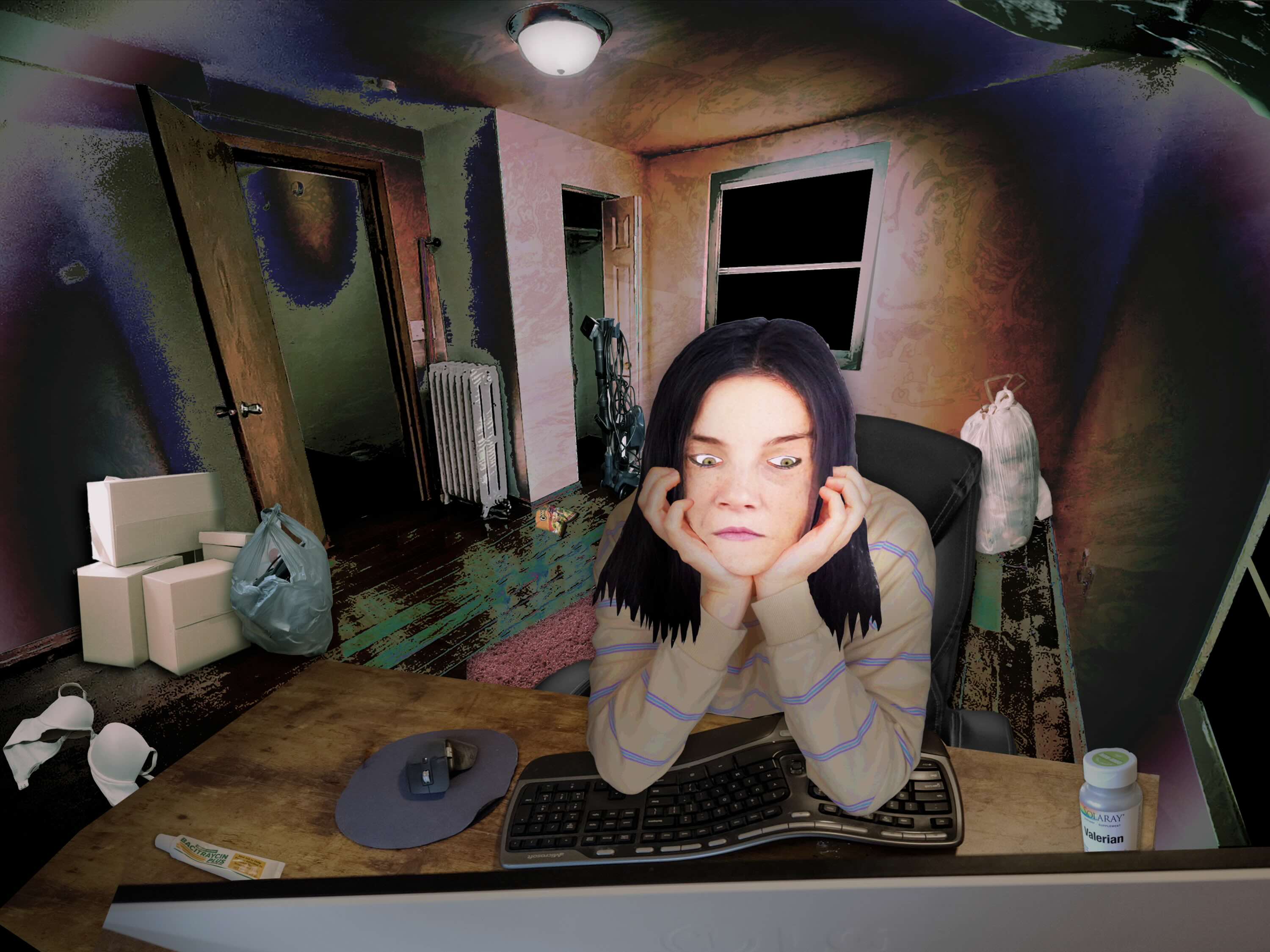
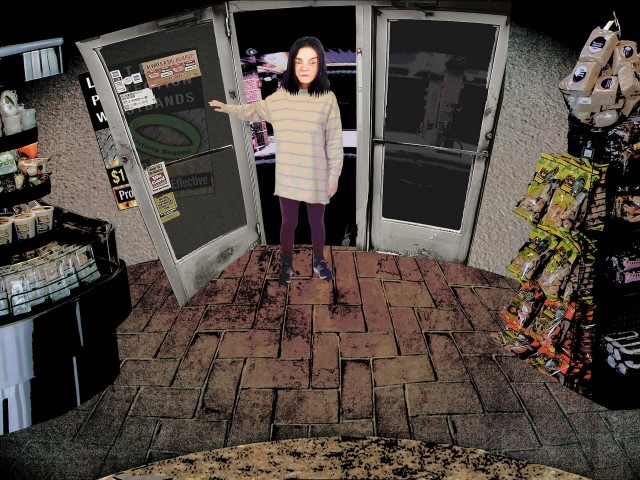
Davis’ animation process: collage image compositions in Photoshop, then animate in After Effects. 

Homemade Gatorade is immediately unsettling but captivating— the epitome of a “you cannot look away” film. As we watch the protagonist go on her quest to deliver her goods to her first real-life customer, the question of success is not even what guides us; it’s the insanity of the online exchange that, personally, I wish could have lasted longer. Daniella Peterson voices the main protagonist, while Davis herself voices the iconic “Susie Gjhjjfjh”. The juxtaposition of their tones is brilliant, and greatly contributes to making the film’s hilarity… up until its surprising ending!

Mainly animated by Davis, with some additional 3D animation by VirtualMoth, the mix of distorted photo collage and live-action is a brilliantly distinct approach, matching the energy of the narrative and bringing a certain level of self-deprecation and that tell-tale “weird” feeling to the proceedings. This description from Davis’ bio is apt: “…her work should ideally make you laugh and feel like you need to take a shower or something.” Odd, but accurate! 

Homemade Gatorade premiered online on YouTube months ago; however, its recent selection at the 2026 Sundance put it on our radar, and now a promising festival run looks to take off with the film traveling to Regard in Quebec next. Davis is one of a constellation of exciting animators born and sustained on the internet for whom the festival world is a “nice” to have but not the be-all end-all. She maintains a successful Patreon and has also self-published a novel. Davis’ other films are also available online, and she is active on social media. With this level of hustle, Homemade Gatorade makes much more sense!
  •  

We Are Not Alone

Whether you believe in aliens or not, the idea of communicating with another species remains a compelling prospect for many. For storytellers in particular, narratives about alien contact continue to hold enduring appeal for a range of reasons – whether as a way to explore humanity’s place in the universe or as a mirror reflecting contemporary society. The challenge, as always with such well-trodden territory, is finding a way to tell the story without it feeling stale or derivative. It’s a challenge taken on by filmmaker Adebukola Bodunrin, whose background in experimental animation helped shape her SXSW short We Are Not Alone.

We Are Not Alone is a lo-fi sci-fi parable about connection and expectation, but underneath it’s about the false promise of the American Dream”

“Post-Covid, I found myself thinking about isolation and the quiet humiliation of feeling left behind”, Bodunrin reveals as we discuss why she wanted to bring Ezra Claytan Daniels’ short comic (of the same name) to the screen. Adapting that original story into what the director describes as a “lo-fi sci-fi parable about connection and expectation”, We Are Not Alone stands out as one of the more original pieces of recent science-fiction filmmaking we’ve encountered, taking a somewhat familiar premise and transforming it into something unexpected and memorable.

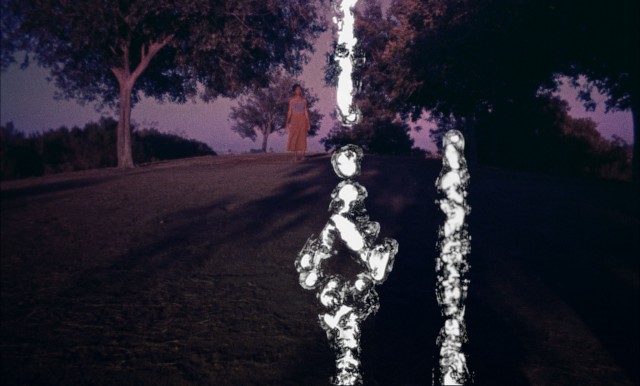
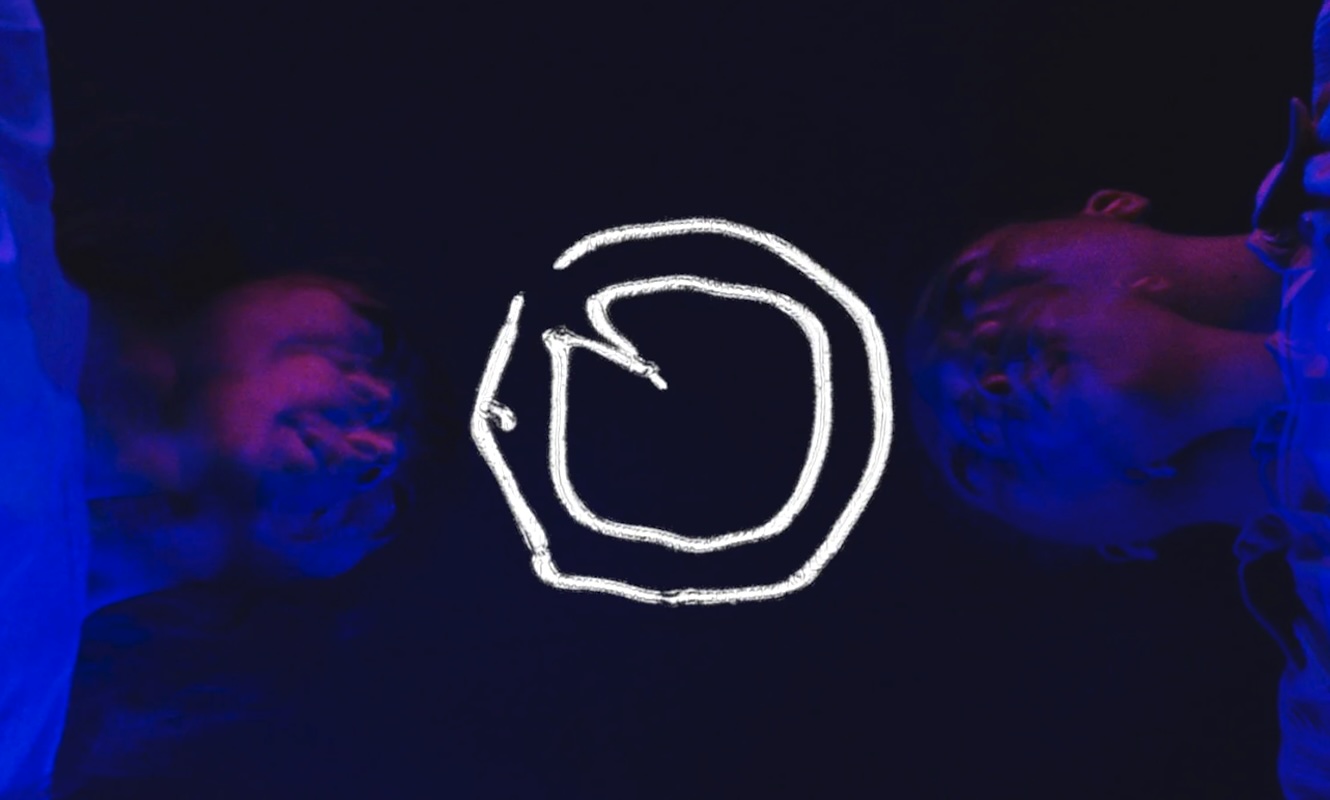
That sense of distinctiveness is largely rooted in Bodunrin’s aesthetic approach. Shooting on Kodak Ektachrome 16mm, the filmmaker incorporated the short’s animated elements directly onto the film stock – painting, scratching, printing, and etching onto its surface. Yet this visual strategy is far from a gimmick; it serves a clear expressive purpose. The 16mm format lends the film a timeless quality, reinforcing the mysterious tone of the narrative (the alien presence is never explained). Meanwhile, the animation gives that presence a tangible dimension, almost as if the extraterrestrials are communicating through the screen itself. As Bodunrin explains:

“I wasn’t interested in abandoning my animation practice. I wanted to contaminate the live-action world with it. The goal was to create a hybrid form where the handmade marks felt like an emotional undercurrent, almost like the characters’ inner language bleeding onto the film itself . . . I was interested in creating a parallel visual language, something like hieroglyphics running beside the narrative. The marks aren’t decorative. They function as a second voice, one that feels ancient, mechanical, and slightly alien.”

We-Are-Not-Alone-Adebukola-Bodunrin

“I wanted to challenge myself to direct a live-action narrative while still working through an analog, tactile process. I wasn’t interested in abandoning my animation practice,” Bodunrin discussing her production

As a science-fiction fan, I was especially taken with Bodunrin’s spin on the first-contact narrative. The film’s use of language – both the imagined language of the aliens and the visual language of cinema itself – felt inventive, playful, and genuinely engaging. In that sense, We Are Not Alone brought to mind Arrival by Denis Villeneuve. The two films are, of course, very (VERY) different in scale and approach, but honestly I can’t think of higher praise to give this short or its director.

Looking ahead, Bodunrin has more exciting projects ahead. Next on the horizon is a new experimental short that will continue her exploration of “direct intervention on film as both image and object,” pushing the technique toward “more intricate, layered mark-making and abstraction”. She’s also developing another short alongside writer Ezra Claytan Daniels, which the filmmakers describe as focusing on “the psychology and performance of online email scams.” If We Are Not Alone is any indication of what to expect, both projects are definitely ones to keep on the radar.

  •  

Sister!

Stay with me, and by extension, with Sister!, a short film that I’ve come to adore, but which I recognize could be a hard sell for loyal S/W viewers. Not because of its lack of quality, of course, but because its sensibility is different in many ways from our typical featured short.

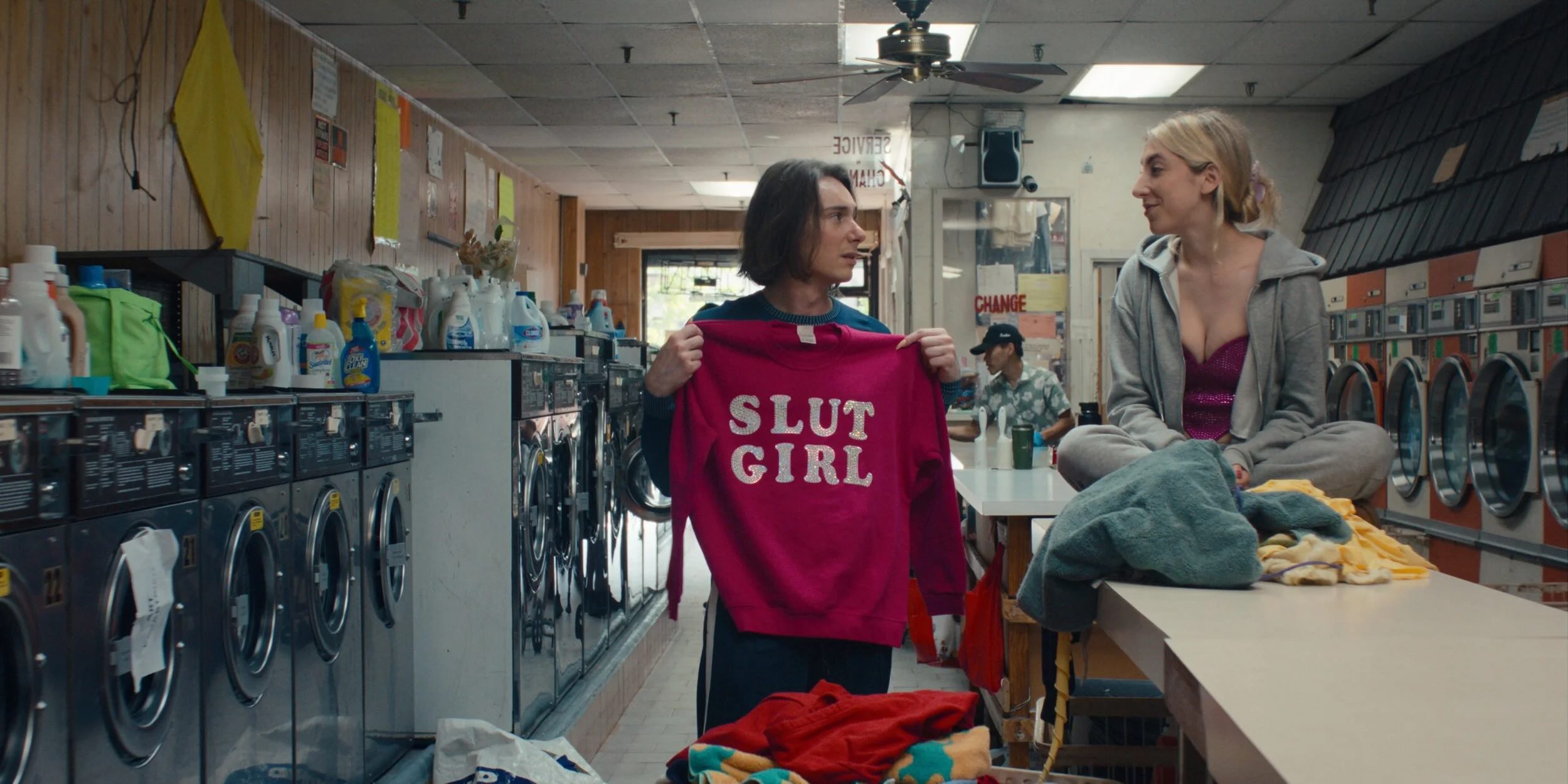
The story of a woman who pops in unexpectedly on her unsuspecting Brooklyn-based “sibling” (their moms supposedly share a sperm donor), Sister! is a fun, transgressive, and over-the-top queer comedy written by its stars, up-and-coming talents Julia Wendt and Tessa Belle, and is an unapologetic showcase for the duo’s comedic stylings.

So far so good, but, and perhaps I am projecting here, I was fairly resistant to the film early in my initial viewing. Partly, I recognize we’re chauvinistic towards directors, and this is, resolutely, a writer/performer film. We’ve sat through enough LA actor-driven web series to be trepidatious of this. Directed by John Onieal, notable as the creator of Grindr’s first scripted show, his direction is quite deft, but, between the film’s limited locations and the rapid pace of its joke delivery, the short presents more like a single-camera sitcom than an auteurist work. Onieal’s contributions are necessary but subtle, managing the reservoir of written comedy in a collaborative process that “involved a lot of riffing with each other, comedians, and department heads so to ensure that what we were making resonated,” and making sure the camera platformed the strengths of his stars.

Fortunately, Wendt and Belle deliver star turns. Part of the roughness of the early going is that Wendt is left to establish the initial tone by playing off of a deadpan Asha Ward, but the transfemme Wendt’s line delivery is very affected and can come off as stilted. However, like a stray note brought into harmony, Belle’s entrance into the film soon snaps the dynamic into place, and their chemistry is dynamic.

It’s also relentless. The pair’s comedy style, which is progressive, but playfully mocks the excesses and contradictions of Gen-Z wokeness in subject, is basically all-joke, all-the-time in practice. It’s frankly remarkable—the film has almost no standard exposition, no calm, sincere moments, it’s pretty much 13-minutes straight of jokes.

Naturally, your mileage may vary on the effectiveness of these—comedy is hard! But a ton of them land for me, and the great thing about a high-joke tempo is that if one falls flat, another is right on its heels. The production showed up to the shoot with a huge list of ALT jokes and planned for extensive space to improvise on set, so the team had a huge surplus of material in the edit to pick what was hitting the best, and it shows.

Even if the effectiveness of the comedy is questionable for you, I argue that it is deserving of admiration. Comedy is criminally underrepresented in shorts, and especially this sort of comedy, which is not ironic, surreal, or absurdist, but focused on jokes. Wendt and Belle blasting jokes to set up a joke which delivers a joke punchline is the closest I’ve seen to a short reaching something like classic 30 Rock, which I perceive as a gold standard. That the film also has heart is almost a miracle. In the midst of their bludgeoning, escalatingly hysterical final act, the film’s producer, Jeremy Truong, challenged the production to “find moments of emotional truth,” and while the “sisters’” ultimate catharsis and bonding is telegraphed, it genuinely lands.

A feature at last year’s Tribeca Festival, we’re pleased to present the online premiere of Sister! Take advantage of this opportunity to watch a very funny short, which we expect to be a launchpad for this impressive team, especially Wendt and Belle. 

  •  

A Beat to Rest

A drummer is confronted with the reality that age is beginning to catch up with him, gradually affecting his ability to play and forcing him to accept the decline of his career. Drawing from personal experience and a deep connection to music, writer/director Dan Silver crafts a narrative that speaks to the universal experience of confronting the passage of time. Sensitive and emotionally resonant, this slice-of-life drama carries a quietly immersive quality.

“Artists so often associate their entire identities with their work, and to lose that due to age, is genuinely heartbreaking”

“Drumming has always been an integral part of my life”, Silver shared when we asked him what inspired the film. Two of his mentors were his grandfather, to whom the film is dedicated, and famous musician Luther Rix. The filmmaker reflects that his own journey of growing up and sharpening his drumming skills mirrored the experience of watching his two mentors growing older, noting that “the physicality of being a drummer certainly took its toll on both of them”. Witnessing that decline, he explains, prompted much introspection about time and how it can affect and restrict a passion. 

By interweaving the themes of age and passion, Silver taps into a complex identity crisis. “Artists so often associate their entire identities with their work, and to lose that due to age, is genuinely heartbreaking”, he notes – an idea that sits at the core of the film. Despite the specificities of the situation, there is an undeniable universality in what the protagonist of A Beat to Rest goes through. With Silver’s lens painting an emotional portrait of this character with subtlety and nuance, drawing us in effortlessly. The authenticity of the writing truly grounds the film and makes it so effective.

Shot on film, it is not surprising that DP Kevin Johnson gives the images a texture that complements the narrative perfectly. It also brings a melancholy and nostalgia to the visual language that enhances the depth of the story. Silver also challenges himself, embracing long takes and giving the audience the room to process events alongside the main character. While the editing – by Silver himself – gives A Beat to Rest having a pace that echoes the main character’s state of mind, echoing the fact that he is slowing down.

A Beat to Rest Short Film Dan Silver

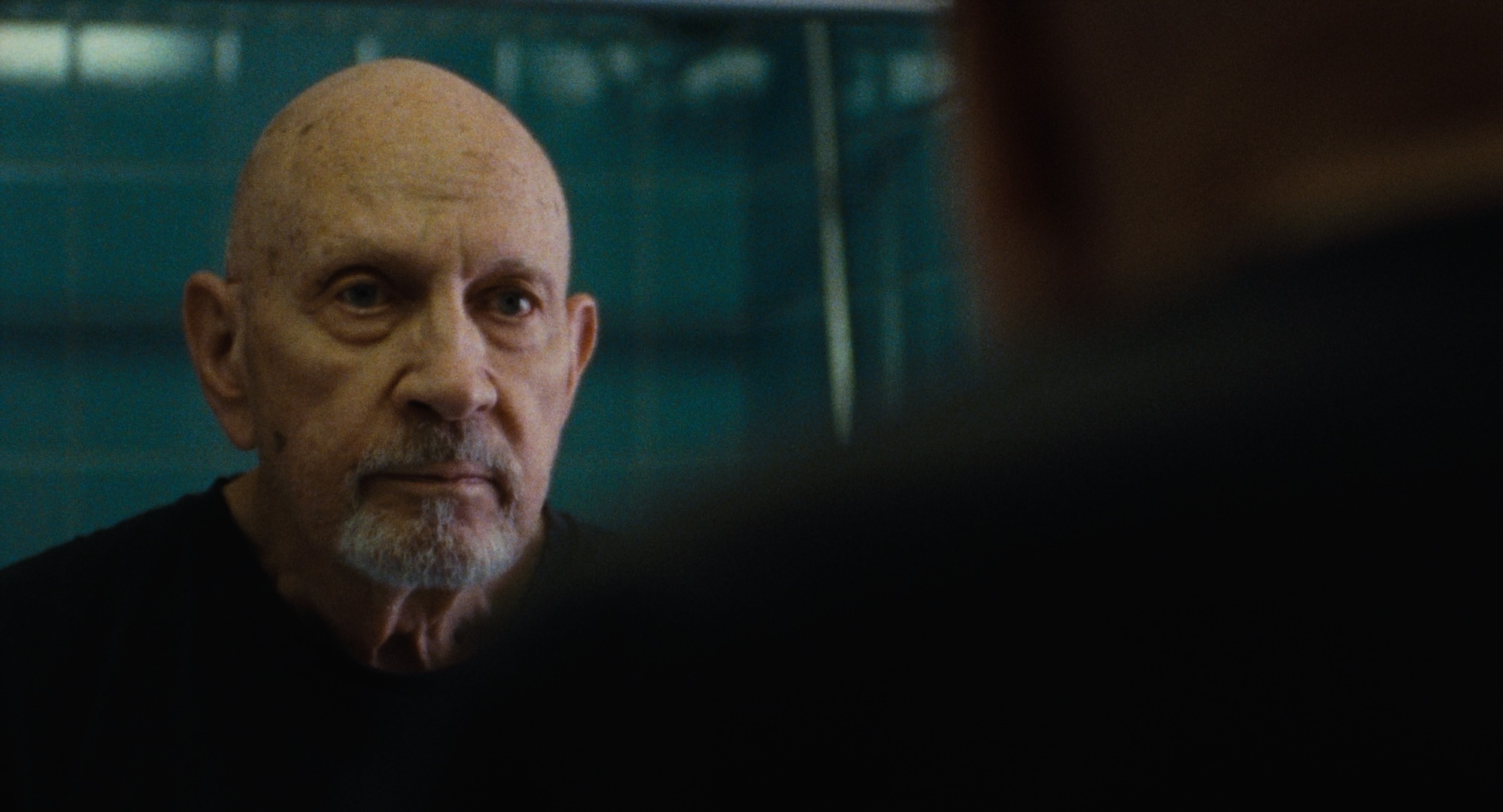
Luther Rix – the inspiration behind the narrative – also stars in the film

Given the subject matter, sound and music play a crucial role. Silver composed the music with Alexandra Funes and they never fall into the trap of having the score be too heavy-handed with a reliant on drums. Instead, it is carefully composed to embody the presence of the music in the protagonist’s mind and how his perception of it evolves throughout the film. 

At the centre of the film is a deeply affecting performance from Luther Rix himself. Silver had shared the script with him to get some feedback, and he ultimately took on the lead role. The relevance of the material made up for his lack of experience in front of a camera, as he brings an impressive rawness to both the character and the emotional turmoil he goes through.

A Beat to Rest is having its World Premiere today on Short of the Week and Silver is already working on a new short film titled Her Painted Gaze, while also developing the feature adaptation of his previous short film Benign, which explores living with a mysterious chronic illness while navigating the chaos of the US healthcare system.

  •  
❌