Tonight, when you’re off the clock, what will you listen to, watch or read?
I imagine that most of us would agree that this is a free choice. To watch a silly video on YouTube, read a book on Greek philosophy from the library or scroll your feeds. We have time (surprisingly called “free”) and we allocate it to focus our attention on something.
While it might seem like a free choice, well-paid people and powerful forces are working to shift our focus. Many systems are built to manipulate us into focusing on things that benefit them, not us.
If you’ve ever felt lousy after doomscrolling, you might question how free your free time actually is. It takes effort to regain our freedom of focus.
We can take this one step further. We not only make choices about the media we consume, we also make choices about our internal focus. Until you got to this sentence, I’m guessing you weren’t spending much time thinking about your high school graduation.
We don’t need research to show us that the internal narratives we focus on shift our attitude and soon become our reality. We’ve all experienced it. Soon after we stop the broken record, things get better.
Perhaps it’s not a free choice, though. Perhaps the stories we relentlessly focus on are simply the byproduct of our brain’s chemical reactions, a reaction to the world inside us and around us.
And yet… many people have learned to shift the stories they rehearse.
The first step: change the external focus. Change the people we interact with, the media we consume, the attention we offer. Not all at once, but as a habit, a persistent practice of being mindful about the triggers and amplifiers we consume. If you’re not happy with what your attention is bringing you, you can change it.
Aristotle said that we become what we do, but before we do, we focus.
And the freedom and responsibility of that focus belong to us.
I think Brad and I met back in the General Assembly days, which was one of the early code schools based out of NYC (interestingly, with a physical presence, not online only). He later started Common, a notable co-living starting, and now has a trade publication called Thesis Driven. Brad describes it as covering the ‘future of the built world’ and it’s a really interesting read for me. Enough so that I wanted to catch up with him via Five Questions.
Hunter Walk: For me it seems like Thesis Driven is both “one thing” and “a lot of things” [media company, community, educational programs, investment fund] but all which center on your love of, and expertise in, proptech. Is that fair? How do you describe what you’re doing these days?
Brad Hargreaves: That’s fair, although lately we’ve been a lot broader than proptech. “Future of the built world” is both awkward and the best descriptor I’ve come up with.
Technology is a part of that story. AI is having a tremendous impact right now across the real estate industry – operations, development, underwriting, design – all of it. We write about AI’s role as well as teach workshops that help real estate operators figure out how to use it. I have an education background so I just can’t keep myself away from that business.
But to our readers, shifts in the real estate capital markets are just as important. We’re at a weird moment in time right now where old mainstays – office and multifamily – aren’t looking as stable as they once were. So investors are looking at categories they wouldn’t have touched ten years ago. Cold storage, outdoor hospitality, niche industrial, healthcare housing, and more. Everyone’s also trying to figure out how to “seed fund” emerging real estate operators. It feels a lot like the venture ecosystem in ~2010.
Over the past year we’ve been using our platform to match investors with innovative real estate operators; it’s still early days but so far we’ve seen a lot of success there.
HW:I appreciate that not every essay is about AI or some technology startup – you actually do quite a lot of work on regulatory, design trends, socioeconomic and cultural changes to living. Do you find different types of reactions from the community? How much are you trying to explain ‘the now’ versus ‘the future’ in this analysis?
BH: We have a very broad scope for a trade publication. I’m sure that’s frustrating to some readers who only want to read about proptech or capital markets, but I see it all as inseparable. If you’re a PE shop or an institution investing in real estate, you can’t ignore any piece of it. You have to understand the role of AI. You need to have a grasp of cultural trends and what preferences – or regulatory policies – may be downstream of those. You must understand how financial markets are moving.
The easy path here would be to crank out reports on AI. But the future of real estate is also about social and demographic shifts. Birth rates have fallen dramatically and immigration has plummeted. Who is going to live in all these new apartments? Over a hundred colleges close every year due to a lack of students. What happens to that real estate? Those don’t draw as much attention as my writing on AI but I think it’s just as important.
I generally aim to give people insights into what might happen 6 to 36 months from now. I’d love to speculate farther out as well but I don’t want to risk anyone calling me a futurist.
HW: Two of the companies you cofounder – General Assembly and Common – both were in areas post-funding saw the venture capital hype cycle take hold – from being in-fashion to less trendy. How much did those narrative swings impact the way you built the business, and ways it helped or hindered what you ultimately wanted to accomplish?
BH: They were very different. With General Assembly we nailed the timing. We started working on it in late 2009, just before learning how to code became sexy and every Fortune 500 B2C company needed to get digitally savvy. We sold in mid-2018 right before the pandemic and AI hit.
But I’d say General Assembly’s concept was never particularly trendy among VCs. We believed having a brick-and-mortar presence was important, which scared many investors but ultimately allowed us to build a great enterprise business. Two of our last three rounds were led by family offices, which in hindsight enabled us to successfully exit when we did.
Common was a much tougher situation. The coliving concept got very trendy very quickly. Six to ten companies raised meaningful venture rounds, which led to a lot of competition and compressed margins. Ultimately we and many of our peers made bad economic choices in the name of grow-at-all-costs, and many of the decisions I make today at Thesis Driven are informed by mistakes I made at Common.
HW: Related to this question about venture capital, what advice do you give proptech founders about whether VC is the right source of investment capital for their business?
BH: If they’re genuinely building technology, venture capital can be a great path. Vertical software is a great category for VC. There are also interesting data and marketplace opportunities in real estate that could likely have venture-scale outcomes.
The challenge is that there are a lot of asset management businesses out there that don’t have a good path to raising seed capital outside of venture. These businesses need to exist and can be great companies – asset management is an excellent business – but they usually don’t have the predictable, exponential growth arc that venture needs. If they raise VC, they usually get stuck and it’s a bad outcome for an otherwise good company.
HW:How much do you ‘bring your work home’ – with three kids have any of them shown similar interest in these areas? Is Thesis Driven multigenerational?
BH: I’d love to build a multigenerational business, but the next generation has to want it. I won’t pressure anyone into it. Our oldest is nine, right now he wants to buy a farm and run a farm-to-table restaurant. He did have a very successful pie-baking business last Thanksgiving. We’ll lean into their interests, show them love, and see where it takes us.
What facts about your state’s history should be strongly told?
When a man has a country in which he was born… it becomes sacred to his heart, and it is hard to leave it.” (Seminole talks excerpt –1817-1842)
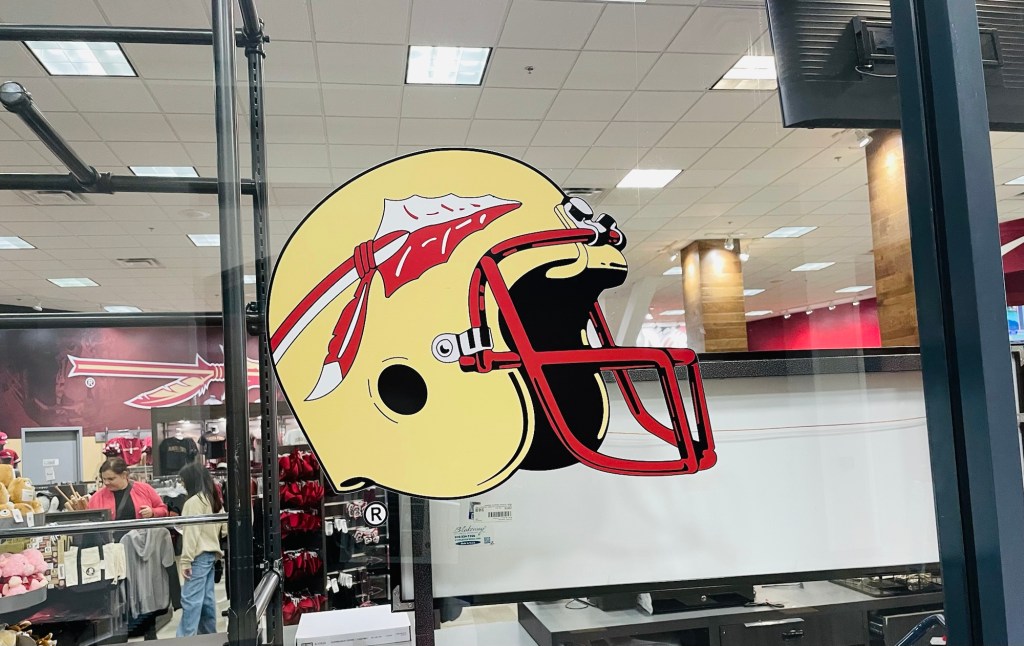
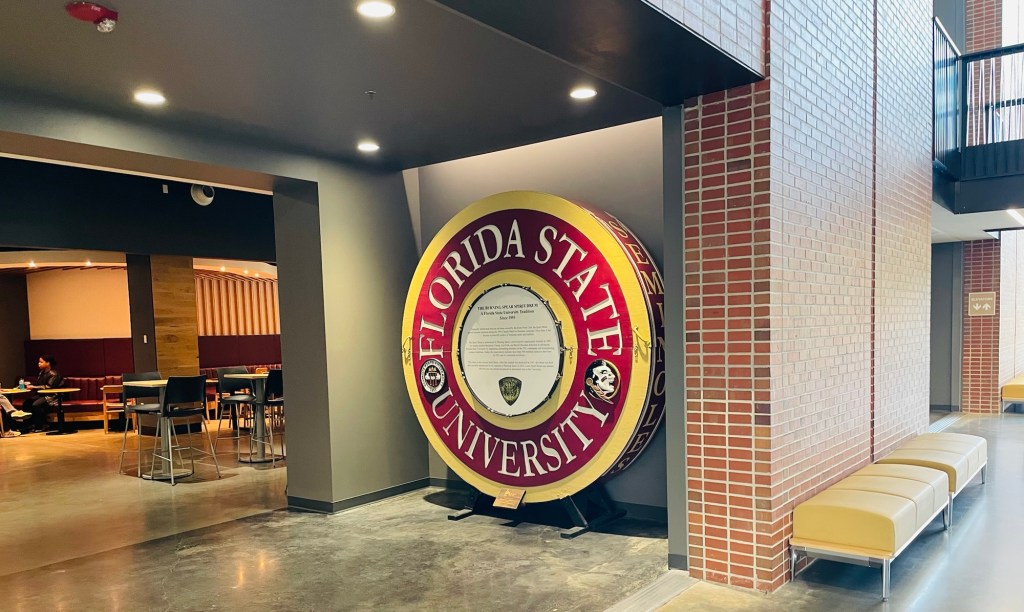
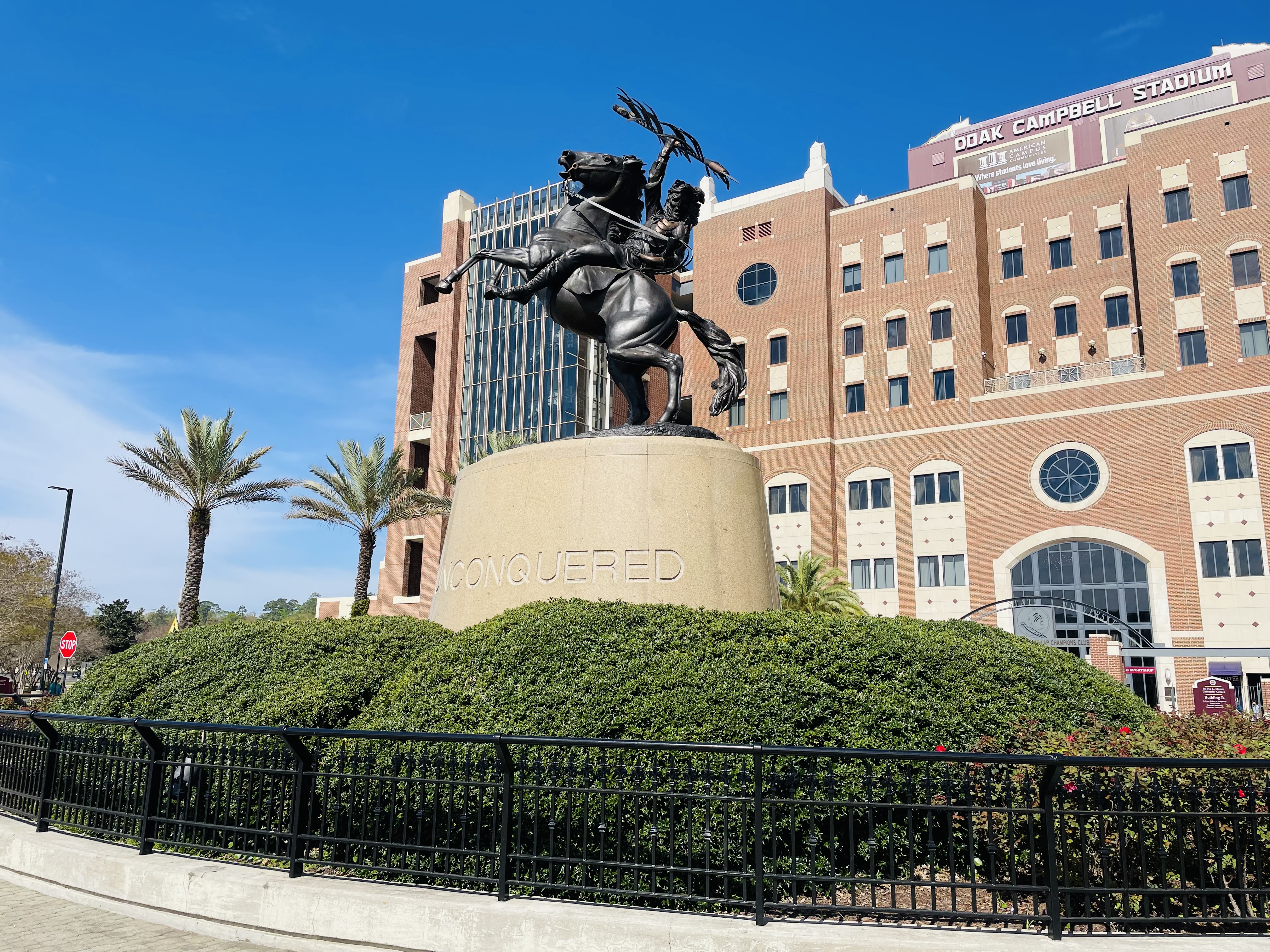
Our 2026 springtime roadtrip began in Tallahassee, the capitol city of the “Sunshine State.” This would be the first time that we actually spent more than one day in Tallahassee. So Ruth and I decided to visit Florida State University for a brief look around that would not take that much effort after our long drive yesterday. As it turned out, we found out at the visitor center that most of the campus would be shut down due to spring break with students gone and traffic minimal. That included the closure of their renowned Museum of Fine Arts, which I was most looking forward to see. So with plan B in mind, we instead walked around the football stadium followed by a brief visit to the Student Union.
But what struck me most on this eerily quiet morning visit was the obvious presence of the Seminole Indian symbol everywhere I looked. These observations led me to recall flashbacks to my former time as a history teacher when I briefly taught a few pages of textbook reference about the Seminole wars that took place in Florida during the early 19th century. For the facts noted then was that this was a tragic time in American History, which ultimately resulted in mass relocation of Native American tribes from Florida along the “Trail of Tears” route to what is now as the state of Oklahoma.
So as I resume my curious explorations of America as a road tripper again, I remind myself how such travels have a way of changing how history feels. For upon further reflection about this FSU visit, I realize that the ubiquitous Seminole Indian imagery along banners , paintings, and statues I saw then felt much deeper than an enthusiastic school spirit at the time. For these symbols stood for an unconquered people who’s loving spirit for their sacred land lives on today.
State nouns are verbs that we talk about like they are nouns. Hurry, panic, frenzy, rage, funk, stupor, daze, fog, rut, bind, pickle, fix, slump, tailspin, tizzy. Notice that they’re almost all negative…
You’re in a hurry.
Really? I get that you’re hurrying. There might be good reasons for this. But the hurry hat isn’t what you are, it’s what you’re doing.
We can own our agency and our choices, not announce (to ourselves or the world) that we’re trapped in a container, unable to escape.
Until we start saying, “I’m in a joy” perhaps we should find the grace to choose what sort of verb we’d prefer.
The essential thing about a hat is that it’s easy to take off.
Spring Links! All personal blog posts today. No corporate (or even indie) media
Outcome Engineering [Cory Ondrejka] – “The code doesn’t love you back.” That’s one of the memorable lines in Cory’s manifesto around the changing nature of what it means to be an engineer. Importantly he doesn’t just rant but here coins what he believes we’re heading into: outcome engineering (o16g). Alongside the term are 16 principles, such as #4 The Backlog is Dead, #9 Agentic Coordination is New Org, and #16 Audit the Outcomes. I worked with Cory at Second Life and he later moved between other startups of his own creation and BigCos (having led the mobile app transformation at Facebook, and served as a technical advisor to Sundar at Google.
Opting Out of Unicorn Economics [Bethany Crystal] – It was a brilliantly catchy way to describe the data in the moment, but the whole concept of ‘unicorns’ in startup world (and striving to be one), helped break some part of our community. Or at least created a narrative that was surface-level easy to understand but with implications that were slower to play out. More builders are realizing the tradeoffs and publicly talking about why they’re eschewing the goal, often aided by the power of AI tooling (which of course is built by mega-unicorns ). Bethany, who has been on the inside at a top VC firm earlier in her career, now sits far from those aspirations.
“For a very long time, I believed the only way to start a company in the tech sector was to have an engineering degree and millions of dollars on your side. In other words, if you weren’t a unicorn chaser, you were just a small business owner. Or worse…a consultant.”
“When I started to notice that the most celebrated outcome in an industry of builders became check writers instead of company builders, something felt misaligned to me. After all, if the highest-status role is capital allocation, who is left to do the work of building?”
But also be wary of those folks selling solo founder plus AI equals the other model for success.
“But what do you notice about the people who are signing up for that program? All men. Most with engineering backgrounds. And so the lore lives on.
To be clear, I don’t think the answer is to replace one fantasy with another. It seems trite to trade unicorn chasing for solo founder worship, or to swap venture-backed pressure for an “AI for everything” grind dressed up as freedom.”
Knowing Bethany I can vouch that this essay is the outcome of choices she made – and is making – rather than just content marketing.
The Hidden Cost of Communication (A Case Against Big Companies) [Joe Fabisevich] – Joe published this right after the Block layoffs and I think was a little worried it would appear insensitive to the people who lost their jobs but it’s timely, accurate, and he seems to genuinely be a good human. In the post he makes the case that just about every company of significance is fundamentally overstaffed and that this results in lack of focus and underperformance from the communication complexity which occurs as a result. Joe doesn’t believe this is just an AI story – in terms of the need to rationalize team size – but that of course it’s now part of the consideration set.
“This is why the layoffs we’re seeing aren’t just about replacing workers with AI. They’re about companies finally accepting what was always inevitable — you don’t need 50,000 people to do the work of 30,000. You never did, but AI has made this reality impossible to ignore.”
Don’t Sell the Work [Evan Armstrong] – When your essay’s subtitle is “The most popular thesis in AI was wrong. Here’s why.,” I’m gonna lean in. And it just gets spicier from there.
“Unfortunately for all of us, this elegant idea turned out to be very wrong. There is exactly one category of startups where the model has been effective—AI customer service—and every other major AI application today uses a different positioning and pricing strategy.
So what happened? Why has “selling work” been such a dud?”
I’m not yet sure I totally agree with his framework, but as someone who is default skeptical of any single attempt (me sometimes included) to explain, create, and own the descriptions of tech transformation, this is a chewy complement.
Stop Being a “Maybe”: Emerging Manager VC Fundraising Advice on Qualifying LPs Like a Sales Funnel [Julia Maltby] – Oh thank goodness. I tell you, all these VCs have funding advice for their startups and then don’t take any of it to heart when raising their own funds. When backing EMs via Screendoor, our fund of funds, some folks are raising for the first time in their careers and the advice Julia provides here is pretty consistent with what I share.
“When you move from doing deals to raising a fund, you become the product. And like most products, you end up in a pipeline on someone else’s screen – color‑coded, half‑remembered, competing with a lot of other “pretty good” options.”
Enjoy your Sunday!
Tip DON’T LET AIRLINE RIP YOU OFFESPECIALLY AS OIL PRICES CLIMB: I’m using Junova to track purchased airline tickets I’ve taking and auto-reclaim credit if the price drops. It was started by a friend and so far has recouped $2000+ of American and United credits for me. Their business model is: service is no cost, but if they successfully get you credit, they charge 20% of the value to your credit card. If you use this referral link, your first $25 of fees (ie $125 of flight credit) is free. Let me know how it works for you!
What places you go to help you slow down and relax?
“Nourishing yourself in a way that helps you blossom in the direction you want to go is attainable, and you are worth the effort.” (Deborah Day)
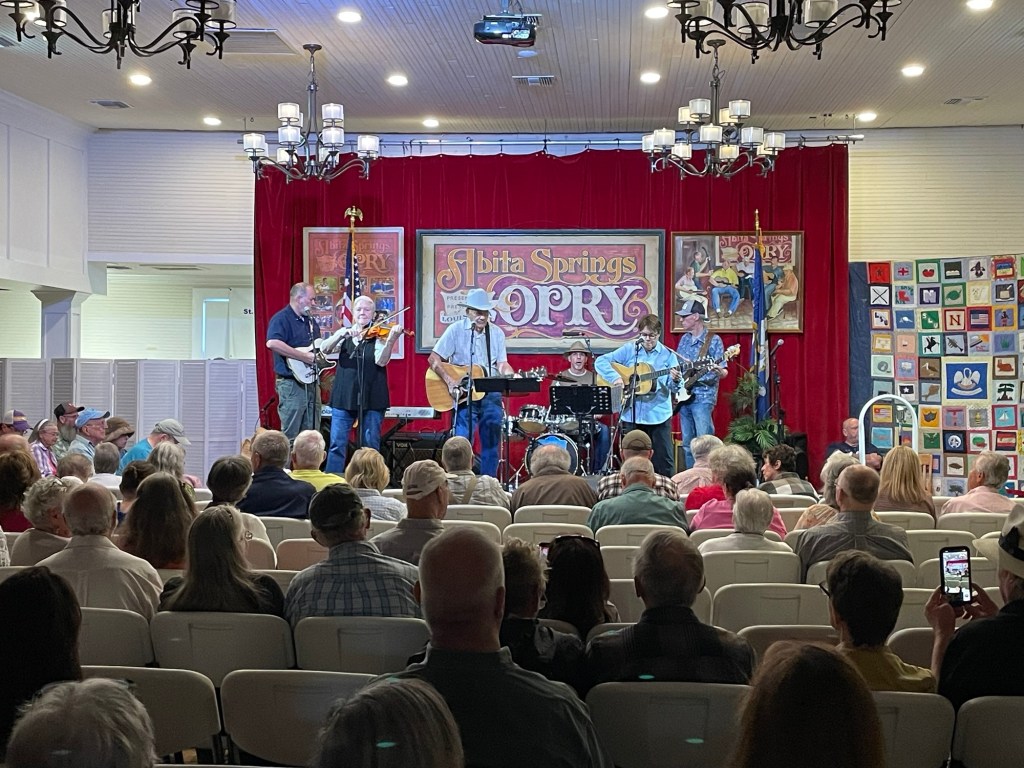
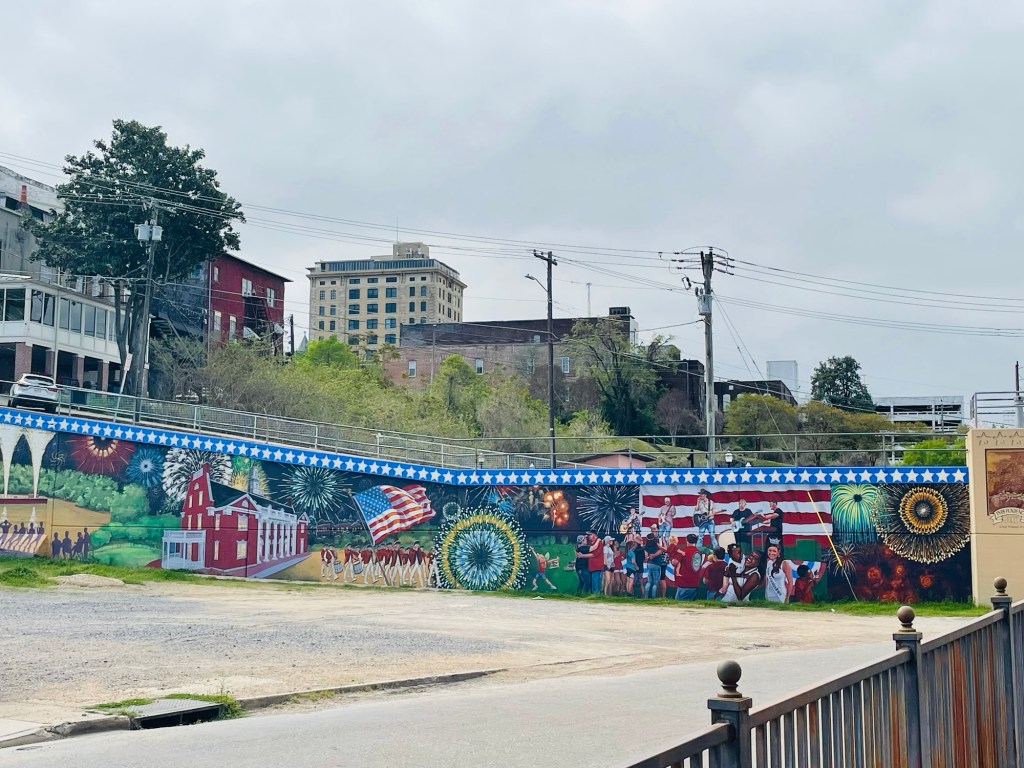
Whenever I cross over the Lake Pontchartrain causeway into greater New Orleans, I have entered what is so called the “Big Easy.” For this cosmopolitan city has acquired a reputation for its free flowing fun atmosphere of music, food, and constant motion indulgence takings place around Bourbon Street and nearby areas downtown. On previous visits, I particularly enjoyed live music played along Frenchman Street, which although a little less crowded still can be a quite a raucous occasion. I also seem to have been drawn to that those energizing walks along the Mississippi River shoreline or hopping on a historic street car to gaze at old oak tree lined streets enveloping 19th century antebellum homes in the Garden District.
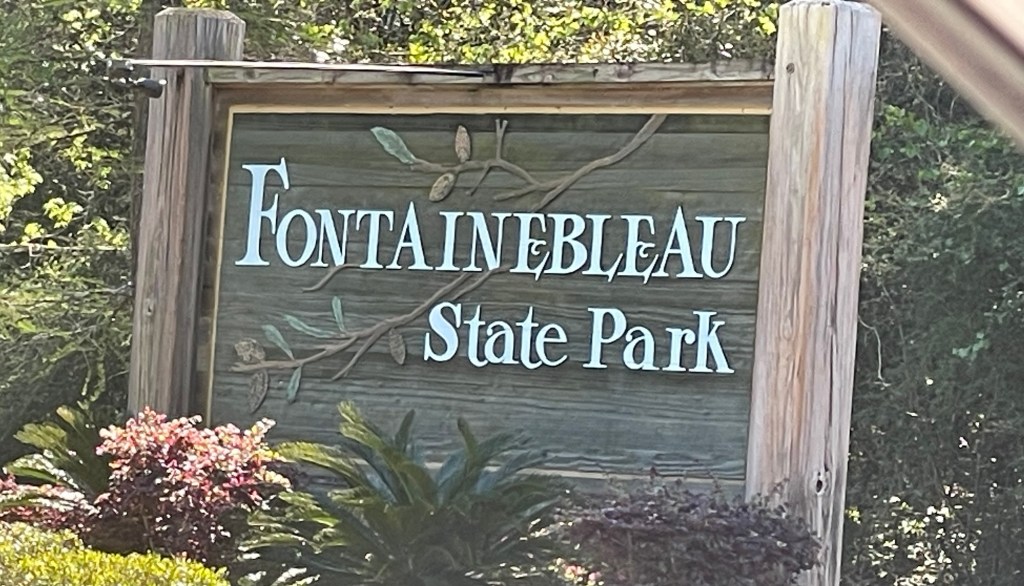
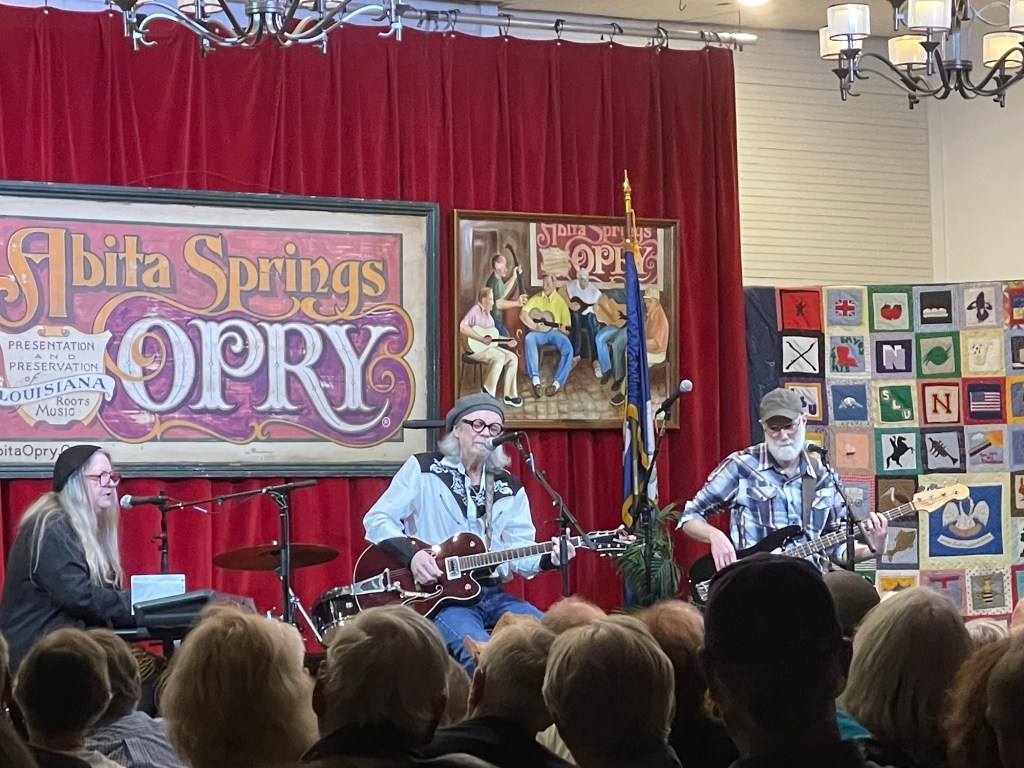
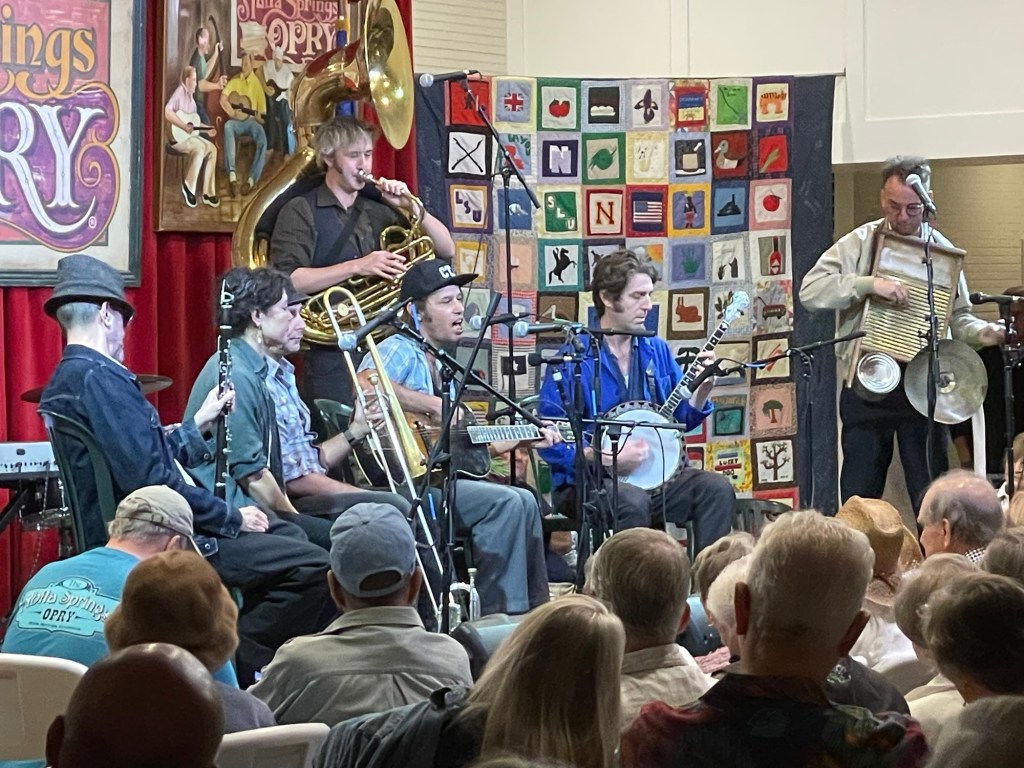
But on this particular vacation, I took a different point of view about how to replace New Orleans with a comparably fun experience on a smaller scale. Thus we discovered quaint Mandeville and Albita Springs along the northwest coast of Lake Pontchartrain as suitable replacement stopovers pictures for two days on our road trip. In particular, I took notice of the presence of live music being played Saturday night featuring several bands of interest from a variety of musical styles. I mean why put up with the New Orleans crowds on Saturday night when top notch entertainment like Tuba Skinny would take place a couple miles from our hotel at the intimate setting of Albita Springs Town Hall? As we’d have plenty of “time to kill “ in the morning and afternoon before the concert, we’d also explore the relatively pristine shoreline of Lake Pontchartrain at Fountainbleu State Park. Just water, sky and open space to slow down seemed the right formula at the time.
So travel for me I realize is not always about going to the places that I’ve heard the most about. No I didn’t indulge in New Orleans fun as I normally do. But in opting for the north shore Lake Pontchartrain vicinity to explore instead, I realized that this alternatively quieter version of “Big Easy” logically was the best choice at the time.
In tennis, golf or just about all ball sports, the follow-through determines the flight of the ball. Great players always have a complete and confident follow-through.
But the ball is long gone before that happens.
So, what’s the point?
It turns out that the ball can tell that you intend to have a serious follow-through. A weak or non-existent follow-through requires that you start slowing down before your racquet ever gets to the ball.
The metaphor should be pretty clear.
If you show up for the audition, your first TEDx talk, your early blog posts, the job interview or your start up hoping to see what happens (“I’ll commit if I get picked”) we can tell.
On the other hand, when it’s clear that you’re going to keep on showing up, it’s an invitation to get aboard now.
Follow-through doesn’t always work. But it always works better than the alternative.
How would you best handle a long lasting term crisis in your life?
“…Now, gentle flags that flutter on the graves
Recall the pain in blood where armies fell
And multitudes of tombstones line the hills
As somber spirits cast a ghostly spell”…
(Barry Middleton – impressions of Vicksburg battle)
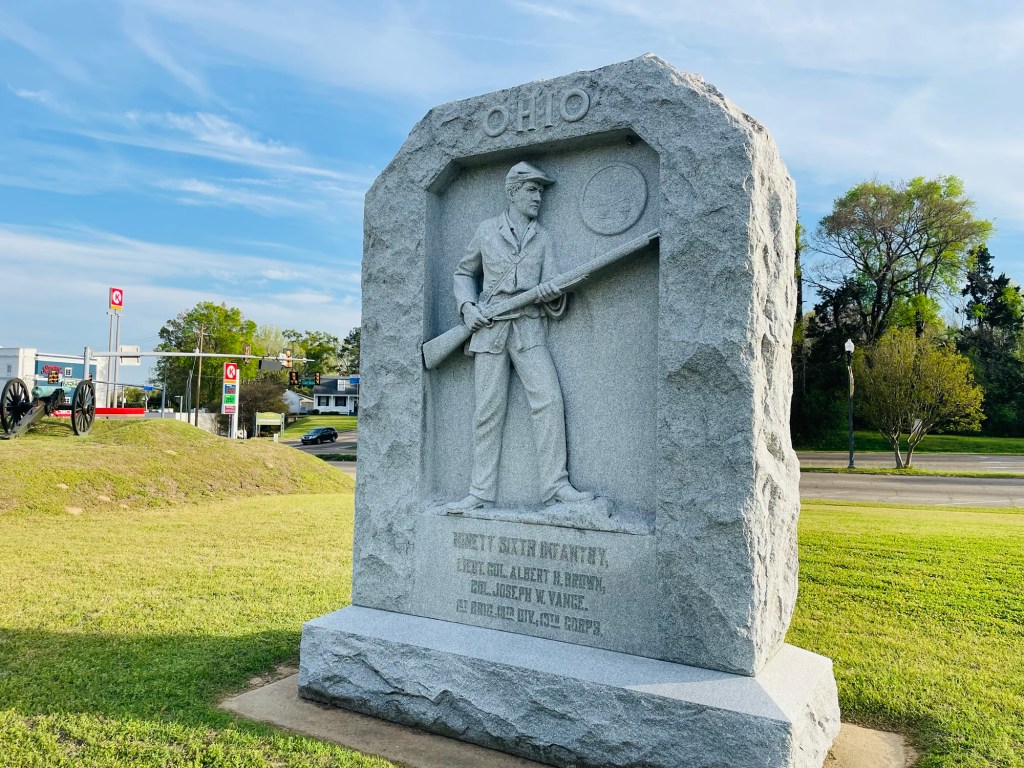
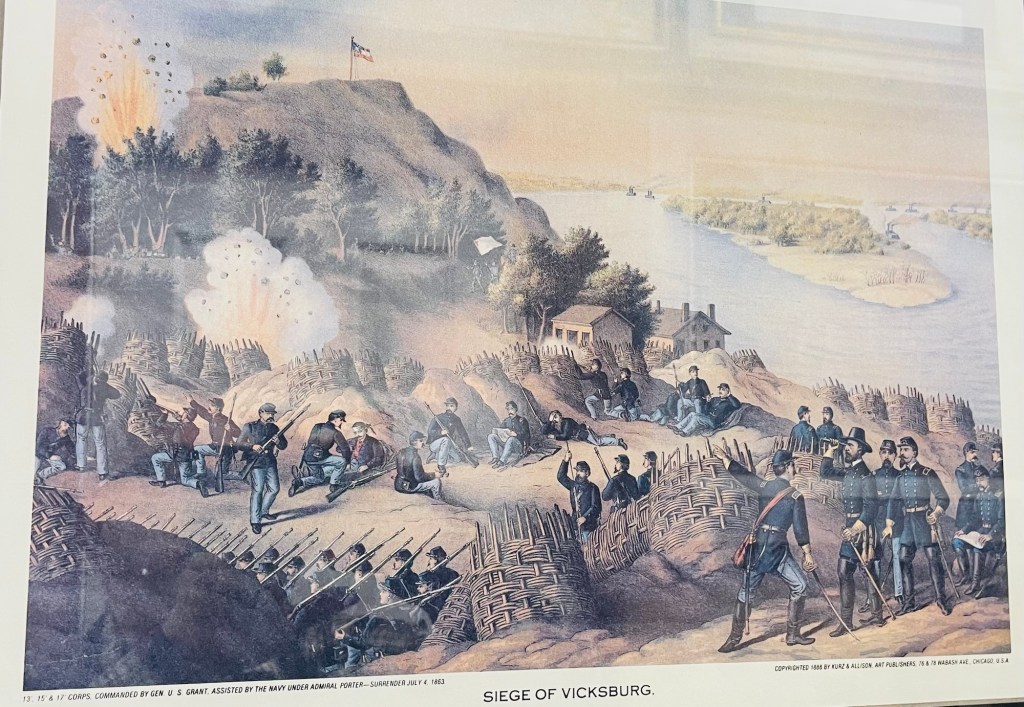
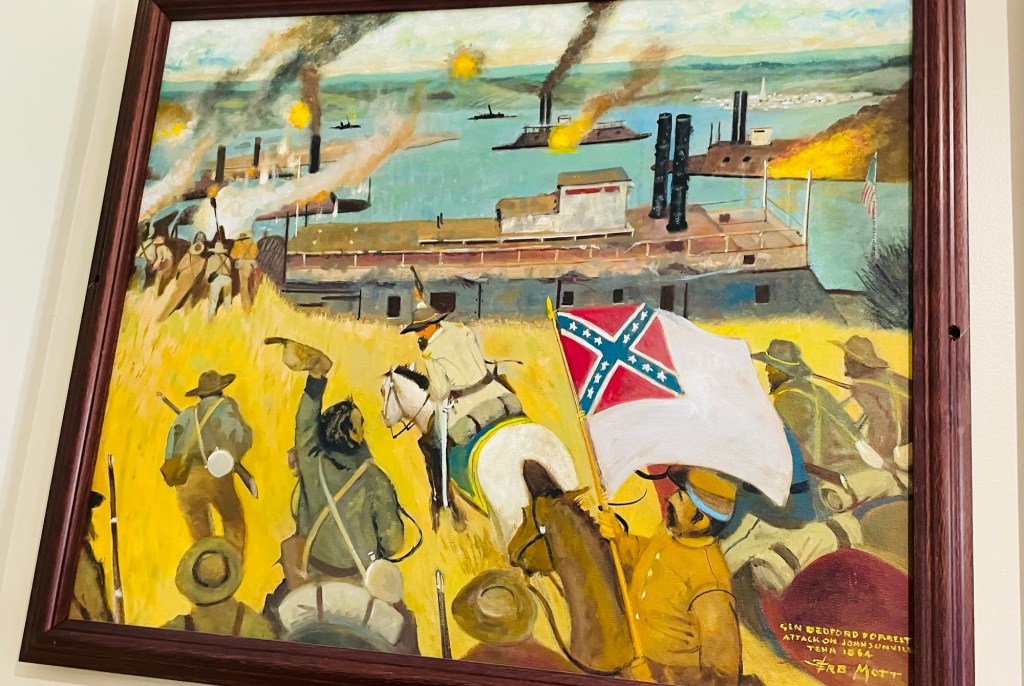
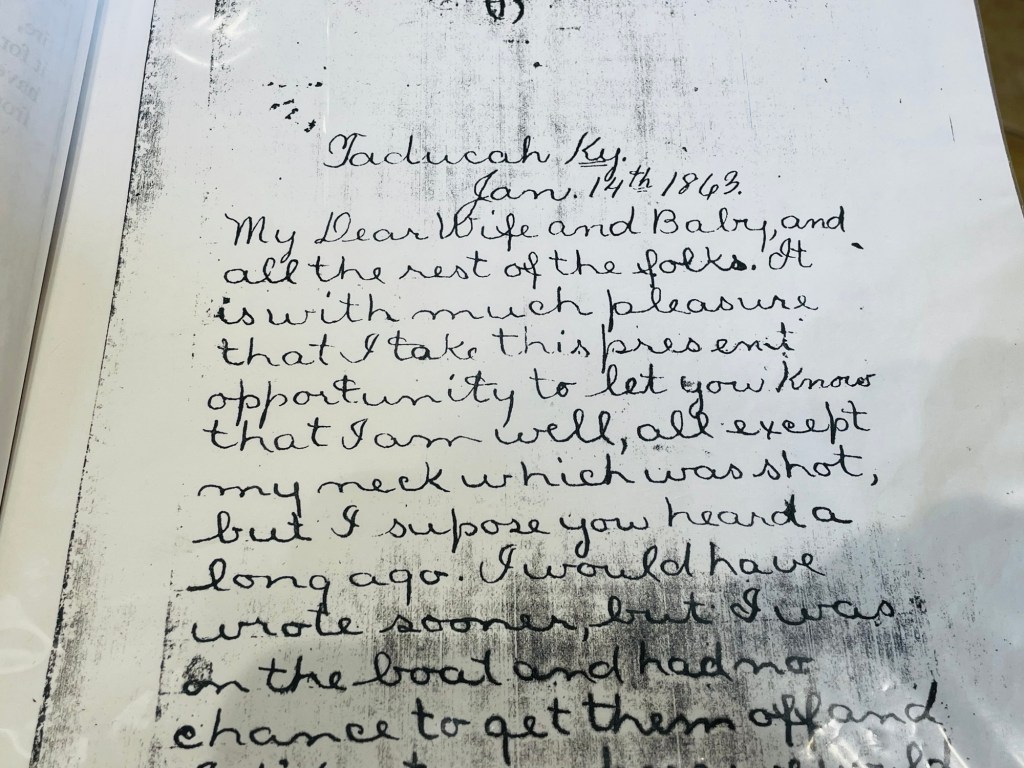
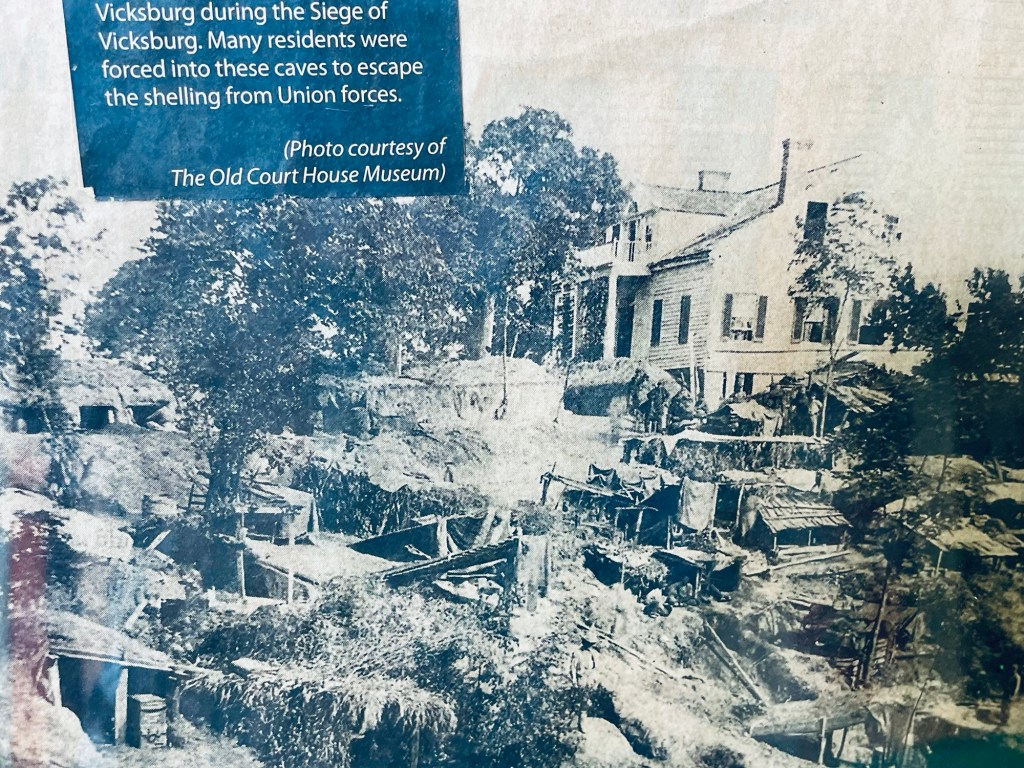
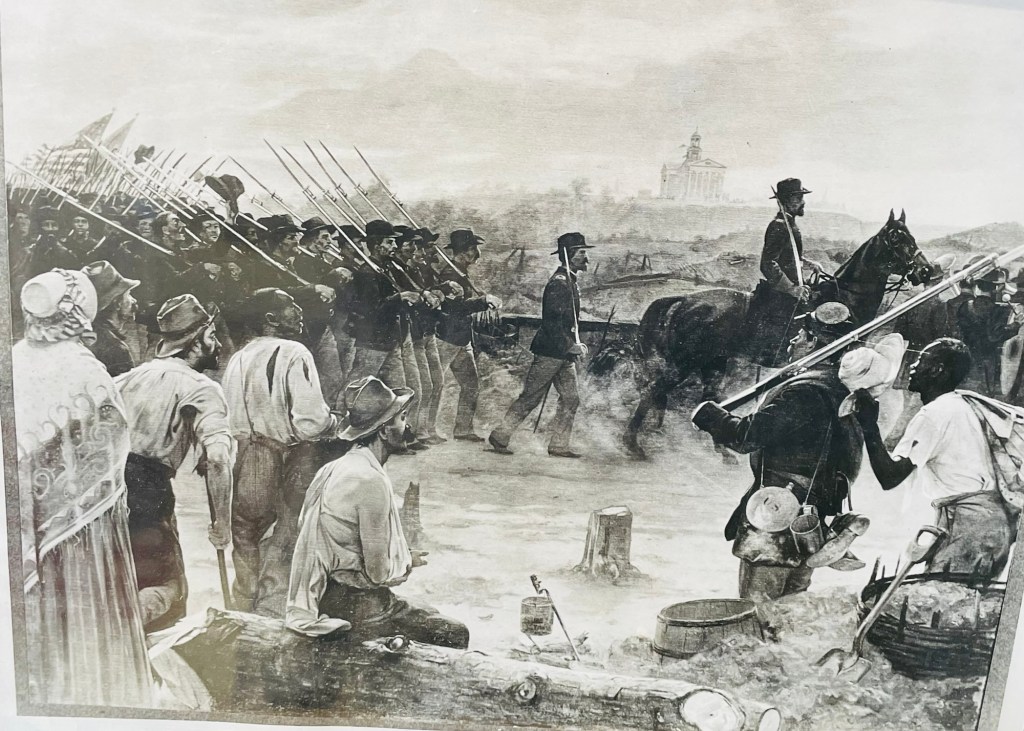
As I set foot in Vicksburg on this road trip, I came across the above quote. Reading these words , it was easy to picture Vicksburg as a place that has seemed to stand still since since its iconic Civil War battle in 1863. Know then I imagined that Vicksburg’s setting straddling high cliffs above the Mississippi River was not the right place for a quick war resolution as time became the ultimate weapon itself. For what happened here was endurance under pressure as both Union and Confederate soldier losses mounted for over forty seven days.
So that’s what makes Vicksburg feel uncomfortably relevant today. So many conflicts nowadays don’t resolve. They linger, expand and settle into something prolonged where the question is no longer who wins quickly but rather how long can it go on? Consider, for example, the difficult terrain that the Vicksburg siege conflict was fought on. How much has war changed since then? Like a chess game, the advancing militia seeks to take advantage of strategic place positioning of troops in order to overwhelm the enemy. But that doesn’t always work so well for as in chess a stalemate often occurs when there’s no clear winner or loser in this battle . Meanwhile innocent people caught behind the scenes can only watch the bombs fall on their precious land.
So Vicksburg’s bloody long history should not be underestimated. Inciting war in the Middle East now may seem to be a glamorous choice on the surface for ego driven power holders. But is it worth risking prolonged crisis which might threaten to erupt into a worldwide crisis? We must learn to work out our problems peacefully together to sustain the ultimate survival of our human species. Perhaps my travels might help in some way to accomplish that task.
If you tell me your ID number, your phone number or the wiring instructions for your bank account, not only will I forget them, I’ll need you to repeat it a few times so I write it down without making a transcription error.
When we first started using serial numbers (the Roman Legion did this thousands of years ago, and the British Board of Ordnance required it by law in the 1700s), it made perfect sense. Issue the next number on the list and move on.
But numbers alone are difficult for humans to error check and handle. So we use computers to help. The problem lies in the pesky humans who are still part of the chain.
So, here’s a simple hack. It’s unlikely to catch on worldwide, but I think it’s fascinating enough to consider…
If you had a list of 150 three letter words, all selected to be easy to say, spell and discern, you could use them to replace numbers in a productive and useful way.
So, big bob zap car cat is five words next to each other. There are 75 billion combinations of five words, which means that it replaces a number like 4839450381 with room to spare.
For ATMs that are four or five digits, you only need three words.
Think about that the next time you need to tell a customer service person your order number or serial number, or share a wifi password.
That’s a great reason to dumb things down. It’s also a trap that leads us to stasis and mediocrity.
Let’s break it down:
People: Which people? All people? The majority of voters? Day traders or institutional long term investors? Every VC or just this one?
Pick your people, pick your future.
Complicated: If it can be made simpler and just as effective, then by all means, please do so. If you can tell a more compelling and actionable story, do that as well. But ‘complicated’ just might mean, “we don’t understand it yet.”
Understand: Few people understand how the iphone works, or even the refrigerator. But that doesn’t mean we can’t effectively use it. The people who were moved by The Rite of Spring or Miles Davis or Esperanza Spalding might not have understood the music but it still succeeded.
People walk away when it’s not worth the effort to pay attention. People ignore innovation when the network effect is insufficient to overcome their fear. People rarely understand something the same way the creator does, but that’s okay.
Our first job is to do work that matters for people who care. It helps to follow that up with the scaffolding needed to cause cultural change, so the idea spreads.
But don’t dumb it down to reach people who don’t want to be reached in the first place.
Automating a strategically sub-optimal process or workflow doesn’t make it markedly better. In some cases it’s even worse (eg a low converting marketing funnel can churn through your target list even faster if an agent is doing most of the work). And something that’s been automated – recently ‘improved’ – is even less likely to want to be revisited post-optimization. Human (and organizational) nature that you’re entrenching the process further vs re-examining it.
You can be fashionable without reading Vogue. You can be informed without watching the nightly news. You can be smart about science without going to MIT. It’s possible to be a great chef without buying a cookbook. In fact, you can probably thrive without reading this blog. There are millions of songs on Spotify that have only been listened to a few times each.
Not only are more humans publishing more often on more topics, but we’ve built LLMs that are always ready to create even more content, on demand, for an audience of one.
For generations, content has created the demand for more content. A few movies increased our desire to watch more movies. AM radio created the demand for FM, which sold more records, and then Napster magnified our desire for even more music.
Until we hit the wall of enough.
The ennui of infinite content is reversing our spiraling desire for more of it.
Hey folks! Another gap week because, as mentioned last week, I am at the annual meeting for the Society for Military History happening in Arlington. That said, we actually did have a major post this week, my 7,500 word primal cry concerning the current war in Iran. I know that won’t be for everyone – some of you read this to get away from current events – which is why I dropped it ‘off schedule’ midweek rather than having it replace this post.
That said, as I often do with weeks where I am at a conference, let me share the abstract of the paper I am delivering, “Unlearning the Marian Reforms:”
The transformation of the Roman army from the conscription-based citizen militia organized by maniples of the middle republic to the long-service professional army organized by cohorts in the early imperial period remains a topic of intense interest for specialists and non-specialists alike. In recent years, however, the specialist understanding of this transformation has increasingly diverged from a non-specialist generalist vision which remains wedded to the notion of the ‘Marian Reforms.’ The idea of a set of reforms, occurring in the late second or early first century BC, which can be tied particularly or generally to the career of Gaius Marius (cos. 107, 104-100, 86) remains common in popular history and even academic textbooks and so permeates the non-specialist understanding of the Roman army’s transformation. However, as this paper demonstrates, functionally every part of this narrative has come under attack and nearly all parts of it must now be discarded: there were no ‘Marian Reforms,’ ‘so-called’ or otherwise.
Instead, what has emerged from the scholarship is a prolonged process of change beginning far earlier in the second century and not entirely complete until at least the reign of Tiberius (r. 14-37 AD), in which Gaius Marius’ career forms only a single episode and not necessarily a particularly important one. This new understanding of change in the Roman army now dominates the specialist scholarship but has not filtered through to general discussions of either Roman or military history. This paper addresses this gap in understanding, outlining the key elements of the ‘Marian Reforms’ have been undermined and demonstrating that the notion of the ‘Marian Reforms’ as an event in the history of the Roman army is to be abandoned in generalist and textbook treatments, at it has already been in specialist ones.
Now normally this is a case where I have to hem and haw about how conference presentation papers aren’t really ready for publication even on a blog, but this conference paper is in fact a more-or-less direct translation of a blog post we have already had, “The Marian Reforms Weren’t a Thing.” Indeed, whereas my speaking time here (around 20 minutes) limits me to just around 2,800 words, the original post is about three times longer, with significantly more detail than I can fit into a conference paper. So you can in essence, read a longer, even more decompressed form of this argument! So feel free to go and read that if you missed it and to read my Iran War take if you want and didn’t catch it midweek and we’ll be back next week with something different (maybe Carthage themed?).
How do you view the American Indian experience from past to present?
“Certain things capture your eye but pursue only that which captures your heart. “ (Choctaw Indian proverb)
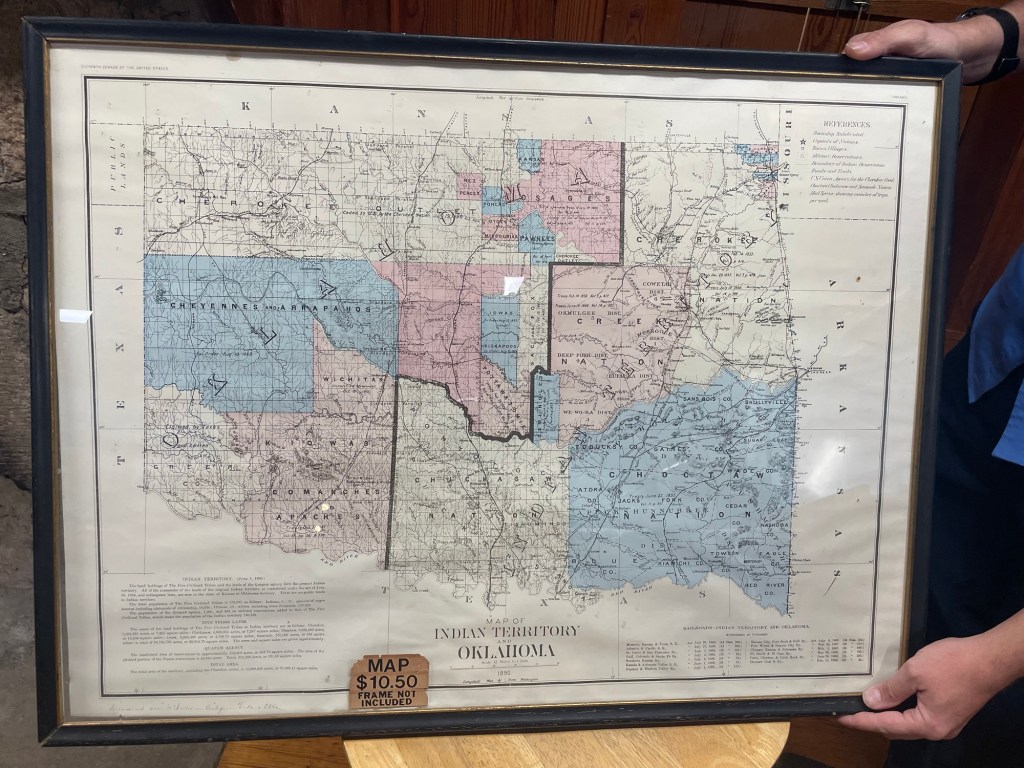
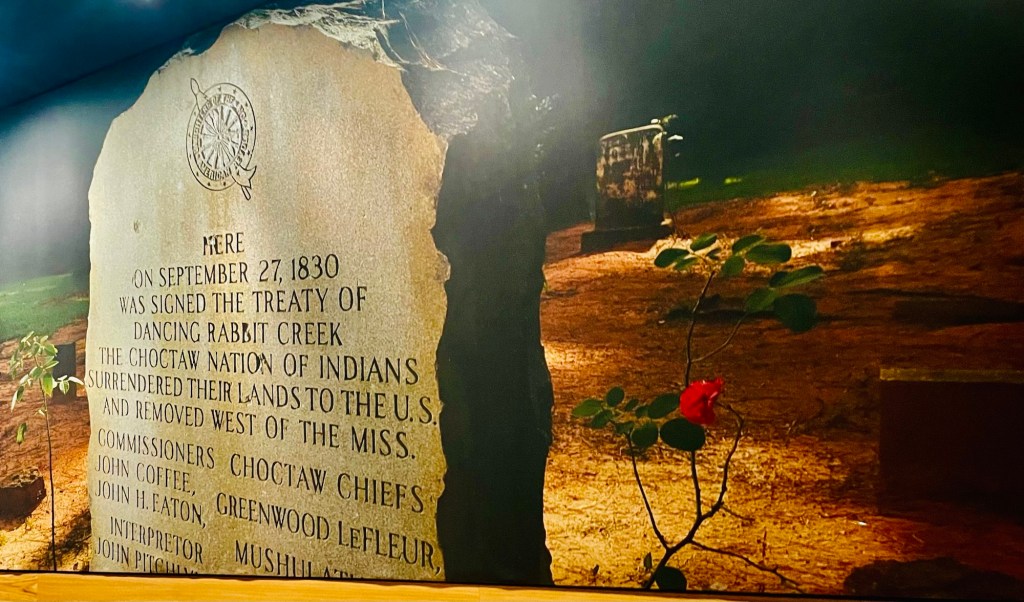
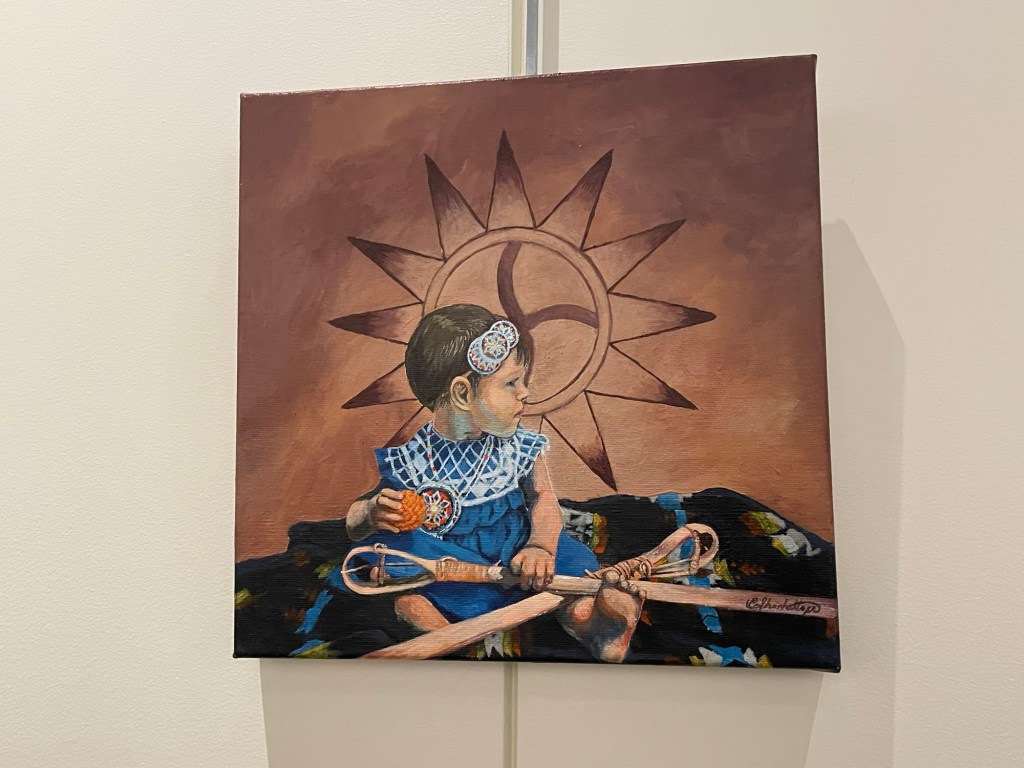
The way I see it, it’s one side to read about the American Indian experience throughout history by way of textbook facts about the various tribes existing in America. But it’s another matter to see up close the real Native American experience through through real life artifacts and other visual evidence of their actual living conditions from the past to now. Simply put, as a past history teacher, my students memorized dates and event facts about Native Americans for mandatory testing purposes, but in doing so they did not feel the real emotional story about the triumphs and tragedies of these people. Take for example the historic time in the early 19th century when the Choctaw were one of several civilized tribes to be forcibly removed by the U.S federal government from their ancestral homeland in the southeastern lands of early America. In retrospect, why didn’t I adapt my curriculum to help students make personal connections to the hardships Indians faced in journeying thousands of miles on foot along the famed “Trail of Tears” route to what would later become the state of Oklahoma?
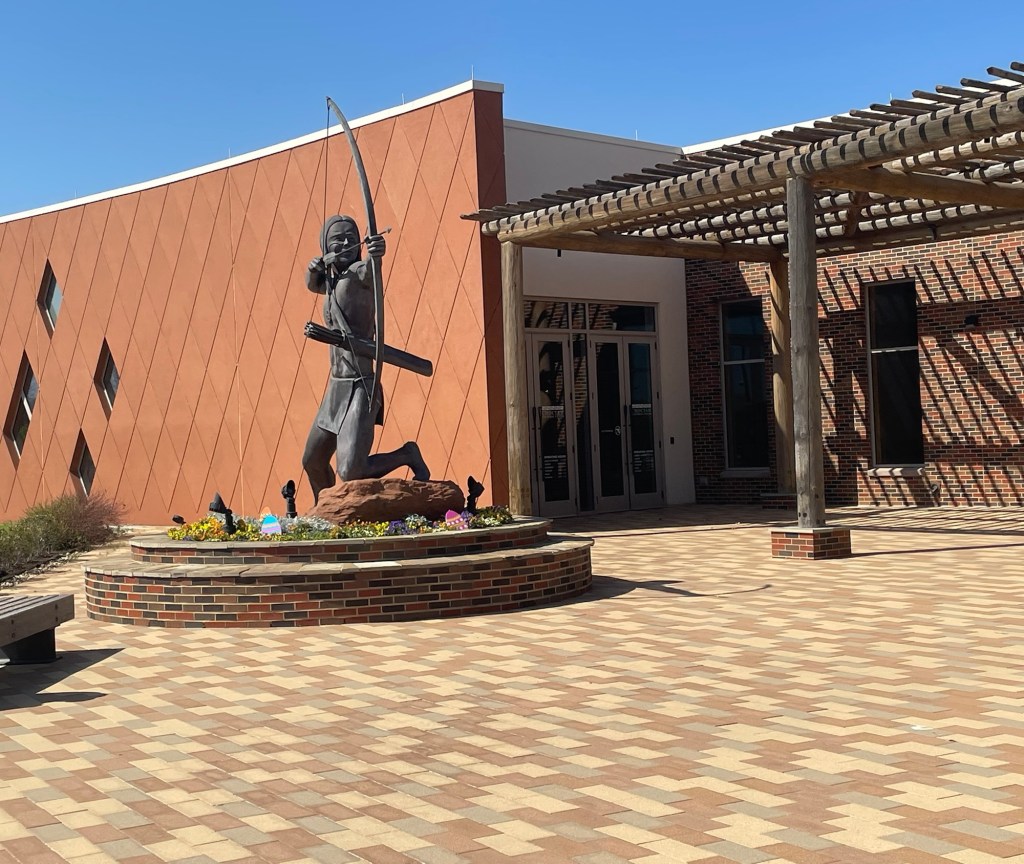
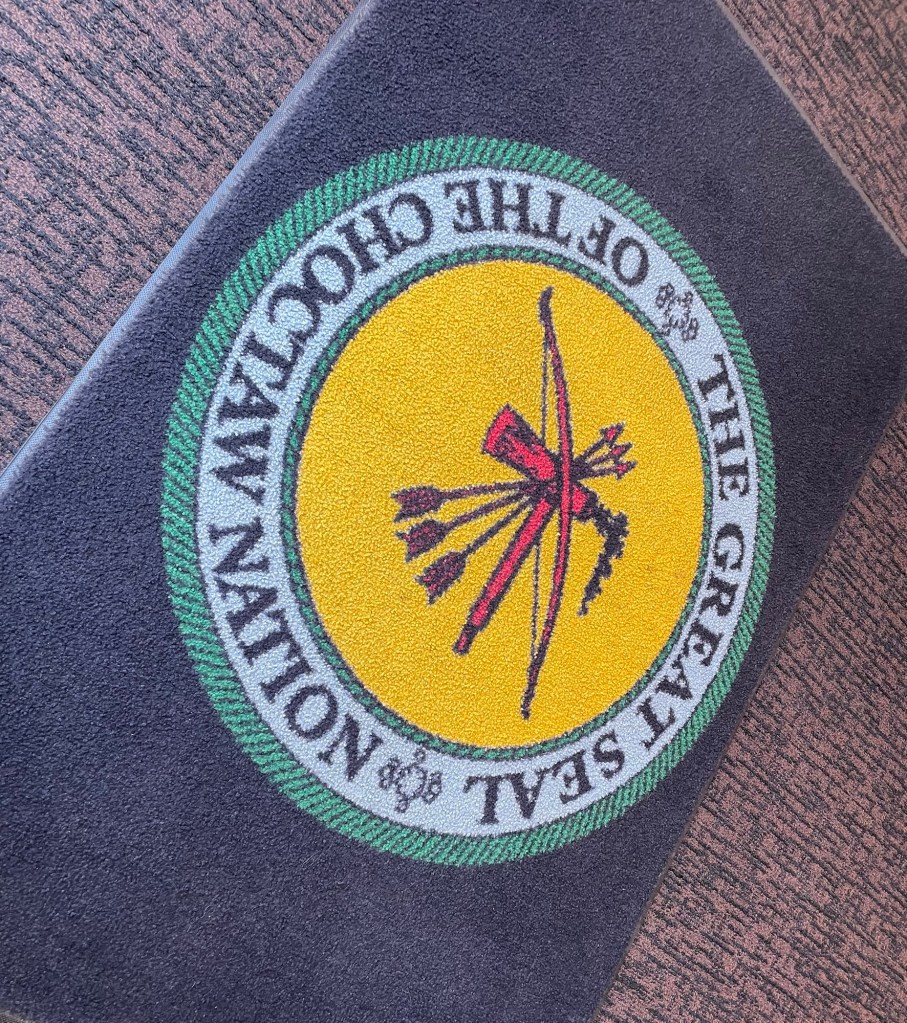
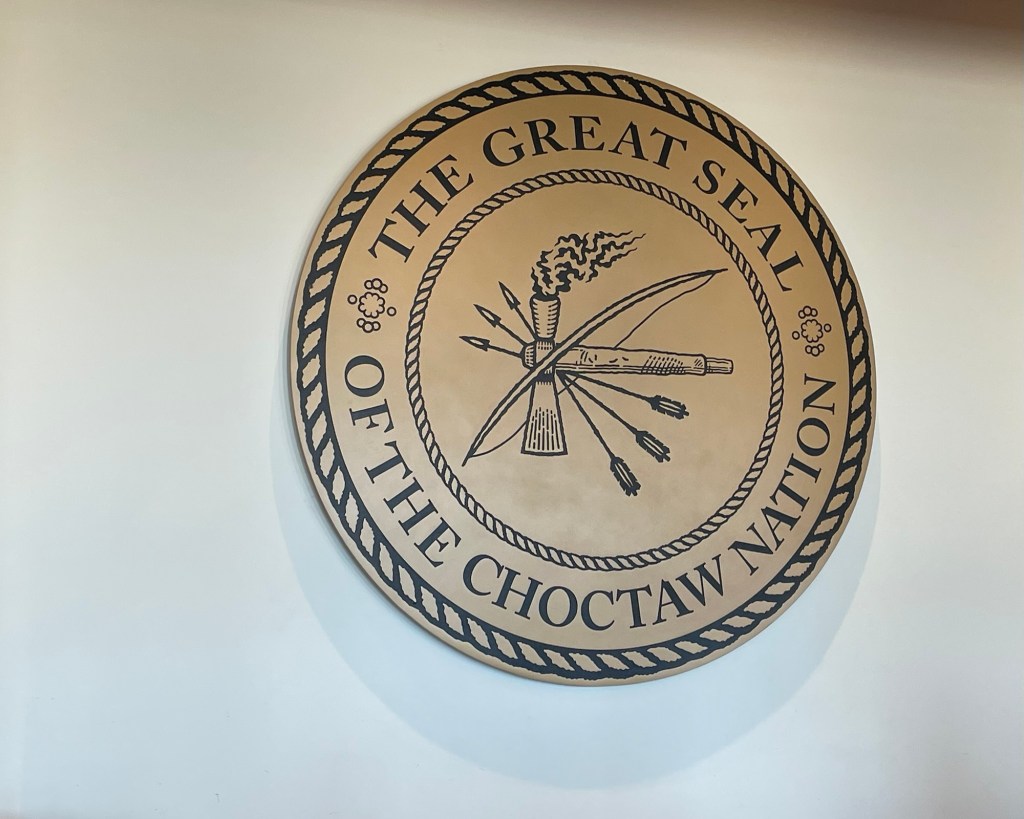
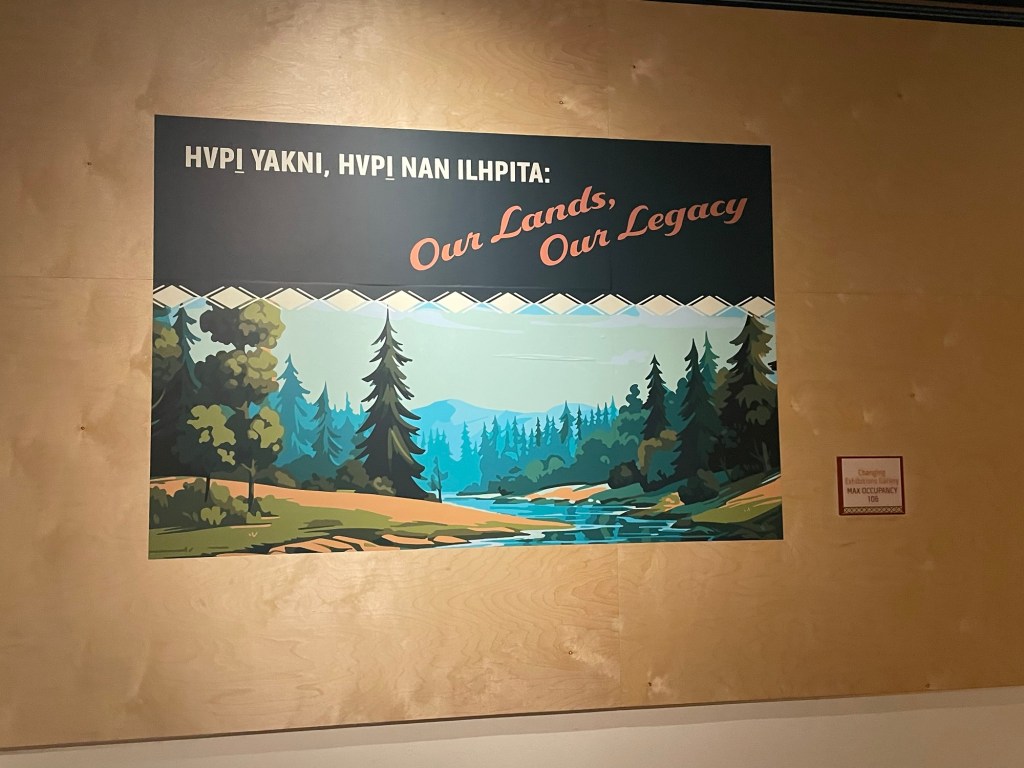
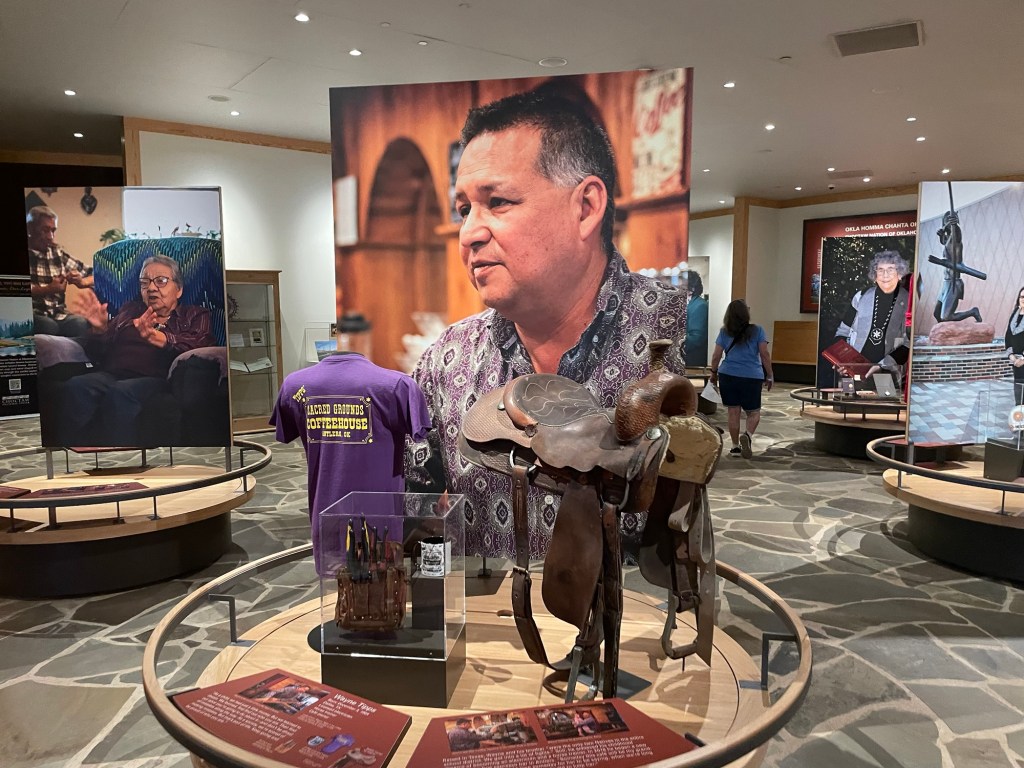
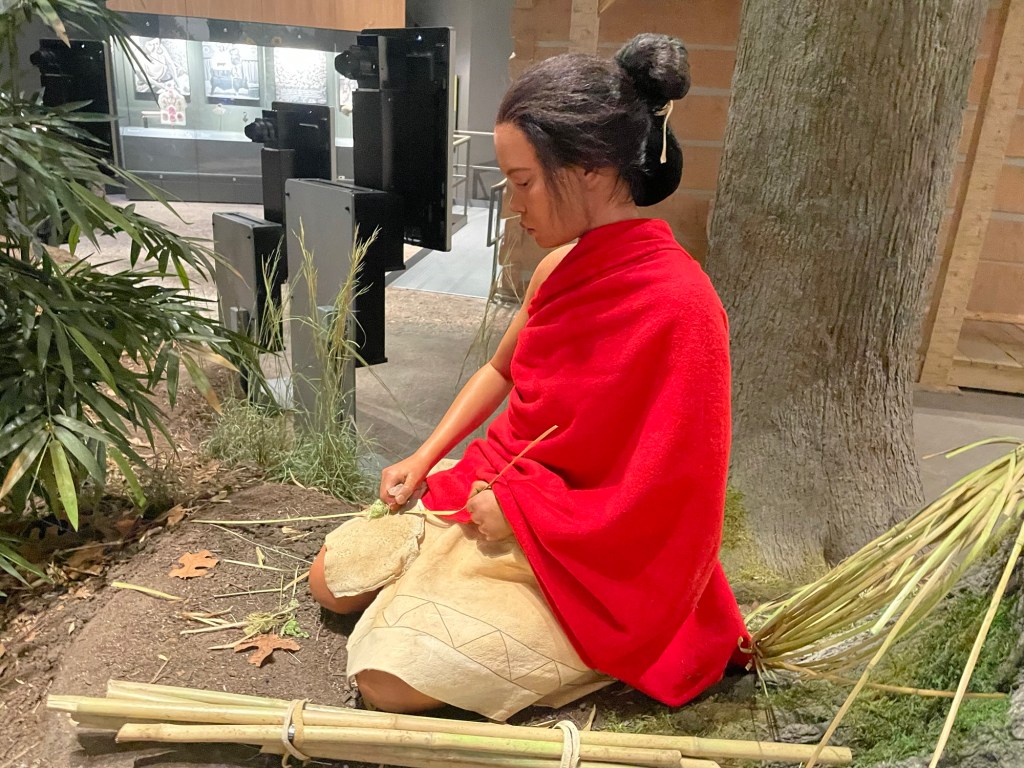
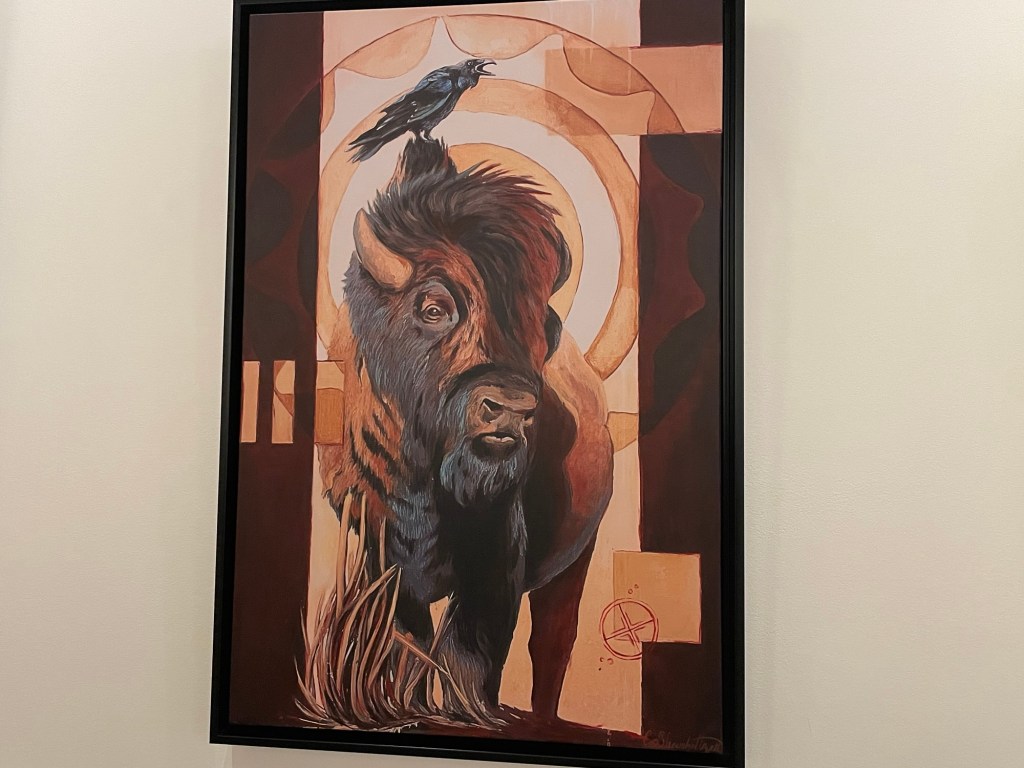
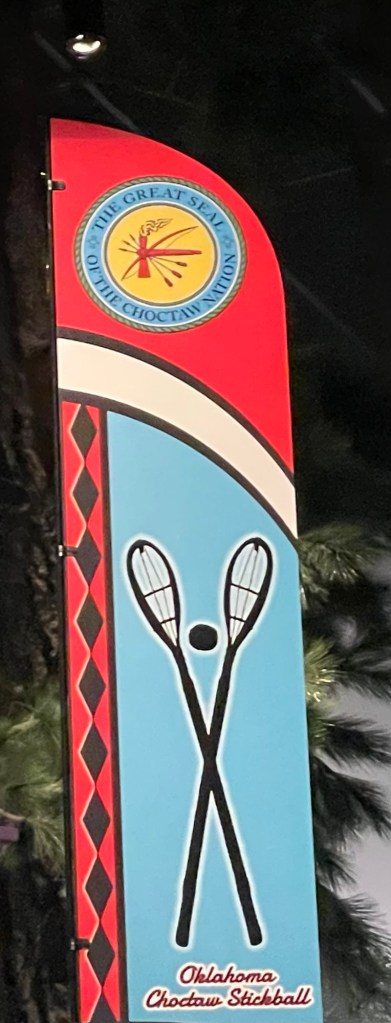
Take the Choctaw Indian nation in particular then as a teachable playback for this blog. For on our visit to the modernistic Choctaw Cultural Center in Durant, Oklahoma on day seven of our road trip, I of course took academic interest in key historic events concerning this Choctaw spanning several centuries of broken treaties, forced homeland movements and legal attempts to disband the Choctaw’s politically and socially as a united nation. Yet it was quite revealing that I also found a distinct emotional connection to colorfully designed artwork, symbolic emblems and banners along with some powerfully expressive human and animal figures representative of Choctaw culture. See examples of these images in my photo set below.
Looking more to the present, it’s clear to me that the Choctaw nation recovered from those tragedies by reestablishing full territory rights and now remain strong and resilient as a fully functioning and united self government for its living residents today. Thus let history be retold in our education system with the positive Choctaw experience in mind to inspire more respect for our Native American tribes.
After months of fighting to get the city council to put a stop sign on the corner of the dangerous intersection near his home, he simply did it himself. A first-rate, professional job that cost more than $1,000. As he was finishing the job at 1:30 am, he was arrested and charged with a felony.
A hundred years ago, the default was that pedestrians were in charge. Cars were guests, only going where they were invited. But the persistent productivity and cultural force of the automobile carried the day, and the default flipped. The roads must roll.
If it can be paved or straightened or sped up, it is. If the car wants it, the answer is “yes.”
80,000,000 people have died as a result of automobiles over time. (It’s harder to estimate how many lives were saved or enriched by this massive shift in the transport of food, people and resources.) A successful system can redraw our maps and our expectations.
When systems gain momentum like this, it’s because they create urgent and immediate value, enough to disrupt the status quo. And once the status quo has changed, the momentum becomes normal, the way things are, until persistent community action (or another, even more relentless system) changes the defaults.
The system doesn’t care about Joseph Brandlin’s kid. It cares about the flow and the status of those that maintain that flow.
Ironically, his arrest is almost certainly going to result in a stop sign being installed. Using one system (the media) to change another.
We’re all living through the biggest and fastest systemic shifts in a century, whether we want to or not. The internet, healthcare, the aging of populations and now, particularly, AI–they’re changing defaults. It’s possible (even likely) that individuals will go out in the middle of the night and seek to change something in their neck of the woods, but as we’ve seen with system change before, that’s not usually the reliable path to make a lasting impact.
Every system eventually acts as if it’s more important than the people it was built to serve. HAL isn’t going to open the pod bay door merely because you insist. But persistent systemic action often bends the system toward better. And better is up to us.
“The odds of winning the lottery are the same whether you buy a ticket or not.”
This seems nonsensical at first. Obviously, there are lottery winners. Therefore, the odds aren’t the same.
Except we’re not mathematicians doing a math problem (at least most of us). Odds are how we navigate the world. When they’re sufficiently low, the useful approach is to assume that they’re zero. Sort of how we deal with invisible signals: There’s sound in a very quiet room, but we can’t hear it. There’s light in a very dark room, but we can’t see it. These never go to zero, but we treat them as if they do.
The story of playing very long odds might give you hope or solace or energize you. That’s what they make movies about, after all. But in practice, you’re buying that story, not a useful chance of winning something.
Paul McGowan points out that the difference between a $500 stereo and a $5000 stereo is enormous. But the difference between the more expensive stereo’s sound and one costing $50,000 is vanishingly small… Soon it becomes a story, not a sound.
Buy the best story you can afford, with all the benefits it comes with. But don’t be confused by the odds or tiny differences. They’re probably zero.

 Login
Login