โŒ

Reading view

Early Shorts from the 2026 Oscarยฎ Best Director Nominees

Short of the Week was born in 2007, the heyday of the hipster—skinny jeans and band T-shirts were the uniform, complementing personalities defined not only by what you liked but, importantly, when you liked it.

And, if we’re being honest, short film fandom is kinda hipster. We like shorts because they can be scrappy, original, and risk-taking, but they are relatively obscure, so there is a certain flattery towards one’s discernment and taste when cultivating a deep short film knowledge. Also, of course, opportunities abound for smugness when talents break out since you knew about them before others did.

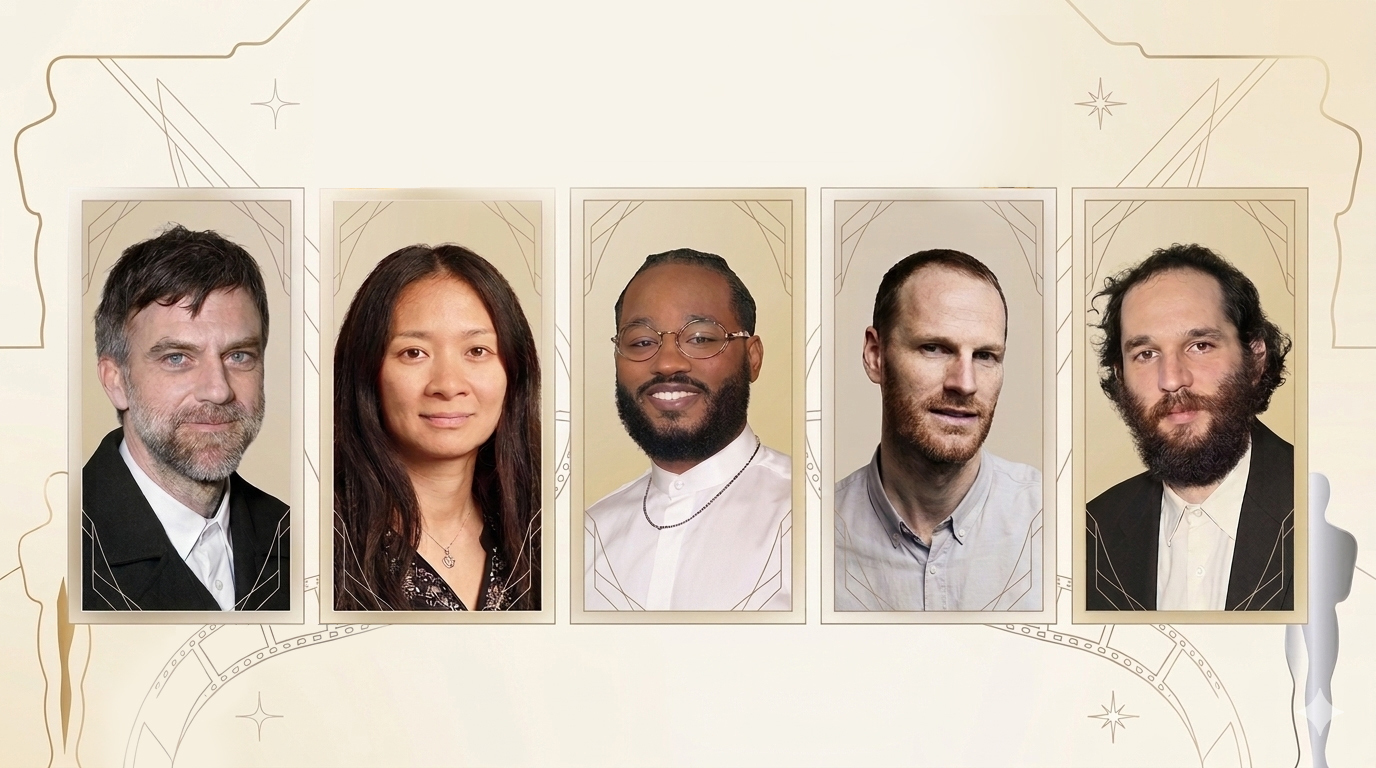
2000s fashion is making a comeback, and it’s interesting to see that the directors ascending Hollywood’s status ladder had their formative film experiences during this period. Four of the five nominees for Oscar® Best Director released their debut short film in the 2000s. This generation of filmmakers was the first to grow up in a digital, streaming era, and as we remarked three years ago in our retrospective on the DANIELS, now, for the first time, the most admired film talents in the world have easily accessible short films on the internet. 

So, as we pay attention to the current class of Oscar® nominees and wonder if Sam Davis or John Kelly can ascend to the level of globally respected auteur, it’s also fun to look at the short films of those who are currently the toast of the town—both for enjoyment, but also education, especially if you are an emerging talent who would like to see what it took for these artists to begin to make a name for themselves.

We’ve collected early shorts from the five nominees into a Shortverse collection, and they represent interesting and varied paths to their current success. More info below:
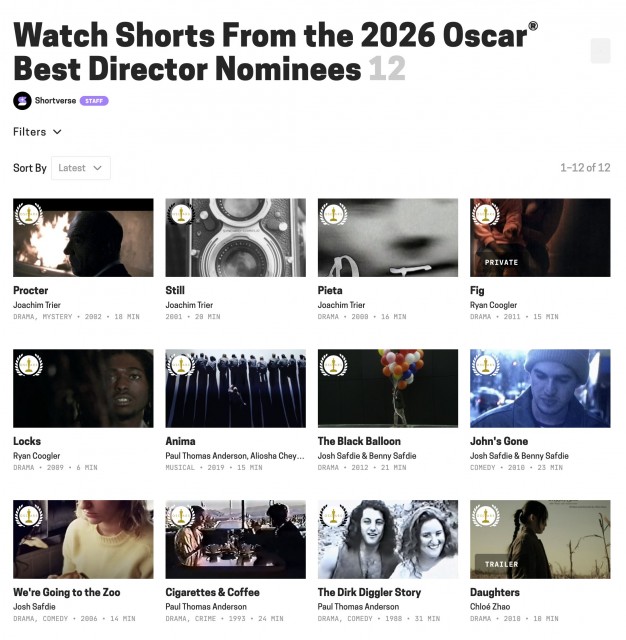
 

click to visit the collection on Shortverse

Click to visit the collection on Shortverse

Paul Thomas Anderson: The elder statesman of the class, The Dirk Diggler Story (1988) is pretty rough and not really at all similar to what, nine years later, would become Boogie Nights. But, it is a fascinating early artifact, and a testament to the longevity of creative ideas. Cigarettes & Coffee (1993), on the other hand, went to Sundance and aspects were almost directly adapted into the opening scene of the filmmaker’s debut feature, Hard Eight. As a bonus, we also have Anima (2018), a music/performance piece in collaboration with Thom Yorke that is on Netflix.

Ryan Coogler: The filmmaker’s two IMDb-listed USC film school shorts are included. Locks (2009) is available on Vimeo, and while modest, the 7min Tribeca-selected short is powerful, and predicts some of the themes later explored in the filmmaker’s Sundance breakthrough, Fruitvale Station. Fig (2011) was more acclaimed in its time, winning the HBO Short Film Competition at ABFF and the DGA Student Film Award, and it streams for free on Kanopy if you have a library card from a participating institution.

Josh Safdie: Safdie, along with his brother Benny, has a ludicrously long filmography stuffed with skits, experiments, short docs, and other visual artifacts. Diehard fans have been obsessive in collecting them all, but we’ll stick to three films for this collection. We’re Going to the Zoo (2006) is notable as the work where the director’s POV began to gel. In an interview with Le Cinema Club, he says, “It was THE moment when I figured out how to speak ‘film.’” John’s Gone (2010) is the film that immediately followed their breakout debut feature, Daddy Longlegs (2009), and played at Venice—something pretty rare for American directors. Benny’s performance in it is something of a prototype for the type of hustler eventually portrayed by Robert Pattinson, Adam Sandler, and Timotheé Chalamet in future features. Finally, we end with the brother’s Sundance and SXSW-winning homage to one of the most famous short films of all time, with 2012’s The Black Balloon.

Joachim Trier: Trier, like Spike Jonze before him, got into filmmaking through skateboarding videography before leaving Norway and attending film school in the UK. Courtesy of the NFTS, we have three of Trier’s student shorts, which also represent the beginning of his partnership with Eskil Vogt, his longtime co-writer. Pieta (1999) and Still (2001) are worth watching, but Procter (2002), made immediately upon graduation, is the essential one, as it represented the filmmaker’s continental breakthrough, winning a top prize at Edinburgh and being nominated for the European Film Award.

Chloe Zhao: The one hole in our collection today is Zhao, who does not have any of her four credited short films available to view in full. Information about them on the internet has largely been wiped—not on purpose, one assumes, but the filmmaker’s old website no longer works. We’ve included the film page for her NYU student short, Daughters (2010), for the sake of completeness, and there is a trailer for it, which evokes a strong Raise the Red Lantern vibe. It won Best Student Short Live Action 15 Minutes and Under at the 2010 Palm Springs Film Fest, and this Indiewire news piece is a fascinating time capsule. Written by Eugene Hernandez, who is now the Festival Director at Sundance, so many of these winners ended up being Short of the Week picks! But, I did not attend and have no memory of Zhao’s film. I think the only place to see her shorts now is in person at Clermont-Ferrand’s video library, something I might put on my to-do list for next year…
  •  

The Car that Came Back from the Sea

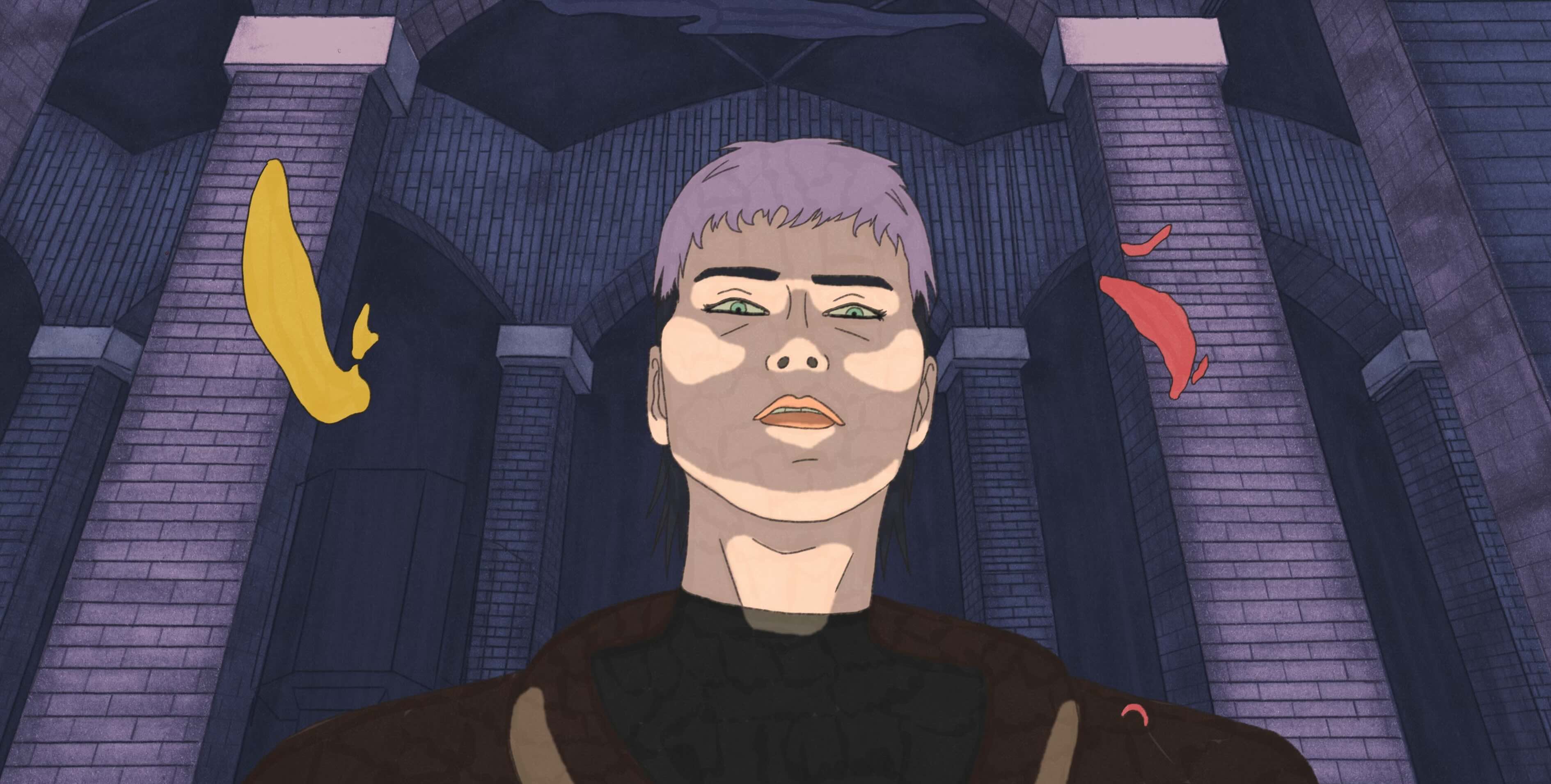
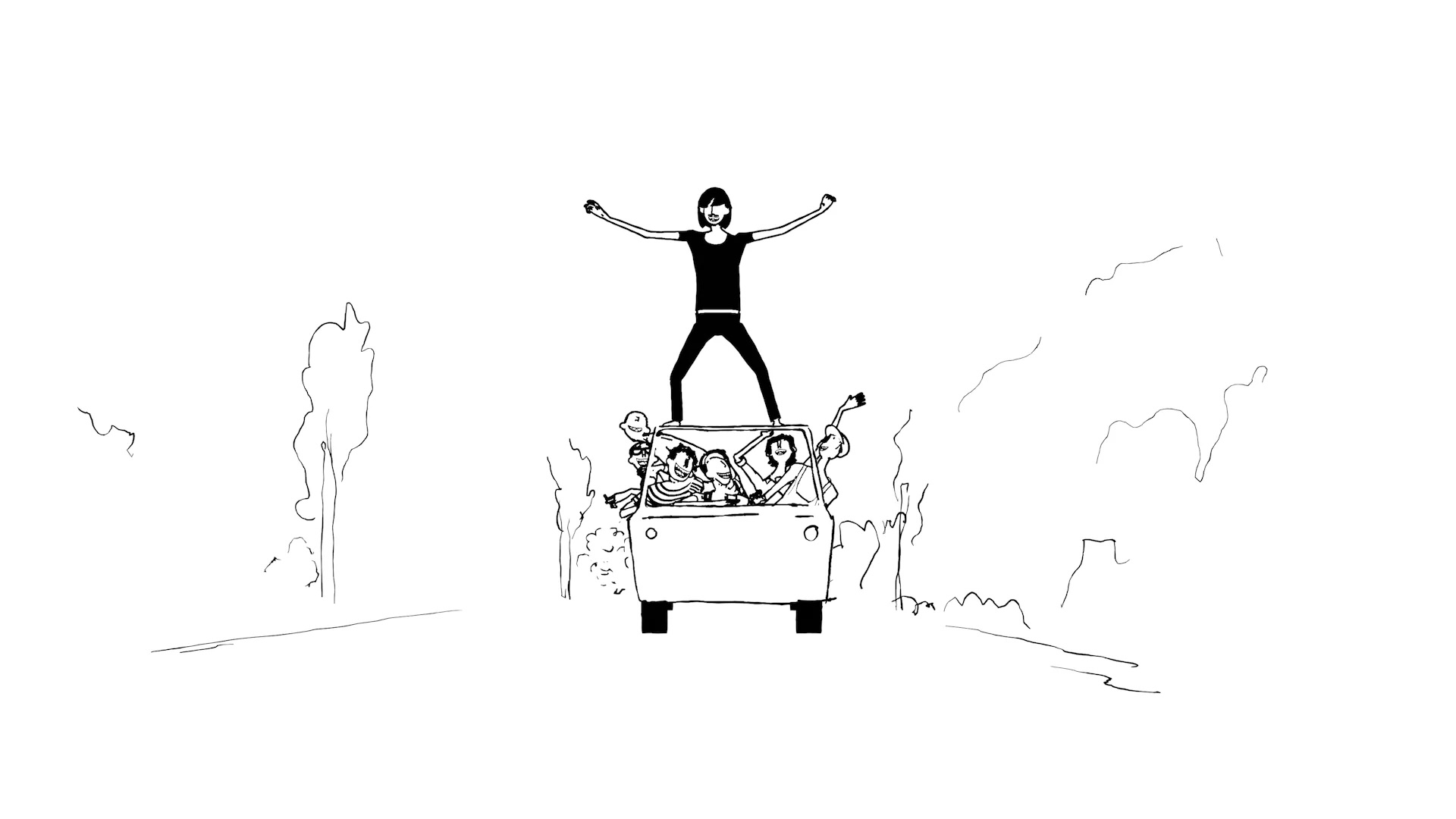
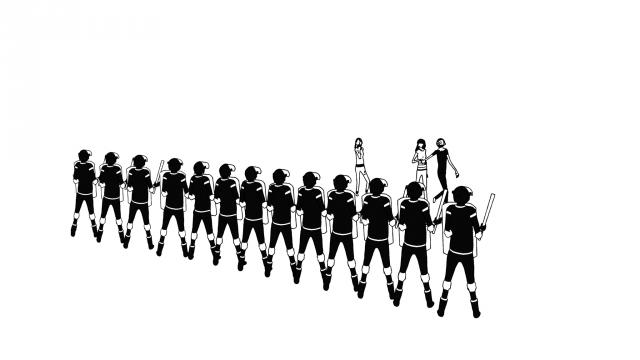
The insouciance of youth, set against the backdrop of a decaying communist Poland, provides a romantic backdrop for Jadwiga Kowalska to tell a lightly fictionalized version of her own family story in the Annecy jury-winner, The Car that Came Back From the Sea. Possessing a punkish energy and a strong soundtrack, the film is a triumph of tone, as the endearing antics of a group of young men, with their pure and simple desire to drive a piece of junk to the ocean, intersect with larger historical currents of political collapse and liberation.

It’s a vast canvas to explore, and perhaps counterintuitively, Kowalska approaches the film in a minimalist b&w line-drawing style. Animated minimalism can be a tricky proposition; it’s something we “admire” more frequently than we “love,” but Kowalska’s film is a fun approach— it’s actually 3D, and something about the lack of detail, the reliance on the main thrust of something, is fitting for the writing, which was created by combing through hours of interviews of her relatives, relating half-remembered stories and impressions.

When I asked my mother as a child why she left Poland, she always gave a very short answer: “There was simply nothing in Poland.”

When I asked my mother as a child why she left Poland, she always gave a very short answer: “There was simply nothing in Poland.”

Kowalska is Swiss, as is the film, and that proved challenging initially as the filmmaker relates in a Cartoon Brew interview, noting that, “…local funding institutions were not interested in a Polish film about migration,” while, conversely, Polish producers didn’t see what a Swiss 1st gen kid could say about the topic that was original or fresh. Kowalska concluded that in some ways, “it was a Polish film for the Swiss and a Swiss film for the Poles,” though I’d argue my affection for the film, and its success at festivals, which included an Oscar-qualifying win at Palm Springs in addition to its Annecy triumph, means that it is truly a film for everyone. While the details of 1981 Poland are fresh to me, youthful adventures, love, and revolution are universal.

  •  

Sister!

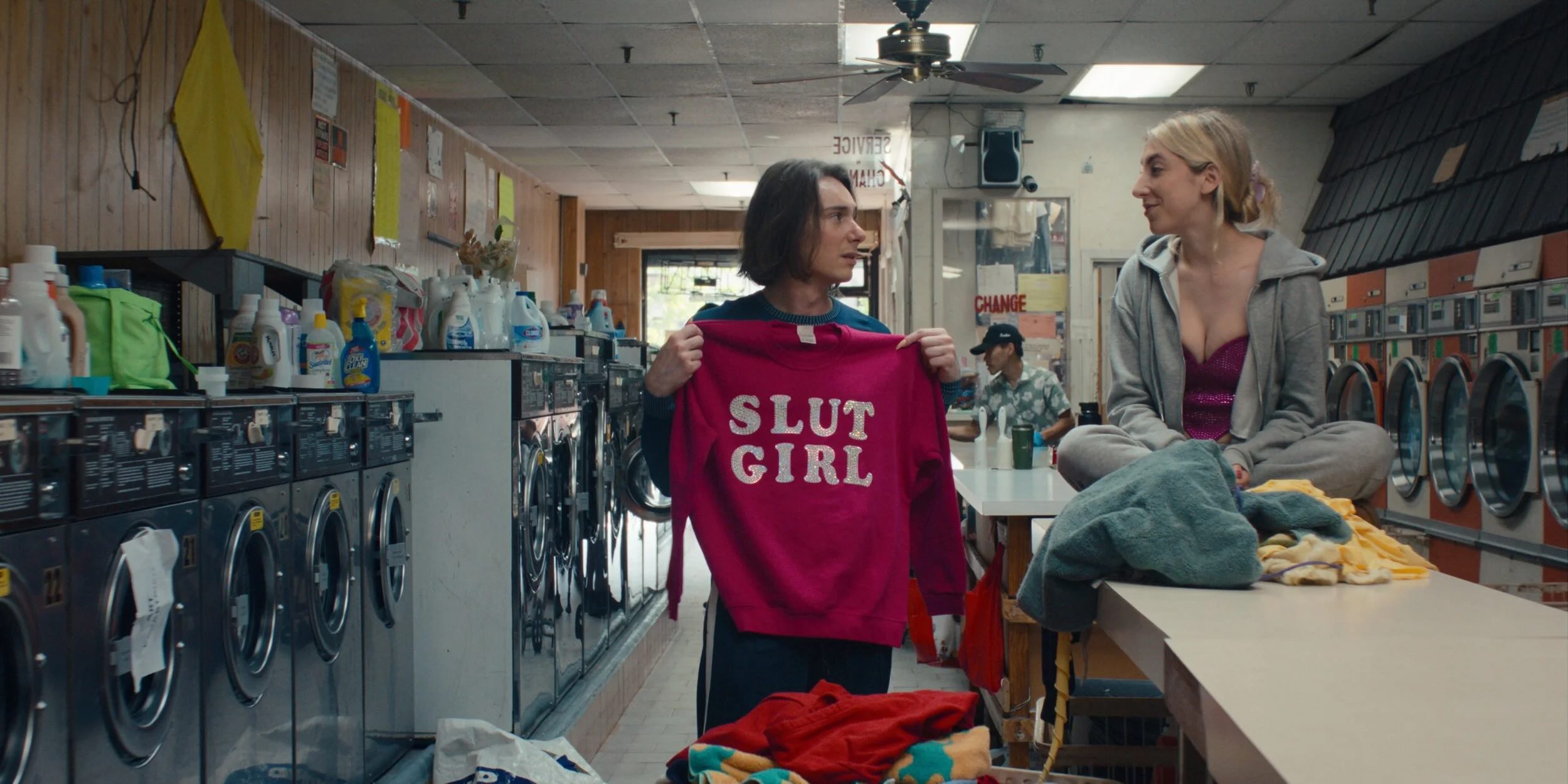
Stay with me, and by extension, with Sister!, a short film that I’ve come to adore, but which I recognize could be a hard sell for loyal S/W viewers. Not because of its lack of quality, of course, but because its sensibility is different in many ways from our typical featured short.

The story of a woman who pops in unexpectedly on her unsuspecting Brooklyn-based “sibling” (their moms supposedly share a sperm donor), Sister! is a fun, transgressive, and over-the-top queer comedy written by its stars, up-and-coming talents Julia Wendt and Tessa Belle, and is an unapologetic showcase for the duo’s comedic stylings.

So far so good, but, and perhaps I am projecting here, I was fairly resistant to the film early in my initial viewing. Partly, I recognize we’re chauvinistic towards directors, and this is, resolutely, a writer/performer film. We’ve sat through enough LA actor-driven web series to be trepidatious of this. Directed by John Onieal, notable as the creator of Grindr’s first scripted show, his direction is quite deft, but, between the film’s limited locations and the rapid pace of its joke delivery, the short presents more like a single-camera sitcom than an auteurist work. Onieal’s contributions are necessary but subtle, managing the reservoir of written comedy in a collaborative process that “involved a lot of riffing with each other, comedians, and department heads so to ensure that what we were making resonated,” and making sure the camera platformed the strengths of his stars.

Fortunately, Wendt and Belle deliver star turns. Part of the roughness of the early going is that Wendt is left to establish the initial tone by playing off of a deadpan Asha Ward, but the transfemme Wendt’s line delivery is very affected and can come off as stilted. However, like a stray note brought into harmony, Belle’s entrance into the film soon snaps the dynamic into place, and their chemistry is dynamic.

It’s also relentless. The pair’s comedy style, which is progressive, but playfully mocks the excesses and contradictions of Gen-Z wokeness in subject, is basically all-joke, all-the-time in practice. It’s frankly remarkable—the film has almost no standard exposition, no calm, sincere moments, it’s pretty much 13-minutes straight of jokes.

Naturally, your mileage may vary on the effectiveness of these—comedy is hard! But a ton of them land for me, and the great thing about a high-joke tempo is that if one falls flat, another is right on its heels. The production showed up to the shoot with a huge list of ALT jokes and planned for extensive space to improvise on set, so the team had a huge surplus of material in the edit to pick what was hitting the best, and it shows.

Even if the effectiveness of the comedy is questionable for you, I argue that it is deserving of admiration. Comedy is criminally underrepresented in shorts, and especially this sort of comedy, which is not ironic, surreal, or absurdist, but focused on jokes. Wendt and Belle blasting jokes to set up a joke which delivers a joke punchline is the closest I’ve seen to a short reaching something like classic 30 Rock, which I perceive as a gold standard. That the film also has heart is almost a miracle. In the midst of their bludgeoning, escalatingly hysterical final act, the film’s producer, Jeremy Truong, challenged the production to “find moments of emotional truth,” and while the “sisters’” ultimate catharsis and bonding is telegraphed, it genuinely lands.

A feature at last year’s Tribeca Festival, we’re pleased to present the online premiere of Sister! Take advantage of this opportunity to watch a very funny short, which we expect to be a launchpad for this impressive team, especially Wendt and Belle. 

  •  

Margarethe 89

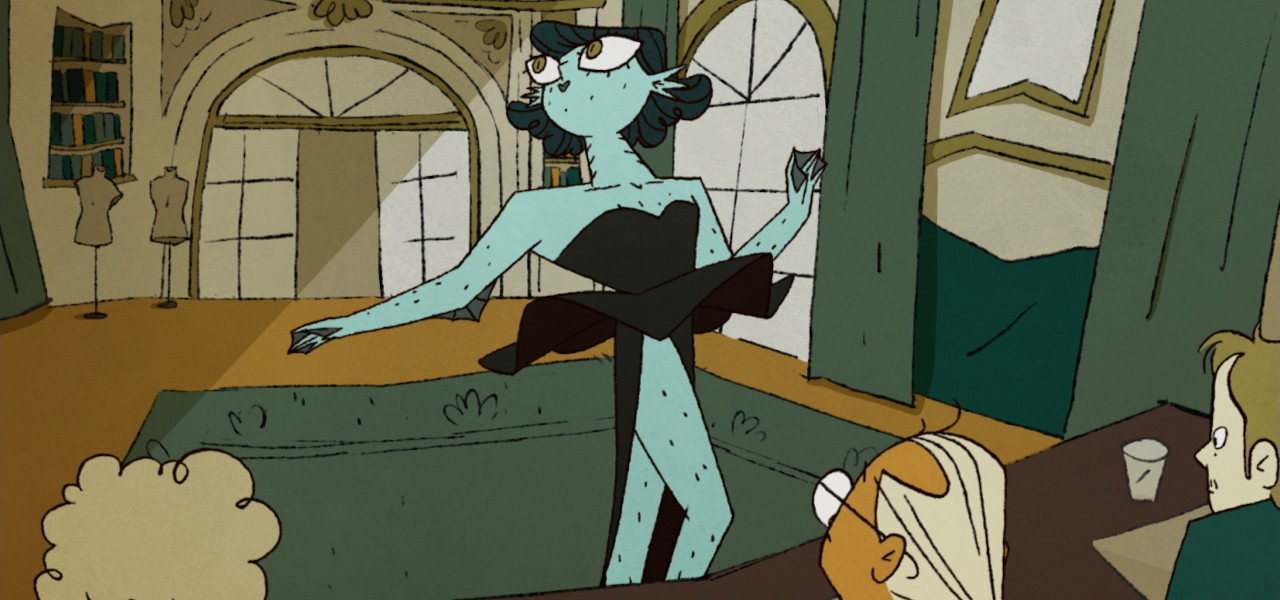
Margarethe 89 was a bolt out of the blue during the 2023 festival season. Its mature spy-thriller plot line and grounded, historical realism felt like a novel pairing for a stylish, adult-focused animation, making the film an instant splash at spots like Director’s Fortnight, Annecy, and Curtas Vila do Conde. Animation is often pigeon-holed as a medium for the fantastic—a way to represent the unreal via strange worlds and creatures or represent interiority through dreams and visions, but Margarethe 89 instead utilizes the control inherent in animation to recreate for viewers the stifling surveillance state of the East German Stasi, to wonderfully paranoid and claustrophobic effect.

Directed by Lucas Malbrun, based on a script co-written with his frequent collaborator, Marie Larrivé, the filmmaker was born in Munich in 1990, and grew up in a reunited Germany where “strange revelations about this vanished country were omnipresent.” Inspired by the regime’s tactic of “Zersetzung” or “dissolution,” he sought to transpose the story of Gretchen from Goethe’s Faust to a new context. In an interview with Vimeo Staff Picks for the short’s online premiere, he notes that, “Gretchen’s love for Faust is based on a misunderstanding: he comes across as a young and righteous man, but is in fact an old man in pact with the devil…exploring the figure of the manipulative male, himself under the influence of third party…was compelling to me.”

Heinrich is that manipulative male, but Malbrun sees him as a victim of the regime, too. The film intriguingly begins on a surreal note with a parade where, instead of figures from pop culture – Snoopy, or Mickey, and the like – Heinrich witnesses a giant floating bust of Karl Marx. Malbrun is emphasizing the totalizing nature of ideology and how indoctrination begins very young. The film’s visual look reinforces this concept of arrested development, deploying bright colors in the images, added to the film by the use of normal, school-standard felt-tip pens.

Revolution is currently in the air in our media, as the best TV show of recent memory served as an epic chronicle of a nascent resistance movement, while the recently crowned Best Picture winner is about what we build once revolutionary fires burn out. The tragedy of Margarethe 89 is a nice complement to this moment, and shows how animation can be a strength within mainstream genres and storytelling modes. I’ve often noted that period pieces, despite their popularity in features and television, are tough for short films to execute. Margarethe 89, which evokes the popular German series Deutschland 83 via its title, feeds audience appetites for this sort of mainstream genre, with the level of sophistication and style they are accustomed to. It’s another big swing for the French production company, Eddy, which, via pieces like this, Larrivé and Malbrun’s prior film Noir-Soleil, or 2018 S/W selection, Le Mans 1955, is leading the way in showing how animation can tackle genres associated with live-action in sober, but artistically progressive fashion.

  •  

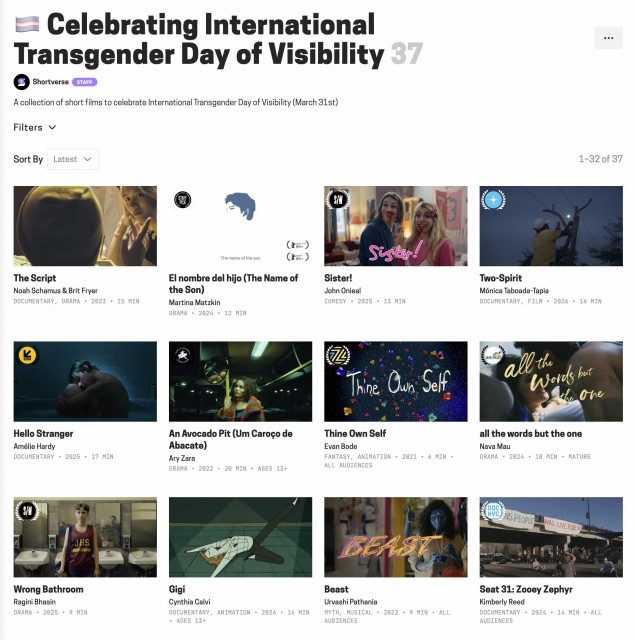
🏳๏ธโ€โšง๏ธ Celebrating International Transgender Day of Visibility

Trans films are no longer niche. Looking at our collection of tagged films on Shortverse, we see dozens of works that have been major awards contenders or are streaming on the world’s biggest services. There isn’t a need for any special treatment—these are amazing works that compete on equal terms with their peers in making us laugh, or think, or cry. 

They do serve an important additional function, however, illuminating a population and a way of life that feels very foreign to many, thus fulfilling the spirit of a famous Roger Ebert quote describing cinema as “a machine that generates empathy.” Recent political trends in America and elsewhere have raised concerns that the culture’s recent progress on trans-acceptance will be rolled back, and we know there is real anxiety and fear about this. 

March 31st is “Transgender Day of Visibility,” a relatively recent demarcation, but one that resonates with values we hold at Short of the Week around showcasing perspectives outside of the ordinary. Considering the larger context, it feels more urgent than ever. We’re happy to mark the occasion with this collection of short films our curatorial team has put together, a mix of recent films and old favorites. 

🏳️‍⚧️ Celebrating International Transgender Day of Visibility

Trans Visibility

Click on Image to view the Collection on Shortverse.

  •  
โŒ