Conversations within the film industry frequently invoke the language of community and ecosystem. These terms suggest a dynamic network of artists, institutions, and intermediaries working in dialogue with one another. Yet when examined more closely, the reality can feel considerably more fragmented. In our experience as online programmers, the short-film landscape in which we work often operates in distinct silos. Festivals provide spaces where filmmakers meet other filmmakers, exchange ideas, and build relationships. But what of the journalists, distributors, and programmers who also shape the industry? Outside of the occasional panel discussion, these figures can feel noticeably less present – or at least less accessible – within the same spaces.
If such divisions exist, the question becomes: who might address them? What would it look like if these different roles within the industry were brought into closer and more sustained dialogue? And what might that mean for the broader health of the film ecosystem?
One organisation attempting to explore these questions is the Ouray International Film Festival. Building on the intimate, community-focused ethos that has come to define the festival, its organisers have launched the Ouray Film Sabbatical – an initiative designed to bring together filmmakers, critics, programmers, and other industry participants in a shared space of reflection and exchange. Conceived as an extension of the festival’s broader values, the sabbatical seeks to foster a slower, more deliberate environment for conversation: one in which creative practice, critical thought, and professional development can intersect.
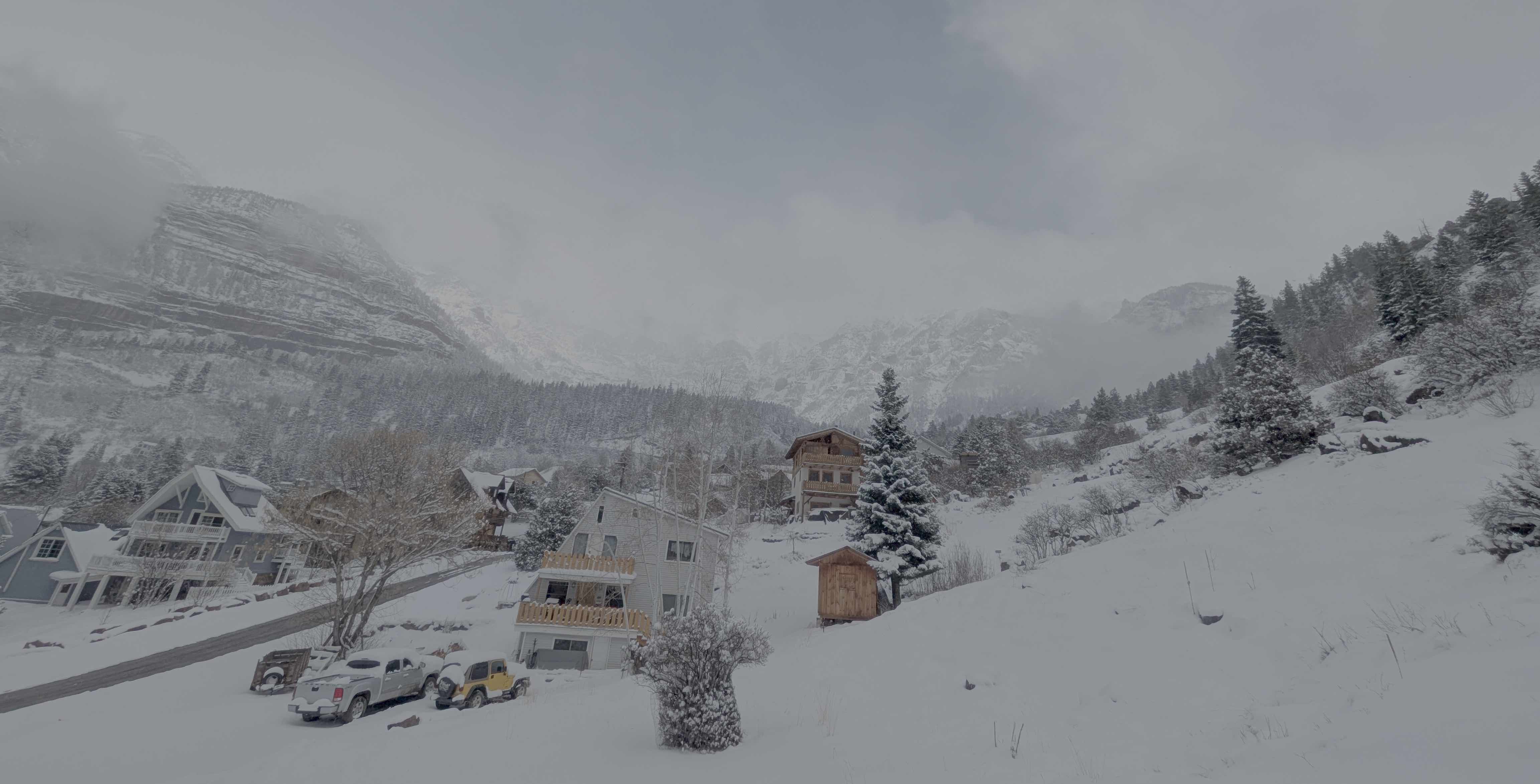
The first edition of the sabbatical took place in the mountain town of Ouray in early March 2026. Speaking with the organisers, facilitators, and fellows who participated, it becomes clear that the initiative is motivated by a broader concern about the structural pressures currently shaping the film industry – and by a desire to imagine alternative ways of relating to both the work and the people who make it.
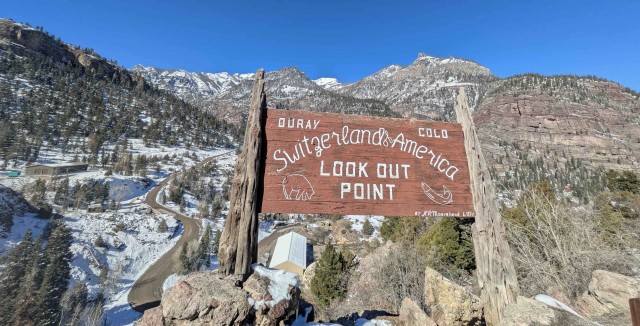
Filmmakers, film writers and film programmers gathered in the town of Ouray, for the first ever Ouray Film Sabbatical.
Rethinking Roles Within the Film Ecosystem
A central idea behind the sabbatical is the belief that the industry often undervalues the interconnected nature of its different roles. Jake Abell, co-founder of the Ouray International Film Festival and one of the programme’s hosts, argues that the separation between creative and critical labour is frequently taken for granted. “We mistakenly think that’s inevitable,” he explains. For Abell and the sabbatical team, an important starting point was the recognition that the various participants who shape the life of a film – not only those who make it, but also those who write about, programme, and circulate it – contribute meaningfully to the cultural conversation surrounding cinema.
This perspective was echoed by fellow sabbatical host Ben Wiessner – a producer we’ve featured regularly on Short of the Week and co-creator of the Short to Feature lab with Jim Cummings – who describes early conversations about how the initiative might encourage participants to begin “having one conversation about the ecosystem with multiple different stakeholders.” In other words, the goal was not simply to gather people from different professional backgrounds, but to place them in a setting where those distinctions could temporarily soften, allowing participants to engage with one another more openly.
“What are we good at? What do we not see? What are we hearing people need?”
For the organisers behind the Sabbatical, it was clear from the outset that they wanted to develop something within the educational sphere that might help reimagine what a filmmaking community could look like. However, the project also emerged from a broader reflection on what contemporary filmmakers and industry workers appear to need. As Wiessner puts it, the organisers asked themselves a series of guiding questions: “What are we good at? What do we not see? What are we hearing people need?” These questions ultimately shaped the ethos of the sabbatical.
Among the inspirations behind the initiative were filmmaking duo the Daniels, long associated with a collaborative ethos that emphasises mutual support within creative communities. Reflecting on their influence, Wiessner notes that their example helped crystallise a key principle for the programme: that those who gain experience within the industry have a responsibility to “send the ladder back down” to others coming up behind them.
The organisers were also conscious of the wider social and political context in which cultural work now takes place. Facilitator Dr. Sabeen Ahmed emphasises that one of the sabbatical’s aims was to create an environment where participants felt “safe, cared for, and genuinely seen – not simply as filmmakers or industry members, but as creatives and storytellers navigating a ruthlessly atomized, brutally capitalist, and deeply alienating world.” Within such a context, Ahmed suggests, the opportunity to encounter others with “curiosity, generosity, and a sense of shared purpose,” can itself become a meaningful intervention.
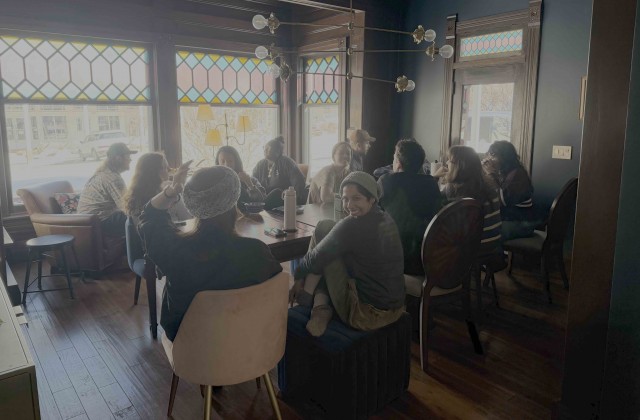
Hosts, facilitators & fellows gather at the table of the sabbatical house in Ouray. Photo by festival co-founder and sabbatical host Jared LaCroix
Rest as a Creative Resource
Underlying the initiative is a simple but often overlooked premise: that film professionals require not only opportunity and visibility, but also community, support, and rest in order to sustain meaningful creative work. Of these three principles, it was the final one – rest – that the organisers ultimately felt was most urgently needed.
“Nobody’s talking about rest, apart from as a cry for help,” Abell observes. In response, the sabbatical deliberately resists the productivity-driven logic that often governs the film industry. Rather than prioritising measurable output or project development, the programme encourages participants to step away from the constant momentum of festival submissions, networking obligations, and production timelines.
Filmmaker and attendee Hannah Schierbeek echoes this sentiment, noting that “rest and reflection are essential for artists.” While sabbatical fellow and S/W alum Kayla Abuda Galang praised the initiative for providing “moments to step back, listen, laugh, and simply be.” She added that the space carried a lot of “heart and humanity”- qualities that can easily be lost amid “the grind and endless strategic planning required to get your stuff made.”
In practice, this philosophy shapes the rhythm of the sabbatical itself. Time in Ouray is structured around slower activities: visiting the local hot springs, speaking with students at the town’s school, walking through the surrounding landscape, or engaging in small creative exercises.
“Permission to make mistakes and not take a creative task too seriously helps you get out of your head”
The latter was something facilitator and filmmaker Anna Baumgarten felt particularly strongly about, seeing tactile crafts as an important reminder of “how important it is to play.” In an industry so often governed by deadlines and pressure, Baumgarten suggests that the freedom to “not take a creative task too seriously helps you get out of your head.” As she notes, film projects can take years to complete, so being able to create something in a few hours – and experience a sense of creative accomplishment – can be genuinely rejuvenating.
In many ways, the most productive moments of the sabbatical occur precisely when productivity is not the primary goal. Conversations about work and the state of the industry often emerge organically – during a walk through the mountains or while sitting together making bead lizards in the sabbatical house. These low-pressure environments allow participants to articulate doubts, uncertainties, and aspirations that can be difficult to voice in more professional contexts, making these conversations not only possible, but productive.
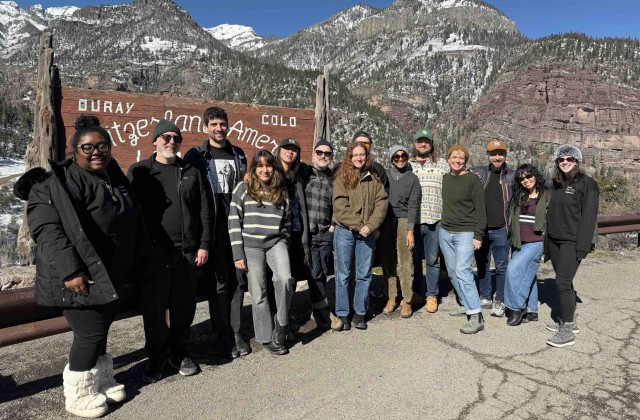
Hosts, facilitators & fellows pose in front of the ‘Switzerland of America’ lookout sign in Ouray. Photo by festival co-founder and sabbatical host Jared LaCroix
A Different Kind of Industry Gathering
Most professional gatherings in the film world are oriented toward a specific objective – pitching a project, developing a feature, or networking for career advancement. The Ouray Film Sabbatical, however, takes a different approach. Rather than centring on productivity, it provides both physical and mental space to reflect and recharge between projects. The hope behind this alternative model is twofold: to help prevent burnout and to foster open, honest conversations about the industry – how it can thrive, and how we can take care of the people who make it run.
Filmmaker Sam Osborn, who attended the programme with his creative partner Alejandra Vasquez, notes that the sabbatical differs significantly from typical industry environments. “We didn’t each go into the sabbatical with a film to workshop,” he explains. In contrast to the atmosphere on set or at festivals – where professionals often feel pressure to project competence and confidence – the residential format allowed participants to step away from what he describes as the “self-mythologizing” that can accompany creative careers.
Within this setting, Osborn says participants could “set aside those worries and feel free to ask dumb questions, talk about day jobs, or even just spend an entire day not talking about movies at all.” For him, some of the most meaningful conversations that took place were ones he had not previously allowed himself to have.
It’s this rarity of a retreat-based model that makes the Ouray Film Sabbatical stand out. Facilitator Baumgarten points out that spaces like this are few and far between – but precisely because of that, they are vital. She highlights the “expansive conversations and creative problem-solving” that such an environment provokes, describing them as essential not only for the attendees themselves but for the future of the film industry and the “dynamic conversations” surrounding it.
“Spaces to break down the silos between different practitioners in the industry must urgently continue to be nurtured!”
Another key element of the sabbatical is its multidisciplinary approach. Bringing together professionals from across the industry in one space for four days encourages participants to reconsider the boundaries between their respective roles. Sabbatical fellow Elizabeth Rao notes that these distinctions are often more artificial than they appear, and that spaces which “break down the silos” of the industry must “urgently continue to be nurtured”.
For many of the sabbatical’s first fellows, the sense of community that emerges from this format is particularly significant. Filmmaker Hannah Schierbeek describes the experience as a reminder that moments of uncertainty within creative careers – which can often “feel isolating” – are widely shared, prompting an important reflection: “we are not alone”.
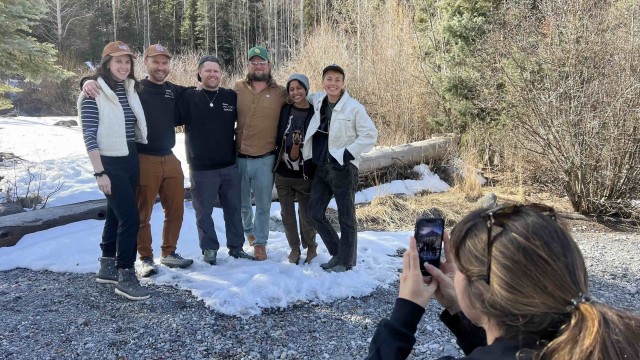
The hosts & facilitators of the Ouray Film Sabbatical gather for a picture in the snowy landscapes surrounding town. Photo by Kayla Abuda Galang
Small Experiments, Larger Possibilities
Following a series of crises in recent years, the film industry continues to exist in a state of flux, with debates about how to sustain and reshape it showing little sign of slowing. Many of the proposed solutions emphasise the need for change at every level of the ecosystem, which is precisely why initiatives like the Ouray Film Sabbatical feel increasingly significant. The filmmakers and practitioners who take part are not yet at the peak of their careers, and so the conversations and values developed in spaces like this have the potential to travel with them – informing their work and, in time, being passed on to others throughout their professional lives. Of course, Ouray is a small town and the sabbatical operates with limited resources, which naturally places limits on what it can achieve on its own.
For that reason, the organisers hope the model itself might prove influential. Abell openly describes the decision to launch the initiative as a “wager”, acknowledging the risks involved. At the same time, he believes that other “festivals, organisations, labs, [and] similar organisations” could adopt a comparable approach – bringing people together across professional boundaries as a way to foster conversation and help move the industry in a healthier direction. Abell also remains optimistic about the sabbatical’s own future, expressing excitement about welcoming more industry professionals to Ouray while also looking to “sustain the relationships built over this initial gathering”.
“More opportunities is not something solved by just money”
For fellow organiser Wiessner, the initiative also reflects a broader belief that expanding opportunities in the film industry is not simply a matter of funding. As he puts it, “more opportunities is not something solved by just money.” Instead, Wiessner argues that it is possible to “create a sense of abundance from very little” – provided that those who have already progressed within the industry recognise a responsibility to support those coming up behind them. His suggestion is to “be demanding” of those who have climbed the ladder, ensuring they actively help foster the next generation of filmmakers. It is a perspective that resonates strongly with us at Short of the Week, where we not only acknowledge our alumni as part of our continued success, but credit them with making the platform possible in the first place.
Ultimately, spaces like the Ouray Film Sabbatical matter because they offer something many of us risk losing when we become absorbed in our work: a reminder of the importance of people. Spending time with others who care deeply about filmmaking – and who are willing to speak honestly about the challenges of sustaining that passion – can itself be restorative. If the film industry often describes itself as an ecosystem, initiatives like this suggest that maintaining its health may require more than simply producing new work. It may also require cultivating the conditions in which the people behind that work can connect, reflect, and occasionally pause long enough to rediscover why they fell in love with filmmaking in the first place.
***
Submissions for the 2027 Ouray Film Sabbatical will open later in 2026, if you want to submit your film to the Ouray International Film Festival you have until March 21st.

 Login
Login