
❌

Normal view

  • βœ‡semi-rad.com
  • A Regular Person’s Guide To Surviving An Ultramarathon
    By the time I toed the starting line of my last trail race, I should have run about 500 miles over the course of the past 16 weeks—if I were following one of several online training plans created by respected running coaches.  I had run about 320 miles. At dinner the previous evening, my sister-in-law had asked if I felt “ready” for the race, and I laughed, then sighed. I mean, kind of?  I wasn’t really “toeing the starting line”—I had tried
     

A Regular Person’s Guide To Surviving An Ultramarathon

8 May 2025 at 11:00

Death Before DNF shirt

By the time I toed the starting line of my last trail race, I should have run about 500 miles over the course of the past 16 weeks—if I were following one of several online training plans created by respected running coaches. 

I had run about 320 miles. At dinner the previous evening, my sister-in-law had asked if I felt “ready” for the race, and I laughed, then sighed. I mean, kind of? 

I wasn’t really “toeing the starting line”—I had tried my best to position myself as close to the exact middle of the pack of runners anxiously waiting in the darkness to run through the starting arch, headlamps bobbing. A few seconds before, my friend Majell had said, “Let’s have a day, “ before he hustled to the front of the pack to start. That, to me, sounded like a reasonable goal. 

Majell, who would place second in the race, was thinking about a much different type of day. My goals were simple: Don’t DNF, and … actually, just the one goal, don’t DNF. Maybe also don’t get injured. 

Of course we all want to do our best on the day of a race—that’s what we had in mind when we signed up, right? Ideal Me would have an Ideal Race, preferably with the Ideal Amount of Sleep the night before.

Sounds simple. But that would also entail an Ideal Training Period before the race, and I don’t know if that ever happens for anyone, even professional athletes, and certainly not for me, a dad of a toddler who has brought at least 400 different viruses into our home during the 17 months he has attended day care. 

If ultramarathon runners exist on a sort of spectrum, with one side being “Winning is everything” on one side and “Just happy to be out here” on the other end, I’m pretty near one end of it these days:

spectrum of "winning is everything" -> "just happy to be out here"

I’m not a coach, or a doctor, or an athletic trainer, or even a fast runner. But I did survive that last 50K trail race, and a 50K trail race last September, and another 50K trail race and a 100K trail race in 2023, all since our little guy was born (and three of those since he started going to day care). I thought I might share a few things that have worked for me (and by “worked,” I mean that they got me across the finish line). 

disclaimer: This is not advice


A FEW CAVEATS: 

None of these races was my first ultramarathon
These past four races were my 13th, 14th, 15th, and 16th ultramarathon races. I’d run 4 50Ks, 3 50-mile races, 2 100K races, 3 100-mile races, as well as a bunch of self-supported ultra-length trail runs. 

I live near some very accessible steep terrain
I don’t have a mountain literally in my backyard, but two miles from my front door, I can chug up about 2,000 vertical feet on a trail, which is very helpful in training for steep ultramarathons

I don’t get injured very seriously very often
Luck? Not running very fast? Excessive coffee consumption somehow helps? No idea

So then: 

SOME THINGS THAT HAVE WORKED FOR ME DURING TRAINING:


I focus on weekly mileage as opposed to a specific day-by-day program
Again, I am not a coach or a professional, but I am BUSY (just like you). Things are never the same in my life week-to-week, and sticking to a specific running program equals more stress for me. So instead of looking at a schedule and figuring out when and where I’m going to do the assigned/recommended workouts, I have a weekly number in mind—usually 30 miles per week, with (ideally) 5,000 feet of elevation gain. If the week kind of goes to hell, I can make up a little bit of it with longer runs on the weekend, or if I know it’s going to be a tough week to schedule runs, I’ll try to run Jay to day care with our Chariot/jogging stroller a couple times (it’s about 3 miles round-trip). Do I hit that 30-mile goal every week? I don’t. I get close a lot, and I don’t know if my body knows the difference between a 27.5-mile week and a 30-mile week. 

“Loose change adds up”
This is one of my favorite adages from my pal Jon Acuff’s books, and it’s very complementary to my emphasis on a weekly goal over a daily schedule. Got time for an extra half-mile today? Might as well—it all goes in the bank of weekly mileage. This is also a justification for my “parking lot laps” habit: If I’m getting close to home or the trailhead and my watch says I’m at 5.8 miles or 6.7 miles, I’ll run a few more blocks and end on a nice round number like 6.0 miles or 7.0 miles, and “bank” that extra .2 or .3 miles. (I feel compelled to once again state that I am not a coach, and this practice is not informed by any scientific data or study—it’s just one weird person running.)

Other exercise counts too
Because the races I sign up for tend to be steep, with lots of climbing and descending, I know I’ll be doing a chunk of walking during the race. So I try to make myself walk or bike whenever I can. I really don’t enjoy parking cars, or driving cars, and we live pretty close to a really nice bike path that I can ride to get to a lot of places, including Jay’s day care, so it’s kind of an easy sell, even when the weather isn’t that great. I am not Olympic medalist Nils van der Poel, who famously trained for speed skating by doing non-speed skating training for all but the final three weeks before his competitions, but I think any kind of exercise/ambulation is helpful, even if it’s riding a 50-pound cargo bike with a 35-pound kid on the back on flat bike trails. 

I prioritize my long runs
If my week gets really crazy (or I get sick for a few days), I try to not sweat missing a few days of running. And I try to still at least do my “long run” that week/weekend if I can, or at least go as long as reasonably possible. One coach I’ve recently talked to says this is definitely not something you should do every week (I’m paraphrasing), but it’s OK every once in a while. My thinking is that if I have a 50 km race coming up in a few weeks, I want my body to know/remember what it’s like to be on a trail for ~20 miles, even if it’s a slow slog and I hike a lot of it because I’m recovering from a cold. Again, it’s not science, but when the race gets hard/long in the final miles, I like to think that I have a little bit of confidence I can finish because it’s “only a few miles more” than that training run I did a few weeks ago.

Figure out digestion before the race (WELL before the race)
This is perhaps better known as “gut training,” and the folks at Precision Fuel & Hydration explain it way better than I could, but essentially I’d say it’s this: Figure out how to ingest the calories you’ll need on your big (race) day, and make sure the foods/drinks you use don’t mess up your stomach so you can’t finish the race. A 2014 study by the British Journal of Sports Medicine found that when runners fail to finish ultramarathon races, 16.5 percent of the time it’s because of digestive issues (tied for second place with “injury during the race”—the No. 1 reason was “inability to make cutoff times).

Pie Chart: How Are We Gut Training?

My long runs approximate the same ratio of elevation gain to mileage the race will have
This is also unsupported by any research, but if I’m running a 50K/31-mile race that has 10,000 feet of elevation gain (like The Rut), when I do a long run of 15ish miles, I’ll plan it so it has roughly 5,000 feet of elevation gain. And when I plan my 20-mile long run, I’ll try to make it so I cover 6,500ish feet of climbing. And so on. 

I use trekking poles
Personal preference, but I’ll take all the help I can get, especially on steep climbs (and occasionally on steep descents). I’ve been using the same Black Diamond Distance Carbon Z poles since 2017 (an earlier version of these), and I think they have a few thousand miles on them by now. I don’t use them every time I run steep trails, but I definitely use them for my long runs leading up to races, and during races (if memory serves, these have survived three 100-mile races, two Grand Canyon Rim-to-Rim-to-Rim runs, four 50K races, and one 100K race, as well as a bunch of big days in the mountains from 2017 until now). I have still not fallen in love with any sort of device to carry my poles when I’m not using them, so I mostly just use them or carry them in my hands, uncollapsed, but occasionally I’ll put them in my vest or in the back of an Ultimate Direction Utility Belt, which works OK. 

Chart: What Do You Call These Things?

I try to prioritize gratitude
This is not really a training technique, but I think it’s easy for runners to turn racing and training into something that feels like work, or a job, or at least something we put pressure on ourselves to do well. Which, I don’t know about you, but that’s not fun. I take photos during races, and during my training runs. I invite friends on my training runs and don’t worry about how fast we’re going, and I don’t refer to my runs as “workouts” (even though sometimes I try pretty hard while I’m running). Every time I make it to the forest on top of Mt. Sentinel, I try to remember that I’m just happy to be able to get up there and smell the ponderosa pines.


THINGS THAT HAVE WORKED FOR ME ON RACE DAY:

Illustration: Why I Love Races


I prioritize survival
Sure, I’d like to go as fast as I can, and I try hard when I’m in a race, but I’m not a professional athlete—I don’t get paid a bonus if I finish in a podium spot, or in the top 10. My metric is getting to the finish line, especially if I’ve had to travel to get to a race, because if I DNF that race I traveled across the country or around the world to run, I will definitely feel like I have to come back and finish it someday. (This is maybe something I should talk to a therapist about?) I think about the advice I got from Vivian, a veteran ultrarunner, before my first 100-mile race, which I paraphrase as “If you feel bad, eat something. If you feel good, slow down.” I think ultramarathons are as much about self-care as they are about running (if not more), and if you can take care of yourself out there (and you’ve trained enough), there’s a good chance you’ll finish the race. I’m not out there like “Death Before DNF,” but maybe “Some Fairly Intense Physical Discomfort And/Or Psychological Adversity Before DNF.”

Death Before DNF shirt

I wake up plenty early on race day
Sure, sleep is important, but you know what’s more important? Having the time to go No. 2 before the race. I give myself plenty of time to drink a liter of water, eat breakfast, and drink a big cup of coffee, which is everything I can do to (hopefully) ensure that I won’t be waiting in line outside a port-a-potty five minutes before the race starts. 

I always eat the same breakfast
If I’m traveling for a race, I pack the same overnight oats ingredients in a little plastic container, and add 1 cup of soy milk to it the night before: 

  • ½ cup quick oats
  • 1 tablespoon raw pumpkin seeds
  • 1 tablespoon chia seeds
  • 2 tablespoons dried goji berries
  • 1 tablespoon cacao powder
  • 2 tablespoons powdered peanut butter

I am OK with being a slow downhill runner
Literally everyone who enters every single mountain ultramarathon I run is a faster downhill runner than me. I have mostly accepted this. Maybe this year I’ll finally try to remedy this problem, but usually I just step off to let people pass me when they inevitably catch up to me on the downhills. As previously stated, I am just happy to be out here.

I pack as much of my own food as I can carry
This is also personal preference/maybe a control thing, but I know what gels and chews I can still eat when I don’t feel like eating, and I have put enough of them in my stomach while “gut training” (see above) that I know they’re not going to give me trouble during a race. Do I eat aid station food? I do. I also know that Oreos, pizza, quesadillas, Chips Ahoy!, and pretty much every type of Fun Size candy bar seems to work OK in reasonable doses. But I know how many calories I should be consuming per hour, and I know how many calories are in my gels and chews, so the math is easy. So I mostly eat the stuff I’ve packed. 


THINGS I ALWAYS MESS UP DURING RACES:


I always start too fast
Every race day morning, I remind myself that I am NOT going to go out too fast this time. Sure, I go out too fast every time, but this time, I won’t. I get a little nervous, don’t want to get trapped in a glut of people going too slowly for me (but how can you tell?), so maybe I run a bit too fast for the first two, five, ten miles, KNOWING THE ENTIRE TIME that I’m going too fast. Fortunately, I don’t blow up/blow it too badly—I’m usually just a little dehydrated, and have to dial it back a bit. You’d think I would learn! Of course I never learn. But maybe next time. 

I always underestimate the race course
Every time I run a new-to-me race course, I am optimistic. Maybe I’ve read a description of the course, or looked at the elevation profile, and I think, “Yeah, I got this.” And then I start into the actual race, and I find myself thinking things like, “Wow, I didn’t think the trail would be this rough,” or “This climb is steeper than I foolishly imagined it would be,” or “These rocks are really big and/or sharp.” I am forced to a) lower my expectations somewhat and b) remind myself that an adventure, at its most basic definition (according to me), is an undertaking with an unknown outcome, which is what I signed up for. 

I never get enough rest
At my age and amount of weekly exercise, I should be sleeping way more. But have you ever heard of books? They’re great, and there are literally millions of them. I know that I will not be able to read them all in my lifetime, but I can’t stop trying. Literally every night I’m reading in bed, knowing I’m staying up too late and that I should just turn off the light and go to sleep, but whatever book I’m reading is just too damn interesting. 

I look terrible in every race photo ever taken of me
Pretty sure I’m not the only one who this happens to

I always take too long at at least one aid station
Or while digging in a drop bag for something, or changing my socks, or using the bathroom, or something. There’s always some little thing that I could have done more efficiently (or skipped altogether) and finished one place higher, or shaved a minute off my time, or whatever. In the Rut 50K in 2025, I stopped to say hi to my little guy, Jay, at Mile 18, and later, 200 feet from the finish, I picked him up and carried him while jogging the last bit through the finish arch. I would have loved to finish in under nine hours, but missed it by a minute and 43 seconds. But I got a sweet video of us crossing the finish line together, so who cares. 

Pie Chart: How Are We Applying Lessons We Learn From Running Ultramarathons?

If you enjoyed this post, you might enjoy some of the books I’ve written about running and ultrarunning:

Ultra-Something

I Hate Running and You Can Too

Have Fun Out There Or Not: The Semi-Rad Running Essays
 

  • βœ‡semi-rad.com
  • The Actual Size Of The Hill Is Irrelevant
    About twice a week, sometimes more, I ask myself if I am truly up for the challenge that day: The Hill. It’s always on my way home, in the final mile of my run, and I can avoid it by making a left turn during the second-to-last mile, going a different way home—the flatter route, the easy way out. Most days I tell myself a story about not taking that easy way, that the route to personal growth is always the difficult one: The Hill. Some days, though, I am tired. Maybe it’s bee
     

The Actual Size Of The Hill Is Irrelevant

22 May 2025 at 11:00

Physical Size Of Hill Vs Psychological Size

About twice a week, sometimes more, I ask myself if I am truly up for the challenge that day: The Hill.

It’s always on my way home, in the final mile of my run, and I can avoid it by making a left turn during the second-to-last mile, going a different way home—the flatter route, the easy way out. Most days I tell myself a story about not taking that easy way, that the route to personal growth is always the difficult one: The Hill.

Some days, though, I am tired. Maybe it’s been a stressful week, maybe I haven’t slept that well for a night or two, maybe I’m dehydrated, or maybe I just don’t feel like pushing myself. I give myself some grace, let myself take it easy, run the flat way home, along 6th Street. And it’s fine. I don’t beat myself up. I just stop my watch, end my run, walk into my house and go about my life.

The Hill is 17 feet high, according Strava, or 13 feet high, according to repeated measurements on my watch. It’s 0.13 mile long, about 200 meters in track terms, or maybe 200-some running strides. As far as running hills go, it’s no Heartbreak Hill of Boston Marathon fame (which rises 88 feet), or Mile 23 of the NYC Marathon (about 90 feet of climbing in a mile). And it is certainly no Mt. Sentinel, the mountain I usually go partway or all the way up and down on my runs—the summit is almost 2000 vertical feet above town.

I like climbing mountains. I like big ascents. I welcome the challenge of steep trails. But this little, 17-foot-high hill, not even really a hill, more just a gentle incline going up from the river, is the worst part of my runs. It is more annoying than daunting. It is driving all day to get home only to get stuck in traffic a mile from your house. It is those paper towel dispensers where you have to pull with both hands, except your hands are wet because you just washed them, so you rip off pieces of the paper towel three times in a row before you either finally get one out of the dispenser or just decide to wipe your hands on your pants. It is the invisible bump in the floor that you stumble on, spilling your too-full coffee after you’ve just managed to carry it all the way across the coffee shop to a table, GOD DAMN IT.

It is 17 feet, not steep enough to justify walking, confoundingly exhausting to run up. There is no Zen koan/clever reason why it is hard even though it shouldn’t be that hard, and maybe no allegorical life lesson, it is just an annoying little hill I have run up 170-plus times.

It is a small, not very interesting mystery of my personal universe, and I do not understand why I choose to or don’t choose to run it. I will probably do it again today, or tomorrow, and definitely a couple times next week, because that’s just what we do, isn’t it?

If you enjoyed this piece, please consider supporting my work. (and get a $50 discount on my online writing course!)

  • βœ‡semi-rad.com
  • When We Finish
    This photo of me, running to the finish line of a race with my toddler, Jay, was about 45 seconds away from not happening at all: Hilary had woken Jay up from his nap, driven an hour and a half from Lake Hawea to the finish line parking area, scooped Jay out of the car, hustled him and his strider bike to the finishing corral, and gotten there just in time to see me about 150 feet away, jogging toward the finish alongside a guy named Kyle, scanning the fence line for her and Jay. I saw them, s
     

When We Finish

7 August 2025 at 11:00

This photo of me, running to the finish line of a race with my toddler, Jay, was about 45 seconds away from not happening at all:

Motatapu Ultra finish

Hilary had woken Jay up from his nap, driven an hour and a half from Lake Hawea to the finish line parking area, scooped Jay out of the car, hustled him and his strider bike to the finishing corral, and gotten there just in time to see me about 150 feet away, jogging toward the finish alongside a guy named Kyle, scanning the fence line for her and Jay. I saw them, slowed and stopped, engaged my core, and grabbed our 30-pound, bike-helmeted kid from Hilary as she lifted him over the fence, set him down and we ran across the finish line together. 

In an alternate scenario, I might have ignored my wife and son in narrowed vision tunneling to the finish, downshifted, gritted my teeth, and sprinted next to Kyle, racing him the final couple hundred feet through the red arch, in a battle for 85th place. That might have come as a surprise to Kyle, as we’d run together off and on for the final six or so miles, chatting and jogging fairly casually. 

Of course, that didn’t happen—Kyle ran to the timing mat, jumped in the air to click his heels for the camera, and crossed the mat 16 seconds ahead of Jay and me, finishing 85th. 

Years ago, I was listening to a podcast with a runner who was also a race director. I don’t remember anything about the interview with this person, except the part where they made fun of people who held hands with someone while crossing the finish line—a spouse, pacer, a fellow runner. At the time, I remember thinking, Huh, weird hill to die on, especially if you’re a race director. 

I had recently finished a race while holding hands with my wife, who had patiently paced me the final 30 miles of an extremely painful 100-mile race. As we approached the finish arch, I remember feeling that there was no way I would have made it to the end of the race without her. 

Maybe I also remembered that Kilian Jornet, arguably the greatest ultrarunner of a generation (if not all time), had finished the 2016 Hardrock Endurance Run while holding hands with Jason Schlarb. And that was a race he could have won. But, he said, “It’s logical…not to make a sprint to finish one minute ahead.”

I have, like everyone else, put the hammer down (as much as I could, anyway) to run hard in the final mile of a long race, taking long strides to sprint (OK, kind of sprint) across the finish, even if I’ve been barely jogging, not-so-powerfully power-hiking, or hobbling for the previous five or 10 miles. That is also not logical, and yet I have done it. It was how I felt like showing up, at the time. 

If you have also done this, a pace chart of your race might look something like this: 

I don’t know what other people think about in their low moments when they’re pushing themselves out on on a race course or in the backcountry, but I would guess I’m not alone in a) wondering why I make myself do hard things in the middle of nowhere b) thinking about my home, which is to say my family, and sometimes my bed at home. It’s a privilege to go out and voluntarily seek adversity in nature, and when I find that adversity, it reminds me to be grateful for what I have.

Running is who I am for most of the day on race day. And in a typical week, it’s who I am for about 6-8 hours. But I’m a lot of other things all the time. 

pie chart: on race day, time spent running vs. time spent doing everything else

pie chart: time spent during average week of my life

I have told people that the UTMB finish line in Chamonix is probably the best finish line in sports. This is not because it has some 100-plus-year tradition (like the Boston Marathon), or because the greatest elite runners in the sport routinely battle it out in the final 100 meters to determine who will be that year’s champion. It is because you get to watch people from all over the world feeling whatever emotions they feel at the end of a 103-mile odyssey around Mont Blanc. Plus, they can run through the finish corral with their pacer, spouse, kids, dog, whoever they want. Some sprint, some walk, but they all cross the timing mat, and complete one of the biggest efforts of their lives. 

But a finish line, whether it’s the UTMB, or the terminus of the Appalachian Trail, or a local 5K race, can represent one of the biggest efforts of somebody’s life. And no matter how we show up there, in a sprint that threatens to explode our quads, or hobbling next to a friend cajoling us to go a few more steps, or carrying a kid who maybe doesn’t understand what Mom or Dad just did to get to this point, aren’t we really just trying to say, 

I’m 

So 

Happy 

Could 

Be Here 

Right Now? 

If you enjoyed this piece, please consider supporting my work


  • βœ‡semi-rad.com
  • The Usual
    — If you enjoyed this piece, please consider helping keep the lights on around here by supporting my work. 
     
  • βœ‡semi-rad.com
  • Not Really A Time Machine, But Kind Of
      September 26th was the 10-year anniversary of the first time I ever tried to run an ultramarathon—the 2015 Bear Chase Race in Lakewood, Colorado, at Bear Creek Lake Park. A brief, bullet-point version of how that happened might be:  It was kind of a lark, but I got hooked. Jayson and I ran a couple 50-mile races together, then signed up for a 100-mile race, the 2017 Run Rabbit Run, and ran it together. I made a film about the experience (and about Jayson’s life) called
     

Not Really A Time Machine, But Kind Of

16 October 2025 at 11:00

thumbnail from In Which We Run An Ultramarathon To Celebrate 10 Years Of Running Ultramarathons


September 26th was the 10-year anniversary of the first time I ever tried to run an ultramarathon—the 2015 Bear Chase Race in Lakewood, Colorado, at Bear Creek Lake Park. A brief, bullet-point version of how that happened might be: 

some bullet points

It was kind of a lark, but I got hooked. Jayson and I ran a couple 50-mile races together, then signed up for a 100-mile race, the 2017 Run Rabbit Run, and ran it together. I made a film about the experience (and about Jayson’s life) called How To Run 100 Miles and it screened at several dozen film festivals the next year and racked up almost 6 million views on YouTube. Jayson’s mom liked it, which was really my main goal. 

Over the next 10 years, I ran almost 20,000 miles and ran 15 other races—a couple more 100-milers, some 100Ks, and some 50-mile and 50K races. Outside of races, I put together some big routes in the mountains on my own, and began to enjoy long days out in trail running shoes and a running vest more than anything else. 

Jayson attempted a couple 100-mile races in 2019, and during those attempts started to discover some chronic medical issues. His running went up and down for several years, through the pandemic, job changes, a few moves, buying a house, and in March 2025, becoming a dad. 

All of a sudden—but not really all of a sudden, is it—it was almost fall 2025, ten years after we’d done that first ultra, shuffling around the trails at Bear Creek Lake Park. I texted Jayson:

Texts with Jayson


We signed up for the race, I booked a fast trip to Denver, arrived, and several times in the lead-up and even the morning of, Jayson said: We really don’t have to run together if you don’t want to, like if you want to try to run fast or whatever. With everything he’d had going on, long story short, he hadn’t finished an ultra race since the Run Rabbit Run in 2017. I said: We’re running together. 

I saw it as my job to make sure he got across the finish line, although honestly, I wasn’t worried about him being able to finish. Maybe I just wanted to be there for it.

Time travel, at this point, is not yet possible. And despite all the messaging about making things the way they used to be—America, your skin/testosterone levels/how you felt when you were 22, the band you loved in your 20s getting back together—it’s really not possible, is it? 

Make Blank Blank Again hat

You can try to revisit something, but no matter what you do, you can only get partway there, because you’ve changed. Hopefully for the better in a few ways. 

As they say, nostalgia is a hell of a drug. A kind-of-happy, kind-of-sad feeling that can make you smile over the top of a lump in your throat. 

nostalgia pie chart 2

If you run long enough—as with pretty much any athletic activity—you’ll eventually start slowing down. I saw this chart showing typical VO2 max for humans, going from about age 27 to about age 77, and even without the numbers, you probably know how the line trended:

V02 Max chart 1

So if you want to continue to do the things you did when you were “young,” maybe you have to get better at self-care:

V02 Max chart 2

Which is maybe where Jayson and I are both trying to be, 10 years later. 

We started near the back of the pack, shuffled through the first 6-mile lap, shuffled through the second 12.5-mile lap, taking it easy when we needed to, refueling at aid stations when we needed to, not so much “racing” as enjoying a day out on the trails with volunteers handing us snacks and water. Anyone nearby, even if they didn’t register our casual pace, might have thought we weren’t taking the race very seriously. And I guess we weren’t, in that competition-is-everything-Nike-commercial sense. 

brendan and jayson bear chase race 2025

When I think back to all the theater screenings of How To Run 100 Miles, I remember several Q&A sessions when someone in the audience would ask something like, “What was the best part of running that 100-mile race together?” And I’d always say the same thing: The training. I loved getting to run every weekend with my friend Jayson. Even then, in our later 30s, I knew that wasn’t something that many people our age got to do. 

And running the 2025 Bear Chase 50K, we dropped right back into our long-running dialogue, talking about books, kids, jobs, food, same shit, different year, happily. The temperature was fairly pleasant, we had some fortuitous cloud cover all morning, and the wind picked up on our final lap as we chugged the final miles toward the finish. Jayson was definitely going to complete the race, and if everything went well with the baby nap schedule, Jayson’s partner Kate would bring Baby June to the finish. Wind gusts had wreaked havoc at the finish line, and we could see several blown-over tents as we jogged the last 100 yards of trail, scanning for Kate and June near the finish arch. 

Over the course of the eight-plus years since How To Run 100 Miles came out, I’ve had a number of people ask me, “Is Jayson still running?” or “How’s Jayson doing?” Depending on how familiar they are with him and how much time we have, I’ll tell them a few details to catch them up on his life since the Run Rabbit Run. Sometimes I’m not quite sure what to say in those situations. 

But at the Bear Chase Race, according to the smile on his face as he crossed his first race finish line as a dad, and his first ultra finish line since 2017: 

He’s doing great. 

  • βœ‡semi-rad.com
  • Trip Report: Attempting The Express Tour Du Mont Blanc
    (click here to watch the video on YouTube) We were scarcely eight miles into the 105-mile Tour du Mont Blanc when I narrowly avoided disaster. I had trained all summer for the steep ultramarathon days we planned to put in on the TMB. I came to Chamonix with 20-plus years of experience in the mountains, which I’d like to think amounted to at least something like wisdom. I have calibrated and recalibrated my risk tolerance as I’ve gotten older, but you can’t think of everything.
     

Trip Report: Attempting The Express Tour Du Mont Blanc

13 November 2025 at 12:00
thumbnail from Attempting the Express Tour du Mont Blanc(click here to watch the video on YouTube)

We were scarcely eight miles into the 105-mile Tour du Mont Blanc when I narrowly avoided disaster. I had trained all summer for the steep ultramarathon days we planned to put in on the TMB. I came to Chamonix with 20-plus years of experience in the mountains, which I’d like to think amounted to at least something like wisdom. I have calibrated and recalibrated my risk tolerance as I’ve gotten older, but you can’t think of everything. 

In the mid-afternoon light of the small dining room of La Chalette, a mountain restaurant at the top of the Bellevue Cable Car, halfway through our first day on the TMB, I pushed down way too hard on the ketchup dispenser. A laserlike stream of tomato condiment completely missed the ramekin I held in my left hand, and the deep red bolt of ketchup sailed directly at a German hiker’s backpack sitting on top of the table. My heart leapt into my throat as I watched it unfold in slow motion. 

It missed. A wave of relief washed over me as I apologized to the two hikers at the table and mopped up the ketchup with a stack of napkins. I returned to our table, freshly reminded that when you’re adventuring in the Alps, you expose yourself to many risks, and a faux pas while dispensing condiments is just one of them. We had almost 100 miles left to travel on foot, which I reminded myself is a big number, and an even bigger number if you measure it in kilometers, the standard unit used by every country in the world except the U.S., Liberia, and Myanmar—including France, the country we were in today, Italy, the country we’d be in tomorrow and the next day, and Switzerland, the country we’d enter on Day 4. 

If you were to use a hotel breakfast croissant for a map of Mont Blanc (the croissant being Mont Blanc), this is what the TMB would roughly look like: 

tour du mont blanc map on a croissant

I was invited to run the Tour du Mont Blanc by my friend Doug Mayer, who founded a company called Run The Alps back in 2012 during the twilight of his career as a producer for, I shit you not, Car Talk. Doug grew up in New York and New Hampshire, fell in love with trail running in the Alps, and decided to reinvent himself as a guy who helps people do running tours in the Alps. He asked if I’d like to try one of their self-guided trips this year, and I said: 

a) of course I would, Doug, but 

b) I have a three-year-old and a lovely wife, so

c) what do you have that’s not a super-long commitment? What about

d) this “Express Tour du Mont Blanc” I see on your website? 

Doug said, Well, our regular Tour du Mont Blanc is actually way more popular for many reasons including the daily mileage, but sure, excellent choice, sir. 

I asked Majell Backhausen, a North Face Australia athlete, freelance media pro, and environmental advocate if he would like to run it with me—which was a bit of a gamble on his part, since we had had several conversations but really hardly knew each other, and I was asking him if he’d like to spend 24 hours a day with me for five straight days, and he didn’t know if I snored at a high decibel level, or if I had a thing for conspiracy theories, or if I would demand he close down the hotel bar with me every night of the tour. He said yes. 

DAY 1: CHAMONIX TO LES CONTAMINES

majell and brendan begin the Tour du Mont Blanc on the steps of the Eglise Saint-Michel in Chamonix

Day 1 was our short day, at 15.7 miles/25.3 km, from the Église Saint-Michel in Chamonix to Les Contamines. If you’ve ever seen footage of the start and/or finish of the UTMB, you’ve probably seen the Église Saint-Michel, aka “the church behind the start/finish arch.” A cliché place to begin (and hopefully end) our loop around Mont Blanc? We started in a light rain on Tuesday, September 5, to the sounds of work crews disassembling said arch, about 36 hours after the last UTMB runners had crossed the finish line. 

Majell and Brendan run toward the UTMB finish arch in Chamonix


We stopped after 1.2 miles/1.9 km for a croissant and a cappuccino, maybe to set the tone for the trip? I mean, we’re not trying to do this thing on a low-carb diet.

our first coffee and croissant of the Tour du Mont Blanc, 1.2 miles

Many Tour du Mont Blanc trips actually start in Les Houches, about 4.5 miles/7.3 km down the road from Chamonix, or a quick 30-minute train ride. That option shaves a few less-epic miles off the first day—mostly roads and multi-use paths that we ran, and I get why people skip that part. By starting and ending at the church in Chamonix, we would have a nice clean-looking loop on the map of our route, which would exist mostly in our minds but also a set of GPX files, I guess. 

After Les Houches, we began climbing in earnest up singletrack in a forest, while getting drenched by real rain, the kind of rain you hope you don’t get every single day of your trip. After our climb—about 2,500 feet/750 meters, we took a break at La Chalette to eat frites, aka French fries, aka chips, before finishing the second half of Day 1. 

frites with mayonnaise and ketchup

We climbed up through patchy clouds, passing a few dozen hikers, up to Col de Tricot, the high point of our first day at 6955 ft/2120 m, and then ran as the clouds gave way to full sun and we descended into Les Contamines. We popped into a grocery and grabbed a few post-run snacks, and Majell bought a baguette, ripped it in two, and handed me half. I wouldn’t say I was exactly hankering for a big hunk of dry bread at that exact moment, but when in France. Also, our next day was our biggest day of mileage and vertical gain, so I guess we’d be needing the carbs/glycogen.

Express Tour Du Mont Blanc day 1 mileage and elevation gain

DAY 2: LES CONTAMINES TO COURMAYEUR

Going into our TMB trip, I knew I would have to eat hotel breakfasts like it was my job. Fortunately, this is a job I love, especially in the hotels around Mont Blanc, where every morning is a buffet of pastries, breads, jams and nut butters/pastes, good coffee, eggs, and other delights. 

Since Run the Alps had put together our self-guided trip, we hardly had to worry about details, and every morning we got up, packed our bags, ate as much breakfast as possible, loaded up our vests, and took off on our run. Not “took off” like we were bounding out the door running 7:30 miles—more like we walked out the door of the hotel, broke into a light jog while still digesting our breakfast, and ran to the start of the first climb of the day, which usually began fairly immediately. 

responsibilities chart

Usually, in the first few miles of our day, we’d pass a few hundred hikers, all making their way on the same route we were, in the same direction. Each year, Mont Blanc draws 20,000 climbers hoping to summit, and each year, the same number of people—20,000—do the Tour du Mont Blanc, walking or running around the mountain. You can generally discern the itinerary of a TMB traveler by the size of their backpack: 

Maybe an hour and a half into our second day, I heard someone behind us say “no way,” the voice of Adam Peterman, a guy from my neighborhood in Missoula who won the Western States Endurance Run in 2022. He was out for a training run with Caleb Olson, who won Western States in 2025, and we chatted with them for a few minutes before they detected that our priorities for the day were different than theirs, bid us goodbye, and took off running uphill. 

how do you do, fellow trail runners

A little past the eight-mile (12.9 km) mark, we had chugged up 4,200-plus feet (1280 m) to Col de la Croix du Bonhomme, our first big climb of the day. We jogged downhill a few hundred feet to the Refuge de la Croix du Bonhomme and popped in for a slice of cake and a lemon tart. 

col de la croix du bonhomme

We ran singletrack down the 3,000-foot descent to the hamlet of Les Chapieux, where we took a proper lunch break and Majell made a sandwich out of a baguette and a small pizza: 

majell makes a pizza sandwich

Our next big climb was seven-ish miles (11.25 km) up to Col de la Seigne, on the border of France and Italy. This of course put us in a new country—Italy—but it also was the point in my mind where the view of Mont Blanc really started to dominate our field of vision. Like every time you took a photo, a solid chunk of your visual reason when you pulled your phone out of your pocket was, oh yeah, that’s a dramatic piece of Mont Blanc you’re looking at. A hiker from Singapore asked Majell to take his photo, and while pointing in the direction of Mont Blanc, asked if it was Mont Blanc, and I don’t know if it was the language barrier, but the correct answer was either, “The actual summit is in that direction but partially obscured” or, while gesturing broadly with one hand, “Yeah, that whole thing over there is Mont Blanc.” A big deal. Massive, or even a massif, if you will. 

guy from singapore on Col de la Seigne

We ran the downhill, dropping about 1,800 feet (550 m) in three miles (5 km) to a brief flat section passing Lac du Combal, and then began our last climb of the day while Mont Blanc bathed in the best light we’d see all day (maybe the best light of the entire trip?). I mean, look at this shit: 

brendan runs on the Tour du Mont Blanc
(photo by Majell Backhausen)

The TMB traverses up through bits of forest to Arete du Monte Favre, then rounds a corner into the top of the Courmayeur Mont Blanc ski resort. We stopped to fill bottles at the Maison Vielle Refuge at Col Checrouit, then dropped via steep tight switchbacks into the town of Courmayeur, where we ended our 50km day at the Hotel Bouton D’Or. As soon as we showered, we walked to dinner at La Padella, where we split:  

  • 1 salade montagnarde
  • 2 orders of gnocchi with cheese
  • 1 order Pommes frites/French fries/chips
  • 1 aI funghi pizza
  • 2 orders of bread

I had a cold, which I’d felt the inklings of the day before our trip, thinking to myself, “Perfect timing, as always.” Thankfully, the next day was our “rest day,” which had been built into our itinerary by the folks at Run the Alps. At first I kind of pooh-poohed the idea of taking a rest day, but now I was more than happy to take one. 

Express Tour Du Mont Blanc day 2 mileage and elevation gain

DAY 3: COURMAYEUR TO COURMAYEUR

We smashed a big breakfast even though we were not running on Day 3. Thanks to the hotel, I discovered the invention of pistachio paste. We bought tickets to the Skyway Monte Bianco, a tram system that took us to Punta Hellbronner, (3466 m/11,371 ft), via a rotating cable car. Then we ate more food and watched it downpour outside, which fortuitously passed through during the night. 

Brendan and Majell at punta hellbroner

DAY 4: COURMAYEUR TO CHAMPEX-LAC

breakfast at Hotel Bouton d'Or

The morning of Day 4, for whatever reason, the breakfast room at the hotel seemed way more crowded. Several groups looked like they were also headed out on the TMB. I gathered that one person in a big group near our table informed her friends that she was going to have to skip the next couple days and meet them in Champex-Lac, which must have been a huge bummer. 

People reserve rooms in the hotels and mountain huts along the TMB about a year in advance, and the route is, of course, a circle with only a handful of towns along the way, so if you have to miss a day because you’re injured or sick or whatever, you might have to miss two or three days and shuttle around the mountain via taxi or bus before you can re-join your group at the next town. 

Majell and I sat with our food and coffee, enjoying an immoderate breakfast and looking forward to another immoderate day on the trail measuring somewhere around 29 miles/48 km and 8000ish feet (2400 m) of climbing, according to the profile on our Run the Alps app: 

The route started climbing literally a few feet from the front door of our hotel, up the winding streets of Courmayeur, picking up a trail at the edge of town after about a mile of pavement. We passed groups of hikers, Majell jokingly saying to me “surge!” before we sprint-hiked past the groups of 10 and 12 trekkers and my heart rate jumped into Zone 4 territory. 

We passed by Rifugio Bertone after climbing 2,500 feet (760 m) in just over 2.5 miles (4 km), then ran as the trail mercifully flattened and contoured around the mountain. We cruised into Rifugio Bonatti, which Majell had said was more hotel than rustic mountain hut, and I ordered a couple cappuccinos and cookies. Majell had also, for some reason, purchased a one-inch-thick chocolate bar and would not let me not help him eat it, so, faced with another challenge in the mountains, I sat there in the sun and enjoyed all of it. There are many differences between the mountains in my beloved American West and the Alps, and every time I get to visit the Alps, I take advantage of places like the Bonatti refuge, which combines a couple of my favorite things: a mountain view and a solid espresso cafe. And also baked goods. 

Only one-fourth of the way through our day’s map, we chugged on, dropping down a few hundred feet and then starting our next climb, 2,500ish feet up to Grand Col Ferret, the high point of the TMB at 8,323 feet/2,537 meters. We shared the trail and the col with dozens of hikers, and I stopped to take photos for folks posing in front of the view back down the valley, which, to be fair, is absolutely incredible on a clear day and if you’re alive and there in person you damn well better stop and look at it, because otherwise why did you even bother coming?

view from climb up to grand col ferret from Courmayeur

At the col, we said goodbye to Italy and hello to Switzerland, a country we’d be in for, *checks notes* almost 24 hours, eight hours of which we’d hopefully be asleep. We descended, running down, down, down, for 13 straight miles (21 km), stopping briefly for a coffee at Buvette de la Peule, and to stroll through the town of La Fouly. As we were jogging through the hamlet of Praz de Fort, Majell remarked that he’d been through this spot several times before and didn’t remember it being so scenic. I assume all those other times, it was either dark or he was blindfolded. 

Majell running near Praz La Fort

The last 3.5 miles/5.6 km, climbing one last gentle kick-in-the-shins 1400-foot (425 m) climb to Champex-Lac, took us a little over an hour, and by the time the Hotel Splendide came into view, I was ready for a chair. Fortunately, we had a room with an incredible view of the Grand Combin, and it had two chairs. There were more chairs in the dining room, where we ordered two dinners apiece and watched the moon rise over the Grand Combin, and I took the world’s worst moonrise photo with my iphone:

terrible photo of the moonrise over the Grand Combin

Express Tour Du Mont Blanc day 4 mileage and elevation gain

DAY 5: CHAMPEX- LAC TO CHAMONIX

This past spring, my friend Nick Triolo came out with a book called The Way Around: A Field Guide to Going Nowhere, and in it, he explores the idea of circumambulation, which is, according to the dictionary definition, “to circle on foot especially ritualistically.” It’s full of all sorts of beautiful prose and thought-provoking shit, ruminating on why (some) humans want to summit/conquer things and (some) humans find meaning in circumambulating things. Like this, from the introduction: 

The Way Around excerpt

Having historically been a bit of a mountain summiter/“peak bagger” myself, but also loving a good loop now and then, I am a fan of both approaches. But I’ll say this: If your goal is to summit, there comes a point when it gets easier, usually halfway through the trip (or earlier). Of course I’m aware that the majority of mountaineering accidents happen on the way down the mountain, but aside from that unfortunate bit of data, once you summit, gravity is helping you get down. Maybe your pack is lighter, maybe you get a night or two of relaxing at base camp, maybe you walk off the top of El Capitan and hike back down to the valley. 

On the other hand: If you’re doing a loop, such as, say, the Tour du Mont Blanc, you can’t really take your foot off the gas, so to speak, till you finish the loop, which ends where you started the whole thing—in our case, Chamonix. Yes, we could have taken a train back into town if we wanted to skip the final seven-ish miles/11 km if we were really in a bad way, but that would have to be an emergency, in my opinion (and before 8:21 p.m., when the last train leaves Le Tour). 

We weren’t exactly bounding out the door of the Hotel Splendide after breakfast on Day 5—we walked most of the way through town, the past few days’ mileage weighing down our legs a bit. But we finally got going, jogging downhill until about Mile 3, and I reminded myself: Three more big climbs. 

I also reminded myself: Many, many people do this whole loop in a single push. It’s called the Ultra-Trail du Mont Blanc, aka UTMB, and 1,665 people finished it this year, out of 2492 entrants. Three people in our shuttle van from the Geneva airport to Chamonix did it, out of seven. Anyway, plenty of those people must have been at least a little bit like “fuck this” by the time they got to Champex-Lac. But they kept going. Maybe even without stopping for espressos! The humanity.

About five miles/8 km in, on the first climb, a kid in his late 20s stepped aside to let me pass on the steep trail. I said Bonjour, he said Bonjour back, and then, “You are strong.” I laughed and nodded, looked at his big pack, pointed at my tiny 12-liter running vest and said “small pack. ” At the top of our climb, we stopped for water at the Bovine alpage, which must be one of the best places in the world to be a cow, I guess if you’re a cow who enjoys expansive views of stuff like the Rhône Valley almost a vertical mile below. 

We dropped down into the town of Trient, stopping only for water, and settled into our 900-meter climb. Majell actually got out of my sight for what I think was the first time the entire trip, and I was not in a hurry to catch him. I kept plugging away in the intermittent shade on the trail, drenched in sweat and wishing for even the slightest breeze. Right around 14 miles/22.5 km, pretty much halfway through our day, we crossed the border back into France, which is not marked but paralleled the Tête de Balme chairlift right above our heads.

Just around the next corner, the dramatic north-facing expanse of Mont Blanc came back into view: 

brendan descends to chalets de balme

We would barely lose sight of it the rest of the trip, as we wound another 13 miles/21 km up and down into the Chamonix valley, stopping once at Chalets de Balme for a sunny 9-Euro apple crumble and one last trail cappuccino. As we traversed the trails on the south face of the Aiguilles Rouges, we looked across the valley at the spires and glaciers of the entire Mont Blanc massif, unobscured by a single cloud. 

(photo by Majell Backhausen)

As we passed through the outdoor seating for the cafe at La Floria with about two miles/3 km to go, I started to let myself believe I was going to actually make it—none of my minor aches or pains would turn into something catastrophic, the cold I’d been fighting wouldn’t knock me out, and maybe I’d finish the final bit to the Église Saint-Michel in Chamonix without stumbling and falling. 

And I did. Majell and I crossed the bridge over the river back into town, weaved in and out of the hordes of people shopping the sales of all the shops in town, and jogged back up the church steps to complete the loop. 

It was kind of a whirlwind, and taking a couple more days to do it is definitely the more sane option. But we finished our circumambulation of the big mountain, and we took in all of it in the daylight. So now I understand why 20,000 people do it every year. 

Brendan and Majell finish the Tour du Mont Blanc at the steps of the Église Saint-Michel in Chamonix

Express Tour Du Mont Blanc day 5 mileage and elevation gain

For more information on Run The Alps guided and self-guided tours all over the Alps,
visit RunTheAlps.com.
The founder of Run The Alps, Doug Mayer, pronounced the apple fritter at Veera Donuts in Missoula, Montana, one of the best apple fritters he’d ever eaten, in March 2024. Or maybe he said “the best apple fritter I’ve ever eaten”? I can’t remember exactly. 

  • βœ‡semi-rad.com
  • I Forgot To Stop Writing Bad Poems (For Several Years)
    About three years ago, I decided to start writing bad poetry on a fitness app I use regularly. When I checked last week, I had written more than 500 poems. Mildly curious about whether any of them were halfway decent, I gave them a quick read. And then … … did someone offer me a significant sum of money to publish some of my running poetry in a chapbook? No.  OK, but was I pleasantly surprised to discover that I had, through persistence and hard work over three years, become
     

I Forgot To Stop Writing Bad Poems (For Several Years)

26 November 2025 at 12:00

Post it note reading: This Is Not To Get Good; This is to stay alive

About three years ago, I decided to start writing bad poetry on a fitness app I use regularly. When I checked last week, I had written more than 500 poems. Mildly curious about whether any of them were halfway decent, I gave them a quick read. And then …

… did someone offer me a significant sum of money to publish some of my running poetry in a chapbook? No. 

OK, but was I pleasantly surprised to discover that I had, through persistence and hard work over three years, become a great poet? Also no. 

What did happen is I waded through a 500-plus page document and found that I had written a lot of bad poetry. But, some of it—well, hold on just a second: 

How I originally started doing this was: Back in 2022, I read this book of poetry and essays by Chris La Tray called One-Sentence Journal: Short Poems and Essays from the World at Large, and loved it. Then I listened to a 2020 episode of my friend Ed Roberson’s podcast, Mountain and Prairie, in which he interviewed the author, and Chris shared the process of how all that poetry became a book. That process, to put it in bullet points, was: 

  • While working as a manufacturing consultant, Chris wanted to keep practicing the craft of writing, so he committed to writing one sentence every day (yes, a One-Sentence Journal, if you will)
  • he happened to read the book Braided Creek, a collection of short poems that Jim Harrison and Ted Kooser wrote as correspondence to each other
  • Chris realized that if he made some edits to the spacing and punctuation to the sentences in his one-sentence journal, they could be poems too
  • He made the edits to the spacing and punctuation to the sentences in his one-sentence journal, and they became poems
  • The poems became a book called One-Sentence Journal: Short Poems and Essays from the World at Large in 2018
  • The book won a bunch of awards and Chris became Montana’s Poet Laureate

I did not have any illusions of writing an award-winning book of poetry (or even a non-award-winning book of poetry) or becoming a poet laureate, but I did think to myself: 

“Shit, one sentence? I could probably do that.” 

So in November 2022, I ran 3.1 miles, one of those just-going-through-the-motions, something-is-better-than-nothing runs, I stopped my watch, pulled up my Strava activity details, and tapped out a poem on my phone keyboard with my thumb. It was, like the run itself, a real going-through-the-motions, something-is-better-than-nothing effort: 

Poem titled "Procrastinators 5K: I would like extra credit for the calories I burned sliding around in the snow thank you"

And then I just kept doing it. After every run, I’d stand in my kitchen, dripping sweat (late spring, summer, fall) or slowly freezing in my sweat (every other season), trying to type out a few lines that might, in the most generous of definitions, pass as poetry. In the worst case, I was still showing up—like a server at a brunch restaurant showing up for work on New Year’s Day after a very late night out partying. It may not have looked or felt that great, but I got the food to the tables and didn’t get fired. Like this one: 

Poem titled "Trail conditions" Some snow some dirt some pond hockey quality ice


In the best cases, I’d be present during the run, taking things in, trying to connect some sights or sounds into a scene that would work as a poem. Or something would happen during my run, and all I had to do was convert it into some sentences in my head by the time I finished running. Like this one: 

Poem titled: Ran past Mike Who was going the other way on a bicycle but was kind enough to turn and ride my direction for a mile and I said Have you seen the foxes who are living at the football field yet and he said What no I haven’t, so we proceeded to the football field and just like I hoped, right there was a fox, and then Mike told me about the time he and Forrest saw A MOOSE on the summit of Mt. Sentinel and that’s the craziest shit I’ve ever heard

As I said, nothing magical happened—as in, nothing unexpected or miraculous happened. What usually happens happened: Some of the poetry wasn’t total shit. Lots of it was shit. Which is kind of what happens when you run, or go to the gym, or do any form of exercise—some days you have a really great time out there, and some days you just gotta get out there and get it done. 

Some days I’d have a great run, barely even thinking about my poem until I stopped my watch and remembered, Oh yeah, I always write a poem when I finish. Some days I’d have an average or below-average run, but a poem I thought was pretty decent would basically write itself. Rarely would I have both a fantastic run and an easy time writing the poem afterward.

Running And Writing Venn Diagram

But I never expect every run to feel amazing. I don’t really run with a goal of performance; I mostly run because of what it does for me: anti-anxiety, time in nature, fitness, lengthening telomeres, time to get away from devices and think, et cetera, et cetera. If I had a motto for my running on a sticky note above the closet where I keep my shoes, it might be: 

Post it note reading: This Is Not To Get Fast; This is to stay alive

So then maybe the poetry motto would be: 

Post it note reading: This Is Not To Get Good; This is to stay alive

I was just messing around, really. Right? Publicly sharing poetry is not something most of us would probably do at an open mic night, or even on Substack. But Strava, an app where nobody reads much of your description of your activity (unless you’re a famous athlete), that’s kind of a safe space. If I was serious about it, I’d probably try to get published. But telling myself I was just messing around gave me permission. From myself, which is funny to say.

Flow chart: Can You Try It?

Chris La Tray said another thing in that Mountain and Prairie interview that stuck with me. He was talking about when he started going through his years of daily sentences to see if any of them would make good poems, and said, “for every good one, there’s five terrible ones.” That’s probably him being at least a little bit self-deprecating, but hey, if one out of six is good enough for our award-winning Poet Laureate’s first drafts, that seems like permission for the rest of us to try. 

I share Chris La Tray’s story—guy, busy working regular job, determined to keep creating every day, gradually builds something great—with all my writing workshop classes, because I think it’s inspiring and admirable for the rest of us (in the spirit of Austin Kleon’s “Forget the Noun, Do the Verb” or Oliver Burkeman’s “Kayaks and Superyachts”). But I also blame One-Sentence Journal for being a gateway drug to me inexplicably buying and reading poetry books, which is becoming a significant expense, but not quite a problem. Yet.

When the three-year mark passed a couple weeks back, I had thought I’d written a poem for every single run I’d done in that time period. But the spreadsheet said otherwise. I must have given myself a break from writing bad running poems  in January 2024 (a month in which I usually try to run a 5K every day, just to make myself get out of the house during our cold, dark days here), and was pretty spotty through that spring, when I was getting sick a lot thanks to viruses Jay was bringing home from day care. But overall, I wrote 524 poems in three years, 20,000-some words, kind of by accident. 

And if one out of six of those poems is good, that’s more than enough for a fairly standard poetry collection book, so maybe I’ll put one together sometime. Or maybe I’ll keep writing more bad poems, in order to eventually produce a few more good ones.  

Drawing of a book titled "Bad Running Poems"

Here’s a look at a new coffee mug design about the creative process (mug available here): 

thumbnail from New coffee mug design

  • βœ‡camiel.schoonens.nl
  • Run Log 20260315
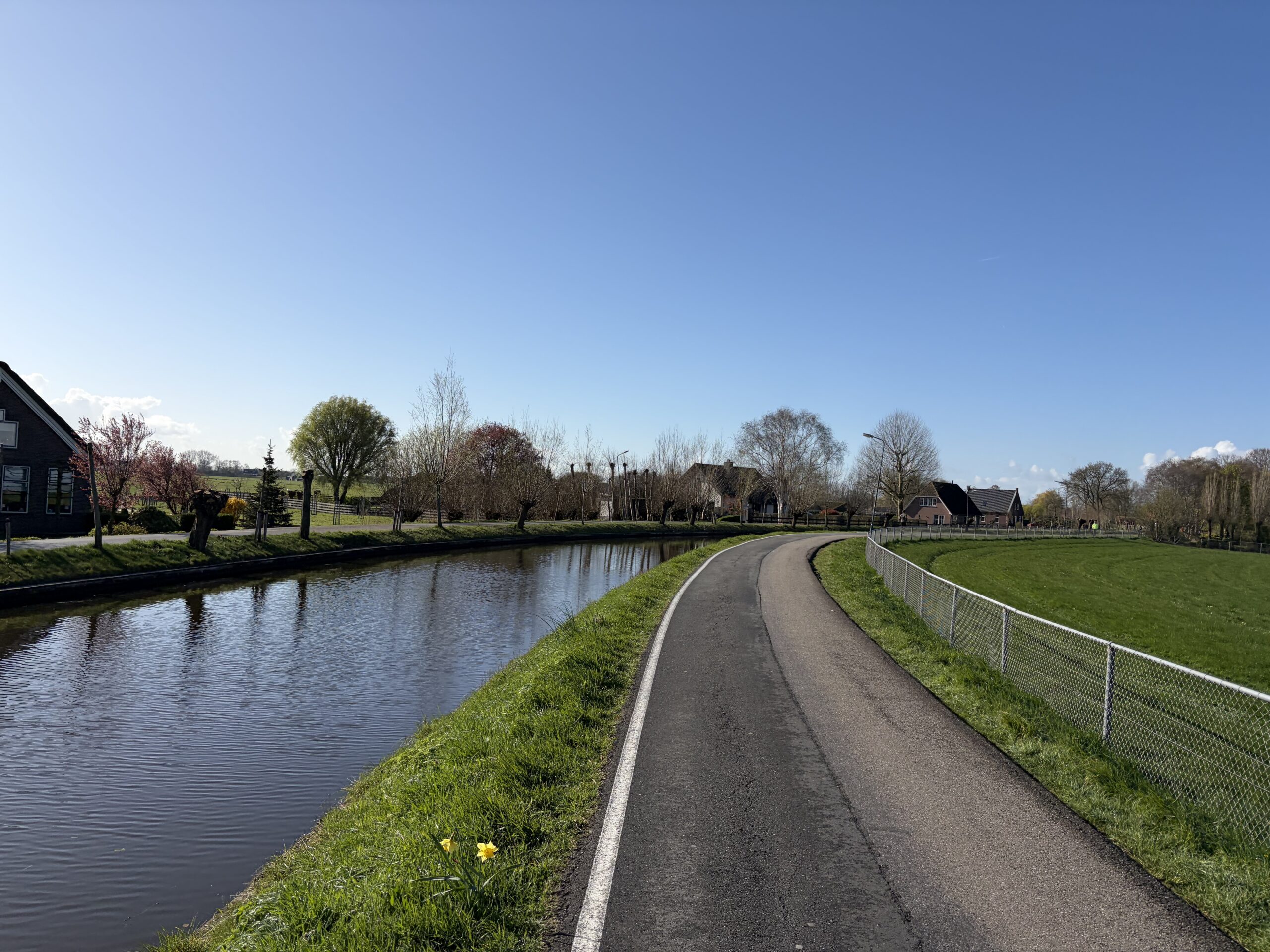
    Similar to last Sunday, I completed another 7K run today. I ran the same route as last week, just in the opposite direction, in 40:56. I maintained an average pace of 5:51 per kilometer, which is slow for me. I find it hard not to focus on pace at all. Date Duration Average Heartbeat Distance Pace 20260315 40:56 161 bpm 7.01 km 5:51
     

Run Log 20260315

15 March 2026 at 08:58

Similar to last Sunday, I completed another 7K run today. I ran the same route as last week, just in the opposite direction, in 40:56. I maintained an average pace of 5:51 per kilometer, which is slow for me. I find it hard not to focus on pace at all.

Date Duration Average
Heartbeat
Distance Pace
20260315 40:56 161 bpm 7.01 km 5:51
  • βœ‡semi-rad.com
  • A Week Of Training: Winter
    I had decided to film all my runs for a week, and exactly one mile into my first run, Jay wanted to get out of the jogging stroller and play in the snow. So we did. I didn’t really have a strong overall vision for the video, but 10 minutes into it, it seemed like an appropriate vibe: not so much “Run Your Fastest Race Ever With This Workout Plan”—more “OK But We Don’t Take Ourselves THAT Seriously Around Here.” I ran the final four blocks to Jay’s
     

A Week Of Training: Winter

19 March 2026 at 11:00

I had decided to film all my runs for a week, and exactly one mile into my first run, Jay wanted to get out of the jogging stroller and play in the snow. So we did.

I didn’t really have a strong overall vision for the video, but 10 minutes into it, it seemed like an appropriate vibe: not so much “Run Your Fastest Race Ever With This Workout Plan”—more “OK But We Don’t Take Ourselves THAT Seriously Around Here.” I ran the final four blocks to Jay’s preschool, dropped him off, and continued my run, clocking a 22:18 second mile. Which felt authentic.

I am aware that being a 1) middle-aged guy 2) raising a preschooler while 3) trying to make a livable income off of writing and art is not probably an ideal path to being a “successful” ultramarathon runner. But I love to run on trails and am grateful that I get to do it most weeks, and I thought I’d attempt to share what that feels like. So there’s no music in this short video, just the sounds of my footsteps on varying surfaces, and they’re all real running routes I do on a regular basis, squeezed in around my family and work life. It’s not flashy, just a kind of tour of the places I run.

The week I filmed was February 23 through March 1, which was more wintry than most of our winter here in Missoula. I’m thinking I might to make one of these videos every season this year—I hope you enjoy this one: A Week of Training: Winter. It ended up being way more fun to make than I anticipated.

thumbnail from A Week of Training - Winter

  • βœ‡camiel.schoonens.nl
  • Run Log 20260329
    This 35-minute recovery run was my first outdoor run after two weeks of treadmill training. Mentally, it didn’t go as well as I hoped. I’m frustrated with my current results, but I know I need to stay patient and consistent without overextending myself. Moving on to the next week, my goal is to continue balancing strength training at the gym with one or two recovery runs outside. Date Duration Average Heartbeat Distance Pace 20260329 35:00 156.7 bpm 5.88 km 5:57
     

Run Log 20260329

29 March 2026 at 08:09

This 35-minute recovery run was my first outdoor run after two weeks of treadmill training. Mentally, it didn’t go as well as I hoped. I’m frustrated with my current results, but I know I need to stay patient and consistent without overextending myself. Moving on to the next week, my goal is to continue balancing strength training at the gym with one or two recovery runs outside.

Date Duration Average
Heartbeat
Distance Pace
20260329 35:00 156.7 bpm 5.88 km 5:57
❌