❌

Normal view

  • βœ‡On my Om
  • What To Read This Weekend
    As I sit here on Sunday morning, reflecting on what has been one of the most hectic writing weeks in a long time, I can’t help but ask, why? Of course, there was a lot of news and action. Not that any of that matters to me, but still, there were new Apple products that were up for review. I have had iPad Air and MacBook Neo in my hands, and ended up writing about them. Neo got me philosophical and took me on a different tangent from a regular review. And there was that great story i
     

What To Read This Weekend

15 March 2026 at 16:30

As I sit here on Sunday morning, reflecting on what has been one of the most hectic writing weeks in a long time, I can’t help but ask, why?

Of course, there was a lot of news and action. Not that any of that matters to me, but still, there were new Apple products that were up for review. I have had iPad Air and MacBook Neo in my hands, and ended up writing about them. Neo got me philosophical and took me on a different tangent from a regular review.

And there was that great story in the Financial Times about Softbank and its founder playing with fire (aka OpenAI). Something about it compelled me to write about it. That and a tweet by Stripe CEO led to me writing about Symbolic Capital, and as if to make my point, former Uber CEO Travis Kalanick emerged from shadows to talk about Atoms. So, that turned into a breakdown of his manifesto.

This week, I moved my “pen newsletter” over to the “backpages” of this website. I am not much of a reviewer, and much prefer to write either short posts or longer pieces. So for me makes sense to just have it all in one place. I wrote two pieces, one about developing an ink-color palette from life itself, and a long reflection on the why of idle consumerism.

So, but the real answer to the “why” I wrote so much this week is that it is eleven years since my company shuttered. And I react to the emotion of loss in the only way I do, by writing. A lot.


Here’s what’s worth reading this weekend.

  • Mac Neo and My Afternoon of Reflection and Melancholy. Steven Sinofsky picked up a MacBook Neo and found himself staring at what might have been. The former head of Windows writes that everything they tried to do with Windows 8 and Surface RT in 2012, a $599 laptop built on a phone chip with a new app model, is exactly what Apple just shipped. “We were early, but not wrong.” [Hardcore Software]
  • The Human Condition or the Conditional Human? A genetic-testing company offers embryo selection for higher IQ. Meta’s chief AI officer says he’ll wait to have children until Neuralink is ready for implantation from a young age. Microsoft’s former head of research describes the “holy grail” as building intelligence superior to any human. David Polansky in the Hedgehog Review points out that they are all part of the same idea, one that is quietly redefining what it means to be human. Great read. [Hedgehog Review]
  • How Chinese Labs Race for the Next First-in-Class Breakthrough. In its 15th five-year plan, China laid out plans for scientific self-sufficiency by spending liberally on basic research across materials, energy, and biomedicine, halving clinical trial review times to match the US. It won’t be enough as it needs a mindset change. One biotech CEO admits China is still “more about engineering and applications, not about original concept and novelty.” [C&EN]
  • What Sports Betting Is Doing to America. You know how I feel about sports betting and how invasive it has become. But to get a first-person understanding of the disease? Read this brilliant piece in The Atlantic. They gave McKay Coppins, a practicing Mormon, $10,000 to gamble with over an NFL season. He had never placed a bet. What started as a journalistic experiment turned into something he describes as “unnerving.” This is the exact problem I’ve been writing about, except someone lived inside it for a season and came back to tell you what it looks like. [The Atlantic]
  • The Slavery Scandal at the Chinese Takeover of a Brazilian Ford Plant. The Washington Post reviewed 5,000 pages of court records and interviewed 41 people to tell the story of what happened when BYD took over a shuttered Ford factory in Camaçari, Brazil. Brazilian prosecutors accused BYD and its contractors of trafficking and conditions “analogous to slavery.” BYD’s response was to blame “cultural differences” and accuse unnamed forces of conspiring against China’s rise. This is what the global EV supply chain looks like when nobody is watching. [Washington Post]
  • In 1844, Chess Was Already Online. Every generation thinks that their technology is so special that it will change the world, and humans. I was reminded of that when I read this story. Six months after Morse sent “What hath God wrought” over the first US telegraph line, someone used it to play chess. Washington challenged Baltimore, moves were transmitted as numbered squares, and seven games were played without a single transmission error. A good reminder. Every new communication technology gets used for play before it gets used for business. The telegraph, the telephone, the internet, and now AI. Human nature doesn’t change. The wires do. [IEEE Spectrum]
  • Goodbye, Tesla-Style Giant Touchscreens. The buttons are back, thanks in part to China mandating physical controls for essential car functions. Europe will now mark down cars that rely only on touchscreens for things like turn signals. So, VW and Mercedes have already reversed course. And the Jony Ive-designed Ferrari Luce interior is full of knobs and switches. Turns out, sleek and futuristic is not the same as safe and usable. I don’t drive, so I don’t know. But I wonder if all this even matters when invisible robots are driving the cars? [Domus]

Things I wrote this week, ICYMI:

March 15, 2026. San Francisco

  • βœ‡512 Pixels
  • 3D Print Your Own Lil Finder
    After a week of tinkering with design files and babysitting my 3D printer, I have an adorable new coworker. The final print took 20 hours, but I’m enamored with the results: I was thrilled to collaborate with Basic Apple Guy on bringing Lil Finder to life. We both hope the Mac community enjoys this project. If you want to print your own, I’ve uploaded a .3mf file here. I ran mine on my Bambu P2S, with some fuzzy skin to give the final version a softer finish. On my example, the bri
     

3D Print Your Own Lil Finder

16 March 2026 at 13:34

After a week of tinkering with design files and babysitting my 3D printer, I have an adorable new coworker. The final print took 20 hours, but I’m enamored with the results:

Lil Finder Print

I was thrilled to collaborate with Basic Apple Guy on bringing Lil Finder to life. We both hope the Mac community enjoys this project.

If you want to print your own, I’ve uploaded a .3mf file here.

I ran mine on my Bambu P2S, with some fuzzy skin to give the final version a softer finish. On my example, the bright blue is Bambu’s Cyan PLA; the darker color is Overture’s Gray Blue PLA+. You may need to do some adjusting to get things dialed in for your setup.

We would love to see what you do with this, so be sure hit us up on social media:

To head off some feedback: We are offering this file as-is, for free, and without any support. Feel free to make your own changes as you see fit! I’m just not in the position where I can help you with your own print, nor can I print one for you. Find a nerdy buddy with some free time and a 3D printer.

  • βœ‡512 Pixels
  • A Collection of Lil Finder 5K Wallpapers
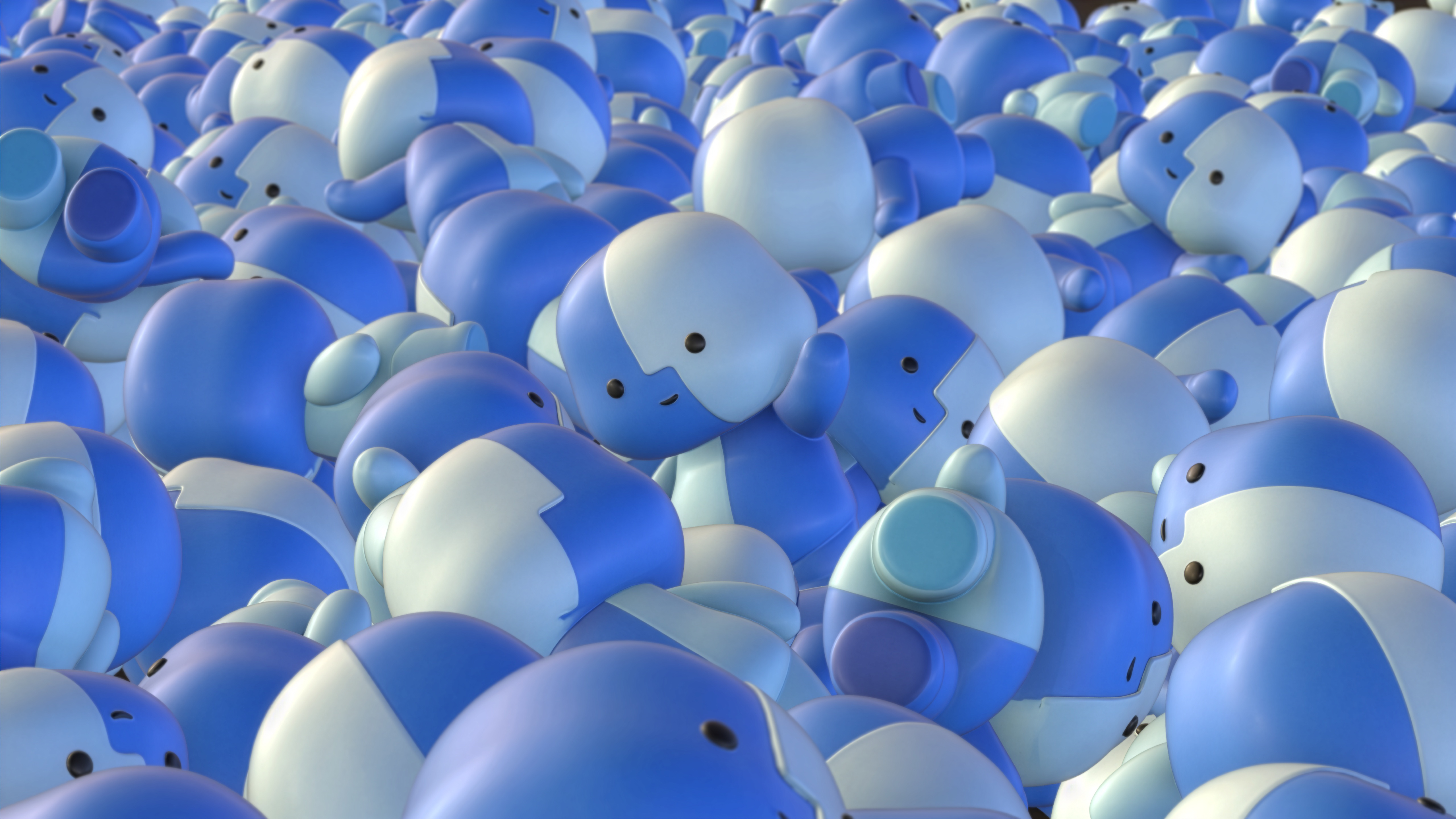
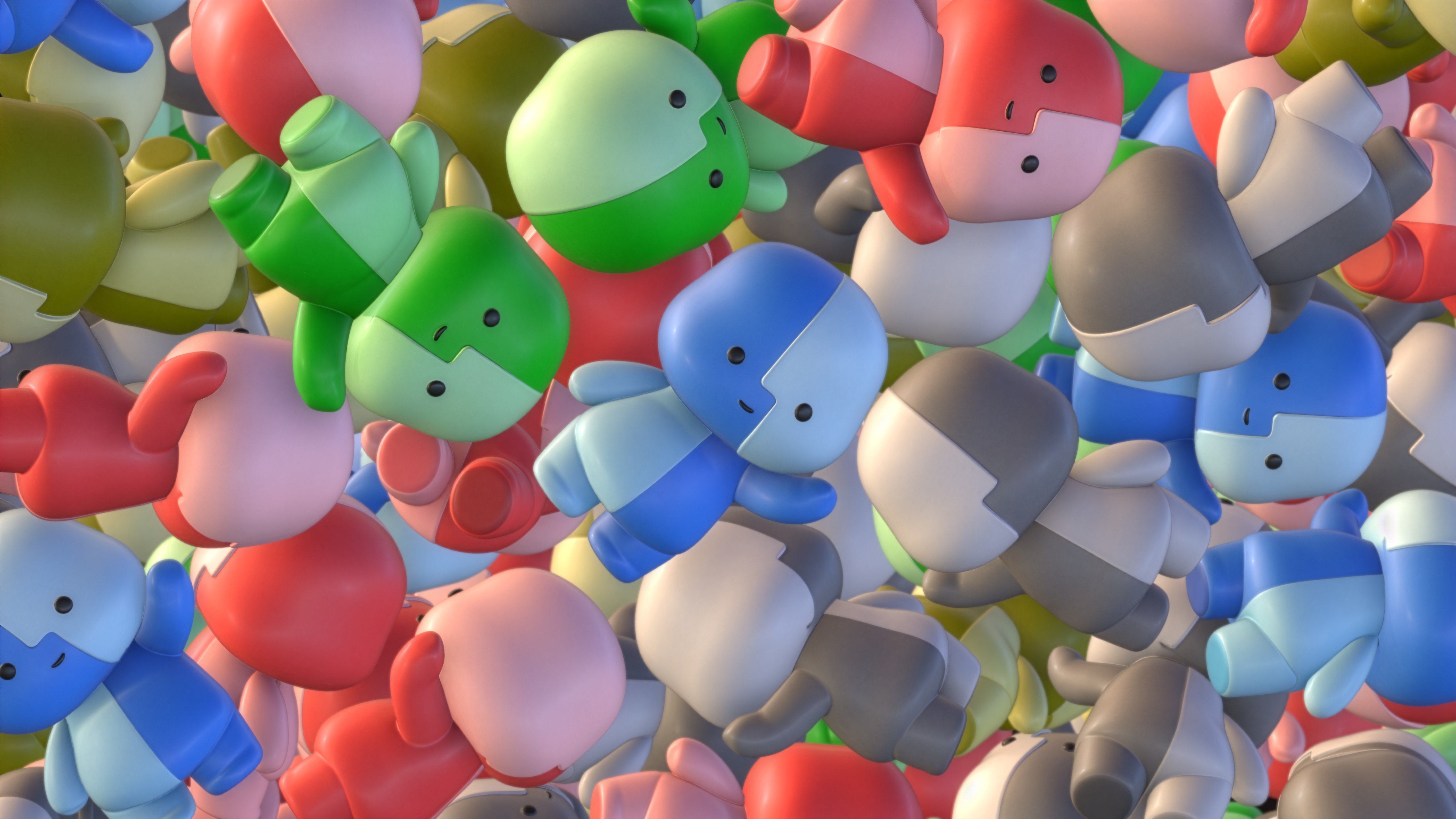
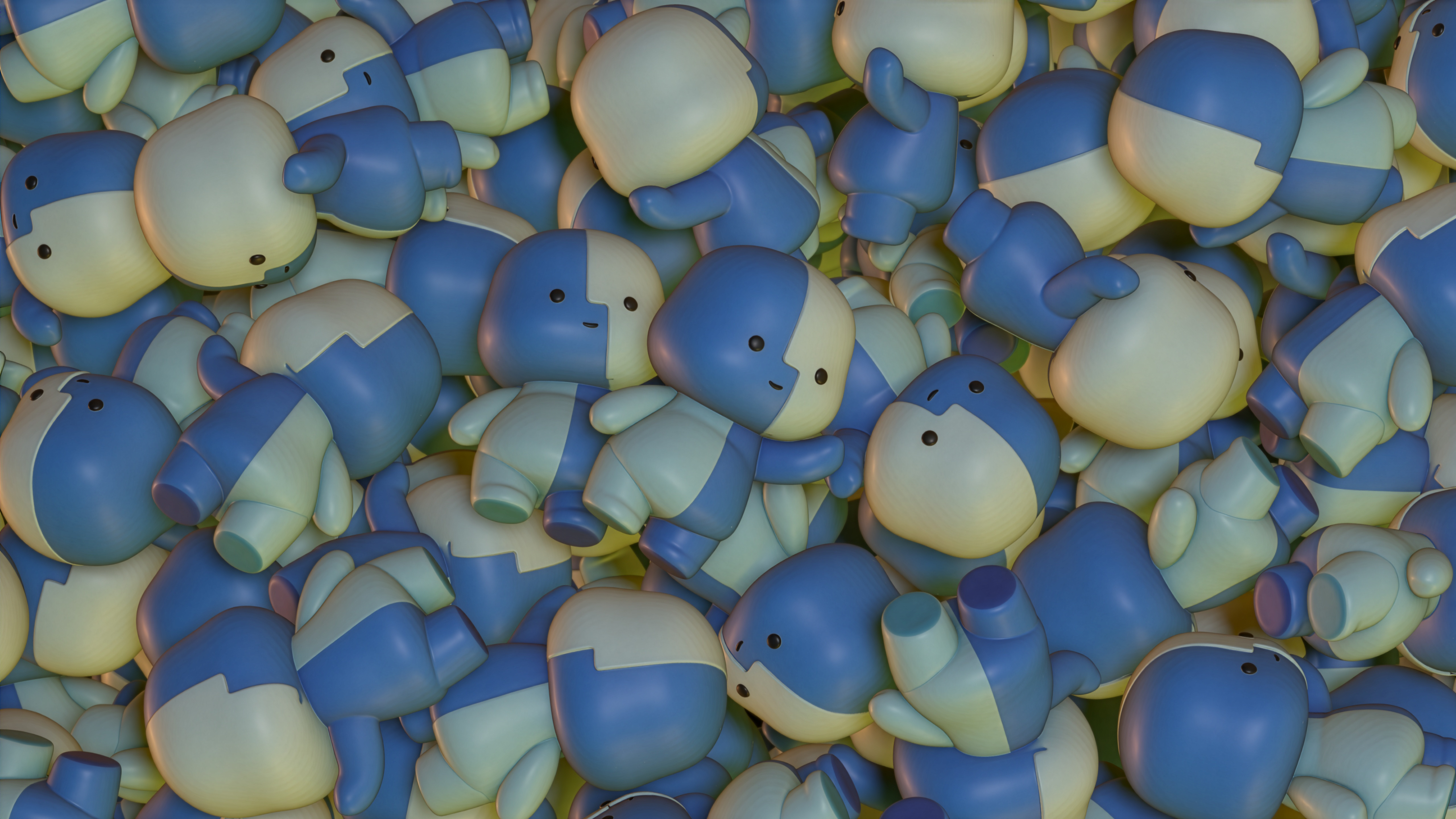
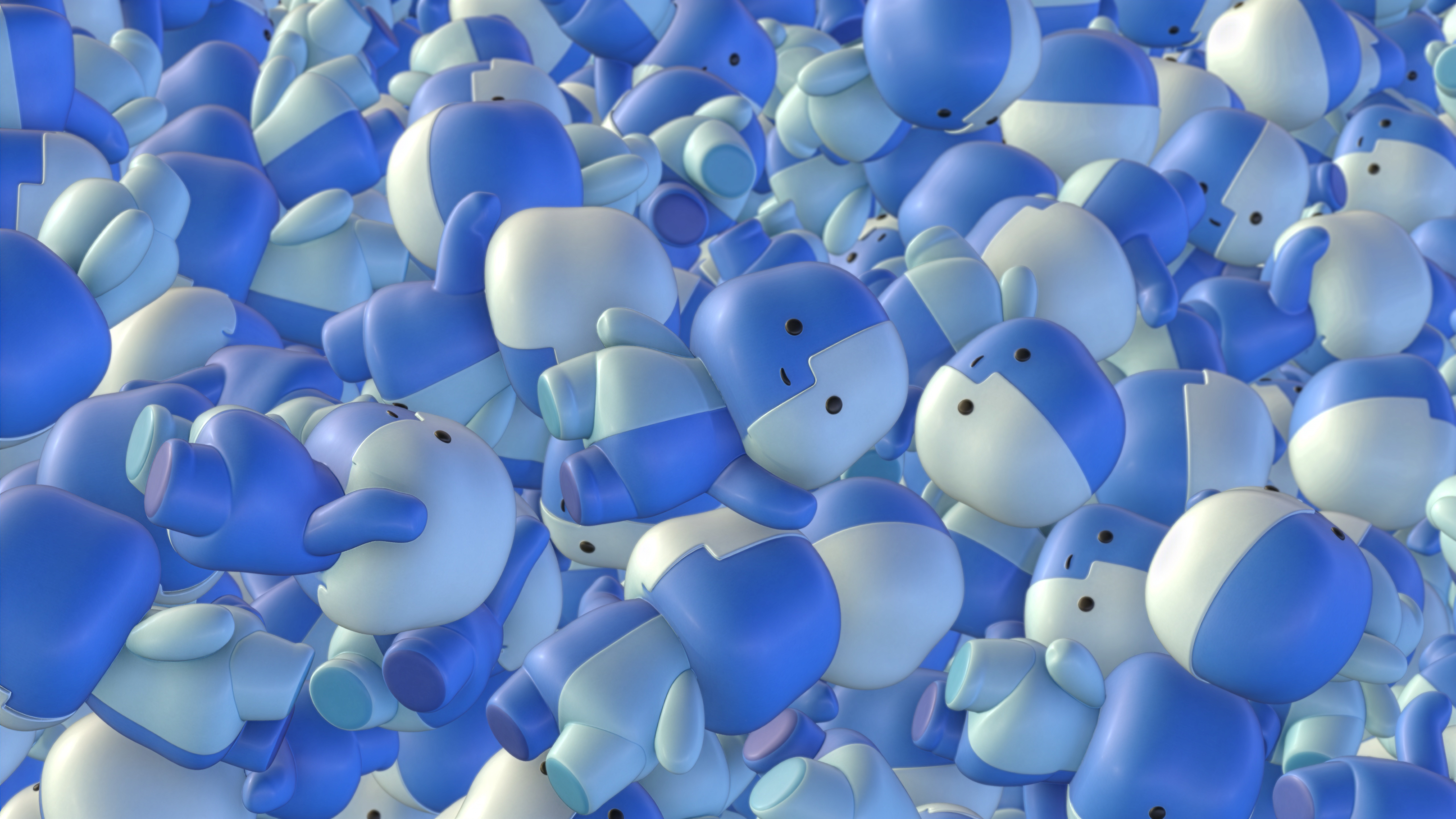
    I was just going about my day then James Thomson of PCalc and other fine applications dropped these images on me and said I could share them. They are all 5K, so they’re ready to go; just click to open up the full-res image. This would have been sick on an iMac G3.
     
  • βœ‡On my Om
  • Lobster Boil
    I had coffee this weekend with my good friend Michael Galpert, father to my godchildren. Too much coffee. We talked too much Claw. OpenClaw that is. Michael has been running around the country organizing ClawCons. New York, Austin, Tokyo next. Not industry conferences. In the halcyon days of Web 2.0, we called them meetups and un-conferences. Sponsors are falling over themselves to get them attached to this new new thing, that borders on madness and hope. Just people showing up in rooms b
     

Lobster Boil

17 March 2026 at 02:03

I had coffee this weekend with my good friend Michael Galpert, father to my godchildren. Too much coffee. We talked too much Claw. OpenClaw that is.

Michael has been running around the country organizing ClawCons. New York, Austin, Tokyo next. Not industry conferences. In the halcyon days of Web 2.0, we called them meetups and un-conferences. Sponsors are falling over themselves to get them attached to this new new thing, that borders on madness and hope.

Just people showing up in rooms because they want to talk about what OpenClaw makes possible. Developers, yes. But also small business owners, retirees, students, people who have never attended a tech event in their lives. The energy in those rooms, Michael says, is unlike anything he has seen in years.

I have known Michael long enough to know when he is genuinely excited about something versus just being hyperactive for a second. He is so ‘clawed’ into OpenClaw.

Makes you wonder: what is really going on here? Hope and madness. Whatever the reasons, I am fascinated with the very idea of OpenClaw, how it might be foretelling a future we are not seeing yet.


OpenClaw is a free, open-source AI agent built by Austrian developer Peter Steinberger. It started as a weekend project in November 2025, originally called Clawdbot, went through a rename to Moltbot after a trademark complaint from Anthropic, and landed as OpenClaw at the end of January 2026.

You connect it to whatever AI model you prefer. It runs on your own machine. You talk to it through the messaging apps you already use, including Slack, WhatsApp, Telegram, iMessage, and Discord. And then it does things. Typical chatbots answer questions. It acts. It clears your inbox, makes reservations, tracks your calendar, executes tasks on your behalf while you are doing something else.

By March 2026, it had crossed 247,000 stars on GitHub. Steinberger has since been hired by OpenAI to work on personal agents, and the project has moved to a foundation. The lobster, as they say, has molted. Ironic, the movement’s Jesus has ceded control to his apostles.

Across the planet, everyone is tinkering.

China tech is going bonkers over OpenClaw. On a Friday afternoon in Shenzhen, nearly a thousand people lined up outside Tencent headquarters to get OpenClaw installed on their laptops. Engineers from Tencent’s cloud unit were helping students, retirees, and office workers set it up. The Chinese have their own phrase for it now: raise a lobster, a reference to OpenClaw’s red lobster logo.

Every major Chinese cloud provider has released its own version. Tencent has WorkBuddy. MiniMax has MaxClaw. Moonshot has Kimi Claw. Local governments in Shenzhen and Wuxi announced grants for startups building on the platform. MiniMax, whose model runs inside many OpenClaw setups, has seen its stock rise over 600 percent since its IPO two months ago.

And then Beijing sent a diktat to state banks, government agencies, and the families of military personnel: Clip the Claw.

A thousand people lining up on Friday. A memo from the CCP. Same technology. Same week.

It’s not nothing.

The Mac Mini has become the unofficial hardware of the OpenClaw moment. People are buying the Apple desktop with a single purpose: a dedicated machine to run their agent, separate from their main computer, connected to a free or cheap open-source model. The SF Standard called the Mac Mini bro the new matcha latte guy. Oy vey!

The publication shares the story of Aaron Ng, a 35-year-old AI engineer in the Sunset. He did not want to give OpenClaw access to his own computer. So he bought a Mac Mini just for the agent. It handles his email, tracks updates about his newborn, controls his smart lights. He texts it baby logs because, in his words, the existing apps were terrible. Others are using it to post their bets on Polymarket to Twitter and game the results.

Mac Mini bro! Apple has backed into a cultural moment, without even trying. Jokes aside, this physical object represents a philosophy. The intelligence lives on your machine. You own it. You aim it. No subscription. No permission required.

I checked in with Hiten Shah, one of my close friends who is building hard with OpenClaw. He summed it up in a single line: (AI) Power to the people.

This is why retirees are lining up in Shenzhen. This is why people with no GitHub account are showing up at ClawCons. For the first time, they can feel AI’s intelligence, even if it is not very good. Yet. Not a demo. Not a keynote promise. Not big boys burning billion dollars a month. A thing that actually does things on their behalf. The gap between what you want done and what gets done has always required either your own time or someone else’s labor. OpenClaw makes that gap feel smaller. That feeling, even in its rough and half-broken form, is new.

It has been almost a month since I published How AI Goes To Work. “What OpenClaw shows is how AI will work in the background,” is what I wrote. “And that is what the ‘AI’ future looks like for normal people. Not a separate AI app. Intelligence woven into tools you already use. Doing work you used to do yourself. Or used to hire someone to do, done by software.”

I have seen this kind of excitement before. Many times. That is what keeps me around in Silicon Valley. The excitement of new technology is my addiction. I saw this with the big poppa, the internet itself. Web 2.0. Social. Cloud. In terms of product, the closest parallel to OpenClaw for me is my first time with WordPress.

WordPress did not invent PHP or MySQL or web publishing. It was a continuation of someone else’s idea. However, it assembled those pieces into something a non-technical person like me could actually use. The gap between having something to say and being able to publish it closed overnight. No developer. No hosting deal. No media company gatekeeping who got a voice. Yes, there were other platforms and other options, but it dovetailed with the rise of open source, the optimism of publishing on the internet, and the joy of sharing and being social.

The best part that most people forget about WordPress is that it was never really about us. It was about the rest of the world that could not afford American software economics. At Forbes.com, we spent millions on bad software, trying to publish professionally. Now you could do it for free. A teacher in Jakarta. A student in Manila. A journalist in Nairobi. Suddenly they had the same publishing infrastructure as the New York Times. That is what the excitement was really about. Not the product. It was the collapse of the permission structure.

OpenClaw has that same siren call. Two hundred dollars a month, or even twenty a month, to Anthropic or OpenAI is not a rounding error for most of the world. The world doesn’t pay $10 for lattes. This is the real barrier. But Chinese-made Qwen runs locally. Chinese-made DeepSeek runs locally. OpenClaw does not care which model you plug in. So someone in Manila or Cairo or Bogota can run the same agentic setup as a San Francisco startup, on a model that costs them nothing. If you want something from Claude or ChatGPT, and you can afford to pay for it, then plug that in too.

WordPress democratized voice. OpenClaw is pointing at something further: action. The gap between what you intend and what actually gets done has always required resources. A team. A budget. An organization. OpenClaw is the first very rough sketch of closing that gap for everyone.

WordPress operated in a forgiving domain. A bad plugin broke your homepage. Mine broke all the time. And there were no plugins. OpenClaw operates in the domain of real-world action. A bad agent deletes your inbox, spams your contacts, creates a dating profile without your knowledge. The blast radius is different. One of OpenClaw’s own maintainers warned publicly that if you cannot understand how to run a command line, this is far too dangerous for you to use safely. That is not a ringing endorsement. But it is also not the point.

OpenClaw is not ready for prime time. The security issues are real and the warts are visible. It is a symbol of what is coming, not the thing itself.

AI can be personal. Not a service you subscribe to. Not a platform you visit. A thing that runs on your machine, serves your intentions, uses the model you choose, and works through the apps you already live in.

In his keynote speech at GTC, Nvidia CEO and founder Jensen Huang described OpenClaw as:

What is Open Claw? It’s an agentic system. It calls and connects to large language models.It has resources that it manages. It could access tools, it could access file systems, it could access large language models. It’s able to do scheduling. it’s able to– do cron jobs, is able to decompose a problem that you gave it into step by step by step. It could spawn off and call upon other subagents. It has IO. You could talk to it in any modality you want. It’s an operating system. I’ve just used the same syntax that I would describe an operating system. Open Claw has open sourced essentially the operating system of agentic computers.


In 2023, Bill Gates wrote that “in the near future, anyone who’s online will be able to have a personal assistant powered by artificial intelligence” and that agents would “utterly change how we live.” OpenClaw, running on a free Chinese model through WhatsApp on a $599 Mac Mini in the Sunset, is the first time regular people can actually feel that becoming real.

That’s what I am Clawing about.

March 16, 2025. San Francisco

  • βœ‡512 Pixels
  • Inside the MacBook Neo
    I’m putting my thoughts together for a review of the MacBook Neo, but I think a huge part of this laptop’s story is its repairability. Unlike Apple’s other products, the Neo is put together with screws only — no adhesive. Some of these screws are pentalobes, but if you’re taking apart a computer, you’re probably the kind of person to have that sort of bit on hand, or are willing to get one. This means the battery can be replaced without pull tabs, and fo
     

Inside the MacBook Neo

17 March 2026 at 13:51

I’m putting my thoughts together for a review of the MacBook Neo, but I think a huge part of this laptop’s story is its repairability. Unlike Apple’s other products, the Neo is put together with screws only — no adhesive. Some of these screws are pentalobes, but if you’re taking apart a computer, you’re probably the kind of person to have that sort of bit on hand, or are willing to get one.

This means the battery can be replaced without pull tabs, and for the first time in years, this notebook’s keyboard is not permanently installed into the top case. There is some tape involved there (and 41 screws to remove) but it’s a move in the right direction.

The USB-C ports, headphone jack, and speakers are all modular and come out with a handful of screws and simple connectors.

The result of all of this is a machine that should be easier and cheaper to repair.

I love this shot from iFixit’s teardown:

Neo

iPhone Repair Guru took apart a Citrus example on their YouTube channel:

The former Mac Genius in me wasn’t thrilled that they didn’t disconnect the battery first — the machine was on until six minutes into the video!

  • βœ‡512 Pixels
  • The Case for an Ultralight Mac
    David Sparks is a fan of the MacBook Neo, but it’s not the Mac notebook his heart truly desires: Think about it. Apple has covered the pro market with the MacBook Pro lineup. The Neo is about to cover the mainstream and budget-conscious buyer. But there’s a gap at the top. A premium ultralight for people who travel constantly, who want the absolute minimum weight and footprint, and who are willing to pay for it. A MacBook that weighs two pounds or less, with a stunning display
     

The Case for an Ultralight Mac

21 March 2026 at 14:48

David Sparks is a fan of the MacBook Neo, but it’s not the Mac notebook his heart truly desires:

Think about it. Apple has covered the pro market with the MacBook Pro lineup. The Neo is about to cover the mainstream and budget-conscious buyer.

But there’s a gap at the top. A premium ultralight for people who travel constantly, who want the absolute minimum weight and footprint, and who are willing to pay for it. A MacBook that weighs two pounds or less, with a stunning display and all-day battery life. Not a compromise machine. A showcase.

The technology is ready. Apple silicon was basically designed for this. The question is whether Apple sees the market opportunity, or whether they think the Air (or whatever it becomes post-Neo) already fills that slot.

I don’t think it does. There’s a difference between a laptop that happens to be light and a laptop that’s built from the ground up to be as light as physically possible. Apple used to understand that distinction. The original Air proved it.

With the Neo handling the mainstream, there’s room in the lineup for Apple to go back to that idea.

I’ve been thinking a lot about this since the Neo was announced. In many ways, it frees the MacBook Air up to return to its thin-and-light roots, but I think that would be a mistake.

Among the many sins Apple committed with the 12-inch MacBook is that it was priced like a mid-range laptop, confusing the product line. If Apple were to return to this market, slotting in an ultra-portable machine in a more premium price point would avoid that confusion and let Apple go wild with what it could do with such a machine.

I’m not sure Apple wants to sell four laptop models1 but if they do, I think Sparks is on to something.


  1. What’s really wild is that until a couple of weeks ago, Apple sold just two notebook models and four-ish desktops. I love that the company remains committed to desktop Macs, but if Apple were starting from scratch in 2026, that would not be the case. 
  • βœ‡512 Pixels
  • Hide macOS Tahoe’s Menu Icons With This One Simple Trick
    I really dislike Apple’s choice to clutter macOS Tahoe’s menus with icons. It makes menus hard to scan, and a bunch of the icons Apple has chosen make no sense and are inconsistent between system applications. Steve Troughton-Smith is my hero for finding a Terminal command to disable them: Here’s one for the icons-in-menus haters on macOS Tahoe: defaults write -g NSMenuEnableActionImages -bool NO It even preserves the couple of instances you do want icons, like for wi
     

Hide macOS Tahoe’s Menu Icons With This One Simple Trick

21 March 2026 at 14:58

I really dislike Apple’s choice to clutter macOS Tahoe’s menus with icons. It makes menus hard to scan, and a bunch of the icons Apple has chosen make no sense and are inconsistent between system applications.

Steve Troughton-Smith is my hero for finding a Terminal command to disable them:

Here’s one for the icons-in-menus haters on macOS Tahoe:

defaults write -g NSMenuEnableActionImages -bool NO

It even preserves the couple of instances you do want icons, like for window zoom/resize.

Your apps will respect this change after relaunching. I ran this a few minutes ago and already appreciate the change. I really think Apple should roll this change back in macOS 27, or offer a proper setting to disable these icons for those of us who find them distracting.

  • βœ‡On my Om
  • Why Fraud Is The Boring Problem
    Michael Smith used AI to create music, and then used AI to create bots to get the “plays” and took the smartest technology companies, including Spotify and Amazon, who should know better, for about $8 million. He is going to jail for his crimes. It is easy to dismiss this as one-and-done fraud. It is anything but. It is an early warning of how AI will disrupt the systems that power our digital society: how culture gets discovered, how commerce gets directed, and how conversations ge
     

Why Fraud Is The Boring Problem

21 March 2026 at 19:58

Michael Smith used AI to create music, and then used AI to create bots to get the “plays” and took the smartest technology companies, including Spotify and Amazon, who should know better, for about $8 million. He is going to jail for his crimes. It is easy to dismiss this as one-and-done fraud. It is anything but. It is an early warning of how AI will disrupt the systems that power our digital society: how culture gets discovered, how commerce gets directed, and how conversations get shaped.

At present, most of our digital society is powered by tech that is, generically speaking, recommendation algorithms. Spotify’s Discover Weekly, YouTube’s suggestion engine, TikTok’s For You page, Amazon’s product feed, Facebook’s news feed. All of it runs on signals of human behavior. Stream counts, completion rates, saves, shares, playlist adds, clicks, purchases. These represent people making choices. The only way to fake that was to hire a back-office army to do it. This is cultural legitimacy laundering.

Scale can now be had for cheap. Almost free. Who is to say that with AI, there won’t be bots that learn and adapt (agents, in polite company) designed to game the system? What if real artists with real music have this army to goose up their stream counts. The algorithm then promotes them to real ears.

What if it is not just real artists, but AI music being created by music-making software models that get better every month. The algorithm promotes this too. Humans like it, save it, share it, and add it to their playlists. They are generating real signals on top of the fake ones. At what point does fraudulently-obtained popularity become real popularity? There’s no clean line.

Just like Uber was limos for everyone, this is payola for anyone, for $200 a month. Even cheaper, if open-source models have their way. You think musicians won’t do it? Look around. They are already buying bots to inflate their numbers using gray-market services. Smith might be the idiot going to jail, but we are facing a structural collapse of the discovery and taste-making apparatus.

In the case of music, since royalties are countable, you can make a case for fraud. In other arenas, things are not going to be as simple. What gets bought on Amazon, what trends on Facebook, what becomes culturally popular. All of it runs on the same logic as Spotify. Signals of human behavior, gamed by machines. AI is making authenticity optional.

Whether it is Spotify directing culture, Amazon directing commerce, or Facebook directing conversations, I have yet to hear from any of their leadership on how they plan to redesign what they do because of the coming onslaught of fake signals.

Smith used crude tools to steal $8 million. His fraud is the boring version of the problem. The interesting version hasn’t been prosecuted yet. It may never be.


Further Reading

  • βœ‡On my Om
  • What To Read This Weekend
    It has been a week of inference. I started the week writing about OpenClaw and its growing popularity. And I end the week with a recap of Nvidia’s GTC event. A lot has been written about the event, especially about Nvidia CEO Jensen Huang’s big claims of quadrupling his revenues to above a trillion dollars, the question that wasn’t asked, why? Sure, we can dismiss this as a bluster of a bull-market darling, but in reality, if we believe that AI is going to be the new way of
     

What To Read This Weekend

22 March 2026 at 15:30

It has been a week of inference. I started the week writing about OpenClaw and its growing popularity. And I end the week with a recap of Nvidia’s GTC event. A lot has been written about the event, especially about Nvidia CEO Jensen Huang’s big claims of quadrupling his revenues to above a trillion dollars, the question that wasn’t asked, why?

Sure, we can dismiss this as a bluster of a bull-market darling, but in reality, if we believe that AI is going to be the new way of interacting with information (as I do) and will impact all sorts of industries, then you have to give his claim some thought.

As I explain in my breakdown of Nvidia GTC, Jensen’s Trillion Dollar Token Factory, for CrazyStupidTech, his boast makes sense for two reasons. First, this is indeed an inference inflection. What that means is that AI goes from being in the “capex” phase to being in the “opex” phase. That key distinction is why you see Anthropic adding a billion or so in revenue every week or so. And that is why OpenAI is in a tizzy. And that is why Elon Musk has made “coding” a top priority for his Grok.

I am hoping to shift gears next week and write longer essays, eschewing news and daily goings-on. I have a few personal pieces that remain unfinished, including reviews of a new photography geegaw and of course the MacBook Neo.

Till next week. For now, enjoy these lovely articles.


  • Why Tech Bros Are Now Obsessed with Taste. Kyle Chayka in the New Yorker on Silicon Valley’s latest borrowed virtue. Silicon Valley is a taste dead zone. I have written about this many times. Now the same people without taste are arguing that because AI levels the playing field, and anyone can build anything, so the only edge left is knowing what’s worth building. That’s “taste.” Don’t look for it in these parts. Chayka makes my point without me losing my hair. [New Yorker]
  • We Have Learned Nothing. Jerry Neumann is my favorite venture capital and startup writer. None better. In his latest piece he makes a point to remind us that the whole edifice of the science of entrepreneurship is just that, an edifice. So, to paraphrase Steve Jobs, think different. And do different from whatever the current advice says. [Colossus]
  • In Search of Banksy. Reuters spent a year using what they call a “reverse forensic” approach to unmask the world’s most famous anonymous artist. Wow. What a great story. I mean, make this a documentary. The journalism is meticulous. [Reuters]
  • Russia’s Self-Inflicted Communication Crisis. Politico maps the race to cut Russia off from the global internet. Telegram, WhatsApp, YouTube, Signal, Discord, X, FaceTime, LinkedIn, all blocked or throttled. Russian President Putin signed a law letting the FSB shut down cellular and internet access on demand. The twist is that the Kremlin’s own military depends on Telegram for frontline communications and crowdfunding. They’re destroying the infrastructure their war machine runs on. What an amazing story. [Politico]
  • The Repricing of Time: Equity in the Age of Agents. Jordi Visser makes the financial argument for what many of us feel intuitively. AI doesn’t just disrupt business models. It compresses time. When competitive half-lives shrink from a decade to months, equity stops representing ownership of a durable franchise and starts resembling a call option on execution velocity. This is the best thing I’ve read on what AI actually does to market structure. I wish I had written this piece. [Visser Labs]

Things I wrote this week, ICYMI:


In Memoriam.

Miles Rose, who passed away on March 1, 2026, in Puerto Rico. He was 72. And he was a friend from the Internet’s halcyon days and ran SiliconAlley.com. I lost touch with him over the past decade or so, but he was and will remain a cherished friend and a reminder of happier, more innocent times in the evolution of the internet. Rest in peace, Miles.

Len Deighton, one of my favorite authors and a master of the spy genre, passed away. I enjoyed this recap of his work. In the end, this is the best way to remember someone who made words his everything.


March 22, 2026. San Francisco

  • βœ‡512 Pixels
  • WWDC26: June 8-12
    Apple has announced dates for this year’s WWDC: Apple today announced it will host its annual Worldwide Developers Conference (WWDC) online from June 8-12, bringing developers together from around the world for a week of connection, exploration, and innovation. In addition to the online experience, developers and students will also have the opportunity to celebrate in person during a special event at Apple Park on June 8. WWDC26 will spotlight incredible updates for Apple platforms,
     

WWDC26: June 8-12

23 March 2026 at 17:08

Apple has announced dates for this year’s WWDC:

Apple today announced it will host its annual Worldwide Developers Conference (WWDC) online from June 8-12, bringing developers together from around the world for a week of connection, exploration, and innovation. In addition to the online experience, developers and students will also have the opportunity to celebrate in person during a special event at Apple Park on June 8.

WWDC26 will spotlight incredible updates for Apple platforms, including AI advancements and exciting new software and developer tools. As part of the company’s ongoing commitment to supporting developers, WWDC will also provide unique access to Apple engineers and designers, and insight into new tools, frameworks, and features.

WWDC kicks off with the Keynote and Platforms State of the Union on Monday, June 8. The conference continues online all week with over 100 video sessions and interactive group labs and appointments, where developers can connect directly with Apple engineers and designers to explore the latest announcements. The conference will take place on the Apple Developer appwebsite, and YouTube channel; and on the Apple Developer bilibili channel in China.

See you there.

  • βœ‡512 Pixels
  • AgentBridge
    If you want your classic Mac to interact with Claude, Sean Lavigne has the project for you: AgentBridge is a native Classic Mac OS application that lets AI agents (like Claude) interact with Mac OS 7–9 through structured commands and responses. It works on real hardware and emulators — no modifications to your Mac required. Drop AgentBridge into a shared folder, launch it on your Mac, and an AI agent can list windows, open apps, type text, read the clipboard, browse files, and
     

AgentBridge

24 March 2026 at 15:29

If you want your classic Mac to interact with Claude, Sean Lavigne has the project for you:

AgentBridge is a native Classic Mac OS application that lets AI agents (like Claude) interact with Mac OS 7–9 through structured commands and responses. It works on real hardware and emulators — no modifications to your Mac required.

Drop AgentBridge into a shared folder, launch it on your Mac, and an AI agent can list windows, open apps, type text, read the clipboard, browse files, and more — all through a simple text-based protocol.

This image in the Github documentation cracked me up:

Claude on Mac SE

  • βœ‡512 Pixels
  • The Mac Pro is Dead
    It has happened: the Mac Pro is gone, and Apple will not be replacing it. Chance Miller, at 9to5Mac: It’s the end of an era: Apple has confirmed to 9to5Mac that the Mac Pro is being discontinued. It has been removed from Apple’s website as of Thursday afternoon. The “buy” page on Apple’s website for the Mac Pro now redirects to the Mac’s homepage, where all references have been removed. Apple has also confirmed to 9to5Mac&nb
     

The Mac Pro is Dead

26 March 2026 at 21:25

It has happened: the Mac Pro is gone, and Apple will not be replacing it.

Chance Miller, at 9to5Mac:

It’s the end of an era: Apple has confirmed to 9to5Mac that the Mac Pro is being discontinued. It has been removed from Apple’s website as of Thursday afternoon. The “buy” page on Apple’s website for the Mac Pro now redirects to the Mac’s homepage, where all references have been removed.

Apple has also confirmed to 9to5Mac that it has no plans to offer future Mac Pro hardware.

Mac Pro

The Mac Pro was introduced way back in 2006 as a replacement for the outgoing Power Mac G5. It had a good few years, then languished until the 2013 model was announced.

That machine was a dud, and it languished until the 2019 model was announced.1

It came out in December 2019, which was less than a year before Apple silicon was announced and the M1 shipped.

The Mac Pro got one last update in June 2023, when Apple dropped the Intel version for one with an M2 Ultra inside. It’s been languishing again ever since.

It is clear that Apple sees the Mac Studio as the way forward for high-end desktop computing. Apple silicon did away with the graphics expansion that made the 2019 Intel machine so interesting, leaving all of those slots with far less to do for most users.

This news shouldn’t come as a surprise to anyone, even if it is a sad ending to what was once an amazing computer.


  1. I loved mine
  • βœ‡512 Pixels
  • How Apple Could Have (Maybe) Saved the Mac Pro
    D. Griffin Jones, writing about yesterday’s news: Apple decided to start caring about the Mac Pro again at the worst possible time. The Intel Mac Pro, while excellent, arrived just six months before the announcement that the Mac would transition to Apple silicon. After which, the Mac Pro didn’t offer any better performance than the Mac Studio. Just the card slots — which you couldn’t put a GPU in. Due to Apple silicon’s all-in-one architecture, the Ultra-tier
     

How Apple Could Have (Maybe) Saved the Mac Pro

27 March 2026 at 15:16

D. Griffin Jones, writing about yesterday’s news:

Apple decided to start caring about the Mac Pro again at the worst possible time. The Intel Mac Pro, while excellent, arrived just six months before the announcement that the Mac would transition to Apple silicon. After which, the Mac Pro didn’t offer any better performance than the Mac Studio. Just the card slots — which you couldn’t put a GPU in.

Due to Apple silicon’s all-in-one architecture, the Ultra-tier chip pushes the limits of what Apple can fabricate at a reasonable price. The bigger the chip is on the die, the lower the yield of good chips will be made, raising the cost further.

Apple reportedly experimented with making a higher-tier chip than the Ultra — often referred to as the “Extreme” chip, though the name is just speculation. It was canceled for being too expensive.

I’ve thought a lot about the bad timing Jones mentions. Had Apple stuck to the original timeline, and killed off the 2013 Mac Pro in favor of an iMac “specifically targeted at large segments of the pro market,” back in 2017, Apple could have avoided putting out the best Intel Mac ever, less than a year before the transition to Apple silicon.

Did Apple know in 2017 that 2020 was the year the M1 would make it out of the lab? Probably not, but it doesn’t make the timing any less painful.

Jones goes on to explore how an “Extreme” chip could be built, and offers some advice for the Mac Studio team:

Apple should design a custom enclosure for PCI card slots that can plug into the Mac Studio. It would have a custom connector so that it could work (nearly) as fast as internal slots in a Mac Pro.

Maybe this custom connector is on the bottom of the Mac Studio, so installation is as simple as plugging it into a Mac Studio-sized port in the top of the box.

I do not see any future in which Apple goes down this road.

Apple sees the Mac Studio and its industry-standard Thunderbolt ports as the way forward for adding hardware. Doing anything custom at this point just adds uncertainty to a market that has been repeatedly damaged by Apple’s flip-flopping.

The company yanked the pro market around for over a decade. The Mac Pro was old, then it was new! It did not support internal expansion, then it did! With every change of its mind, Apple lost more and more trust of would-be Mac Pro buyers.

  • βœ‡512 Pixels
  • FireWire via a Raspberry Pi
    Jeff Geerling’s newest video features using an old FireWire camera via a Raspberry Pi hat… a thing I never thought about being possible: What a time to be alive.
     
  • βœ‡512 Pixels
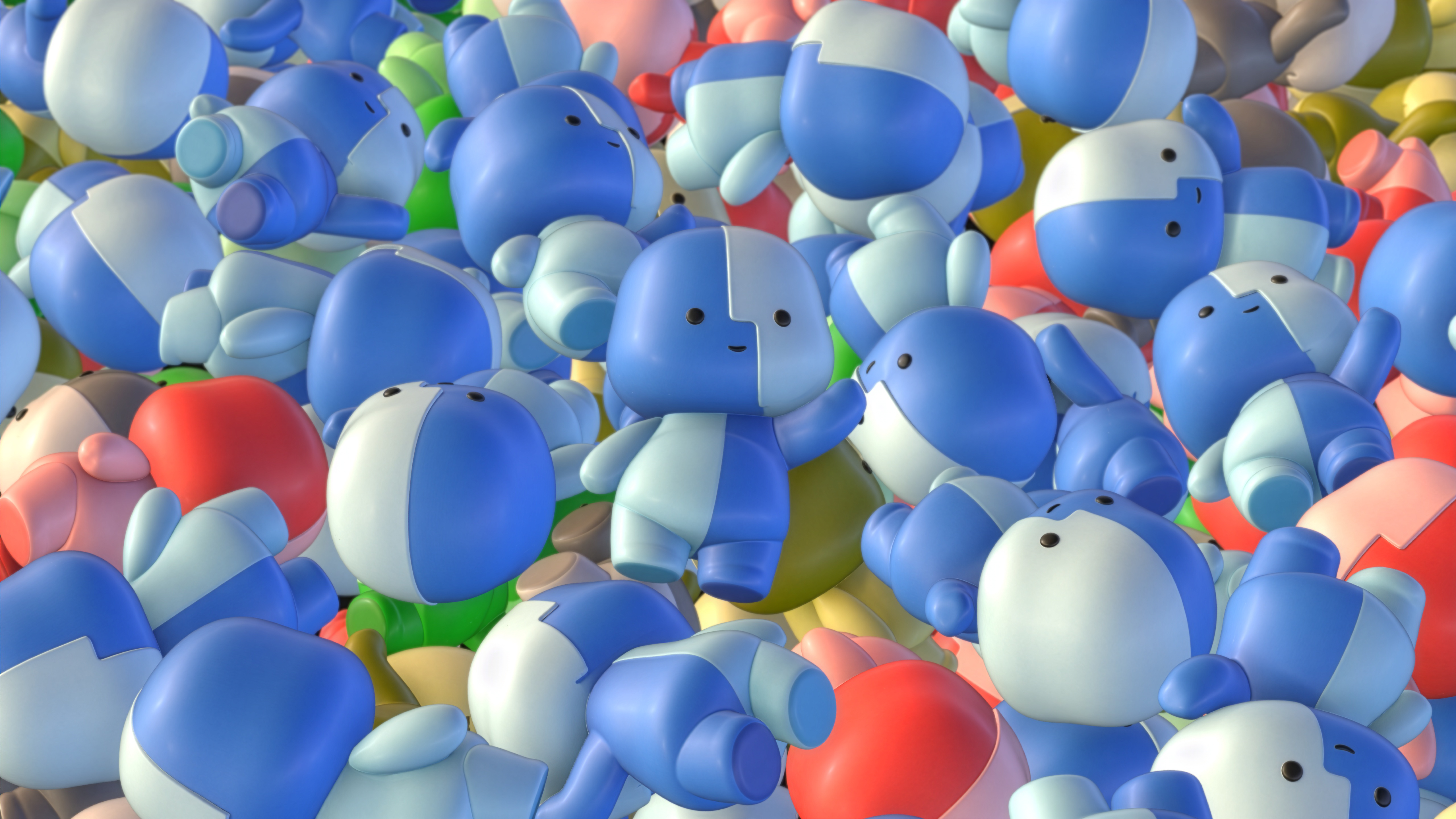
  • Lil Finder is a Star
    Our buddy is back! Juli Clover: Apple has continued posting short videos featuring its new Little Finder Guy mascot on TikTok and YouTube Shorts, taking advantage of the popularity of the anthropomorphized Mac Finder icon. The short videos promote the MacBook Neo through a series of Mac tips, all of which include Little Finder Guy in cute poses. A video about journaling features the character with a book and a pen, while another about the Passwords app has Little Finder Guy
     

Lil Finder is a Star

2 April 2026 at 21:28

Our buddy is back! Juli Clover:

Apple has continued posting short videos featuring its new Little Finder Guy mascot on TikTok and YouTube Shorts, taking advantage of the popularity of the anthropomorphized Mac Finder icon.

The short videos promote the MacBook Neo through a series of Mac tips, all of which include Little Finder Guy in cute poses. A video about journaling features the character with a book and a pen, while another about the Passwords app has Little Finder Guy with a magnifying glass.

Searching

I love that Apple is having fun with this, and think it’s some of their best marketing in ages, even if some folks are cranky about it. Anything that makes the Mac more fun and relevant to young users is a win in my book.

  • βœ‡512 Pixels
  • A Good Mac Studio is Hard to Find
    Zac Hall, writing at 9to5Mac about the on-going challenges of buying a Mac Studio: If you order an M3 Ultra Mac Studio with the only remaining RAM upgrade today,1 Apple says it will arrive in four to five months. That means the 256GB RAM option ordered in April arrives in August or September if the shipping estimate tracks. It’s not just the Mac Studio; it’s easy to build a Mac mini that won’t ship until August. That is bad news if you need a new Mac desktop on short not
     

A Good Mac Studio is Hard to Find

3 April 2026 at 22:40

Zac Hall, writing at 9to5Mac about the on-going challenges of buying a Mac Studio:

If you order an M3 Ultra Mac Studio with the only remaining RAM upgrade today,1 Apple says it will arrive in four to five months.

That means the 256GB RAM option ordered in April arrives in August or September if the shipping estimate tracks.

It’s not just the Mac Studio; it’s easy to build a Mac mini that won’t ship until August. That is bad news if you need a new Mac desktop on short notice. These long delays are not impacting all Macs, though, as the iMac and notebooks seem to all have much better shipping dates.

I assume we will see an update to the Mac mini and Mac Studio sooner rather than later, but I also would bet that Apple is steering its resources into making sure that models like the MacBook Air and Pro are easier to come by in the current climate of component shortages.


  1. Apple dropped the 512GB option back in early March. 
❌