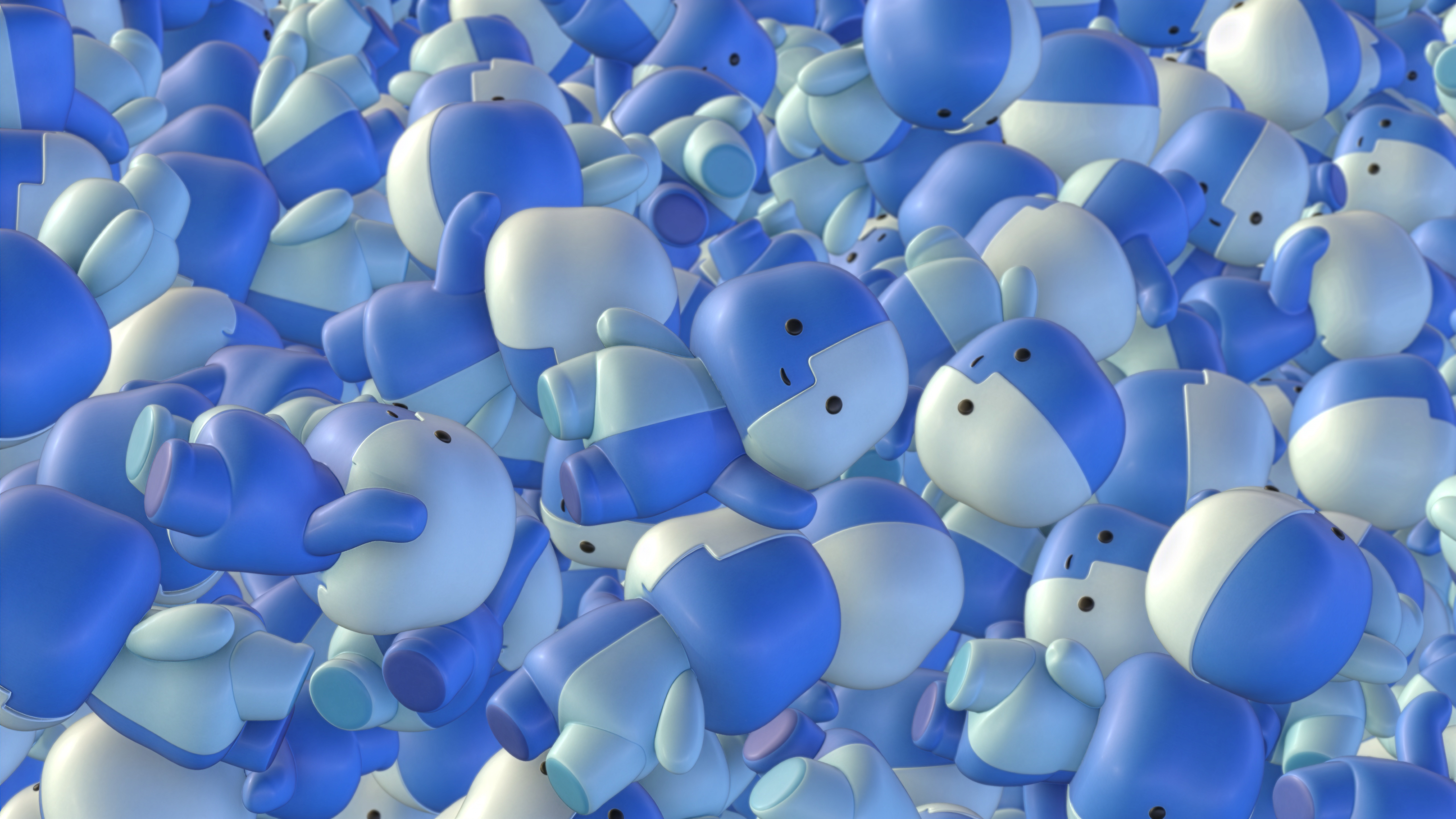
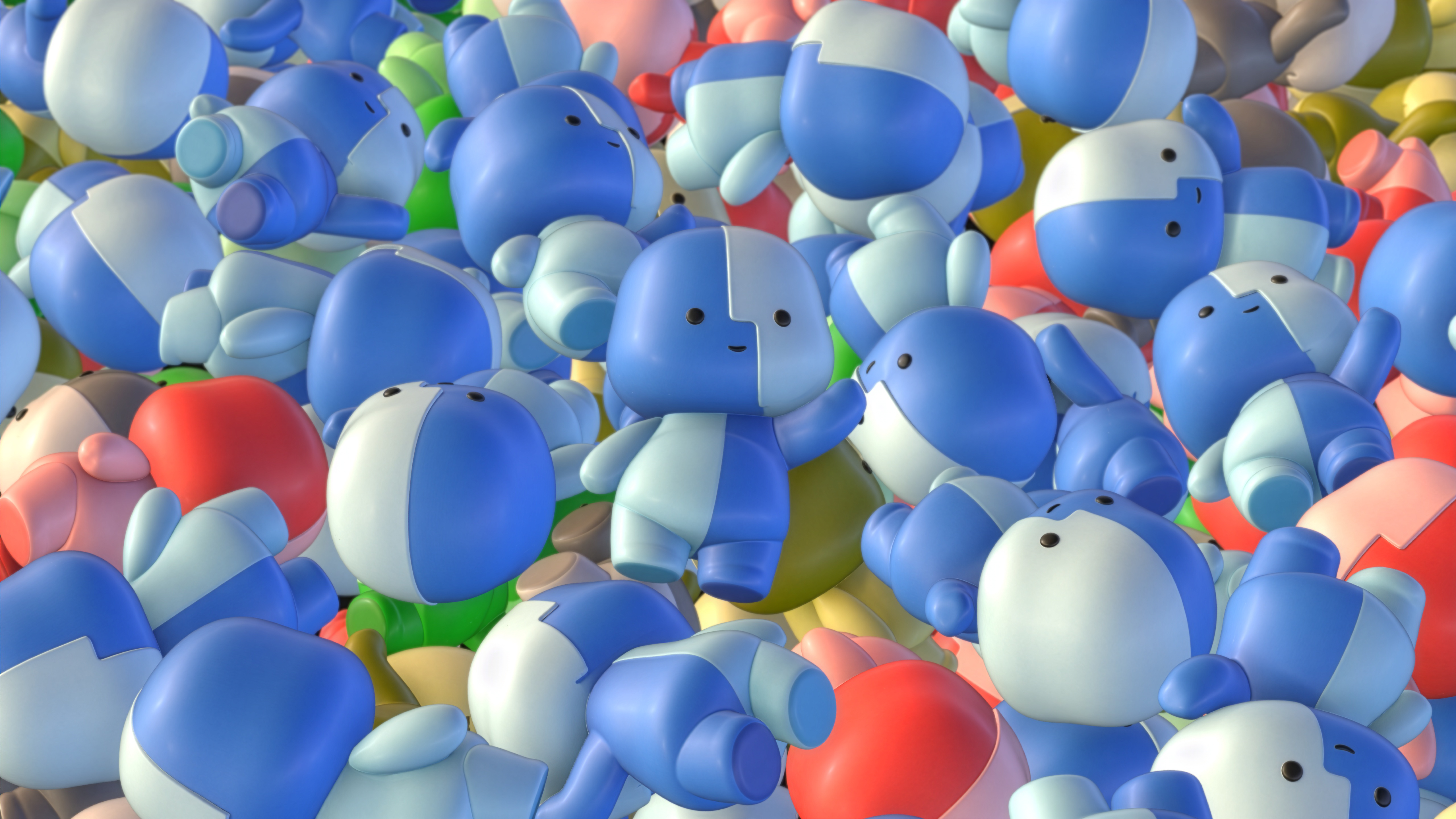
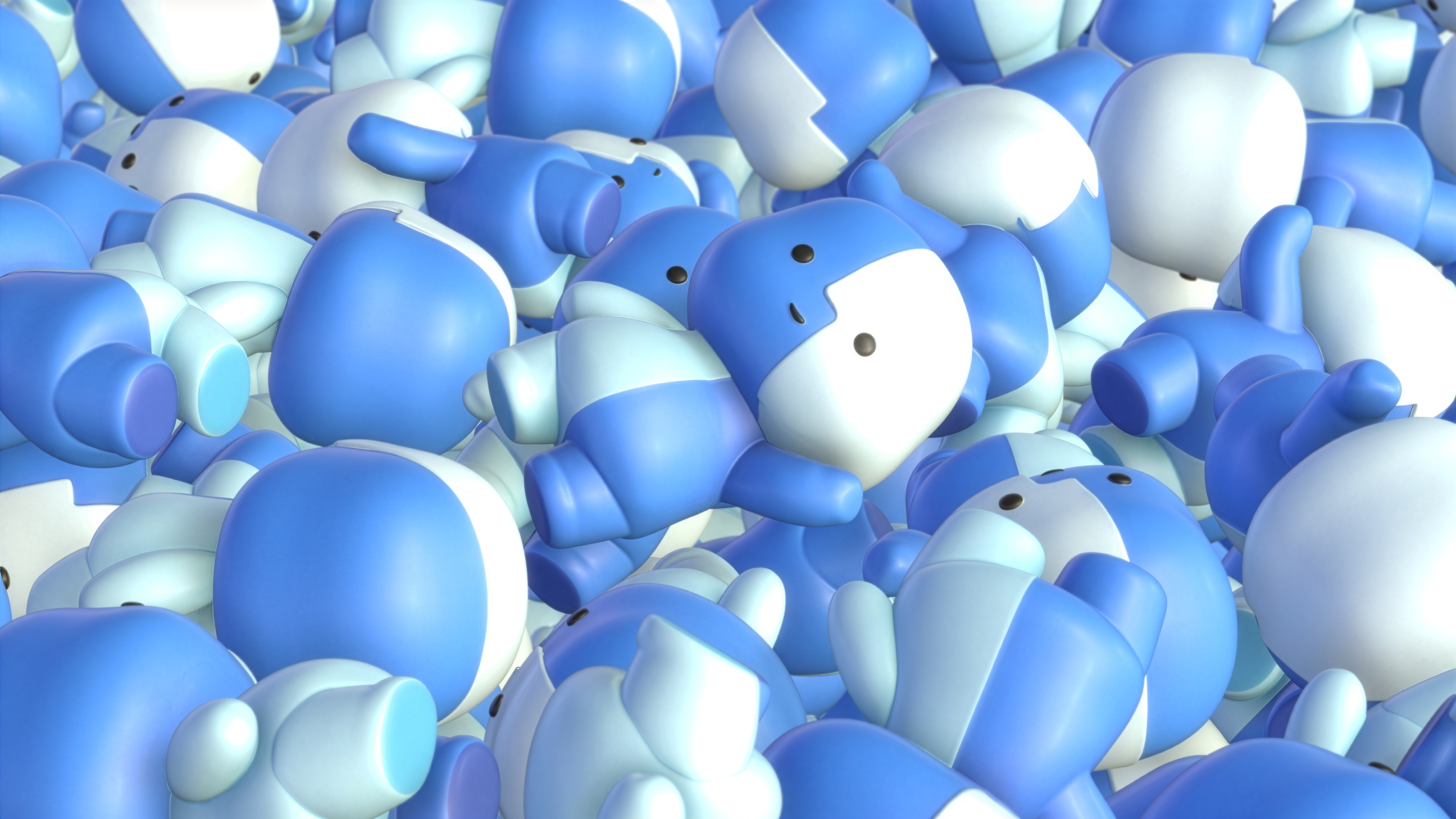
There are a handful of fun videos on Apple’s page, but these citrus ones are fun:
@apple i love limes
♬ original sound – apple
@apple
pop pop pop pop
♬ original sound – apple
@apple
hello?
♬ original sound – apple
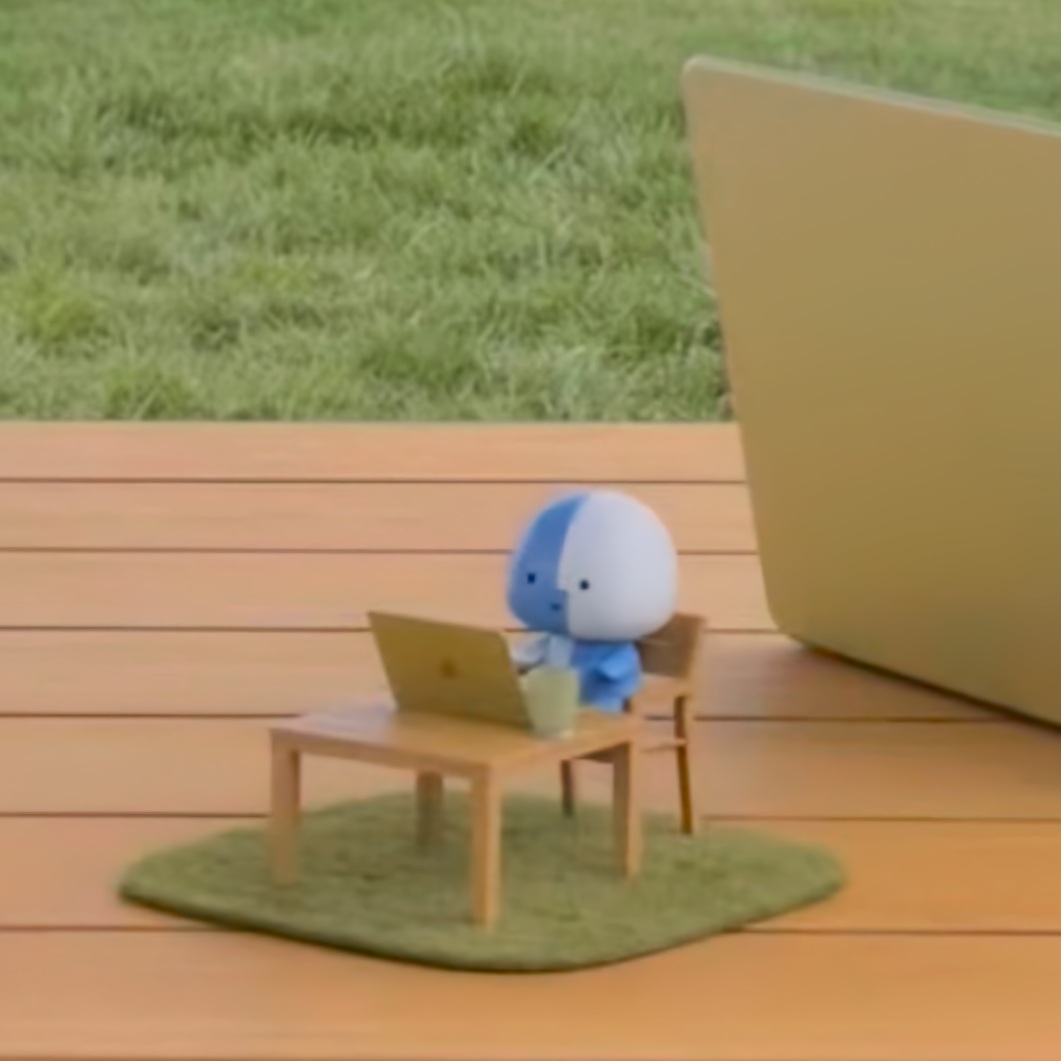
Then there’s this little Finder character, as pointed out by Basic Apple Guy:
I can’t find any information about him beyond the fact that he appeared in Apple’s “Matcha Break with MacBook Neo&rdqu
I can’t find any information about him beyond the fact that he appeared in Apple’s “Matcha Break with MacBook Neo” livestream on TikTok on Wednesday. I also haven’t been able to track down the video itself. The first post I found mentioning it came from user m2macmini on Twitter.
In the midst of the whirlwind of news this week, Apple renamed its CPU cores. At Six Colors, Jason Snell has the details:
Here’s what happened:
Apple renamed its most powerful CPU cores, which had previously been called performance cores. As of the M5 Pro and Max, those cores are now called “super cores.”
Surprise! Since those cores also shipped in the M5 MacBook Pro, M5 iPad Pro, and M5 Vision Pro, they have all been retroactively renamed as super cores. I am writing t
In the midst of the whirlwind of news this week, Apple renamed its CPU cores. At Six Colors, Jason Snell has the details:
Here’s what happened:
Apple renamed its most powerful CPU cores, which had previously been called performance cores. As of the M5 Pro and Max, those cores are now called “super cores.”
Surprise! Since those cores also shipped in the M5 MacBook Pro, M5 iPad Pro, and M5 Vision Pro, they have all been retroactively renamed as super cores. I am writing this very story on a device that sports four super cores, but I didn’t even know that until I heard the news early Tuesday morning.
The M5 Pro and M5 Max chips also feature the debut of a brand-new core design derived from the super core design. (I assume the efficiency cores in the base M5 were probably the same cores that Apple used in the M4.) This new core design is still power efficient, but it can offer high performance in multithreaded tasks. In the past, the second-tier core was referred to as an efficiency core, but Apple has decided that these new ones are better described as performance cores. In other words, Batman has become Superman and Robin (or is it Supergirl?) has become Batman.
It was Apple week and unsurprisingly even I got carried away and wrote a lot about Apple’s launch week. While the big high-end items were new MacBook Pros, the real story to me was the Fusion Architecture. But I am a chip-kinda guy. Sadly, Apple doesn’t give you the deep details, so one is left to postulate some well-reasoned ideas. So that is what I did.
Back in 2008, Steve Jobs said, “We don’t know how to make a $500 computer that’s not a piece of junk, and ou
It was Apple week and unsurprisingly even I got carried away and wrote a lot about Apple’s launch week. While the big high-end items were new MacBook Pros, the real story to me was the Fusion Architecture. But I am a chip-kinda guy. Sadly, Apple doesn’t give you the deep details, so one is left to postulate some well-reasoned ideas. So that is what I did.
Back in 2008, Steve Jobs said, “We don’t know how to make a $500 computer that’s not a piece of junk, and our DNA will not let us ship that.” That was then. This is now. The company knows how to do this, and do this well.
The real strategic story of the week was Apple pushing value. Thanks in large part to its ability to make high-quality things at scale, I am sure it is also preparing itself for whatever economic doldrums are coming our way. It is also a good time to launch a full-frontal on Windows 11 and Chromebooks. On a more personal front, I am already in love with the new midnight blue Neo. I can’t wait to get my hands on it.
Here are seven articles worth your time this weekend.
25 Years of iPod Brain. Molly Mary O’Brien bought a fourth-generation iPod at 14 with cash earned pressing potatoes through a french fry cutter in Vermont. What follows is a love letter to the device that taught a generation how to build a relationship with music. I miss my iPod. She is right, the iPod’s gift was its constraint. That early tension between abundance and curation is something we crave so badly in the age of algorithmic gods. [Dirt]
The Secretive Company Filling Video Game Sites with Gambling and AI. An eight-month investigation by Aftermath into Clickout Media, a shadowy affiliate marketing company that has been buying beloved gaming sites like GamesHub, The Escapist, and Videogamer, then stuffing them with crypto casino links and AI-generated content under fake author profiles. Internet doesn’t need AI slop, when we already have humans ruining it for greed. [Aftermath]
“We See Everything.“ A joint investigation by Svenska Dagbladet and Göteborgs-Posten found that data annotators in Kenya, working for Meta subcontractor Sama, routinely review intimate footage captured by Ray-Ban Meta glasses. As a line from Casablanca goes, “I am shocked, shocked that there is gambling going on here.” [Svenska Dagbladet]
Anthropic and the Pentagon. Bruce Schneier cuts through the noise on the Anthropic-Pentagon standoff with the clarity nobody else brought to it. This is not really about one company being more moral than another. The real lesson is about the need for democratic structures and legal restrictions on military AI, not corporate heroism. [Schneier on Security]
$599. Not Junk. I love John Gruber’s take on new Macs. So, I was keen to read what he had to say about the MacBook Neo. He thinks Apple is going to sell a zillion of these. [Daring Fireball]
Reality Check. Everyone talks about the AI infrastructure buildout like it’s a done deal. It’s not. Sightline Climate is tracking 190GW across 777 large data centers announced since 2024. Of the 16GW slated to come online this year, only 5GW is actually under construction. Last year, 26% of expected capacity slipped. Their estimate: 30–50% of the 2026 pipeline won’t materialize. Meanwhile, hyperscalers are quietly giving up on the grid entirely, building their own power sources. The bottleneck isn’t chips. It’s watts. [Sightline Climate]
In Memoriam. Dave Farber, true Internet router. He was one of the most important people in the creation of the Internet, and he taught the people who did most of the work turning what he once called “a research project” into the backbone of modern communication. They don’t make people like Dave Farber anymore. [High Tech Forum]
Basic Apple Guy:
All I know about Lil Finder Guy is that it’s freakin’ adorable, assuming it means me no harm. And instead of doing literally anything productive or tending to my adult responsibilities like bills, taxes, or work, I have spent my weekend tumbling down the rabbit hole trying to build a life for this mysterious little creature despite knowing next to nothing about it.
Google Gemini (aka the next Siri) has been helpful in modeling out the rest of its body from the
All I know about Lil Finder Guy is that it’s freakin’ adorable, assuming it means me no harm. And instead of doing literally anything productive or tending to my adult responsibilities like bills, taxes, or work, I have spent my weekend tumbling down the rabbit hole trying to build a life for this mysterious little creature despite knowing next to nothing about it.
Google Gemini (aka the next Siri) has been helpful in modeling out the rest of its body from the single TikTok post. From there, I started generating what Lil Finder Guy might look like working, angry, running, jumping, laughing, and more. Of course, this is all abstraction stacked on abstraction at this point. I do not know if Lil Finder Guy can laugh, what it finds funny, or whether its short, knee-less legs are even capable of jumping.
His results from Gemini are the best use of generative AI I’ve ever seen:
If Apple doesn’t go all-in on this, it’s time for a new CEO.
This is a little embarrassing to share, but I’d rather someone else be able to spot a dangerous scam before they fall for it. So, here goes.
One evening last month, my Apple Watch, iPhone, and Mac all lit up with a message prompting me to reset my password. This came out of nowhere; I hadn’t done anything to elicit it. I even had Lockdown Mode running on all my devices. It didn’t matter. Someone was spamming Apple’s legitimate password reset flow against my account&md
This is a little embarrassing to share, but I’d rather someone else be able to spot a dangerous scam before they fall for it. So, here goes.
One evening last month, my Apple Watch, iPhone, and Mac all lit up with a message prompting me to reset my password. This came out of nowhere; I hadn’t done anything to elicit it. I even had Lockdown Mode running on all my devices. It didn’t matter. Someone was spamming Apple’s legitimate password reset flow against my account—a technique Krebs documented back in 2024. I dismissed the prompts, but the stage was set.
What made the attack impressive was the next move: The scammers actually contacted Apple Support themselves, pretending to be me, and opened a real case claiming I’d lost my phone and needed to update my number. That generated a real case ID, and triggered real Apple emails to my inbox, properly signed, from Apple’s actual servers. These were legitimate; no filter on earth could have caught them.
Then “Alexander from Apple Support” called. He was calm, knowledgeable, and careful. His first moves were solid security advice: check your account, verify nothing’s changed, consider updating your password. He was so good that I actually thanked him for being excellent at his job.
That, of course, was when he moved into the next phase of the attack.
He texted me a link to review and cancel the “pending request.” The site, audit-apple.com, was a pixel-perfect Apple replica, and displayed the exact case ID from the real emails I’d just received. There was even a fake chat transcript of the scammers’ actual conversation with Apple, presented back to me as evidence of the attack against my account. At the bottom of the page was a Sign in with Apple button that he told me to use.
I started poking at the page and noticed I could enter any case ID and get the same result. Nothing was being validated. It was all theater.
“This is really good,” I told Alexander. “This is obviously phishing. So tell me about the scam.”
Silence. *Click*.
Once I’d suspected what was happening, I’d started recording the call, so I was able to save a good chunk of it, which Jamie Marsland used to make a video about the encounter. You can hear for yourself exactly how convincing “Alexander” was.
So let my almost-disaster help you avoid your own. Remember these rules.
Don’t approve any password-reset prompts—those are the first part of the attack. Do not pass Go, just head directly to your Apple ID settings.
Apple will never call you first.
When you get an email from Apple—or, really, anyone telling you to complete a digital security measure—check the URL they’re trying to send you to. Apple Support lives on apple.com and getsupport.apple.com, nowhere else.
After all, the best protection is knowing what this looks like before it happens.
Thank you to Peter Rubin and Jamie Marsland for putting this all together.
I have been an iPad fanboy for a long time. I never leave my house without it (and the keyboard to go with it). I currently own an M4 iPad Pro (11-inch) which is really good for reading, writing, the Internet, email, Claude, a lot of Lightroom and watching YouTube. And of course, listening to music. You can find me sitting in some coffee shop or the other with one.
Yes I really do love my iPad Pro, and using it. Lately, I have been watching less video on the iPad (Vision Pro FTW), but it has
I have been an iPad fanboy for a long time. I never leave my house without it (and the keyboard to go with it). I currently own an M4 iPad Pro (11-inch) which is really good for reading, writing, the Internet, email, Claude, a lot of Lightroom and watching YouTube. And of course, listening to music. You can find me sitting in some coffee shop or the other with one.
Yes I really do love my iPad Pro, and using it. Lately, I have been watching less video on the iPad (Vision Pro FTW), but it has replaced Kindle as my reading device. And whenever I am reading, I wish it was thinner, and lighter. I don’t dream of it being faster. I just want it to be lighter, so it feels weightless in hand.
My perfect iPad would be one with the innards, screen and oomph of the iPad Pro, but the svelte, lithesome body of an iPad Air. I have been looking at the brand new M4 iPad Air and that’s all I can think. This is the right form factor for a “pro” iPad. If only Apple could simplify its iPad line-up.
My iPad Pro M4 version is tiny bit lighter than iPad Air, yet feels heavier. Probably because I am using it with a case. And I was using the iPad Air without a case. No wonder it felt lighter. I clearly have my perfect iPad Pro. Jeez, talk about a rookie mistake. Duh!
I have had the iPad Air M4 (11-inch) for a few days. You know I don’t do quick reviews. I really take my time. Still, I have some early initial impressions. And they jive with the slew of reviews that are out in the wild.
I love the speed, I love the lack of weight. Obviously. The screen is good, but since it is nowhere near my iPad Pro, it is not blowing me away. But it will be good enough for those who are newcomers to the iPad world. If I was buying a new upgrade for my mom who does love her iPads, the M4 iPad Air would be a very good option. Nevertheless, my full review will emerge after I have used it for at least four weeks. During those four weeks, I have to NOT use my iPad Pro. And that’s the real challenge.
Still, I decided to sift through what other reviewers both on the web and onYouTube are saying, and cobble together some collective intelligence. Here is what I found.
The short version is this: the M4 iPad Air is still the best tablet you can buy. Not the best iPad, but the best tablet. It is also a product that has not evolved in any meaningful way except for its engine. And yet, somehow both things are true at the same time.
What Actually Changed
Two things. The M4 chip replaces the M3, and Apple swapped in its new in-house networking hardware. There is a new wireless chip for Wi-Fi 7 and Bluetooth 6, and the C1X modem on cellular models. That is the entire list of changes. Same design, same cameras, same 60Hz LCD display, same battery. Same everything else.
The chip is the story. If you are upgrading from an M1 iPad or earlier, you will feel the difference. If you are on an M3, you probably will not. That is why I don’t feel much of a speed bump with my own workflow. I am using the M4 iPad Pro.
The second change is memory. The M4 brings 12GB of unified memory, up from 8GB on the M3 model. More RAM means better multitasking and more headroom for demanding tasks. Transcription in Voice Memos and background removal in Pixelmator happen almost instantly. I feel it in Lightroom as well.
The Display Dilemma
Every single reviewer raised this. The 11-inch iPad Air in 2026 has the same LCD screen it had when the redesigned version without a Home button was released in late 2020. It is a good screen. Colors are accurate, brightness is fine, text is sharp. But I can’t really get with it, because I use an iPad Pro all the time. The gulf is obvious if you live on one and pick up the other.
iPadOS 26 Is the Real Change
iPadOS 26 improved the multitasking experience significantly. It still feels native to the iPad, but the Mac-like flourishes make it a lot easier to use as a main computer. The M4’s extra memory means it handles all of this with more headroom and less hesitation than earlier chips would.
Got Game
Multiple reviewers tested games seriously and came away impressed. Resident Evil 4, which struggled with occasional slowdowns on the M3 iPad Air, ran at a stable frame rate on the M4. Assassin’s Creed: Mirage on high graphics settings and Red Dead Redemption both felt smooth. I have no clue about gaming. I hardly play games, and never on an iPad. AI is my game, for now.
The Complaints
The reviewer chorus is unanimous on two things. First, no Face ID. This is table-stakes technology in 2026. I don’t think there is any convincing justification for withholding it. Second, battery life has not improved. The tested result is 9 hours and 44 minutes on the 11-inch model. Earlier generations broke the 10-hour mark.
Who Should Buy This
If you are on an M1 iPad or earlier, this is a meaningful upgrade: a faster chip, more memory, better connectivity and the iPadOS 26 multitasking overhaul all in one. It is also a strong long term way to enter the iPad ecosystem. I would skip the basic iPad at $349. The Air is far superior to that product and will last longer. It is easier to use, easier to hold and the accessory support (Apple Pencil Pro, Magic Keyboard) is better.
The Elephant in the Room
The MacBook Neo starts at $599 and includes a keyboard and trackpad. To match the Neo’s keyboard, trackpad, and storage capacity, the 11-inch M4 iPad Air setup will run you $970 total, according to Gizmodo’s math. That is a $371 gap.
The question is simple. Do you want to spend that much money on an iPad Air, or just get the Neo? The Air has a touchscreen, Apple Pencil support, and is more portable. It is also no longer an inexpensive productivity device. I am an iPad person and I like the security and simplicity of the platform. I have no problem giving one to my parents. But the price of the Neo is a serious argument against the iPad Air.
Sources: MacRumors, Tom’s Guide, Engadget, Gizmodo, Mashable. Reviewers tested the 11-inch Wi-Fi and cellular models. The device ships March 11, 2026. Starts at $599.
I didn’t really want to do a quick breezy review of something that has touched me at a deep emotional level. (John Gruber nails it in his review of Neo.)
Yes, I am talking about the new MacBook Neo. I can’t remember when I used the words “cute” and “want” about a computer in the same breath. The iBook, maybe? That machine was a little cuddly, colorful, weird thing that made you feel something. Then Apple went serious. Silver. Graphite. Pro. Aspirational. E
I didn’t really want to do a quick breezy review of something that has touched me at a deep emotional level. (John Gruber nails it in his review of Neo.)
Yes, I am talking about the new MacBook Neo. I can’t remember when I used the words “cute” and “want” about a computer in the same breath. The iBook, maybe? That machine was a little cuddly, colorful, weird thing that made you feel something. Then Apple went serious. Silver. Graphite. Pro. Aspirational. Expensive. And along the way we all forgot that computers could make you smile just by looking at them. Just as none of the cars make you smile and giggle. They are a boring interpretation of a truck or a Tesla.
Then came the Neo. $599. The fun is back. Citrus yellow. Indigo blue. Blush pink. Colors that say, be happy. It’s okay to be silly.
I have had a review unit for four days. Used it. Held it. Caressed it. It looks like a MacBook. It works like a MacBook. It feels like a MacBook.
Everything about it is a MacBook. Except it isn’t.
Four days in, the question stopped being “is this enough?” It became something simpler. What is this, exactly? What is a machine, really? What does it need to be?
First, it’s the name. It is stuck in the crevices of my mind. Neo comes from the Greek neos. It does not simply mean new. Neo means renewed. It means the return to the generating principle after drift.
As it happens, I have been spending time in philosophical texts, ancient and modern. One concept I came across in my reading adventures was Neo-Platonism. Developed by Plotinus in the third century, it was not merely a new version of Plato. It was a return to first principles, a deliberate stripping away of accumulation to recover what was essential. The Neo-Platonists believed all of reality emanates from a single perfect source, The One, and that understanding flows from returning to that source rather than moving further from it.
In language, neo- signals deliberate revival. Neo-classical, neo-noir, neo-pragmatism. Each usage implies that someone looked at how far a tradition had drifted from its originating idea, identified what that idea actually was, and rebuilt from there. It is an act of editorial courage disguised as naming. When Apple called this machine the Neo, consciously or not, the argument is right there in the name.
Neo does not mean more. It means the return to what is essential.
Apple, at least when Steve Jobs roamed its corridors, knew what was essential. It has since lost some of that clarity. It has lost some of what Aristotle calls telos.
Telos is the purpose toward which a thing is directed, the end that defines what it fundamentally is. Not what it can do in a benchmark, not what features it has, but what it is for. The telos of a hammer is to drive nails. The telos of a chair is to support a seated person. Strip away the ornament, the extras, the margin-justifying additions, and you get to the thing itself.
The history of Apple’s greatest products is a history of correctly identifying the telos and ruthlessly removing everything that is not it.
The original iPod. Music in your pocket. Not a camera, not a phone, not an app platform. A thousand songs, a white brick of plastic and steel and joy. When Jobs pulled it out, nobody asked whether it was enough. The question answered itself.
The original MacBook Air. Portable computing, untethered. No optical drive, few ports, impossibly thin. Jobs pulled it out of an envelope and the argument was over. The Air was not a lesser computer. It was the laptop reduced to its essence. Jony Ive once said the best designs are the ones where you cannot imagine adding anything and cannot imagine removing anything. The Air was that.
The MacBook Neo is in that tradition. It runs on the A18 Pro, the same chip family that powers the iPhone. That detail sounds like a compromise until you think about it properly. The iPhone is the most refined personal computing device ever made. Its chip is optimized over a decade for exactly the kind of work most humans actually do. Writing, communicating, reading, browsing, thinking. Early benchmarks show the Neo outperforming the MacBook Air M1 in single-core performance. That is not a consolation prize. That is the telos.
If we had more of a philosophical tradition in Silicon Valley, we would be aware of what Heidegger called the danger of Gestell, his concept for how technology frames everything and everyone as a resource to be optimized, extracted, maximized. These days that means pushing AI into our laptops and ads into every corner of our internet experience.
Customers and reviewers alike look at a laptop and ask all sorts of wrong questions. How much RAM? What GPU? Can it run Final Cut in real time? Nobody stops to ask what they actually need it for.
The spec sheet becomes the thing. The benchmark becomes the measure. The webpage becomes a place to extract every cent. Every human relationship on Instagram an opportunity to transact. And somewhere in all that maximization, the person using the machine disappears.
Ask yourself what you need a laptop for. I asked myself the question. To write. To read. To talk to people I love and people I work with. To think. For all that, the Neo is enough.
And that’s me, someone who already has a MacBook Pro. With the exception of my multilayered editing workflow in Photoshop, after four days, I find the Neo to be enough. The only reason I keep going back to my MacBook Pro is because of Claude CoWork. I wish I could run that on this new machine.
What if everyone asked that question and found the same answer? Why worry about more cores or something hard to contemplate? What’s easy to contemplate? Four colors with color-matched keyboards. Color is not cosmetic. Color is a statement about the relationship between a person and their tool. It says this belongs to you, not to your job title or your budget category. It says computing can be personal and colorful again. (By the way Gruber is talking about color in his review footnotes. “The Neo’s citrus is a beguiling colorway. Everyone I’ve shown it to likes it,” he write. “But is it a green-ish yellow, or a yellow-ish green? In daylight, it looks more like a green-ish yellow.” His comment is about to become a meme. )
In Zen Buddhism, there is the concept of ichi-go ichi-e, meaning this moment, this meeting, only once. A tea bowl needs to be only a tea bowl. A laptop does not need to be a phone, a gaming console, a media center. The completeness of the simple thing is what gives it meaning. You do not add to it.
The MacBook Neo is a laptop. A complete, beautiful, sufficient laptop. It costs $599, but the real disruption is not the price. It is the reminder that “enough” is not a failure of ambition. It is often the highest form of design.
The name says it all. Neo means a return to the generating principle. A machine rebuilt from what a machine needs to be, with full awareness of what came before. Not less. Not a budget compromise. A renewal.
Jobs understood this. The iPod. The Air. The original iPhone’s single button. The radical move was always the same. Identify the telos, trust it, and cut everything else. Sometimes the most courageous thing you can build is exactly what is needed, and nothing more.
I really hope Apple sells a lot of it. Not that I have anything to gain from it. Except the idea that in this era of soulless hyper-capitalism, for a brief second, we can smile and experience the essence of a machine.
Huge news for Apple’s biggest computer: the $699 Mac Pro Wheels Kit can be picked up for $199 on Woot for the next 13 hours or until they are sold out.
They go for about $300 a set on eBay these days and are a great place to stash AirTags.
As I sit here on Sunday morning, reflecting on what has been one of the most hectic writing weeks in a long time, I can’t help but ask, why?
Of course, there was a lot of news and action. Not that any of that matters to me, but still, there were new Apple products that were up for review. I have had iPad Air and MacBook Neo in my hands, and ended up writing about them. Neo got me philosophical and took me on a different tangent from a regular review.
And there was that great story i
As I sit here on Sunday morning, reflecting on what has been one of the most hectic writing weeks in a long time, I can’t help but ask, why?
Of course, there was a lot of news and action. Not that any of that matters to me, but still, there were new Apple products that were up for review. I have had iPad Air and MacBook Neo in my hands, and ended up writing about them. Neo got me philosophical and took me on a different tangent from a regular review.
And there was that great story in the Financial Times about Softbank and its founder playing with fire (aka OpenAI). Something about it compelled me to write about it. That and a tweet by Stripe CEO led to me writing about Symbolic Capital, and as if to make my point, former Uber CEO Travis Kalanick emerged from shadows to talk about Atoms. So, that turned into a breakdown of his manifesto.
This week, I moved my “pen newsletter” over to the “backpages” of this website. I am not much of a reviewer, and much prefer to write either short posts or longer pieces. So for me makes sense to just have it all in one place. I wrote two pieces, one about developing an ink-color palette from life itself, and a long reflection on the why of idle consumerism.
So, but the real answer to the “why” I wrote so much this week is that it is eleven years since my company shuttered. And I react to the emotion of loss in the only way I do, by writing. A lot.
Here’s what’s worth reading this weekend.
Mac Neo and My Afternoon of Reflection and Melancholy. Steven Sinofsky picked up a MacBook Neo and found himself staring at what might have been. The former head of Windows writes that everything they tried to do with Windows 8 and Surface RT in 2012, a $599 laptop built on a phone chip with a new app model, is exactly what Apple just shipped. “We were early, but not wrong.” [Hardcore Software]
The Human Condition or the Conditional Human? A genetic-testing company offers embryo selection for higher IQ. Meta’s chief AI officer says he’ll wait to have children until Neuralink is ready for implantation from a young age. Microsoft’s former head of research describes the “holy grail” as building intelligence superior to any human. David Polansky in the Hedgehog Review points out that they are all part of the same idea, one that is quietly redefining what it means to be human. Great read. [Hedgehog Review]
How Chinese Labs Race for the Next First-in-Class Breakthrough. In its 15th five-year plan, China laid out plans for scientific self-sufficiency by spending liberally on basic research across materials, energy, and biomedicine, halving clinical trial review times to match the US. It won’t be enough as it needs a mindset change. One biotech CEO admits China is still “more about engineering and applications, not about original concept and novelty.” [C&EN]
What Sports Betting Is Doing to America. You know how I feel about sports betting and how invasive it has become. But to get a first-person understanding of the disease? Read this brilliant piece in The Atlantic. They gave McKay Coppins, a practicing Mormon, $10,000 to gamble with over an NFL season. He had never placed a bet. What started as a journalistic experiment turned into something he describes as “unnerving.” This is the exact problem I’ve been writing about, except someone lived inside it for a season and came back to tell you what it looks like. [The Atlantic]
The Slavery Scandal at the Chinese Takeover of a Brazilian Ford Plant. The Washington Post reviewed 5,000 pages of court records and interviewed 41 people to tell the story of what happened when BYD took over a shuttered Ford factory in Camaçari, Brazil. Brazilian prosecutors accused BYD and its contractors of trafficking and conditions “analogous to slavery.” BYD’s response was to blame “cultural differences” and accuse unnamed forces of conspiring against China’s rise. This is what the global EV supply chain looks like when nobody is watching. [Washington Post]
In 1844, Chess Was Already Online. Every generation thinks that their technology is so special that it will change the world, and humans. I was reminded of that when I read this story. Six months after Morse sent “What hath God wrought” over the first US telegraph line, someone used it to play chess. Washington challenged Baltimore, moves were transmitted as numbered squares, and seven games were played without a single transmission error. A good reminder. Every new communication technology gets used for play before it gets used for business. The telegraph, the telephone, the internet, and now AI. Human nature doesn’t change. The wires do. [IEEE Spectrum]
Goodbye, Tesla-Style Giant Touchscreens. The buttons are back, thanks in part to China mandating physical controls for essential car functions. Europe will now mark down cars that rely only on touchscreens for things like turn signals. So, VW and Mercedes have already reversed course. And the Jony Ive-designed Ferrari Luce interior is full of knobs and switches. Turns out, sleek and futuristic is not the same as safe and usable. I don’t drive, so I don’t know. But I wonder if all this even matters when invisible robots are driving the cars? [Domus]
After a week of tinkering with design files and babysitting my 3D printer, I have an adorable new coworker. The final print took 20 hours, but I’m enamored with the results:
I was thrilled to collaborate with Basic Apple Guy on bringing Lil Finder to life. We both hope the Mac community enjoys this project.
If you want to print your own, I’ve uploaded a .3mf file here.
I ran mine on my Bambu P2S, with some fuzzy skin to give the final version a softer finish. On my example, the bri
After a week of tinkering with design files and babysitting my 3D printer, I have an adorable new coworker. The final print took 20 hours, but I’m enamored with the results:
I was thrilled to collaborate with Basic Apple Guy on bringing Lil Finder to life. We both hope the Mac community enjoys this project.
I ran mine on my Bambu P2S, with some fuzzy skin to give the final version a softer finish. On my example, the bright blue is Bambu’s Cyan PLA; the darker color is Overture’s Gray Blue PLA+. You may need to do some adjusting to get things dialed in for your setup.
We would love to see what you do with this, so be sure hit us up on social media:
To head off some feedback: We are offering this file as-is, for free, and without any support. Feel free to make your own changes as you see fit! I’m just not in the position where I can help you with your own print, nor can I print one for you. Find a nerdy buddy with some free time and a 3D printer.
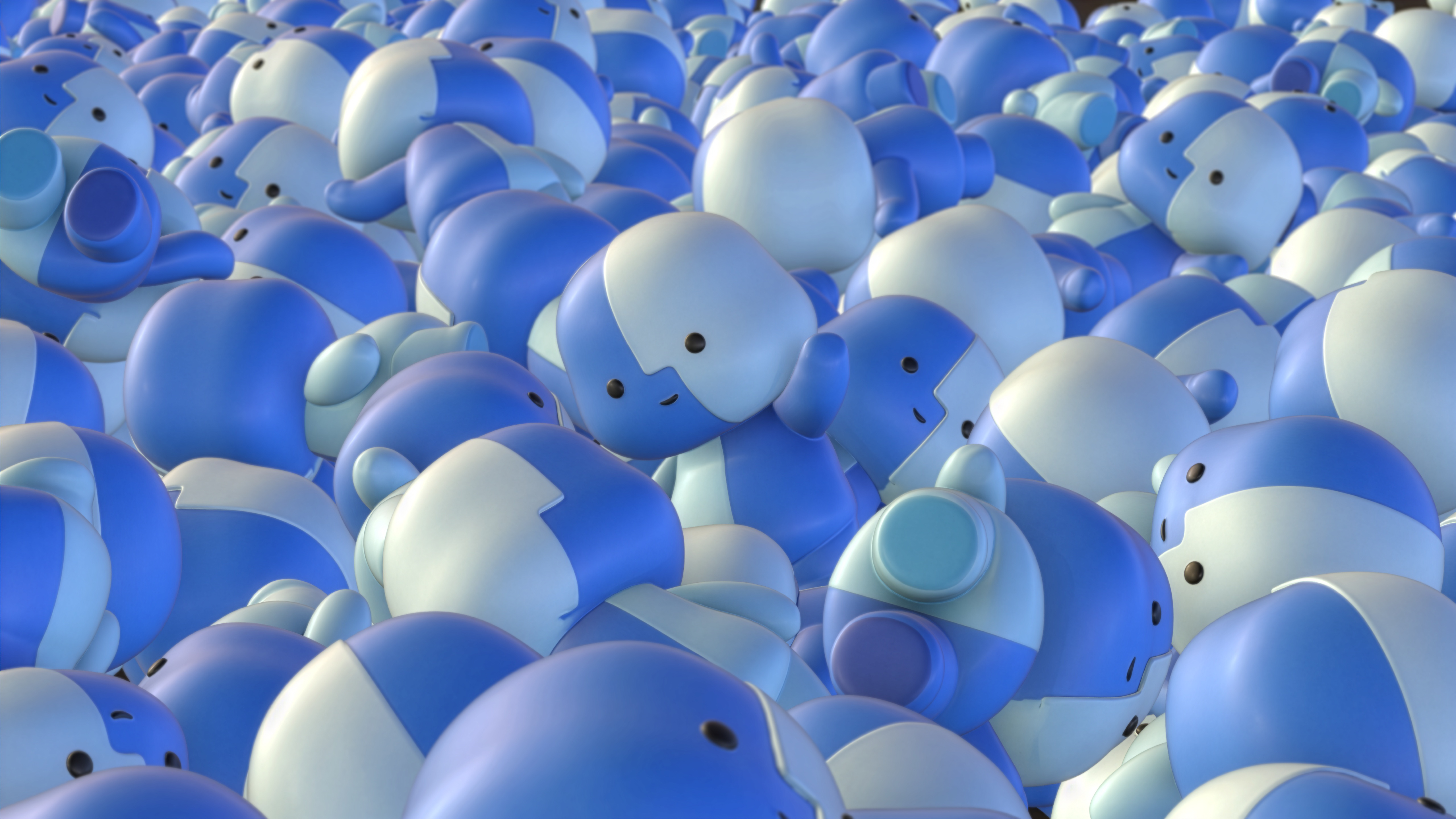
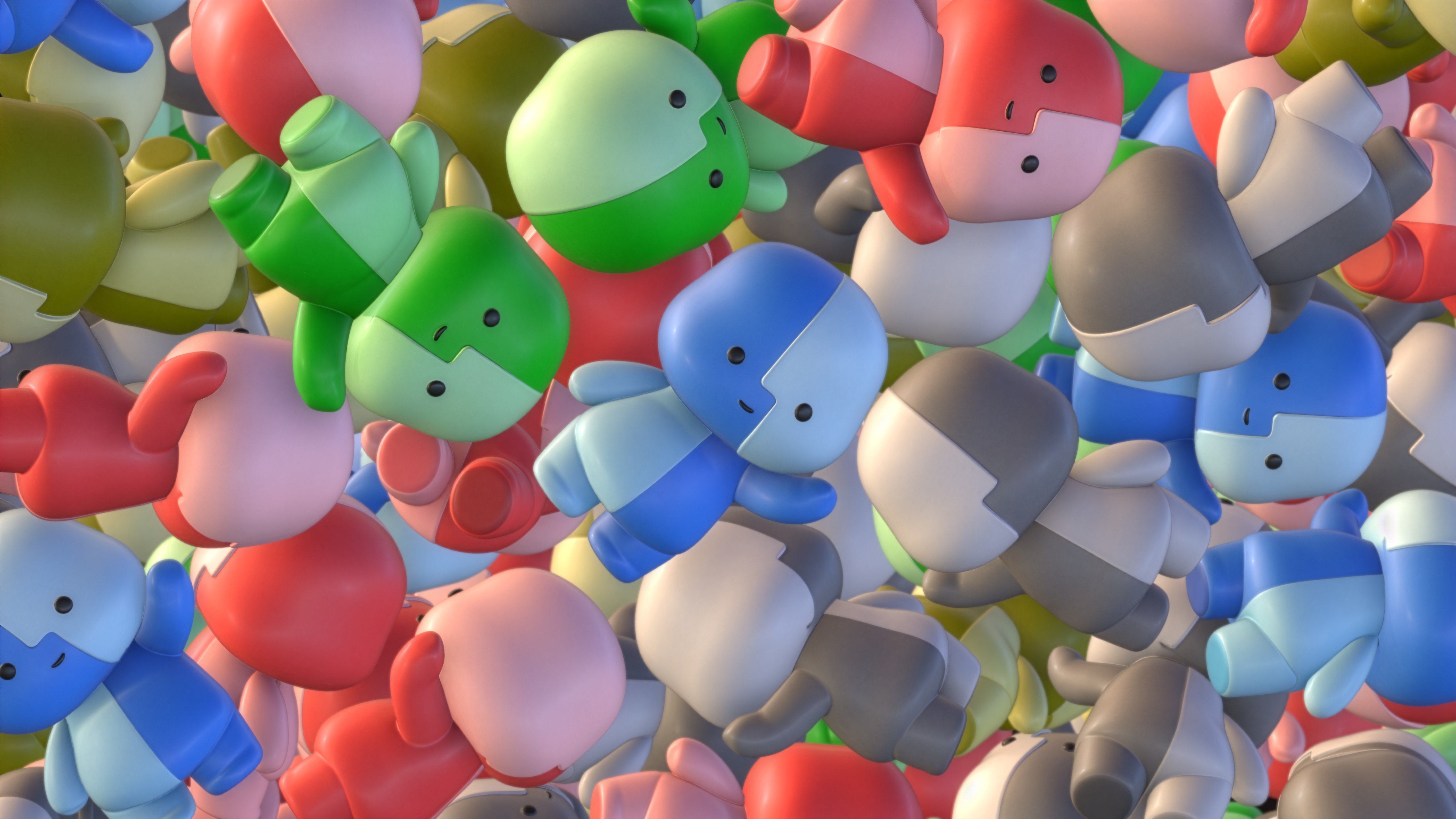
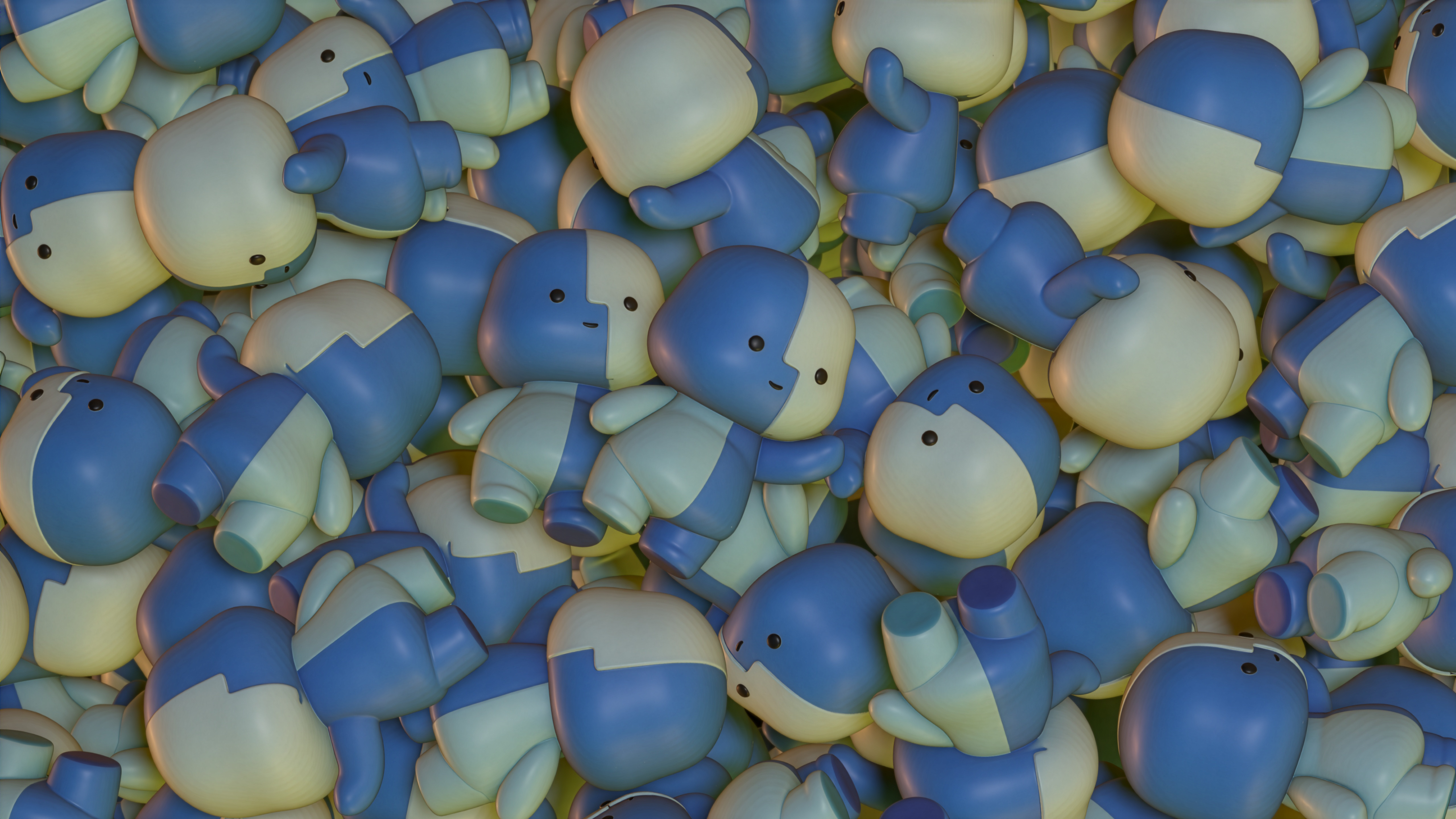
I was just going about my day then James Thomson of PCalc and other fine applications dropped these images on me and said I could share them.
They are all 5K, so they’re ready to go; just click to open up the full-res image.
This would have been sick on an iMac G3.
I had coffee this weekend with my good friend Michael Galpert, father to my godchildren. Too much coffee. We talked too much Claw. OpenClaw that is.
Michael has been running around the country organizing ClawCons. New York, Austin, Tokyo next. Not industry conferences. In the halcyon days of Web 2.0, we called them meetups and un-conferences. Sponsors are falling over themselves to get them attached to this new new thing, that borders on madness and hope.
Just people showing up in rooms b
I had coffee this weekend with my good friend Michael Galpert, father to my godchildren. Too much coffee. We talked too much Claw. OpenClaw that is.
Michael has been running around the country organizing ClawCons. New York, Austin, Tokyo next. Not industry conferences. In the halcyon days of Web 2.0, we called them meetups and un-conferences. Sponsors are falling over themselves to get them attached to this new new thing, that borders on madness and hope.
Just people showing up in rooms because they want to talk about what OpenClaw makes possible. Developers, yes. But also small business owners, retirees, students, people who have never attended a tech event in their lives. The energy in those rooms, Michael says, is unlike anything he has seen in years.
I have known Michael long enough to know when he is genuinely excited about something versus just being hyperactive for a second. He is so ‘clawed’ into OpenClaw.
Makes you wonder: what is really going on here? Hope and madness. Whatever the reasons, I am fascinated with the very idea of OpenClaw, how it might be foretelling a future we are not seeing yet.
OpenClaw is a free, open-source AI agent built by Austrian developer Peter Steinberger. It started as a weekend project in November 2025, originally called Clawdbot, went through a rename to Moltbot after a trademark complaint from Anthropic, and landed as OpenClaw at the end of January 2026.
You connect it to whatever AI model you prefer. It runs on your own machine. You talk to it through the messaging apps you already use, including Slack, WhatsApp, Telegram, iMessage, and Discord. And then it does things. Typical chatbots answer questions. It acts. It clears your inbox, makes reservations, tracks your calendar, executes tasks on your behalf while you are doing something else.
By March 2026, it had crossed 247,000 stars on GitHub. Steinberger has since been hired by OpenAI to work on personal agents, and the project has moved to a foundation. The lobster, as they say, has molted. Ironic, the movement’s Jesus has ceded control to his apostles.
Across the planet, everyone is tinkering.
China tech is going bonkers over OpenClaw. On a Friday afternoon in Shenzhen, nearly a thousand people lined up outside Tencent headquarters to get OpenClaw installed on their laptops. Engineers from Tencent’s cloud unit were helping students, retirees, and office workers set it up. The Chinese have their own phrase for it now: raise a lobster, a reference to OpenClaw’s red lobster logo.
Every major Chinese cloud provider has released its own version. Tencent has WorkBuddy. MiniMax has MaxClaw. Moonshot has Kimi Claw. Local governments in Shenzhen and Wuxi announced grants for startups building on the platform. MiniMax, whose model runs inside many OpenClaw setups, has seen its stock rise over 600 percent since its IPO two months ago.
And then Beijing sent a diktat to state banks, government agencies, and the families of military personnel: Clip the Claw.
A thousand people lining up on Friday. A memo from the CCP. Same technology. Same week.
It’s not nothing.
The Mac Mini has become the unofficial hardware of the OpenClaw moment. People are buying the Apple desktop with a single purpose: a dedicated machine to run their agent, separate from their main computer, connected to a free or cheap open-source model. The SF Standard called the Mac Mini bro the new matcha latte guy. Oy vey!
The publication shares the story of Aaron Ng, a 35-year-old AI engineer in the Sunset. He did not want to give OpenClaw access to his own computer. So he bought a Mac Mini just for the agent. It handles his email, tracks updates about his newborn, controls his smart lights. He texts it baby logs because, in his words, the existing apps were terrible. Others are using it to post their bets on Polymarket to Twitter and game the results.
Mac Mini bro! Apple has backed into a cultural moment, without even trying. Jokes aside, this physical object represents a philosophy. The intelligence lives on your machine. You own it. You aim it. No subscription. No permission required.
I checked in with Hiten Shah, one of my close friends who is building hard with OpenClaw. He summed it up in a single line: (AI) Power to the people.
This is why retirees are lining up in Shenzhen. This is why people with no GitHub account are showing up at ClawCons. For the first time, they can feel AI’s intelligence, even if it is not very good. Yet. Not a demo. Not a keynote promise. Not big boys burning billion dollars a month. A thing that actually does things on their behalf. The gap between what you want done and what gets done has always required either your own time or someone else’s labor. OpenClaw makes that gap feel smaller. That feeling, even in its rough and half-broken form, is new.
It has been almost a month since I published How AI Goes To Work. “What OpenClaw shows is how AI will work in the background,” is what I wrote. “And that is what the ‘AI’ future looks like for normal people. Not a separate AI app. Intelligence woven into tools you already use. Doing work you used to do yourself. Or used to hire someone to do, done by software.”
I have seen this kind of excitement before. Many times. That is what keeps me around in Silicon Valley. The excitement of new technology is my addiction. I saw this with the big poppa, the internet itself. Web 2.0. Social. Cloud. In terms of product, the closest parallel to OpenClaw for me is my first time with WordPress.
WordPress did not invent PHP or MySQL or web publishing. It was a continuation of someone else’s idea. However, it assembled those pieces into something a non-technical person like me could actually use. The gap between having something to say and being able to publish it closed overnight. No developer. No hosting deal. No media company gatekeeping who got a voice. Yes, there were other platforms and other options, but it dovetailed with the rise of open source, the optimism of publishing on the internet, and the joy of sharing and being social.
The best part that most people forget about WordPress is that it was never really about us. It was about the rest of the world that could not afford American software economics. At Forbes.com, we spent millions on bad software, trying to publish professionally. Now you could do it for free. A teacher in Jakarta. A student in Manila. A journalist in Nairobi. Suddenly they had the same publishing infrastructure as the New York Times. That is what the excitement was really about. Not the product. It was the collapse of the permission structure.
OpenClaw has that same siren call. Two hundred dollars a month, or even twenty a month, to Anthropic or OpenAI is not a rounding error for most of the world. The world doesn’t pay $10 for lattes. This is the real barrier. But Chinese-made Qwen runs locally. Chinese-made DeepSeek runs locally. OpenClaw does not care which model you plug in. So someone in Manila or Cairo or Bogota can run the same agentic setup as a San Francisco startup, on a model that costs them nothing. If you want something from Claude or ChatGPT, and you can afford to pay for it, then plug that in too.
WordPress democratized voice. OpenClaw is pointing at something further: action. The gap between what you intend and what actually gets done has always required resources. A team. A budget. An organization. OpenClaw is the first very rough sketch of closing that gap for everyone.
WordPress operated in a forgiving domain. A bad plugin broke your homepage. Mine broke all the time. And there were no plugins. OpenClaw operates in the domain of real-world action. A bad agent deletes your inbox, spams your contacts, creates a dating profile without your knowledge. The blast radius is different. One of OpenClaw’s own maintainers warned publicly that if you cannot understand how to run a command line, this is far too dangerous for you to use safely. That is not a ringing endorsement. But it is also not the point.
OpenClaw is not ready for prime time. The security issues are real and the warts are visible. It is a symbol of what is coming, not the thing itself.
AI can be personal. Not a service you subscribe to. Not a platform you visit. A thing that runs on your machine, serves your intentions, uses the model you choose, and works through the apps you already live in.
In his keynote speech at GTC, Nvidia CEO and founder Jensen Huang described OpenClaw as:
What is Open Claw? It’s an agentic system. It calls and connects to large language models.It has resources that it manages. It could access tools, it could access file systems, it could access large language models. It’s able to do scheduling. it’s able to– do cron jobs, is able to decompose a problem that you gave it into step by step by step. It could spawn off and call upon other subagents. It has IO. You could talk to it in any modality you want. It’s an operating system. I’ve just used the same syntax that I would describe an operating system. Open Claw has open sourced essentially the operating system of agentic computers.
In 2023, Bill Gates wrote that “in the near future, anyone who’s online will be able to have a personal assistant powered by artificial intelligence” and that agents would “utterly change how we live.” OpenClaw, running on a free Chinese model through WhatsApp on a $599 Mac Mini in the Sunset, is the first time regular people can actually feel that becoming real.
I’m putting my thoughts together for a review of the MacBook Neo, but I think a huge part of this laptop’s story is its repairability. Unlike Apple’s other products, the Neo is put together with screws only — no adhesive. Some of these screws are pentalobes, but if you’re taking apart a computer, you’re probably the kind of person to have that sort of bit on hand, or are willing to get one.
This means the battery can be replaced without pull tabs, and fo
I’m putting my thoughts together for a review of the MacBook Neo, but I think a huge part of this laptop’s story is its repairability. Unlike Apple’s other products, the Neo is put together with screws only — no adhesive. Some of these screws are pentalobes, but if you’re taking apart a computer, you’re probably the kind of person to have that sort of bit on hand, or are willing to get one.
This means the battery can be replaced without pull tabs, and for the first time in years, this notebook’s keyboard is not permanently installed into the top case. There is some tape involved there (and 41 screws to remove) but it’s a move in the right direction.
The USB-C ports, headphone jack, and speakers are all modular and come out with a handful of screws and simple connectors.
The result of all of this is a machine that should be easier and cheaper to repair.
David Sparks is a fan of the MacBook Neo, but it’s not the Mac notebook his heart truly desires:
Think about it. Apple has covered the pro market with the MacBook Pro lineup. The Neo is about to cover the mainstream and budget-conscious buyer.
But there’s a gap at the top. A premium ultralight for people who travel constantly, who want the absolute minimum weight and footprint, and who are willing to pay for it. A MacBook that weighs two pounds or less, with a stunning display
David Sparks is a fan of the MacBook Neo, but it’s not the Mac notebook his heart truly desires:
Think about it. Apple has covered the pro market with the MacBook Pro lineup. The Neo is about to cover the mainstream and budget-conscious buyer.
But there’s a gap at the top. A premium ultralight for people who travel constantly, who want the absolute minimum weight and footprint, and who are willing to pay for it. A MacBook that weighs two pounds or less, with a stunning display and all-day battery life. Not a compromise machine. A showcase.
The technology is ready. Apple silicon was basically designed for this. The question is whether Apple sees the market opportunity, or whether they think the Air (or whatever it becomes post-Neo) already fills that slot.
I don’t think it does. There’s a difference between a laptop that happens to be light and a laptop that’s built from the ground up to be as light as physically possible. Apple used to understand that distinction. The original Air proved it.
With the Neo handling the mainstream, there’s room in the lineup for Apple to go back to that idea.
I’ve been thinking a lot about this since the Neo was announced. In many ways, it frees the MacBook Air up to return to its thin-and-light roots, but I think that would be a mistake.
Among the many sins Apple committed with the 12-inch MacBook is that it was priced like a mid-range laptop, confusing the product line. If Apple were to return to this market, slotting in an ultra-portable machine in a more premium price point would avoid that confusion and let Apple go wild with what it could do with such a machine.
I’m not sure Apple wants to sell four laptop models1 but if they do, I think Sparks is on to something.
What’s really wild is that until a couple of weeks ago, Apple sold just two notebook models and four-ish desktops. I love that the company remains committed to desktop Macs, but if Apple were starting from scratch in 2026, that would not be the case. ↩
I really dislike Apple’s choice to clutter macOS Tahoe’s menus with icons. It makes menus hard to scan, and a bunch of the icons Apple has chosen make no sense and are inconsistent between system applications.
Steve Troughton-Smith is my hero for finding a Terminal command to disable them:
Here’s one for the icons-in-menus haters on macOS Tahoe:
defaults write -g NSMenuEnableActionImages -bool NO
It even preserves the couple of instances you do want icons, like for wi
I really dislike Apple’s choice to clutter macOS Tahoe’s menus with icons. It makes menus hard to scan, and a bunch of the icons Apple has chosen make no sense and are inconsistent between system applications.
Steve Troughton-Smith is my hero for finding a Terminal command to disable them:
Here’s one for the icons-in-menus haters on macOS Tahoe:
defaults write -g NSMenuEnableActionImages -bool NO
It even preserves the couple of instances you do want icons, like for window zoom/resize.
Your apps will respect this change after relaunching. I ran this a few minutes ago and already appreciate the change. I really think Apple should roll this change back in macOS 27, or offer a proper setting to disable these icons for those of us who find them distracting.
Michael Smith used AI to create music, and then used AI to create bots to get the “plays” and took the smartest technology companies, including Spotify and Amazon, who should know better, for about $8 million. He is going to jail for his crimes. It is easy to dismiss this as one-and-done fraud. It is anything but. It is an early warning of how AI will disrupt the systems that power our digital society: how culture gets discovered, how commerce gets directed, and how conversations ge
Michael Smith used AI to create music, and then used AI to create bots to get the “plays” and took the smartest technology companies, including Spotify and Amazon, who should know better, for about $8 million. He is going to jail for his crimes. It is easy to dismiss this as one-and-done fraud. It is anything but. It is an early warning of how AI will disrupt the systems that power our digital society: how culture gets discovered, how commerce gets directed, and how conversations get shaped.
At present, most of our digital society is powered by tech that is, generically speaking, recommendation algorithms. Spotify’s Discover Weekly, YouTube’s suggestion engine, TikTok’s For You page, Amazon’s product feed, Facebook’s news feed. All of it runs on signals of human behavior. Stream counts, completion rates, saves, shares, playlist adds, clicks, purchases. These represent people making choices. The only way to fake that was to hire a back-office army to do it. This is cultural legitimacy laundering.
Scale can now be had for cheap. Almost free. Who is to say that with AI, there won’t be bots that learn and adapt (agents, in polite company) designed to game the system? What if real artists with real music have this army to goose up their stream counts. The algorithm then promotes them to real ears.
What if it is not just real artists, but AI music being created by music-making software models that get better every month. The algorithm promotes this too. Humans like it, save it, share it, and add it to their playlists. They are generating real signals on top of the fake ones. At what point does fraudulently-obtained popularity become real popularity? There’s no clean line.
Just like Uber was limos for everyone, this is payola for anyone, for $200 a month. Even cheaper, if open-source models have their way. You think musicians won’t do it? Look around. They are already buying bots to inflate their numbers using gray-market services. Smith might be the idiot going to jail, but we are facing a structural collapse of the discovery and taste-making apparatus.
In the case of music, since royalties are countable, you can make a case for fraud. In other arenas, things are not going to be as simple. What gets bought on Amazon, what trends on Facebook, what becomes culturally popular. All of it runs on the same logic as Spotify. Signals of human behavior, gamed by machines. AI is making authenticity optional.
Whether it is Spotify directing culture, Amazon directing commerce, or Facebook directing conversations, I have yet to hear from any of their leadership on how they plan to redesign what they do because of the coming onslaught of fake signals.
Smith used crude tools to steal $8 million. His fraud is the boring version of the problem. The interesting version hasn’t been prosecuted yet. It may never be.
It has been a week of inference. I started the week writing about OpenClaw and its growing popularity. And I end the week with a recap of Nvidia’s GTC event. A lot has been written about the event, especially about Nvidia CEO Jensen Huang’s big claims of quadrupling his revenues to above a trillion dollars, the question that wasn’t asked, why?
Sure, we can dismiss this as a bluster of a bull-market darling, but in reality, if we believe that AI is going to be the new way of
It has been a week of inference. I started the week writing about OpenClaw and its growing popularity. And I end the week with a recap of Nvidia’s GTC event. A lot has been written about the event, especially about Nvidia CEO Jensen Huang’s big claims of quadrupling his revenues to above a trillion dollars, the question that wasn’t asked, why?
Sure, we can dismiss this as a bluster of a bull-market darling, but in reality, if we believe that AI is going to be the new way of interacting with information (as I do) and will impact all sorts of industries, then you have to give his claim some thought.
As I explain in my breakdown of Nvidia GTC, Jensen’s Trillion Dollar Token Factory, for CrazyStupidTech, his boast makes sense for two reasons. First, this is indeed an inference inflection. What that means is that AI goes from being in the “capex” phase to being in the “opex” phase. That key distinction is why you see Anthropic adding a billion or so in revenue every week or so. And that is why OpenAI is in a tizzy. And that is why Elon Musk has made “coding” a top priority for his Grok.
I am hoping to shift gears next week and write longer essays, eschewing news and daily goings-on. I have a few personal pieces that remain unfinished, including reviews of a new photography geegaw and of course the MacBook Neo.
Till next week. For now, enjoy these lovely articles.
Why Tech Bros Are Now Obsessed with Taste. Kyle Chayka in the New Yorker on Silicon Valley’s latest borrowed virtue. Silicon Valley is a taste dead zone. I have written about this many times. Now the same people without taste are arguing that because AI levels the playing field, and anyone can build anything, so the only edge left is knowing what’s worth building. That’s “taste.” Don’t look for it in these parts. Chayka makes my point without me losing my hair. [New Yorker]
We Have Learned Nothing. Jerry Neumann is my favorite venture capital and startup writer. None better. In his latest piece he makes a point to remind us that the whole edifice of the science of entrepreneurship is just that, an edifice. So, to paraphrase Steve Jobs, think different. And do different from whatever the current advice says. [Colossus]
In Search of Banksy. Reuters spent a year using what they call a “reverse forensic” approach to unmask the world’s most famous anonymous artist. Wow. What a great story. I mean, make this a documentary. The journalism is meticulous. [Reuters]
Russia’s Self-Inflicted Communication Crisis. Politico maps the race to cut Russia off from the global internet. Telegram, WhatsApp, YouTube, Signal, Discord, X, FaceTime, LinkedIn, all blocked or throttled. Russian President Putin signed a law letting the FSB shut down cellular and internet access on demand. The twist is that the Kremlin’s own military depends on Telegram for frontline communications and crowdfunding. They’re destroying the infrastructure their war machine runs on. What an amazing story. [Politico]
The Repricing of Time: Equity in the Age of Agents. Jordi Visser makes the financial argument for what many of us feel intuitively. AI doesn’t just disrupt business models. It compresses time. When competitive half-lives shrink from a decade to months, equity stops representing ownership of a durable franchise and starts resembling a call option on execution velocity. This is the best thing I’ve read on what AI actually does to market structure. I wish I had written this piece. [Visser Labs]
Miles Rose, who passed away on March 1, 2026, in Puerto Rico. He was 72. And he was a friend from the Internet’s halcyon days and ran SiliconAlley.com. I lost touch with him over the past decade or so, but he was and will remain a cherished friend and a reminder of happier, more innocent times in the evolution of the internet. Rest in peace, Miles.
Len Deighton, one of my favorite authors and a master of the spy genre, passed away. I enjoyed this recap of his work. In the end, this is the best way to remember someone who made words his everything.
Apple has announced dates for this year’s WWDC:
Apple today announced it will host its annual Worldwide Developers Conference (WWDC) online from June 8-12, bringing developers together from around the world for a week of connection, exploration, and innovation. In addition to the online experience, developers and students will also have the opportunity to celebrate in person during a special event at Apple Park on June 8.
WWDC26 will spotlight incredible updates for Apple platforms,
Apple today announced it will host its annual Worldwide Developers Conference (WWDC) online from June 8-12, bringing developers together from around the world for a week of connection, exploration, and innovation. In addition to the online experience, developers and students will also have the opportunity to celebrate in person during a special event at Apple Park on June 8.
WWDC26 will spotlight incredible updates for Apple platforms, including AI advancements and exciting new software and developer tools. As part of the company’s ongoing commitment to supporting developers, WWDC will also provide unique access to Apple engineers and designers, and insight into new tools, frameworks, and features.
WWDC kicks off with the Keynote and Platforms State of the Union on Monday, June 8. The conference continues online all week with over 100 video sessions and interactive group labs and appointments, where developers can connect directly with Apple engineers and designers to explore the latest announcements. The conference will take place on the Apple Developer app, website, and YouTube channel; and on the Apple Developer bilibili channel in China.

 Login
Login